Wroclaw might not be the first city that springs to mind for a European city break. But if you’ve landed on this blog, it’s already on your radar. And rightly so! Historic squares, little islands in the Oder river, hundreds of dwarfs and streets lined with cool coffee bars: Wroclaw has everything for a great city trip. In this blog we share the 14 best things to do in Wroclaw, plus where to stay.
Tip: Wroclaw’s airport has direct flights from many European cities, often with budget airlines, and the city centre is only a short ride away.


Where to stay in Wroclaw
Wroclaw’s Old Town has plenty of nice places to stay, and a surprising number of them are aparthotels. We stayed in one ourselves, with a little kitchen in the room, which was really handy with a baby. Popular aparthotels are New Lux and Odrzańska Residence. For a hotel in the Old Town we recommend the stylish PURO, while Tulip Hotels Wrocław Patio is a good-value choice a few minutes’ walk from the Rynek.
Things to do in Wroclaw: the 14 best sights
#1 The dwarfs of Wroclaw
The symbol of Wroclaw is its dwarfs. Hundreds of little bronze figures are dotted around the city, on pavements, windowsills and outside shop doors. They’re a nod to the Orange Alternative, a student movement that mocked the communist regime with dwarf graffiti in the 1980s.
Since the first bronze dwarf appeared in 2001, their numbers have kept growing. Shops and restaurants had one made for their own doorstep, so now you’ll come across dwarfs working, sleeping, reading or eating an ice cream. Spotting them is a game you’ll keep playing for your whole trip.
→ Discover where to find the Wroclaw dwarfs


#2 The market square and town hall
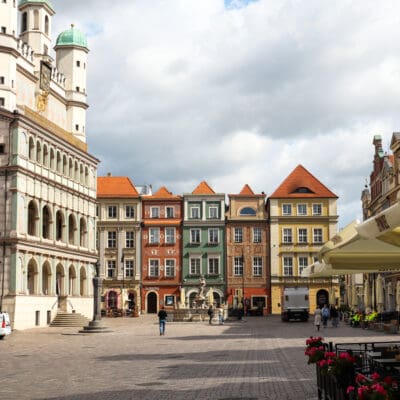
Wroclaw’s Old Town revolves around its main square, the Rynek. At 205 by 175 metres, it’s the second-largest square in Poland (Krakow wins) and one of the largest in Europe. What makes it unusual is that there’s a whole block built in the middle: not just the historic town hall, but little lanes full of restaurants and apartments. Wander into them, because that’s where the city noise suddenly fades away.
The Rynek is lined with pastel houses in all sorts of styles, depending on the century they date from. Or seem to date from. Most of them are actually fairly recent. Wroclaw was badly damaged in the Second World War, and much of the square was destroyed. Funnily enough, the only modern-looking building survived: the 1930s concrete Santander bank, which makes it one of the oldest buildings on the square. The others were rebuilt in historic style, the last one not until the 1990s.
Did you know that Wroclaw’s reconstruction took so many years because there were no building materials? Warsaw lay in ruins too, and the Soviet leadership gave its rebuilding priority. Buildings in Wroclaw that had survived the war were sometimes even torn down so their bricks could be used in Warsaw.
The most beautiful building on the Rynek is without doubt the Gothic town hall. It was extended and remodelled over 250 years, which explains its rich mix of details. Today it’s a museum, so you can go inside. Look out for the astronomical clock on the facade, which might remind you of the one in Prague, and the friezes along the side showing daily life in the Middle Ages. The statues a little lower down? Those were famous residents of the city back then.


#3 Bridges, islands and rivers
Wroclaw is sometimes called the Venice of Poland. We think that’s a bit of a stretch, but water definitely plays a big role here. The Oder river runs right through the city, splitting into lots of little side branches, with a handful of islands in between, such as Wyspa Słodowa, a car-free island with a park.
All that water needs bridges, and Wroclaw has more than a hundred. The best known is the green Tumski Bridge to Cathedral Island. For years couples hung their padlocks on it, until the bridge was renovated and that was banned. A dwarf by the bridge gives you a little reminder. Don’t despair, though: the railings along the river next to the bridge are now full of love locks.


#4 Zip around on an e-scooter
Wroclaw’s sights are easy enough to explore on foot, but it’s even more fun on an e-scooter. You’ll find Lime scooters on almost every street corner. For a small fee you pick one up anywhere and leave it somewhere else. Perfect!
Worried that the bumpy streets won’t be much fun to ride? No need. Wroclaw does have plenty of charming cobbled lanes, but also kilometres of smooth cycle paths. We were told there are almost 300 kilometres of them.


#5 Fairytale Wroclaw by night
Wroclaw is gorgeous by day with its pastel buildings and grand monuments, but in the evening the city turns into a fairytale. The streets get even livelier, music plays on the main square and the warm lights give it a romantic glow. Cathedral Island in particular becomes magical, with old gas lamps (see tip 8!) lighting up the oldest buildings in the city. The riverside is one of the best spots, with the water mirroring the buildings and lights. So go back out after sunset and revisit the places you saw that day to see Wroclaw at its best.


#6 Centennial Hall
Well outside the city centre lies a large park with what architects consider the most admired building in all of Poland: the Hala Stulecia, or Centennial Hall. When it was built in 1913, this huge structure was an architectural marvel. Nobody had ever made such a large concrete building before, and people were amazed that the concrete roof stayed up. Today this feat of engineering is on the UNESCO World Heritage List.
Even if architecture isn’t your thing, the park is a great place to visit in Wroclaw. There’s a Japanese garden and the enormous Multimedia Fountain. From late April to late October it puts on a show of water, music and light every hour, and it’s at its best in the evening.
Tip: the park is about half an hour’s walk from Cathedral Island. Rather skip the walk? Grab one of the Lime scooters or a Nextbike city bike.

#7 Cathedral Island
The oldest part of the city is Cathedral Island, Ostrów Tumski. With no fewer than six churches, it’s easy to guess where the name comes from. It isn’t actually an island any more: the river branch that once surrounded it was filled in long ago.
Two of the six churches are hard to tell apart, because they’re in the same building: the Church of St Bartholomew and the Church of the Holy Cross. The largest church on the island is the monumental cathedral. Look closely and you’ll still see a piece of shrapnel from the Second World War in the right-hand tower. The building was largely destroyed then, as the photos to the left of the entrance show. It’s since been fully restored, and you can enjoy a panoramic view from the tower. There’s even a lift to make it easy.
Tip: don’t mind stairs? The highest view over Wroclaw is from the tower of St Elizabeth’s Church next to the market square.
On Cathedral Island you’ll also find the university’s botanical garden. For a small entrance fee you can stroll through this lovely green oasis.


#8 The old gas lamps of Wroclaw
Cathedral Island still has the historic gas lamps that once lit the city. That sounds romantic, and it’s a special sight in the evening too. Every evening the lamps are lit by hand by the lamplighter, dressed in a black cloak for extra drama. Walk around the island at dusk and you might spot him. He never comes at exactly the same time, though, and apparently takes a different route each night.
The trick is to watch the two lamps opposite the cathedral. They’re always lit first. Once they’re on, just find a lamp that’s still dark and wait: sooner or later the lamplighter will come by.


#9 The Market Hall
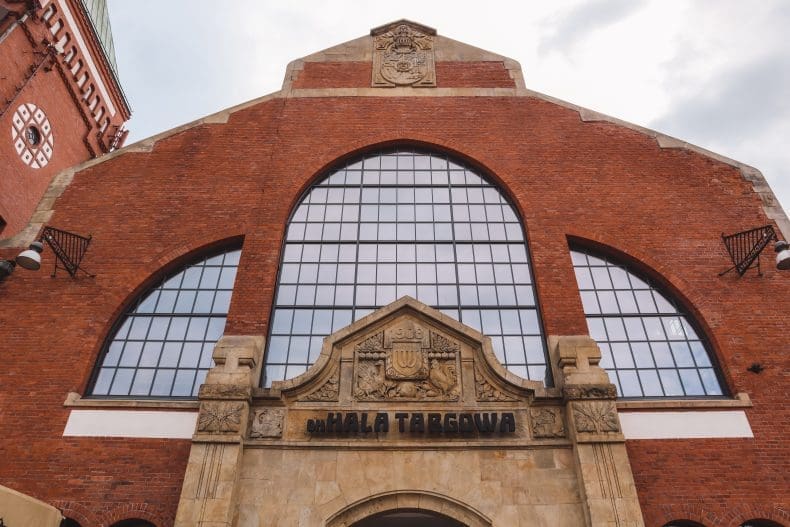
Hala Targowa sits between the market square and Cathedral Island, so you’ll pass it anyway. Go inside and marvel at this beautiful hall. The all-concrete structure looks modern, but it was built between 1906 and 1908. There were once two of these halls in Wroclaw, but this is the only one that survived the war. You can still buy fruit and vegetables here today, and the coffee at Enklawa in the corner of the hall is a must.
Tip: right next to the market hall is the friendly and very affordable brew bar Targowa Craft Beer & Food. We had the vegetarian options and watched literally everyone else order giant schnitzels. They must be good.

#10 Wroclaw’s hip hotspots
One thing that struck us straight away in Wroclaw is how every street is full of cool places. From breakfast spots to specialty coffee bars and from cosy restaurants to Instagram-ready bars, you practically trip over them. One of the hippest streets, close to the market square, is Świętego Antoniego, where a trendy fries bar, Mexican food and a stylish cocktail bar sit side by side. Also check out Neon Side, part of Ruska 46, in the courtyard behind the buildings. There you’ll find a collection of old neon signs, street art and nice bars.
As a coffee lover, Sebastiaan is always in his element when a city has good espresso bars, but here he couldn’t even choose. We tried as many places as we could in a short time and came away with lists full of tips.
The best coffee bars in Wroclaw
- Kiosso for coffee to go
- Popiół i Diament on the main market square
- Cherubinowy Wędrowiec in the green garden of the Ossolineum
- Paloma Coffee by the flower market
- Bema Cafe just outside the centre
- Parrot Coffee close by
- Enklawa in the Market Hall
- Cafe Rozrusznik west of the centre
- Mała Czarna Local Coffee Roasters near the Centennial Hall


#11 Street art in Wroclaw
The city is full of great street art, both in and outside the centre, and we found one spot with the very best murals.
That spot is Nadodrze, a neighbourhood just outside the centre. From the main street you see nothing, but walk through an archway into the courtyards and you’re suddenly surrounded by colour. The buildings look run-down and the street is fairly shabby, but that only makes the contrast with the art stronger. All the ground floors of the courtyards are painted: fish in water, all kinds of dogs, residents and their pets, fields of flowers, kids playing and even dinosaurs. It just keeps going. We were told it covers about 1,200 square metres. You’ll find the exact location here.
→ Discover the 25 best street art cities in the world

#12 A free walking tour of the Old Town
A free walking tour is one of our favourite ways to explore a city. New to the idea? A local guide shows you around for free and tells you all about their city, from history to local tips and highlights. At the end you tip what you think it was worth. Wroclaw has plenty of these tours!
If you only do one, make it the free walking tour of the Old Town. You’ll learn about the city’s history and see the main highlights. With more time, there are also themed tours, for example about the dwarfs or the Second World War. We did the general highlights tour and saw all the special spots in just over two hours, including some lesser-known ones. One special spot we visited? The beautiful garden of the Ossolineum, one of the largest academic libraries in Poland.

#13 Wroclaw’s oldest street
Wroclaw’s oldest street is Jatki, in, you guessed it, the Old Town. It’s a narrow lane of old half-timbered houses, now home to little shops. Most of them sell handmade glasswork and souvenirs. Things used to be less cheerful here, because this was where Wroclaw’s butchers worked. With the overhanging timber roofs, you can easily picture the carcasses that once hung here.
This lane has a dwarf too: one standing in front of a door. At the end of the street there’s a group of bronze farm animals. The link between those animals and the butchers isn’t hard to make, is it? The statues are said to be a statement to raise awareness about eating meat. Most visitors seem more interested in taking photos with them, and in the legend that touching the poo brings good luck.


#14 Beer garden in the old prison
The old city prison is one of the few buildings that came through the Second World War unscathed. Today it houses the archaeology department and a popular beer garden, but from the fourteenth to the eighteenth century it really was a prison. Poor prisoners were locked in the cellar, while wealthier citizens of Wroclaw, often jailed for tax debts, could get a nicer room upstairs. These days everyone is welcome, and it’s one of the most popular spots for a beer on a summer’s day.
More tips for your trip to Wrocław
 Our pickHotels in Wrocław: stay in the old town, a short stroll from Market Square and the dwarfs
 Compare flights to Wrocław.
 Dwarf-spotting without sore feet: book an e-car tour of the old town with audio guide on GetYourGuide.
 Prefer everything arranged? Browse Poland tours on TourRadar.
 Skip the plane: take the ICE to Berlin and hop on the EuroCity to Poland. Book your train tickets to Poland with NS International.
 Discover all our blogs about Poland