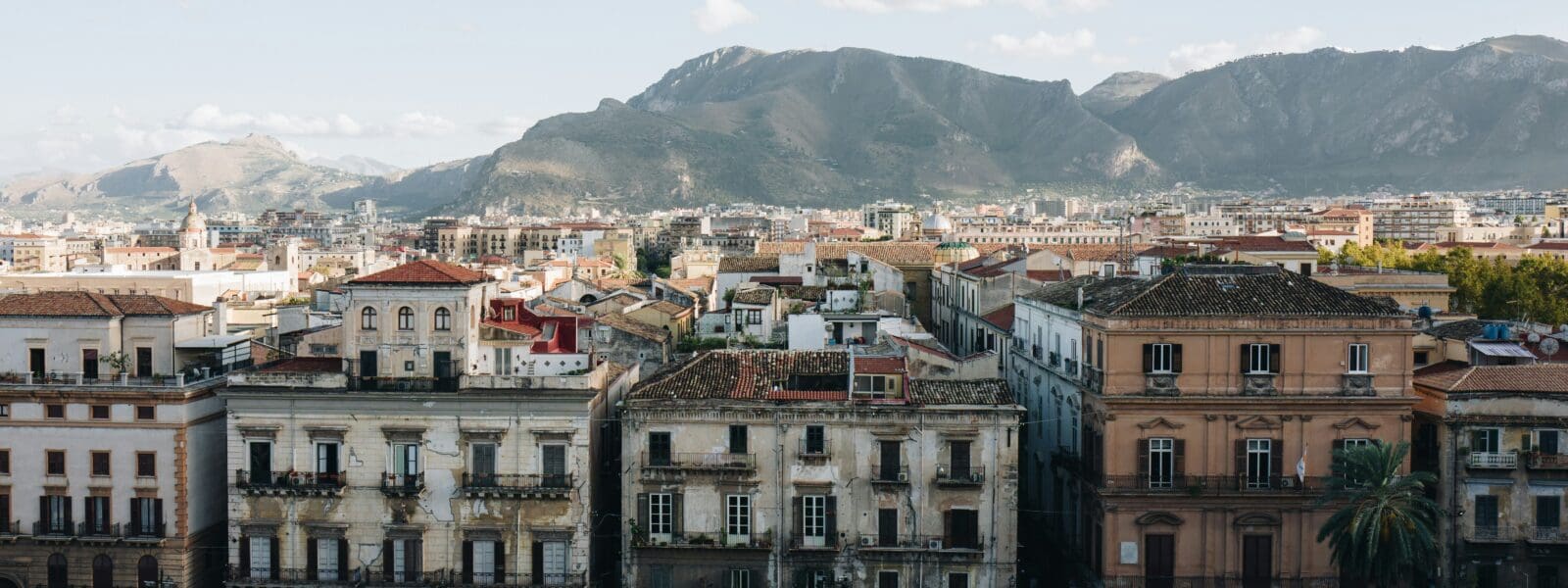
Palermo, the capital of Sicily, is a city of striking contrasts. Between ancient churches and lively markets, you’ll stumble upon grand palaces, hidden monasteries, and remnants of the many cultures that have shaped the city over the centuries. Nowhere else is the fusion of Arab, Norman, and Baroque influences as vivid as in Palermo’s architecture and cuisine.
Take a stroll through the old town, and you’ll find yourself in a world where elegant squares with dramatic fountains meet narrow lanes bursting with street art. Step inside historic churches and prepare to be amazed by their richly decorated interiors. From the glittering mosaics of the Cappella Palatina to the mysterious tunnels of the Capuchin Catacombs, the city is filled with unforgettable sights.
And there’s just as much to discover beyond the historic center. Explore the sprawling green spaces of Parco della Favorita or relax by the clear, turquoise waters of Mondello Beach. Whether it’s the grandeur of Baroque buildings, the color and creativity of urban art, the buzz of open-air markets, or the peace of quiet cloisters, Palermo offers an unforgettable mix of experiences you won’t want to miss.
Where is Palermo in Italy?
Palermo sits in the northwest corner of Sicily, right on the sparkling Tyrrhenian Sea. The city is framed by mountains, with Monte Pellegrino rising above it all as a striking and unmistakable landmark. As the capital of Sicily, Palermo isn’t just a political center, it’s the beating heart of the island, where centuries of history, vibrant culture, and stunning coastal scenery come together in a way that’s uniquely Sicilian.
Getting to Palermo is simple and straightforward. Falcone-Borsellino Airport (PMO) is located about 35 kilometers outside the city. From there, the Prestia e Comandè shuttle bus takes you into the center in around 50 minutes. If you’re looking for a quicker or more flexible option, taxis and rental cars are also readily available.
The area surrounding Palermo is full of incredible places to explore. Just a 15-minute drive away is Monreale, home to a breathtaking cathedral covered in glittering golden mosaics. In the mood for sun and sea? The charming coastal town of Cefalù is only an hour away and offers beautiful beaches and a relaxed atmosphere. And for those craving nature and a bit of adventure, the Lo Zingaro Nature Reserve and the scenic town of Castellammare del Golfo are both within easy reach. From Palermo, it’s easy to set off and discover some of Sicily’s most unforgettable destinations.
What Palermo is known for?
Palermo is a raw, authentic Italian city that truly comes alive through all your senses. It’s a place where centuries of history blend effortlessly with the energy of bustling street markets, the flavors of a unique and unforgettable cuisine, and the warmth of a sun-soaked coastline. From its dramatic architecture to its colorful street life, it’s this captivating mix that gives Palermo its unmistakable charm.
A Melting Pot of Architecture
Palermo’s architecture tells the story of its rich and layered past. Over the centuries, a mix of rulers—from Arabs and Normans to Spaniards and Italians—have each left their unique imprint on the city. The result is an extraordinary blend of styles that gives Palermo its unmistakable character. One of the best examples is the Palermo Cathedral, a striking structure where Arab, Norman, and Gothic elements come together in one awe-inspiring design. Another highlight is the Palazzo dei Normanni, once a royal palace and now home to the dazzling Cappella Palatina, famous for its golden mosaics. As you stroll through the city, you’ll come across hidden monasteries, ornate churches, and colorful markets tucked into centuries-old alleyways, each one adding another layer to Palermo’s fascinating atmosphere.
The Soul of the City: Palermo’s Street Markets
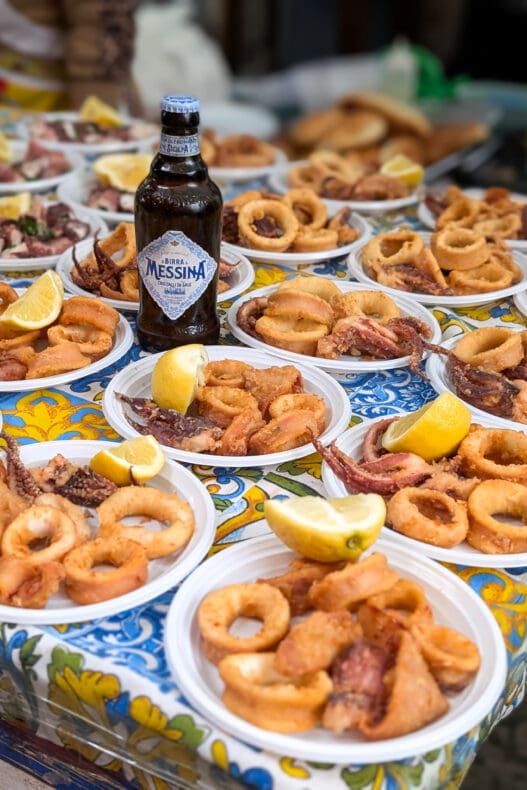
To truly experience the spirit of Palermo, you have to visit its street markets. These buzzing, chaotic hubs are where daily life unfolds in the most vivid way. The most well-known—Mercato di Ballarò, Mercato della Vucciria, and Mercato del Capo—are full of life, color, and noise. The air is thick with the scent of ripe fruit, fragrant spices, and sizzling street food, while market vendors shout cheerfully to sell their goods.
It’s messy, loud, and yes, sometimes a little overwhelming. But wandering through the stalls is a joyful, unforgettable experience. Be sure to try a freshly fried arancina (a stuffed rice ball) or a generous slice of sfincione (a fluffy, pizza-like street snack) as you explore.
A Food Scene That’s Impossible to Resist
Palermo is a dream destination for food lovers. Its cuisine is a bold and flavorful mix of influences from Italian, Arab, and Spanish kitchens, all blending into something uniquely Sicilian. Local favorites include pasta con le sarde—a sweet and savory combination of sardines, raisins, and wild fennel—and panelle, crispy chickpea fritters that are perfect as a snack. And no trip is complete without trying a cannolo: a crisp pastry shell filled with sweet, creamy ricotta. Feeling adventurous? Order a pani câ meusa, Palermo’s famous spleen sandwich. It might not be for everyone, but it’s a true local delicacy and a rite of passage for curious foodies.
Festivals and Traditions
Palermo knows how to throw a celebration, and you’ll sense it not just in the lively squares and buzzing café terraces, but also in the many vibrant festivals and deep-rooted religious traditions that shape the city’s rhythm. The highlight of the year is the Festa di Santa Rosalia in July, when the entire city turns out to honor its cherished patron saint. Expect colorful processions, dazzling fireworks, and street parties that fill the warm summer nights with music, lights, and laughter.
Christmas and Easter are celebrated with equal enthusiasm, bringing festive markets, traditional foods, and joyful gatherings to every corner of the city. If you want to experience Palermo at its most energetic and heartfelt, plan your trip around one of these unforgettable events.
Sun, Sea, and Beaches
Nestled along the sparkling Mediterranean, Palermo blends the charm of a historic city with the laid-back appeal of the coast. One of the locals’ favorite spots is Spiaggia di Mondello, a wide sandy beach with turquoise waters, a relaxed vibe, and a palm-lined promenade dotted with inviting cafés and gelaterias, ideal for soaking up the sun. Prefer something quieter? Head to Capo Gallo, a scenic nature reserve just nearby. Here, you can take peaceful walks along rugged coastal trails, discover hidden coves, and admire the untamed beauty of the Sicilian shoreline.
Where to Stay: Best Neighborhoods of Palermo
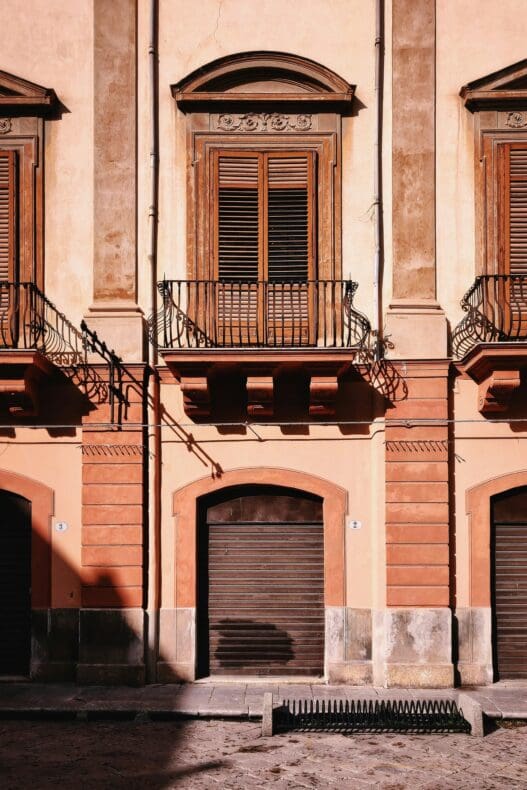
Where to Stay in Palermo? Choosing where to stay in Palermo all comes down to the kind of experience you’re after. Do you picture yourself waking up in the heart of the historic center, where ancient alleyways wind past crumbling facades, and your day begins with a cappuccino in one hand and a warm, freshly made arancina in the other? Or maybe you’re drawn to a more refined part of the city. Think elegant boutique hotels, leafy piazzas, and a relaxed yet sophisticated atmosphere. Prefer to leave the city’s hustle behind altogether? You might opt for a peaceful seaside stay, where you can step straight onto the sand each morning and let the sound of the waves set the tone for your day.
https://www.booking.com/affiliate/prelanding_sdkCentro Storico – Sleeping between History and Markets
Dreaming of waking up in the heart of Palermo, surrounded by ancient churches, buzzing markets, and winding cobblestone alleys? Then Centro Storico is exactly where you want to be. This historic center immerses you in the city’s rich past, with the majestic cathedral just a short stroll away, its centuries-old walls telling stories of a vibrant and layered history. Meander through quiet courtyards hidden behind faded facades, and dive into the flavors of Palermo at the lively Ballarò market, where sizzling street food and local color are never far. Here, every corner feels like a glimpse into another time, and it’s all right outside your door.
- Bastione Spasimo Boutique Hotel – A delightful hotel set within a historic bastion, offering a peaceful garden and a refreshing swimming pool, perfect for unwinding after a day of exploration.
- Palazzo Natoli Boutique Hotel – An elegant palazzo with beautifully designed rooms, just a short walk from the iconic cathedral, blending history and comfort in one charming location.
- Palazzo Cartari – A timeless hotel full of character, featuring soaring ceilings and antique details, providing a true taste of Palermo’s storied past.
- Casa Nostra Boutique Hotel & Spa – A luxurious retreat offering a peaceful spa and a rooftop terrace with breathtaking views, ideal for a relaxing escape in the heart of the city.
Politeama – Libertà – Stylish and Central
This neighborhood is perfect for those seeking a little more tranquility while still being just a short stroll from the city center. With its wide boulevards, elegant architecture, and a wide array of shops and cafés, Politeama – Libertà is a charming and convenient area to stay in.
- Ostello Bello Palermo – A lively and welcoming hostel featuring a vibrant bar, sun-drenched terraces, and a relaxed atmosphere. It’s the ideal spot for travelers looking to connect and unwind.
- Hotel Trinacria – A cozy hotel offering well-appointed rooms and an unbeatable location, making it a fantastic home base for discovering all that Palermo has to offer.
- Family Affair Luxury Rooms and Suites – A chic boutique hotel with spacious, modern rooms that provide a luxurious experience with a personal touch, making every stay feel special.
- Palazzo Genuardi – A beautifully restored historic building filled with authentic details and perfectly situated in the heart of the city, offering guests an authentic taste of Palermo’s rich history and charm.
Mondello – Waking up by the Sea
Prefer the beach over the city bustle? In Mondello, just 10 kilometers from Palermo, you can stay steps from a breathtaking stretch of white sand, with a charming promenade lined with seafood restaurants and cafés, perfect for enjoying the coastal vibe.
- Domìa Boutique Hotel e Cucina – A chic hotel set amid a lush garden, complete with a sparkling pool and a fantastic restaurant, offering the ideal mix of relaxation and indulgence.
- Unìco Boutique Hotel d’Arte – A luxurious art-filled hotel, featuring stylish rooms and a rooftop terrace where you can unwind while soaking in stunning views of the area.
- B&B Mondello Design – Sleek and modern, this stylish B&B is just a short walk from the beach, offering a cool and comfortable stay with a relaxed, contemporary atmosphere.
- Mongibello Palace B&B – A charming, classic bed and breakfast with a cozy terrace, providing a peaceful and inviting space for a laid-back retreat.
Tourist Map of Palermo
[googlemaps https://www.google.com/maps/d/u/1/embed?mid=1HfdqWRQGK-5xj_NhdNPscsRij3A_Adc&ehbc=2E312F&w=790&h=480]Top Things to Do in Palermo
#1 The Old Town
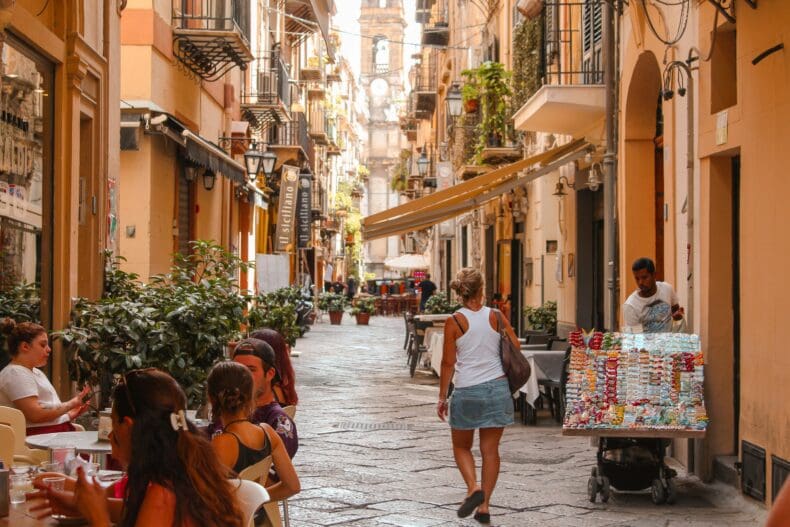
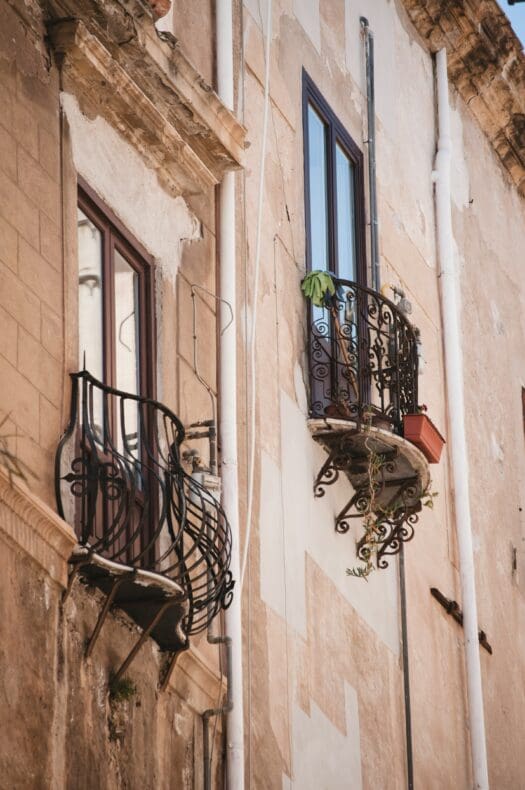
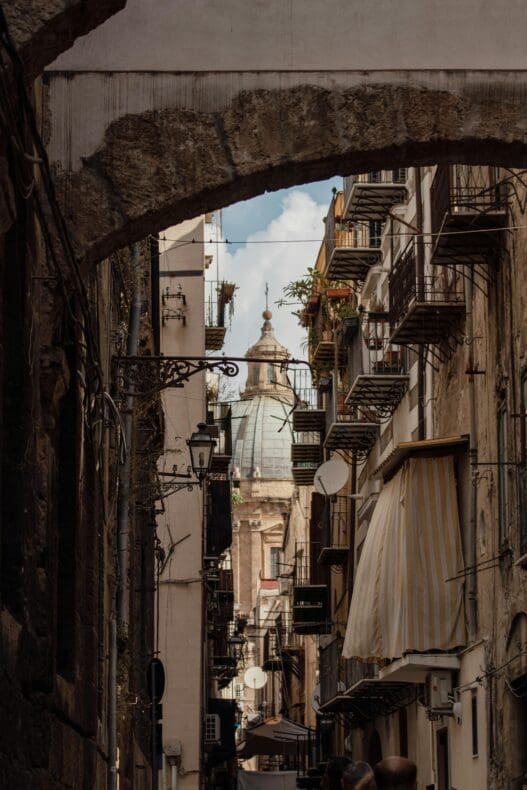
Palermo’s old town is a captivating labyrinth of narrow streets, hidden courtyards, and centuries-old squares, where history seems to breathe from every corner. The city’s rich past is reflected in its architecture, blending influences from Phoenicians, Romans, Arabs, Normans, and Spaniards. The atmosphere is bustling and vibrant, with charming shops, tempting pasticcerias, and street vendors selling everything from roasted chestnuts to refreshing granita. We couldn’t help but be in awe of the beautiful buildings, the lively Italian chaos, and the unmistakable Mediterranean warmth that fills the air.
Wander through the neighborhoods of La Kalsa and Il Capo, and you’ll discover hidden treasures like tiny monasteries, ancient palaces, and lively local markets brimming with color and character. Piazza Pretoria and Piazza Marina are perfect spots to pause for an espresso or a bite of sfincione, Palermo’s deliciously cheesy version of Sicilian pizza. While the old town is home to iconic landmarks like the Palermo Cathedral and the Palazzo dei Normanni, the true magic lies in simply meandering through the streets, allowing the city to unfold its stories and secrets.
As you explore, keep an eye out for the street signs, some of which are still written in Arabic or Jewish. These are poignant reminders of Palermo’s fascinating, multicultural heritage.
#2 Chiesa del Gesù (Church of the Gesu)
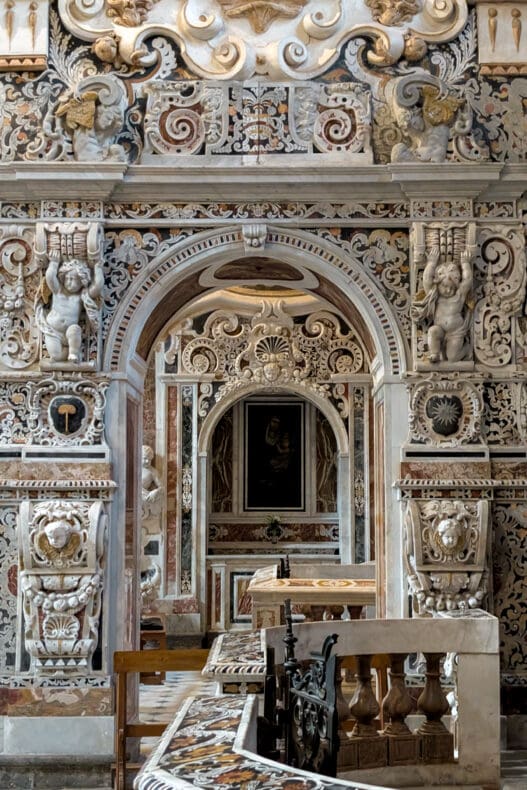
The Chiesa del Gesù, also known as Casa Professa, is one of Palermo’s most extravagant Baroque churches, and quite possibly one of the most impressive in all of Europe. We’d come across this gem on Instagram, and it quickly climbed to the top of our must-see list in Palermo. Needless to say, it did not disappoint!
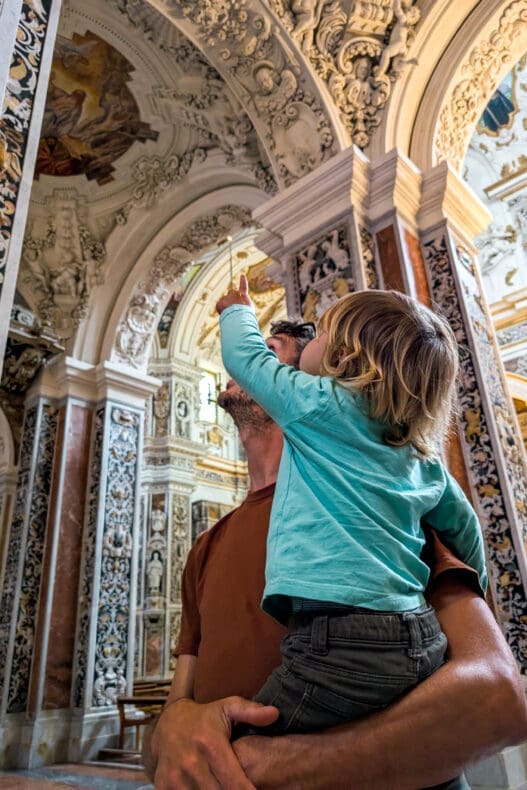
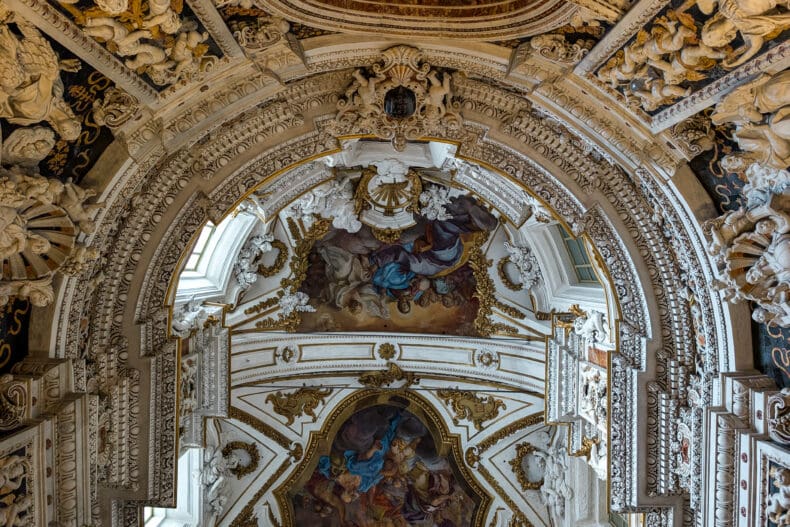
From the outside, the church might seem understated, but step through the doors, and you’re immediately immersed in an overwhelming display of marble and intricate detail. Built in the 16th century by the Jesuits, the church is a feast for the eyes, with marble reliefs, gilded decorations, and breathtaking frescoes adorning every surface.
What truly sets this church apart is its three-dimensional marble designs, many of which seem to emerge from the walls themselves. We were even captivated by marble baby feet hanging from the ceiling, delicately paired with tiny angels! This stunning work is the creation of Sicilian sculptor Giacomo Serpotta, who was famous for his dramatic, lifelike sculptures. Although the church suffered significant damage during World War II bombings, it has since been fully restored, now radiating in all its splendor.
While the marble artistry undoubtedly steals the show, don’t forget to look up at the ceiling paintings. Be sure to watch for the hidden optical illusions in the frescoes! Some figures appear to hover or shift as you move around, adding a playful element to the experience.
The best part? Unlike most other churches in Palermo, entry to the Chiesa del Gesù is free, though there is a fee if you wish to visit the museum.
#3 Cattedrale di Palermo
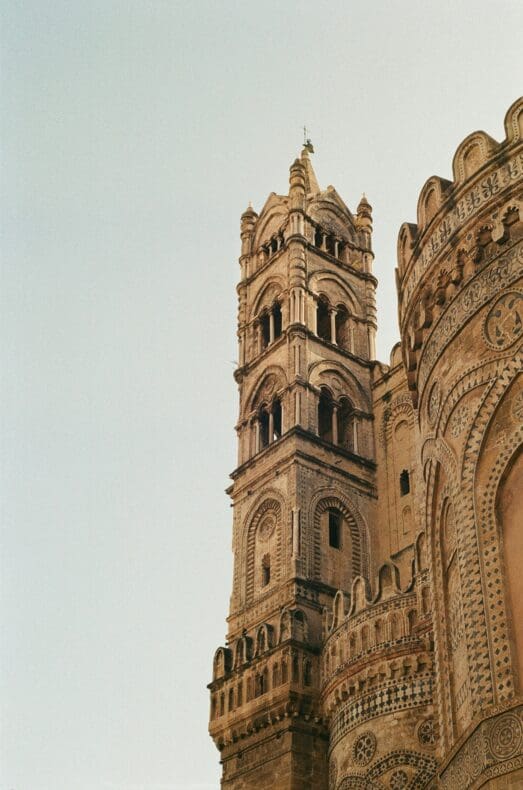
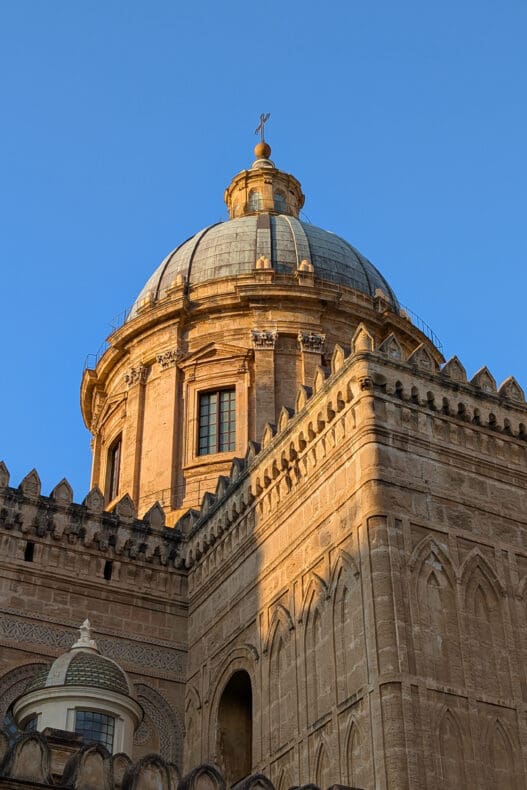
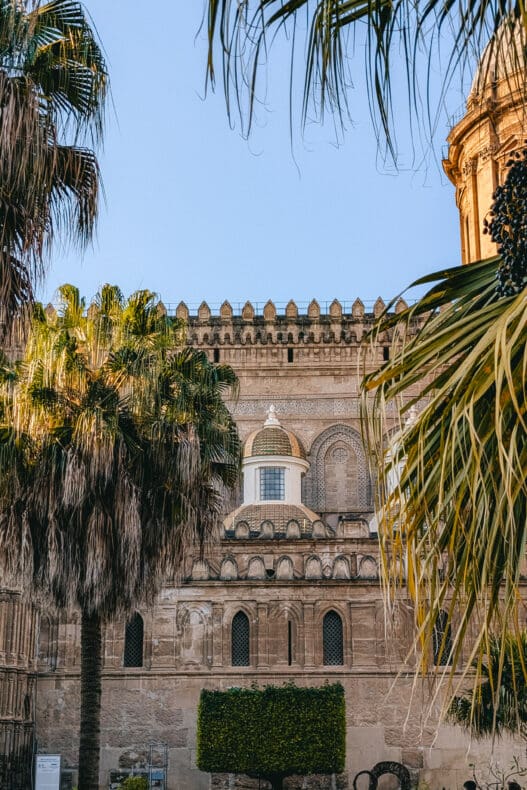
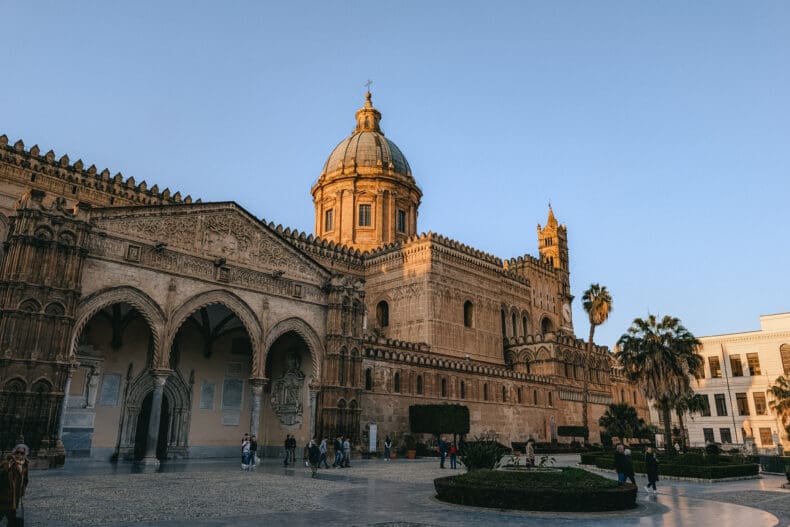
The Palermo Cathedral is a captivating blend of architectural styles, and there’s a fascinating story behind it. Built in 1185, this stunning structure has been transformed over the centuries, expanding, adapting, and even undergoing partial reconstructions. It was originally a mosque, then a Byzantine church, and today, it stands proudly as one of Sicily’s most remarkable cathedrals.
The exterior is a vibrant mix of influences from its diverse past, with Arab domes, Gothic towers, and Baroque embellishments. But it’s the interior that truly mesmerizes. Inside, you’ll find an extraordinary fusion of styles, shapes, and details that is unlike anything we’ve seen in any other church. While the interior may appear a bit understated compared to the grandeur of the exterior, we highly recommend stepping inside to see for yourself. And the best part? Entry is completely free.
As you explore, you’ll come across the tombs of several Sicilian kings, including Emperor Frederick II, who in the 13th century, worked to bridge the gap between Europe and the Arab world. One of the cathedral’s most intriguing features is the meridian line on the floor, an 18th-century astronomical instrument. Every day at noon, a beam of sunlight streams through a small opening in the roof, casting light onto the line, an ancient technique once used to determine the date. There’s a plaque nearby explaining how this fascinating method worked.
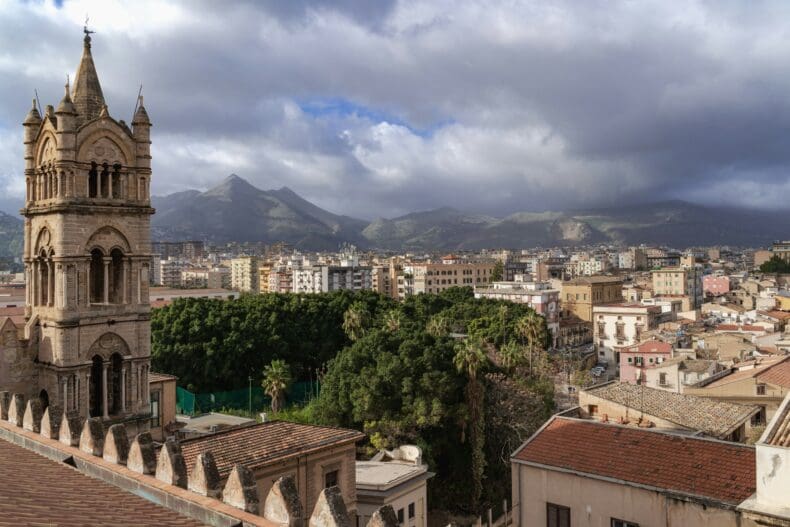
For an unforgettable view of Palermo, don’t miss the chance to climb up to the cathedral’s rooftop. From here, you’ll be treated to breathtaking views of the city stretching from the mountains to the sea. The panorama includes a patchwork of domes, bell towers, and lively markets filled with energy. To access the rooftop, you’ll need a ticket, but it’s definitely worth it.
#4 Piazza and Fontana Pretoria
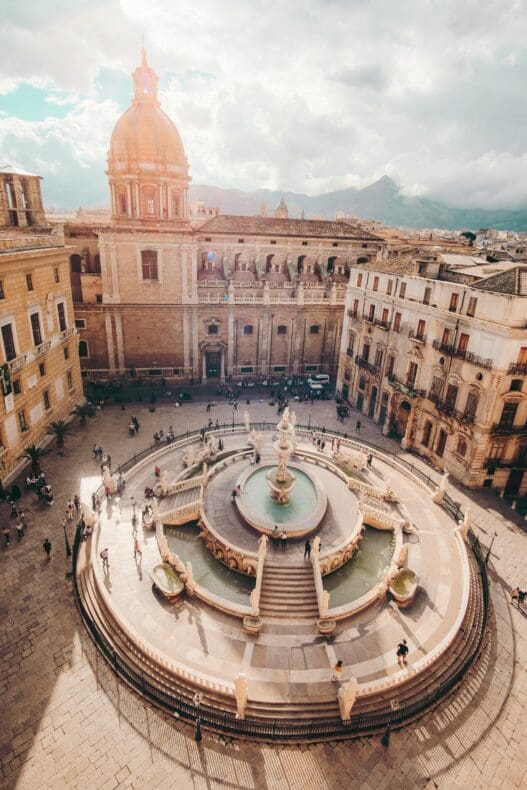
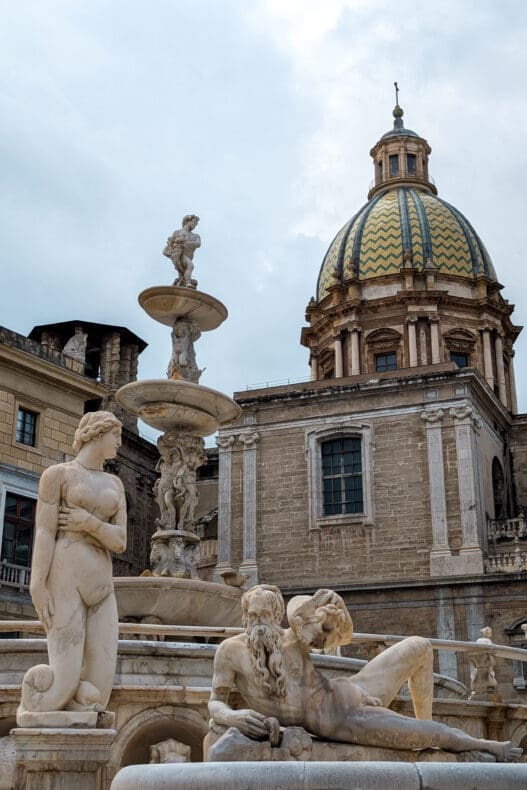
At the heart of Palermo lies Piazza Pretoria, a square that stirs both awe and whispers. Dominating its center is the grand Fontana Pretoria, a fountain originally situated in Florence. In the 16th century, it was disassembled, transported in hundreds of pieces, and meticulously reassembled here.
What makes this fountain truly one-of-a-kind? Sixteen statues of naked nymphs, gods, and mythical figures, sculptures that certainly raised eyebrows among the local monks and nuns, whose monastery stood just beside it. As a result, the fountain quickly earned the nickname “Piazza della Vergogna,” or the Square of Shame.
Around the square, you’ll find some of Palermo’s most stunning buildings, including the Palazzo Pretorio (City Hall), the Chiesa di Santa Caterina, and several elegant townhouses. As you stroll through, take a moment to observe the statues’ expressions. Some seem to grin, as if they are still entertained by the stir they caused centuries ago.
#5 Palazzo dei Normanni & Cappella Palatina
The Palazzo dei Normanni, also known as the Royal Palace, is one of Palermo’s most awe-inspiring landmarks. Originally constructed by the Arabs in the 9th century, the palace was later taken over by the Normans in the 11th century and transformed into their royal residence. Today, it serves as the seat of the Sicilian parliament, but the true highlight for visitors is the Cappella Palatina.
Built in 1140, this royal chapel is a stunning example of Arab-Norman architecture. Inside, it’s a dazzling spectacle of gold and color, with mesmerizing Byzantine mosaics that depict Biblical scenes in exquisite detail. The most famous mosaic is of Christ Pantokrator, whose intense gaze seems to follow you from the dome above. The ceiling is equally remarkable, with wooden panels decorated in intricate Islamic patterns that add to the chapel’s unique beauty. This is Palermo at its finest: a place where diverse cultures converge to create something extraordinary.
Make sure to take your time to absorb the intricate details. The gold mosaics change their radiance depending on where you stand, and if you look closely, you’ll find small Arabic inscriptions woven into the decorations. This is no ordinary chapel; it’s a living, breathing history book, told through the artistry of mosaics.
#6 Markets of Palermo
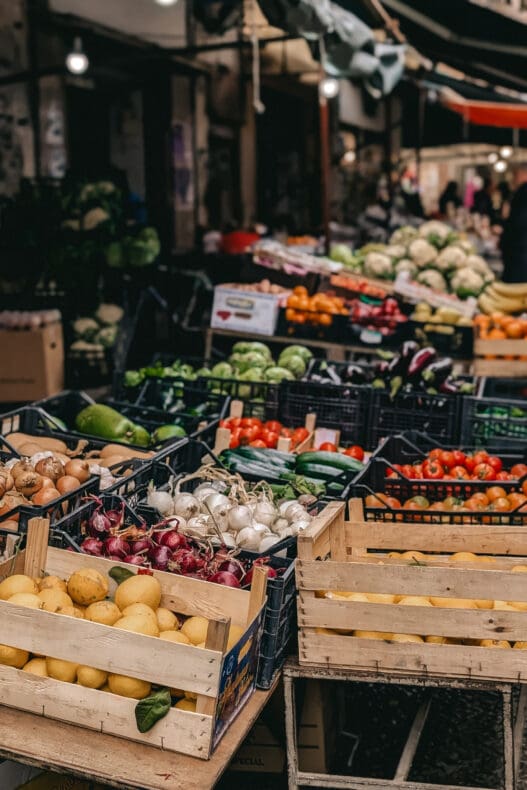
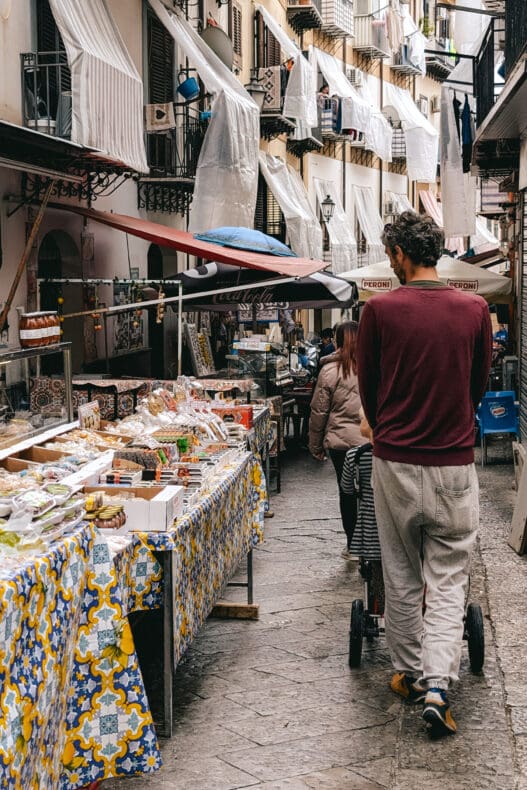
The markets of Palermo are an experience like no other. As soon as you get close, the air is filled with the vibrant shouts of vendors passionately promoting their goods, a tradition known as abbanniata, which has been around for centuries. The most famous of these markets is Ballarò, a lively and somewhat chaotic mix of stalls selling fresh fish, vegetables, fruit, and a variety of mouthwatering Sicilian delicacies. We couldn’t help but fall in love with walking through this market, where it seemed like the delicious offerings were endless. It’s here that you’ll get a real taste of Palermo: arancini, grilled octopus, and sweet, freshly made cannoli from a local baker.
Vucciria, on the other hand, tells a different tale. Once the city’s most bustling market, today it’s more known for its laid-back atmosphere, with the intoxicating smell of street food and the sounds of live music filling the streets. By day, it’s a peaceful spot, but as evening falls, it transforms into an open-air celebration, complete with tables, cold beers, and the typical Sicilian sandwich, pani câ meusa, stuffed with stewed spleen.
Next up is Mercato del Capo, a market that teems with aromatic spices, mountains of pistachios, and vibrant citrus fruits. If you’re looking for a place that’s easy on the eyes, this might be the most photogenic of them all, with its narrow, winding streets and charming old shops tucked between the stalls. Arriving early in the morning will reward you with the freshest produce, and you’ll be able to soak in the hustle and bustle as the city gradually comes to life.
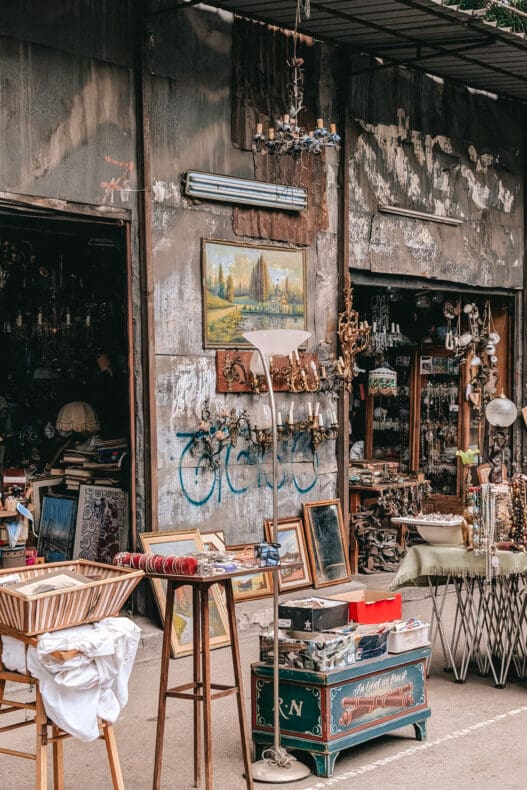
Finally, there’s the Mercato delle Pulci, Palermo’s delightful antique market, located near the cathedral. In this narrow alley, over twenty shops offer a treasure trove of antiques, from quirky curios to priceless collectibles. Whether you’re a vintage aficionado on the hunt for something special or just someone who enjoys a good browse, this market is the perfect spot to explore Palermo’s history through its unique and fascinating objects.
#7 Quattro Canti
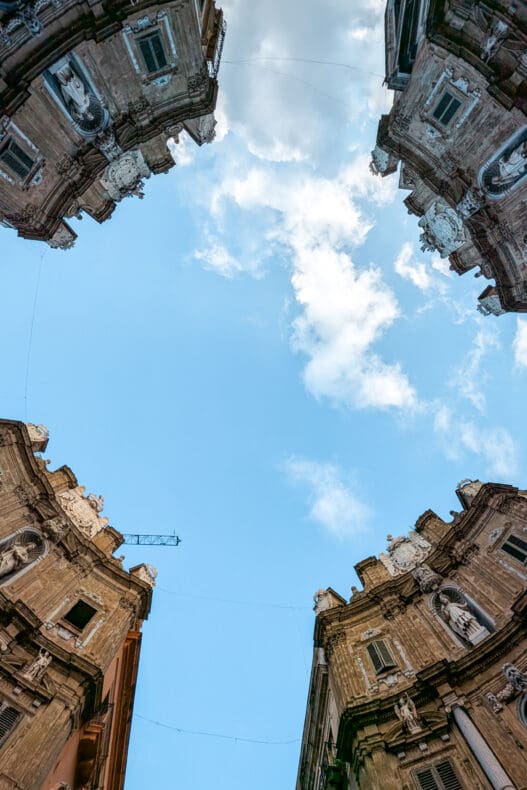
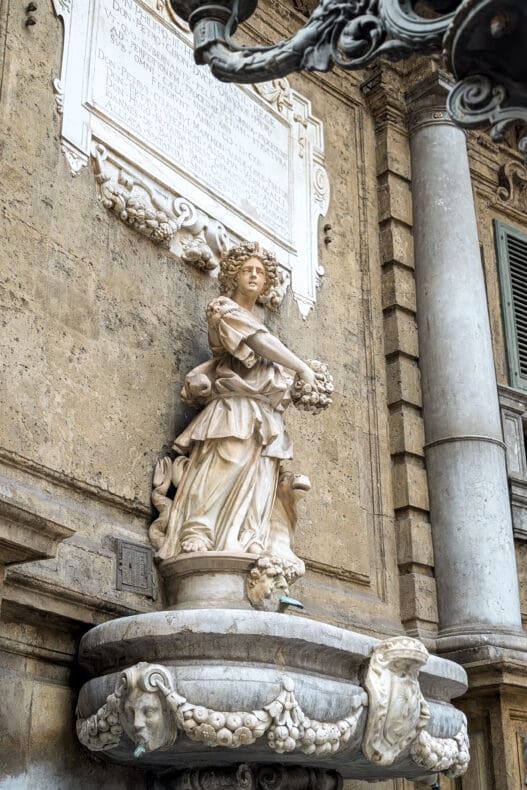
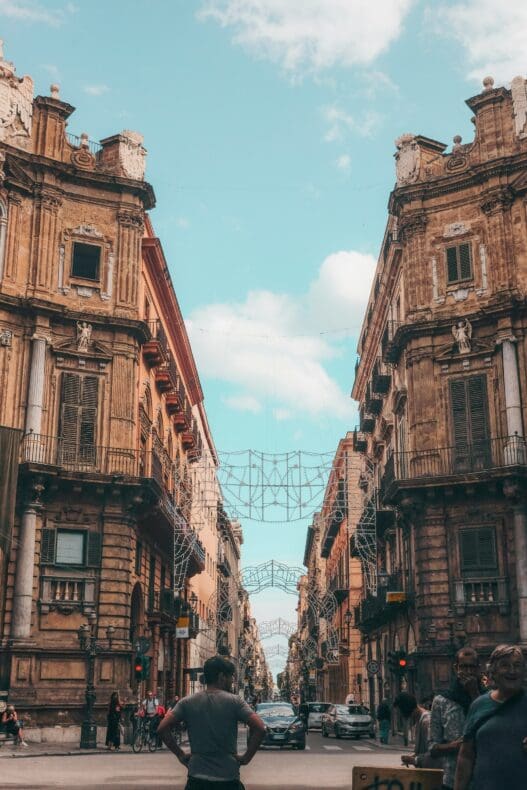
Nestled in the heart of Palermo’s historic center, Quattro Canti is a square where two of the city’s most important streets – Via Maqueda and Corso Vittorio Emanuele – cross paths. This baroque masterpiece, built in the early 17th century, is a stunning example of symmetry. Four identical facades frame the square, each one beautifully decorated with fountains, statues, and graceful balconies.
The intricate decorations follow a clear pattern. At the base, you’ll see fountains that symbolize the four seasons. Above them, statues of the four Spanish kings who once ruled Sicily stand tall. At the very top, the patron saints of Palermo’s four historic neighborhoods proudly watch over the city. Known also as the Teatro del Sole (Theater of the Sun), the square lives up to its name: as the day moves on, the sunlight shifts, casting a golden glow on each facade in turn, creating a captivating play of light and shadow.
Pause for a moment and look up – the architectural harmony is truly breathtaking. And if you’re fortunate, you might even catch the sound of a street musician filling the air with music, their melodies enhanced by the square’s remarkable acoustics, adding a touch of magic to the already enchanting scene.
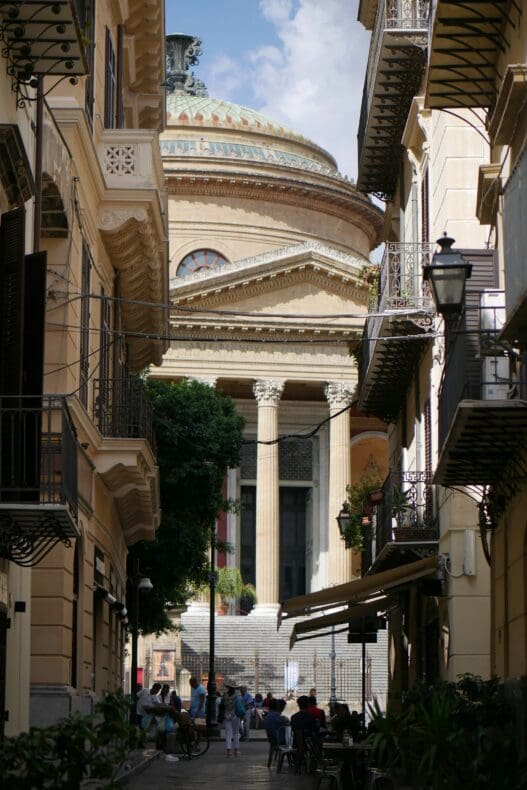
#8 Teatro Massimo (Massimo Theatre)
Teatro Massimo is not just a theater; it’s a true masterpiece. To call it impressive doesn’t quite capture the awe it inspires. We were completely mesmerized when we first laid eyes on it, arriving from Via Maqueda! As the largest opera house in Italy and one of the most magnificent in Europe, it’s impossible not to be captivated by its grandeur.
The theater took 22 years to build, and when it opened in 1897, Palermo erupted in celebration. Its design is both grand and classical, featuring an impressive colonnade and a towering dome. But the real enchantment lies inside, where the acoustics are so flawless that even a whisper on stage is crystal clear on the highest balconies.
Inside the grand hall, you’ll find walls draped in rich red velvet and gold leaf, with ceilings adorned in intricate frescoes. Here’s a little trivia for you: the iconic final scene of The Godfather Part III was filmed right here in 1990.
If you’re curious to see more, daily tours give you the chance to go behind the scenes, stepping onto the stage and exploring the dressing rooms. And if you have the opportunity, don’t miss the chance to attend a performance. It’s an experience that will stay with you long after the curtains fall.
#9 La Martorana (Chiesa di Santa Maria dell’Ammiraglio)
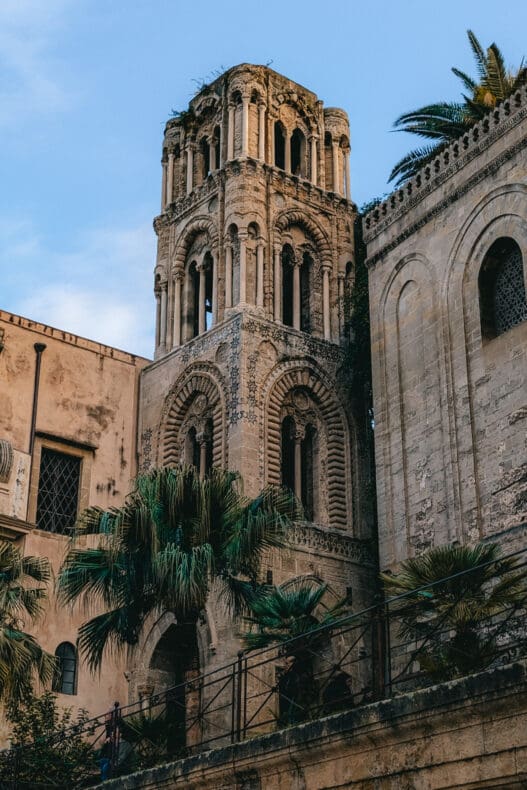
Palermo is a city full of surprises, and the Chiesa di Santa Maria dell’Ammiraglio – better known as La Martorana – is certainly one of its most fascinating gems. Located on the lively Piazza Bellini, this church is a stunning blend of architectural styles and cultural influences, showcasing how Sicily has long been a crossroads of diverse traditions. Byzantine mosaics, Norman architecture, and Baroque additions come together seamlessly, creating an extraordinary space that is both harmonious and mesmerizing. The result? One of the most beautiful and captivating churches in Palermo. In 2015, La Martorana was even recognized by UNESCO and added to the World Heritage List, alongside other Arab-Norman monuments in the city.
Founded in 1143 by a Byzantine admiral (or ammiraglio in Italian), the church’s name becomes instantly meaningful. Built in gratitude for the Virgin Mary’s protection during his maritime journeys, the admiral chose this site as a symbol of devotion. Originally constructed in the typical Byzantine style, the church underwent a Baroque renovation in the 17th century, including the addition of a new façade. Despite these changes, the church’s earliest elements remain breathtakingly intact and add to its timeless beauty.
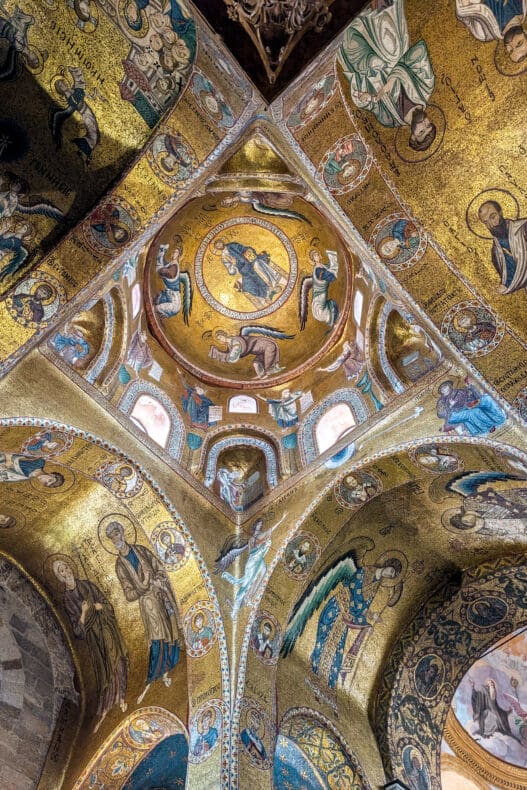
Step inside, and you’ll be greeted by the church’s most impressive feature: the mosaics. As you look up, golden figures gaze down from the walls and ceilings, creating a sense of awe. I found myself in awe of the intricate details, especially while sharing the experience with my toddler daughter, who was particularly enchanted by the stars, flowers, and angels. In the central dome, Christ Pantocrator reigns majestically, surrounded by a host of angels and saints. One of the most remarkable mosaics depicts King Roger II being crowned by Christ himself – an extraordinary and powerful political statement that carries deep historical significance.
Another striking aspect of La Martorana is the Arabic inscriptions found on some of the columns. These traces from the past reflect the contributions of Arab craftsmen who helped decorate the church. The blend of Greek mosaics, Latin inscriptions, and Arab designs makes this church a truly unique place where three distinct cultures come together in a spectacular way.
Bonus: monastery bakery Segreti del Chiostro
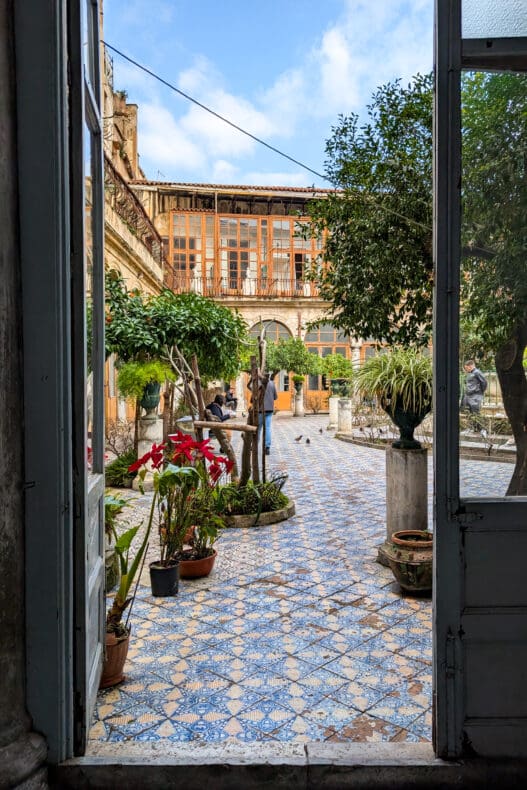
Across from La Martorana stands another stunning church, and even more captivating, a monastery that conceals one of Palermo’s best-kept secrets. Here, you can indulge in Sicilian treats from the historic monastery bakery! But is it really a hidden gem? We found ourselves waiting in line, so this spot is far from being a quiet unknown.
Behind the Church of Santa Caterina lies the ancient monastery of I Segreti del Chiostro. For centuries, the nuns here have been baking some of the most exquisite Sicilian pastries. Not for themselves, but to sell to the outside world. Today, the monastery has opened its doors to the public, giving visitors the chance to savor the same delectable sweets that have been crafted in silence for hundreds of years.
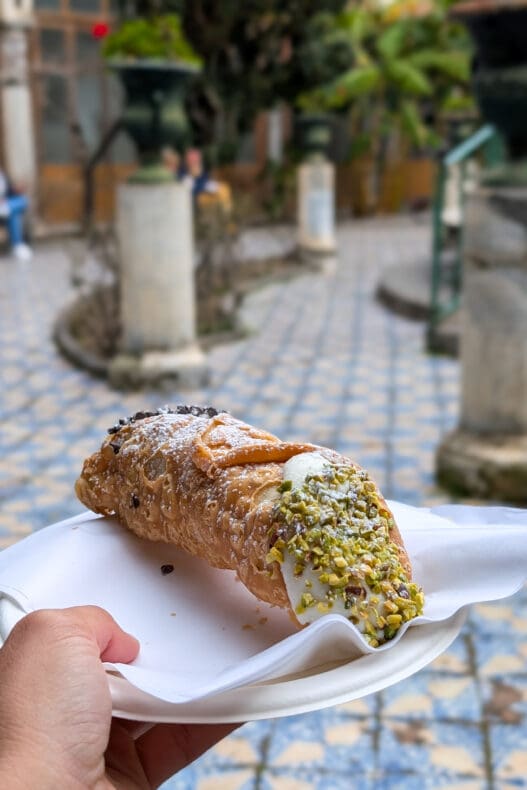
The display counter is filled with perfectly crafted frutta Martorana (marzipan fruits) and a variety of other pastries. We watched in delight as fresh cannoli were filled with creamy ricotta right before our eyes, and we were offered the choice of topping them with either rich chocolate or crunchy pistachios. The cannoli were so large that they practically covered our hands, and one was more than enough to satisfy our family. Simply order your favorite treat, pair it with a strong espresso, and find a tranquil spot in the monastery’s peaceful garden. Escaping the hustle and bustle of Palermo has never been so delightful.
If you want to explore Santa Caterina a little more, make your way to the rooftop terrace for a breathtaking view of the city. Both the church and the terrace can be accessed for a small fee. However, the monastery garden is open to all, even if you decide not to buy anything from the bakery.
#10 Monte Pellegrino
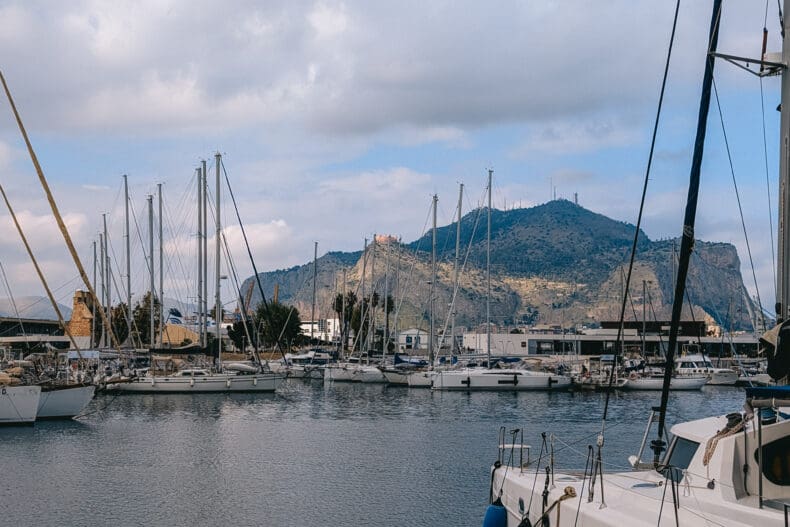
Rising dramatically above Palermo, Monte Pellegrino is often hailed by locals as the most beautiful mountain in Sicily. With its rugged cliffs, lush greenery, and panoramic views, it offers a stunning perspective of the city and the sparkling blue Mediterranean Sea below.
But Mount Pellegrino isn’t just about its natural beauty. It also carries deep religious significance. At the very top stands the Sanctuary of Santa Rosalia, Palermo’s patron saint. According to legend, Santa Rosalia lived as a hermit in a cave, and in 1624, her remains were discovered there. Soon after, a devastating plague struck the city. Miraculously, once her bones were paraded through Palermo, the epidemic vanished. To this day, Santa Rosalia is celebrated every year on July 15th with a vibrant festival and procession that winds through the streets of Palermo.
The journey to the top is an adventure in itself. You can drive up, but for those looking for a bit more excitement, there’s the Acchianata: a winding, ancient pilgrimage route that rewards hikers with stunning views at every turn. At the summit, not only can you visit the serene sanctuary, but you’ll also be treated to awe-inspiring vistas of Palermo, its bustling harbor, and the stretch of coastline. On clear days, the distant Aeolian Islands can be spotted, floating on the horizon like a far-off dream.
#11 Orto Botanico di Palermo
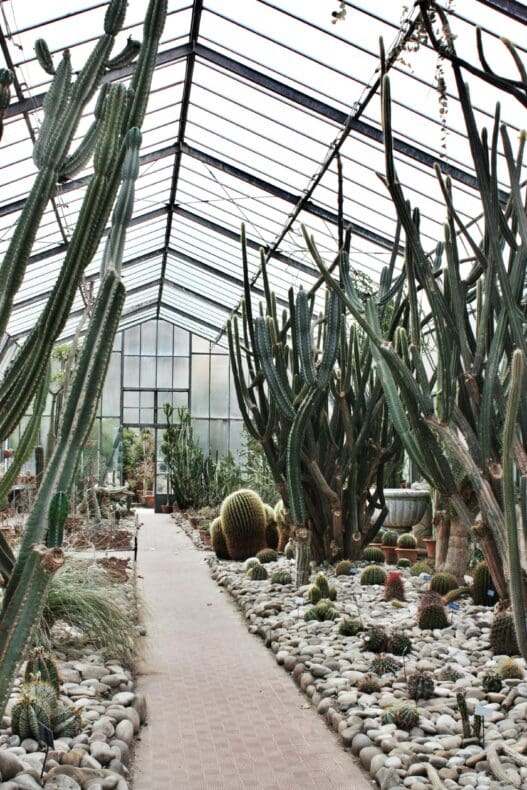
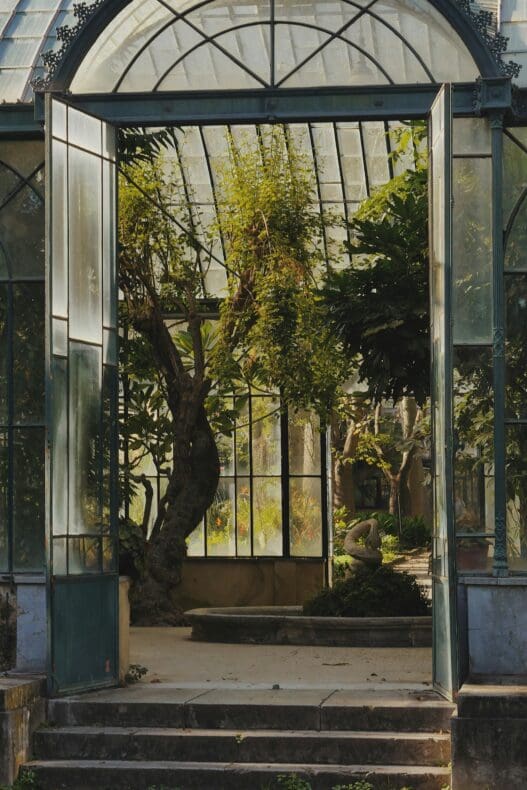
Nestled in the heart of Palermo lies a lush green haven where you can take a peaceful break from the city’s lively pace: the Orto Botanico. Founded in 1789, this botanical garden has become a sanctuary for plant lovers and anyone looking to unwind in nature’s embrace. Spanning over ten hectares, it boasts more than twelve thousand plant species from all corners of the globe, ranging from towering palm trees to delicate orchids.
One of the garden’s most captivating features is the expansive, round pond, home to a variety of water plants and blooming lotus flowers. The grand greenhouses and neoclassical main building lend a historic, almost regal atmosphere to the space. Don’t forget to admire the trees. Some are centuries old, like the awe-inspiring ficus with its vast, twisting roots that crawl along the ground like natural tentacles.
Adding to the charm of this tranquil spot are the unexpected residents: ring-necked parakeets. Once escaped from aviaries, they’ve created their own colony in the garden, playfully flitting between the tropical foliage. The Orto Botanico is the perfect escape from the hustle of the city, offering a peaceful stroll through a living tapestry of plant life, where nature’s beauty takes center stage.
#12 The Palaces of Palermo
Palermo is a city overflowing with breathtaking palaces, many of which are now open to the public as museums. As someone who adores the kitsch and splendor of historic palaces, Palermo is truly a dream come true!
The most famous of all is undoubtedly the Palazzo dei Normanni, once the royal residence of the Norman kings and now home to the Sicilian parliament. But the real gem here is the Cappella Palatina, a chapel that almost overwhelms the senses with its golden Byzantine mosaics and the delicate Arabic wood carvings that adorn its walls.
Not far from there, you’ll find the Palazzo Chiaramonte-Steri, a 14th-century Gothic palace with a dark history. In the 16th century, it became the headquarters of the Spanish Inquisition. Today, visitors can walk through the old prison cells, where eerie drawings and inscriptions on the walls offer a haunting glimpse into one of the darkest periods of Palermo’s past.
If you’re seeking the perfect blend of art and architecture, a visit to Palazzo Abatellis is a must. This graceful Gothic building is home to the Galleria Regionale della Sicilia, and its crowning treasure is The Annunciation by Antonello da Messina, one of the most renowned masterpieces of the Italian Renaissance.
#13 Catacombe dei Cappuccini
The Catacombs of the Capuchins are arguably one of the most eerie and fascinating attractions in Palermo. Beneath the Capuchin Monastery, thousands of mummified bodies rest in niches along the walls, many still dressed in their finest clothes. What began as a burial place for monks in the 16th century soon became the final resting place for Palermo’s wealthiest citizens and most influential figures. The combination of dry air and unique embalming techniques allowed these bodies to be preserved in astonishing detail.
One of the most famous mummies is that of Rosalia Lombardo, a young girl who passed away in 1920. Thanks to a secret embalming method, she looks as though she is merely sleeping, with her eyelashes softly resting on her cheeks. The catacombs are divided into sections: men, women, children, priests, and even a separate corridor for doctors. Photography is forbidden, but the haunting atmosphere of the catacombs leaves a lasting impression that lingers long after you’ve left.
#14 The Processional Chariot of Santa Rosalia
Palermo is a city that knows how to throw a grand celebration, and nothing compares to the spectacle of the annual Festino di Santa Rosalia. Every summer, on the 14th and 15th of July, the city transforms into an enormous festival ground, brimming with parades, lively music, and an irresistible array of street food. The star of the show? The massive, beautifully decorated processional chariot that is pulled through the streets.
Each year, the chariot receives a fresh design, often featuring intricate images and symbols that tell the legendary tale of Santa Rosalia. According to local lore, she miraculously rid Palermo of the plague in the 17th century, and ever since, she has been the beloved patron saint of the city. The procession begins at the historic Palazzo dei Normanni and makes its way to the Foro Italico promenade, where a stunning fireworks display fills the night sky. As the parade winds through the city, revelers sing traditional songs, toss flowers onto the chariot, and the energy builds into a jubilant crescendo. It’s undoubtedly one of the most magical times to visit Palermo, when the entire city unites in a celebration that blends devotion, festivity, and rich tradition.
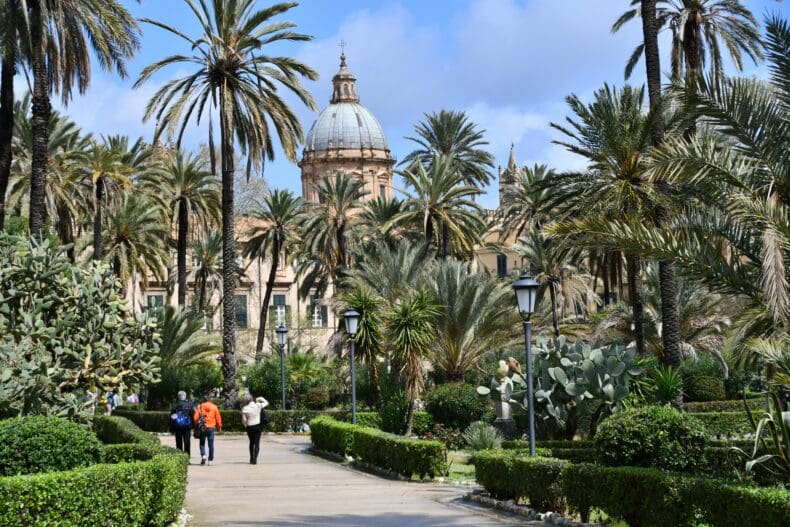
If you can’t make it to Palermo in July, don’t worry, you can still admire the magnificent chariot year-round in the park in front of the cathedral.
#15 The Other Churches of Palermo
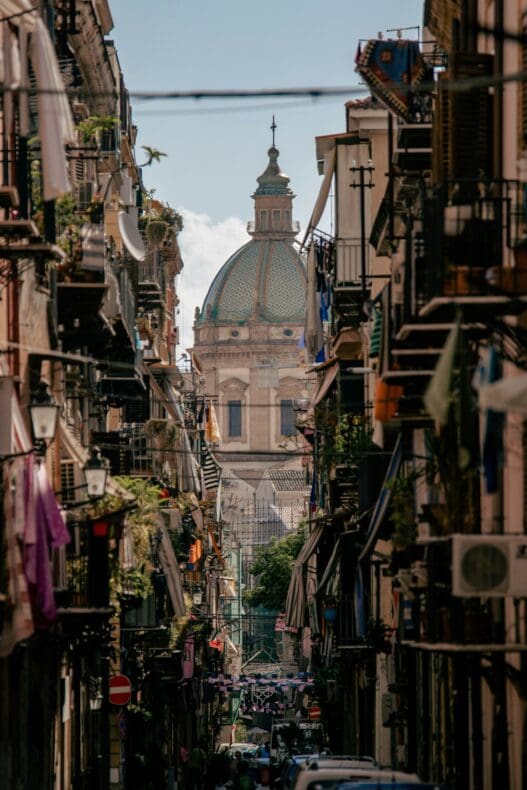
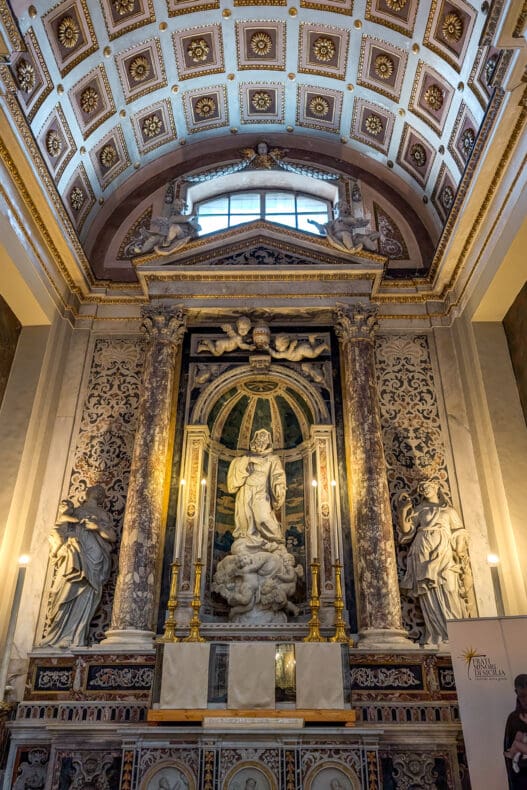
Palermo is brimming with churches, many of which rival the grandeur of the iconic cathedral but without the crowds. One standout is the Chiesa di San Cataldo, its three red domes evoking the timeless beauty of an ancient mosque. This church is a stunning example of 12th-century Arab-Norman architecture, showcasing the city’s rich and diverse history. Just a stone’s throw away is La Martorana, a church renowned for its breathtaking Byzantine mosaics. The combination of shimmering golden mosaics and intricate baroque details makes it one of the most visually striking churches in all of Sicily.
For those seeking the heart of Sicilian Baroque, the Chiesa del Gesù is an absolute must. Step inside, and you’ll be enveloped by an overwhelming display of marble embellishments, stucco artistry, and vivid paintings that together create an awe-inspiring atmosphere. If you’re in the mood for a peaceful retreat, head to San Giovanni degli Eremiti, a serene haven tucked in the heart of the city. The church itself is modest and unassuming, but its cloister garden—filled with palm and orange trees—offers a tranquil escape from Palermo’s vibrant streets.
#16 No Mafia Memorial
Palermo and the Mafia share a complicated and painful history, but the city has long since shed its reputation as the heart of organized crime. The No Mafia Memorial, housed in the historic Palazzo Gulì along the bustling Corso Vittorio Emanuele, offers a powerful look at the Mafia’s profound influence on Sicily, and the brave people who fought back. Through powerful photographs, videos, and firsthand accounts, the memorial honors the courageous judges, journalists, and everyday citizens who took a stand against the Mafia, often at great personal risk.
Far from being a static collection of exhibits, the museum brings the past to life with emotional stories and thought-provoking art installations. One of the most moving sections is dedicated to the memory of judges Giovanni Falcone and Paolo Borsellino, who were assassinated in the 1990s for their unyielding fight against the Cosa Nostra. With free admission and daily opening hours (except Tuesday), the museum offers a unique opportunity to experience Palermo in a way that is both educational and deeply moving. It’s not just another tourist attraction, but a place that reveals the resilience and spirit of a city that continues to rise above its dark past.
#17 Cassaro (Via Vittorio Emanuele)
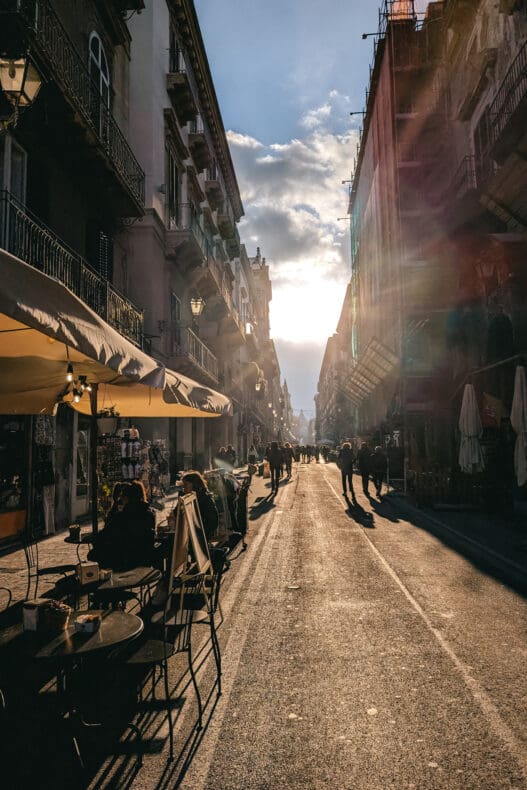
The Cassaro, officially called Via Vittorio Emanuele, is the oldest street in Palermo, stretching right through the vibrant heart of the historic center. First laid out by the Phoenicians and later paved by the Romans, today it’s a bustling, pedestrian-only boulevard brimming with monuments, shops, outdoor cafés, and stunning historical buildings.
As you wander along the Cassaro, you’ll encounter some of Palermo’s most iconic landmarks. You’ll pass by the majestic Palermo Cathedral, gaze up at the impressive Palazzo dei Normanni, and admire the baroque symmetry of Quattro Canti. But what truly makes this street special is the atmosphere. Though it’s a popular destination for tourists, it also offers an authentic glimpse into the everyday life of the Palermitani. Narrow alleys lead you to tucked-away squares and charming cafés, where you can unwind with a fresh espresso or sip on a refreshing glass of lemon juice.
The Cassaro is enchanting during the day, but when evening falls, it becomes even more magical. As the sun sets and casts a golden glow over the ancient buildings, a walk here feels like stepping into a scene from a romantic film—a perfect mix of history, beauty, and timeless charm.
#18 Porta Nuova and Porta Felice
Palermo is a city full of contrasts, and nowhere is this more striking than at the two magnificent city gates that frame the entrance to the old town: Porta Nuova and Porta Felice. Porta Nuova, standing proudly next to the Palazzo dei Normanni, was built in the 16th century to honor Emperor Charles V. Its exterior is richly adorned with statues and reliefs that showcase his military triumphs. Take a moment to look up at the dramatic, Moorish figures that guard the gate, adding a sense of grandeur and mystery to this already impressive monument.
On the other side of the Cassaro, near the coast, lies the more modest Porta Felice. Built in the 17th century, this gate was once the grand entrance for sailors and merchants arriving in the city. In contrast to Porta Nuova’s bold display of power, Porta Felice boasts a more refined and welcoming design. Named after Felice Orsini, the wife of the viceroy, it was meant as an elegant invitation rather than a symbol of dominance.
#19 Palermo’s Marina
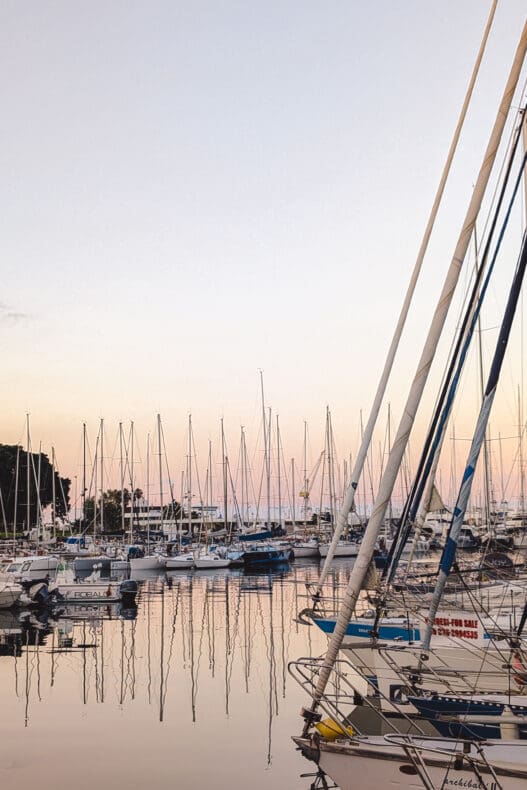
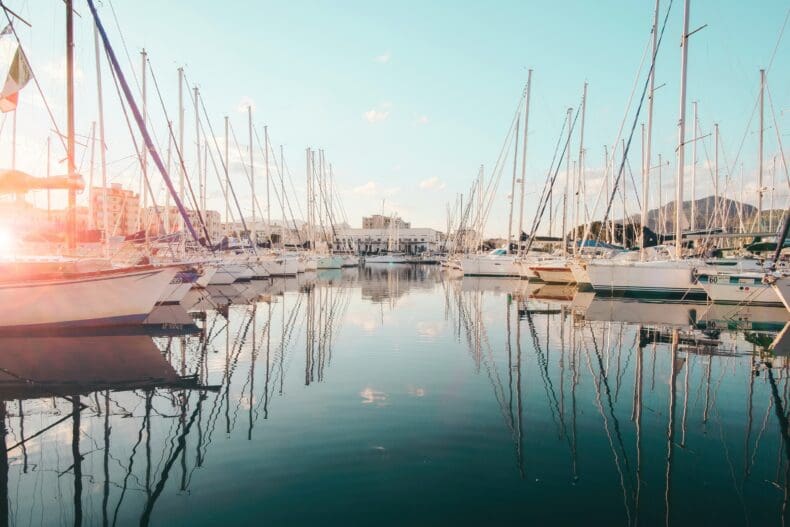
The Marina of Palermo, also known as La Cala, is one of the most tranquil spots in the city to relax and unwind. Once the bustling heart of Palermo’s harbor, it was filled with merchant ships and fishing boats coming and going. Today, it has evolved into a serene haven for sailboats and luxury yachts.
The promenade is lined with palm trees and benches, where locals gather to chat or simply enjoy the view, especially at sunset. We found ourselves sitting at a charming terrace, savoring a glass of crisp white wine while taking in the sight of the elegant sailboats drifting by. It was a perfect, peaceful moment in the sun, a welcome pause from all the sightseeing.
#20 Palazzina Cinese
On the edge of Palermo, nestled within the lush expanse of Parco della Favorita, stands a palace that feels like it belongs to a completely different world: the Palazzina Cinese. This colorful gem was built at the end of the 18th century as a retreat for King Ferdinand III of Sicily. At the time, Europe was entranced by all things exotic and “Oriental,” a fascination that clearly influenced the design of the building.
With its pagoda-style roofs, graceful balconies, and intricate frescoes, the Palazzina Cinese beautifully evokes the imagination of an era enchanted by Eastern aesthetics. Inside, the rooms have been remarkably well-preserved, with richly decorated walls, hand-painted wallpaper, and even a clever mechanism that allowed the dining table to rise from the floor, so the king could dine without servants in his presence.
Today, the palace is a museum, offering a fascinating glimpse into the luxury and opulence of the Sicilian royal family. Admission is only a few euros, but unfortunately, we found it closed during our trip through Sicily. Since the Palazzina Cinese isn’t open year-round, it’s a good idea to check ahead before planning your visit.
#21 Spiaggia di Mondello (Mondello Beach)
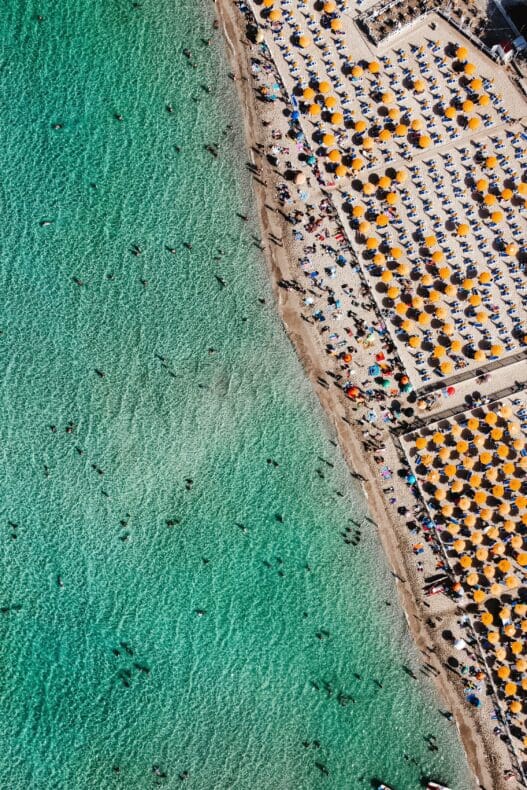
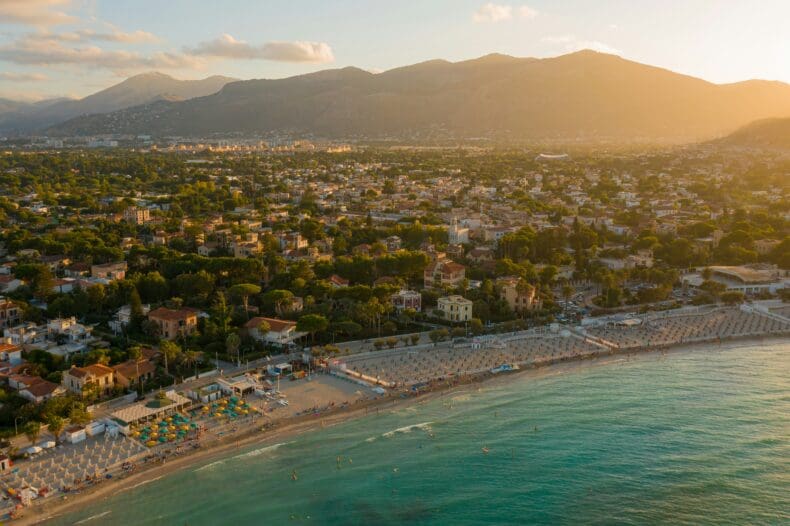
Just a short twenty-minute drive from Palermo, you’ll find Spiaggia di Mondello, one of Sicily’s most stunning beaches. With its sparkling turquoise waters, soft white sand, and the dramatic backdrop of the surrounding mountains, it’s no wonder this spot is beloved by both locals and tourists alike. During the summer months, the beach is alive with sunbathers soaking up the rays, children joyfully building sandcastles, and swimmers diving into the refreshing sea.
Mondello’s charming promenade is lined with colorful Liberty-style villas, quaint seafood restaurants, and gelato shops where you can indulge in the region’s finest granita. Once an exclusive retreat for the aristocracy in the early 20th century, much of its old-world elegance remains, adding a touch of timeless beauty to the area.
For those looking for a bit more adventure, there’s plenty to do: rent a paddleboard and glide across the water, take a scenic boat tour along the coast, or embark on a hike up to the rugged rock formations of Mount Pellegrino. But if you’re in the mood for pure relaxation, simply settle into a beach chair, order an Aperol Spritz, and bask in the breathtaking views.
#22 Parco della Favorita
At the base of Mount Pellegrino lies Parco della Favorita, Palermo’s largest and most verdant park. This sprawling natural haven was established in 1799 by King Ferdinand III of Bourbon, who sought refuge in Palermo to escape the chaos of Naples. Once a private hunting ground where the king experimented with exotic crops, the park today offers locals a peaceful retreat to jog, cycle, or simply unwind from the city’s hustle and bustle.
The park seamlessly combines untamed nature with old-world royal charm. Wide, tree-lined avenues give way to meandering paths that wind through towering eucalyptus trees and open meadows. As you explore, you’ll encounter historic structures like the vibrant Palazzina Cinese, a royal getaway built in striking Chinese architectural style. Further within, you’ll discover sports fields, an equestrian center, and even a few rustic farms that hark back to the park’s agricultural roots.
#23 Teatro Politeama Garibaldi (Politeama Garibaldi Theater)
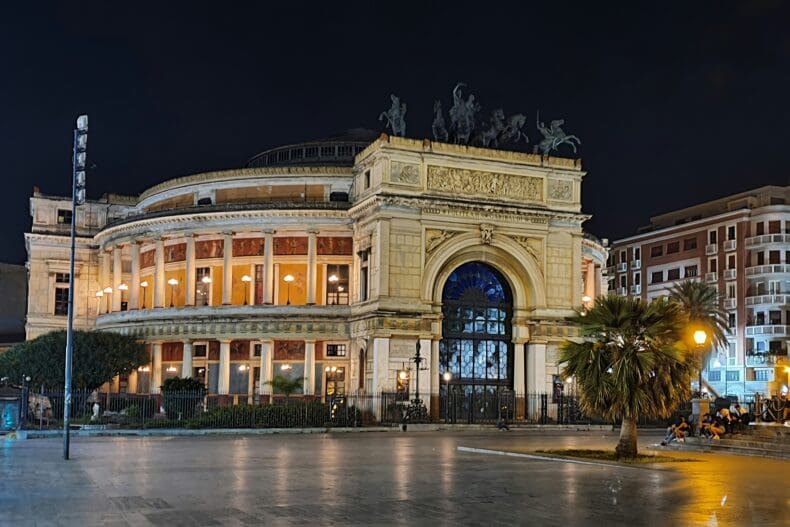
Teatro Politeama Garibaldi is one of Palermo’s most refined and impressive landmarks. This 19th-century neoclassical theater was built with the idea of making culture accessible to all social classes—a refreshing contrast to the more exclusive Teatro Massimo. The building immediately grabs your attention with its grand triumphal arch at the entrance, crowned by a dramatic sculpture of horses and chariots that sets the tone for the splendor inside.
Step inside, and the sense of grandeur only deepens. The expansive concert hall is filled with plush crimson velvet seats, gleaming golden accents, and a breathtakingly detailed painted ceiling. Today, it is the proud home of the Sicilian Symphony Orchestra, regularly hosting an array of concerts and operas. Even if you’re not attending a performance, the lively square surrounding the theater is worth a visit, offering a perfect spot to take in the vibrant atmosphere of the area.
#24 Street Art of Palermo
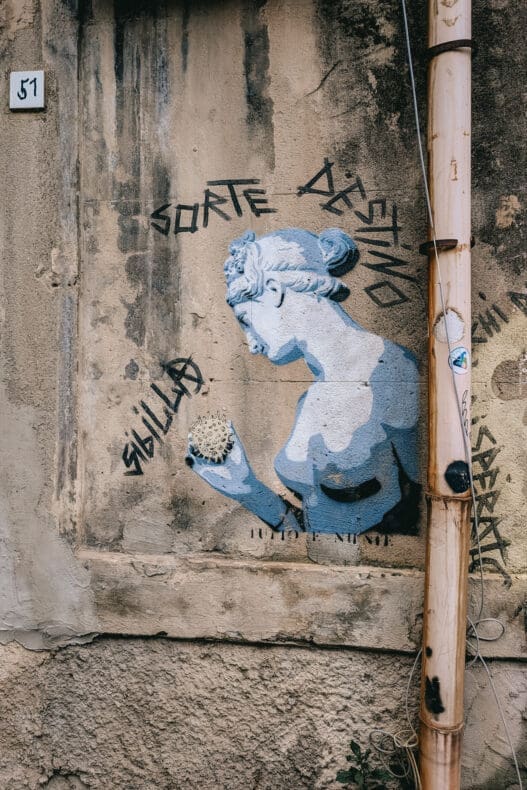
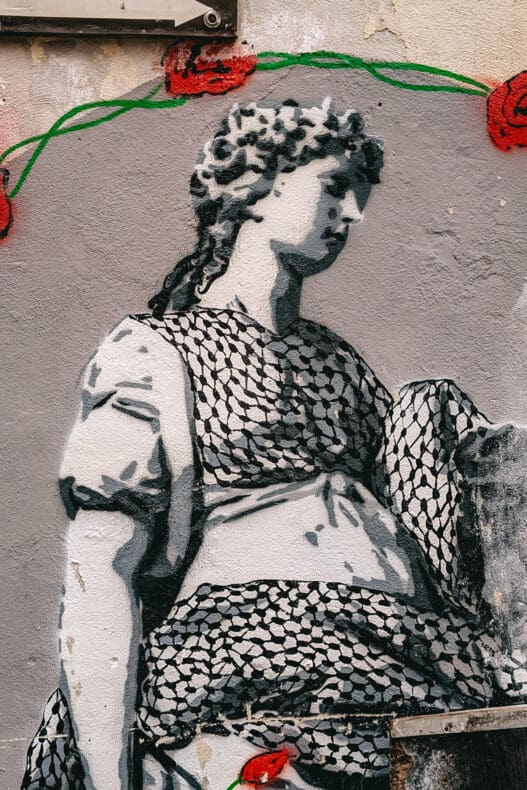
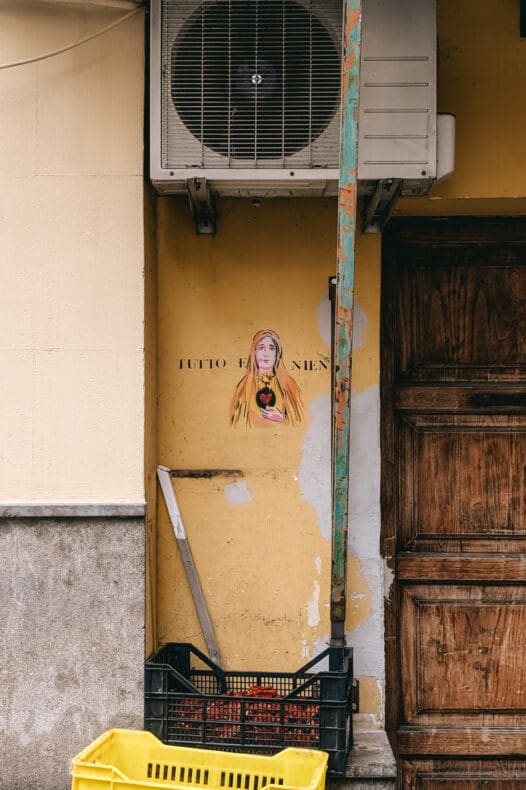
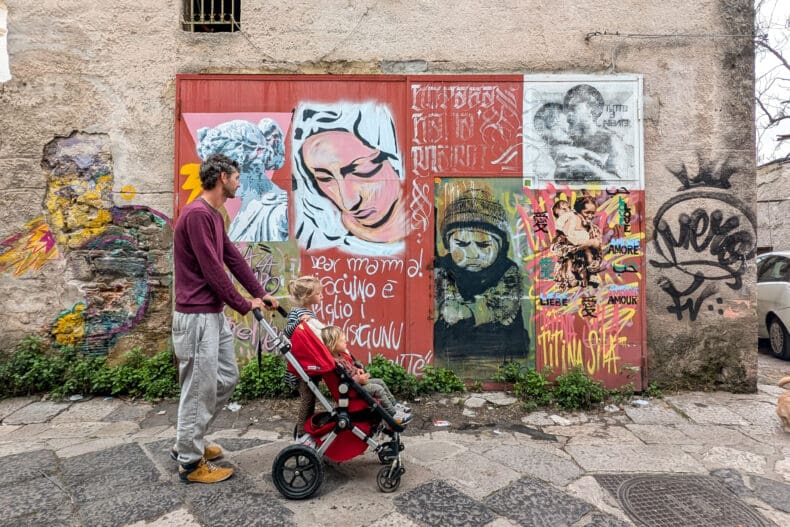
Palermo isn’t just a city of ancient palaces and churches; it’s also a vibrant hub of modern, raw art. In recent years, street art has flourished here, with entire neighborhoods evolving into open-air galleries. One of the best spots to immerse yourself in this artistic revolution is the area around Via Carrettiera, near the lively Capo market. The walls here are covered in striking murals, ranging from bold portraits to powerful political messages.
What makes Palermo’s street art truly captivating is that it’s not just decoration; it’s a form of storytelling. Large, emotive depictions of Giovanni Falcone and Paolo Borsellino, the judges who sacrificed their lives in the battle against the mafia, can be found on these walls. In the winding alleyways of Ballarò and Vucciria, surreal, dreamlike scenes unfold, with bright colors and abstract figures transforming the narrow streets into something entirely new. Many of these works have been created by local artists like Igor Scalisi Palminteri, who skillfully merges religious imagery with contemporary themes, adding a unique, thought-provoking layer to the city’s art scene.
#25 Castello della Zisa (Castle of the Zisa)
Castello della Zisa feels more like a palace from the Middle East than a traditional European castle, and that’s no coincidence. Built in the 12th century as a summer retreat for the Norman kings of Sicily, it’s a striking example of Arab-Norman architecture, a unique blend of cultures that once flourished on the island. The name “Zisa” comes from the Arabic word al-Aziz, meaning “the splendid,” which is exactly what this place lives up to.
Step inside, and you’re instantly transported to another time. Soaring arches, intricate mosaics, and a graceful central fountain give the space a calm, almost magical atmosphere. In the heat of summer, an advanced cooling system once circulated fresh air through the halls—a clever feature that would be a welcome luxury even today. The building now houses the Museum of Islamic Art, where you can admire a fascinating collection of ceramics, jewelry, and manuscripts that shed light on Sicily’s Arab heritage.
But Zisa isn’t just about history and architecture. It’s wrapped in mystery too. According to legend, spirits still roam the halls, guarding a hidden treasure. Some visitors have reported seeing eerie shadows or feeling a sudden chill on windless days, adding a supernatural touch to the castle’s timeless charm.


