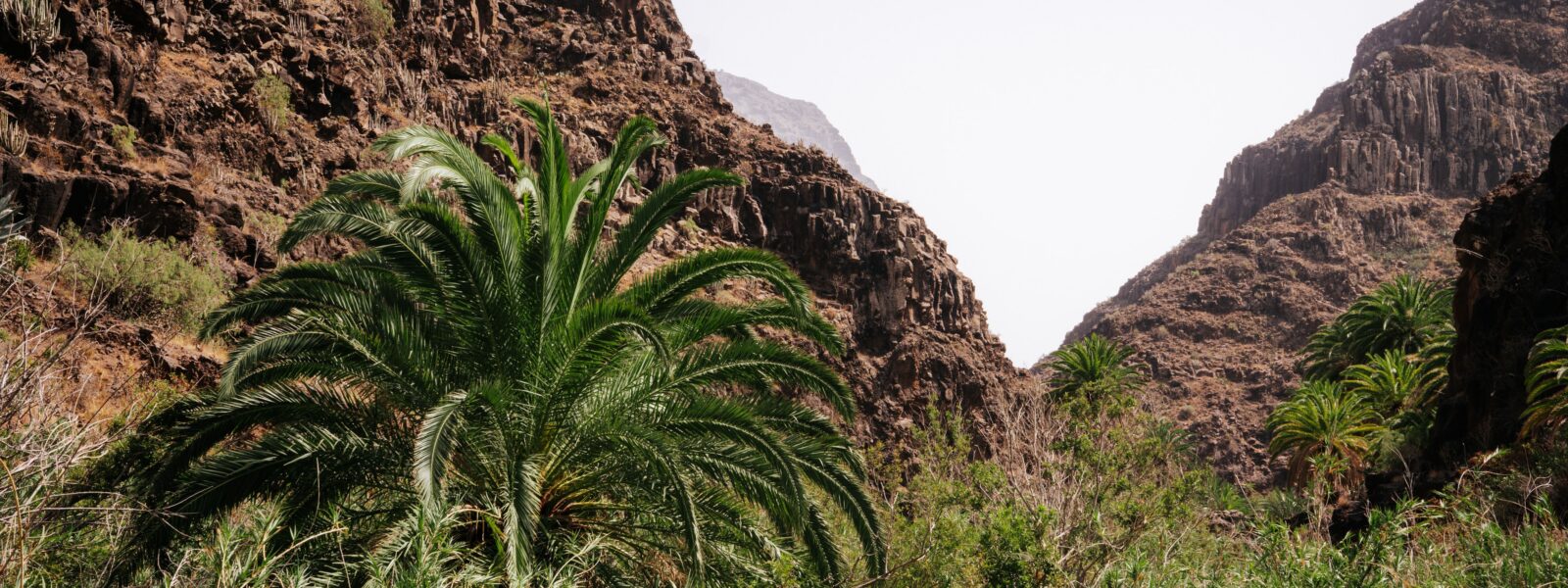
Palm trees as far as you can see, black beaches and a sun that sinks into the ocean every evening while someone further down the beach plays the djembe. Valle Gran Rey is La Gomera’s best-known valley, and after a few days there we understood exactly why. We planned to stay one night. We stayed four.
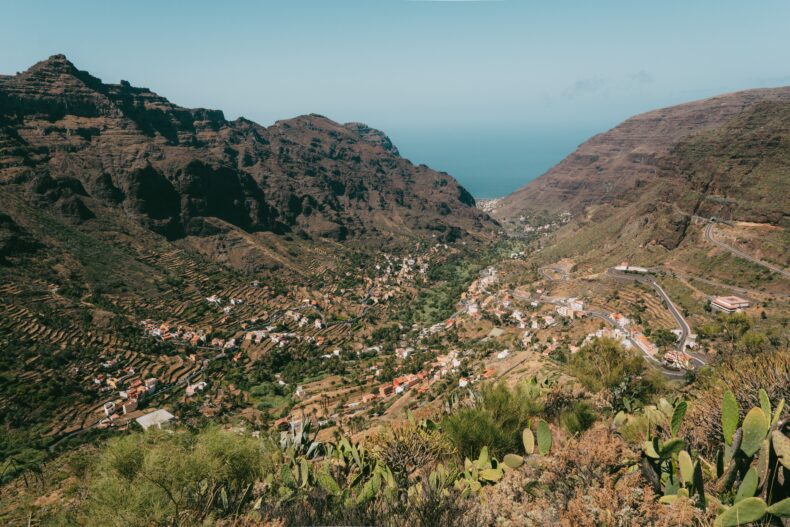
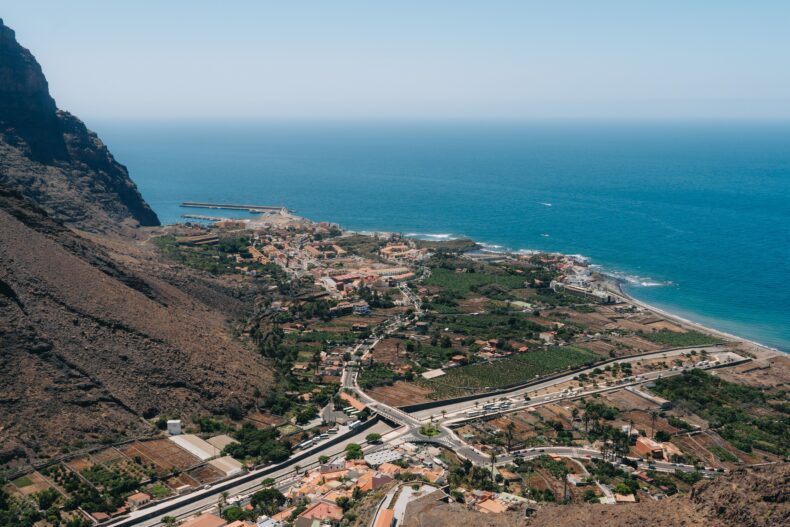
The valley runs all the way from the mountains in the island’s interior down to the west coast. At the bottom you’ll find a handful of small villages that together form one laid-back seaside resort, without big hotels or busy promenades. It’s a place to swim, to hike and above all to do a little bit of nothing.
In this guide we share the best things to do in Valle Gran Rey: the beaches, the villages, two adventurous hikes, the best viewpoints over the palm trees and five day trips around the rest of La Gomera. And of course, where to stay.

What is Valle Gran Rey known for?
Valle Gran Rey is known for its green palm valley, the black beaches on the west coast, the best sunsets on La Gomera and a relaxed vibe with a hint of hippie culture. It’s the most popular spot on the island, yet it still feels small and village-like.
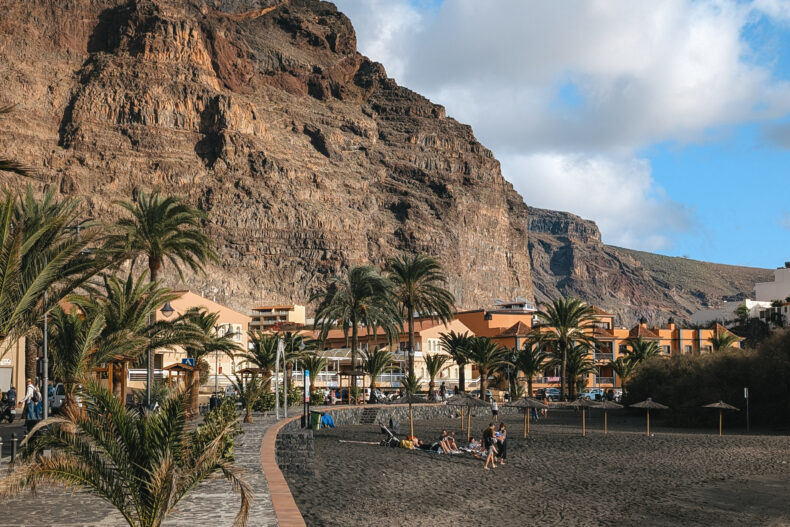
The landscape makes an impression straight away. Steep rock walls rise up on both sides of the valley, and in between lie terraces of banana plants, papayas and avocado trees. The closer you get to the sea, the more palm trees you see. Every now and then we felt as if we’d landed somewhere in Asia.
Since the 1970s the valley has drawn hippies and alternative travellers, and you can still clearly see it. There are yoga classes by the sea, organic shops and street musicians. Lots of German retirees also spend the winter here, and you’ll spot them on every terrace. Even many menus are partly in German.
Sunset is a small event every single evening. People gather on the beach at La Playa, someone starts drumming and everyone watches the sun slip below the horizon.
You won’t find mass tourism here. The valley is narrow, the buildings are low and you can walk from one village to the next in about fifteen minutes, past palm trees and banana plantations.
→ Discover the 24 best places to visit on La Gomera
How do you get to Valle Gran Rey?
La Gomera only has a small airport, so most travellers fly into Tenerife South. From Los Cristianos you take the ferry to San Sebastián de La Gomera, the capital on the east coast. From there you have two ways to reach Valle Gran Rey: by road or by sea.
By car it’s roughly an hour along a winding mountain road right across the island, with views that keep making you want to pull over. Rather not drive? Fred. Olsen Express sails daily from San Sebastián via Playa Santiago to the harbour in Vueltas. The crossing takes just over an hour and follows the rugged south coast. In Vueltas you step off right in the village.
That said, we’d recommend a rental car. La Gomera’s best spots are spread across the island and they’re hard to reach by bus. If you want to see more than just this valley, a car is pretty much essential. Discover Cars compares lots of rental companies in one go, so you can quickly see which deal and which insurance suit you.
→ Find a rental car on La Gomera with Discover Cars
Where to stay in Valle Gran Rey?
Stay at the bottom of the valley, in La Playa or Vueltas. That way you’re within walking distance of the beaches, restaurants and supermarkets. La Playa is the best pick if you want to watch the sun go down with your feet in the sand every evening. Vueltas is a little livelier, with the harbour, fish restaurants and the calmest swimming beach for kids.
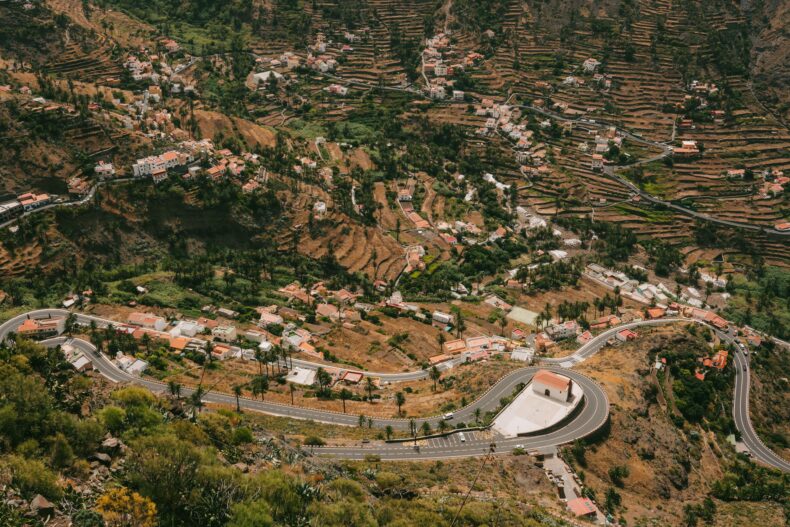
Further up in La Calera it’s quieter and you often get a great view over the valley, but you’ll be walking up and down a slope all the time. There are hardly any big hotels: you’ll mostly stay in apartments, small hotels and guesthouses.
#1 Hotel Playa Calera is in La Playa, a few minutes’ walk from Playa de La Calera. It’s one of the few proper hotels in the valley, with a large rooftop pool where you can watch the sun drop into the sea in the evening.
#2 Vistamar Vueltas is a one-bedroom apartment with a sun terrace and sea views, just a few steps from the sheltered harbour beach. The fish restaurants around the harbour are right around the corner.
#3 Residencial El Llano in Borbalán sits at the foot of the cliffs, with an outdoor pool and apartments that each have their own terrace or balcony. The sea is about a ten-minute walk away, and with more than eight hundred glowing reviews you’re in good hands.
#4 Casa Roja La Calera is a two-bedroom holiday home with a garden and a terrace overlooking the sea, high up in the old village. A peaceful choice, although after a beach day you’re facing a fifteen-minute walk uphill.
The best beaches in Valle Gran Rey
Every beach in Valle Gran Rey has black volcanic sand and pebbles. You’ll hardly find sunloungers or beach showers, but in return you get quiet, unspoilt beaches. Each one has its own character, from calm swimming water to wild waves.
→ Discover the 15 most beautiful beaches in the Canary Islands
#1 Playa de Vueltas: the calmest beach for a swim
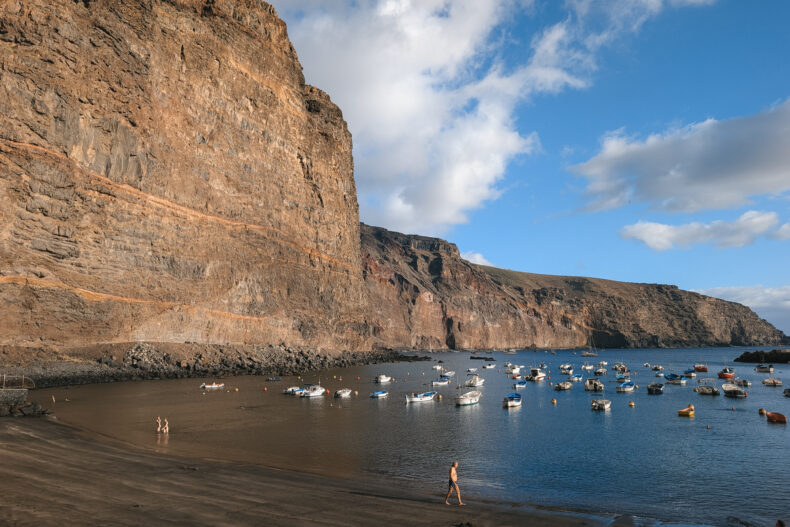
For our kids, this was the perfect beach. Playa de Vueltas lies right next to the harbour and is sheltered from the waves by the harbour pier and the rocks. The water is usually calm here, so even little swimmers can paddle around safely.
The beach is black sand with fine pebbles. You look out over fishing boats and cliffs, and the terraces of Vueltas are just a couple of minutes away.
#2 Playa de La Calera: our favourite beach for swimming
Fancy a proper swim? This is your spot. Playa de La Calera is a long, open beach by the village of La Playa, with fewer rocks than the other beaches and a sea that’s usually not too rough. At low tide, rock pools appear where kids can play.
There’s plenty of room to lie down and read, and you’ll find cafés and restaurants just behind the beach. In the late afternoon more and more people turn up for the sunset, often with street musicians playing along.


#3 Playa del Inglés: wild and unspoilt
We thought this was the most beautiful beach on La Gomera. Playa del Inglés sits at the far end of the valley, past La Playa, and feels a lot wilder than the rest. High cliffs, black sand and the roar of the ocean make it an impressive place.
Swimming here isn’t a good idea, as the currents are strong and the sea is often rough. It’s popular with hikers, sunbathers and people who come for the sunset, though. All over the beach you’ll find little stone walls that people have built to shelter from the wind. You’ll also see plenty of naturists, although it isn’t an official nudist beach.

#4 Charco del Conde: the valley’s baby beach
Charco del Conde is a natural lagoon between Vueltas and La Puntilla, known locally as Baby Beach. At low tide a shallow, sheltered pool forms here, with still, warm water.
Around it you’ll find a small playground, benches and a bit of shade. That makes it a great spot for families with young children, who can splash about safely while you relax nearby.

The villages of Valle Gran Rey
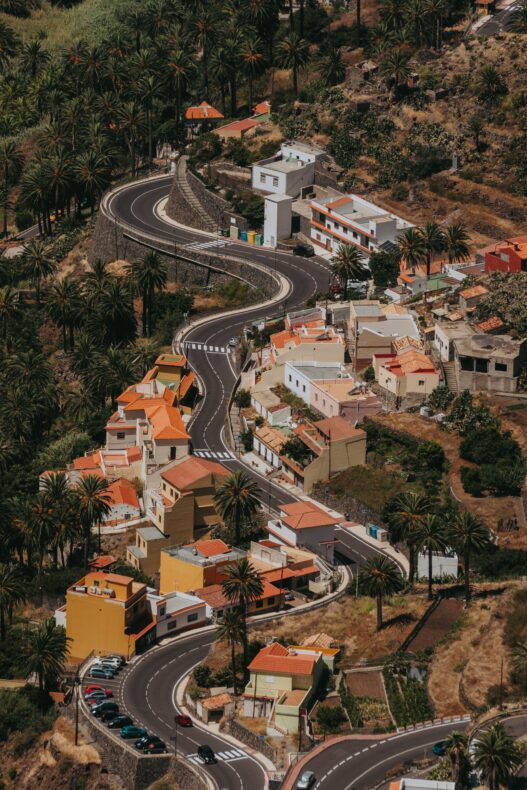
Valle Gran Rey isn’t one village but a collection of villages that blend into each other. At the bottom are La Playa, Vueltas and the quiet residential area of Borbalán. Higher up the valley you’ll find La Calera and El Guro. You can easily walk from one to the other, so there’s no need to choose.
#5 La Playa: beach and sunset
In La Playa, life revolves around the sea. Places to stay, cafés and little shops are all within walking distance of the beach. This is also where you’ll find the biggest supermarket in the valley, the Spar, although even that wasn’t much to write home about.
During the day, hikers, sun seekers and winter visitors stroll past. In the evening the beach fills up for the sunset, the daily ritual of Valle Gran Rey.
#6 La Calera and El Guro: the old villages on the hillside
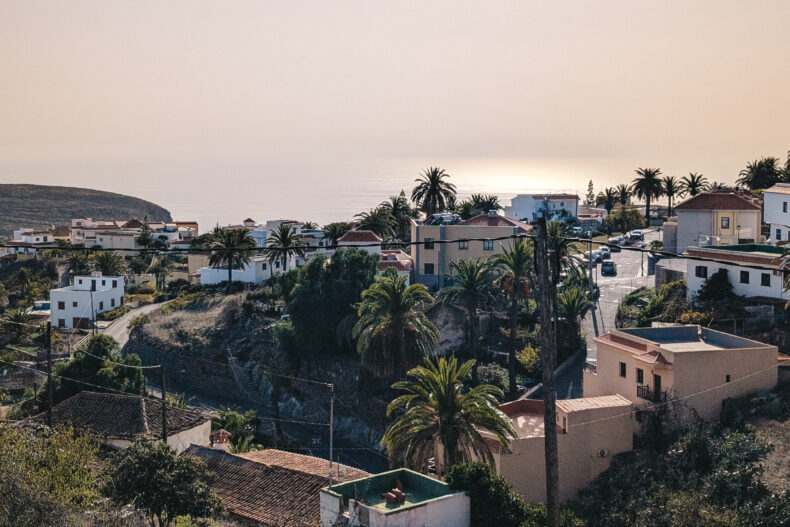
La Calera is the oldest part of the valley. White houses cling to the slope here, with narrow alleys and stairs that lead to viewpoints over the sea. Fewer tourists make it up here than down on the coast, so it’s a peaceful place if you like a village feel.
A little higher still is El Guro, a tiny artists’ village with colourful houses and steep paths. We drove up there to start the hike to the Arure waterfall (see tip 9) and easily found parking along the road.
#7 Vueltas: the harbour and fish restaurants
Vueltas is the liveliest part of Valle Gran Rey. Around the harbour, the little square and the short promenade you’ll find fish restaurants, bars and terraces, and this is where the ferry and the whale-watching boats dock.
Order the catch of the day and watch the fishing boats come in. The hike to Barranco de Argaga also starts in Vueltas.
Hiking and viewpoints in Valle Gran Rey
You don’t need to leave the valley for a great hike. Around Valle Gran Rey you’ll find gorges full of palm trees, old irrigation channels and trails you can walk straight from the village. Two routes stood out for us, and from the miradors up top you can see the whole valley.
#8 Barranco de Argaga: a palm gorge from the beach
This hike starts right next to Playa de Vueltas, on the eastern edge of the valley. First you follow a narrow path along the rock face, with views of the sea and the cliffs of La Mérica. Then you head into the barranco, a narrow gorge full of palm trees with walls that rise almost vertically.
The trail is adventurous, with loose stones, cacti and dry riverbeds, so wear sturdy shoes. It’s still very doable though: we walked it with kids aged two and a half and four and a half.
The start of the trail is sometimes closed, for example after rockfalls, so check on the spot whether you can walk the route.


#9 Barranco de Arure: hiking to the waterfall
For us, this was one of the most beautiful places on La Gomera. The route to the Cascada de Arure starts in El Guro and follows a narrow riverbed uphill, past bamboo, tropical plants, old irrigation channels and smaller waterfalls.
Expect some scrambling over rocks and a path that can be muddy and slippery, especially after rain. On one stretch you even pull yourself up on a rope. You might think this hike isn’t one for kids, but ours love exactly this kind of adventurous trail. At the end you reach the waterfall, which flows out of the rock face all year round. With the kids it took us just over an hour to get there, and the way back was a lot quicker.


#10 Mirador El Palmarejo and Curva del Queso: the valley from above
Want to take in Valle Gran Rey in one glance? Drive up to Mirador El Palmarejo. This viewpoint high above the valley was designed by César Manrique, the famous artist and architect from Lanzarote. You look out over terraces full of banana plants, white houses on the slopes and the ocean at the end of the gorge. The drive up there is impressive in itself.
A little lower down is the Mirador de la Curva del Queso, a lesser-known spot on a hairpin bend. The view suddenly opens up in front of you: straight down into the valley, with the rooftops of Vueltas and La Calera below. There are a few parking spaces and a kind of grandstand, and an information board tells the story of the island’s original inhabitants rising up against the Spanish.

#11 Whale and dolphin watching: a boat trip from Vueltas
The sea off La Gomera is deep and rich in food. That’s why dolphins and pilot whales live here all year round, and with a bit of luck you’ll spot bigger whales too. Several boats head out from the harbour in Vueltas to look for them.
A trip usually lasts three to four hours. Many stop in a quiet bay for a swim, with something to eat and drink on board. You can buy tickets at the little offices in the harbour or online from the operators themselves. Pick one that keeps a respectful distance from the animals, and be prepared for quite a bit of rocking out on the open sea.

Day trips from Valle Gran Rey: the 5 best excursions
Valle Gran Rey makes a great base for exploring the rest of La Gomera. The island is small, but the roads twist and turn a lot, so allow more travel time than the map suggests.
#12 Garajonay National Park: the green heart of La Gomera
We found the Laguna Grande recreation area a great place with little ones. We had a picnic, the kids played in the playground and Sebastiaan hiked up to Alto de Garajonay with our toddler in the carrier. At 1,487 metres it’s the highest point on the island, so expect plenty of steps uphill. On clear days you can see Mount Teide on Tenerife and El Hierro from the top.
The national park is on the UNESCO World Heritage List because of its laurel forest, a type of forest that once covered a large part of southern Europe. With mist often hanging between the trees, it feels quiet and a little bit magical. From Valle Gran Rey it’s roughly a 45-minute drive.


#13 Las Creces: walking through the cloud forest
Las Creces lies on the western side of Garajonay, not far from Valle Gran Rey. Here you can walk an easy loop through dense laurel forest, with moss on the trees, ferns along the path and pleasantly cool air on a hot day.
There are no steep sections or tricky paths, so it’s a good choice if you want a few hours in nature without too much effort. You’ll often have the forest almost to yourself.


#14 Fortaleza de Chipude: the sacred table mountain
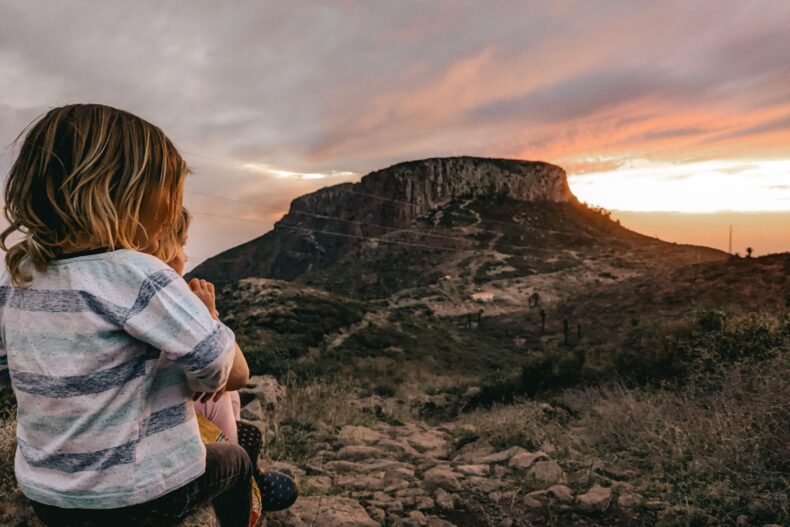
You can spot the Fortaleza from far away: a flat-topped mountain that rises straight up out of the landscape. For La Gomera’s original inhabitants this was a sacred place. A short but steep path takes you to the top, where you stand on an empty plateau with views in every direction.
With young kids we wouldn’t recommend this climb, as the path runs along steep drops. So Sebastiaan went up on his own while I stayed below with the kids. You’ll find a handy starting point with parking here.
Combine the table mountain with the Mirador de Igualero, which has a great view of the Fortaleza itself, and a stop in El Cercado, a village known for its handmade pottery.


#15 Roque de Agando: the icon of La Gomera
Roque de Agando might just be the island’s most famous sight. This rock spire is the remaining core of an old volcano, and it suddenly appears as you drive through the interior. No hiking needed: there are several places along the road to stop.
From the Mirador de los Roques you can see several rock peaks at once. On a clear day, with wisps of mist drifting between the summits, it’s an impressive sight.

#16 Agulo and Hermigua: the rugged north
Feel like seeing a completely different side of La Gomera? Head north. Agulo is often called the prettiest village on the island, with narrow streets and red roofs above the sea. We liked it, but found it less spectacular than the descriptions we’d read beforehand. Just above the village, the Mirador de Abrante juts out of the cliff with a glass floor over the drop. It’s every bit as thrilling as it sounds.
Afterwards, drive on to Hermigua, where you can walk between banana plantations and the rugged coast and take a dip in the rock pool at El Pescante. Do bring an extra layer: the north is the coolest and least sunny part of the island.


More tips for your trip to La Gomera
 Our pickHotels in La Gomera: from Valle Gran Rey on the west coast to the harbour of San Sebastián
 Winding mountain roads up to Garajonay? Rent a car with Discover Cars and compare the big rental companies in one go.
 No flight yet? Compare flights to Tenerife South. From Los Cristianos, the ferry to La Gomera takes about an hour.
 Discover all our blogs about La Gomera


