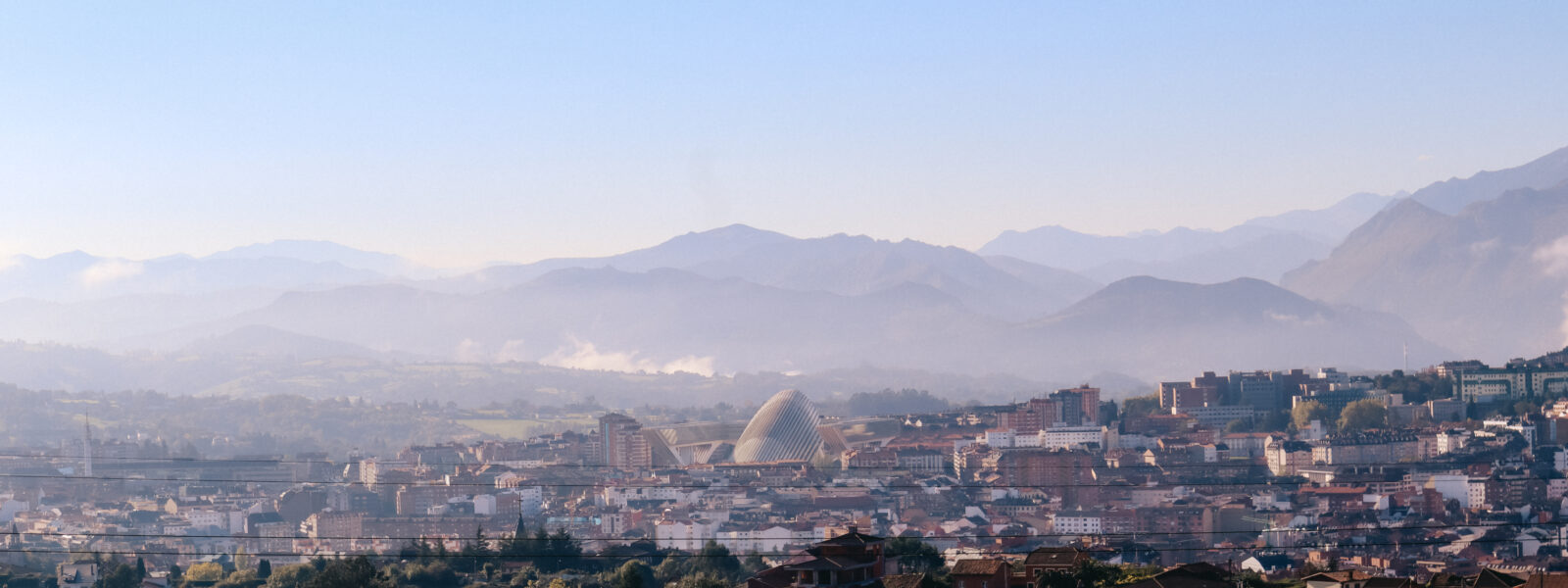
Oviedo has a way of surprising you from the very first moment. The capital of Asturias is compact, lively, and wrapped in a deep sense of history. During my visit with a local guide, invited by Turismo Asturias, I discovered a city where Gothic towers rise above cozy squares and cider-pouring cafés appear around every corner. We soaked in the views from Monte Naranco, tried sweet carbayones at a traditional bakery, and sipped cider in one of the city’s classic sidrerías.
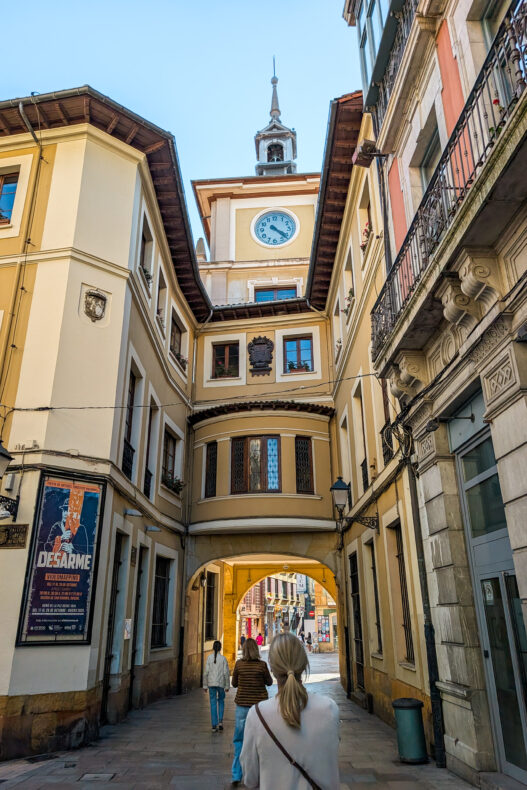
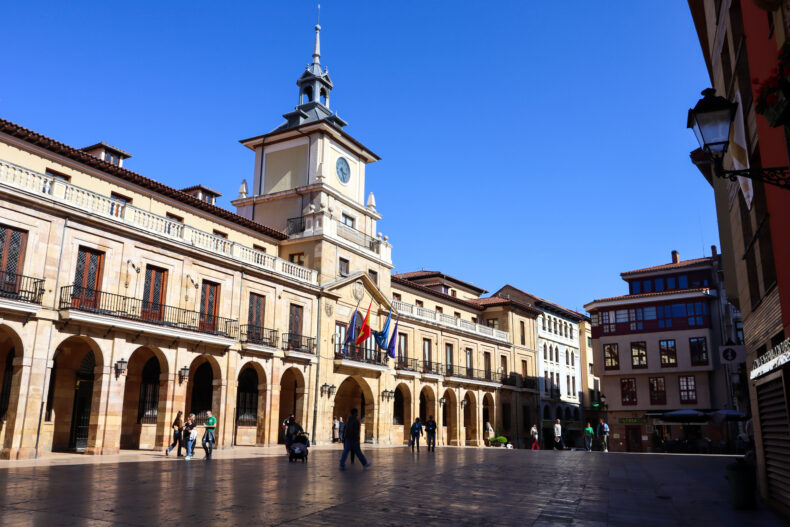
What makes Oviedo truly special is the way historic grandeur blends so naturally with everyday life. Between the monuments, you’ll see students rushing to class, markets buzzing with locals, and terraces filled with people enjoying the sunshine. The city feels both authentic and full of energy. Everything is within easy walking distance, and wherever you wander, you’re surrounded by beautiful buildings and inviting streets making it a joy to explore the old town at your own pace.
In this blog, you’ll find everything you shouldn’t miss in Oviedo: from must-see sights and scenic viewpoints to local dishes worth trying, from ancient churches to modern sculptures that add character to the streetscape.
Where is Oviedo in Spain
Oviedo sits in the north of Spain, right in the heart of the Asturias region. The city is nestled between the green foothills of the Cantabrian Mountains and the rugged Atlantic coast. Just half an hour away lies Gijón, the region’s largest seaside city, and a little farther along the shore you’ll find picture-perfect fishing villages like Cudillero, Lastres, and Luanco. The Picos de Europa mountain range is also close by, making Oviedo an ideal base for travelers who want to mix nature and hiking with a relaxed city break.
Read more: 20 Best Places to Visit in Asturias
From the many European destinations, the easiest way to reach Oviedo is by flying into Oviedo Asturias Airport, which is about forty minutes from the city center. You can also fly to Bilbao or Santander and enjoy a scenic drive along the coast to Oviedo. This convenient location makes the city a perfect starting point for a road trip through Asturias or even the whole of northern Spain. From Oviedo, you can move effortlessly between mountain villages and sandy beaches, exploring one of the greenest and most authentic regions in the country.
What is Oviedo known for?
Oviedo is known for its rich history, delicious food, street art, and easygoing atmosphere. It’s a city where medieval churches, modern sculptures, and lively markets sit comfortably side by side.
You can feel history in every corner of Oviedo. In the Middle Ages, it served as the capital of the Kingdom of Asturias, and much of that heritage is still wonderfully intact. The Gothic cathedral, the pre-Romanesque churches on Monte Naranco, and the ancient La Foncalada fountain all share the story of more than a thousand years of life in the city. Wandering through the old town truly feels like stepping into another time.
The local food scene is just as memorable. In the sidrerías along Calle Gascona, cider is poured from high above the glass, a tradition that has been part of Asturias for generations. Here you can dig into fabada asturiana, sausages simmered in cider, and a wide range of local cheeses. And at the classic bakery Camilo de Blas, you can try the beloved carbayones and moscovitas that the city proudly calls its own.
Oviedo is also one large open-air museum. Sculptures by Botero, Woody Allen, and local artists appear right between the shops and cafés. They add a playful, unexpected touch to the streets and make every walk through the city feel a little different.
What truly sets Oviedo apart is how untouristy it feels compared to many other Spanish city trip destinations. Everything is close by, and the atmosphere is warm, calm, and welcoming. It makes Oviedo not only a beautiful city to explore, but above all a genuinely pleasant place to wander and soak in the feel of everyday life.
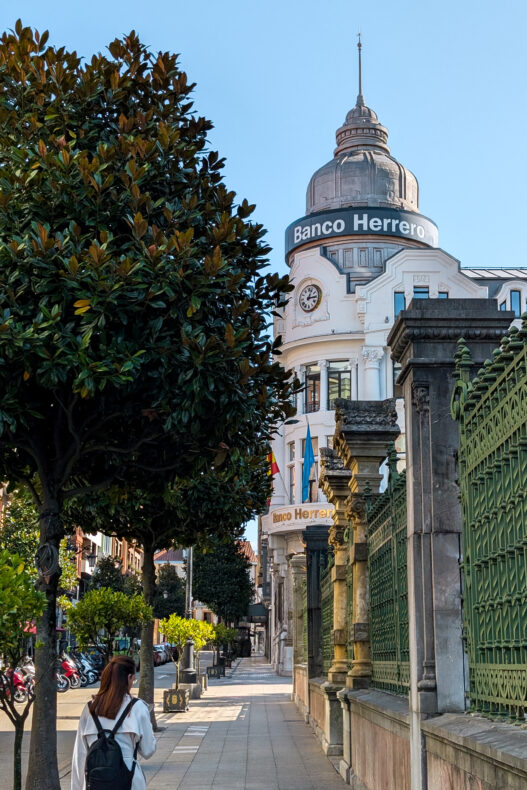
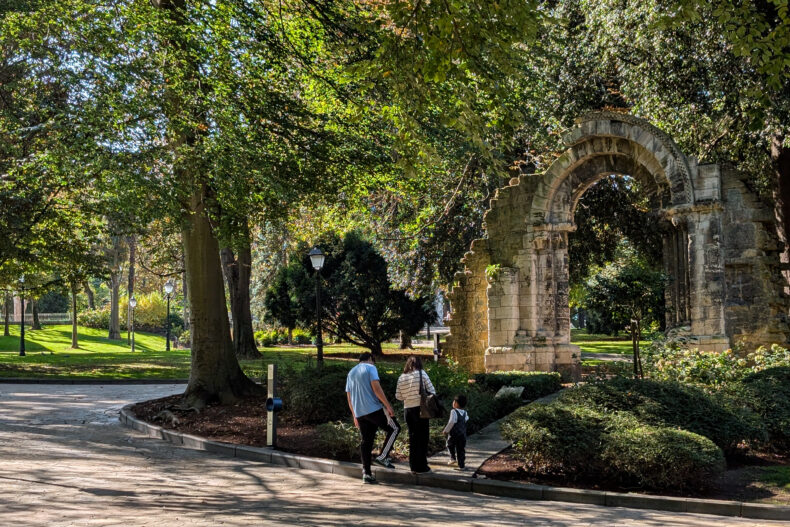
Best Things to Do in Oviedo: Sights and Highlights
#1 Climb the Tower of Oviedo Cathedral
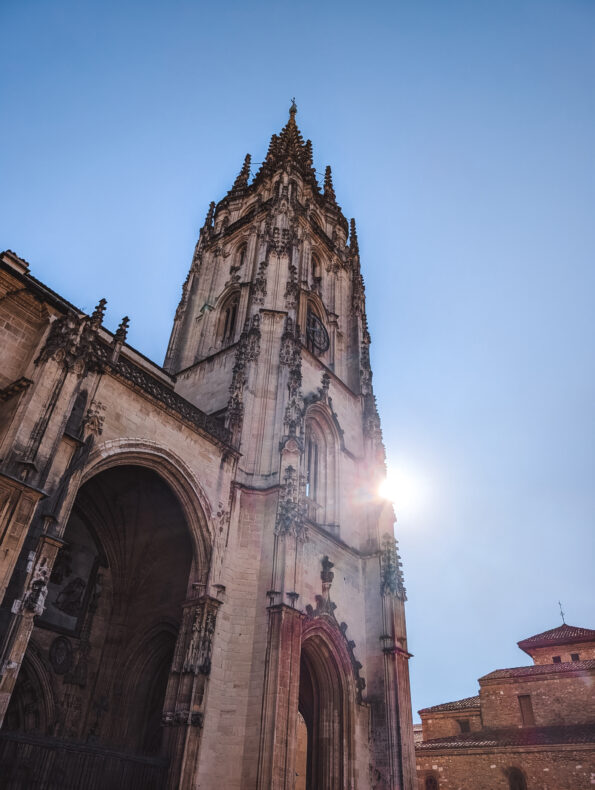
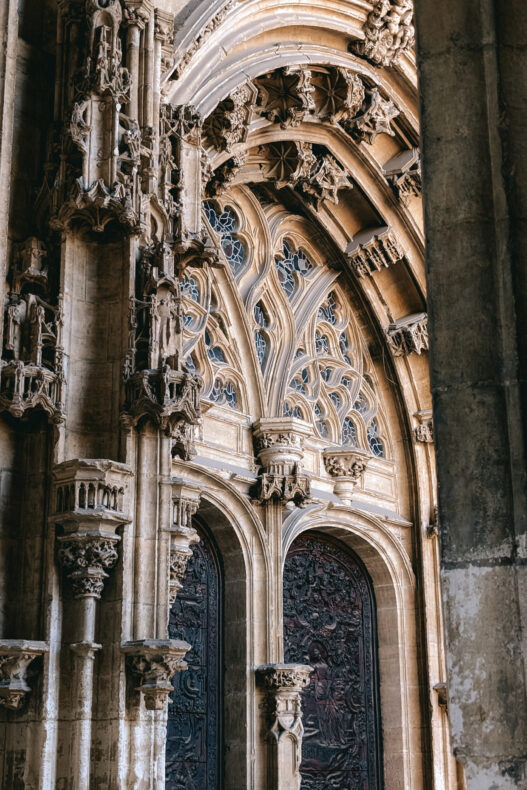
Oviedo Cathedral is impossible to miss. This Gothic masterpiece towers over the old town with a single, impressive spire that rises 46 meters above the streets. Our guide told us that a second tower was once planned, but the funds ran out before it could be built. Construction began in the 13th century and continued well into the 16th, which explains why each side of the cathedral shows a different moment in time.
Inside, you’ll find the celebrated Cámara Santa, home to precious medieval relics, but the real highlight waits at the very top. A narrow stone staircase , more than two hundred steps leads you upward, past centuries-old walls and into the bell chamber, where the Wamba, a bell cast in 1219, still rings today. Once you reach the top, the view is more than worth the climb: red rooftops below, Monte Naranco rising in the distance, and the soft green hills of Asturias all around.
There’s an entry fee for the cathedral and its tower, but it’s easily one of the most memorable experiences you can have in Oviedo.
#2 Explore the Museo de Bellas Artes de Asturias
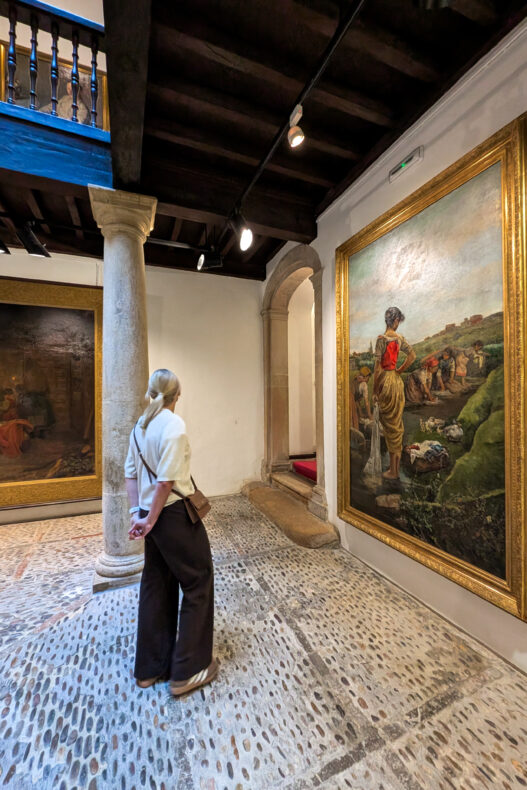
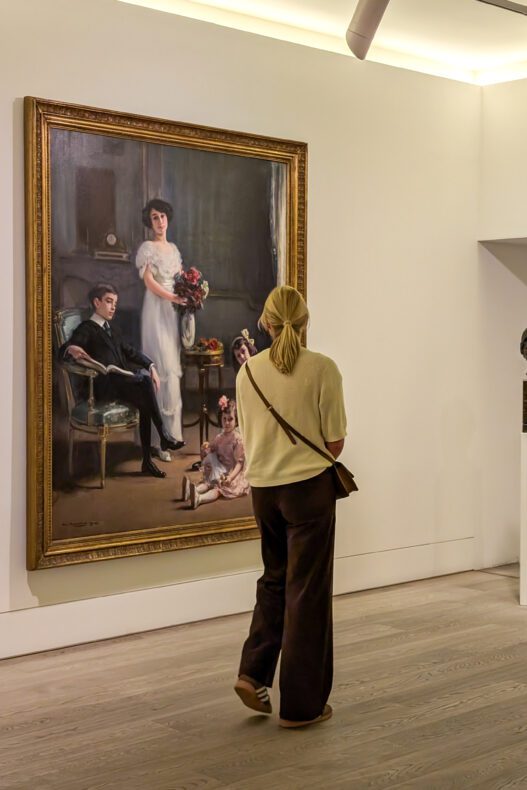
Just steps from the cathedral, you’ll find the Museo de Bellas Artes de Asturias, a surprisingly large museum spread across three different buildings, including the elegant 18th-century Palacio de Velarde. Even if art museums aren’t usually your thing, this one is absolutely worth a stop, and the best part is that it’s completely free.
The collection is remarkable: more than 15.000 pieces, ranging from medieval panels to bold modern abstracts. You can wander from El Greco’s religious scenes to Picasso’s sharp lines and Goya’s expressive portraits. I’ve always loved contemporary art, and there was plenty of it here to keep me happily exploring.
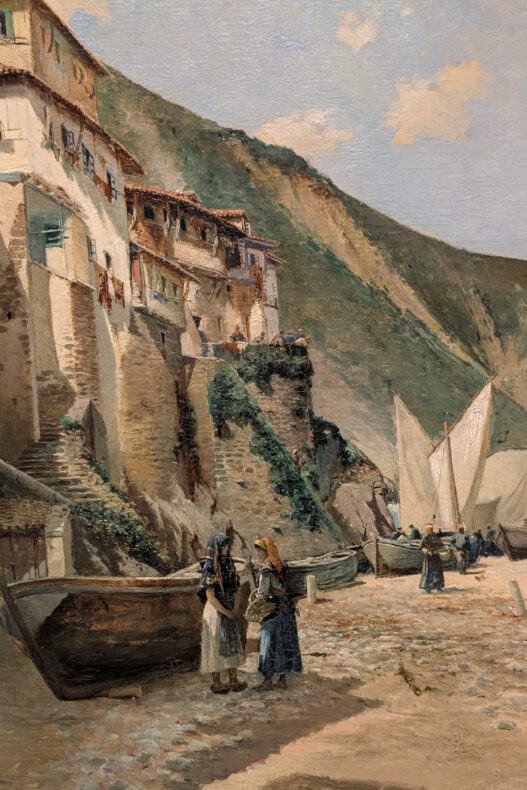
A real highlight is the attention given to Asturian artists. If you’re traveling through the region, it’s genuinely delightful to spot familiar landscapes such as Cudillero or the Picos de Europa painted on the walls.
With free entry, it’s the perfect place to slip into during a stroll through the city center. This is not a dusty or formal art hall but a bright, welcoming museum where you can experience seven centuries of Spanish art history in under an hour.
#3 Enjoy the View from the Jesus Statue on Monte Naranco
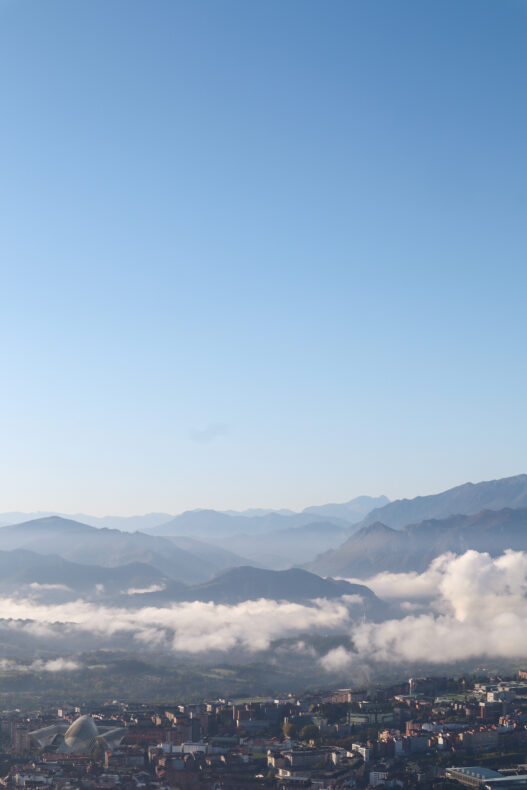
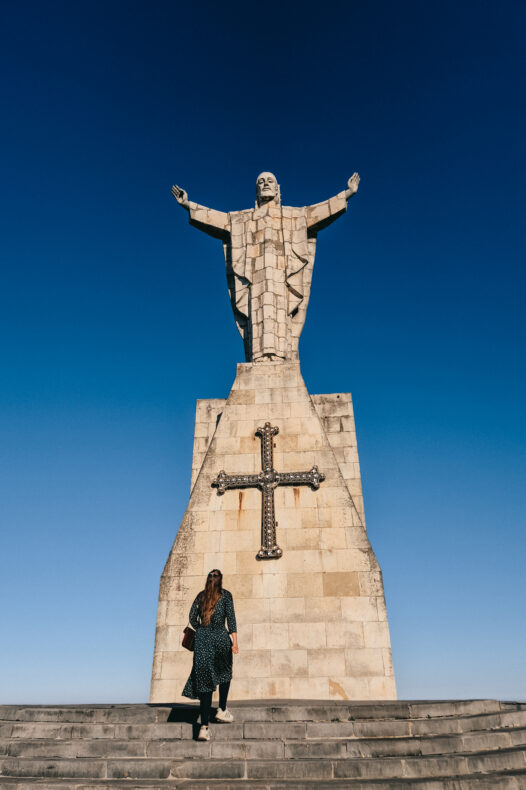
High above Oviedo, more than 600 meters up, stands the Christ statue that looks out across the entire city: the Monumento al Sagrado Corazón de Jesús. This thirty-meter statue was inaugurated in 1981 after nearly twenty years of construction and has since become one of Oviedo’s most recognisable landmarks. Its wide and open arms represent protection over the city and everyone who lives there. From the top of Monte Naranco, you can enjoy one of the most beautiful views in the region: the cathedral directly below, gentle green hills stretching across the horizon and, on clear days, even the distant line of the sea.
You can reach the statue by car or by following a walking route that leads past the pre-Romanesque churches of Santa María del Naranco and San Miguel de Lillo. In the evening, the statue is illuminated and its soft glow can be seen from far across the valley.

#4 Visit Santa María del Naranco and San Miguel de Lillo
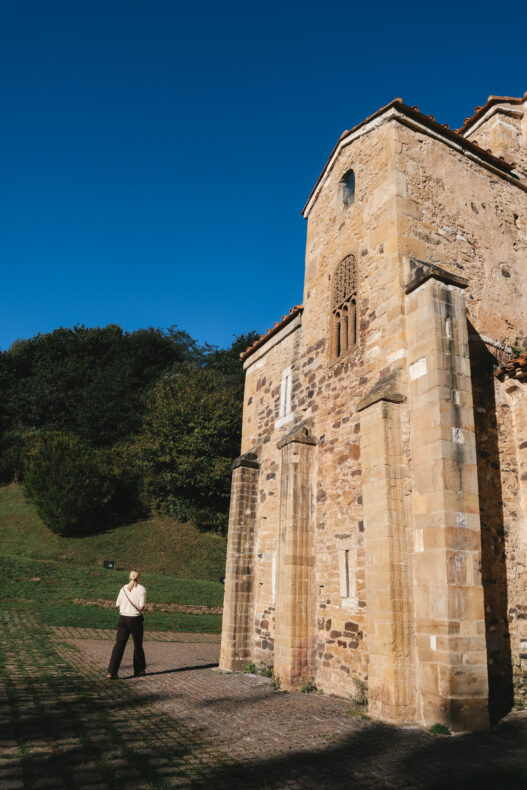
On the slopes of Monte Naranco, just outside the center of Oviedo, stand two of the oldest and most remarkable buildings in Asturias: Santa María del Naranco and San Miguel de Lillo.
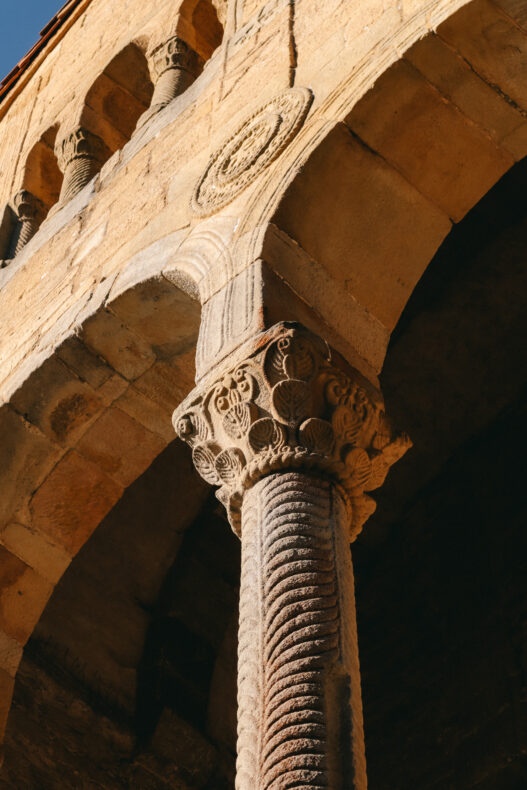
Santa María was built in 842 on the orders of King Ramiro I. It was not designed as a church but as a royal hall, and only later was it converted into a place of worship. The stone building has two floors, rounded arches and graceful carvings that are typical of the Asturian pre-Romanesque style. A few hundred meters away stands San Miguel de Lillo, a former palace chapel of which a well-preserved section still remains.
Both buildings are listed as UNESCO World Heritage Sites and are considered some of the most important examples of early medieval architecture in Spain. You can visit them on a short guided tour of about forty minutes. Entrance is around five euros and admission is free on Mondays. We also loved seeing the churches just from the outside, where you can enjoy peaceful views of the city below.
#5 See the Medieval Fountain La Foncalada
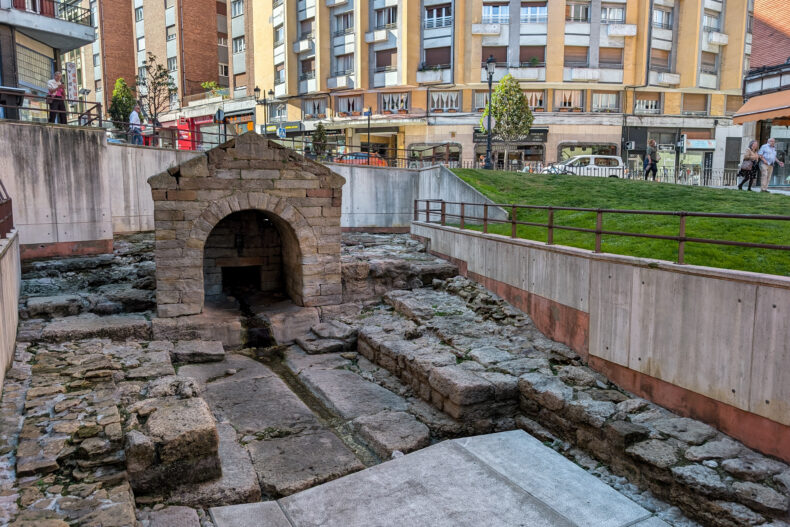
Tucked between modern buildings in the city center is La Foncalada, a small yet remarkable fountain that dates back to the ninth century. It was built during the reign of King Alfonso III and is one of the few civil structures from that era that still stands today. The name comes from the Latin fontem calatam, which translates to “covered spring.” The fountain once provided drinking water for the people of Oviedo and was supplied by a natural stream. Its structure is made of solid stone blocks topped with a vaulted roof, and at the highest point you can spot a carved relief of the Asturian cross, the Cruz de la Victoria.
La Foncalada is only a few minutes from the cathedral and is easy to walk past. It is a small but meaningful piece of history that brings the medieval side of Oviedo close enough to touch.
#6 Wander Through Plaza del Fontán and the Fontán Market
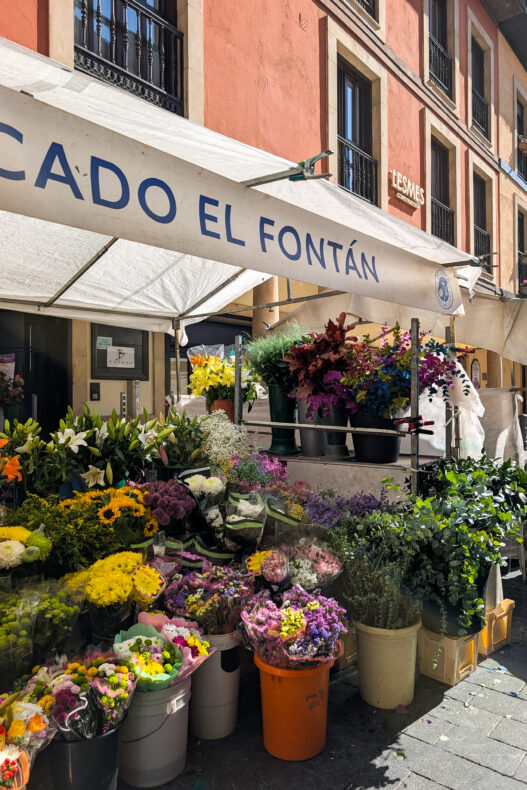
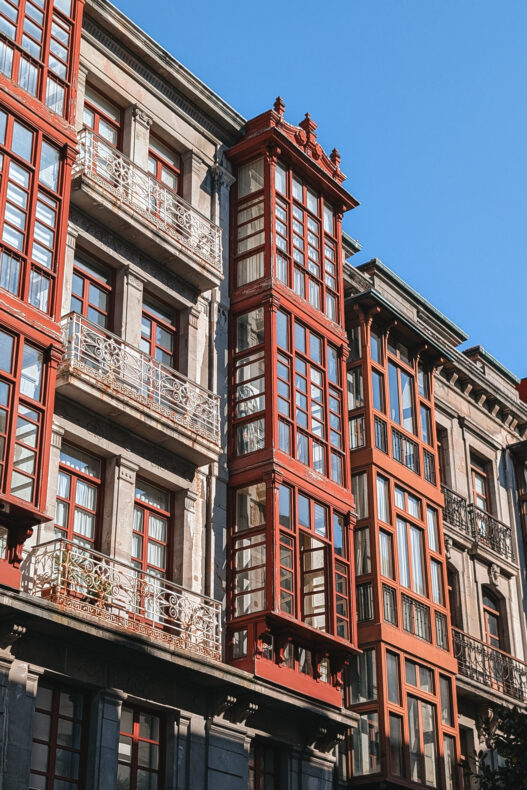
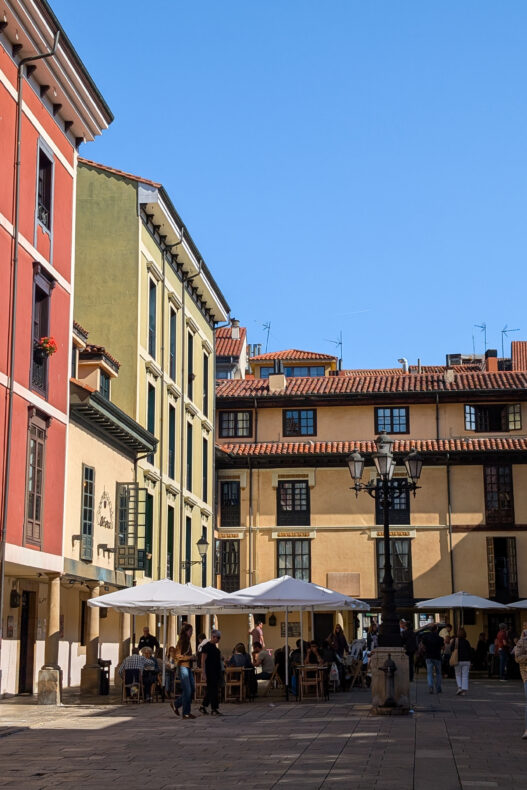
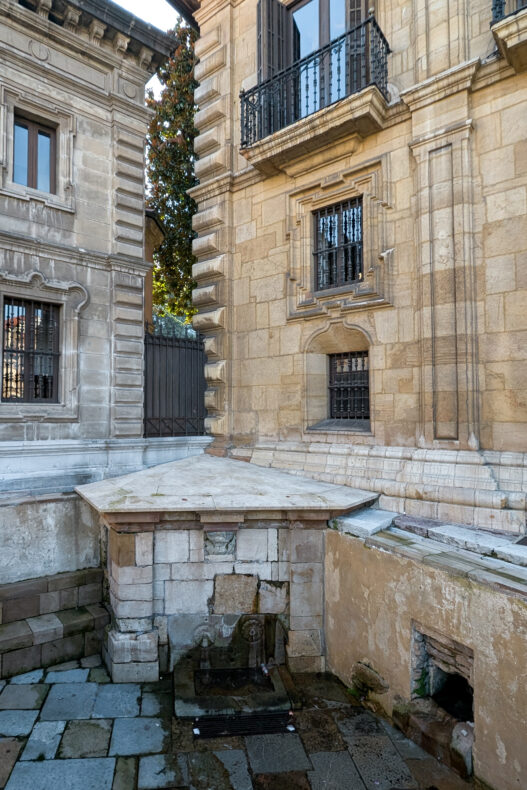
Plaza del Fontán is the liveliest square in Oviedo and also one of the most charming. Its name comes from a natural spring that once flowed here, back when this area was still a marshy dip in the landscape. The houses around the square have bright façades and wooden balconies that reflect classic Asturian architecture. At the heart of the plaza is the Fontán Market, where locals sell fresh vegetables, cheeses, flowers and cider. There is an indoor market hall as well as an open-air market spread across the square. In one corner, tucked between two historic buildings, you can still find the old water spring that gave the square its name.
Saturday mornings are especially lively. You can hear the chatter of vendors and smell the mix of fresh produce in the air. Among the stalls stands a sculpture of two market women, a tribute to the traders who have been selling here for centuries. Around the square you will find cafés and small restaurants with outdoor terraces, perfect for taking a break and watching daily life unfold.
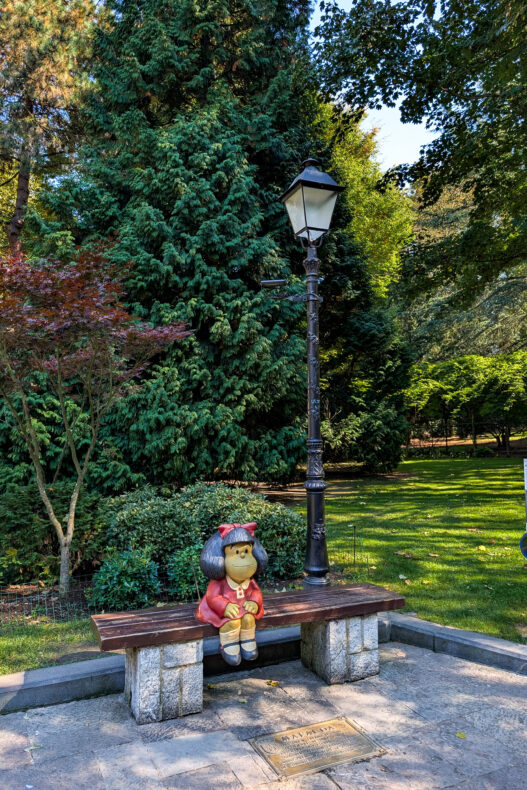
#7 Walk Through Parque Campo San Francisco and Spot the Mafalda Statue
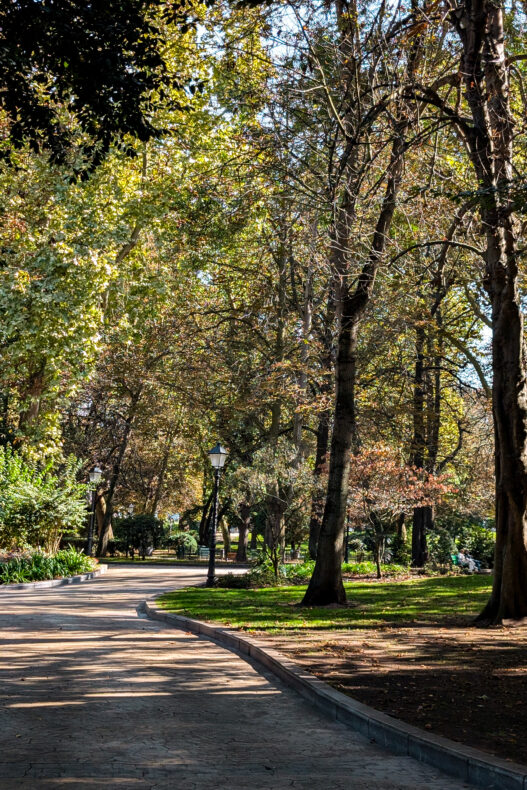
In the heart of the city lies Parque Campo San Francisco, the green oasis of Oviedo. The park covers nearly twelve hectares and dates back to the eighteenth century, when it was still part of a monastery garden. Today it is a well-loved place for walking, jogging or simply relaxing on a bench surrounded by ponds, fountains and curious squirrels. A network of wide paths winds through the park, lined with old chestnut trees and rhododendrons that burst into colour each spring.
One of the most popular spots is the bronze statue of Mafalda, the Argentine comic character who sits on a bench looking out over the pond. The statue was placed here in 2014 as a tribute to her creator, Quino. Families will also enjoy the large playground located not far from the statue, which makes this corner of the park especially inviting for children.
#8 Look for the Sculptures of Botero and Woody Allen in the Streetscape
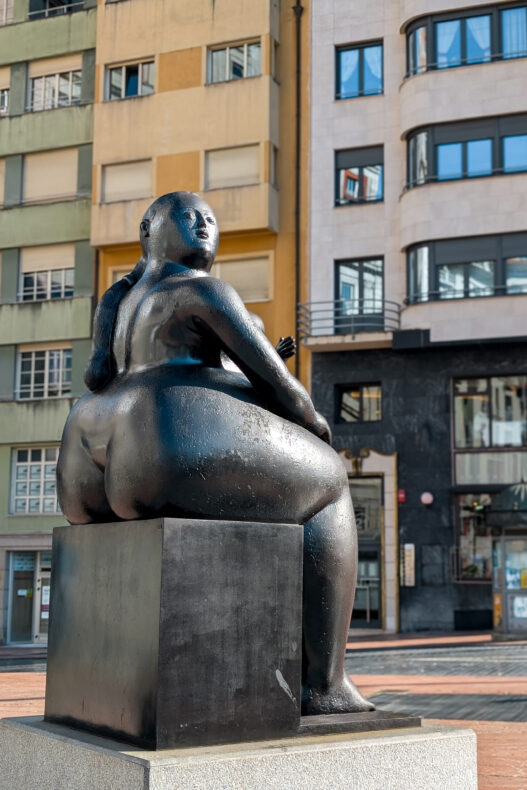
Oviedo feels like an open-air museum of sculpture, with artworks scattered throughout the entire city. Everywhere you walk, you come across pieces ranging from classical figures to modern installations. The most famous of all is “La Maternidad” by the Colombian artist Fernando Botero, a bronze sculpture of a rounded mother figure that stands on Plaza de la Escandalera. I recognised his style instantly from my visit to the square filled with his statues in Medellín and from the Botero Museum in Bogotá.
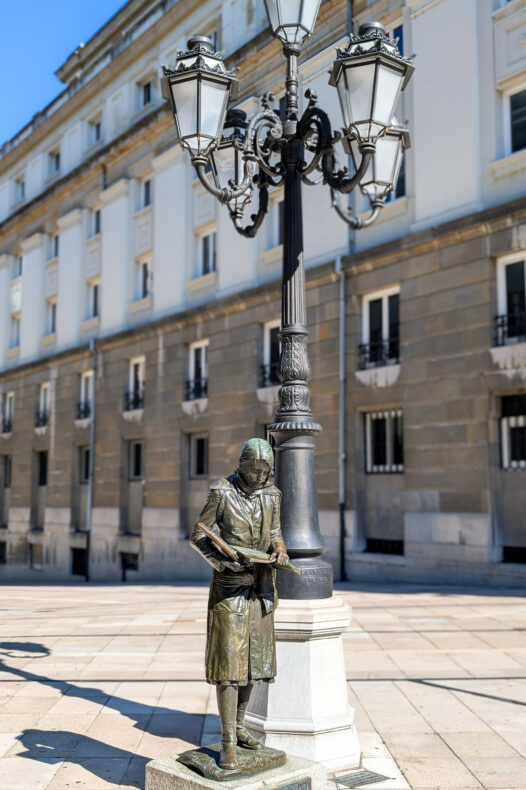
A short walk away, on Calle Milicias Nacionales, you will find the bronze statue of Woody Allen. It was gifted to the city after the filming of Vicky Cristina Barcelona. The director once described Oviedo as one of the most beautiful cities in Europe, a compliment that earned him a lasting place in the streets of the city. As you explore, you will also notice other sculptures, such as El Viajero on Calle Pelayo or the Vendedoras del Fontán near the market. Together they create a memorable trail that you can follow as you wander through the city center.
#9 Take a Look at the Courtyard of the University of Oviedo
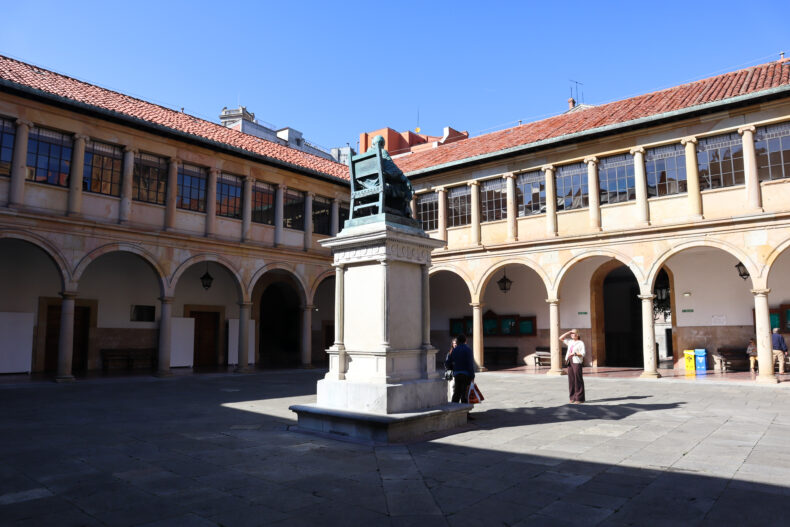
The University of Oviedo was founded in 1608 thanks to a donation from Fernando de Valdés Salas, who at the time served as Archbishop of Seville and Grand Inquisitor. The original building still stands in the heart of the city on Calle San Francisco. Behind its modest Baroque façade you will find a beautiful courtyard with elegant arcades and galleries supported by stone columns.
Today the complex is still an active part of the university, although certain areas are open to visitors. Under the covered galleries of the courtyard you can explore a small exhibition that features historical documents and traditional academic clothing, a reminder of the institution’s long history.
#10 Taste the Famous Pastries at Camilo de Blas
Camilo de Blas is a beloved institution in Oviedo and the kind of place we never would have found on our own if our guide had not pointed it out as we passed. Naturally, we stepped inside this historic spot right away.
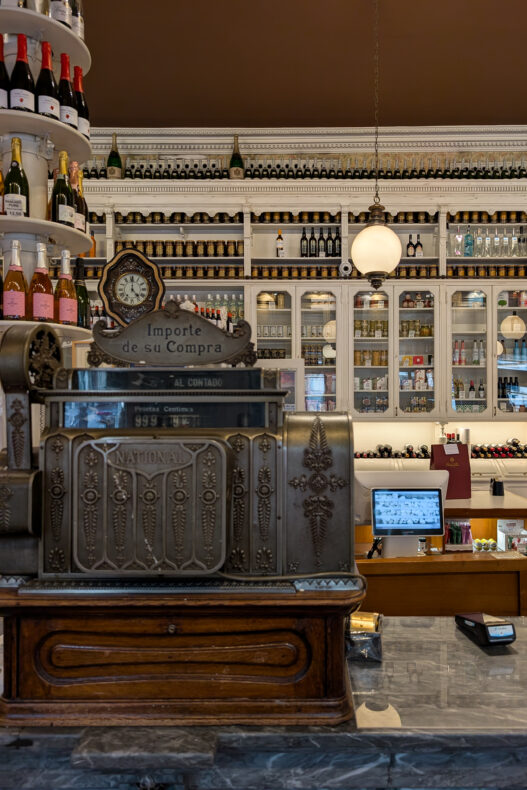
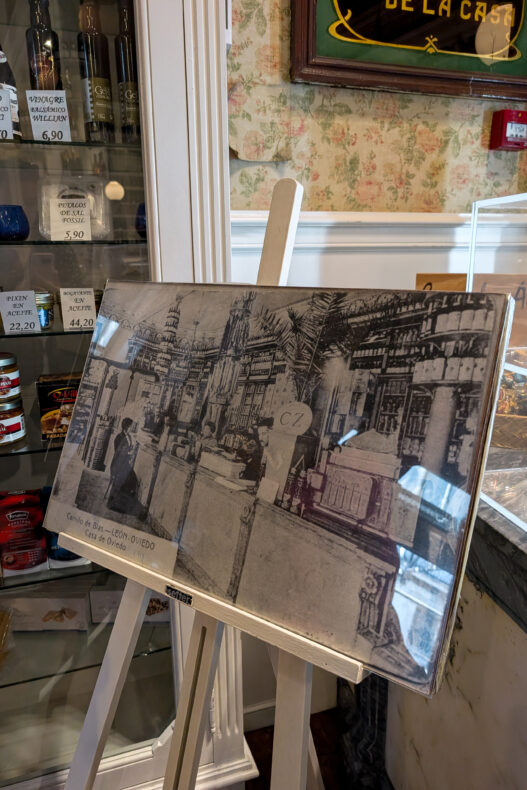
The patisserie opened in 1914 and has hardly changed since. Behind the marble counter and wooden display cases, you will find a cabinet filled with traditional Asturian pastries. The best known are the carbayones, puff pastry filled with almond cream and topped with a glossy icing, a creation of the founder himself. The moscovitas, delicate almond and chocolate cookies, also originated here and are now sold throughout Spain.
Inside, the atmosphere feels like stepping back into an early twentieth-century bakery, with original tiles, vintage mirrors and an antique cash register that still stands proudly on the counter. The shop is located close to the cathedral and is run by the fourth generation of the same family. Camilo de Blas is not a tourist trap but a place where locals come to buy their Sunday treats. In our view, stopping for a carbayón should be part of every visit to Oviedo.
#11 Drink Cider in the Atmospheric Calle Gascona
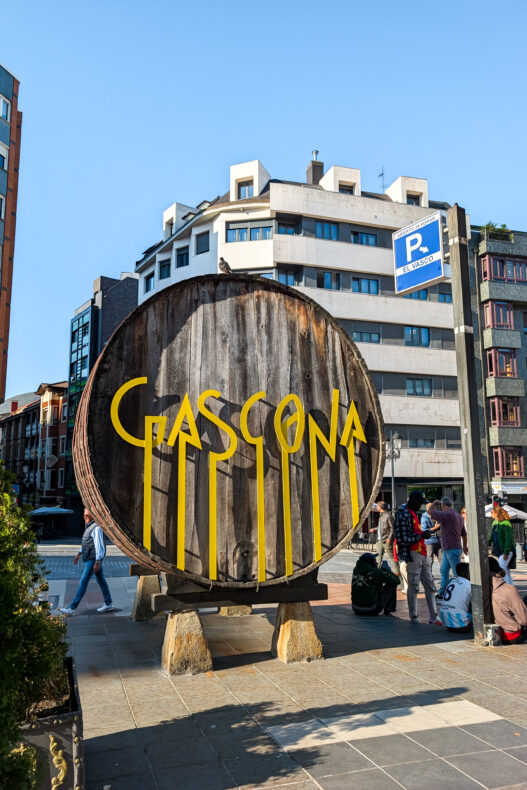
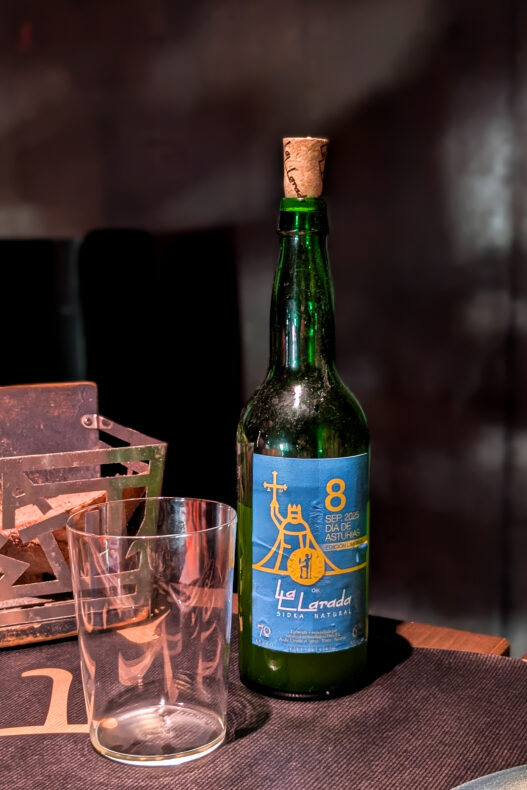
Anyone who thinks of Asturias thinks of cider. Calle Gascona, also known as the Boulevard de la Sidra, is the place to experience it for yourself. This street, just north of the city center, is lined with traditional sidrerías where Asturian cider is poured with real skill. The pour begins from high above the glass so the cider can mix with air and keep its crisp, refreshing flavour. As you walk along the street you can hear the familiar splash of bottles and glasses, a sound that feels inseparable from the region. Most sidrerías also serve classic dishes such as fabada asturiana, chorizo simmered in cider and freshly grilled fish.
In the evening the street truly comes to life, with voices, music and the scent of charcoal drifting through the air. Dinner here is informal, lively and wonderfully relaxed, exactly the way the locals enjoy it. Calle Gascona is the perfect place to soak up the spirit of Asturias in both taste and atmosphere.
#12 End with Lunch or Dinner at Tierra Astur
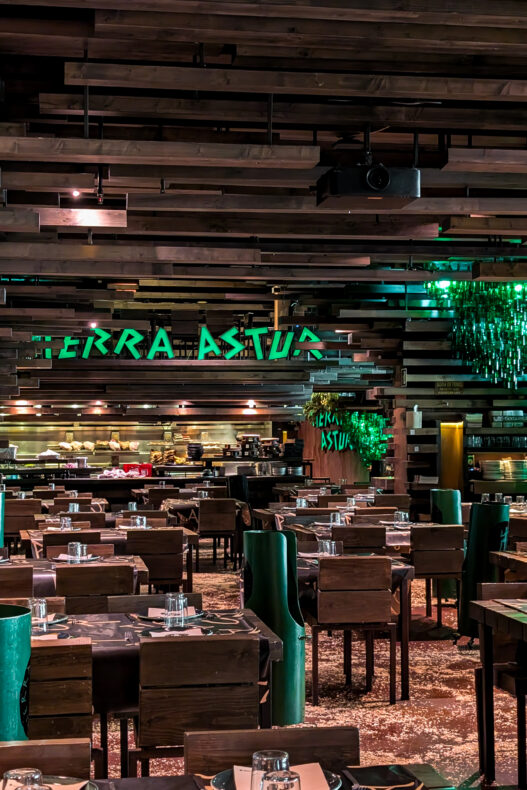
A visit to Oviedo is not complete without a meal at Tierra Astur. This restaurant, part of a small regional chain, is a celebration of Asturian cooking. The interior is unforgettable, with wooden barrels, rugged beams, hams hanging from the ceiling and chandeliers made from cider bottles.
The menu is full of local favourites such as fabada, rich stews with beans and sausage, regional cheeses and grilled meats. Cider is poured generously and served in the traditional style by skilled escanciadores, some of whom have even won awards for their technique. The atmosphere is relaxed and lively, with plenty of locals dining alongside visitors. There are several branches throughout Asturias, but the one on Calle Gascona is one of the largest in Oviedo. Portions are generous and prices are fair. It is the perfect place to end a day of sightseeing with great food, plenty of cider and a warm touch of local hospitality.

I visited Oviedo as part of a press trip in collaboration with Turismo Asturias.


