Along the Rhine River between Bingen and Koblenz stretches a region where you can see and do an impressive amount in just a few days. Castles rise high above the river on rugged cliffs, half timbered villages line the waterfront, and vineyards cover the steep hillsides in neat green rows. Around almost every bend, a new viewpoint opens up, each one more beautiful than the last. It is the kind of landscape that feels almost too picturesque to be real.
The Middle Rhine Valley is compact, easy to navigate, and full of variety. Distances are short, which makes it simple to explore at your own pace. You can walk from one charming village to the next, take a scenic boat ride back along the river, or catch a train that follows the water closely and connects the towns. Along the way, you might pause at a welcoming winery for a tasting, climb up to a castle ruin for wide river views, or find a quiet bench and watch the boats drift past. The mix of nature, history, and local life keeps every day interesting.
In this blog, you will find the most beautiful places in the Middle Rhine Valley, together with practical tips for spending three to four days in the area. I will guide you through what to see and do, how to travel between the highlights, and which spots are easy to combine in one day. From short and scenic hiking trails to lesser known viewpoints, and from impressive castle ruins to relaxed wine tastings overlooking the Rhine, this guide will help you plan a trip that feels both effortless and unforgettable.

What Is the Middle Rhine Valley Known For?
The Middle Rhine Valley is one of those places where you can experience a remarkable variety in just a few days. Castles tower above the river on rocky cliffs, charming wine villages rest along the water’s edge, and panoramic viewpoints seem to appear around every bend. It is easy to see why this part of the Rhine has earned a place on the UNESCO World Heritage List. The region is well organized, and easy to explore without complicated planning or long travel times.
The valley stretches along the Rhine between Bingen and Koblenz. In this section, the river curves gently through a narrow valley bordered by steep vineyard slopes, wooded hills, and striking rock formations. Small towns and villages sit side by side along the riverbanks, each one only a short distance from the next. Traveling here is simple and relaxed. You can follow the river by train, with the tracks running close to the water, or drive from village to village without spending hours on the road.
The Middle Rhine Valley is especially famous for its castles. They appear again and again throughout the landscape, set high on hilltops, positioned along the riverbanks, or even standing on small islands in the middle of the Rhine. Many are easy to reach with a short walk or a scenic boat trip, making it possible to visit several highlights in a single day. The combination of rich history, beautiful scenery, and easy access is what gives this region its unique charm and lasting appeal.
Recommended read: 10 most beautiful castles along the Rhine
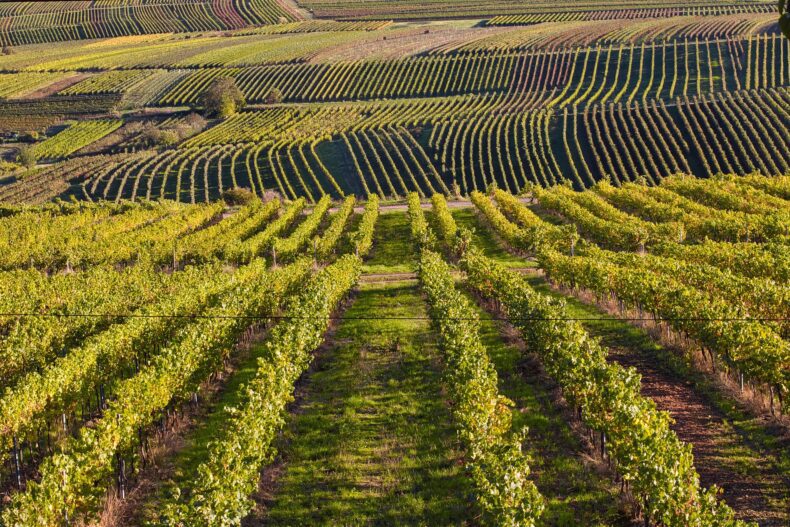
Wine is deeply woven into both the landscape and everyday life of the Middle Rhine Valley. The steep hillsides have been cultivated for centuries, and generations of winemakers have shaped the scenery into the patterned vineyards you see today. Long rows of vines stretch across the slopes, changing color with the seasons and giving the valley its distinctive character. In almost every village, you will come across welcoming wine taverns and relaxed terraces where you can pause for a while and enjoy a glass of local Riesling or another regional variety. Here, wine tasting is not just something to tick off your list. It is a natural part of daily life and an experience that connects you to the region’s history and traditions.

The Ideal Base for Exploring the Upper Middle Rhine Valley
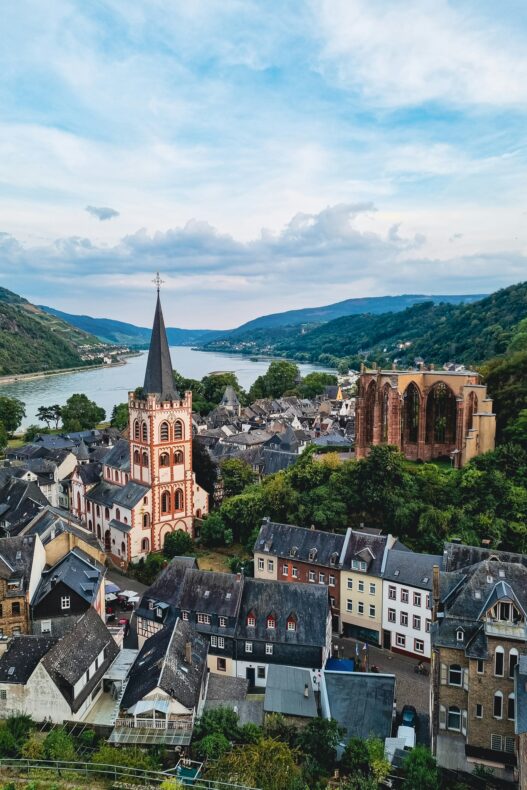
If you are planning to explore the Upper Middle Rhine Valley in just a few days, choosing the right base makes all the difference. Ideally, you want to stay somewhere central, where history, scenery, and easy connections all come together. A place with character, short distances between sights, and good transport links throughout the valley. A village where you can step outside and start your day without stress, whether you feel like hiking through the vineyards, visiting castles, or enjoying a relaxed boat trip on the river. That place is the charming town of Bacharach.
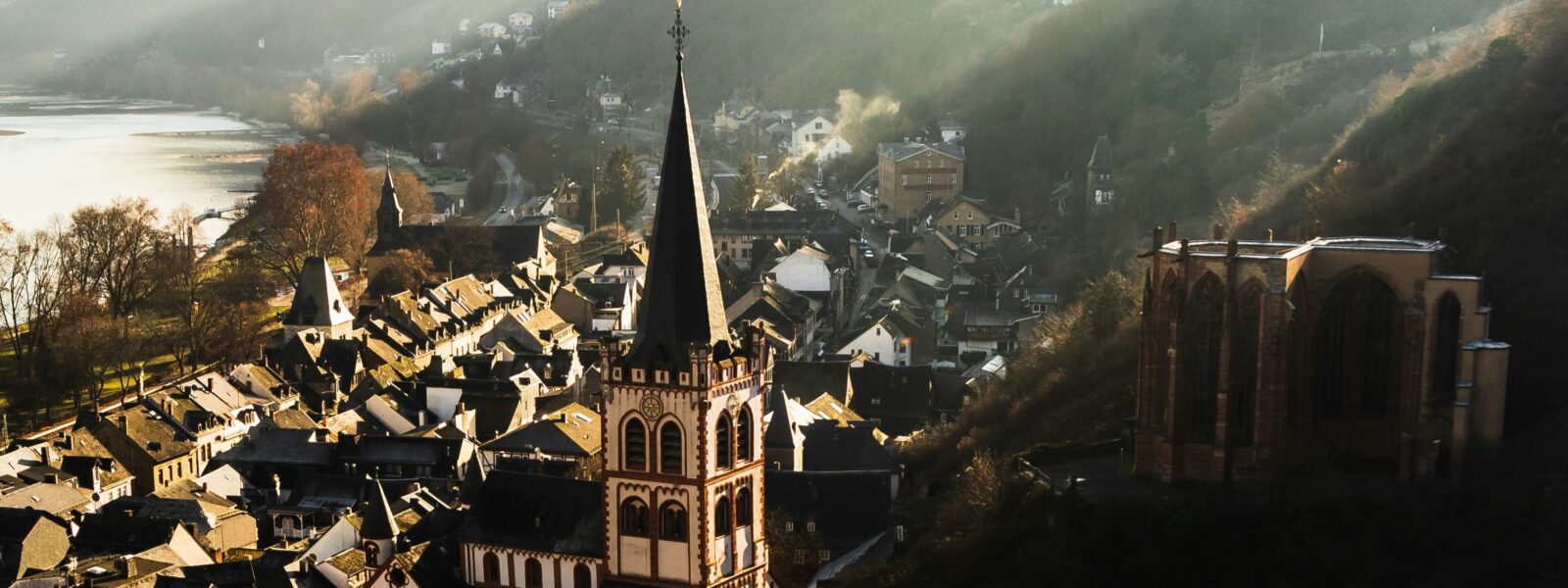
This small medieval town sits right in the heart of the UNESCO listed section of the valley and is perfectly located between many of the region’s most famous highlights. Strolling through Bacharach feels like stepping back in time, with its half timbered houses, narrow streets, and traditional wine taverns. There are scenic viewpoints above town and a lovely promenade along the river where you can watch the boats pass by. From the center, you can walk uphill to Burg Stahleck, which overlooks the town, or continue to the romantic ruins of the Wernerkapelle for sweeping views over the Rhine.
Stay right on the historic market square at Hotel Am Markt →
Experience traditional Rhine Valley hospitality at Alt-Kölnischer Hof →
Wake up to river views at Hotel Rhein Bacharach →
Enjoy a comfortable stay at Bacharacher Hof in the heart of town →
With regular trains and boats connecting nearby towns such as Kaub, Oberwesel, and Sankt Goar, Bacharach offers a comfortable and practical base for discovering the valley at your own pace.

Map of the Upper Middle Rhine Valley
[googlemaps https://www.google.com/maps/d/u/1/embed?mid=1yFejtv1Z6xSwIos9kjjkgmCUlPW9H6Y&ehbc=2E312F&w=790&h=480]Things to Do in the Upper Middle Rhine Valley
#1 Bacharach Historic Center
Bacharach is one of those places where everything you hope to find in this region comes together naturally. It is medieval in atmosphere, small enough to explore on foot, incredibly photogenic, and at the same time very convenient as a base for discovering the valley. The town lies along a gentle curve of the Rhine and feels like a maze of half timbered houses, narrow cobbled lanes, and quiet little squares. Around every corner, you find another charming façade or inviting doorway. In just five minutes, you can walk from the welcoming wine taverns in the center to the riverbank, where the promenade along the water encourages you to slow down and enjoy an easy, unhurried stroll.
During the fourteenth and fifteenth centuries, Bacharach grew into an important hub for the wine trade along the Rhine. That history is still very much alive today. As you wander through town, you will come across small tasting rooms, family owned wineries, and steep vineyard slopes planted with Riesling. The village sits tucked between the river and the rising hills, which gives it a cozy and clearly laid out feel. Everything you need is close by. The train station, boat dock, local shops, and access to hiking trails are all within walking distance, so exploring the region is simple and comfortable, even without a car.

#2 Burg Stahleck in Bacharach
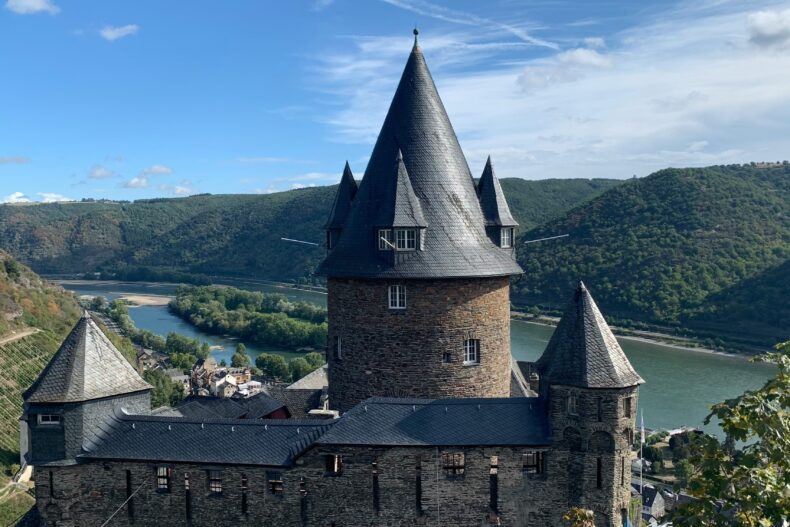
As soon as you leave the center of Bacharach and follow the path uphill, you will spot Burg Stahleck standing proudly above the town. The castle dates back to the twelfth century and was originally built to guard the Rhine and oversee the important trade route along the river. Over the centuries, it witnessed conflicts, destruction, and periods of neglect before falling into ruin. In the twentieth century, it was carefully reconstructed and given a new purpose. Today, it serves as a youth hostel, yet visitors are welcome to explore the courtyard and enjoy the wide open views.
The walk to the top is short and pleasant, taking around twenty minutes, and quickly brings you above the rooftops and narrow streets of the village. Step by step, the view opens up until you are looking out across the Rhine, the railway line tracing the riverbank, and the steep vineyard slopes that define this landscape. Standing here, you can clearly understand why this was once such an important strategic location.
#3 Wernerkapelle and Nearby Viewpoints
Just above Bacharach stands the Wernerkapelle, a beautiful Gothic chapel ruin dating back to the thirteenth century. The chapel was never fully completed, yet its tall stone walls and elegant window arches still rise proudly from the hillside. Even in ruins, the structure feels impressive and slightly romantic, especially with the surrounding vineyards and forest as its backdrop.
From the chapel, several easy walking paths continue uphill toward scenic viewpoints above town. The viewpoints called Blücherblick and Heinrich-Heine-Blick are reached within a short walk and offer sweeping views over the Rhine, the railway line tracing the riverbank, and the castles on the opposite side of the valley. On a clear day, the view stretches far into the distance as the river winds its way through the landscape. This relaxed and scenic walk pairs perfectly with a visit to the castle or a wander through the village.


#4 A Castle on the Water: Pfalzgrafenstein Castle in Kaub
Near Kaub, between the two riverbanks, you will come across a sight that feels almost unreal: a castle standing right in the middle of the Rhine. Pfalzgrafenstein Castle was built at the beginning of the fourteenth century on a small rocky island, placed directly in the busy shipping route. Its role was both simple and powerful. It functioned as a toll station, forcing passing ships to stop and pay before they could continue their journey along the river. Anyone who refused would not get very far.
The castle is compact and slightly uneven in shape, painted bright white with bold red details. This striking look makes it stand out immediately, whether you are viewing it from the riverbank or approaching by boat. From Bacharach, you can reach Kaub in about ten minutes by train. From there, a small ferry takes you across the water in just a few minutes, dropping you off right at the entrance to the island fortress.
Inside, the rooms are simple and mostly unfurnished, yet the visit still paints a clear picture of how this remarkable place operated for centuries. As you wander through the inner courtyards and along the sturdy walls, you can look out over the flowing river and understand exactly why this location was chosen. The sense of control over the water is still easy to imagine. The journey itself, with its mix of train ride, short boat crossing, and castle exploration, adds to the experience. It makes this stop a natural and memorable highlight of any day in the valley, offering history, scenery, and a touch of adventure in a short amount of time.

#5 Lorelei in Sankt Goarshausen
Almost every traveler along the Rhine recognizes the name Lorelei, but you only truly understand its power once you stand there yourself. The Lorelei is a steep rock face that rises nearly 130 meters above the river at one of the narrowest stretches of the Rhine. For centuries, this section was feared by sailors. Strong currents, shifting water levels, and hidden rocks made navigation risky and unpredictable. These dangers inspired the famous legend of a beautiful maiden who sat on the rock, singing and combing her hair, distracting sailors and leading them to disaster. It remains one of the best known stories connected to the river.
You reach the main viewpoint through Sankt Goarshausen. From Bacharach, you can arrive by train or by boat, depending on how you organize your day. From the station, you can walk uphill if you feel like stretching your legs, or take a seasonal shuttle bus that brings you comfortably to the top. At the summit, a viewing platform opens up to wide panoramas of the dramatic bend in the Rhine, the railway line running alongside the water, and the villages scattered along both riverbanks.
The area around the Lorelei has been thoughtfully arranged with walking paths and picnic areas, making it a pleasant spot to slow down and enjoy the surroundings. You probably will not spend an entire day here, yet we would still describe it as a true highlight of the valley. The view is iconic and instantly recognizable, and the location is easy to reach.

#6 The Historic Town of Oberwesel
Oberwesel sits just a few kilometers south of Bacharach and is the next charming stop along the Rhine. It may be smaller than Koblenz or Rüdesheim am Rhein, but it feels calmer and, in many ways, even more picturesque. The town has a relaxed atmosphere that invites you to slow down and look around. What truly makes Oberwesel stand out are its remarkable town walls. Long stretches of these medieval defenses are still standing, along with nineteen sturdy towers that once protected the town. You can walk along certain sections of the walls for sweeping views over the rooftops and the river, while other parts are best admired from afar.
In the Middle Ages, Oberwesel was a prosperous trading center with an important position along the Rhine. Its wealth and influence during that time are still visible today. The impressive St. Martin’s Church, Oberwesel rises above the town as a reminder of its past, and the many towers create a skyline that feels almost unchanged for centuries. The historic center is compact and easy to explore on foot, with cozy squares, welcoming wine taverns, and small local shops.
For many visitors, Oberwesel is a perfect stop during a day of hiking or a cruise along the Rhine. It pairs especially well with a scenic walk through the vineyard-covered hills that begins in Bacharach and ends in Oberwesel. After your hike, you can relax and return by boat or train while enjoying the river views.

#7 Rüdesheim am Rhein and Assmannshausen
Across the river from Bingen am Rhein, just beyond the southern edge of the Middle Rhine Valley, lie the lively villages of Rüdesheim and Assmannshausen. These two places feel more energetic than many of the smaller towns in the region. Rüdesheim in particular draws large numbers of visitors. Vineyards stretch right down toward the center, a cable car glides above the slopes, and the compact old town is filled with wine taverns and traditional restaurants. The most famous street is the Drosselgasse, a narrow lane lined with terraces and live music that creates a festive atmosphere well into the evening.
From Bacharach, getting there is part of the experience. Take the train to Bingen and then hop on a short ferry across the Rhine. Arriving by boat adds a special touch, as the town slowly comes into view from the water. Once in Rüdesheim, the cable car in the center lifts you up the hillside within minutes toward the impressive Niederwald Monument. From this vantage point, walking trails lead you along scenic viewpoints with sweeping views over the Rhine Valley, the patchwork of vineyards, and the river winding through the landscape.
Explore Rüdesheim on a scenic Winzerexpress sightseeing train tour →
Discover Rüdesheim during a private guided walking tour →
Assmannshausen lies a little farther along the river and offers a calmer atmosphere. Life here revolves mainly around red wine and wide open views. The steep hills surrounding the village are covered with Spätburgunder vines, known for producing elegant local wines. From the center, a chairlift carries you up into the vineyards, where peaceful walking paths connect several viewpoints and link to the trail toward Rüdesheim. This makes the area perfect for a scenic circular walk, allowing you to stroll from one village to the other while enjoying ever changing views of the valley.
Rüdesheim is an excellent choice if you are in the mood for a bit more energy during your stay in the region. The atmosphere is lively and clearly visitor friendly, yet it still manages to feel warm and inviting. On sunny days and especially during the wine season, it becomes a vibrant and enjoyable place to spend a full day or a relaxed afternoon by the Rhine.

#8 Vierseenblick in Boppard
Boppard lies north of Bacharach, just past the famous Lorelei and on the way toward Koblenz. It is one of the larger towns along this stretch of the Rhine, with a broad riverside promenade and a convenient train station that makes visiting simple. The town has an open and welcoming feel, especially along the water where people stroll, cycle, and relax at outdoor cafés. What truly sets Boppard apart, however, is the Vierseenblick. From this unique viewpoint, the wide curves of the Rhine create an optical illusion that makes the river look like four separate lakes. It is a surprising sight and one that often leaves visitors standing still for a moment to take it all in.
Getting there is part of the experience. From the center of town, a chairlift carries you slowly up the hillside in about twenty minutes. As you rise above the rooftops, the views open up more and more, revealing the river valley in layers. At the top, a short and easy walk leads to the actual Vierseenblick viewpoint. Along the path, you look down on the Rhine flowing far below, framed by wooded hills and dramatic rock faces.
Boppard itself deserves time as well. The town still preserves parts of a Roman fort, with sections of ancient walls that have stood for nearly two thousand years. Several medieval churches add to the historic atmosphere, while the center feels lively and pleasant rather than crowded. Along the promenade you will find terraces, cafés, and small shops where you can sit back and watch the steady rhythm of boats passing along the river.

#9 RheinBurgenWeg: from Bacharach to Oberwesel
One of the most rewarding walks in the region is the scenic stretch between Bacharach and Oberwesel. This route follows part of the RheinBurgenWeg, a famous long distance hiking trail that runs from Bingen am Rhein to Remagen. You do not need to walk the entire trail to enjoy what makes it special. The section that begins in Bacharach is manageable, clearly marked, and filled with impressive views almost from the very first climb. It is a perfect choice if you want a hike that feels adventurous without being too demanding.
The walk starts in the historic heart of Bacharach and soon takes you uphill past the romantic ruins of the Wernerkapelle. From there, the path continues through steep vineyard slopes that overlook the river. As you gain height, the panorama widens and the Rhine comes into full view, winding through the valley below. Along the route, you will come across inviting viewpoints, peaceful picnic spots, and fragments of old stone walls that quietly reflect the area’s long and layered past. The hike usually takes around two hours, depending on your pace and how often you pause to take photos or simply enjoy the scenery.
When you reach Oberwesel, you can settle in for a relaxed lunch, wander through the town’s charming streets, or head straight back by boat or train.
#10 Marksburg in Braubach
Marksburg is the only large castle in the Rhine Valley that has never been destroyed or left to decay. While many other hilltop fortresses along the river were damaged by war or slowly turned into ruins, Marksburg survived the centuries intact and in constant use. It stands proudly above the village of Braubach on the eastern bank of the Rhine, just south of Koblenz. Built in the thirteenth century, the castle first served as a defensive stronghold guarding the river. Over time, it was also used as a prison and later became the headquarters of the German Castle Association, which still helps preserve it today.
To visit the castle, you walk up from the center of Braubach. The climb takes about thirty minutes and is quite steep in places, but the path is well maintained and clearly marked. As you make your way upward, the views become wider and more impressive, stretching across the Rhine and over the rooftops of the town below. Once you reach the entrance, you can only explore the interior as part of a guided tour. This makes the visit even more engaging, as you are led through armories filled with historic weapons, simple living quarters, old kitchens, and even a preserved medieval toilet.
For anyone with an interest in castles or medieval history, Marksburg is one of the most authentic and best preserved examples along the Rhine. Because it was never reduced to ruins, you can walk through real rooms instead of imagining what once stood there.

#11 Mäuseturm and Bingen am Rhein
Bingen am Rhein marks the southern gateway to the UNESCO listed Middle Rhine Valley and sits directly across the river from Rüdesheim am Rhein. The town has deep historical roots that reach back to Roman times, and you can still sense that long past as you walk through its streets. In the Middle Ages, Bingen grew into an important trading center because of its strategic location along the Rhine. High above the town, the ruins of old castles watch over the river, while at the water’s edge stands one of the area’s most distinctive sights, the Mäuseturm.
The Mäuseturm is a small stone tower set on a tiny island in the middle of the Rhine. It was built in the fourteenth century as part of a toll station where passing ships had to stop and pay a fee. Its name, which translates as Mouse Tower, comes from a well known local legend. According to the story, a cruel and greedy archbishop was locked inside the tower as punishment for mistreating the poor, only to be attacked and eaten by mice. The tale may be more myth than fact, but it has become a lasting part of the region’s folklore and gives the tower a mysterious character. Although you cannot go inside, you can enjoy clear and close views from the riverbank or while crossing the Rhine on the ferry to Rüdesheim.
Bingen is easy to reach by train from Bacharach or by boat along the river, which makes it simple to include in your travel plans. It feels less crowded and less focused on tourism than Rüdesheim, yet it remains a natural and worthwhile stop if you are exploring the southern end of the Rhine Valley or continuing your journey from Mainz.

#12 Wine Houses and Tastings in the Middle Rhine Valley
The Middle Rhine Valley is one of Germany’s oldest and most storied wine regions, with a tradition that reaches back more than a thousand years. The steep vineyard slopes around Bacharach, Kaub, and Oberwesel have been cultivated since the Middle Ages. Over the centuries, generations of winemakers have carefully shaped this dramatic landscape, carving terraces into the hills and planting mainly Riesling and Spätburgunder. The slate rich soil, the sharp inclines, and the gentle influence of the Rhine all work together to create wines that are fresh, lively, and full of character. It is a region where the scenery and the wine are closely connected.
In and around Bacharach, you will find several local wineries and cozy tasting rooms that welcome visitors. A well known name is Weingut Friedrich Bastian, located right in the center of the village. They regularly offer tastings of wines produced from their own vineyards just outside town. Other highly regarded small producers include Weingut Ratzenberger and Weingut Toni Jost near Assmannshausen. Each estate has its own personality, shaped by family traditions, local knowledge, and the unique character of its vineyard sites.
Many wine taverns in the area feel relaxed and unpretentious. You can walk in without a reservation, sit down at a wooden table, and taste a few different wines at your own pace. Along the way, you often hear stories about the soil, the weather, the hard work of harvesting on steep slopes, and the history of the individual vineyard parcels. The atmosphere is friendly and down to earth, making it easy to ask questions and learn something new. For travelers who want to experience more than hiking trails and castles, a wine tasting offers a calm and enjoyable way to connect with the region through its flavors, traditions, and everyday life.