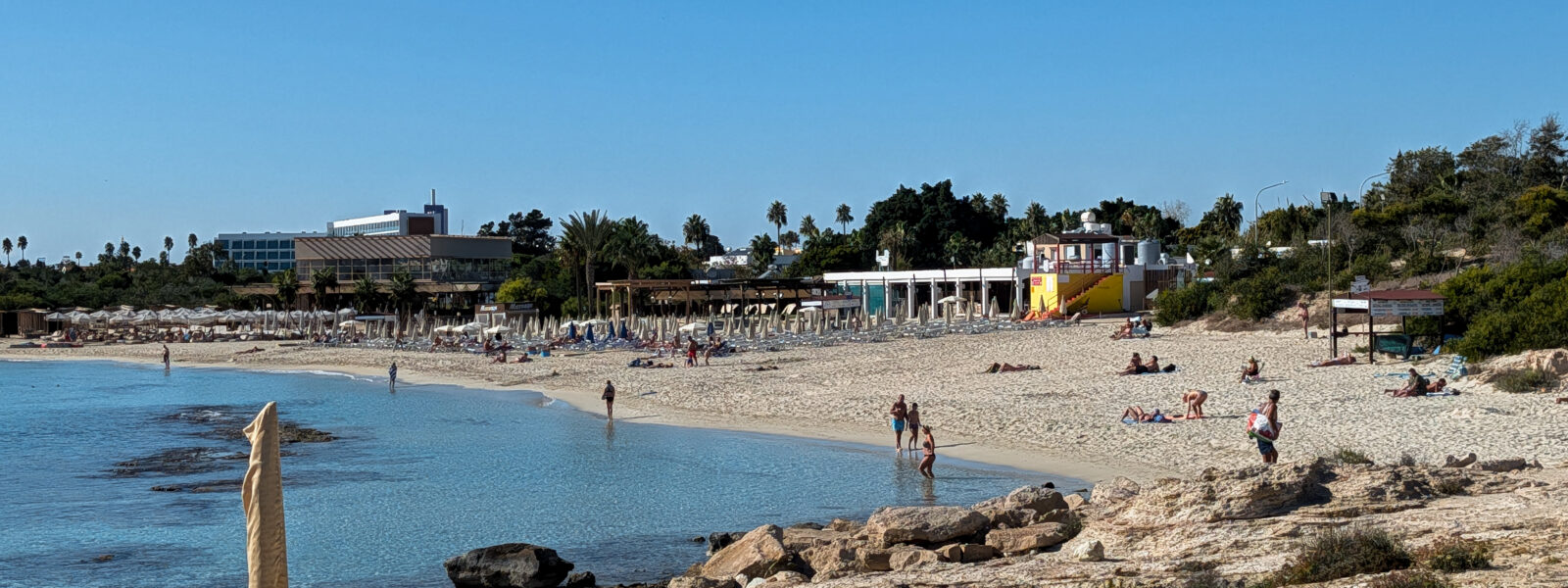
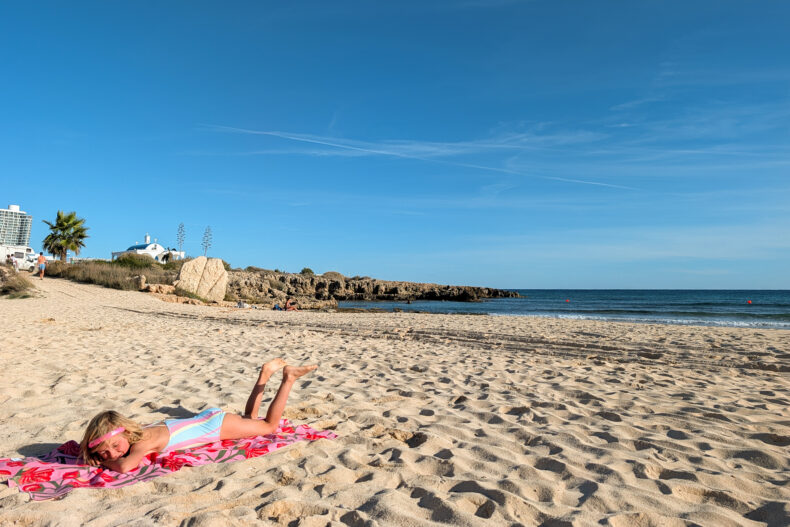
Say Ayia Napa and most people picture clubs, happy hours and parties that roll on until sunrise. That picture isn’t wrong, but it’s only half the story. By day, and certainly away from the centre, Ayia Napa is first and foremost a seaside town with some of the best beaches in Cyprus.
We spent five days here with our two young kids and barely noticed the nightlife. What we did notice was the water, so clear that Sebastiaan snorkelled straight from the beach to an underwater museum. And a little white and blue chapel on the rocky shore, ancient tombs the kids wanted to climb into, and bays calm enough for our youngest to splash around without a worry.
In this post you’ll find the best things to do in Ayia Napa, from beaches and snorkelling spots to Cape Greco, boat trips and the water park. We also cover where to stay, where to do your grocery shopping and how to keep the mosquitoes at bay.
What is Ayia Napa known for?
Ayia Napa is best known for its nightlife. Bars and clubs are packed together around the main square, and in summer the town draws crowds of young people who come here to party.
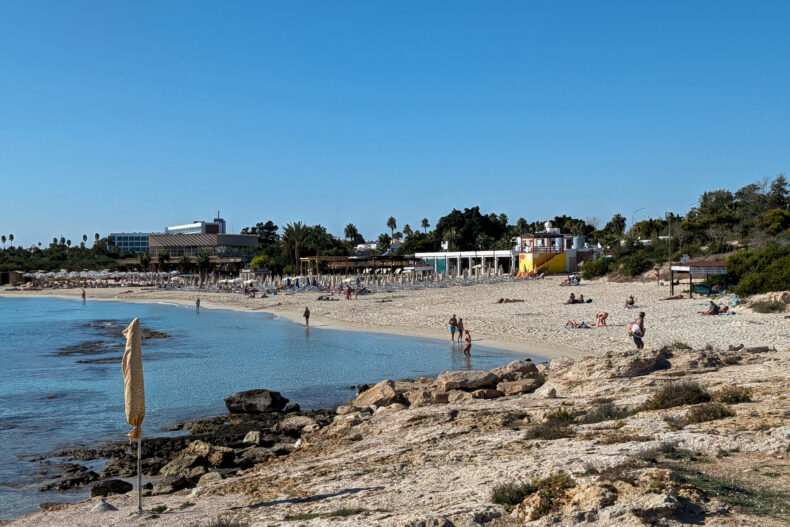
What fewer people know is that Ayia Napa also has some of the finest beaches in Cyprus. Think soft, pale sand, shallow water and a sea that turns electric blue on a sunny day. Beaches like Nissi and Landa fly the Blue Flag for good reason.
Then there’s the nature. East of town lies Cape Greco, a nature park with rugged coastline, sea caves and short walking trails, while the west side hides ancient tombs and a chapel by the sea.
We did see the party streets, but from the quieter beaches you barely notice them. Plenty of beaches have sunbeds for hire, yet by no means all of them sit in front of a big resort. For us, Ayia Napa felt like a beach destination rather than a party town.
Where to stay in Ayia Napa
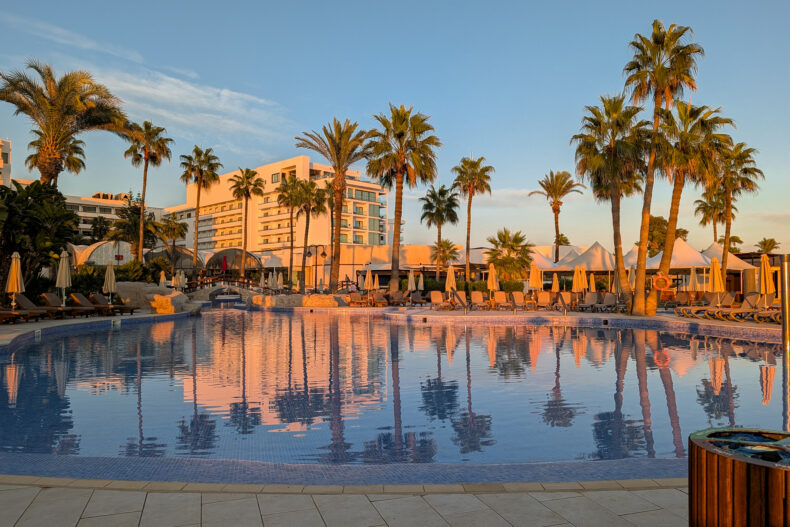
Ayia Napa isn’t big, but where you sleep does make a difference. In the centre and around Nissi Beach you’re right in the thick of it, with restaurants and bars within walking distance. Looking for more peace and quiet? Head for the edges of town. The west side around Landa and Makronissos has the best sandy beaches, while the east side towards Cape Greco puts you close to nature and the sea caves.
#1 Abacus Suites is a modern hotel with spacious suites, just outside the busiest part of the centre. After a generous breakfast you can stroll to the restaurants and the monastery in minutes.
#2 Mon Repos Hotel is a small hotel on the quiet west side, a few minutes’ walk from Makronissos Beach. The suites come with a kitchenette, handy if you’re travelling with kids and don’t fancy eating out for every meal.
#3 Olympic Lagoon Resort sits right behind Landa Beach, our favourite beach in Ayia Napa. With several pools, waterslides and a kids’ club, children won’t have a dull moment here.
#4 Napa Mermaid Hotel & Suites overlooks Grecian Bay on the east side of town. You get sea views, and the restaurants in the centre are only a few minutes away on foot.
#5 Mare Ayia Napa lies on the quiet east side by Kermia Bay, on the way to Cape Greco. The resort is laid out like a small village with pools in between, and Limnara Beach and the sea caves are just around the corner.
→ See more hotels in Ayia Napa
Things to do in Ayia Napa: 13 tips
Underwater sculptures, sea caves, sheltered bays and a water park full of slides. These are our tips for Ayia Napa and the area right around it.
#1 MUSAN: snorkel to the underwater museum
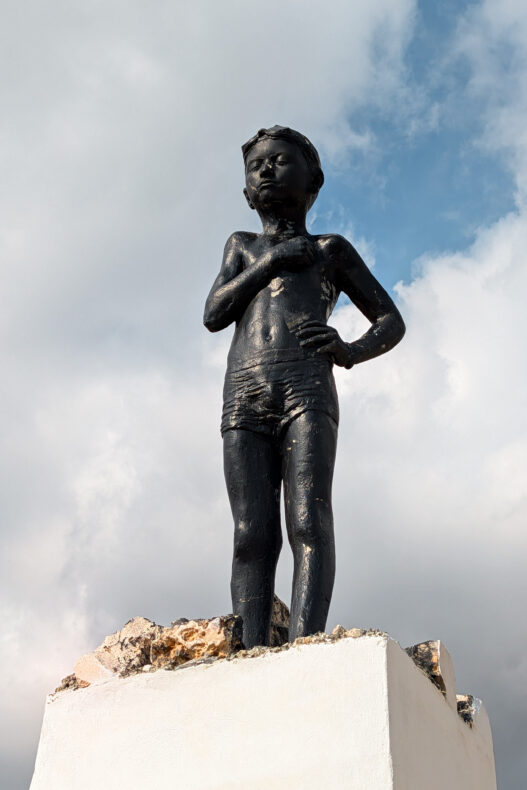
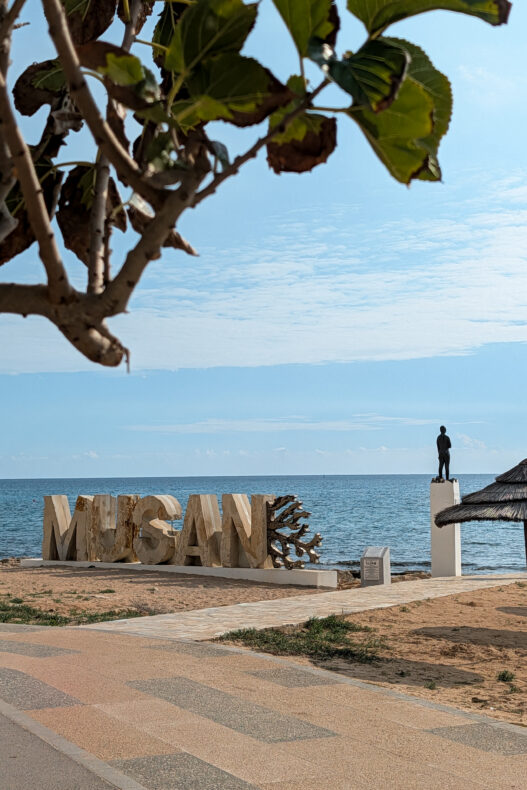
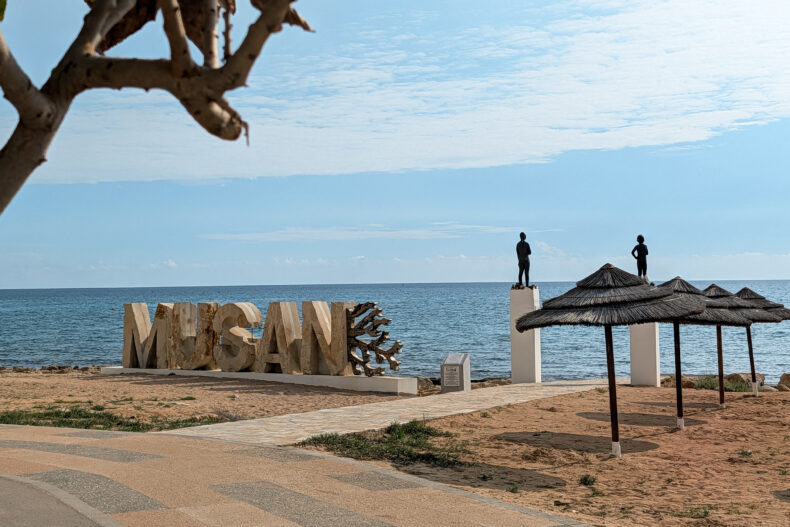
If you ask us, this is the best thing to do in Ayia Napa, and it costs nothing. From the little beach with the big MUSAN letters, Sebastiaan swam out with his snorkel. After about five minutes the first sculptures appeared below him, sharp as anything in the crystal-clear water. No need to dive down either: you can see them perfectly well from the surface. Simply brilliant.
MUSAN, short for the Museum of Underwater Sculpture Ayia Napa, is an underwater forest of sculptures by British artist Jason deCaires Taylor. The figures and trees stand eight to ten metres down among the fish, and algae and other sea life are slowly growing over them. Bit by bit, the museum is becoming part of the sea.
Snorkelling here is free and you don’t need a guide, just your own gear. Want to dive? Then go with a registered dive centre. You don’t even need a diving certificate, as beginners can join an introductory dive with an instructor. You’ll find more on the official MUSAN website. The sculptures lie about 200 metres offshore above deeper water, so it’s not a spot for young children. Ours stayed on the beach playing with Maartje. Pick a calm day for the best visibility.
→ Book a MUSAN dive, beginners welcome
#2 Landa Beach: our favourite beach
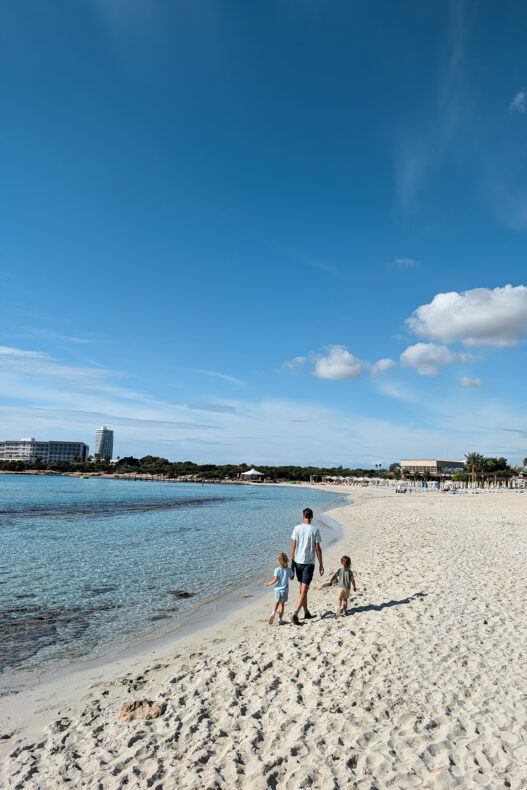
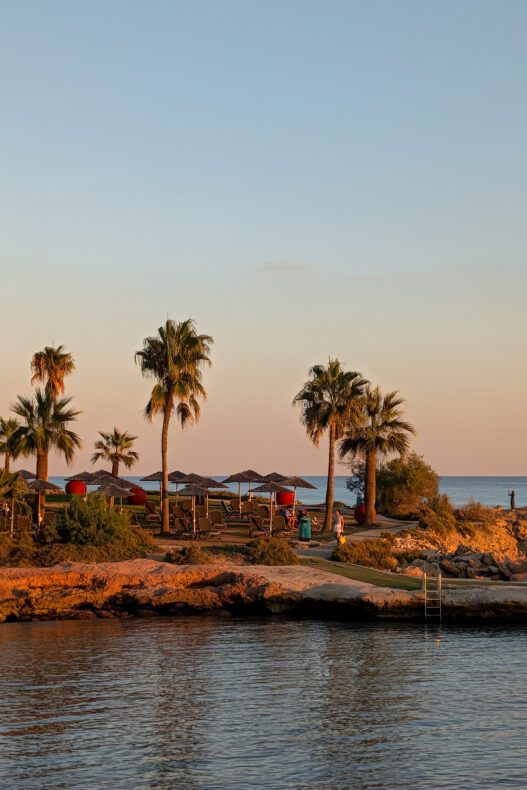
If we had to pick one beach in Ayia Napa, it would be Landa Beach. It sits right next to famous Nissi Beach with the same soft, pale sand and the same brilliant blue sea, only here you’re not squeezed between rows of sunbeds. No wonder we stayed a night longer than planned.
There’s plenty going on under water too: along the rocks at the edge of the beach Sebastiaan spotted lots of fish. There are toilets and changing rooms, and a lifeguard keeps an eye on things in season, which makes it an easy beach day with kids. At the western end of Landa, the coastal path to the Makronissos Tombs begins.
#3 Nissi Beach: Ayia Napa’s calling card
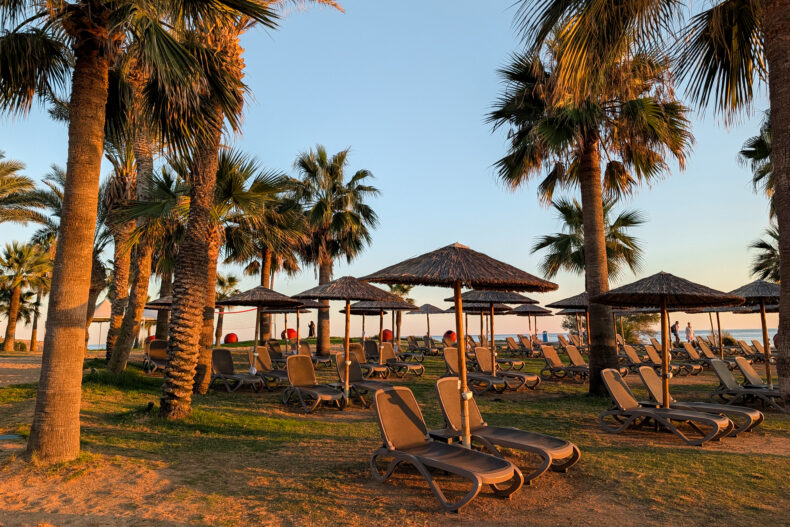
Nissi Beach is the most famous beach in Ayia Napa, and one look tells you why. A bay of white sand, shallow turquoise water and a tiny island you can reach across a sandbank. In summer it’s also the liveliest beach in town, with sunbeds from front to back and crowds to match.
We saw Nissi at sunset, when most people had already gone home, and the bay looked stunning. For a full beach day, though, we preferred Landa, just a few minutes away.
#4 Limnara Beach: sheltered swimming for little ones
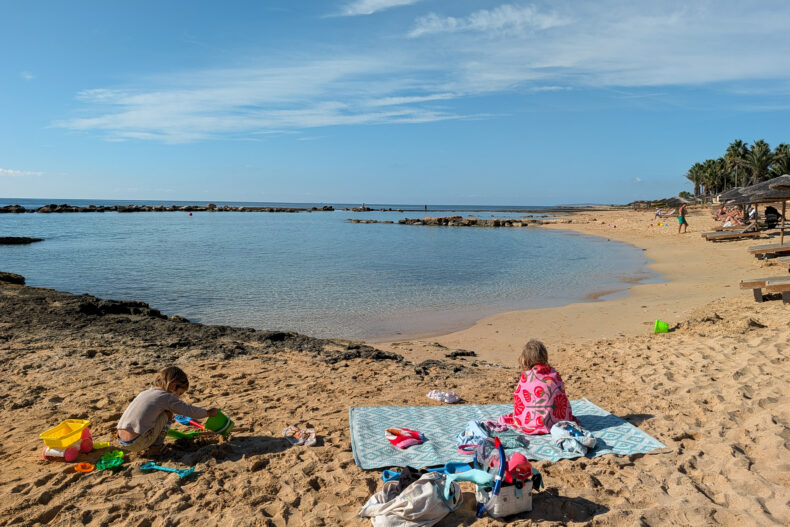
Got little kids? Then Limnara Beach, also known as Kermia Beach, is a winner. Rocks just offshore break the waves, so the water in the bay stays wonderfully calm. Our kids could paddle to their heart’s content without a wave crashing over their heads.
The beach is on the east side of Ayia Napa, on the way to Cape Greco, and mostly sits in front of a resort with sunbeds. Even so, it was far from busy in November. From Limnara you can also walk to the sea caves, but more on that below.
#5 Konnos Bay: views over a bay between the cliffs
Tucked between the cliffs of Cape Greco, Konnos Bay is a sheltered sandy cove with turquoise water and rocks on either side. We only looked down on it from above, and the view from the clifftop road alone is worth the stop.
Strictly speaking the bay belongs to Protaras, as does the short walk to the Cyclops Cave that starts from the car park. Read more about Konnos and the rest of that coast in our things to do in Protaras.
#6 Ayia Thekla: a chapel by the sea and a cave in the rocks
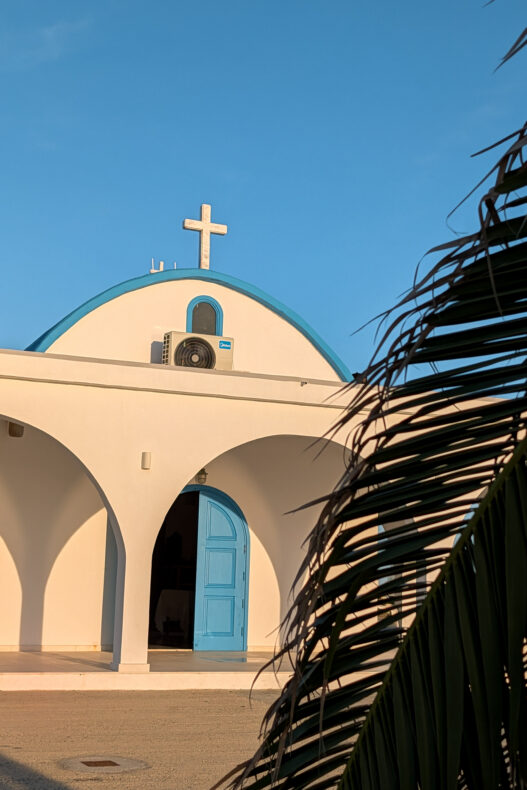
On the west side of Ayia Napa, a small white chapel with blue trim stands right by the sea. Around it is a quiet little beach with strikingly blue water, perfect for a lazy day. What we didn’t expect was hidden a few metres further along in the rocks: an old shrine in a cave, linked to Saint Thekla.
The cave isn’t big and there isn’t much to see, but tucked away in the rocky shore like that it’s a fun find. Everything is freely accessible. We watched the sun sink into the sea from the rocks in front of it, drink in hand, and if you ask us that’s the best time to be here.
#7 Makronissos Tombs: tombs kids want to climb into
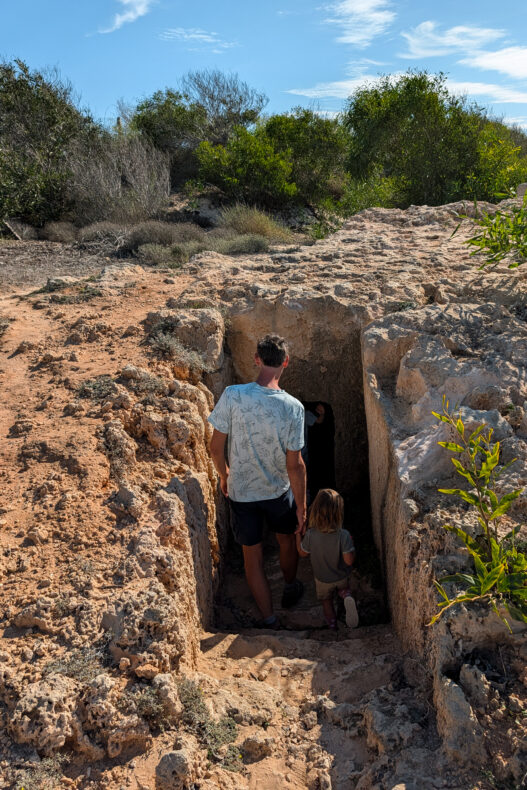
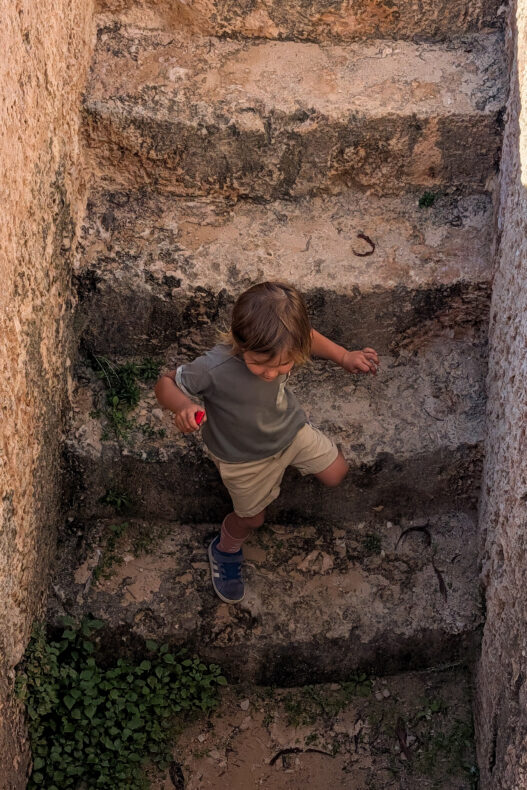
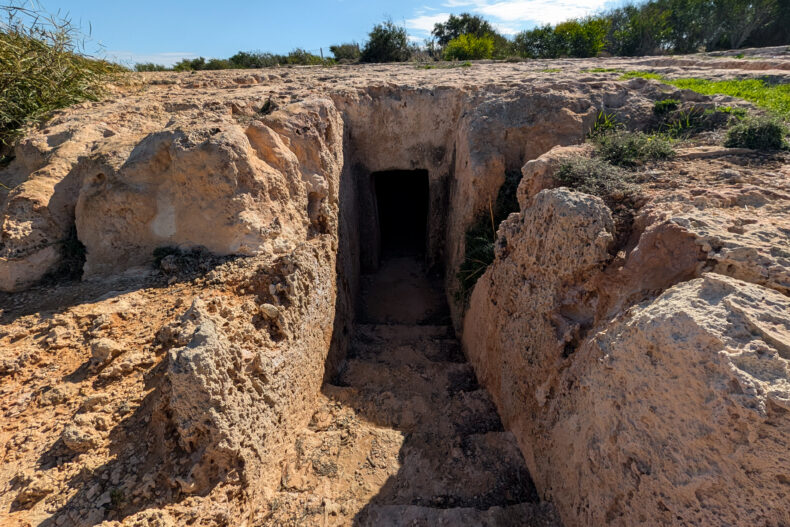
From Landa Beach, the coastal path leads you to a bare, rocky headland full of holes in the ground. These are the Makronissos Tombs: nineteen tombs cut into the rock in Hellenistic and Roman times, most of them with steps leading down to a burial chamber.
For our kids this was a proper adventure. Every single tomb had to be inspected from the inside, so down we went, one set of steps after another. Next to the tombs you’ll also find the remains of a sanctuary and an ancient quarry.
Entry is free and the site lies wide open in the sun. Bring water and wear shoes you can scramble over rocks in.
#8 Sea Caves: a clifftop walk at sunset
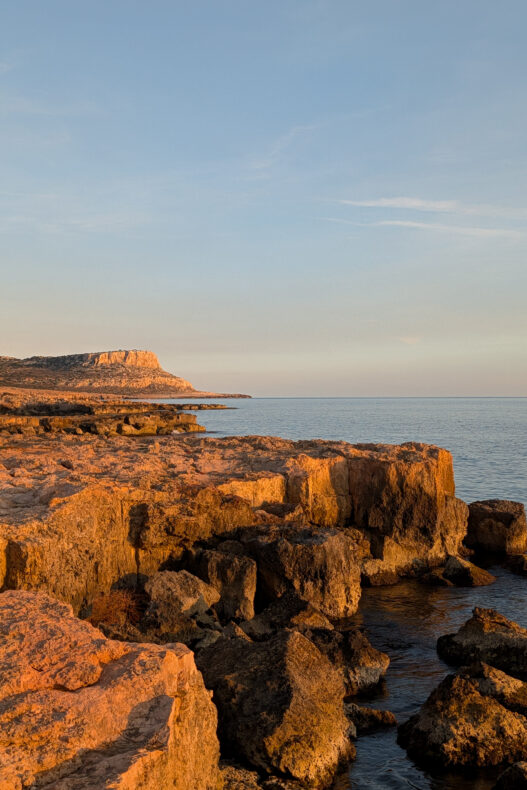
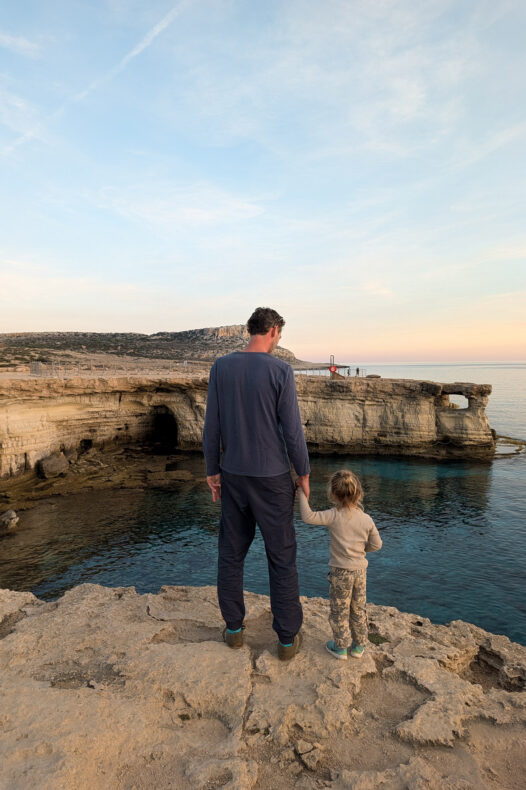
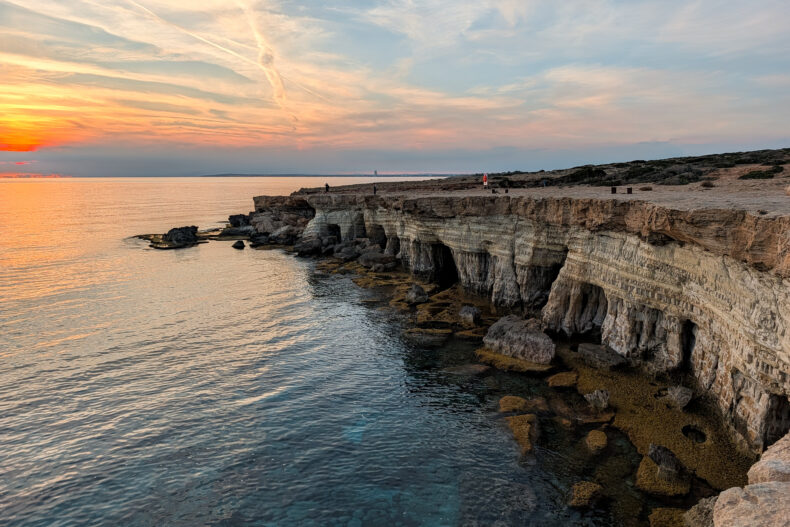
East of Ayia Napa, the sea has carved caves and arches into the pale limestone cliffs. At sunset the Sea Caves glow a warm orange, which is exactly when we walked there from Limnara Beach.
Most people drive, as there’s a car park close to the caves. We walked along the coast from Limnara Beach, and at a gentle pace with the kids it took us twenty minutes to half an hour. It starts as a normal footpath, then you have to search for the way a bit, but it’s perfectly doable with children.
Much of the cliff edge is fenced off, because cliff jumping is banned here. Rightly so, as the water below the cliffs is shallow and rocky in many places. Do put on insect repellent: around sunset, tiny biting midges left none of us alone.
#9 Cape Greco National Forest Park: cliffs, arches and short walks
East of Ayia Napa, Cape Greco juts out into the sea, a protected nature park with high cliffs, small chapels and viewpoints. This is also where you’ll find the Lovers Bridge, a natural rock arch above the water, and the Blue Lagoon, a bay of crystal-clear water for swimming and snorkelling.
For a short walk with kids there are two easy routes. The Aphrodite Trail is a two-kilometre loop past viewpoints and the remains of an ancient sanctuary, starting from the park’s visitor centre. The Cyclops Cave Trail is even shorter and begins at the Konnos Bay car park. Both paths are rocky, so a baby carrier works better than a pushchair.
#10 Boat trip to the Blue Lagoon
Cape Greco looks its best from the water. In season, boats leave Ayia Napa harbour and Protaras all day long, cruising past the cliffs, the sea caves and the Lovers Bridge to the Blue Lagoon, where you stop to swim and snorkel.
There’s something for everyone, from relaxed cruises with lunch on board to catamarans with music and an open bar, and from big boats with a waterslide to small yachts. Count on half a day on the water.
→ See boat trips from Ayia Napa
#11 Ayia Napa Sculpture Park: art with a sea view
On the road to Cape Greco you’ll find the Ayia Napa Sculpture Park, an open-air museum with dozens of sculptures by artists from all over the world. They’re scattered across a gently sloping site overlooking the sea, and wandering among them is free.
Next to the sculpture park there’s a cactus garden. The park is close to Limnara Beach, so it’s easy to combine with a beach day on the east side.
#12 Ayia Napa Monastery: calm in the heart of town
A stone’s throw from the bars stands the monastery of Ayia Napa, dating from the Venetian era. Behind its walls you’ll find a courtyard with a fountain and cloisters, and suddenly the noise of the street feels miles away.
The town owes its name to the monastery. Legend has it that a hunter once found an icon of the Virgin Mary in a wooded valley here, and so the place became Agia Napa, the holy forest.
#13 WaterWorld: a day full of slides
Fancy a day of waterslides? WaterWorld, on the west side of Ayia Napa, is a big water park themed entirely around Greek mythology, with rides named after gods and heroes. For the smallest kids there are shallow splash pools.
The park only opens in the warmer months. You’ll find tickets and opening times on the official WaterWorld website.
Practical tips for Ayia Napa
Borrow beach toys: borrow, play, return
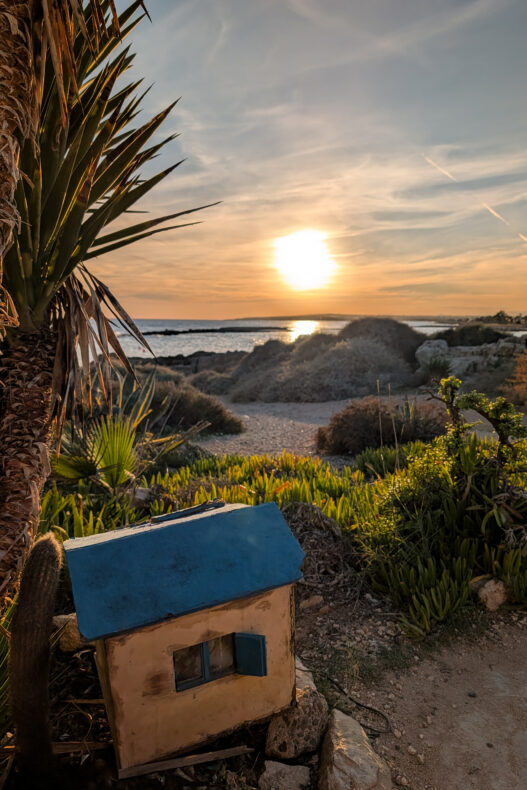
On around five beaches in this corner of Cyprus you’ll find blue wooden boxes full of beach toys, each with a QR code. The idea is simple: borrow a spade or bucket, play with it and put it back afterwards. Toys that would otherwise be left behind get a second life this way.
The boxes are an initiative of re-blue Cyprus, set up by students of the Pascal Schools in Nicosia. Our kids loved trying out something new, even though we had our own beach toys with us.
Grocery shopping in Ayia Napa
The tourist strip is mostly souvenir shops and small minimarkets, and a proper supermarket is harder to find. For our big shops we drove to the Lidl in Paralimni, a short way up the road. Distances are small here, so that’s no problem. On the west side of town, near the marina, there’s also a large Alphamega.
Need a launderette?
Staying a bit longer? Good to know that the tourist part of Ayia Napa has plenty of launderettes. We did a big wash and had clean clothes for days afterwards.
Mosquitoes in Ayia Napa: cover up at sunset
During the day we weren’t bothered at all, but as soon as the sun went down the mosquitoes and tiny midges came out. At Ayia Thekla we beat a hasty retreat indoors, and at the Sea Caves everyone got badly bitten. Luckily it eased off again after a while.
Bring a good insect repellent, for example one with icaridin, and put it on before sunset. For children, choose a product that the label says is suitable for their age. Light long trousers and long sleeves around sunset help too.
When is the best time to visit Ayia Napa?
In July and August it’s hot and busy, and Ayia Napa runs at full speed. If you’re mainly coming for the beaches, nature and snorkelling, spring and autumn are nicer: less heat and far fewer people. We visited in November and still had several beach days with clear blue water, and the sea was pleasant enough to swim in.
You do notice the season winding down by then. At Ayia Thekla the sunbeds were being packed away while it was still perfect beach weather. The beaches stay open, but outside the season there are no lifeguards and fewer facilities.
How many days do you need in Ayia Napa?
We stayed five days and moved beaches twice in that time. With three to four days you’ll see the best beaches, the tombs, MUSAN and a bit of Cape Greco without rushing. Want to add a boat trip or a day at WaterWorld? Then add an extra day. If you’re in the area longer, combine it with Protaras or a day trip to the north.
Bonus tip: day trip to Varosha
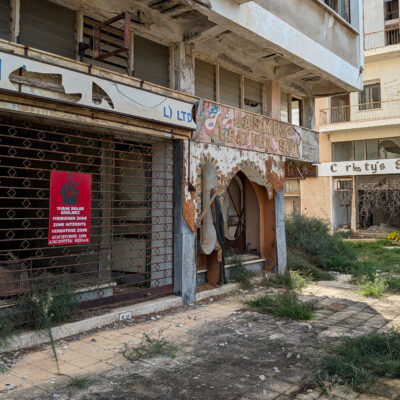
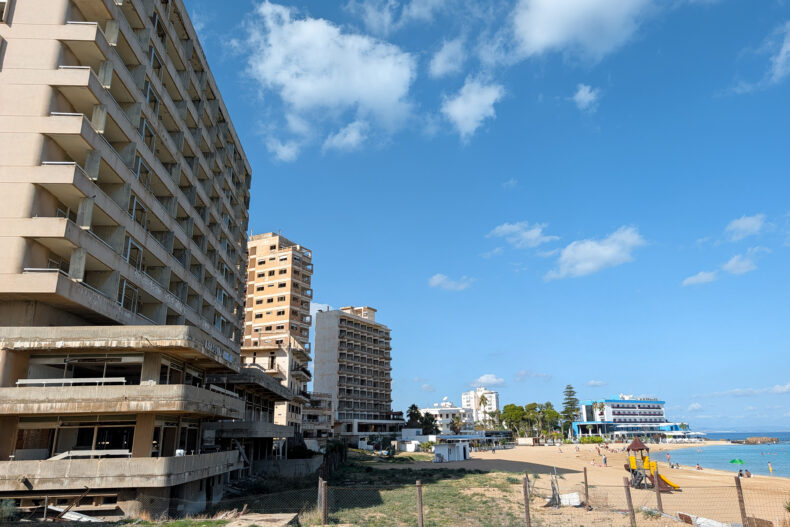
From Ayia Napa you’re at the border with Northern Cyprus in no time. Just across it lies Varosha, the abandoned resort district of Famagusta that has stood empty since 1974. We went there from the east coast and came back with mixed feelings.
→ Read our guide to visiting Varosha
→ Discover all our tips in the Cyprus travel guide
Enjoy our travel tips? Add The Orange Backpack as a preferred source on Google and you'll see us more often in your search results.
Plan your trip to Cyprus
Everything you need to book your trip, in one place. From hotels to rental cars.
 Our pickHotels in Cyprus: from a boutique hotel in Paphos to a village house in the Troodos Mountains or a hotel on Kyrenia's old harbour. Pick your spot or browse all of Cyprus on Booking
 Cyprus is easiest to explore with your own car. Rent a car with Discover Cars in Larnaca or Paphos and compare the big rental companies in one go. Heading north too? Check that it's allowed and buy separate insurance at the crossing.
 Rather book flights and hotel in one go? Find a package holiday to Cyprus, or browse guided tours of Cyprus on TourRadar.
 No flight yet? Compare flights to Larnaca or Paphos.
 Swimming in the Blue Lagoon? Book the day trip from Paphos to the Blue Lagoon and the Akamas Peninsula on GetYourGuide.
 Discover all our blogs about Cyprus