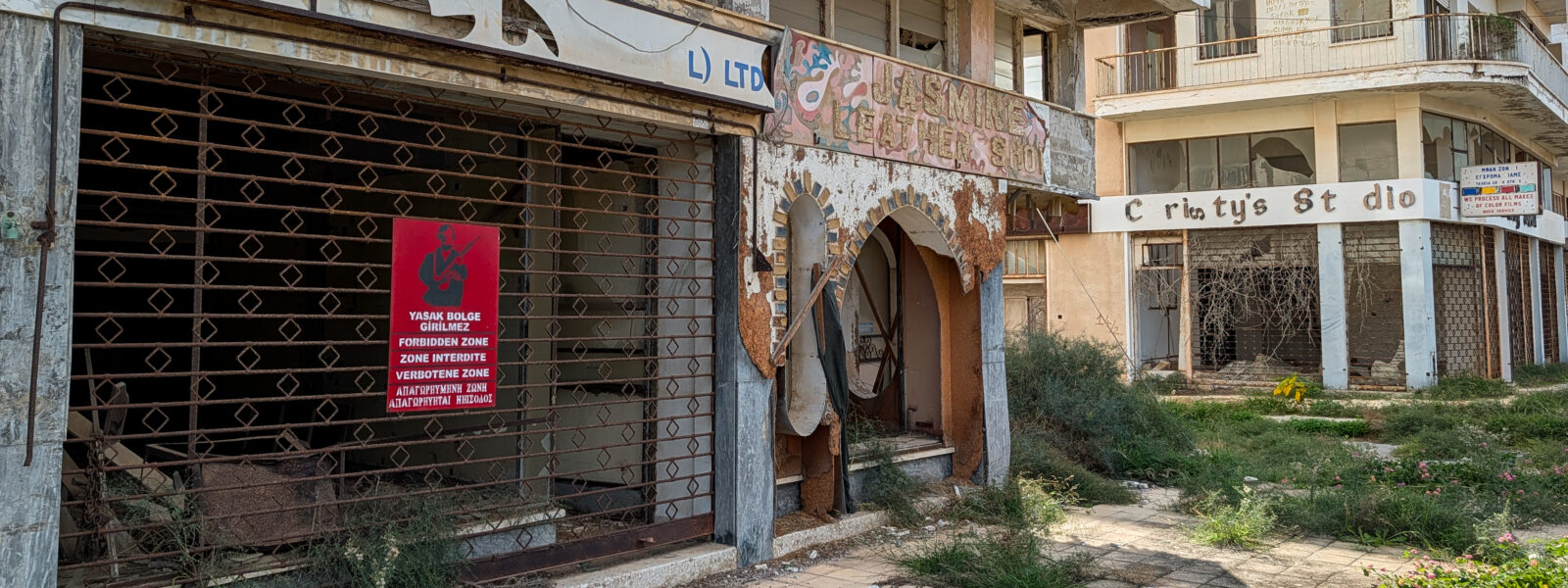
A ghost town sounds quiet, right? We pictured ourselves wandering down empty streets with nothing but the sound of the sea in the background. Reality turned out differently. On a Sunday in mid-November, golf carts full of tourists whizzed past, groups crowded around the same photo spots, and it was busier than any of the beach towns we’d seen in Cyprus that week.
In the seventies, Varosha was the place to be on Cyprus. Since 1974 this district of Famagusta has stood largely empty, and since 2020 you can visit part of it again. Curious? So were we. That’s why we went anyway, and we came back with mixed feelings.
So what exactly is Varosha, what will you see there and is it worth visiting? You’ll find all of that below, along with the practical side of things: from crossing the border from Ayia Napa and Protaras to parking and exploring with kids.
What is Varosha?
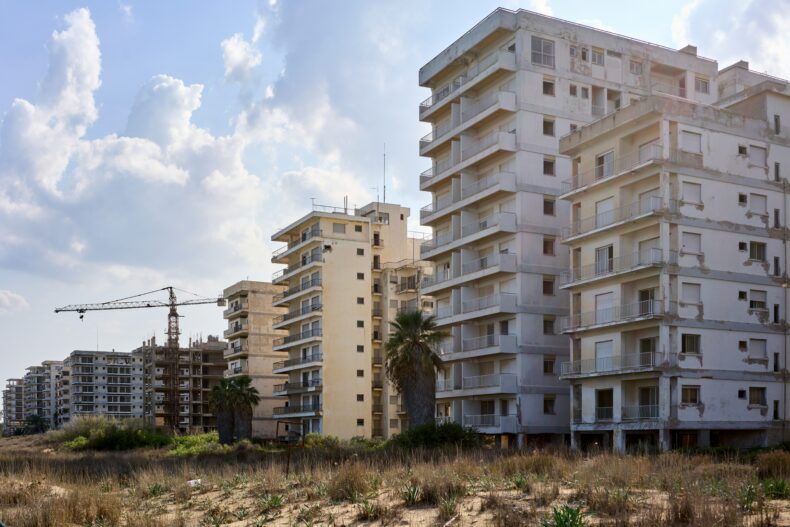
Picture a long sandy beach lined with one high-rise hotel after another. That was Varosha, Maraş in Turkish, the seaside district of Famagusta on the east coast of Cyprus. In the sixties and seventies, holidaymakers from all over Europe flocked here, and it grew into one of the best-known resorts in the Mediterranean.
In the summer of 1974 it all ended in one blow. After a coup backed by the Greek military junta, the Turkish army invaded Cyprus. The mostly Greek Cypriot residents of Varosha fled in August, expecting to be back within a few days. That day never came. The army fenced off the district, and while the rest of Famagusta stayed inhabited, Varosha stayed empty.
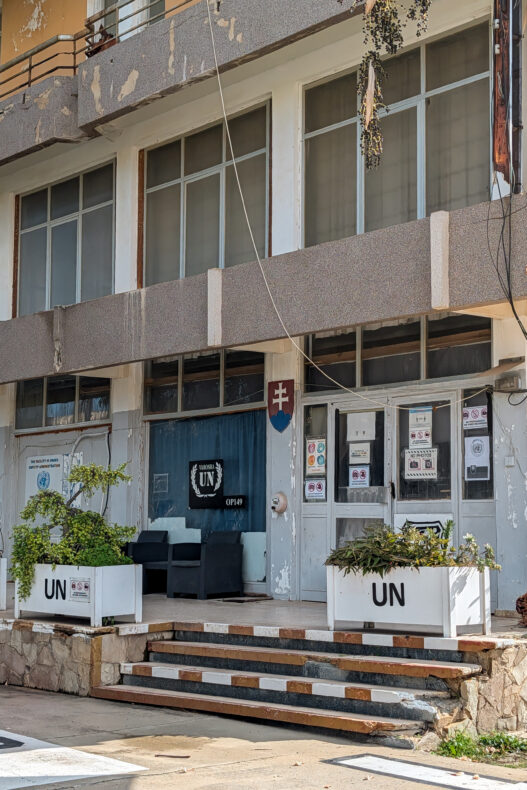
For more than forty years it was off-limits and a bargaining chip in the negotiations over the island’s future. In October 2020 the Turkish Cypriot authorities opened part of the district to visitors, and another section followed in 2021. The reopening is a sensitive issue. The Republic of Cyprus sees Varosha as its own territory, occupied by the Turkish Cypriots, and the UN Security Council called for the unilateral reopening to be reversed in a statement and later resolutions. For many former residents and their families, this isn’t a sight to see. It’s the place where their home used to be.
Is Varosha worth visiting?
Yes. But with a big caveat.
An entire resort that has been on pause for decades is something you won’t see anywhere else. Being curious about that is only human, and it’s why we wanted to see it for ourselves. You walk straight through the recent history of Cyprus, and that picture stays with you.
The story behind this attraction is a bitter one, though. People had to leave in a hurry because of a war, and now golf carts drive past their abandoned homes for a selfie. That mix of crowds and day-trip atmosphere at a place with such recent history didn’t feel right to us. Uncomfortable, even. We think it matters to properly understand what you’re looking at. Read up on the conflict before you go, and the penny drops much faster.
Don’t expect peace and quiet either. If you’re hoping for a deserted ghost town, you’ll be disappointed: on that Sunday it was a constant coming and going of tour groups, cyclists and golf carts. Weekdays may be quieter, but you won’t have the streets to yourself.
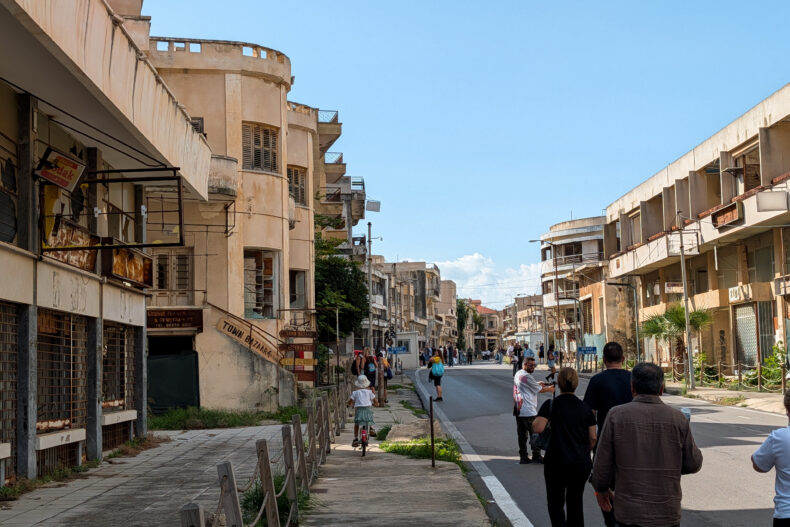
What will you see in Varosha?
Varosha is bigger than you’d think. The resort hotels stand in a long row along the coast, while further inland it turns into more of a town, with apartment blocks and shopping streets. The open route runs a good way along that coastline.
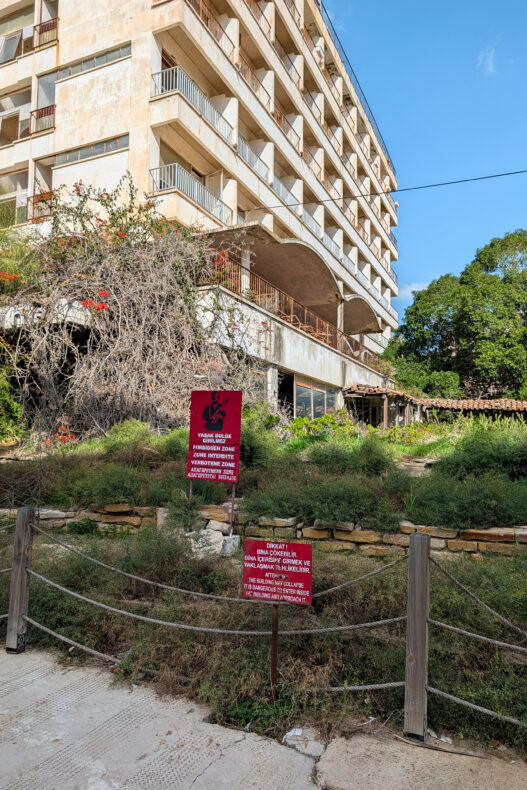
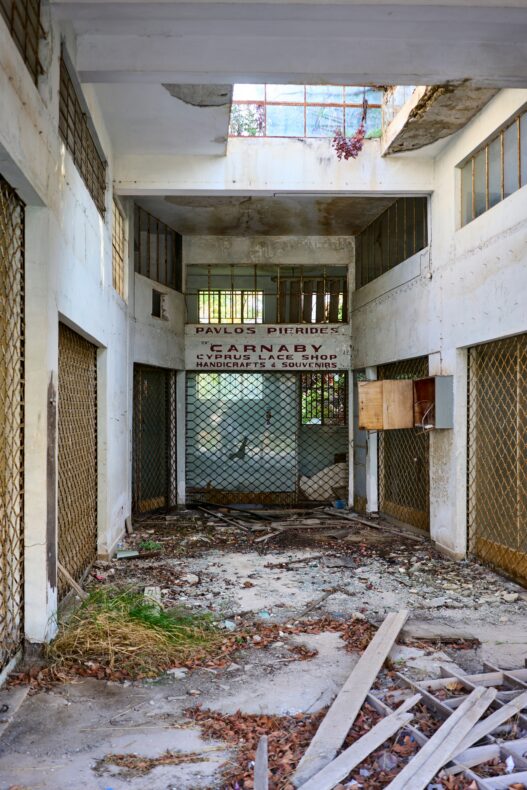
There are some ground rules. You stick to the streets that are open, side streets are blocked off and you can’t go inside the buildings. Countless signs point this out, because the buildings are said to be at risk of collapse. Taking photos is fine, just leave soldiers and military posts out of the frame.
#1 The empty streets: a resort on pause
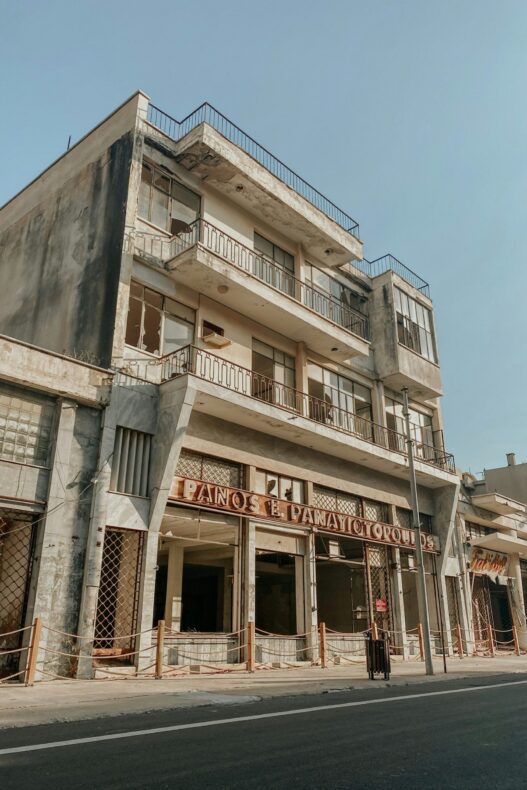
Block after block of abandoned hotels, apartments and shops. What was once a lively seaside town is now a film set without the tourists. You walk and walk, and it just keeps going.
The strangest thing is actually the road under your feet. The asphalt is so smooth it can’t possibly date from the seventies. Brand new tarmac between buildings that have been slowly falling apart for fifty years: there’s no clearer sign that this stretch was spruced up especially for visitors.
#2 The Toyota building: where everyone gets their phone out
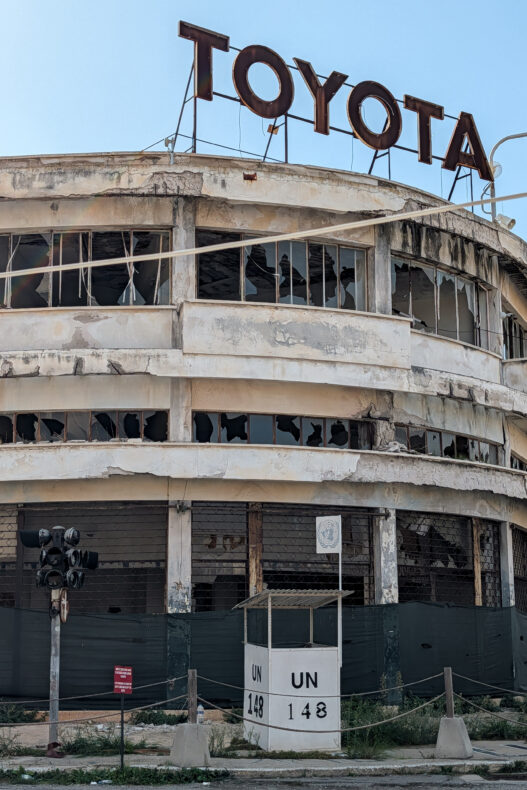
If there’s one place in Varosha where everybody stops, it’s the old Toyota car showroom. This is where the groups stood closest together, with everyone waiting their turn for the same photo.
For years, stories have been doing the rounds about cars from the seventies that were supposedly left behind here. What’s really still inside remains a mystery, because going in is of course not allowed.
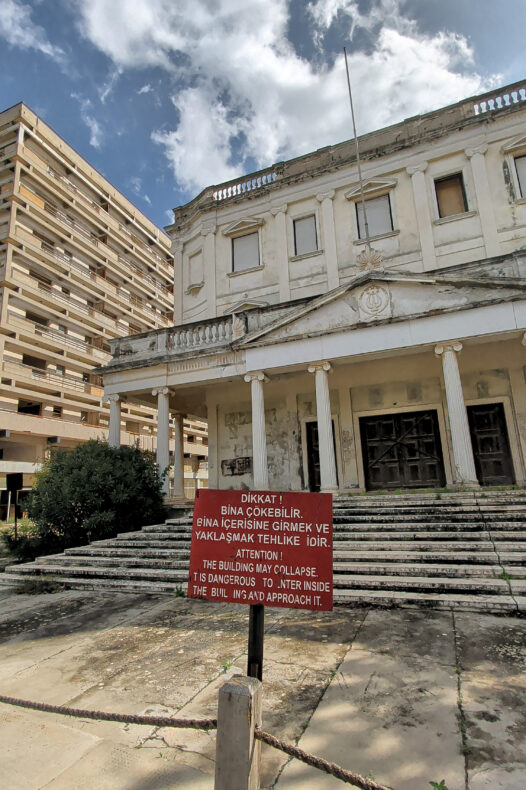
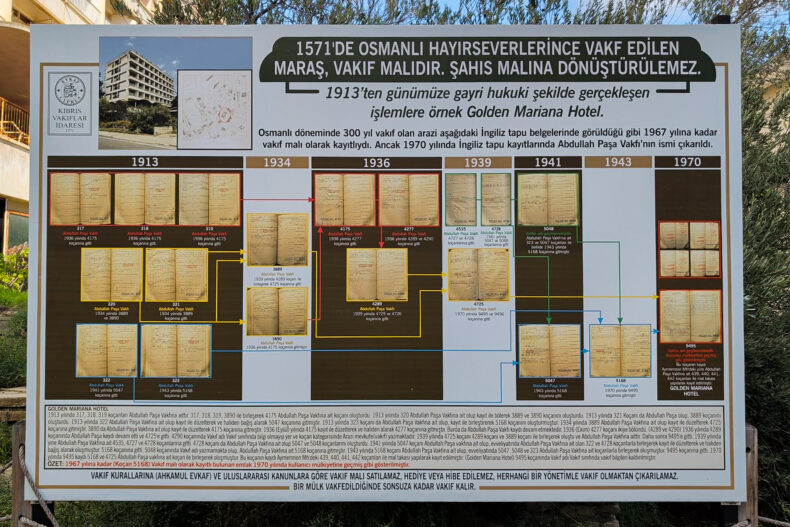
#3 The Evkaf signs: who does Varosha actually belong to?
Along the route, the same signs keep popping up. They belong to Evkaf, the Turkish Cypriot foundation that manages religious endowments, and they tell their side of the ownership story. According to Evkaf, Maraş was donated to religious foundations in 1571, after the Ottoman conquest. And what was donated then, the foundation says, remains foundation property forever. Evkaf’s position is that the Greek Cypriots took the district unlawfully.
The signs go into quite some detail and show photos of old title deeds. At the Golden Mariana Hotel, the foundation’s name supposedly disappeared from the land register in 1970, and at the site of today’s bike park as early as 1948. According to the signs, both plots belonged to the Abdullah Paşa foundation. It’s one party’s version of a complicated issue, but it shows how loaded the question of who owns this land really is.
#4 The beach: a fence right across the sand
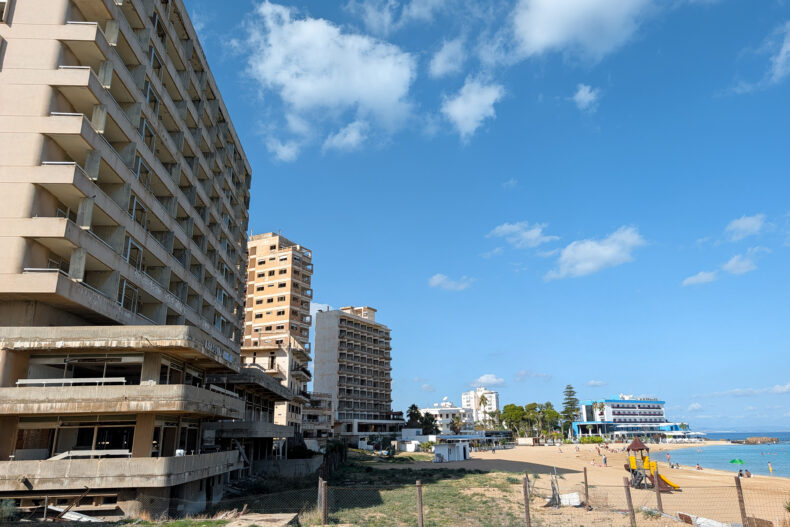
The first beach is right by the entrance, so you’re there in no time. And that’s where you’ll see perhaps the oddest sight of the day: a fence running straight across the sand.
On the Varosha side, people simply sunbathe and swim, with empty hotels as a backdrop. A few metres further, on the other side of the fence, is a perfectly ordinary Famagusta town beach, with lived-in apartments and everyday life. People on both sides were making the most of the sun and the sea, but lying on your towel among the ghost hotels remains a strange experience.
Practical tips for visiting Varosha
How do you get to Varosha?
Varosha is in the north of Cyprus, just across the Green Line, the buffer zone that splits the island in two. From Ayia Napa and Protaras it’s close by: the Deryneia crossing point is right next to Varosha, and from there it’s only a short drive. We came through Deryneia too, and for us it was quick and easy.
At the border you show a valid passport or ID card, for the kids as well. We travelled around Cyprus in our own campervan. If you bring your own car, you’ll need separate insurance for Northern Cyprus, as most European car insurance policies don’t cover the north. You can buy it at the crossing point. We had everything sorted already, so for us it was a matter of showing our papers and driving on.
Can you take a rental car to Varosha?
Often not. Many rental companies in the south of Cyprus don’t allow you to cross to the north, or their insurance doesn’t apply there. A few local companies do allow it, but the insurance you buy at the border usually only covers damage to others, not to the rental car itself. If crossing isn’t explicitly allowed in your rental terms, leave the car on the southern side.
Visiting Varosha on a tour from Ayia Napa or Protaras
No car of your own, or a rental that isn’t allowed north? Then an organised day trip is the easiest option. Several tours leave from Ayia Napa, Protaras and Larnaca and combine Varosha with the old town of Famagusta, sometimes with Salamis as well. Do check how much time you actually get in Varosha, as some tours only stop there briefly.
→ Check out the day trip to Famagusta, Varosha and Salamis
Where do you park at Varosha?
For free, right in front of the entrance gate. When we arrived it was still nice and quiet and we could take our pick. By the time we left it was a lot fuller, but there was still space. You can’t drive into Varosha itself: from the gate you carry on on foot, by bike or by golf cart.
Walk, cycle or golf cart?
We walked. The beach is close to the entrance, but the route along the coast goes on for quite a while, so if you want to go beyond the first few streets, the kilometres add up. At the entrance you can hire bikes and electric scooters, and there are golf carts with a driver. Entry to Varosha is free; you pay separately for any rentals.
Visiting Varosha with kids
With young children, Varosha is perfectly doable. Our eldest rode along on their own little bike, which we’d brought from the campervan, and our youngest sat in the pushchair. The roads are flat and smooth as glass, so a pushchair rolls easily everywhere you’re allowed to go.
There’s hardly any shade. Now and then you can walk in the shadow of a building, but otherwise you’re in full sun. So bring plenty of water, sun hats and sunscreen, even outside the summer months. You can get something to eat and drink at the entrance and on the beach.
How much time do you need for Varosha?
Allow two to three hours, especially if you’re walking and want to sit on the beach for a bit. Come early if you can: it’s still quiet at the gate and not too hot yet. In summer those shadeless streets are tough in the middle of the day, while autumn and winter bring perfect walking weather.
Bonus tip: combine Varosha with Salamis
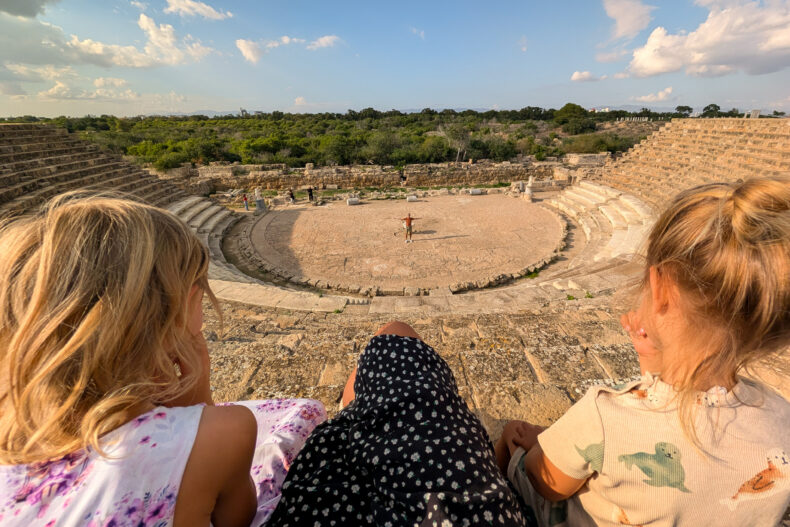
A little further north lie the ruins of Salamis, once one of the most important cities on Cyprus. We went a few days later, and it was a completely different outing. The kids couldn’t get enough of the Roman baths, with separate rooms for hot, warm and cold water, and in the theatre our eldest immediately wanted to put on a play. A great addition to a day in the north, and a lot less loaded than Varosha.
→ Discover all our tips in the Cyprus travel guide
Enjoy our travel tips? Add The Orange Backpack as a preferred source on Google and you'll see us more often in your search results.
Plan your trip to Cyprus
Everything you need to book your trip, in one place. From hotels to rental cars.
 Our pickHotels in Cyprus: from a boutique hotel in Paphos to a village house in the Troodos Mountains or a hotel on Kyrenia's old harbour. Pick your spot or browse all of Cyprus on Booking
 Cyprus is easiest to explore with your own car. Rent a car with Discover Cars in Larnaca or Paphos and compare the big rental companies in one go. Heading north too? Check that it's allowed and buy separate insurance at the crossing.
 Rather have it all arranged? Browse guided tours of Cyprus on TourRadar.
 No flight yet? Compare flights to Larnaca or Paphos.
 Swimming in the Blue Lagoon? Book the day trip from Paphos to the Blue Lagoon and the Akamas Peninsula on GetYourGuide.
 Discover all our blogs about Cyprus

