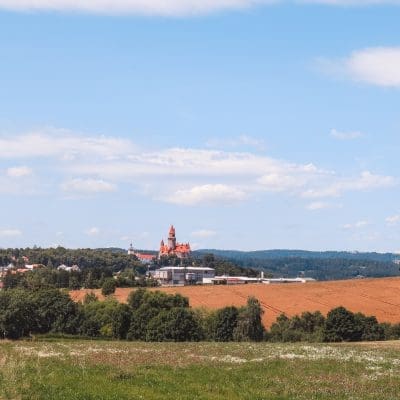
Nestled in the far southeast of the Czech Republic, along its border with Austria, lies one of the country’s most breathtaking gems: the Lednice-Valtice Cultural Landscape. Recognized as a UNESCO World Heritage site, this vast park is one of the largest of its kind in the world, covering over 200 square kilometers. Once owned by the Liechtenstein princes, this extraordinary landscape is home to two remarkable palaces, one in Lednice and the other in Valtice. Between them, you’ll find an array of stunning landmarks, including a castle ruin, a Roman aqueduct, an ancient greenhouse, temples, hunting lodges, expansive forests, chapels, a Moorish minaret, ponds, and streams. This enchanting corner of South Moravia is a hidden treasure that should not be missed.

A Map of the Lednice-Valtice Cultural Landscape
The Estate of the Liechtensteins
The Liechtenstein family, the same family that still governs the modern Principality of Liechtenstein, was once one of the wealthiest and most influential families in Austria. Their immense legacy continues to shape the Moravian region, a reflection of their significant wealth and power. To symbolize their prominence, they created a vast landscape park that would eventually evolve into a grand estate.
The story begins in 1249, when the family acquired Lednice Castle. Not long after, they also gained ownership of Mikulov Castle. Though they eventually sold Mikulov, Lednice remained in the family for nearly 700 years. Over time, the Liechtensteins expanded their land holdings, acquiring more property in the surrounding region. In the 14th century, they added Valtice Castle to their sprawling estate, setting the stage for the creation of the Lednice-Valtice Cultural Landscape as we know it today.
By the 15th century, the family had risen to even greater power, with many of its members assuming prominent positions within the Austrian court. This growing influence was officially recognized in 1608, when the Austrian emperor granted the Liechtensteins princely status. As the newly minted Prince of Liechtenstein, the family now controlled a vast expanse of land in Moravia. They used the considerable wealth generated from these holdings to fund extensive construction projects in Lednice and Valtice. Over the centuries, both castles were rebuilt, extended, demolished, and reconstructed, ultimately becoming some of the most beautiful and iconic castles in all of Moravia.
The two castles were connected by a 6 km avenue, beautifully lined with lemon trees. However, the vision for the estate extended far beyond the two castles and the avenue. The Liechtenstein princes transformed their property into a vast landscape park, designed as a retreat for the family’s enjoyment. This park was intended to represent the perfect landscape, featuring forests, ponds, paths, and avenues. But what made it truly remarkable were the many monuments scattered throughout the grounds. After all, what’s a romantic landscape without a castle ruin? So, they decided to build one themselves. Naturally, a Roman aqueduct, an Arab minaret, and a Greek temple were also included in the grand design. Every element was carefully planned and positioned. Special vistas were created, such as the breathtaking view of the distant minaret from the back of Lednice Castle. Many of the architectural structures were strategically placed on landscaped hills or at key intersections along hiking trails, enhancing the beauty of the park.
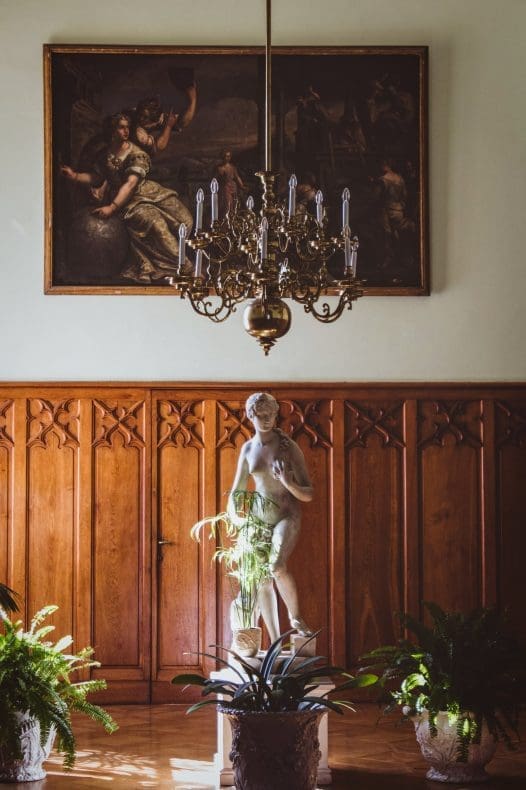
This remarkable fusion of nature and architecture, blending Baroque, Classical, and Neo-Gothic styles, ultimately earned the estate a place on the UNESCO World Heritage List. However, by the time the site received this recognition, the estate was no longer in the hands of the Liechtenstein family. You won’t hear much about this during your tours of the castles and gardens, though. At the end of World War II, the government seized all properties owned by Germans, German speakers, and Nazi collaborators. Despite Switzerland and Liechtenstein remaining neutral during the war, the German-speaking Prince of Liechtenstein was labeled a Nazi collaborator, allowing the government to confiscate his properties in Moravia, including the castles. The family was forced to move their main residence to the Principality of Liechtenstein, losing most of their estates. Since the fall of the Soviet government in 1989, the family has sought to reclaim their land, and the legal proceedings are still ongoing.
The Palaces of Lednice and Valtice
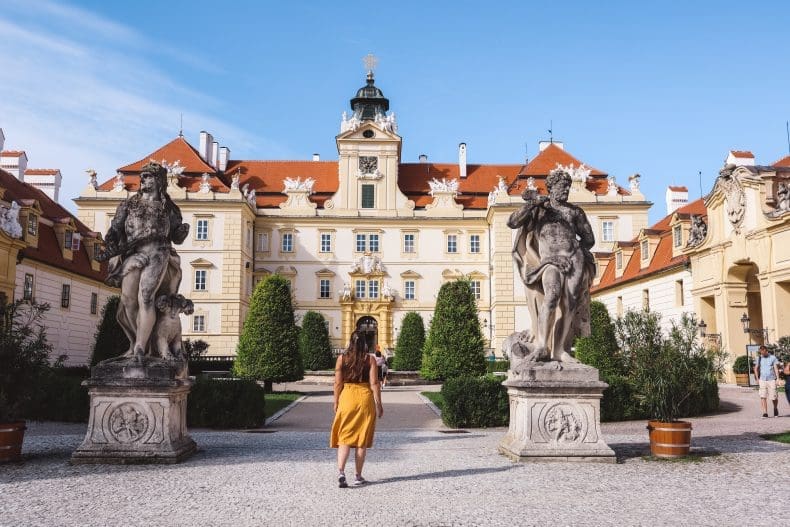
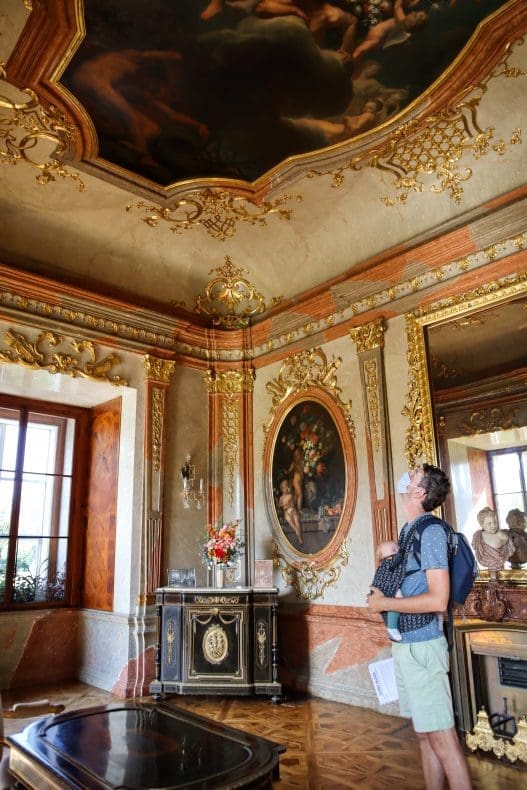
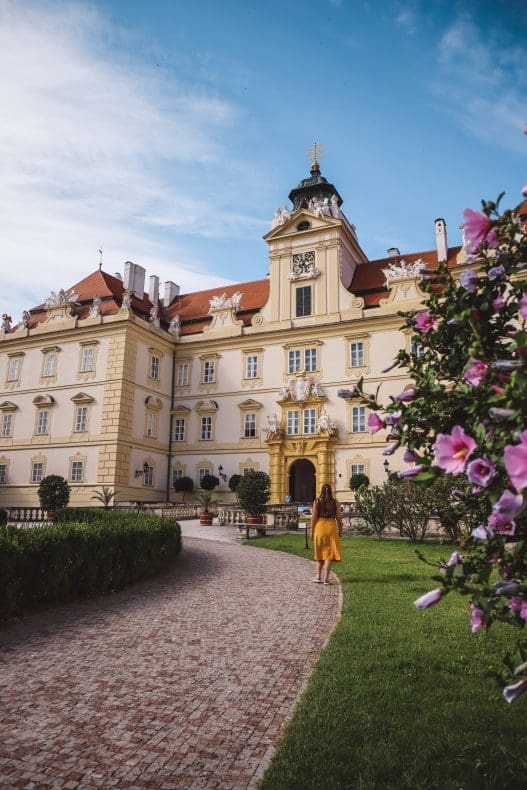
The palaces of Lednice and Valtice are the true crown jewels of the Liechtenstein cultural landscape. Both castles are open to visitors, and it is well worth your time to explore at least one of them. Though their histories are linked, these two castles each offer a unique experience. Valtice stands as a beautifully preserved Baroque masterpiece surrounded by a grand park with sweeping avenues and lush green fields, while Lednice, along with its expansive castle park, was designed in a romantic neo-Gothic style that evokes a different, yet equally stunning, atmosphere.
Lednice Castle
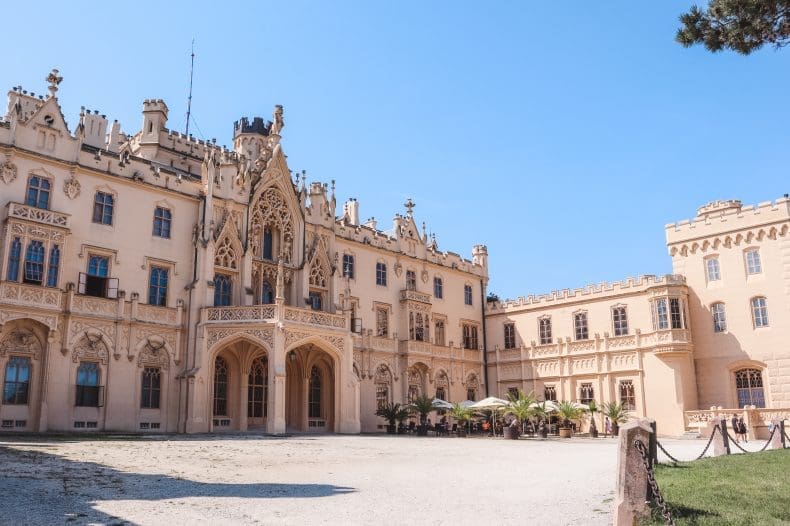
Lednice was the first castle the Liechtenstein family built in this region. The original medieval structure, which had become outdated over time, was demolished in the seventeenth century and replaced by a luxurious Renaissance chateau. However, over a century later, this style no longer suited the tastes and growing status of the family. As a result, another major demolition and rebuilding project was undertaken in the eighteenth century, giving rise to the Baroque castle you would have seen in earlier times.
The Lednice Castle we see today is the result of the vision of Prince Alois II of Liechtenstein. Between 1846 and 1858, he transformed the castle into his summer residence, embracing the Gothic Revival style that had gained popularity in England. Prince Alois even sent his architect to England to study the architectural style firsthand, ensuring the design was authentic to its English roots.
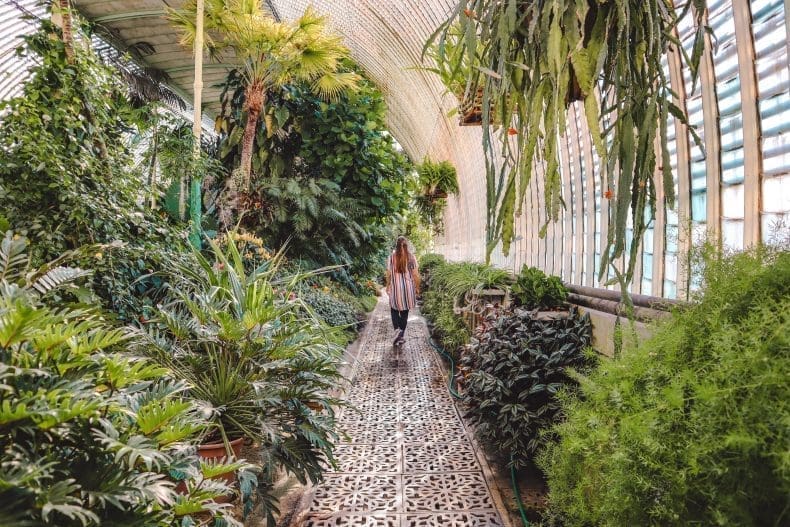
The castle is surrounded by a vast park that mirrors the romantic Gothic style of the castle itself. The park is a delight to explore, with winding footpaths and serene ponds adding to its beauty. What makes the park around Lednice Castle particularly remarkable are the many distinct structures scattered throughout, similar to those found in the larger Lednice-Valtice Cultural Landscape. Right next to the castle, you’ll find the Palm House, a centuries-old greenhouse where a variety of tropical plants thrive. As you wander deeper into the park, you can discover fascinating buildings, including a Moorish-style pavilion and a towering minaret, which together add an exotic flair to this enchanting landscape.
Castle Valtice
While Lednice was frequently demolished and rebuilt, Valtice followed a different course, undergoing extensive renovations and expansions over the years. In response to the threat posed by the Ottoman Empire, the castle was fortified to protect it from potential attacks. Some of these defensive features, such as the impressive 2-meter-thick walls found in certain parts of the basement, remain visible to this day. As time passed, later renovations shifted focus toward enhancing the castle’s grandeur. However, compared to the lavishness of Lednice Castle, Valtice presents a more understated exterior.
After the Liechtensteins lost control of Valtice Castle following World War II, the building suffered considerable damage during the Soviet era. It was repurposed for various functions, including serving as a penal camp and storage facility. Having been neglected and left in poor condition for many years, the castle is still in the process of restoration. Despite this, visitors can now explore the rooms that once belonged to the last princess of Liechtenstein, a restoration effort that was finally completed in 2016.
The castle park at Valtice is more modest than the grand park at Lednice. Smaller in size, it is characterized by a gently sloping lawn and a peaceful herb garden, offering a quieter and more serene atmosphere compared to the expansive, sweeping grounds of Lednice.
The other sights in the park
The Palm House, the ‘Greenhouse’ at Lednice
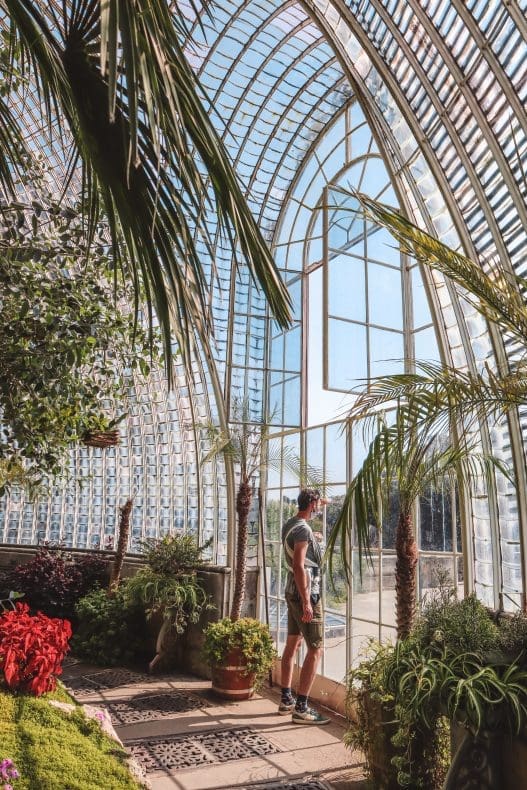
The Palm House, also referred to as the Greenhouse, was constructed on the site of a previous orangery. In 1843, Prince Alois II entrusted the design and creation of this remarkable greenhouse to Joseph of Liechtenstein, aiming to build a modern marvel using steel, cast iron, and glass. The greenhouse was a striking structure, measuring 92 meters in length, 13 meters in width, and standing 10 meters tall. It came with a hefty price tag, reflecting its grand scale and innovative design. Inside, the prince commissioned the creation of a tropical garden, featuring a vast array of tropical and subtropical plants. To make the garden even more extraordinary, the prince sent his gardeners on journeys to Africa and South America to gather rare and exotic species. Today, the greenhouse proudly displays more than 250 different plant species, offering visitors an impressive look at the lush and diverse flora that once fascinated the prince.
The Moorish Building and the Minaret
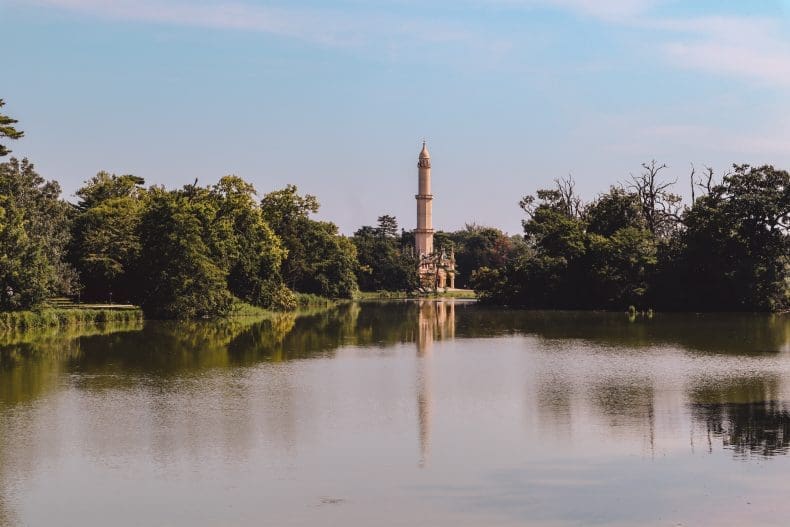
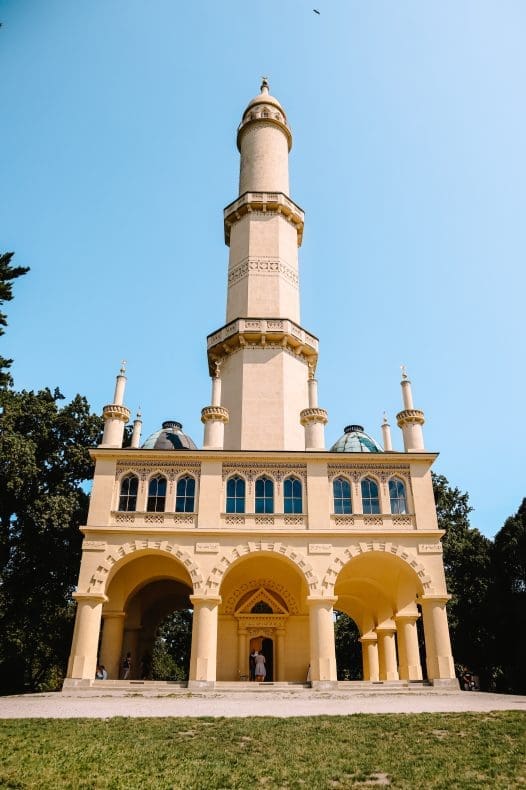
One of the most striking and distinctive features of Lednice Castle Park is the Moorish minaret. Positioned at the rear of the palace, it provides a stunning view of the castle, and, from the minaret’s height, visitors are rewarded with a remarkable vista of the palace in return. The minaret was commissioned by Prince Alois II of Liechtenstein around 1800, reflecting the period’s fascination with all things exotic and oriental. Given his immense wealth, the prince sought to create an authentic minaret in his garden. Towering at 62 meters, it proudly holds the title of the tallest minaret in Europe.
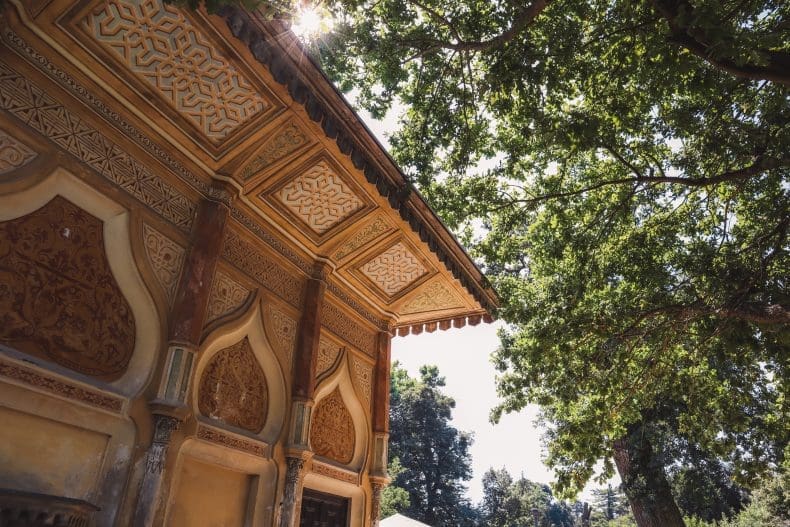
Built in the same Moorish style, another striking structure was placed at the heart of the park. This building, known as the Moorish Waterworks (Maurská vodárna), was originally designed to house a steam bath and serve as the central irrigation system for the park. Additionally, a water turbine was installed to generate electricity. These structures stand out not only for their architectural beauty but also because they represent the only examples of Moorish architecture in the entire Czech Republic, making them a truly unique feature of the landscape.

John’s Castle
There is something undeniably enchanting about having a castle ruin on your estate. And if one doesn’t already exist, why not create your own charmingly weathered ruin? This is precisely what Prince Alois I Joseph of Liechtenstein achieved in the Lednice-Valtice Cultural Landscape with John’s Castle. Completed in 1801, this romantic ruin was carefully crafted to add both mystery and historical allure to the park. While many noble families had replica ruins built in their gardens, the prince took things a step further his ruin was designed to be a functional structure as well. Serving as a hunting lodge, it became the backdrop for numerous festive gatherings during the hunting season. From Lednice Castle, it’s a scenic 4 km walk to John’s Castle, and the picturesque journey makes the visit all the more rewarding.
The Temple of Diana
Between 1810 and 1813, Prince John I of Liechtenstein commissioned the construction of a temple dedicated to Diana, the goddess of hunting, within the landscape park. The temple was designed in the form of a Roman triumphal arch, a style that was prevalent in the English landscape parks that inspired the Liechtensteins. The grand hall inside the arch was often used as a gathering spot for hunting parties, which is why the temple is sometimes referred to as the ‘Rendezvous.’ During the high season, visitors have the chance to tour the interior of the temple with a guide, offering an in-depth look at its historical significance and enhancing the overall experience.
Colonnade, Temple of the Three Graces and Temple of Apollo
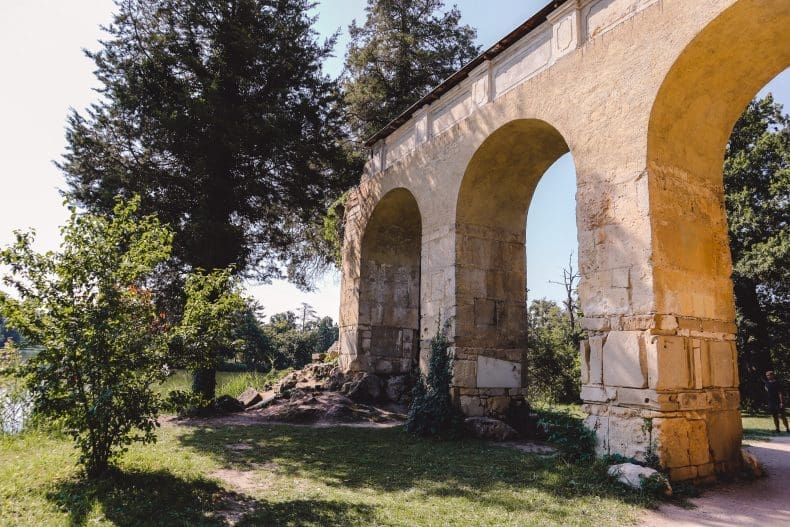
While the oriental style was highly fashionable, there was also a romantic movement that looked back to the classical antiquity of ancient Rome. This influence is evident in several remarkable buildings scattered throughout the Lednice-Valtice Cultural Landscape, where you’ll find structures inspired by Roman architecture. Near the Moorish minaret, there is an aqueduct, and further from the palaces, you can explore a monumental colonnade, the Temple of the Three Graces, and the Temple of Apollo. The Colonnade, located along the Austrian border, is a striking structure that combines the elegance of a triumphal arch with the grandeur of a colonnade. It was commissioned by Prince John I of Liechtenstein in honor of his late father and brothers, Philip and Ludwig. This impressive architectural monument serves as a lasting tribute to their memory, blending classical design with personal significance.
Belvedere and Chateau de Frontiere
Scattered throughout the vast landscape park are a number of hunting lodges and smaller castles, including the Belvedere and Chateau de Frontiere. The Belvedere was built between 1804 and 1806 at the request of Prince Alois I Joseph of Liechtenstein. Although the country house is not open to the public, visitors can still enjoy its surroundings by walking or cycling past it. On the other hand, Chateau de Frontiere is now a castle hotel that warmly welcomes guests. Its name, “Frontiere,” meaning “frontier,” reflects its historical significance, as the castle once stood directly on the border between the Margraviate of Moravia and the Archduchy of Lower Austria.
The Chapel of Saint Hubertus
At the very heart of the cultural landscape stands a Gothic chapel dedicated to Saint Hubertus. Built in 1855 by Prince Alois II of Liechtenstein, this chapel is one of the newer additions to the park. To preserve its authenticity, the prince ensured that the stones used in its construction were worked in the traditional way, just as they would have been in centuries past. Situated deep within the forest, the chapel’s location adds an enchanting quality to its atmosphere, making it feel even more magical and serene, offering visitors a peaceful retreat surrounded by nature.


Practical: this is how you visit Lednice-Valtice
You can explore the Lednice-Valtice area in a variety of ways, each offering its own unique experience. The region is home to two magnificent castles, each accompanied by its own park, as well as a vast cultural landscape brimming with historical monuments waiting to be discovered.
Each of the palaces requires a separate admission ticket, and both castles can only be visited through guided tours. There are multiple tour options available for each castle, providing different perspectives and insights. In addition to the palace tickets, you will also need to purchase admission for each individual monument you wish to explore. However, the parks surrounding the castles, as well as the broader cultural landscape, are open to the public and can be enjoyed free of charge.
During our visit in the summer of 2021, all of the guided tours were conducted in Czech. That said, according to information on the website, English-language tours are usually available during busier seasons or when there are more international visitors. During our visit, we were given an English-language booklet to follow along with the tour, which, while helpful, didn’t quite offer the same engaging experience as a live guide would.
Between the two palaces, Lednice is undoubtedly the more popular choice among visitors, and it’s easy to understand why. The castle park surrounding Lednice is simply breathtaking, easily surpassing the park at Valtice in terms of charm and beauty. The park at Valtice is more modest and straightforward, while Lednice boasts a romantic and picturesque landscape. In the park at Lednice, you will find large serene ponds, along with several unique and intriguing monuments, such as a minaret, a Moorish-style building, and the Palm House. For an extra dose of charm, you can enjoy a horse-drawn carriage ride or take a boat trip through the scenic Lednice Park.
The cultural landscape is a popular spot for cycling among locals, and if you truly want to experience the area, renting a bike is highly recommended. The park is expansive, and while walking will allow you to see a portion of it, cycling is the best way to cover more ground and immerse yourself in the stunning surroundings. Both Lednice and Valtice have several bike rental stations, making it easy to explore the beauty of the landscape at your own pace.