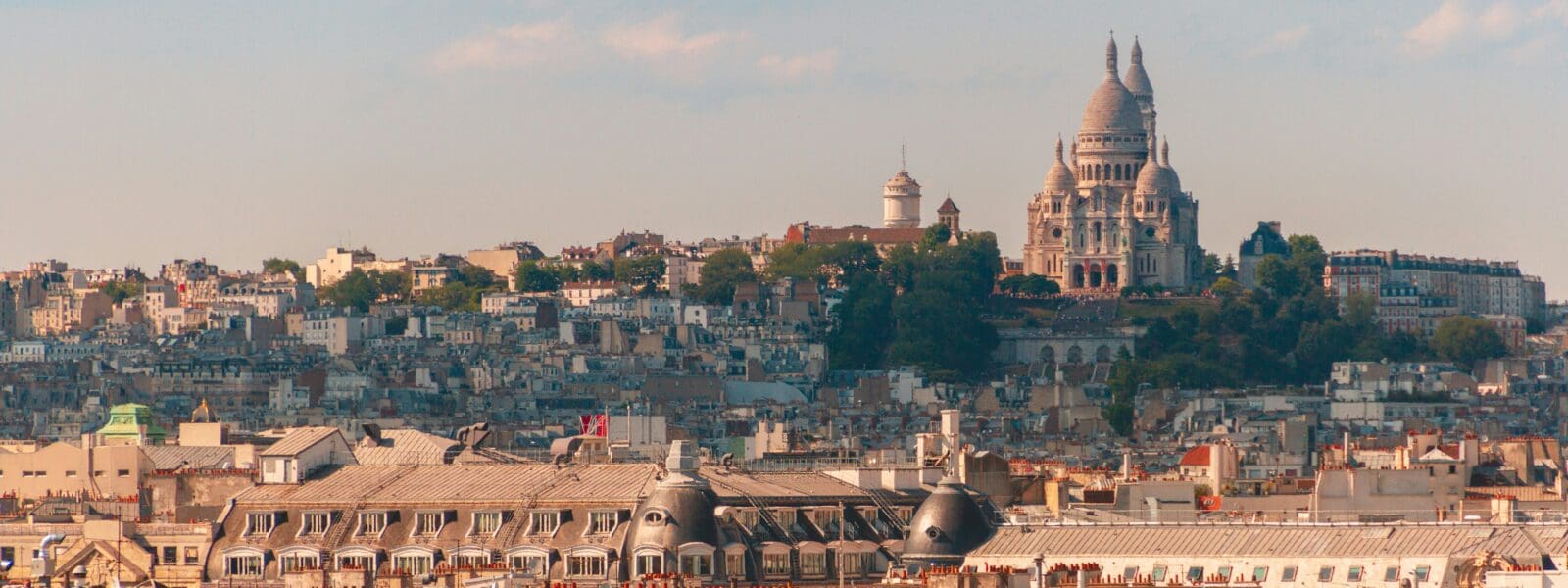
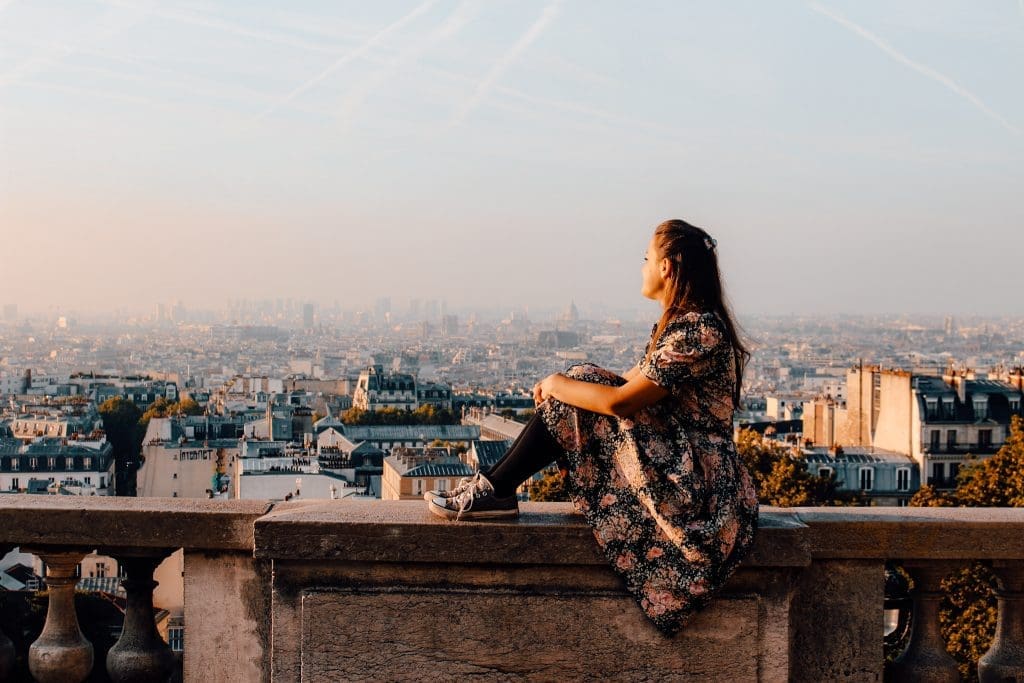
Montmartre is the Paris of the postcards: a hill of staircases and cobbled lanes, with the white Sacré-Cœur on top and painters at their easels on the square below. It still feels like a village inside the city, which is exactly why so many people want to stay here rather than just visit for an afternoon.
So where to stay in Montmartre? Below you’ll find the best hotels in Montmartre, from a budget pick to a Belle Époque splurge, plus what to know about the area before you book. After that come the 15 best things to do on the hill, including a few lesser-known corners of Paris.
Where to Stay in Montmartre at a Glance
- Best for a longer stay with your own kitchen: Appart’hôtel Odalys City Paris Montmartre
- Best for character and value: Le Relais Montmartre
- Best for a luxury stay: Maison Souquet, Hotel & Spa
- Best boutique hotel: Hôtel des Arts Montmartre
- Best on a budget: Hôtel Basss
The Best Hotels in Montmartre
If you’re still deciding where to stay in Paris, Montmartre is one of the most appealing neighbourhoods to choose. It is a destination in its own right, easily worth a whole weekend, and it also works well as a base for the rest of the city. These five hotels cover every budget.
#1 Appart’hôtel Odalys City Paris Montmartre is the one to pick if you like having your own kitchen. The studios and apartments sit on a quiet street a few minutes’ walk from the Sacré-Cœur, and each comes with a kitchenette and dining area, which is handy for a longer stay.
#2 Le Relais Montmartre is set in an authentic Parisian building, and you notice it in details such as the exposed wooden beams. It offers good value for this part of Paris.
#3 Maison Souquet, Hotel & Spa is the luxury choice: a boutique hotel in an elegant townhouse, decorated from top to bottom in Belle Époque style. There is a cocktail bar, a winter garden and a spa with an indoor pool.
#4 Hôtel des Arts Montmartre is a stylish boutique hotel about a ten-minute walk from the basilica. From the outside it is a classic Parisian building with French shutters, while the rooms are modern and on-trend.
#5 Hôtel Basss is the budget-friendly option, with fresh, contemporary rooms in light colours. It is on a lively street full of shops and restaurants, a ten-minute walk from the Sacré-Cœur.
→ Discover the best neighbourhoods to stay in Paris
→ Find out where to stay in Le Marais

Is Montmartre a Good Area to Stay in Paris?
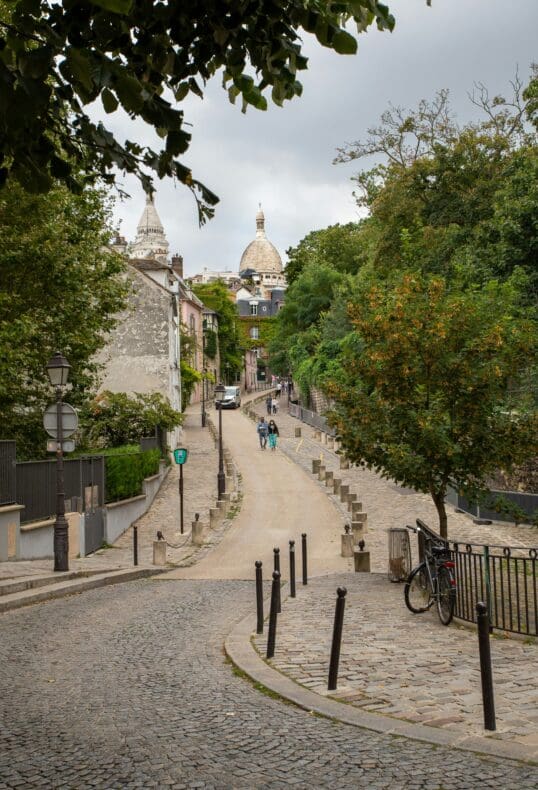
Yes, if you like the idea of a village within the city. Up on the hill the streets grow quieter in the evening once the day visitors have gone, while the area around Pigalle and Boulevard de Clichy at the foot of the hill stays lively until late. Hotels near Abbesses and Rue Lepic put you in the middle of the cafés and shops; the northern side of the hill is calmer.
There are two things to know before you book. Montmartre is hilly, with steep streets and plenty of steps, so with heavy suitcases or a pushchair a hotel close to a metro station makes life much easier. And you are a metro ride away from sights such as the Louvre and the Eiffel Tower rather than within walking distance. Weekends and the summer months fill up early, so it pays to book ahead.
Is it safe? Montmartre is one of the busiest parts of Paris, and pickpockets and pushy bracelet sellers work the crowds around the Sacré-Cœur and Place du Tertre. Keep your bag closed and simply walk on if someone tries to tie something around your wrist.
Where Is Montmartre in Paris?
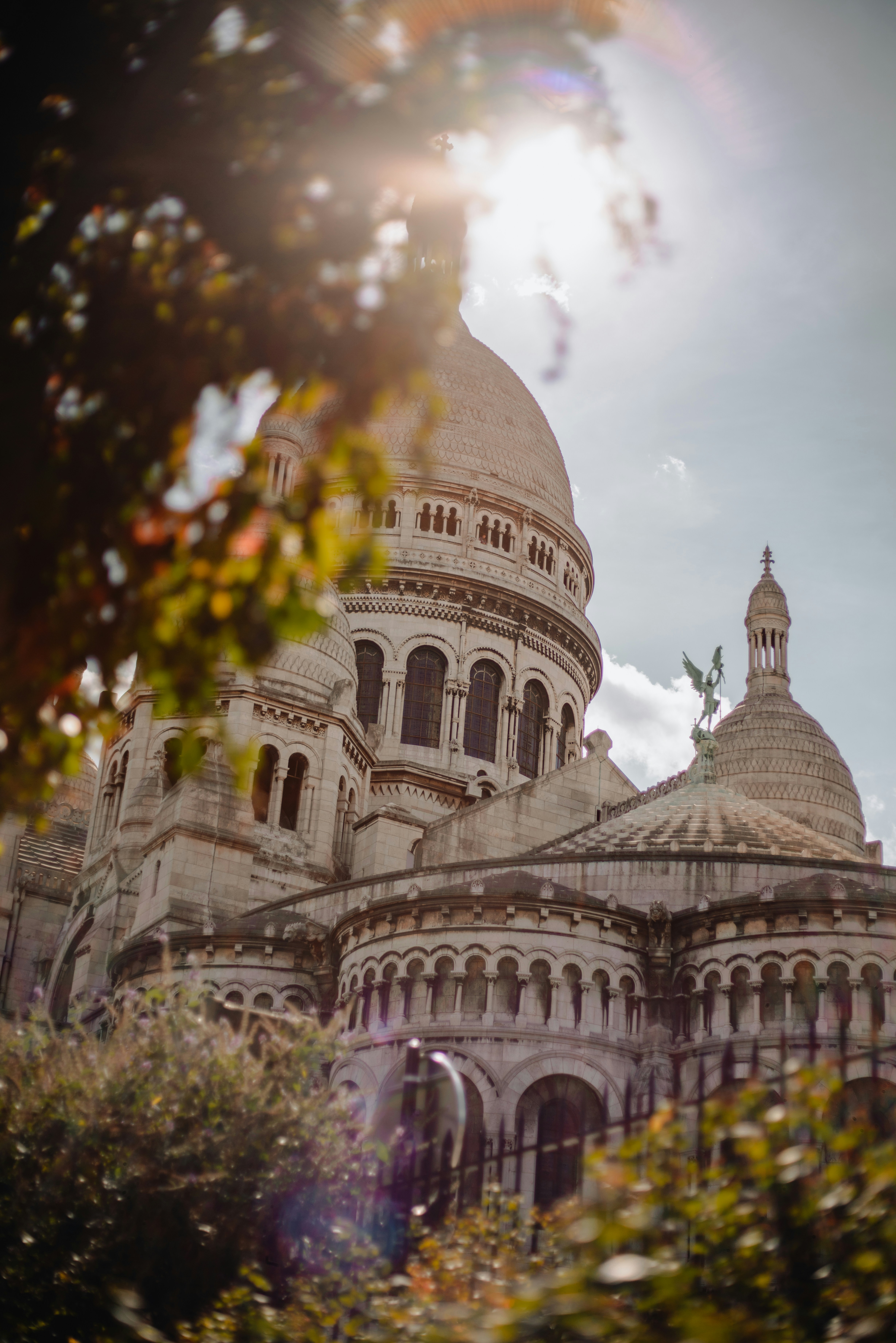
Montmartre lies in the 18th arrondissement, in the north of Paris. The neighbourhood is built on the Butte Montmartre, a hill of just over 100 metres and one of the highest points in the city. That is why you can spot the white dome of the Sacré-Cœur from so many places in Paris.
The metro gets you here quickly from the centre. Get off at Abbesses to start in the middle of the neighbourhood, or at Anvers to walk straight up towards the Sacré-Cœur. Abbesses station lies deep beneath the hill, so take the lift rather than the long spiral staircase.


How to Get Around Montmartre
Montmartre is made for walking, as long as you don’t mind a climb. From the foot of the hill, staircases lead up through the little park of Square Louise Michel to the basilica. Not in the mood for all those steps? The funicular runs alongside them. It is part of the Paris public transport network and has you at the top in no time.
A smart way to plan your day is to start at the top and explore downhill from there, towards Rue Lepic and the Moulin Rouge. Half a day is enough for the highlights. Allow a full day if you also want to visit a museum, have a long lunch and see the quieter northern side with its vineyard. Come early in the morning and you’ll have the staircases and lanes largely to yourself.
What Makes Montmartre Unique?
Montmartre is the artists’ quarter of Paris. In the late 19th and early 20th centuries, painters moved up the hill for the low rents and the creative freedom of what was then the edge of the city. Picasso, Van Gogh and Toulouse-Lautrec all lived and worked here, and turned the neighbourhood into a hotbed of avant-garde art.
You still see that past on every corner. The narrow cobbled streets, the painters on Place du Tertre and the old cafés and cabarets such as the Moulin Rouge all recall the nightlife of the Belle Époque. Add the hilltop setting and you have one of the most photogenic neighbourhoods in Paris, with a bohemian character that is harder to find elsewhere in the city.

15 Top Things to Do in Montmartre
#1 Basilique du Sacré-Cœur: The White Basilica Above the City
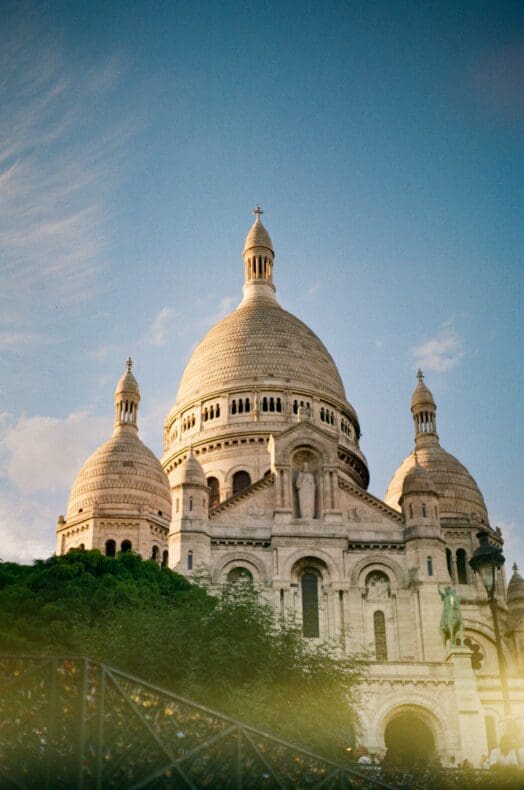
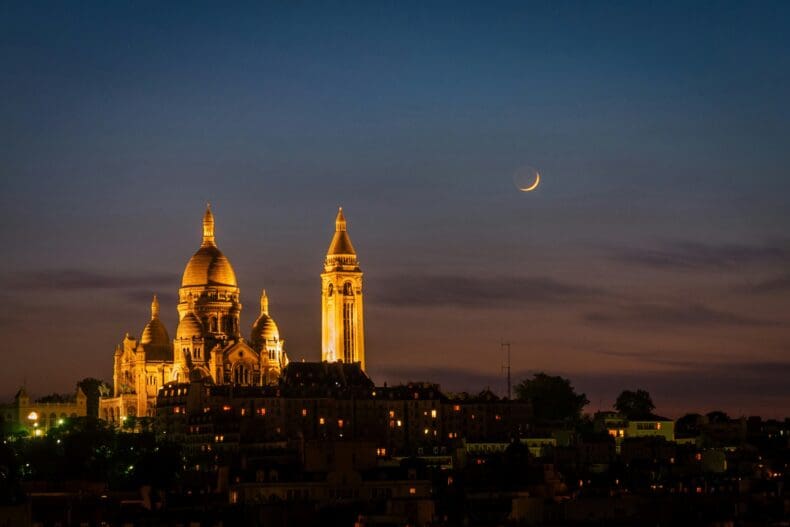
The Basilique du Sacré-Cœur is the symbol of Montmartre. The bright white basilica was built between the late 19th and early 20th century to a design by architect Paul Abadie, in a blend of Romanesque and Byzantine styles. It looks nothing like the Gothic churches you see elsewhere in Paris.
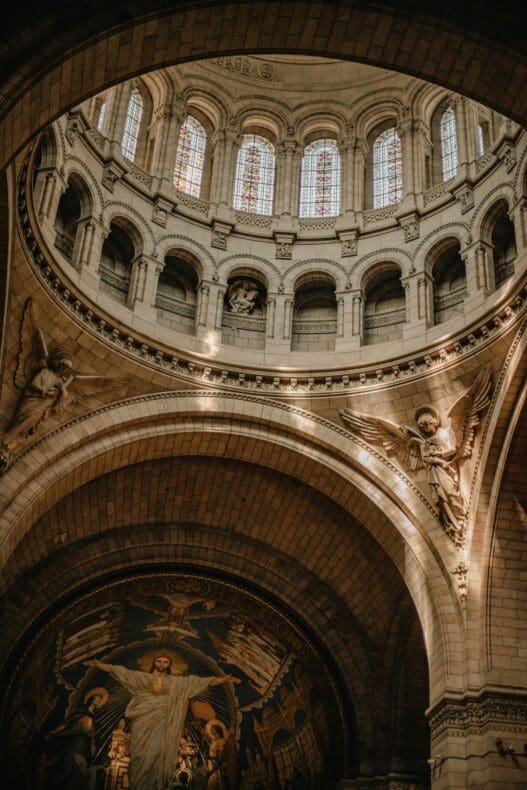
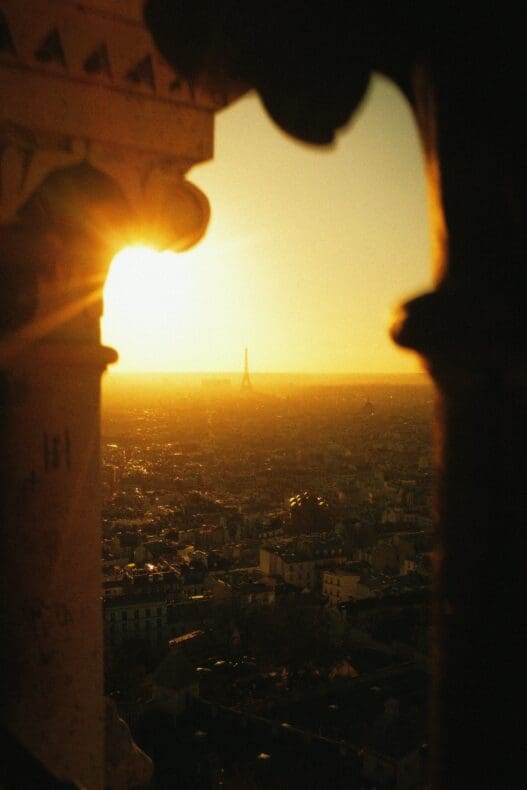
Inside, look up at one of the largest mosaics in the world: Christ in Majesty, in the vault above the choir. Entry to the basilica is free. For a small fee you can climb the nearly 300 steps to the dome for a wide view over Paris. If you’d rather skip the climb, the terrace in front of the basilica already looks out far across the city.


#2 Moulin Rouge: The Most Famous Cabaret in Paris
The Moulin Rouge opened in 1889 and became the best-known cabaret in Paris, forever linked with the French cancan. The bright red windmill on its roof on Boulevard de Clichy is one of the most photographed sights in the neighbourhood, even if you never go inside.
If you do want to see a show, with all the feathers, costumes and dance numbers that come with it, you can choose between a performance with or without dinner. Tickets are pricey and the shows often sell out, so booking well in advance is the way to go.

#3 Place du Tertre: The Painters’ Square
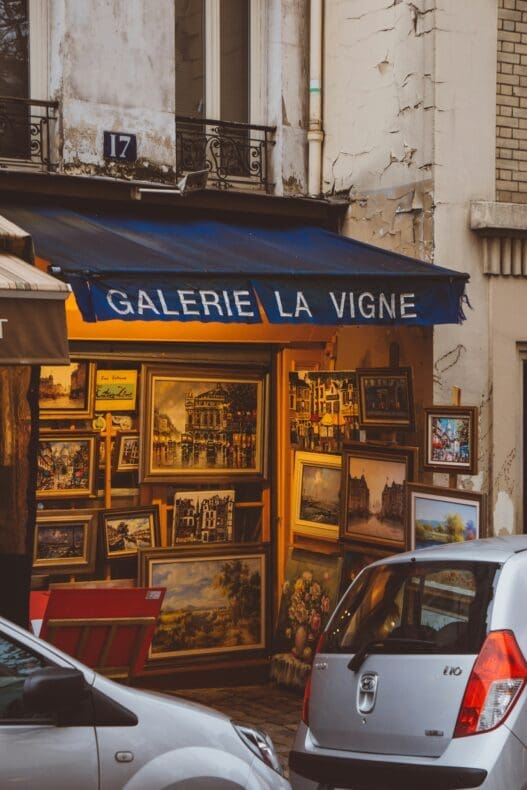
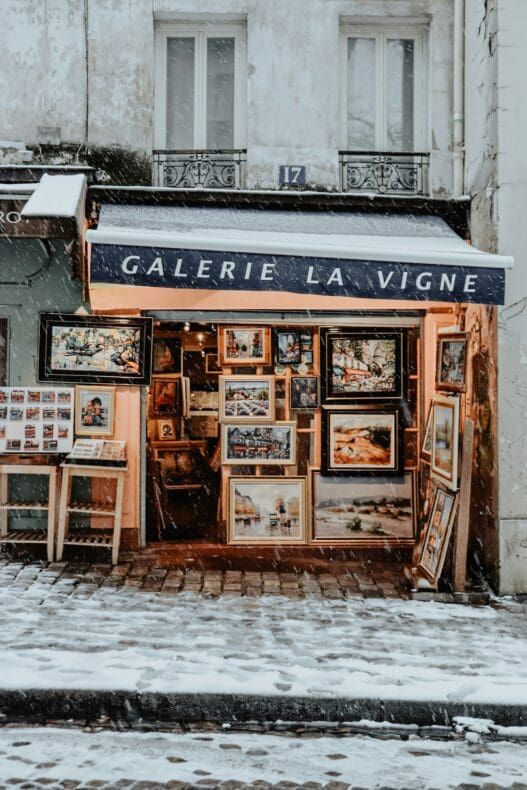
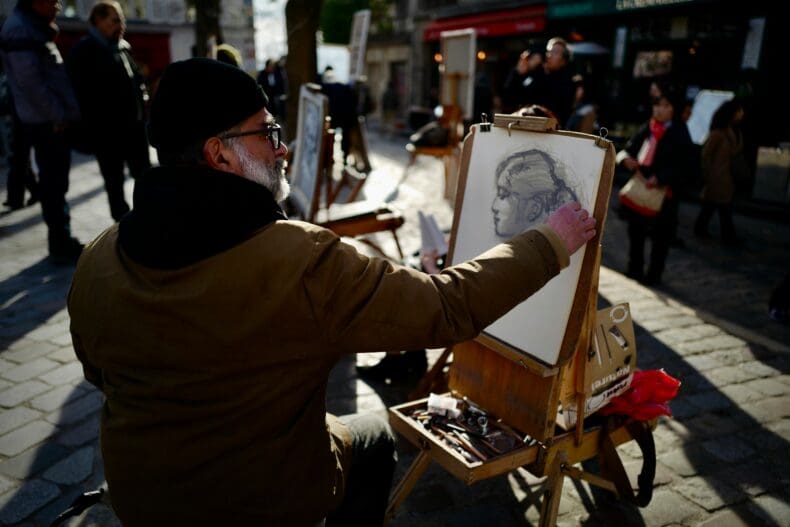
A few minutes’ walk from the Sacré-Cœur you reach Place du Tertre, the best-known square in Montmartre. Café terraces line the edges, and in the middle painters, caricaturists and portrait artists set up their easels every day. Art has belonged here since the early 20th century, when the square was a place where artists such as Picasso and Utrillo gathered.
Fancy a souvenir with your own face on it? Have a portrait or caricature drawn, but agree on the price before the artist picks up a pencil. Bear in mind that this is a small square and it gets crowded quickly, especially at weekends. Mornings are calmer.
#4 Le Mur des Je T’aime: ‘I Love You’ in 250 Languages
Close to Abbesses metro station, in the small garden on Square Jehan Rictus, stands Le Mur des Je T’aime. On this wall of dark blue tiles, ‘I love you’ is written in 250 languages and dialects from all over the world. The artwork by Frédéric Baron and Claire Kito has been here since 2000.
It is a small, quiet spot where couples in particular like to take a photo. You won’t stay long, but as the wall is right next to Place des Abbesses, it is an easy first stop on your walk.
#5 Rue de l’Abreuvoir & La Maison Rose: The Prettiest Street on the Hill
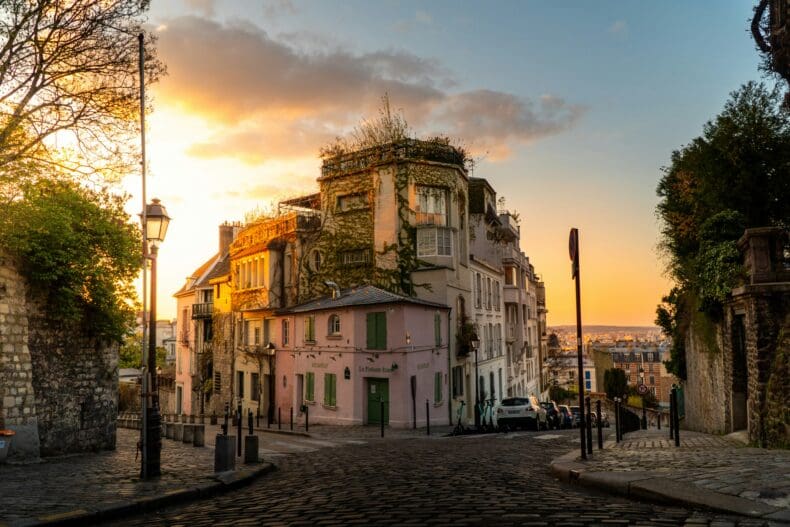
Rue de l’Abreuvoir is one of the most photogenic streets in Montmartre: a quiet cobbled lane that curves gently past old houses. On this street you’ll find La Maison Rose, the pink café with green shutters that painter Maurice Utrillo captured in his work.
La Maison Rose has been a meeting place for artists since the early 20th century and is still a café-restaurant today. In the afternoon you can drop in for coffee or tea without a reservation; for a meal you need to book. For a photo without other visitors in the frame, come early.
#6 The Sinking House of Montmartre: A Trick of the Camera
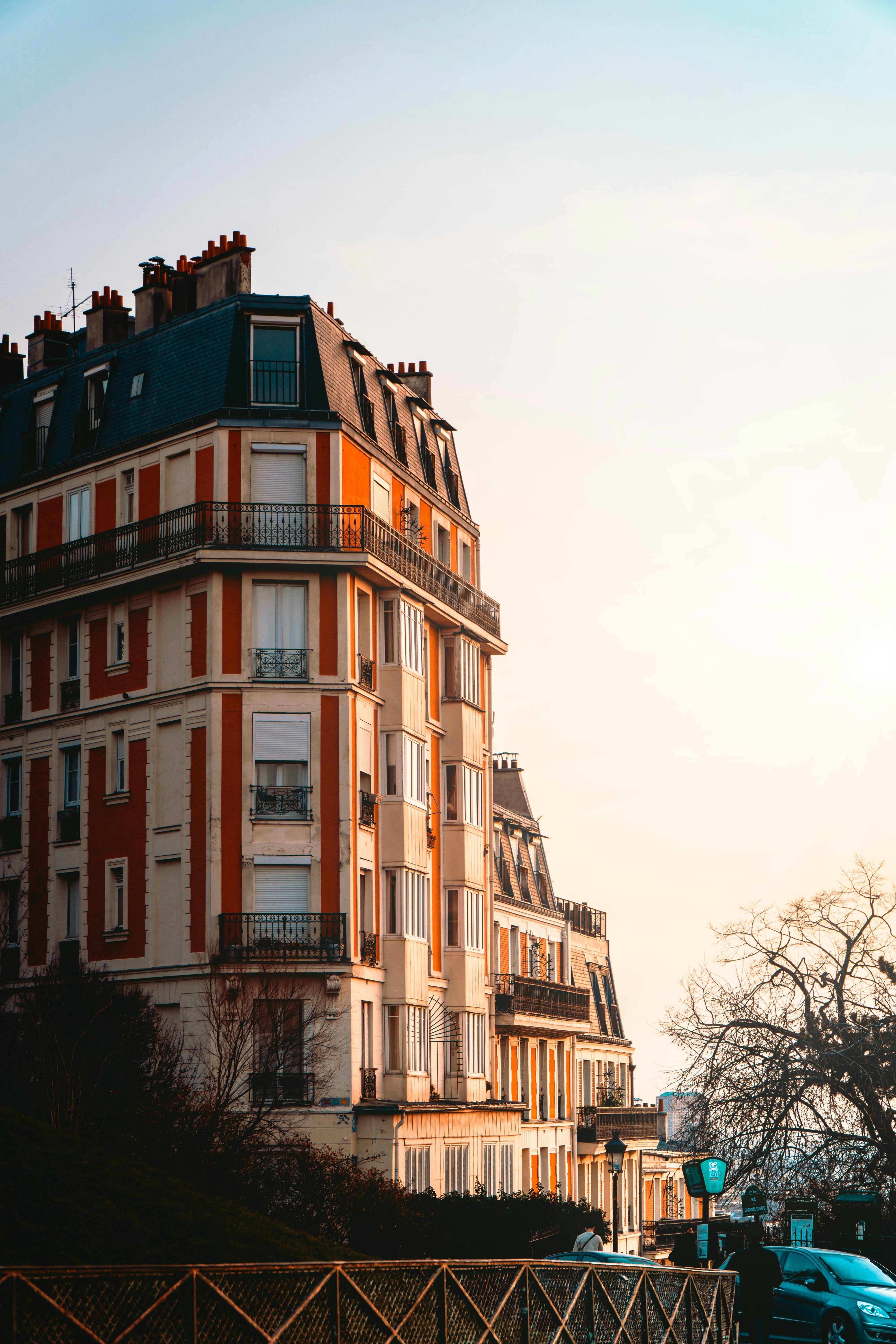
The Sinking House isn’t an official sight but a photo trick. As you climb the steps beside the Sacré-Cœur, you’ll see a building with a red-and-orange façade rising behind the sloping lawn. Tilt your camera so that the slope becomes your horizon, and the house seems to slide slowly into the hill.
The building is, of course, perfectly level. Still, for two minutes of your time you walk away with one of the most playful photos you can take in Montmartre.

#7 Rue Lepic & Café des Deux Moulins: The Café from Amélie
Rue Lepic winds its way up the hill from Boulevard de Clichy. It is a lively street of small specialist shops and cafés, where you see more of everyday life in the neighbourhood than up by the basilica. Vincent van Gogh lived here during his years in Paris.
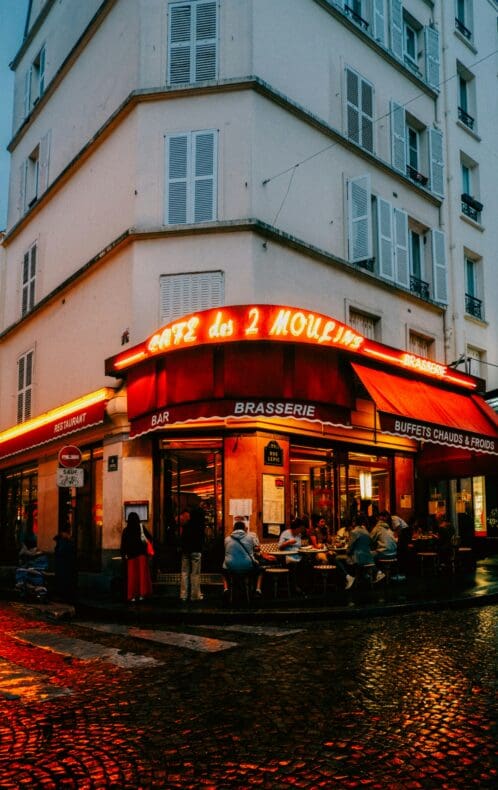
The most famous address on the street is Café des Deux Moulins, the café from the 2001 film Amélie. With its classic Parisian interior and the neon sign on the front, you’ll recognise it straight away. The menu is traditionally French, so it also works well for a break during your walk.
#8 Musée de Montmartre: Artists’ Studios and the Renoir Gardens
The Musée de Montmartre is housed in a 17th-century building where artists such as Pierre-Auguste Renoir and Suzanne Valadon once had their studios. The museum takes you back to the years when Montmartre was the heart of the Paris art world. The rooms and studios are furnished as they would have looked at the time, which gives you a good idea of how the artists lived and worked here.
Don’t skip the Jardins Renoir, the gardens that surround the museum. They look out over the northern side of the hill and are at their best in spring and summer, when everything is in flower. After the crowds at the basilica, the calm here is very welcome.
#9 Vignoble de Montmartre: A Vineyard in the Middle of the City
On the northern slope of the hill lies the Vignoble de Montmartre, also known as Le Clos Montmartre. Much of Montmartre was once covered in vines. This small vineyard was replanted in the 1930s to keep that winemaking past alive, and a limited amount of wine is still produced every year.
The vineyard is not freely open to the public, but you get a good look at it from the street. You can only go inside on a guided tour that has to be booked in advance, for example around the Fête des Vendanges, the harvest festival that Montmartre celebrates in the autumn with music and tastings.
→ Discover more unusual things to do in Paris
#10 Le Bateau-Lavoir: Where Picasso Painted His Way to Cubism
From the late 19th century, Place Émile-Goudeau was home to a ramshackle studio building nicknamed the Bateau-Lavoir, the laundry boat. Artists such as Pablo Picasso, Amedeo Modigliani and Juan Gris lived and worked here in very basic conditions. This is where Picasso painted Les Demoiselles d’Avignon, regarded as one of the first Cubist works.
The original building burned down in the 1970s and was later rebuilt. You can’t go inside, so the façade is all you see. As the little square lies on the way up from Abbesses, it is hardly a detour.
#11 Café Le Consulat: A Classic Café with a Red-and-White Front
Café Le Consulat on Rue Norvins, with its white-and-red façade, is one of the most photographed cafés in Montmartre. It has a long history and was already a haunt of local artists in the 19th century. The traditional look has survived.
The menu sticks to French classics. From the terrace you look out over the lanes around Place du Tertre, a good spot for watching the comings and goings of the neighbourhood.

#12 Dalí Paris: Surrealism Around the Corner from Place du Tertre
Dalí Paris is a small museum near Place du Tertre devoted entirely to the surrealist Salvador Dalí. You’ll mainly see sculptures and graphic works, with familiar motifs such as the melting clocks and the elephants on long, spindly legs.
Had enough of churches and squares, or caught in the rain? This is a good alternative. The museum is compact, so you get close to every piece, and now and then a temporary exhibition is shown alongside the permanent collection.
#13 Place des Abbesses: The Finest Metro Entrance in the Neighbourhood
Place des Abbesses is the square where many visitors arrive in Montmartre. Its Art Nouveau metro entrance, designed by Hector Guimard, is one of the few original ones left in Paris and a favourite spot for a photo.
Around the square you’ll find cafés, shops and a small carousel. Close by are the Église Saint-Jean-de-Montmartre, a striking Art Nouveau church, and Le Mur des Je T’aime. That makes it a natural starting point for a walk through the neighbourhood.

#14 Moulin de la Galette: Renoir’s Windmill
The Moulin de la Galette is one of the few windmills left in Paris. In the 19th century the centuries-old mill became a dance hall and café, where Parisians gathered for music and dancing. Renoir captured that scene in Bal du Moulin de la Galette, and Van Gogh painted the mill too.
Today the windmill is part of a restaurant and you view it from the street. It stands on Rue Lepic, well above Café des Deux Moulins, which makes it a quieter alternative to the busy spots around the basilica.
#15 Pigalle Basketball Court: Shooting Hoops on a Work of Art
At the foot of the hill, on Rue Duperré in Pigalle, lies a basketball court where art and sport meet. Fashion brand Pigalle, design studio Ill-Studio and Nike turned it into a colourful artwork, with lines and blocks of colour across the entire court. It has been completely redesigned several times, so what it looks like depends on when you visit.
This is still a public court where locals come to play, not a museum piece. If a game is on, wait at the side until there is a pause before walking on for your photo.
Enjoy our travel tips? Add The Orange Backpack as a preferred source on Google and you'll see us more often in your search results.
More tips for your trip to Paris
 Our pickNot found what you're looking for? Browse all hotels in Montmartre on Booking.com
 Prefer everything arranged? Browse Paris tours on TourRadar.
 Skip the airport: book your train tickets to Paris with NS International.
 Fancy gliding past the Eiffel Tower and Notre-Dame? Book a Seine river cruise on GetYourGuide.
 Discover all our blogs about Paris


