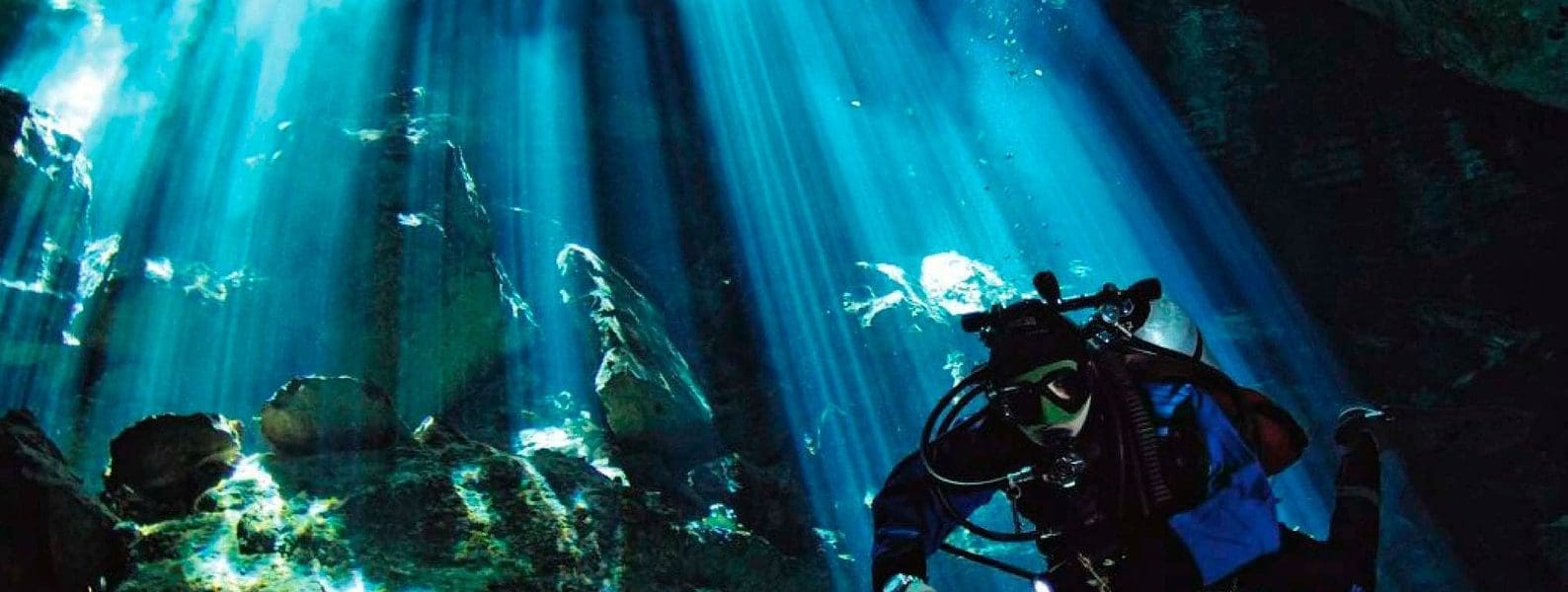
Are you travelling to Yucatán in southern Mexico? Then we’re sure a dip in a cenote is on your Mexico wish list. And it should be! These underground lakes are unique natural wonders with brilliant blue water, a fascinating ecosystem and a magical vibe.
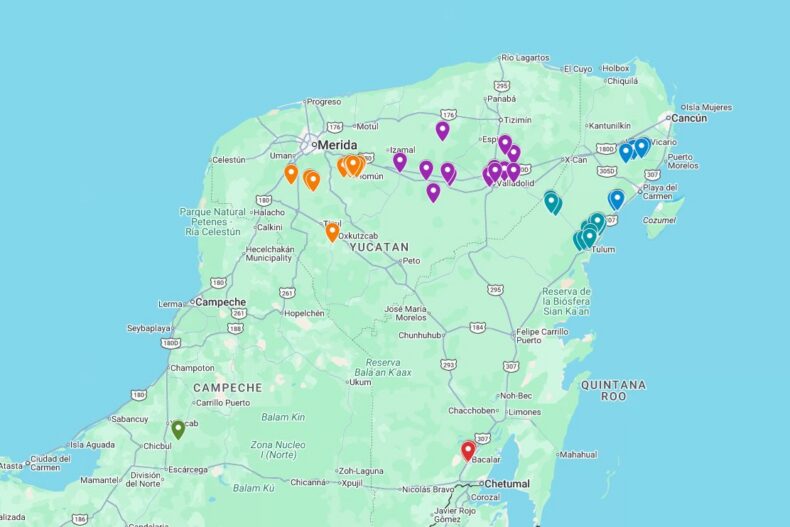
We found it hard to choose between all the cenotes on the Yucatán Peninsula, but now we can tell you exactly how to make that choice. We pinned 58 cenotes on one map, split into six regions, from famous favourites to quiet off-the-beaten-track pools. And we’ll share our best tips for finding an abandoned cenote all to yourself.
Want the interactive version on your phone? Scroll down to get our free cenote map at the end of this post!
What is a cenote?
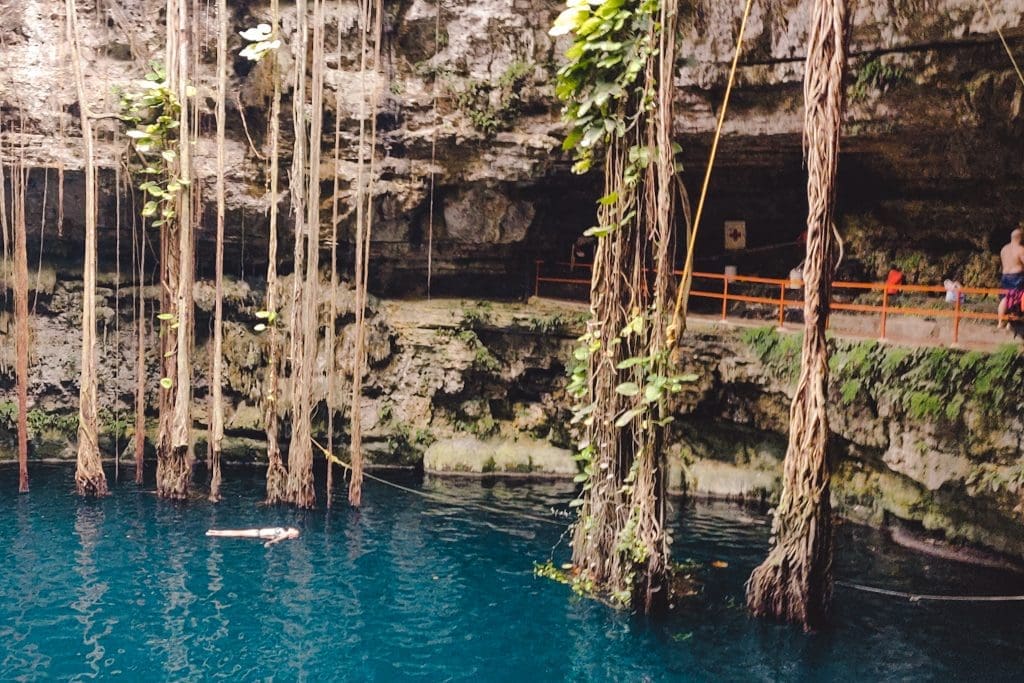
We already called cenotes underground lakes. They’re pools of bright blue water, full of fish and mystery. Many of them are connected by underground rivers and caves, and that system still hasn’t been fully mapped. Near Tulum you’ll even find the two longest known underwater caves in the world, Ox Bel Ha and Sac Actun, with over 900 kilometres of passages between them.
We totally get why the Maya saw these places as gateways to the underworld, and so as sacred sites! Did you know that offerings have been found in many cenotes? Yep, even human sacrifices.
Tip: watch National Geographic’s Lost Treasures of the Maya series to see archaeologists exploring these cenotes.
So how does a cenote form? The ground in Yucatán is made of limestone. Rainwater slowly dissolves the rock, creating caves and underground rivers. When the roof of a cave collapses, you’ve got a cenote.
On top of that, a meteorite slammed into Chicxulub, north of Mérida, about 66 million years ago. The cenotes form a ring along the edge of that 180-kilometre-wide crater. That’s why so many of them sit close together south of Mérida, around Homún and Cuzamá.
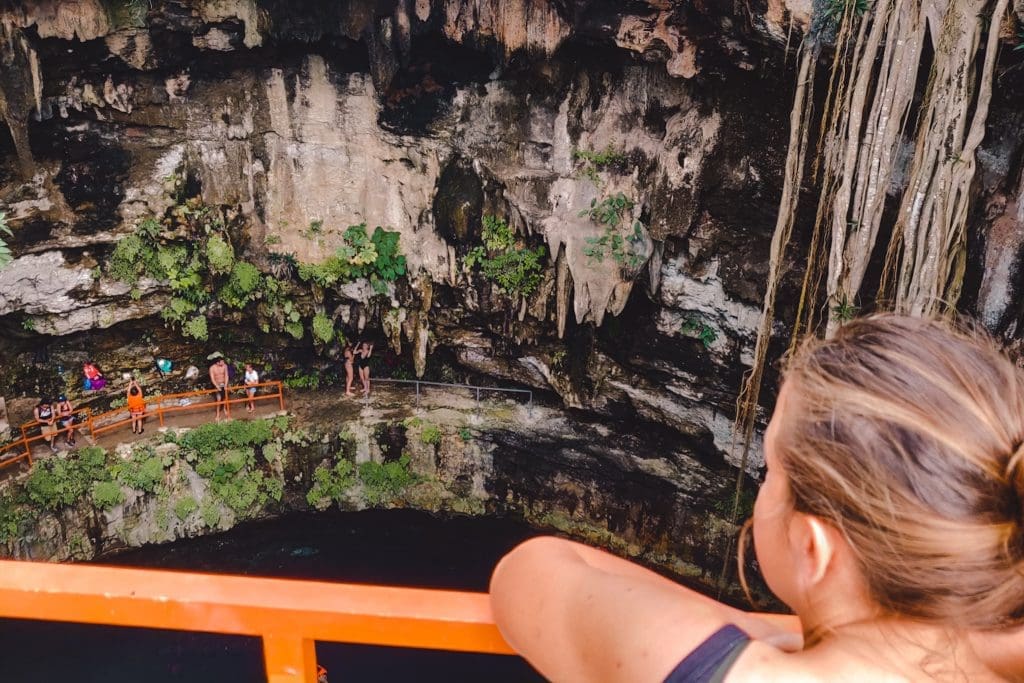
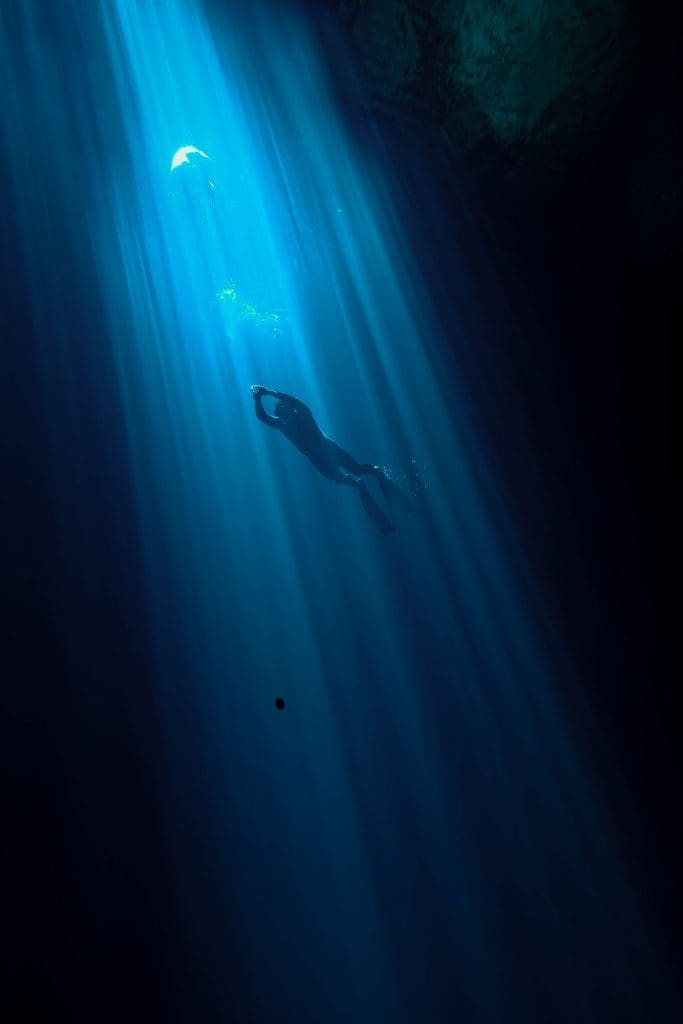
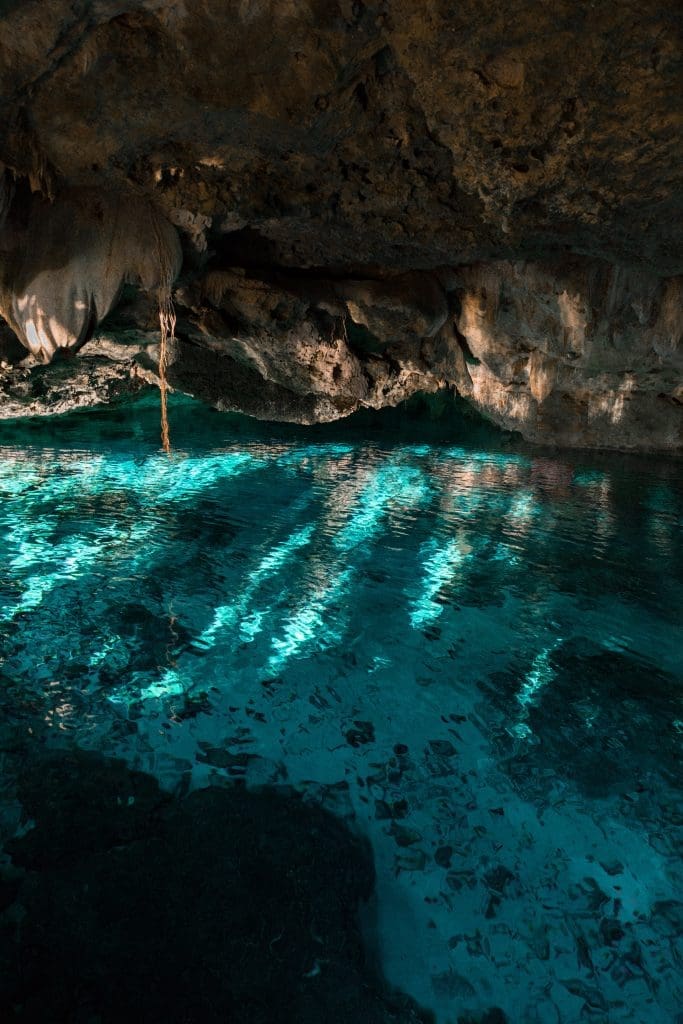
Roughly speaking, there are three types of cenotes. An open cenote lies in the landscape like a small lake, such as Cenote Azul near Bacalar. In a semi-open cenote part of the roof has caved in and light pours through a hole, like at Ik Kil and Suytun. A cave cenote is completely underground, like Multum Ha near Cobá. The older the cenote, the more of its roof has collapsed.

The best cenotes in Yucatán by region
Our map has 58 cenotes in six regions. Below we pick out the best and best-known ones per region, including the cenotes we swam in ourselves. That way you’ll see right away which region fits your route.
Cenotes near Mérida: Homún and Cuzamá
South of Mérida you’ll find the biggest cluster of cenotes in Yucatán, right on the rim of the ancient crater. Around the villages of Homún and Cuzamá you can easily visit three or four cenotes in a day. When you arrive in Homún, local drivers will offer you a mototaxi ride past the cenotes, and you get to pick which ones you want to see.
We went to Cenotes Santa Bárbara in Homún, where you hop between four cenotes by bike or little train. It’s well known and a bit busier, but visitors spread out over the pools.
Cuzamá also has a few cenotes close together, spread over the land of several local cooperatives. Each cooperative runs its own route, so ask at the entrance which cenotes you’ll see.
Towards Abalá lies Cenote Kankirixché, where we had the place completely to ourselves. Nearby is Hacienda Mucuyché, an old hacienda with two cenotes linked by a canal.
Rather not drive yourself? Then join a day trip from Mérida to four countryside cenotes, with a traditional lunch thrown in.
→ Check out the cenote tour from Mérida
→ Discover the 7 most unique hotels in Mérida

Cenotes near Valladolid and Chichén Itzá
Valladolid is the best base for cenotes inland: there are more than ten within half an hour’s drive. Right in town you can swim in Cenote Zací, handy if you don’t have your own wheels.
Just outside town you’ll find Cenote Suytun, famous for that platform with the beam of light, and the duo X’Kekén and Samulá: two cave cenotes on the same grounds that you visit with one ticket.
We went to Cenote Oxman, on the grounds of the old Hacienda San Lorenzo Oxman, on a tip from other travellers. When we were there, it was packed. It comes with a restaurant and a pool with sunbeds, so think day-out vibes rather than hidden gem.
Combining cenotes with Chichén Itzá? Then Ik Kil is just minutes from the ruins. It’s gorgeous with its long hanging roots, but also a regular stop for the tour buses. Quieter is Cenote Yokdzonot, fifteen minutes further, run by a local cooperative in which women play a big role.
→ Discover the 8 most unique hotels in Valladolid

Cenotes near Tulum and Cobá
The most famous cenotes in Mexico are around Tulum, and you’ll notice. Gran Cenote is within cycling distance of town and has crystal-clear water where you can spot little freshwater turtles while snorkelling. Go early though: from late morning to early afternoon it gets really busy. Cenote Calavera is smaller and more playful, as you jump through a hole in the ground straight into the water.
Towards Playa del Carmen lies Dos Ojos, two pools connected by a cave. It’s one of the best-known dive sites in the world and part of the Sac Actun system, but you’ll see plenty with just a snorkel too.
Our favourites were the cenotes near Cobá. A few kilometres from the Mayan ruins, Multum Ha, Choo-Ha and Tankach-Ha sit together. We had the underground Multum Ha all to ourselves, and Muul ichi Ts’ono’ot, a bit further on, was deserted too.
Want to combine several cenotes without jumping back in the car every time? At Cenotes Casa Tortuga, a park near Tulum, one day pass gets you into five cenotes.
→ Check out the Cenotes Casa Tortuga day pass
→ Discover the 13 most unique hotels in Tulum
Cenotes near Playa del Carmen and Puerto Morelos
Between Playa del Carmen and Puerto Aventuras, a few cenotes lie right next to the highway, like Jardín del Edén and Cenote Azul. Perfect if you’ve got a couple of hours between two beach days. Heads up: Jardín del Edén is closed on Saturdays.
Puerto Morelos is the start of the Ruta de los Cenotes, a road inland that, according to the local tourism board, passes more than sixty cenotes, some of them open to visitors. Verde Lucero, with a zipline over the water and jumping platforms, and Siete Bocas, with seven openings into a cave below, are the best known.
Cenotes near Bacalar
Around Bacalar Lagoon you’ll find a few cenotes that connect with the lake. Cenote Azul, just outside town, is one of the deepest at over 90 metres. The biggest is Cenote Esmeralda, which lies in the lagoon itself together with Cenote Negro (also called La Bruja). You’ll see those two most easily on a boat trip.
→ Book a boat trip on Bacalar Lagoon
→ Discover the 14 most unique places to stay at Bacalar Lagoon
Cenotes in Campeche
Driving on to Calakmul or Palenque? Then stop at Cenote Miguel Colorado, a huge, deep cenote in the middle of the jungle. You come here for the viewpoints, a kayak trip or the zipline over the water. Ask on site whether swimming is allowed.
How to find the best cenotes in Yucatán?
A cenote is at its best without a crowd. We were lucky enough to have a cenote all to ourselves three times. It was absolutely stunning! The endless depth was magical and a little bit creepy too. Little fish swam around us and with our snorkel (tip!) we explored every corner of the underground pool.
But cenotes are also hugely popular. Many have turned into a kind of public swimming pool with dozens of families and day-trippers. Even then, a staircase leading deep underground, bright blue water and tree roots dangling into the water are impressive and unique. But for that truly magical effect, you want a cenote all to yourself. So that leaves one big question: how do you find these beautiful cenotes without the crowds?
Loads of travel blogs and travellers claim to have the best tips, but in our experience you shouldn’t rely on them. Usually those tipsters just got lucky that day. We followed some of those tips ourselves and ended up at super busy cenotes. On the other hand, we also had a cenote to ourselves for about an hour, until two tour buses pulled up. We could now recommend it as the most beautiful private cenote in Yucatán, but honestly, we were just lucky.

Pro tips for finding the perfect cenote
1. Come as early as possible
The classic tip for having a place to yourself works for Mexican cenotes too. Most travellers, especially on holiday, aren’t early birds and don’t queue at the gate at opening time. That’s exactly when cenotes are quietest. Lots of cenotes are also visited as part of a day tour past several highlights. Even if those tour buses leave fairly early, they won’t reach a cenote by opening time.
2. Stay away from the most popular travel destinations
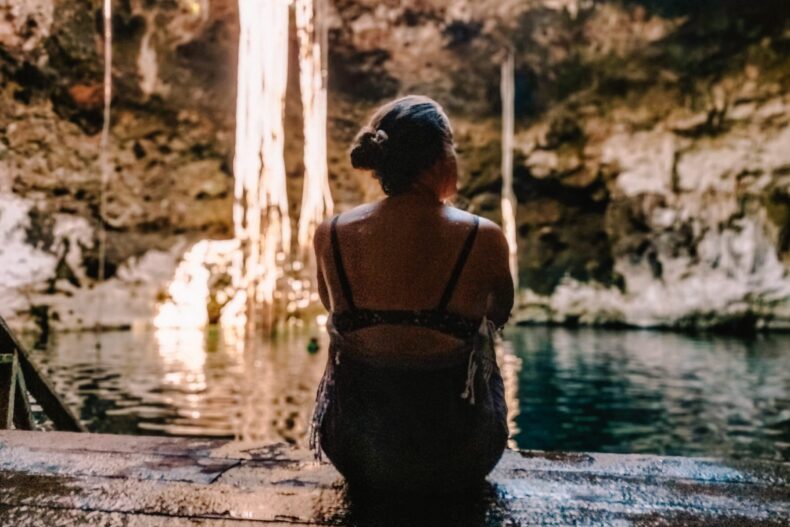
Some cenotes are just outside popular destinations like Tulum or Valladolid. So it shouldn’t surprise you that those are the busiest. The Gran Cenote within cycling distance of Tulum? Or those beautiful pools in the heart of Valladolid or Mérida? The chances of enjoying them in peace are slim.

3. Rent a car
If a cenote isn’t within walking or cycling distance, getting there gets a lot harder. That’s exactly why fewer people go, but it’s also a challenge for you. Public transport (slow), taxis (pricey) or tours (pricey and busy) are your options. Our tip: rent a car in Yucatán, even if it’s just for a day of cenote hopping.
→ Discover our tips for renting a car and driving in Mexico
4. Consider skipping the popular, instagrammable cenotes
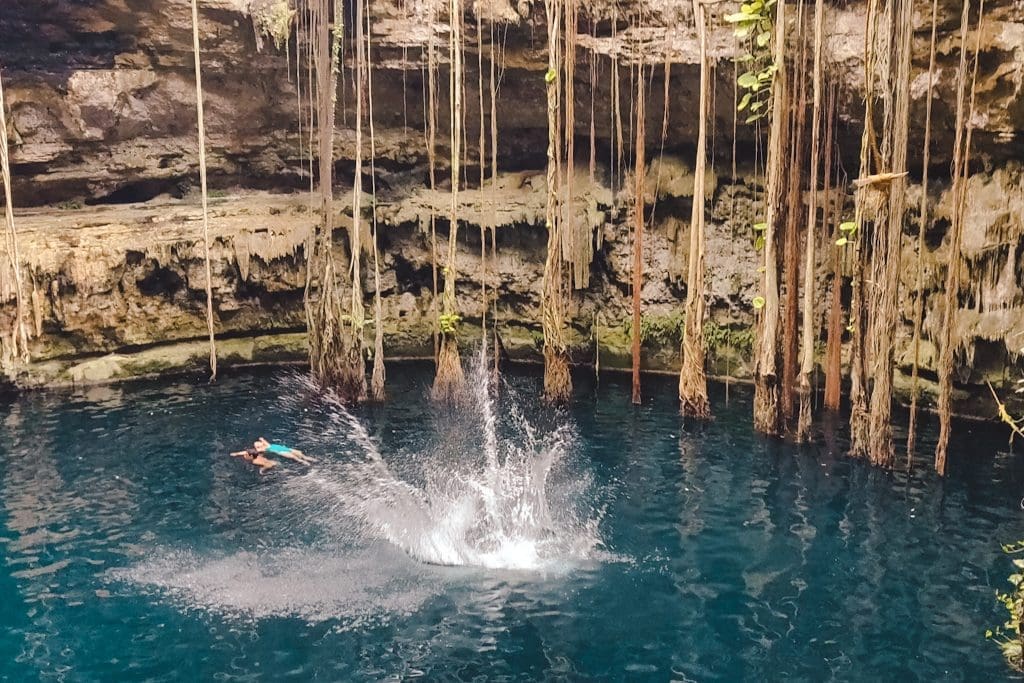
That one cenote you see all over Instagram? With the platform in the middle and that perfect sunbeam? The one that even has its own Instagram account? Breaking news: you’re not the only one who wants that shot. The cenotes you see most on social media are naturally the most popular with travellers. That said, we’ve also met travellers who had the insta-famous Cenote Suytun to themselves at opening time. Sometimes it’s just luck.

5. Do your research on Google Maps
Skip Instagram this time and go for Google Maps. Request our free cenote map at the bottom of this post: it opens straight in Google Maps on your phone, so you’ve always got it with you on the road. The great thing about Google Maps is the photos other travellers post. So tap a few cenotes near you and check the pictures. Crowds and public-pool vibes? Skip it. Beautiful blue water and a mysterious deep cave? This may be your spot!

6. Count the buses in the parking lot
Pulling into a cenote parking lot and spotting three tour buses, five minivans and twenty cars? We’d turn straight around and drive on to the next spot. Yucatán has thousands of cenotes, so chances are you’ll find another cool one within fifteen minutes. Our map is perfect for finding the next cenote in no time.

7. Get lucky
This may not be what you want to hear, but finding the best cenotes is partly down to luck. We first followed tips from travellers who swore certain cenotes were hardly ever visited and absolutely magical. But when we got there, hordes of other tourists had beaten us to it. Bad luck for us, good luck for them. So we started simply opening our map and picking a cenote nearby.
To show you how much luck plays a part: we visited Oxman near Valladolid (busy), Kankirixché near Mérida (just us), the Santa Bárbara cenotes in Homún (a bit busy) and Multum Ha and Muul ichi Ts’ono’ot near Cobá (just us). Oxman came highly recommended, but was super busy that day. Kankirixché shows crowds in its Google Maps photos, but we were all alone, and a few vans pulled up just as we left. Santa Bárbara is well known and busier, but with several pools the visitors spread out. The two cenotes near Cobá were completely empty, and one of them hadn’t had a single visitor all day.

What to know before you visit a cenote?
At many cenotes you have to shower before you get in. Skip sunscreen and insect repellent altogether before swimming, even the “biodegradable” kind: many cenotes ban it because it pollutes the water. So put your sunscreen on after your swim, or wear a rash guard.
Lots of cenotes are deep with no shallow end. That’s why a life jacket is often mandatory, and you can rent one on site. Bring your own snorkel: in that clear water you’ll spot little fish, stalactites and tree roots.
Bring cash in pesos, as plenty of places don’t take cards. Most cenotes charge an entrance fee, sometimes with extra for a life jacket or locker.
The water is fresh all year round, usually around 24 to 26 degrees. If you see divers, don’t jump in near them and stay out of the cave passages that are roped off.
Yucatán Cenotes Map: all Mexico cenotes in one map
While researching the most beautiful cenotes in Mexico, we went through pretty much every blog we could find. We rarely ended up following those tips, but we did end up with an overview of almost all the cenotes in Yucatán. Our map now has 58 of them, split into six regions. For each cenote you can see whether it’s mainly for swimming or for divers only, and which ones we visited ourselves.
Every spot on one map
Free map
Want all the spots from this article in your Google Maps right away? Leave your email address and we'll send you the map for free.
Enjoy our travel tips? Add The Orange Backpack as a preferred source on Google and you'll see us more often in your search results.
More tips for your trip to Yucatán
 Our pickUnique places to stay in Mexico: from a beach cabin on the Costa Maya to a boutique hotel in Mérida
 Hopping from cenote to Mayan ruin at your own pace? Rent a car with Discover Cars and compare the big rental companies in one go.
 No flight yet? Compare flights to Cancún.
 Off to Chichén Itzá, one of the New Seven Wonders of the World? Book a Chichén Itzá day trip with a cenote and Valladolid on GetYourGuide.
 Discover all our blogs about Yucatán


