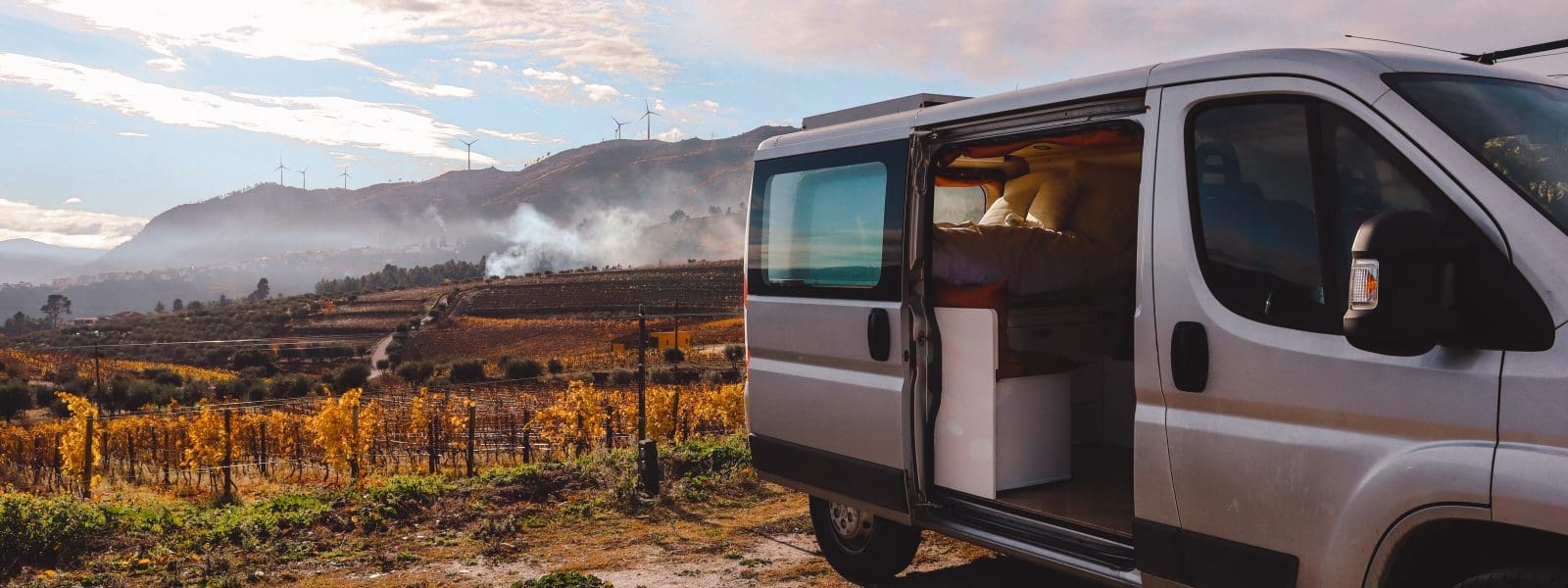
Portugal was made for road trips. Follow the Douro past its steep terraced vineyards, drive through the cork oak forests of the Alentejo and finish at the orange cliffs of the Algarve. In between you’ll find cities covered in azulejos, medieval villages and monasteries that are well worth a detour. We’ve travelled around Portugal by campervan several times and turned our favourite stops into a three-week road trip itinerary. Below you’ll find the full route, tips for along the way and practical information for a trip by car or campervan.
Read more: all our blogs and tips about Portugal.

The best time to travel to Portugal
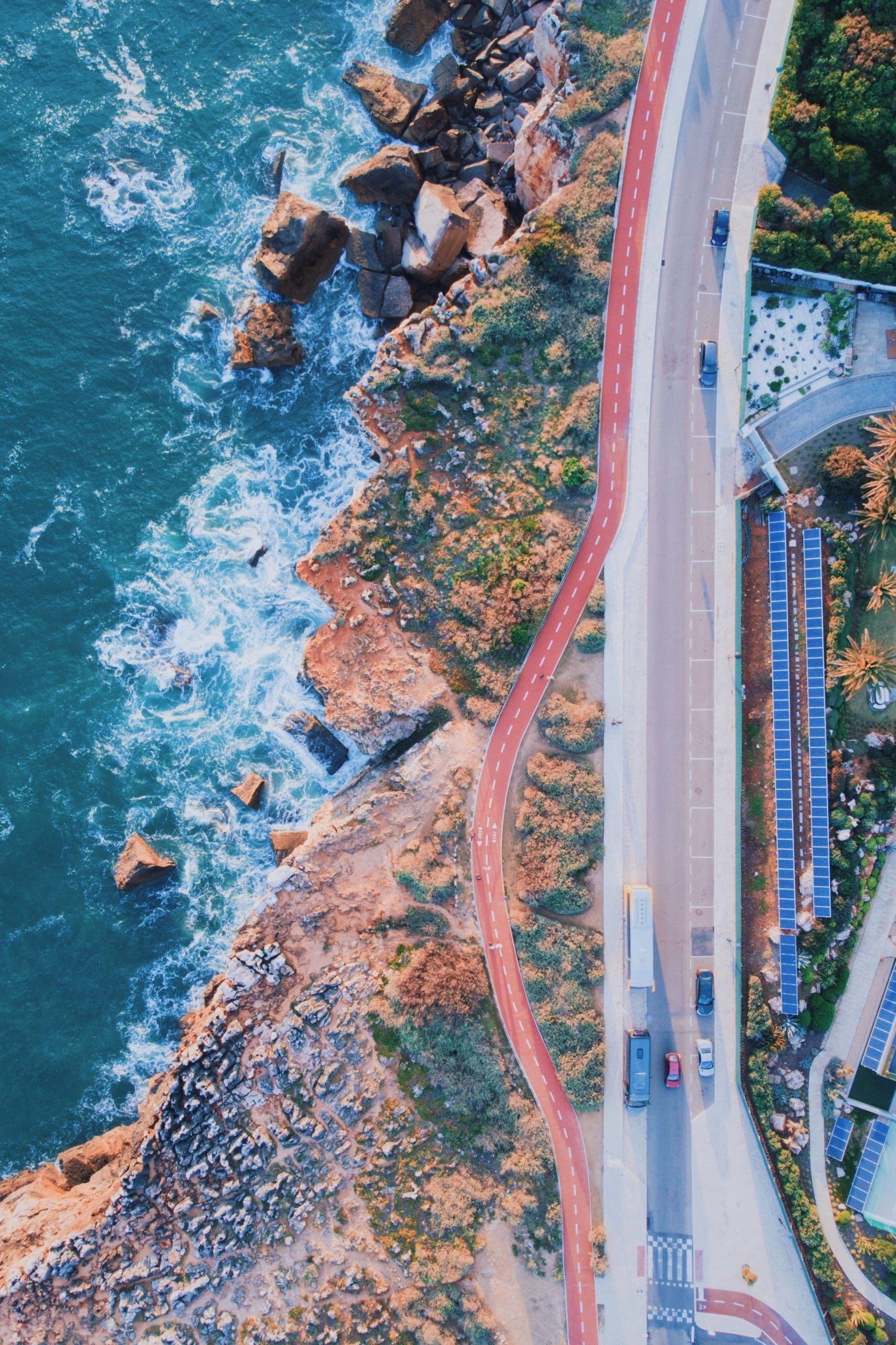
If you ask us, there’s no single best time to visit Portugal. Summer is high season, but the rest of the year is lovely too. Escaping the northern European winter here is something we can really recommend.
We’ve mostly travelled through Portugal in autumn and winter ourselves. The mild temperatures are a treat when you’ve just left a grey, rainy winter at home, and in the Algarve it was T-shirt weather almost every day. Low season is also much quieter, so prices are lower and you don’t need to book everything far in advance.
Summer is peak season. The Portuguese are on holiday too and head out in big numbers. The beaches are wonderfully tropical, but it’s also so hot that active days out are less fun. Planning a hike in the Algarve? Bring plenty of water and set off as early as you can. Expect more crowds and higher prices too.
Spring and autumn give you the best temperatures: proper summer warmth without the extreme heat. It’s not as busy as high season either, so prices stay reasonable. That’s why spring and autumn are usually named as the best time to visit Portugal, although we’d happily recommend winter as well.


How much time do you need for a road trip in Portugal?
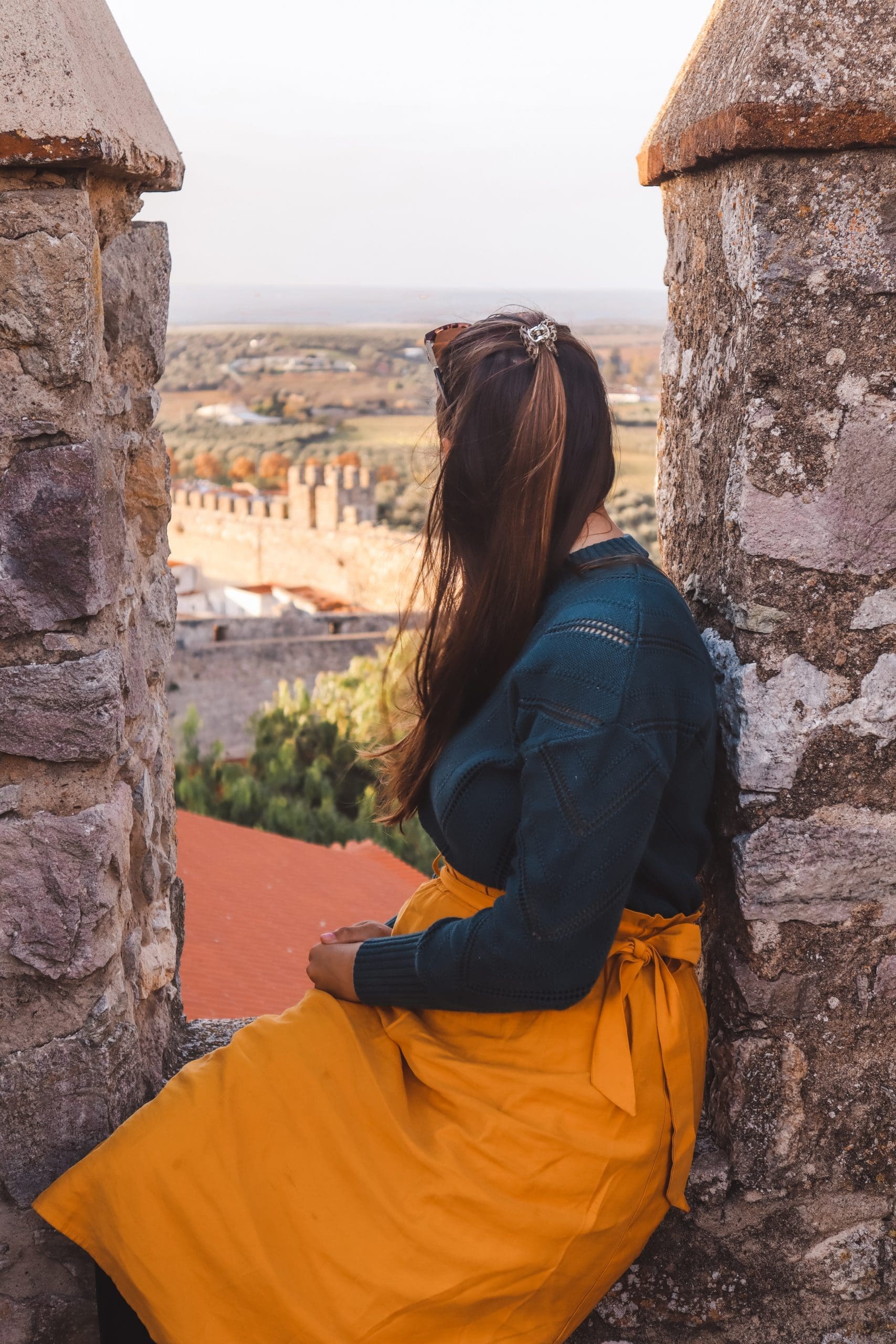
For this full route you need three weeks. That way you can drive from stop to stop at a relaxed pace and still have the odd rest day. Only got two weeks? Then drop a few stops. Skip the Vicentine Coast and take the motorway from Lisbon straight back to the Algarve, for example, or choose between Nazaré and Óbidos in the middle of the country.
We’ve spent months exploring the country and still haven’t seen everything. You could travel around Portugal endlessly and keep finding new favourites. Most people don’t have that kind of time, of course. The good news is that three weeks is enough to see the best places in Portugal.
Less time for your holiday? Then go for a city break in Porto or Lisbon and do a few day trips from there. From Porto you can visit the Douro Valley, and from Lisbon the seaside town of Cascais or Sintra with its spectacular castles and palaces make great day trips.
Another option for a week or so is the Algarve in the south. Fly into Faro and spend a week exploring the coast by car from one base, such as lively Lagos, the pretty fishing village of Ferragudo or the small resort town of Carvoeiro. We’d steer clear of touristy Albufeira though.
Or how about a very different side of Portugal? The island of Madeira has spectacular hikes and charming villages, and it’s perfect for a road trip of its own.
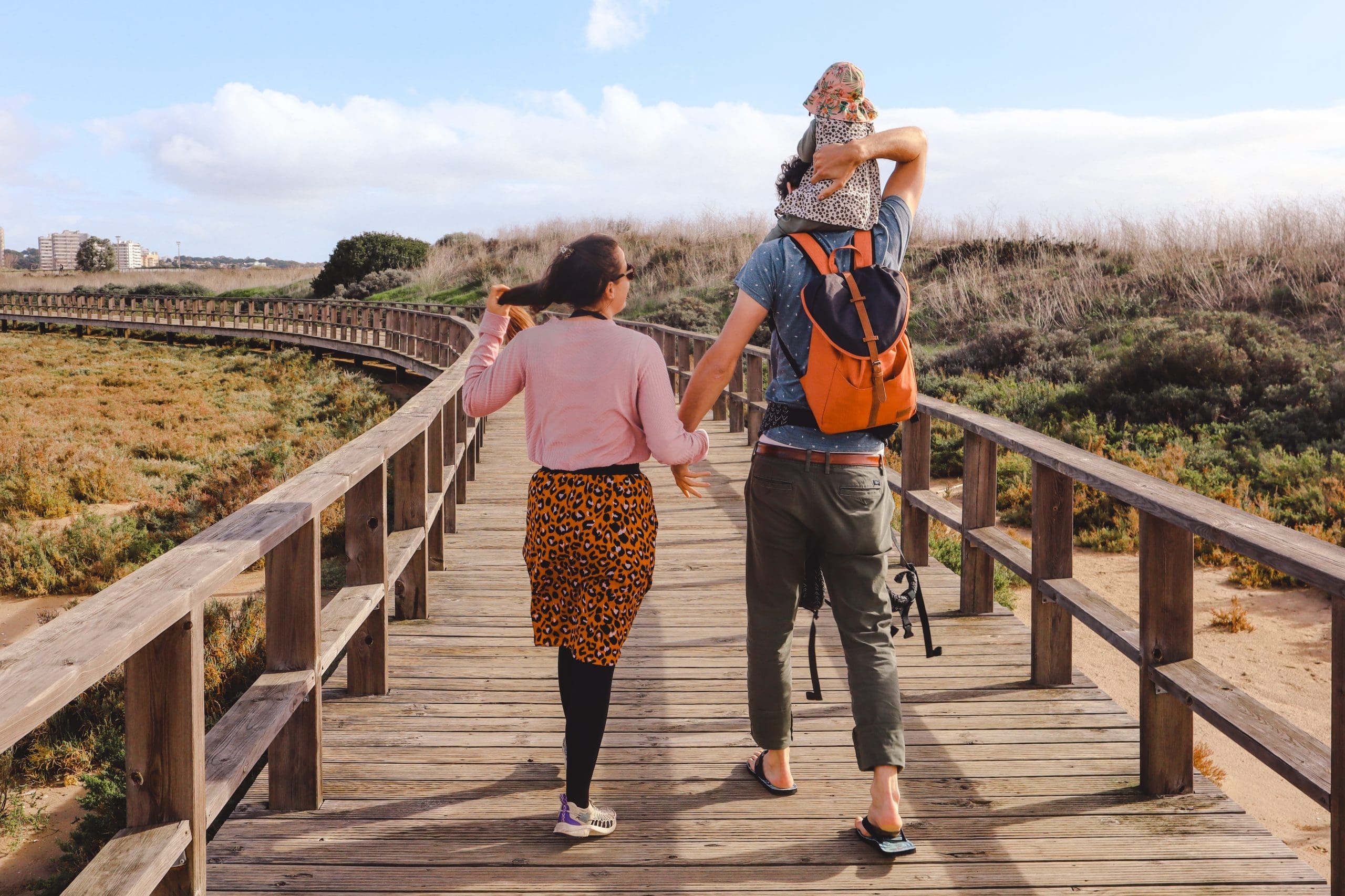
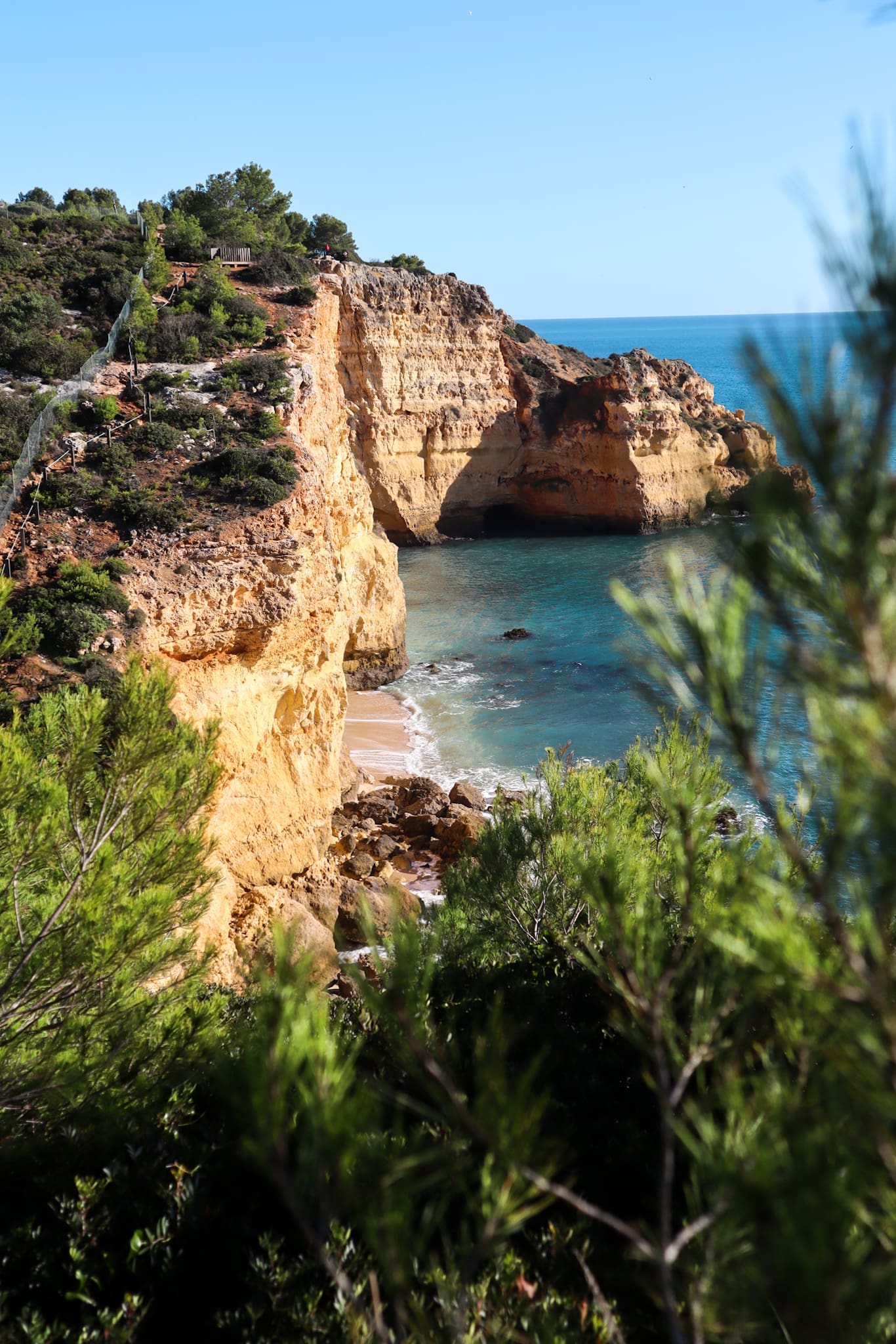

Our tip: a road trip in Portugal by campervan
Did you know Portugal is one of the most popular campervan destinations in Europe? Especially in winter, motorhomes flock south to chase the Portuguese sun. We’re guilty too! We’ve explored Portugal in our campervan over several winters.
The climate isn’t the only reason Portugal is great by campervan. The country is perfect for a road trip, and nothing beats the freedom of travelling in a van. You drive as far as you feel like without having to book anything in advance. Had enough for the day? Look up a good spot online and park your house on wheels. Easy as that. Travelling with a baby, we loved that flexibility.
Camping also lets you experience the country more fully. Without hotel walls around you, everything feels a bit more intense. You fall asleep to the sound of the ocean and throw the doors open in the morning to wake up outdoors. For us, a campervan road trip was the best way to see Portugal.
Portugal is also very campervan friendly. You’ll find affordable campsites everywhere, municipal motorhome areas with water and waste disposal, and quintas where you can park up among the vineyards or the sheep. In the Algarve, the most popular region, free spots are harder to find and prices are a little higher. We always found our overnight spots with the Park4Night app.
Want to wild camp? Since 2021 you’re allowed to spend up to 48 hours overnight in your campervan in the same municipality in Portugal, but not in natural parks, Natura 2000 areas or protected coastal zones, unless a spot has been officially designated for it. Don’t put chairs, a table or an awning outside either, because then it counts as camping. And always check the signs and recent Park4Night reviews, as the rules for individual spots change regularly.
→ Discover the best camper spots in Portugal
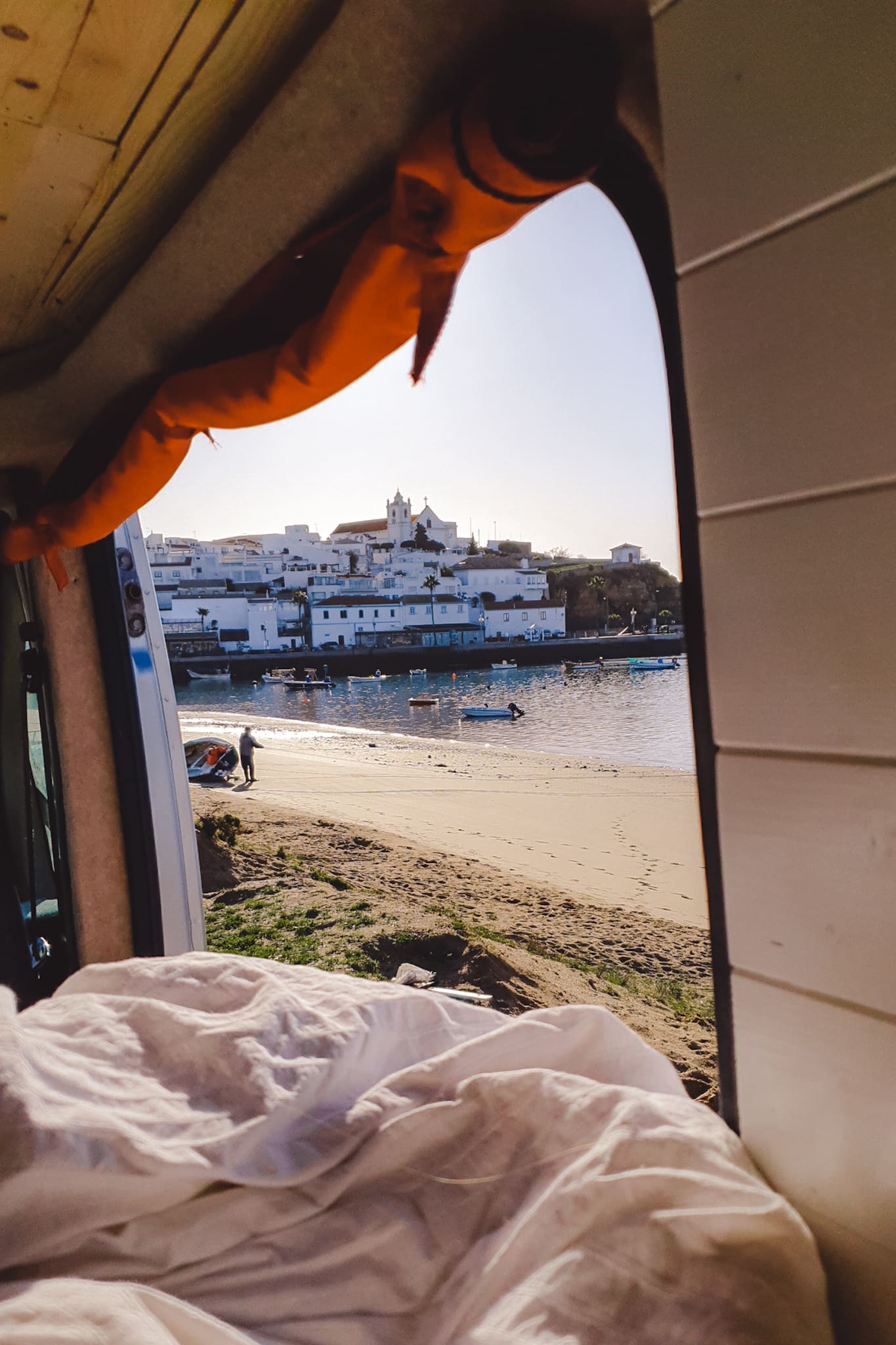


Should you start your road trip in Faro, Lisbon or Porto?
Our Portugal road trip starts in Faro in the Algarve. Faro is usually the cheapest airport to fly into from northern Europe, and the Algarve belongs on every Portugal itinerary anyway, so it makes sense to start there.
You can easily pick up a rental car at Faro airport. Do book it online in advance. Discover Cars compares the big rental companies in one search, so you can see straight away which deal includes the cover you want.
→ Compare rental cars in Portugal on Discover Cars
Found a good flight to Porto or Lisbon instead? No problem! Our route passes through both, so you can follow it just as easily from there.


Our Portugal road trip itinerary
This itinerary takes you around the whole country and past Portugal’s big highlights. Want to see more than the headline sights? You could also spend two or three weeks exploring one region in depth. Good options are a road trip through northern Portugal from Porto, a trip from Porto to Lisbon (part of our route, but there’s lots more to see), or a road trip from Lisbon through the Alentejo to the Algarve.
Still, we’d recommend doing our road trip through the whole of Portugal, especially if it’s your first visit. It takes you past all the famous sights and includes a few lesser-known places along the way.
Our Portugal road trip route on the map
#1 Faro in the Algarve
We start and finish this Portugal road trip in Faro, in the south, simply because that’s where you usually find the cheapest flights and rental cars. Start by exploring Faro itself. It’s not the biggest or most striking city, but it does have some lovely sights. Wander the pretty streets of the old town, admire the historic buildings, laze on the sandy beaches and go walking in the nature park just outside town.
Read more: all our tips for Faro in the Algarve.
Put your rental car to good use straight away. Right next to Faro lies the largest nature park in the Algarve, the Ria Formosa. It’s a lagoon between the mainland and the sea, full of islands, salt marshes, sandy beaches, pink lakes, sandbanks, dunes, villages and salt pans. Lots of bird species live here, and the rest of the wildlife draws plenty of visitors too.
Read more: all our tips for the Ria Formosa, including the best walks.
How long do you need and where can you park in Faro?
Spend two days in Faro: one to explore the town and one for the Ria Formosa. Then head north into the Alentejo.
In Faro you can park easily at this big free car park just outside the town walls. Travelling by campervan? You’re not allowed to sleep in the car parks in and around Faro, and many spots by the water lie inside the Ria Formosa nature park, where it’s forbidden too. Look for a campsite or an official motorhome area nearby instead.
Where to stay in Faro
Looking for a bit of luxury and your own space? Then try 7 Styles Apartments right in the centre, where every apartment has its own living room and kitchen. We also love Faro’s boutique hotels. Good picks are Lemon Tree Stay, with a sunny terrace full of lemon trees and a fresh breakfast, and the sustainable, budget-friendly Sunlight House, with stylish rooms and a shared kitchen.

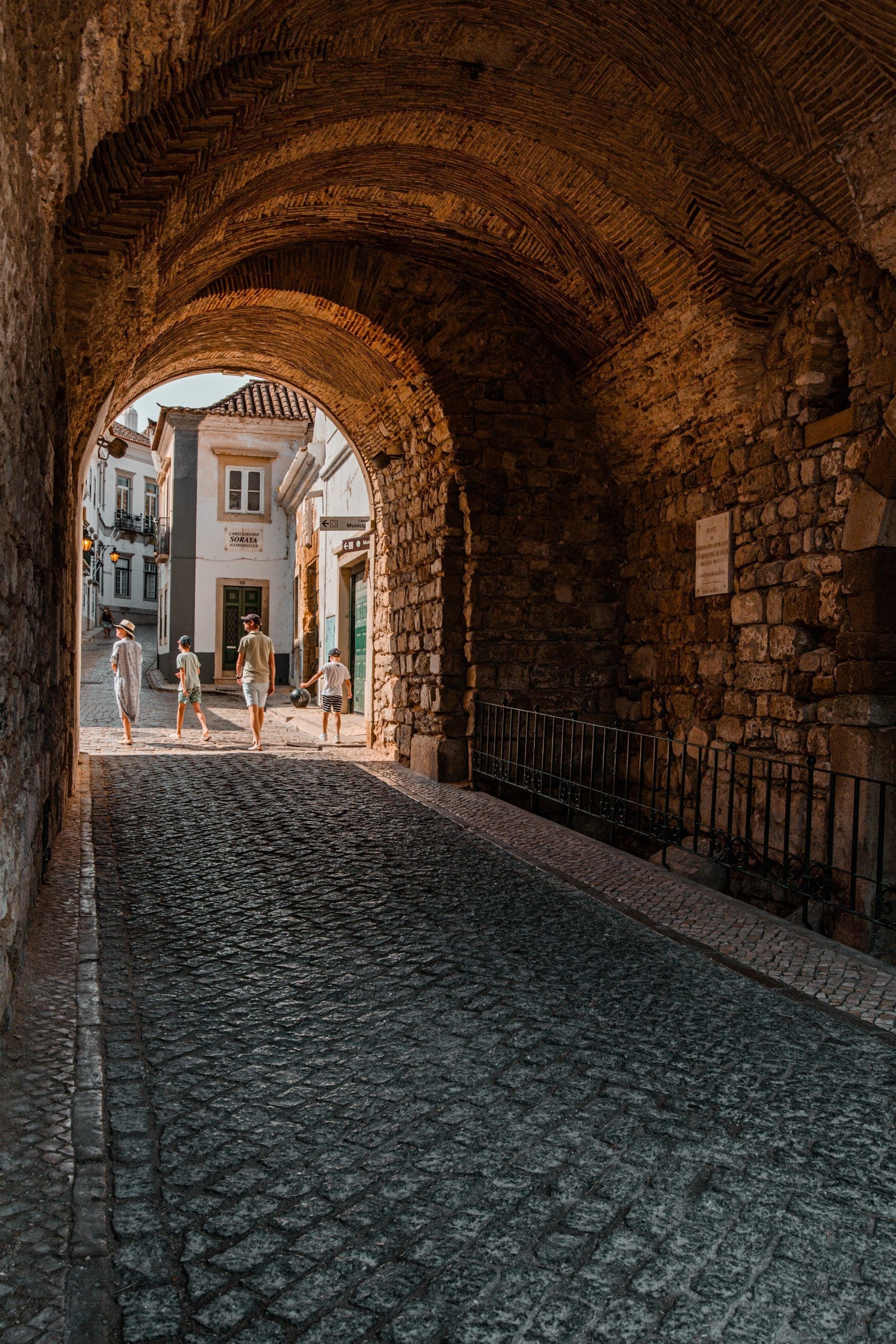
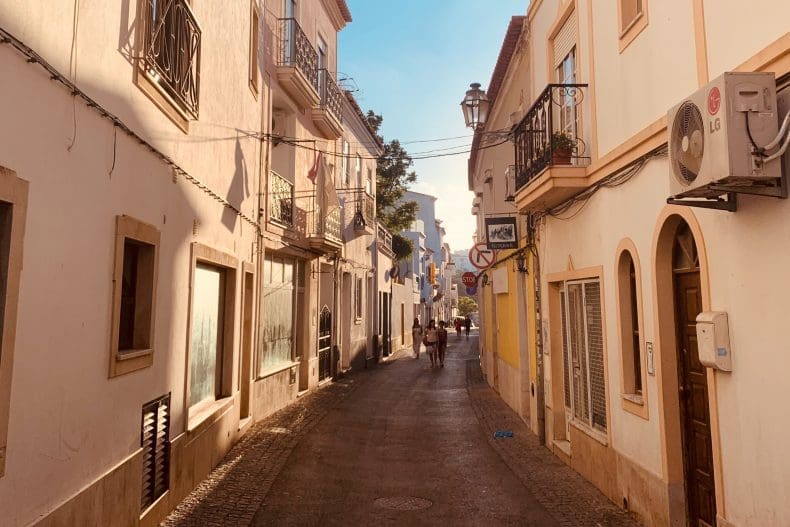
#2 Monsaraz in the Alentejo
Monsaraz is tiny and you’ll have seen it in two hours, but it’s one of the prettiest villages in Portugal. It sits on a hilltop with a walled old town and a medieval castle, looking out over a huge lake. Add those views and you’ll understand why this little village deserves a place on your route.
Read more: all our tips for Monsaraz.
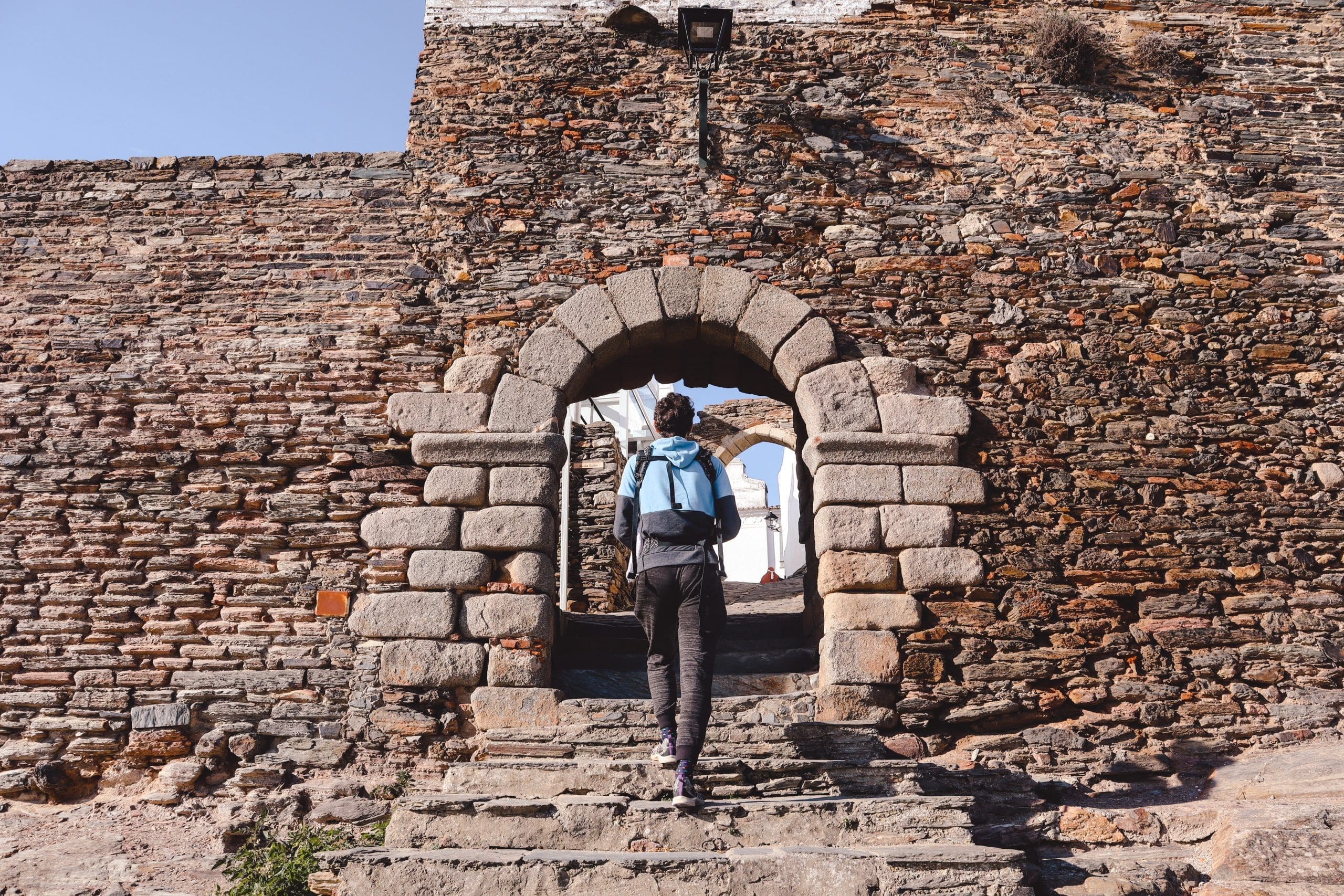
This whitewashed village takes you back in time. Bumpy cobbled lanes, the old castle, a prehistoric stone circle and views over the surrounding countryside make Monsaraz look like a postcard. Only the street lamps give away that you’re in the twenty-first century. Wander the streets, visit the castle for free and stop at the stone circle just outside the village.
How long do you need and where can you park in Monsaraz?
Half a day is enough for Monsaraz. Depending on your time, you can stay the night or drive straight on to Évora, which is only 45 minutes away.
You can’t drive into Monsaraz itself. The village is tiny and only residents are allowed in by car. Park at these car parks on the edge of the village, with a fantastic view over the lake. We parked our campervan on a little island in the lake, one of the most beautiful places we slept on the whole trip.
Where to stay in Monsaraz
Monsaraz is too small for big hotels or chains, which only makes a night here more special. For a charming local place to stay, try Casa da Muralha, Dom Nuno or Casa Dona Antonia.

#3 Évora in the Alentejo
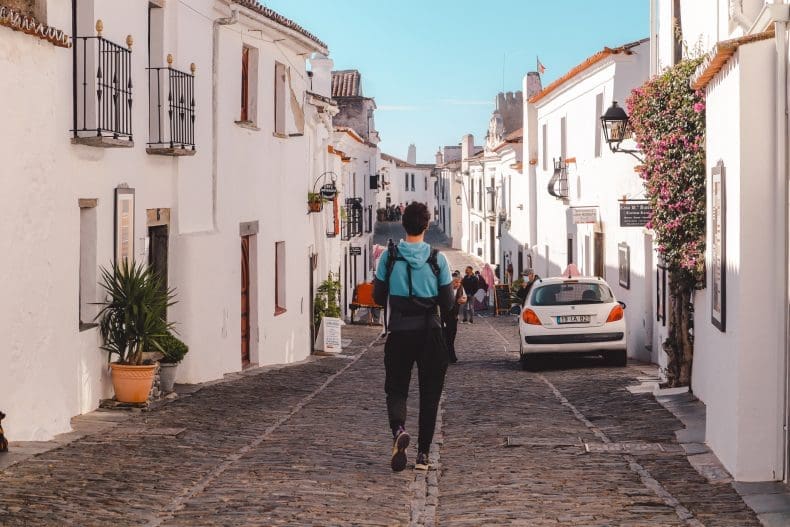
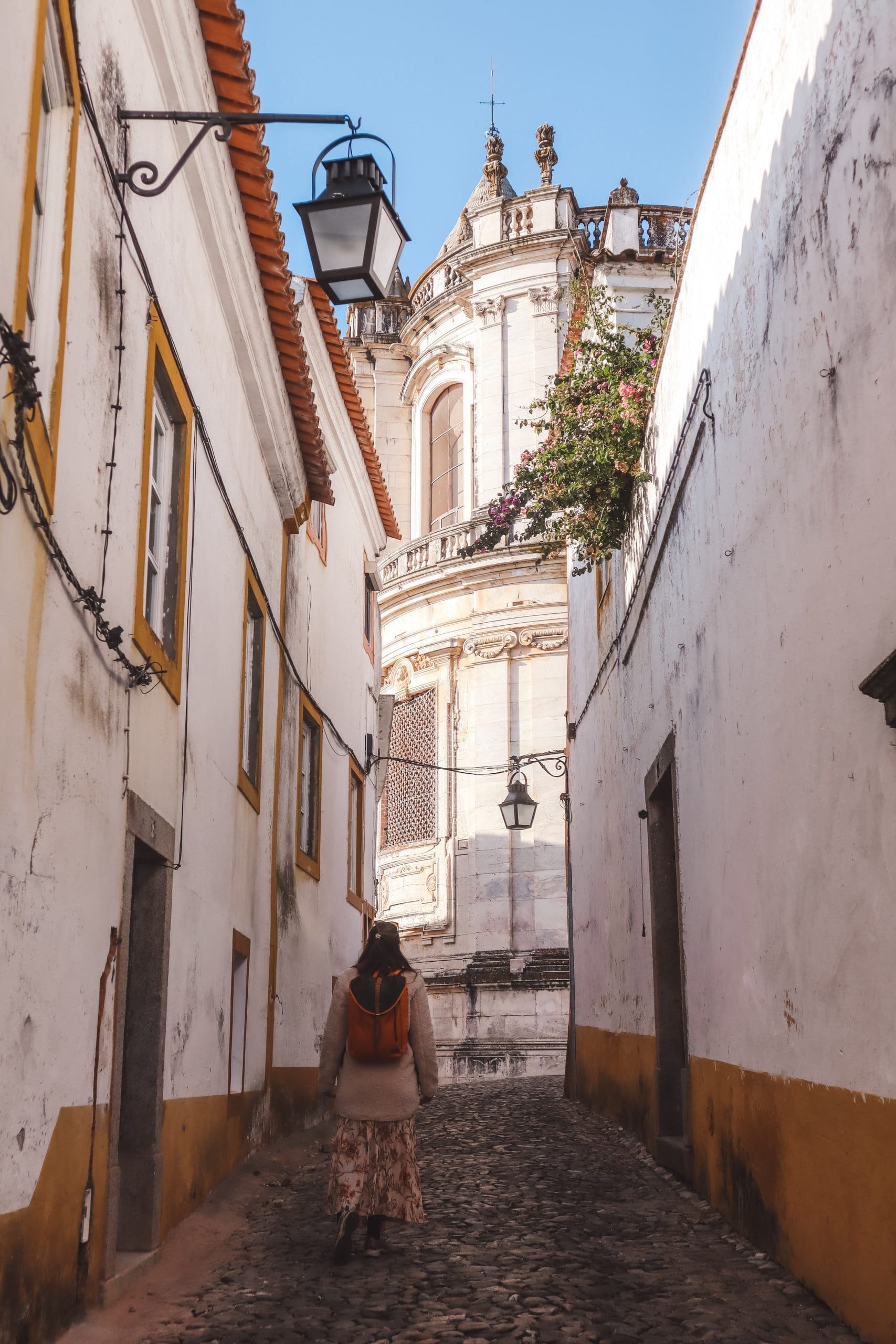
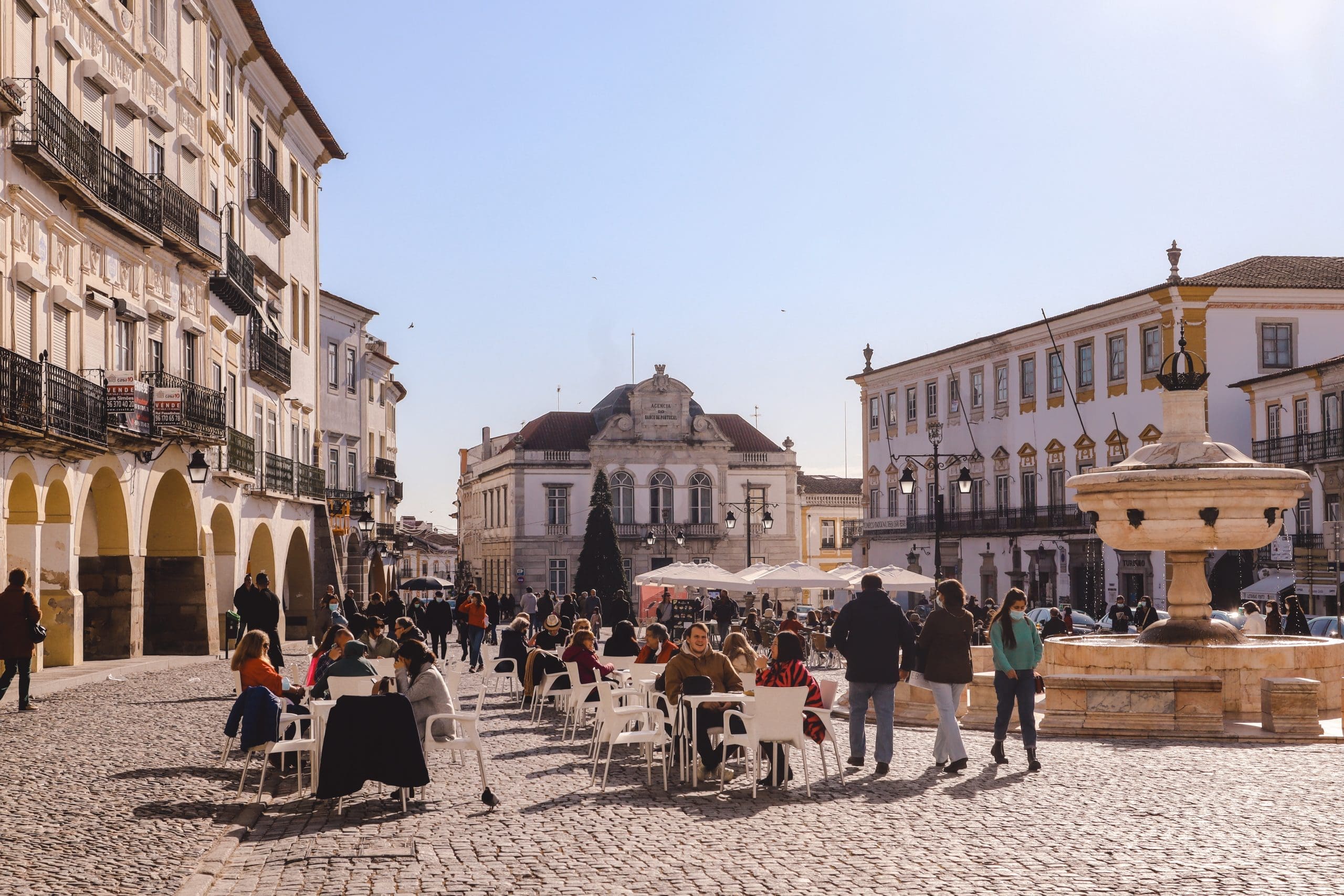
Évora is easily one of the most beautiful towns in Portugal. Think white houses with yellow trim, narrow cobbled lanes, historic monuments, wide views and pleasant squares. It’s no surprise the town is a UNESCO World Heritage Site. The highlight, literally, is the cathedral, where you can climb onto the roof for a sweeping view of the town and the region and a close-up of its towers and dome.
Read more: all our tips for Évora.
Other sights you won’t want to miss are the eerie Chapel of Bones (Capela dos Ossos), the University of Évora covered in blue and white azulejos, the eighteenth-century aqueduct outside town and the Roman temple next to the cathedral. Leave time to wander without a plan too. The cobbles, the white houses, the colourful flowers and the glimpses through archways are really Évora’s best attraction.
How long do you need and where can you park in Évora?
Give Évora at least two full days to see the sights and soak up the atmosphere. Park on the edge of town: there’s this big car park next to the aqueduct and the town walls. If you don’t mind walking a bit further, this car park is a good option. That’s where we parked our campervan, as it has official motorhome spaces.
Where to stay in Évora
In the heart of town is the luxurious Évora Olive Hotel, with stylish rooms, private parking, a pool and a gorgeous view from the roof terrace. The Noble House is a modern hotel in a historic building that still has its Roman wall, tiles and vaulted ceilings, in a great spot in the old centre. A good budget option is Casa Morgado Esporao, a B&B with a pool and rooms with a kitchenette, just 100 metres from the cathedral.

#4 Tomar, an underrated gem
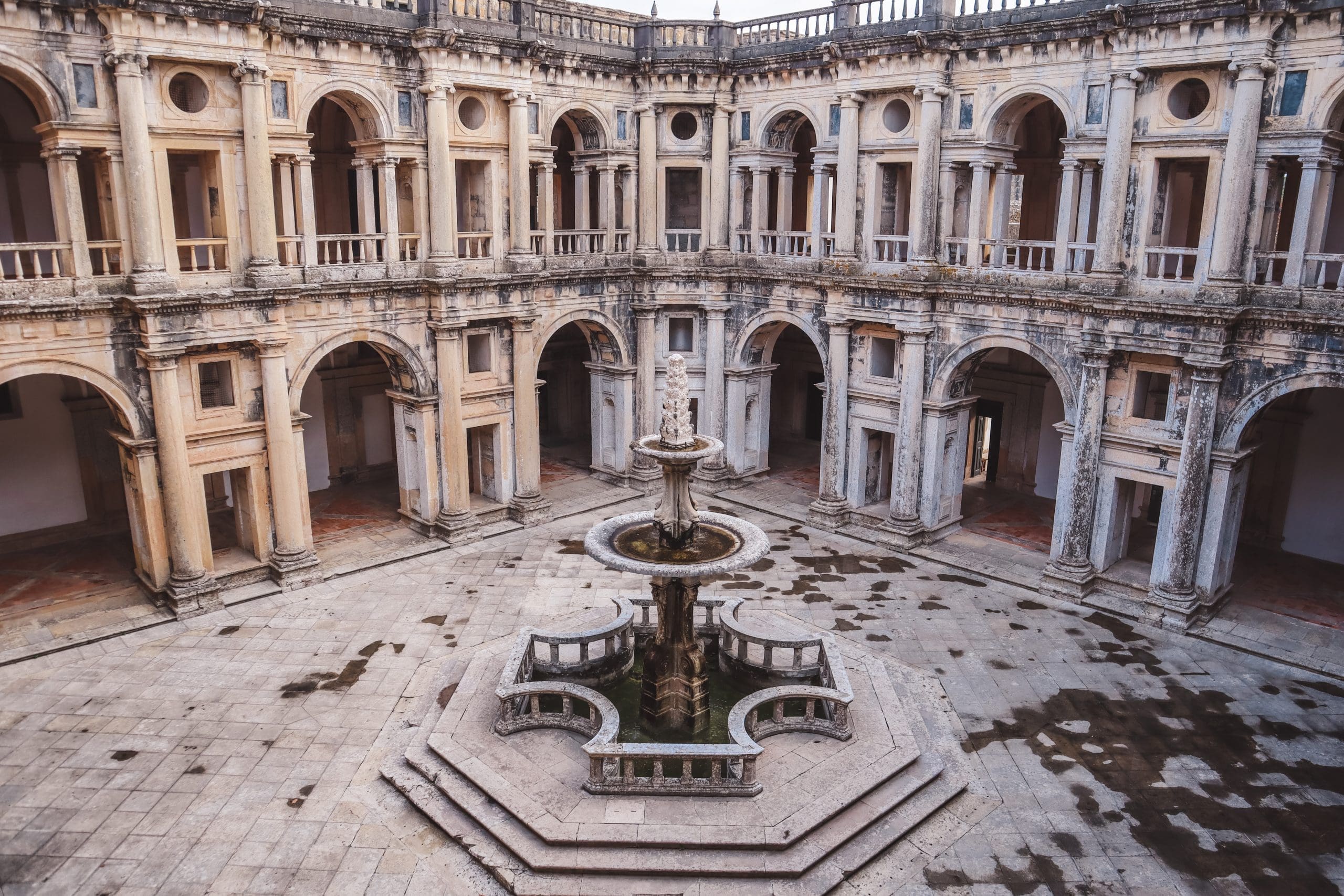
Our visit to the Convento de Cristo in Tomar took us to one of the most remarkable places in Portugal. It’s a spectacular monastery, church and castle complex with a mix of architectural styles and beautiful details. We’d never seen anything like it, and even after an hour of wandering we kept discovering new parts of the monastery.
The highlight is the central church, the Charola, and it’s not like any church you know. It’s round, or rather sixteen-sided, with a circular altar in the middle surrounded by arches, paintings and decorations. With those soaring ceilings and all that splendour, you need a few laps around the altar to take it all in. It’s easy to see why the complex is a UNESCO World Heritage Site.
Read more: everything about the Convento de Cristo in Tomar.
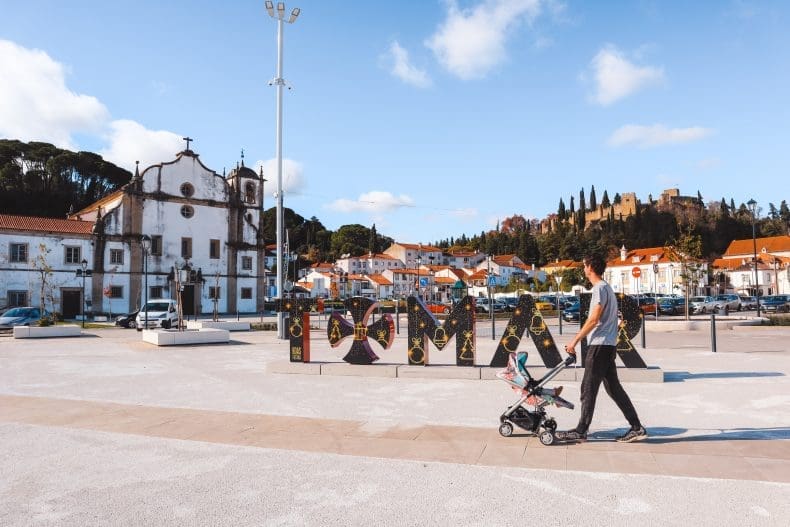
Tomar itself is nice to explore too. You’ll see the cosy town in a couple of hours, including the main square and the narrow streets. Coffee lovers should stop at Insento for the best coffee in the region. And don’t forget to drive out to the edge of town to see the aqueduct in the Pegões Valley. It’s at its highest here, 30 metres tall with a double row of arches, and it curves through the landscape. You can even climb up at one of the water houses and walk along the top!
How long do you need and where can you park in Tomar?
Spend at least a full day and a night in Tomar. You’ll need half a day for the Convento de Cristo and the other half for the town and the aqueduct.
There are two car parks at the monastery. In town you can park here and along the square in front of the Igreja do Convento de São Francisco. With a campervan we recommend Quinta das Lameiras, just outside Tomar, where you can use electricity, toilets and hot showers in return for a donation. We woke up there among the sheep and newborn lambs.
Where to stay in Tomar
Tomar isn’t big, so there aren’t many chain hotels and a nice place to stay takes a little searching. For a stylish apartment with a small kitchen, try Flattered to be in Tomar or Arcos 61, both right in the centre. Also very central is Thomar Boutique Hotel, one of Tomar’s upmarket hotels, with well-designed rooms and a generous breakfast. For a pool, a green garden and a spa, go for Hotel Dos Templarios on the riverbank at the north end of the old town.

#5 Road tripping through the Douro Valley
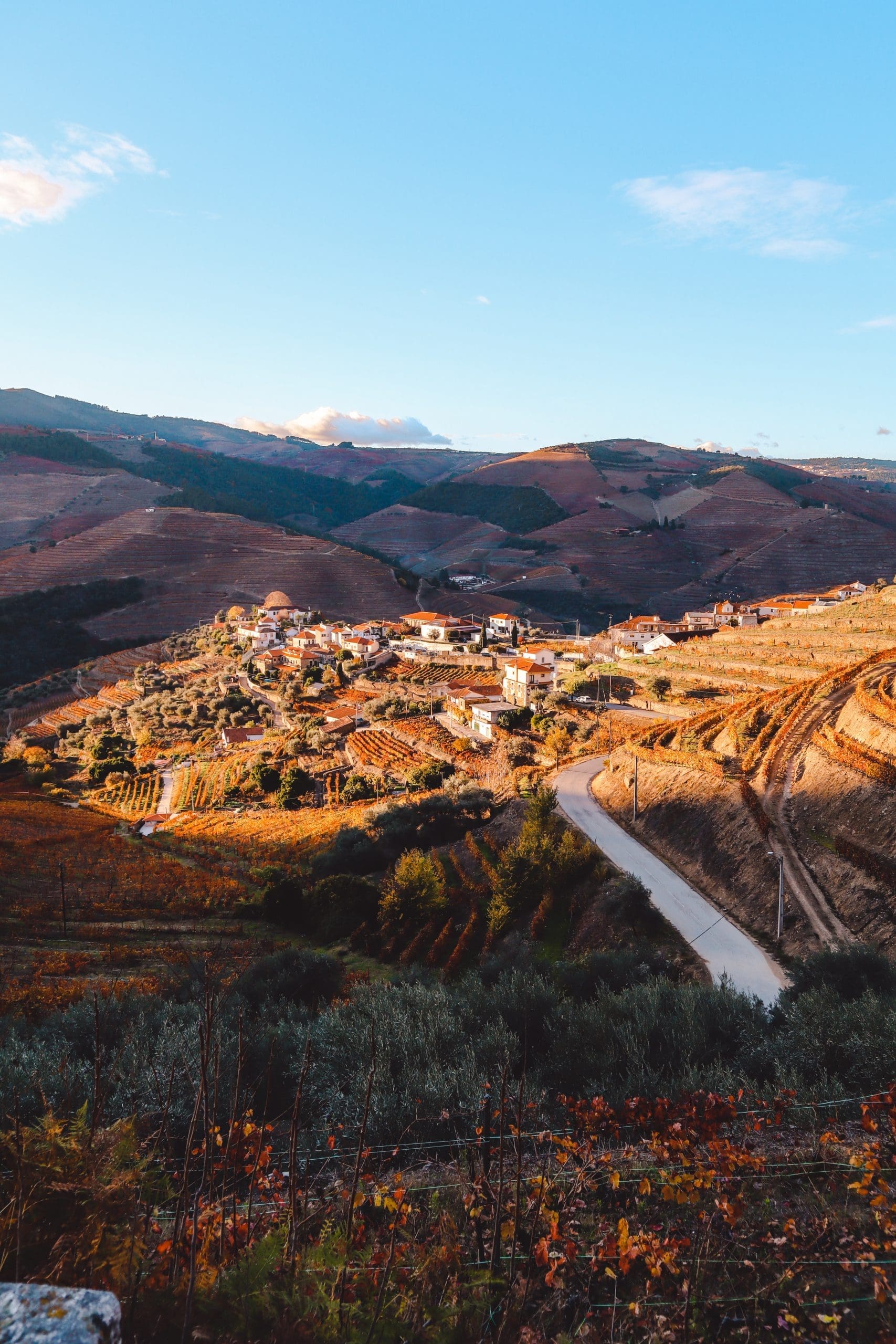
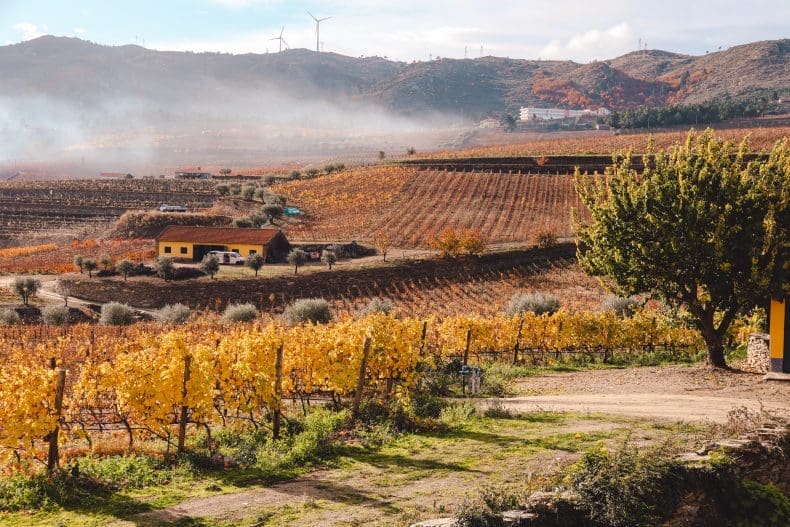
The Douro Valley is one of Portugal’s best-known sights, and no wonder with that photogenic river lined by endless vineyards on its steep banks. This is where port comes from! The valley is a popular day trip from Porto, but we’d recommend giving it more time. The road runs right along the river, with terraced vineyards climbing the hills on both sides. Make the most of your rental car and drive the valley at your own pace.
Highlights include wine and port tastings at the quintas, a visit to the Igreja de Nossa Senhora dos Remédios in Lamego with its zigzag staircase and blue and white azulejos, and the many viewpoints along the river. We visited in autumn, when the vineyards turn yellow, orange and red, which looked stunning in the golden hour before sunset. There are plenty of viewpoints along the route for the best photo stops. Just search for ‘miradouro’ in Google Maps.
How long do you need and where can you park in the Douro Valley?
Plan at least two full days and two nights to really enjoy the Douro Valley.
You can park easily at any winery. Even with a campervan! Three of our favourite camper spots in Portugal were in the Douro Valley: Quinta da Padrela, Quinta do Monte Travesso and Quinta da Pereira. You park among the vines with a toilet, hot shower and electricity, and you get a tour of the vineyard. It’s appreciated if you buy a bottle of wine or olive oil afterwards.
Where to stay in the Douro Valley
Stay at a wine estate to make your Douro experience complete. A very special place is The Wine House Hotel on the Quinta da Pacheca estate, where you can sleep in a giant wine barrel or a lovely room in the eighteenth-century farmhouse.
Quinta Nova is another gem among the vineyards: a historic manor house surrounded by 120 hectares of vines, with comfortable rooms in period style. Near the village of Pinhão you’ll find the family-run Quinta De La Rosa, another wine estate, with a terrace overlooking the Douro, a big breakfast buffet and its own restaurant.
Something different is Douro Yacht Charter & Bungalows on the banks of the river. You stay in a chalet and can take the kayaks out on the Douro for free.

#6 City break in Porto
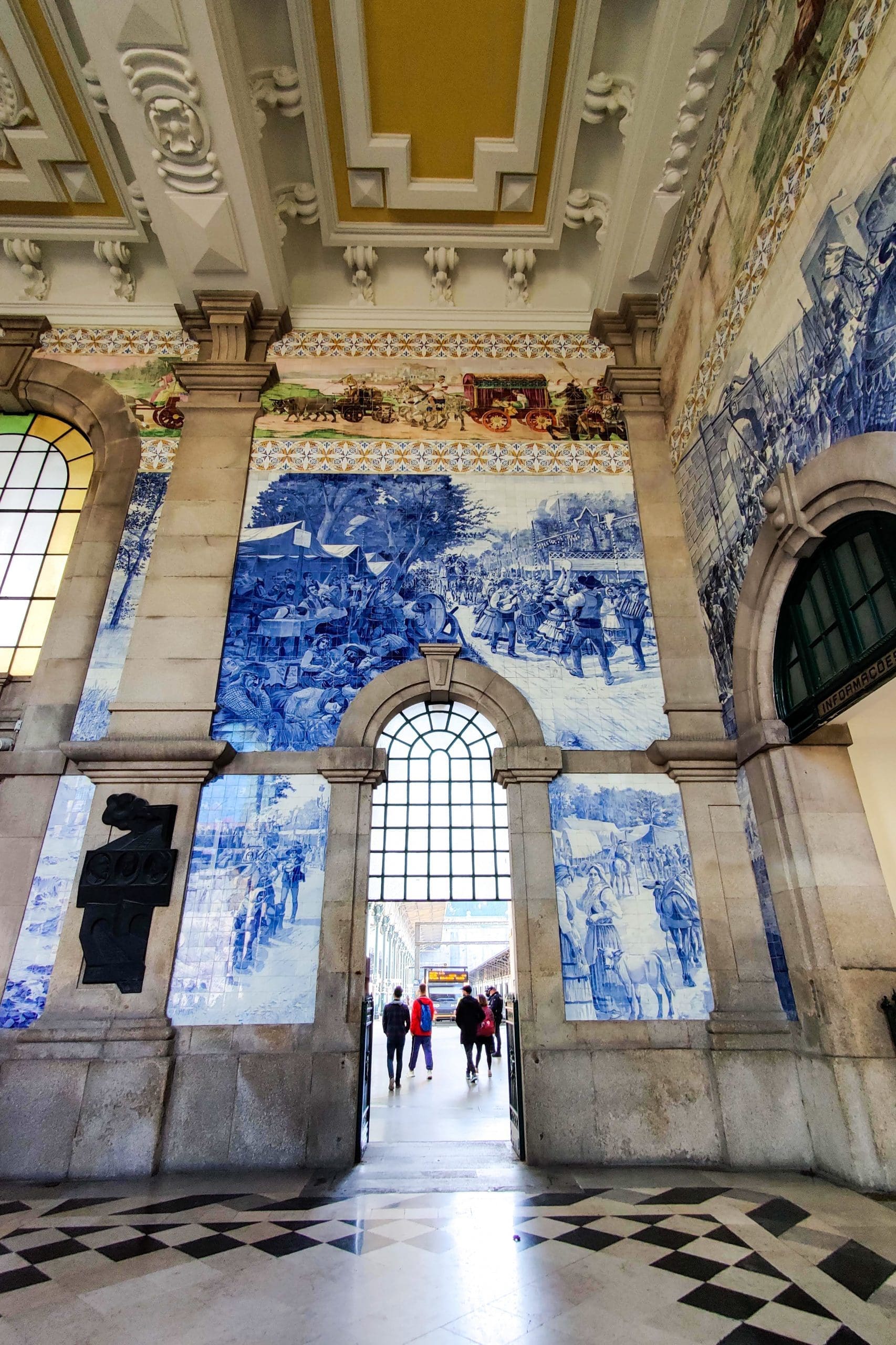
Next stop: Porto. Funnily enough, this city isn’t packed with big-ticket sights. It’s more about the atmosphere and the beautiful old centre. There are a few things you shouldn’t miss, of course, such as the photogenic Livraria Lello bookshop that supposedly inspired Harry Potter, sunset from the far side of the Dom Luís Bridge and all those buildings covered in blue and white azulejos.
But really, you come to Porto to wander. Stroll the picturesque streets and stop at café terraces to try the local port and pastéis de nata. Because the city climbs the hills from the riverbank, you’re rewarded with great views as you go. Add the architecture and the cosy lanes and it’s easy to see why you never get tired of Porto.
How long do you need and where can you park in Porto?
We ended up staying more than a week in Porto, much longer than planned. That might be a bit much, but do give it two to four days.
Book a place to stay with its own parking, as parking in Porto can be tricky or expensive. Especially if you want to leave your car for a few days, which you will, because this road trip includes a short city break in our favourite city in Portugal.
Heading to Porto in a campervan? Staying overnight in the city itself is tricky. A good option is this guarded car park in Vila Nova de Gaia, less than ten minutes’ walk from the river and the Dom Luís Bridge. It even has showers.
Where to stay in Porto
In a city as popular as Porto, finding a beautiful place to stay is easy. Finding one with parking is a little harder, so here’s some help.
A green oasis in busy Porto is Rosa Et Al Townhouse, a historic building with its own garden and beamed ceilings in many of the rooms. Guests rave about the breakfast and the restaurant, which uses ingredients from the garden.
A great hostel in Porto is Urban Garden Porto Central Hostel, with dorms and private rooms. The dorms have no more than eight comfortable, modern sleeping pods with curtains for some privacy, and the garden and central location are excellent.
One last tip with parking is the historic Infante Sagres, with a garden terrace, a generous breakfast and a pool.

Stopover: the Paiva Walkways
Between Porto and Aveiro we stopped at the Paiva Walkways, one of the unique places to visit in Portugal. If you love nature and walking, the Paiva Walkways (Passadiços do Paiva in Portuguese) belong on your list. For eight kilometres, wooden boardwalks wind along the cliffs of the gorge carved out by the Paiva River. The views are beautiful and different in every season, and you can leave the path for a cooling swim in the river, which is lovely in summer when it gets really hot.
Along the way you’ll also see the 516 Arouca, one of the longest pedestrian suspension bridges in the world. It’s 516 metres long, hence the name, and hangs around 175 metres above the river. You always cross with a guide and a small group. Tickets are only sold online, and children under six aren’t allowed on the bridge, not even a baby in a carrier. We wish we’d known that beforehand: within our time slot we had to take turns and sprint across. Below you, the river flows far down in the gorge, and you can look straight through the grated floor. Definitely not one for anyone afraid of heights. A ticket for the bridge also gets you onto the walkways the same day.
How long do you need and where can you park at the Paiva Walkways?
The walk is almost nine kilometres, so half a day is enough. That’s why it makes a good stopover on your way south. Buy your walkway tickets online in advance too, as visitor numbers per day are limited. There’s parking at both ends of the route.


#7 Aveiro, the Venice of Portugal
Just south of Porto lies what’s often called the Venice of Portugal. The coastal town of Aveiro has a charming centre with canals and little bridges, and in summer colourful boats glide through it. Because Aveiro is on the coast, the canals are filled with salt water. Do visit the salt pans on the edge of town, where seawater evaporates in shallow basins and leaves pure sea salt behind. Those white heaps along the edges? That’s the salt.
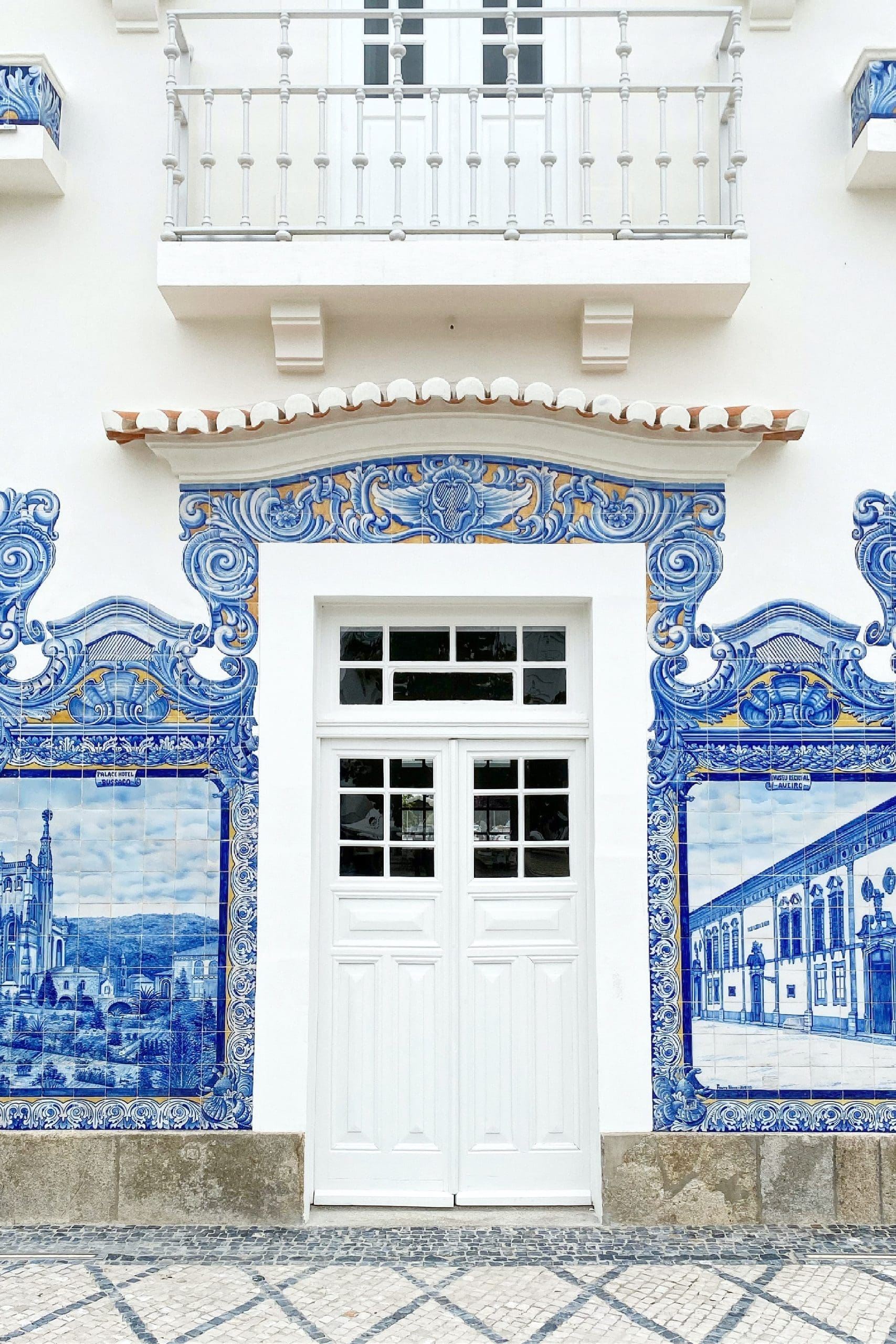
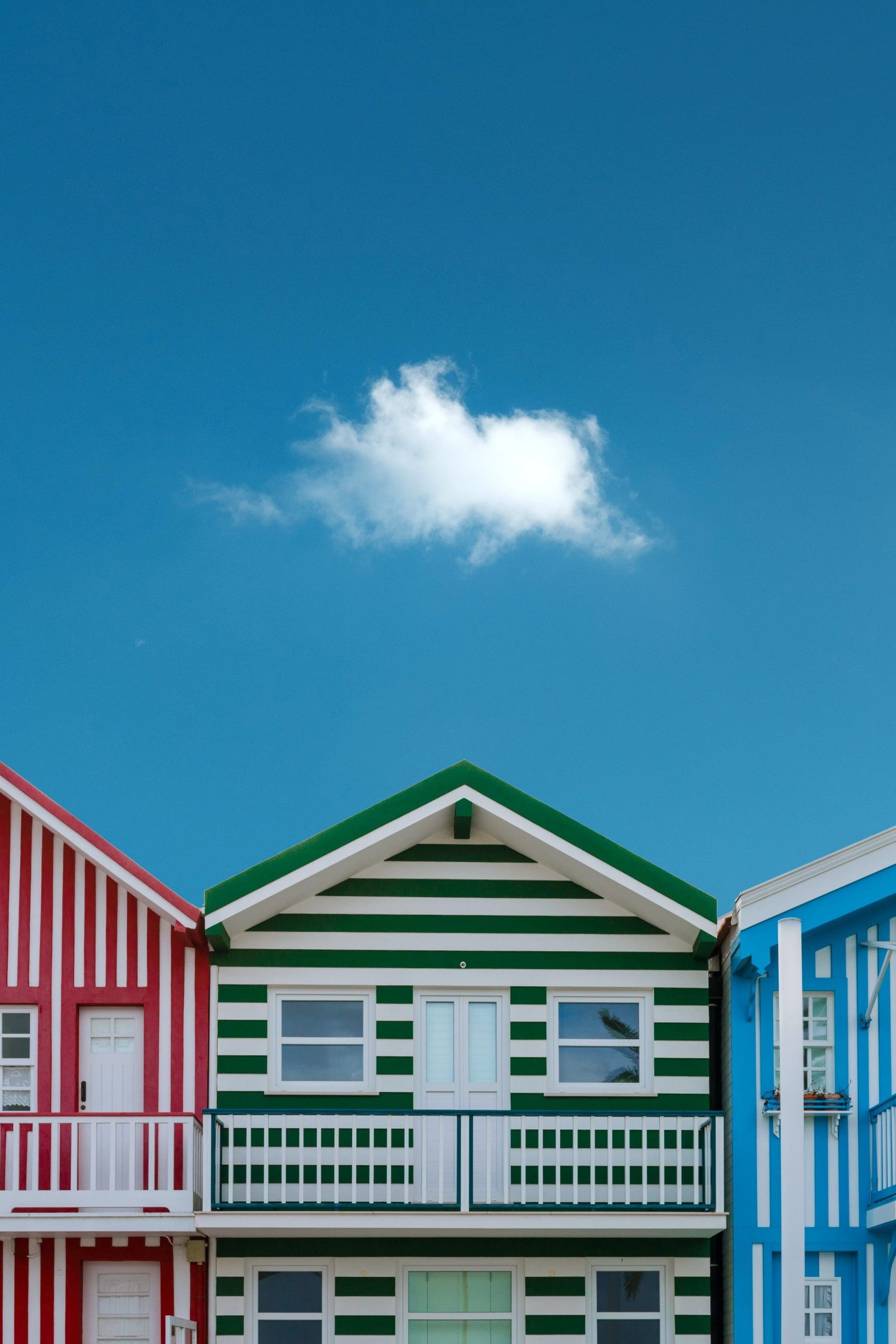
The finest buildings line the main canal, nearly all in exuberant art nouveau. Add the pretty bridges and you’ll see why Aveiro is so photogenic. One of the most photogenic spots is just south of town: the beach of Costa Nova with its colourful striped houses along the promenade. And for a photo stop full of typical Portuguese azulejos, head to Aveiro’s beautiful old railway station.
How long do you need and where can you park in Aveiro?
A full day is enough for Aveiro, but add another if you’d like a beach day too. On the edge of the old centre you’ll find this free car park. For campervans there’s a soulless but free motorhome area on a large supermarket car park not far from the centre.
Where to stay in Aveiro
Aveiro is popular with travellers and has lots of places to stay. For budget travellers, Aveiro Rossio Hostel is a good choice. There’s no guest kitchen, but the common room downstairs is cosy and great for hanging out with other travellers.
Hotel Aveiro Palace is a historic hotel from 1937 with modern, upmarket rooms, and you can park cheaply in the Garage Forum opposite. A third option is Veneza Hotel in a historic mansion, with a terrace and pond, a big breakfast buffet and its own bar.

#8 Coimbra: the old university city
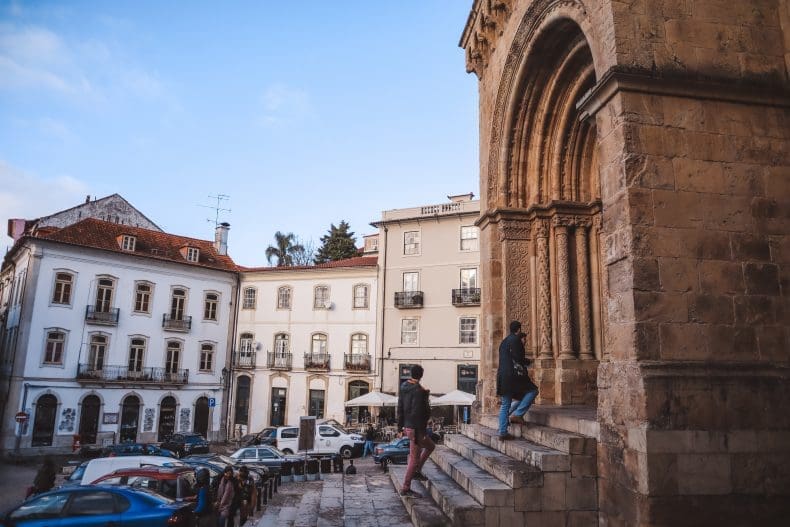
Halfway between Porto and Lisbon, on the Mondego River, lies Coimbra. We’ve been twice, and both times we walked the same route because we like it so much. In the lower town, take the lift up, the Elevador do Mercado, and walk on to the university at the top of the hill. Then wind your way slowly down the steep lanes and stairs of the old town until you end up back by the river.
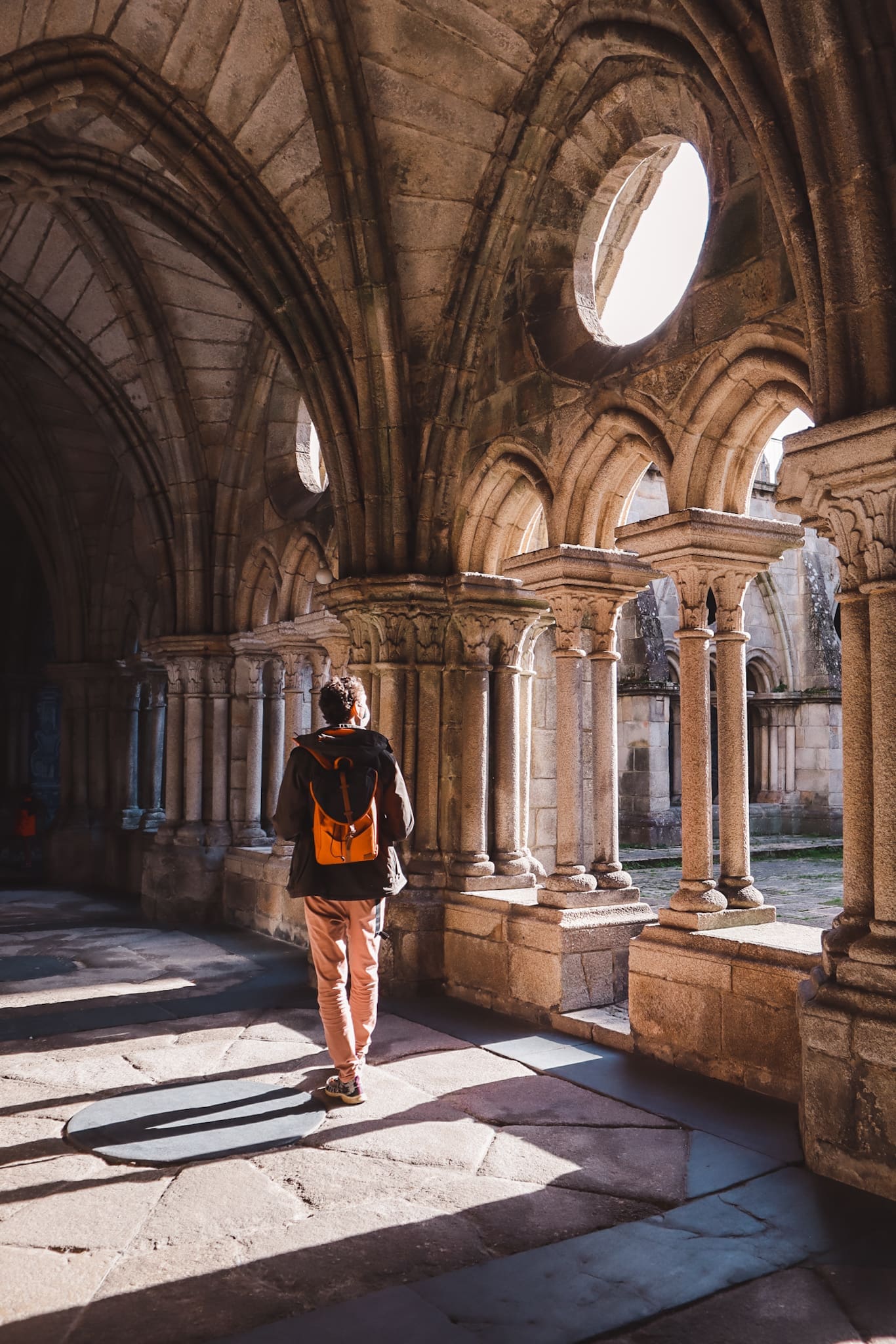
The University of Coimbra is one of the oldest in Europe and a UNESCO World Heritage Site. The old part sits in a former royal palace, with a courtyard looking out over the whole city. Its most famous room is the baroque Biblioteca Joanina, where the books stand among gold leaf. Students sometimes still walk around in their black capes, and then it feels like you’ve stepped into a Harry Potter film.
On the way down you pass the Sé Velha, the Romanesque old cathedral, and walk through the Arco de Almedina, the old city gate. Got time left? Cross the river to the Santa Clara-a-Velha monastery or take a stroll through the botanical garden.
How long do you need and where can you park in Coimbra?
You’ll see Coimbra in a day, or in half a day if you combine it with the drive to Nazaré. Park in the lower town by the river, as the lanes up in the old town are narrow and steep. You need a ticket for the university, and the Biblioteca Joanina is visited in a fixed time slot.
Where to stay in Coimbra
In the old upper town, a few minutes’ walk from the university, you can stay at Sapientia Boutique Hotel, a small hotel with a book theme, stylish rooms and a roof terrace overlooking the city. Prefer the lower town? Then Hotel Mondego is a good pick, a renovated historic hotel with art deco touches and a rooftop. Coming by car? Hotel Oslo is handy: parking is free, and the roof terrace looks out over the old town and the university.
→ Discover the 15 best places in central Portugal


#9 Monster waves in Nazaré
Read anything about Nazaré and you’ll soon hear about its gigantic waves. Just off the coast lies the Nazaré Canyon on the seabed, which gives the waves an extra push until they grow to monstrous proportions. In the past that meant fishermen’s widows and tales of sea monsters, but in recent decades surfers have discovered this little town.
Read more: all our tips for visiting Nazaré.
In winter the car parks fill up with campervans with surfboards on the roof. Nazaré’s famous waves attract surfers from all over the world who want to ride these house-high walls of water. The town now holds several world records, including the biggest wave ever surfed.
We saw some huge waves in Nazaré ourselves. Not quite the record-breaking kind, but big enough to feel the spray from a distance. The best places to watch are the viewpoint by the old fort and the pier near the ‘Farol Nazaré Pontão Norte’ lighthouse. When big waves are forecast, the pier fills up with surf fans and photographers with enormous lenses.
How long do you need and where can you park in Nazaré?
A full day, or even half a day if you’re in a hurry, is enough to explore Nazaré. We stayed five days because we couldn’t get enough of watching the surfers, helped by perfect conditions and massive waves. Nazaré is also a good place for a beach day on your road trip.
Parking in Nazaré isn’t too difficult, with street parking on the edge of the centre and in the upper part of town.
Where to stay in Nazaré
The first question in Nazaré is whether you’d rather stay in the upper or the lower part of town. Up top you get amazing views over the surfers; down below you’ll find most of the restaurants and the long beach. There aren’t many hotels or hostels, but there are plenty of holiday apartments and studios.
Casa Miradouro is in the upper part of town near the cliff, a whole apartment with two bedrooms, a kitchen and a balcony with sea views. In the same area, Home Sweet Praia Penthouse is spacious and stylishly decorated, with a lovely view from the balcony.
In the lower beach area, try Feel Nazaré Boutique Apartments, small but beautifully designed apartments close to the beach. Beachfront Apartment Nazaré is clean, comfortable and fairly new, but it’s the location right on the beach that wins you over. One last tip is Batata Estúdios, trendy studios a few steps from the beach, each with a washing machine, air conditioning and a kitchenette.


Stopover: the monasteries of Alcobaça and Batalha
Between Nazaré and Óbidos are two of Portugal’s finest monasteries, half an hour’s drive apart. We visited them with our baby daughter, along with the monastery in Tomar. All three are UNESCO World Heritage Sites, yet they’re completely different.
The Monastery of Alcobaça is a quarter of an hour from Nazaré. The tall, austere church made a deep impression on us, as did the contrast with the richly carved tombs of Crown Prince Pedro and his beloved Inês. Their tragic love story is the monastery’s most famous tale. Don’t miss the gigantic monastery kitchen either, with a stream running straight through it.
The Monastery of Batalha was built to give thanks for a victory over Castile in 1385. It’s a Gothic masterpiece, with a façade full of statues and a church with soaring vaults. The most striking part is the Capelas Imperfeitas, the unfinished chapels without a roof, where you look straight up at the sky.
Allow about an hour and a half per monastery, so together they easily fill a morning or an afternoon. In Alcobaça you can park your campervan at this official motorhome area, within walking distance of the monastery.
→ Discover everything about the Monastery of Alcobaça


#10 Picturesque Óbidos
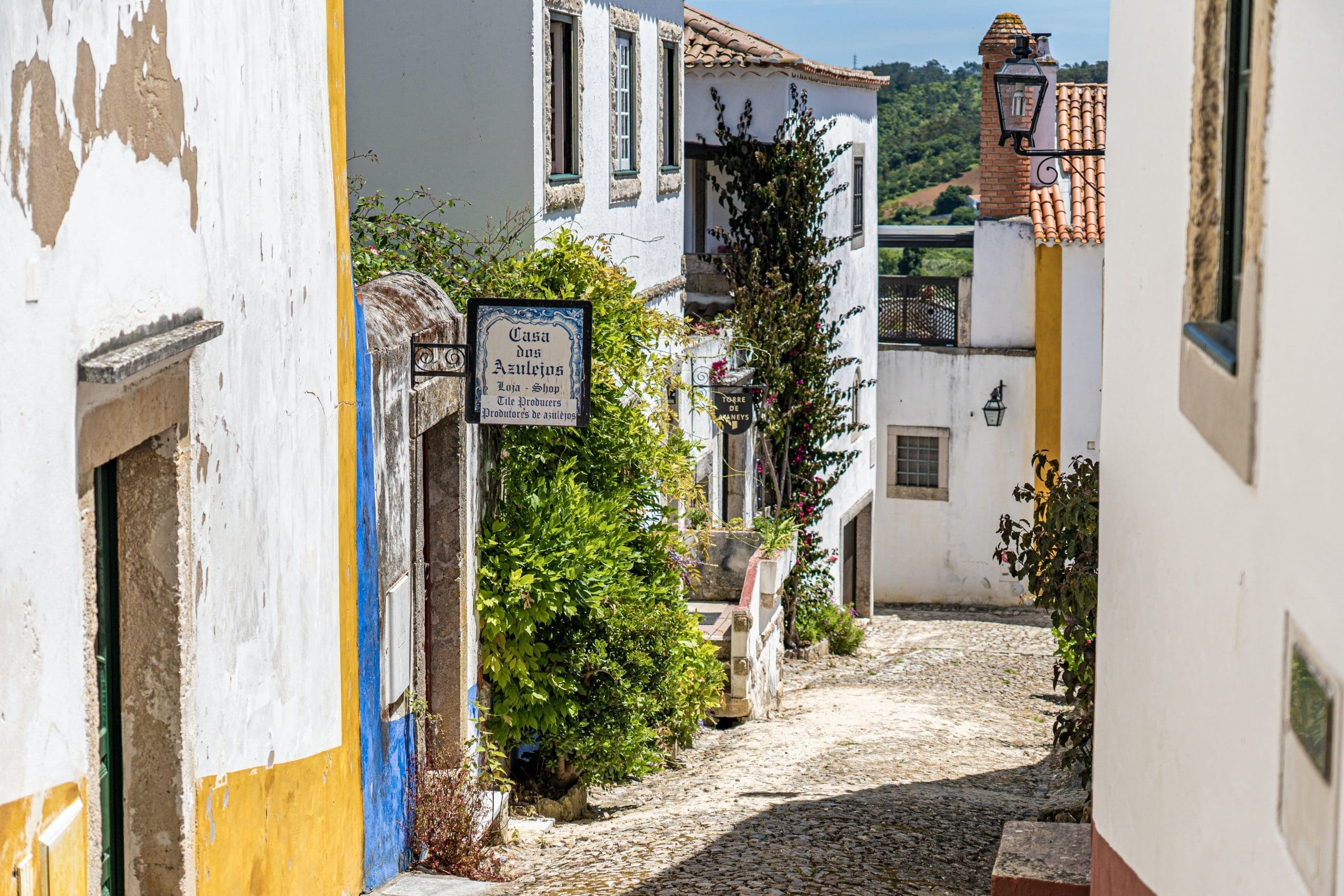
When a town is so pretty that a king gives it to his queen as a present, you know it belongs on your Portugal itinerary. Medieval Óbidos is one of the most beautiful places in the country, full of picturesque lanes, white houses with yellow or blue trim, bright flowers and cobbled streets.
Read more: all our tips for Óbidos.
In Óbidos you’re transported back to the Middle Ages. In July the town goes fully medieval during the annual Mercado Medieval. Visiting then? Book your accommodation well in advance.
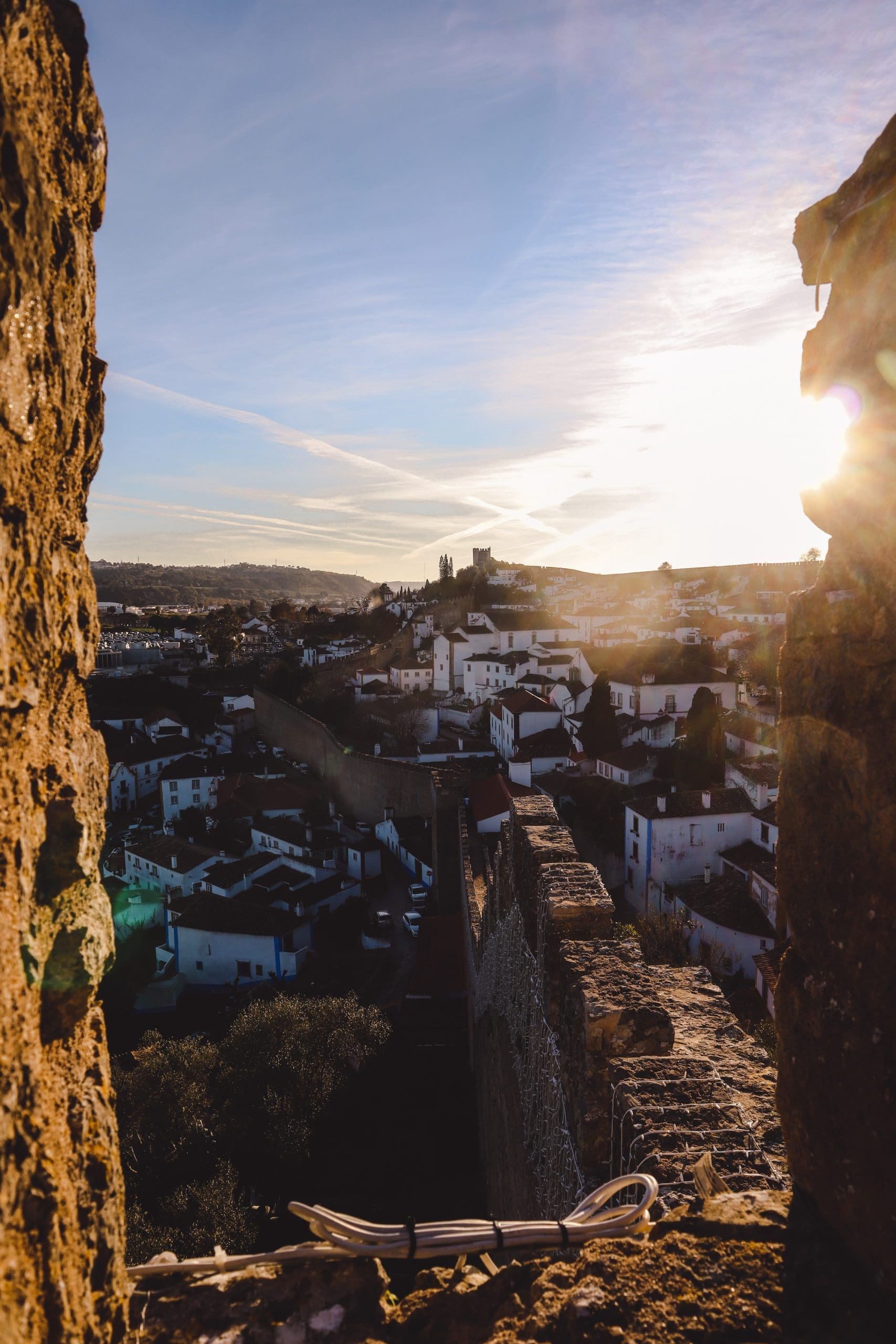
The highlight, quite literally, is the old town wall, still standing in full. It was completed in 1527 and became the town’s main line of defence. Where most towns only have fragments left, here the wall is complete, with battlements, stairs and gates! One of the best things to do in Óbidos is walk along the top. There are several ways up, and the easiest is right by the main gate.
Wandering the lanes should be high on your list too. The old town sits roughly inside the walls and isn’t big, so even though it’s a maze of streets you won’t get lost. The narrow main street runs from the main gate to the castle gate and is where you’ll find most of the shops and restaurants.
How long do you need and where can you park in Óbidos?
Spend one or two days in idyllic Óbidos. You can’t drive into the historic centre inside the walls, so park at this big car park right next to it by the aqueduct. There’s also a motorhome area.
Where to stay in Óbidos
The ultimate place to stay in Óbidos is the castle itself, now a beautiful luxury hotel: Pousada Castelo de Óbidos. A pousada is a state-run hotel in a historic building.
Not quite your budget? Then look for a hotel in the old centre, inside the walls or just outside. We’d recommend Literary Man Hotel in a former convent and Torre de Maneys in another beautiful historic building.

#11 Palaces and castles in Sintra
Sintra is often called the most beautiful place in Portugal, and you’ve probably seen it on Instagram. Why? It’s packed with spectacular palaces and castles.
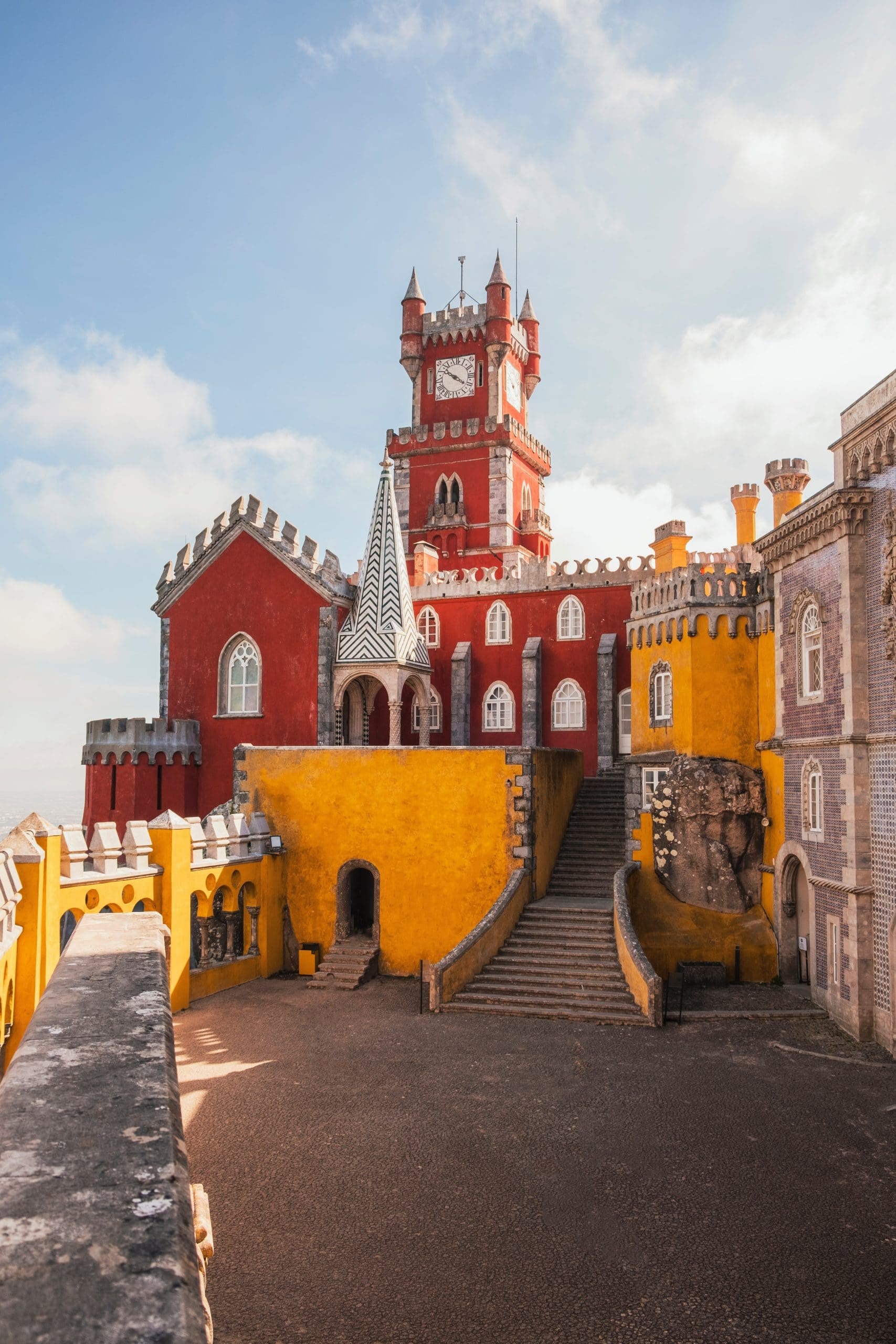
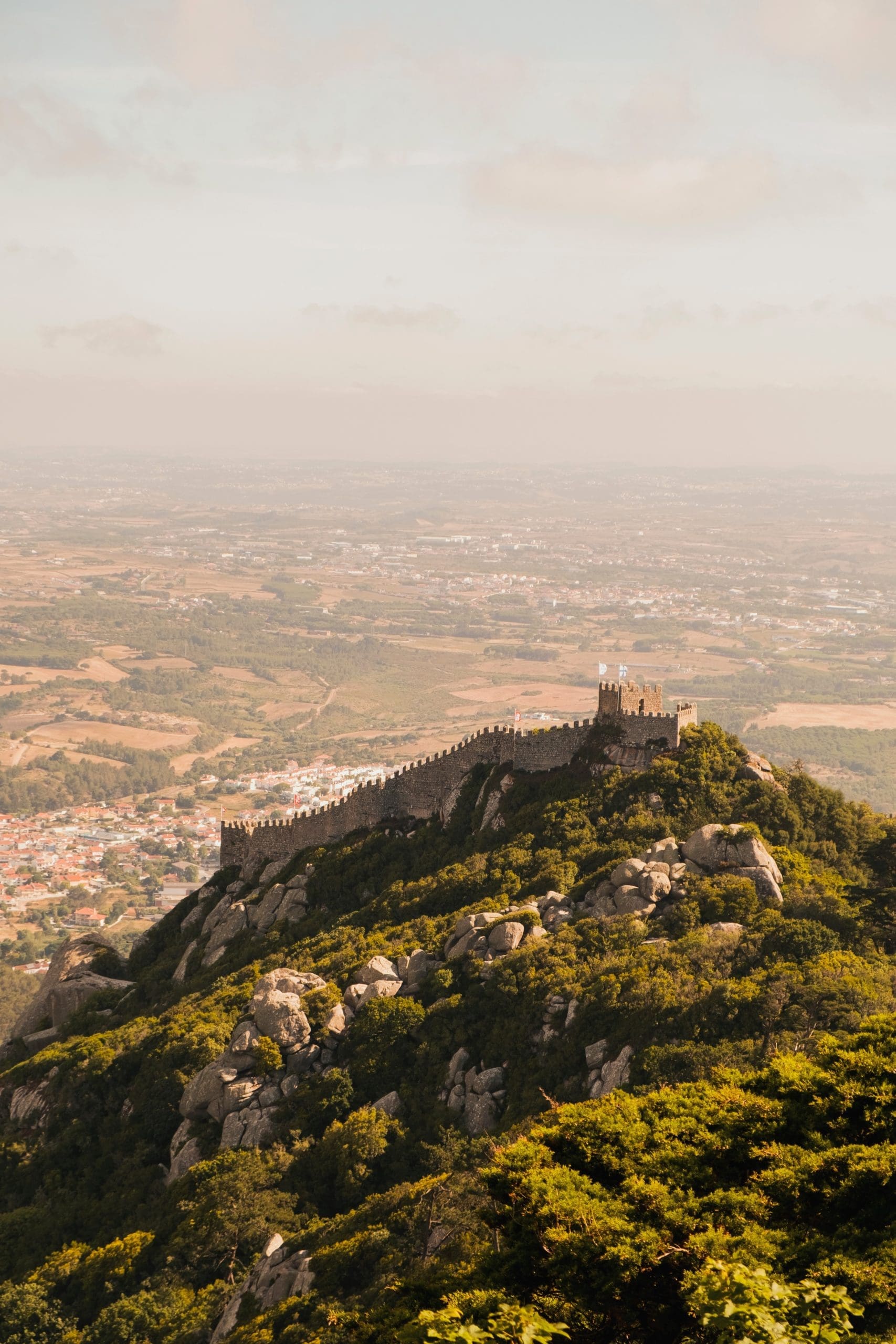
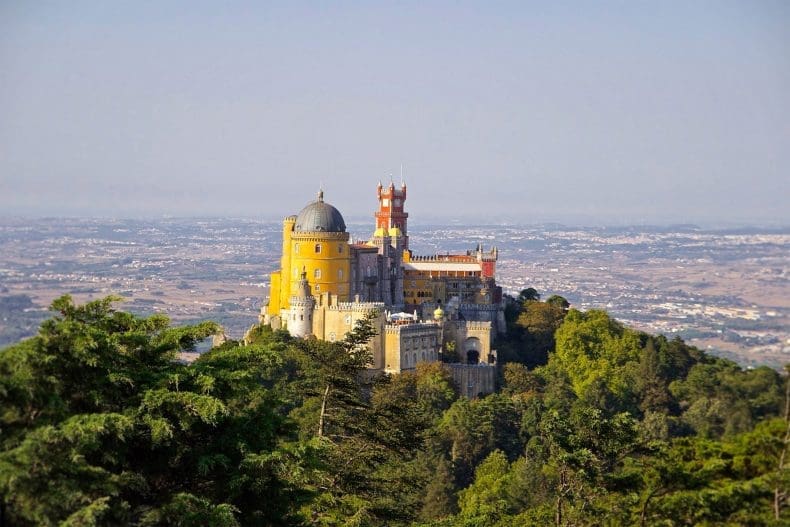
The town itself isn’t much to write home about. You come here for the palaces, and there are plenty to choose from. The most famous is the red and yellow Pena Palace on top of a hill, with sweeping views over the surrounding forest. A little lower on the same hill is the Castelo dos Mouros, the Moorish Castle, whose walls stretch for 450 metres.
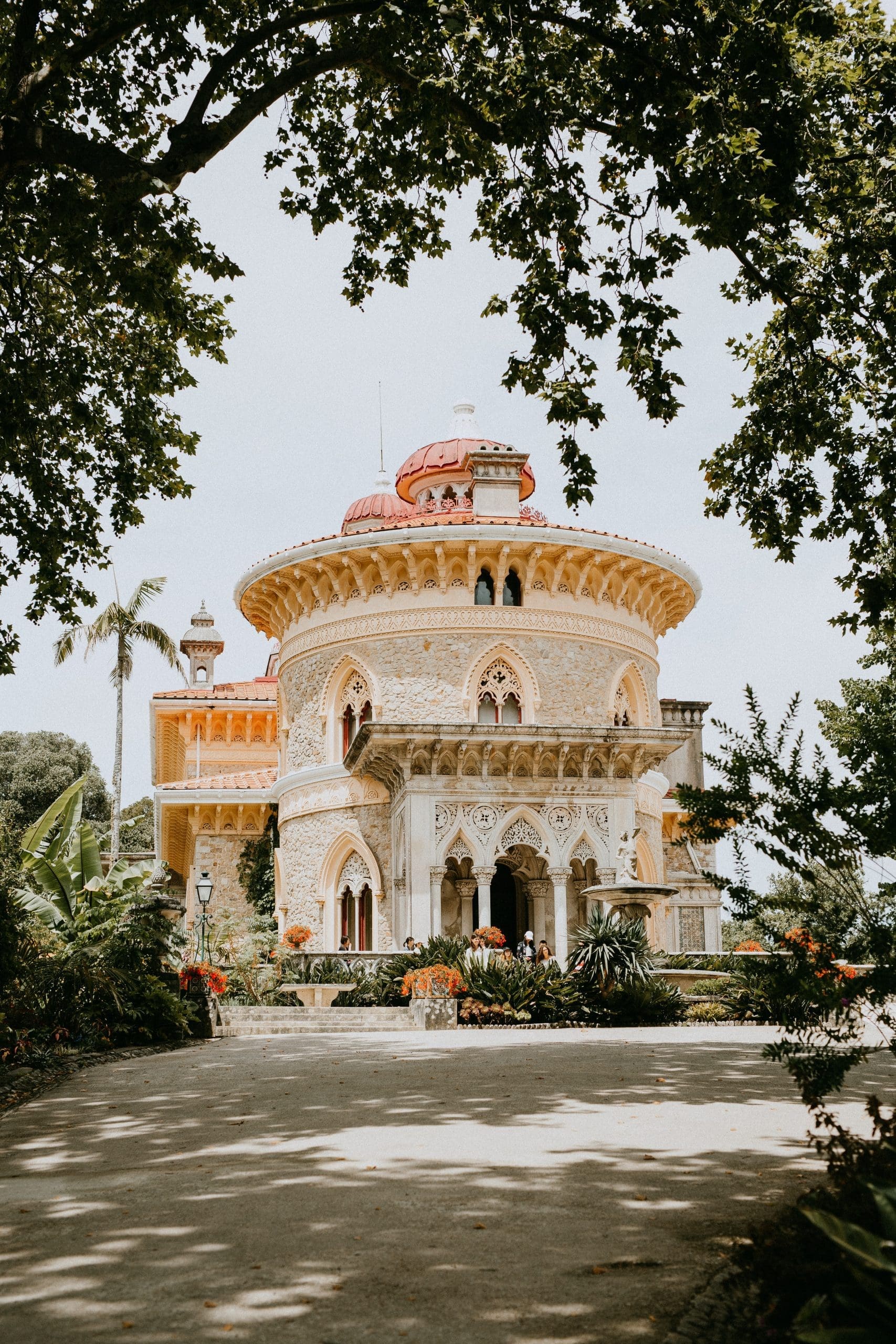
Our favourite palace in Sintra is the Quinta da Regaleira. This palace with its sprawling gardens is a unique mix of styles, and walking through the gardens feels like a theme park full of fairytale buildings, underground tunnels and other surprises. A little further on is another fairytale: Monserrate Palace, like something out of the Arabian Nights. It was built in the nineteenth century with Moorish influences, so expect mosaics and richly decorated arches. Of all the palaces, Monserrate gets the fewest visitors. Still not seen enough? Then add the Palácio Nacional with its unusual chimneys to your list.
→ Book your ticket for the Quinta da Regaleira
Combine Sintra with the coast. Fifteen minutes away is Cabo da Roca, the westernmost point of mainland Europe, with a lighthouse above wild cliffs. Then drive along the coast to Cascais, a pleasant seaside town with an old centre, beaches and the Boca do Inferno, a sea chasm where the waves crash into the rocks. In Cascais we had a delicious vegetarian meal at House of Wonders, which we can really recommend.
→ Discover the 10 best day trips from Lisbon
How long do you need and where can you park in Sintra?
Our advice: choose a few palaces rather than trying to see them all, and give Sintra one or two days. Unless the palaces are top of your bucket list, of course. Then don’t hesitate to stay a few days.
Your rental car won’t get you far in Sintra. The centre is largely car-free, and since 2024 you can no longer park at Pena Palace. Leave your car in one of the car parks in the lower town or by the train station and take bus 434, which loops past the centre, the Moorish Castle and Pena Palace. At Monserrate and the Quinta da Regaleira there’s room for a few cars, for example at this car park. For Pena Palace you buy a ticket online with a fixed time slot, and in summer they often sell out days ahead.
Where to stay in Sintra
Staying the night rather than visiting on a day trip from Lisbon? There’s plenty of choice, although finding somewhere with parking is a challenge. Just outside Sintra, in the village of Colares towards the coast, is Casa Bolacha, a small place with studios with their own kitchen and free parking, a few kilometres from Praia do Cavalo beach.
In Sintra itself, NH Sintra Centro is a good choice. It’s close to the Palácio Nacional de Sintra and one of the few hotels in the centre with its own parking. The rooms are clean and modern with spacious bathrooms, and many look out over Sintra’s green hills. Also well located is Sintra Boutique Hotel, with upmarket rooms and a bus stop right outside for all the palaces.
#12 City break in Lisbon
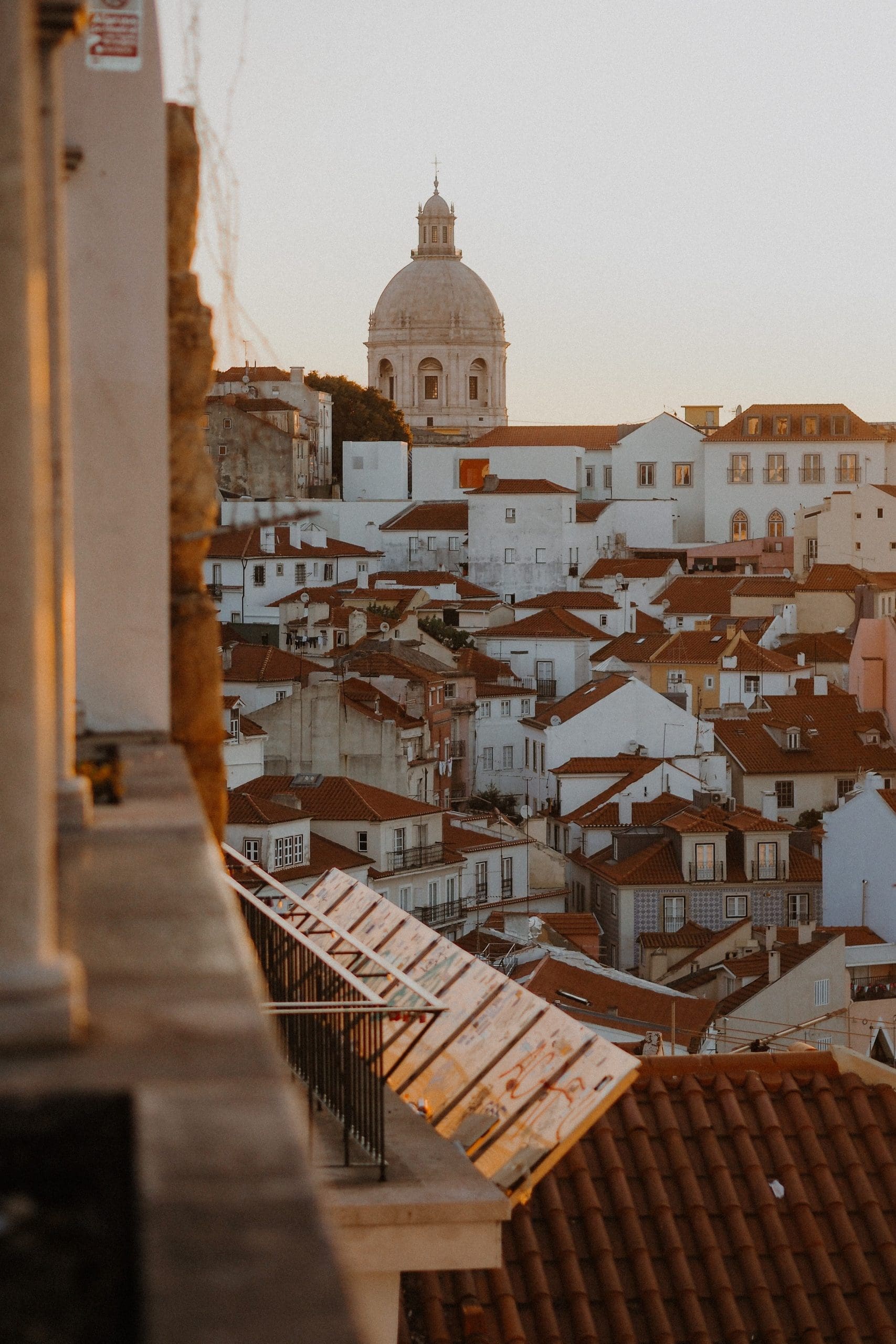
The capital obviously belongs on this road trip. Lisbon is built on several hills, which gives the city its very own character, and every hill is a neighbourhood with its own atmosphere.
Old-fashioned trams rattle up and down those hills and have become icons of the city. Tram 28 is now used more by tourists than locals, as it winds through the narrow streets of the old town like a sightseeing tour.
Another piece of public transport mostly used by visitors is the Santa Justa Lift, which takes you from the lower town up to Bairro Alto. It’s a quick shortcut, but above all a great experience, and the view from the top is fantastic. A hilly city like Lisbon has viewpoints galore, and visiting them is one of the best things to do here. Our favourite was the Miradouro de São Pedro de Alcântara, a small park overlooking the whole city and the castle on the opposite hill.
Besides all the sights, from grand monasteries to the cathedral, Lisbon is a place to relax. The city is full of café terraces, trendy coffee bars, authentic restaurants and lively nightlife. Do include a short city break in your Portugal itinerary.
How long do you need and where can you park in Lisbon?
Give Lisbon at least two, but preferably three or four days, although you could easily spend a week. Parking is really not easy, and finding a place to stay with parking is just as hard. We were very happy with this affordable car park near the old centre. Our campervan just fitted through the gate.
You can’t sleep in your campervan in Lisbon itself, and it’s enforced. Most people with motorhomes choose a campsite or motorhome area outside the city, for example on the Costa da Caparica across the river. From there you’re in the centre in no time by ferry or public transport.
Where to stay in Lisbon
We didn’t find it easy to get a place to stay with parking in Lisbon. In the end we parked our camper at this affordable car park and slept in a hotel nearby, Bairro Alto Suites, with small but stylish rooms with a French balcony.
Other good options are the modern boutique hotel Rossio Garden Hotel, with rooms designed by Portuguese fashion designer João Rolo, the B&B Casa do Mercado Lisboa with bright, stylish rooms, or Casa das Janelas com Vista, a guesthouse in Bairro Alto with individually decorated rooms, its own courtyard and breakfast.

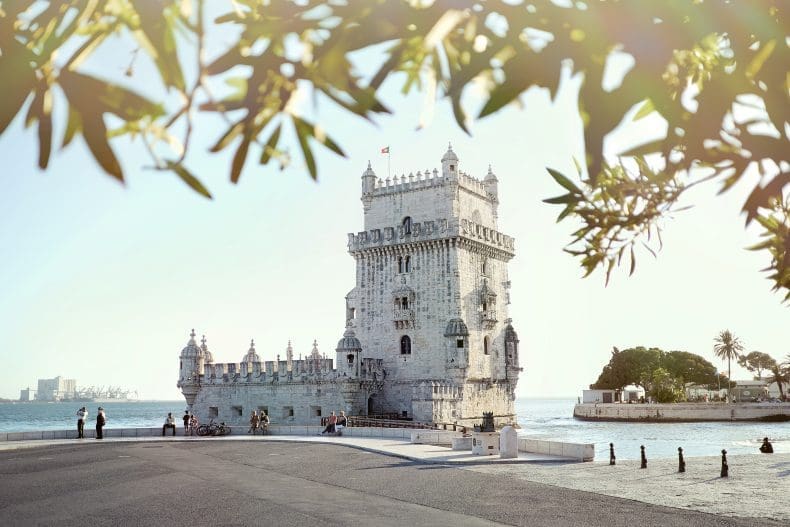
#13 The Vicentine Coast
From Lisbon the route follows the Atlantic coast south to the Algarve. Portugal’s rugged west coast is at its best on the Vicentine Coast, or Costa Vicentina, home to the Southwest Alentejo and Vicentine Coast Natural Park. Expect wild nature and a dramatic coastline.
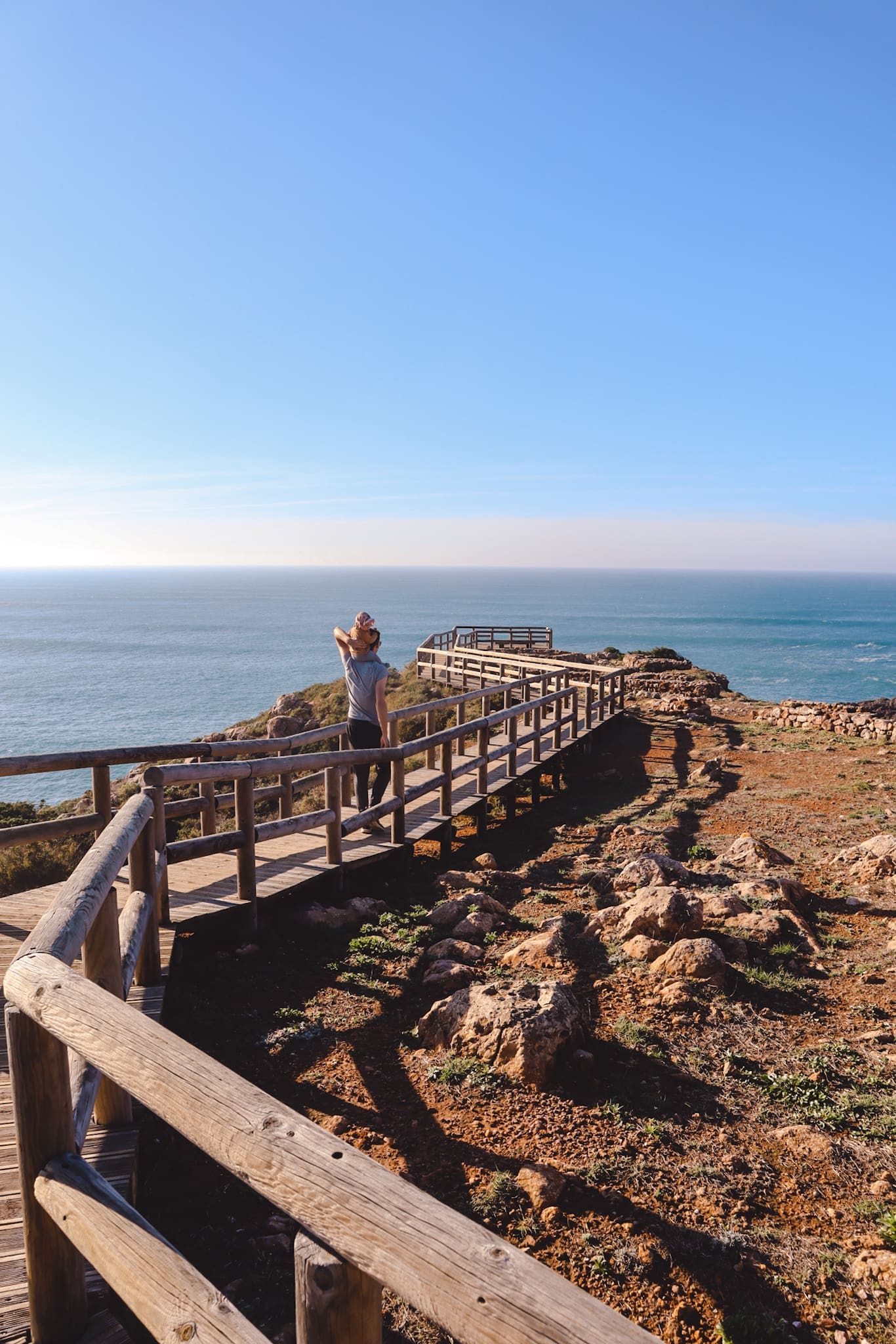
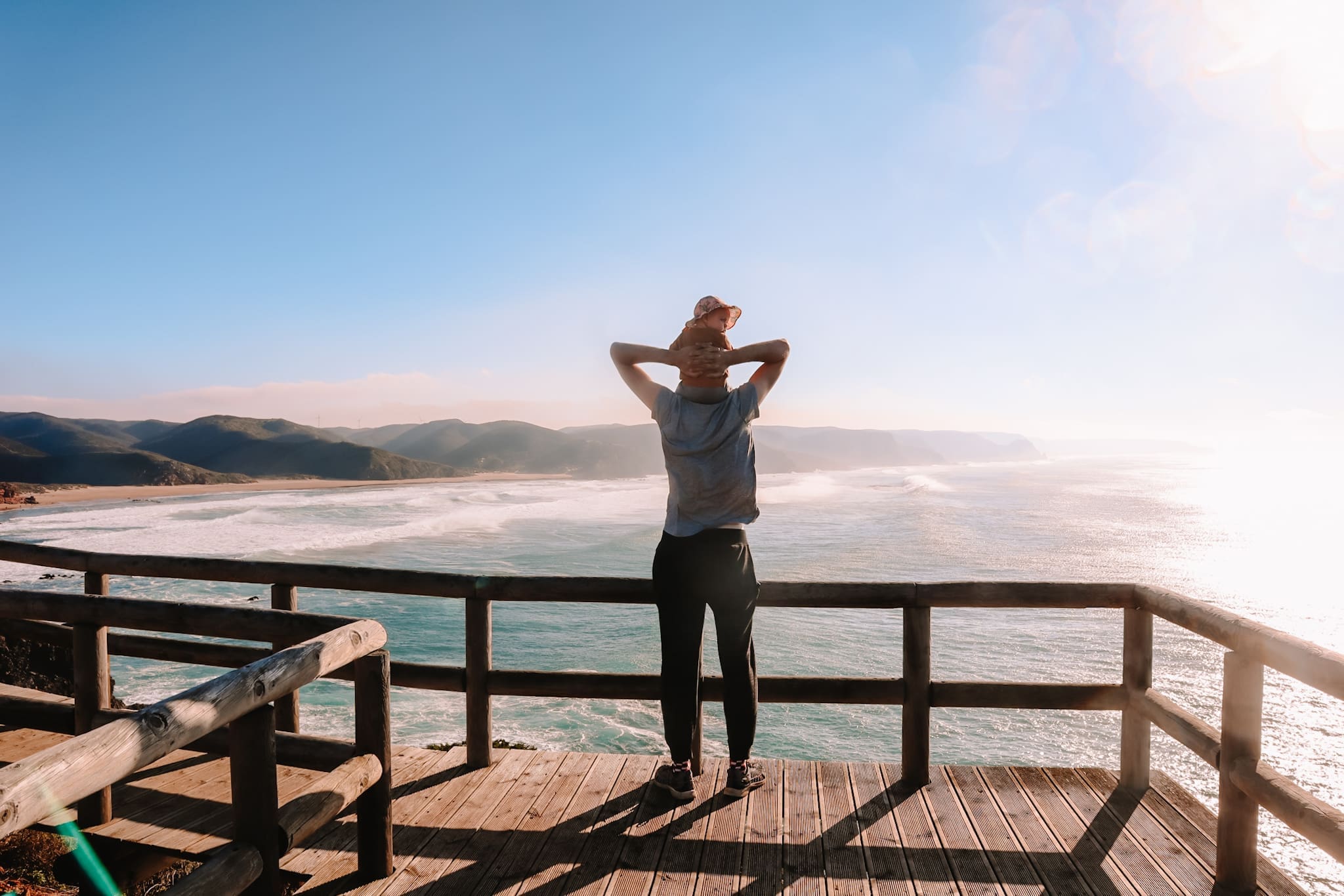
We particularly loved the Pontal da Carrapateira hike, in our opinion the most beautiful hike in the Algarve. Also known as the Trail of Tides, it’s all about the dramatic coastline. The Atlantic pounds against spectacular cliffs here, and the waves make it a paradise for surfers, so you’ll probably spot a few braving the swell. The first part of the walk hugs the coast, with one great viewpoint after another.
Follow the coast all the way and you’ll reach Sagres, the southwestern tip of mainland Europe. It’s a popular spot where you can visit the old fort and watch a spectacular sunset, which draws crowds to the cliffs every evening.
How long do you need and where can you park on the Vicentine Coast?
Allow at least two to three days to follow the coast down from Lisbon. Want to go hiking, relax on the beach or try surfing? Then add a few extra days.
Parking is easy at most beaches and villages. Travelling by campervan? The whole coast lies within the natural park, where you’re not allowed to sleep in your camper, and there are strict checks. So choose a campsite or an official motorhome area in one of the villages along the coast.
Where to stay on the Vicentine Coast
Most accommodation on the Vicentine Coast is in the south, around Sagres and Vila do Bispo. In Sagres there’s Mareta View, a boutique B&B overlooking Mareta beach, and in Vila do Bispo two lovely B&Bs: Pure Flor de Esteva and Pure Fonte Velha.
Deeper into the natural park is Monte Da Vilarinha, with panoramic views over the park and a beautiful garden to wander in. Another great option inside the park is Praia do Canal Nature Resort, with an outdoor pool, garden, bar and hammam.

#14 Lagos in the Algarve
The last stop on this road trip is our favourite place in the Algarve. Lagos is one of the oldest towns in the region and the place where the great voyages of discovery set off, starting Portugal’s golden age. You can still see that history in the old town, a maze of pretty streets, combined with trendy restaurants, impressive cliffs and idyllic beaches. If you can only visit one place in the Algarve, make it Lagos.
Read more: all our tips for Lagos.
The historic centre is full of monuments, old churches and cobbled streets, and it’s the prettiest part of Lagos. Wandering the old streets is a must, and keep an eye out for the street art, as the centre is like an open-air gallery. Mix it up with time on one of the town beaches. Our favourite is Praia dos Estudantes, surrounded by orange cliffs and with a little stone bridge, the Ponte Romana de Lagos.
One of the best things to do in Lagos is exploring the Ponte da Piedade, golden rock formations with arches and pinnacles rising out of a deep blue sea. You can look down from the viewpoint, but do take the steps down for a closer view. The best view of all? From the water, of course. A kayak tour under the rock arches is an absolute must.
Driving back from Lagos to Faro? Then the most beautiful stretch of the Algarve coast is right on your way. Around Carvoeiro and Benagil you’ll find the famous golden cliffs, with beaches like Praia da Marinha and the Benagil sea cave, best seen from the water on a boat trip or kayak tour. Plan at least a day here on the way back.
→ Discover the 10 best beaches in the Algarve
→ Discover the 10 best things to do in Carvoeiro
How long do you need and where can you park in Lagos?
Allow at least three days for Lagos and the rest of the Algarve.
Luckily, parking in Lagos is easy. There’s a big free car park here in the heart of Lagos, right next to the town walls, with all the sights around the corner.
You can easily leave your campervan there during the day too. For the night, head to Trindade campsite on the edge of the old town. The facilities are a bit dated, but the location is excellent. We spent two nights there.
Where to stay in Lagos
When choosing a place to stay in Lagos, first decide which part of town you’d like. Roughly speaking there are five areas: around the three beaches, the marina and the old town. We’d go for the old town, where you step out of your hotel straight onto the charming historic streets and walk to the best restaurants and breakfast spots.
Looking for luxury in the old town, with a pool, bright spacious rooms and a sunny terrace? Then book a room at Casa Mãe. A smaller option is VI MAR Guest House, an adults-only guesthouse 200 metres from the centre. The old town also has small boutique hotels, and we really recommend Casa Luma, where the owners welcome you personally and make you feel at home. All the rooms are bright, stylish and clean.


The end: back to Faro in the Algarve
Time to head back to Faro and wrap up your Portugal road trip. Enjoy one last day in Faro, or drop off your rental car or camper and catch your flight home.
More tips for your trip to Portugal
 Our pickHotels in Portugal: from a quinta among the vineyards to a boutique hotel in the heart of Porto or Lisbon
 Portugal was made for road trips. Rent a car at Lisbon, Porto or Faro airport with Discover Cars and compare the big rental companies in one go.
 Fancy doing it by camper, like we did? Rent a campervan in Portugal with Campervan Planet.
 Prefer everything arranged? Browse Portugal tours on TourRadar.
 No flight yet? Compare flights to Lisbon or Porto.
 The Douro Valley is one of our favourite places in Portugal. No car? Join a Douro Valley day trip from Porto on GetYourGuide.
 Discover all our blogs about Portugal


