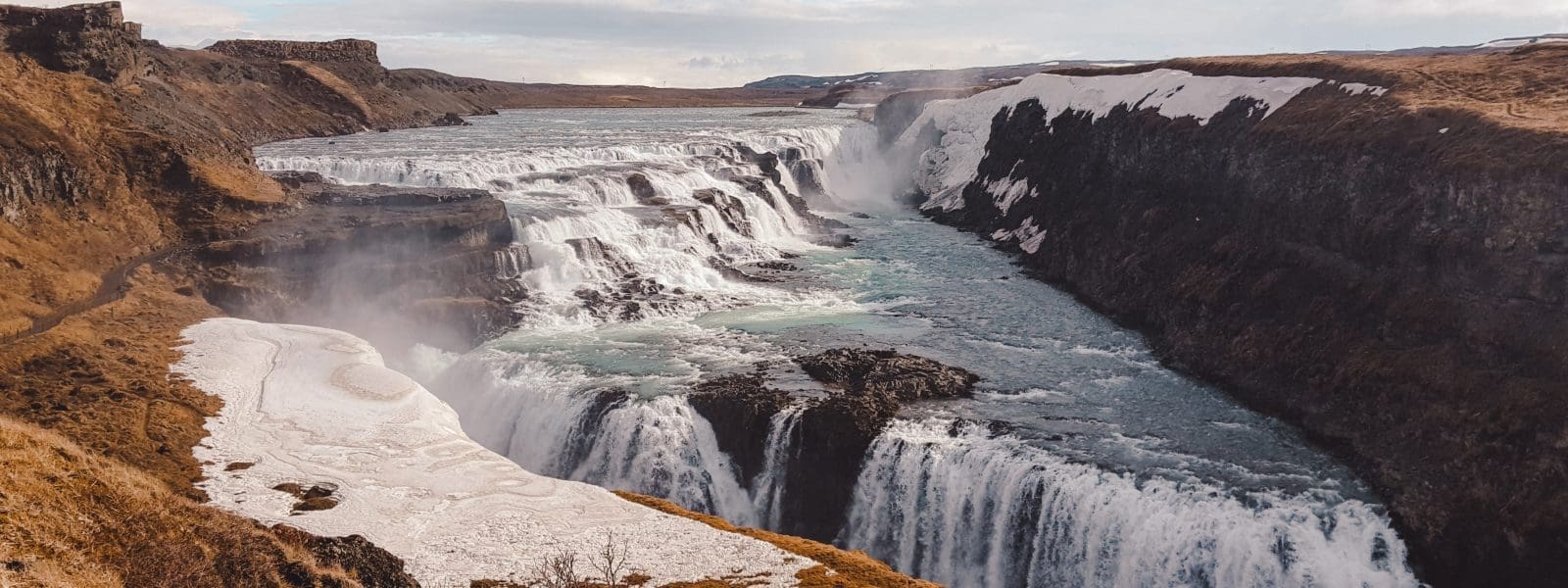
The Golden Circle might just be Iceland’s most famous route. This golden loop close to Reykjavík takes you past three of the country’s most spectacular natural wonders: the tectonic plates in Thingvellir National Park, the Geysir and Strokkur geysers and the mighty Gullfoss waterfall. Iceland is known as the land of fire and ice, and in this area you’ll instantly see why. In this guide, you’ll find out how best to tackle the route, what to see along the way and where to stay, plus a map of the whole loop.

What is the Golden Circle?
The Golden Circle is a loop past some of Iceland’s best-known sights.
It’s not one fixed road, but rather a name for the drive past the three big highlights: Thingvellir, Geysir and Gullfoss. There are lots more great spots along the way, and several roads to choose from. What you won’t find are big towns to use as a base. That’s why most people do the Golden Circle as a day trip from Reykjavík, but we recommend giving it at least two days.
Good to know: don’t confuse the Golden Circle with the Ring Road. The Golden Circle is a loop near Reykjavík, while the Ring Road is the main road that goes all the way around Iceland.


Where is the Golden Circle in Iceland?
The Golden Circle is in Southwest Iceland. Reykjavík is close by, which is why so many people visit it on a day trip from the capital.
Because most of the sights are concentrated in the southwest, the Golden Circle is close to other beautiful places in Iceland. Plenty of travelers continue on to the south coast afterwards, with its black sand beaches, the Seljalandsfoss and Skógafoss waterfalls and the abandoned plane wreck.
→ Discover the 5 most beautiful black sand beaches in Iceland
→ Discover 4 Iceland waterfalls in one road trip


Should you drive the Golden Circle yourself or take a tour?
The big question for many travelers is whether to drive the route themselves or book a Golden Circle tour. From Reykjavík or Keflavík Airport, where most rental companies are based, it’s an easy drive to do yourself. But there are also plenty of tours that take you past all the highlights in a single day from the capital.
Rather not drive? Then go for a day trip by tour bus, which also stops in Hveragerði and at Kerið crater, a small-group day tour or a day trip combining the Golden Circle and the Blue Lagoon, with lagoon entry included.
Our advice: rent a car or camper and drive the Golden Circle yourself. You won’t be tied to a tour schedule, and you can stop at less touristy spots too. Many of the highlights are in areas with great hikes past even more natural wonders. The route is about 250 kilometers (155 miles), so it’s doable in a day, but you’ll get so much more out of it with two.
When renting a car in Iceland, make sure you’re properly insured. The roads are generally fine, but gravel and sandstorms can cause damage, and good cover means fewer worries on the road. On Discover Cars you can easily compare rental companies and add full coverage.


Where to stay on the Golden Circle
We recommend spending at least two days on the Golden Circle and staying the night. That’s exactly what I did, in a small rented camper. I slept at a campsite near the geysers, so I got to Geysir late in the day and to Gullfoss early the next morning. Both were lovely and quiet, and so much more relaxed than ticking off the whole Golden Circle in a day. Plus, it gives you time for the lesser-known stops.
You won’t find any big towns on the Golden Circle (to be fair, Iceland barely has any outside Reykjavík). What you will find is plenty of places to stay, and a few of them are truly special. Here are our favorites, and for even more options, check out our guide on where to stay in the Golden Circle.


Camping on the Golden Circle
Iceland is an amazing destination for a camping trip. It was my very first time in a camper, and I’ve since spent many months traveling in one. Camping in Iceland is one of the best ways to explore the island, including the Golden Circle. Near the geysers you’ll find Skjól campsite and the Geysir Campsite, next to Laugarvatn Hot Springs there’s the Laugarvatn Campsite, and there are two campsites at Thingvellir National Park too.
Traveling in spring? Keep in mind that many campsites in Iceland don’t open until around May 1. I ran into a closed campsite a few times myself.
In Iceland, you can rent a camper from Campeasy, for example. They have 4×4 campers too, which come in handy if you want to head into the highlands.
→ Check out campervans at Campeasy
On the map below, you’ll find all the campsites on the Golden Circle. The black stars mark the sights along the route, so you can easily see which campsites are closest to each one.
Cabins and hotels on the Golden Circle
#1 Austurey Cottages (Laugarvatn) for cute cottages with lake views, close to the Laugarvatn hot springs. Each cottage has a kitchenette and a terrace looking out over the mountains, and there are lovely walks right on your doorstep.
#2 Náttúra Yurtel (Haukadalur) for a unique stay in yurts just 4 kilometers from the geysers. Guests rave about the luxurious tents, the breakfast and the views of the erupting geysers.
#3 Blue View Cabin (Reykholt) for cozy turf-roofed cabins with a private hot tub in a secluded spot on the Golden Circle. On clear nights, you might even see the Northern Lights from your cabin, and if this one’s fully booked, there are more Blue View Cabins, each with its own booking page.
#4 INNI Boutique Apartments (Hveragerði) for stylish apartments with their own kitchen, handy in a country with pricey restaurants. Guests love the hot tub, the comfy beds and the great location.
#5 Kerbyggd (Selfoss) for luxury cabins with modern architecture in a vast lava landscape, complete with a fully equipped kitchen and a private hot tub. On clear nights, you can see the Northern Lights from here.


The Golden Circle route
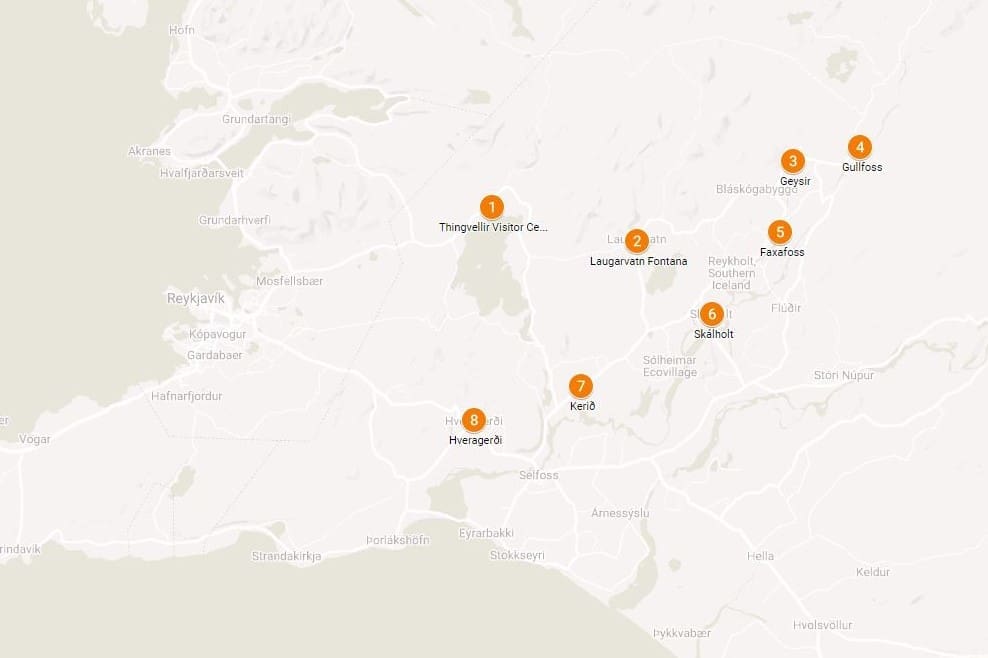
On the map below, you’ll see the Golden Circle route with the 8 best stops. First up are the three classic highlights, followed by the 5 bonus stops we’ve added to the route.
The famous sights: Thingvellir, Geysir and Gullfoss
#1 The tectonic plates in Thingvellir National Park
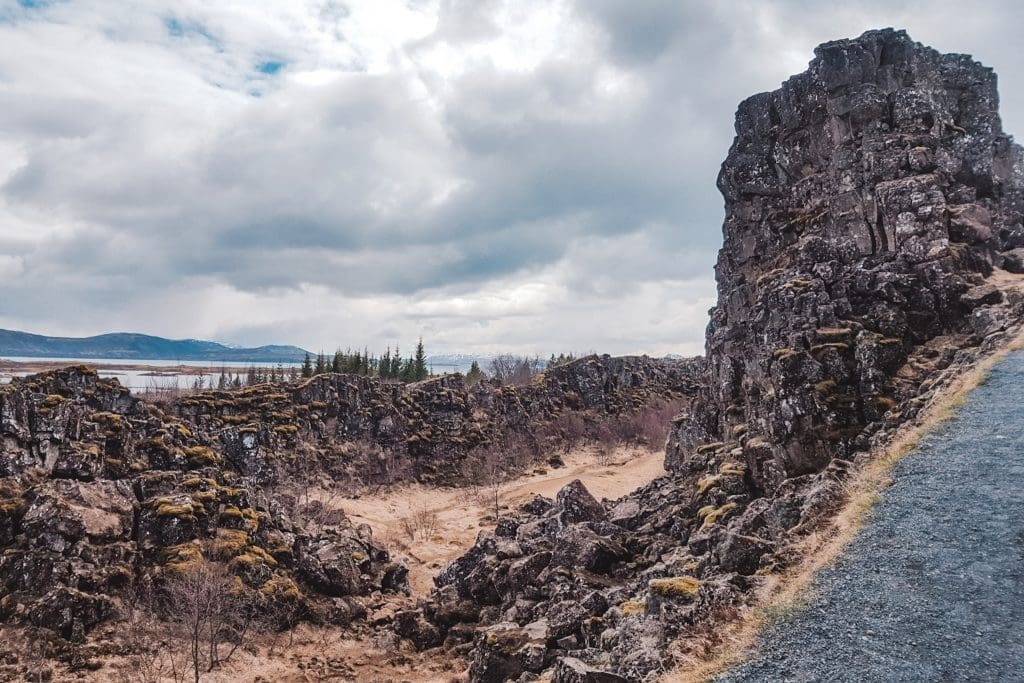
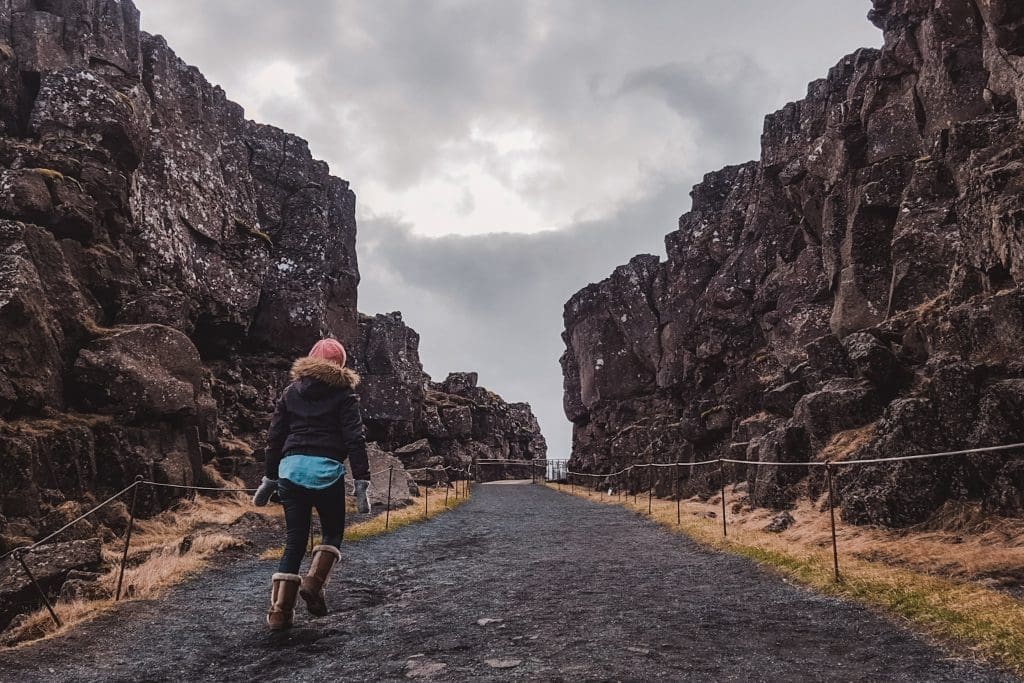
Thingvellir, or rather Þingvellir National Park, is often the first big stop on the Golden Circle. This is where the North American and Eurasian tectonic plates are slowly drifting apart, by 1 to 2 centimeters a year. You obviously won’t notice that during your visit, but you’ll see the results everywhere: fissures, cracks, pools and faults. It’s a special place historically too, as Iceland’s parliament met here from the year 930. The park is a UNESCO World Heritage Site.
→ Discover how to snorkel Silfra, between two continents
→ See snorkeling tours in Silfra
#2 The Geysir and Strokkur geysers in Haukadalur
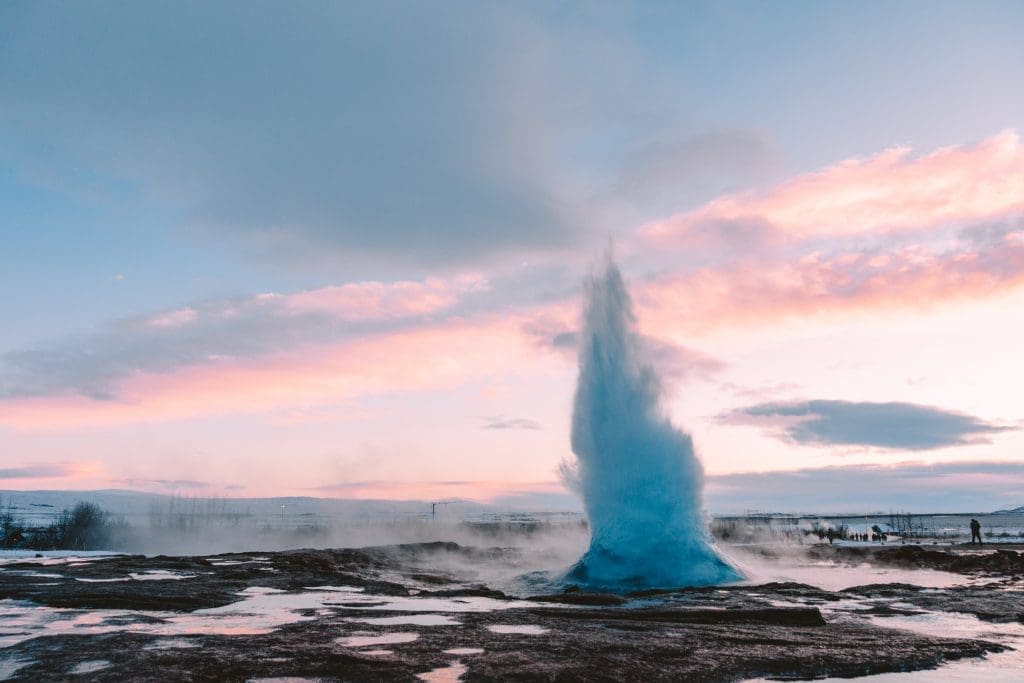
In the Haukadalur geothermal area, everything bubbles, hisses and steams. You’ll walk past hot springs, warm streams and steaming ground to Iceland’s two most famous geysers: Geysir and Strokkur.
The Great Geysir gave every geyser in the world its name, but these days it hardly ever erupts. Luckily, the active Strokkur is right next to it, and that one goes off every few minutes. I’d expected it to be much busier, but late in the day it was really quiet.
→ Discover everything about the geysers in Iceland


#3 Gullfoss waterfall
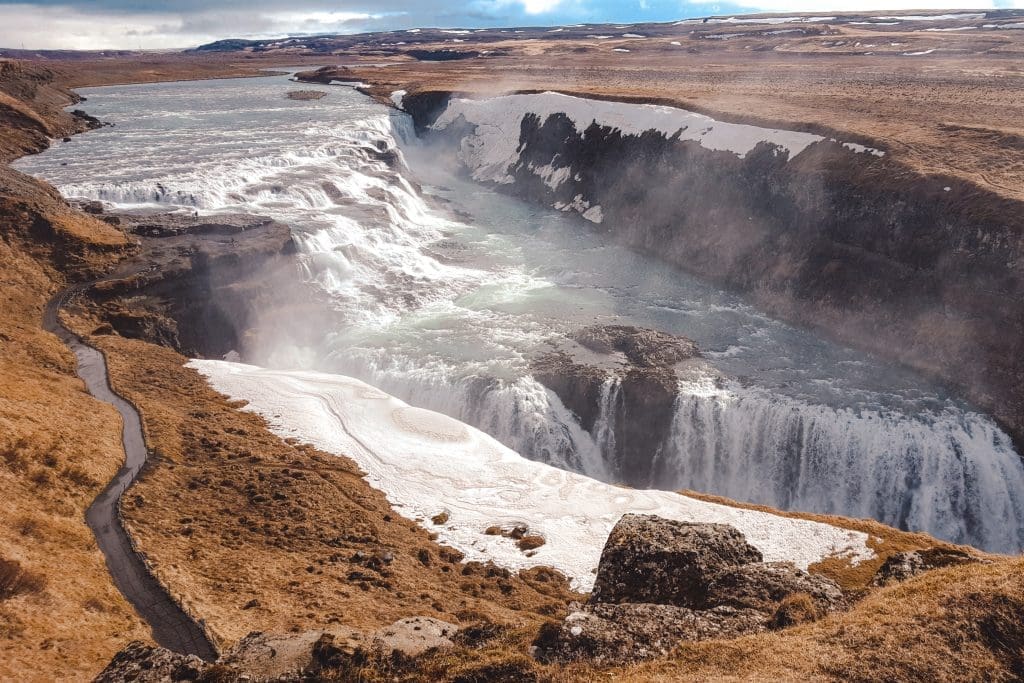
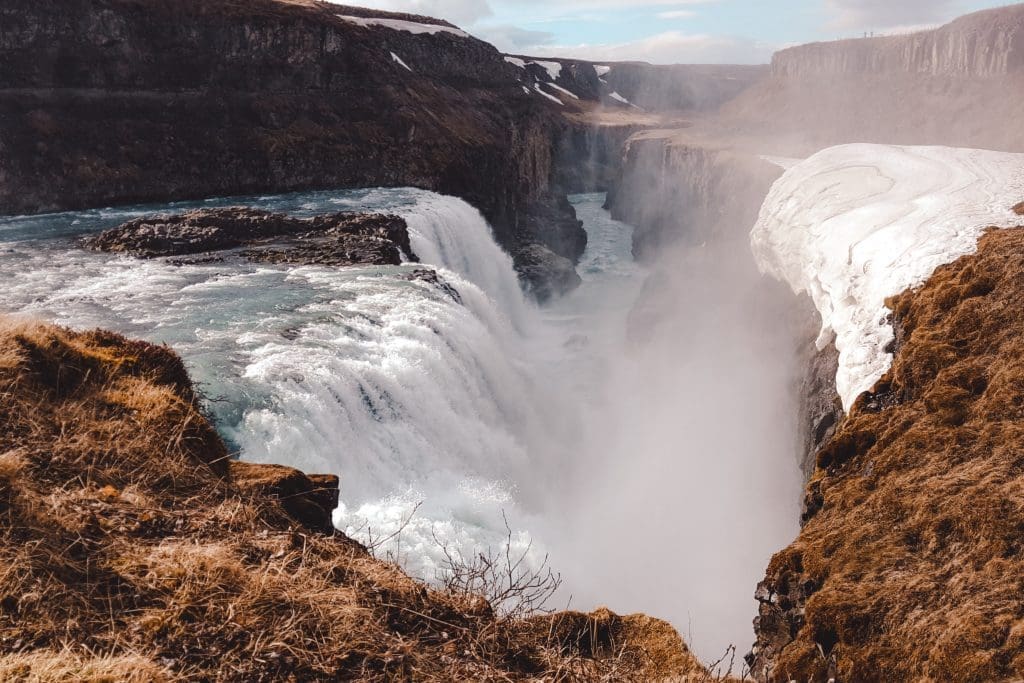
Gullfoss is one of Iceland’s best-known and most visited waterfalls, and the farthest point of the Golden Circle. Here the Hvítá river thunders down two tiers into a narrow gorge with incredible force.
The water hits with such force that the spray shoots high into the air. The paths around the gorge take you so close that you’ll feel the mist on your face, and when the sun’s out you’ll often see rainbows in the spray. You can get moments like that on the road too: on the Golden Circle, I drove under a rainbow that arched right over the road.

More sights on the Golden Circle route
#1 Kerið crater lake
Kerið is a deep blue lake inside a reddish-brown crater. Thousands of years ago, a volcano collapsed here, and the crater slowly filled up with groundwater. You can easily walk around the rim and head down to the water’s edge. It’s one of the few places in Iceland where you pay an entrance fee.
#2 Hveragerði hot springs
You might know the Blue Lagoon, but Iceland is full of hot springs. Near the little town of Hveragerði, you can bathe in a warm river with no spa or ticket desk in sight: the Reykjadalur Thermal River. You get there via a beautiful hike through a steaming valley.
#3 Faxi waterfall
Faxi might not be Iceland’s most impressive waterfall, but at 80 meters wide and 8 meters high it’s definitely worth a stop. It looks a bit like a mini version of its famous neighbor Gullfoss.
#4 Laugarvatn hot springs
The village of Laugarvatn is just off the main route, and here too you’ll find natural hot springs. On the edge of the lake is the Laugarvatn Fontana spa, where you can sit in warm pools looking out over the water.
#5 Skálholt church
Personally, we don’t think Skálholt church is the prettiest compared to all the picturesque little churches around the country. Still, it’s worth a quick stop, as it’s one of Iceland’s larger churches and the site of the island’s first cathedral.
More tips for your trip to the Golden Circle
 Our pickHotels on the Golden Circle: stay at least one night, right between the waterfalls and geysers
 The Golden Circle is an easy self-drive from Keflavík. Rent a car with Discover Cars and compare the big rental companies in one go.
 Fancy doing it by camper, like we did? Rent a campervan from CampEasy near Keflavík airport, 4x4s included for the rougher roads.
 Prefer everything arranged? Browse Iceland tours on TourRadar.
 No flight yet? Compare flights to Keflavík, Iceland's international airport near Reykjavík.
 Fancy snorkelling between two continents? Book a Silfra snorkelling tour with GetYourGuide.
 Discover all our blogs about Iceland


