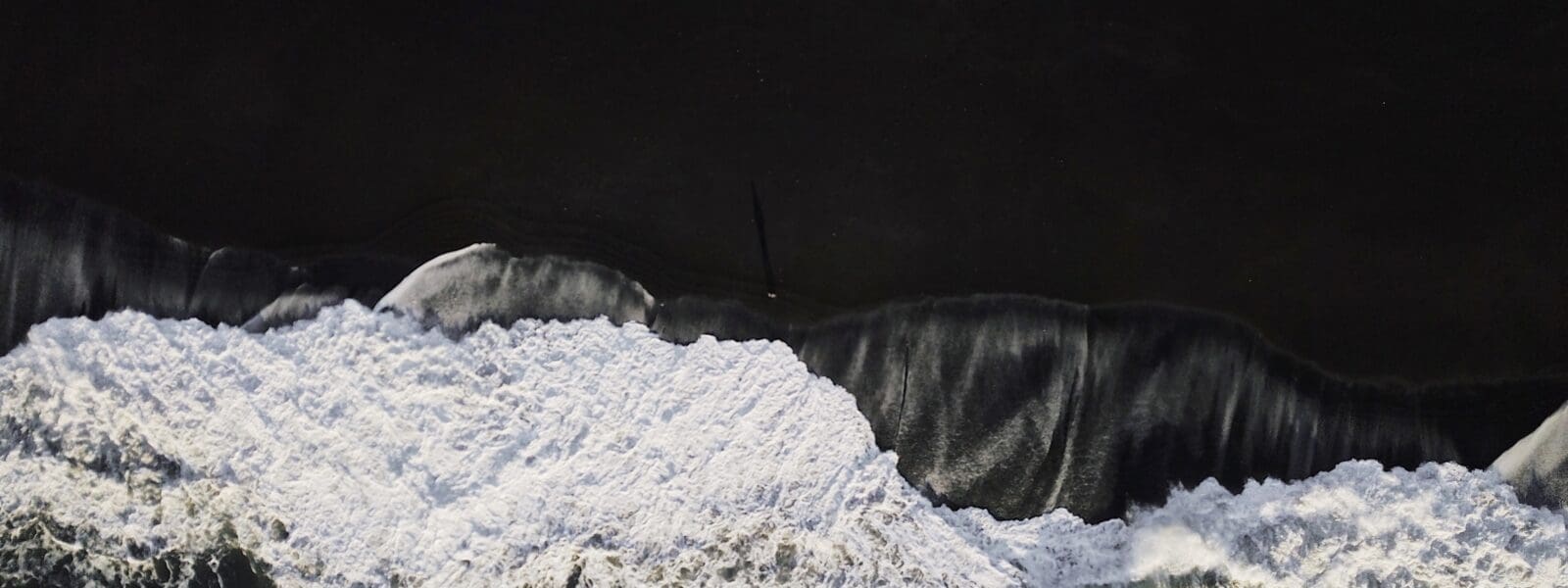
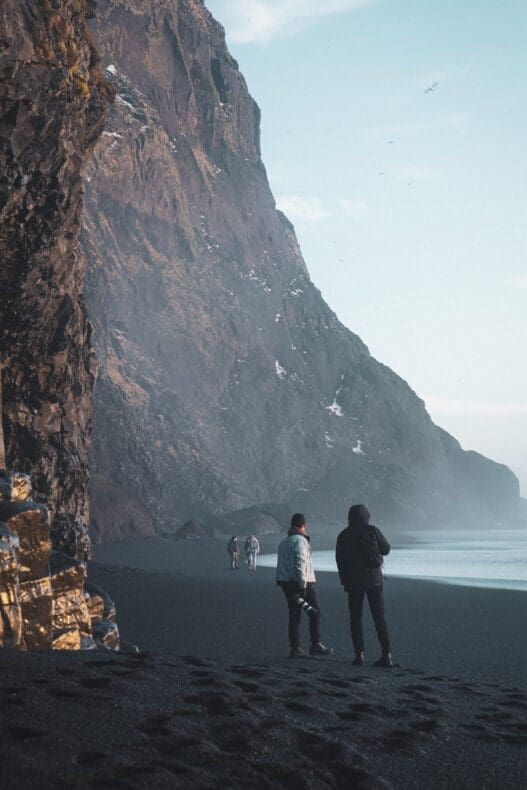
Picture a beach on an island and you’ll probably think of white sand and swaying palm trees. Not in Iceland. In this land of fire and ice, the beaches are pitch black, with basalt columns, jagged sea stacks and sometimes even chunks of glacier ice washed up on the sand. It looks almost unreal.
Reynisfjara is the most famous black sand beach in Iceland, but the south coast has plenty more. So where exactly are Iceland’s black sand beaches, why is the sand black in the first place, and which ones are worth the drive? Let’s find out.

Where are the black sand beaches in Iceland?
Most of Iceland’s black sand beaches are on the south coast. The little village of Vík in South Iceland makes the perfect base, because black sand stretches for miles along the coast both east and west of town.
Every beach in this blog is just off the Ring Road, the main road that loops around the island. With a rental car you can easily tick them off in a row, with stops at waterfalls like Seljalandsfoss and Skógafoss along the way.
Our tip: book your rental car through Discover Cars. It compares all the big rental companies in one go, so you can easily find the best deal.
Why are Iceland’s beaches black?
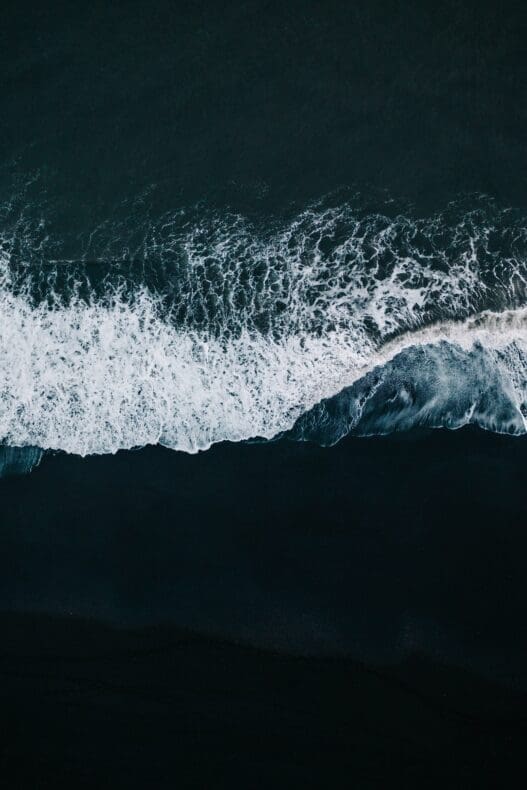
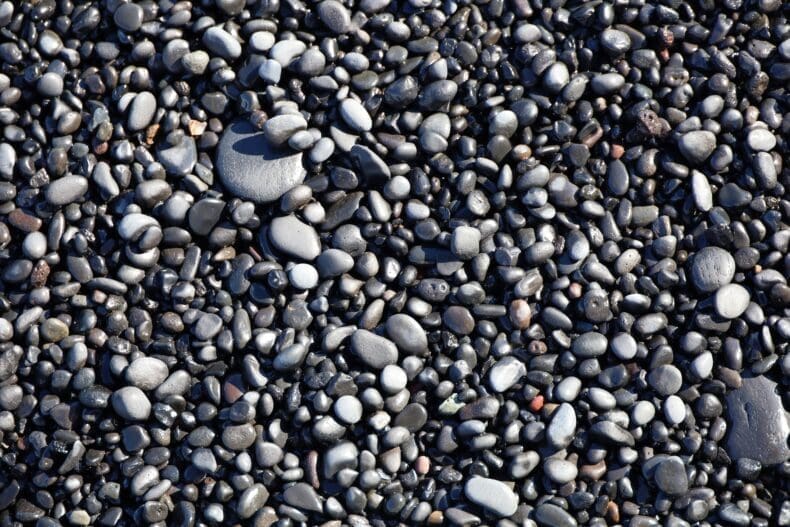
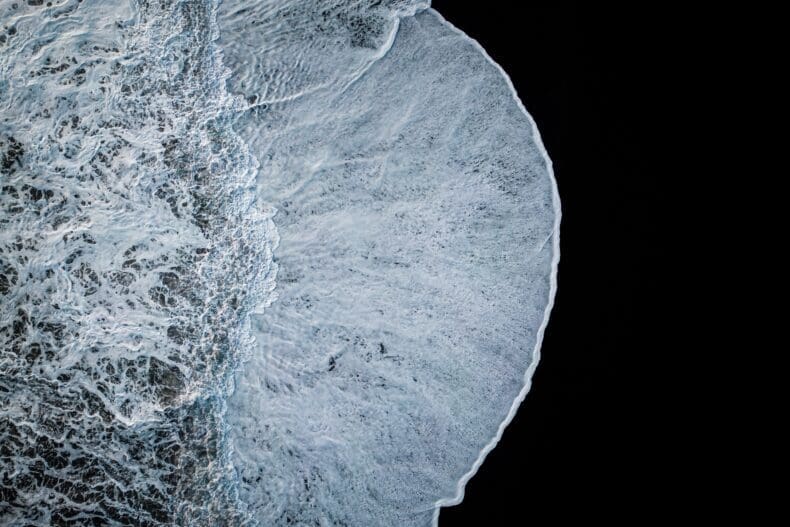
Blame the volcanoes. South Iceland is full of them, many hidden under huge glacier ice caps, and they’re responsible for the black cliffs, the black rocks and the black sand. It’s all basalt, a volcanic rock that forms when lava cools and hardens. Over thousands of years, wind and waves grind that basalt down into the smooth pebbles and fine sand Iceland’s black beaches are known for.
Glacial rivers do their bit too, carrying huge amounts of volcanic grit down to the sea. That’s how the vast black plains Icelanders call ‘sandur’ were formed, like Sólheimasandur.
Are Iceland’s black sand beaches dangerous?
Fancy a swim? Forget it. The water is freezing, the currents are strong and the waves are unpredictable. The biggest danger is the infamous sneaker waves: waves that suddenly surge much further up the beach than the ones before. They can drag you into the sea in seconds, and sadly that has ended in tragedy at Reynisfjara more than once.
That’s why there’s a warning light system along the path from the Reynisfjara car park. When the yellow light is on, stay out of the yellow zone near the waterline. When it’s red, a gate closes and you can’t go further than the viewpoint; the basalt columns and the cave are off limits completely. You can check the current light on the SafeTravel website before you go.
Even when the sea looks calm, keep well back from the water, never turn your back on the waves and keep the kids close. That goes for every black beach on the south coast, by the way.
The best black sand beaches in Iceland
#1 Reynisfjara Black Sand Beach
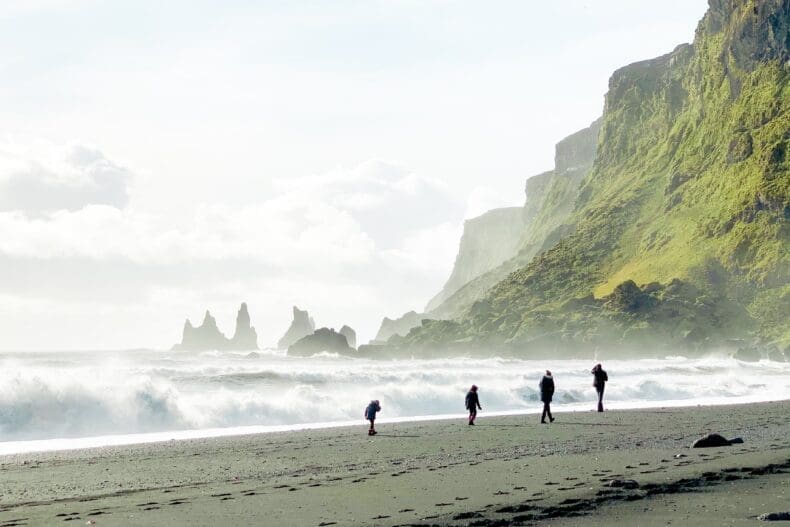
The most beautiful black beach in Iceland? That has to be Reynisfjara, between the village of Vík and the Dyrhólaey headland. It’s one of the top sights in Iceland, and not just because of the black sand. It’s the wild rock formations along the shore that steal the show.
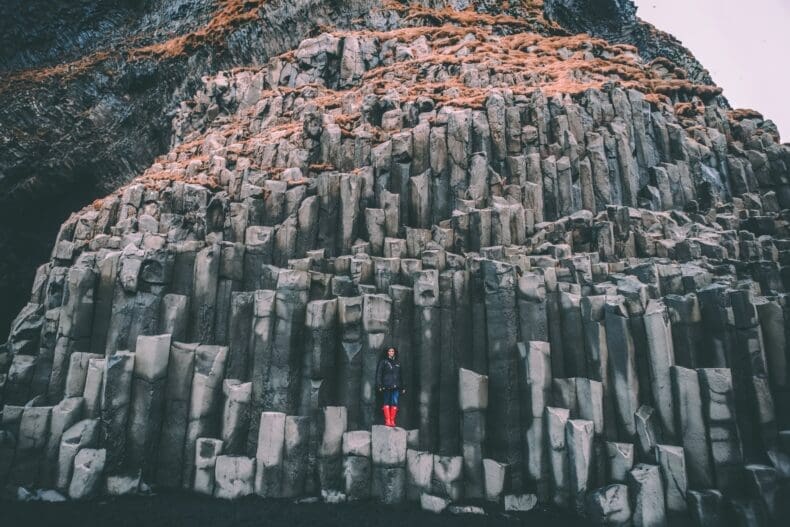
Right on the beach rise the Garðar basalt cliffs, which look like something from another planet. When lava cools, it shrinks and cracks, and here those cracks created rows of hexagonal columns in different heights, like a giant volcanic pipe organ. Tucked into the same rocks is Hálsanefshellir cave, with a ceiling of twisted basalt.
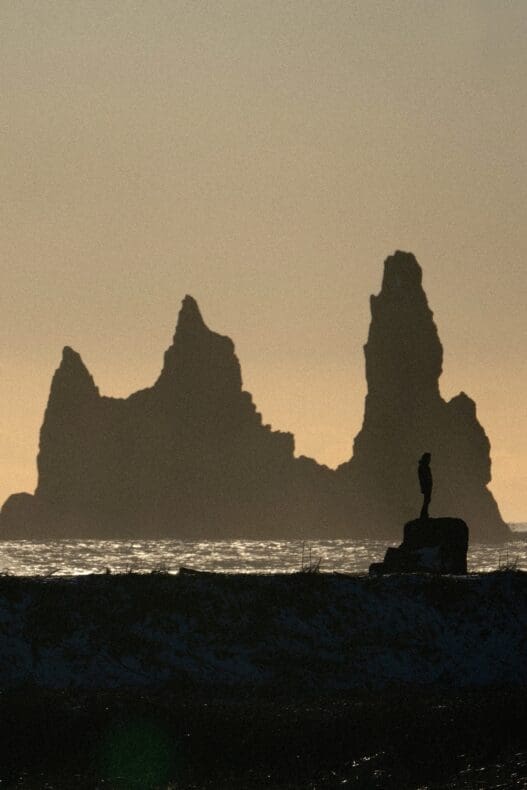
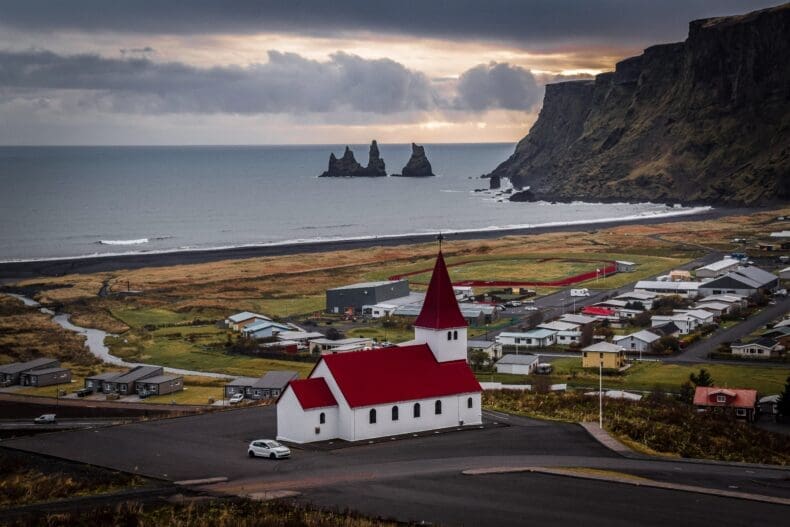
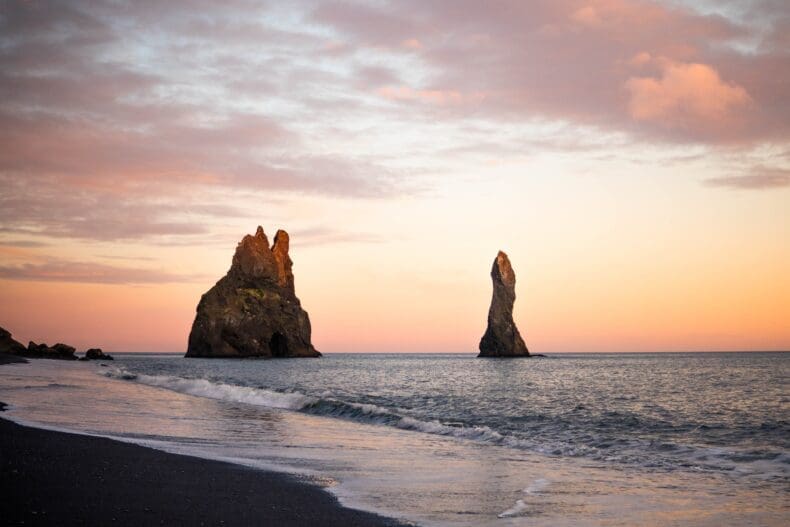
From the beach you look out over the Reynisdrangar, the jagged sea stacks just offshore, with the Dyrhólaey arch further along the coast. According to Icelandic folklore, the Reynisdrangar are trolls who tried to drag a ship ashore and turned to stone when the sun came up. The less exciting truth: they’re what’s left of the cliffs of Reynisfjall mountain, worn away by the sea over the centuries. The tallest one is a whopping 66 metres high.
Don’t expect Reynisfjara to look exactly like the photos, though. In early 2026, weeks of storms and persistent easterly winds stripped away much of the sand, and part of the slope beneath Reynisfjall collapsed. Around the basalt columns, mostly boulders and steep banks were left. A good chunk of the sand has since washed back, but the shoreline keeps on changing.
#2 Vík Black Sand Beach
From Vík it’s a short drive to black beaches like Reynisfjara and Sólheimasandur, but the village has a black beach of its own too. Take one look at the dark cliffs around you and it’s no wonder the sand here is just as black.
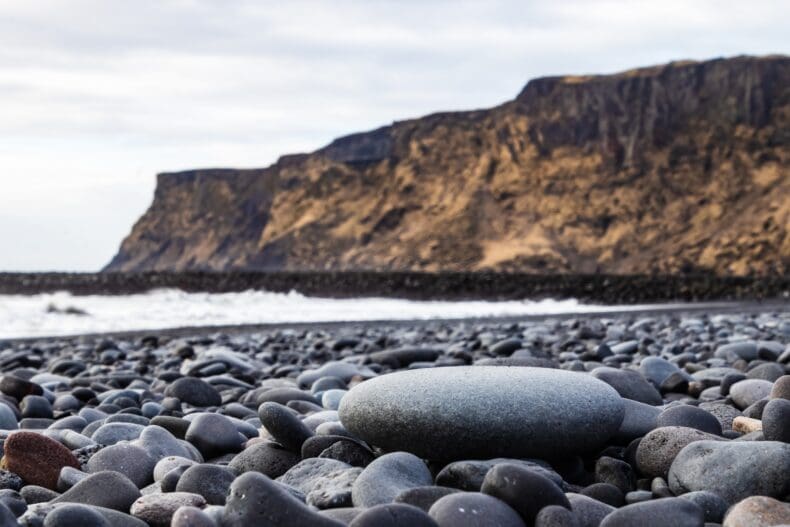
Vík Black Sand Beach lies right next to the village and is a mix of jet-black sand and smooth black pebbles. Here you see the Reynisdrangar from the other side. Since most visitors head straight for Reynisfjara, it’s a lot quieter, and sometimes you’ll have this huge stretch of beach almost to yourself.
#3 Sólheimasandur Beach
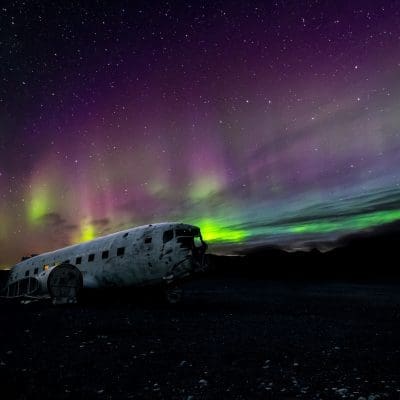
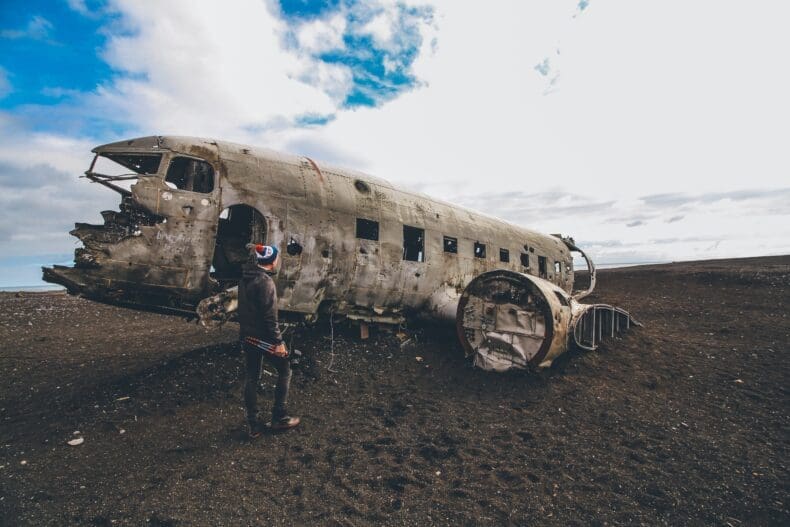
One of the most unusual sights near Vík is the plane wreck on Sólheimasandur. On 24 November 1973, a US Navy DC-3 made an emergency landing on the black sand. The crew survived, and the plane simply stayed where it was.
It’s the sheer emptiness around it that makes the Sólheimasandur plane wreck so photogenic: a battered fuselage in the middle of an endless black plain. You’re no longer allowed to drive there, so from the car park on the Ring Road it’s a 45 to 60-minute walk each way. Bring warm layers, as there’s zero shelter along the way. On stormy days, give it a miss, unless you fancy a free sandblasting.
The wreck got even more famous after it featured in a Justin Bieber music video, and these days it’s one of the most photographed spots on the south coast.
Tip: did you know there’s another plane wreck not far from here? The much lesser-known DC-3 wreck at Eyvindarholt isn’t on a black beach, but it’s far easier to reach and you’ll often have it to yourself.
#4 Endless Black Beach
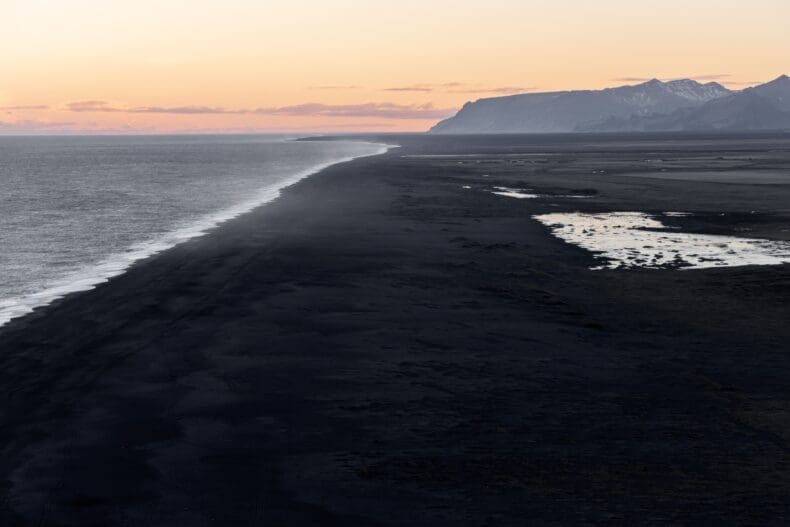
Endless Black Beach, also called Dyrhólaey Beach, starts on the other side of the Dyrhólaey headland, which separates it from Reynisfjara. The name says it all: this black beach just keeps going, all the way to the horizon. It doesn’t have the cliffs and rock formations of Reynisfjara, but that sense of endless space makes it one of Iceland’s most striking beaches.
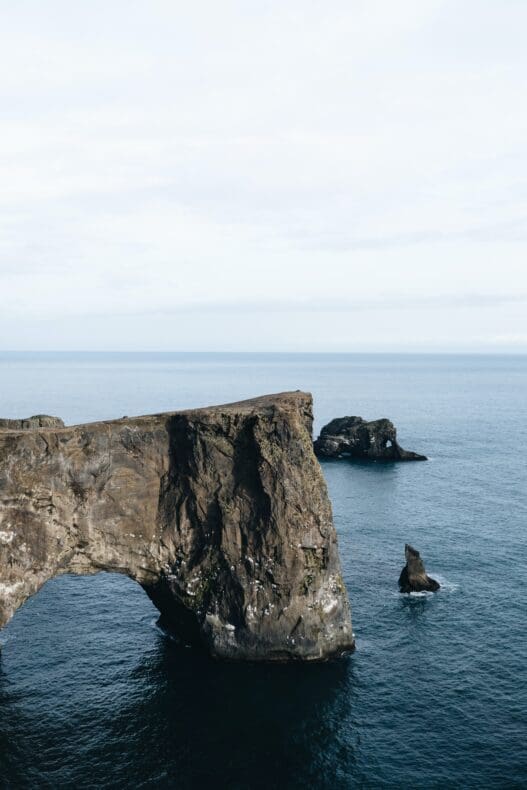
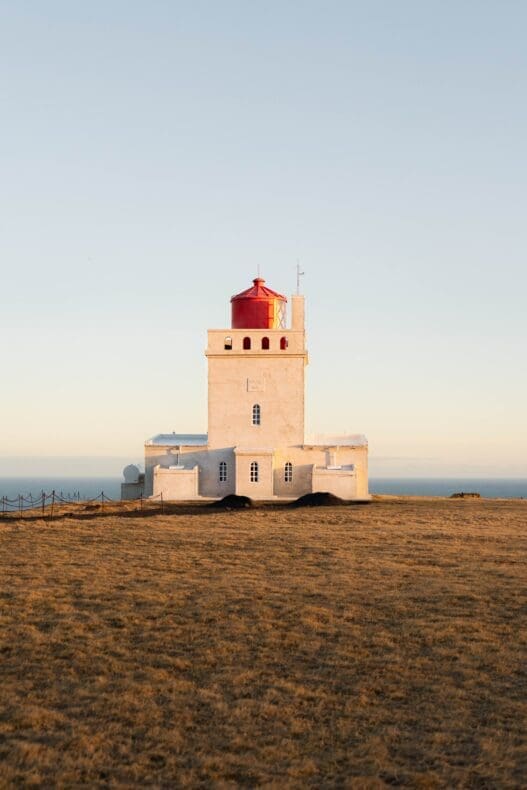
For the best view, head up to Dyrhólaey itself, a 120-metre-high headland near Vík and one of the southernmost points of Iceland. On top stands the white Dyrhólaeyjarviti lighthouse. On one side you look out over Reynisfjara, on the other over Endless Black Beach, and inland you can see the Mýrdalsjökull and Eyjafjallajökull glaciers. From the cliffs you also spot the Dyrhólaey arch, with the waves crashing right through it. Chances are you’ve seen it in photos of Iceland before.
#5 Diamond Beach
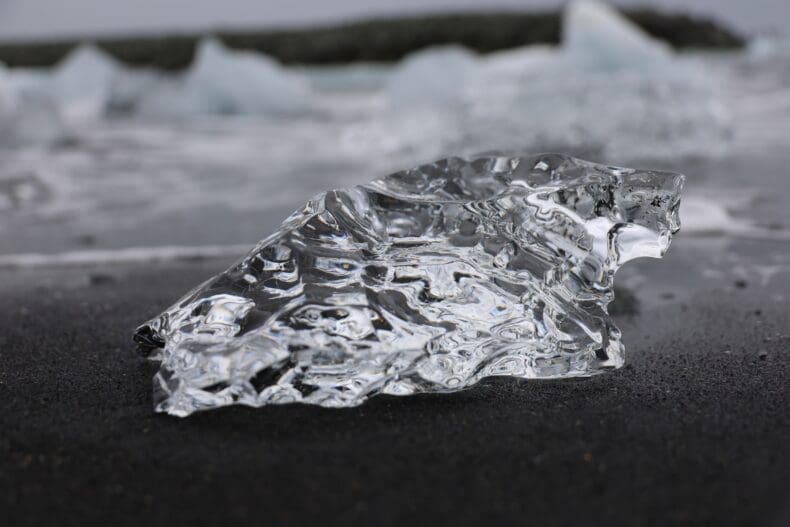
In the land of fire and ice, there are of course places where the two extremes meet. On Diamond Beach, glittering chunks of ice lie scattered across the black sand, a combination you won’t see anywhere else quite like this. It’s a fair bit further east, about 2.5 hours’ drive from Vík.
The ice comes from Vatnajökull, Iceland’s largest glacier and one of the biggest in Europe. It covers around 7,700 km² and in places the ice is almost a kilometre thick. At the edge of the glacier, icebergs break off into the Jökulsárlón glacier lagoon. They slowly drift towards the Atlantic, and some end up washed ashore on Diamond Beach. So every day the beach looks a little different, with ice in every shape and size.
More tips for your trip to Vík
 Our pickHotels in Vík: from a hotel in the village to a cabin overlooking the black beaches
 Iceland was made for a Ring Road trip. Rent a car at Keflavík airport with Discover Cars and compare the big rental companies in one go.
 Fancy doing it by camper, like we did? Rent a campervan from CampEasy near Keflavík airport, 4x4s included for the rougher roads.
 Prefer everything arranged? Browse Iceland tours on TourRadar.
 No flight yet? Compare flights to Keflavík, Iceland's international airport near Reykjavík.
 Want to get up onto the glacier from Vík? Book a Katla ice cave tour with GetYourGuide.
 Discover all our blogs about Iceland