
The Moselle Valley once felt like a destination meant for older travelers, and I used to believe that any trip without a backpack or a faraway flight was a waste of my valuable vacation days. In my twenties, I had a completely different idea of what a good holiday should look like than I do now as a 36-year-old mother. Back then, I was always chasing adventure in distant places. These days, I find myself appreciating something very different. Over time, I came to see the Moselle not just as a beautiful region, but as a truly special place that is perfect for a calm, enjoyable, and meaningful family trip.
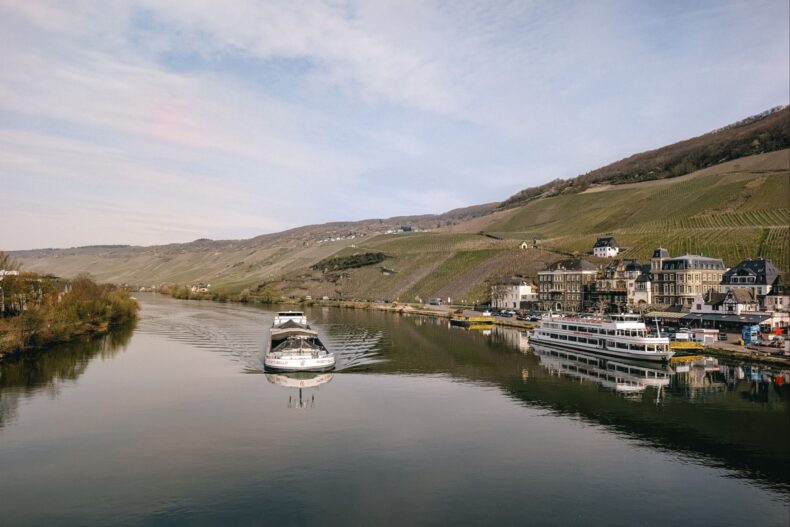
As soon as you enter the Moselle Valley, the change in scenery is immediate and striking. The road gently follows the river, which curves its way through the landscape in smooth and graceful bends. On both sides, vineyards stretch high up the hills, some of them incredibly steep and unlike anything you see in most other parts of Europe. It creates a view that feels almost unreal at times. Tucked between these hills are charming towns full of traditional half-timbered houses, each one adding to the storybook feel of the region. Above them, castles stand proudly on the hilltops, as if they have been quietly watching over the valley for centuries. Along the way, you will come across many scenic viewpoints that are well worth a stop. What surprised me most is how many activities there are for children, making it easy to keep the whole family entertained.
Looking back, the Moselle turned out to be the complete opposite of what I once imagined as a slightly naïve twenty-something. It offers a wonderful mix of nature, culture, and experiences that work beautifully for families. It is a place where you can slow down, enjoy the surroundings, and still have plenty to see and do. In this article, we will take you through the places and activities along the Moselle that you really should not miss, especially if you are traveling with children. We will also share tips on where to stay, so you can make the most of your time in this beautiful region.

Where exactly is the Moselle located?
The Moselle River begins in the Vosges Mountains in France, close to the small town of Bussang. From there, it makes its way north through the French countryside, then flows into Luxembourg, and eventually continues into Germany. The river ends its journey in the city of Koblenz, where it joins the Rhine River at the well-known Deutsches Eck.
In total, the Moselle covers a distance of about 544 kilometers. Still, most travelers focus on a much shorter and more scenic part of the river. The stretch between Trier and Koblenz, which is roughly 200 kilometers long, is the most famous section. This is where the landscape really comes to life, with steep vineyards climbing the hillsides, sweeping curves in the river, and charming villages sitting right along the water. It is this part of the Moselle that creates the classic views many people picture when they think of the region.
Within this stretch, you will also find smaller areas, each with its own atmosphere and highlights. The Mittelmosel, around Bernkastel-Kues, is often seen as the heart of the wine region. Many of the best-known vineyards are located here, and it is one of the best places to experience the local wine culture. As you continue toward Cochem and Koblenz, the scenery becomes a little wilder, and the bends in the river grow even sharper, which makes the views feel more dramatic and varied.
Because of its location close to the Netherlands and the relatively short travel time, the Moselle is a very convenient destination for a short trip or a relaxed road journey. In just a few hours, you can find yourself surrounded by a completely different landscape, without the need to travel far or deal with a long and tiring journey.

What is the Moselle known for?
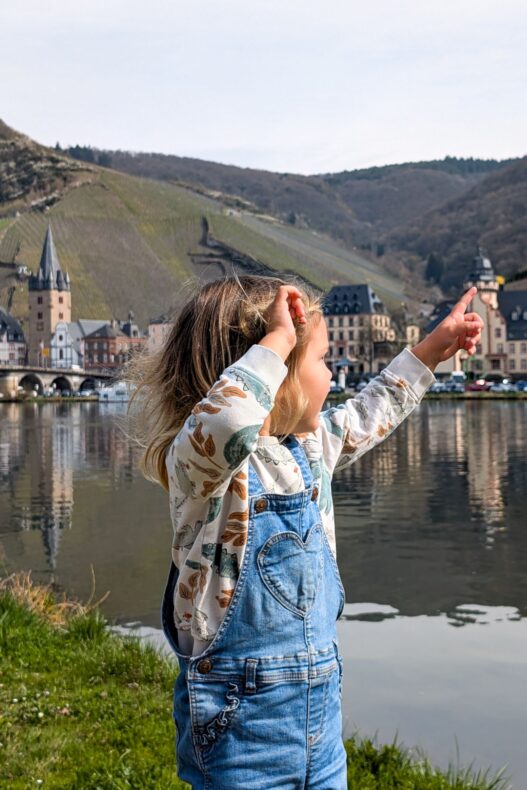
The Moselle Valley is known for its rich wine culture, a river that winds through the landscape in graceful curves, and charming towns that sit right along the water’s edge. Add to that the castles perched high on the hills and the short travel distance from the Netherlands, and it quickly becomes clear why this region is such a favorite among travelers looking for both beauty and ease.
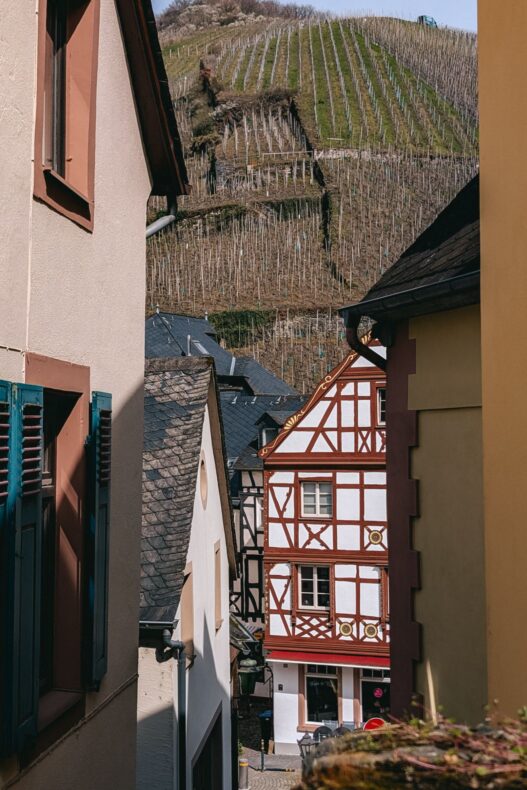
The vineyards are the first thing that catch your eye as soon as you enter the valley. The hillsides are covered in endless rows of grapevines that seem to stretch in every direction, often on slopes so steep that it is hard to imagine how people can work there at all. Yet wine has been produced here since Roman times, around the year 200, and that long tradition is still very much alive today. Riesling is the most important grape grown in the region and plays a key role in its identity. Thanks to the slate soil and the cool climate, the wines develop a fresh and mineral character that has made the Moselle famous worldwide. Near the village of Bremm lies the Calmont, one of the steepest vineyard areas in Europe, where much of the work is still carefully done by hand.
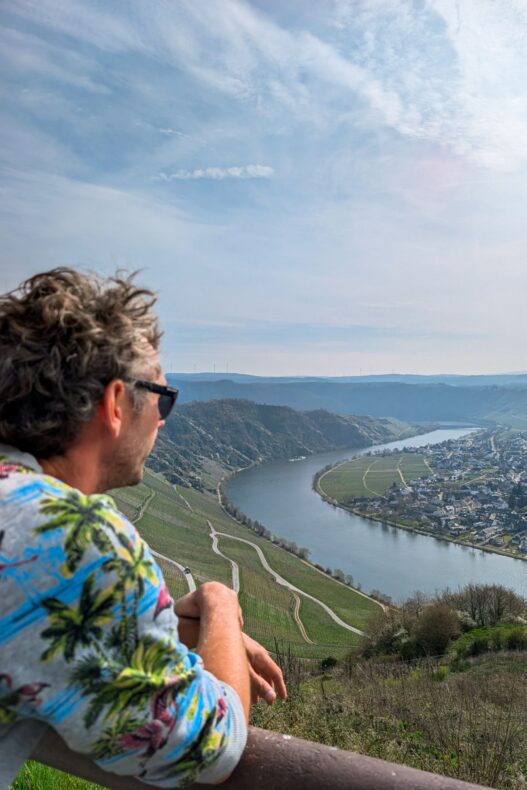
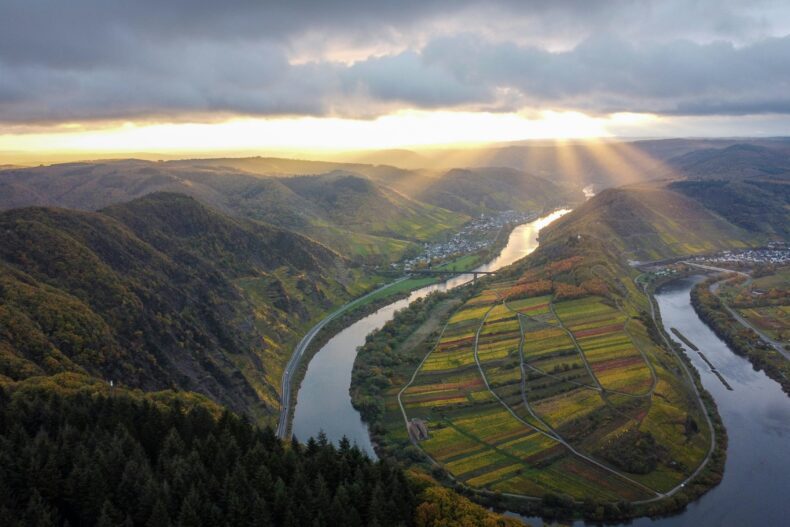
The river itself shapes everything around it. The Moselle River winds gently through the valley, forming wide loops and elegant curves that constantly change the view. As you follow the road, the scenery shifts again and again, with each bend revealing a new perspective. From higher viewpoints, you can clearly see how the river weaves its way through the landscape, often surrounded by vineyards on all sides.
Along these curves, castles and fortresses rise above the valley on hilltops. Many of them were built in the Middle Ages to oversee the river and protect important trade routes. They are almost always set in strategic positions, high above the water, which makes them stand out clearly, even from far away.
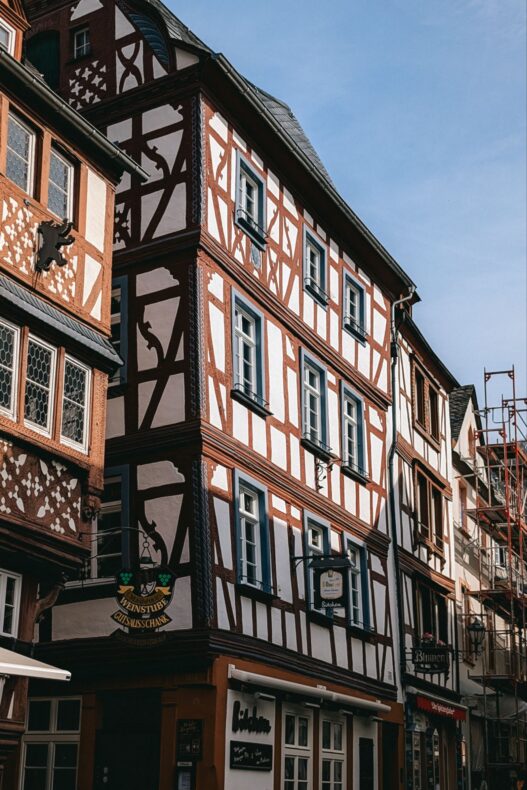
Between the vineyards, you will find small historic towns with a long and fascinating past. In well-known Moselle destinations such as Bernkastel-Kues and Cochem, you can wander past half-timbered houses that date back to the fifteenth to the seventeenth century. The town centers are compact and sit right by the river, making them easy to explore on foot while you take in the calm and welcoming atmosphere of the valley.


Where to stay in the Moselle
Where you choose to stay in the Moselle Valley has a big impact on how your trip feels overall. In most cases, you will be deciding between staying right by the river or choosing a place higher up among the vineyards. If you stay in a town along the water, such as Cochem or Bernkastel-Kues, everything is right on your doorstep. You can walk out of your accommodation and immediately find yourself in the heart of the town. Within a few minutes, you are strolling along the river, finding a nice place to eat, and enjoying the lively atmosphere without having to plan much. In the evening, there is no need to travel anywhere, since everything you need is within easy walking distance, which makes your stay feel simple, relaxed, and full of life.
If you choose to stay higher up in the hills, surrounded by nature, the experience feels very different. It is quieter, more spacious, and a bit more removed from the busy towns below. From your accommodation, you often have wide, open views across the valley. You can see the river slowly winding through the landscape, while the vineyards stretch out right in front of you, almost within reach. Getting around usually means using the car more often, but in return you get a sense of calm, privacy, and space. The peaceful setting and the beautiful views make it a wonderful option if you prefer a slower and more relaxed pace during your stay.
Family Park Landal Sonnenberg
During our midweek stay in the Moselle Valley, we chose Landal Park Sonnenberg, so we clearly went for the second option. We stayed in a comfortable six-person cottage together with our two children and family, which made it feel both cozy and spacious at the same time. Because the park is set on a hill, you notice the difference in location right away. Instead of looking directly into neighboring houses, you look out over the rooftops of other cottages and into the surrounding landscape. The views are wide and open, with plenty of greenery all around, which gives the park a calm and relaxed atmosphere. It never feels crowded or tightly packed. If you take a short walk to the edge of the park near the deer enclosure, you are treated to a beautiful view over the Moselle Valley, which is especially nice at the end of the day.
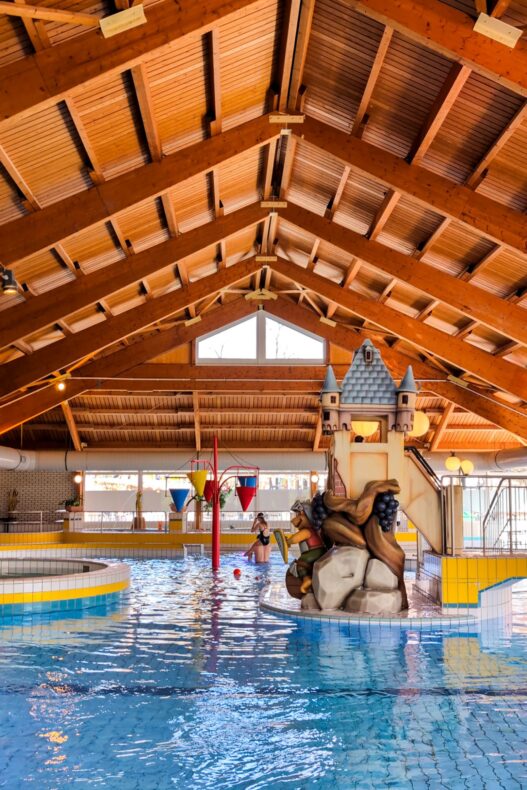
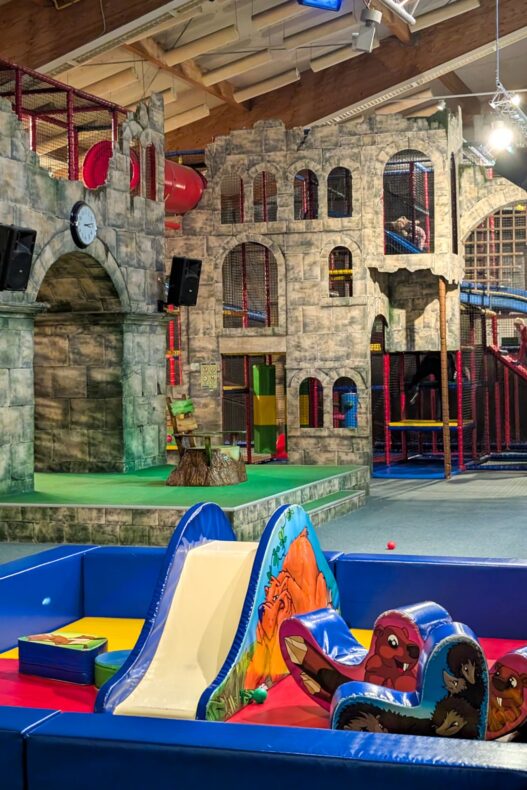
For our children, there was also an impressive amount to do without even leaving the park. On a rainy day, we decided to stay in and enjoy the facilities, and that turned out to be more than enough. We spent time in the large swimming pool, played a fun game of bowling, and ended the day in the huge indoor playground. It is the kind of place where children can stay happily busy for hours, even when the weather is not ideal, which makes a big difference during a family trip.
For a short holiday with children and family, this type of stay works extremely well. You are surrounded by peace and space, while still having plenty of activities close by and easy to reach on foot. At the same time, you can drive down into the valley whenever you feel like exploring, whether that means visiting nearby towns or discovering the highlights along the Moselle.

Tourist map of the Moselle
Best things to do in the Moselle
#1 Bernkastel-Kues
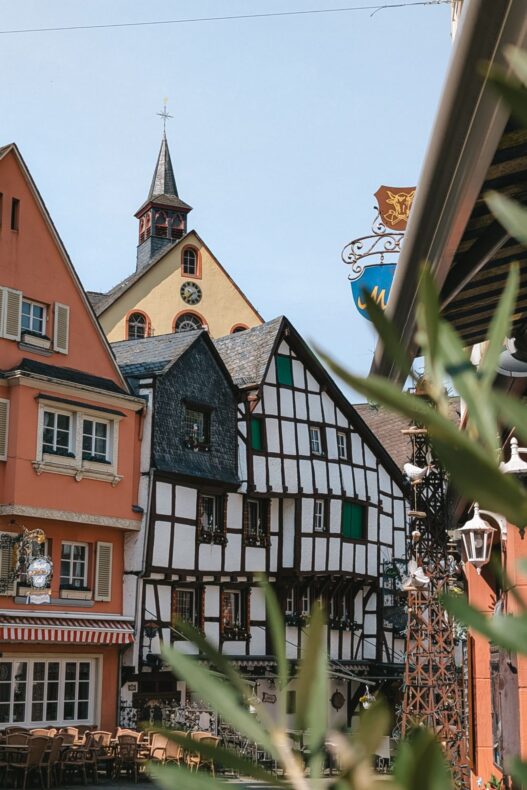
The picturesque town of Bernkastel-Kues sits right in a bend of the Moselle River, which gives it a truly scenic setting. As soon as you walk into the center, you are surrounded by charming half-timbered houses that feel like they belong in a storybook. Many of these buildings date back to the fifteenth, sixteenth, and seventeenth centuries, and they are packed closely together, creating a warm and intimate atmosphere. Some of them even lean slightly forward, which adds to the unique and slightly playful character of the town. On the main square, you will find the historic Rathaus from 1608, one of the most recognizable and photographed landmarks in Bernkastel-Kues.
Thanks to its location along the river, Bernkastel became an important center for wine trade early on. Wines from the surrounding hills were brought into town, stored, and then transported further along the river to other regions. This long history is still clearly visible today. The hills that surround the town are completely covered with vineyards, forming a green backdrop that changes with the seasons. The Riesling from this area is among the most famous in Germany and is known for its fresh, crisp, and elegant character.
On the opposite side of the river lies the district of Kues, which developed in its own way and feels calmer and less busy. It offers a nice contrast to the lively center of Bernkastel. If you walk uphill from Bernkastel, you will reach Burg Landshut. This castle was built in the thirteenth century as a stronghold for the archbishops of Trier. A large part of it was destroyed by a fire in 1692, leaving behind the impressive ruins you can visit today. From its high position above the town, you are rewarded with a beautiful view over Bernkastel-Kues and the surrounding valley.

#2 Driving along the Moselle River
Driving along the Moselle River never feels straight or predictable. The river gently winds its way through the valley, and the road follows every curve, almost as if it is guiding you through the landscape. With every turn, the view changes. One moment you are driving right beside the water, close enough to see reflections on the surface, and the next you are higher up on the hillside, looking out over the valley with a wide and open view.
Along the river, you will mostly follow the Bundesstraße 53 and 49. These are the main roads that connect the towns and villages along the Moselle. As you drive, you regularly pass through historic centers where the road narrows and leads you past traditional houses and small, quiet squares. It gives you the feeling that you are traveling through places that have been lived in for centuries. These routes have long been used to transport wine and goods, and that history is still noticeable as you make your way from one village to the next.
If you want a better sense of the landscape, it is worth leaving the main road and heading up into the hills. The roads that run through the vineyards clearly show how steep this region really is. In some places, the slopes rise to more than sixty percent, which helps you understand why working in these vineyards is so challenging and why much of it is still done by hand.
As you continue your drive, you will come across many places where it is easy to stop. Viewpoints are often located just above the road, offering beautiful views over the valley, and the villages are close enough together that you are never far from the next stop. You can pull over, take a moment to enjoy the scenery, and then continue on your way. Keep in mind that the roads are quite narrow in places, and parking can be limited, especially near the more popular viewpoints, so it is worth planning your stops with a bit of care.
#3 Viewpoints over the Moselle River
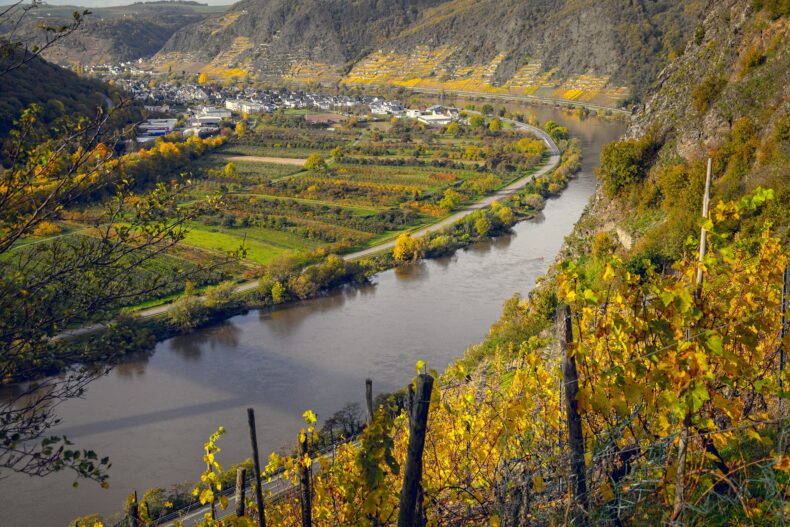
The Moselle River winds endlessly through the landscape, but you only truly understand how dramatic those curves are when you see them from above. All along the river, you will find dozens of viewpoints that offer clear views of the bends, the villages, and the vineyards that define the valley. These spots are often marked as Panoramablick or Aussichtspunkt, and they are absolutely worth taking the time to visit.
Many of these viewpoints are located just above the villages. You can drive a short distance uphill or follow a simple walking path, and within a few minutes you are standing high above the valley. This quick shift in height is typical for the Moselle region. The valley is relatively narrow and the slopes are steep, which means you can enjoy wide, open views without needing to go on long or difficult hikes.
One of the best-known examples is near Bremm, where you can look out over the Moselschleife. From here, you can clearly see how the river forms a tight loop, almost doubling back on itself. The vineyards follow the shape of the land and are carefully laid out along the steep hillsides. For a similar experience, we visited the Panoramablick near Piesport and Minheim, where the river creates a wide and elegant curve through the valley.
Almost every village along the Moselle has its own viewpoint. They are usually clearly signposted and often have small parking areas nearby, which makes them easy to access. This also makes it simple to combine several stops during a drive along the river, allowing you to pause often, take in the views, and enjoy how the scenery changes from one spot to the next.

#4 Burg Eltz
The famous Burg Eltz is not located directly along the Moselle River, but tucked away in a quiet side valley near the Elzbach. This peaceful and somewhat hidden location is exactly what has helped the castle remain so well preserved over the centuries. It was built in the twelfth century and, quite remarkably, has never been destroyed, captured, or heavily damaged.
The setting of the castle feels almost unreal. It stands on a rocky outcrop, surrounded on three sides by forest and a small river, which gives it a true fairytale appearance. This spot was carefully chosen for a reason. From here, the castle once overlooked and controlled important trade routes that passed through the region. Unlike many other castles in the Moselle area, Burg Eltz has always remained in the hands of the same family, even up to today. This rare continuity makes it one of the best-preserved castles in Germany and gives it a very special atmosphere.
The castle itself is made up of several sections that were added over time. As you walk through the complex, you can clearly notice the differences in architectural style between the older medieval towers and the later extensions. Inside, many original rooms have been preserved, along with historic furniture and artworks that date back to the Middle Ages. It really feels as though you are stepping into another time, with each room telling part of the castle’s long history.
Burg Eltz is not located along a main road, which adds to its charm and sense of discovery. To reach it, you follow a walking path from the parking area, which takes about twenty to thirty minutes and leads you through a quiet forest. From our stay at Landal Park Sonnenberg, it is actually quite a long drive to get there, which is why I personally chose to save this visit for another time, and I ended up visiting it on another trip with a friend.

#5 The vineyards of the Moselle Valley
The Moselle Valley is, of course, all about wine. We already expected that before our visit, but the scale of it still took us by surprise. Nearly every hillside is covered with rows of grapevines, stretching far into the distance and following the shape of the land. Wine production here goes all the way back to Roman times. Around the year 200, the Romans introduced the first vines to this region and began building terraces along the steep slopes to make cultivation possible, laying the foundation for a tradition that continues today.
The most well-known grape in the Moselle is Riesling, and it plays a central role in the region’s identity. This grape grows particularly well in the slate soil that is so common here. Slate stores warmth from the sun and releases it slowly, which helps extend the growing season. As a result, the wines develop their characteristic fresh acidity and mineral taste. Many vineyards are carefully positioned on sun-facing slopes, which is essential in a region with a relatively cool climate.
What stands out is how little the structure of the vineyards has changed over time. Many plots are small and divided among different owners, often the result of land being passed down through generations and gradually split into smaller sections. This creates a patchwork of narrow strips across the hillsides, each one carefully maintained and worked by hand.
One of the most iconic vineyard areas is the Calmont near Bremm. This is the steepest vineyard in Europe, with slopes that reach up to around sixty-five degrees. Working here is incredibly demanding, and machines can barely be used, so much of the work is still done by hand, often supported by cable systems. This makes wine production in this area both labor-intensive and small-scale, adding to its unique character.
All along the Moselle, you will come across wineries and tasting rooms. If you search for “weingut” on a map, you will quickly see how many there are. Many of these are family-run businesses that have been passed down for generations, each with its own story and approach to winemaking. You can often stop by to taste and buy wine directly, usually without needing a reservation. Many producers mainly sell their wines locally, which makes the region especially interesting for anyone looking to discover bottles that are not widely available in large shops or mass markets.
#6 Geierlay Suspension Bridge
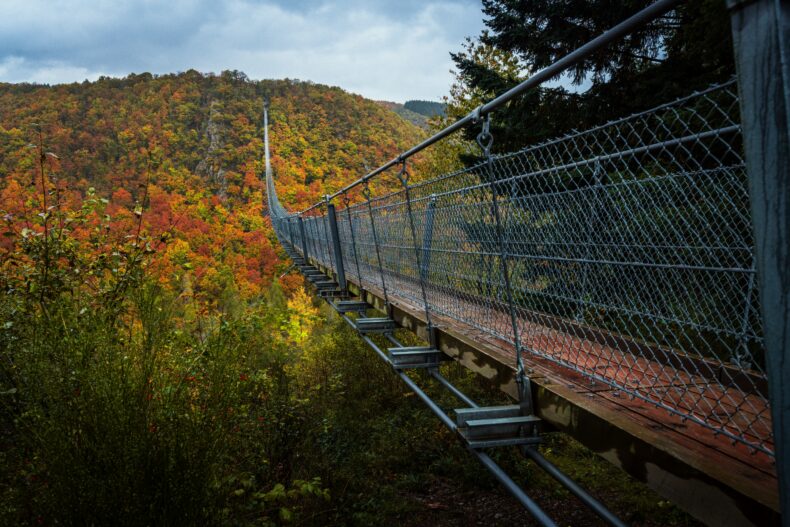
The Geierlay Suspension Bridge is one of the most iconic attractions in the region and a great place to add to your plans. Although it is not located directly along the Moselle River, it is close enough to visit without much effort. The bridge is located near the village of Mörsdorf, in a quiet area surrounded by forest. From the parking area, you follow a well-marked walking path through the woods, and within about twenty to thirty minutes you arrive at the bridge.
The bridge itself stretches 360 meters and hangs at a height of around 100 meters above the valley. Since it opened in 2015, it has become one of the most popular highlights in the area. The design is inspired by suspension bridges from mountainous regions in Nepal, with strong steel cables and a narrow walkway that makes the crossing feel a bit adventurous without being too difficult.
The view from the bridge offers a completely different perspective compared to the scenery along the Moselle. Instead of vineyards and river curves, you are surrounded by a wide, forested valley that extends in every direction. This contrast makes it a refreshing addition to your trip, especially if you have already spent a few days exploring the river and would like to experience a different side of the region.
#7 Cochem
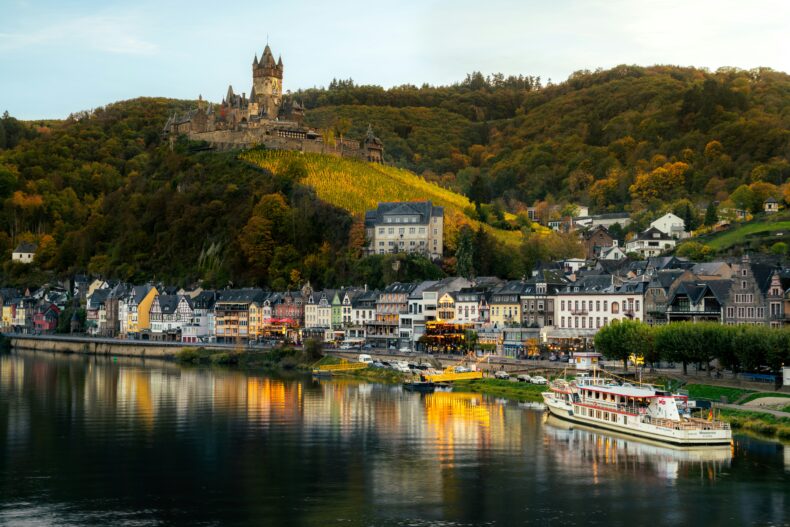
You can spot Cochem from quite a distance. High above the town rises the impressive Reichsburg Cochem, which immediately draws your attention and defines the skyline. The castle was originally built around the year 1000 and had a clear purpose: to control the Moselle River and the trade routes that passed along it. In 1689, it was destroyed by French troops, and it remained in ruins for a long time before being rebuilt in the nineteenth century. The reconstruction was done in a style that intentionally reflects the medieval period, which gives the castle its romantic and historic appearance today.
The town itself feels just as charming and compact as you might expect. Narrow streets wind their way between traditional half-timbered houses, and small squares appear one after another as you wander through the center. Along the riverside promenade, you can watch boats come and go, while on the opposite side of the river, vineyards stretch up the hills. This mix of water, historic buildings, and elevation creates the typical Moselle atmosphere that makes Cochem so appealing.
What many visitors do not immediately notice is what lies beneath the town. In 1962, a bunker was built here by the Deutsche Bundesbank. Inside, a secret reserve of emergency currency was stored, ready to be used in case of an economic crisis. Today, this bunker is open to visitors and offers a very different perspective on Cochem compared to what you see above ground. I have not visited it myself yet, but it is definitely high on my wishlist. It is good to know that the tours are currently only available in German.
#8 Triolago Rodelbahn
Near the village of Riol, just above Trier, you will find one of the most enjoyable activities for kids along the Moselle River. This is where the Triolago Rodelbahn is located, set on a hill next to a recreational area that is already a great place to spend time. The experience begins with a calm ride uphill, giving you a moment to take in the surroundings before the excitement starts on the way down.
You sit in a small cart that runs along a track, and you are fully in control of your speed. When you release the lever, the cart gains speed as it moves through the curves and downhill sections. If you prefer to take it slower, you can pull the lever and enjoy the ride at your own pace while looking around. The track is more than a kilometer long, and along the way you are treated to wide, open views over the Moselle Valley, which makes the experience even more special.
The Triolago Recreation Area itself is designed as a complete recreational area. Besides the toboggan run, you will find a lake, walking paths, and a variety of other activities to enjoy. This makes it easy to spend a few hours here instead of just doing a single ride and moving on. It is good to keep in mind that the toboggan run is not open throughout the year, as it usually starts operating from April onward.
#9 Boat trip on the Moselle River
A boat trip is one of those experiences you really should not miss in a region shaped so strongly by a river like the Moselle River. From many different points along the river, it is easy to join a cruise. You can step on board in towns such as Cochem, Bernkastel-Kues, and Trier. Some trips are short and last about an hour, while others take you from one town to the next, giving you more time on the water. On most boats, you can choose between a comfortable seat inside or a spot outside on the deck where you can enjoy the fresh air and views.
The Moselle has played an important role as a transport route for centuries. In the past, wine was shipped along the river from village to town, connecting the entire region and supporting its economy. Today, the boats are mainly used for sightseeing, but you are still following the same historic path. As you move gently along the water, you pass old quays, small landing spots, and towns that sit right at the river’s edge.
#10 Calmont Klettersteig and Ritsch Klettersteig
Near Bremm, you can already see the impressive Calmont from the road. It is a steep hillside covered in vineyards that seems to rise almost straight up, creating a striking and unforgettable view. This area is known as the steepest vineyard in the world, and right through it runs an adventurous route known as the Calmont Klettersteig. The trail follows narrow paths, stone steps, and sections with steel cables that help guide you along the way.
Here, it feels much more like climbing than walking. Between the more challenging sections, you pass rows of grapevines and low stone walls that have been part of the landscape for generations. These paths were once used daily by local wine growers, who moved along them carrying tools and baskets. As you climb higher, the views open up more and more. From the slope, you get a clear and impressive view of the Moselschleife, where the Moselle River forms a sharp and beautiful loop through the valley.
If this route feels a bit too challenging, you can choose the nearby Ritsch Klettersteig instead. This route is more relaxed and easier to follow. There is less climbing involved and more walking, which allows you to enjoy the surroundings at a slower pace. You are still on a stunning Moselle hillside with very similar views, but the overall experience is more accessible and better suited if you prefer something less physically demanding.
#11 Trier
Trier felt a little different from the rest of the Moselle Valley to us. After driving through vineyards and small villages, you suddenly arrive in a city with a history that stretches back more than two thousand years. Around 16 BC, the Romans founded a settlement here, which later grew into one of the most important cities in their empire.
You can still see that Roman past almost everywhere you go. The Porta Nigra is still standing and remains one of the best-preserved Roman city gates north of the Alps. Not far from there, you will come across the remains of the Kaiserthermen and the Trier Amphitheater, places where thousands of Romans once gathered for daily life and entertainment.
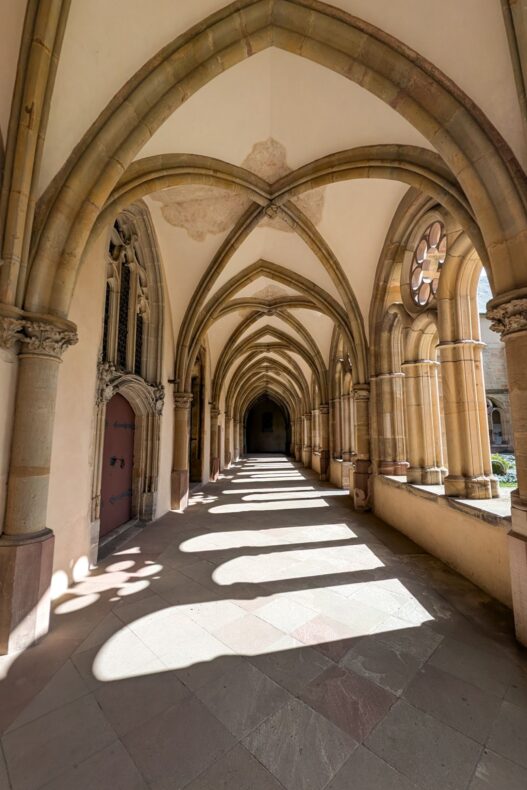
What makes Trier especially interesting is how these historic landmarks blend so naturally into modern city life. You can walk from ancient ruins straight into lively squares filled with shops, cafés, and outdoor terraces. The impressive Trier Cathedral is another highlight you simply cannot miss. It was first built in the fourth century and has been expanded and restored over the centuries. Be sure to take a moment to visit the peaceful cloister garden as well. Right next to the cathedral stands the Liebfrauenkirche Trier, one of the oldest Gothic churches in Germany.
The surroundings of Trier feel a bit more open compared to other parts of the Moselle. The steep hills are less dominant within the city itself, although the Moselle River still flows nearby and the vineyards begin again just outside the center. Overall, Trier may not have the same small and cozy charm as places like Bernkastel-Kues, but it is still a very enjoyable and worthwhile stop, especially when visiting from our stay at Landal Park Sonnenberg.

We stayed at the invitation of Landal Sonnenberg.


