On Christmas Eve we sat on the beach in Arinaga with the kids, and the next morning we were back in the sea. That might be the best thing about winter on Gran Canaria: the buckets and spades come along for the whole holiday.
We spent just over three weeks driving around the island in our campervan, part of our four months in the Canary Islands. Almost every day we rolled out our towels somewhere new, and no two beaches were alike. One day our toddler and preschooler were splashing at the water’s edge of a sheltered bay in the southwest, the next we were standing on a black lava beach on the east coast. In between lie the golden dunes of Maspalomas, and out west there are pebble beaches beneath towering mountain walls.
These are our favourite beaches in Gran Canaria. We’ll tell you where to swim safely with kids, where the waves are better for surfers than swimmers, and how to visit the Maspalomas dunes. For every beach you’ll find where to park, what facilities there are and which hotel is nearby.
What are the beaches like in Gran Canaria?
There are dozens of beaches along the coast of Gran Canaria, and they barely resemble each other. Which one suits you depends on what you’re after: calm water for swimming, a long walk, waves, or a spot where mostly locals hang out.
The south is the sunniest side. Around Maspalomas and Playa del Inglés you’ll find the long golden beaches, while in the southwest, between Arguineguín and Puerto de Mogán, there are man-made bays with pale sand and breakwaters. The water there is usually calm, and you get sunbeds, showers and restaurants.
The east and north coasts are rougher and more local. Think beaches of black lava sand and pebbles, natural rock pools and seaside villages where, at weekends, you’ll mostly meet Canarian families. It’s windier here, and the sea can really go wild.
The west coast is the wildest of all. Steep mountain walls drop straight into the sea, and beaches like La Aldea and Güigüí are far from the resorts. You come here for nature and silence, not for a sunbed.
What is the best beach in Gran Canaria?
If we had to pick just one, it would be Arinaga on the east coast. It’s not a postcard beach, but it’s where we felt most at home: a long promenade, little sandy coves between the basalt rocks, terraces full of Canarian families and not a souvenir shop in sight. We came back twice.
For the most spectacular view, head to the Maspalomas dunes. It’s the tourist heart of the island, but once you’re walking among the sand hills, you forget the hotels behind you. Want carefree swimming with little ones? Then Playa de Amadores is your best bet, as breakwaters keep the bay calm.
Sardina del Norte in the northwest was our surprise favourite: a small, very local beach that doesn’t look like much on paper, but where we had a brilliant day. For snorkelling, Sardina and Las Canteras in Las Palmas are the best spots, and for black lava beaches you’ll want to drive to the coast of Telde.
→ Discover the 15 most beautiful beaches in the Canary Islands

Gran Canaria beaches for kids
With kids, the south and southwest are your best bet. Playa de Amadores and the bay of Puerto Rico are sheltered by breakwaters, the sand is soft and the water deepens gently. Puerto de Mogán and Anfi del Mar have calm water too, and everywhere you’ll find sunbeds, toilets and something to eat.
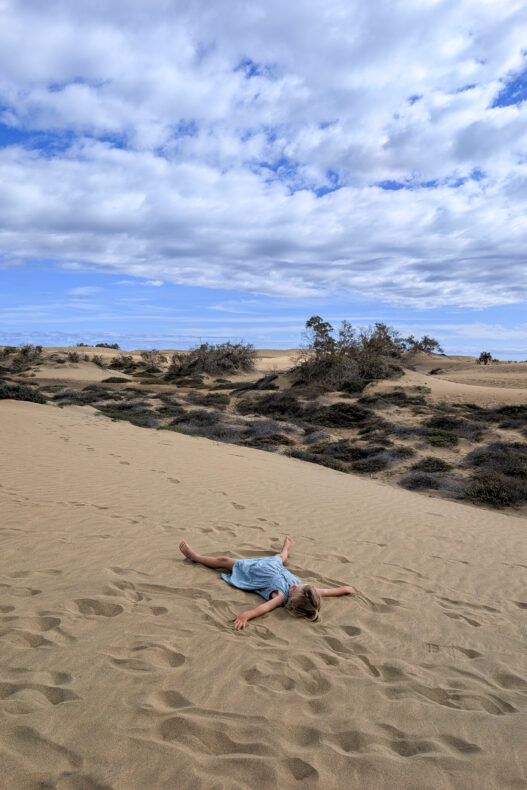
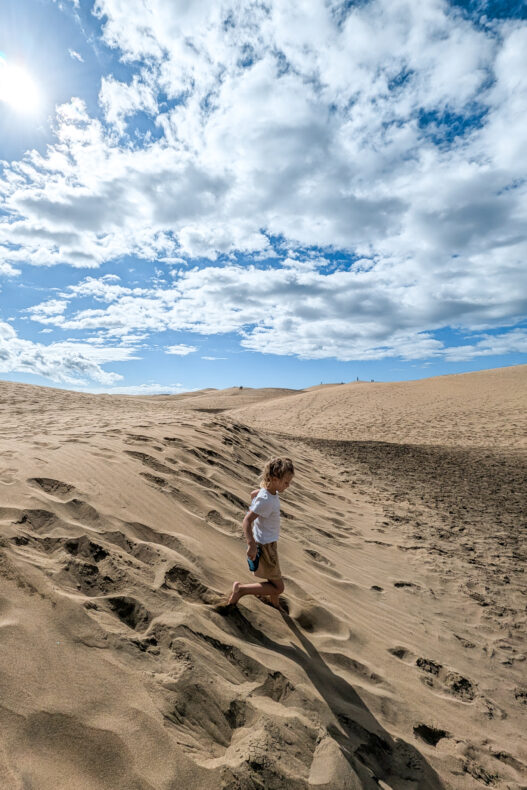
On the wide beach of Maspalomas and Playa del Inglés the seabed also slopes gently, but here the ocean rolls in freely. On windy days the waves get bigger, so keep an eye on the flags. Our kids thought the dunes were at least as much fun as the sea: climbing, running and sliding down the slopes.
On the east coast, a beach day with kids revolves around the playgrounds. In Arinaga, Pozo Izquierdo and at La Garita there’s one right by the water, and the foot showers on many beaches turned out to be an attraction in their own right for our son.
In the short summary for each beach below, you’ll see whether it’s a good pick for kids.
→ Discover the 23 best things to do in Gran Canaria with kids
What is the best time to visit the beaches of Gran Canaria?
Gran Canaria is a year-round beach destination. In winter it’s often around 22 degrees in the south during the day, and even around Christmas we were simply lying on the beach. The sea is about nineteen degrees then: fresh on the first step, perfectly fine once you’re swimming.
In summer and early autumn the sea is at its warmest, around twenty-five degrees. That’s also the busiest time on the south coast, so at popular bays like Amadores it pays to arrive early.
The weather depends on which side of the island you’re on. The south is almost always sunny, while the north around Las Palmas is cloudier more often. On a grey day in the capital, you’re in the southern sunshine within 45 minutes. And if it’s blowing hard on the east coast, just escape to the sheltered bays in the southwest.
Where to stay in Gran Canaria for the beaches?
If you’re mostly after beach, sun and calm water, the south or southwest is the place to be. From Maspalomas you can walk straight into the dunes, and between Arguineguín and Puerto de Mogán the sheltered bays are just a short drive apart.
Looking for a local vibe? Then Arinaga on the east coast makes a great base, close to the airport and Las Palmas. For every beach below, we suggest one hotel or apartment nearby.
→ Discover the 8 best areas to stay in Gran Canaria
Do you need a rental car for the beaches of Gran Canaria?
If you’re happy sticking to the beach by your hotel, buses and taxis will do just fine. But if you want to see more than one beach, a car is almost essential. Arinaga, Sardina del Norte and La Aldea are well away from the big resorts, and the most beautiful route to the west coast winds over narrow mountain roads. With a car, you simply pick the beach with the best weather each day.
We recommend booking through Discover Cars, where you can compare rental companies side by side and add a child seat straight away.
→ Compare rental cars in Gran Canaria on Discover Cars
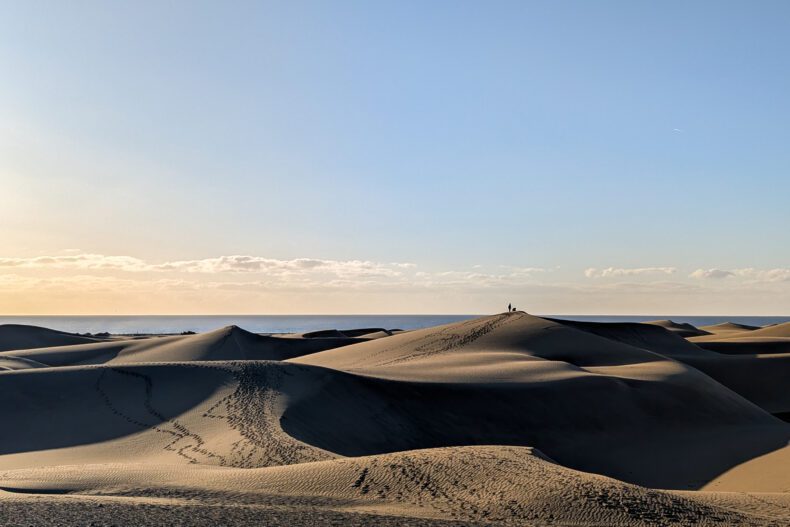
The best beaches in the south: Maspalomas and Playa del Inglés
#1 Maspalomas dunes and beach: a desert by the sea
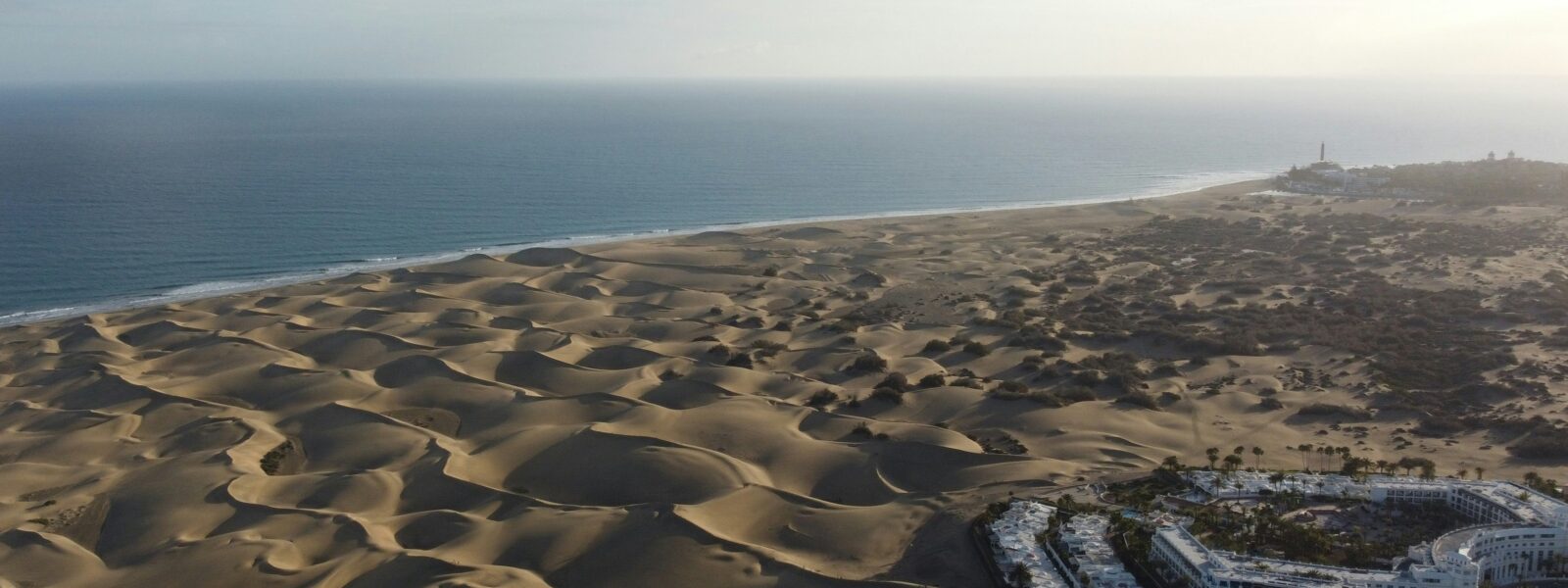
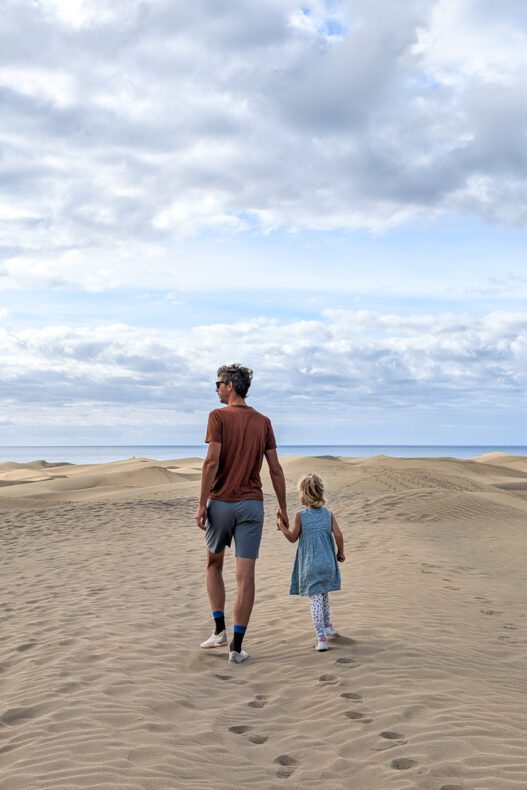
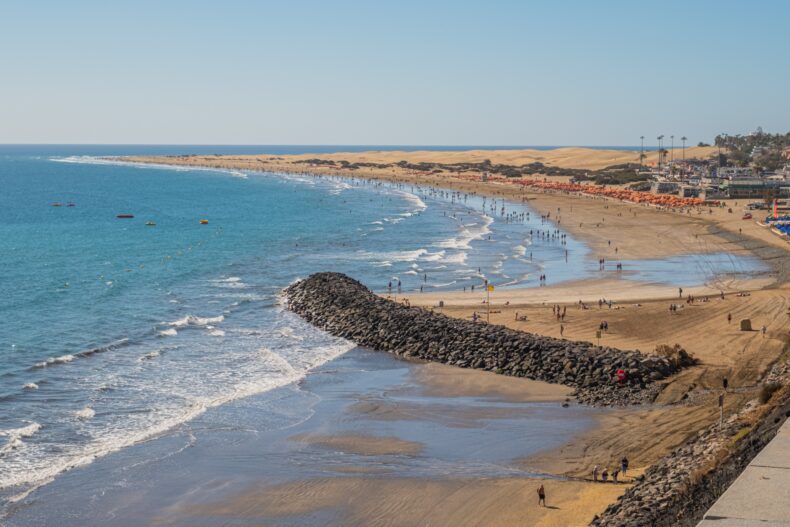
Miles of golden sand, dunes as far as the eye can see and the blue ocean along the edge: the Maspalomas dunes are Gran Canaria’s most famous view. The protected dune area lies between Playa del Inglés and the Maspalomas lighthouse, right in the middle of the island’s biggest resort. I came here as a child with my parents, and now we were walking through the sand with our own kids.
Maspalomas is really too big and busy for our taste, but the dunes made up for a lot. Because we set off early, the crowds hardly bothered us. The sand was still cool, the kids raced up one dune and down the next, and for two days we switched between walking and swimming.
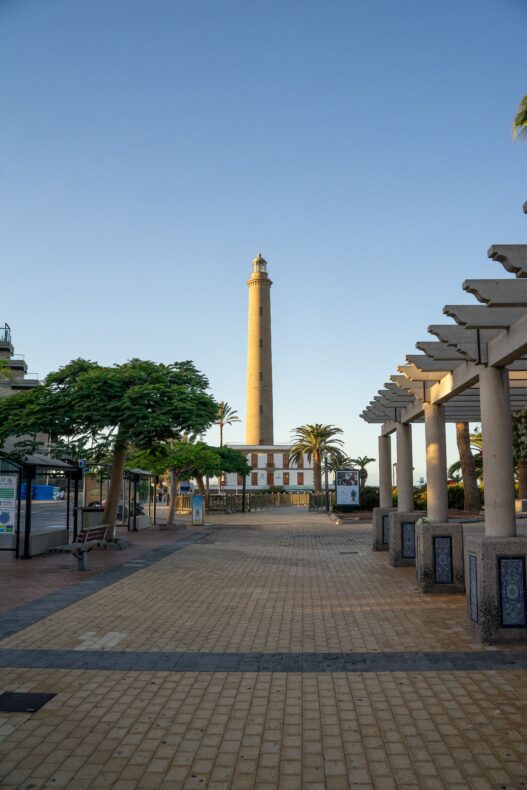
How do you visit the Maspalomas dunes? Most people start at the viewpoint on the edge of Playa del Inglés, next to the Riu Palace Maspalomas hotel. That’s also where you’ll find the nature reserve’s visitor centre, which explains how the dunes were formed. You can also start on the west side by the lighthouse, or from the beach at Playa del Inglés.
The dunes are a protected nature reserve. You’re only allowed on the marked trails, recognisable by the posts in the sand, and this is checked. From the viewpoint it’s almost a kilometre across the sand to the sea, and it feels further than it looks. At midday there’s no shade anywhere and the sand gets hot, so go early in the morning or late in the afternoon, and bring water.
Where do you park for the dunes? There’s free roadside parking in the streets around the Riu hotel and in Playa del Inglés, but finding a spot around midday is a gamble. There are also a few paid car parks close to the viewpoint. If you’re starting on the west side, park near the lighthouse.
On the sea side of the dunes, the beach runs on for miles, from Playa del Inglés all the way to the lighthouse. We walked the whole stretch and dived into the sea a few times along the way. The seabed slopes gently, but the waves here are bigger than in the bays further west. About halfway there’s a nudist section, marked with a sign.
At the lighthouse, the neat Meloneras promenade begins, lined with seafront terraces. We swam in the bay here too, and around sunset it’s the prettiest corner of Maspalomas.
In short: swimming yes, with more surf than in the southwest | golden sand and dunes | sunbeds, showers and beach bars at Playa del Inglés and the lighthouse, nothing in the dunes | free roadside parking or paid near the viewpoint | for kids one giant sandpit | best early morning or around sunset
Want the dunes within walking distance? Then Seaside Palm Beach is a great choice. This design hotel with a nod to the seventies is tucked away in a lush palm garden, and from your room you’re on the sand in a few minutes.
→ Discover the 15 best things to do in Maspalomas
#2 Playa del Inglés and San Agustín
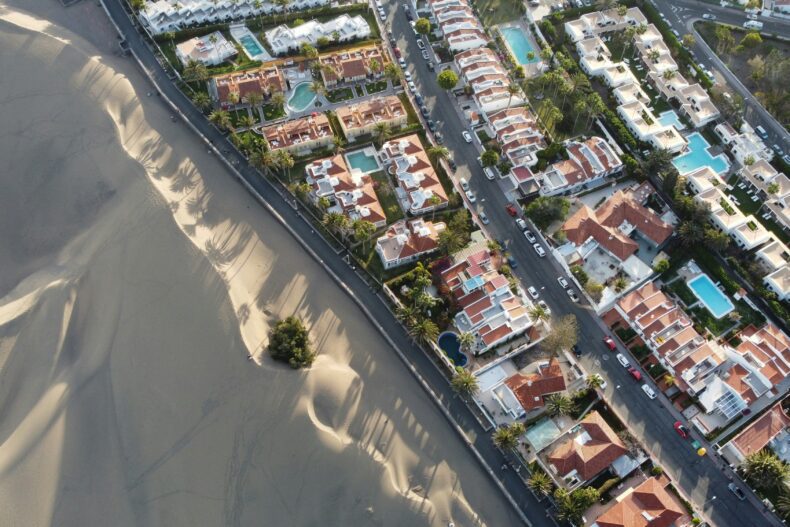
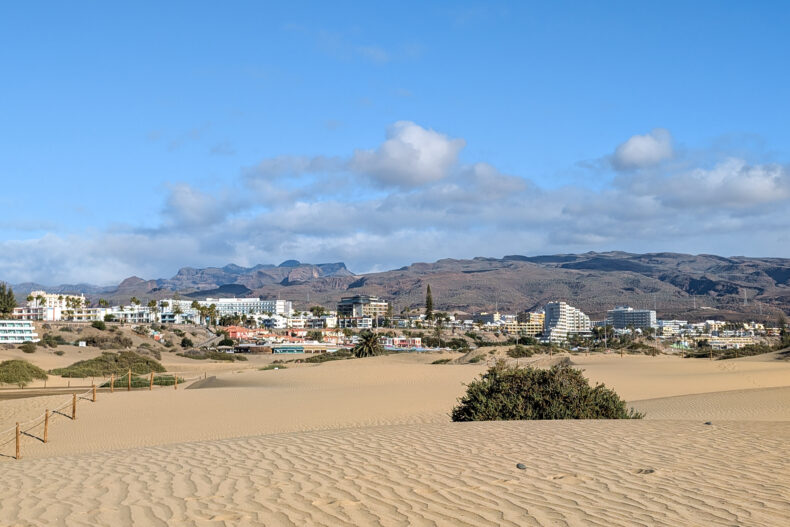
On the east side, the dunes merge into Playa del Inglés, one of the best-known resorts in the Canary Islands. The beach is wide, with fine sand and water that’s usually calm, and behind it runs a promenade of hotels, shopping centres and restaurants. Not our favourite place to sleep, but an easy beach for a swim. In one of the side streets near the dunes we had Indian food, and it instantly became our daughter’s favourite meal.
Prefer something quieter? Drive a few minutes further to San Agustín. The smaller beaches here, like Playa de San Agustín and Playa de las Burras, are less crowded, with a seafront promenade that takes you all the way to Playa del Inglés.
In short: swimming yes, usually calm | wide golden sand | all facilities | parking in the streets behind or in a car park | good for kids | best for an easy beach day
Fancy some peace and quiet after a day at the beach? Then you’ll be happy at Hotel San Agustin Beach Club, right on the beach in San Agustín with a cheerful, nautical-themed interior. The dunes are close by, but in the evening you’re well away from the neon of Playa del Inglés.
The best beaches in the southwest: from Mogán to Arguineguín
#3 Puerto de Mogán: a bay by the Venice of Gran Canaria
In the far southwest lies Puerto de Mogán, a former fishing village of white houses, flower-draped façades and little canals. Behind the harbour is a crescent-shaped bay of golden sand, protected by a breakwater. The water is calm and gets deeper gradually, which makes it a popular beach for families.
You can rent sunbeds, parasols, kayaks and pedal boats on the beach, and the promenade behind it is lined with terraces and restaurants. It’s not a big beach, so get there early. On Fridays there’s a market in the village and it gets extra busy.
In short: swimming yes, calm water | golden sand | sunbeds, rentals and restaurants | parking in the car park by the village | great for kids | best in the morning
To stay by the harbour, try Hotel Cordial Mogán Playa, built like a little Canarian village with white buildings in a large tropical garden. With several pools and the beach a few minutes’ walk away, it’s a lovely spot for families.
#4 Taurito: a bay at the bottom of a narrow valley
Between Puerto Rico and Puerto de Mogán lies Playa de Taurito, a small resort at the bottom of a narrow valley. The hotels are built against the rocky slopes, and the beach sits in a sheltered bay with clear water. Right behind the beach is the Lago Taurito water park.
Taurito is smaller and quieter than Puerto Rico, with mostly guests from the hotels in the valley. The rocks on either side of the bay are good for snorkelling.
In short: swimming yes, sheltered bay | small sandy beach | sunbeds, restaurants and a water park | limited parking in the valley | good for kids | best if you’re staying nearby
Puerto de Mogán, a few minutes’ drive away, makes a good base.
#5 Playa de Amadores: pale sand in a sheltered bay
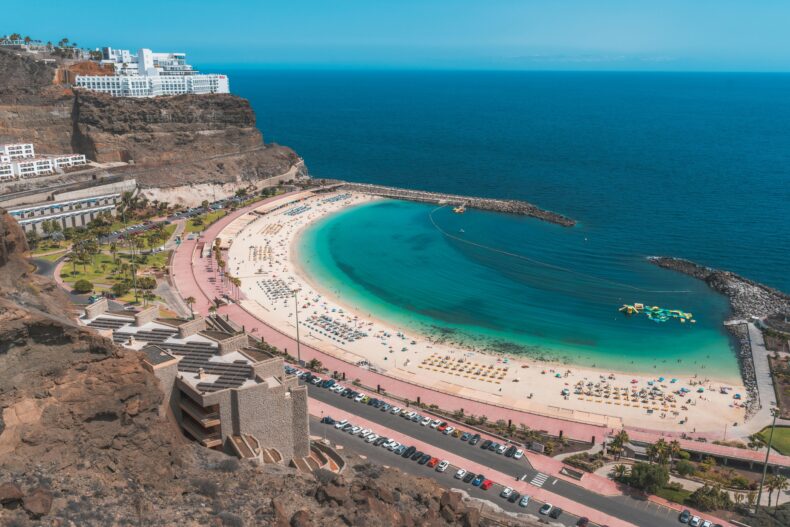
After a sweaty hike in the mountains, we cooled off at Playa de Amadores, and it hit the spot. The crescent-shaped bay is man-made, with pale sand and water in every shade of blue. Two breakwaters keep the waves out, so the sea is almost always calm here.
The beach is about 800 metres long and slopes gently, ideal with young children. There are sunbeds, showers and toilets, and behind it runs a car-free promenade with restaurants and little shops. Loud music and ball games aren’t allowed on the beach, and you can feel it in the relaxed atmosphere.
After a swim we followed the coastal path along the rocks to Puerto Rico, just a few minutes away. There’s another sheltered bay with calm water there, and boat trips leave from the harbour. Puerto Rico is busier and more built-up though, with apartments stacked against the valley slopes.
In short: swimming yes, calm and clear | pale sand | sunbeds, showers, toilets and restaurants | parking in the car park near the beach | for kids a winner | best in the morning, as it gets busy in high season
For a view over the bay, stay at Gloria Palace Amadores Thalasso & Hotel, high on the rocks above it. After a beach day, unwind in the big thalasso centre with its seawater pools.
#6 Arguineguín and Anfi del Mar
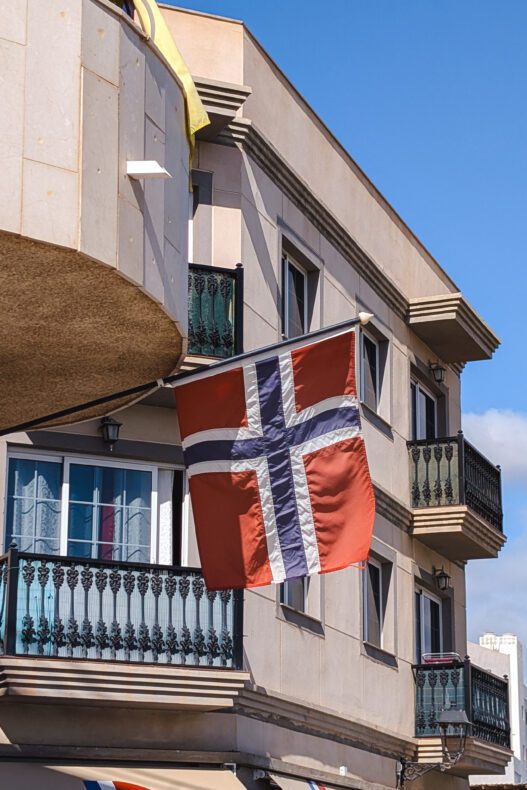
In Arguineguín we briefly felt like we’d landed in Scandinavia. The old fishing village is a favourite winter escape for Norwegians, complete with a Norwegian church and menus in Norwegian. Nice, but also pretty touristy. We came for the launderette and ended up staying two days on the beaches and at the playground. Playa de las Marañuelas, on the edge of the centre, is a quiet sandy beach with calm water.
A few minutes west lies Anfi del Mar, one of the most photographed beaches on the island. The white sand was brought in, and just offshore sits an artificial heart-shaped island that keeps the water calm and turquoise. The beach belongs to a resort, but day visitors are welcome too. Along the water you’ll find restaurants and a watersports centre.
In short: swimming yes, calm water | sand, white at Anfi del Mar | sunbeds, restaurants and watersports | parking in the village | good for kids | best for a quiet morning
For a few days on the calmer side of the southwest coast, Radisson Blu Resort Gran Canaria is a great pick. The hotel sits high on the rocks at Patalavaca, close to Anfi del Mar, and the balconies look out over the ocean.
The best beaches in the east: Arinaga, Pozo Izquierdo and Telde
#7 Arinaga: our favourite beach in Gran Canaria
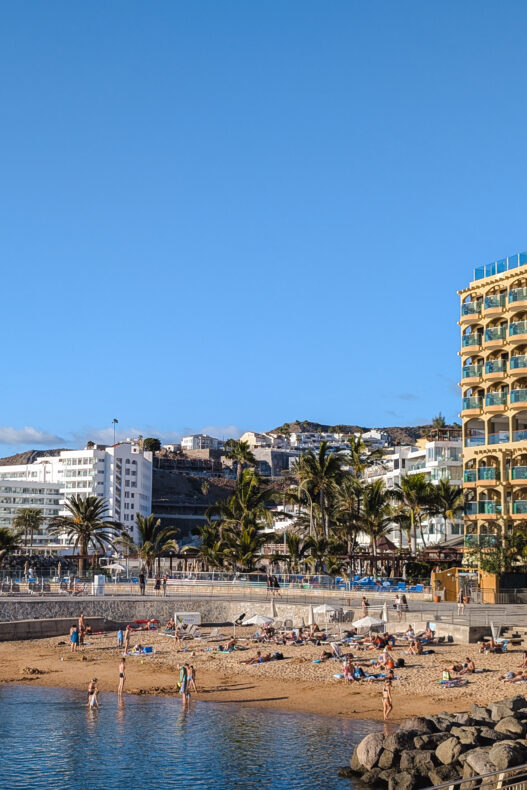
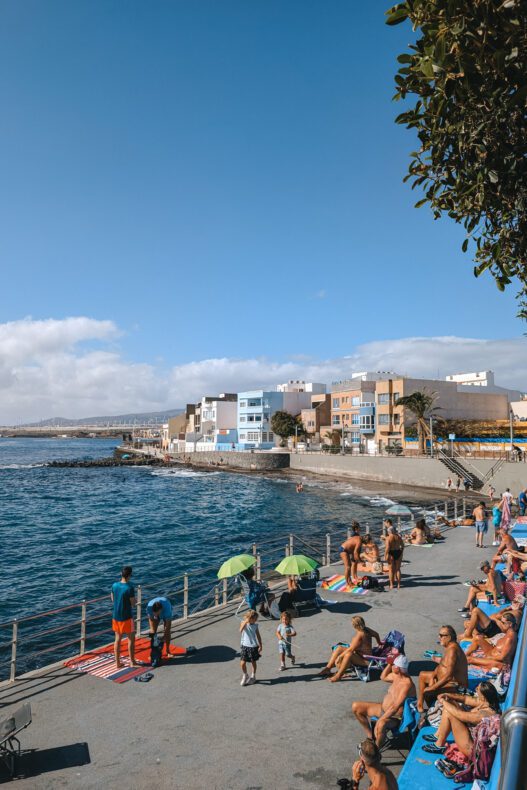
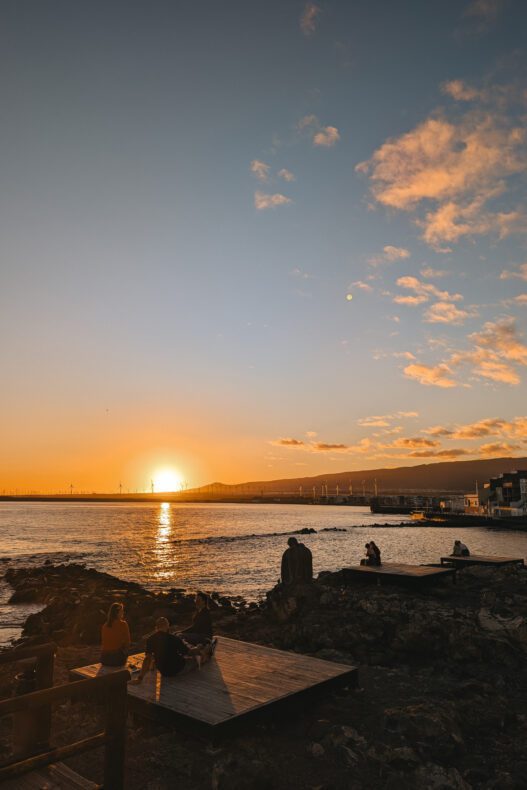
Arinaga lies on the east coast, just south of the airport, and it’s a beach town for the Canarians themselves. We spent Christmas Eve on the beach here with the kids, and later came back for another two nights. You won’t find big hotels, but there’s a long seafront promenade with terraces, little playgrounds and wooden decks to sit on.
The beach is really a string of small beaches. We started on Playa de Arinaga, the sandy beach by the centre, where you can walk straight from the water onto a terrace. Later we tried the spots further along the promenade, past Zoco Negro, and by the old harbour at Playa del Muelle Viejo.
The water is clear and usually calmer than on the north coast, although the east side gets more wind. At weekends the promenade and beaches fill up with local families, while on weekdays it’s wonderfully quiet. For fresh fish you don’t have to go far: there are a few simple fish restaurants in the village.
In short: swimming yes, usually calm | small sandy beaches between basalt rocks | playgrounds, showers and terraces along the promenade | parking in the streets behind the promenade | great for kids | best on weekdays or late afternoon
Arinaga doesn’t do big hotels, but Paraíso Playa de Arinaga suits you perfectly: an apartment with two bedrooms and its own kitchen, close to the promenade and Zoco Negro. In the morning you’re at the sea with your towel in a couple of minutes.
#8 Pozo Izquierdo: watching windsurfers on the windiest beach
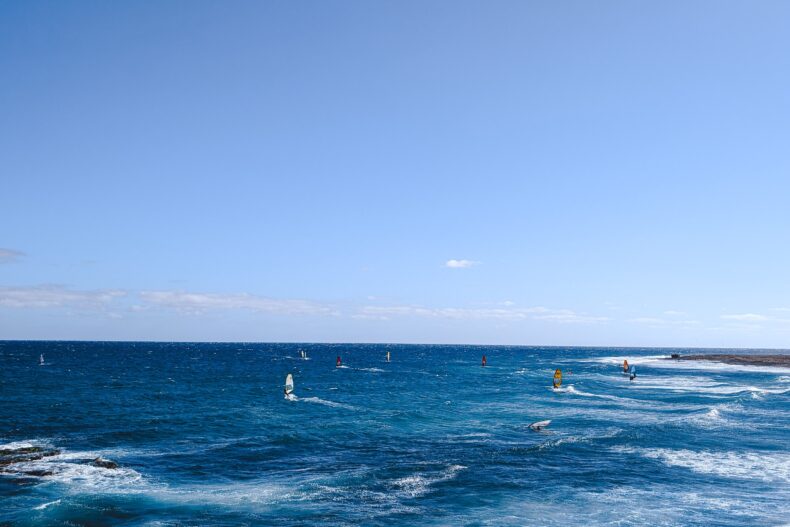
A few kilometres south of Arinaga lies Pozo Izquierdo, one of the best-known windsurfing spots in the world. The strong, constant wind brings world championship events here. When we spent a day there, it was blowing like crazy, and that’s the rule rather than the exception.
Swimming here isn’t a good idea: the beach is mostly stones and there’s barely any shade. Watching, on the other hand, is great. From the stone stands you can see the surfers launching big jumps over the waves, while the kids have fun in the playground by the promenade. Bring a kite.
In short: swimming no, too much wind and surf | stones and pebbles | playground, not much else | parking by the promenade | for kids great for watching and flying kites | best on a really windy day
The best place to stay is Arinaga, about fifteen minutes’ drive away.
#9 Telde: Playa del Pozuelo, La Garita and Tufia
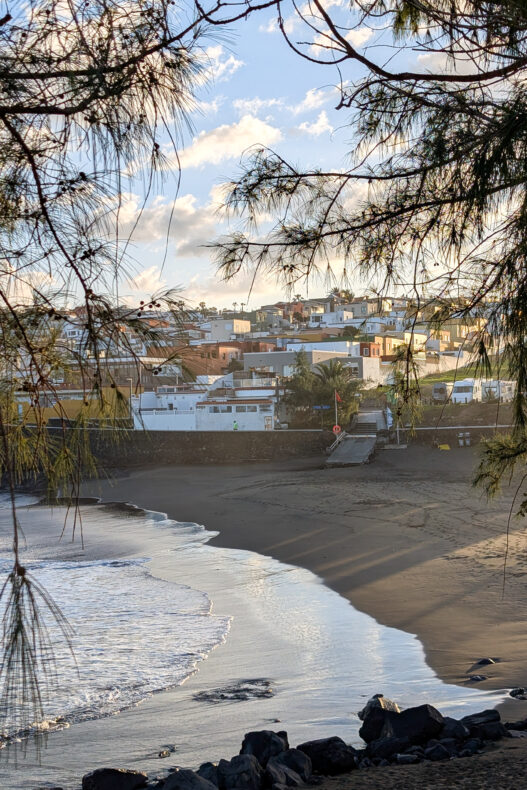
Between the airport and Las Palmas lies the coast of Telde, with a string of small beaches of dark lava sand. You won’t see many tourists here. We spent our beach day on Playa del Pozuelo, a quiet black beach next to Playa del Hombre, surrounded mostly by locals.
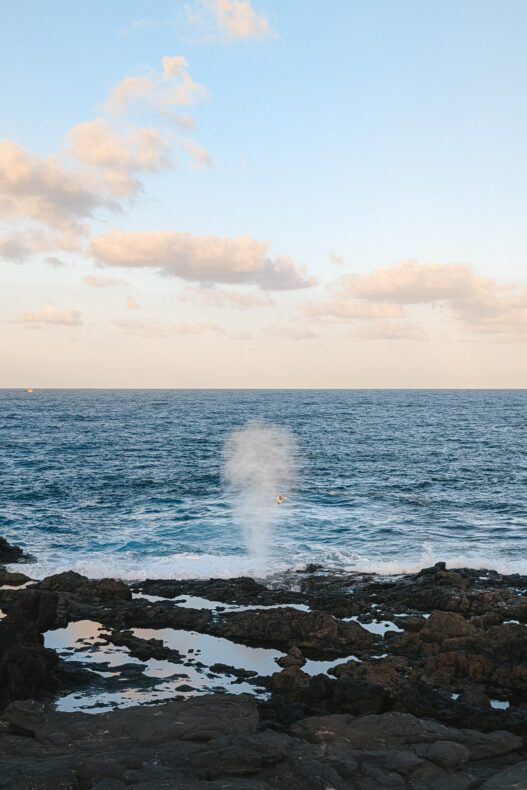
From there we walked along the promenade towards La Garita. At El Bufadero the ocean forces its way through a hole in the rocks and shoots up with every wave, a show the kids couldn’t get enough of. We didn’t settle on the beach at La Garita itself, but the kids spent a good while in the playground on the promenade.
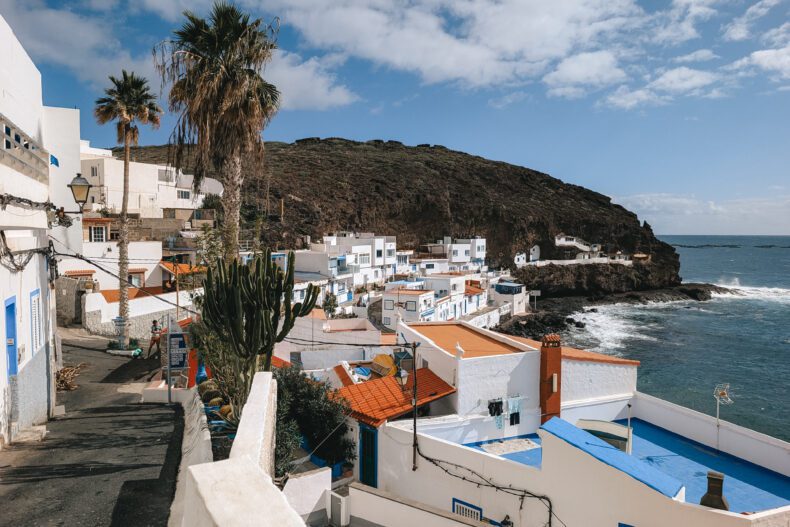
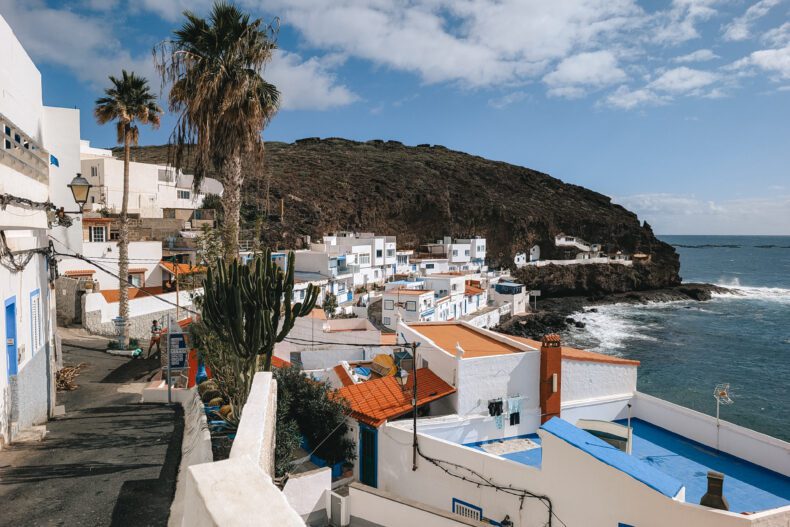
Further south, close to the airport, is Tufia, a hamlet of white houses against the cliff with a small bay of black sand. On calm days it’s a favourite with snorkellers and divers. The day we came, the sea was pounding the rocks and we stuck to watching. There are no facilities, so bring your own food and drinks.
In short: swimming yes, when the sea is calm | black lava sand | restaurants and playgrounds at La Garita and Melenara, nothing at Tufia | parking along the promenade and in the villages | good for kids on a calm day | best for a local beach day
Want to stay on this local stretch of coast? Have a look at La Marine Boutique Hotel on the Melenara promenade. The apartments have a balcony with a sea view, some even have a private hot tub, and the airport is ten minutes’ drive away.
The best beaches in the north and west
#10 Las Palmas: Las Alcaravaneras and Las Canteras
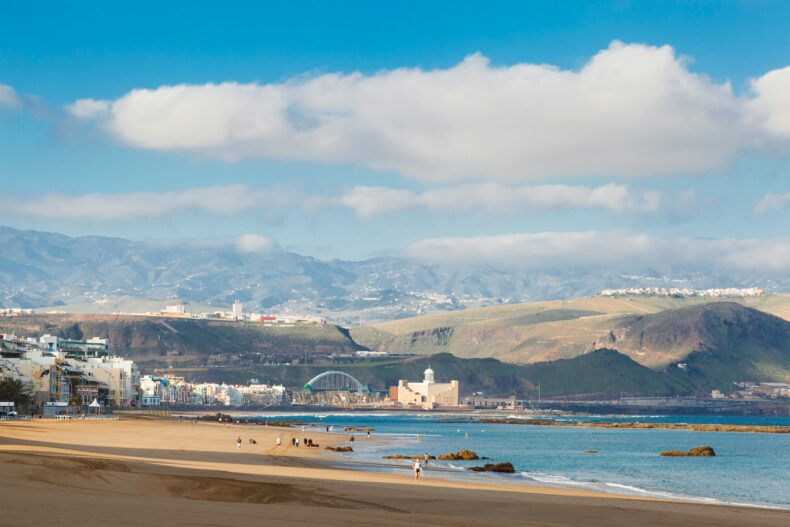
Las Palmas is one of the few capital cities with proper city beaches. We swam at Playa de las Alcaravaneras, on the harbour side of town. It’s a flat sandy beach with a local feel and the marina on either side: not the prettiest picture, but a perfectly good spot for a dip between city sights. We had family visiting that day and combined it with a walk around the Bandama crater.
On the other side of the city lies the better-known Playa de Las Canteras, over three kilometres long and lined with a promenade full of terraces. A natural reef offshore, La Barra, breaks the waves, so at low tide the water is calm and clear in many places. That makes Las Canteras one of the best snorkelling spots on the island. At the southern end the waves are bigger, and that’s where you’ll mostly see surfers.
In short: swimming yes, calmest at low tide on Las Canteras | golden sand | all facilities | paid parking in car parks, on-street spots are hard to find | good for kids | best combined with a day in the city
The easiest way to combine city and beach is from Bull Reina Isabel & Spa, right on the Las Canteras promenade. From the rooftop pool you look out over the beach, and the old Vegueta district is a short ride away.
→ Discover the 38 best places to visit in Gran Canaria
#11 Sardina del Norte: a fishing village with dark sand
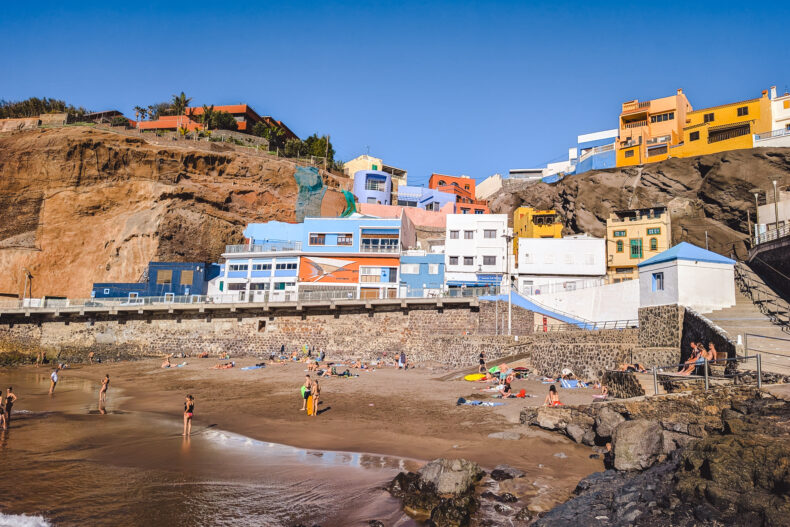
On the northwestern tip of the island lies Sardina del Norte, a small fishing village on a sheltered bay. The beach isn’t much to look at: a little patch of dark sand, calm water and colourful houses behind it. You’ll hardly see any tourists here, it’s mostly a beach for the people who live nearby.
Yet it turned into one of our best beach days on the island, all thanks to that local atmosphere. We swam, the kids played on the sand for hours, and we stayed until the sun sank into the sea.
The water here is remarkably clear. Divers go in from the pier, and even with just a snorkel you’ll spot fish among the rocks. Along the beach there are a few fish restaurants overlooking the sea.
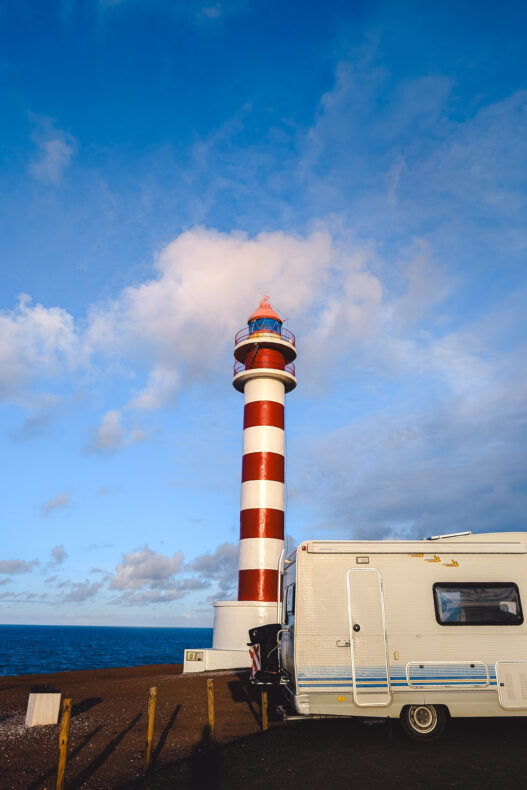
Close to the village, the Punta Sardina lighthouse stands on a cliff above the ocean. This is where we watched our very first sunset on Gran Canaria, with waves crashing against the rocks and Mount Teide on Tenerife in the far distance.
In short: swimming yes, sheltered bay | dark sand | fish restaurants and a shower | parking by the beach, full at weekends | good for kids | best for a whole day until sunset
Hotels are scarce here, but Sardina Serena is a great alternative: an apartment with three bedrooms and its own pool, a few minutes’ walk from the beach.
#12 La Aldea: a pebble beach beneath towering mountains
On the west coast, at the end of a stunning but winding road, lies Playa de La Aldea. It’s a wide beach of grey pebbles in a bay hemmed in by high mountain walls. You’ll see few tourists here, but plenty of islanders.
We swam here and played with the stones for hours. Our kids painted a few pebbles as happy stones and left them along the path for other visitors. They were picked up straight away, much to the pride of the little artists.
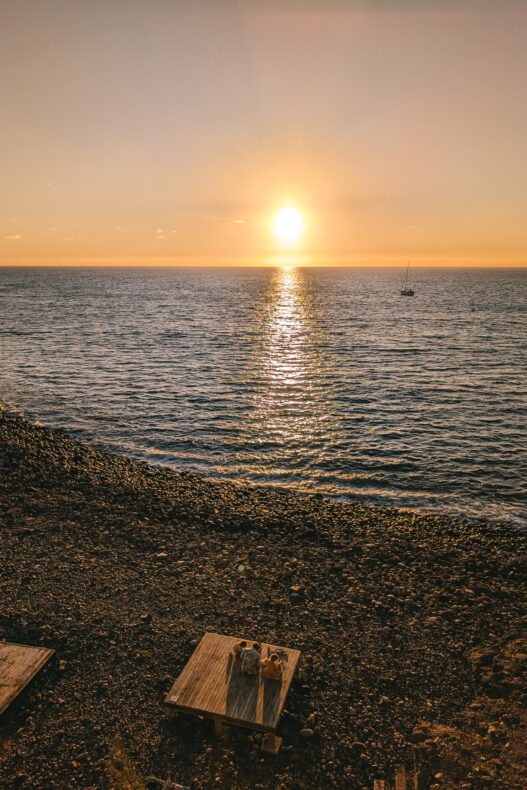
The sea is open here, so when the waves are high you’re better off not swimming. Next to the beach is a small fishing harbour with a few simple places to eat, and thanks to its west-facing position, the sunsets here are gorgeous. Water shoes come in handy on the pebbles.
In short: swimming yes, when the sea is calm | grey pebbles | simple eateries by the harbour | parking by the beach | for kids fun for swimming and stone hunting | best late in the afternoon
In this western corner of the island, Hotel La Aldea Suites is the best base. The hotel is in the village, a fifteen-minute drive from the beach, with spacious suites, a pool with a hot tub and a breakfast buffet guests rave about.
Visiting the beaches of Gran Canaria by campervan
Travelling by campervan? Then you can spend the night near quite a few beaches. We stayed in Arinaga, at Sardina del Norte and at Pozo Izquierdo, among other places, and found our spots through Park4Night. Overnight camper parking is now banned in Arguineguín, and rules change elsewhere too, so always read the recent reviews first.
→ Discover our tips for the Canary Islands by campervan

Bonus tips: more beautiful beaches in Gran Canaria
#13 Güigüí: only on foot or by boat
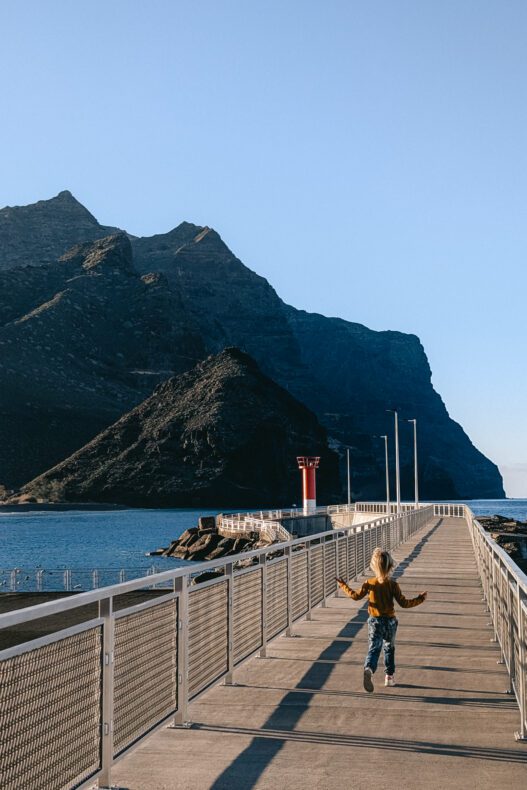
The most remote beach in Gran Canaria is Playa de Güigüí on the west coast. No road leads there: you can only get there on a tough hike from the hamlet of Tasartico, or by boat. Make the effort and you’re rewarded with a long beach of dark sand, clear water and towering cliffs all around.
The hike is roughly eight kilometres there and back, but you first climb over a mountain pass and then drop steeply down to the sea, with well over 800 metres of elevation gain in total. Set off early, as there’s hardly any shade, and bring plenty of water. With young kids it’s not a hike to attempt, so we didn’t make it there ourselves.
The easier option is a boat trip from Puerto de Mogán. Along the way you sail past cliffs and coves you can’t see from land, and at Güigüí you go ashore for a swim or a snorkel.
→ Take a private boat trip to Güigüí beach
#14 Natural pools on the north coast
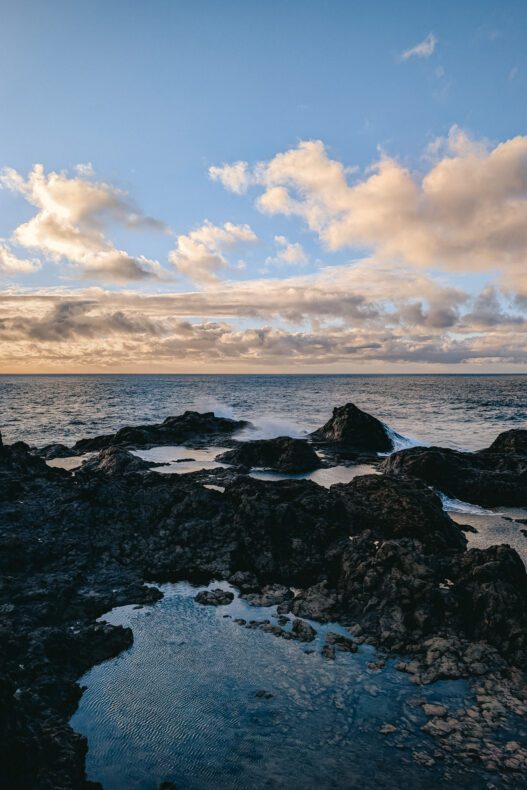
On the rugged north coast, the sea is often too wild for swimming. That’s why there are natural pools along the shore, carved out of the lava rock and fitted with little walls and steps. You’ll find good rock pools at Agaete and Puerto de las Nieves, at Punta de Gáldar and at Bañaderos.
At Gáldar we only watched, as the waves smashed into the rocks with such force that we stood staring at them for ages. In calm weather the pools are a lot safer than the open sea, but when the sea spills over the edge, stay out. Bring water shoes, as the rocks are sharp.
More tips for your trip to Gran Canaria
 Our pickHotels in Gran Canaria: from a beach hotel by the Maspalomas dunes to a room in the old Vegueta quarter
 Want to stop wherever you like? Rent a car with Discover Cars and compare the big rental companies in one go.
 No flight yet? Compare flights to Gran Canaria.
 A buggy ride through the canyons? Book the off-road buggy tour through the southern canyons on GetYourGuide.
 Discover all our blogs about Gran Canaria


