
Gran Canaria is so much more than sunshine and beaches. This island is full of surprises, from rugged mountains and deep ravines to colorful rock formations and unforgettable activities both on and below the water. In the south, you can walk through huge sand dunes that almost feel like a desert, while the inland areas open up to green valleys, dramatic peaks, and impressive rocky scenery. Along the coast, you can head out to spot dolphins in the wild or even discover the underwater world from inside a submarine. There is always something different waiting around the next corner.
If you like an active holiday, Gran Canaria is a fantastic place to explore. You can go hiking through the mountains, paddle along the coast by kayak, ride horses through the countryside, or take a buggy off-road across more rugged terrain. The island is packed with outdoor adventures, but it also works just as well for a slower style of travel. If you prefer culture, local food and wine, or peaceful mountain villages, you will find plenty to enjoy here too. That mix is one of the things that makes Gran Canaria such an easy island to love.
What makes Gran Canaria especially appealing is how much variety you can experience in a relatively small area. In one day, you might start among dry southern landscapes, continue through green mountain valleys, and finish by the sea. The scenery changes quickly, and each part of the island has its own character. That means you do not have to choose between nature, adventure, culture, or relaxation. You can combine all of them in one trip without spending hours on the road.
In this article, you’ll discover 20 of the best and most unique things to do in Gran Canaria. Some are famous highlights that belong on almost every first-time itinerary, while others are more unexpected experiences that can make your trip feel extra special. From dramatic viewpoints and scenic hikes to water activities, local flavors, and charming villages, there is something for every kind of traveler. Whether you are visiting for adventure or simply want to see more of the island beyond the beaches, these ideas will help you plan a more varied trip.
Gran Canaria is the kind of place that becomes more interesting the more you explore it. The beaches may be what first attracts many visitors, but the mountains, villages, coastline, and unusual landscapes are often what make the biggest impression. Taking the time to venture inland or try something new can completely change how you experience the island. With so many different activities packed into one destination, it is easy to create a trip that feels both relaxing and adventurous. These 20 ideas are a great place to start.


Top 20 Things to Do in Gran Canaria
Wondering what to do in Gran Canaria if you want to experience more than just the beaches? The island is packed with beautiful landscapes, outdoor adventures, and memorable places that are easy to combine in one trip. Below, you’ll find 20 varied activities that show just how much there is to discover beyond the coast. Some are famous highlights, while others offer a quieter or more adventurous side of the island. Together, they make Gran Canaria a much more diverse destination than you might expect.
#1 Walk Through the Dunas de Maspalomas
The Dunas de Maspalomas are one of the most famous sights in Gran Canaria and easily one of the most impressive landscapes in the south. This protected natural area feels almost like a small desert, with wide golden dunes stretching towards the Atlantic Ocean. We walked across the sandy hills ourselves and were surprised by how dramatic the scenery felt. The contrast between the soft dunes, blue sky, and ocean in the distance is especially beautiful. It is the kind of place that immediately feels different from the rest of the island.
The best time to visit is early in the morning or around sunset, when the temperatures are cooler and the area is usually less crowded. The softer light at these times also makes the dunes look even more beautiful and gives the whole landscape a warmer glow. Walking through loose sand can be more tiring than it looks, so comfortable shoes and enough water are helpful. Take your time and enjoy the different views as you move across the dunes. Even a short walk here feels like a real experience.
It is easy to combine your visit with other nearby sights. After exploring the dunes, you can head to the long beach of Maspalomas or continue towards the famous lighthouse at the western end of the coast. This makes the area ideal for a half-day visit with a mix of walking, beach time, and sightseeing. You can also simply stay for sunset and watch the light change across the dunes. Without a doubt, the Dunas de Maspalomas are one of the most iconic and memorable experiences in Gran Canaria.

#2 Hike to Roque Nublo
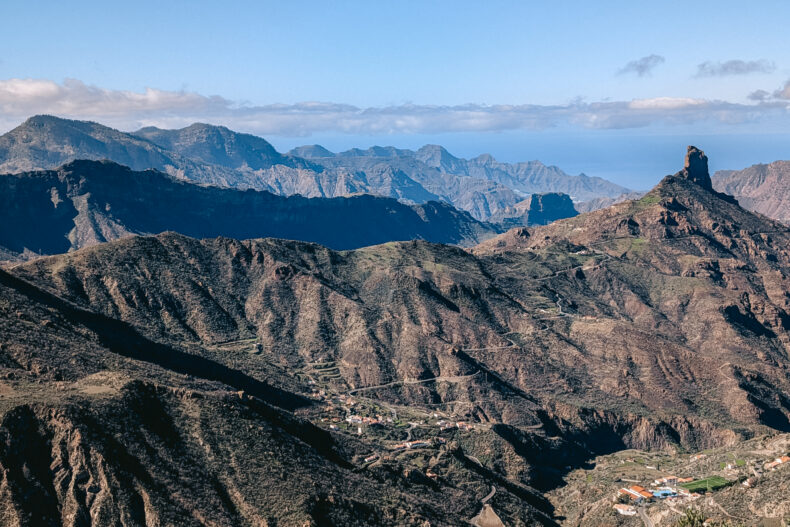
Roque Nublo is one of the most famous landmarks in Gran Canaria and a true symbol of the island. This impressive rock formation rises high in the mountainous interior at more than 1,800 meters above sea level. The walk to the viewpoint takes around 45 minutes and is quite manageable if you have an average level of fitness. Along the way, you pass through a rugged mountain landscape with wide views over deep ravines, rocky peaks, and pine-covered slopes. On a clear day, you may even be able to see Tenerife in the distance.
The area around Roque Nublo is also one of the best parts of Gran Canaria for hiking. The rock lies in the middle of a vast mountain region that stretches across the heart of the island, with plenty of trails to choose from. You can easily combine the main walk to Roque Nublo with another hike nearby if you want to spend more time exploring the area. The scenery feels completely different from the beaches and resorts along the coast. It is one of the best places to see just how wild and dramatic the interior of Gran Canaria can be.
#3 Explore Las Palmas de Gran Canaria
Las Palmas de Gran Canaria is the capital of the island and offers a great mix of history, culture, beach life, and a lively city atmosphere. Start your visit in Vegueta, the historic old town, where narrow streets lead past beautiful colonial buildings, quiet squares, and colorful facades. One of the main sights here is Santa Ana Cathedral, which stands in the heart of the district. After visiting the cathedral, take some time to wander through the surrounding streets and stop at one of the terraces for a drink or lunch.
We also highly recommend visiting the Museo Canario. This museum gives you a fascinating look into the indigenous culture of Gran Canaria before the Spanish arrived on the island. You can learn more about how the original inhabitants lived, what they believed, and how they buried their dead. One of the most memorable parts of the museum is the room filled with indigenous mummies. It is an unusual but very interesting place that adds much more depth to your understanding of the island’s history.
At the end of the day, continue towards Playa de Las Canteras, the long city beach that runs alongside a lively promenade. You can go for a swim, try surfing, or simply relax by the water after spending the day sightseeing. The promenade is lined with cafés and restaurants, so it is also a great place to stay for dinner or sunset. Las Palmas feels very different from the popular beach resorts in the south of Gran Canaria. That contrast makes it one of the most interesting places to include in your itinerary.
Explore Vegueta on a fun walking tour →
#4 Visit Puerto de Mogán
Puerto de Mogán is one of the prettiest coastal villages in Gran Canaria. This former fishing village is known for its whitewashed houses, colorful flowers, small bridges, and narrow streets around the harbor. It is often called the Venice of Gran Canaria because of the canals running through part of the village, although we personally think that comparison is a little exaggerated. Even without the nickname, Puerto de Mogán is a charming place with a relaxed atmosphere. It is easy to spend a few hours here simply walking around and enjoying the surroundings.
The marina is one of the nicest parts of the village, with yachts in the water and plenty of cafés and restaurants along the waterfront. On Fridays, the local market brings even more life to the streets and attracts visitors from across the island. If you enjoy a lively atmosphere, this is a great day to visit. If you prefer things a little quieter, choose another day of the week instead. The white houses, bright flowers, and blue water also make Puerto de Mogán a very photogenic place to explore.
You can easily combine your visit with a few hours on the nearby beach. After wandering around the village and marina, relax on the sand, go for a swim, or enjoy lunch at one of the restaurants overlooking the water. The village feels calmer and more intimate than some of the larger resort areas in the south. That makes it a lovely place to slow down for a while and enjoy the coastal setting. Whether you visit for the market, the beach, or simply the atmosphere, Puerto de Mogán is one of the nicest stops along Gran Canaria’s southern coast.


#5 Admire the Views from Pico de las Nieves
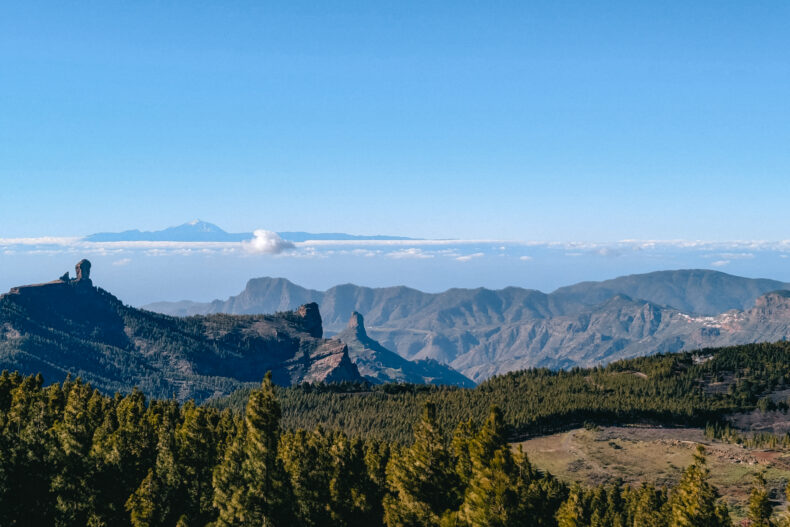
Pico de las Nieves is the highest point in Gran Canaria and one of the best places on the island for sweeping mountain views. From the top, you can look out over the rugged interior, with deep valleys, rocky peaks, and pine-covered slopes stretching into the distance. On a clear day, you may even be able to see Mount Teide rising above Tenerife on the horizon. The viewpoint is easy to reach by car, although parking near the top is limited and can fill up quickly. If that happens, you can usually park a little lower down and walk the final short section to the summit area.
This makes Pico de las Nieves a great option even if you do not want to do a long hike. Still, we personally found it much more rewarding to reach the top on foot. Sebastiaan hiked up from a campsite farther into the mountains and completed the route in a few hours. The walk gave him plenty of time to enjoy the scenery along the way and made the final view feel even more special. For us, this is easily one of the most impressive panoramas in Gran Canaria and a place that really shows how dramatic the island’s interior can be.
#6 Climb Los Azulejos de Veneguera (Rainbow Rocks)
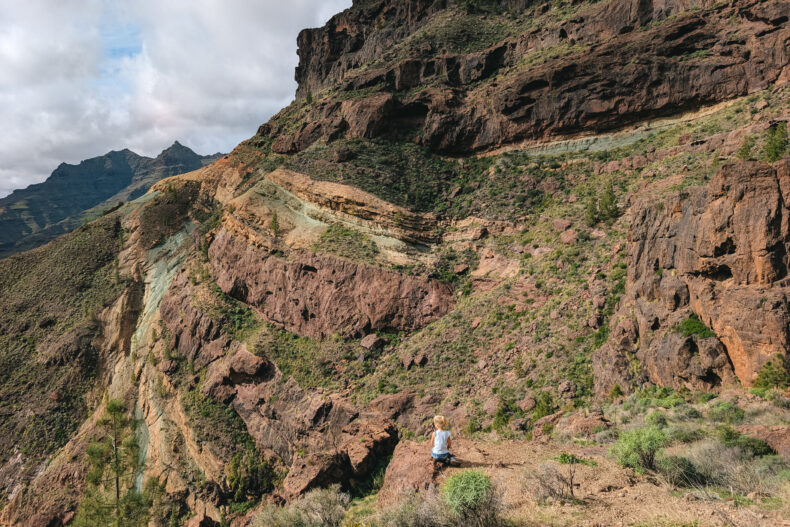
Los Azulejos de Veneguera, also known as the Rainbow Rocks, is one of the most colorful natural sights in Gran Canaria. You’ll find these striking rock formations in the west of the island along the GC-200, which is also one of the most scenic roads on Gran Canaria. The exposed layers of rock show shades of red, yellow, green, and ochre, created by the different minerals in the stone. Even from the road, the colors are easy to spot and make this a great place for a quick photo stop. But if you have a little more time, it is definitely worth heading up into the landscape.
From the roadside, you can take a short but fairly steep walk uphill. After around 20 minutes, you reach a beautiful area filled with colorful rock formations, small waterfalls, and natural pools. On a warm day, the clear pools are perfect for a refreshing swim after the climb. The mix of bright rock colors, flowing water, and rugged mountain scenery makes the whole area feel surprisingly magical. It is not a long hike, but it leads you to one of the most unusual landscapes on the island.
We highly recommend combining Los Azulejos with a road trip along Gran Canaria’s wild west coast. This part of the island feels much quieter and less touristy than the popular resort areas in the south. The road twists through mountains and deep valleys, with dramatic viewpoints appearing again and again along the way. Take your time, because the drive itself is part of the experience. We can promise that some of the most beautiful views in Gran Canaria are waiting for you on this side of the island.
#7 Spot Dolphins and Whales on a Boat Trip
A boat trip along the coast is one of the most popular things to do in Gran Canaria, especially if you love wildlife and being out on the water. Tours leave every day from places such as Puerto Rico, Puerto de Mogán, and Arguineguín, heading into the Atlantic Ocean in search of dolphins and whales. The waters around the Canary Islands are home to several species throughout the year, which gives you a good chance of seeing marine life during your trip. Dolphins are often spotted, but it is always worth remembering that these are wild animals. Nothing can ever be fully guaranteed.
Most dolphin and whale watching tours last around two to three hours, so they are easy to fit into a day at the coast. Some trips also include a swimming or snorkeling stop, which is a fun extra when the weather is warm and the sea is calm. The views from the boat are another highlight, especially when you look back towards Gran Canaria and see the mountains rising behind the coastline. Spending a few hours out on the Atlantic already feels like an experience in itself. Spotting dolphins swimming beside the boat makes it even more memorable.
When choosing a tour, we recommend booking with a certified operator that follows responsible wildlife-watching guidelines. Keeping a respectful distance from dolphins and whales helps protect the animals and avoids disturbing their natural behavior. A smaller boat can also make the trip feel more personal, with fewer people and a calmer atmosphere on board. Whichever tour you choose, seeing marine life in the open ocean is a special experience. For many visitors, it easily becomes one of the highlights of a trip to Gran Canaria.
Book a dolphin-watching catamaran tour →
#8 Go Diving or Snorkeling Along the Coast
Gran Canaria looks completely different once you head below the surface. The south coast is especially popular for diving and snorkeling because the water is often clear, calm, and easy to access from the beach. Around Puerto Rico, Amadores, and Arinaga, you’ll find several well-known spots with volcanic rock formations and plenty of marine life. Schools of fish, octopuses, and sometimes even rays can all be seen in these waters. It is a wonderful way to discover a side of the island that you simply cannot experience from land.
If you have never been scuba diving before, Gran Canaria is also a great place to try it for the first time. Many diving schools offer beginner sessions where an instructor guides you step by step and stays close throughout the experience. Snorkeling is an even easier option and can often be done straight from the beach with very little preparation. You do not need much equipment, and there are plenty of interesting areas close to shore. We recommend going in the morning, when the sea is usually calmer and the visibility is often at its best.
Whether you choose scuba diving or snorkeling, exploring the underwater world adds something completely different to your trip. The volcanic seabed creates small caves, rocky ledges, and hiding places where marine life gathers. Even a short swim with a mask and snorkel can reveal far more than you might expect. It is an accessible activity that works well for beginners, families, and more experienced divers alike. For us, it is one of the most enjoyable ways to experience Gran Canaria beyond the usual beach day.
Never tried diving before? Book a beginner scuba diving experience →
#9 Go Horseback Riding Through the Rugged Landscape
Horseback riding is a peaceful but adventurous way to explore the inland landscapes of Gran Canaria. During a guided ride, you leave the busy coastal resorts behind and follow quiet tracks through hills, valleys, and dry countryside. The routes often pass cacti, rocky slopes, and wide open landscapes that feel wonderfully remote. From horseback, everything moves at a slower pace, giving you more time to enjoy the scenery around you. It is a lovely way to experience the wilder side of the island without having to hike for hours.
You do not need to be an experienced rider to join most tours. There are options for complete beginners as well as longer or more challenging routes for people who already feel comfortable on a horse. Most rides last between one and two hours, making them easy to fit into a day of sightseeing. Before you set off, your guide will usually explain the basics and help you feel comfortable with your horse. That makes the experience approachable even if you have never ridden before.
Some companies also organize sunset rides, which can make the experience feel even more special. The evening light gives the dry hills and valleys a warm glow and creates a calm atmosphere away from the busier parts of the island. Horseback riding is active without being too demanding, so it is a nice choice if you want something adventurous but still relaxing. You also get to see areas that many visitors never explore. It is a memorable way to enjoy Gran Canaria’s countryside at a slower pace.
Go horseback riding through Gran Canaria’s volcanic landscapes →
#10 Take a Kayaking Tour
Kayaking is one of the best ways to explore Gran Canaria’s coastline up close. From the water, you can paddle beneath steep cliffs, pass rocky headlands, and discover small coves that are difficult to reach from land. The southwest coast is especially beautiful, with dramatic cliffs rising directly from the Atlantic Ocean. Being so close to the water makes the landscape feel even more impressive. It is a fun activity if you want to combine a little exercise with some of the island’s best coastal scenery.
Guided tours leave regularly from places such as Puerto de Mogán, Taurito, and Puerto Rico. Most trips last around two to three hours and are suitable for beginners, so you do not need any previous kayaking experience. Before heading out, your guide will explain the basic technique and go through the most important safety points. Once you are on the water, the pace is usually relaxed enough to enjoy the views without feeling rushed. This makes kayaking a very accessible activity for most travelers.
Many tours also include a stop for swimming or snorkeling along the way. This gives you a chance to cool down, look for marine life, and enjoy some of the quieter coves along the coast. If possible, choose a morning tour, when the sea is often calmer and the conditions are more comfortable for paddling. The light is also beautiful at this time of day, especially along the cliffs and rocky bays. On a clear morning, the combination of blue water and rugged coastline is hard to beat.
A kayaking tour feels adventurous without being too difficult. You get to see parts of the coastline from a completely different angle and often reach places that larger boats cannot access. Paddling beneath cliffs or into a quiet bay makes the scenery feel much more dramatic than when you view it from the beach. Add in a swim or snorkeling stop, and it becomes a varied outdoor experience rather than just a workout. For us, it is one of the most enjoyable ways to explore Gran Canaria’s coast.
#11 Walk Around the Volcanic Crater of Caldera de Bandama
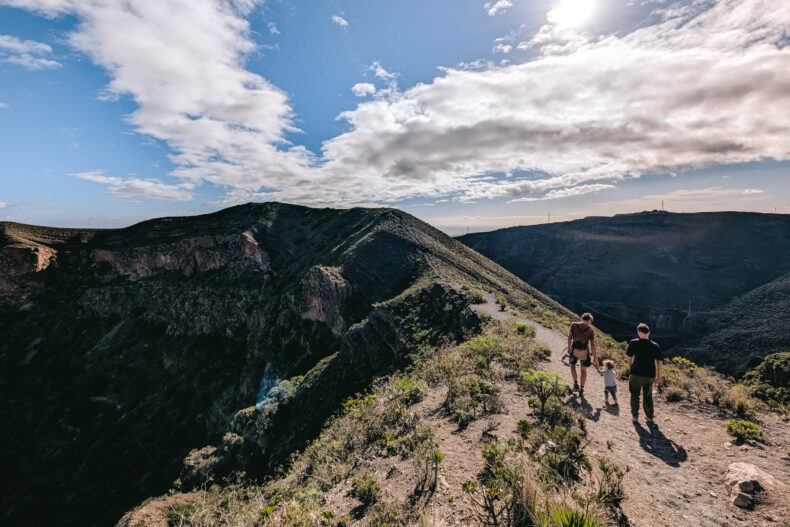
Of all the Canary Islands, we felt that Gran Canaria shows its volcanic side the least, but Caldera de Bandama is a clear exception. This impressive crater is more than one kilometer wide and around 200 meters deep, making it one of the most striking volcanic sights on the island. From the rim, you can look straight down into the enormous crater while also enjoying wide views over the surrounding countryside. The scale is much easier to understand once you are standing at the edge yourself. It is a fascinating place to see another side of Gran Canaria’s landscape.
One of the best ways to explore Caldera de Bandama is by following the circular trail around the rim. The walk is relatively easy and offers beautiful views from different points along the route. We even completed it with our young children, so it works well if you want a scenic hike without anything too demanding. Along the way, you can stop to look into the crater and enjoy the wider mountain scenery around you. The changing viewpoints make the walk interesting from start to finish.
If you are looking for more of a challenge, you can also descend to the bottom of the crater. The way down takes around 30 minutes and is steeper and rockier than the trail along the rim. Good walking shoes are definitely useful, especially because parts of the path can be uneven and covered with loose stones. Keep in mind that the climb back up is much harder than the descent. In warm weather, make sure to bring enough water and take your time on the way back.
Caldera de Bandama is only around a twenty-minute drive from Las Palmas, which makes it very easy to combine with a visit to the capital. You could explore the crater in the morning before heading into Vegueta or relaxing later at Playa de Las Canteras. That makes it a great option if you want to mix nature and city sightseeing in the same day. Whether you stay on the rim or hike down into the crater, the views make the visit worthwhile. It is one of the most accessible ways to experience Gran Canaria’s volcanic past.
#12 Visit a Banana Plantation in Gran Canaria
Banana plantations can be seen all over Gran Canaria, especially in the greener north of the island. The tall plants with their huge leaves immediately stand out and give parts of the landscape an almost tropical feel. Visiting a plantation gives you a much closer look at one of the Canary Islands’ most famous local products. You can walk between rows of banana plants and see the fruit growing right in front of you. It is a simple but surprisingly interesting stop during a road trip through the north.
During a guided tour, you will learn how the bananas are grown and why the large bunches are often covered with protective bags. Guides usually explain the different stages of the growing process and what makes Canarian bananas different from other varieties. They are generally smaller, but they are also known for their sweet flavor and soft texture. Seeing how much work goes into growing something so familiar makes the visit more interesting than you might expect. It is also a nice way to learn more about local farming traditions.
Many plantations offer relatively short tours, so you do not need to plan an entire day around the experience. You will often learn more about harvesting, sorting, and packing the bananas before they are sent to shops and markets. Many tours also include a tasting, which is of course one of the best parts. Depending on the plantation, you may get to try fresh bananas as well as other products made from them. This makes the visit both educational and very enjoyable.
A banana plantation tour is especially easy to combine with a drive through northern Gran Canaria. This part of the island is greener and more fertile than the south, with small villages, plantations, and mountain scenery along the way. It is a nice change from hiking or spending the day at the beach. The visit also gives you a better idea of everyday life and agriculture on the island. If you enjoy local food and simple cultural experiences, it is definitely worth adding to your route.
Book a guided tour of one of Gran Canaria’s banana plantations →
#13 Admire Barranco de las Vacas
Barranco de las Vacas is a small but very impressive gorge hidden in the interior of Gran Canaria. The narrow rock walls have smooth, flowing shapes that were slowly carved by water over many years. Their warm colors and curved lines give the canyon a look that feels completely different from the surrounding landscape. When sunlight enters from above, it creates beautiful patterns of light and shadow on the rock. Even though the gorge is not very large, it is one of the most photogenic natural stops on the island.
The walk to Barranco de las Vacas is short and quite easy, which makes it accessible for most visitors. We even visited with our young children, and the distance itself was no problem at all. Once inside the gorge, you can take your time looking at the shapes, colors, and narrow passages between the walls. You probably will not spend hours here, but that is part of its charm. It is an easy stop that still feels special enough to be worth adding to your route.
Try to visit early in the day if possible, because Barranco de las Vacas has become very popular. Since the gorge is narrow, it can feel crowded quickly when several groups arrive at the same time. Going early gives you a better chance of enjoying the place when it is quieter. The light can also be especially beautiful in the morning, which makes it a good time for photos. Even a small difference in visitor numbers can have a big effect on the atmosphere here.
Parking is along the road rather than directly next to the gorge. From there, you walk a short distance beside the road before reaching the point where you can descend into the canyon. Be careful while walking along this section, as cars may pass nearby. Once you head down into the gorge, the scenery changes almost immediately and the tall rock walls begin to surround you. It is a short visit, but Barranco de las Vacas is one of those places that can leave a surprisingly strong impression.
#14 Visit One of Europe’s Only Coffee Plantations
Hidden in the lush Agaete Valley in northern Gran Canaria, you’ll find something you may not expect to see in Europe: a real working coffee plantation. This area is one of the few places in Europe where coffee is grown commercially. The valley’s mild temperatures, sheltered setting, and rich volcanic soil create ideal conditions for coffee plants to grow. Surrounded by green hills and tropical vegetation, it is also a beautiful place to explore. It makes a refreshing change from the beaches and busy resorts elsewhere on the island.
During a guided plantation tour, you can walk between coffee bushes filled with bright red coffee cherries while learning how the beans are produced. Your guide explains the whole process, from picking and drying the cherries to removing the outer layers and roasting the beans. You may also get to see traditional equipment, old machines, and storage areas that have been used during coffee production. The tours usually take around 60 to 90 minutes. Groups are generally small, which gives the experience a relaxed and personal feel.
One of the best parts of the visit is, of course, tasting the coffee for yourself. Coffee from the Agaete Valley is known for its mild and distinctive flavour, which can taste quite different from the coffee you normally drink at home. The fertile valley is not only used for growing coffee either. You’ll also find tropical fruits and other crops growing throughout the area. For anyone who loves coffee, local food, or unusual experiences, this is a fun and surprisingly interesting place to visit during a holiday in Gran Canaria.
Book a tour of this unique European coffee plantation →
#15 Explore the Ocean in a Real Submarine
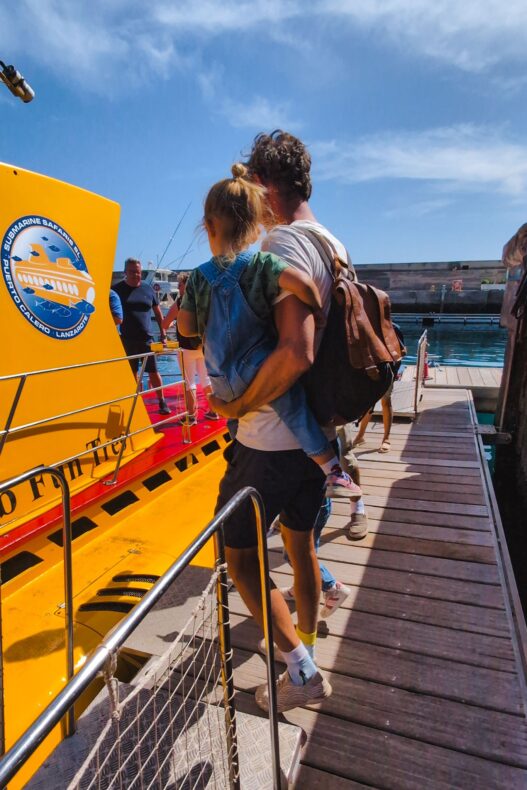
In Puerto de Mogán, you can step aboard a bright yellow submarine and discover Gran Canaria from a completely different angle. After a short introduction in the harbour, the submarine heads out into the Atlantic Ocean before slowly beginning its descent. It eventually reaches a depth of around 20 to 25 metres below the surface. Watching the daylight gradually change as you disappear beneath the waves is already part of the experience. It feels a little like entering another world, especially if you have never travelled underwater before.
Inside the submarine, every passenger has a comfortable seat next to a large round window, so you can easily watch the underwater scenery pass by. Fish swim close to the windows while the submarine moves over the volcanic landscape of the seabed. Along the route, you’ll also see artificial reefs and several objects that have been placed underwater to attract marine life. These areas are often home to many different fish and other sea creatures. An audio system provides extra information during the trip and explains more about what you are seeing outside.
The underwater part of the experience lasts around 40 minutes, giving you plenty of time to enjoy the views without feeling rushed. You stay completely dry inside the submarine, so there is no need for diving equipment, swimming skills, or previous diving experience. This makes the activity suitable for families and anyone who is curious about the underwater world but does not want to go scuba diving. After returning to Puerto de Mogán, passengers often receive a certificate as a small souvenir. It is definitely one of the more unusual and memorable activities you can do on Gran Canaria.
Check out this fun submarine experience →

#16 Explore the Free Cave House Museum in Artenara
High in the mountains of Gran Canaria, Artenara feels completely different from the busy resorts along the coast. This peaceful village is famous for its traditional cave houses, many of which were carved directly into the volcanic rock. At the free cave house museum, you can step inside these unusual homes and see how people once lived here. The rooms include simple bedrooms, a small kitchen, traditional furniture, and everyday household objects. It is a fascinating way to discover a more traditional side of life on the island.
One of the most interesting things about the cave houses is the temperature inside. Even on a warm summer day, the rooms stay naturally cool and comfortable. During the colder winter months, the thick rock walls help keep the interior much warmer than you might expect. This natural insulation made cave living surprisingly practical in Gran Canaria’s mountain climate. As you walk through the rooms, it becomes easy to understand why this way of living remained popular for so many generations.
After visiting the museum, it is worth spending some time exploring Artenara itself. The village is small and quiet, with whitewashed houses, narrow streets, and a relaxed atmosphere that feels far removed from the tourist areas by the sea. Several viewpoints around the village offer beautiful views across deep valleys and rugged mountain scenery. On a clear day, you can also look towards the impressive Roque Nublo in the distance. Artenara feels wonderfully authentic and shows you a completely different side of Gran Canaria.


#17 Camp with Views of Roque Nublo
Camping near Roque Nublo is one of the best ways to experience the wild and peaceful interior of Gran Canaria. You sleep surrounded by pine trees, mountain air, and beautiful views that feel far removed from the busy resorts along the coast. As evening falls, the sky often becomes wonderfully clear and fills with stars. The silence is part of the experience too, with little more than the sound of the wind moving through the trees. It is a simple way to enjoy the island’s nature at its best.
Keep in mind that temperatures can drop quite a bit after sunset, especially during the winter months. Even if the days feel warm and sunny, the nights in the mountains can be surprisingly cold. Warm clothes, extra layers, and a good blanket or sleeping bag are therefore well worth bringing. This is especially important if you are staying in a campervan or converted van without much heating. Being properly prepared makes the experience much more comfortable.
There are several official nature campsites in this area that you can use free of charge. However, you do need to reserve your spot in advance through the website of the Cabildo de Gran Canaria. We personally thought Corral de los Juncos was the most beautiful option. The campsite sits high in the mountains and offers fantastic views of Roque Nublo and the surrounding landscape. Sunset is especially beautiful here, when the mountains are covered in soft golden light.
Do not expect a campsite with lots of facilities, as the setup is very basic and there is no electricity. For that reason, it is best suited to self-sufficient campervans, motorhomes, or converted vans that already have everything you need on board. We travelled around Gran Canaria in a camper ourselves and really enjoyed the freedom it gave us. If you do not have your own vehicle, you can also rent a camper on the island and explore Gran Canaria at your own pace.

#18 Ride a Buggy into the Sunset
If you are looking for a more adventurous way to explore Gran Canaria, a buggy tour is a great option. You drive through rugged landscapes, along dusty tracks, and across hills and valleys that show a completely different side of the island. Along the way, you pass rocky scenery, dry terrain, and plenty of cacti, with wide views opening up around you. It is a fun way to reach places you would probably never see on a normal road trip. Some off-road tours even include hotel pick-up, which makes the whole experience easy from the start.
Many buggy tours take place in the late afternoon, when the light becomes softer and the landscape looks especially beautiful. As the sun slowly disappears behind the mountains, the sky turns shades of gold, orange, and red. This makes the already dramatic scenery feel even more impressive. You usually get to drive the buggy yourself, although you need at least one year of driving experience. Your guide leads the route and stops at some of the best viewpoints along the way.
The experience is active, a little adventurous, and a lot of fun without being too extreme. It is perfect if you want to take a break from beach days and hiking and try something completely different instead. The combination of off-road driving, mountain scenery, and sunset views makes it one of the more memorable activities on the island. Expect to get a little dusty, but that is all part of the experience. For anyone who enjoys a bit of action, this is a great addition to your Gran Canaria itinerary.
Book an exciting buggy tour here →
#19 Join a Wine Tour and Tasting
Gran Canaria may not be the first place that comes to mind when you think of wine, but the island produces some surprisingly good local varieties. The volcanic soil, warm climate, and different landscapes create excellent conditions for growing grapes. Around the Bandama Caldera and in the Agaete Valley, you can visit small family-run wineries and join a guided tour. These visits are usually relaxed and personal, making them a lovely way to learn more about the island beyond its beaches and mountains.
During a winery tour, you walk through the vineyards and see where the grapes are grown. Your guide explains more about local grape varieties and how the wine is made, from harvesting the grapes to filling the bottles. Smaller wineries often still use traditional methods alongside modern techniques, which makes the visit especially interesting. You also learn how Gran Canaria’s volcanic landscape influences the taste of the wine. Even if you do not know much about wine, the explanations are usually easy to follow.
The best part, of course, is the tasting at the end of the tour. Most experiences last around one or two hours and include several different local wines. These are often served with small bites such as cheese, bread, or tapas, giving you a chance to try more local flavours at the same time. Many of the wines have a fresh, slightly mineral taste that is typical of grapes grown in volcanic soil. The atmosphere is usually relaxed, friendly, and perfect for a slow afternoon.
A wine tour is especially nice if you enjoy food and want to learn more about Gran Canaria’s local culture. It gives you the chance to meet local producers, hear their stories, and taste something that is closely connected to the island’s landscape. The beautiful vineyard settings are another bonus, with many wineries surrounded by mountains, valleys, or volcanic scenery. It is an easy-going activity that combines good food, local traditions, and beautiful surroundings. For wine lovers, it is definitely worth adding to your trip.
#20 Visit the Mountain Village of Tejeda
Tejeda lies in the heart of Gran Canaria, surrounded by steep mountains, deep valleys, and some of the island’s most dramatic scenery. As you get closer to the village, you can already spot the famous Roque Nublo and Roque Bentayga in the distance. The road to Tejeda winds through the mountains and offers beautiful views along the way. Even the drive feels like part of the experience. It is easy to understand why this area is often considered one of the most scenic parts of Gran Canaria.
The village itself is small, peaceful, and full of charm. Whitewashed houses line the narrow streets, while little cafés and terraces give the centre a relaxed atmosphere. You can easily explore Tejeda on foot, as most of the main sights are close together. A good place to stop is the small central square, where you can sit down with a drink and enjoy the mountain views. It is the perfect spot to slow down for a while and take in the surroundings.
Tejeda is also well known for its almond-based sweets, so this is a great place to try some local treats. One of the most popular is bienmesabe, a sweet almond cream that is often served with desserts or ice cream. You will also find traditional marzipan and other pastries made with almonds. Several bakeries and small shops in the village sell these local specialities. Trying at least one is definitely part of the Tejeda experience.
A visit to Tejeda is easy to combine with other activities in the surrounding mountains. You can go for a hike, stop at one of the nearby miradores, or simply continue driving through the beautiful interior of the island. The views around the village stretch across rugged valleys and volcanic peaks, with plenty of places to stop for photos. Whether you visit for a few hours or make it part of a longer mountain road trip, Tejeda is one of those places that shows you a completely different side of Gran Canaria.


