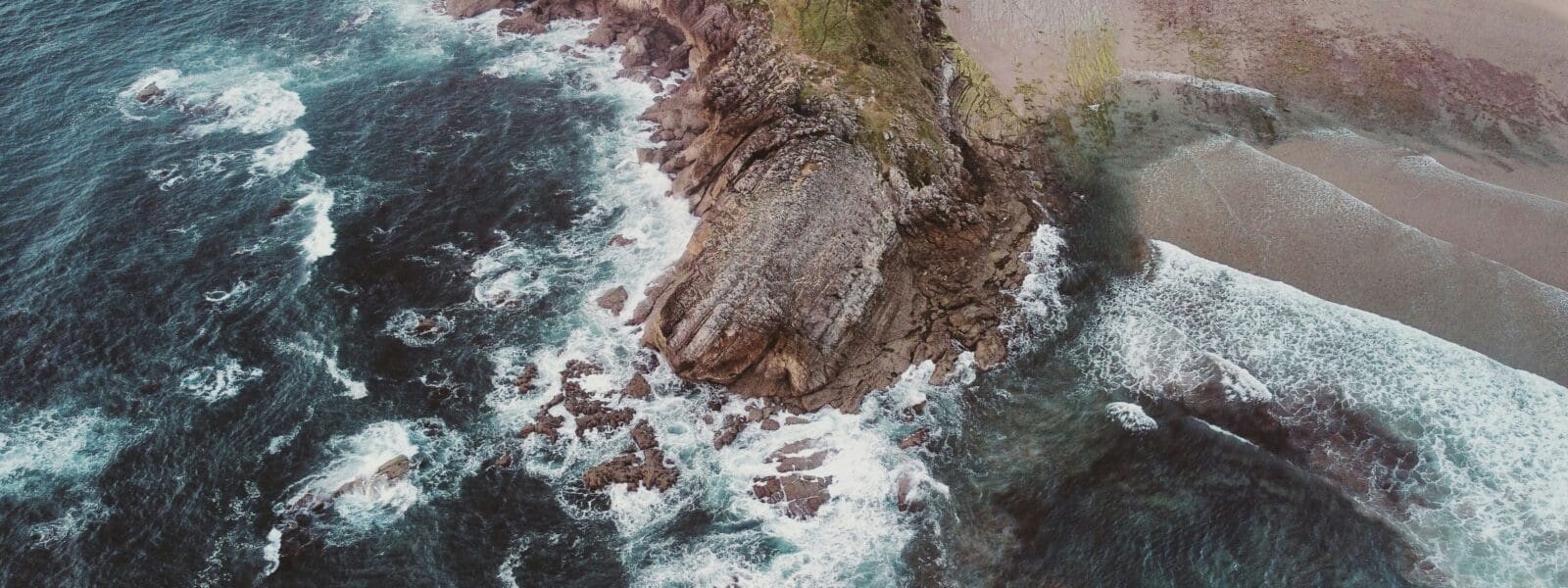
Cantabria is one of those places that leaves you wondering, “How did I not know about this sooner?” Nestled between the sea and the mountains in northern Spain, this relatively unknown region is bursting with diversity. One moment you’re winding your way through a rugged gorge, the next you’re wandering the narrow streets of a cozy fishing village. And just an hour later, you could be standing among the dramatic peaks of the Picos de Europa. With ancient caves decorated in prehistoric art, postcard-worthy villages, untamed natural landscapes, and an unexpected richness in architecture, Cantabria packs a remarkable range of sights into one compact region.
In this blog, we’ll guide you through the most beautiful places to visit in Cantabria. From well-known landmarks to off-the-beaten-path spots where mostly locals vacation, you’ll get a taste of everything this stunning region has to offer. It’s the ideal destination for anyone who loves scenic road trips, long hikes, amazing food, or simply wants to explore somewhere refreshingly different.


Where is Cantabria located in Spain?
Cantabria sits in the north of Spain, hugging the rugged coastline of the Bay of Biscay. It’s both an autonomous region and a province, with the lively city of Santander as its capital. Nestled between Asturias to the west and the Basque Country to the east, and bordered by Castile and León to the south, Cantabria is perfectly placed for exploring a mix of landscapes. The region may be small, but it’s packed with variety—mountains, forests, beaches, and charming fishing villages are all just a short drive from one another. Its unique setting between the sea and the mountains gives Cantabria the feel of a hidden gem—an untouched slice of Spain that’s still largely off the tourist radar.


What is Cantabria known for?
Cantabria is known for its lush green landscapes, ancient caves, rugged mountains, charming coastal villages, and rich, comforting cuisine. It’s the kind of place where you’ll want to stay longer than planned, with something new to explore around every corner.
What strikes most visitors right away is just how vividly green everything is. The region’s cool, moist climate keeps the scenery looking fresh and alive year-round. Forests, rolling hills, and meandering rivers create a constantly shifting backdrop—perfect for scenic walks, bike rides, or simply enjoying the peaceful views.
There’s also a whole other world waiting underground. Cantabria is home to several caves featuring rock art that’s thousands of years old. The Cave of Altamira is the most famous, often called the “Sistine Chapel of Prehistoric Art,” but El Soplao and Cueva del Castillo are just as fascinating and easily accessible to visitors.
If mountains are more your thing, the Picos de Europa will feel like paradise. Part of this spectacular national park lies within Cantabria, offering a landscape filled with rugged peaks, deep gorges, and endless scenic hiking trails. One of the must-do experiences is the cable car at Fuente Dé, perfect for reaching impressive heights with minimal effort, and maximum views.
Head to the coast and you’ll discover laid-back fishing villages where time seems to slow down. Places like San Vicente de la Barquera, Comillas, and Castro Urdiales invite you to savour the simple pleasures: enjoy freshly caught fish overlooking the sea, stroll through narrow cobbled streets, and let the peaceful atmosphere wash over you.
And of course, there’s the food. Cantabrian cuisine is all about comfort and flavor—think hearty bean stews, freshly marinated anchovies, rich local cheeses, and crisp regional cider. It’s simple, satisfying fare—exactly what you need after a day spent exploring the great outdoors.


The Best Travel Time for Cantabria
The best time to visit Cantabria is between May and September. During these months, the weather is typically sunny with mild, pleasant temperatures—perfect for hiking, exploring the mountains, or simply unwinding on the beach. July and August are the warmest, but also the busiest, with more visitors and higher prices. If you prefer a calmer atmosphere, May, June, and September are excellent alternatives: beautiful weather, fewer crowds, and often slightly better deals.
We visited in October and were welcomed by almost uninterrupted sunshine, bright blue skies, and temperatures warm enough to comfortably wear a T-shirt. Of course, the weather can always surprise you, but it just goes to show that even outside the peak season, conditions can be ideal. That said, the climate—especially in the winter months—can be quite unpredictable, so it’s always wise to bring a sweater or a rain jacket, just to be prepared.


Where to Stay in Cantabria
Cantabria offers a wonderful variety of places to stay—from cozy mountain lodges to grand seaside mansions. If you’re after a vibrant base with everything close at hand, Santander is a great choice. This lively coastal city has it all: sandy beaches, great restaurants, and excellent transport links. If you’re planning to explore the Picos de Europa, the mountain town of Potes is an ideal starting point. It’s just a short drive from the cable car at Fuente Dé, and from here, you can easily reach other picturesque mountain villages.
Along the coast, San Vicente de la Barquera and Comillas are among the highlights—full of charm, character, and just a stone’s throw from the beach. In Santillana del Mar, you can stay in beautifully restored historic buildings set right in the heart of the old town. The best way to experience it all? Mix and match: spend a few nights in the mountains and a few by the sea. It’s the perfect way to soak up everything Cantabria has to offer.
Top Things to Do in Cantabria: 15 Beautiful Places to Visit
#1 El Capricho de Gaudí
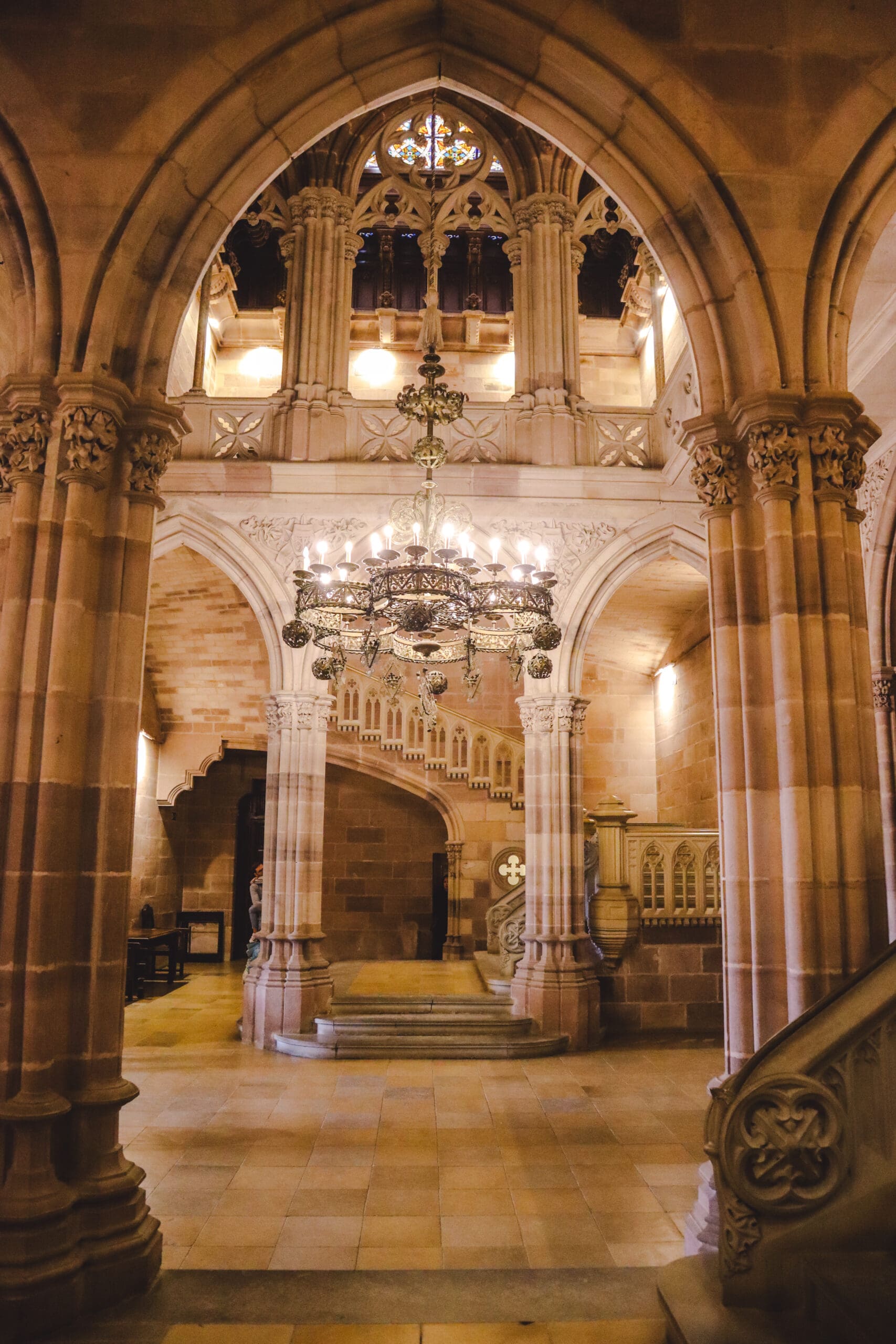
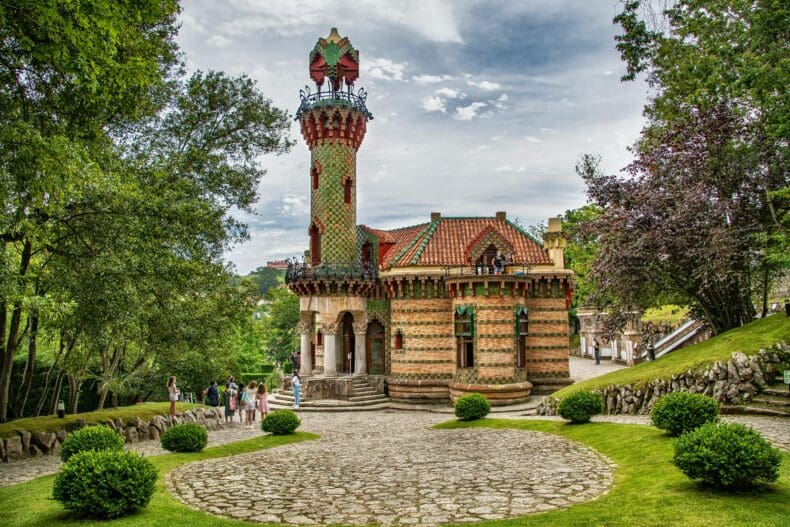
In Comillas, there’s a house you’re not likely to forget: El Capricho de Gaudí. It feels as though a music box has been turned into a building—full of charm, whimsy, and unexpected details. Designed between 1883 and 1885 by a young Antoni Gaudí, this striking home was created as a summer retreat for the wealthy Máximo Díaz de Quijano, an avid music lover. That passion for music is echoed throughout the design—from the stained-glass windows and ornamental touches to the very structure of the house.
The building immediately catches the eye with its playful forms and vibrant colors. Sunflower-patterned tiles in yellow and green cover the façade, a slender tower rises like a minaret, and inside, wood, iron, and glass come together in a lively, almost theatrical way. This is Gaudí before his more famous works like the Sagrada Família, but his creative spirit is already on full display.
After falling into disrepair, the house was beautifully restored in the early 2000s and reopened as a museum. Today, visitors can roam freely through its rooms, balconies, and gardens. A lovely touch: the design cleverly follows the path of the sun, allowing each room to be bathed in natural light at just the right time of day. A small detail, yet so typical of Gaudí’s genius.
#2 Santillana del Mar
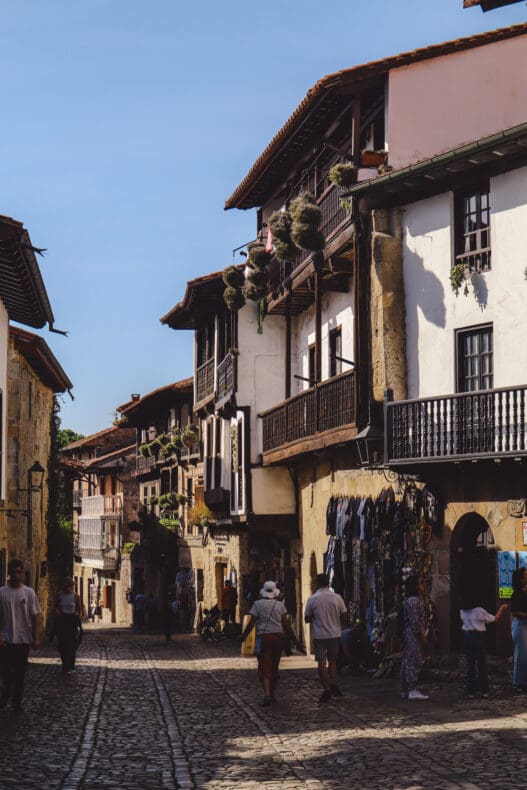
Santillana del Mar is one of those rare villages that feels like stepping straight into a storybook. Everything here is old, but in the most enchanting way possible. You’ll stroll along cobbled streets flanked by stone houses, wooden balconies, and blooming window boxes. With cars banned from the historic center, the peaceful, timeless vibe remains undisturbed—just as it should be.
The village takes its name from Santa Juliana, whose relics are kept in the Colegiata de Santa Juliana—an impressive Romanesque church dating back to the 11th century. Much of Santillana’s charm and identity still revolves around this ancient and spiritual site.
But the church is just the beginning. Other highlights include the elegant town hall, the medieval Merino Tower (Torre del Merino), and a number of beautifully preserved inns that hint at the village’s long history of hospitality. Just outside town, the Altamira Museum houses a strikingly accurate replica of the famous prehistoric cave paintings. While the original cave is now closed to protect it, the reproduction is so detailed and immersive that you won’t feel like you’ve missed a thing.
Santillana might be small, but it’s ideal for a slow-paced half day of wandering, admiring, and enjoying a coffee on a sun-drenched medieval square.
Where to stay in Santillana: For a stay that matches the village’s character, book a night in a parador—a boutique hotel set in a historic palace or mansion. In Santillana del Mar, you can choose between the elegant Parador de Santillana Gil Blas and the equally charming Parador Santillana del Mar. The historic Hotel Altamira is another gem, full of atmosphere and perfectly located in the heart of town.

#3 Fuente Dé (Picos de Europa)
If you’re dreaming of mountain adventures, Fuente Dé is your gateway to the peaks. It’s not a village, but a cable car station tucked away in the heart of the Picos de Europa. From here, you can glide effortlessly from the valley floor to over 1,800 meters high in just a few minutes. No hairpin bends, no steep hikes—just step in, sit back, and let the scenery unfold as you rise.
At the top, the view feels almost unreal: jagged, rocky summits, deep ravines, and far below, the lush green valleys of Cantabria stretching out toward the horizon. We visited once in November and found the peaks dusted with snow—a magical sight that made the landscape feel even more dramatic. The upper station, El Cable, is also the starting point for several hiking trails, from short scenic strolls to more challenging routes. One of the most popular takes you to the Puertos de Áliva, a peaceful mountain pasture where cows graze and silence surrounds you.
Fuente Dé itself lies at the very end of the road from Potes. There’s a Parador hotel, a restaurant, and a parking lot—that’s it. But that’s all you need. The real experience begins above, and believe us, the ride alone is worth it—for the sweeping views, the fresh mountain air, and the feeling of being on top of the world.

#4 Comillas
Comillas is a charming coastal town where the architecture will truly take your breath away. In the 19th century, it was discovered by the Spanish king, and not long after, wealthy aristocrats followed in his footsteps, turning it into a stylish summer retreat. Their legacy still shapes the town today, with grand mansions, elegant palaces, and even a stately university giving the place an air of quiet sophistication. Wandering through Comillas feels like stepping into the pages of a beautifully illustrated architecture book.
The most iconic building is El Capricho, designed by a young Antoni Gaudí, but the Palacio de Sobrellano is just as impressive. This neo-Gothic palace was built for the Marquis of Comillas and faces a former university that towers above the town like a castle on a hill. Everything here whispers grandeur, though in a distinctly Cantabrian way: refined, natural, and gracefully tucked into the landscape.
In the center of town, you’ll wander along cobbled streets lined with stone houses, wooden balconies, cozy cafés, and locally owned shops. Climb the surrounding hills and you’re rewarded with sweeping views of the sea and the dramatic, rugged coastline beyond. Comillas feels both regal and relaxed—ideal for anyone who loves beautiful architecture and the salty air of a coastal escape.
Where to stay in Comillas: One of the most popular places to stay is La Solana Montañesa, a hotel in a stunning location with lovely views. Right in the heart of the old town, Pasaje San Jorge offers cozy rooms in a handsome historic mansion. But for something even more special, our personal recommendation is Posada Ruilobuca, just outside town. It’s a peaceful hideaway full of charm and local character—perfect for a truly authentic experience.

#5 Potes (Picos de Europa)
Potes is nestled deep in a lush valley, surrounded by mountains that truly take your breath away. Getting there is half the adventure: a winding road leads you along rivers and sheer cliffs, until suddenly, you arrive in a picture-perfect mountain town, complete with arched stone bridges and centuries-old buildings.
The town itself may be small, but it has a vibrant, welcoming feel. Rising above the rooftops is the 15th-century Torre del Infantado, a landmark that dominates the skyline. From the lively square at its base, you can wander into narrow alleyways lined with cozy taverns and shops selling local delicacies. Think rich regional cheeses, air-dried sausages, and fiery local liqueurs like orujo—all bursting with character and tradition.
Just beyond the town lies the Monastery of Santo Toribio de Liébana, one of Spain’s most important pilgrimage sites. It’s said to hold a fragment of the True Cross, but whether or not you believe the legend, the monastery’s peaceful setting and spiritual atmosphere are worth the visit.
Potes also makes the perfect base for venturing into the Picos de Europa, with Fuente Dé just up the road. We’ve visited this region twice already, and we know we’ll be back again.
Where to stay in Potes: The charming Hotel Casa Cayo is a favorite for its friendly vibe and glowing reviews, while Villa Elena offers a warm, rustic stay just as full of character as the town itself.

#5 Liérganes
Liérganes is officially recognized as one of the most beautiful villages in Spain and we couldn’t agree more. Nestled between rolling green hills and set along the peaceful Miera River, this charming village feels like a step back in time. Its historic center is small but full of character, with narrow streets lined by stately stone mansions—some built by wealthy families who returned after making their fortunes in South America. The atmosphere here feels refreshingly local and unspoiled, as if the rhythms of daily life haven’t changed much over the centuries.
One of the village’s most iconic sights is the old stone bridge, known as the Roman Bridge—even though it was actually built in the 18th century. Beside it stands a sculpture of El Hombre Pez, or “The Fishman of Liérganes”: a local legend about a boy who vanished into the river and was later found at sea, transformed into a kind of merman. It’s the kind of story that adds a touch of magic to the already picturesque setting.
Liérganes is also known for its thermal baths, which have attracted wellness seekers for generations. The air is fresh, the mood is wonderfully laid-back, and there are scenic walking routes starting right from the village. Just outside town rise the two gently sloping hills known as Las Tetas de Liérganes—a playful name for the twin peaks that add a final flourish to the landscape.
Where to stay in Liérganes: For a truly memorable experience, stay at Hotel La Giraldilla, housed in a striking 1890s building with a whimsical, colorful tower. Other top-rated options include the welcoming Posada Carpe Diem, the stylish and modern Hotel Miera, and the charming La Calleja Real, steeped in local history.

#7 Santander
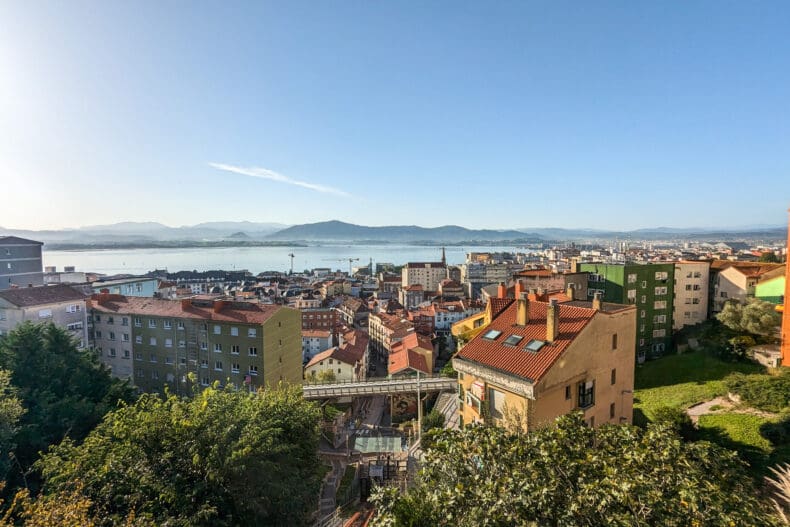
Santander is the capital of Cantabria, and it strikes a perfect balance between refined urban charm, wild coastal scenery, and the easygoing feel of a beachside escape. Nestled along a broad bay with sweeping views of the sea and distant mountains, the landscape is always within sight. Start your day with a coffee in a sleek city café, and by the afternoon, you could be barefoot on the golden sands of Playa del Sardinero.
One of the city’s most iconic landmarks is the Magdalena Peninsula, home to the grand Palacio de la Magdalena. Built in 1912 as a summer residence for King Alfonso XIII, this elegant palace now welcomes visitors to wander through its peaceful parklands, catch a glimpse of grazing deer, and soak up panoramic views of the Atlantic Ocean. A short walk away lies the Centro Botín, a futuristic, white-clad art center designed by Renzo Piano. With its clean lines and glassy walls, it seems to hover above the water, housing bright, contemporary galleries and a rotating calendar of bold exhibitions.
If you’re a fan of markets, don’t miss Mercado de la Esperanza. This historic covered market has been the heart of local food culture since 1904. Here, you’ll find everything from just-caught seafood to handcrafted cheeses and rich slices of jamón, all sold by friendly locals who know their craft. Santander buzzes with life, but it never feels overwhelming—it’s a city full of rhythm, but with plenty of space and sea breeze to unwind.
Where to stay in Santander: Indulge in classic elegance at Soho Boutique Palacio de Pombo, or choose a stylish boutique experience at Sercotel El Balcón de la Bahía Suites, complete with a pool and tranquil garden. Another great option is the refined Hotel Sol Boutique, where comfort meets character in the heart of the city.
#8 Desfiladero de la Hermida (Picos de Europa)
The Desfiladero de La Hermida is the longest gorge in Spain, and driving through it feels like stepping into a movie scene. The N-621 road winds for 21 dramatic kilometers, squeezed between towering limestone cliffs that rise as high as 600 meters above you. The Deva River flows right alongside, its waters glinting in the light as it snakes through the narrow valley, occasionally joined by a quiet bridge or a tiny cluster of houses.
As you make your way through the gorge, you’ll come across La Hermida, a small village famous for its natural hot springs. It’s the perfect place to pause and unwind—especially after a long hike or scenic drive. There’s a tranquil spa here where you can soak your tired muscles while listening to the sounds of nature all around you. And if you’re up for a little adventure, this is also the place to try a via ferrata—a thrilling climbing route along the cliff face, complete with cables, ladders, and breathtaking views that will leave you speechless.
Perched high above the gorge is the Mirador de Santa Catalina, a spectacular viewpoint reached by a narrow, winding mountain road. From up here, you’ll enjoy sweeping views across the gorge below, the jagged peaks of the Picos de Europa in the distance, and the serene valley of Liébana stretching out like a green ribbon through the landscape.

#9 The Rock Paintings of Altamira
Just outside Santillana del Mar lies one of Europe’s most remarkable archaeological treasures: the Cave of Altamira, a UNESCO World Heritage Site. This is where some of the earliest known cave paintings in Europe were discovered—created over 14,000 years ago by the first inhabitants of the Iberian Peninsula. The cave walls are covered in vivid depictions of bison, deer, and horses, all painted with natural pigments and an impressive sense of form, detail, and motion that still amazes visitors today.
To preserve these fragile artworks, the original cave was permanently closed to the public in 2002. Thankfully, the Altamira Museum, located just next door, offers the next best thing: an incredibly detailed replica called the Neocave, recreated with millimeter precision. Walking through this lifelike reconstruction is a powerful and immersive experience, giving you a real sense of what it must have felt like to stand inside the original. The museum also features engaging exhibitions that explain how these ancient paintings were made and offer a glimpse into the lives of the people who created them.
In early 2025, the site made headlines once again with the discovery of even older engravings and cave art—symbols and animal figures thought to date back around 32,000 years. These groundbreaking findings add a whole new layer of significance to Altamira, making it not only a historical landmark but also a place of continuing scientific discovery. Whether you’re passionate about history, fascinated by early human creativity, or simply curious, Altamira is an unforgettable stop that brings the distant past vividly to life.

#10 Cabarceno Natural Park
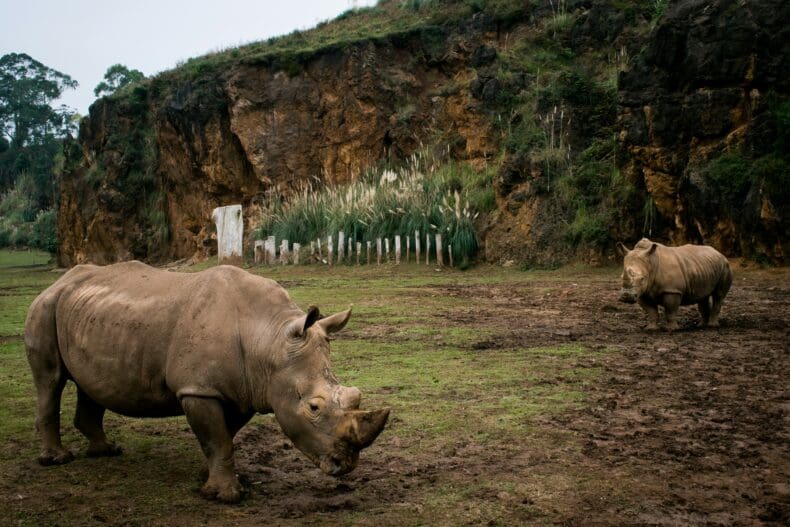
Cabárceno is nothing like the average zoo. It’s an extraordinary wildlife park set in the dramatic surroundings of a former iron mine. Here, giraffes, lions, elephants, and bears roam freely among rugged cliffs and wide open spaces. Instead of cages, the animals live in vast enclosures with grasslands, waterholes, and plenty of shade, designed to mirror their natural environments as closely as possible.
Just twenty minutes from Santander, Cabárceno is enormous—so big, in fact, that you can drive through it. But if you prefer to take your time, there are walking trails to follow and even a cable car that glides high above the park, offering incredible views of the landscape and the animals below.
Home to over a hundred species from around the globe, the park is a haven for animal lovers. The birds of prey displays are a crowd favorite, and the reptile house offers a closer look at some fascinating creatures. Throughout the park, scenic viewpoints give you breathtaking panoramas of the rocky terrain.
What sets Cabárceno apart is its sense of space and wildness. It feels more like a safari than a zoo—peaceful, immersive, and thoughtfully designed. It’s a dream come true for kids, but just as captivating for adults. Whether you’re passionate about wildlife or simply want a day out that’s a little different, Cabárceno is a truly unforgettable experience.
#11 Barcena Mayor
Officially listed among the most beautiful villages in Spain, Bárcena Mayor is a place that truly belongs on your Cantabria travel route. Visiting feels like stepping back in time by a few hundred years. There are no cars, no crowds—just stillness, nature, and a collection of beautifully restored stone-and-wood houses that look as if they’ve been plucked from the pages of a fairytale. Nestled in a lush green valley in the heart of the Saja-Besaya Natural Park, it’s also one of the oldest villages in the region.
The cobbled streets wind gently through the village, lined with houses whose wooden balconies are bursting with flowers. In the quiet squares, the only sounds are the gentle gurgle of a nearby stream or the soft hum of conversation drifting from a local tavern. The charm here is unmistakable. Many visitors pair a stroll through the village with a hike in the surrounding woods—which are especially magical in autumn, when the forest glows in warm shades of gold, copper, and crimson.
#12 Castro Urdiales
This charming town near the well-known city of Bilbao turned out to be one of the most pleasant surprises of our journey through northern Spain. We found a lovely green spot to park our camper and followed a slightly bumpy Vía Verde bike trail that led us straight into the harbor town. By sheer luck, we arrived just as the Sunday buzz was in full swing—locals chatting over drinks, children playing, and the whole town wrapped in a relaxed, cheerful vibe.
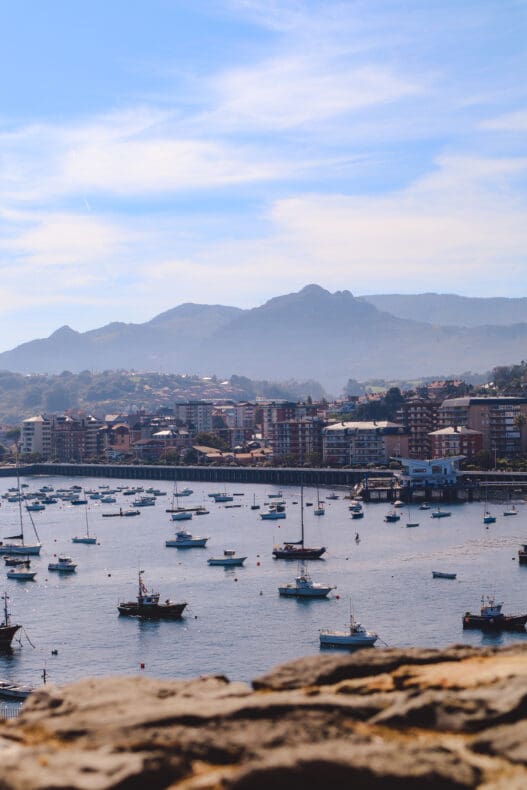
Castro Urdiales is best known for its dramatic Gothic church set right by the sea, a castle with a lighthouse perched on a rugged rocky outcrop, and a seaside promenade where people wander by with ice creams and no rush at all. Sitting on the far eastern edge of Cantabria, just shy of the Basque border, the town feels like a perfect mix of coastal beauty and rich history.
Wander into the old center and you’ll discover narrow stone alleys, small independent shops, and no shortage of great places to enjoy fresh seafood or pintxos. The Iglesia de Santa María towers high above the rooftops, while the little peninsula beside the castle offers breathtaking views across the bay. Down at the harbor, colorful fishing boats bob in the water, adding to the laid-back charm. It’s lively, but never hectic.
Castro is also ideal for a beach break, with several sandy stretches nearby—Playa de Brazomar being the most popular, perfect for a swim or an afternoon stroll.
Where to stay in Castro Urdiales: Treat yourself to a stay at Las Rocas Playa Hotel, known for its modern rooms and unbeatable location just steps from the sea.

#13 San Vicente de la Barquera
San Vicente de la Barquera sits proudly on a slender peninsula along the western coast of Cantabria, cradled between two rivers and framed by the snow-dusted peaks of the Picos de Europa. With the ocean stretching out before you and mountains rising behind, the views are nothing short of breathtaking.
The town itself is a maze of cobbled streets, traditional stone houses, and historic landmarks that tell stories of centuries past. Among the highlights is the Gothic church of Santa María de los Ángeles, whose construction spanned from the 13th to the 16th century. Nearby, the Castillo del Rey stands watch from its hilltop perch, while the Puente de la Maza—a majestic 15th-century bridge with 28 elegant arches—connects the town across the water.
When it’s time to slow down, the coastline is never far away. Playa de Merón and Playa de Oyambre are two local favorites, especially loved by surfers, but they’re just as perfect for a relaxing stroll along the sand. And don’t leave town without tasting the regional dish sorropotún—a comforting stew of tuna and potatoes that’s a staple on just about every local menu.
Where to stay in San Vicente de la Barquera: For a stylish and centrally located stay, book a room at Hotel Faro de San Vicente. Craving more character and charm? Just outside the town, you’ll find atmospheric stays like Hospedaje Granada, La Panera, or Posada Rural La Peña Casares, each offering a more traditional Cantabrian experience.

#14 Mogrovejo (Picos de Europa)
Mogrovejo may be small, but it brims with charm and character. Tucked away in the picturesque Liébana region, at the foot of the majestic Picos de Europa, this tiny village is home to barely twenty houses, but each one is so photogenic, you’ll want to capture them all. With its stone buildings, rustic details, and peaceful atmosphere, Mogrovejo feels frozen in time. It’s no surprise that it has been officially recognized as a cultural heritage site since 1985.
The standout feature is its square medieval tower, which dates back to the 13th century. Around it, you’ll find grand old houses with wrought-iron balconies and a quaint 17th-century church. The whole village is surrounded by soaring mountains, and on a clear day, the snow-capped peaks of the Picos de Europa are visible right from your bedroom window.
Mogrovejo is also a fantastic base for hiking. One of the most popular routes takes you through the nearby hamlets of Tanarrio and Redo. It’s a fairly short loop—just about nine kilometers—but it packs in plenty of dramatic landscapes and spectacular views along the way, making it a hike to remember.

#15 Cueva el Soplao
Cueva El Soplao might well be the most breathtaking cave in all of Spain. Discovered in the early 20th century during mining operations, it lies hidden in the Sierra de Arnero and reveals a stunning underground world unlike anything you’ve seen before. What sets this cave apart are its bizarre and beautiful formations—crystals that seem to grow against gravity, long, flowing curtains of limestone, and sharp, sparkling structures that look as if they belong on another planet.
Your journey begins with a ride on a vintage miner’s wagon, instantly transporting you back in time. From there, a guide takes you on foot through a series of extraordinary chambers with names like the “Gallery of Ghosts,” each one filled with awe-inspiring geological wonders. The lighting is soft and carefully placed, enhancing the natural beauty without overpowering it. Everything is thoughtfully laid out, and the paths are accessible even for visitors with limited mobility.
Outside the cave, the landscape is just as magical—lush forests and rolling hills stretch in every direction. Not far from the entrance, scientists have discovered prehistoric remains, including traces of ancient animals and insects preserved in amber, adding an extra touch of mystery and fascination to an already unforgettable experience.


