
Alicante is far more than just a sunny seaside resort on Spain’s famous Costa Blanca. The beaches are beautiful and the sun seems to shine almost every day, but if you take the time to look beyond the shoreline, you will find a city bursting with charm, rich history, and delightful surprises.
Beyond the palm-lined promenade lies a lively city full of things to see, picture-perfect neighborhoods, and activities for every kind of traveler. You can walk up to a hilltop castle with sweeping views of the Mediterranean, wander through a maze of narrow whitewashed streets, admire modern art displayed inside a grand old mansion, or sample local treats at the bustling covered market.
Alicante has a vibrant old quarter, a whimsical street decorated with giant mushrooms, echoes of its Roman past, and even a story-filled island just off the coast. In this guide, I will take you through the very best that Alicante has to offer, from well-known landmarks to hidden treasures, from golden beaches to the heart of the city, and from spectacular viewpoints to intriguing underground museums.
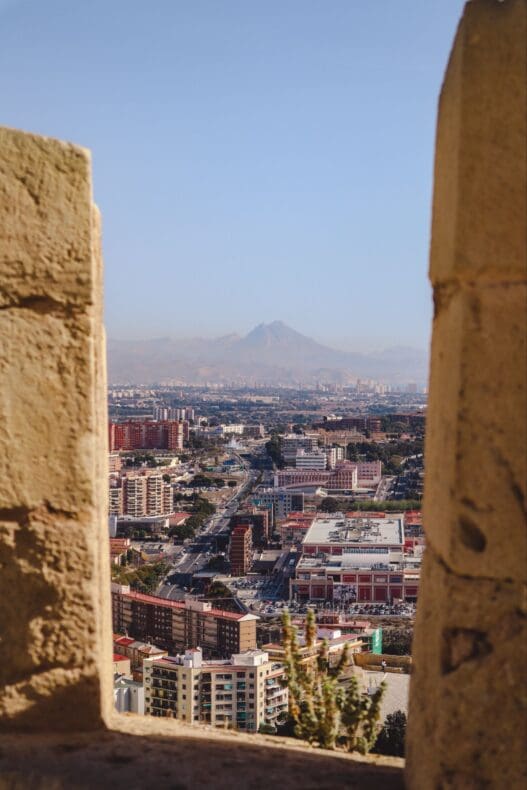
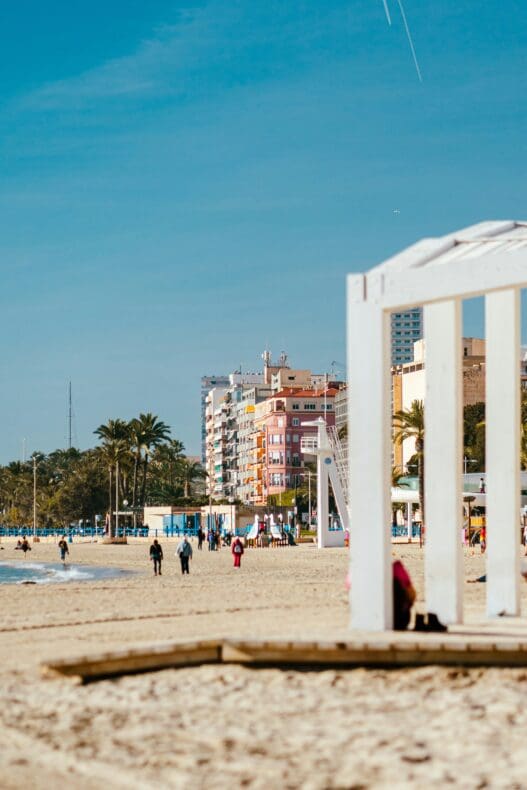

Where is Alicante in Spain?
Alicante is located in the southeast of Spain, right beside the sparkling waters of the Mediterranean Sea, and belongs to the Valencia region, known locally as the Comunidad Valenciana. The city stretches along the Costa Blanca, one of Spain’s most famous coastlines, sitting roughly halfway between Valencia to the north and Murcia to the south. Its prime location not only promises sunshine almost all year round but also makes it an ideal base for exploring the wider region.
Travelers arrive through Alicante-Elche Airport, a modern and well-connected airport just ten kilometers from the city center. From there, it is only a fifteen-minute drive to the heart of the city. With frequent direct flights from the Netherlands and Belgium, often several times a day, Alicante is both an easy and accessible destination.
Close by, you will find well-loved places such as Benidorm, known for its dramatic skyline of high-rises and golden beaches, and the charming coastal town of Altea, with its whitewashed houses and panoramic sea views. A short trip away is Elche, famous for its endless palm groves. And for those willing to venture a little farther, the vibrant cities of Valencia and Cartagena can both be reached in under two hours.


What Alicante is known for
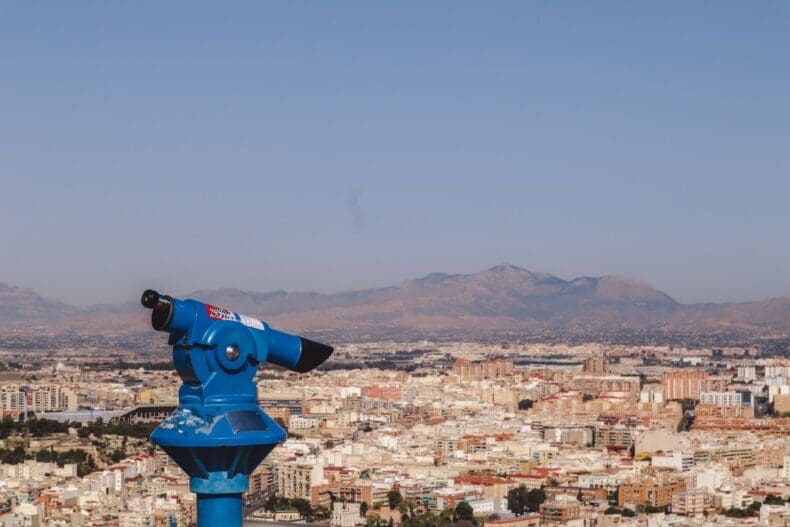
Alicante is one of those cities where everything seems to fall perfectly into place. Golden beaches kissed by the sun, a lively city center, a castle perched high on a hill, an island floating just off the coast, and a generous touch of history that you can sense on almost every corner. It is the kind of place where you can spend the morning exploring a fascinating museum, sink your toes into warm sand by the afternoon, and finish the day sharing tapas on a beautiful square under the glow of string lights. Everything is within easy reach, so you never have to search far to find something worth enjoying. It truly feels like one of the best city trip destinations in Spain.
The city’s beaches are perhaps its most famous feature. Playa del Postiguet stretches out right beside the city center, just a short stroll from the palm-lined Explanada promenade. A little further along lies Playa de San Juan, a wider and more tranquil beach, where a long seafront boulevard shaded by palms is lined with ice cream shops, inviting cafés, and plenty of space to relax. Thanks to its mild, sunny weather throughout the year, Alicante offers the perfect excuse for a getaway in any season.
Yet Alicante’s charm goes far beyond its coastline. The city pulses with life. The Explanada de España is the place to join the gentle rhythm of the evening paseo, walking alongside locals and visitors as the day fades. Down in the harbor, small fishing boats bob in the water next to sleek, white catamarans. At the bustling Mercado Central, the air is rich with the aromas of jamón, fresh herbs, seafood, and crusty bread straight from the oven. Wander into the old quarter of Santa Cruz and you will find narrow lanes and stepped streets, bright with flowerpots and dotted with little chapels, leading you up to a viewpoint with sweeping vistas over the city and sea. Every corner here seems to be as photogenic, welcoming, and full of character as the last.
In Alicante, history is never out of sight. Rising high above the city, the Castillo de Santa Bárbara stands as a proud reminder of its past. Once a formidable fortress guarding the coastline, it is now a panoramic viewpoint where you can gaze across almost the entire sweep of the Mediterranean shore. Down below, in the quiet beauty of its churches, the stories hidden in its street names, and the weathered stone of its ancient city gates, you can feel the centuries that have shaped Alicante and the many cultures that have called it home.
The city also holds a gentle touch of North Africa. It is there in the graceful curves and patterns of certain buildings, in traditions that have lingered through generations, and in the old tales of pirates and fortifications that once defended the coast. This influence gives Alicante a personality unlike many other Spanish seaside destinations. It is Mediterranean at heart, yet it carries a worldly spirit.
And as if its history and atmosphere were not enough to tempt you, Alicante is also a place for food lovers. The city’s culinary scene is full of fresh and simple pleasures, always bursting with flavor. Think of the catch of the day brought in by local fishermen, rich and comforting rice dishes, chilled and creamy horchata, warm churros sprinkled with sugar, and plates of tapas meant for sharing. Every bite is a taste of Alicante’s charm.


Where to Stay in Alicante
Alicante is a city that is compact and easy to get around, yet each neighborhood has its own distinct personality. Where you choose to stay can completely shape your experience. You might wake up to the sight of the sea stretching out before you, step outside into lively streets filled with cafés and music, or retreat to a peaceful corner just beyond the busiest areas. The setting you pick will influence the mood, pace, and feel of your entire city break.
https://www.booking.com/affiliate/prelanding_sdkThe old quarter of Santa Cruz is undoubtedly the most enchanting place to stay in Alicante. Imagine narrow, winding streets, whitewashed houses decorated with colorful flowerpots, stairways that twist gently uphill, and views stretching across the city and out to the sea. Here, you are right in the heart of historic Alicante, within easy walking distance of everything, yet it feels almost like a quaint village. It may not be the easiest area for those with mobility challenges, but for anyone who loves charm, character, and atmosphere, it is simply unbeatable.
#1 Hotel Smile & Co Hostal Boutique feels like a home away from home in the very center of the city. The setting is warm and welcoming, with vibrant, colorful rooms and a small terrace where you can enjoy a calm and leisurely breakfast in the morning.
#2 Hotel La Milagrosa is located in the heart of the old town, just a few minutes’ walk from the beach. The rooms are simple but comfortable, and the rooftop terrace, with its stunning views of the castle, more than makes up for any simplicity.
#3 Hospes Amérigo combines luxury and history in a former convent close to the cathedral. Guests can enjoy a relaxing spa, a rooftop pool, elegantly designed rooms, and a restaurant serving refined Mediterranean cuisine that delights every palate.
If you want to stay in the heart of the city without having to navigate steep streets, consider a hotel near the Explanada de España or close to the Mercado Central. From this location, it is easy to walk to the beach, the harbor, a variety of restaurants, and an array of shops. Everything is right at your fingertips, and in the evenings the neighborhood comes alive with energy and atmosphere without ever feeling overwhelming or crowded.
#4 Eurostars Pórtico Alicante blends sleek, modern design with a fantastic location on one of the city’s most lively squares. Guests stay in stylish, comfortable rooms and can enjoy sweeping views of the castle from the rooftop terrace.
#5 Casa Alberola Alicante (Curio Collection by Hilton) radiates classic elegance in a stunning building along the boulevard. This adults-only hotel offers refined rooms, some with views of the sea, and a cozy, intimate atmosphere that makes every stay feel special.
#6 Pensión Plaza América offers a simple yet neat option within easy walking distance of the city center. It is ideal for travelers who want an affordable, clean room with air conditioning and a convenient location for exploring the city.
For those who prefer to stay right by the water, Playa del Postiguet is an excellent choice. You remain close to the city center while enjoying the sensation of having your feet almost in the sand. A little further along the coast lies Playa de San Juan, a favorite for visitors seeking calm, space, and a long stretch of sandy beach. This area is filled with apartments and hotels with pools, making it perfect for families or anyone looking for a relaxed beach holiday.
#7 Meliá Alicante is ideally situated between the beach and the marina. Guests rave about the spacious rooms with private balconies, the large swimming pool, and the generous breakfast buffet served with stunning views of the sea.
#8 INNSiDE by Meliá Alicante Porta Maris offers sea views from nearly every room. The hotel sits right on the beach and features a relaxing spa, as well as a modern, light-filled interior that perfectly captures the breezy, coastal vibe.
#9 AC Hotel by Marriott Alicante combines sleek, stylish interiors with a convenient location just outside the busiest parts of the city. The rooftop pool, spa, and on-site restaurant provide extra comfort and make your stay even more enjoyable.
#10 NH Alicante offers a peaceful retreat just beyond the city center, with a contemporary design and a calm, relaxed atmosphere. On the rooftop, you can take a dip in a small pool while enjoying sweeping views over the city.
#11 Aparthotel Apartamentos de la Huerta provides modern apartments in a quiet neighborhood just outside the city center. You are close to Albufereta Beach and enjoy the freedom of your own kitchen along with a private balcony or terrace, perfect for relaxing at any time of day.


The 15 Best Sights in Alicante
#1 Castillo de Santa Bárbara
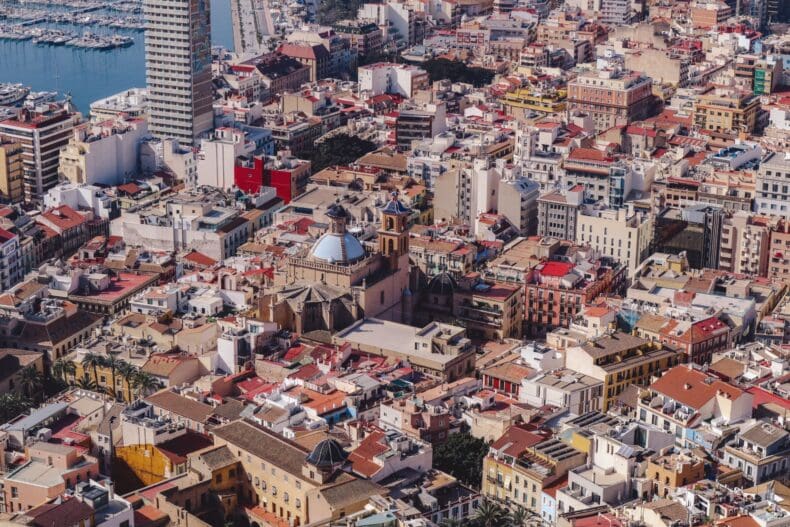
Perched high on the Benacantil, the dramatic mountain that rises like a giant above the city, stands the Castillo de Santa Bárbara. From its highest point, you can take in panoramic views over the red-tiled rooftops of Alicante, the marina dotted with sailboats, and the shimmering blue expanse of the Mediterranean Sea. The history of this remarkable fortress stretches back to the ninth century, when the area was under Islamic rule. The structure you see today took shape mainly in the sixteenth century, when Philip II of Spain decided the fort could be even more impressive.
The castle is divided into three levels. The uppermost section is the oldest and contains watchtowers, an ancient prison, a water well, and viewpoints that were once crucial for defense but now serve as some of the best photo spots in the city. This is the place to soak in the most stunning views of Alicante and its coastline.
You can reach the castle either by following a scenic walking path that begins in the old town or by taking the elevator tucked away in a tunnel near the beach. Inside the castle walls, there is a small museum, open spaces for temporary exhibitions, and often concerts or other cultural events. Entry to the castle itself is free, though there is a small fee if you use the elevator.

#2 Explanada de España
The Explanada de España is perhaps the most iconic promenade along the entire Costa Blanca. Its mosaic tiles, in shades of red, black, and white, create wave-like patterns that seem to capture the rhythm of the sea. More than six million tiny stones make up the design, which stretches all the way to the marina. Tall palm trees line both sides of the walkway, adding a tropical touch and providing welcome shade on warm, sunny days.
The promenade was laid out at the end of the nineteenth century and has grown into the lively heart of Alicante. Street performers, stalls selling handmade jewelry, and musicians entertaining passersby all contribute to its vibrant atmosphere. The Explanada connects the city beach with the old town and is a must-see for anyone discovering Alicante on foot.
One of the most striking landmarks along the promenade is Casa Carbonell, an elegant building commissioned by a wealthy textile merchant from Alcoy. Legend has it that he was turned away from a nearby hotel for arriving too covered in dust, so he decided to build his own palace-like residence along the boulevard. Today, Casa Carbonell stands as one of the most photographed and admired buildings in the city.

#3 The Best Beaches in Alicante
If you are seeking sun, sand, and sea, Alicante is the perfect destination. The most famous beach, Playa del Postiguet, sits right beside the city center and is just a short stroll from the old town. Soft golden sand, crystal-clear waters, and views of the majestic Castillo de Santa Bárbara make it a favorite spot for a quick swim or a leisurely walk along the shore. Beach bars, sun loungers, swaying palm trees, and a wide promenade add to the lively, inviting atmosphere. The beach is particularly serene in the early morning and late afternoon, offering a peaceful escape for those who enjoy a quieter setting.
For those who crave more space and tranquility, Playa de San Juan is an excellent alternative. This expansive beach lies just outside the city and is easily accessible by tram. Its modern promenade is lined with ice cream shops, cafés, and restaurants where you can comfortably spend the entire day. The beach itself stretches over three kilometers and offers all the charm and amenities you would expect from a classic Mediterranean coastline.
Both beaches proudly carry the Blue Flag certification, a mark that guarantees high standards of cleanliness, safety, and water quality. Playa del Postiguet is perfect for a brief beach break during your city adventures. For a full day of relaxation, head to San Juan, sink your toes into the warm sand, and soak up the endless view of the sparkling Mediterranean waters.

#4 Basílica de Santa María
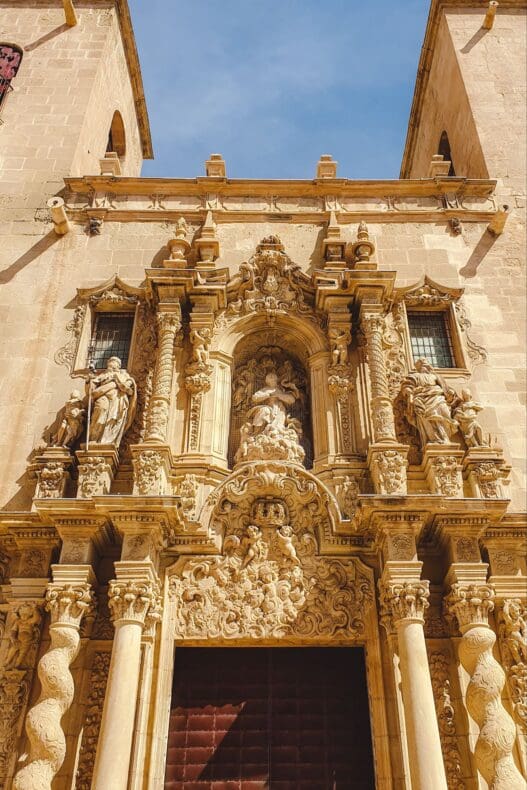
Nestled on one of the quietest streets of the old town, the Basílica de Santa María is a hidden gem. It may not be grand in size, but it certainly commands attention. The church was built between the fourteenth and sixteenth centuries on the site of a former mosque. Today, it showcases a captivating mix of Gothic and Baroque styles, with an impressive façade that immediately draws you inside. The two towers are deliberately asymmetrical, giving the building a slightly quirky appearance that only adds to its charm and character.
Stepping inside, you are met with a cool, shadowed interior, where soaring vaulted ceilings create a sense of calm and reverence. A stunning Baroque altar dominates the space, complemented by a wooden pulpit intricately carved and gilded with gold leaf. The eighteenth-century organ is still in use, and during concerts, its rich, warm tones fill the church with an unforgettable sound. Entry requires a small fee. Outside, the square is dotted with charming terraces and fragrant orange trees, offering the perfect spot to relax with a coffee after your visit.


#5 El Barrio de Santa Cruz
The moment you step into one of the steep streets of El Barrio de Santa Cruz, it feels as though you have stepped out of Alicante and into a different world. This enchanting neighborhood climbs the slopes of the Benacantil and forms a maze of twisting stairways, narrow alleys, and whitewashed houses adorned with blue-painted window frames and flowerpots on every wall. Brightly colored flags, hand-painted tiles, and small saint statues tucked into tiny niches give the area a lively, almost village-like charm that draws you in and makes exploring every corner a delight.
Santa Cruz is the oldest part of the city, and many of its homes date back to the Middle Ages and remain lived in today. During Semana Santa, the neighborhood comes alive with processions of candles, drums, and religious statues moving through its narrow streets. By day, it is peaceful and cool, perfect for a leisurely stroll, while in the evening, life spills into the streets as locals sit on doorsteps or relax under the shade of the trees. Make sure to wander all the way to the top, where a small chapel overlooks the city. From here, the view is almost too perfect to be real: a sea of white rooftops, a glimpse of the bustling harbor, and the sparkling Mediterranean stretching endlessly into the distance.


#6 Alicante’s (Free) Museums
Alicante is packed with small museums that are easy to miss, yet surprisingly rich in content. The best part is that many of them are free to enter. Begin at MACA, the Museo de Arte Contemporáneo de Alicante. Here, modern art is showcased within a seventeenth-century building, featuring works by Spanish greats such as Picasso, Miró, and Dalí. The collection is compact but carefully curated, and the museum itself is bright, airy, and beautifully designed, making it a pleasure to wander through.
A few streets away, you will find the Museo de Hogueras, dedicated to the city’s most famous festival, Las Hogueras de San Juan. Inside, you can admire the towering festival figures, traditional costumes, and discover how the celebrations end each year in spectacular fire and ashes. Close to the harbor, the Ocean Race Museum focuses on the world’s most challenging sailing race. You can step into a racing simulator, watch dynamic videos, and even climb aboard a real racing yacht. It is entertaining for children but equally captivating for adults.
The Museo de Aguas is another hidden gem. This underground museum illustrates how Alicante fought for centuries to secure water, with old wells, narrow channels, and impressive stone tunnels to explore. For archaeology enthusiasts, MARQ offers a different kind of experience with light, sound, film, and interactive exhibits. Entry requires a ticket, but the immersive journey is well worth it. Finally, there is MUBAG, the Museo de Bellas Artes Gravina. Less well-known, it showcases paintings from the sixteenth to the nineteenth centuries inside an elegant palace that is itself a masterpiece.
#7 Cathedral of Saint Nicholas
At first glance, the Catedral de San Nicolás might not immediately catch your eye. Its exterior is simple, almost austere, with no towering spires, no ornate statues, and no grand columns to announce its presence. Yet looks can be deceiving. Step inside, and you discover a cathedral whose charm lies entirely in its understated elegance. Built in the seventeenth century on the site of a medieval monastery, it honors the city’s patron saint, Saint Nicholas.
As you enter, the light draws your attention. The high, clean-lined vaults and the vibrant blue dome above the altar create a calm, almost meditative atmosphere. Around the main space, chapels display Baroque altars, intricate statues, and striking paintings. Make sure to wander into the cloister, where a small fountain, orange trees, and peaceful quiet make it feel like a secret garden tucked away from the city. The cathedral is open to visitors outside service hours. It may not be the most flamboyant landmark, but its beauty is found in its serene and simple elegance.
#8 Alicante Harbor
Alicante’s harbor is the kind of place where you can lose yourself for hours and never tire of it. The salty tang of the sea, the gentle lap of water against the quay, and the sight of boats swaying softly in the sunlight create a peaceful, inviting atmosphere. On one side, shiny yachts and catamarans are ready for excursions, while on the other, fishing boats float quietly, freshly returned from the sea. The wide promenades are lined with palm trees, benches, and lively cafés, making the harbor buzz with life from dawn until late at night.
Right by the water, the free-to-enter Ocean Race Museum offers an engaging look at one of the world’s toughest sailing competitions. A little further along, a bronze statue of Icarus stands on a pier, as if he could lift off from the sea at any moment. Walking along the Paseo de Gómiz, you will encounter joggers, street vendors, children on scooters, and couples savoring ice cream. Once the city’s gateway to the wider world, Alicante Harbor is now one of the city’s most relaxed, vibrant, and enjoyable spots.

#9 Mercado Central
The Mercado Central is not a touristy spot posing as a local market. This is the real deal, where Alicante’s residents do their daily shopping, exchange greetings between the tomato stalls, and where the scent of fresh fish blends with the sweet aroma of roasted almonds. The building itself, dating back to the early twentieth century, is a stunning example of modernist architecture. Its high, airy hall, intricate cast-iron details, and impressive central dome are remarkable sights on their own, even before you glimpse the colorful produce and delicious offerings inside.
Step inside, and the market comes alive with energy and sound. On the ground floor, perfectly arranged rows of cured meats gleam under the lights. Stalls overflow with jamón ibérico, lamb, sausages, and cheeses of every imaginable shape and size. A little further on, fresh fish is displayed on ice, still glistening from the morning catch. Down in the basement, vibrant fruits, vegetables, fragrant herbs, and flowers fill every corner. If wandering through all this abundance makes your stomach growl, you can easily grab a tapa or a freshly squeezed juice to enjoy as you explore. The market is open on weekday mornings, and by lunchtime, a calm settles over the space, offering a peaceful contrast to the morning bustle.


#10 Casa Carbonell
Casa Carbonell is one of those buildings that instantly draws your attention. It stands proudly at the start of the Explanada de España, overlooking the harbor, as if to quietly announce its elegance to everyone who passes by. Built in the 1920s at the request of textile magnate Enrique Carbonell, the building carries a story that only adds to its allure. According to local legend, Carbonell was once refused a room at a hotel in Alicante because he arrived too dusty from his travels and did not look presentable. Rather than accept the insult, he decided to construct his own palace-like residence, even grander than the hotel itself.
The façade is strikingly symmetrical and commanding, featuring rounded corner towers, pale yellow plaster, and balconies adorned with elegant decorations. The interior is no longer open to the public, as it has been converted into apartments, but the exterior is a joy to behold. Whether you are an architecture lover or simply in search of a photogenic spot, Casa Carbonell is a must-see and well worth taking a moment to admire.

#11 Calle de las Setas (Calle San Francisco)
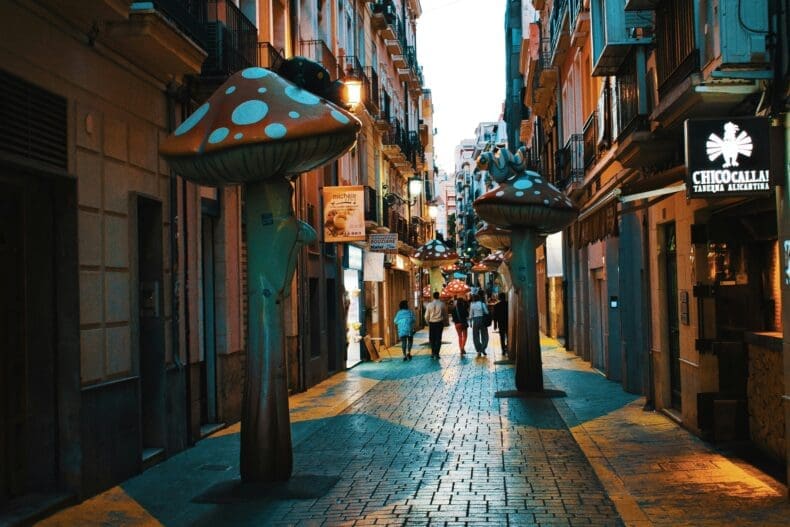
Walking down a street filled with towering mushrooms, brightly painted snails, and tiny gnomes might sound like something from a storybook, yet in Alicante, it is simply part of the city center. Calle San Francisco, better known as Mushroom Street, was completely redesigned a few years ago and has since become a colorful surprise in an otherwise classic downtown. The oversized sculptures give the street an almost magical, fairytale-like charm, while it remains surrounded by shops, cafés, and ice cream parlors.
The redesign was intended to make the city center more welcoming for children. The street is traffic-free and has a soft rubber surface where kids can run and play safely. Adults cannot help but smile at the vivid colors, playful street furniture, and cheerful vibe. Some shop owners have even decorated their façades to match the whimsical theme, amplifying the effect. Whether you are visiting Alicante with children or on your own, this is a delightful and unforgettable spot that should not be missed.
#12 Parque El Palmeral
If you are looking for a peaceful escape from the city center and the busy promenade, Parque El Palmeral is the perfect choice. Located just south of Alicante, toward the airport, this expansive park feels like a miniature tropical paradise all on its own. It is not a formal garden with rigid paths, but a lush, inviting oasis filled with swaying palm trees, sparkling ponds, gentle waterfalls, and charming wooden bridges that beckon you to wander and explore.
Throughout the park, you will find picnic tables, benches, and shaded corners ideal for relaxing with a book or enjoying a snack. Children can have fun at the playground or ride along the smooth bike paths. There is even a small rowing pond where you can rent a boat and drift quietly among the greenery. The park is large enough to make you feel as if you have stepped into a completely different world, yet small enough to explore fully in an hour or two. Being slightly away from the main tourist areas, it remains calm, serene, and a perfect spot to unwind.
#13 Castillo de San Fernando
Perched on Monte Tossal, directly opposite the mountain that hosts Castillo de Santa Bárbara, lies another fortress: Castillo de San Fernando. It is less well-known, less grand, and much quieter than its famous neighbor. Yet it is precisely for these qualities that it offers one of Alicante’s most unexpected and charming experiences. The fort was hurriedly constructed in the early nineteenth century amid fears of a French invasion during the Napoleonic Wars. The invasion never came, the construction was never fully completed, and the fortress quickly fell into neglect.
Today, visitors encounter thick stone walls, a rugged central courtyard, sturdy bastions, and a maze of paths and stairways waiting to be explored. There is no pomp, no crowds of tourists, only a tranquil spot with beautiful views stretching over the city. Encircling the fort is a large park with sports fields, playgrounds, and walking trails where local families come to picnic or stroll with their dogs. For anyone seeking a peaceful alternative to the busier Santa Bárbara, and who enjoys a slightly wilder, more unrefined charm, Castillo de San Fernando is a delightful place to explore and wander at leisure.
#14 Isla de Tabarca
Out at sea, about fifteen kilometers from the coast of Alicante, lies Isla de Tabarca. This tiny island is small enough to walk around in an hour, yet it brims with history and charm that stays with you long after you leave. Tabarca was once a pirate hideout until King Carlos III decided in the eighteenth century that it was time to restore order. He had the island fortified with walls and established a small village for fishing families from Tunisia, who had themselves been rescued from pirate attacks. Today, the city walls remain, along with the church, the harbor, and a handful of sandy-colored houses that make up the island’s only village.
Today, only a few permanent residents call the island home, but during the day it bursts to life with visitors. Boats from Alicante depart several times daily, reaching the small harbor in about forty-five minutes. Stepping ashore feels like entering a different world. You can wander along the rugged coastline, swim in crystal-clear waters, or savor freshly caught fish at a terrace shaded by a parasol. The island lies within a protected marine area, making it ideal for snorkeling. Those who arrive early in the day have the best chance to explore the island almost alone, surrounded only by the gentle sounds of the wind and the calls of seagulls.


#15 Lucentum, the Forgotten Roman City
Just beyond Alicante’s city center, in the Albufereta neighborhood, lie the remains of Lucentum. Once a thriving Roman settlement, it is considered the birthplace of modern Alicante. This is not a place you happen upon by chance, but those who visit are immediately transported to a completely different era. There are no gleaming façades or busy squares here, only a quiet plain scattered with ancient ruins and offering glimpses of the sparkling sea beyond.
As you wander through the site, you follow ancient streets and pass the foundations of homes, a Roman bathhouse, and the remnants of the forum. Lucentum was founded in the third century BCE and reached its height under Roman rule. Today, it is an archaeological park where, with a touch of imagination, you can sense the echoes of the past. The site is compact, easy to explore, and full of historical insight. There are no crowds or long lines, making it a peaceful and immersive window into a world long gone.


