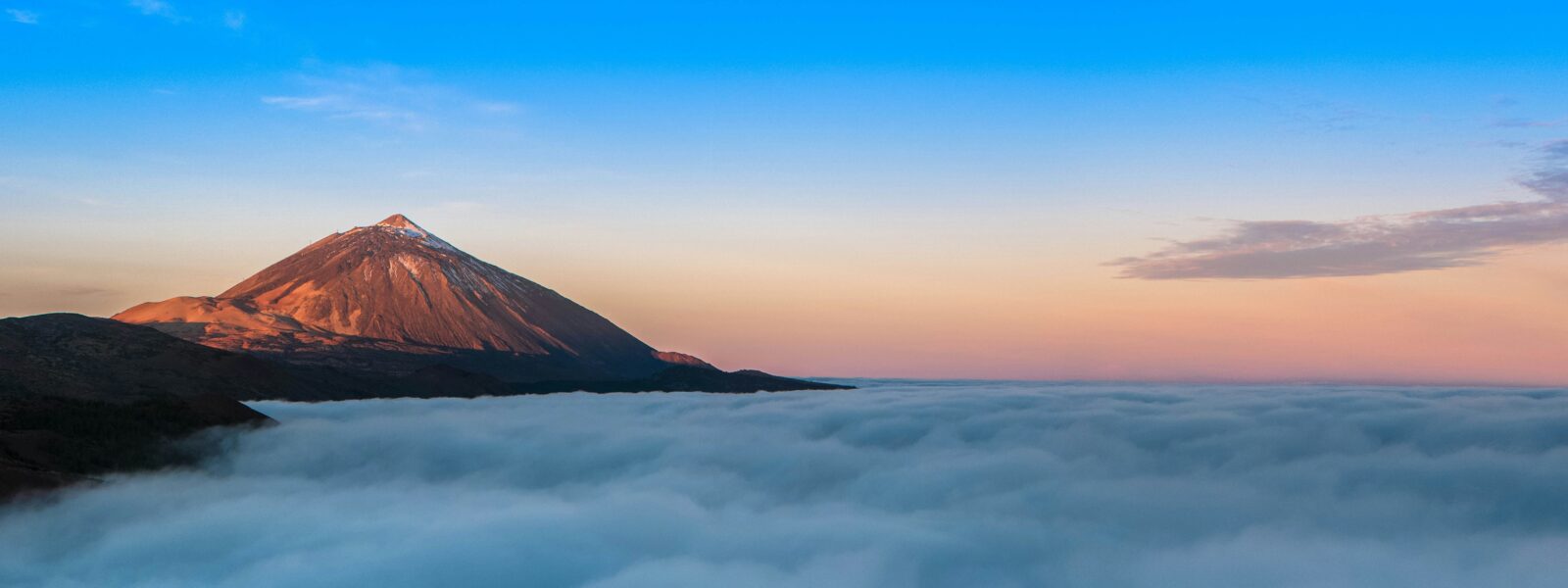
El Teide is not only the tallest mountain in Spain but also one of the most breathtaking places on Tenerife. Rising from the very heart of the island, this dormant volcano reaches an impressive 3,715 meters above sea level. The surrounding national park feels almost otherworldly, with its black lava fields, rugged rock formations, and panoramic views that stretch endlessly toward the horizon.
Whether you come for a vigorous hike, a gentle walk, a ride on the cable car, or simply to explore by car at a relaxed pace, El Teide reveals itself from every angle. Each bend in the road, each viewpoint, and each trail introduces you to a new and almost surreal landscape, leaving you in awe at every turn.
In this guide, you will find the 10 most stunning spots in and around the national park that you simply cannot miss. From reaching the summit to camping among frozen lava flows, every recommendation is practical, detailed, and full of useful tips. This guide will help you make the very most of your visit to El Teide and experience its beauty to the fullest.


El Teide, the Highest Mountain in Spain
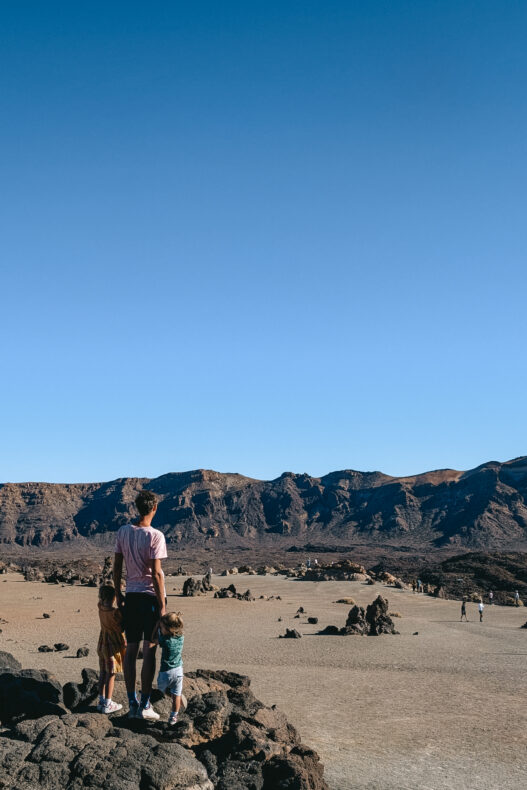
El Teide is much more than just a mountain. Standing at 3,715 meters, it is the highest peak in Spain and the third tallest volcanic island in the world. It towers in the heart of Tenerife, within El Teide National Park, which has been a UNESCO World Heritage site since 2007. The landscape here is rugged, almost otherworldly, and ever-changing. From black lava fields to pale yellow sand plains, from sheer cliffs to viewpoints where, on a clear day, you can even spot Gran Canaria or La Palma, the scenery never fails to captivate.
The volcano itself was shaped by a series of eruptions that began around 170,000 years ago. What you see today is the cone left behind after the massive collapse of an older volcano. Around El Teide lie dramatic crater rims, unusual lava formations, and colors that shift from deep red-brown to nearly white. The most recent eruption happened in 1909 at the nearby Chinyero.
Thanks to its height and dry climate, it can sometimes feel as if you have stepped onto another planet. This is no exaggeration: NASA even used the area to train astronauts for moon missions. Whether you come to hike, ride the cable car to the summit, or simply drive and take it all in at your own pace, El Teide is an absolute must-see on Tenerife.

How to Get to El Teide on Tenerife
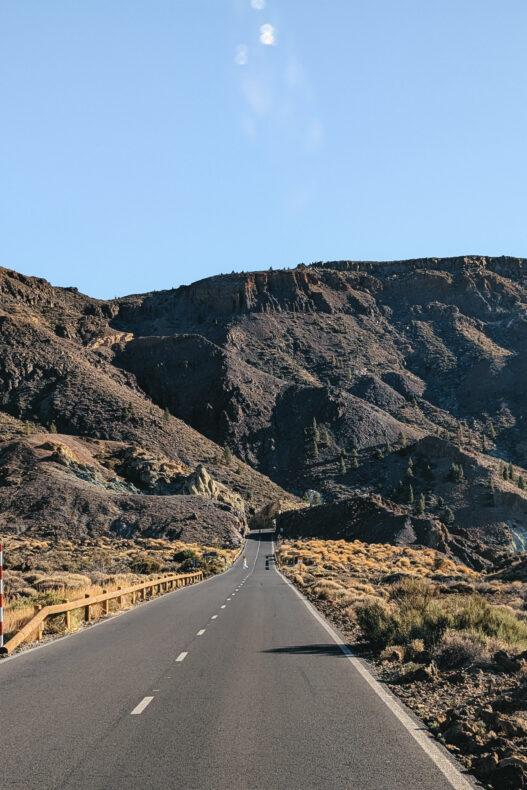
El Teide rises in the heart of Tenerife and is easily reached by car from almost anywhere on the island. From popular coastal towns such as Costa Adeje, Playa de las Américas, or Los Cristianos, it takes about one to one and a half hours to drive up into the national park. The road winds through lush forests and dark lava fields before opening onto the stark, otherworldly highlands surrounding the volcano.
There are four main routes that lead to El Teide: via La Orotava (TF-21), via Vilaflor (TF-21), via Chío (TF-38), and via La Esperanza (TF-24). Each road has its own charm, so it is well worth taking a different route back to enjoy a fresh perspective and new views.
Public transport is limited. Only bus line 342 from Costa Adeje and line 348 from Puerto de la Cruz travel to the park once a day. These buses are very popular, so it is wise to set out early. In our view, renting a car is almost essential, not just for visiting El Teide but for exploring Tenerife as a whole. Many of the island’s most stunning spots are spread out and difficult to reach without a car.
If you want to rent a car, Tenerife has plenty of options to choose from. Sunny Cars is perfect for travelers who value certainty and convenience. Their all-inclusive package covers insurance, damage waivers, and local fees, so you will never face unexpected costs. If anything goes wrong, whether it is damage or a breakdown, everything is handled quickly and without stress.
Discover Car Hire is another excellent choice and a personal favorite. This comparison site lets you pick from different rental companies, which usually helps you find the best deal. You just need to pay close attention to what is included in the price and what is not.
If you prefer to have everything arranged upfront and worry-free, Sunny Cars is the safest option. If your main priority is finding the lowest price, Discover Car Hire is the way to go.
Not keen on driving yourself and want everything planned for you? In that case, simply book a guided tour for the ultimate comfort and a completely hassle-free experience.
Hiking in El Teide National Park
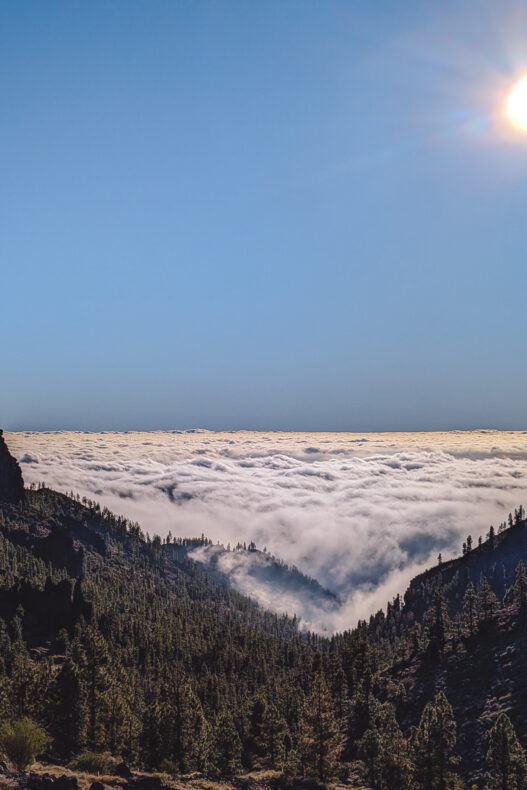
Parque Nacional del Teide is a true paradise for anyone who loves hiking. The park is filled with dozens of official trails, each offering its own unique experience. Some are short and easy, perfect for a relaxed stroll, while others demand more time and stamina. Along the way, you pass through black lava fields, climb over ancient crater walls, wander through pine forests, and sometimes even reach the very summit of the volcano.
From our experience, the most popular spots, such as the cable car, the mountaintop station, and Roques de García, can get quite crowded. The further you walk away from these areas, the quieter it becomes. On some trails, we barely saw another soul.
The hikes we tried ourselves are described later in this blog. Sebastiaan also completed a route along the southern rim of the caldera, following the ridge of the park. This trek was particularly special because of the views on both sides. On one side, you look deep into the caldera, and on the other, you can see the landscape stretching all the way to the coast.
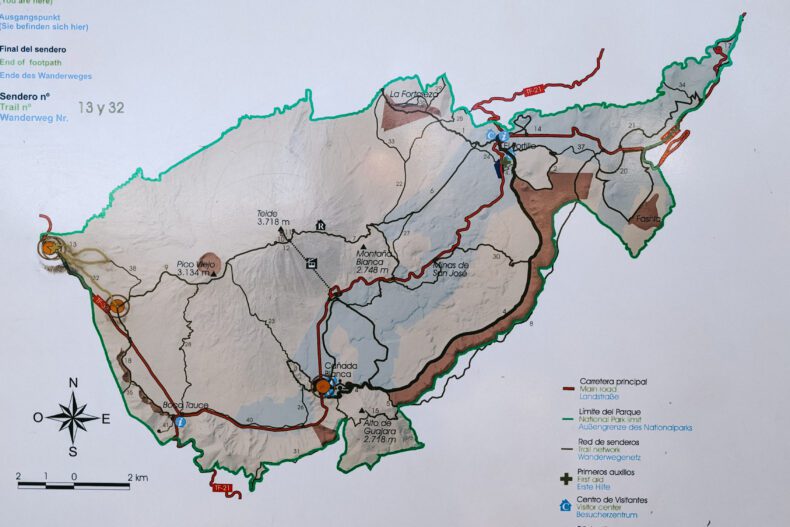
Below, you will also find a map showing all the official hiking trails in the national park. We explored volcanic areas in the northwest of Tenerife as well, including the surroundings of the Arenas Negras and Chinyero volcanoes. The black lines on the map mark the trails. We highly recommend the Mapy.com app. It shows everything you need: routes, viewpoints, elevation, and even picnic spots. In our view, it is the best interactive hiking map available.
Visiting El Teide with Children
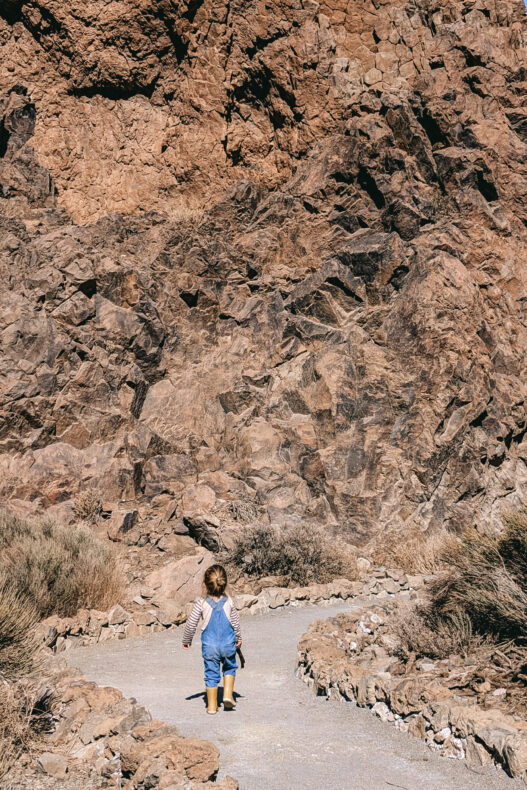
A visit to El Teide is completely doable with children, as long as you take the altitude and the level of activity into account. We traveled with a toddler of 2.5 years and a preschooler of 4.5 years. This meant the cable car was not an option, since it is only allowed from age three. Long or steep hikes were also out of reach for us.
Even so, we found several walks that worked really well. Short paths around viewpoints such as Mirador de Samara were easy to manage. Our preschooler even completed the Roques de García loop entirely on her own. This trail has plenty of ups and downs, but the variety and rocks to climb kept it fun and engaging.
Even simply driving through the park is impressive for young children. The volcano, the moon-like landscape, and the jagged rock formations leave a lasting impression. Be sure to stop at the visitor centers for more information and short films about the park.
With plenty of breaks, snacks, and room to play, El Teide is a fantastic destination for young children. Our family ended up spending four days exploring the park, and it was an unforgettable experience for all of us.

Best Things to Do on El Teide: 10 tips
#1 Teide Cable Car
In just eight minutes, you are suddenly at 3,555 meters above sea level. The cable car carries you from the base of the volcano to one of the highest points in Spain. The ride begins at 2,356 meters, and you feel the change in altitude immediately. As you float above lava fields and dried-up craters, the views become more spectacular with every passing moment.
At the top, you step out among jagged rocks, hardened lava, and sweeping panoramas. On a clear day, Gran Canaria appears to the east while La Palma rises in the distance on the other side. From the mountaintop station, short walking trails lead to viewpoints. If you want to reach the very summit, you must apply for a permit in advance, as that last section is protected.
At the base station, you will find a restaurant, an information point, and toilets. Parking is free, but it can get crowded, so finding a spot may take some patience. Tickets for the cable car are quite pricey at €45.50 and must be booked well in advance online. Children are only allowed from age three, so unfortunately, we had to skip this iconic Tenerife experience with our little ones.
Tip: want to skip to hassle of parking, or just don’t have a rental car, book the Teide Tour. The tour includes both transport and the cable car ticket.
#2 Pico del Teide – Hiking to the Summit
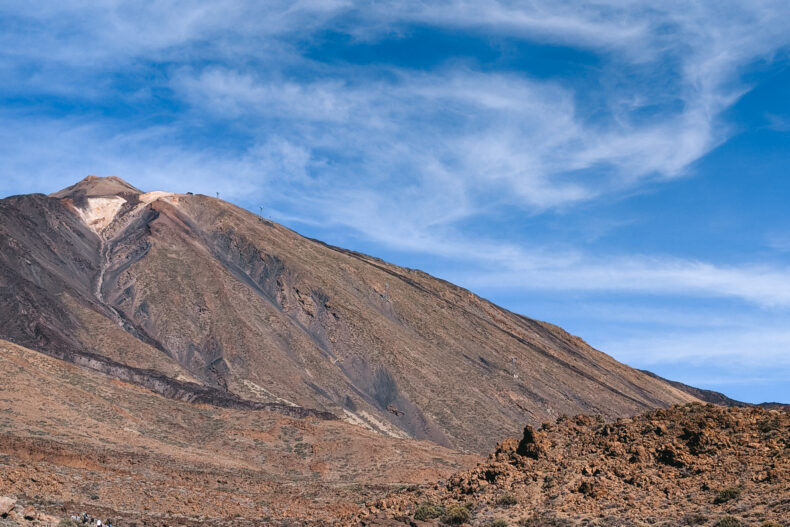
If you truly want to reach the highest point in Spain, you need to climb. From the cable car’s mountaintop station, you can follow Trail 10, Telesforo Bravo, to the summit of El Teide in about 40 minutes. It may be only a few hundred meters, but every step is felt. The air is thin, the path is steep, and the view makes every effort completely worthwhile.
For dedicated hikers, you can even skip the cable car entirely and hike all the way up on your own. It is a tough and demanding trek, but one you will never forget.
Once at the top, you peer directly into the crater of the sleeping volcano. You can see the entirety of Tenerife, and on a clear day, even four or five other islands appear in the distance. This is more than just a beautiful walk. It is an unforgettable experience.
For both options, you will need a free permit, which you can request through the national park’s website. Permits are limited, so it is wise to secure yours well in advance. You must also stick to the time slot printed on your permit. Park rangers may check your equipment. Hiking in flip-flops is not only unsafe but will also get you turned away. Be sure to read up on the required clothing and gear before you go.

#3 Roques de García
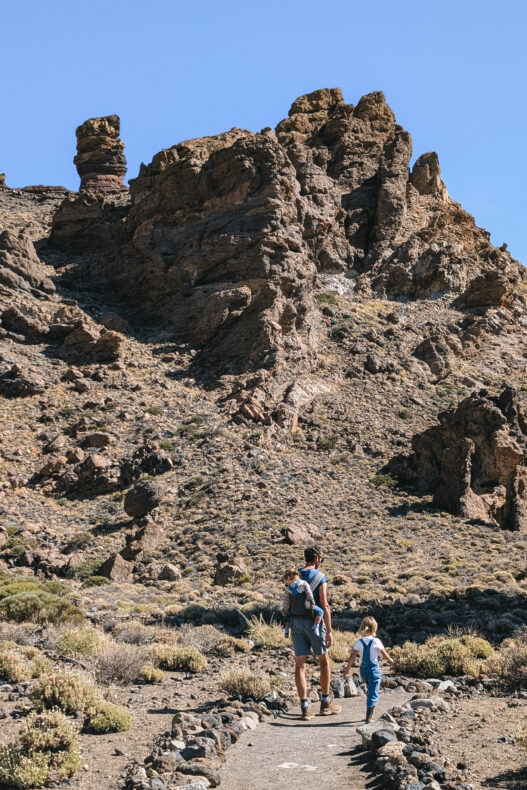
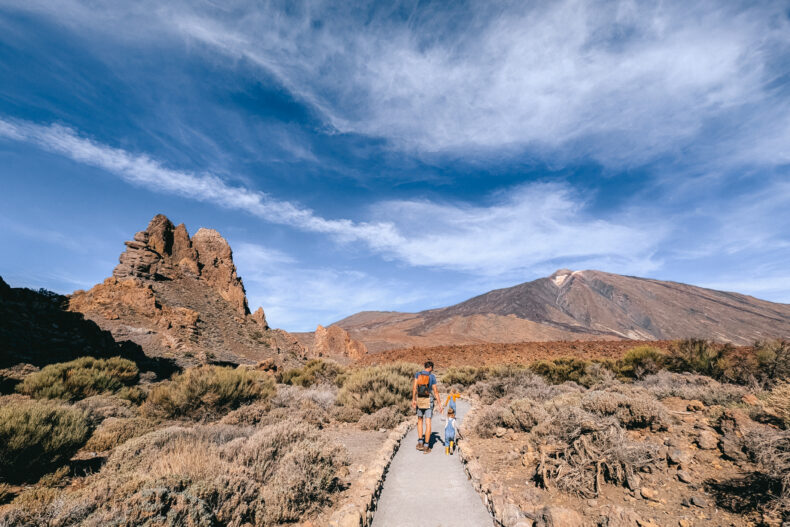
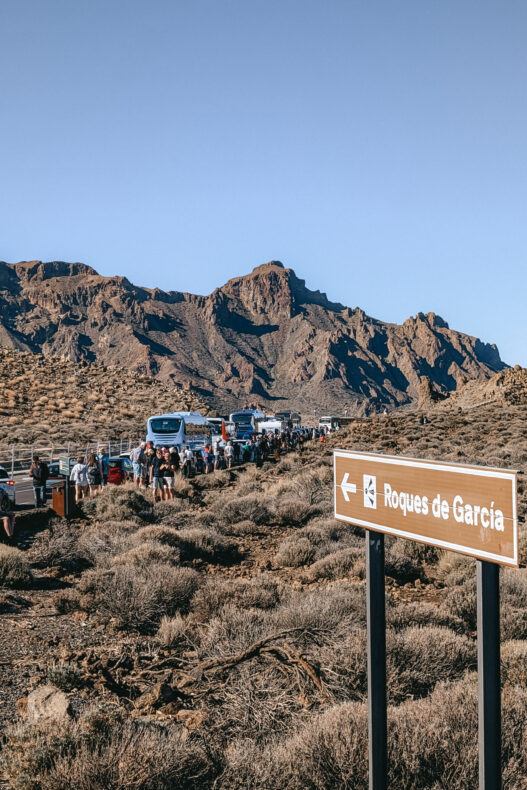
Roques de García is an incredibly striking rock formation at the base of the Teide volcano. The most famous feature is Roque Cinchado, a narrow pillar of solidified lava with horizontal stripes, as if it were carefully built layer by layer. Other remarkable formations have earned nicknames like La Catedral and La Cascada, and it is easy to see why.
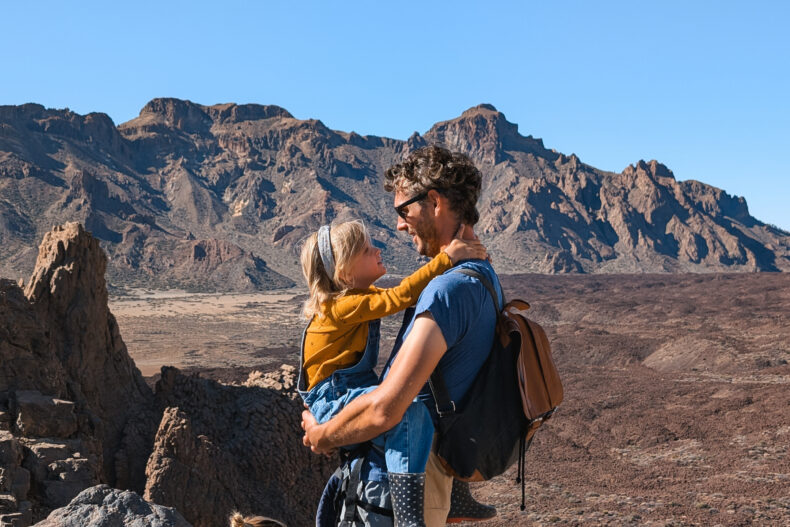
You can admire the Roques from a nearby viewpoint along the road, but we highly recommend taking a hike. This is truly one of the most popular walks on Tenerife. The route is short and accessible, winding past bizarre rock formations that seem as if they were lifted straight out of a science fiction movie. Expect a few ups and downs along the way, with El Teide itself providing a dramatic backdrop. We completed the hike with a toddler (mostly in a carrier) and a preschooler. For our 4-year-old, it was a real challenge, but still very manageable.
The hike starts at Mirador de la Ruleta, where parking is available. Keep in mind that spaces are limited, and in our experience, most spots are already taken by 10:00 in the morning. Arriving early is the best way to secure a place. The trail itself was surprisingly peaceful compared to the crowds around the viewpoint. Nearby, there is also a visitor center with toilets. No permit is required for this walk.

#4 Spotting the Miradors
Along the road through El Teide National Park, you will find numerous viewpoints that invite you to stop at any moment. Most are right by the roadside, though a few require a short walk to reach.
One of the most famous viewpoints is Mirador de la Ruleta, located near Roques de García. The miradors at Llano de Ucanca, Minas de San José, and Boca Tauce each offer a different perspective. Some look out over the wide caldera, while others provide views of the crater rim or the interior of Tenerife.
You do not need to do anything special to enjoy them, perhaps just a brief walk. Simply pull the car over, grab your camera, or sit and soak in the scenery. The landscape is particularly spectacular at sunrise or sunset, when the light transforms the volcanic terrain into a scene of vibrant colors and dramatic shadows.

#5 Road Trip Through the Park
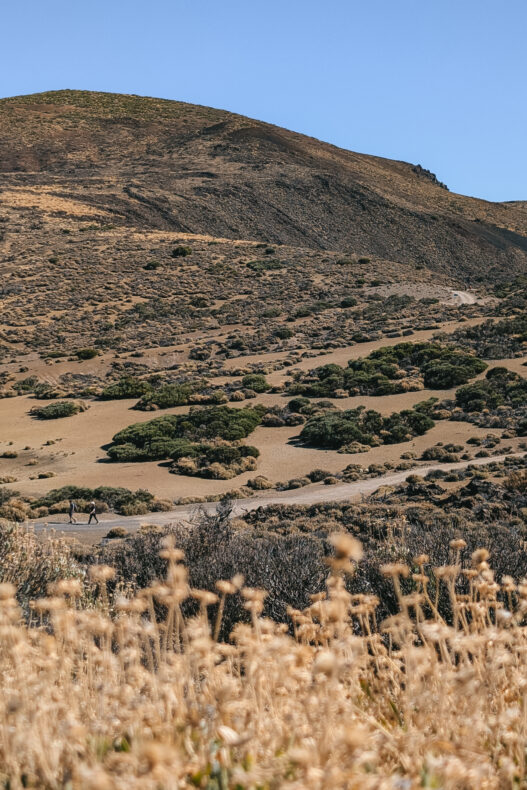
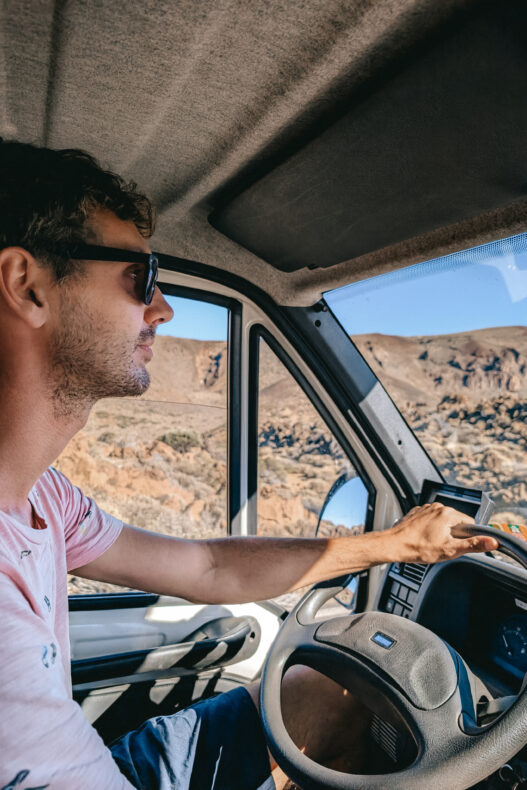
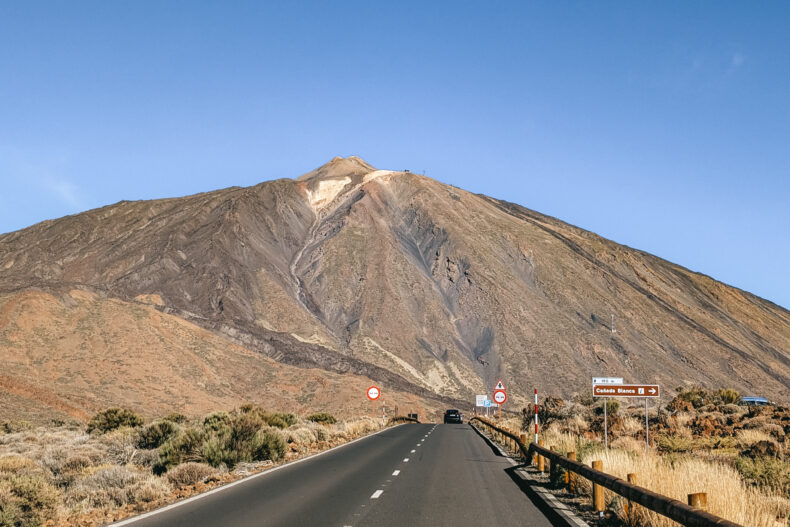
A road trip through Parque Nacional del Teide is full of constant surprises. The TF-21 and TF-38 take you from lush pine forests to a dry, dusty, almost lunar landscape, and just a few kilometers later, you are driving past vast black lava fields. The scenery changes so quickly that you are never in the same landscape for more than a few minutes. Turn a corner, and suddenly the entire park spreads out before you. Bare lava fields, hardened lava flows, volcanic cones, rugged rock formations, and in the distance, the mighty peak of Teide commands the view.
The paved roads are in excellent condition, traffic is light, and there are plenty of spots to stop and take it all in. Along the way, you will pass viewpoints, trailheads, craters, and impressive rock formations. Driving through the park gives you a chance to see not only the busier areas around the Teide volcano but also quieter corners where the park reveals itself in a completely different way.
If you take the TF-21 from Vilaflor, the volcano gradually grows larger with each turn. On the TF-24 from La Esperanza, the road winds up along a mountain ridge with sweeping views of Tenerife’s entire northern coast. All of the routes are stunning, so you can easily do both: drive up one way and return along another to enjoy the park from a fresh perspective.
#6 Camping on the Volcano
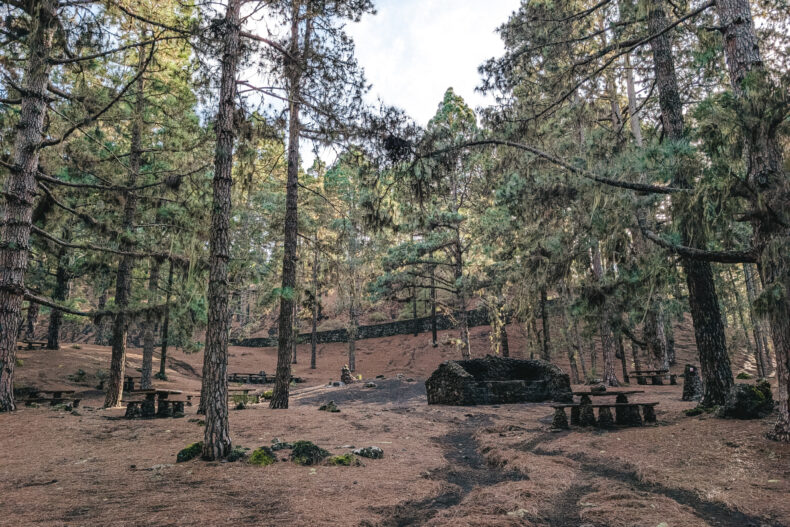
Sleeping on El Teide is possible. There are three designated camping areas in the national park where you can spend the night for free. You do need to arrange a permit, which can be requested online through the Cabildo of Tenerife. The application is free, but do not wait too long, as the number of spots is limited. Usually, it is necessary to apply at least a week in advance.
The camping areas are located on recreational grounds, so you will find picnic tables, water taps, barbecues, and often a playground. There are no showers or electricity, as these are not traditional campsites. Instead, you can expect peace, nature, and night skies so full of stars they leave you speechless.
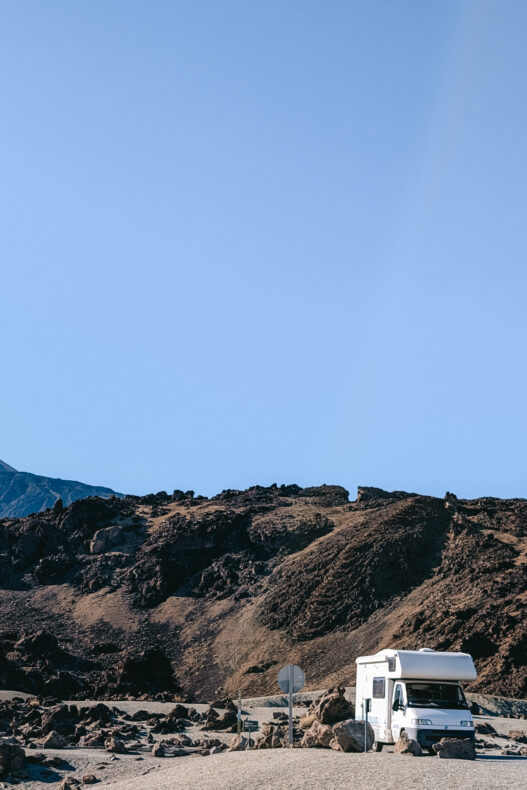
The least known spot is Arenas Negras, located near the volcano of the same name. It is a beautiful location in a forested area just below the tree line, but the final three kilometers follow a bumpy forest track. Driving a camper there requires some skill. We managed it in the end, but in hindsight, we would have preferred to skip it.
El Chío is much easier to reach and sits conveniently right along the main road. From here, you can explore a variety of beautiful hikes throughout the national park, which is why it became our favorite base. Las Lajas, near Vilaflor, lies at just over 2,100 meters and is especially popular with locals who come to barbecue and spend the night. The sunsets and sunrises here are breathtaking, often unfolding just above the clouds.
Renting a camper on Tenerife is simple, but camping with a tent is also perfectly allowed. As long as you stay at one of these three designated spots and have arranged your free permit in advance, you are all set. Wild camping is strictly forbidden anywhere else in the park, so following the rules ensures a safe and worry-free stay.


#7 Arenas Negras Hike
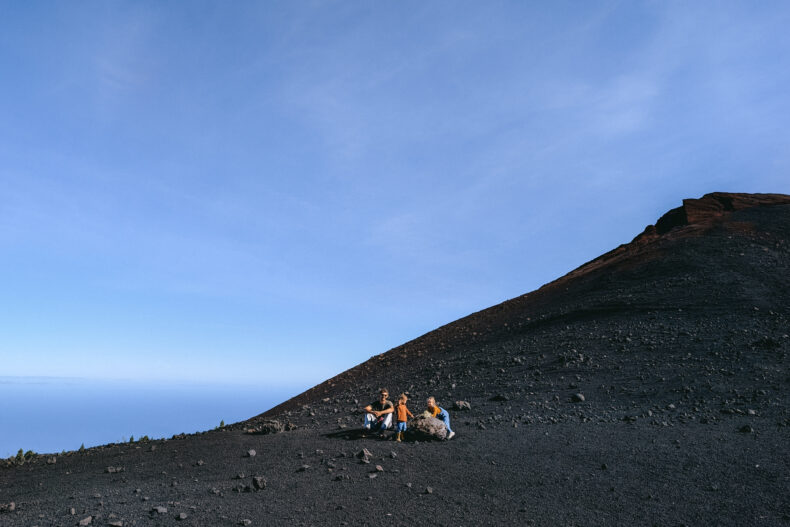
This walk takes you to the quiet and less-visited northwest side of El Teide, where the traces of volcanic activity are still strikingly clear. The trail winds across black volcanic gravel and solidified lava flows around the Arenas Negras volcano. The name literally means “black sand plains,” and that is exactly what you encounter: an endless expanse of dark, grainy rock stretching in every direction.
Arenas Negras is famous for the eruption of 1706. That event devastated parts of the village of Garachico on the north coast. Lava poured down from the flanks of Pico Viejo along these slopes toward the sea. The harbor of Garachico was completely buried, delivering a heavy blow to the island’s economy at the time.
The hike begins at the Arenas Negras recreational area, where parking is available. The route forms a loop around the volcano with relatively little elevation change. We completed the short hike easily with a toddler (mostly in a carrier) and a preschooler. Along the way, you are treated to stunning views of Pico del Teide, traverse striking lava fields, and see how nature slowly reclaims the land.
The trail is well marked, peaceful, and ideal for anyone who wants to stand in the heart of a volcanic landscape shaped by fire, smoke, and time without needing to tackle steep climbs.


#8 Minas de San José
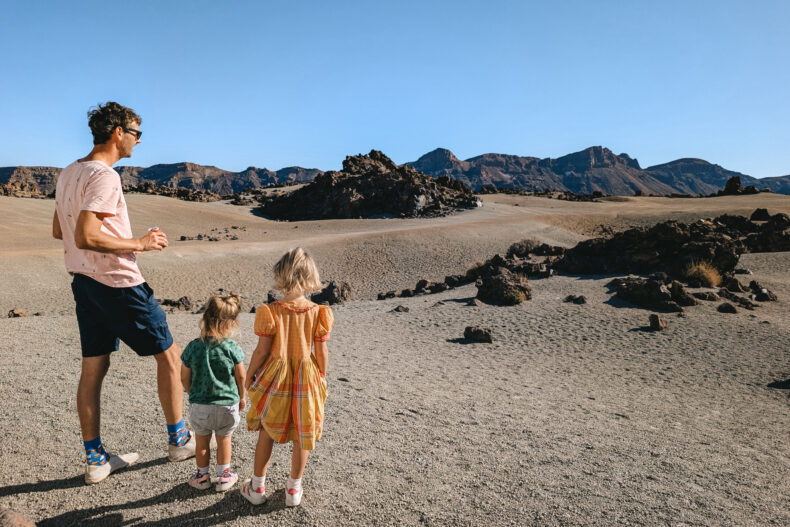
Minas de San José is one of the most strikingly unusual spots in the park. There are no black lava fields or jagged rocks here. Instead, you find light sandy plains, gently rolling hills, and a landscape that feels almost peaceful. It is the kind of place that makes you think more of a moon base than a volcano on Tenerife.
The name comes from the time when volcanic pumice was mined here, beginning in the late nineteenth century. The white stone was used for building materials and also in agriculture. Today, all mining has ceased, and the area has returned to quiet. The landscape itself remains as a gentle reminder of its industrial past.
Minas de San José is located directly along the TF-21, making it very easy to reach. You can park at the viewpoint and step straight onto the open terrain. There is no set path, but you can wander a short loop across the sand and rocks, taking your time to explore, stroll, and capture photos.
If you are looking for a place that feels completely different from the rest of the park, this is an ideal stop. Here you will see the lighter side of the volcanic landscape. The wide-open space and soft light also make it a truly fantastic spot for photography.


#9 Volcán Chinyero
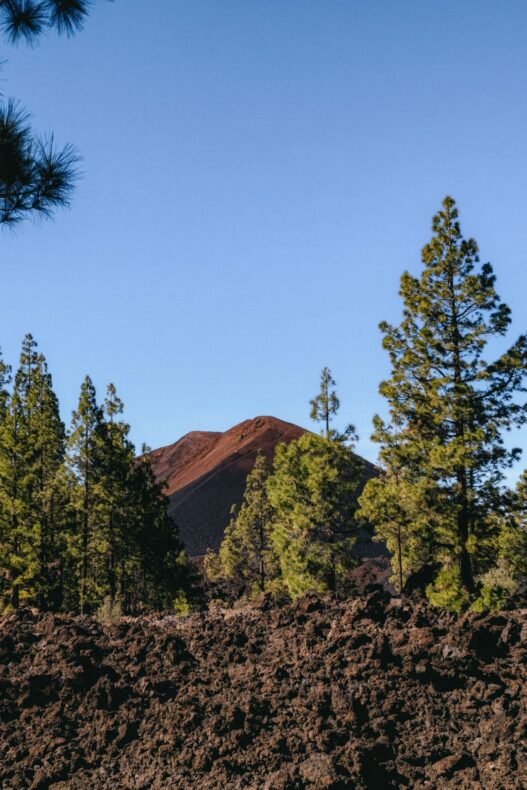
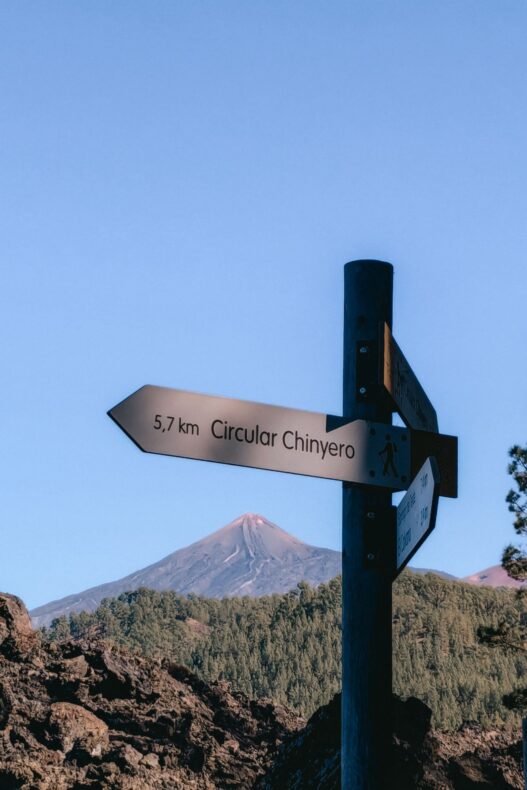
The hike around Volcán Chinyero is one of the most striking routes on the west side of the national park. Along the trail, you walk across black lava fields, through pine forests, and along the slopes of the volcano, which last erupted in 1909. That eruption was also the most recent on Tenerife.
The lava from that eruption flowed toward Santiago del Teide but stopped just short of the village. Today, the landscape is a field of hardened lava with unusual shapes, black rock slabs, and rugged terrain where nature is gradually reclaiming its space.
There are several ways to explore this hike. From the Arenas Negras recreational area, it is a long but beautiful route through the volcanic landscape toward Chinyero. You can also take a trail from the road to Teide, though parking along the roadside can be challenging. Sebastiaan started from the El Chío recreational area, adding an extra loop that led through truly stunning scenery. We highly recommend this option for the variety of views and the richer experience it offers.
The hike itself is not technical or demanding, though it can be long if you complete the full loop from Arenas Negras. Be sure to wear sturdy shoes and bring plenty of water, as shade is limited. This route is perfect for anyone who wants to feel the raw power of volcanism firsthand. You are literally walking across the youngest lava on the island, all without the crowds that gather around Teide itself.
#10 Mirador de Samara
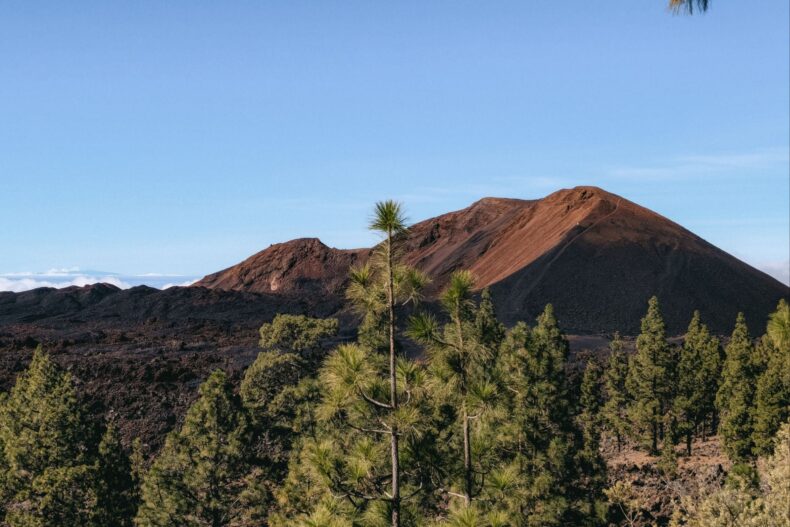
Mirador de Samara is one of the quietest and most unexpected spots on the west side of the park. You can reach it via the TF-38 between Chío and Boca Tauce. There is no official visitor center here, just a small parking area along the road. But the moment you step out of the car and take a few steps, you are immediately immersed in a landscape that feels like stepping onto another planet.
From the viewpoint, several volcanic cones dot the surrounding terrain. Samara itself, along with La Botija and Montaña Reventada, gives the landscape an almost artistic quality: gentle slopes, vivid colors, and bold shapes that stand out sharply against the sky. In the distance, the mighty El Teide towers above everything, dominating the view.
A short walk of about an hour allows you to explore the area more closely. Near the parking area, an information board clearly shows the available trails and paths. The most natural loop is easy, with little elevation change, and guides you past lava fields, pine forests, and open spaces with clear, sweeping views. On a clear day, you can see not only Teide but also the islands of La Gomera, El Hierro, and even La Palma stretching across the horizon.
This is the perfect spot for a peaceful stop with maximum views. No permit or advanced planning is needed. If you are looking for a mirador that feels a little off the beaten path, Mirador de Samara is an excellent choice.


