Andalusia is full of hidden treasures waiting to be discovered. Think of narrow gorges with swaying hanging bridges, cave homes with white chimneys peeking out from the hills, ancient Roman baths, and wild desert landscapes perfect for adventure. Most visitors to southern Spain are drawn to the picturesque white villages, sun-drenched beaches, and famous cities. But if you look a little closer, you will find breathtaking natural scenery and one-of-a-kind spots that add a truly special touch to your journey.
In this blog, you will explore 15 hidden places in Andalusia that show a side of the region far beyond the usual tourist paths. From unique hiking trails and natural hot springs to Roman ruins by the sea and dramatic mountain viewpoints, these locations are ideal for anyone eager to experience Andalusia beyond the well-known highlights. Each of these lesser-known gems is just as remarkable and unforgettable as the region’s most famous sights.


Hidden Gems in Southern Spain
#1 Los Cahorros de Monachil
Just a short 20-minute drive from Granada lies Los Cahorros de Monachil. This beautiful natural area is best known for its narrow gorge, carved over thousands of years by the Monachil River. Walking here feels almost magical, as you pass between towering limestone cliffs that in some places are only a few meters apart, creating a dramatic and unforgettable landscape.
The hiking trail is around 8 kilometers long and forms a loop through this stunning area. Along the way, you follow the river, sometimes strolling through wide-open sections and at other times squeezing through narrow rock passages. In a few spots, we even had to crouch or crawl. The highlight for us was the hanging bridges. The longest one stretches over 50 meters and swings noticeably as you cross it, making this hike one of the most exciting adventures in the region.
Los Cahorros is also a favorite among climbers because of the steep rock walls in the gorge, yet it remains surprisingly peaceful compared to other popular spots in Andalusia. Parking is easy in Monachil, and from there, the path along the river leads straight to the gorge. Since we were hiking with small children, we did not complete the full loop and focused on the most spectacular sections, including the hanging bridges and narrow passages. Our little ones loved climbing and scrambling, turning the hike into a real adventure for them.

#2 Castillo Colomares
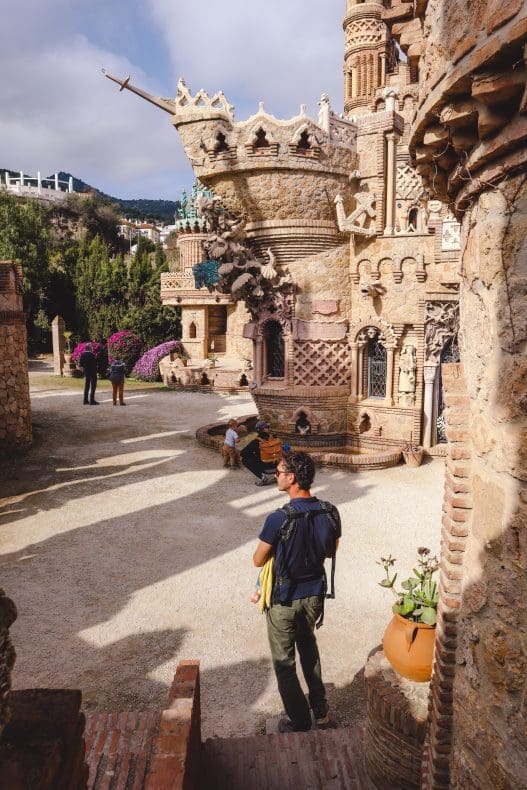
In Benalmádena, you will find the extraordinary Castillo Colomares. This is not a medieval fortress, but a magical monument built between 1987 and 1994 to honor Christopher Columbus and his 1492 voyage. The project was created by Dr. Esteban Martín, who brought it to life with the help of two skilled builders.
The building has a dreamlike, almost fairytale quality, blending Gothic, Romanesque, and Mudéjar architectural styles. You will notice towers, arches, colorful stained glass windows, and finely detailed carvings throughout. Many features celebrate Columbus’s three ships and important moments in Spanish history. The most impressive sight is the large ship’s bow at the front of the monument. Despite its grand name, the complex is fairly compact, so you should not expect a huge castle. In about an hour, you can explore every detail, and entrance costs only a few euros.
Castillo Colomares sits on a hill just above the coast, offering views of the surrounding countryside and the sparkling Mediterranean Sea. It is a one-of-a-kind stop on any tour of Andalusia, especially for anyone who enjoys imaginative and unusual architecture.

#3 Guadix
In the inland region of Granada province lies the charming town of Guadix. A quick search online will show images of its most famous neighborhood, with hills dotted by white chimneys. Beneath these hills lie entire cave homes. This cave district is what Guadix is best known for, and a large part of the town’s population still lives in houses literally carved into the rock.
These cuevas date back to the Moorish period. Inside, they are surprisingly comfortable. During the summer, the interiors stay cool, while in winter they remain warm and cozy. You can visit some of these cave homes, such as those at the Museo Cuevas de Guadix, to see how people live in them today.
Beyond the caves, Guadix also boasts a cathedral, a Roman theater, a historic town center, and an old fortress. Yet it is the cave homes that truly make this town unique and unforgettable.

#4 El Coto Las Canteras
Just a short distance from Osuna lies El Coto Las Canteras, a former quarry often called the “Petra of Andalusia.” Once you start exploring, it is easy to see why. Tall, golden rock walls have been partially carved and adorned with intricate details, reminiscent of the famous monuments in Petra.
For centuries, stone was quarried here to build structures in Osuna. Later, the site was given a new purpose, and sculptors were brought in to turn it into a truly unique attraction. Visitors can wander freely among carved columns, detailed reliefs, and an open-air theater that is still used for events.
The site is easy to explore and compact enough to see in a short visit. Entrance costs only a few euros. To fully appreciate the history and craftsmanship, a guided tour is highly recommended. Pair your visit with a stroll through the historic center of Osuna, and you have a surprising and little-known day trip in Andalusia that few tourists discover.
#5 Baños de Zújar
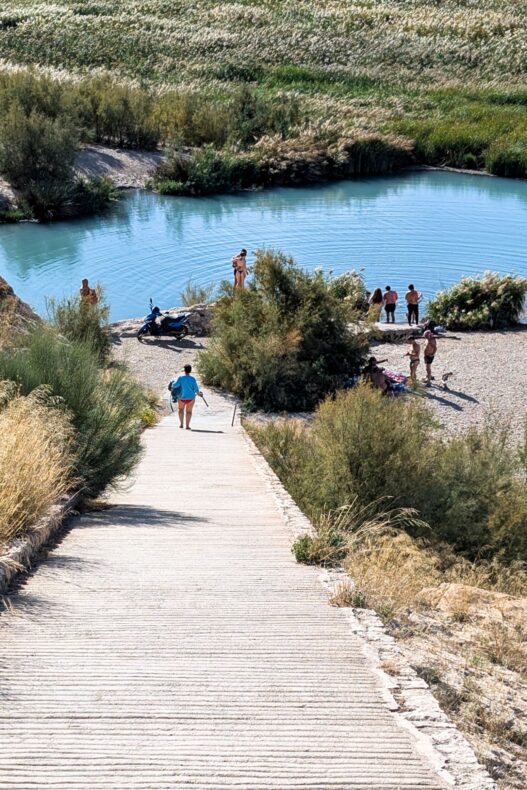
Just outside Zújar, on the edge of the Embalse del Negratín reservoir, you will find Baños de Zújar. Here, you can literally step into a natural hot bath set in the middle of the open landscape. The water comes from a thermal spring and stays around 39 degrees Celsius all year, which feels especially magical during the winter months.
This is not a luxury spa, but a simple outdoor pool nestled among reeds and rolling hills. From the bath, you can take in views of the reservoir, the tall reeds, and the distant mountains. That is part of what makes it so special. We were also struck by the size and depth of the pool. While many thermal springs form only small pools, this one is large enough to swim in comfortably. Local residents come here to relax as well, often bringing just a cooler and a towel. The water is rich in minerals and has been used since Roman times.
You can combine your visit with a walk along the reservoir or a drive through the surrounding countryside. Keep in mind that in the winter months, during heavy rain, the pool can disappear. If the water level in the reservoir rises too high, the pool merges into the lake.

#6 Tabernas Desert
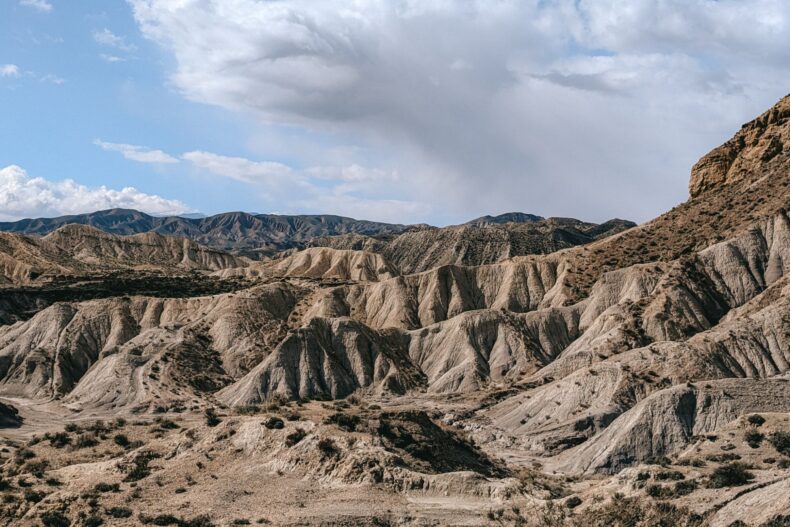
In the province of Almería lies Europe’s only true desert: the Tabernas Desert. There are other places, even in Spain, that claim to be deserts, but by scientific standards, they do not qualify. Tabernas does. As soon as you begin driving through it, you feel as if you have stepped straight into a classic western movie. Bare hills, dry riverbeds, and dusty plains shape the dramatic landscape.
It is no surprise that countless films have been shot here since the 1960s. Major names from the film industry worked on the so-called spaghetti westerns in this desert. Some of the old film sets have now been turned into theme-park attractions that visitors can still explore, which is especially enjoyable for anyone interested in movie history.
You can explore the desert by car, on foot, or as part of a guided tour. One of the most striking views is found from the parking area behind the Repsol gas station. The photo below was taken from this spot. Our favorite hike winds through the gorge that can be accessed from the parking lot opposite the MiniHollywood Oasys theme park. In summer, temperatures can rise to extreme levels, so it is best to go early in the day and carry plenty of water.
#7 Baños de la Hedionda
Just outside Casares, you will find the remarkable sulfur baths of Baños de la Hedionda. These unique baths date back to Roman times, and according to local legend, Julius Caesar once bathed here to treat skin problems and even had a bathhouse built on the site.
The baths feature an old stone pool with a vaulted ceiling. There are a few smaller pools filled with lukewarm, mineral-rich water, but the ancient stone basin remains the main attraction. If you feel adventurous, you can swim into the old tunnel of the bathhouse with a flashlight to explore even further. The water is not hot, but pleasantly lukewarm, and there are even fish swimming in it. Bathing here is completely free, as the Roman bathhouse is open to everyone.
Many sources warn about a strong sulfur smell, but we hardly noticed it ourselves. The water did feel cooler than expected, though. This spot is popular with locals, especially on summer weekends, so arrive early if you want some peace and quiet. When we visited in early March, we had the place almost entirely to ourselves.

#8 Dolmen near Antequera
Just outside Antequera, you will discover one of Spain’s most remarkable prehistoric monuments: the Dolmen de Menga. This megalithic tomb is over 5,000 years old and was built using enormous stone blocks, immediately making you wonder how people could have achieved such a feat without any modern tools.
You enter through a low doorway and step into a long stone chamber that feels surprisingly spacious. The fact that the entire structure was constructed without modern techniques makes it even more awe-inspiring.
The dolmens of Antequera are listed as a UNESCO World Heritage site and can be visited for free. You can easily combine your visit with a trip to the rock formations of El Torcal de Antequera, one of the most breathtaking natural areas in Andalusia.


#9 Duna de Valdevaqueros
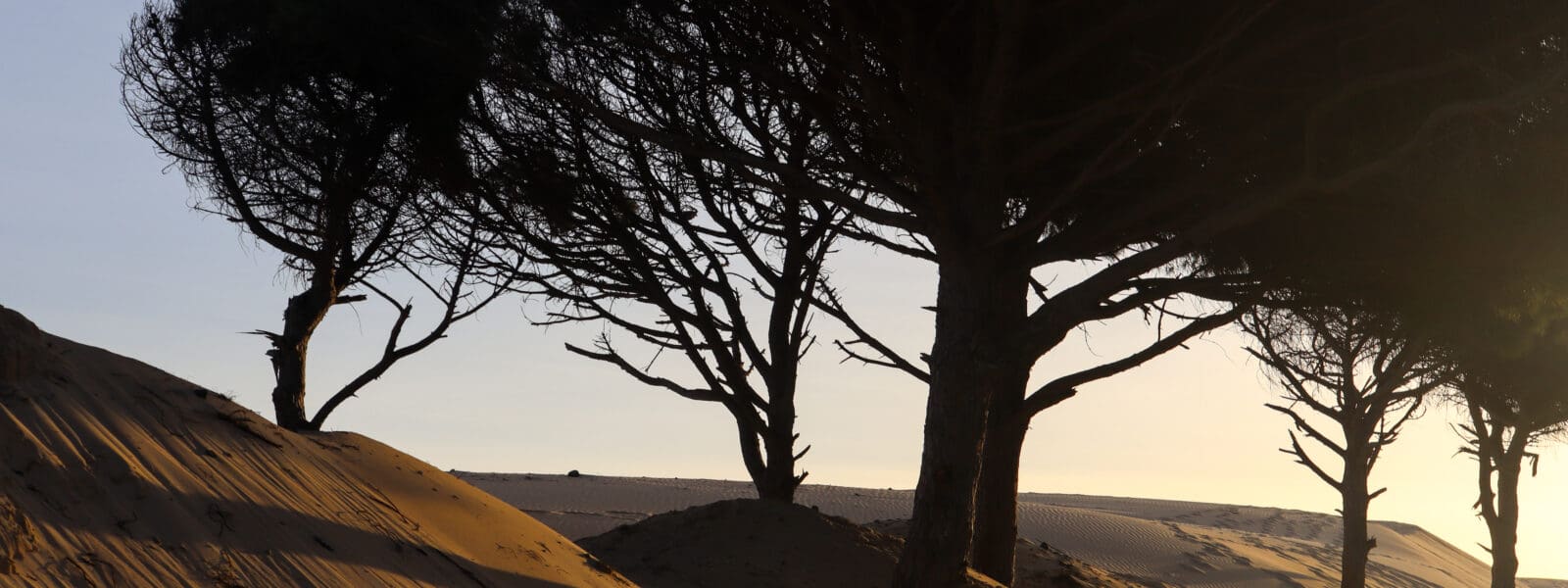
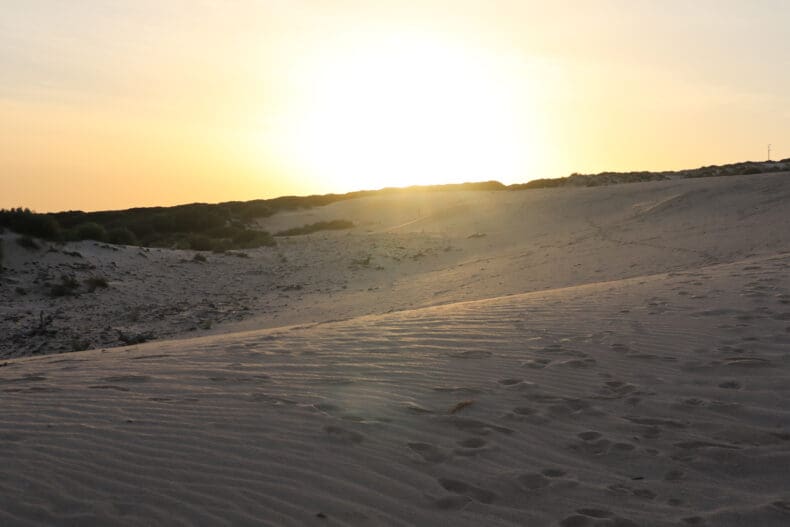
On the coast near Tarifa, you will discover one of southern Spain’s most striking natural wonders: the Duna de Valdevaqueros. This massive sand dune slowly drifts inland, gradually covering trees and vegetation along its path. The result is a landscape that feels almost desert-like, with the sparkling sea providing a stunning backdrop. One of the most unusual features is the asphalt road that cuts through the dune, partially hidden beneath the sand. We could not resist driving along it twice.
The dune is located right on Valdevaqueros Beach, a favorite spot for kitesurfers and windsurfers. The combination of white sand, bright blue water, and often strong winds makes this an incredibly photogenic location. You can climb the dune for sweeping views of the coastline and, on a clear day, even glimpse the opposite shore across the Strait of Gibraltar.
#10 Baelo Claudia
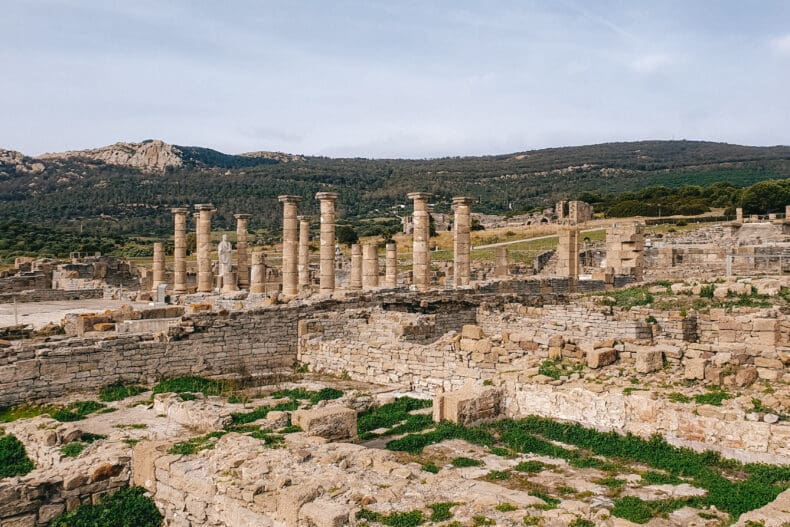
Just a short distance from Bolonia Beach, near Tarifa, you will discover the fascinating ruins of Baelo Claudia. This was a Roman town dating back to the second century BC. As you walk among the remains, you will encounter temples, a forum, bathhouses, and an impressive theater that overlooks the sparkling sea.
Baelo Claudia was once a key trading center, especially famous for producing garum, a highly prized fish sauce in Roman times. Exploring the site gives a vivid sense of how a Roman town was organized. The layout is easy to follow, and many of the original structures remain clearly recognizable.
Entrance is free for EU citizens. You can easily combine your visit with a walk along the stunning Playa de Bolonia, creating the perfect combination of history and natural beauty.
#11 Ojén and Refugio de Juanar
Nestled just behind Marbella is the charming white mountain village of Ojén. From the moment you step into the town center, the contrast with the busy coastline is clear. Narrow winding streets, quiet squares, and sweeping views of the surrounding mountains create a calm and inviting atmosphere. We found it to be the perfect base for our first holiday in Andalusia and booked a room at the beautiful La Posada del Angel through Eliza was here.
Drive a little further up from Ojén, and you arrive at Refugio de Juanar. This former hunting lodge now serves as the starting point for several hiking trails in the Sierra Blanca. You can opt for a gentle circular walk or a more demanding climb to the summit of La Concha. We explored multiple trails here and were rewarded each time with breathtaking views of the coastline and, on clear days, even glimpses of Gibraltar and Morocco.

#12 Vía Verde de la Sierra
Between Olvera and Puerto Serrano lies the Vía Verde de la Sierra. This former railway line winds its way through the mountains and has been transformed into a beautiful cycling and walking trail, complete with old bridges and tunnels. The full route is 36 kilometers long and, thanks to its history as a railway, is almost entirely flat. It is ideal for anyone who wants to enjoy an active day without struggling up steep hills.
Along the way, you will pass through more than 30 tunnels and cross several striking viaducts. Some of the tunnels are long and dark, which adds a real sense of adventure. The scenery is truly stunning, with olive groves, dramatic rock formations, and open valleys stretching out in every direction. Bikes can be rented at the trail’s starting points. We rented electric bikes in Olvera, complete with a child seat, and rode about half of the route before turning back, taking in the breathtaking views at every moment.

13 Gorafe Desert
Just outside the small village of Gorafe lies the striking Desierto de Gorafe. Here, you drive through a landscape of jagged rocks, deep gorges, and vast, dry plains. The scenery feels raw and almost otherworldly, offering a dramatic contrast to the green mountain regions of Andalusia.
What makes this desert truly unique are the hundreds of prehistoric dolmens scattered across the area. It is one of Spain’s most important megalithic sites. Guided tours are often available for visitors who want to learn more, making it a fascinating place where history and nature come together.
The desert can be explored by car or on foot, with sunrise or sunset walks offering the most magical experience. At these times, the soft light highlights the rich reds and warm ochres of the terrain, creating a landscape that is both beautiful and unforgettable.


#14 El Sendero de la Cerrada del Río Castril
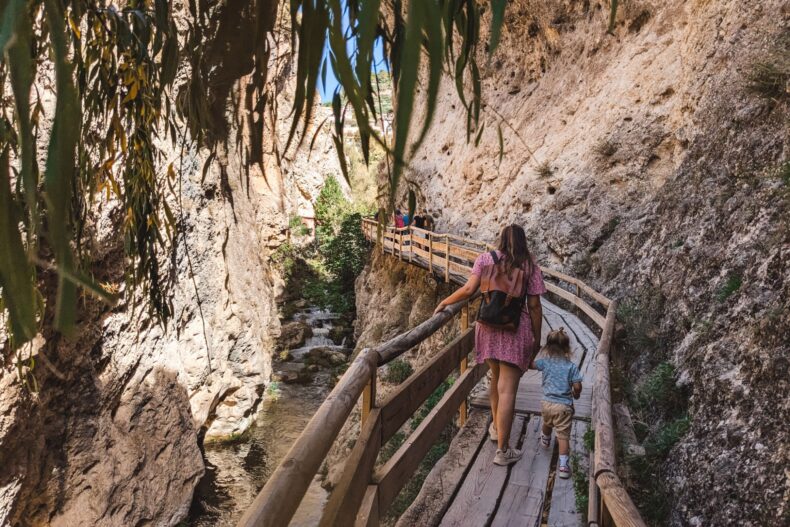
Just outside the white village of Castril, you will discover a surprisingly beautiful walk: the Cerrada del Río Castril. While most visitors head to the famous Caminito del Rey, this trail has its own spectacular charm. Parts of it run along wooden walkways attached to the cliffside, hovering just above the clear blue waters of the river. Unlike the more famous Caminito, this walk is relatively short, but you will encounter far fewer people, making the experience feel calm and peaceful.
The trail winds through a narrow gorge with steep rock walls rising on either side. The gentle sound of flowing water and the cool shade of the cliffs make it especially enjoyable on warm days. The route begins at the entrance, where a small fee is charged, right by the photogenic wooden walkways. From there, we crossed a slightly wobbly hanging bridge that led to a path carved directly into the mountainside. Midway along, a viewpoint opened onto a stunning waterfall in the river below before the path returned to the main trail. You can continue onward to complete a longer loop, but with our little ones, we chose to savor the most scenic section and walk it twice on the return.
After the hike, take time to explore Castril itself. The village clings to the mountainside and offers breathtaking views of the surrounding valley, providing a perfect complement to the trail and a lovely end to the day.
#15 El Acueducto del Águila
Just outside Nerja, a striking structure suddenly rises from the landscape: the Acueducto del Águila. This nineteenth-century aqueduct was built to carry water to a sugar factory. It stands with four levels of elegant brick arches and a central tower crowned with a small dome. The layers of arches and the contrast between the two-toned stone make it an exceptionally photogenic sight.
What makes the aqueduct even more impressive is its setting. It emerges from lush green surroundings, with rugged mountains forming a stunning backdrop. You can see it from the main road, but it is worth taking the exit to get up close and admire the details. It is not a large attraction where you could spend hours, yet it leaves a lasting impression and stands as a remarkable landmark in the Andalusian countryside.


