
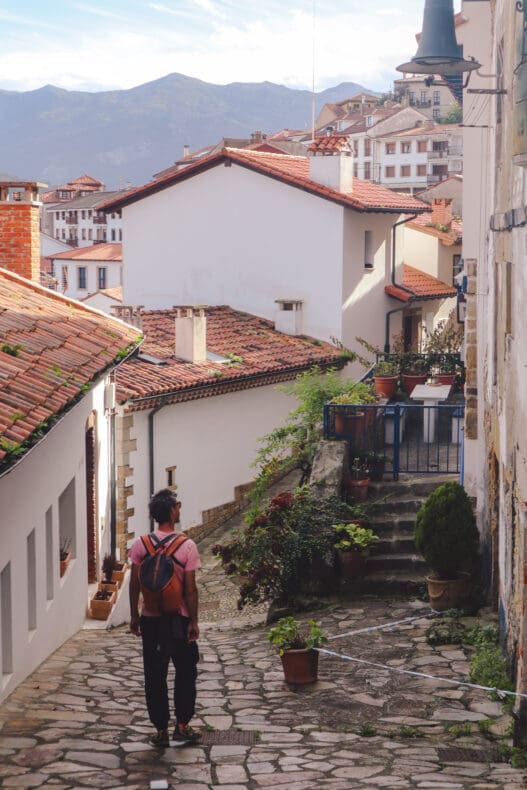
Spain’s list of most beautiful villages is filled with picturesque treasures, and the charming fishing village of Lastres is undoubtedly one of them. Perched on a hillside overlooking the sea, this enchanting village boasts breathtaking viewpoints, narrow winding streets, and impeccably preserved historic buildings. Every corner feels like a postcard, making it an irresistible destination for visitors, including us!
During our road trip through northern Spain, we spent an afternoon getting lost in its maze of cobbled streets, admiring the traditional architecture, and soaking in the coastal charm. Along the way, we uncovered some hidden gems and must-visit spots to share with you.


Where is Lastres in Spain?
Lastres sits on Spain’s northern coast, in the Asturias region, a land of rolling green hills, dramatic cliffs, and breathtaking scenery. This area is part of the Costa Verde, or Green Coast, a fitting name for its lush landscapes and unspoiled beauty. Here, the sea, mountains, and nature blend seamlessly, creating a truly stunning backdrop.
The surroundings of Lastres are just as spectacular. A short drive away, you’ll find the Los Picos de Europa, a majestic mountain range that, in our opinion, offers some of the most awe-inspiring nature in northern Spain. Another nearby gem is Tazones, a picturesque fishing village with its own distinct charm and character, making it well worth a visit.
The historic heart of Lastres is almost entirely car-free, except for a few local vehicles navigating its narrow streets. Parking in and around the center is limited, but just past the Santa María de Sabada Church, there’s a spacious parking area. A little further on, you’ll even find a large lot for campervans. From here, a scenic stroll along Calle Real will lead you straight into the heart of the village. If you’re heading to the Mirador San Roque, one of Lastres’ most spectacular viewpoints, there’s a dedicated parking area nearby for easy access.


What is Lastres Known for
#1 One of the Most Beautiful Villages in Spain
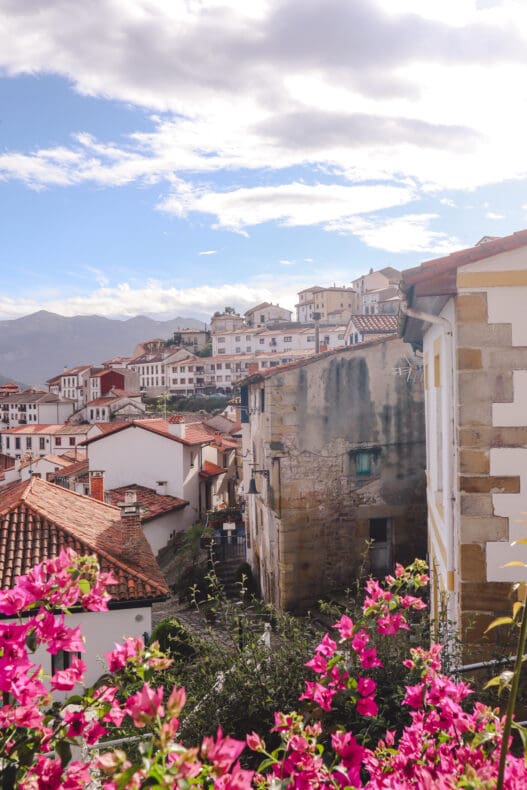
As you wander through the charming, cobbled streets of Lastres, it’s easy to understand why this picturesque seaside village has secured a place on Spain’s prestigious “Los Pueblos más Bonitos de España” list. This exclusive recognition is more than just a title; it’s a seal of excellence, awarded to villages that stand out for their tourism appeal and dedication to heritage preservation. Securing a spot on this list is no small achievement; villages must meet strict criteria, including a population under 15,000, notable architectural or natural heritage, and a strong commitment to safeguarding their cultural legacy.
Much of Lastres’ charm lies in its beautifully preserved historic center, where time seems to slow down. Its designation as one of Spain’s most beautiful villages has made it a popular stop for travelers exploring northern Spain. However, while Lastres is undeniably idyllic and full of character, it’s not an endless sightseeing destination. In just a few hours, you’ll have likely strolled every scenic street, admired the breathtaking coastal views, and snapped plenty of postcard-perfect photos. And what better way to end your visit than by sitting at a sun-drenched terrace, savoring the fresh catch of the day, straight from the local fishing boats?
#2 Large Fishing Port
Lastres is more than just charming architecture and stunning views of the Cantabrian Sea. It’s also a bustling fishing port, where for centuries, local fishermen have set out at dawn, returning with their fresh catch to be auctioned off by midday. For such a small village, Lastres has a remarkably large harbor, a testament to its longstanding maritime heritage. Even today, the port remains one of the village’s most iconic landmarks, offering a glimpse into its authentic seafaring traditions.
#3 Iconic Film Set for Spanish Series
But did you know that this picturesque village has also been the setting for several Spanish TV series? One of the most famous is Dr. Mateo, the Spanish adaptation of the hit British show Doc Martin. For many Spaniards, this is what put Lastres on the map, making it instantly recognizable to fans of the series.
As you wander through the village, you’ll come across several iconic filming locations, from Dr. Mateo’s house to other well-known spots that appeared on screen. Fans of the show can even follow a Dr. Mateo walking route, which takes you past familiar places like Taberna de Tom and the bakery featured in the series. Many of these locations can be easily found on Google Maps, making it a fun and immersive experience for visitors wanting to step into the world of the show while exploring Lastres.


Tourist Map of Lastres
At the San Roque viewpoint, there is a handy map of the village. This is a picture of it:

Top 11 Things to do in Lastres
#1 The Old Village Centre
The historic heart of Lastres is what makes this coastal village so captivating. While it may not have the grand historical presence of some of Spain’s more renowned towns, its authentic charm and unique character set it apart. In its own distinctive way, Lastres is undeniably picturesque.
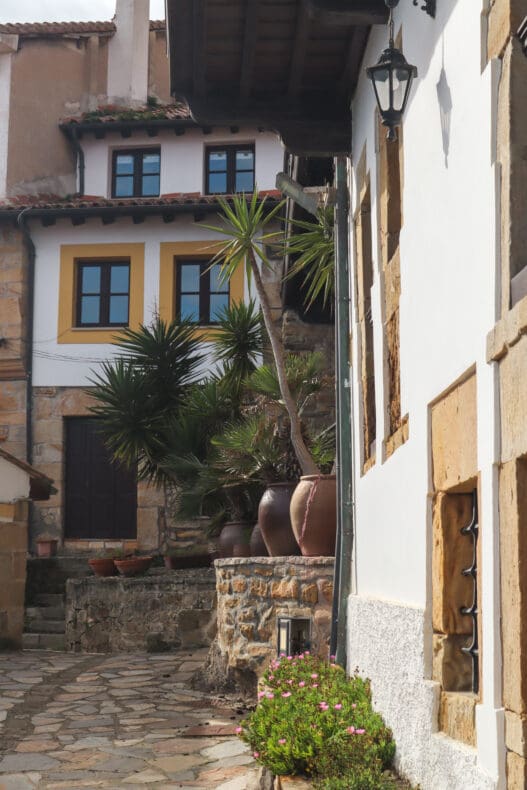
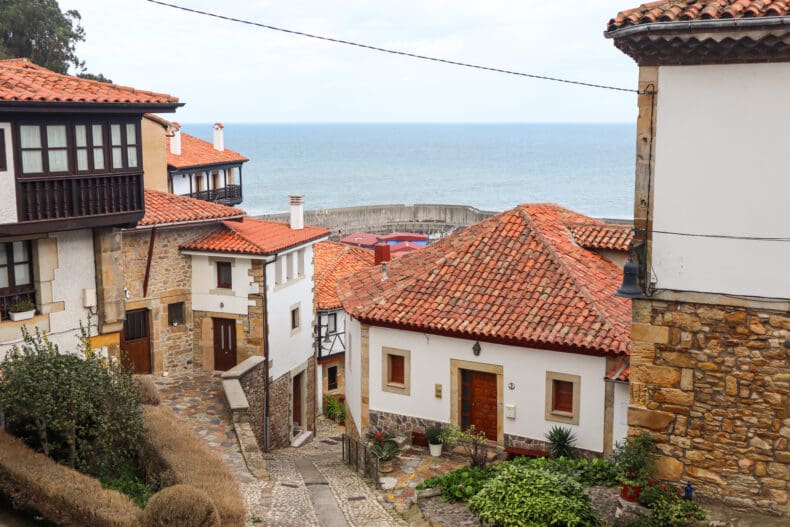
The village’s whitewashed houses seem to cling to the steep cliffs, forming a mesmerizing maze of narrow alleys, winding streets, and countless staircases. Everything here is compact, twisting, and either steep or linked by stone steps, giving Lastres an almost labyrinth-like feel. The historic center is almost entirely car-free, with only the occasional vehicle belonging to a local resident, enhancing its serene and untouched atmosphere.
Every turn offers a new postcard-perfect view: a charming alleyway lined with flowers, a historic home with a wooden balcony, or a peek at the shimmering sea through a narrow passage. While the houses share a harmonious architectural style, each has its own distinct personality. Most are either whitewashed or built with exposed stone, some adorned with traditional wooden balconies, while others feature intricate wooden galleries embedded in their facades. Many homes are just two or three stories high, their entrances reached by staircases winding up or down, adding to the enchanting character of the village.
Lastres’ past is deeply woven into the fishing and whaling traditions that sustained the village for centuries. Even today, its rich maritime heritage is evident. Look for tiny wooden boats adorning house facades or other nautical details that offer a glimpse into the village’s proud seafaring history.

#2 The Fishing Port
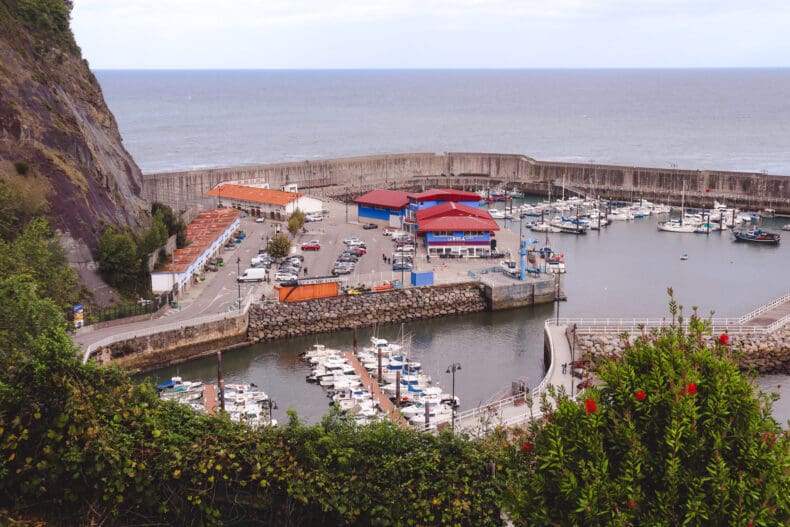
The harbor of Lastres has long been the beating heart of the village, shaping its history and bringing prosperity to its people. Even today, it remains surprisingly large for such a small coastal town, and effortlessly picturesque.
Tucked at the foot of the steep hillside on which Lastres is built, the harbor is a bustling yet tranquil scene of maritime life. A long breakwater stretches into the sea, embracing the many fishing boats gently swaying with the tide, creating a sense of both protection and movement.
We visited Lastres on a weekend, but if you have the chance, we highly recommend coming on a weekday. While the harbor is always a captivating sight, it is during the week that it truly springs to life. This is when the fish market and daily auction take place, a lively and authentic experience that offers a glimpse into the village’s deep-rooted fishing traditions.
#3 Torre del Reloj (The Clock Tower)
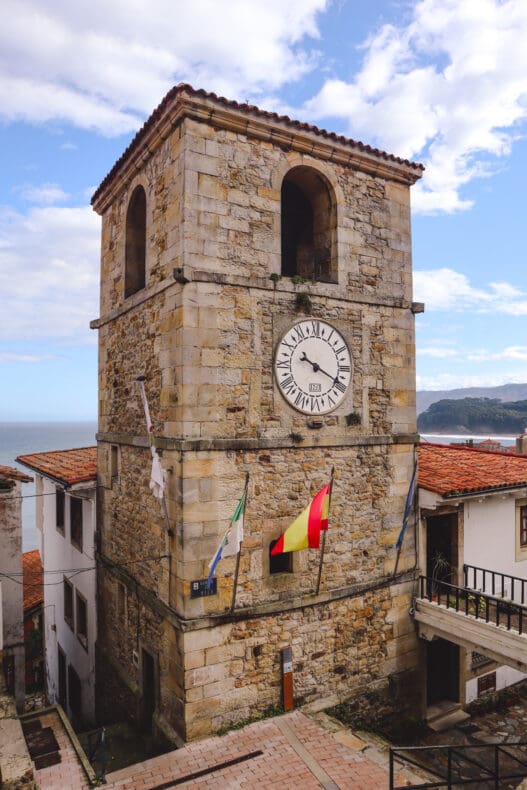
One of the most distinctive landmarks in the winding streets of Lastres is the Torre del Reloj, or Clock Tower. Though not particularly tall, this square, stone structure still rises above the rooftops of the old village center, standing as a silent guardian of time.
For centuries, this historic tower has served both as a watchtower and a bell tower, playing a crucial role in village life. The original tower was built in the 15th century, but much of what you see today is the result of a significant renovation in 1751. Its design is simple yet commanding, with a solid, four-story facade that exudes a sense of strength and permanence.
At its center, a large clock face with Roman numerals keeps time for the village. But what makes it truly special is that the clock still requires daily winding by hand, a responsibility said to be carried out by a dedicated retired villager, ensuring that this age-old tradition continues to tick on.

#4 Los Balleneros
The Barrio de los Balleneros is one of the most historic and character-filled corners of Lastres. Its name translates to “Whalers’ Quarter,” a clear nod to its maritime past. This was once the home of the village’s whalers, the brave men who set out to sea in search of whales, a trade that not only sustained the town but also brought it considerable wealth and prestige.
The traditional fishermen’s houses in this district have a distinct and practical design. The ground floor was used for storing the day’s catch, with freshly caught fish carefully preserved in sea salt in a cellar-like space. The upper floors served as living quarters, creating a functional yet charming architectural style that still defines the area today.
However, the term “fishermen’s houses” might be misleading. Many of the homes in Los Balleneros are surprisingly grand, more reminiscent of small city palaces than humble cottages. In the 16th and 17th centuries, whaling wasn’t just a means of survival. It was an exceptionally profitable industry, allowing the village to flourish and leaving behind an architectural legacy that still stands.
At the heart of this historic district is Calle Real, the central street that winds through the neighborhood. If you’re visiting Lastres and arriving via the free visitor parking lot, chances are you’ll enter the village through this very street, meaning your first steps will take you directly into the Whalers’ Quarter.
#5 Escaleras de la Fragua
The Escaleras de la Fragua (Stairs of the Forge) offer a picturesque route from the harbor up to the village center, perched high on the cliffs. Once the sole path linking the bustling harbor to the rest of the village, this historic staircase remains the primary connection between the two areas today.
Dating back to the 14th century, a narrow, steep path was the only way for villagers to travel to and from the harbor. In the 17th century, this path was replaced by a stone staircase, which still stands proudly today. The staircase is a living piece of history, connecting the sea to the heart of the village and serving as a reminder of Lastres’ rich maritime heritage.
#6 Mirador San Roque
If you’re eager to take in a breathtaking panoramic view of Lastres and its dramatic coastline, and trust us, you absolutely should, then the Mirador de San Roque is the spot you won’t want to miss. From this vantage point, the charming village sprawls beneath you, with the bustling harbor at one end and the maze of narrow streets climbing up the steep cliffs at the other.
The viewpoint is named after a small chapel perched at the very edge of the cliff. While the chapel itself might not steal the spotlight, it’s the spectacular view that draws visitors here, along with the charming café next door. A cozy little restaurant has taken full advantage of the location, with expansive windows offering a front-row seat to the stunning scenery. True to the spot’s name, it’s even called after the mirador itself. And for added convenience, you’ll be pleased to know that there’s a dedicated parking area, making your visit even easier.

#7 Santa Maria de Sabada (Church of Saint Mary)
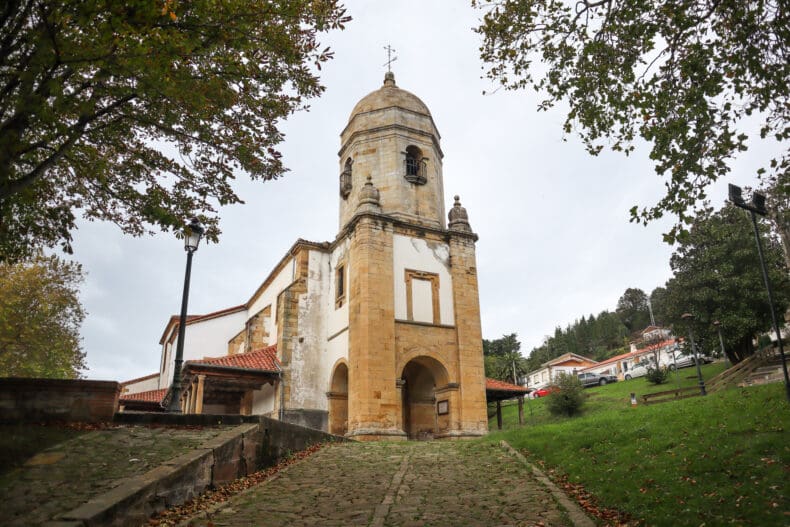
The Santa María de Sabada Church is the heart of Lastres, cherished by locals for its timeless charm, particularly during the festive season when its remarkable Nativity scene takes center stage, a beloved tradition that has been a fixture for generations. You may also be interested to know that the covered portico on the church’s side was once the site of the town’s market, adding a layer of history to this already significant spot.
While the church’s style is modest, its beauty is undeniable. The exterior combines white plaster and exposed stone, with a facade highlighted by a striking bell tower, crowned with an eye-catching dome. The tower also serves as the church’s entrance, and its doors are often open, welcoming visitors to explore the interior.
Perched at the top of the hill above Lastres, the church offers panoramic views of the village below. Conveniently located near a visitor parking area, it’s a spot you’ll likely pass on your journey through the village, making it an essential stop on your visit to this picturesque corner of Spain.
#8 The Beaches Near Lastres
Lastres is also a wonderful beach destination, offering several picturesque spots where you can relax and soak up the sun on a bright day.
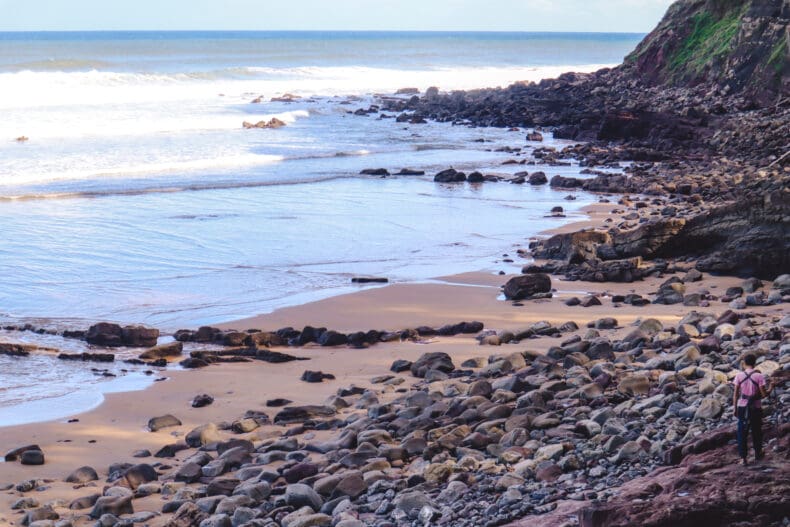
Just beside the harbor, you’ll find the charming little Playa de El Escanu, a peaceful sandy escape. A bit further along, you’ll come across Playa de Lastres, a 300-meter stretch of beach framed by striking cliffs. Does this beach look familiar to you? That’s no surprise! It served as the setting for many scenes in the beloved TV series Doctor Mateo.
However, our personal favorite beach is located just south of the village: Playa de la Griega. Nestled at the mouth of the Liberdon River, this beach is beautifully surrounded by rolling green hills. From here, you can embark on a scenic walking trail that winds along the coastline, taking you all the way to La Isla, where you can enjoy breathtaking coastal views at every turn.
#9 Dinosaurs at the Jurassic Museum of Asturias
We mentioned Playa de la Griega as one of our favorite beaches near Lastres, and one of the main reasons is the chance to take a captivating walk to ancient dinosaur footprints. This part of Asturias, nestled between the cities of Gijón and Ribadesella, is famously known as the Costa de los Dinosaurios (Dinosaur Coast), due to the wealth of fossilized bones and dinosaur tracks that have been uncovered here.
The dinosaur footprints at Playa de la Griega are truly a must-see. Dating back an astounding 150 million years, they provide a fascinating contrast to the charming, peaceful vibe of the village. Right at the start of the beach, near the parking lot, a large sign marks the location of these extraordinary footprints. You can either follow the designated path or stroll along the beach to the far end, where you’ll discover sizable indentations in the rocks. With a little imagination, or by using the information board with a viewpoint overlooking the footprints, you’ll easily spot the ancient dinosaur tracks.
While you’re in the area, don’t miss the Museo del Jurásico de Asturias (MUJA), one of the region’s most popular attractions. The museum not only offers sweeping views of the Lastres harbor and Playa de la Griega, but it’s also renowned for its impressive dinosaur collection. The museum’s design is an architectural marvel in itself, shaped like a giant tridactyl footprint. Inside, you’ll embark on a fascinating journey through the age of dinosaurs, with exhibits that span the three major periods: Triassic, Jurassic, and Cretaceous.


#10 Mirador del Fito
One of the most breathtaking viewpoints in Asturias is just a short drive from Lastres. Sitting atop one of the most iconic hills in the Sierra del Sueve, this viewpoint features a historic concrete observation tower, built in 1927, offering visitors a stunning 360-degree view of the surrounding landscape.
Although the Mirador del Fito itself is well worth the visit, there’s an even more captivating spot nearby. If you make your way to the El Fito picnic area, nestled beneath the shade of towering trees, you’ll be treated to an even more impressive panorama. From the spacious parking lot just beyond the picnic area, you can enjoy a truly spectacular vista, stretching from Lastres and the rugged coastline on one side to the towering peaks of Los Picos on the other. For those looking for a more adventurous experience, the large parking lot provides the perfect opportunity for wild camping in your camper van. We spent a memorable night here, waking up to a spectacular sunrise that made the whole experience feel even more enchanting.

#11 Tazones
Just a short distance from Lastres, you’ll discover another picturesque fishing village that is considered one of the most beautiful in Spain. This hidden gem is Tazones, a delightful town where traditional sailor houses, painted in white with vibrant splashes of color, appear to cling to the hillsides.
The village is a photographer’s dream, with its narrow cobbled streets, charming buildings adorned with wooden balconies, and quaint fishermen’s cottages. A small beach adds a dash of coastal beauty, completing the idyllic setting. One of the most unique sights in the village is the Casa de las Conchas, a house entirely covered in seashells, transforming it into a fascinating work of art.


