What do the King of Spain, the wealthiest man in the country, and the famous architect Antoni Gaudí all share? The charming village of Comillas, tucked away on the northern Spanish coast. Despite its small size, this picturesque village holds an impressive collection of architectural gems, thanks to the opulence of Spain’s elite from the early 1900s. From a stunning villa crafted by Gaudí himself to a magnificent, world-class palace, the landmarks in Comillas are nothing short of extraordinary. In this blog, we’ll take you on a journey through this hidden gem in northern Spain, highlighting the top attractions you won’t want to miss.


Where is Comillas in Spain?
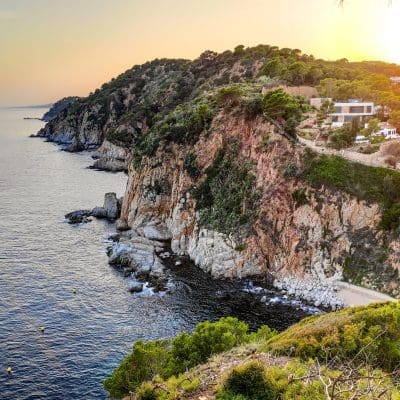
Comillas is a charming town nestled along Spain’s northern coast, in the autonomous region of Cantabria, perfectly positioned between the Basque Country and Asturias.
Not far from Comillas, there are even more captivating destinations waiting to be explored in Cantabria. Just a short distance away is the historic town of Santillana del Mar, often praised as one of Spain’s most picturesque villages. It’s also home to the famous Altamira Caves, where some of the world’s most significant prehistoric cave paintings were discovered. Continuing west along the coast, you’ll reach San Vicente de la Barquera, another enchanting seaside town that will steal your heart. And no trip to the region would be complete without a visit to Santander, the lively capital of Cantabria, known for its breathtaking beaches and vibrant city atmosphere.
For nature lovers, a visit to the region wouldn’t be complete without exploring Los Picos de Europa. This spectacular mountain range is a true haven for outdoor enthusiasts, offering everything from breathtaking hikes to picturesque villages. The landscapes are nothing short of awe-inspiring, with serene glacial lakes nestled among towering snow-capped peaks. Every twist and turn in this stunning area reveals a new natural wonder, making it a place you’ll want to return to again and again.

What is Comillas Known for?
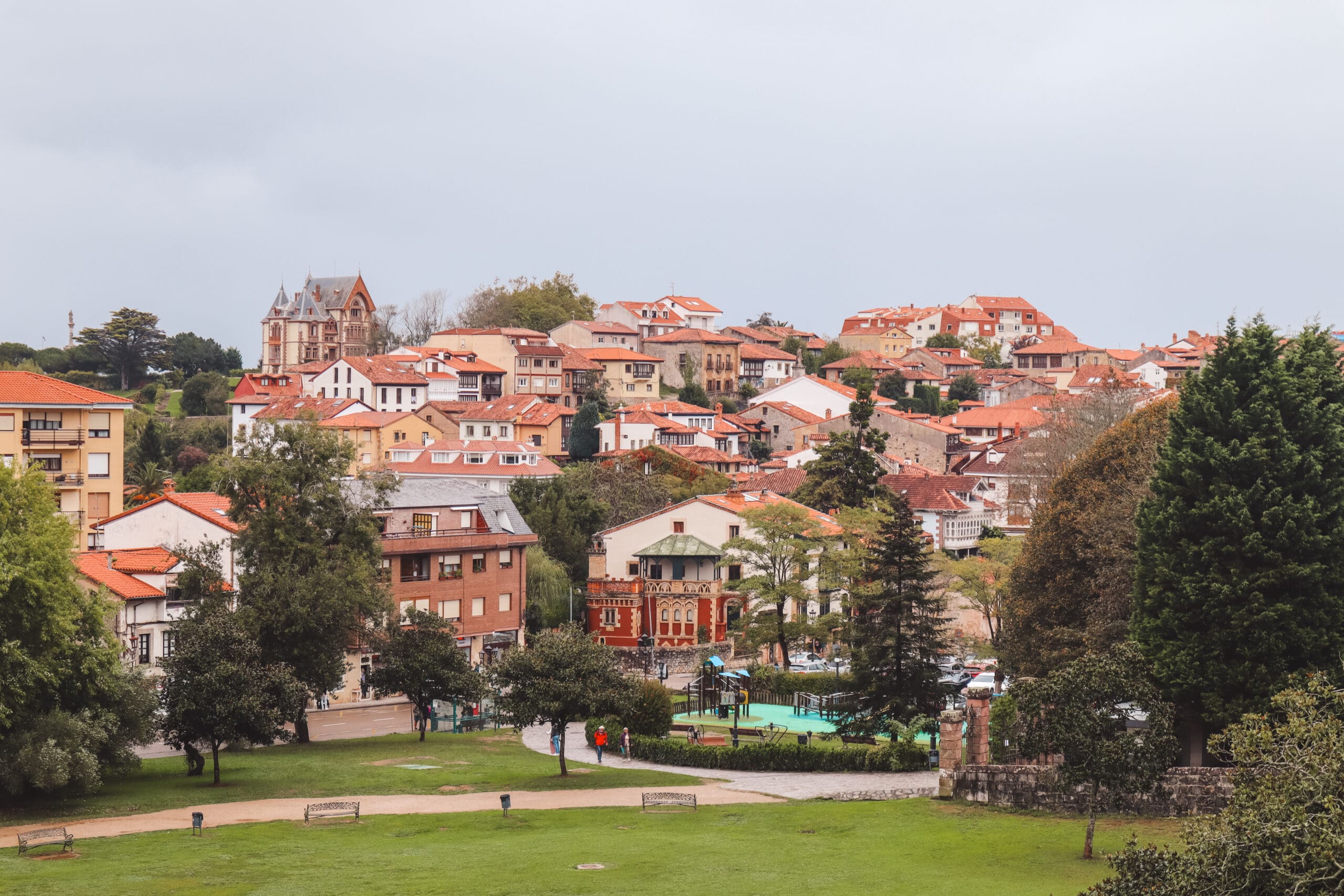
Comillas is a truly distinctive destination in northern Spain, celebrated for its elegant mansions showcasing modernist architectural styles, including one designed by the legendary Antoni Gaudí. Unlike many other villages in this part of Spain, Comillas flourished with remarkable wealth at the close of the 19th century. This newfound prosperity gave rise to a collection of striking mansions built in the modernist and Art Nouveau styles of the time.
Nestled in the picturesque region of Cantabria, this charming town offers a unique blend of history and architecture that sets it apart from other places in the area. The town’s growth was shaped by the so-called “Indianos“—Spaniards who emigrated to the Americas and returned home with fortunes made in the New World. These individuals built impressive estates upon their return, leaving behind a lasting legacy.
The most famous of these returnees was Antonio López y López, a poor boy from Comillas who became the wealthiest man in Spain after amassing a fortune in Cuba. His newfound wealth earned him the favor of the Spanish king, who even granted him the title of Marquis of Comillas. The Marquis built himself a magnificent palace and invited the king to spend a summer in his hometown. The Spanish king was immediately taken with the place, and from then on, Comillas became his summer retreat.
The royal presence in Comillas soon attracted a steady stream of aristocrats and wealthy families, who built their own summer residences here, transforming the town into an exclusive enclave of wealth and modern architecture. Among these grand estates, the most famous is El Capricho, designed by the renowned Gaudí. At the time of its construction, it was considered rather unconventional and even unattractive, but today, its distinctive and imaginative design is widely appreciated for its unique charm and architectural brilliance.
Top Places to Visit in Comillas
#1 El Capricho de Gaudí
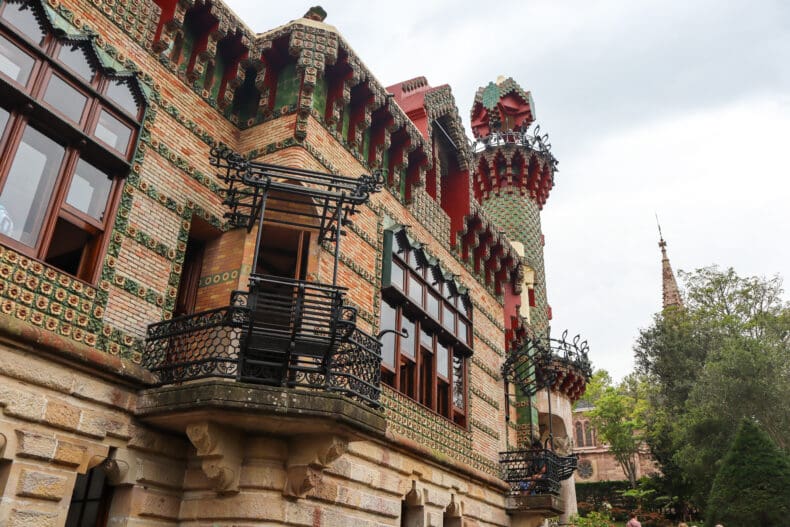
The most famous and iconic landmark in Comillas is undoubtedly El Capricho. While Gaudí is globally celebrated for his masterpieces in Barcelona, this lesser-known creation in northern Spain provides a rare insight into the brilliance of the young architect.
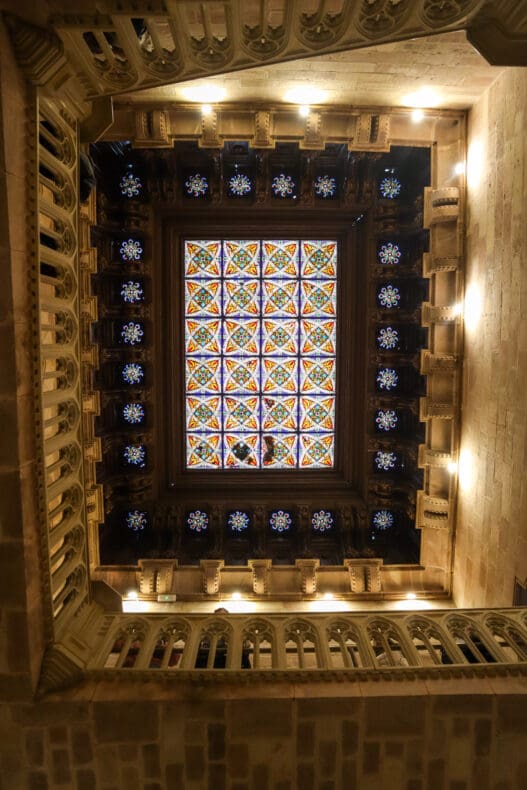
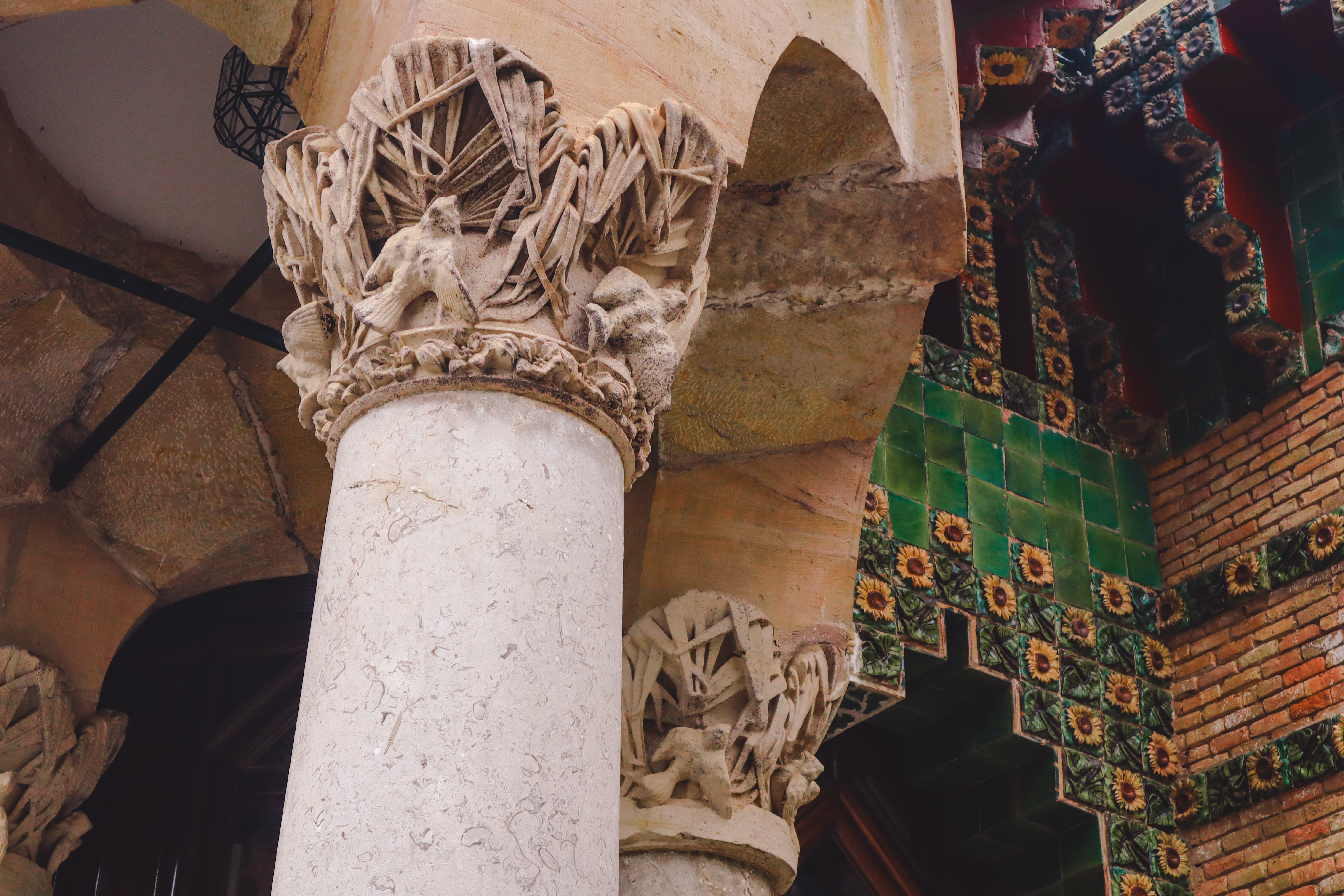
Between 1883 and 1885, a then-unknown Gaudí designed this extraordinary townhouse for Don Maxímo Díaz de Quijano, the lawyer to the Marquis of Comillas. Construction was halted when Maxímo fell ill and decided to recover in the house. Tragically, he never recovered and the house was never finished. He passed away just one week after moving in. The unfinished nature of the house is still evident today, particularly in the decorative columns at the entrance and the missing stained-glass windows that Gaudí had originally planned for the design.
Following Maxímo’s death, the house passed through several hands before finding its place as a private museum in recent years, thanks to a Japanese owner and his Spanish wife.
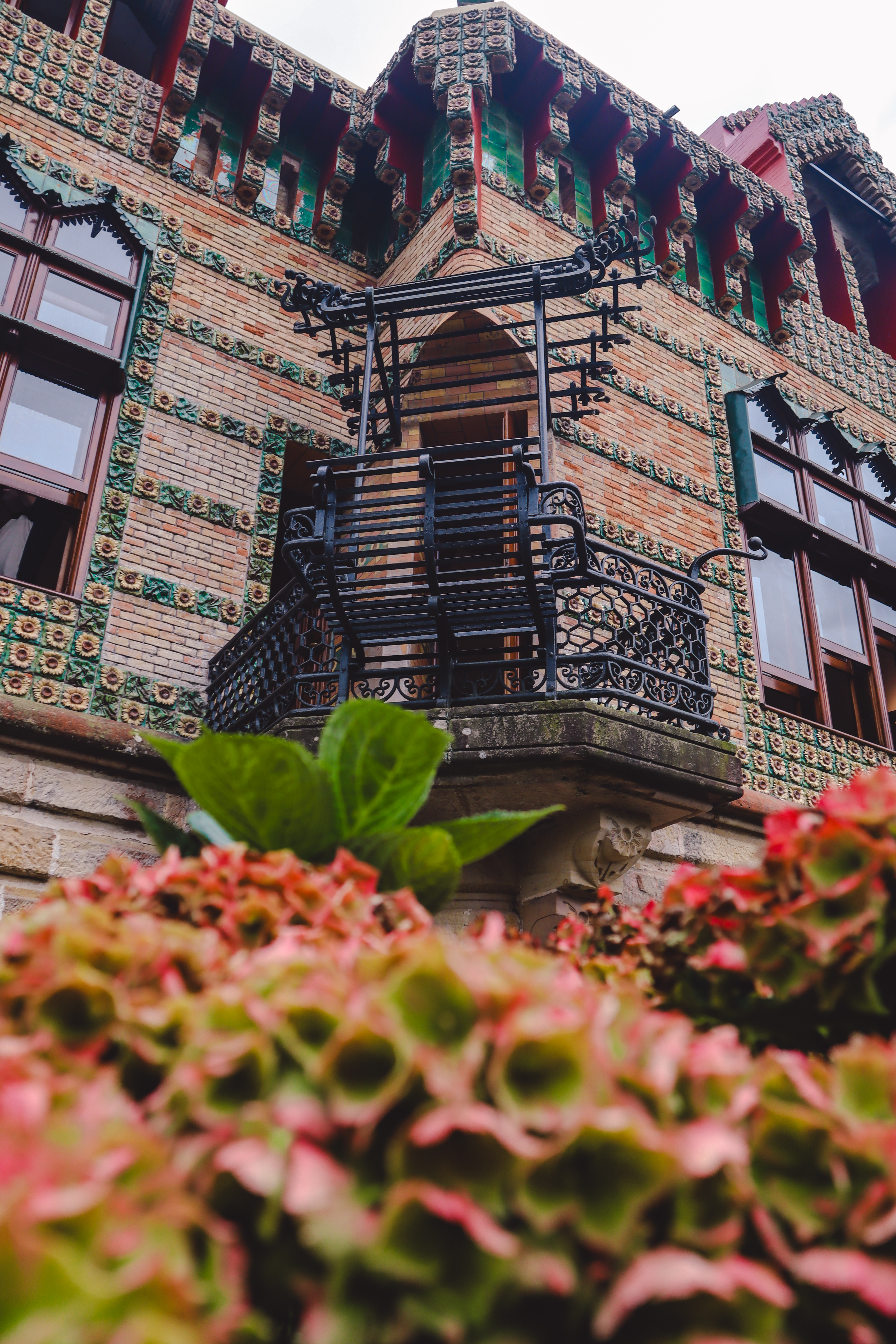
The design of El Capricho is a true testament to Gaudí’s creativity and ingenuity. His vision of harmonizing nature with architecture is evident in the villa’s strategic positioning to embrace sunlight throughout the day. The Marquis would wake up to the soft rays of the morning sun in his bedroom, while the dining room was expertly oriented to capture the beauty of the setting sun. The façade is adorned with numerous sunflower tiles, a tribute to both the sun and the natural world that Gaudí so deeply cherished.
Gaudí also came up with an ingenious heating system for the villa, where a greenhouse would be warmed by solar energy, and the heat would then be funneled under the floors to warm the rooms. Unfortunately, because Maxímo passed away so quickly, we’ll never know if this system actually worked as intended.
Maxímo was also an avid music lover, and Gaudí cleverly incorporated this passion into the villa’s design. The shutters in the music room play a melody when they are opened and closed. While you’re not allowed to try it yourself, if you ask one of the attendants or staff, they’ll gladly demonstrate it for you.
We highly recommend booking your tickets online ahead of time. It’s a popular attraction, and especially during peak season, you’ll want to secure your spot early. Be sure to add a guided tour to your ticket – it’s available in both Spanish and English, with no extra charge. Our guide revealed the many subtle references and creative innovations throughout Gaudí’s work, bringing the villa to life in a way we wouldn’t have experienced on our own. And yes, you’ll definitely get to hear those musical shutters in action!


#2 Palacio de Sobrellano
The Sobrellano Palace, also known as the Palacio del Marqués de Comillas after its creator and first owner, is a grand and luxurious palace located right in the heart of Comillas. This is the type of palace you might expect to find in a capital city or as a royal residence, yet it stands proudly in this charming, small village in northern Spain, a true testament to its builder’s immense vision.
Commissioned by Antonio López y López, the first Marquis of Comillas, this impressive structure was the brainchild of an extraordinarily wealthy man. Having made his fortune in Cuba, López y López was, at the time, the richest person in Spain. His goal was to create a residence in his hometown that would not only reflect his elevated status but also showcase his extraordinary wealth. And without a doubt, he achieved that goal in spectacular fashion.
Through his marriage to a Catalan woman, López y López was introduced to a number of skilled architects from the northeastern region of Spain. One of them, Joan Martorell, a renowned Catalan architect and mentor to the iconic Antoni Gaudí, was entrusted with designing the palace. In fact, the legendary Gaudí also contributed to the project during his apprenticeship under Martorell, adding his own touch to the design.
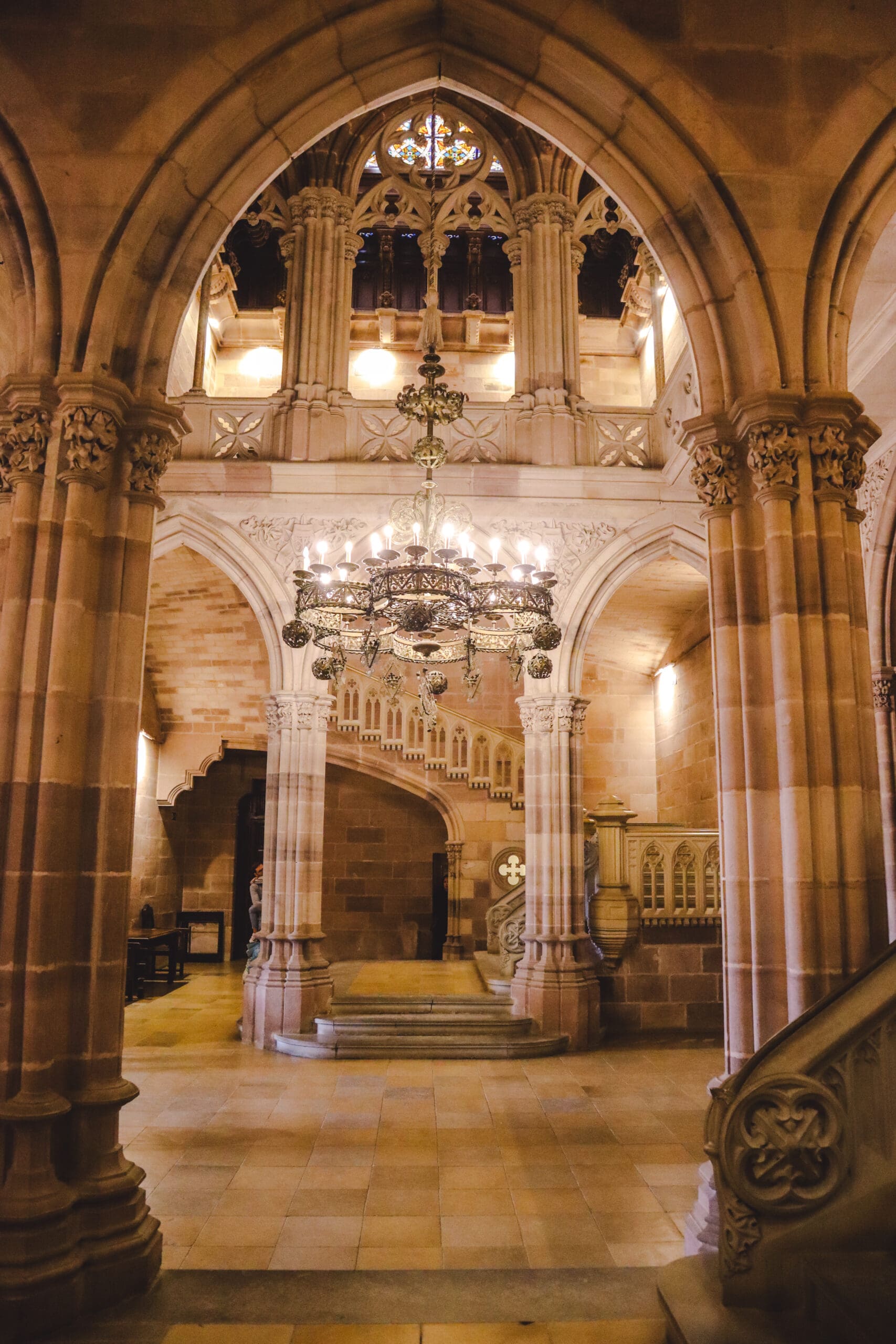
The result is nothing short of awe-inspiring – a stunning neo-Gothic palace completed in 1888. As you step inside, you’re immediately captivated by the central hall, where a magnificent staircase ascends to the upper levels. The grandeur continues throughout the interior, with expansive rooms like the throne room, adorned with murals that depict the life of the Marquis, and opulent chambers that convey a sense of wealth and refinement. The Marquis was so wealthy that his palace became the very first building in Spain to use electric lighting.
The Palacio de Sobrellano is only accessible through a guided tour, which is usually in Spanish. If you prefer an English-speaking tour, it’s essential to book in advance. Due to the guided tour-only policy, visitor numbers are limited each day, so be sure to secure your tickets ahead of time. Although the language barrier might present some challenges, the sheer magnificence and historical significance of the Palacio de Sobrellano make it an experience well worth the visit.

#3 Capilla Pantéon de Sobrellano
Within the beautiful palace gardens stands another awe-inspiring building: the Sobrellano Chapel, also known as the Capilla Panteón de Sobrellano. With its majestic design, resembling a small cathedral, this chapel served as both the family church for the Marquis and as a mausoleum for his family.
Although the chapel’s construction was finished in July 1878, it wasn’t officially consecrated until August 1881. The delay in the ceremony was due to the royal visit of King Alfonso XII of Spain and his wife, Maria Cristina, during the summer of 1881. Step inside, and you’ll be struck by the chapel’s grandeur. The interior boasts stunning stained glass windows, an intricately detailed ceiling, and pews crafted by none other than Gaudí himself. Throughout the chapel, you’ll find a series of magnificent tombs, each one featuring impressive sculptures and rich, ornate details that make them truly unforgettable.
The Capilla Panteón is visited separately from the Palacio de Sobrellano, so you’ll need a separate ticket for each. However, the lush gardens surrounding these architectural wonders can be explored for free, without the need for a ticket.

#4 The Modernist Mansions of Comillas
The influence of the wealthy “Indiano” Antonio López y López transformed Comillas into a sought-after summer retreat for Spanish royalty and the elite. As a result, this quaint coastal village is now dotted with modernist mansions and villas that you might not expect to find in such a charming location.
The historic heart of Comillas is a true delight to wander through. With its cobbled streets, centuries-old buildings, and a timeless atmosphere, the village retains its unique character, even with the increasing number of visitors. At the center of it all is a picturesque square, home to the town hall and the Church of San Cristóbal. A particularly eye-catching feature is the Art Nouveau fountain in Plaza de los Tres Caños, commissioned by the son-in-law of the first Marquis of Comillas.
Scattered throughout the village and its surrounding areas are several villas once owned by Spain’s elite. One standout example that immediately draws attention is known locally as “El Duque.” This grand gentleman’s residence, built between 1899 and 1902 in a distinct English style, was commissioned by Juan Manuel Sánchez y Gutiérrez de Castro, the Duke of Almodóvar del Río.
Another noteworthy gem is the villa with the Puerto del Moro. While the villa itself is privately owned and not open to visitors, the nearby Moro’s Gate, also known as the “Birds’ Gate” (Puerto de los Pajaros), is certainly worth a visit. Designed by the renowned Antoni Gaudí in 1900, the gate features three separate archways: one for cars, one for pedestrians, and one for birds.

#5 Cementerio de Comillas
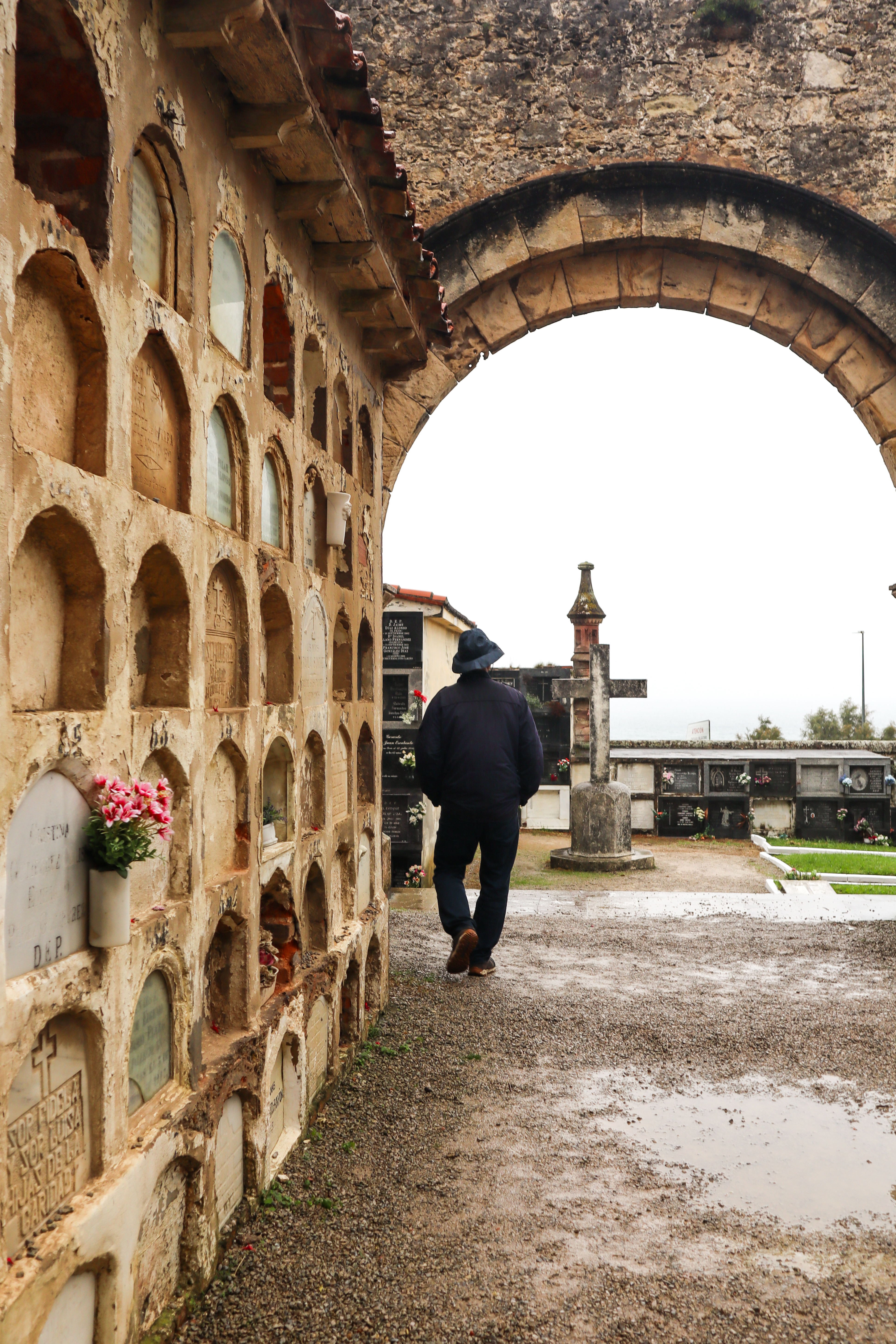
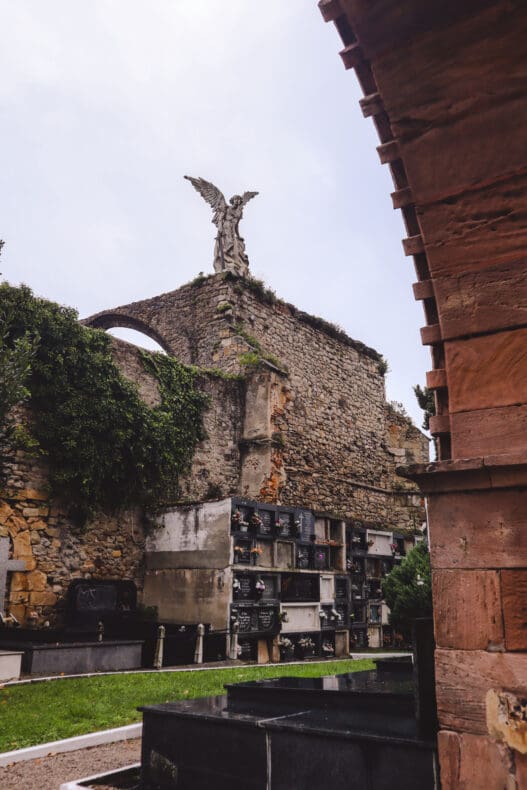
A cemetery may not be the first place you think of visiting on holiday, but the Cementerio de Comillas is definitely an exception. It stands as one of the most visited attractions in the town, thanks in large part to the iconic angel that graces its grounds.
The cemetery was built on the site of an ancient church, dating back to either the fifteenth or sixteenth century. The ruins of this church were thoughtfully incorporated into the cemetery’s design, giving the space a distinctive and captivating atmosphere. In 1893, a modernist architect was tasked with renovating the site. While maintaining the integrity of the old ruins, the architect introduced a new facade and a striking angel statue.
This angel, El ángel de Comillas, was sculpted by the Barcelona-born artist Josep Llimona, and it has since become the cemetery’s emblem. It’s not hard to see why. Perched prominently on a hill, the cemetery and its angel rise above the surrounding landscape, commanding attention. Even if you’re not familiar with the cemetery’s fame as an attraction, the sight of this magnificent angel alone would be enough to draw you in.
While the cemetery isn’t particularly large, it’s undeniably fascinating. Almost entirely enclosed by walls, it’s divided into two sections. The lower section features stacked graves, a common design element in countries like Spain, though not typically seen in places like the Netherlands. The upper section is home to grander tombs and monumental gravestones, where you’ll find another imposing angel—making it impossible to overlook.

#6 Pontifical University
The Universidad Pontificia Comillas – or the Pontifical University of Comillas, as it’s known in English – has deep roots in this charming village, and its lasting impact is still evident today.
Perched majestically on a hill, one of the village’s most prominent buildings stands out. This structure was originally commissioned by the Marquis of Comillas to house a seminary for priests. In 1890, Pope Leo XIII officially founded the Universidad Pontificia Comillas as a seminary for the poor, a project the marquis had ardently campaigned for. His vision was to create a lasting legacy and, through this monumental act of devotion, earn his place in heaven. Over the years, the seminary evolved into a full university. Though it continues to thrive today, the university has since relocated to Madrid, leaving its original home in Comillas behind.
The building itself is a remarkable example of the modernist architecture of the late 19th century. Constructed between 1883 and 1892, it blends eclectic, Gothic, and Mudejar styles to create an unforgettable visual experience. The surrounding gardens, open to the public, provide an excellent spot to take in the full beauty of the building’s architectural splendor.
One of the most striking features of the university is its grand entrance gate, designed by the celebrated architect Lluís Doménech i Montaner. First built in 1892 and later expanded to accommodate vehicle traffic, the gate is a work of art in its own right. Made from a combination of brick, ceramic, and intricate sculpture, it resembles a castle tower, further enhancing the already impressive charm of the building.

#7 Parque Güell y Martos
Just a short distance from the beach in Comillas, you’ll find the beautiful Güell y Martos Park. Spanning 3 hectares, this park was designed by the renowned Catalan architect Lluís Doménech i Montaner. At the park’s highest point, you’ll encounter a striking monument that immediately catches the eye. The “Monument to the Marquis of Comillas” was built to honor the first Marquis, a man who played a significant role in shaping the village.
While the monument and the park are both worth exploring, we found that the real treasure here is the view. Perched at the park’s highest point, the monument offers a breathtaking panoramic vista. From this vantage point, you can admire the charming village, the sparkling sea, the impressive Pontifical University, and even the cemetery with its iconic angel statue, all framed by the surrounding landscape.
#8 The Beaches of Comillas
Comillas, with its charming coastal setting, is the perfect destination for beach lovers looking to unwind on warm, sunny days. Right on the edge of the village, you’ll find Playa de Comillas, a wide, sandy beach that draws locals and visitors alike for its relaxed atmosphere and scenic views.
A short walk from Playa de Comillas takes you to the breathtaking Oyambre Nature Park, nestled along the mouth of the Ría de la Rabia river. This protected stretch of coastline is a haven of natural beauty, with rolling dunes and a wild, unspoiled landscape. Not far from here is Playa Oyambre, an even larger and more expansive beach, where you can truly immerse yourself in nature’s tranquility while enjoying the sun and sea. Whether you’re seeking peace, adventure, or simply a place to relax, these beaches offer a perfect escape.