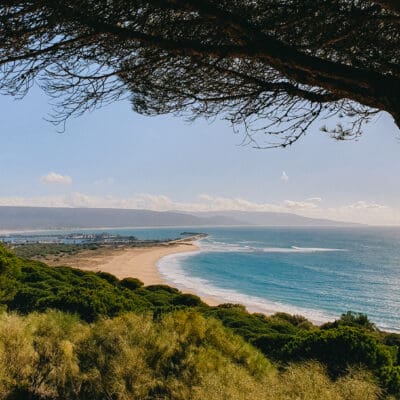
The Basque Country is part of Spain, but it feels like a world of its own. Think dramatic cliffs, lush green hills, charming fishing villages, and cities where age-old traditions meet cutting-edge design. It’s a place where you can savour pintxos on a sunny terrace, hike to a chapel perched on a sea-swept rock, and sip crisp local Txakoli wine while taking in incredible views of the Atlantic. With its own language, deep-rooted pride, and vibrant culture, the region has a distinct character you won’t find anywhere else.
We’ve travelled through the Basque Country many times and still discover new villages to wander and breathtaking stretches of coast to admire. In this blog, we’ve brought together the very best the region has to offer—from world-renowned landmarks to hidden gems that are well worth seeking out.
To make your planning easier, we’ve also mapped out a clear route connecting all the highlights, so you can explore the Basque Country with ease.
Read on and see for yourself why we believe this is one of the most beautiful and captivating regions in all of Spain.


Where is Basque Country located in Spain?
The Basque Country stretches across the north of Spain, nestled between the Atlantic coast and the foothills of the Pyrenees. It’s an autonomous region with its own language, distinct culture, and a deep-rooted sense of identity. The area is divided into three provinces: Álava, Gipuzkoa, and Bizkaia. Within these, you’ll find vibrant cities like Bilbao, elegant San Sebastián, and Vitoria-Gasteiz, the region’s capital. The coastline, known as the Costa Vasca, is one of Spain’s wildest and most dramatic shores.
To the west, the Basque Country borders Cantabria; to the south, La Rioja; to the east, Navarra; and to the north, both France and the Bay of Biscay. For travellers from the Netherlands, the easiest route is a direct flight to Bilbao, with several connections available from Amsterdam. San Sebastián also has an airport, though with less connections to European airports. Another great option is flying into Biarritz, just across the French border. From there, it’s only a short drive to reach the heart of the Spanish Basque Country.


What is Basque Country known for?
The Basque Country is celebrated for its distinct language and culture, its delicious cuisine centred around pintxos, its breathtaking natural scenery, and the striking blend of modern and historic cities. A strong sense of Basque identity and the iconic Guggenheim Museum in Bilbao are also key parts of what makes this region truly stand out.
One of the first things that sets the Basque Country apart is the language. Basque, or Euskera, is unlike any other language in Europe. Bilingual signs are everywhere, and you’ll often hear the language spoken as you walk through town. The culture is just as unique, shaped by age-old traditions, vibrant folk dances, and festivals you won’t see anywhere else in Spain.
Food plays a central role in daily life. Step into almost any bar and you’ll find the counter filled with pintxos—small bites on bread, often topped with seafood, meat, or vegetables. In the bigger cities, you’ll find acclaimed Michelin-starred restaurants, but even in the smallest villages, the food is surprisingly good and refreshingly affordable.
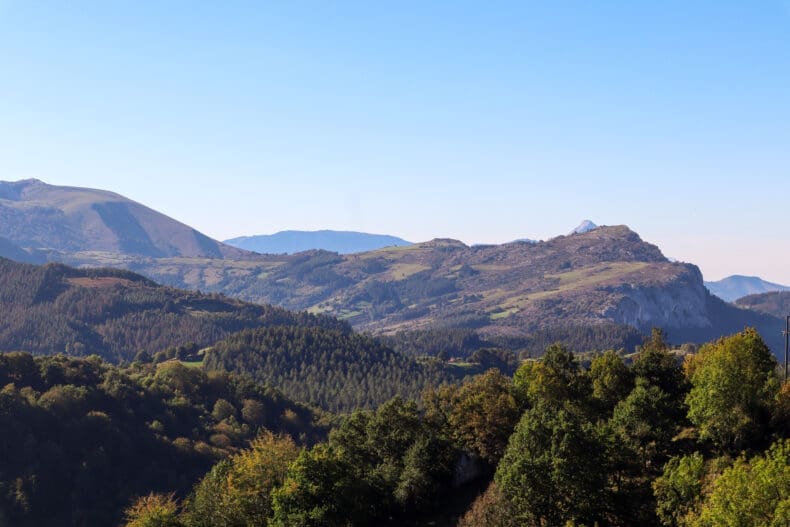
The landscapes of the Basque Country are just as impressive as its culture. Along the coast, you’ll find dramatic cliffs, tucked-away beaches, and some of the best surf spots in Spain. Head inland and the scenery changes to rolling green hills, quiet valleys, and wooded trails that are perfect for walking. This mix of sea and mountains makes the region a great destination in every season.
The Basque cities each have their own charm. Bilbao is bold and creative, with the world-famous Guggenheim Museum as its main attraction. San Sebastián is stylish and full of life, known for its golden beach and a bustling old town packed with pintxos bars. Vitoria-Gasteiz is calmer and often overlooked, but it has a lovely historic centre and more parks than any other Spanish city.
What really sets the Basque Country apart is the deep pride people feel for their region. They’re closely tied to their land, language, and traditions. That strong identity shapes everyday life and gives the Basque Country a character you won’t find anywhere else in Spain.


The Best Travel Time for the Basque Country
The Basque Country is a fantastic place to visit at any time of year, but the best months are from May to October. During this period, the weather is generally mild, the landscapes are at their most lush, and everyday life shifts outdoors to terraces and town squares. July and August bring warmth and energy, with festivals in full swing and coastal towns buzzing with life. It’s perfect if you enjoy a lively atmosphere, though maybe a bit less ideal if you’re after peace and quiet.
We once visited in September and early October, and it was absolutely perfect. Clear blue skies, ideal terrace weather, and warm enough for short sleeves during the day. Even when we returned in November, we were lucky to enjoy plenty of sunshine.
Still, this is northern Spain, and the weather can have a mind of its own. Because of its location along the Atlantic, the Basque Country gets more rain than most other parts of Spain. In spring and autumn, a sudden shower now and then is not unusual. But that’s all part of the charm—and exactly why the region is so green and full of life.


The Perfect Itinerary for the Basque Country
A road trip through the Basque Country is a journey full of variety dramatic cliffs, lush green hills, picturesque towns, and delicious food at every turn. Begin in Bilbao and follow a scenic route that winds along the coast and into the peaceful countryside. We suggest taking around 7 to 10 days for this trip so you can fully enjoy each stop without having to rush.
Tip: Pick up a rental car in Bilbao (ideally a compact one, since some roads are quite narrow) and don’t feel the need to hurry. One of the great things about the Basque Country is how close everything is, which means you’ll never be driving for long. That leaves plenty of time for spontaneous detours, relaxed lunches, and discovering hidden spots along the way.
Day 1 – Bilbao & the Guggenheim
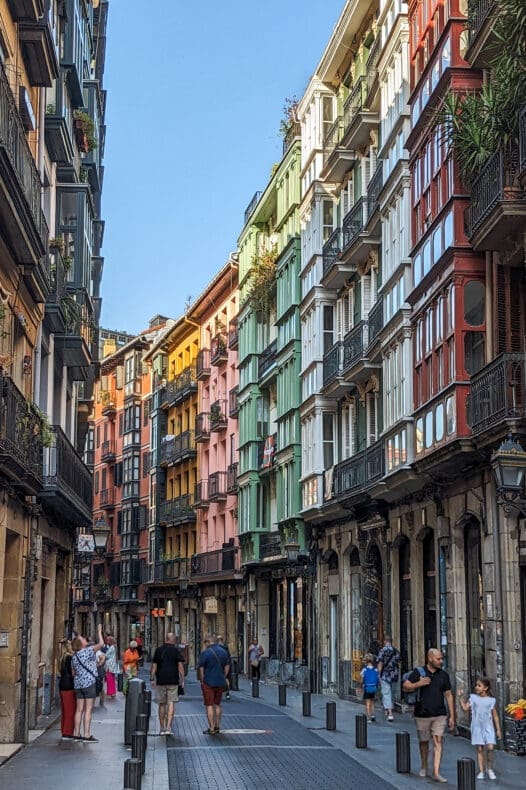
Your adventure begins in Bilbao. After checking in, treat yourself to your first pintxo and head straight for the city’s most iconic landmark the Guggenheim Museum. Spend some time exploring its bold architecture and modern art collections. Afterwards, wander through Casco Viejo, the charming old town with its narrow streets and lively squares. In the evening, enjoy dinner by the river and take in the vibrant local atmosphere.
Day 2 – San Juan de Gaztelugatxe & Bermeo
Lace up your walking shoes for a climb to the dramatic San Juan de Gaztelugatxe, a tiny island chapel reached by a winding staircase of over 200 steps. Game of Thrones fans will recognise it instantly. After the climb, continue to Bermeo, a colourful fishing village where you can enjoy a relaxed seafood lunch at the harbour while watching the boats come and go.
Day 3 – Urdaibai & Guernica
Today combines nature and history. Begin your day in the peaceful Urdaibai Biosphere Reserve, a haven for birds and walkers alike. Take in the views, explore the trails, and maybe spot a few herons or egrets. In the afternoon, visit the town of Guernica, known for the 1937 bombing and Picasso’s famous painting that captured the tragedy. It’s a place that brings the past vividly to life.
Day 4 – Lekeitio & San Nicolas Island
Continue your journey along the scenic coast to Lekeitio, a charming seaside town with a wide sandy beach and colourful buildings. When the tide is low, you can walk across the seabed to San Nicolas Island, a peaceful and scenic spot just offshore. It’s a lovely place for a short walk or a quiet moment by the sea.
Day 5 – Zumaia & the Flysch Coast
Today, the raw beauty of the Basque coastline takes centre stage. Head to Zumaia to see the Flysch cliffs—layers of rock that stretch out into the ocean, formed over millions of years. This dramatic coastline is both a geological wonder and a photographer’s dream. Whether you follow the clifftop paths or admire the view from the beach, it’s an unforgettable stop on your journey.
Day 6 – San Sebastián
Time to dive into city life. San Sebastián is elegant, atmospheric, and famous for its outstanding food. Spend your day strolling along the scenic promenade, take a dip in the calm waters of La Concha Beach, and in the evening, head into the old town for a pintxos tour. Hopping from bar to bar, sampling small bites and local wines, is one of the best ways to experience the city’s vibrant culinary scene.
Day 7 – Hondarribia
Just past San Sebastián, right on the French border, lies Hondarribia—a beautifully preserved town with a strong sense of character. Its old fortified walls, colourful houses with wooden balconies, and cobbled streets give it a storybook charm. It’s a peaceful place to spend the day wandering, people-watching, and enjoying a long lunch by the marina.
Day 8 – Sanctuary of Loyola & Oñati
Today you’ll leave the coast behind and head inland. Start with the Sanctuary of Loyola, an impressive baroque complex surrounded by lush hills. Then continue to Oñati, a quiet town known for its historic architecture and relaxed pace. It’s the kind of place where you’ll want to slow down, find a sunny terrace, and simply enjoy the setting.
Day 9 – Sanctuary of Arantzazu
A short drive from Oñati takes you to the Sanctuary of Arantzazu, a striking modern monastery built into the cliffs of a remote mountain valley. The location is dramatic, and the building itself is full of symbolism and bold design. While you’re there, take time to explore the surrounding trails—this peaceful, rugged landscape offers a refreshing change of scenery.
Day 10 – Return to Bilbao
Your Basque road trip wraps up today. It’s a scenic drive of just under 90 minutes back to Bilbao. If you’ve got a bit of time before your flight, pop into one of the local markets for a final taste of the city or grab a few pintxos to enjoy on your way home.

Tourist Map of the Basque Country
[googlemaps https://www.google.com/maps/d/u/1/embed?mid=1SARy1byDMcFeO8NnIioFqasJfFw8oTw&ehbc=2E312F&w=790&h=480]10 Best Places to Visit in the Basque Country
#1 San Sebastian
San Sebastián, known as Donostia in Basque, stretches along a wide, graceful bay with a perfectly curved beach called La Concha. Taking a swim in the heart of the city? Absolutely—this is one of the few places where you can dive into the sea just steps from the centre. A stylish promenade follows the shoreline, offering lovely views of Santa Clara Island, which you can visit by boat when the weather is right. Just behind the beach lies Parte Vieja, the old town—a maze of narrow streets, lively plazas, and above all, pintxos bars. At almost any hour, you’ll see locals standing at the counter, a glass of crisp Txakoli in one hand and a plate of pintxos in the other.
San Sebastián is the culinary capital of the Basque Country. Not only because it has a generous share of Michelin-starred restaurants, but because food is part of the city’s soul. Whether you’re savouring refined tasting menus or nibbling five pintxos off a napkin, you’ll eat exceptionally well here.
But the city offers much more than food alone. A walk up Monte Urgull rewards you with panoramic views of the sea and the skyline. At the summit stands Castillo de la Mota, a 16th-century fortress with scenic lookouts and panels that tell the story of the city’s past.
In the 19th century, San Sebastián blossomed into a seaside escape for Spanish royalty and aristocrats. That elegant legacy is still visible today, especially when you wander through its manicured parks or pass the grand buildings that give the city its timeless charm.

#2 Bilbao
Bilbao is full of surprises. Once a grey industrial hub dominated by shipyards and steelworks, it has reinvented itself as a lively city where modern art, historic charm, and great food come together. Set in a valley with the Nervión River winding through it, Bilbao tells the story of transformation. Along both riverbanks, you can see the shift: old warehouses turned into cultural centres, stylish bridges linking neighbourhoods, and striking modern buildings giving the city a fresh new face.
In Casco Viejo, Bilbao’s old town, there’s still a warm, village-like feel. The narrow streets are lined with pintxos bars, quirky boutiques, and colourful market stalls. The Mercado de la Ribera, built in the 1920s, is one of the biggest covered markets in Europe. Inside, you’ll find everything from fresh fish and seasonal produce to local meats and plenty of spots where you can sit down for a bite. For a touch of culture, make time to visit the Teatro Arriaga, a beautiful 19th-century theatre that’s still a beloved part of the city’s vibrant arts scene.
#3 The Guggenheim Museum
The Guggenheim is the ultimate symbol of modern Bilbao. Since it opened in 1997, it has become one of the most iconic museums in the world—famous not only for its art, but even more so for the building itself. Designed by architect Frank Gehry, the structure is a futuristic marvel, with sweeping curves and gleaming titanium panels that shimmer in the sunlight. It looks almost like a spaceship, yet it rises right in the centre of the city, alongside the river.
Inside, the museum showcases modern and contemporary art, ranging from enormous installations to temporary exhibitions by top international artists. One of the highlights is a work by Richard Serra: a series of monumental steel spirals that you can walk through, offering a unique, almost disorienting experience. Outside, two sculptures have become beloved by visitors—Puppy, a towering dog made entirely of flowers, and Maman, a giant steel spider by Louise Bourgeois.
The museum is open every day except Monday, and you’ll want to set aside a few hours to explore it properly. Booking your ticket online in advance is a smart move, especially during peak season. Just a short walk away, you’ll also find the Museum of Fine Arts and the leafy Doña Casilda Park—perfect for a relaxing break before or after your visit.

#4 San Juan de Gaztelugatxe
San Juan de Gaztelugatxe is one of the most breathtaking spots on the Basque coast. This striking rocky island rises from the sea just off the shore near the town of Bakio, connected to the mainland by a narrow stone bridge. To reach the chapel at the top, you’ll need to climb 241 steps. It might sound like a challenge, especially on a warm summer day, but the views along the way make the effort well worth it. At the summit, you’ll find a small church dedicated to Saint John the Baptist, with roots going back to the 10th century. According to tradition, once you reach the top, you should ring the bell three times and make a wish.
Over the centuries, this dramatic site has endured everything from pirate attacks and fierce storms to devastating fires. In 1593, it was even looted by the notorious Francis Drake. Although the current chapel is a modern reconstruction of earlier versions, the place still carries a powerful sense of history.
Gaztelugatxe shot to international fame as a filming location for Game of Thrones, where it was featured as Dragonstone. Since then, it has become a hugely popular destination for fans and travellers alike. From the car park, it takes around 30 minutes to walk down to the bridge. Entry remains free, but in high season it is regulated, so advance reservations are required.

#5 Hondarribia
Hondarribia sits in the far northeast of the Basque Country, right on the border with France. This charming town shows two very different sides: a historic old town surrounded by ancient walls, and a lively, colourful fishing district by the sea. The old town is wonderfully well-preserved. You can wander through its narrow cobblestone streets, admire wooden balconies, and take in the beautifully carved building facades. Walk through the Santa María gate and you’ll reach the central square, where the 18th-century town hall stands alongside the former fortress of Charles V. Today, that fortress serves as a luxury hotel, but visitors are still welcome to explore its grounds.
Stroll down toward the sea and you’ll enter La Marina, a neighbourhood bursting with colourful houses, buzzing bars, and inviting restaurants. It’s one of the best spots around to enjoy authentic pintxos. Along the bay, a charming promenade offers breathtaking views of Hendaye, the French town just across the border.
#6 Oñati
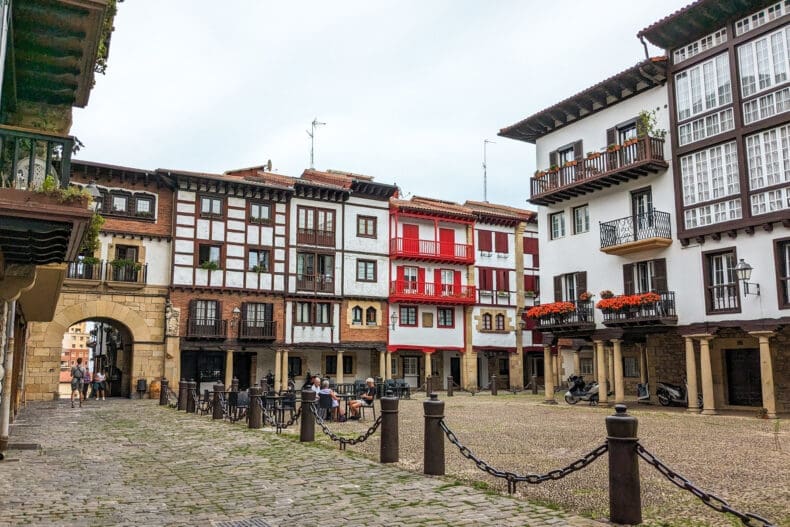
Oñati is tucked away in a lush valley, deep in the mountainous heart of the Basque Country. This tranquil town is rich in history and is best known for its centuries-old university, founded in 1540. For many years, it served as the intellectual centre of the region. The university building still impresses visitors today with its ornate façades, arcaded courtyards, and beautifully detailed staircases. Nowadays, it is home to the International Institute for the Sociology of Law.
At the heart of the town stands the Gothic Church of San Miguel, dating back to the fifteenth century. One of its most remarkable features is the river that flows directly through the church, running beneath the altar. Just outside, in the square before the town hall—Foruen Enparantza—you’ll find inviting terraces where you can relax and enjoy views of elegant Baroque buildings framed by the gentle hills surrounding Oñati.
Though modest in size, Oñati brims with charm and is an ideal place to pause on your journey. Its close proximity to the Sanctuary of Arantzazu and the Aizkorri-Aratz natural park makes it a perfect base for anyone eager to explore the stunning mountain landscapes nearby.
#7 The Sanctuary of Arantzazu
The Sanctuary of Arantzazu perches high in the mountains near Oñati, tucked away in a place you wouldn’t stumble upon by chance. Yet for centuries, pilgrims have been drawn to this remote site. According to local legend, in 1468 the Virgin Mary appeared to a shepherd right in the heart of a thorn bush. His startled cry—“Arantzan zu?!” meaning “You, among the thorns?!”—gave this secluded spot its name.
What awaits you here is far from a typical pilgrimage church. In the 1950s, Basque artists and architects designed a strikingly modern structure that blends naturally with the rugged landscape. Its façade is clad in raw stone and guarded by bold sculptures of the apostles, created by Jorge Oteiza. The massive iron doors are the work of Eduardo Chillida. Inside, the space feels both simple and monumental, a quiet sanctuary. Every detail seems to respond to the surrounding nature, as if the building itself has grown organically from the rocky mountainside.
From Oñati, a winding mountain road leads you up to the sanctuary—the journey alone is breathtaking. At the summit, you’ll gaze out over a deep valley where trails wind into the Aizkorri-Aratz nature reserve. This isn’t a place filled with tourist shops or crowds; it’s the untouched, raw beauty here that leaves the deepest impression.

#8 The San Nicolas island near Leikeitio
Just off the coast of Lekeitio lies a tiny island called San Nicolás, or Garraitz in Basque. What makes it truly special? You can actually walk to it, but only when the tide is low. As the water pulls back, a narrow raised path emerges between the beach and the island, giving you a brief window to cross before the sea reclaims it. It feels as if the ocean itself chooses who gets to make the journey. We found this natural phenomenon absolutely mesmerizing.
The island is uninhabited and modest in size, covered with wild shrubs and grasses. A short trail leads to the summit, where you’re rewarded with breathtaking views of the Cantabrian Sea, the rugged coastline stretching out below, and the charming village behind you. In earlier times, San Nicolás was a place of solitude—patients, hermits, and sometimes monks found refuge here temporarily. Today, it’s a small adventure waiting for anyone in Lekeitio who plans their visit just right.
Be sure to check the tide schedule before you set out, as crossing during rising water is definitely unsafe. Tide charts are available at the local tourist office and on the beach itself. If you time it perfectly, walking across the seabed to an island as mysterious as its name becomes one of the most magical experiences you can enjoy along the Basque coast.

#9 The Sanctuary of Loyola
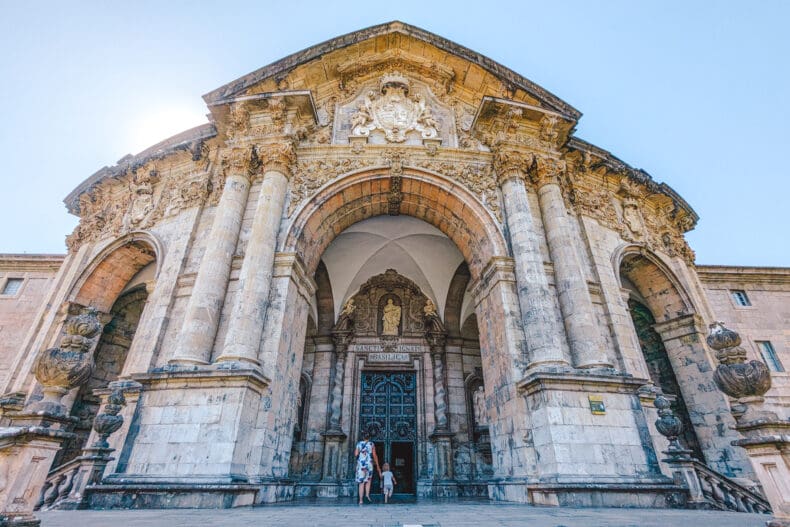
The Sanctuary of Loyola is nestled in a wide, green valley near the town of Azpeitia. For us, it was an unexpected discovery, we happened upon it by chance and were immediately captivated. This is the birthplace of Ignatius of Loyola, born in 1491, a Basque nobleman who was a soldier until he was injured in battle. During his recovery, he experienced a profound spiritual transformation. That experience led to the founding of the Jesuit order, which would go on to have a huge global impact.
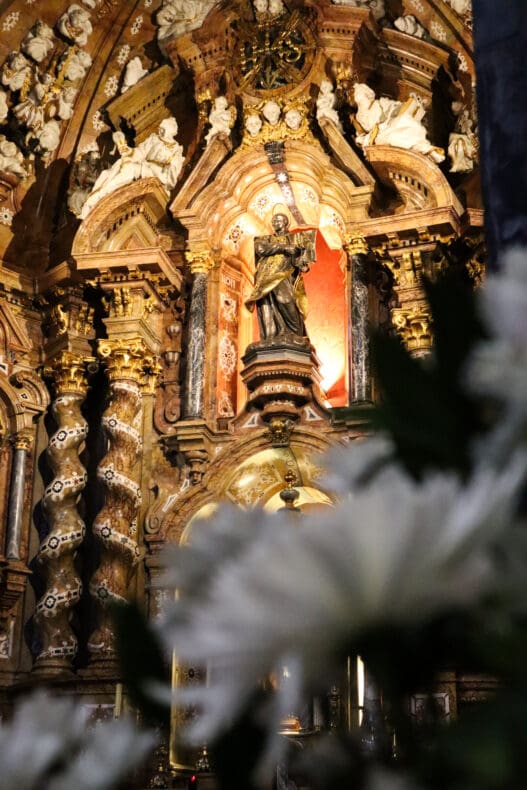
Ignatius’s childhood home, a simple stone tower—still stands here. Surrounding it is an impressive eighteenth-century Baroque basilica, crowned by a massive dome soaring 65 meters high. Everything about this place is grand and meticulously crafted: the altar, the cloistered walkways, the perfect symmetry. You can also visit the room where Ignatius underwent his conversion, now a quiet, reflective chapel.
Although it’s an important pilgrimage site, many visitors come without any religious background. The atmosphere is peaceful, and the grounds are spacious and well cared for. The blend of stunning architecture, serene nature, and rich history makes Loyola one of the most remarkable places in the Basque Country’s interior.
#10 The Rocky Coast near Zumaia
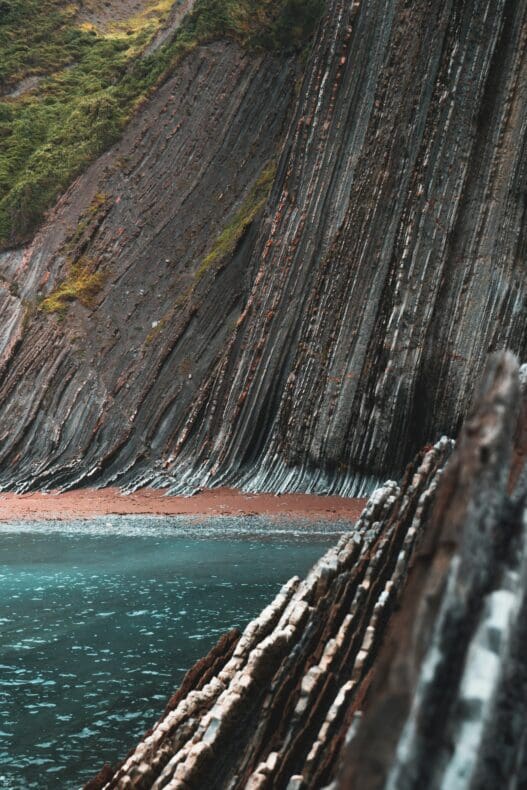
The rocky coastline near Zumaia is one of the most stunning natural sights along the Basque coast. Here, long, tilted layers of limestone and clay rise sharply from the sand, as if someone had sliced through the earth with a giant knife. These dramatic formations, known as flysch, are the result of over sixty million years of geological activity—layers of sediment, erosion, and powerful tectonic shifts. The bands are clearly visible and perfectly stacked, creating the feeling that you’re walking through a timeline carved in stone.
Zumaia, together with the nearby towns of Deba and Mutriku, is part of the Basque Coast Geopark. At low tide, you can walk across the beach and get up close to the rock formations, wandering through their jagged shapes. From the cliffs above, you’re treated to wide-open views of the sea and the hills beyond. Well-marked walking trails follow the coast, or you can hop on a boat tour for a completely different view of the layered cliffs from the water. Right in the centre of Zumaia, the visitor centre offers fascinating displays that explain how this unique landscape came to be. Whether you’re interested in geology or simply love wild, impressive nature, this is one of those places that leaves you quietly amazed.

#11 The Urdaibai Biosphere Reserve
The Urdaibai Biosphere Reserve, less than an hour’s drive from Bilbao, is one of the most varied and vibrant natural landscapes in northern Spain. The area is a rich mosaic of marshlands, rivers, sandy beaches, dramatic cliffs, dense forests, and open farmland. The Oka River winds gently through it all, eventually flowing into a wide estuary that becomes a seasonal haven for thousands of migratory birds. In 1984, UNESCO recognised Urdaibai as an official biosphere reserve.
For nature lovers and hikers, it’s a dream come true. There are dozens of scenic walking and cycling routes that take you past reed beds, along coastal trails, and up to panoramic viewpoints. The Urdaibai Bird Center offers the chance to observe birds through telescopes and learn more about their journeys with engaging, interactive exhibits. Families will also love it here, whether you’re up for a canoeing adventure, a swim, or a laid-back afternoon on the sandy shores of Laga or Laida, where you can also catch some great surf.
Thanks to its central location between well-known spots like Gernika, Bermeo, and San Juan de Gaztelugatxe, Urdaibai is an ideal base for exploring the region or enjoying a memorable day trip.

#12 Bermeo
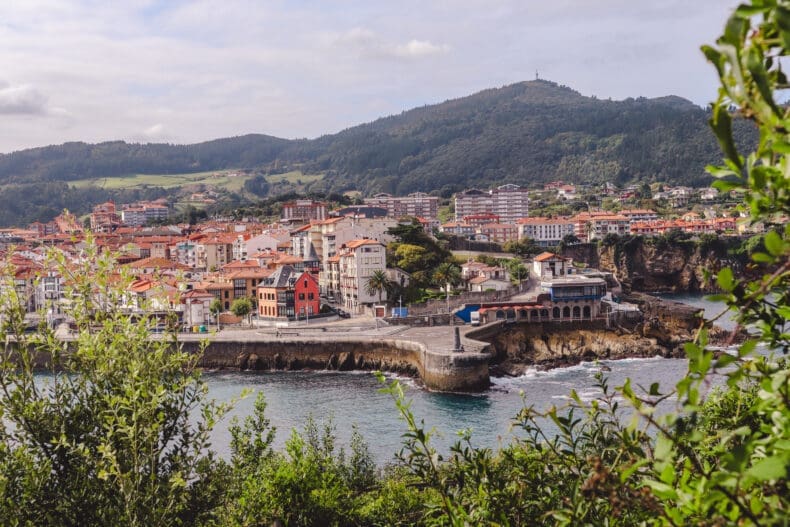
Bermeo is a vibrant fishing town on the wild northern coast of the Basque Country. Nestled in a natural bay that offers shelter from the wind, it has been a hub for fishermen for centuries. Founded in 1236, Bermeo even served as the capital of the province of Bizkaia until the early 1600s. Today, it’s still very much a working port, with fishing boats heading out each day and a harbour full of life and movement.
The spirit of Bermeo is deeply tied to the sea. In Puerto Viejo, the old harbour quarter, you’ll find a charming tangle of steep stairways, narrow lanes, and tightly packed houses painted in bright, cheerful colours. The atmosphere is lively and welcoming. Locals gather on benches in the small squares to catch up on the day’s news, and you’ll never be far from a bar where you can order a plate of pintxos. Don’t miss the Arrantzaleen Museoa the Fishermen’s Museum housed in the medieval Ercilla Tower. It offers a fascinating look at the town’s whaling past and the craftsmanship of traditional boatbuilding.
Even with its increasing popularity, Bermeo has held onto its authentic character. You’ll mostly hear Basque spoken in the streets, the shops are locally run, and the menus reflect the region rather than tourist tastes. It feels like a place that lives by its own rhythm, rooted in tradition. That’s what makes it such a pleasure to explore and so difficult to say goodbye to.

#13 Guernica
Guernica, or Gernika in Basque, is a name that has come to stand as a symbol of the devastating impact of war. On 26 April 1937, the town was almost entirely destroyed in an air raid carried out by German and Italian planes, under orders from Franco. The bombing was aimed at the civilian population and left a trail of destruction and loss. It became one of the first attacks on civilians in Europe and went on to inspire Pablo Picasso’s famous painting Guernica a haunting and powerful protest against the brutality of war.
Today, Guernica is a peaceful and modern town, but its tragic past is never out of sight. In the centre, a large ceramic reproduction of Picasso’s artwork hangs on display as a lasting reminder of what took place here. The Peace Museum offers a moving and well-presented account of the events, with a strong focus on the personal stories of those who lived through them. Just a short walk away stands the Tree of Guernica, an ancient oak that has long been a symbol of Basque freedom. For centuries, Basque leaders have taken their oaths beneath its branches a tradition that continues even now.
Guernica is small and easy to explore, making it ideal to combine with nearby destinations like Urdaibai or Bermeo. It’s a quiet town, but one that leaves a strong impression a place with a message that remains deeply relevant today.
#14 Vitoria-Gasteiz
Vitoria-Gasteiz may be the capital of the Basque Country, but it doesn’t feel like a busy capital city at all. Tucked away inland, far from the coastal crowds, it has a calm, laid-back charm that’s both inviting and easy to enjoy. The old town sits on a small hill, a maze of winding alleys, medieval houses, and quiet squares where someone always seems to be chatting on a bench. It’s the kind of place you can explore at your own pace, without ever needing a map.
The city’s most famous spot is Plaza de la Virgen Blanca. It’s the perfect place to sit down with a coffee or a glass of wine and take in the view of the elegant façades and the giant floral display, where the name of the city stands out in bold green letters on the grass. It’s a classic photo opportunity, everyone stops here for a picture. You can also visit the Museum of Fine Arts or step into the Archaeological Museum. Both are small but full of character, especially if you enjoy learning about local history.
What really makes Vitoria-Gasteiz special is just how green it is. Parks, gardens, and leafy spaces are scattered all around. Beyond that, the city is surrounded by a full “green belt” of natural areas and walking paths, perfect for a bike ride or a peaceful walk if you feel like getting out into nature. It’s the kind of place that doesn’t try to impress with big landmarks or flashy attractions. Instead, it draws you in slowly with its relaxed rhythm, friendly streets, and that simple joy of sitting on a sunny terrace and soaking it all in.

#15 Txakoli Wineries
Txakoli is the pride of the Basque vineyards. This crisp, gently sparkling white wine is made from the Hondarrabi Zuri grape and is instantly recognisable for its bright acidity and low alcohol content. It’s a perfect match for fish, shellfish, or simply as a refreshing aperitif. You’ll find it on nearly every menu, often poured into the glass with a graceful flick of the wrist to awaken its delicate bubbles.
There are three official regions where Txakoli is produced: around Getaria in Gipuzkoa, near Bakio in Bizkaia, and inland in Álava. Along the coast, the vines grow with sweeping views of the sea, which helps explain why this wine pairs so naturally with salty, coastal flavours. In the hills near Getaria, you can visit wineries like Bodega Txomin Etxaniz, one of the oldest in the region. In Bakio, the Txakolingunea museum offers a deeper look into the story behind this distinctive wine. And of course, no visit is complete without a tasting.
Many bodegas in the region welcome guests with guided tours through their vineyards and wine cellars. These often end at long communal tables, where glasses of Txakoli are served alongside local cheeses, anchovies, and olives. The views are just as memorable as the flavours—rolling green vineyards, with the ocean shimmering in the background. A visit to a Txakoli winery is an easygoing, delicious way to experience the Basque Country. You’re not just tasting wine—you’re tasting the land and sea it comes from.