
From the surf beaches of Tarifa to the flamingos of Doñana, welcome to the Costa de la Luz. This beautiful stretch of Andalusia’s southwest coast is still largely off the beaten track, and that’s exactly what makes it so special. You won’t find rows of hotels or busy boulevards here. Instead, there are wide sandy beaches, charming white villages, and wild natural landscapes that are perfect for long, peaceful walks.
Driving from the southern tip at Tarifa to the Portuguese border takes you through lively cities, quiet fishing villages, family-run sherry bodegas, and some truly stunning scenery along the way.
In this blog, you’ll find out what not to miss on the Costa de la Luz. From ancient Roman ruins to Moorish hilltop views, from tasting local sherry to spotting wildlife on scenic walks, these are the top sights and experiences that make this coast so unforgettable.


Where is the Costa de la Luz located in Spain?
The Costa de la Luz lies in southern Andalusia, in the southwest corner of Spain, along the Atlantic coast. The coastline begins in Tarifa, the point where Spain comes closest to Africa, and stretches all the way to Ayamonte at the Portuguese border. This region is part of the Andalusian provinces of Cádiz and Huelva and borders inland areas such as Seville and Jerez de la Frontera.
To the south, the coast meets the Strait of Gibraltar; to the north, it reaches Portugal’s Algarve. Unlike many of Spain’s other coastal regions, the beaches here face the Atlantic Ocean instead of the Mediterranean Sea. That means a different climate, more breeze, and wider, more open beaches.
The nearest international airports are Jerez Airport, Seville Airport, and Faro Airport just across the border in Portugal. From each of these, it takes about one and a half to two hours by rental car to reach the coast. While the Costa de la Luz sits just outside the main tourist routes, it’s easy to access and perfectly placed for day trips to the Andalusian interior or across the border into Portugal.
Tip: want to explore more of Spain’s coastline? Don’t miss our guide to all 15 Spanish costas.


What is the Costa de la Luz known for?
The Costa de la Luz is famous for its long, sandy beaches, whitewashed villages, and untamed natural beauty. You won’t find mass tourism here. Instead, there’s space to breathe, a peaceful atmosphere, and an authentic charm that feels truly Andalusian. People who visit this region aren’t chasing luxury resorts or packed tourist hotspots, but are looking for a more local and genuine experience of southern Spain.
Endless sandy beaches
The Atlantic coastline here seems to stretch on forever. From Tarifa all the way to the Portuguese border, you’ll find wide beaches with soft sand and hardly any buildings. No long lines of hotels or neatly arranged sunbeds, just rolling dunes, pine forests, and plenty of room to spread out your towel. Even in well-known spots like El Palmar and Bolonia, the natural feel is still strong. Thanks to the steady wind, this coastline is a favourite for surfers, kitesurfers, and beach walkers who love the rhythm of the waves.
White villages and lively towns
Along the coast, you’ll come across charming villages where white-painted houses shine in the sunlight and life moves at a gentle pace. In Vejer, you can get lost in quiet, winding lanes. In Conil, enjoy freshly caught fish with a view of the sea. And in Tarifa, watch the sky fill with colourful kites as you sip coffee in a cosy square. Bigger towns like Cádiz and Jerez offer a mix of culture, history, and tapas, all while keeping their original character. The mood is laid-back, and every street feels like a photo waiting to happen.
Breathtaking nature
If you love nature, you’ll find plenty to enjoy here. Doñana National Park is one of the most important wetlands in Europe, home to rare birds, wild lynx, and wide open marshes. Other beautiful spots include the Marismas del Barbate and the dramatic cliffs of La Breña. Whether you like to hike, ride a bike, or simply sit and watch the world go by, this region is full of quiet places where nature takes the lead.
An active coastline for water sports
With steady winds and wide open beaches, this region is a paradise for water sports. Tarifa holds the title of Europe’s kitesurfing capital, home to surf schools, international competitions, and a relaxed vibe that draws enthusiasts from across the globe. But there’s more than just kitesurfing. Surfing, stand-up paddleboarding, and sailing are also favourites here. And if you’d rather keep your feet on solid ground, you can try paragliding or take a scenic horseback ride along the shore.
History around every corner
The Costa de la Luz is rich in history, with stories hidden in every corner. The Romans once built entire cities here, like the ancient ruins of Baelo Claudia. Columbus set sail from the port of Huelva on his journey to the New World, and the legendary Battle of Trafalgar unfolded just off Cape Trafalgar. This coast offers more than just stunning views – it invites you to step into the past and explore its fascinating heritage.


Best Places To Visit At The Costa de la Luz
#1 Cádiz
Cádiz feels like a living open-air museum by the sea. With a history that spans more than three thousand years, Cádiz is one of the oldest cities in Europe. It was founded by the Phoenicians and shaped over the centuries by sailors, merchants, and explorers. Perched on a narrow strip of land, the city is almost completely surrounded by water, giving its historic centre a relaxed, island-like atmosphere. You can wander through winding streets lined with pastel-coloured buildings, pause in sunlit squares, and stroll from the boulevard straight onto the golden sands of La Caleta beach.
Read More: Best Things To Do In Cádiz
History is woven into every corner of the city. Visit the impressive cathedral with its bright golden dome, climb the Torre Tavira to experience its camera obscura and panoramic views, and explore the seaside fortresses of San Sebastián and Santa Catalina, once built to defend the coast from naval attacks. In the 16th century, Cádiz became a major gateway for trade with the Americas. You can still see echoes of that era in the elegant colonial buildings and the exotic trees that shade the city’s parks.
Cádiz is compact, welcoming, and perfect for exploring on foot. The streets are filled with cosy tapas bars, bustling markets, and top-notch seafood restaurants. And whether you’re travelling from Jerez or Seville, it’s just a short and easy trip by car or train.


#2 Tarifa
In Tarifa, the wind is always blowing. That’s exactly why this southernmost town in Spain is a favourite among kitesurfers and windsurfers. Perched where the Mediterranean Sea meets the Atlantic Ocean, Tarifa offers stunning views, and on a clear day, you can even see the coast of Morocco across the water.
Along the sweeping Playa de los Lances and Valdevaqueros Beach, the sky is filled with colourful kites. The shoreline is dotted with surf shops, relaxed beach bars, and schools where beginners and pros alike can take lessons. But Tarifa has more to offer than just wind and waves. Inside the old city walls, you’ll find narrow streets lined with whitewashed houses, small boutiques, lively tapas bars, and the impressive 10th-century fortress, Castillo de Guzmán el Bueno.
From the harbour, boat tours set off in search of dolphins and whales, offering a chance to see these incredible animals in their natural habitat. Just outside the town, nature lovers can explore the trails of Los Alcornocales Natural Park, famous for its cork oak forests and peaceful scenery. And for those in search of something different, ferries from Tarifa cross the Strait of Gibraltar to Tangier, Morocco. It’s ideal for a day trip or the start of a journey into North Africa.

#3 Duna de Valdevaqueros
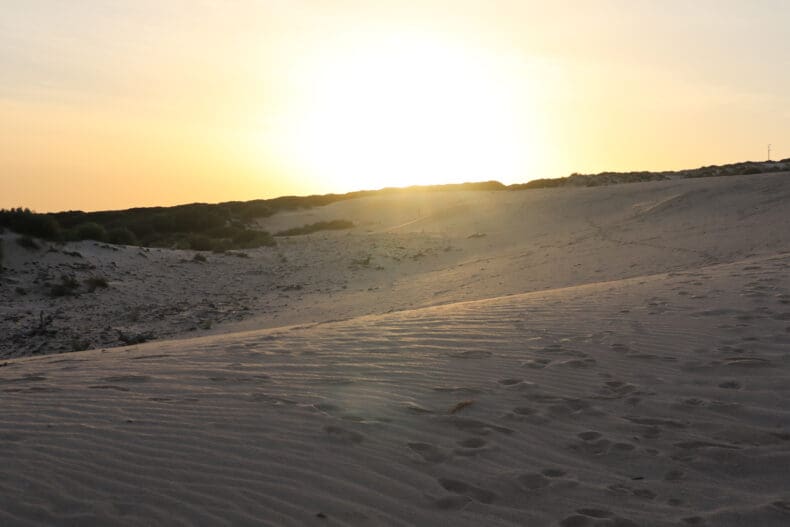
Just outside Tarifa, a giant sand dune suddenly rises from the landscape. The Duna de Valdevaqueros is no ordinary dune. It’s a natural phenomenon that is still growing and slowly shifting inland. The wind picks up sand from the beach and blows it high into the air, creating a dramatic landscape that is always changing.
Climbing to the top is well worth the effort. From there, you’ll be rewarded with sweeping views of the Atlantic Ocean at your feet, distant mountains on the horizon, and colourful kites dancing overhead. The sand is soft and pale, almost white, and the dunes are dotted with pine trees and beach grasses. A paved road runs straight through the area, partly covered in sand, adding to the dramatic and photogenic scene.
The dune began to take shape in the 1990s, when strong winds started piling sand against a military installation. Since then, it has grown into a favourite destination for walkers, photographers, and children who love to roll down the slopes. It’s easy to reach via the scenic road from Tarifa to Bolonia, with parking available nearby.
#4 Vejer de la Frontera
Vejer de la Frontera sits high on a hilltop, with sweeping views of green valleys and, on clear days, even the Atlantic Ocean in the distance. The moment you step through the old city gate, it feels like you’ve entered another era. Everything is whitewashed, narrow, and full of charm. Vejer is often described as one of the most beautiful pueblos blancos in Andalusia, and it truly lives up to that reputation.
Read More: Best Things To Do In Vejer de la Frontera
Vejer’s history goes back thousands of years. The Phoenicians were the first to settle here, followed by the Romans and later the Moors. Their influence is still visible today, from the town’s winding layout to its architecture and even its flavours in the kitchen. In the Middle Ages, Christian forces took the town, and it gradually grew into a thriving regional centre.
Lose yourself in flower-filled alleys, uncover peaceful patios and charming squares like the Plaza de España, and climb to the old castle for panoramic views of the rolling countryside. Vejer has all the charm without the crowds, offering inviting restaurants, small galleries, and local artisan shops waiting to be explored. Cars aren’t allowed inside the old centre, but once you’ve parked outside the walls, the town is a delight to discover on foot.

#5 Jerez de la Frontera
Jerez is the city of sherry, flamenco, and horses. Here, history isn’t just something you see—it’s something you can taste, especially in the old bodegas where sherry is crafted and aged in long rows of oak barrels.
Read More: Best Things To Do In Jerez
Jerez was once a Moorish city before it was reclaimed by the Christians, and during the 16th and 17th centuries, it grew into a thriving hub for international trade. British merchants settled here and opened bodegas, many of which still bear English names today. Visit sherry houses like González Byass or Lustau to learn how sherry is aged through the traditional solera system and to sample a range of varieties including fino, oloroso, and amontillado.
The city itself is compact, walkable, and full of charm. From the cathedral to the Alcázar, you’ll pass tree-lined squares filled with the scent of oranges and stumble upon tabancos where flamenco is still performed with raw emotion and local pride. Just beyond the centre, the Royal Andalusian School of Equestrian Art puts on graceful performances featuring beautifully trained horses. Jerez is easy to reach by train and is an ideal place to spend a day or two, especially if you have a love for good food, rich culture, and living history.


#6 Doñana National Park & El Rocío
Doñana National Park is one of the most extraordinary natural areas in Spain. Found at the mouth of the Guadalquivir River, it’s a unique and ever-changing landscape of marshes, forests, dunes, and lagoons. The park is a haven for wildlife, home to flamingos, Iberian lynxes, deer, wild horses, and hundreds of bird species.
As a protected area, the park isn’t open to explore freely. The best way to experience it is through a guided jeep tour, which you can join from places like El Rocío, Huelva, or Sanlúcar de Barrameda. These tours take you through an incredible variety of scenery, from sun-drenched coastal plains to quiet marshes where thousands of birds come to nest.
El Rocío itself is a fascinating place to discover. Set right in the middle of the park, the village feels like a scene from an old western film. The streets are unpaved and sandy, the houses are low and whitewashed, and horses are often tied up outside, just like cars. Every year around Pentecost, hundreds of thousands of pilgrims make their way here for the famous Romería. Even outside of that festival, El Rocío is worth the visit. It’s a unique mix of spiritual tradition and rustic charm, right next to one of the last untouched wildernesses in Europe.
Read More: Best Things To Do In El Rocío

#7 Sherry Bodega’s
Visiting a sherry bodega in Jerez is far from an ordinary wine tasting. Here, you step into a world shaped by history, tradition, and rich aromas that stay with you long after you leave. Sherry has been crafted in this region for centuries, and you can taste that legacy in every sip. Inside the dimly lit bodegas, rows of oak barrels are stacked high, each one nurturing wine beneath a delicate layer of flor yeast. This slow, natural process gives sherry its signature flavour and ensures that every bodega has its own character.
Well-known producers like González Byass, Lustau, and Bodegas Tradición welcome visitors for guided tours and tastings. You’ll learn about the solera system, where younger wines are gradually blended with older ones to create layers of depth and complexity. Along the way, you’ll sample the different styles—from the crisp, dry notes of fino, to the nutty smoothness of amontillado, and the deep, rounded richness of oloroso.
Many tastings include small tapas, and it’s easy to find yourself wandering through centuries-old cellars with a glass in hand, surrounded by the earthy scent of wood, wine, and time. It’s a must for anyone who wants to experience the true essence of Andalusian culture.

#8 Conil de la Frontera
Conil is a wonderfully relaxed beach town on the Costa de la Luz. What begins as a quick stop for a walk on the sand often turns into a full day of sunshine, sea, tapas, and slow strolls through charming whitewashed streets. Set right along the Atlantic coast, Conil is a favourite among Spaniards themselves, which is almost always a good sign.
The historic centre is compact and full of charm, with narrow lanes, bright blue doors, and sunny squares lined with café terraces. There may not be many major landmarks, but it’s the laid-back atmosphere and the postcard-worthy old town that give Conil its appeal. Head towards the beach and you’ll find vast stretches of golden sand that rarely feel busy. We were surprised by how wide and open the coastline is. At Playa de los Bateles, you’ll see surfers riding the waves and locals taking their morning dip in the sea.
As evening falls, Conil comes to life again. Around dinnertime, the streets fill with the sound of children playing, restaurants begin serving tuna in every form imaginable, and the scent of grilled fish drifts through the air. Just outside the town, you can walk along windswept cliffs, cycle beside the sea, or go horseback riding as the sun sets. If you’re driving in, the large car park by the beach is the easiest place to leave your car.

#9 Marismas del Barbate
Just beyond Conil and Barbate lies a wonderfully quiet corner of nature: the Marismas del Barbate. This marshland sits where the land meets the sea, a place where saltwater blends with fresh river water to create a rich and diverse habitat. It’s a haven for birdlife, and with a little luck, you might catch sight of flamingos, spoonbills, or even an osprey soaring overhead.
The best way to explore the area is on foot or by bike. Well-marked trails guide you past scenic viewpoints, through pine-scented forests, and across open coastal plains. The air is filled with the smell of the sea and warm pine trees. With a baby and a toddler, a long walk wasn’t quite manageable for us, but even a short stroll was more than worth it. We stayed at the camper area by Barbate’s harbour, then drove to the car park near the trailhead (listed on Google Maps as Sendero Las Breñas) and walked from there into the coastal landscape.
Not far away, you’ll reach the dramatic cliffs of La Breña. On a clear day, the views stretch all the way to Africa. At the old watchtower, Torre del Tajo, you can peer down from a height of 100 metres to the rocks and swirling waters far below.

#10 Cape Trafalgar
Cape Trafalgar is no ordinary stretch of coastline. This is the site of the legendary naval battle of 1805, where the British fleet, led by Admiral Nelson, defeated the combined forces of France and Spain. That victory marked the end of Spain’s maritime power, but it also cost Nelson his life. Today, there’s little left to see from that dramatic moment in history, apart from a lighthouse and the sweeping ocean views.
A narrow strip of land leads you out toward the cape, almost becoming an island when the tide is high, with the sea stretching out on both sides. On one side, you’ll find peaceful bays with calm waters. On the other, the wide-open Atlantic rolls in with energy and force. The white lighthouse, built in the 19th century, stands on top of older defensive towers. When you visit, you’re quite literally walking on centuries of layered history.
This is a wonderful place for a swim, a quiet coastal walk, or simply to take in the view. The beach feels raw and unspoiled, with sandy dunes and the occasional chiringuito where you can relax with a drink or a bite to eat.
#11 Baelo Claudia & Playa de Bolonia
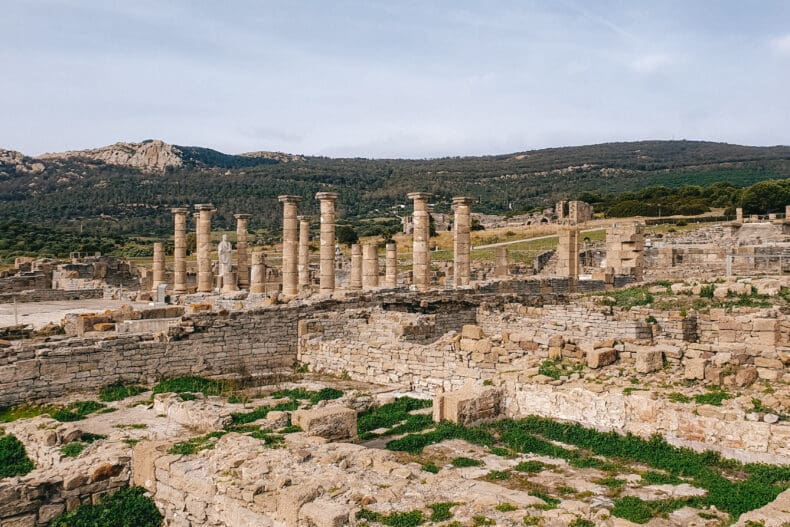
If your idea of the Romans comes mostly from school lessons, Baelo Claudia brings that history to life in the most vivid way. This ancient Roman city lies right beside the sea, next to Bolonia Beach. Two thousand years ago, it was a bustling trade centre, built on tuna fishing and the production of garum, a salty fermented fish sauce that was once shipped to kitchens all across the Roman Empire.
Today, you can wander through the remains of temples, bathhouses, fish-processing workshops, and a remarkably well-preserved theatre. All of it sits against the backdrop of the Atlantic Ocean, with views that stretch all the way to Morocco on clear days. The site is free to enter and offers a fascinating glimpse into Roman life on the edge of the empire.
Once you’ve explored the ruins, you can stroll straight onto the beach. Playa de Bolonia is wide, quiet, and beautifully clean, ideal for anyone looking to unwind by the sea. Just a little further along the coast, you’ll spot a huge sand dune rising up from the landscape. Climb to the top for sweeping views of the beach, the sea, and the ancient city that once stood proud beside it.
#12 Huelva
Huelva might not be the first city that comes to mind when you think of Andalusia, which is exactly what makes it such a pleasant surprise. The city centre is compact and easy to explore, with welcoming squares, a grand cathedral, and the distinctive Barrio Reina Victoria—a colourful neighbourhood built in the 19th century to house British miners. One of the true highlights for us was the Muelle de Riotinto. This striking old pier was once used to load minerals for export, and today it’s a scenic walkway with wide views over the harbour. It stands as a powerful reminder of Huelva’s maritime past.
Just outside the city lies La Rábida, the monastery where Columbus stayed before setting out on his voyage to the Americas. Nearby, a museum displays full-sized replicas of his ships. Every August, the city celebrates this historic link with the Fiestas Colombinas, a vibrant festival filled with music, food, and local tradition.
And if you’re looking for nature, you don’t have to go far. The Marismas del Odiel is a vast wetland rich in birdlife, especially during the migration seasons. It’s a peaceful place to walk, cycle, or simply enjoy the quiet beauty of birds in their natural habitat.

#13 Isla Cristina
Isla Cristina lies at the far western edge of the Costa de la Luz, almost touching the Portuguese border. It’s the kind of place where everything is connected to the sea. The fishing port is one of the largest in Andalusia, and that becomes clear the moment you arrive from the smell of fresh fish and the busy harbour to the daily fish auctions. The town centre is small but lively, full of character and charm.
For us, the beautiful beaches were the real highlight. The wide sandy shores of Isla Cristina are considered among the most stunning in Europe. We’ve rarely come across beaches as clean and well looked after. It seemed like there were toilets and foot showers every hundred metres. And with so many chiringuitos—local beach bars—it’s easy to grab a bite or a drink while enjoying the sea view.
Just behind the beach, shady pine forests offer a peaceful escape from the summer heat. Running through the woods, the dunes, and along the coastline is the Ruta de Camaleón, a scenic trail that stretches from the town all the way to Urbasur. It follows the beach for several kilometres through beautiful dune landscapes. About 1.5 kilometres of the path is paved, making it ideal for bikes, strollers, and something we saw often electric scooters.
Isla Cristina also sits within a stunning natural area of salt marshes and salt flats. It’s a haven for bird lovers, with dozens of rare and interesting species to discover. And even if, like us, you’re not a bird expert, it’s still an unforgettable experience to see flamingos out in the wild.


