
Many villages claim a spot on the list of Spain’s most beautiful, but few are as beloved and visited as Santillana del Mar in Cantabria. This picturesque northern Spanish village is a living museum, with its perfectly preserved medieval center transporting visitors back in time. Strolling through its cobblestone streets, past centuries-old stone houses and charming squares, feels like stepping into a fairytale.
But Santillana del Mar offers more than just history—it’s also the gateway to the legendary Altamira Caves, home to some of the world’s most famous prehistoric cave paintings. Whether you come for the history, the atmosphere, or the connection to Spain’s ancient past, this enchanting village more than deserves its place among Spain’s most beautiful destinations.


Where is Santillana del Mar in Spain?
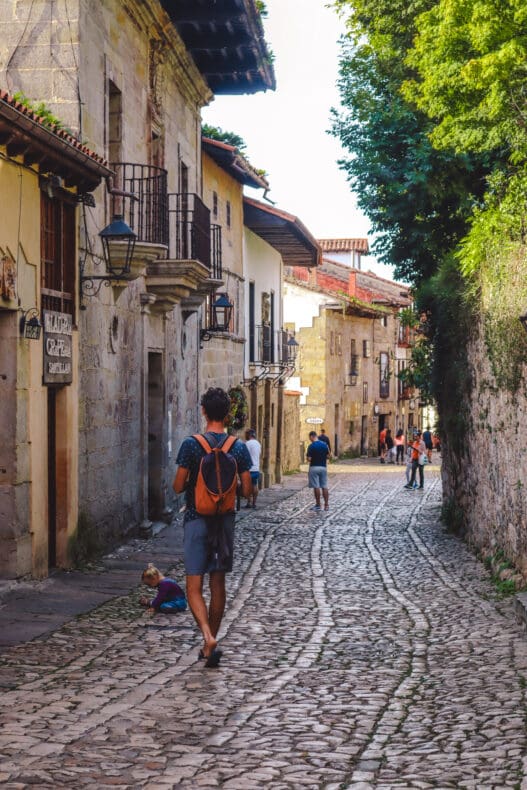
Santillana del Mar is a charming village in the heart of Cantabria, northern Spain. Nestled about 20 kilometers west of Torrelavega and 30 kilometers from Santander, it’s perfectly positioned for travelers looking to explore the region. Its proximity to Santander’s airport and ferry port makes getting here easy, whether you’re arriving by plane or sea. Despite what its name might suggest, Santillana del Mar isn’t a seaside town—it’s actually set a few kilometers inland, surrounded by rolling countryside.
For those driving in, you’ll find several parking areas near the historic center. Just keep in mind that most require payment, and you’ll need coins for the meters or a Spanish parking app. If you’re traveling by campervan, you can park at the official motorhome site, but we highly recommend a beautiful green parking area run by a wonderfully welcoming owner. Not only is it cheaper, but it also offers a better location and allows overnight stays, just like the official site.


What Is Santillana del Mar Known For?
#1 Beautifully Preserved Medieval Village
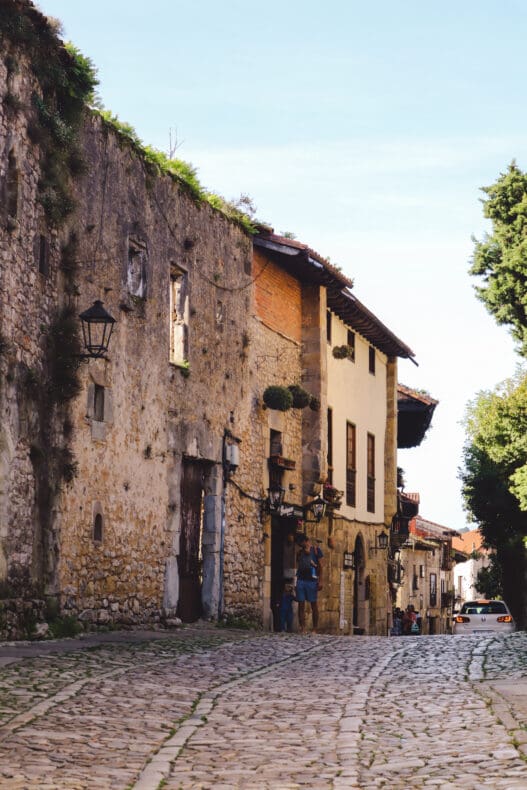
Santillana del Mar is celebrated as one of Spain’s most beautiful villages, earning its spot on the prestigious list of ‘Los Pueblos más Bonitos de España’ (The Most Beautiful Villages of Spain) for good reason. This recognition is well deserved, as stepping into this historic village feels like stepping back in time, where medieval charm and architecture shape the streets and the rhythm of daily life.
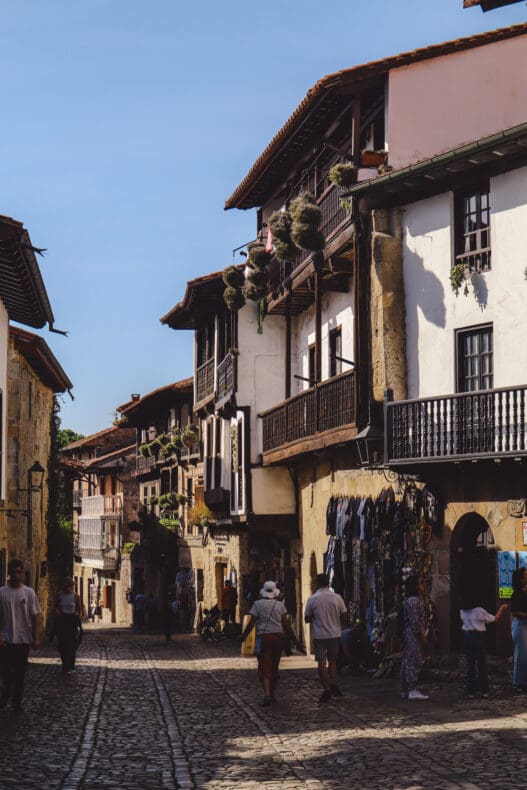
The authenticity and remarkable preservation of Santillana del Mar are truly exceptional. As you wander through its cobblestone streets, it’s easy to imagine the village bustling with life as it did centuries ago. The streets are lined with manor houses that date mostly from the 14th to the 18th century. These buildings showcase a blend of architectural styles, coming together to form a picturesque scene that draws visitors from all over the world.
Santillana del Mar is incredibly photogenic, almost feeling like an open-air museum rather than just another Spanish village. This is partly due to its popularity, with many visitors and tourist shops offering local specialties. While this adds to the village’s charm, it can sometimes slightly diminish the romantic and authentic atmosphere that makes Santillana del Mar so special.
#2 The Caves of Altamira
In addition to its medieval village center, Santillana del Mar is also famous for being home to the renowned Altamira Caves, located just outside the village. These caves are considered one of Europe’s most significant prehistoric sites. Within their depths, you’ll find some of the oldest and best-preserved rock paintings ever discovered. These stunning artworks are believed to be over 15,000 years old, offering a rare glimpse into the distant past and the creativity of early humans.
#3 The Village of the Three Lies
In almost every article about Santillana del Mar, you’ll often hear it playfully called the “village of three lies.” The name supposedly refers to ‘santa’ (holy), ‘llana’ (flat), and ‘mar’ (sea), but in reality, none of these are exactly true. While this joke gets repeated quite often, we don’t think it’s all that clever.
For starters, Santillana is definitely not flat—it’s actually quite hilly. And while it might not sit directly by the sea, it’s certainly close enough to the coast to feel the ocean breeze. As for the name, it’s actually derived from Santa Juliana, a saint. The village grew around a sanctuary dedicated to her, with its origins tracing back to the 8th century. So, far from being a misnomer, the name is a meaningful tribute to a holy figure, not a misleading label.


The Most Beautiful Villages in Spain
Tucked away in the heart of Cantabria, a scenic region in northern Spain, Santillana del Mar proudly holds its place on the prestigious list of ‘Los Pueblos más Bonitos de España’ (The Most Beautiful Villages in Spain). This honor is not easily earned—villages must meet rigorous standards, including a population of fewer than 15,000, recognized cultural or natural heritage, and a deep commitment to preserving their unique charm.
The village boasts remarkably well-preserved medieval architecture, with every street offering a step back in time. Wandering through Santillana del Mar feels more like exploring an open-air museum than simply visiting a Spanish village. It’s a quintessential example of the hidden treasures that make Los Pueblos más Bonitos de España such a special collection.

Things to Do in Santillana del Mar
#1 Stroll through the old streets
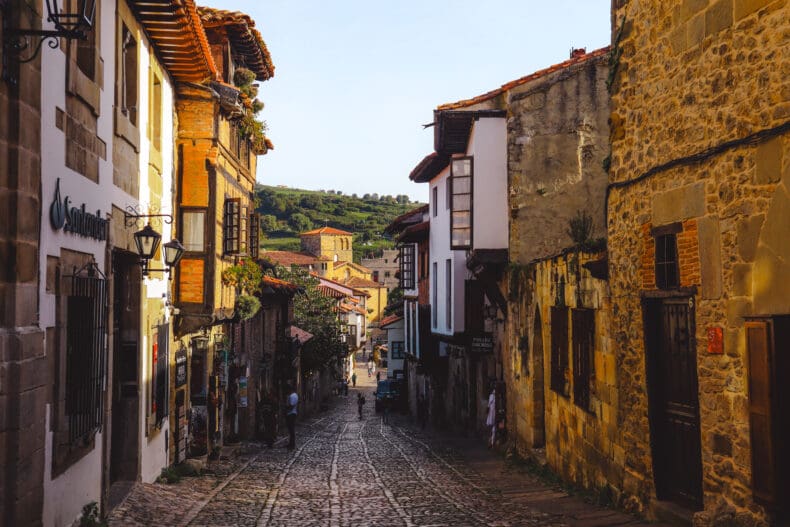
The heart of Santillana del Mar lies in its ancient village center, where two long, winding streets form the village’s historic core. This captivating area was designated a Historical-Artistic Site in 1889, a recognition that has been instrumental in preserving its timeless charm. Restoration efforts led by Count Güell in 1927 also played a major role in maintaining the village’s character.
The village center is shaped by two streets that meet in a Y formation, each serving a distinct purpose in the village’s heritage. One street leads to the Plaza Mayor, formerly known as the Plaza del Mercado, which served as the civil heart of the village. The other, Calle del Canton, directs visitors toward the religious hub, where the stunning Collegiate Church of Santa Juliana stands proudly.
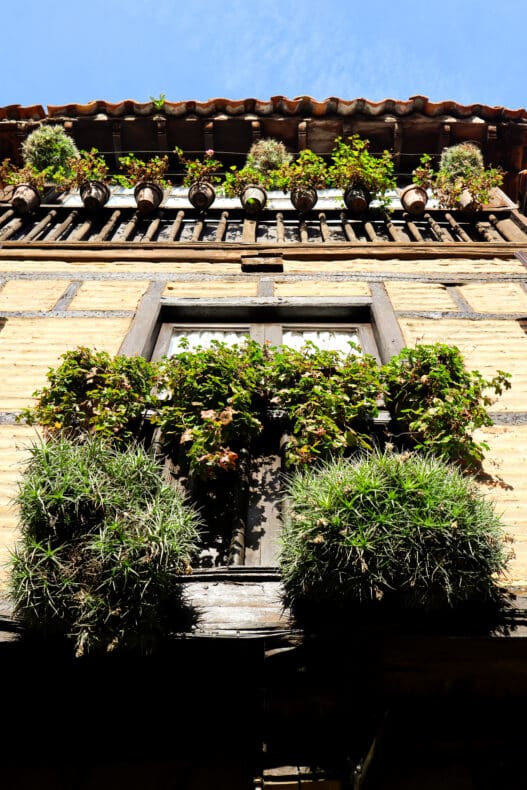
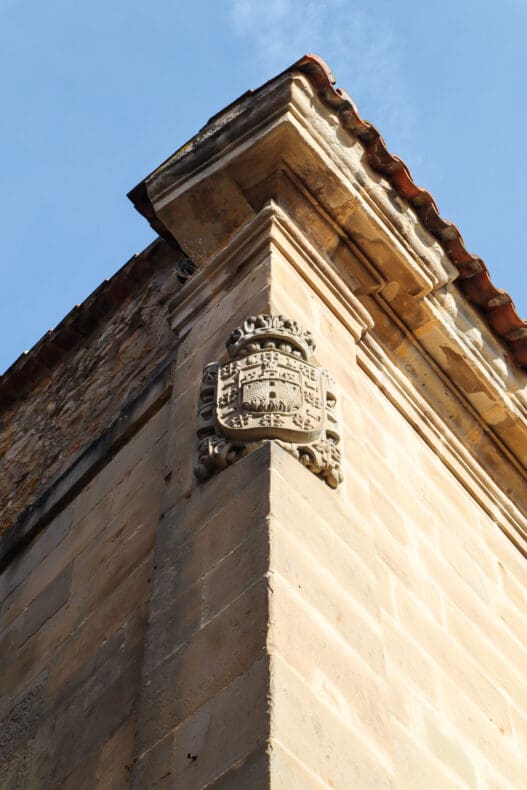
The buildings lining these streets span from the 14th to the 18th centuries. The 18th-century homes, in particular, stand out with their grandeur, reflecting the wealth of the ‘indianos’—Spaniards who made their fortunes in the Americas and returned to their homeland. The warm golden façades, adorned with family crests and ornate wrought-iron balconies, offer a glimpse into a time of nobility and prestige.

#2 Marvel at the Caves of Altamira
The discovery of the Altamira Caves is a defining moment in the history of prehistoric art. The breathtaking rock paintings, dating back over 15,000 years, adorn the 270-meter-long cave walls, some of which soar to a height of six meters. These remarkable artworks have earned their place as part of the UNESCO World Heritage.
The caves were uncovered by accident in 1879 by the daughter of Don Marcelino Sanz de Sautuola, a landowner and amateur archaeologist. Inside, 150 stunning depictions of bison, deer, horses, and wild boar—painted in hues of black, ochre, and red—cover the cave walls. Curiously, human figures are absent, deepening the mystery and intrigue surrounding these ancient masterpieces.
For Don Marcelino, this discovery sparked a long and difficult battle to prove the authenticity of the paintings. His assertion that the artwork belonged to the Paleolithic period was met with skepticism, and accusations of forgery followed him for years. It wasn’t until 15 years after his death that the true age of the rock art was finally recognized and acknowledged.
Today, access to the original Altamira Caves is strictly limited to protect the fragile artwork. In the 1960s and 1970s, the paintings began to deteriorate, their colors fading and drying out, as the cave’s environment was disturbed by the breath of visitors. To safeguard the delicate paintings, the Spanish government imposed severe restrictions on access. The demand for visits became so great that an exact replica of the caves was created nearby. Now, visitors can explore this replica museum, offering them a chance to experience the awe-inspiring paintings without risking damage to the original artwork.

#3 See the Colegiata Santa Juliana
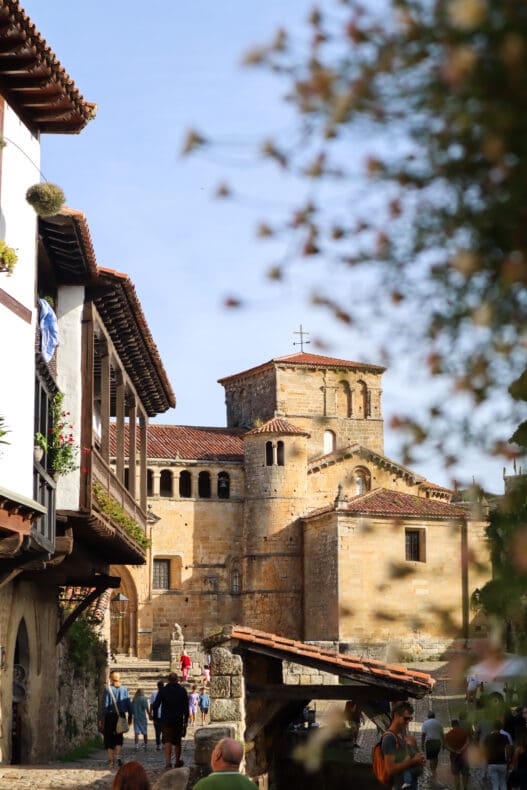
At one end of the village stands the Colegiata Santa Juliana Church, a stunning national monument that boasts impressive Romanesque architecture. The church is named after Saint Juliana of Nicomedia, whose remains are believed to rest here. After her death, her body was first taken to Naples, but legend has it that her relics were eventually moved to this very church. Here’s an interesting tidbit: the mother of William of Orange, the founder of the Dutch royal family, was also named after this saint.
The church we see today was originally constructed in the 12th century, though it was expanded over time. For instance, the bell tower was added in the 13th century, and the altar followed in the 16th century. When you visit, you’ll have the chance to admire both the 13th-century cloister and the church itself. However, keep in mind that they may not always be open at the same time, as they close for services and the traditional Spanish siesta hours. The cloister is a true highlight, with its elegant Gothic arches, while the altar inside the church is sure to catch your attention as well.


#4 Spend the Night in a Parador
In many historic towns across Spain, you’ll find a parador—a luxurious hotel often set within a stunning historic building, such as a castle, palace, monastery, or another iconic structure. These paradors offer a unique opportunity to stay in places steeped in history and culture, blending the past with modern comforts. In Santillana del Mar, you’re in for a treat with not one, but two paradors. To experience them, head straight to the heart of the town—Plaza Mayor.
One of these paradors, the Parador de Santillana Gil Blas, is located in a breathtaking 17th-century building that was once the Casa Barreda-Bracho, a baroque-style mansion. This beautiful home was constructed by the Barreda-Bracho family in the 1600s, and their family crest still graces the building’s façade. In 1946, it was transformed into a parador-hotel, offering guests the chance to enjoy both the charm of its past and the convenience of modern amenities.
Not far from here is the Parador Santillana del Mar, a hotel that embraces the traditional architectural style of Santillana but with a newer build. Santillana del Mar also offers other historic accommodations, such as the Hotel Altamira, which is also located in Plaza Mayor. These stunning hotels allow visitors to immerse themselves in the town’s rich history while enjoying the luxury and comfort of modern-day hospitality.


#5 Visit the Plaza Mayor
At the heart of Santillana del Mar lies the charming Plaza Mayor, a lively central square surrounded by grand palaces and historic buildings. Once known as Plaza Mercando, the square got its name from the bustling market that used to take place here. Today, it draws visitors with its stunning architecture and the inviting restaurants and bars that surround the square, creating a vibrant atmosphere.
As we’ve mentioned, the square is home to several historic hotels, but it also boasts an array of impressive palaces and baroque-style homes. The Hotel Altamira is housed in the elegant Valdivieso Palace, while the Parador Hotel Gil Blas occupies a grand building once owned by the Barreda-Bracho family. The square’s most striking features are undoubtedly the two medieval towers—the Torre del Merino and the Torre de Don Borja—which stand tall, adding a dramatic and timeless charm to this picturesque setting.


#6 Try the Regional Specialties
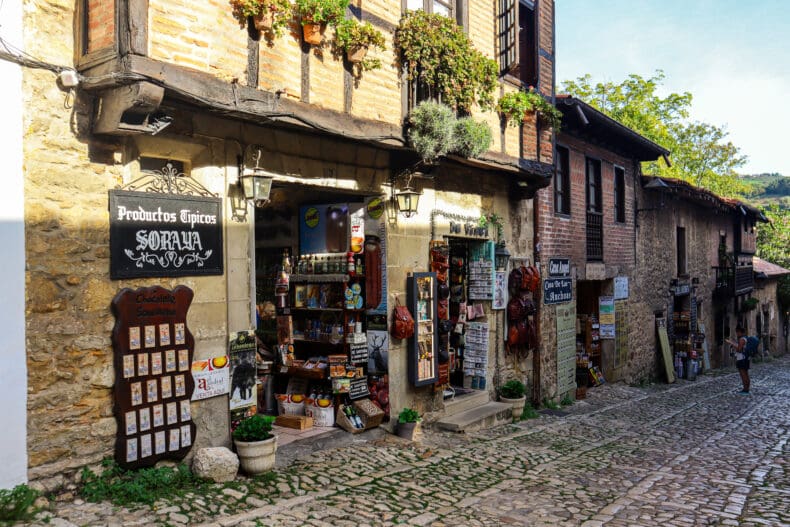
The charming village center of Santillana del Mar is so beloved by tourists that nearly every historic building has been transformed into a restaurant, hotel, or boutique. If you’re searching for a unique souvenir or craving a delicious local treat, we highly recommend visiting the local shops or enjoying something sweet or savory at one of the inviting cafés.
Kick off your culinary adventure with the region’s exceptional cheeses. Liebana is a semi-hard cheese made from rich, full-fat cow’s milk. Its creamy texture and deep, satisfying flavor will win you over instantly. For cheese lovers seeking something more distinct, Picón Bejes-Tresviso is a blue cheese made from a blend of cow’s, sheep’s, and goat’s milk, offering a complex and bold taste that’s sure to impress.
If you’re in the mood for a sweet treat, don’t miss quesada pasiega. This regional dessert, which resembles a cheesecake, is made from butter, sugar, milk, flour, eggs, and ricotta or curd cheese, often flavored with cinnamon and a touch of lemon zest. It’s the perfect balance of creamy and refreshing.
And of course, no visit to the area would be complete without trying sobao pasiego, a beloved spongy cake from Cantabria. Its soft, airy texture, paired with the delicate flavors of lemon zest and aniseed liqueur or rum, makes it a favorite among locals and visitors alike.

#7 Walk into the Free Museo Jesús Otero
Just a stone’s throw from the Santa Juliana Church, you’ll discover a charming museum dedicated to the works of local Spanish sculptor Jesús Otero. While the museum isn’t particularly large, it offers the delightful bonus of free entry, making it an easy and enjoyable stop if you’re wandering through the area.
As you step into the garden, you’ll be greeted by a selection of striking sculptures, and inside, even more works are on display. In total, around 50 of Otero’s pieces are showcased, with many coming from the later years of his artistic career. In a heartwarming gesture, just months before his passing, Otero donated all of his remaining works to the museum, ensuring his legacy lives on.

#8 Walk (part of) the Camino de Santiago de Compostela
In Santillana del Mar, it’s not uncommon to see travelers sporting large backpacks, sturdy hiking boots, or cyclists with their gear packed up for the journey. Why, you ask? The village is located along the famous Camino de Santiago, a historic pilgrimage route that stretches all the way from the Spanish Pyrenees to the revered site of Santiago de Compostela.
Here’s something fascinating: there are two primary routes to Santiago de Compostela that pass through northern Spain. The traditional main route, known as the Camino Francés, runs more inland, while the Camino del Norte, a secondary route, follows the stunning coastline. It’s this coastal path, the Camino del Norte, that leads right through Santillana del Mar.
If you’re in the mood for some physical activity, walking even just a section of this historic trail offers a truly unique experience. You don’t need to walk the entire route (which would take days or even weeks)—a small stretch will still give you an unforgettable view of the breathtaking Cantabrian landscape.


