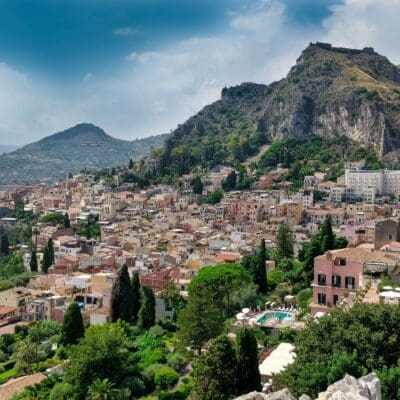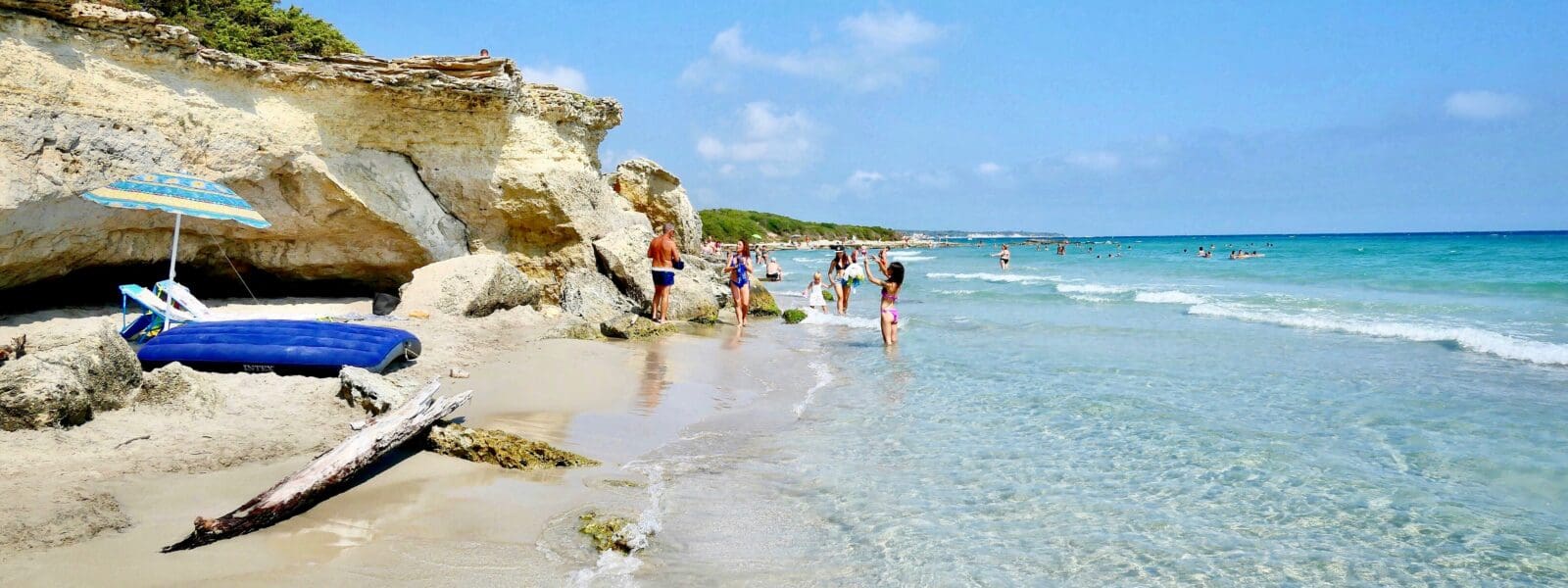
Puglia is one of those regions that’s best discovered by car, a good dose of curiosity, and, most importantly, a thoughtfully planned route. On our road trip through Puglia, we traveled from whitewashed hilltop villages to rugged sea cliffs, slept beneath the cone-shaped roofs of trulli, tasted freshly made orecchiette, and strolled through elegant baroque squares. Over the course of three weeks, we made a wide loop through the heel of Italy’s boot, exploring not only the well-known spots like Alberobello, Lecce, and Matera, but also uncovering hidden gems such as Grottaglie, Locorotondo, and the stunning cliffs near Torre dell’Orso.
This blog is for anyone searching for a Puglia itinerary that offers more than just the typical highlights. Whether you have ten days or a full three weeks, our route allows you to set your own pace and experience Puglia in a way that suits you. At every stop, we share what there is to see and do, the must-see sights you won’t want to miss, and why it’s often worth taking your time to stay a little longer. You’ll find plenty of practical tips, beautiful viewpoints, and our honest impressions along the way.
From sun-drenched beaches to historic towns, from ancient cave dwellings to charming masserias — this is our complete road trip through Puglia. Let yourself be inspired, travel at your own rhythm, and create the perfect itinerary for your adventure.
How to Get to Puglia, Italy: by Car or by Plane?
Puglia sits in the heel of Italy’s boot, tucked away in the far southeast of the country. If you’re driving from Utrecht, it’s almost 2,000 kilometers to Bari. That means at least two full days on the road, and that’s if you drive straight through without any long stops. It’s definitely possible, but you’ll need to be ready for a long stretch behind the wheel.
That’s why most travelers choose to fly. Bari, the capital of Puglia, has a well-connected international airport. You can fly there in about 2.5 hours, with direct flights from Amsterdam available through airlines like KLM, Transavia, and Ryanair. During the summer months, there are sometimes flights from Eindhoven as well. Once you land, you can pick up a rental car right at Bari airport and hit the road straight away. There’s also an international airport in Brindisi, though fewer airlines fly there directly from the Netherlands. Still, it’s always worth checking both airports when searching for the best fares to Puglia.
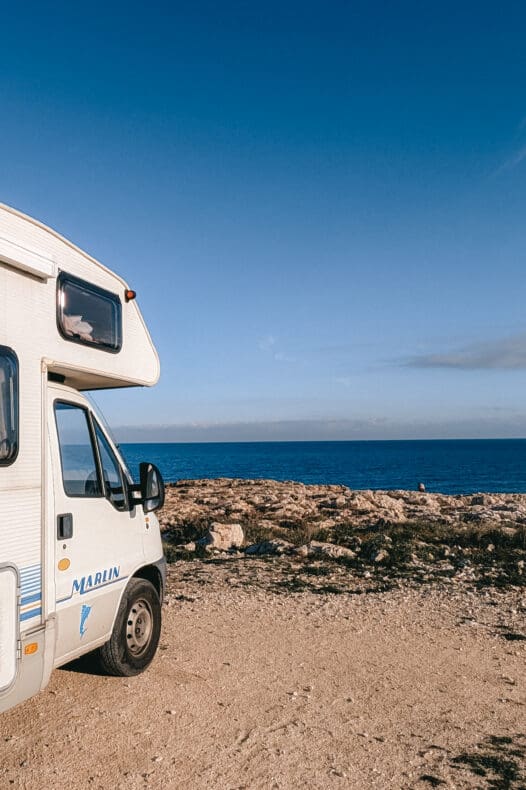
Prefer to drive yourself, either by car or campervan? That’s absolutely an option too, and it saves you the cost of renting a car once you arrive. It can be a great choice if you’d like to make some extra stops along the way, perhaps in southern Germany or northern Italy. Just keep in mind that driving means more travel time, toll roads, and overnight stays along the route. We drove to Puglia with our campervan, taking our time and combining the trip with visits to Tuscany, Rome, and the Naples area.
In short: if you want to focus your time on exploring Puglia itself, flying into Bari is by far the easiest option. But if you enjoy the journey as much as the destination, a road trip can turn the entire adventure into an unforgettable experience.


What is Puglia known for?
Puglia is a region of contrasts, known for its unique architecture, fascinating historical sites, beautiful coastline, and authentic local cuisine. As one of Italy’s southernmost regions, it enjoys a warm, sun-drenched climate, making it a perfect destination for much of the year.
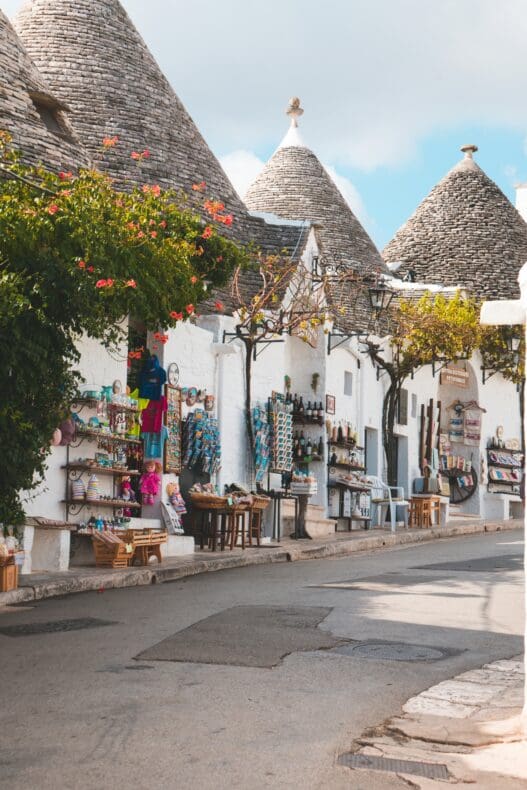
The trulli are perhaps Puglia’s most iconic feature. These small, whitewashed houses with their distinctive conical roofs are found mostly in the Valle d’Itria. Alberobello, the most famous trulli village, has even earned a spot on the UNESCO World Heritage List. The building technique used for these homes dates back centuries and was likely developed as a way to avoid paying taxes. Built without cement, the houses could easily be dismantled, which meant they weren’t considered permanent structures and therefore not subject to property taxes.
Puglia’s long coastline is another major reason why travelers are drawn to the region. With more than 800 kilometers of shoreline, it offers a wide range of coastal scenery. Polignano a Mare is famous for its dramatic cliffs and stunning views over the Adriatic Sea. A bit further south is Monopoli, known for its charming historic center and small sandy beaches. In the north, the Gargano coast and the Tremiti Islands attract visitors with their crystal-clear waters and rugged, untouched nature.
Puglia’s rich culinary traditions are deeply tied to its farming history. The region is Italy’s largest producer of olive oil, with ancient groves that, in some cases, have been cultivated since Roman times. The local cuisine is simple but full of flavor, featuring dishes like orecchiette pasta, fresh burrata cheese, and grilled seafood. Some of Puglia’s best-known wines include Primitivo and Negroamaro, both loved for their deep, rich flavors.
Puglia’s rich history comes to life in its cities and monuments. In Bari, the ancient old town invites you to wander its narrow streets, where the Basilica of Saint Nicholas stands as a significant pilgrimage site, drawing visitors from around the world. Lecce, often referred to as the Florence of the South, is renowned for its stunning baroque architecture, with its elegant churches, intricately carved facades, and grand palaces adorning almost every corner. Castel del Monte, built in the 13th century by Emperor Frederick II, is an extraordinary architectural gem, perfectly symmetrical and full of mystery, earning its place on the UNESCO World Heritage List.
Puglia’s natural beauty is just as captivating. The landscape is a patchwork of endless olive groves, gently rolling hills, and dramatic limestone cliffs. In the north, the Gargano Peninsula offers a mix of dense forests, rugged mountains, and hiking trails that reward you with breathtaking panoramic views. The Valle d’Itria, with its rich and fertile soil, produces not only olives and wine but also an abundance of fruits and vegetables, all contributing to the region’s long-standing agricultural traditions.


Tourist Map of Puglia
[googlemaps https://www.google.com/maps/d/u/1/embed?mid=1NnPGSFDGg-BgnyIZBlOAkBbY6uWEL3c&ehbc=2E312F&w=790&h=480]The Ideal Travel Itineraries for Puglia
Only have five days? That’s still enough to enjoy a great trip through Puglia. In that time, you can do a quick loop and visit some of the region’s highlights, like Bari, Polignano a Mare, Alberobello, Ostuni, Lecce, and Matera. It’s perfect for a short getaway, but you’ll mostly get just a first taste of what Puglia has to offer. Don’t expect long, lazy days at the beach or slow afternoons wandering through peaceful villages — this trip will give you more of a snapshot than a deep dive.
For our own trip, we took a little over three weeks. In nearly every place, we stayed at least a full day, and often two or even three. This gave us a much more relaxed pace, allowed for plenty of spontaneous stops along the way, and gave us the chance to really settle into each destination. Since we were traveling with two small children, this slower rhythm worked perfectly for us. Of course, not everyone has the luxury of taking so much time, but if you do, it’s a wonderful way to experience Puglia.
If you’d like to follow the road trip route we put together, you can do it in either 10 days or 3 weeks. In 10 days, you’ll be moving at a pretty fast pace; in 3 weeks, you’ll have plenty of time to relax and enjoy each stop without feeling rushed.
Sample Itinerary 1 – See a Lot in a Short Time (10 Days)
This itinerary is perfect if you’re short on time but still want to experience the very best of Puglia. In just 10 days, you’ll visit charming whitewashed villages, dramatic coastal towns, and some of the region’s most iconic sights — all without rushing too much. Here’s how you could structure your trip:
- Day 1: Arrive in Bari – take the time to explore the atmospheric old town with its winding alleys and hidden courtyards. Don’t forget to try a warm, freshly fried panzerotto in Bari Vecchia — a local street food favorite.
- Day 2: From Bari, head south to the beautiful cliffside town of Polignano a Mare. Enjoy the sea views, grab a coffee with a view, then continue on to Monopoli, a coastal gem with a lively harbor and historic center. Spend the night in Monopoli.
- Day 3: Leave Monopoli and make your way inland to the fairytale town of Alberobello, famous for its trulli houses. After exploring, drive on to Locorotondo, one of Italy’s prettiest hilltop villages, surrounded by vineyards and olive groves. Spend the night in the Valle d’Itria.
- Day 4: Continue your journey through the Valle d’Itria and make a stop in Martina Franca or Cisternino, both charming and full of character. Then head to the “White City” of Ostuni, where you’ll stay overnight and enjoy dinner in one of its scenic piazzas.
- Day 5: From Ostuni, make your way south to Lecce, often called the “Florence of the South” for its stunning baroque architecture. Wander through its golden stone streets and soak up the relaxed southern vibe. Overnight in Lecce.
- Day 6: From Lecce, head to the coast and spend the day in Otranto, a seaside town with turquoise waters, a beautiful cathedral, and an inviting promenade. Stay the night somewhere along the scenic east coast.
- Day 7: Leave Otranto and drive one of the most beautiful coastal roads in Italy, passing through Santa Maria di Leuca, the southernmost tip of Puglia. Continue on to Gallipoli, where you’ll stay the night. The old town is perfect for a sunset stroll and a fresh seafood dinner.
- Day 8: From Gallipoli, drive inland to Grottaglie, a town known for its traditional pottery and ceramics. It’s the ideal place to pick up a handmade souvenir. Spend the night in or around Grottaglie.
- Day 9: Time to head to Matera, just across the border in Basilicata. This incredible city of cave dwellings and stone churches is unlike anywhere else in Italy. Stay overnight and take your time exploring the magical Sassi districts.
- Day 10: After breakfast, make your way back to Bari in time for your flight home, filled with memories of olive groves, white villages, coastal views, and southern Italian charm.
Sample Itinerary 2 – Relaxed and complete (3 weeks)
If you have the luxury of more time, this relaxed 3-week itinerary allows you to truly immerse yourself in the beauty of Puglia. You’ll have plenty of opportunities to soak up the atmosphere, enjoy long, leisurely lunches, and explore each destination without feeling rushed. From whitewashed villages and crystal-clear seas to elegant baroque squares and ancient cave dwellings — this route takes you through all the highlights and hidden gems.
- Days 1–2: Start your journey in Bari with a gentle pace, allowing yourself to settle in and get acquainted with the city. Wander through Bari’s charming old town, where narrow alleyways lead you past hidden courtyards and historic buildings full of character. As you explore, take time to sample some of the local specialties: freshly made panzerotti, rich seafood dishes, and traditional street food that introduces you to the flavors of Puglia right from the start.
- Dag 3-4: From Bari, head to the coast to visit two of Puglia’s most picturesque seaside towns. In Polignano a Mare, swim in the crystal-clear waters of the Adriatic and admire the whitewashed houses perched dramatically above the cliffs. Then continue to Monopoli, where a relaxed vibe awaits in its beautiful old town. Spend your evenings dining at waterfront restaurants, savoring fresh seafood while enjoying breathtaking views of the sea as the sun sets.
- Dag 5-6: Next, make your way inland for one of Puglia’s most iconic experiences. Spend the night in a traditional trullo in Alberobello, where the conical stone rooftops create a fairytale-like setting. Nearby Locorotondo offers its own charm, with whitewashed streets, panoramic countryside views, and a peaceful atmosphere that invites you to slow down and enjoy the surrounding vineyards and olive groves.
- Dag 7-8: Continue exploring the Valle d’Itria with a visit to Martina Franca or Cisternino. Both villages offer their own unique character, with beautiful historic squares, baroque architecture, and narrow streets lined with family-run boutiques. Take your time to wander, shop for local crafts, and enjoy relaxed meals at small trattorias where you can savor homemade pasta and regional wines.
- Dag 9-10: Next, arrive in Ostuni, famously known as “The White City.” Explore the maze of winding alleys and discover panoramic viewpoints that offer sweeping vistas of the surrounding countryside. The brilliant whitewashed buildings sparkle under the southern sun, creating an unforgettable atmosphere. If the weather is warm, consider spending an afternoon at one of the nearby beaches to soak up some sun and enjoy the Adriatic coastline.
- Dag 11-13: Lecce, often called “The Florence of the South,” is a must-see destination known for its rich baroque architecture. Spend these days immersing yourself in Lecce’s cultural scene, visiting grand churches and admiring the ornate facades that line its elegant streets. Take your time enjoying long, leisurely lunches on sunny piazzas, sampling local wines and specialties, and simply soaking up the relaxed rhythm of southern Italian life.
- Dag 14-15: Return to the coast for a visit to Otranto, where dramatic cliffs meet the sea. Explore the town’s impressive cathedral, famous for its intricate mosaic floor, and take walks along the rugged coastline. The laid-back seaside atmosphere here makes it easy to unwind and enjoy the natural beauty of the Adriatic.
- Dag 16: Embark on one of Puglia’s most scenic drives, following the southern tip of the coastline through Santa Maria di Leuca. Take your time along the way, stopping at viewpoints to admire the stunning sea vistas before reaching Gallipoli in time for a sunset stroll through its charming old town.
- Dag 17-18: Gallipoli invites you to slow down and savor its relaxed, island-like vibe. Wander through the narrow streets of the historic center, visit the bustling harbor, and enjoy some of the region’s freshest seafood at the many restaurants dotted along the waterfront. The town’s easy-going atmosphere makes it the perfect place to pause and soak up the southern charm.
- Dag 19: Leave the coast behind as you head inland toward Matera. Make a stop in Grottaglie, famous for its centuries-old ceramic workshops. Browse the many artisan shops, where you’ll find beautifully crafted pottery to take home as a unique souvenir. Continue on to Matera, where you’ll catch your first breathtaking glimpse of its ancient cave dwellings carved into the cliffs.
- Dag 20-21: Spend your final days exploring Matera’s remarkable Sassi districts, with their fascinating network of rock-cut homes, churches, and winding alleyways. The city’s timeless atmosphere is truly unforgettable. After soaking up Matera’s rich history and beauty, return to Bari to catch your flight home.
Whether you prefer to travel at a faster pace or fully immerse yourself in every destination, this itinerary offers the perfect way to experience the very best of Puglia — from peaceful whitewashed villages and sparkling seas to grand baroque squares and ancient cave cities.

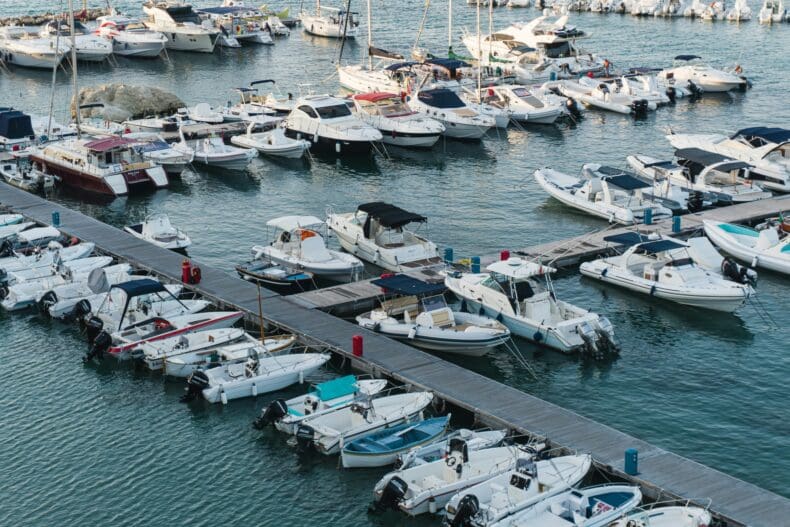
Road Trip Route for Puglia (with Map)
During our road trip through Puglia, we followed a mix of carefully planned stops and spontaneous discoveries. Some places were on our list long before we arrived, while others we stumbled upon by chance — little gems so charming that we couldn’t resist staying longer than we had planned. Looking back, this is the route we would recommend if we were to do it all over again, now with the benefit of experience and knowing where the real highlights are. It includes our favorite places, the must-see sights, and those unexpected surprises that made the trip even more memorable. For each destination, we’ll share why it’s worth visiting, what makes it special, and the best things to see and do while you’re there.
[googlemaps https://www.google.com/maps/d/u/1/embed?mid=1mrvjYcTMdq1gtumxgDoVSzOaH-Q235E&ehbc=2E312F&w=790&h=480]#1 Bari
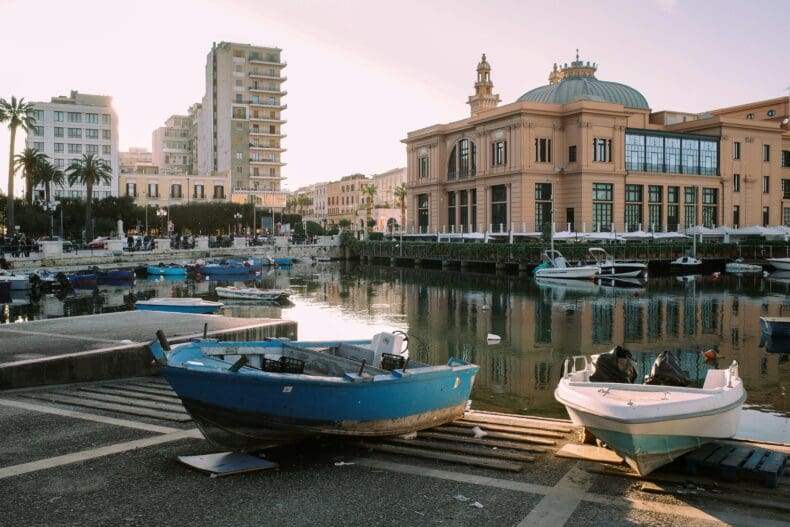
Bari, the capital of Puglia, is the ideal starting point for your road trip adventure. Set along the sparkling Adriatic Sea, the city blends centuries of history with the lively rhythm of modern life. In Bari Vecchia, the charming old town, you’ll wander through a maze of narrow alleyways where local grandmothers still sit outside their doorways, skillfully shaping fresh orecchiette pasta just as their mothers and grandmothers did before them. Above you, lines of laundry sway gently in the breeze, while scooters zip through the tiny streets and neighbors chat across balconies, daily life unfolding all around you in the most authentic way.
One of Bari’s most important landmarks is the 11th-century Basilica of Saint Nicholas. This beautiful church holds the relics of Saint Nicholas, known to many around the world as the inspiration for Santa Claus. Pilgrims travel from across the globe to visit this sacred site. Just a short walk away stands the Castello Normanno-Svevo, a solid and imposing 12th-century fortress that looks out over the sea. Step beyond the ancient city walls, and you’ll find a different side of Bari: wide boulevards lined with shops and cafes, lively shopping streets, and the Lungomare, an elegant seaside promenade perfect for a relaxing walk with views of the Adriatic. While Bari may not attract as many tourists as some of Italy’s better-known cities, that’s exactly what makes it so special. It’s vibrant, genuine, and offers a true taste of local life — the perfect place to begin your Puglia journey.
Where to stay: For a stylish stay right in the heart of the old town, check into Bra Hotel. Or, for a cozy and welcoming experience, the charming B&B Murex is a wonderful choice.

#2 Polignano a Mare
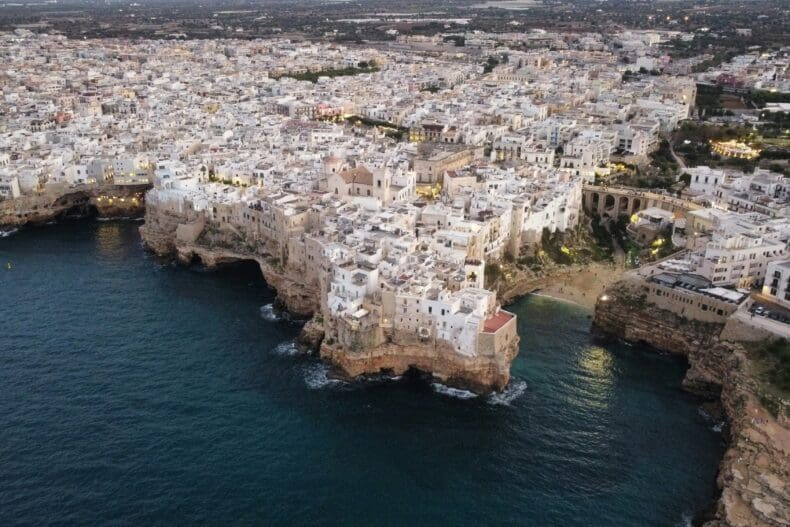
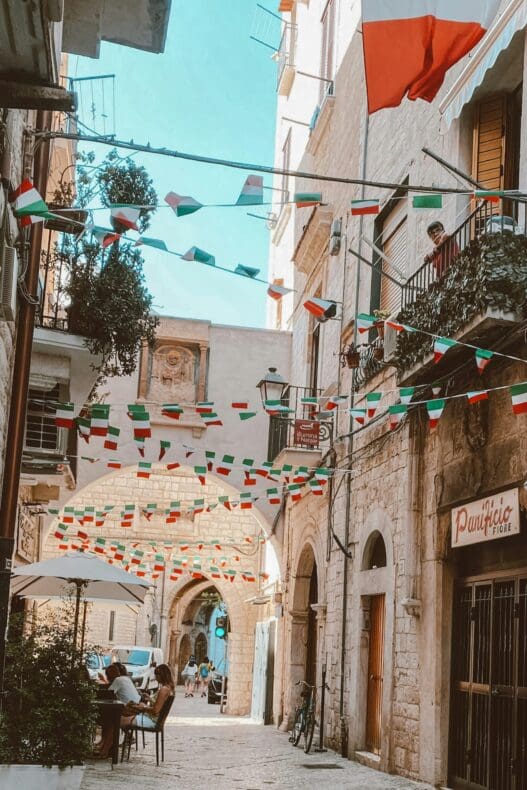
Polignano a Mare is perched dramatically on limestone cliffs that rise high above the Adriatic Sea, and it just might be the most photogenic town in all of Puglia. Compact, bright, and whitewashed, the town is a maze of narrow alleyways where stunning sea views surprise you at every corner. One of the iconic places in Polignano a Mare is Lama Monachile Beach, a small cove sheltered between towering cliffs.. The water here is crystal clear and the setting truly breathtaking. Though, to be fair, the rocky beach itself isn’t the most comfortable place to stretch out for hours.
From the heart of the old town, you’ll find several panoramic viewpoints offering sweeping views of the rugged coastline. It’s also not unusual to see brave locals leaping from the cliffs into the turquoise waters below. In fact, Polignano a Mare is a regular host of the famous Red Bull Cliff Diving competitions. The town’s narrow streets are full of charm, lined with cozy cafés, little shops, and plenty of outdoor terraces where you can enjoy a leisurely aperitivo while soaking up the sea breeze. For a different perspective, you can take a boat tour along the coast — gliding past sea caves, natural arches, and dramatic cliff faces that are just as impressive from the water.
A fun little fact: Polignano a Mare is the birthplace of Domenico Modugno, the legendary singer of the timeless classic “Volare.” His statue stands proudly near the seafront and has become a favorite spot for selfies, especially among Italian visitors.
Where to stay: For beautiful views and a comfortable stay, check into Covo dei Saraceni. If you prefer a more authentic and intimate atmosphere, the charming B&B Relais Del Senatore is a fantastic option.

#3 Monopoli
Monopoli ended up being one of the most unexpected highlights of our Puglia road trip. This charming seaside town blends history, atmosphere, and fantastic food, but without the tourist crowds you often find in nearby Polignano. In the historic center, you can lose yourself in a maze of narrow alleys lined with whitewashed houses, ancient churches, and lively little squares. The whole place feels wonderfully relaxed and genuinely authentic.
One of the town’s main attractions is The Cathedral of Maria Santissima della Madia is one of Monopoli’s highlights, with its stunning baroque interior that’s definitely worth a visit.. Right by the sea, you’ll find Monopoli’s old castle. When we visited, vibrant light shows were projected onto its ancient stone walls, creating a magical scene as night fell. The fishing harbor is still very much alive, delivering the freshest seafood straight to the many waterfront restaurants. Don’t miss the unique cave church located just outside of town — a true hidden gem and one of Puglia’s lesser-known treasures.
Monopoli even has its own little city beach, Cala Porta Vecchia, located right next to the historic center. It’s not large, but it’s perfect for a refreshing swim and a bit of sunbathing. If you prefer something quieter and more spacious, you’ll find wider beaches just a short drive away. Monopoli is ideal for a day spent soaking up culture and history, enjoying a leisurely dinner by the sea, and simply relaxing in its inviting atmosphere.
Where to stay: For a prime location paired with a bit of luxury, Hotel Don Ferrante is easily the top choice in town. For a charming bed & breakfast experience, B&B A C-Caste is a fantastic option. Or, for something truly special, stay at one of the nearby masserie, historic farmhouses like Masseria Spina or Masseria Garrappa, where traditional architecture meets modern comfort.

#4 Alberobello
Alberobello is the ultimate place to experience Puglia’s iconic trulli, charming whitewashed houses with their signature cone-shaped roofs, built entirely without cement. These fascinating structures date back to the 15th century and were originally designed to be easily dismantled, cleverly avoiding property taxes at the time. What began as a creative tax loophole has since turned into one of Puglia’s most recognizable and beloved landmarks.
The neighborhoods of Rione Monti and Aia Piccola are where you’ll find the highest concentration of these fairytale-like trulli. Rione Monti is especially photogenic, with its trulli scattered along a hillside, narrow winding alleyways, and countless little shops selling local crafts. This area tends to attract the most visitors, so it’s best to go early in the morning or later in the afternoon for a more peaceful experience. Aia Piccola offers a quieter, more authentic glimpse of daily life, where locals still live in these centuries-old homes. Highlights in Alberobello include the Trullo Church of Sant’Antonio — entirely built in trullo style — and the Trullo Siamese, a rare double trullo with an intriguing history. Though Alberobello can get quite touristy, its unique charm makes it absolutely worth visiting.
Here’s a fun fact: while most travelers think of Puglia as a summer paradise, Alberobello becomes wonderfully magical during the Christmas season. We visited during the holidays and saw the town beautifully illuminated with festive light shows and colorful projections, turning the trulli into a true winter wonderland.
Where to stay: For the most memorable experience, spend the night in one of Alberobello’s historic trulli. Excellent choices include Trulli Holiday Albergo Diffuso and Trulli Antichi Mestieri. If you’re looking for a cozy boutique hotel vibe, San Marco Boutique Rooms offers a lovely and intimate stay.


#5 Locorotondo
Locorotondo is often celebrated as one of the most beautiful villages in the Valle d’Itria: small, whitewashed, and full of character. Its name literally means “round place,” a nod to its compact, circular layout that you’ll notice as soon as you arrive. Everything here glistens in white: the houses, the stone streets, and the flower-filled balconies. It’s a quiet, peaceful place, perfect for soaking up the relaxed atmosphere and enjoying the sweeping views.
What makes Locorotondo truly special are the cummerse: traditional houses with distinctive sloping roofs that you won’t find anywhere else in Italy. There aren’t any big landmarks or famous museums here, and that’s exactly part of its charm. Locorotondo invites you to slow down, wander its pretty streets, take plenty of photos, and enjoy a glass of crisp local white wine on a sunny terrace. That wine, Locorotondo DOC, comes from the surrounding hills, where vineyards and trulli dot the landscape. From the village’s edge, you can admire stunning views over the Valle d’Itria, especially magical as the sun sets.
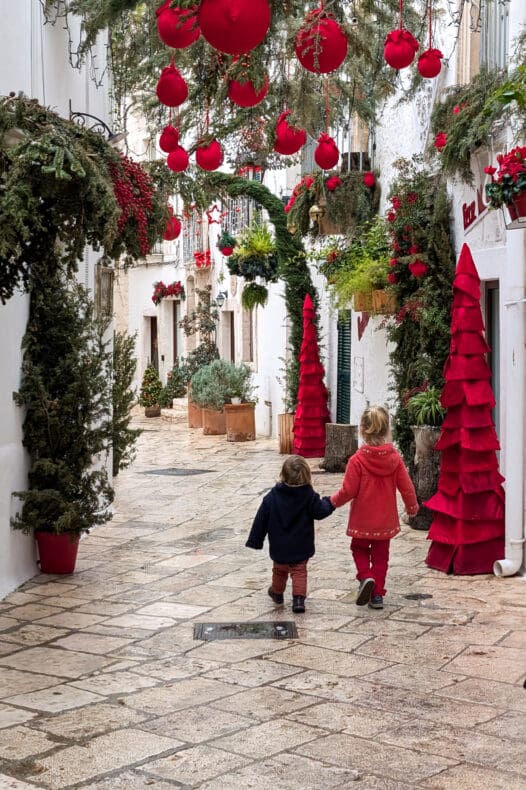
A fun little secret: in December, Locorotondo becomes a favorite holiday destination for Italians thanks to its enchanting Christmas markets. The village turns into a festive wonderland, bursting with market stalls, twinkling lights, and holiday decorations. Tour buses arrive from all over the country, filling the tiny streets with a cheerful holiday buzz and transforming the peaceful village into a cozy Christmas hotspot.
Where to stay: Because accommodations in Locorotondo are limited, it’s a good idea to book early. Top choices include the beautiful B&B 1783 Dimora d’Epoca and the charming Albergo Diffuso Sotto le Cummerse.
#6 Martina Franca or Cisternino
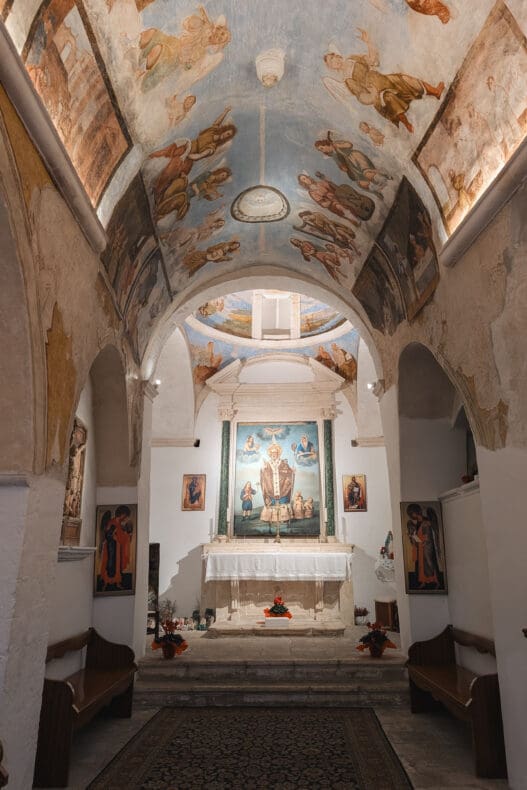
When choosing between these two towns, it really comes down to what kind of experience you’re after. Martina Franca is larger, more elegant, and famous for its beautiful baroque palaces and churches. As you stroll through its streets, you’ll find yourself surrounded by ornate facades, winding alleyways, and grand squares. Highlights include the impressive Palazzo Ducale and the Basilica di San Martino. In summer, the town comes alive with its renowned opera festival, adding even more charm and atmosphere. Overall, Martina Franca feels a little more stately and refined than many of the smaller villages nearby.
Cisternino, by contrast, is smaller, more intimate, and wonderfully laid-back. Its compact historic center is a maze of whitewashed houses, archways, narrow staircases, and cozy little squares. Here, it’s all about soaking up the relaxed vibe. One of Cisternino’s special traditions is fornelli pronti: butcher shops that transform into tiny grill restaurants in the evening, where you select your cut of meat and have it grilled right there on the spot. As vegetarians, we skipped the meat, but the experience and atmosphere were still fantastic.
If your schedule allows, it’s definitely worth visiting both towns. They’re located close to each other, and each offers its own unique character and charm.
Where to stay: In both Cisternino and Martina Franca, we didn’t come across many accommodations that truly stood out. That’s why we recommend staying just outside the towns at one of the beautiful countryside masserie, such as Borgo Canonica, Ottolire Resort, Masseria Cervarolo, or Masseria Trulli e Vigne — all offering a perfect blend of authentic architecture and modern comfort.
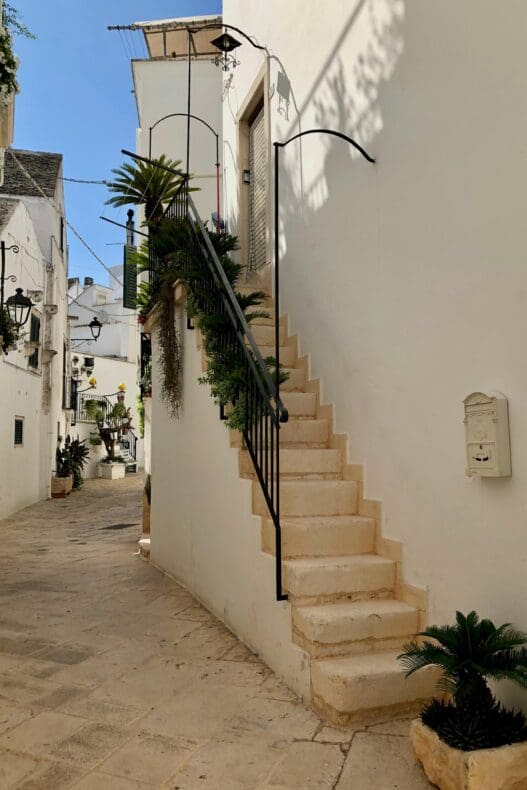

#7 Ostuni
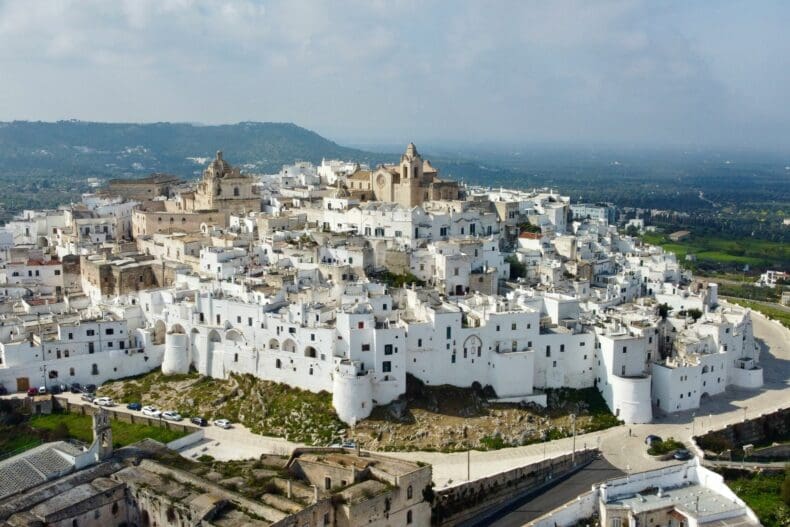
Ostuni is often called the “White City”, and it absolutely lives up to that name. The entire historic center is bathed in white, from the houses and staircases to the walls and arched doorways. Sitting high on a hill just a few kilometers from the sea, Ostuni stands out beautifully against the green, rolling hills of the Valle d’Itria, creating a postcard-perfect view. The white limewash was originally used to help prevent disease, but today it simply adds to the town’s stunning charm and makes it one of the most photogenic places in Puglia.
Exploring Ostuni feels like getting lost in a maze of narrow alleys, winding staircases, and small sun-drenched squares. At the highest point of the town, you’ll find the Gothic cathedral, instantly recognizable thanks to its striking rose window. From here, the views stretch out across endless olive groves, the surrounding countryside, and, on a clear day, all the way to the shimmering Adriatic Sea. Just beyond the town’s edges, you’ll discover countless masserie, traditional farmhouses that have been transformed into beautiful boutique hotels or cozy restaurants. If you’re looking for a place to settle in for a few days and explore nearby gems like Alberobello, Locorotondo, and Cisternino, Ostuni is the perfect base.
Where to stay: Ostuni offers some of the most beautiful accommodations in the Valle d’Itria, including Hotel La Terra and Il Sogno delle Benedettine. You’ll also find plenty of charming B&Bs, like Vico Bianco Raro and Casa d’Autore, perfect for an authentic and comfortable stay.
#8 Lecce
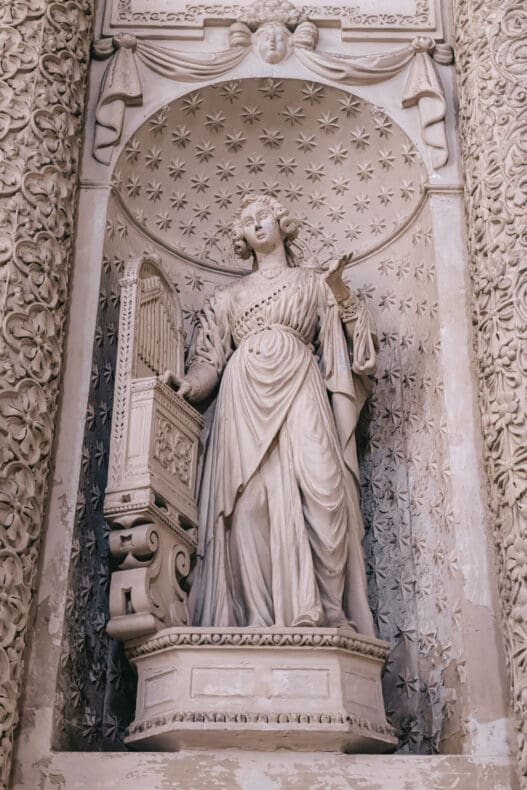
Lecce is the undisputed baroque jewel of Southern Italy. Though it’s often called the “Florence of the South” — perhaps a slightly ambitious nickname — the city truly dazzles with its rich collection of stunning churches, ornate facades, and elegant palaces. Lecce’s baroque is anything but subtle; it’s bold and theatrical, with intricate carvings, decorative columns, and sculptural details that seem to turn every building into a work of art. Among the best things to do in Lecce is visiting the Basilica di Santa Croce, one of the city’s absolute showpieces, where you can easily lose yourself in the incredible craftsmanship of its elaborate facade. Just a short stroll away, Piazza del Duomo stands as one of the most beautiful squares in all of Puglia, surrounded by the cathedral, its bell tower, and the grand bishop’s palace.
Yet there’s much more to Lecce than its baroque splendor. Tucked right into the heart of the city is a Roman amphitheater from the first century, once filled with crowds cheering on gladiator fights. The nearby Roman theater also opens a window into Lecce’s ancient past, revealing the many layers of history that make this city so unique. Lecce is equally renowned for its traditional papier-mâché craftsmanship. In several workshops across the city, artisans continue this centuries-old art form, originally invented as a cost-effective alternative to marble for church decorations. Today, these delicate creations are an important part of Lecce’s cultural identity.
Lecce is a vibrant, inviting city where history and creativity meet. It’s the kind of place you don’t want to rush through. Instead, take your time, wander the sunlit streets, and soak up the atmosphere over a long meal on a lively piazza.
Where to stay: For a truly luxurious stay, Pollicastro Boutique Hotel is hard to beat. Lecce has several of these exquisite boutique hotels, though they do come with a higher price tag. If you’re looking for something a bit more affordable, Arryvo Hotel and the charming B&Bs Dimora San Giuseppe and Dimi House are excellent options.

#9 Otranto
Otranto sits right on the edge of the Adriatic Sea, proudly holding the title of Italy’s easternmost town. Its rich and layered history reflects the many cultures that have left their mark here, from Romans and Byzantines to Ottomans and Normans. You can still feel this cultural blend in both the town’s architecture and its relaxed atmosphere, giving Otranto a distinct Mediterranean charm that feels both timeless and unique. The historic center is compact but full of character, with narrow, winding alleys, ancient stone walls, sweeping sea views, and plenty of lively terraces where you can sip a coffee or enjoy an evening aperitivo as the sun sets.
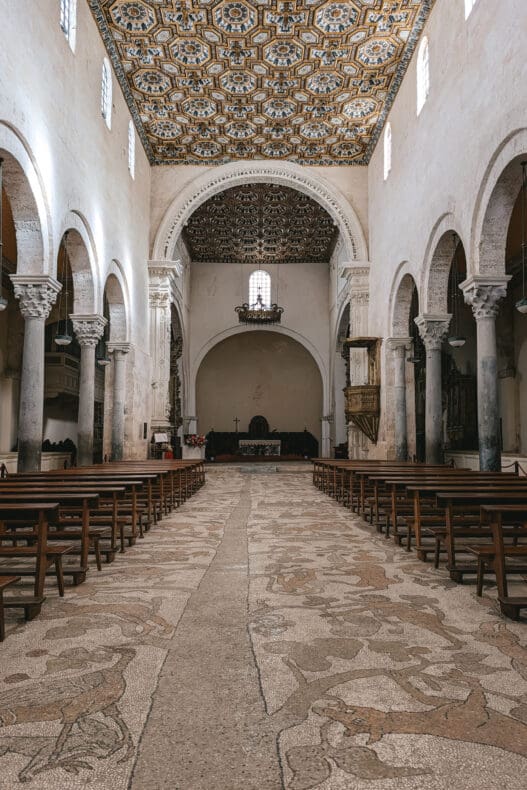
The town’s absolute highlight is its 11th-century cathedral, completed in 1088. Inside, you’ll discover a breathtaking mosaic floor illustrating the Tree of Life, intricately filled with scenes from the Bible, history, and mythology. In one of the side chapels, you’ll find the remains of over 800 martyrs, townspeople who were tragically executed in 1480 by the Ottoman army for refusing to renounce their faith. It’s a haunting and powerful chapter of Otranto’s past that leaves a lasting impression. The Aragonese Castle is also well worth a visit. Here, you can walk along the thick stone ramparts and take in sweeping views over the town’s rooftops and the sparkling harbor below. Though small, Otranto is full of hidden gems and offers much more than first meets the eye, making it well worth spending at least a night or two.
Beyond the town itself, the surrounding area offers some beautiful beaches, perfect for a laid-back day by the sea. Just a short drive away, you’ll also find the Cava di Bauxite, a former bauxite quarry that has transformed into one of the region’s most photogenic natural spots. After the mine was abandoned, rainwater filled the pit, creating a striking blue-green lake framed by vivid red-orange cliffs that form a spectacular contrast against the landscape.
Where to stay: In Otranto’s historic center, top picks include the colorful Hotel Bellavista and the elegant, historic Hotel Palazzo Papaleo. Just outside town, you’ll find beautiful masserie — restored historic farmhouses — often featuring peaceful gardens and outdoor pools. Favorites include Masseria Panareo, Masseria dei Monaci, and Masseria Bandino & Spa.

#10 Santa Maria di Leuca and the Southern Tip of Puglia
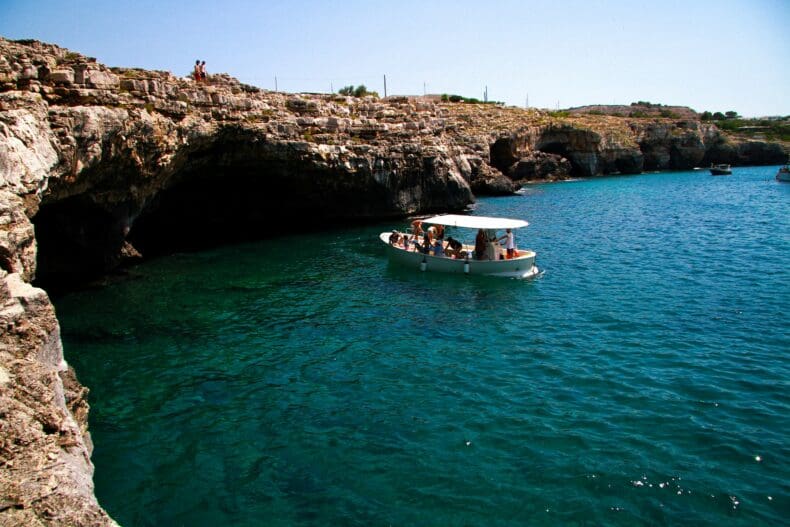
Santa Maria di Leuca rests at the very southern tip of Puglia, where the Adriatic and Ionian Seas meet in a spectacular natural embrace. Even the drive to reach this far-flung corner is part of the adventure: take the breathtaking coastal road from Otranto via Torre dell’Orso and enjoy dramatic cliffs, tiny hidden coves, and endless sea views unfolding around every bend.
Once you arrive, you’ll find a small and peaceful seaside town with a laid-back charm. Its tall lighthouse stands proudly above the water, while the spacious main square and cliffside sanctuary create a dramatic setting. From this high vantage point, you can look out across the water and see the symbolic — and wonderfully photogenic — spot where the two seas merge, blending shades of deep blue and turquoise.
In front of the sanctuary, a grand staircase cascades down toward the harbor, where boats depart for scenic trips along the rugged coastline. As you glide past sea caves and towering rock formations shaped by centuries of wind and waves, you’ll get a whole new perspective on Puglia’s southern coast. Santa Maria di Leuca invites you to slow down, breathe in the sea air, and soak up the peaceful feeling of standing quite literally at the edge of Italy. It’s the perfect stop during a stunning coastal drive from Otranto, and if you have the time, it’s well worth dedicating a full day to fully enjoy everything this unique spot has to offer.
#11 Gallipoli
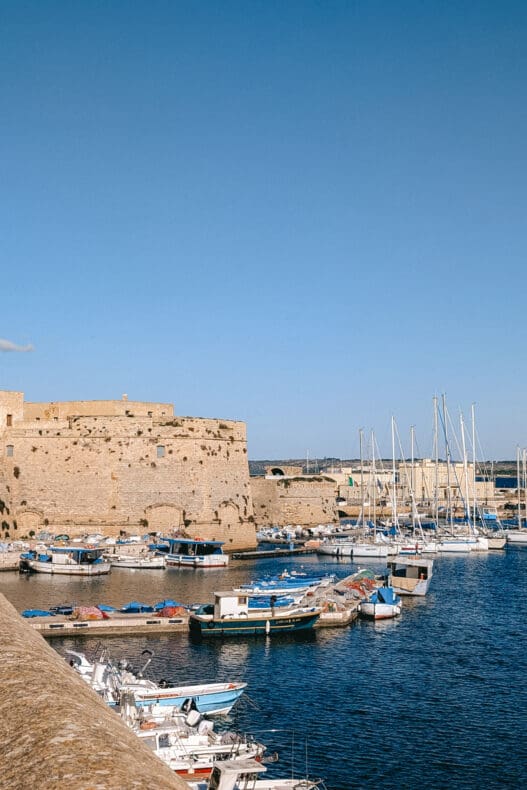
Gallipoli rests along the shores of the Ionian Sea and feels almost like a city floating on water. Its historic center sits on a small island, linked to the mainland by an ancient stone bridge that has welcomed visitors for centuries. Within the old city walls, you’ll discover a charming labyrinth of narrow alleyways, baroque churches, sunlit squares, and whitewashed houses with balconies overlooking the sparkling sea. The town buzzes with life: fishing boats unload their catch at the Porto Antico, visitors sip coffee at bustling cafés, and locals gather on benches to chat and watch the gentle rhythm of daily life.
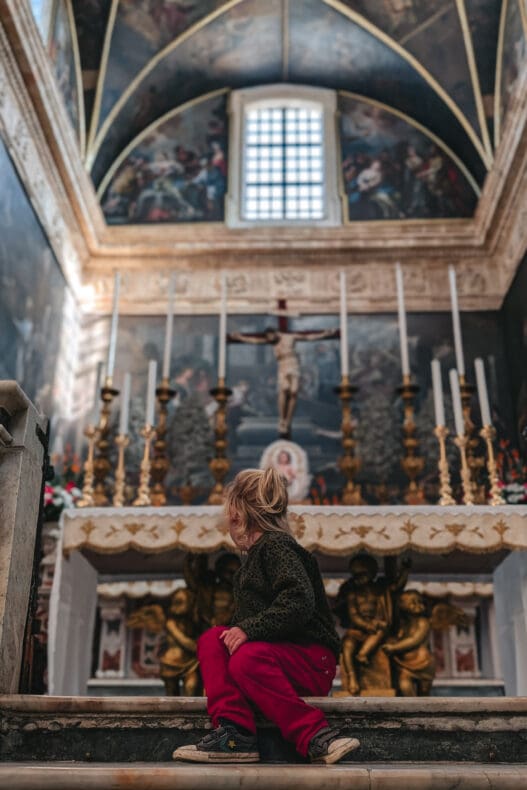
Don’t miss the Cathedral of Sant’Agata, with its richly decorated baroque façade that rises elegantly above the town. Nearby, the Castello Angioino-Aragonese stands guard over the harbor, offering a powerful reminder of Gallipoli’s storied past. But some of the town’s most intriguing history lies underground, a two ancient olive presses, once used to produce lamp oil, is hidden beneath the streets. Touring these cool, dimly lit chambers offers a fascinating glimpse into the town’s centuries-old traditions.
Gallipoli is also the perfect place to unwind by the sea. Spiaggia della Purità, located right at the edge of the old town, offers a scenic spot for a refreshing swim with views of the city’s walls behind you. If you’re looking for a longer beach day, head just outside the town to Baia Verde, where wide sandy shores invite you to relax under the warm sun.
Where to stay: For a beautiful stay right in the heart of Gallipoli, book a room at Relais Corte Palmieri & Il Chiostro or Biancodonda Greenblu Hotel & SPA. You’ll also find several charming B&Bs, such as Relais La Casa del Poeta and Il Giardino Della Regina.
#12 Grottaglie
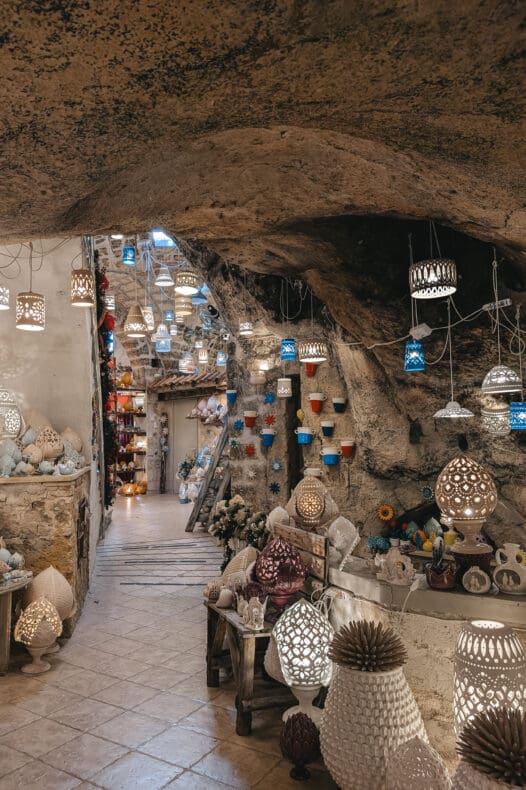
Grottaglie turned out to be one of our favorite hidden gems in Puglia. Nestled a bit inland between Taranto and the Valle d’Itria, this small town has built its reputation on a centuries-old ceramics tradition. Thanks to the rich local clay, pottery has flourished here since ancient times, and it’s still very much alive today. In the Quartiere delle Ceramiche, set at the base of the old town, dozens of workshops and studios display a vibrant array of ceramics: colorful plates, pumo (symbolic good luck flowers), tableware, vases, and even large-scale ceramic art installations.
What makes Grottaglie truly unique is that many of these workshops are carved directly into caves. As you wander from one grotto to the next, you’ll see artisans shaping their creations by hand and firing them right on the spot. Many of the studios welcome visitors to step inside, offering workshops or simply letting you watch as the potters bring their pieces to life, a wonderful way to experience this ancient craft up close. The old town itself may be small, but it’s full of charm, with colorful street art, balconies decorated with pumo, and quiet, meandering alleyways. Grottaglie has a creative, authentic feel that sets it apart from much of the region.
Where to stay: While Grottaglie can easily be explored in an afternoon — especially if you’re passing through on your way to Matera — it’s well worth staying overnight to soak in the atmosphere. For a comfortable stay, book a room at MONUN Hotel or the delightful B&B Le Maioliche.

#13 Matera
Matera may officially sit within the Basilicata region, but it’s almost always included in road trips through Puglia, and for good reason. This is easily one of the most fascinating and unique cities in all of Italy. Matera is world-famous for its Sassi: ancient cave dwellings carved directly into the soft limestone cliffs. These homes stretch across two main districts, clinging to the steep walls of a deep gorge, while the city’s cathedral crowns the plateau above, watching over the timeless landscape. The view is absolutely breathtaking, especially at sunset when the golden light washes over the stone and brings the city to life.
Until the mid-20th century, people still lived here in harsh and impoverished conditions. Eventually, the government relocated the residents, and for many years, Matera was left almost completely abandoned. It wasn’t until the 1990s that serious restoration efforts began, breathing new life into this remarkable place. Today, many of the ancient cave dwellings have been lovingly restored and transformed into boutique hotels, atmospheric restaurants, and fascinating museums.
Beyond the Sassi, Matera is also home to a collection of extraordinary rock churches, their interiors adorned with centuries-old frescoes that tell stories of faith and history. In 1993, Matera earned a well-deserved place on the UNESCO World Heritage list, and in 2019, it was named European Capital of Culture. Matera is raw, captivating, and truly unlike anywhere else in Italy.
Where to stay: Matera offers plenty of unique accommodations. For a memorable stay in the heart of history, book a room at L’Hotel In Pietra, Il Belvedere, or Hotel San Giorgio.

#14 Back to Bari
After a journey through whitewashed villages, baroque cities, scenic coastal roads, and breathtaking cliffs, Bari makes for the perfect place to end your Puglia road trip. While it might be tempting to head straight to the airport from Matera, Bari is well worth a final stop to soak up a bit more of southern Italy’s charm. Take one last wander through Bari Vecchia’s maze of narrow streets, pass by the historic basilica and the old castle, or settle into a cozy trattoria for one more plate of orecchiette before you say goodbye.
If you have a little extra time before your flight, head to Pane e Pomodoro Beach for a peaceful moment by the sea, enjoy a stroll along the elegant Lungomare promenade, or browse the modern city’s shopping streets for some final souvenirs to take home.