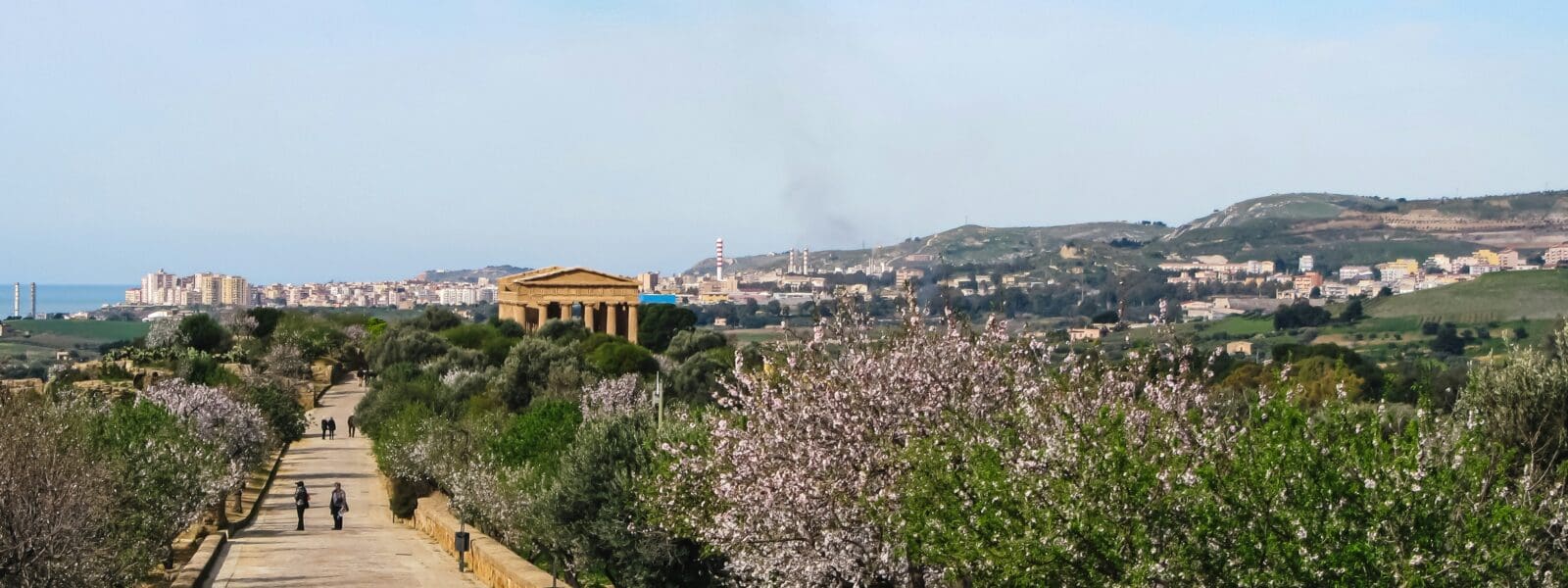
Sicily is filled with historical treasures, but nowhere does the ancient world feel as alive as it does in Agrigento. Here, you can wander among temples that have stood proudly for 2,500 years, explore ruins where one of the most powerful cities of the Greek world once thrived, and stroll through narrow alleyways where the rhythm of everyday Sicilian life gently carries on.
The Valley of the Temples is, without question, the highlight of it all: a sprawling landscape dotted with breathtaking structures, from the remarkably well-preserved Temple of Concordia to the massive, scattered remains of the Temple of Zeus. But Agrigento is much more than just a journey into history. Along the coast, the brilliant white cliffs of Scala dei Turchi rise dramatically from the turquoise sea, while the picturesque old town invites you to lose yourself in its winding streets and inviting little squares.
In this blog, you’ll find everything you need to plan your visit: from the most beautiful temples and hidden gems to practical tips that will help you make the very most of your time in this unforgettable destination.

The Temple Valley of Sicily
In the hills of Agrigento lies one of Sicily’s most breathtaking landmarks: the Valley of the Temples. Despite its name, it’s not a valley in the usual sense, but rather a vast archaeological park filled with ancient temples, crumbling ruins, and remnants of what was once one of the most powerful cities of the ancient world. As you wander through the site, you’ll pass towering columns that have stood for centuries, scattered fragments of colossal statues, and follow paths once walked by Greek priests, Roman soldiers, and medieval travelers.
The temples were built between the 6th and 5th centuries BC, during the golden age of the ancient city of Akragas. Some, like the Temple of Concordia, have survived almost perfectly intact, while others, such as the Temple of Zeus, now lie in an awe-inspiring tangle of enormous stone blocks. But it’s exactly this mix of remarkably preserved monuments and dramatic ruins that makes the Valley of the Temples so captivating.
Brief History of Akragas
Akragas was founded around 580 BC by settlers from Gela and Rhodes. Its location couldn’t have been better: a ridge with rich, fertile soil and a river that flowed straight into the sea. The city flourished rapidly, growing into one of the wealthiest and most powerful settlements in the western Greek world. Aristocrats lived in elegant marble villas, horses were bred for the Olympic Games, and magnificent temples rose to rival those of Athens.
By the 5th century BC, Akragas was at the very peak of its power and glory. Under the rule of the tyrant Theron, the city expanded even further, and its most spectacular temples were built. Following a decisive victory over the Carthaginians at the Battle of Himera in 480 BC, great wealth poured into the city, making it possible to start work on the colossal Temple of Zeus.
But fame and fortune often invite danger. In 406 BC, the Carthaginians launched a brutal counterattack, completely destroying Akragas. The city was plundered, its temples were set ablaze, and the population was either deported or killed. Although Akragas was later rebuilt — first by the Carthaginians themselves and later by the Romans — it never managed to reclaim its former glory. The once-great temples slowly fell into ruin, earthquakes caused further damage, and much of the stone was reused for new buildings over the centuries.
For hundreds of years, the remains of the city lay hidden beneath layers of earth and rubble, until archaeologists in the 19th and 20th centuries began carefully uncovering its long-lost treasures. Today, the Valley of the Temples stands as one of the most remarkable surviving sites of the ancient Greek world, a place where you can quite literally walk through history.


The Most Beautiful Temples of Akragas
Scattered throughout the ruins of the Valley of the Temples are the remains of seven magnificent temples. Some still stand impressively tall, while others have crumbled into a maze of stone blocks and fallen columns. Yet they all share one thing: each one tells the story of a city that once dared to rival the greatness of its gods.
Temple of Juno
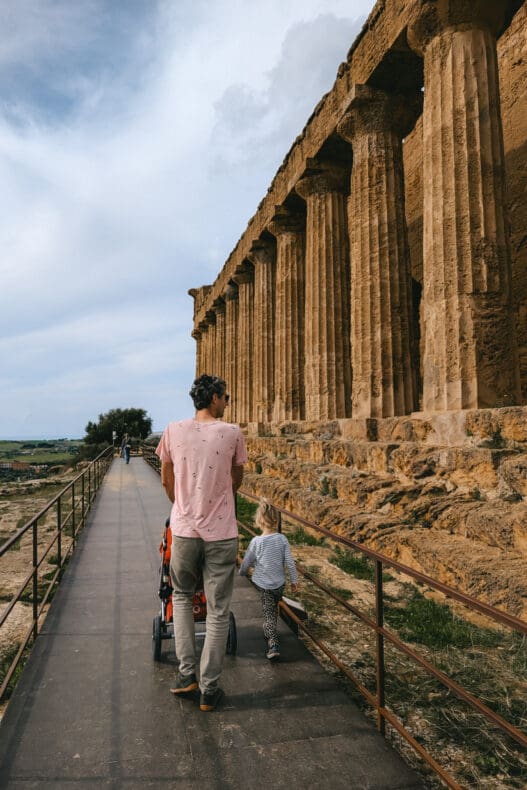
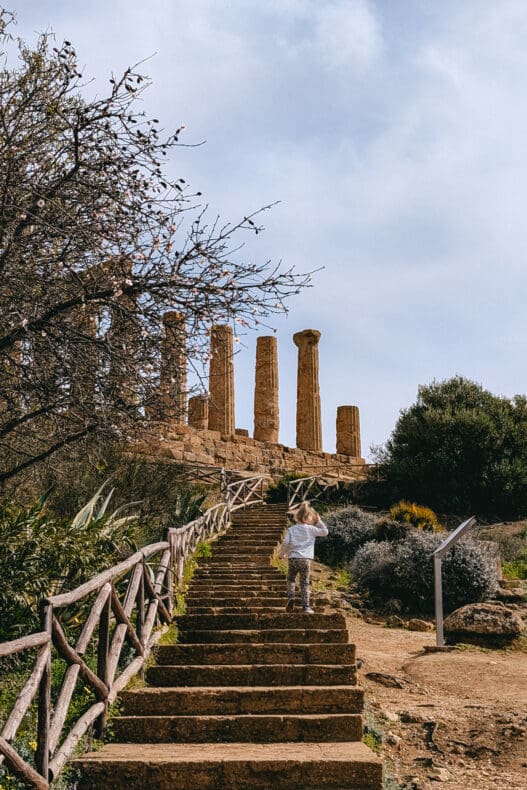
At the highest point of the Valley of the Temples, the Temple of Juno proudly towers above the rest. The name, however, comes from a misunderstanding: the temple was most likely dedicated to Hera, the Greek goddess of marriage, but was later mistakenly linked to her Roman counterpart, Juno. What is certain, though, is that this was one of the city’s most important sanctuaries.
The temple was built around 450 BC and originally featured six columns on each short side and thirteen along the longer sides. Many of these columns still stand today, though time has left its mark. If you look closely, you’ll see some of the stones are blackened. These are the enduring scars from the Carthaginian attack in 406 BC, when the temple was set on fire.
In front of the temple stands the ancient altar where offerings were once made. A staircase of ten steps leads up to the platform where these sacred rituals took place. The temple’s elevated position makes it even more special: from here, you can enjoy a panoramic view over the entire valley and the shimmering Mediterranean Sea.

Temple of Concordia
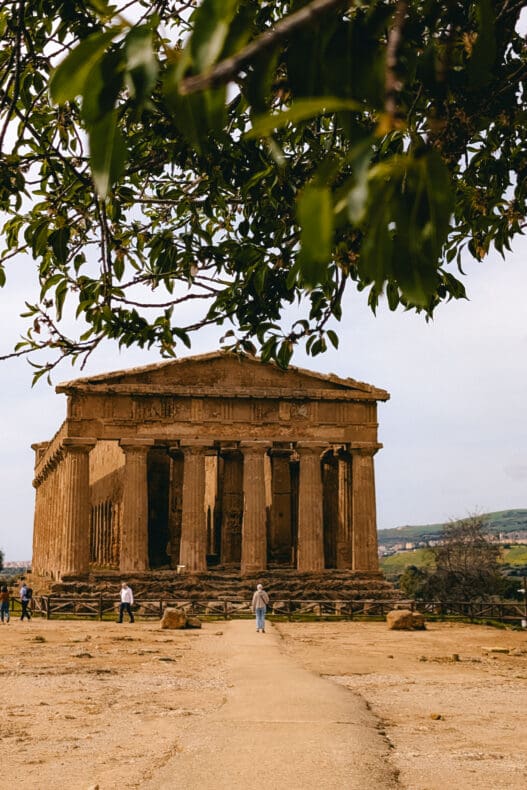
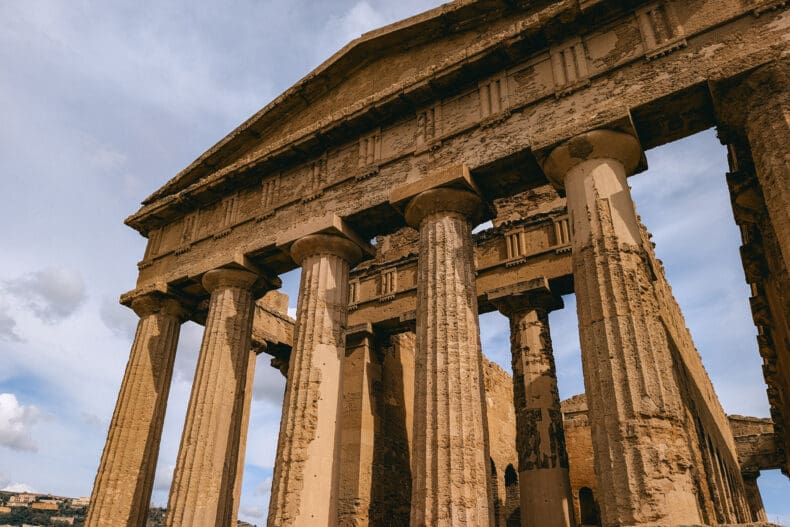
This is the true centerpiece of the Valley and one of the best-preserved Greek temples in the world. While most temples have crumbled over the centuries, the Temple of Concordia still stands almost completely intact. Its row of sturdy columns, a roof that remains largely preserved, and its perfect spot on the ridge make it feel as if you’re stepping into a time capsule, transported straight back to the 5th century BC.
The name ‘Concordia’ is actually a coincidence. In the 16th century, a Roman inscription was found bearing the word concordia, and the temple was named after it. However, no one truly knows which god it was originally dedicated to. The temple’s remarkable state of preservation is thanks to the early Christians. In the 6th century AD, the temple was converted into a church, which ultimately spared it from destruction.
Temple of Hercules
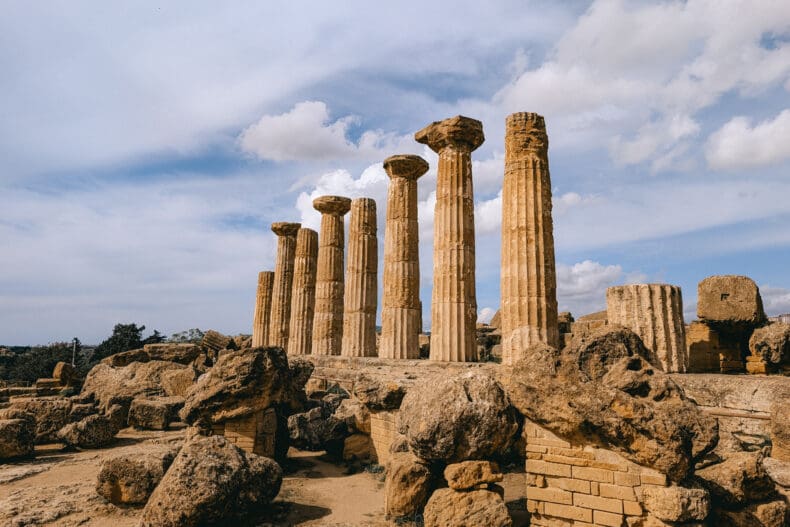
The oldest and perhaps most rugged temple in the Valley is the Temple of Herakles (or Heracles, as the Greeks called him). Built in the 6th century BC, it was one of the most important sanctuaries of Akragas. Herakles was the legendary Greek hero, renowned for his twelve labors and extraordinary strength.
Of the original 38 columns, eight still stand today, having been carefully re-erected in the 20th century. The rest lie scattered across the ground in a dramatic display of fallen grandeur. According to the historian Diodorus Siculus, a famous statue of Herakles once stood here, where pilgrims would bring offerings, hoping to receive his strength and protection.
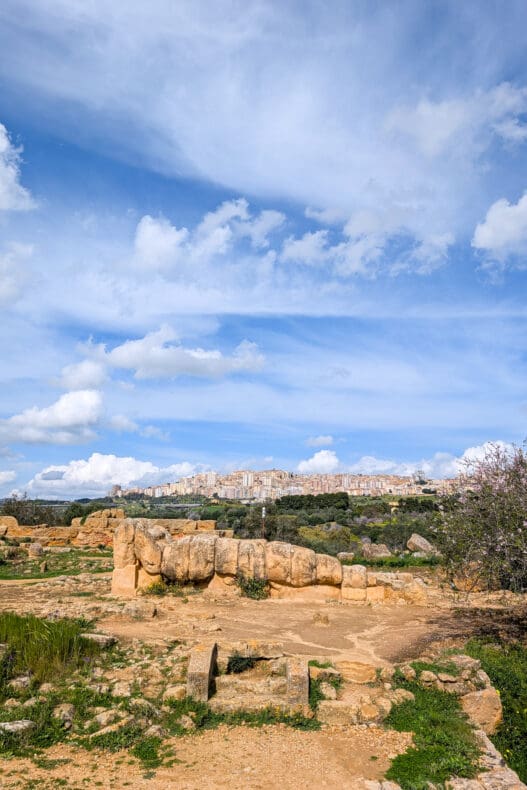
Temple of Zeus and the Reclining Giant
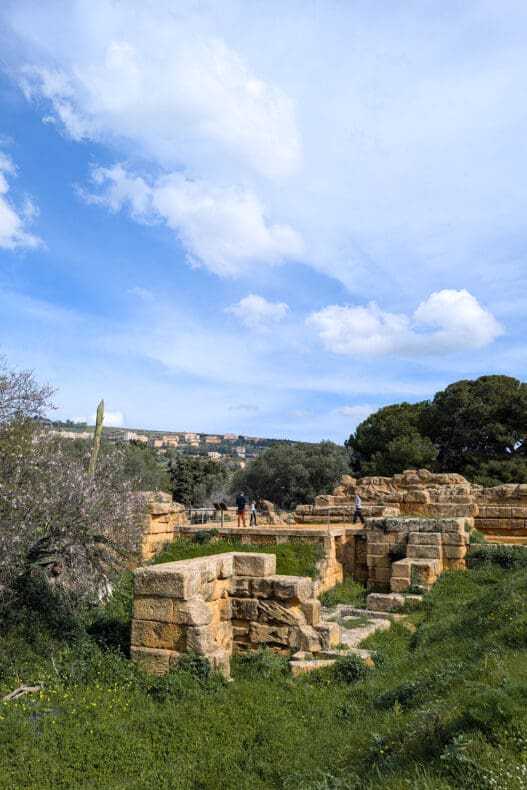
This temple was the largest in the entire Valley, and even one of the largest in the entire Greek world. Built after the victory over the Carthaginians in 480 BC, it was intended to showcase the grandeur of Akragas. Ironically, though, it was never completed.
What made this temple especially remarkable were the Telamons: gigantic stone figures, each about eight meters tall, that served as pillars to support the roof. These mythological figures — half man, half column — gave the temple a truly distinctive appearance. Today, most of the Telamons lie scattered in fragments among the ruins. At the Archaeological Museum of Agrigento, you can see a reconstructed Telamon, which gives a real sense of how massive these figures once were.
Over the centuries, much of the temple’s stone was repurposed for other uses. In the 18th century, large sections were even used to help build the harbor of Porto Empedocle. Today, the temple remains a vast field of massive stone blocks, an impressive sea of ruins that still hints at the immense scale this structure once had.
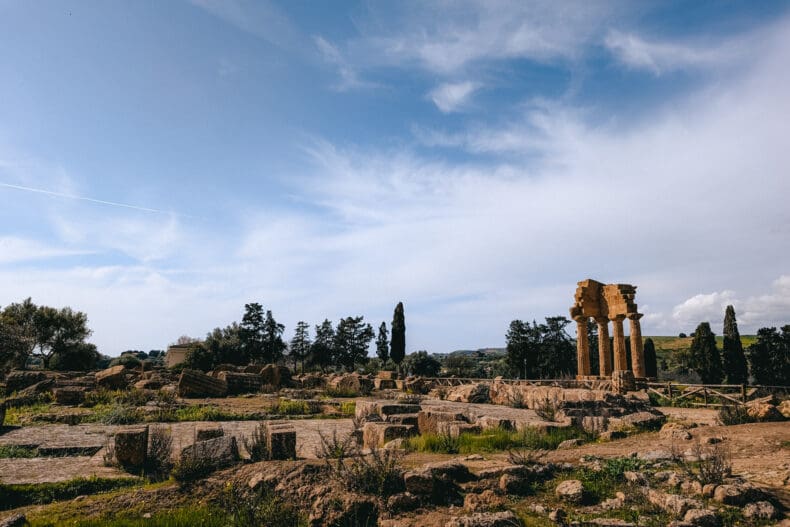
Temple of Castor and Pollux (Dioscuri)
The four iconic columns of the Temple of Castor and Pollux have become the symbol of Agrigento, but they are actually a reconstruction. In the 19th century, these columns were reassembled from ancient stones, though no one knows exactly how the original temple once looked.
Castor and Pollux, the Dioscuri, were twin brothers from Greek mythology and the protectors of travelers and sailors. Their temple, built in the 5th century BC, stood within a sacred area dedicated to Demeter and Persephone, the goddesses of fertility and the underworld.
Although little remains of the temple, it still has a striking presence. The four columns rise like a rugged fragment of the past, creating one of the most photographed scenes in the Valley.
Temple of Demeter
Tucked against a rocky cliff sits the Temple of Demeter, one of the lesser-known, yet still captivating temples in the Valley. Built in the 6th century BC, it was once one of the city’s most significant sanctuaries. Demeter, the goddess of agriculture and the harvest, had her temple placed strategically near the fertile fields that surrounded Akragas.
What makes this temple especially unique is that it was later transformed into a Christian church. In the 12th century, a Norman chapel was constructed over the ruins, and parts of it can still be seen today.
Close by is an underground sanctuary, the Santuario Rupestre, which was likely used for rituals dedicated to Demeter and her daughter Persephone. This site served as an important center for fertility cults and remains one of the oldest religious locations in the Valley.
Other Attractions in the Valley of the Temples
While the temples may steal the spotlight in the Valley of the Temples, there is so much more to uncover. From a hidden garden bursting with citrus trees to a mysterious tomb, and a museum that breathes life back into the ancient city. These places show that Akragas was once far more than simply a gathering of sanctuaries.
Giardino della Kolymbetra ( Garden of Kolymbetra )
In the heart of the Valley of the Temples lies an unexpected surprise: a lush garden that feels like a hidden paradise. The Giardino della Kolymbetra was originally a vast water reservoir, built by the Greeks to supply the city with fresh water. The historian Diodorus Siculus once wrote that a giant pool filled with fish and surrounded by thriving vegetation stood here. But as Akragas declined, the reservoir dried up, and for centuries, the area was forgotten.
In the 12th century, farmers began planting citrus and olive trees, and since 1999, the garden has been lovingly cared for by the Fondo Ambiente Italiano (FAI). Today, visitors can stroll beneath fragrant orange trees, ancient olive groves, and clusters of Mediterranean herbs. It’s one of the greenest and most tranquil corners of the Valley, the perfect place to pause and relax after exploring the temples. A separate ticket is required to enter the gardens.
Tomb of Terone
At the edge of the Valley, near the ancient city walls of Akragas, stands a mysterious stone monument: the Tomba di Terone. Its name suggests that the famous tyrant Theron is buried here, but in reality, it’s a Roman memorial dating back to the first century BC. It was most likely built to honor fallen soldiers.
The structure has a distinctive pyramid-like shape, crafted from massive blocks of tuff stone. No one knows exactly what it originally looked like or whether anyone was ever actually buried inside, but the tomb carries an undeniable air of mystery.
Pietro Griffo Archaeological Museum
Want to make your visit to the Valley of the Temples truly complete? Then a stop at the Pietro Griffo Archaeological Museum is highly recommended. Located just outside the Valley, this museum transports you back to Akragas as it was 2,500 years ago, offering a fascinating glimpse into how the city once looked.
Inside, you’ll find everything archaeologists have unearthed in and around the temples: pottery, jewelry, weapons, and statues. But the true centerpiece of the collection is a colossal Telamon; a stone giant standing eight meters tall, which once helped support one of the columns of the Temple of Zeus. Seeing it displayed here gives you a real sense of just how massive and awe-inspiring that temple once was.
The museum vividly brings the lost world of Akragas back to life. You’ll get a clear impression of what the temples looked like when they were still active, complete with statues, offerings, and priests moving gracefully among the towering columns.
Villa Aurea
In the heart of the Valley of the Temples stands a striking white house: Villa Aurea. This was once the home of Sir Alexander Hardcastle, a British aristocrat and amateur archaeologist who, in the early 20th century, fell in love with the Valley and chose to make it his home.
Hardcastle personally financed much of the excavation and restoration work. Thanks to his dedication, the first columns of the Temple of Herakles were re-erected, and he played a crucial role in bringing several other temples back into view. But his deep devotion to the Valley ultimately became his undoing: after the stock market crash of 1929, he went bankrupt and was eventually admitted to a psychiatric clinic, where he passed away not long afterward.
Today, Villa Aurea operates as a small museum, and during our visit in 2025, it was hosting an exhibition of contemporary art. While we do appreciate modern art, it felt slightly out of place against the timeless backdrop of the ancient temples. The house itself is simple and modest, but the story behind it adds a fascinating chapter to the modern history of this ancient landscape.
The Old Gorge and the Water Reservoir of Akragas
Next to the ruins of the Valley of the Temples lies a deep, natural ravine that once played a crucial role in Akragas’ ancient water system. Even in antiquity, Sicilian summers were as hot as they are today, and without a reliable water source, life in the city would have been impossible. The Greeks tackled this challenge by building an ingenious network of underground aqueducts and reservoirs, with this ravine serving as one of the main collection points.
Water flowed into the area through a system of channels that gathered both rainwater and groundwater, supplying the city with its much-needed water. The reservoir also helped irrigate the surrounding farmland and may even have provided water for the temples themselves. According to some accounts, the ravine was further deepened in the fifth century BC by Carthaginian prisoners of war after their defeat by the Greeks.
When Akragas fell into decline, the reservoir was abandoned, and over time, nature slowly reclaimed the landscape. Today, it remains a dramatic spot where the natural world has erased much of its man-made past. The steep cliffs, shaped by centuries of erosion, offer a fascinating glimpse into how ancient engineers once worked in harmony with the environment. The ravine sits close to the Giardino della Kolymbetra, a garden that was partially created on top of these old waterworks.
The Bronze Statue of Icarus
At the heart of the Valley of the Temples lies one of Agrigento’s most iconic landmarks: a giant bronze statue of Icarus, sprawled across the ground in front of the valley’s best-preserved temple. Though the sculpture is a modern addition, it draws heavily from Greek mythology and serves as a poignant echo of Akragas’ own dramatic fall.
Icarus was the son of Daedalus, the legendary inventor who crafted wings from wax and feathers so they could escape from Crete. But filled with pride and daring, Icarus flew too close to the sun. The heat melted the wax, and he plunged into the sea. The statue, with its outstretched limbs and broken wings, reflects not only Icarus’s tragic fate but also the downfall of Akragas — once a flourishing metropolis of wealth and beauty, eventually reduced to ruins by the ravages of war.
The sculpture was placed here in 2011 by Polish artist Igor Mitoraj, renowned for his monumental works that blend classical elegance with fractured, haunting forms. Set dramatically in front of the Temple of Concordia, it has become one of the most photographed and memorable sights in the entire valley. There lies Icarus — fallen, yet still striking — a powerful reminder of the fleeting nature of even the greatest civilizations.
Practical Tips for your Visit to the Temple Valley
The Valley of the Temples is absolutely breathtaking, but visiting it means a long walk across open terrain, often right under the scorching sun. If you don’t want to find yourself drained halfway through your visit, a little preparation can make all the difference. With these tips, you’ll enjoy your time to the fullest, without desperately searching for air conditioning and a cold drink after just an hour.
Buy your tickets online in advance. This not only saves you from standing in line at the entrance but often shaves a few euros off the price as well. You can also opt for combination tickets that include access to the Archaeological Museum and the botanical garden, both highly recommended and well worth adding to your visit.
Plan your timing carefully. Did you know the Valley is also open in the evenings? During the day, it can get unbearably hot and crowded, but in the evening, the Valley transforms into something almost magical. The temples are beautifully lit, and the cooler temperatures make for a far more comfortable experience. The Temple of Concordia and the Temple of Juno are especially stunning when illuminated after dark. Just make sure to check the opening hours beforehand, as they vary depending on the season.
Think carefully about where you want to start your walk. The Valley is built on a hillside and has two main entrances. If you start at the eastern entrance, you’ll see the best-preserved temples first and then work your way downhill, where the ruins gradually become more scattered. While this order may feel a little backwards in terms of building up excitement, it does mean you won’t have to face a steep climb at the end of your tour. If you start at the western entrance, your route builds up toward the highlights, but you’ll need to walk uphill.
Consider taking a taxi or shuttle bus. The distance is quite significant, especially during the hot summer months, and the paths can be dusty and uneven. You can take a taxi to the upper entrance, which saves you from walking back and forth. You can either do this at the start, allowing for a mostly downhill route, or at the end, so you don’t have to trek back uphill.
Do yourself a favor and dress smartly for your visit. Shade is scarce, so a hat or cap and a good layer of sunscreen are absolute essentials. Make sure to wear comfortable shoes, as you’ll be walking mostly on sandy paths and uneven stone surfaces. And don’t forget to bring plenty of water. There are only a handful of places to buy drinks, and you don’t want thirst to cut your visit short after just an hour.
With a bit of preparation, your trip to the Valley of the Temples becomes much more enjoyable, letting you focus on the stunning ancient ruins instead of struggling with the heat.
Other Places to Visit in Agrigento
While the Valley of the Temples is undoubtedly the main highlight, Agrigento has so much more waiting to be discovered. From striking coastal rock formations to a delightful historic center filled with winding alleyways and an authentic local vibe, the city offers far more than just its ancient ruins. Here are a few places you won’t want to miss.
Scala dei Turchi, the Iconic White Cliffs of Sicily
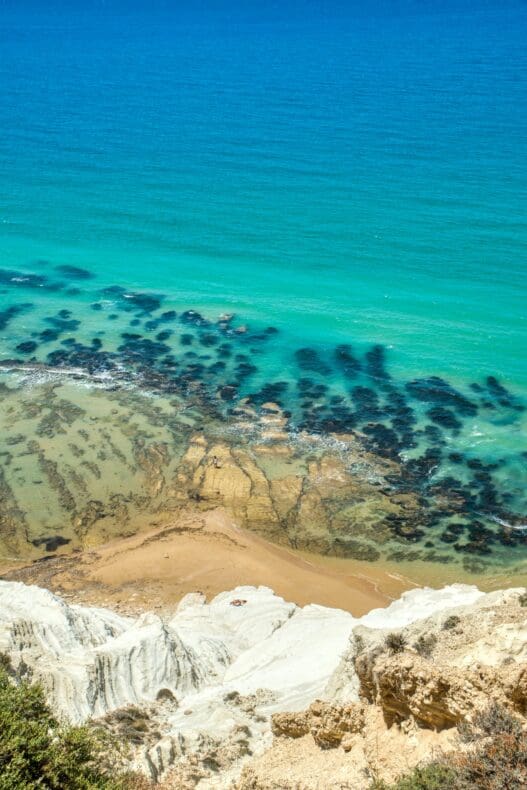
Sicily offers plenty of beaches, but none quite as breathtaking as the Scala dei Turchi. Imagine a giant staircase of pure white limestone, gently cascading into the sparkling sea. Its name, which means “Stair of the Turks,” refers to pirates who, according to legend, once landed here. Whether the story is true or not remains uncertain, but it adds a touch of mystery to this already extraordinary place.
The limestone is soft and smooth beneath your feet, making it feel as though you’re walking on polished marble. As the sun sets, the scene turns almost otherworldly: the white stone blushes with soft pink hues, while the water deepens into a vivid, rich blue. It’s easy to see why the Scala dei Turchi has become one of Sicily’s most visited spots. But that popularity comes at a price. The secret has long been out. Even in the off-season, the area draws plenty of visitors, and in summer, it can feel like a bustling tourist magnet where you’re constantly weaving through crowds and selfie sticks.
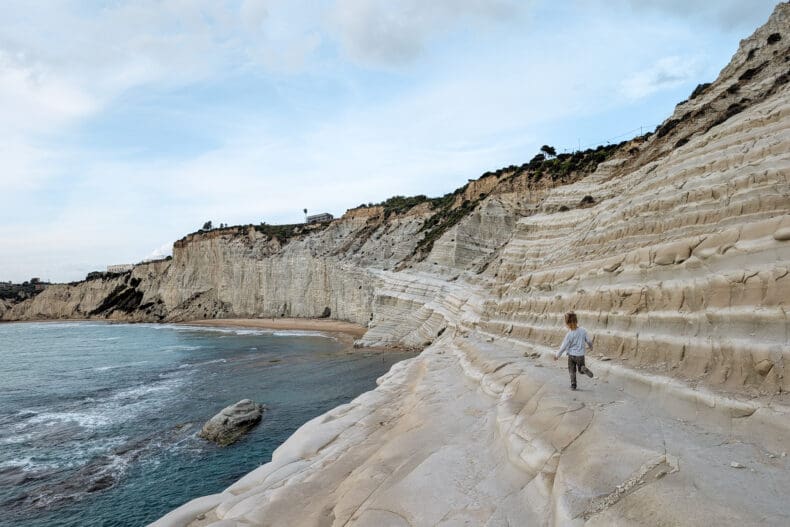
Punta Bianca, the Unknown Alternative
Luckily, there’s an alternative. A little further along the coast lies Punta Bianca — every bit as beautiful, but far less crowded. Here, you’ll find the same dazzling white rock formations, but without the constant stream of visitors. Instead of the long, wide staircase of Scala dei Turchi, Punta Bianca offers a gently rolling, almost wave-like landscape of limestone. The most photogenic feature? An abandoned stone house perched dramatically on the cliff, offering views that seem lifted straight from a movie scene.
The road to get there is a bit rough, requiring you to navigate part of the way along a dirt track, but that only adds to the sense of adventure. This is a perfect spot for those seeking peace and quiet. If you have enough time, visit both and decide for yourself which one steals your heart. But if you’re after the magic of the white cliffs without the crowds, Punta Bianca is the place to be.

Via Atenea and the Old Center of Agrigento
After a day spent exploring temples and ruins, there’s no better way to reconnect with the present than by wandering through Agrigento’s old town. This city isn’t polished or glamorous; instead, it offers a wonderful blend of vibrant energy and rustic charm. Narrow alleyways twist and turn like a maze, tiny balconies overflow with hanging laundry, and tucked-away squares reveal everyday Sicilian life at its most genuine.
At the heart of the city is Via Atenea, the main street lined with shops, cafés, and restaurants. During the day, locals go about their errands, sip coffee, and chat on the sidewalks. In the evening, it transforms into the perfect spot for an aperitivo, as the soft glow of streetlights and the buzz of conversation bring the city to life. But the true character of Agrigento is hidden in the smaller streets. Steep stairways lead to scenic viewpoints, fragments of ancient city walls, and quiet churches that few tourists ever find.
One of the highlights is the Chiesa di Santa Maria dei Greci, a church literally built on the remains of a Greek temple. Inside, you can still see the original temple columns — an extraordinary blend of ancient history layered beneath medieval stonework. Higher up stands Agrigento’s cathedral, an impressive mix of Norman, Gothic, and Baroque styles. The climb may leave you catching your breath, but the sweeping views over the city and surrounding hills more than make up for it.
Agrigento feels like a place that isn’t trying to impress, and that’s exactly what gives it its charm. It’s not a polished postcard, but a living, breathing city where you can truly experience Sicilian life — with music floating from open windows, the sweet scent of freshly baked cannoli in the air, and quiet alleyways where you may find yourself entirely alone.