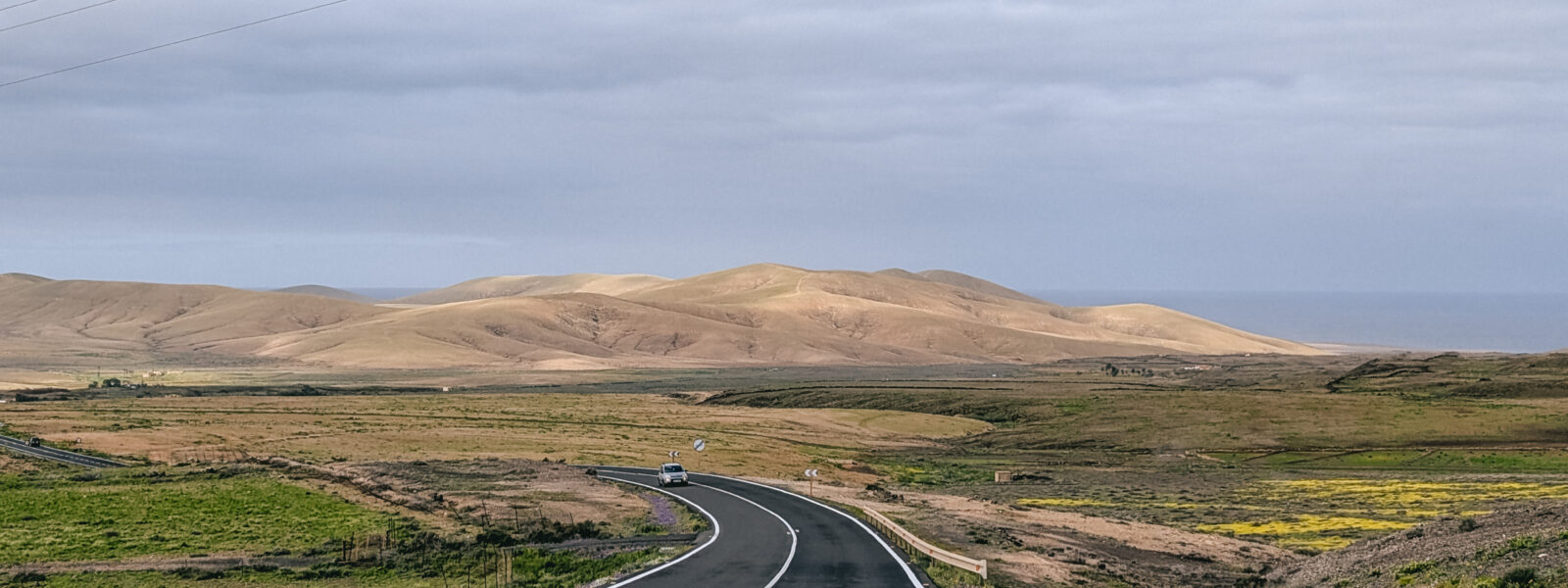
While it was cold and wet back home in the Netherlands, we were driving our own campervan past black-sand beaches, up volcanic slopes and through endless dunes. For four months our family travelled around the Canary Islands: Tenerife, La Palma, La Gomera, Gran Canaria, Fuerteventura and Lanzarote.
Taking a campervan to the Canary Islands is not something you do on a whim. You spend almost two days at sea, you work out all over again on every island where you can and can’t park overnight, and you swap your gas bottle without a hitch on one island only to run out of gas on the next. But winter sun, wide open space and your own little home on wheels make up for a lot.
In this guide we share how to get there, where you can stay overnight, how water, waste and gas work, which roads are the most scenic and which island is the best for campervans. Don’t have months to spare? Then you can also rent a campervan on the islands and get going straight away.
No time for the long ferry crossing? Fly to Tenerife or Gran Canaria and pick up a campervan there. With Campervan Planet you can compare different rental companies on the islands, from compact vans to motorhomes with their own bathroom.
→ Compare campervan rentals in the Canary Islands
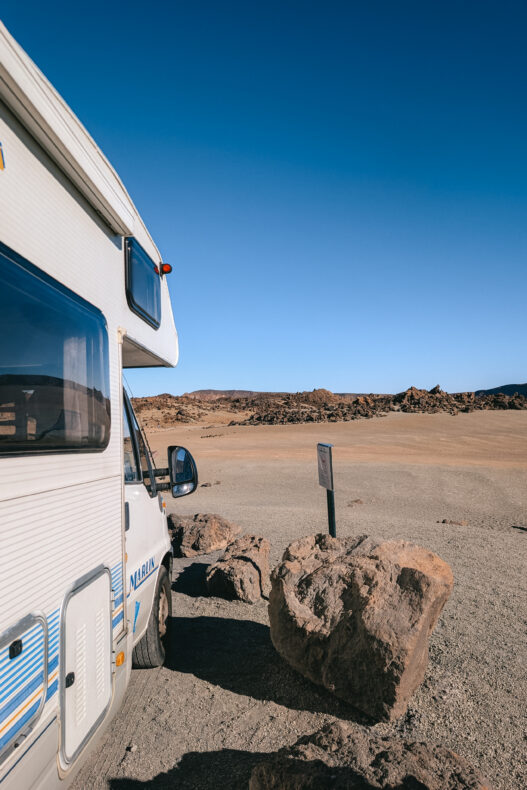
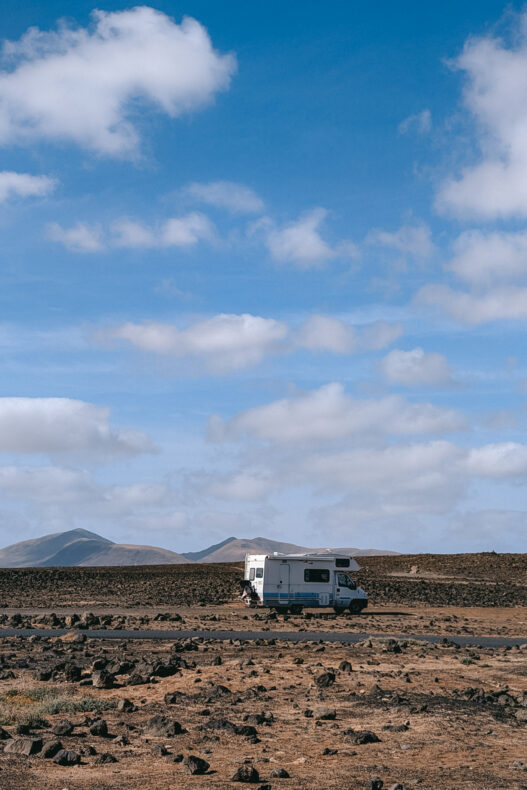
Our experience: four months in a campervan in the Canary Islands
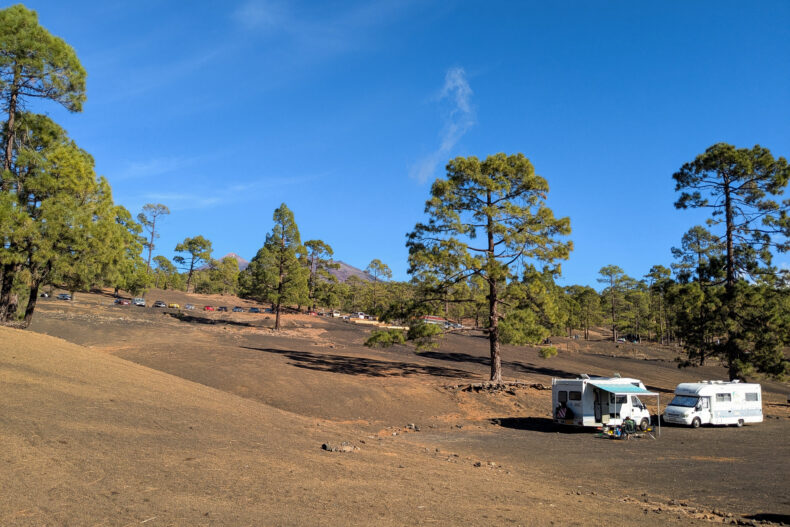
We were on the road for six months in total, four of them in the Canary Islands. We sailed from Cádiz and arrived on Tenerife. From there we took the ferry to La Palma and La Gomera, went back to Tenerife and spent the holidays on Gran Canaria. Then came Fuerteventura and finally Lanzarote, where the ferry took us back to mainland Spain. We stayed on each island for somewhere between two weeks and almost a month. Only La Palma and La Gomera got around ten days each: La Gomera because it is small, La Palma because of the rainy weather.
Was the long crossing and the steep ferry fare worth it? For us, yes. Because we stayed so long, renting a campervan would have cost far more, so the ferry was a sound investment for a long trip. And it is simply nice to sleep in your own camper, with your own things and the kids’ toys within reach. The winter weather did the rest: lying on the beach in the sun while it gets dark early back home never gets old.
Do know that the islands are really only suitable for self-sufficient campervans. You will hardly find electric hook-ups anywhere, not even at the official camping areas. We have solar panels, an inverter, our own bathroom and a gas-powered fridge, and we needed all of it.
How do you get to the Canary Islands with a campervan?
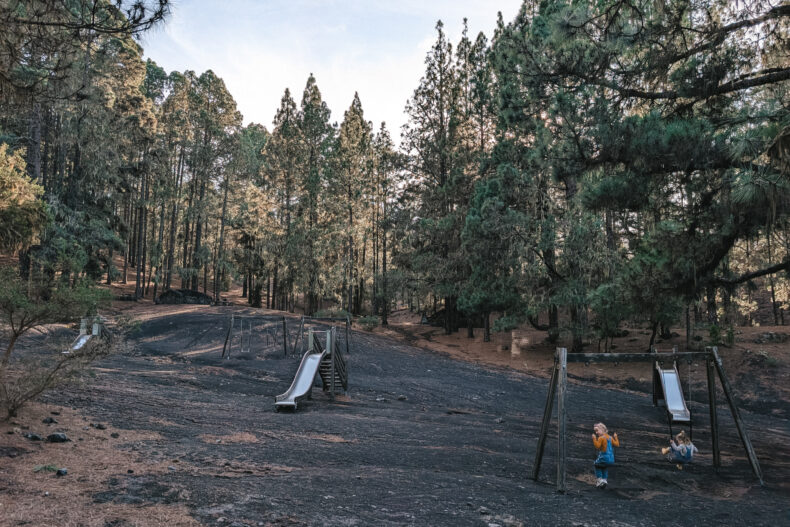
The Canary Islands are more than a thousand kilometres by sea from mainland Spain, so the only way to bring your campervan is by ferry. Two companies sail from mainland Spain and take campervans. We went both ways with Armas (now Baleària) from Cádiz. Fred. Olsen sails from Huelva to Tenerife and Gran Canaria. Expect a crossing of around one and a half to two days, depending on the route and the stops along the way. Our outbound trip from Cádiz to Tenerife was a long one, because the ferry called at every island in between.
The crossing is not cheap. Book the ferry to and from the mainland well in advance and go for a return ticket straight away: two separate one-way tickets turned out to be a lot more expensive for us. Around Black Friday there are sometimes big discounts. A family who did the trip the year before us got a great deal on the crossings between the islands that way. In our case the offer only applied to return tickets, and between the islands we only bought one-way tickets, so we simply paid full price.
Two days at sea with kids
With children, the crossing is hard work. We booked a cabin. It is pricey, but with young kids you really need a place to sleep and retreat to. On the outbound ferry there was a kids’ club at set times, with someone handing out colouring pages and playing with the children. The ferry on the way back was much better equipped, with a big indoor playground and a swimming pool that must be great in season (it was empty when we sailed).
Good to know: if you book a cabin, your meals in the restaurant are included.
Despite all the entertainment, the return trip was the toughest. There was a heavy swell, and while I always get seasick easily, this time even Sebastiaan was not feeling great. At times you no longer knew which way was up. If you are prone to seasickness, bring some medication and keep the sick bags within reach.
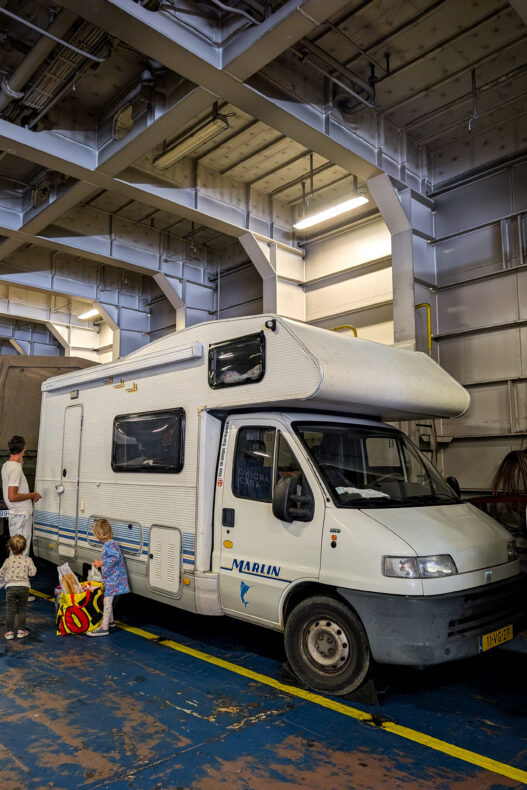
During the crossing your campervan is parked in the hold between the lorries. Don’t count on having power there. Our fridge runs on gas, so that was no problem for us.
Island hopping with a campervan
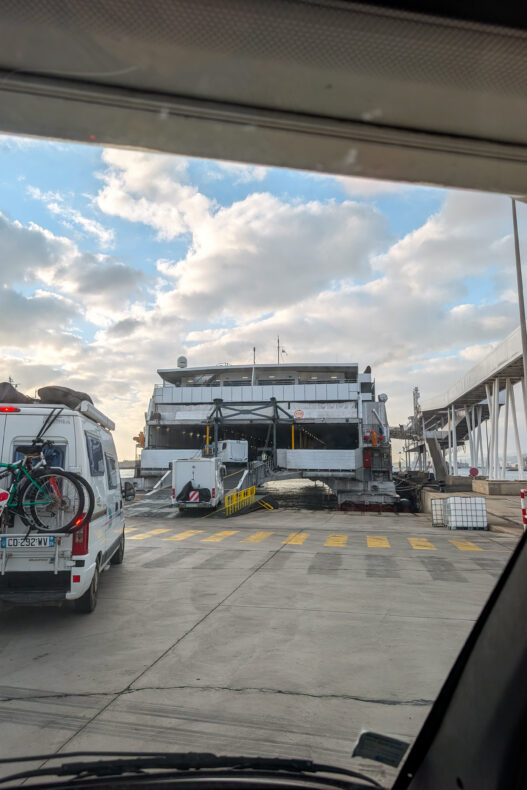
Once you are on the islands, getting from one to the next is much easier. So many ferries sail between the islands that you don’t need to plan anything. We usually booked a few days ahead, sometimes even later. Most of the time we sailed with Armas, and once with Fred. Olsen, from La Palma to La Gomera. We found that ferry a little more comfortable, although that is of course just one crossing.
Fun to know: the ferry from La Palma to La Gomera stops at Tenerife on the way. You stay on board as one of the few passengers, while crowds of day-trippers get on in Tenerife for a day out on La Gomera.
Which order should you choose? We started in the west (Tenerife, La Palma, La Gomera) and worked our way east via Gran Canaria to Fuerteventura and Lanzarote. Since the ferry to Cádiz also sails from Lanzarote, that was a logical route. Doing it the other way round works just as well.

Can you wild camp with a campervan in the Canary Islands?
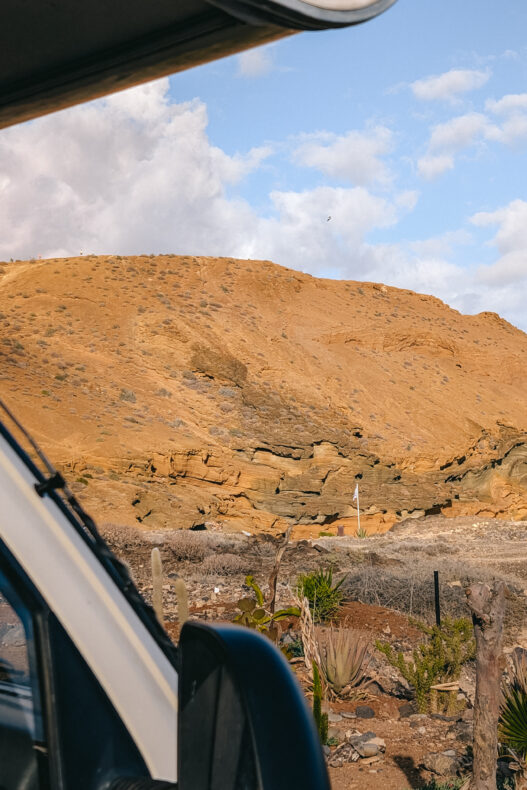
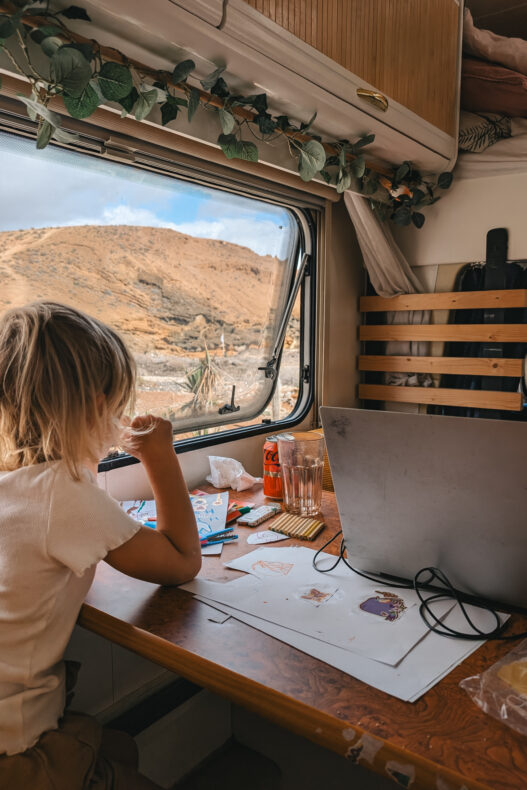
We spent most of our four months parked up freely: in car parks by beaches, in villages and in nature spots. To do that, it is important to understand the difference between parking and camping, because in Spain those are two very different things.
Parking means your campervan is legally parked in a spot where parking is allowed, just like an ordinary car. It stands on its own wheels (not on levelling blocks) and nothing sticks out of the vehicle. That even means you can’t open side windows that swing outwards. Inside, you are free to cook, eat and sleep, and pop-up roof vents are fine too. Under Spanish traffic rules, sleeping in a correctly parked campervan is not camping.
Camping starts as soon as you spread out beyond your van. Think of rolling out the awning, putting a table and chairs outside, lighting a barbecue or opening windows that swing outwards. Emptying water or waste counts too. That is only allowed in places meant for it: campsites, official camping areas and motorhome areas. Outside those places, this kind of camping behaviour is banned in the Canary Islands.
On top of that, local councils can set their own rules, such as a ban on campervans along the seafront or a maximum parking time. Nature areas often have stricter rules, and campervans may not be allowed to park there overnight. If you see a no-camping sign, respect it and find another spot. We never saw any enforcement ourselves, but we did see signs now and then, and then we simply drove on.
We found our spots with the Park4Night app. Always read the latest reviews before you park somewhere, because rules change and new signs can appear. Some of the places we stayed at are no longer listed.
→ Read our tips for free camping in Portugal too
Official camping areas and motorhome stopovers
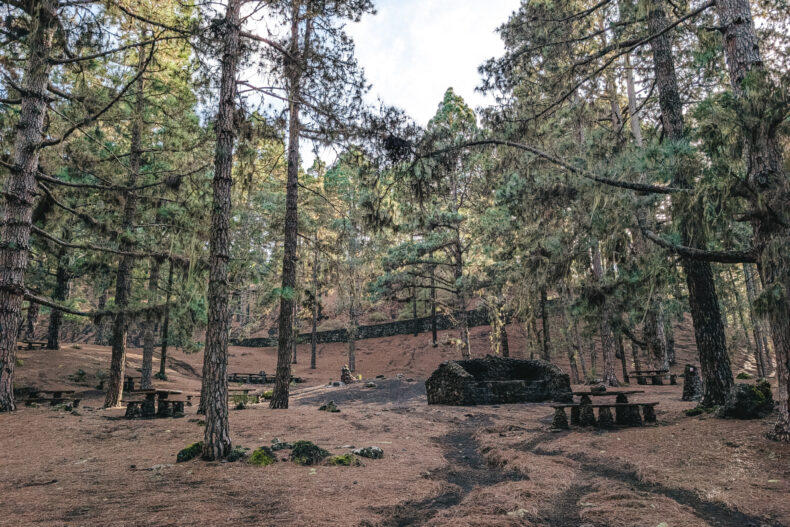
Besides parking up freely, there are official spots. On Tenerife and Gran Canaria the island councils run free camping areas in nature, usually recreation areas with picnic tables, barbecues and toilets. There is no electricity. You do need to get a permit in advance.
Camping areas on Tenerife
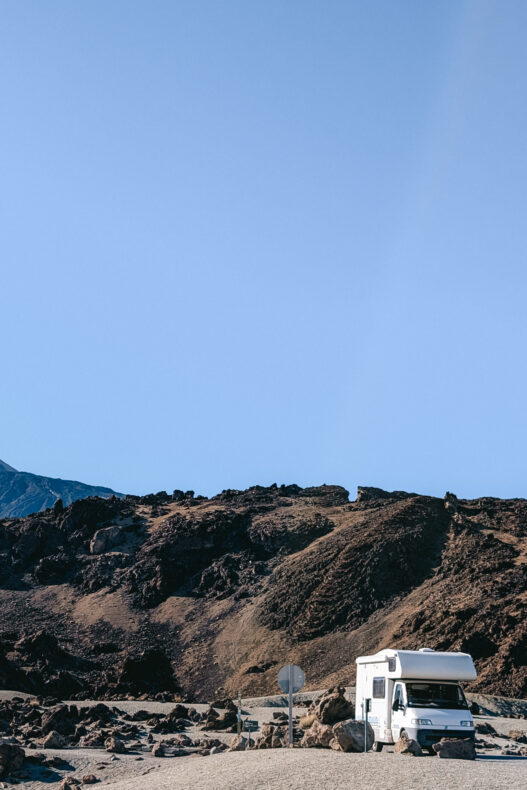
On Tenerife we stayed at all the official camping areas, and our favourites were the ones high up on the volcano. Sleeping above the clouds, in the silence of the pine forests and surrounded by volcanic rock formations, is something you won’t forget. There is no phone signal, so sort everything out beforehand.
You book through the Tenerife ON app or website. You can stay a maximum of seven days in the camping areas, in a row or added up, and after that you have to wait at least seven days. That applies to all areas combined, so you can’t book a week at Chío and then go straight on to a week at Las Lajas. You can book up to three weeks ahead. On Tenerife our permits were usually checked, too.
The camping areas were often fully booked and we had to plan our days around that, so it is best to book well in time. The annoying part is that many people don’t show up. More than once we had a camping area all to ourselves while the app said it was full. Because it is free, people seem to book easily and not cancel. If you can’t make it after all, please cancel so another campervan can have the spot.
We also liked the official motorhome stopovers at Playa de Las Teresitas and in Los Silos. Los Cristianos has one too, but it has little charm and was always packed with people staying for longer.
→ Read all about camping on El Teide in our travel guide
Camping areas on Gran Canaria
On Gran Canaria you apply for a permit on the Cabildo (island council) website, at least three days in advance. Campervans are only allowed in the areas designated for them; some are for tents only. Note that you can only apply for the same area again after fifteen days. So book all the nights you want in one go, because adding an extra night later won’t work. You can see the maximum number of nights in the booking system.
We didn’t like all of the official areas. A few were muddy and sloping. Our favourite was Corral de los Juncos, high in the mountains, with one of the most beautiful sunsets of the entire trip.

Motorhome stopovers on the other islands
On La Palma, La Gomera, Fuerteventura and Lanzarote you mostly park up freely, and there are only a handful of municipal car parks for campervans, often with a 72-hour limit. On La Gomera we stayed in designated spots in San Sebastián and Valle Gran Rey. The latter almost felt like a campervan village: plenty of people seemed to live there. On La Palma, Punta del Corcho near Barlovento is a free stopover with (paid) water and a waste disposal point. Fuerteventura has a free stopover at Betancuria, the only place on the island where we found electricity.
There are hardly any campsites. On La Palma we stayed at a campsite once, and on Fuerteventura there are none.

Water, waste and gas in the Canary Islands
Water and waste disposal
We filled up with water at petrol stations. We have a drinking water filter on the tap in our campervan, so we could drink it too. Many petrol stations also have a place to empty your tanks, usually for a small fee or free if you fill up there. Park4Night clearly shows which petrol stations offer this. There are also a few official disposal points, such as the one in Los Cristianos on Tenerife (a simple drain in the ground). Tenerife also has several free service points where you can fill up with water and empty your waste water. Fuerteventura has two free official disposal points, although they were seriously filthy.
Gas: how to sort out a Spanish gas bottle
Gas was the trickiest part of the trip. In Spain you can’t just buy a gas bottle: you need a Spanish address and a contract. Swapping an empty bottle for a full one is allowed, though. So before leaving home we bought an empty Spanish Repsol bottle second-hand online, and brought our Dutch bottle along as a spare.
On mainland Spain and Tenerife we swapped the Repsol bottle without any trouble, and Gran Canaria is no problem either. But on Fuerteventura and Lanzarote DISA is the only common supplier, and you can’t swap a Repsol bottle there. Both islands do have a place where you can get your bottle refilled: you drop it off and collect it a day later. That only works if your bottle has a clear inspection date on it. Our Repsol bottle turned out not to have one, while our Dutch bottle did. As a result we were without gas for a day, and luckily we could plug into the electricity at the Betancuria stopover that day.
Our tip: bring two bottles, including a Spanish one, and check beforehand that they have a clear inspection date.
Driving a campervan in the Canary Islands
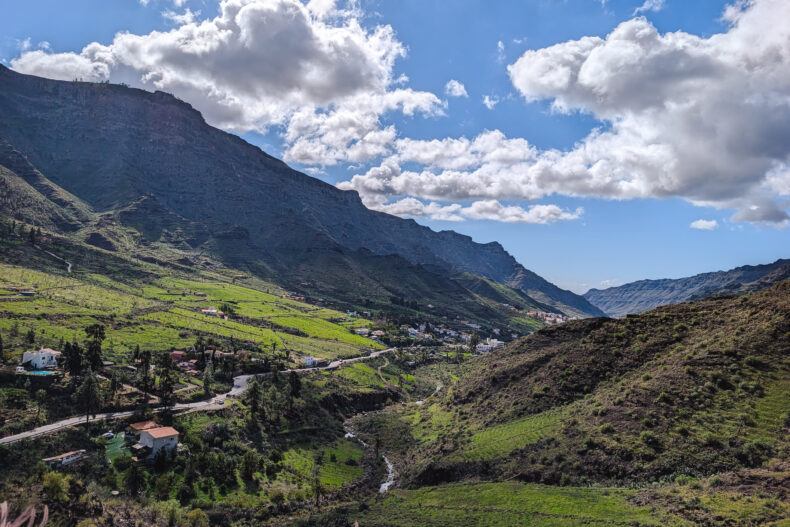
Our campervan is just over six metres long, a little longer with the kids’ bikes on the back, and that worked out fine. But our engine isn’t the strongest, and you notice that on some islands. Tenerife and La Palma are steep and winding. Climbing from Playa de Benijo back up into the Anaga mountains was a real struggle for the van, in low gear. So we always checked the gradient and width of the roads in advance, and sometimes skipped the narrowest mountain lanes. If you have a heavy campervan or a weak engine, plan your route carefully too.
Fuerteventura is much flatter and far more relaxed to drive. Only at the very southern tip of the Jandía peninsula is the road really bad and bumpy.
But the roads are often also the highlight of the whole trip. These were our favourites.
The most scenic roads on each island
#1 Tenerife: along the Anaga ridge
In the far north-east, the road winds along the ridge of the Anaga mountains, through laurel forest and past viewpoints such as Cruz del Carmen and Pico del Inglés. On clear days you can see the ocean on both sides of the island. From the ridge you can drive down to the black beaches of Benijo and Roque de las Bodegas. Gorgeous, but be aware that the road back up is steep.
#2 Tenerife: right through Teide National Park
Every road through Teide National Park is worth driving. You climb through pine forest until, above the tree line, you come out into a lunar landscape of lava fields and rock formations, with the summit of the Teide always in front of you. Take your time: you will want to stop at every viewpoint.
#3 La Palma: through the lava field of the new volcano
On La Palma a road runs straight through the lava field of the 2021 eruption. On both sides lie black, still young lava flows, and here and there you can see what is left of houses and roads. An impressive and sobering sight.
#4 La Palma: along the rim of the Caldera de Taburiente
The road up to the Roque de los Muchachos, the highest point of La Palma, takes you along the rim of the huge Caldera de Taburiente crater. At the top are the observatories, and you look straight down into the depths. It is a long climb with lots of bends, so take it slowly.
#5 La Gomera: the loop around the island
La Gomera is small, but every road twists through deep valleys, past palm terraces and through the misty laurel forest of Garajonay National Park. Our favourite stretch was the hairpin descent to Valle Gran Rey. Drive the whole loop and you will see the island at its best.
#6 Gran Canaria: the west coast from Agaete to Mogán
The road along the west coast, from Agaete via La Aldea de San Nicolás to Mogán, is one of the most beautiful routes in the Canary Islands. You drive high along steep cliffs, with the ocean far below and, on clear days, Tenerife on the horizon. Don’t be in a hurry, as there are plenty of bends.
#7 Gran Canaria: the central mountains and the road from Agüimes
The roads high in the mountains at the heart of Gran Canaria, around Roque Nublo and Tejeda, are stunning too. Our favourite was the route from Agüimes past La Fortaleza, a rock formation that was once a stronghold of the island’s original inhabitants, and further up into the mountains.

#8 Fuerteventura: over the mountains to Betancuria
The road up to the old capital Betancuria is the most beautiful on the island. It winds over bare mountain ridges and passes the Mirador de Guise y Ayose, where two huge statues of the island’s last kings look out over the landscape.
#9 Fuerteventura: through the dunes of Corralejo
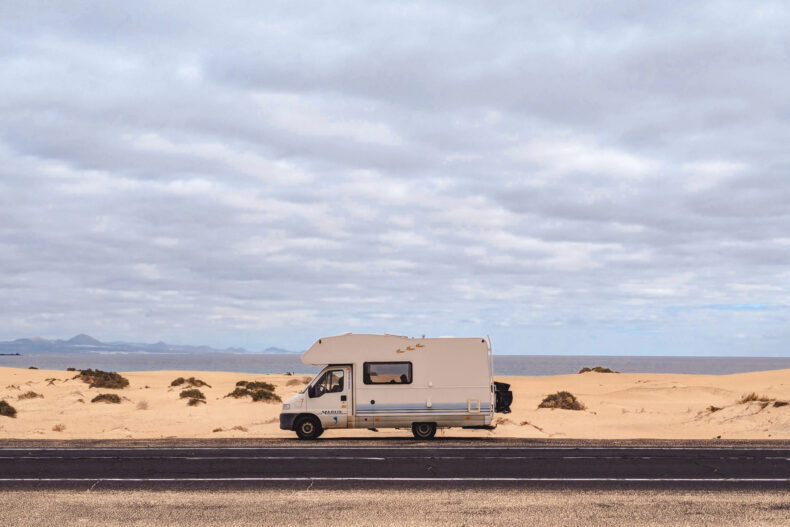
In the north you drive right through the white sand dunes of Corralejo, with sand on one side and turquoise sea on the other. You can stop anywhere along the way to walk into the dunes.
#10 Lanzarote: through the lava landscape of Timanfaya
The main road through Timanfaya National Park takes you through a landscape of black and rust-brown lava fields and volcanic cones. Note that you can’t drive the famous Route of the Volcanoes inside the park in your own campervan: it is only open to the park’s buses. The main road is impressive enough on its own.
#11 Lanzarote: north from Haría
From Haría, in the valley of a thousand palms, you continue north towards the Mirador del Río. A green, rolling route you wouldn’t expect on Lanzarote.

Weather and safety: storms, high waves and calima
The winter weather in the Canary Islands is usually lovely, but on Tenerife we were caught out by a storm twice. Through the app you use to book the camping areas, we got a warning two days in advance, advising us to find a safe place. Much of the island shut down, schools included, and there was flooding. We sheltered at Playa de Las Teresitas, where the breakwaters keep the sea calm. With the Ventusky app we could see exactly where the storm would pass.
Teide National Park also closes during storms, and when it snows. That happened several times during our stay. If you are planning to camp on the volcano, keep in mind that it may be closed.
What shocked us most were the high waves. On Tenerife, people drowned after being swept off the coast by huge waves. At one of those accidents, in Puerto de la Cruz, Sebastiaan and our son were walking nearby and saw the ambulances. What hit us hardest was that those people weren’t doing anything reckless. They were standing in perfectly normal places where you were allowed to be. Afterwards, all kinds of places on that side of the island were closed off, such as the black beaches of Puerto de la Cruz and the natural pools at Los Silos. At Los Gigantes the rock pools were already closed, but the fence had been broken open and people ignored the barrier.
Our lesson: when the waves are high, don’t just ask whether something is allowed. Stay away from the water’s edge and always respect closures.
On Lanzarote we experienced calima twice, a sandstorm that carries dust from the Sahara. The sky turns yellow and everything ends up under a layer of dust. For us it wasn’t too bad.

Which Canary Island is best for a campervan?
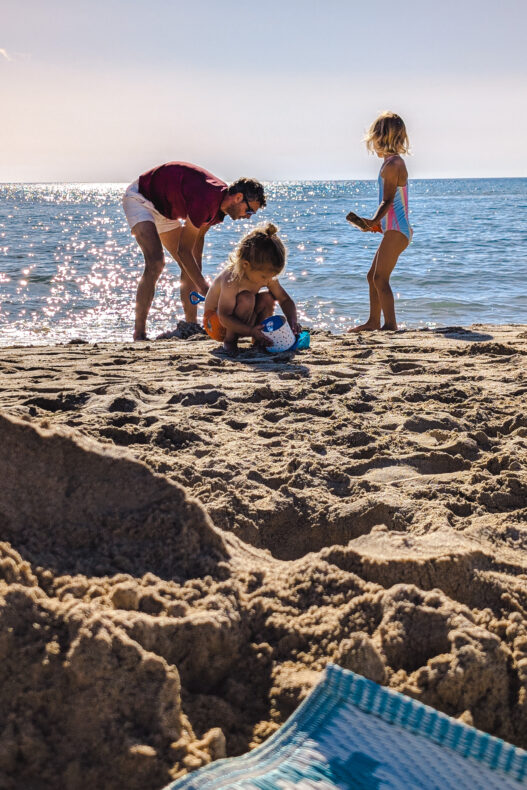
For campervans, Fuerteventura is the clear winner. It has a big surf community, the island is flat and open, and you will find room to park up everywhere. We saw by far the most campervans there, yet it never felt crowded. There are no campsites, but you don’t need them. Many campervanners turned out not to hop between the islands at all, but only visited Fuerteventura.
Tenerife and Gran Canaria have the best official camping areas in the mountains, but they are steeper and busier. In our book they share second place after Fuerteventura. La Palma and La Gomera are quiet and green, with spectacular roads and unusual landscapes, although your engine will have to work for it. Lanzarote has fewer free spots than Fuerteventura, but its striking lava landscape makes up for a lot.
→ Find out which Canary Island is the best to visit
→ Torn between two islands? Here’s how to choose between Lanzarote or Fuerteventura
→ Discover the 12 best beaches in Lanzarote
Our favourite campervan spots in the Canary Islands
Of all the places we stayed, these stood out. Each spot comes with a link to Park4Night, where you can read the latest reviews. Always check them before you drive there, because rules and signs can change.
Campervan spots on Tenerife
#1 Camping areas on the Teide: sleeping above the clouds
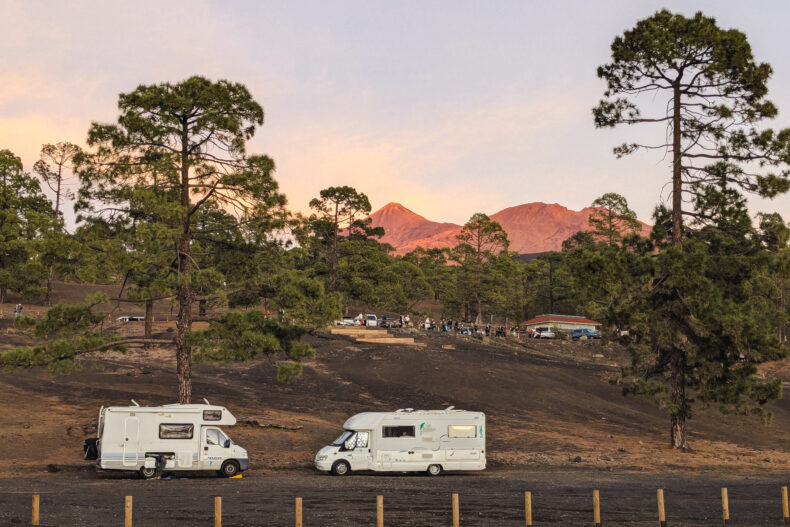
The official camping areas in Teide National Park were the highlight of Tenerife for us. You park among the pines, with picnic tables and barbecues around you, and at night there is a starry sky without light pollution. There is no phone signal and no electricity. Book your spot in advance through Tenerife ON.
→ Book a camping area through Tenerife ON
#2 Playa de Las Teresitas: stopover by the golden beach
Along the golden sandy beach of Las Teresitas, north of Santa Cruz, is a long public car park with spaces for campervans. At weekends it fills up when the weather is good, but during the week it is fairly quiet. The beach lies sheltered behind breakwaters, so the water here is always calm. Because the bay is quite shallow, it is an ideal family beach. During a storm, this was also the safest place we could find. A great base for exploring the Anaga mountains.
→ See Playa de Las Teresitas on Park4Night
#3 Los Silos: official stopover on the north coast
In Los Silos, on the green north-west coast, spaces along the seafront street are reserved for campervans, with room for around twelve to fifteen vans. You register with the council through an app and can stay for a maximum of 72 hours. A peaceful spot in a friendly village, and a good base for Masca and the Teno mountains. From the stopover you can see the whale skeleton and you are just a few steps from the black sandy beach. Make sure you take a look at the rock pools too.
#4 La Jaca: next to the natural pool on the south-east coast
In the small coastal village of La Jaca you park on an almost level, unpaved plot right on the seafront, next to the Piscina Natural La Jaca. The sea around Tenerife can be pretty rough, so natural pools like this are ideal for swimming with kids. There are no facilities, but there are a few restaurants nearby. From here we walked along the coast to the fishing village of Tajao, where we ended up in a packed local fish restaurant. The coastline here is gorgeous, and we didn’t see a single other tourist.
→ See La Jaca on Park4Night
→ Discover the 30 best places to visit in Tenerife
Campervan spots on La Palma
#5 Punta del Corcho: free stopover with all facilities
Near Barlovento in the north-east lies Punta del Corcho, also known as La Carballa. This free stopover has water, a waste disposal point, toilets and showers, on a rugged stretch of coast with natural pools. These rock pools are among La Palma’s best-known sights. From here you also have a wonderful view over the ocean. You can stay for a maximum of 72 hours.
→ See Punta del Corcho on Park4Night
#6 Salemera: below the lighthouse
In the south-east, near Villa de Mazo, we parked below the lighthouse at the little beach of Salemera. A quiet spot among black lava rocks where you can easily spend the whole day. This was our first stop on La Palma. There was hardly anyone on the beach, which was a welcome change after busier Tenerife. We had lunch at the fish restaurant next to the beach, which we can also recommend.
#7 Puerto Naos: large car park by the black beach
On the west coast is the large car park by the beach at Puerto Naos, spread over several levels with sea views. There are toilets and showers at the beach. La Palma doesn’t have many great beaches compared to its neighbours, but we can recommend this one. This western side of the island is also usually a little warmer than the rest. It is a beautiful place to watch the sunset.
→ See Puerto Naos on Park4Night
Campervan spots on La Gomera
#8 Valle Gran Rey: La Gomera’s campervan village
In Valle Gran Rey there is a quiet avenue with space for campervans, close to the beach and next to a playground. It felt like a small campervan village: lots of people live there in their vans. The avenue does slope down towards the sea, so getting level is tricky. Even with levelling blocks we were still a little on a slant. Valle Gran Rey is a laid-back stretch of coast where we spent several wonderfully relaxed days.
→ See Valle Gran Rey on Park4Night
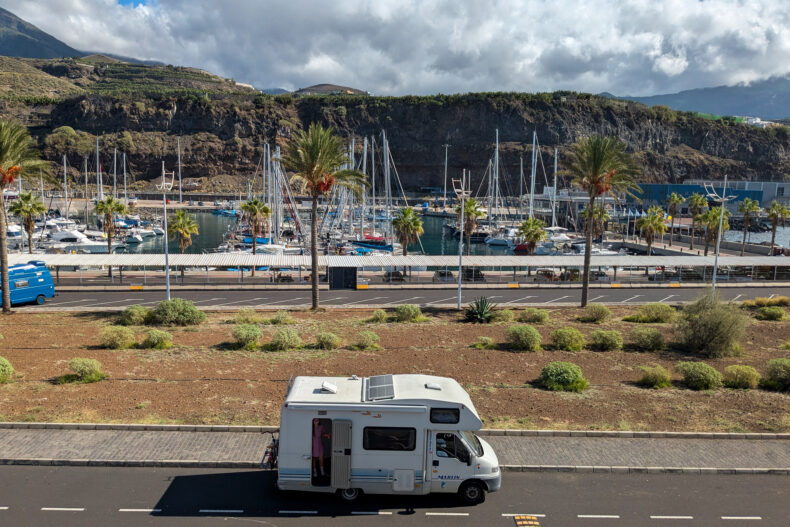
#9 San Sebastián: campervan car park by the harbour
In the capital San Sebastián, where the ferry from Tenerife arrives, there is a separate car park for campervans. You can stay for up to 72 hours. Handy for your first or last night on the island, but we ended up staying a bit longer. You are practically on the beach, so we had a few lovely beach days here. Sebastiaan also did some short hikes, including one to the top of the ridge right next to the town.
→ See San Sebastián on Park4Night
→ Read about the best places to visit on La Gomera
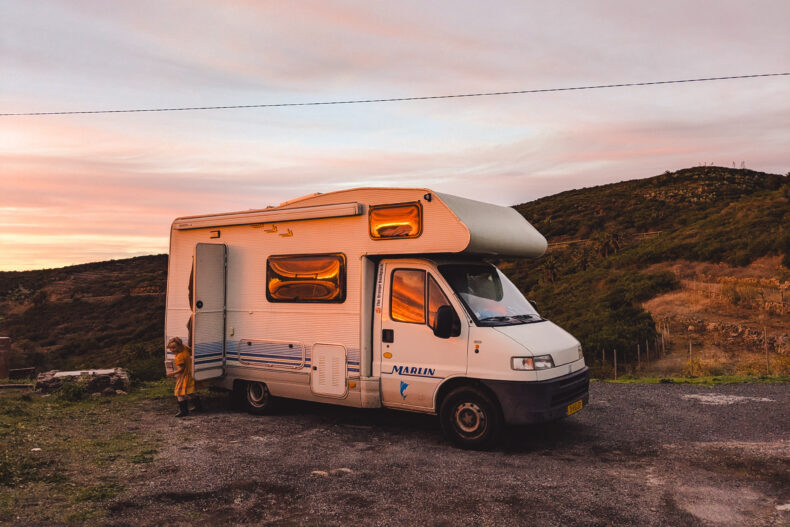
Campervan spots on Gran Canaria
#10 Corral de los Juncos: sunset on the roof of the island
High in the mountains, close to the highest point of Gran Canaria, lies the official camping area of Corral de los Juncos. This was our favourite camping area on the island, with one of the most beautiful sunsets of the whole trip. You need a permit, which you apply for at least three days in advance. Keep in mind that it can get busy with locals at weekends. We mostly found that very sociable, and it was still quiet enough that there were plenty of permits available.
→ See Corral de los Juncos on Park4Night
#11 Arinaga: spacious car park by the sea
Arinaga was our favourite town on Gran Canaria, with nice beaches and a truly local feel. The large free car park on the edge of town looks out over the black beach, and there is plenty of space. From here you can walk along Arinaga’s long promenade, with pleasant terraces, swimming spots and wooden decks to watch the sunset from. We spent several relaxed days here.
#12 Sardina: cliff-lined bay in the north-west
At Sardina, near Gáldar, you park in a large open car park with views of the sea and the mountains behind. A small beach is a short walk away. It can get windy, but it is a lovely place to spend the night. The sunset is stunning: you watch the sun slowly disappear behind the peak of the Teide volcano on Tenerife.
#13 La Garita: by the beach near Telde
On the east coast, near Telde, there is a car park by the beach of Hoya del Pozo, with showers and easy access to the sea. From here you can also follow a relaxed coastal path to the well-known blowholes a little further along.
#14 Los Caserones: quiet little harbour in the west
Not far from the Los Caserones visitor centre, by a small harbour on the west coast, there are a few free parking spaces. A quiet stop on the west coast route. We spent a lovely day on the beach here, painting happy stones on the many pebbles and walking along the harbour pier. Extra fun: you reach one of the little beaches through a tunnel in a cave.
→ See Los Caserones on Park4Night
→ Discover the 20 best things to do in Gran Canaria
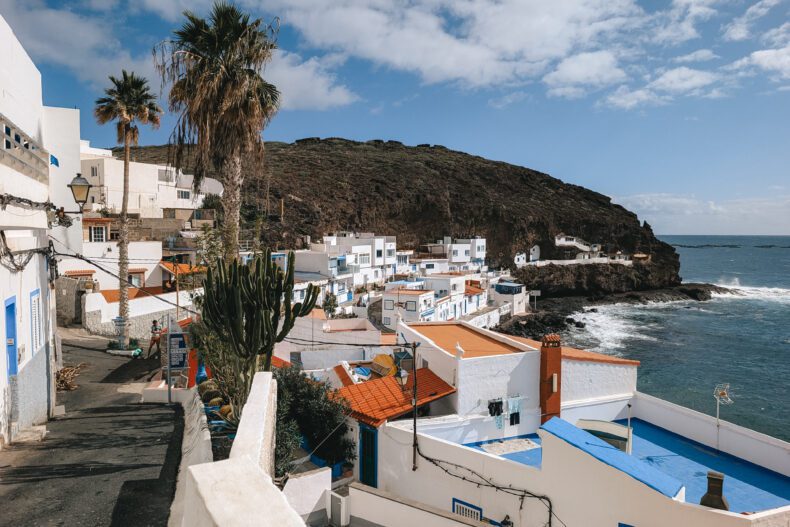
Campervan spots on Fuerteventura
#15 Playa de Sotavento: pure bliss
Playa de Sotavento was pure bliss for us. You park next to the surf centre on miles of unspoilt beach, with a lagoon full of kitesurfers and windsurfers. There are public toilets but no other facilities. Because the beach is a kind of lagoon, the water is shallow and fairly calm right along the shore. That makes it the best beach for families too, and we ended up staying almost a full week.
→ See Playa de Sotavento on Park4Night
#16 Playa del Mal Nombre: above the beach with sea views
Close to Sotavento lies Playa del Mal Nombre, with a car park above the black beach and views over the sea. At the beach entrance you will find a restaurant and a shower. The road there is a bit damaged, but perfectly doable. This was our first night on Fuerteventura and we were instantly sold.
#17 The other side of Sotavento: terraced car parks by the beach
On the other side of Playa de Sotavento there are a few large terraced car parks, just a few metres from the beach. A good alternative if it is full by the surf centre or if you fancy a change. Here too there is plenty to watch when it is windy and the water is full of surfers.
#18 The cliffs at El Cotillo: sunset over the sea
At El Cotillo, in the north-west, you park on the cliffs with views over the ocean and the most beautiful sunsets. During the day the surfers come, in the evening the sunset watchers. We saw lots of campervans in and around El Cotillo, but the plain and cliff top are big enough for everyone. Note that the road there is a bit bumpy.
#19 Betancuria: free stopover with electricity
Near the old capital Betancuria is a free stopover for around fifteen campervans, with water, a waste disposal point and electricity. It was the only place on Fuerteventura where we found electricity, which came in handy when we ran out of gas. From the car park you can easily walk into the old town. Also nice: right next to the stopover there is a monastery ruin you can visit.
→ See Betancuria on Park4Night
#20 Pozo Negro: by the sea at a tiny village
On the east coast lies Pozo Negro, a tiny fishing village with a pebble beach. Outside the summer season you can park for free close to the beach. The sea is quite wild here, though, and there are lots of rocks under the water. We did go for a dip, but it isn’t the best place to swim. There are no facilities, but plenty of peace and quiet. Unfortunately the internet and phone signal is poor, so it is not a handy spot for remote workers.
→ See Pozo Negro on Park4Night
→ Discover the 23 best places to visit on Fuerteventura
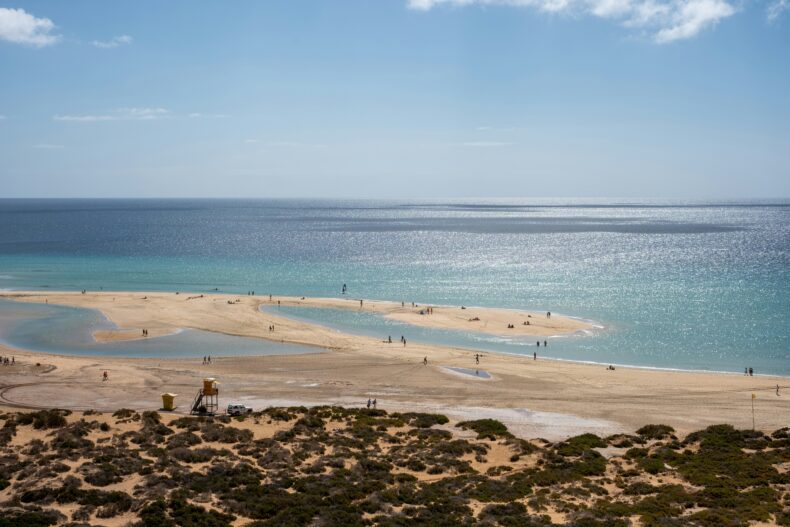
Campervan spots on Lanzarote
#21 El Mojón: next to the Stratified City
At El Mojón, inland, you park next to the Stratified City: a remarkable formation of layered rocks with caves. Volcanic slopes surround you, and it is great fun to wander among all those unusual rock formations.
#22 Costa Teguise: by Playa los Charcos
In Costa Teguise there is a large car park by Playa los Charcos where lots of campervans stay. It is fairly quiet at night, and the beach is just around the corner. It may be no more than a big car park, but you are right by the beach and can walk straight onto the Costa Teguise promenade.
→ See Costa Teguise on Park4Night
#23 Playa de Montaña Bermeja: on the lava coast along the LZ-703
On the west coast, along the LZ-703 road at Playa de Montaña Bermeja, you park among the lava with a view of the sea. The black beach is about a hundred metres away. During the day it is busy with beachgoers, so arrive towards the evening. The sunset was so beautiful here that we decided to take our dinner down to the beach.

When is the best time to visit the Canary Islands by campervan?
The Canary Islands are warm all year round, but winter is the best time for a campervan trip. It is pleasantly warm without the sun turning your van into an oven, and you escape the cold northern European winter. That said, winter is also high season on the islands, so the camping areas and popular spots can be busier. Bear in mind that it can freeze and even snow high up on the Teide in winter, as it did during our visit.
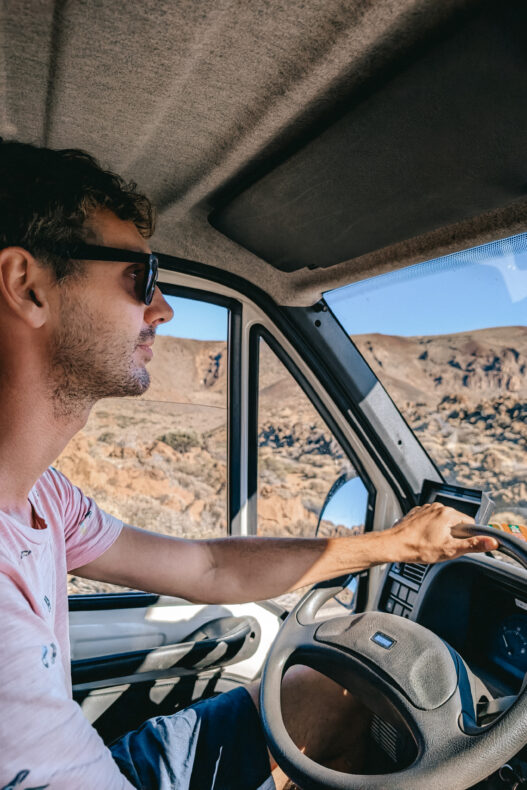
Prefer to rent a campervan in the Canary Islands?
If you don’t have weeks for the journey there and back, renting a campervan on the islands is a great alternative. Fly to Tenerife or Gran Canaria, pick up your campervan at the airport and spend that same night above the clouds or by the sea. Do choose a self-sufficient campervan with a toilet and a decent water tank, because facilities are scarce. And check with the rental company whether you are allowed to take the campervan on the ferry to another island.
→ Compare campervan rentals in the Canary Islands with Campervan Planet
→ Rent a campervan on Tenerife
Would you rather rent a car and stay in an apartment or hotel? That works too. You get more comfort and still see just as much of the islands.
Our tip: book your rental car through Discover Cars. It compares all the big rental companies in one go, so you can easily find the best deal.
More tips for your trip to the Canary Islands
 Our pickNo time for the long ferry crossing? Rent a campervan in the Canary Islands with Campervan Planet and set off straight from the airport.
 Hotels in the Canary Islands: from a surf village on Fuerteventura to a quiet mountain village on La Palma
 Want to stop wherever you like? Rent a car with Discover Cars and compare the big rental companies in one go.
 No flight yet? Compare flights to Tenerife, Gran Canaria, Lanzarote or Fuerteventura.
 The cable car up Mount Teide or kayaking below the cliffs? Book tours in the Canary Islands with GetYourGuide.
 Discover all our blogs about the Canary Islands