Tenerife is so much more than an island of beach resorts. Within an hour’s drive you go from black lava fields to green mountain ridges, and from a packed beach to a village where time seems to have stopped. We spent weeks driving around the island, slept several nights high up on the volcano and loved the wild north coast just as much as the sunny beaches in the south.
In this guide we share the 30 best places to visit in Tenerife, grouped by region. That way you can see at a glance which spots to combine in one day and which part of the island suits your trip. Expect tips on where the crowds are, where it pays to arrive early and which places stuck with us the most.
What is Tenerife known for?
Tenerife is famous for El Teide, the highest mountain in Spain, and for a sunny climate that stays mild all year round. But the island has many more faces: green laurel forests in the north, historic towns, black beaches and cliffs that rise hundreds of metres out of the sea.
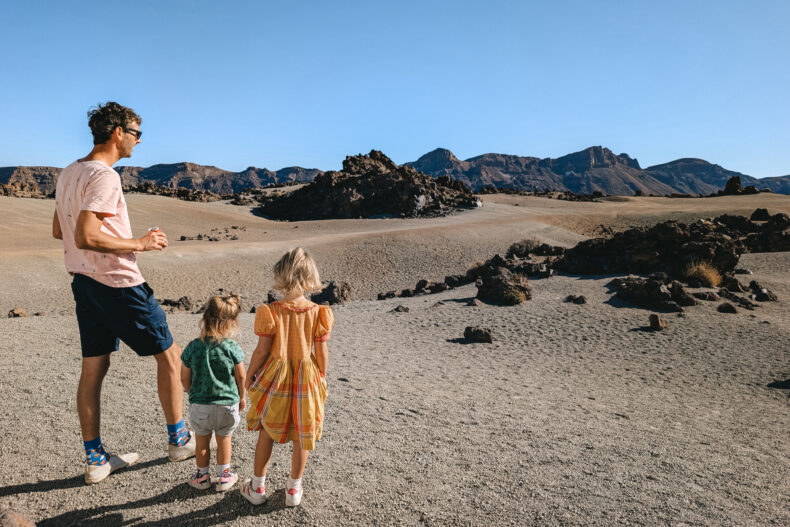
Top of the list is the volcanic landscape around El Teide. In the huge caldera you drive through lava fields, pumice plains and rock formations in every shade of red and ochre. Up on the plateau it feels like another planet, especially when the clouds are below you.
The island is also loved for its variety. The south is dry and sunny, while the trade winds keep the north greener and cooler. We really noticed the difference from day to day: one morning we were shivering in the mist in Anaga, a few hours later we were lying in the sun at Playa Amarilla.
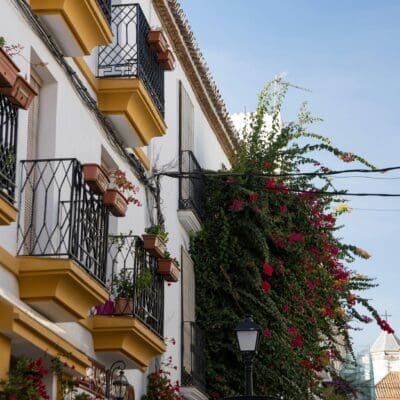
Then there are the towns and villages. La Laguna and Garachico wear their rich history in wooden balconies and painted façades, while Puerto de la Cruz shows how tourism here first began.
And of course the climate. Even in winter the days are mild, which makes Tenerife a popular escape when it’s grey at home. Keep in mind that the ocean can get really rough in the winter months, especially on the north coast. During our time on the island, weather warnings for high waves were issued regularly.

How to avoid the crowds in Tenerife
Tenerife is one of Spain’s most popular islands, and you’ll notice it. Still, dodging the crowds is fairly easy once you know where to go.
Most of the mass tourism is concentrated in the southwest, around Costa Adeje, Playa de las Américas and Los Cristianos. We took a look and it wasn’t for us: a strip of English pubs, souvenir shops and massage parlours built from scratch. Looking for peace and quiet? Head to the north, the interior or the southeast coast.
Setting off early makes a huge difference. Famous spots like Roques de García and Los Gigantes look completely different before the coaches and hire cars roll in. Parking is a lot easier then too.
Don’t expect the green north to be quiet everywhere, though. In Anaga we found ourselves in a long line of hire cars on narrow mountain roads on a normal weekday, with the local bus squeezing past now and then. Gorgeous, but hardly a relaxing drive.
The quietest places we found were on the southeast coast. Around Tajao, Arico and the lava fields of Malpaís de Güímar we mostly met locals, while the other side of the island was packed.


Where to stay in Tenerife?
Want to see Tenerife at its best? Then we recommend the northwest as your base. You’re close to Garachico, Los Silos, the Teno mountains and the north side of El Teide, and you avoid the busy south. These are our favourite hotels in the area:
#1 Hotel San Roque is a boutique hotel in a historic mansion right in the heart of Garachico. Around a courtyard with wooden galleries you’ll find rooms full of art and design, and the El Caletón rock pools are within walking distance.
#2 Hotel El Patio is an old country estate among the banana plantations just outside Garachico. You sleep in green, peaceful surroundings with sea views, perfect if you want to properly unwind after a day out.
#3 Hotel Rural La Casa Amarilla is a small rural hotel with plenty of character near Los Silos. From here the coastal rock pools and the hiking trails of the Teno mountains are right on your doorstep.

Best places to visit in El Teide National Park
Want to see more of Tenerife? Our map has 15 hidden gems most tourists skip, plus the hotels we'd stay at ourselves.
Every spot on one map
Free map
Want all the spots from this article in your Google Maps right away? Leave your email address and we'll send you the map for free.
The national park around El Teide is the highlight of Tenerife, quite literally. We spent several days here and slept at three different campsites on the volcano. The park has been a UNESCO World Heritage Site since 2007. These are the spots you don’t want to miss.
#1 El Teide: the highest mountain in Spain
El Teide is Tenerife’s landmark. At 3,715 metres the volcano is the highest mountain in Spain, and from almost anywhere on the island you can see its summit poking out above the clouds. The last eruption on Tenerife was in 1909, at the Chinyero volcano on the flank of the Teide massif.
A cable car takes you up to the top station at over 3,500 metres in just a few minutes. If you want to hike from there to the summit, you need a free permit that you apply for online well in advance. The cable car is only open to children aged three and up, so we skipped it with our youngest.
The park is impressive even without climbing to the top. The road through the caldera is lined with viewpoints and hiking trails. Parking is easiest early in the day, because by mid-morning the car parks at the cable car and Roques de García fill up fast.
Tip: download the Teide audio tour in an app for background information along the way. It guides you through the whole national park, not just to the summit.
→ Discover the 10 best places to visit in El Teide National Park
→ Book a Teide tour with cable car at Volcano Teide

#2 Roques de García: the best hike in the park
In the middle of the caldera stand the Roques de García, jagged rock formations shaped by erosion and volcanic activity. The most famous is Roque Cinchado, the rock that narrows towards its base and looks as if it could topple over at any moment.
Most visitors hop out at the viewpoint next to the car park, snap a photo and drive on. Such a shame, because the circular walk around the rocks is the most beautiful part of El Teide if you ask us. The path first drops down over lava fields and then climbs back up past rock walls ranging from red to ochre.
With little kids the climbs are a bit on the tough side, but our preschooler walked most of it herself and our toddler rode in the carrier. Bring plenty of water, as there’s hardly any shade.


#3 Minas de San José: a moonscape of pumice
Minas de San José stands out straight away because of its pale colour. The plain is made up of pumice, ash and fine volcanic sand, left behind by explosive eruptions. From the late nineteenth century pumice was mined here for construction and farming. Those days are long gone, and only the name still hints at the mines.
You park at the viewpoint along the main road and simply walk onto the plain. There’s no set route. Just wander around, take photos and enjoy the view of the volcano.


#4 Arenas Negras: a black volcano among the pines
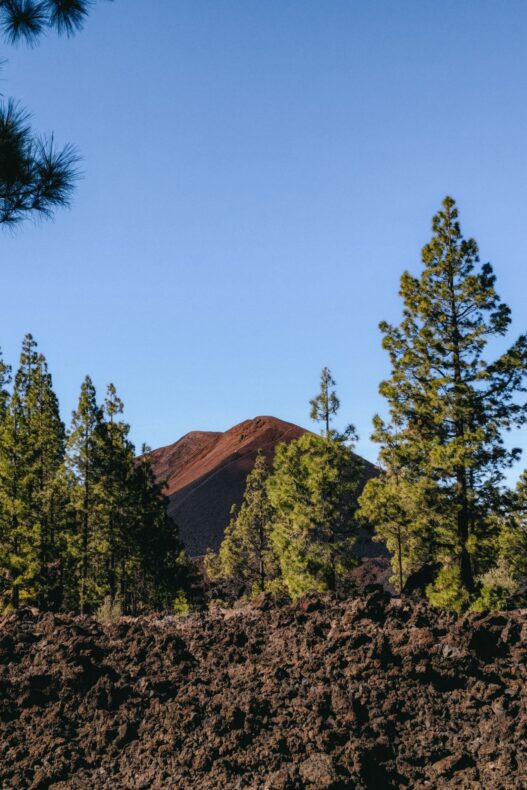
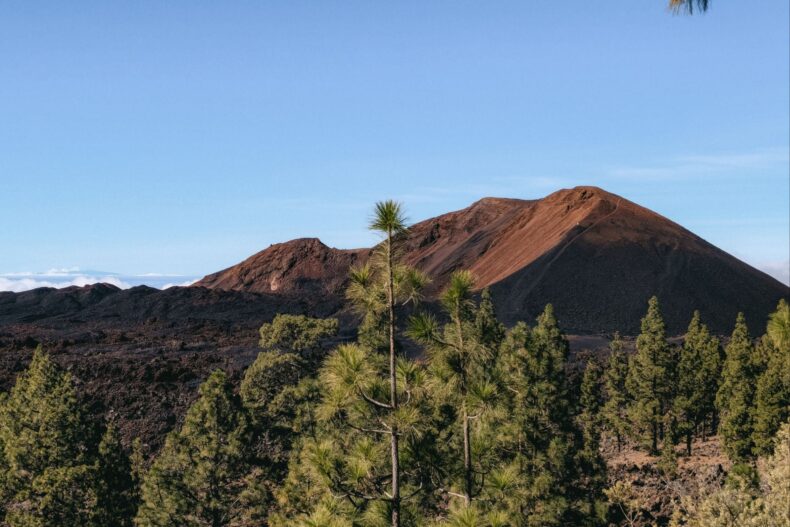
On the north side of the Teide area lies Arenas Negras, a black volcanic cone formed during the eruption of 1706. That same eruption destroyed the harbour of Garachico, at the time the island’s main trading port.
Getting there is quite the adventure: three kilometres of bumping along a rough track, with no phone signal. But what a place! From the recreation area with picnic tables and a simple playground you can walk a loop around the volcano through pine forest and across black ash fields.
On your own the loop takes about an hour. With the kids it took us almost two and a half. At weekends Arenas Negras is a favourite picnic spot for locals, and with a free permit you can also spend the night here.


#5 Volcán Chinyero: Tenerife’s youngest volcano
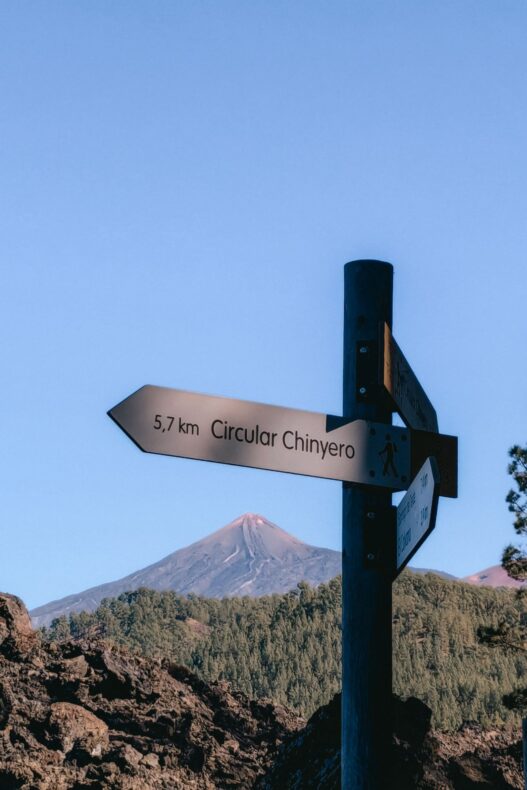
Chinyero was the last volcano to erupt on Tenerife, in 1909, and you can still see it. The black lava flow lies like a thick blanket over the slopes, in sharp contrast with the green pines.
The hiking trail around the volcano has little elevation gain, so it’s very doable. You alternate between forest, loose ash and solidified slabs of lava. On clear days you get great views of El Teide along the way.
We started at the El Chío recreation area along the TF-38, where you can also stay overnight with a permit. It’s a lot quieter here than in the caldera, and you get a real sense of how young Tenerife’s volcanic landscape still is.
#6 Camping on El Teide: sleeping above the clouds
One of our best experiences on Tenerife was spending the night on the volcano. The national park has several official campsites for tents and campervans, dotted between the pines. We stayed at three of them: Arenas Negras, El Chío and Las Lajas.
→ How to explore the Canary Islands by campervan
You’ll need a free permit, which you apply for online. Don’t leave it too late, as spaces are limited and often fill up a week ahead.
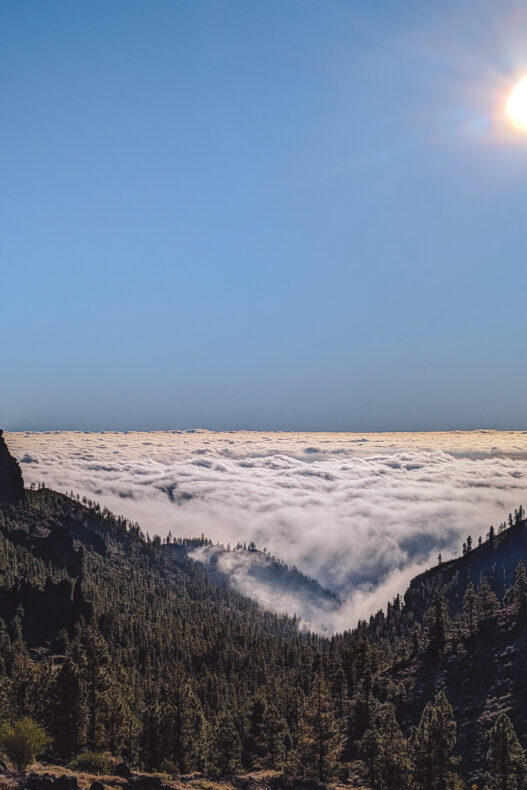
The best thing about camping here? You’re often above the clouds, the sunsets are spectacular and the night sky is incredibly clear. Head out early in the morning and you’ll have the trails almost to yourself. Do bring warm clothes, because at this altitude it gets properly cold at night.
The campsites are in recreation areas with picnic tables, barbecues, toilets and sometimes a playground.
We came with our own campervan, but you can easily rent one on Tenerife too. On Campervan Planet you compare different rental companies and pick up your camper at the airport, so you can sleep above the clouds from day one.
→ Rent a campervan in Tenerife
→ See the stars above El Teide on an evening tour


Best places to visit in Anaga and the northeast
#7 Anaga Rural Park: green mountains and laurel forests
In the far northeast lies Anaga, the greenest and wildest part of Tenerife. Steep ridges, deep valleys and ancient laurel forests often wrapped in mist: it feels like a different island from the sunny south.
We spent a day driving through the park past viewpoints such as Pico del Inglés, did a short walk and stopped at a black sand beach. The mountain roads are stunning, but also narrow and busy. Hire cars, tour buses and the local bus share the same bends, so you’ll regularly find yourself stuck in a queue.
Our tip: go early and take your time at the miradors. In the afternoon the clouds often roll in, so early birds have the best chance of a view.
→ Discover the 10 most stunning places in Anaga


#8 Playa de Benijo: a wild black beach
At the end of the road through Anaga lies Playa de Benijo, one of Tenerife’s most beautiful black beaches. Because it’s so remote, it’s a lot quieter than the beaches in the south. The black sand, the rocks in the sea and the green slopes behind make it a picture, especially at sunset.
You park along the road above the beach and take the stairs down. The rough sea often makes swimming a bad idea, but a walk along the waterline is always worth it. Keep a close eye on the flags.
#9 Roque de las Bodegas: a rock in the middle of the bay
Close to Taganana, the Roque de las Bodegas juts out of the bay like a dark block. The hamlet of the same name is just a few houses and fish restaurants, with a small beach where surfers wait for the waves.
We drove past on our way to the end of Anaga and saw the rock from the road, but finding a parking spot was tricky. Get there early and you’ll have more luck, with time for a stroll or a bite to eat overlooking the surf.
#10 Playa de las Teresitas: golden sand near Santa Cruz
Just north of Santa Cruz lies Playa de las Teresitas, one of Tenerife’s few golden sand beaches. The sand was once shipped in from the Sahara, and a long breakwater keeps the water calm, even when the ocean further out is going wild.
This was our very first stop on Tenerife, straight off the ferry. With palm trees, the Anaga mountains in the background and a cloudy sky that kept the heat down, it was a lovely introduction. Behind the beach there’s a large car park, and along the promenade you’ll find showers and places to eat.
Travelling by campervan? The car park has designated spots where campers can stay overnight for free. It’s not a campsite, just a car park, but you’re only a few minutes’ walk from the beach. We found it a wonderfully relaxed place to arrive.

#11 La Laguna: the historic university city
San Cristóbal de La Laguna was the capital of Tenerife for centuries, and its historic centre is a UNESCO World Heritage Site. Its grid street plan from the fifteenth century later served as a model for cities in Latin America, such as Havana.
The streets of low houses, wooden balconies and painted façades are perfect for an afternoon stroll. The university gives the city a young feel, with plenty of cafés and bookshops.
Many of the old mansions are now museums or government buildings, and at some of them you can simply walk into the courtyard. Casa Lercaro houses Tenerife’s history museum, while Casa Salazar and Casa de los Capitanes Generales also show how wealthy families lived here, around patios with wooden galleries and plants. We didn’t join a guided tour, but even a quick look around one of the courtyards was worth it.
On a rainy morning we took the kids to the Museo de la Ciencia y el Cosmos, a fun science museum with lots of hands-on exhibits.
La Laguna sits on a high plateau, so it’s a lot cooler than the coast. Pack an extra layer.

Best places to visit in the north and northwest
#12 La Giganta: a giant woman made of plants
In a slightly forgotten little park in Santa Úrsula, a huge woman of more than four metres lies in the grass. The sculpture is made of cement, sand and plants that grow over her like a living blanket, so she looks different every season.
The park itself is basic and a bit neglected, and La Giganta isn’t a well-known attraction. We wouldn’t make a detour for it, but if you’re in the area, it’s definitely worth a quick stop.

#13 Puerto de la Cruz: the island’s oldest resort
In the nineteenth century Puerto de la Cruz became Tenerife’s first tourist destination, when mainly British travellers came here for their health. You can still see that in the mix of historic buildings, squares with big trees and some older hotels along the coast.
Popular outings in town are the eighteenth-century botanical garden and the saltwater pools of Lago Martiánez. The town also has black beaches, a small fishing harbour and some great playgrounds. You’ll find more tips in our detailed guide.
→ Discover the 20 best places to visit in Puerto de la Cruz
Still, we never felt completely at ease here. The sea was so rough that there were fatal accidents at ordinary beach spots, and that left quite an impression. Always take the flags and warnings on the north coast seriously.


#14 Lago Martiánez: swimming in a César Manrique artwork
On the seafront of Puerto de la Cruz lies Lago Martiánez, a pool complex designed by Canarian artist César Manrique. White walls, black lava stone, palm trees and blue saltwater pools come together in a coastal park that blends seamlessly into the landscape.
Seawater flows in constantly, but the pools are far calmer than the ocean behind them. That makes this one of the few places on the rugged north coast where you can always swim safely. There’s an entrance fee and you can rent a sunbed on site.
#15 La Orotava: mansions with wooden balconies
A little inland from Puerto de la Cruz lies La Orotava, one of Tenerife’s most attractive historic towns. Its streets climb steeply up the hillside, lined with churches, convents and mansions from the sixteenth and seventeenth centuries.
The best-known house is Casa de los Balcones, with beautiful woodcarving around its courtyard. Afterwards, wander into the side streets, where small bakeries and quiet squares show everyday life. From the top of town you look out over the green valley all the way to the sea.
#16 Icod de los Vinos: the ancient dragon tree
Icod de los Vinos is best known for El Drago Milenario, a giant dragon tree that has become a symbol of Tenerife. Nobody knows exactly how old it is, and estimates range from a few hundred to a thousand years.
The tree stands in a small park with an entrance fee, but you already get a good view from the square by the church. The historic centre with its squares and traditional houses is small but charming, and the local wine shops give away where the name comes from.
#17 Cueva del Viento: one of the longest lava tubes in the world
Beneath the northern slope of El Teide runs the Cueva del Viento. With more than eighteen kilometres of passages, it’s one of the longest lava tubes in the world. The tunnel formed when the outside of a lava flow cooled down while the hot lava inside kept flowing.
You can only visit the cave with a guide, and booking through the official website is required. Each tour takes just fourteen people, so book in good time. You descend into a cool, dark world with ridged walls and several levels running on top of each other. It’s fascinating to see what the inside of a volcano looks like.
#18 Garachico: Tenerife’s prettiest village
Garachico is on the list of the most beautiful villages in Spain, and for good reason. Its old harbour was buried by lava from Arenas Negras in 1706, but the village rebuilt itself around narrow lanes, mansions and small squares.
On the edge of the village lie the El Caletón rock pools, formed from solidified lava. When the sea is calm you can swim here, when it’s rough they’re closed and the waves crash spectacularly over the rocks. They were closed when we visited, so we wandered through the village, visited the small botanical garden and tried some unusual ice cream. Prickly pear or Roquefort, anyone?
→ Discover the 8 best places to visit in Garachico


#19 Los Silos: a wild coast with rock pools
West of Garachico lies Los Silos, a quiet village on a raw stretch of coast. Natural pools are scattered along the dark lava rocks, the best known being Charco de los Chochos. When the sea is calm, the water here is a clear green and blue.
From Los Silos you can follow a great coastal walk past a black sand beach, the skeleton of a whale, rock pools and blowholes where you can hear the sea rumbling. When we were there, the pools were closed after a storm, but the coastline was impressive even without a swim. This is a very different Tenerife, with hardly any tourists.
Got a campervan? Los Silos has a free camper spot right next to the beach, looking out over the whale skeleton. You register with the code posted on site, and that is all it takes.


Best places to visit in the west of Tenerife
#20 Los Gigantes: cliffs hundreds of metres high
The cliffs of Los Gigantes rise hundreds of metres straight out of the ocean. From the black beach and the village harbour you see the walls curve along the coast, and every hour of the day the light picks out different layers.
We spent an afternoon and evening on the black beach, where our daughter of course wanted to get straight into the sea. The village itself is basically one big resort full of hotels and holiday homes, but it’s nicely laid out. Parking is tricky, so arrive early.
Want to feel the true scale of the cliffs? Get out on the water. Boats and kayaks cruise along the foot of the rock walls, and the viewpoints above the village give you a superb view at sunset.
→ Discover the 8 best things to do in Los Gigantes
→ Kayak beneath the Los Gigantes cliffs to Masca Bay


#21 Masca: the most spectacular mountain village
Masca is tucked away in the Teno mountains, on narrow ledges between peaks that shoot up almost vertically. The road there is famous and infamous: hairpin bends, sheer drops and a new glimpse of the gorge below you at every turn.
The village is just a handful of houses, cafés and terraces with a view. From Masca you can also do the famous hike through the Masca gorge down to the sea, for which you book a ticket in advance. Masca was on our list, but we’re saving it for next time.
Parking is limited and busy at weekends. So go early, or combine Masca with a drive through the Teno mountains.
→ Hike the Masca gorge with a guide and return by boat


#22 Barranco del Infierno: a green gorge above Adeje
Just above Adeje starts the Barranco del Infierno, a gorge that gets greener and greener after a dry start. At the end a waterfall awaits, with more or less water depending on the season.
The hike takes about three hours there and back, with almost 500 metres of climbing and descending. The first stretch in the blazing sun is tough. Once you get deeper into the gorge, it becomes cooler and more fun. Our preschool daughter walked the whole route herself, quite an achievement!
Entry is only possible with a pre-booked time slot, and children must be at least five. Book the earliest slot so you do the sunny stretch while it’s still cool.
→ Discover the 20 best things to do in Tenerife


#23 Punta de Teno: the lighthouse on the western tip
On Tenerife’s westernmost point stands the Punta de Teno lighthouse, on a low headland covered in basalt slabs. Behind you rise the cliffs of the Teno mountains, in front of you there’s nothing but ocean, and on clear days you can see La Gomera on the horizon.
The road to the lighthouse is often closed to private cars. A shuttle bus from Buenavista del Norte then takes you there, so check the current rules before you go. Bring your swimming things: when the sea is calm, the water here is crystal clear.
Best places to visit in the south and southeast
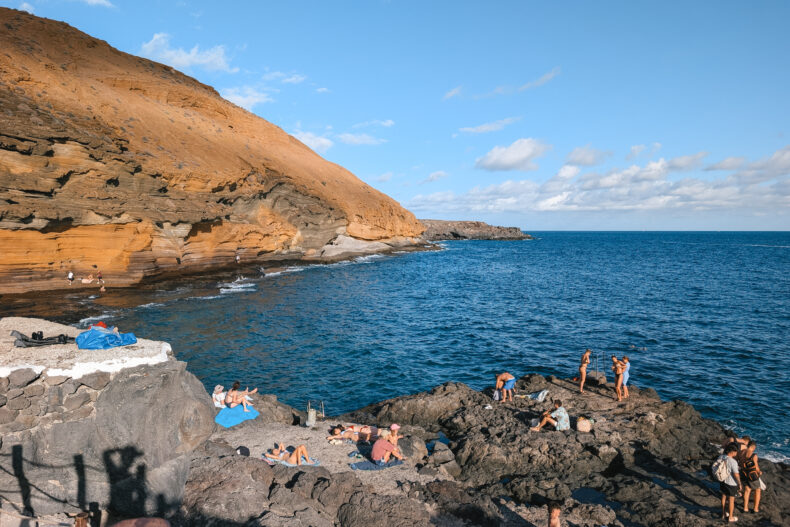
#24 Playa Amarilla: wavy yellow rocks
On the south coast near Costa del Silencio lies Playa Amarilla, a bay with yellow rock walls worn into soft wavy shapes by wind and salt. There’s no sandy beach. You lie on rock platforms and step straight into the water.
We thought this was one of the most beautiful stretches of coast on Tenerife. In the late afternoon we spent a few hours on the rocks while the kids splashed in the pools, and the next morning one of us went snorkelling, which this spot is popular for. Swimming in the sea is less suitable for small children here, but playing in the shallow pools works fine.
From the bay a short but hot walk takes you to the top of Montaña Amarilla, with views over the entire coast.
→ Discover snorkelling, rock pools and wavy cliffs at Playa Amarilla


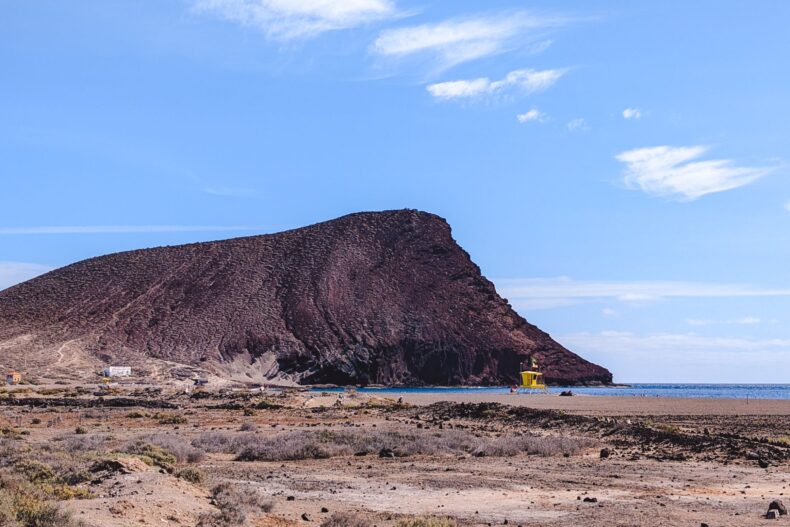
#25 Montaña Roja: a red volcano between two beaches
Next to El Médano, Montaña Roja rises above the coast, a cone of red volcanic rock that seems to glow at sunset. The path to the top is short but steep.
From the top you look out over two beaches on either side of the volcano. One is popular with families and naturists, on the other side you mainly see windsurfers and kitesurfers. It’s almost always windy here: perfect kite-flying weather, as we found out with the kids. At the foot of the volcano the rocks are crawling with red crabs.
#26 Malpaís de Güímar: hiking through a young lava landscape
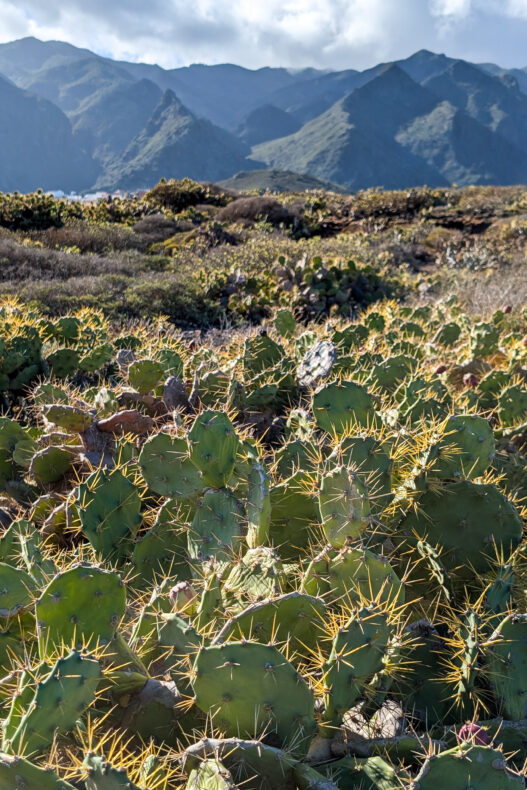
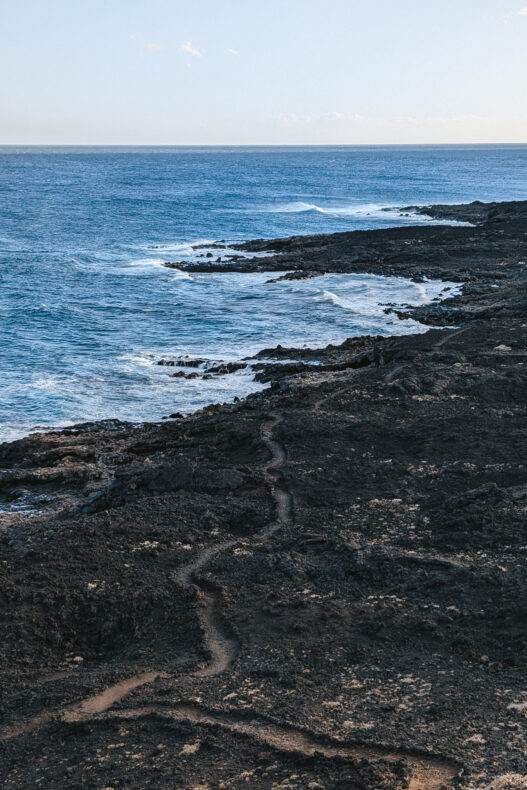
Malpaís de Güímar is a protected lava area on the east coast, with dark rock slabs, lava tunnels, jagged hills and plants adapted to drought. ‘Malpaís’ literally means bad land: nothing can be grown here.
A hiking trail takes you along the coast and up to a viewpoint on the volcanic cone, so you can make a nice loop. We walked here on a day with a weather warning, when the rest of the island had shut down, and even then it was a beautiful hike.
Good to know: the Pyramids of Güímar are close by and often recommended as a secret spot. We found them a bit disappointing, squeezed in between modern buildings.
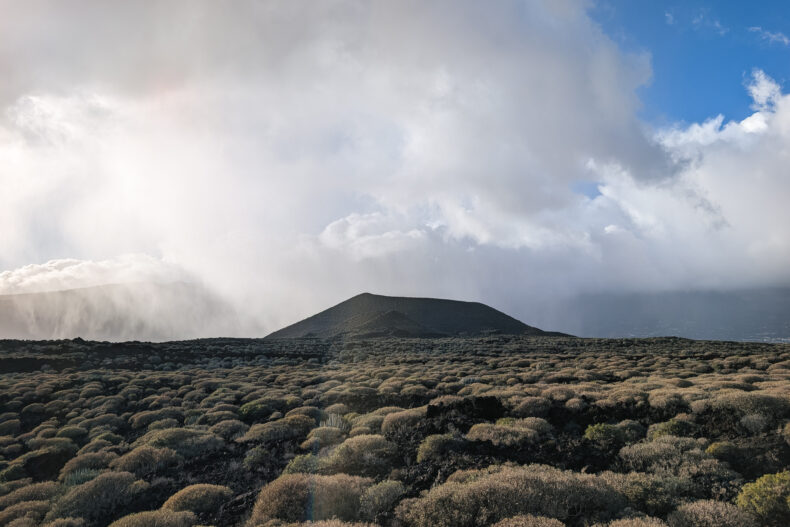
#27 Arco de Tajao: a rock arch on a quiet coast
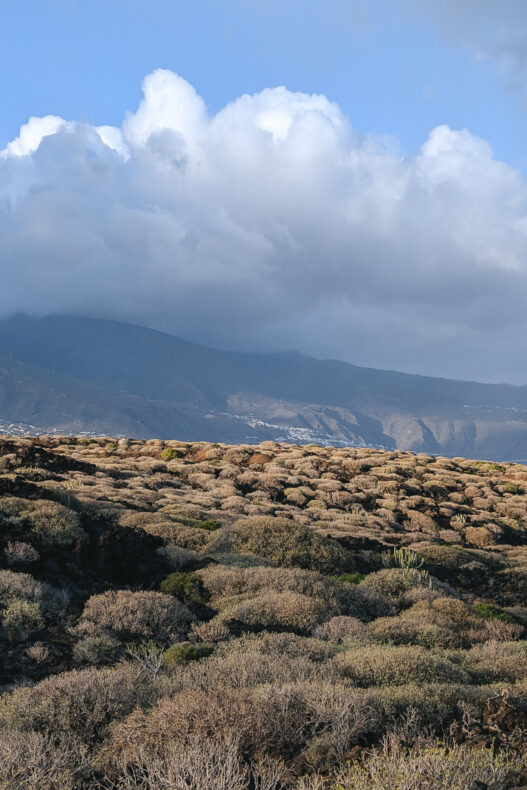
Near the fishing village of Tajao you’ll find an impressive natural rock arch in a dry, rolling landscape. From the car park it’s just a few minutes’ walk. Most people look at the arch from above, but the best view is when you scramble down and walk underneath it. There’s no shade, so bring water and a cap.
This stretch of coast was one of our favourite discoveries on Tenerife. We mostly met locals, Tajao’s pebble beach was quiet, and a few minutes further on in Arico we swam in a rock pool. From there we walked back along the jagged coastline to Tajao for a late lunch.


Best places to visit in Santa Cruz
Santa Cruz de Tenerife is often skipped, but the capital makes a great stop, especially on a rainy or windy day. When a storm swept over the island, Santa Cruz in the north turned out to be the calmest place. Thanks to the breakwaters, we could even swim in the sea at Playa de las Teresitas just north of the city, while it was blowing a gale elsewhere and schools had closed.
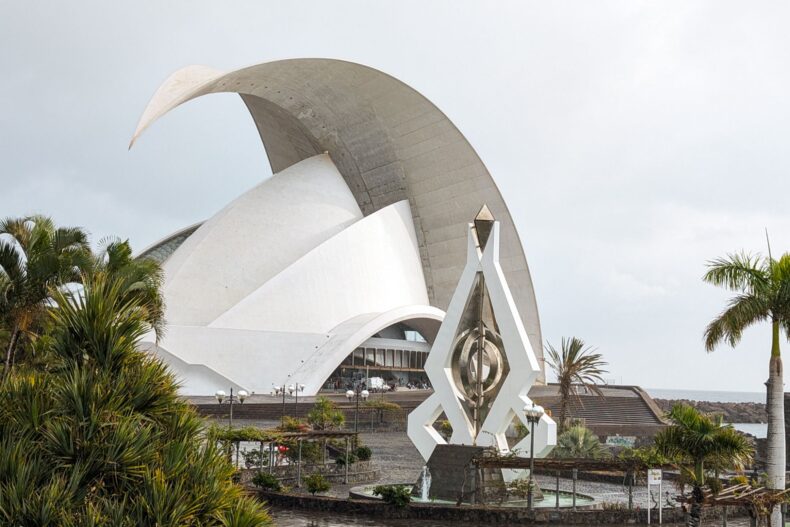
#28 Auditorio de Tenerife: the icon of Santa Cruz
On the harbourfront stands the Auditorio de Tenerife, designed by Santiago Calatrava. The white building with its enormous curved roof, which seems to float above the ocean like a wave, is the best-known modern building in the Canary Islands.
Concerts and operas are held inside, but even without a show it’s worth walking around it. The best view is from the quay, especially in the late afternoon.
#29 Parque Marítimo César Manrique: swimming with a harbour view
Right next to the Auditorio lies Parque Marítimo, a pool complex César Manrique designed in the same style as Lago Martiánez. White walls, black lava stone, palm trees and saltwater pools that are constantly refreshed with seawater.
It’s mainly a place for city residents, who come here to sunbathe and swim on hot days. With sunbeds, showers and a few places to eat, it’s a pleasant break during a day in the capital.

#30 MUNA: the mummies of the Guanches
The Museo de la Naturaleza y Arqueología, MUNA for short, tells the story of the Canary Islands. The highlight is the mummies of the Guanches, the original inhabitants of Tenerife. You’ll also see fossils, stuffed animals, skulls and archaeological finds.
For kids it’s an exciting and educational visit. The layout is clear, it’s cool inside and you can explore the rooms at your own pace. We combined it with the city’s art museum and, of course, a few playgrounds.
→ Discover 15 hidden gems in Tenerife
→ Discover 15 things to do on Tenerife with kids