For many, Tenerife still brings to mind all-inclusive resorts, busy boulevards, and beaches packed shoulder to shoulder. And yes, you’ll find plenty of those, especially along the southern coast. But look a little closer, and the island shows a completely different side. Picture abandoned sanatoriums, quiet lava fields, winding tunnels through misty laurel forests, hidden volcanic trails, and bursts of street art that appear unexpectedly on a plain apartment wall.
In this article, we will guide you to fifteen hidden gems on Tenerife that break free from the usual clichés. No tourist crowds, no long lines, just calm, raw landscapes, and delightful surprises around every corner. Some are tucked deep into nature, while others sit right in the middle of the city. All of them reveal a side of Tenerife you rarely see. This is perfect for anyone who wants to explore the island on their own terms. This is Tenerife as you rarely experience it, and that is exactly why we think it is so worth discovering.


How to Avoid Mass Tourism on Tenerife
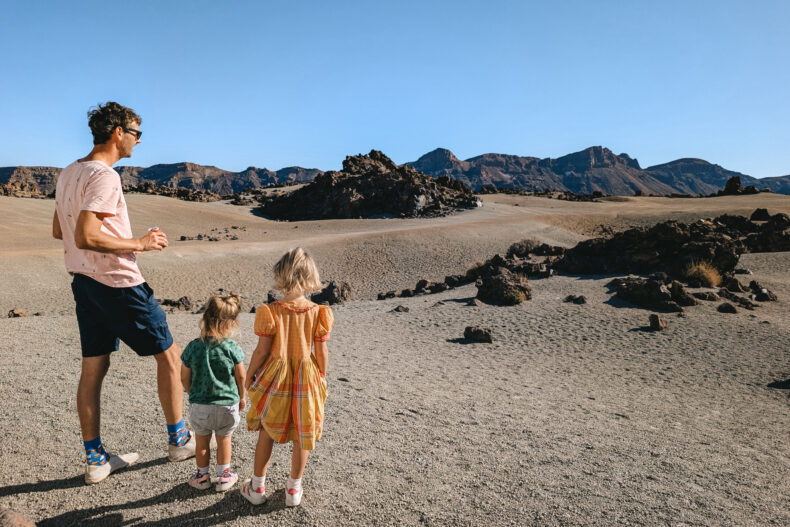
Avoiding mass tourism on Tenerife is easier than you might think. By staying away from the busiest coastal areas around Costa Adeje, planning your days wisely, and venturing further inland, you can uncover a completely different side of the island. Starting early in the day helps a lot, as does choosing lesser-known beaches and hiking trails.
The north and the island’s interior are your best friends if you are looking for peace and quiet. In Anaga, La Orotava, Icod, and the Teno Mountains, Tenerife feels much more authentic. The roads twist along hillsides, the villages are smaller, and the landscape is greener, naturally slowing down the pace. Here, you can often find viewpoints all to yourself.
Early mornings are especially rewarding. Popular spots like Roques de García, Masca, and Los Gigantes feel completely different if you arrive before the crowds. The light is softer, the temperature is more comfortable, and parking is not yet a problem. For a few magical hours, it can feel as if the island belongs entirely to you.
Choosing quieter alternatives to the main beaches also makes a big difference. Playa Amarilla, the rugged northern beaches, and the lava pools at Los Silos offer a natural atmosphere and plenty of space. Here, the ocean takes center stage instead of sun loungers and busy promenades. Lesser-known hiking trails reveal yet another side of Tenerife. The Masca Gorge and Barranco del Infierno are popular for good reason, but the trails in Anaga, the young volcanic landscape near Chinyero, or the silent lava fields of Malpaís de Güímar show the island’s variety without large groups crowding the paths.


Tenerife Off the Beaten Path: 15 Unique Tips
#1 Volcán Chinyero
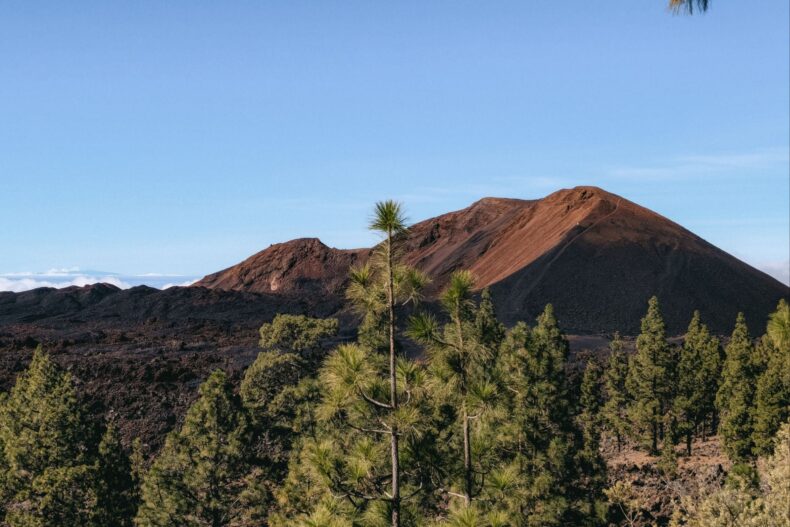
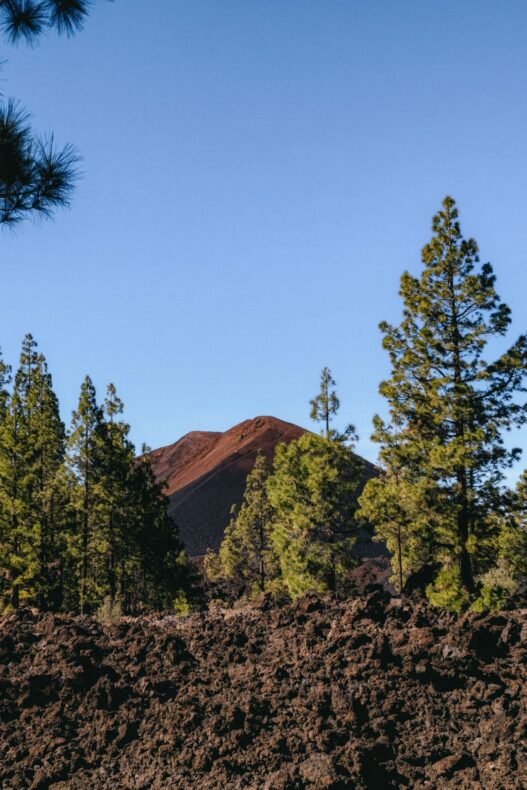
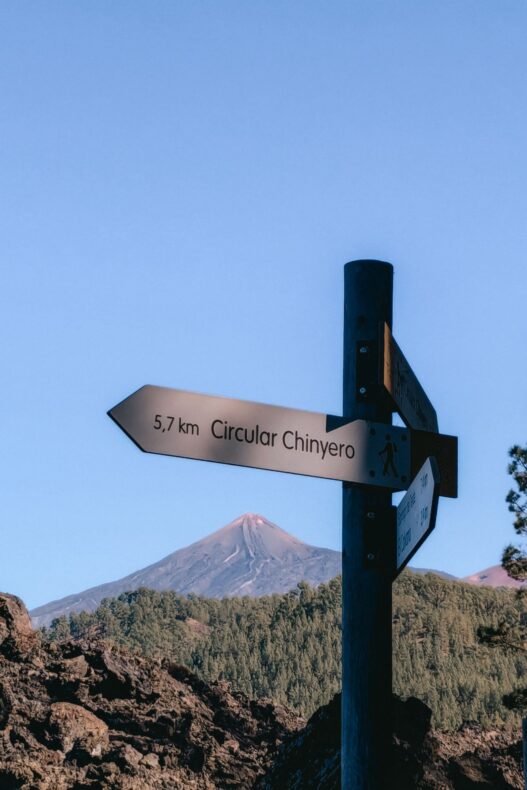
Volcán Chinyero is a young volcano, and its youth is immediately obvious. Its sharp cone rises dramatically from the landscape, with black lava that flowed down the slopes in thick, striking streams back in 1909. The area feels far quieter than the main attractions in the national park. Trails around the volcano wind through a mix of pine forest, loose volcanic ash, and solidified lava plates, where you can still clearly see how intensely hot lava once swept across the ground. The hiking route is very accessible and surprisingly flat, giving you plenty of time to take in your surroundings. On clear days, the views towards Teide are breathtaking.
Parking is available along the TF-38 at several trailheads. For us, the recreation area of El Chio served as the starting point. Campers can also stay overnight here with a free permit. Chinyero is a wonderful place to experience just how young volcanic landscapes can feel and to see how different this part of Tenerife is compared to the heavily visited Teide caldera.
#2 Arco de Tajao
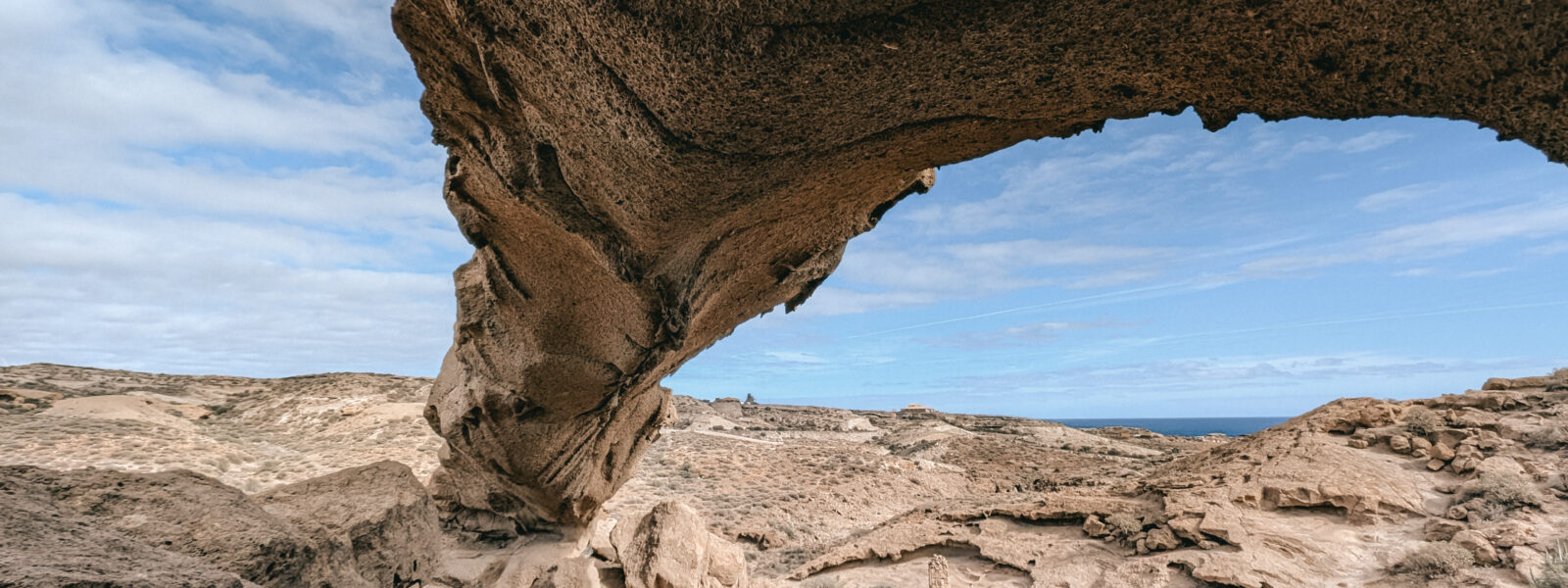
The Arco de Tajao is a natural rock arch, carved over time by wind and erosion. It rises from a dry, almost desert-like landscape on Tenerife’s southeast coast, just a short walk from the village of Tajao. From the parking area, it takes only a few minutes to reach the arch.
The arch itself is impressively large, standing alone in the middle of an open plain. Most visitors admire it from above, but the best view comes when you walk closer. You can pass underneath, climb the surrounding rocks, and take some truly striking photos.
There is no shade at the site, but near the parking area you will find a small food truck serving snacks and drinks. This is a short but surprisingly rewarding stop, ideal for anyone exploring Tenerife’s southern coast.

#3 Malpaís de Güímar
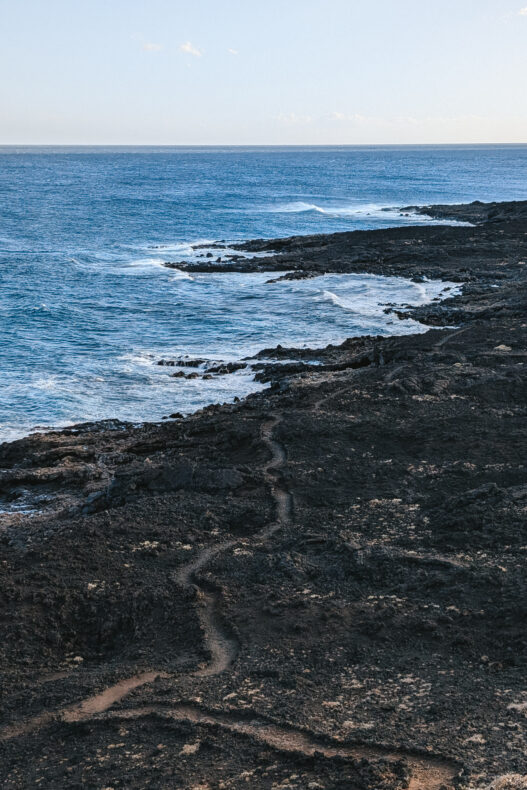
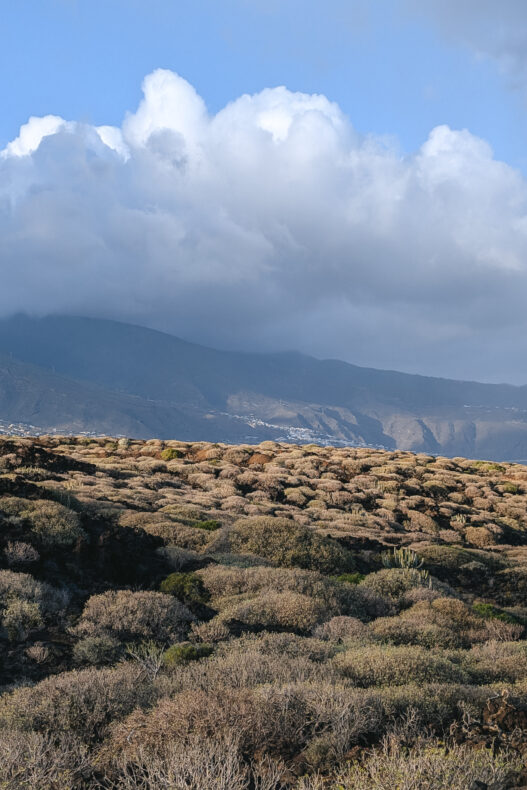
Malpaís de Güímar is a vast lava field that gives you a glimpse of what a young volcanic landscape looks like when wind and sun shape it freely. The open area is made up of dark rock plates, lava tunnels, rugged hills, and hardy shrubs that thrive in the warm, dry climate. A coastal walking trail leads past natural rock arches and climbs up to a viewpoint, offering sweeping views of the surrounding terrain. There are also paths that wind through the rough interior, heading toward the volcanic cone of Montaña Grande, making it possible to complete a full circular hike.
Tip: Nearby, you can also visit the Pirámide de Güímar, often celebrated as one of Tenerife’s hidden gems. In our experience, it was a little underwhelming, as it sits among modern buildings rather than in a truly secluded setting.
#4 Playa Amarilla
Playa Amarilla, on Tenerife’s south coast near the village of Guia de Isora, is far from an ordinary beach. As the name suggests, the sand and rocks often glow in shades of yellow and gold, creating a striking contrast with the black lava that stretches further along the coast. The landscape was shaped as volcanic rocks were deposited over time and then weathered by wind and sun, forming natural shapes that almost look like sculptures. Along the shoreline, jagged rock formations, crevices, and small coves trap water as the waves recede, creating ever-changing mini pools.
The water is wonderfully clear, making this a popular spot for snorkeling and even diving. Parking is available nearby, and the beach is just a few meters’ walk from the car. Facilities are limited, with only a small cocktail bar offering a relaxed, bohemian vibe. Playa Amarilla is the perfect stop if you want to experience a mix of volcanic landscape and beach without the crowds of the larger, more popular beaches.


#5 Arenas Negras Volcano
Arenas Negras sits on the northern side of the Teide area and was formed during the eruption of 1706. That powerful eruption blanketed the region in black ash and lava and destroyed the harbor of Garachico, which at the time was the island’s main trading hub.
The recreation area of the same name, with its parking lot, lies among pine forests that have grown back after earlier fires. The site is reached via a bumpy road of about three kilometers. The picnic area offers tables, open spaces, and a simple playground. On weekends, it becomes a lively and popular spot for locals from Tenerife looking to enjoy a relaxed day outdoors.
The walk to the base of the volcano begins from this recreation area and winds through forest, over rocks, and across black lava plains. The trail around the volcano is fairly short and suitable for families, while longer paths connect the surrounding ridges. It is also possible to spend the night in the recreation area with a camper or tent, though a free permit must be requested in advance.

#6 Los Silos & Charco de Los Chochos
Los Silos, on Tenerife’s northwest coast, has a calm yet rugged charm that fits perfectly with the lava rocks and small villages of this area. The coastline is made up of dark rocks, gentle waves, and a series of natural lava pools, with Charco de Los Chochos being the most well-known. The water in the pools is crystal clear, showing shades of green and blue when the tide is low. From the rocks, you can take in a stunning view along the coast toward Buenavista and watch the ocean quietly brushing against the dark lava plates.
From Los Silos, you can also enjoy a striking coastal walk. The trail begins near the parking areas and leads past a black sand beach, a large reconstructed whale skeleton, several rock pools, and blowholes where you can hear the sea rushing through. Here, we discovered a very different side of Tenerife, with a wild and untamed coastline, rarely visited lava pools, and almost no other visitors to share it with.


#7 The Abandoned Sanatorio de Abona
Nestled between sand dunes and gusting winds on Tenerife’s southeast coast lies the Sanatorio de Abona, an abandoned hospital that never once treated a patient. Built in the 1930s, it was intended as a leprosy hospital, complete with a church, doctors’ houses, and patient wards. Yet before it was finished, changes in medical treatment for leprosy brought the project to a halt. Since then, the site has remained unfinished, open to the elements, and largely forgotten.
Today, visitors can wander freely across the grounds. Concrete skeletons of buildings stand alongside rusted staircases, graffiti-covered walls, and sand drifting through empty windows. The site is reached via an unpaved road off the highway just past Abades. There are no gates, signs, or guides, so plan to visit during daylight, wear sturdy shoes, and watch your step. For photographers and explorers alike, this is one of Tenerife’s most striking and atmospheric abandoned locations.
#8 Mummies at the MUNA Museum
In Santa Cruz de Tenerife, you’ll find the Museo de la Naturaleza y Arqueología (MUNA). This fascinating museum delves into the history of the Canary Islands, with one of its main attractions being the mummies of the Guanches, the original inhabitants of Tenerife.
For children, it offers an exciting and educational experience. During our visit, one mummy was on display. A replica of an original kept in Madrid, alongside a collection of skulls. The mummy was presented in a dedicated exhibition, complete with an informative film. The museum also showcases fossils, taxidermy animals, ancient tools, and a variety of archaeological finds.
The museum’s layout is clear and accessible, making it suitable for children from around four years old. It’s a great way to add a touch of culture and history to your holiday, especially if you are already in Santa Cruz. Inside, it is cool, quiet, and calm, allowing you to explore the rooms at your own pace and really take in the displays.


#9 Montaña Roja
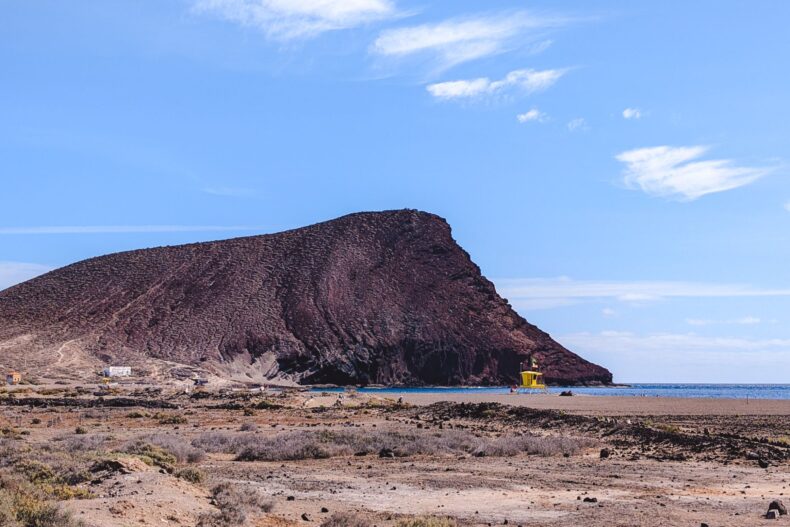
Montaña Roja, just beside El Médano, is one of the most recognizable landmarks on Tenerife’s south coast. The volcanic cone is made of red rock that seems to glow when the sun begins to set. The trail to the summit is short but steep, offering a rewarding climb with breathtaking views over the surrounding landscape. Below, the terrain is dry and rugged, dotted with low shrubs and rough lava stones.
From the top, you can admire the two beaches that stretch out on either side of the red rock, making the effort of the climb completely worthwhile. One beach attracts families and nudists, while the other is a lively spot for wind and kitesurfers. Thanks to the open setting, the climb never feels stifling, even on warmer days. At the base of the volcano, rocks are alive with small red crabs.
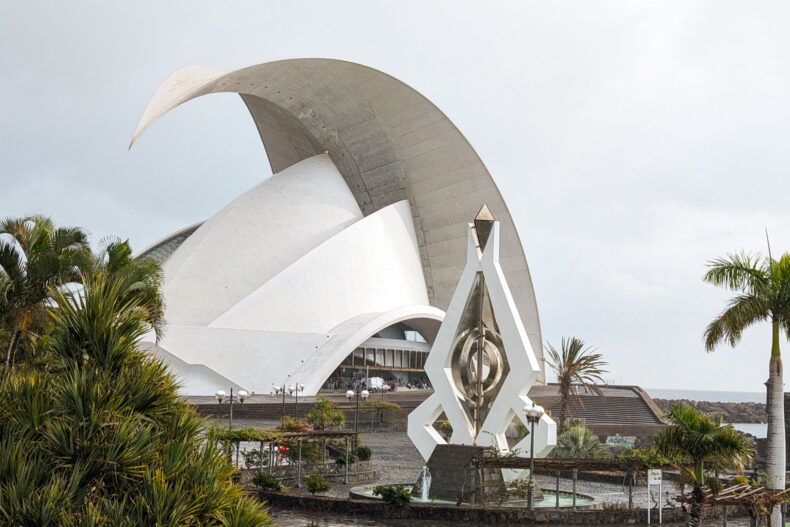
#10 Auditorio de Tenerife
The Auditorio de Tenerife rises like a striking white wave at the edge of Santa Cruz’s harbor. It’s impossible to miss. The building was designed by Santiago Calatrava, the same visionary architect behind the Liège train station and the opera house in Valencia.
Since opening in 2005, it has become one of Spain’s most modern concert halls and a true symbol of the city. Its shape can appear as a sail, a wave, or even a shell, depending on where you stand. Inside, you’ll find classical concerts, dance performances, and festivals, but even if you’re not attending a show, a stroll around the exterior is well worth your time. The white facades, the plaza with views of the sea, and the sweeping staircases make it an incredibly photogenic location. The auditorium is also situated right next to the unique swimming pools of Parque Marítimo, making it easy to combine both attractions in a single visit.
#11 Playa de Benijo & Playa Almáciga
Playa de Benijo and Playa Almáciga are two of Tenerife’s most stunning beaches. Hidden away on the north coast of Anaga, they lie beneath steep mountains that drop dramatically into the ocean. The black volcanic sand creates a striking contrast with the white surf and the lush green cliffs rising behind it. Surfers take on the powerful waves, while photographers wait patiently for the golden glow of sunset to light up the scene.
The ocean here is wild, so swimming is not always safe. During our visit, the red flag was raised as the waves grew stronger at high tide. It’s important to watch the conditions carefully, as Tenerife’s seas can be dangerous, with far too many fatal accidents over the years. From the road above the beaches, you can enjoy breathtaking views of the coastline, and this is also where you’ll find plenty of parking.

#12 La Giganta
In the small village of Buen Paso, near Icod de los Vinos, you’ll find a remarkable piece of art: La Giganta, a giant sculpture of a seated woman that seems to grow naturally from the landscape. Created by the artist José Abad, the figure is partially covered with grass and plants, blending seamlessly with its surroundings.
For children, it’s a magical place to spark their imagination. You can wander around the sculpture, climb onto its base, and invent your own stories about this mysterious figure. It rests on a quiet grassy field in a slightly overlooked park, with views stretching out over the surrounding mountains and the sea beyond, creating a serene and inspiring setting for visitors of all ages.

#13 Túnel de Las Hadas
Túnel de Las Hadas sits in the green heart of Anaga Park, tucked away along a winding road between dense laurel forests and steep mountain cliffs. This hidden gem feels like stepping into another world and is undoubtedly one of Tenerife’s most magical, fairy-tale-like sights. A wide road cuts through the mountain here, bordered by towering walls draped in thick layers of moss, ferns, and twisting tree roots. Sunlight filters through the leafy canopy above, creating a natural tunnel of greenery that fills the passage with a mysterious, almost silent atmosphere. When mist drifts through, the place truly feels as if it has been plucked straight from the pages of a storybook.
The tunnel is located just a short distance from the Mirador Pico del Inglés along the mountain road. You can pull over and walk through it in a matter of minutes, although during our visit the area was quite busy with lines of cars. If it’s crowded, parking at the viewpoint and walking back to the tunnel is a good option. It’s a small stop, but exactly the kind of place that makes a road trip through Anaga unforgettable, leaving you with a sense of wonder long after you’ve passed through.

#14 Street Art in Puerto de la Cruz
In Puerto de la Cruz, art doesn’t stay behind museum walls; you will find it alive on the streets. In the old fishing neighborhood of La Ranilla, the most vibrant murals transform entire buildings into canvases. Giant portraits, surreal shapes, political messages, or simply images that make you smile fill the walls, creating a colorful, ever-changing outdoor gallery. Over the past few years, the neighborhood has grown into the creative heart of northern Tenerife, thanks in large part to the Puerto Street Art festival, where both international and local artists were given complete freedom. What started in 2014 as a small artistic initiative has blossomed into an open-air museum that continues to inspire.
Most of the artworks can be discovered along Calle Mequinez, Calle Lomo, and the narrow side streets weaving between them. Take your time, look up, and pause often, as there is no need to rush. Many pieces tell stories of the city, the sea, or everyday life on the island, turning what might seem like a simple stroll into a rich journey through art, culture, and the vibrant soul of Puerto de la Cruz.


#15 Minas de San José
Minas de San José grabs your attention with the unique lightness of its landscape. This wide plain is made up of pumice, ash, and soft volcanic sand all remnants of explosive eruptions from centuries past. The name itself harks back to the time when volcanic pumice was mined here, a practice that began in the late 1800s. This white stone was not only valuable for building materials but also found its way into agricultural uses. Over the years, though, all mining activity has come to a halt and the area has peacefully reclaimed its quiet beauty. Now, only the landscape remains to hint at the bustling mining operations that once were.
Located just off the main road that runs through Teide National Park, Minas de San José is easy to find and access. You can park right at the viewpoint and step directly into the open terrain. There’s no fixed trail, but you can wander across the sand and rocks, taking in the surroundings at your own pace. It’s an ideal spot to explore freely, stretch your legs, and capture some stunning photos.


