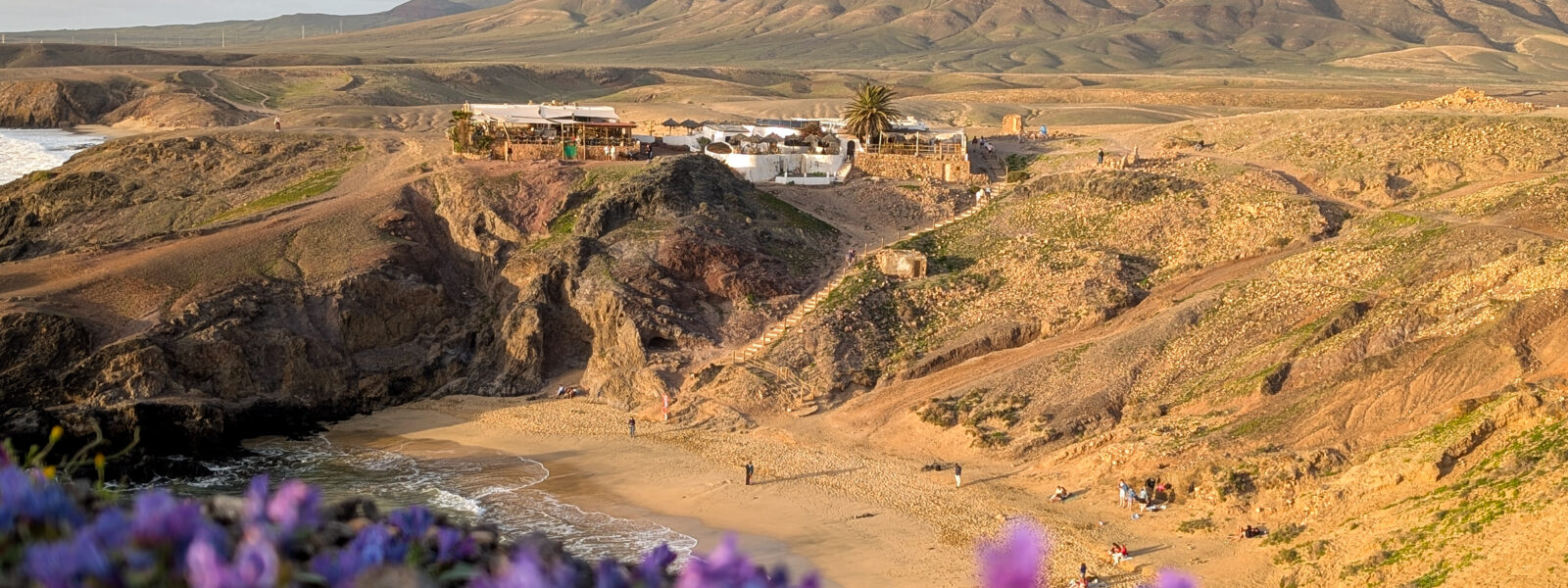
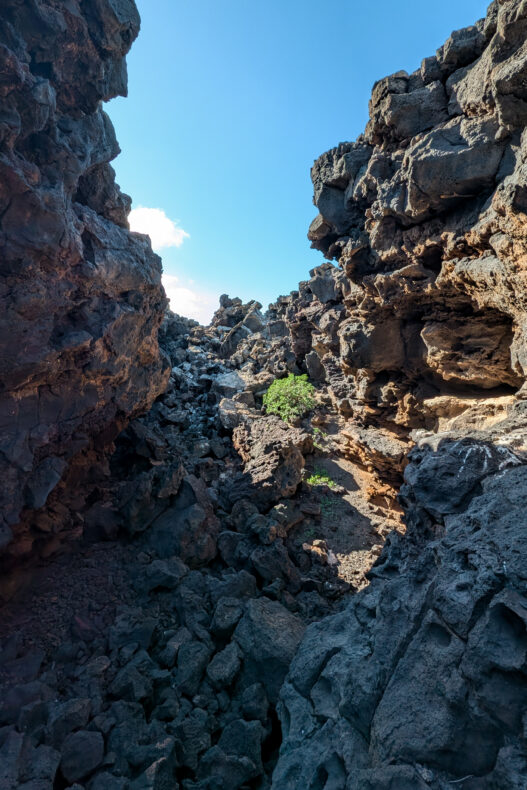
Lanzarote is famous for black lava and red volcanoes. But wrapped around that rugged interior is a coastline full of sandy bays in every shade you can think of: golden in the south, white between the lava rocks in the north and jet black along the west coast. Lanzarote was the last island of our four months in the Canary Islands, and we spread out our towels somewhere almost every single day.
We swam every day, even in winter. The sea is cooler then than in summer, of course, but that didn’t stop us. With our toddler and preschooler we mostly went looking for sheltered coves, while Sebastiaan once hiked down to a remote beach you can only reach on foot.
In this blog you’ll find the best beaches in Lanzarote according to us, where you can swim safely with kids and where you’re better off just watching the waves. For every beach we also tell you how to get there and when to go.
What are the beaches in Lanzarote like?
Lanzarote has more than ninety beaches, and no two are alike. Where you’ll be happiest depends on what you’re after: calm water for swimming, surf waves or an empty beach that’s mostly there to look at.
The south and east are where you’ll find sandy beaches with calm water. Around Playa Blanca, Puerto del Carmen and Costa Teguise they’re often protected by breakwaters or rocks, and that’s also where the sunbeds, showers and beach bars are.
The north and west coasts are a different story. The trade wind blows straight onto them, the waves are big and the currents are strong. Beaches like Famara and Montaña Bermeja will take your breath away, but they’re better for walking than for swimming.
Something you’ll find all over Lanzarote are rock pools in the lava. At low tide, bright blue pools are left behind, shallow and sheltered, where kids can hunt for tiny crabs and fish. So check the tide before you go, because on many beaches it decides what the day will look like.
Which are the most beautiful beaches in Lanzarote?
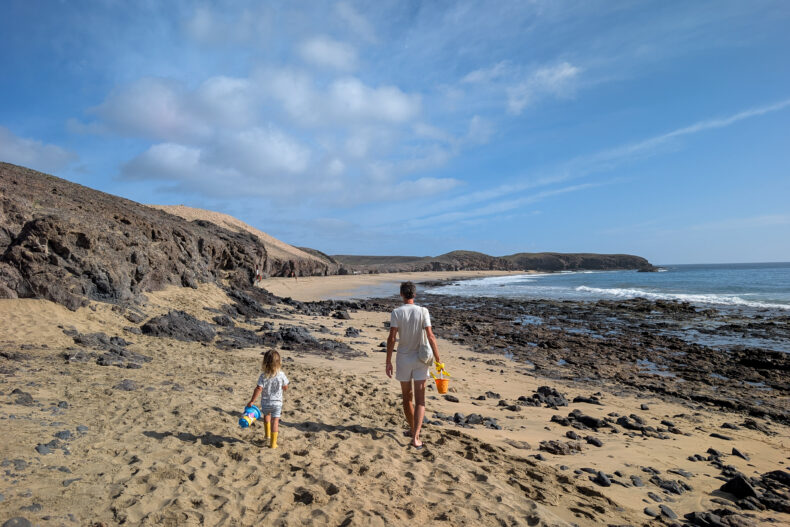
If we had to pick just one, it would be the string of coves at Papagayo in the south. Caleta del Congrio in particular, the beach next to the famous Papagayo, was our favourite on the whole island: wider, quieter and with Fuerteventura on the horizon.
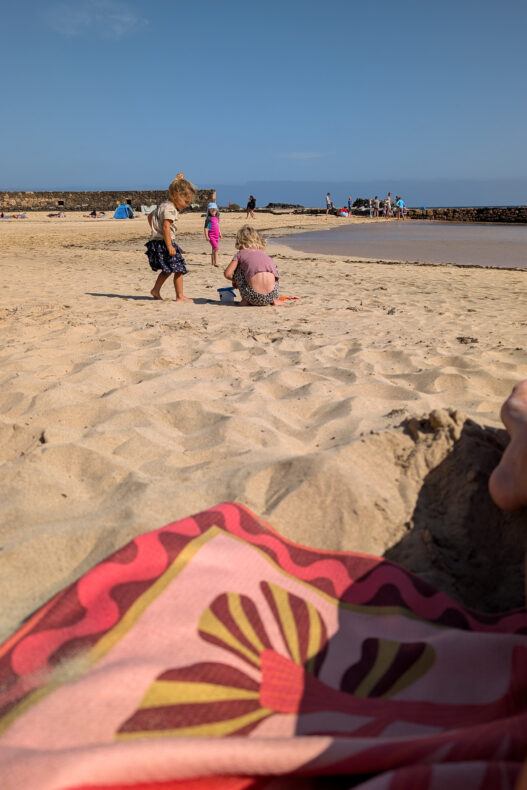
In second place is Playa Jablillo in Costa Teguise. It’s not spectacular, but if you have little kids, few beaches in the Canary Islands come close. At low tide the lagoon behind the breakwaters turns into a paddling pool full of fish.
Up north, Caletón Blanco is stunning at low tide, with white sand and clear blue pools between the black lava. It was chilly the day we went and we didn’t go for a dip, but even then it looked gorgeous.
The best beaches in Lanzarote for kids
Travelling with kids? Then the south and east are your best bet. Playa Jablillo in Costa Teguise is the safest choice for toddlers, thanks to the breakwaters and the shallow water. In Playa Blanca, Playa Flamingo is a sheltered bay with a step-free promenade, which makes life easy with a pushchair.
Puerto del Carmen works well with kids too. Playa Grande has lifeguards and a playground, and in the little cove of Playa Chica children can spot fish with nothing more than a pair of goggles. The coves of Papagayo shelve gently into the sea, but there are no facilities, so bring everything you need.
For rock pooling, head north. Caletón Blanco and the natural pools of Punta Mujeres are a joy at low tide and in calm weather. Famara, Montaña Bermeja and Playa del Risco aren’t swimming beaches for kids, but our two loved running around, digging and hunting for stones there.
For every beach below, the short summary tells you whether it works for kids.
→ Discover 22 fun things to do in Lanzarote with kids
When is the best time to visit Lanzarote for the beaches?
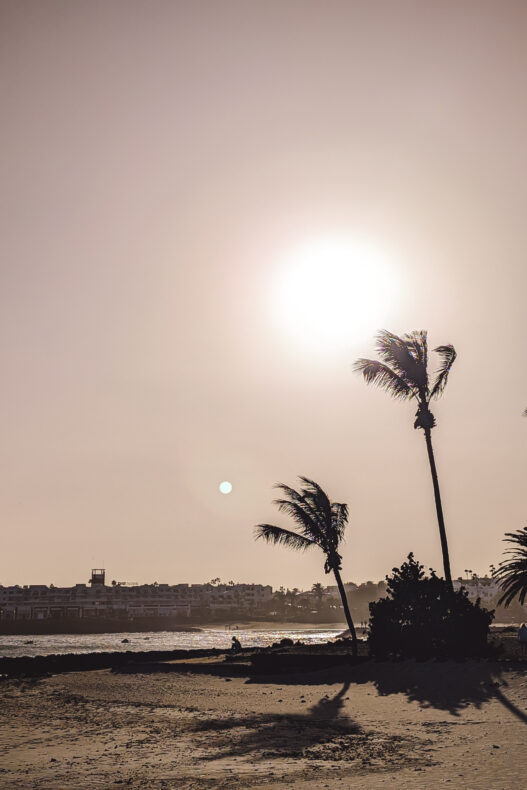
You can hit the beach in Lanzarote all year round. In winter, daytime temperatures usually hover around twenty degrees, warm enough for a beach day out of the wind. The sea is then about eighteen or nineteen degrees. That sounds a bit fresh, and it is, but we still went in every day.
In summer and autumn the sea is at its warmest and you can stay in the water the longest. It can get properly windy then, so on gusty days pick a beach on the sheltered south coast.
Also keep calima in mind, a warm wind from the Sahara that carries fine sand with it. We had it twice. The sky turned yellow and hazy, but swimming was no problem, and after a couple of days it was gone again.
Where to stay in Lanzarote for the beaches?
If you want a different beach every day, base yourself in the south or east. From Playa Blanca you’re at Flamingo, Dorada and the coves of Papagayo in a few minutes. Costa Teguise is the quietest resort, with Playa Jablillo just around the corner.
#1 Princesa Yaiza Suite Hotel Resort sits right on the sand of Playa Dorada, a short drive from the Papagayo coves. With spacious suites, several pools and a huge kids’ area, there’s very little you need to organise yourself.
#2 Hotel LIVVO Volcán Lanzarote looks like a little Canarian village with its white houses and squares, right next to the marina in Playa Blanca. Both Playa Flamingo and Playa Dorada are within walking distance.
#3 Oasis Lanz Beach Mate in Costa Teguise is a few minutes’ walk from Playa Jablillo. You can choose between a room or an apartment with a kitchenette, and there are separate kids’ pools.
→ Discover the 7 best areas to stay in Lanzarote
Do you need a rental car for the beaches in Lanzarote?
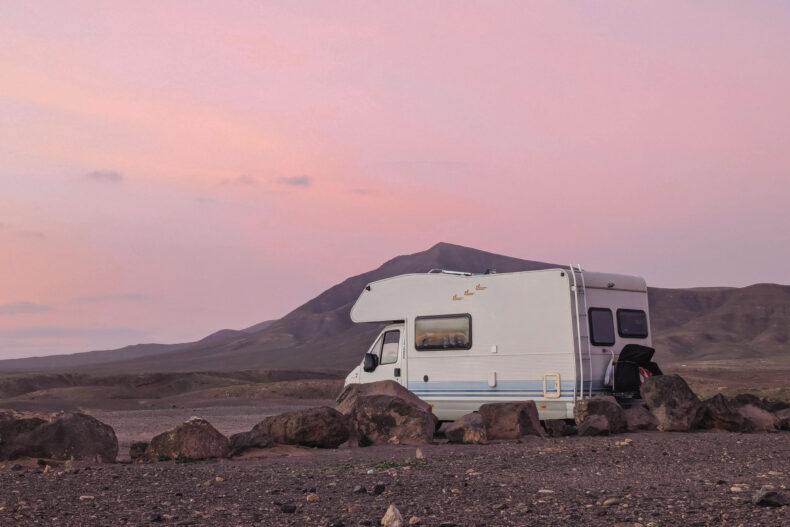
If you want to see more than the beach in front of your hotel, a car is pretty much essential. Papagayo is reached via a long dirt track, and buses barely go to Caletón Blanco or Famara. With your own wheels you can drive north when the tide is low there, or escape to a sheltered beach in the south when the wind picks up.
You can easily compare rental cars on Discover Cars. You’ll see prices from different rental companies side by side, and you can add full cover and a child seat straight away.
→ Compare rental cars in Lanzarote on Discover Cars
The best beaches in the south: Papagayo and Playa Blanca
#1 Caleta del Congrio: our favourite beach in Lanzarote
Walk one cove east from Papagayo and you’ll reach Caleta del Congrio. Here we found what we’d missed at Papagayo: space. The beach is wider, the sand slopes gently into the sea, and across the water you can see Fuerteventura.
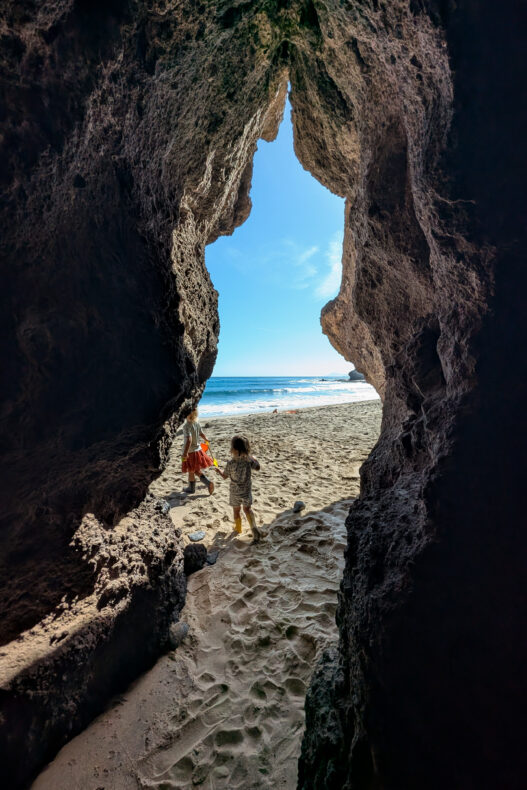
The kids built a sandcastle with a moat that filled up with every wave, while we took turns swimming in the clear water. At the edge of the bay there’s a rock arch you can get up close to at low tide.
Caleta del Congrio is also a nudist beach, so you’ll see naturists, mostly at the edges of the bay. Our kids couldn’t have cared less, but it’s good to know.
When it’s windy, there are more waves here than in the coves towards Playa Blanca. There are no facilities, so bring water, food and something for shade.
In short: swimming yes, choppier when windy | wide golden sandy beach | no facilities | parking along the dirt track, short walk | with kids great for digging and playing | best on a calm day
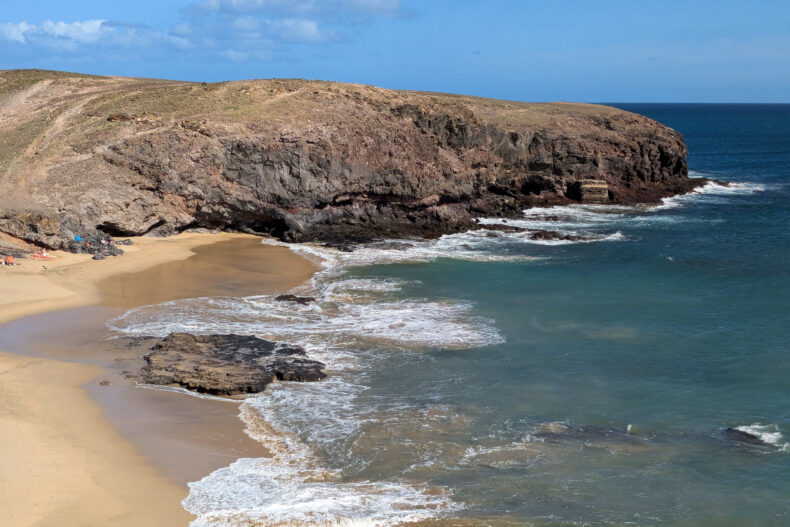
#2 Playa de Papagayo: Lanzarote's most famous cove
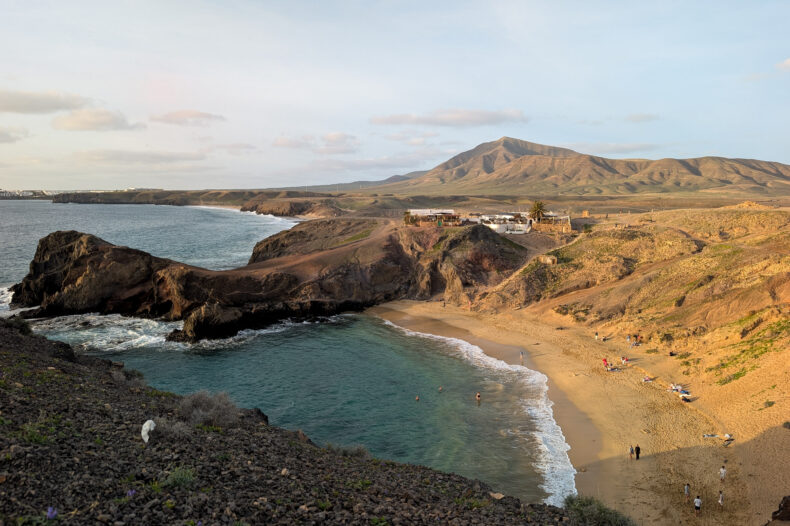
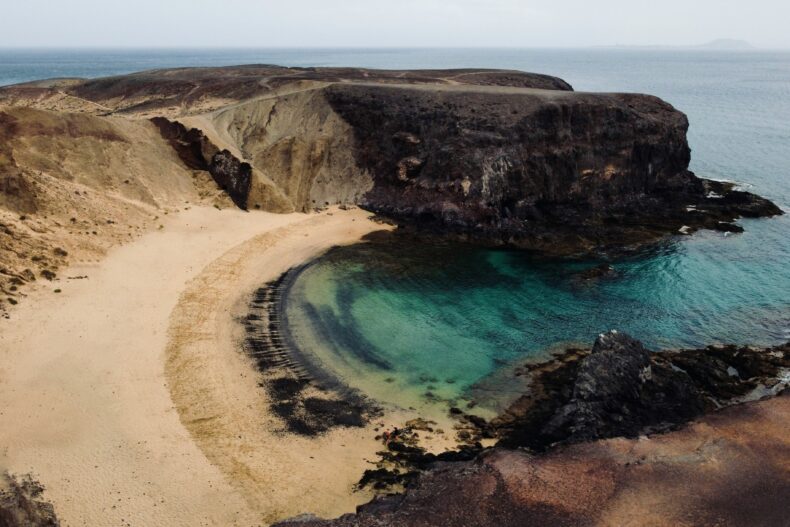
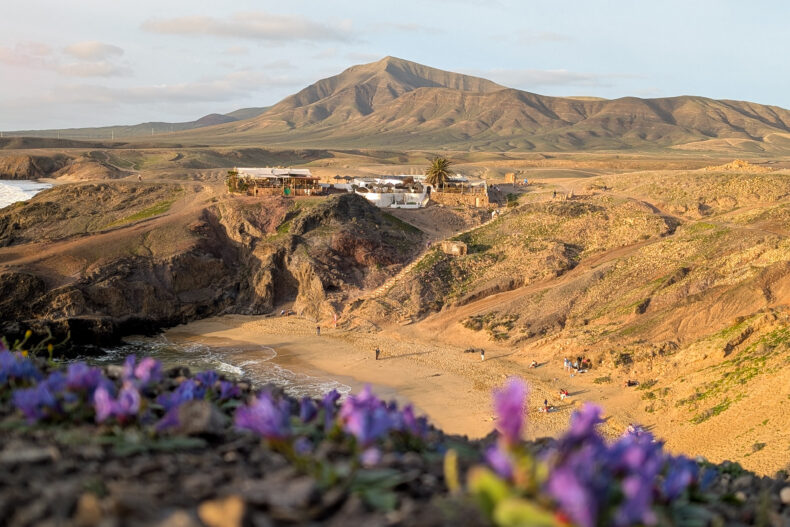
A half-moon of golden sand between high cliffs, with water fading from turquoise to deep blue. Playa de Papagayo is on almost every postcard of Lanzarote, and from the clifftop you instantly see why. The cove lies in the protected Los Ajaches nature area, a few kilometres east of Playa Blanca.
You’ll notice its fame when you get there. During the day the small beach was pretty packed, but we still walked down and Sebastiaan jumped into the clear water. Then we went looking for a quieter spot one cove along. Come early in the morning or late in the afternoon and you’ll have more room here.
Want even more space? Drive to Playa Mujeres, the first and largest of the Papagayo coves and the closest to Playa Blanca. It’s a long, open beach of pale sand where you’ll find a spot even on busy days. Because it faces the open sea more, the waves are often a little bigger.
You reach the coves via a dirt road with car parks above the beaches. You can also walk there from Playa Blanca along the coastal path, or sail past on a catamaran.
→ Sail along the Papagayo beaches on a catamaran
In short: swimming yes, usually calm | golden sand | a beach restaurant above the cove, nothing else | park above the coves and walk down | with kids fine, bring everything | best early in the morning
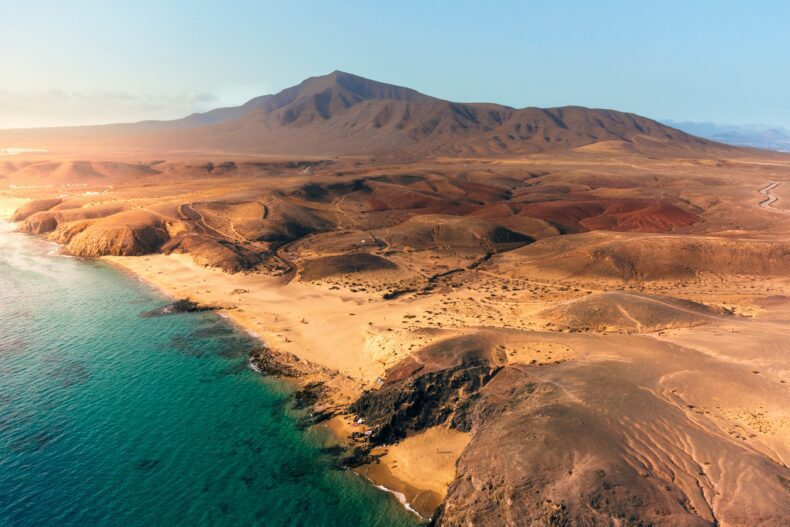
#3 Playa Blanca: Playa Flamingo and Playa Dorada
On the western side of Playa Blanca lies Playa Flamingo, a white sandy beach behind two breakwaters. The water is almost always calm and shallow, which makes it one of the best beaches on the island for little ones. Behind the beach runs a step-free promenade with sunbeds, showers and a few restaurants.
On the other side of the harbour you’ll find Playa Dorada, a wide beach of golden sand with the big resorts behind it. The water is usually calm here too. It’s not worth a special trip, but if you’re staying in Playa Blanca, it’s an easy place for a quick dip between outings.
In short: swimming yes, calm and shallow | white and golden sand | sunbeds, showers, restaurants and shops | park in the streets behind | with kids a winner | best for an easy beach day
The best beaches in the south-east: Puerto del Carmen and around
#4 Puerto del Carmen: Playa Grande and Playa Chica
Puerto del Carmen was our last stop in Lanzarote, and we spent our final lazy beach days on Playa Grande. It’s a long beach of soft, golden-brown sand with a promenade full of terraces behind it. There are lifeguards, showers, sunbeds and a playground, so with kids you have everything at hand. When it’s windy the red flag sometimes goes up, so check before you head into the water.
A bit further west, by the old harbour, is Playa Chica. It’s a small cove between the rocks, usually with calm, clear water. Put on a mask and you’ll see fish all around you straight away. The dive schools know that too, so you’ll share the water with groups of beginner divers.
In short: swimming yes, lifeguards on Playa Grande | golden-brown sand | all facilities, playground, dive schools | park in the streets behind the promenade | with kids great | best for a full beach day
#5 Playa Quemada: a fishing hamlet with dark coves
Between Puerto Calero and Papagayo lies Playa Quemada, a hamlet of white houses along a row of small dark beaches of sand and pebbles. You won’t find sunbeds here, but you will find a few fish restaurants by the water and plenty of peace and quiet.
It’s a great spot for lunch after a walk: a coastal path runs from the marina in Puerto Calero to the village. When the sea is calm you can swim in the little coves, although you’ll be walking into the water over pebbles.
In short: swimming yes, when the sea is calm | dark sand and pebbles | fish restaurants, not much else | park in the village | with kids limited, bring water shoes | best for lunch by the sea
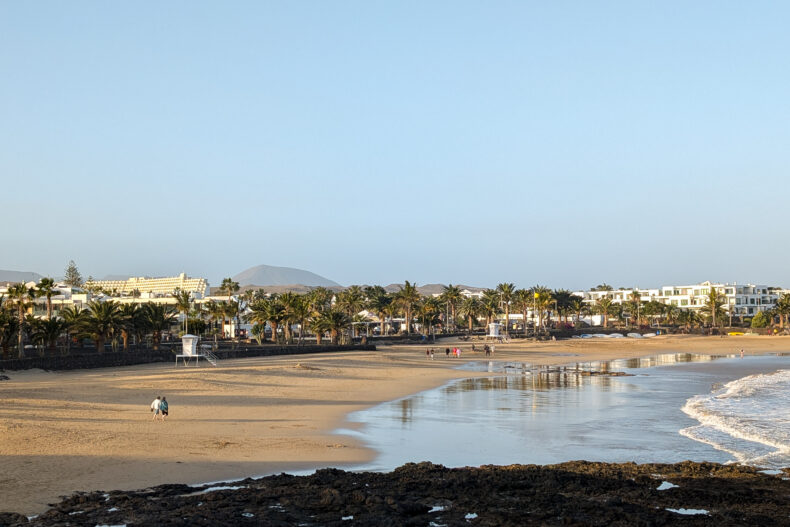
The best beaches in the east: Costa Teguise
#6 Playa Jablillo: a paddling pool in the sea
Playa Jablillo is the smallest beach in Costa Teguise, and for us the best. Two breakwaters close off a lagoon from the ocean. At low tide the water pulls back so far that a shallow pool is left behind, warmed by the sun and full of tiny fish.
Our toddler and preschooler could walk into the water on their own and play at the water’s edge, without us jumping up at every wave. With a fishing net and a few buckets they were happy for hours. There are restaurants and shops around the beach, so we picked up pizza for lunch and ate it on the sand.
At high tide there’s a lot less beach left. So plan your day around low tide; a tide app makes that easy.
In short: swimming yes, calm and shallow | pale sand | toilets, beach bars and shops nearby | park in the surrounding streets | with kids the best beach on the island | best around low tide
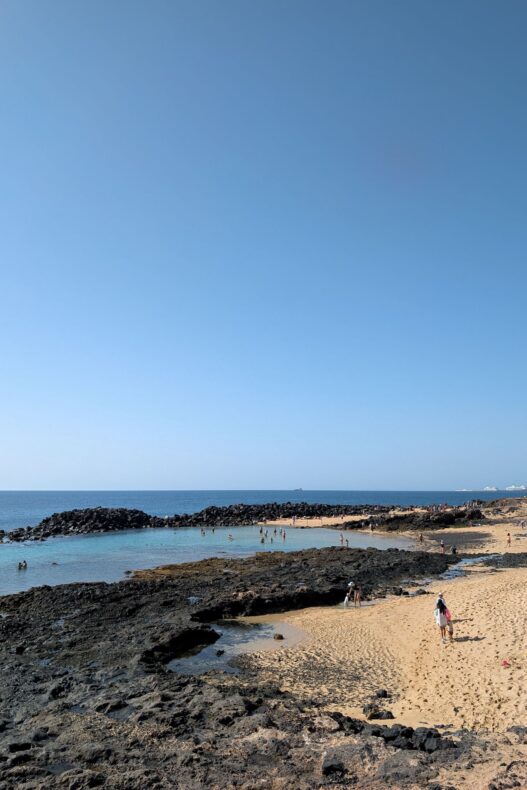
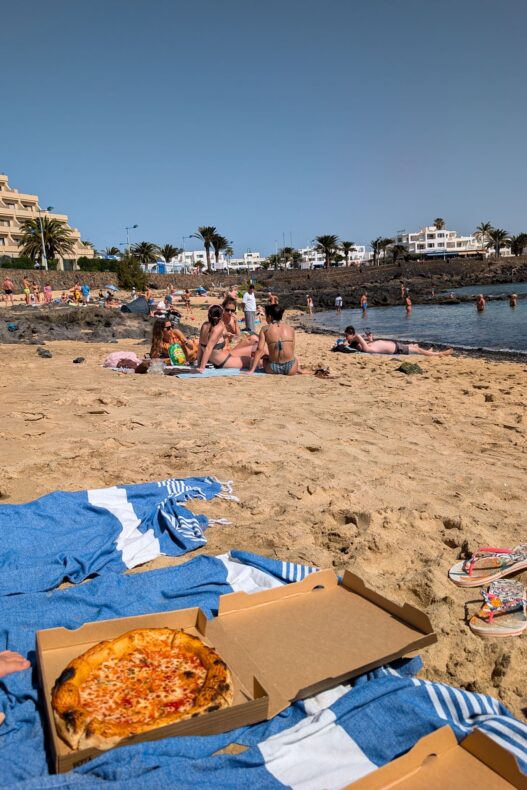
#7 Costa Teguise: Playa de las Cucharas and Playa de los Charcos
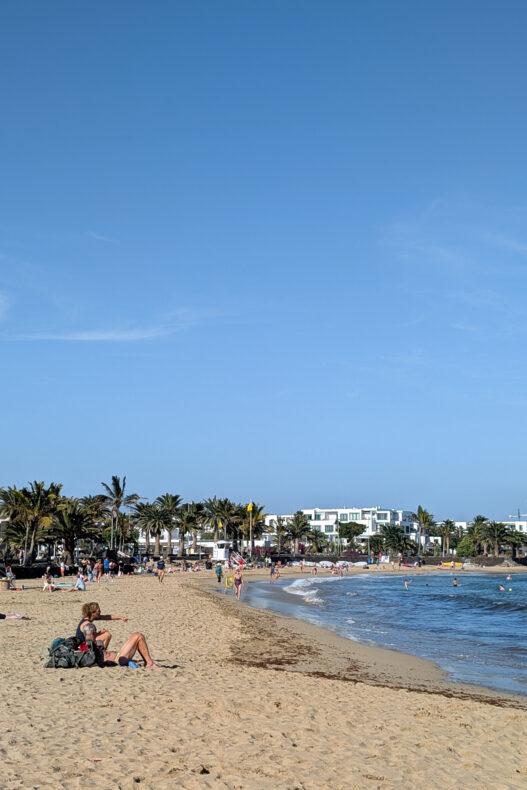
Playa de las Cucharas is the main beach of Costa Teguise, a wide bay of pale sand with a promenade behind it. The northern end is sheltered, while on the eastern side you’ll see windsurfers skimming across the water. There are sunbeds, parasols and surf schools, and along the promenade you’ll find restaurants and ice cream. On a windy day it’s less pleasant here, and that’s when you switch to Jablillo.
On the northern edge of town lies Playa de los Charcos, a small beach of sand and lava rocks. It gets fewer tourists, and at low tide there are little pools between the rocks to peer into. We parked our campervan in the car park next to it and swam further along at Playa de las Cucharas.
In short: swimming yes, sheltered at the north end of Las Cucharas | pale sand and lava rocks | sunbeds, surf schools and restaurants at Las Cucharas | park along the promenade and at Los Charcos | with kids fine on the sheltered side | best on a calm day
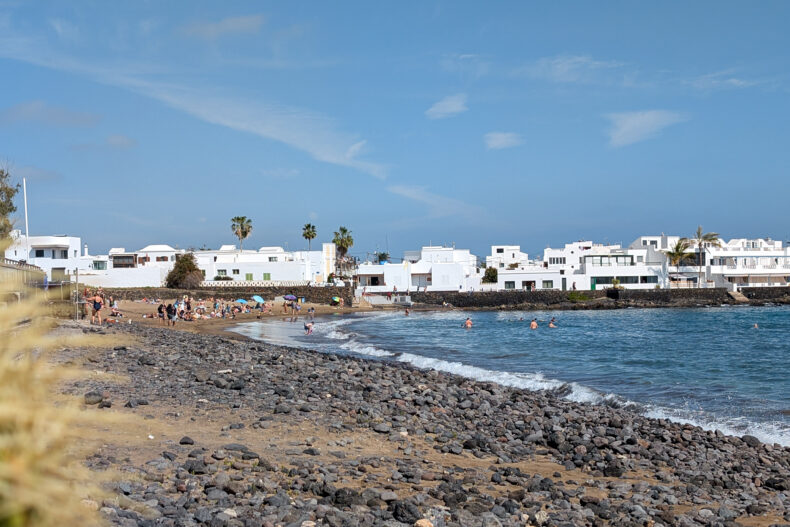
The best beaches in the north-east: Arrieta and Órzola
#8 Arrieta: Playa de la Garita and the pools of Punta Mujeres
After the resorts in the south, Playa de la Garita in Arrieta felt like a holiday from our holiday. It’s a sandy beach on the edge of a small fishing village, with white houses and a handful of fish restaurants. We spent two days with the campervan close to the beach, and it was one of the most relaxed places of our whole trip. The water is a bit rougher than in the south, but on a calm day you can swim here just fine.
A few minutes away is Punta Mujeres, where lava flowed into the sea and formed natural pools. Steps take you down into the water, sheltered by the rocks around it. On a calm day it’s like swimming in a seawater pool. When the waves are high, the water crashes over the rocks and it’s better not to swim.
In short: swimming yes, in calm weather | sandy beach and natural pools | shower and restaurants in the villages | free parking by the beach | with kids good when there are few waves, keep them close at the pools | best on a day with little wind
#9 Caletón Blanco: white sand and blue pools
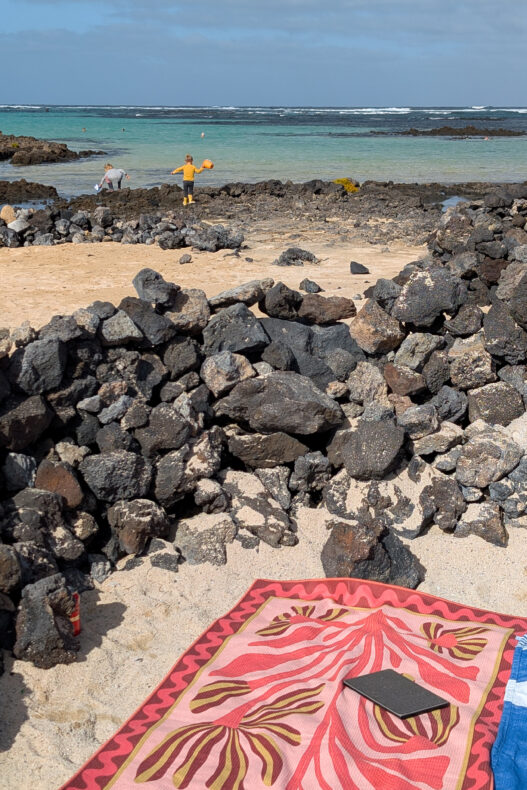
At the very top of the island, just before Órzola, lies Caletón Blanco. Here white sand covers the black lava, and at low tide clear blue pools are left between the rocks. Shallow, calm and crystal clear, they’re perfect for kids hunting for crabs and little fish.
The day we went it was chilly, so we stuck to paddling. Still, at low tide we found it stunning. With sunshine and little wind you could easily spend a whole afternoon here. There are no facilities, so bring food and drinks. In Órzola itself you’ll find fish restaurants and a sea cave along the coast that you can only reach at low tide.
In short: swimming yes, in the pools at low tide | white sand between black lava | no facilities | park along the road | with kids a winner at low tide | best at low tide with little wind
The best beaches in the north and north-west: Risco and Famara
#10 Playa del Risco: only reachable on foot
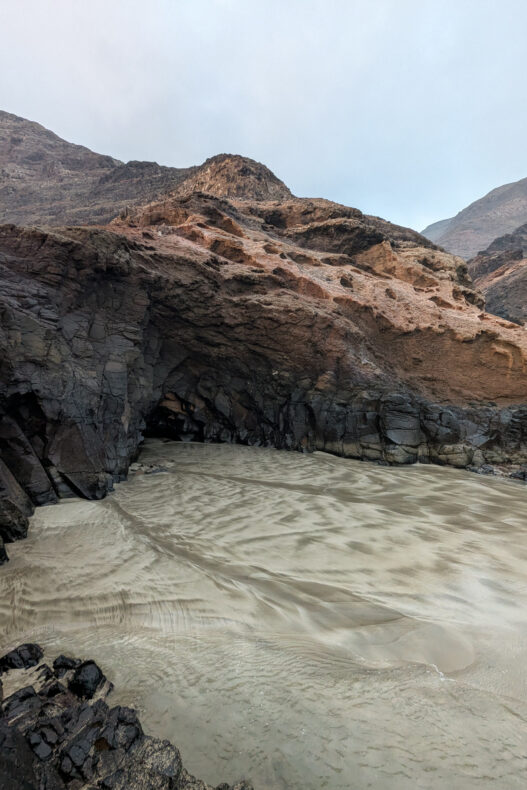
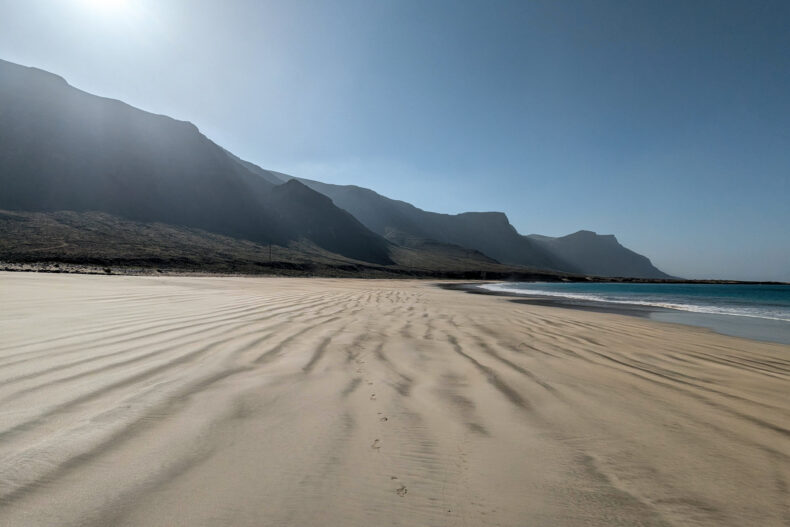
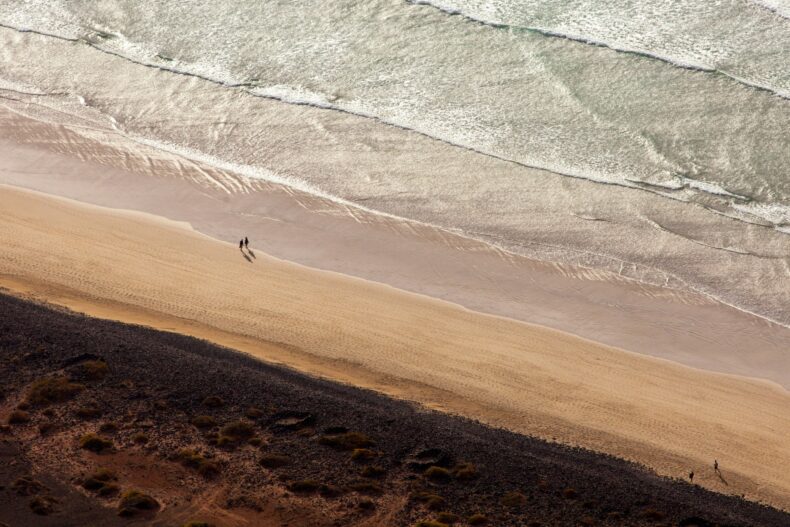
Below the cliffs of the Risco de Famara lies Playa del Risco, a beach you can only reach on foot or by boat. From the edge of the cliffs you can see it below: a golden arc of rippled sand, with La Graciosa across the water.
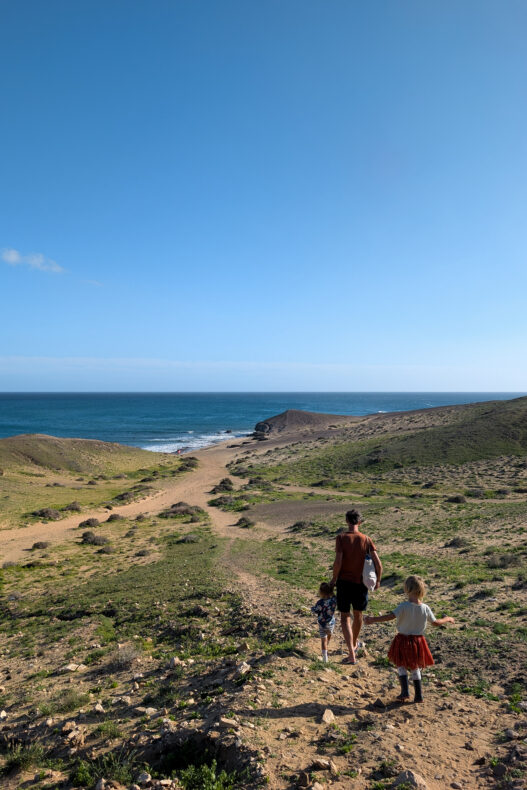
Sebastiaan walked the steep path all the way down. He had the beach almost to himself, with only the ripples in the sand and the sound of the sea for company. The descent is steep and the climb back is tough, so with young kids it’s better to stay at the top. The view from the edge alone is worth the trip.
In short: swimming yes, when the sea is calm | golden sand below the cliffs | no facilities | park at the start of the trail | with kids just the view | best as a proper hike
#11 Famara: a wild surf beach below the cliffs
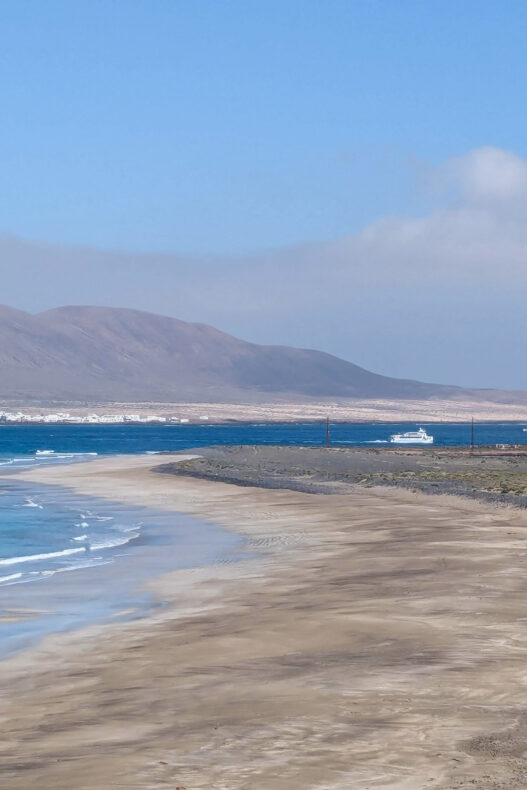
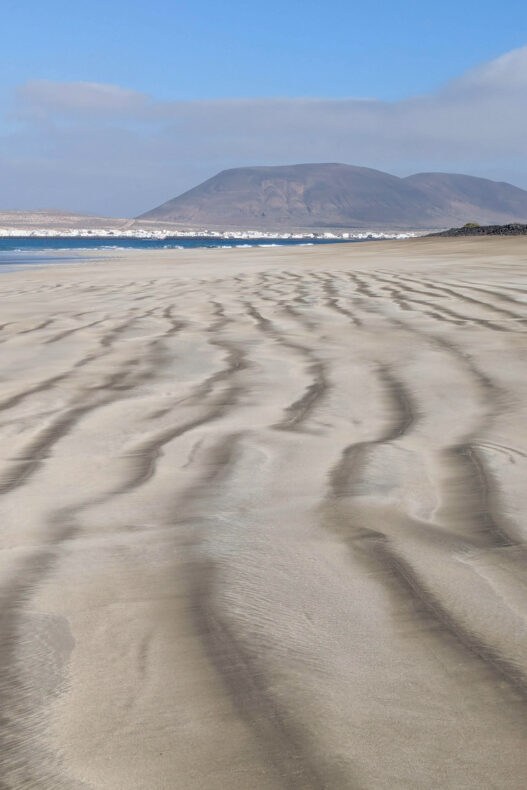
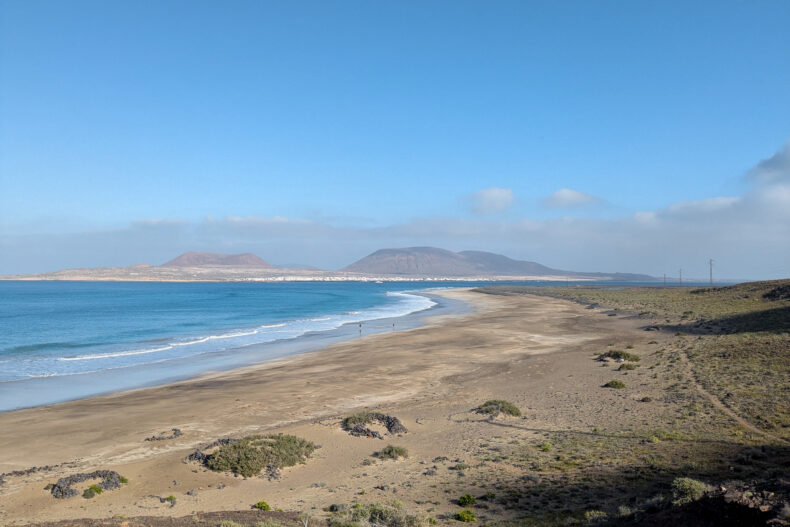
Miles of sand, big waves and behind it all the sheer wall of the Risco de Famara: the beach at Famara is one of the most beautiful spots in Lanzarote, but it’s not a swimming beach. The waves are high, the currents are strong and it’s almost always windy.
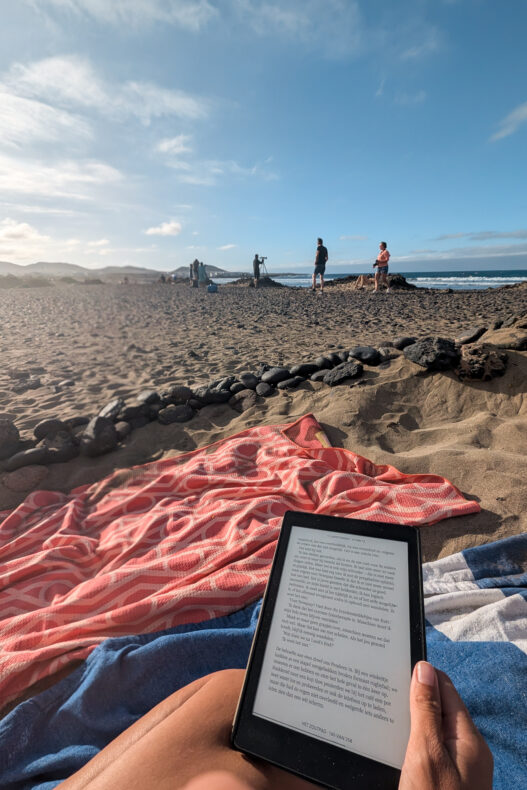
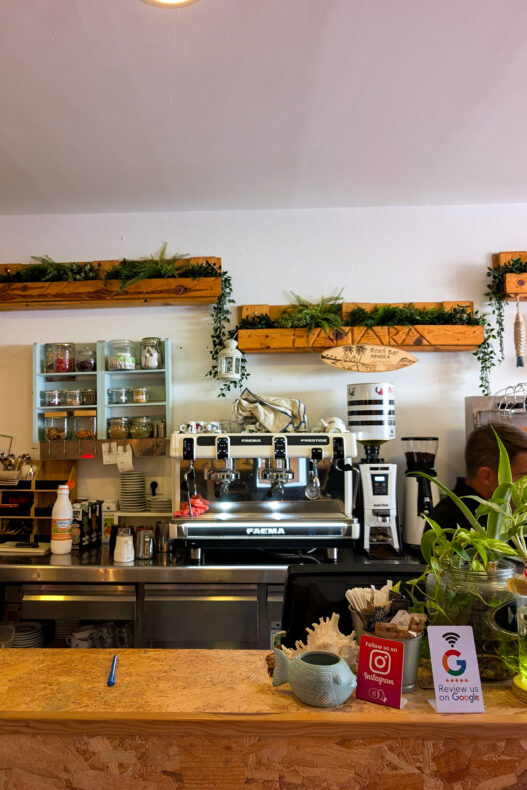
No surprise that it’s mostly surfers you’ll see here. We went for long walks along the beach, read a book below the cliffs and had coffee at a trendy little café in the village. With slightly older kids you could book a lesson at one of the surf schools.
In short: swimming no, waves and currents | wide golden sandy beach | surf schools and cafés in the village | free parking by the beach | with kids great for digging and flying a kite | best at sunset
The best beaches in the west: black lava beaches
#12 Playa de Montaña Bermeja and Playa de Janubio
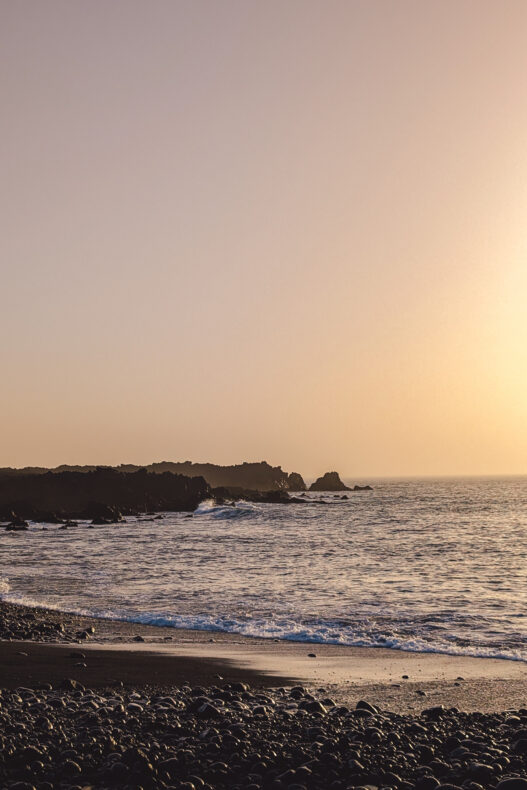
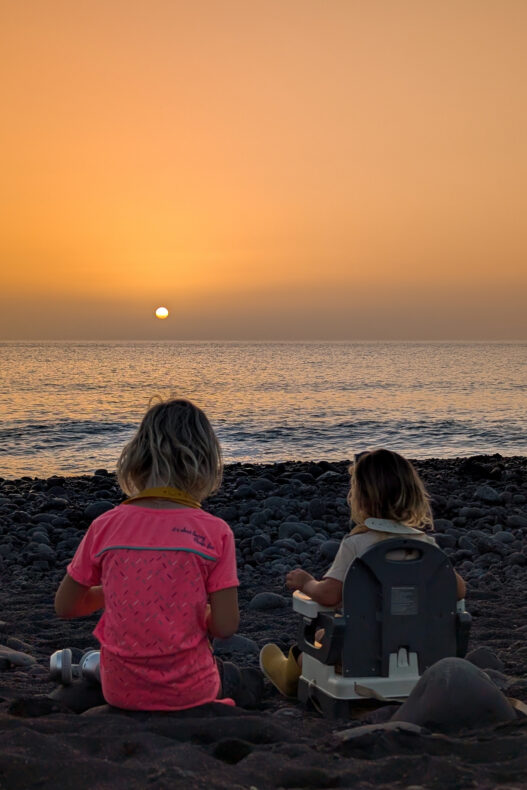
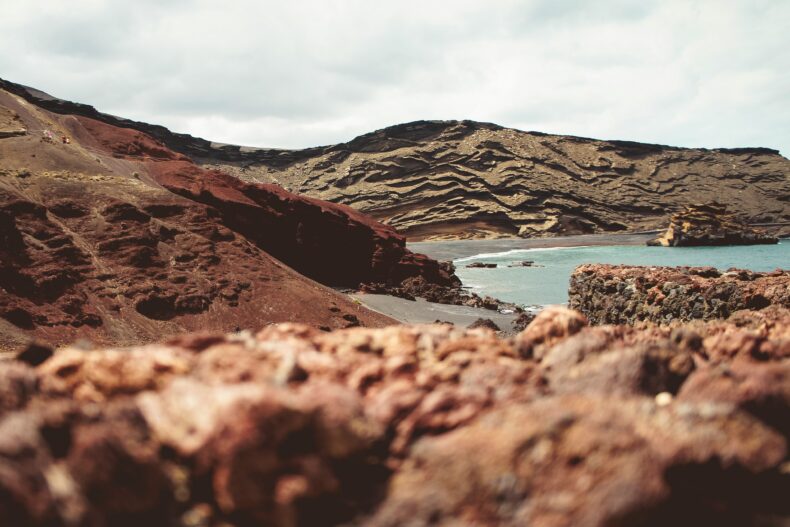
Between Los Hervideros and the Janubio salt pans lies Playa de Montaña Bermeja, a beach of black sand and pebbles at the foot of a reddish-brown volcano. You get there via a stretch of dirt road, and you’ll often have it almost to yourself. We arrived late in the afternoon and stayed until the sun went down, while the kids ran across the black sand.
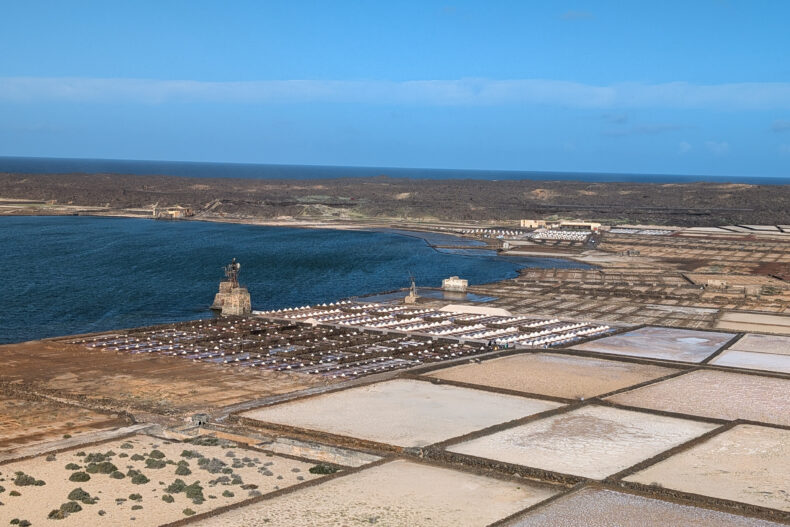
A little further south is Playa de Janubio, a wide black beach next to the salt pans. Behind the sand, the salt fields lie in squares of white, pink and brown. On both beaches the sea is wild and the currents are strong, so swimming is a bad idea. Combine them with El Golfo and Los Hervideros for an afternoon on the west coast.
In short: swimming no, wild sea | black sand and pebbles | no facilities | park along the dirt road and by the beach | with kids great for running and stone hunting | best at sunset
Bonus tips: more beautiful beaches in Lanzarote
#13 La Graciosa: Playa Francesa and Playa de las Conchas
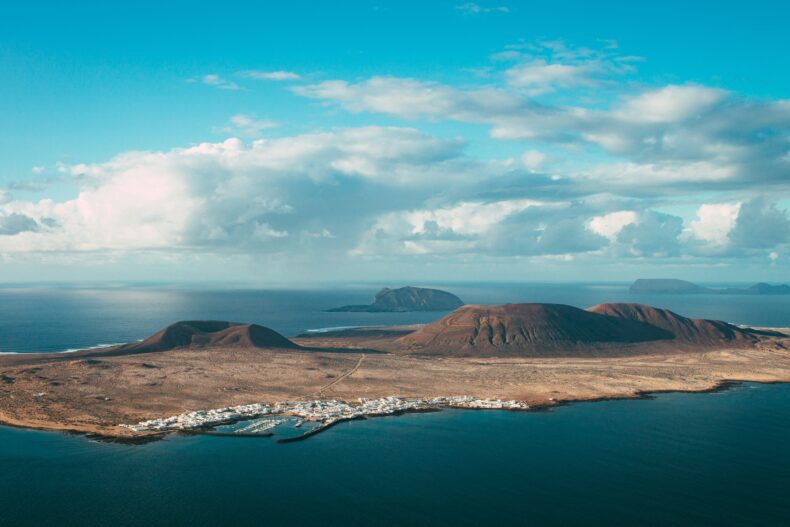
From Órzola it’s about half an hour by boat to La Graciosa, a little island without tarmac roads. We never got round to it ourselves, but you can see it from the cliffs in the north, and that made us curious.
Playa Francesa is within walking or cycling distance of the little harbour of Caleta de Sebo. It’s a sheltered bay with calm, clear blue water, perfect for a swim. On the north side of the island lies Playa de las Conchas, a wild beach of golden sand below a red volcano. Because of the strong currents, swimming there usually isn’t a good idea.
Bring plenty of water and sunscreen, because outside the village there’s hardly any shade and no facilities.
→ Take a day trip to La Graciosa
#14 El Golfo: a black beach by the green lagoon
By the white village of El Golfo there’s a black beach next to the bright green lagoon of Charco de los Clicos. From the viewpoint above you see the colours at their best: green water, black sand and red rocks. Swimming or lying on the beach isn’t allowed, because the area is protected. Afterwards, walk a stretch of the path through the lava fields on the other side of the village.
#15 Visiting Lanzarote's beaches by campervan
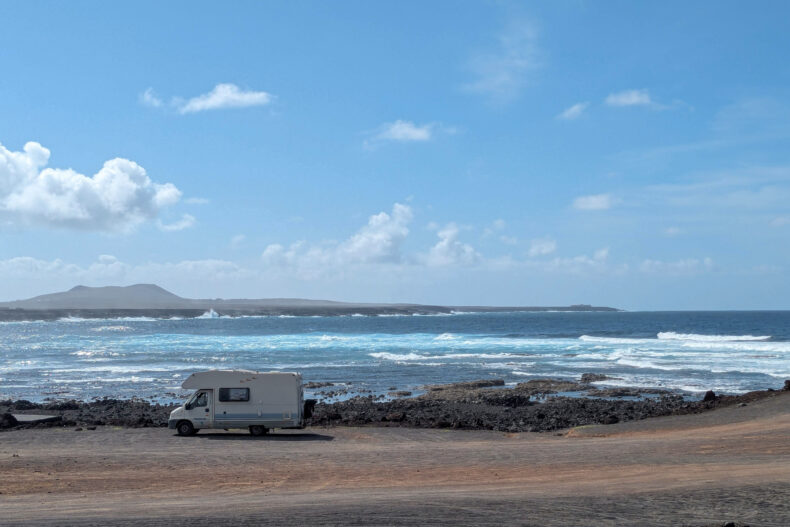
Travelling by campervan? You’ll find a place to park at many of the beaches. We stayed at spots like Playa de los Charcos in Costa Teguise and on the west coast near Los Hervideros, where you can park by the beach in the evening. We found our spots through the Park4Night app. Always read the latest reviews first, because the rules can change.
→ Discover our tips for the Canary Islands by campervan
More tips for your trip to Lanzarote
 Our pickHotels in Lanzarote: from a whitewashed fishing village to a beach hotel in Playa Blanca
 Want to stop wherever you like? Rent a car with Discover Cars and compare the big rental companies in one go.
 No flight yet? Compare flights to Lanzarote.
 See Lanzarote from above, like we did on our tandem flight? Book paragliding and other tours with GetYourGuide.
 Discover all our blogs about Lanzarote


