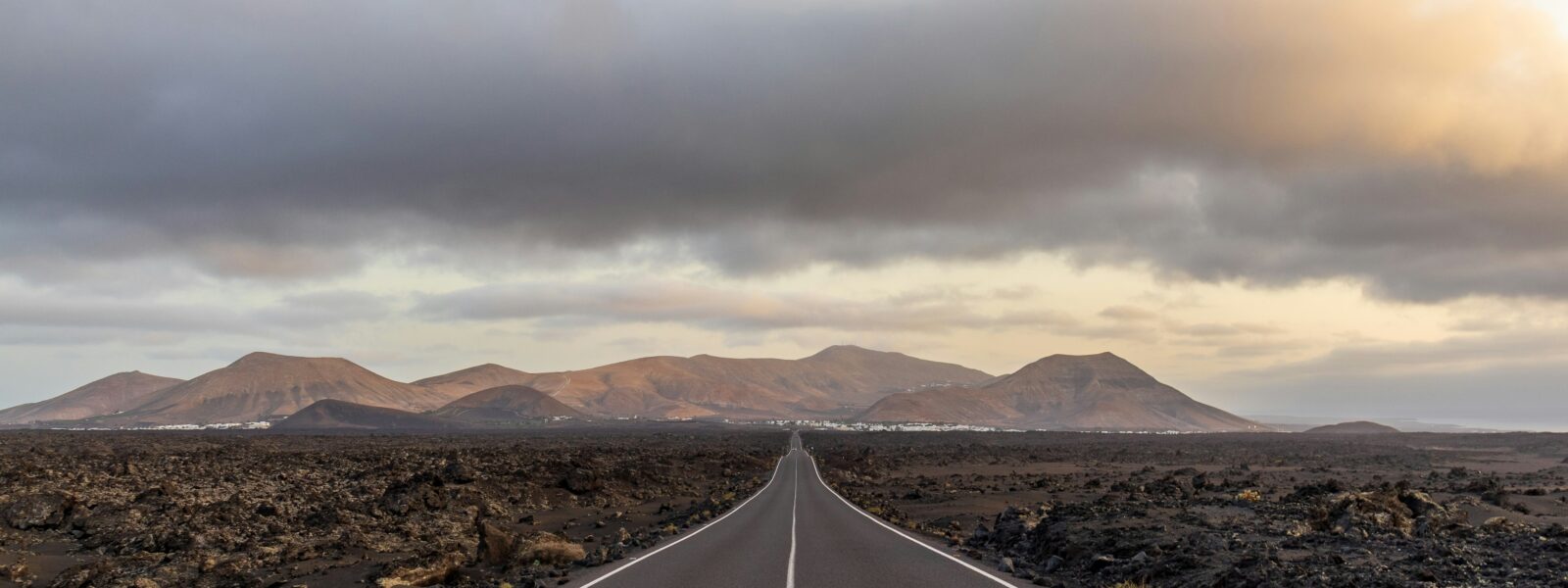
Red craters, black lava fields and, in between, bright white villages with green shutters. Lanzarote was the last island of our long trip around the Canary Islands. We spent just over three weeks there in February, exploring by campervan with our two little ones in the back. We drove from the beaches of Papagayo in the south to the cliffs of Órzola in the north, and stopped at almost everything along the way.
In this guide you’ll find what we think are the best places to visit in Lanzarote, grouped by region. That way you can see at a glance which sights fit into one day. For every stop we tell you what we saw ourselves, what let us down and what you need to know before you go. At the end there’s a four-day road trip route that links the highlights together by car.
Our top 10 places to visit in Lanzarote at a glance
Short on time? These are the ten places we wouldn’t skip:
- Timanfaya and the Fire Mountains (#1)
- Caldera Blanca (#3)
- El Golfo and Charco de los Clicos (#5)
- The beaches of Papagayo (#10)
- La Geria (#11)
- Fundación César Manrique (#14)
- Famara (#19)
- The view over La Graciosa from the cliffs (#21)
- Órzola and Caletón Blanco (#22)
- Jameos del Agua (#23)
What is Lanzarote known for?
Lanzarote is known for its volcanic landscapes and for artist César Manrique, who shaped the way the island looks today. Add a dry, sunny climate, white villages without high-rise hotels and a handful of gorgeous sandy coves in the south, and you’ve got the picture.
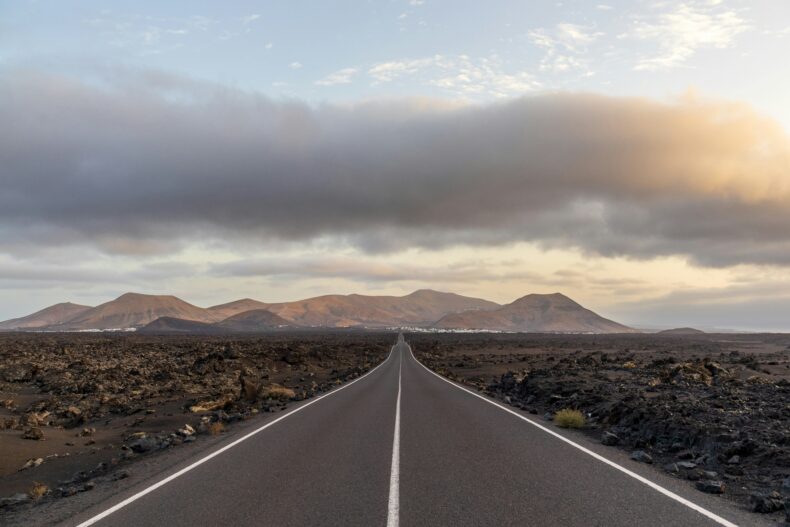
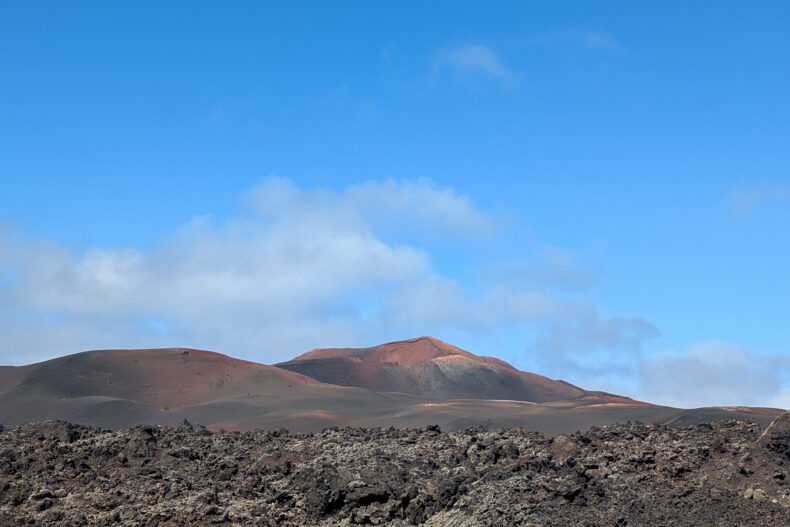
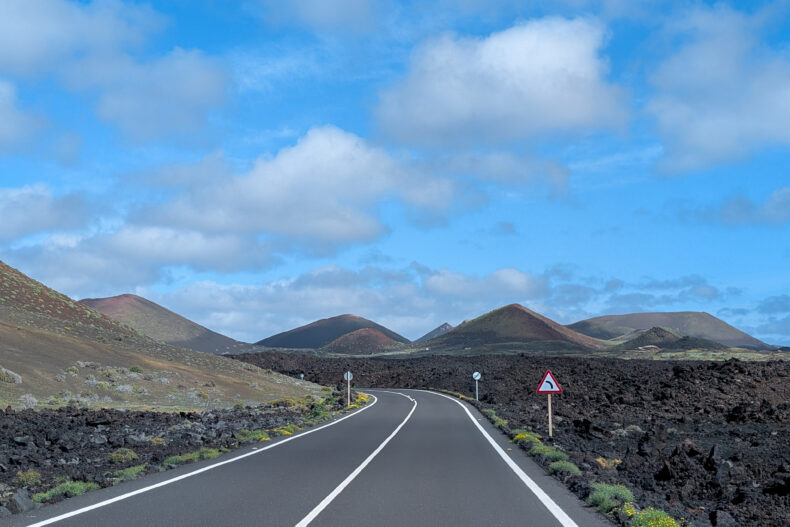
Of course, the volcanoes are what you notice first. Between 1730 and 1736, one of the longest eruptions in recent history buried a quarter of the island under lava. Drive through the southwest and you’ll pass craters, lava flows and slopes in black, rust and ochre. In photos it sometimes looks like another planet.
What really sets Lanzarote apart from its neighbours is the work of César Manrique. This artist from Arrecife made sure the island stayed low-rise and white, without billboards along the roads. He also turned caves, gardens and viewpoints into attractions that blend into the landscape. You’ll come across his work everywhere, from the lava tube at Jameos del Agua to the monument in the middle of the island.
The whole island has been a UNESCO Biosphere Reserve since 1993, and it shows in the way nature and building have been kept in balance. After the crowds of Tenerife and Gran Canaria, Lanzarote felt remarkably tidy and easy to get around.
Then there are the beaches. The golden coves of Papagayo and the long surf beach at Famara feel completely different from the black pebble beaches on the west coast. For swimming, stick to the south and east, because the ocean in the west and north is often wild.
→ Discover the 16 best things to do in Lanzarote
Where to stay in Lanzarote?
Lanzarote is small: it’s a little over an hour’s drive from Playa Blanca in the south to Órzola in the north. You can easily explore the whole island from one base. With kids, our favourite was Costa Teguise. If you’re after peace and quiet, head north, and if you’re mostly here for road-tripping and hiking, a village on the edge of Timanfaya is the nicest place to sleep.
#1 Oasis Lanz Beach Mate is an apartment complex in Costa Teguise, a few minutes’ walk from Playa Jablillo, the calmest beach for little ones we found on the island. There are separate kids’ pools, and with a kitchenette you can sort breakfast yourself.
#2 La Casona de Yaiza is set in a nineteenth-century manor house in the white village of Yaiza, with a pool in the courtyard. Timanfaya, El Golfo and the Janubio salt pans are all within a fifteen-minute drive.
#3 Hotel Emblemático La Casa de los Naranjos is a small hotel in an old building in the centre of Haría, with eight rooms that are each decorated differently. A peaceful base for the caves, cliffs and coast of the north.
→ Discover the 7 best areas to stay in Lanzarote
Do you need a car in Lanzarote?
If you want to explore Lanzarote’s sights on your own, a car is pretty much essential. The buses mainly run between Arrecife and the resorts, while places like Caldera Blanca, Famara, Papagayo and the northern cliffs are well off those routes. The roads are good, quiet and easy to drive. Only the road to Papagayo and a few west coast beaches involve a stretch of gravel.
The easiest way to book a hire car is through Discover Cars, where you can compare local and international companies in one search and add full cover and a child seat straight away.
→ Compare car hire in Lanzarote with Discover Cars
Rather not drive? There are day tours with hotel pick-up for Timanfaya, the Manrique sights and the caves in the north. You’ll find them under the places below.
When is the best time to visit Lanzarote?
Lanzarote is a year-round sun destination. Winter days are usually around 20°C, and summer climbs to about 30°C, with a fresh trade wind that keeps it bearable. It hardly rains: Lanzarote is one of the driest of the Canary Islands.
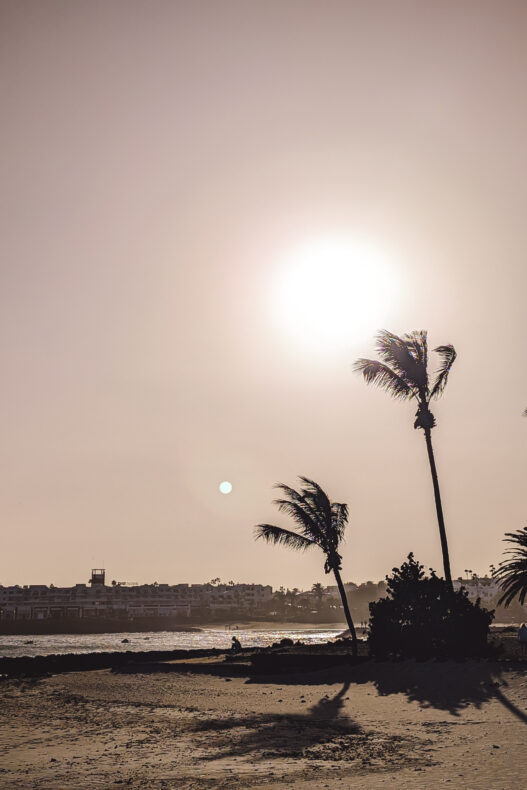
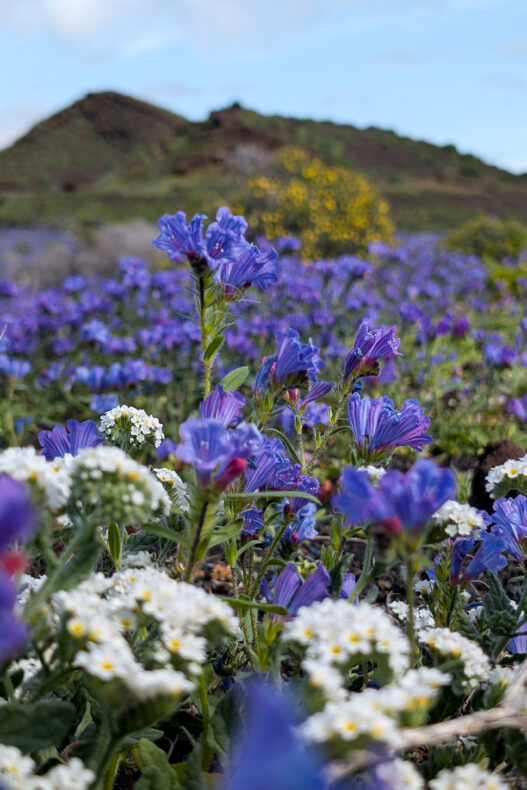
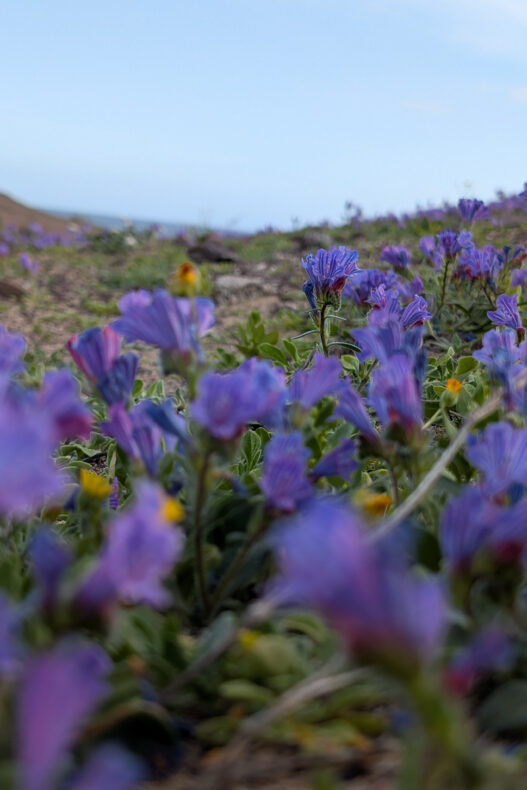
We visited in February and found it a great month for exploring. Warm enough for the beach, cool enough for hiking, and after a rare shower the lava fields burst into flower here and there. We did get calima, a hot wind from the Sahara that carries fine sand. For a few days the sky turned yellow and hazy, but it made for some spectacular sunsets.
To avoid the crowds, go outside the school holidays. Around Christmas, carnival and in summer the best-known spots get very busy.
Best places to visit in the south and west
#1 Timanfaya: the Fire Mountains of Lanzarote
Drive into Timanfaya National Park and the landscape changes in an instant. Not a bush in sight, just craters and lava in every shade between black and rusty red. The main road between Yaiza and Mancha Blanca runs straight through the park, so you’ll see plenty even without a ticket. You can’t stop along the road, though, and hiking in the park is only allowed with an official guide.
The heart of the park is the Montañas del Fuego at Islote de Hilario. Here you board a coach that takes you along the Ruta de los Volcanes, past craters and lava tunnels. At the visitor centre, staff show you how hot the ground still is: water poured into a hole shoots back up as steam within seconds. At El Diablo restaurant, meat is grilled over the heat of the volcano.
We skipped the coach route ourselves. With two little ones, we didn’t fancy sitting on a packed bus without being able to get off. If you want to see the inside of the park, though, there’s no way around it: it’s the only way to get up close to the craters.
Tickets are now sold online only, for a fixed date and time slot, through the official Montañas del Fuego website. There’s no ticket sale at the gate, and children up to six go free. Don’t want the hassle of time slots? On a tour, your ticket is already sorted.
→ Book a half-day tour of Timanfaya’s Fire Mountains

#2 Mancha Blanca: the free visitor centre
Instead of the coach, we went to the Mancha Blanca visitor centre on the north side of the park. It’s free and gives you a good idea of what happened here in the eighteenth century. Through models, short films and the eyewitness account of the parish priest of Yaiza, you follow how one village after another disappeared under the lava.
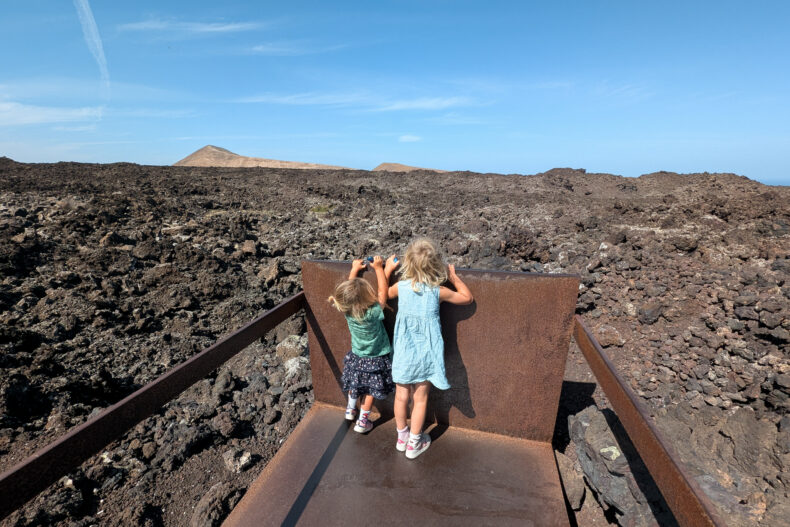
From a wooden walkway behind the building, you look out over a lava field that stretches to the horizon. Inside there’s also a room that simulates an eruption, complete with rumbling and shaking. Our daughter found it far too scary, so we were out of there quickly.
The guided walks into the national park also start here. They’re free, but you need to book well in advance.
#3 Caldera Blanca: a hike to a giant crater
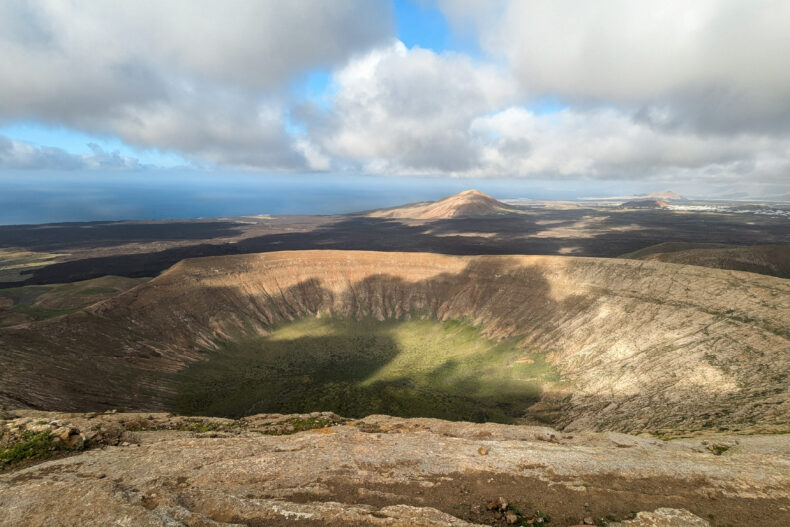
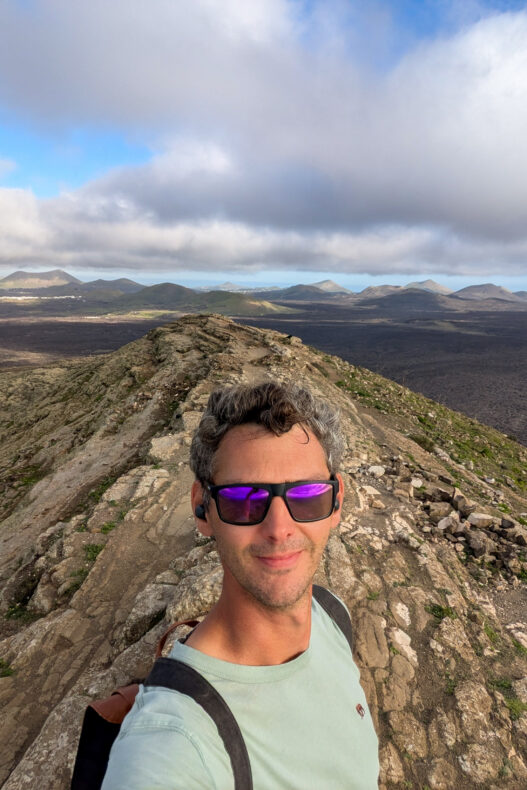
Want to climb a volcano yourself? Caldera Blanca is the hike on the island. Sebastiaan did it early one morning while I stayed at the campervan with the kids. The trail starts at the village of Mancha Blanca and first runs flat through a rough lava field, past the smaller crater of Montaña Caldereta.
Then it climbs steeply to the rim of the crater, which is more than a kilometre across. At the top you walk along the ridge, with the huge empty bowl on one side and the lava fields of Timanfaya on the other. According to Sebastiaan, it was one of the best views of our whole Canary Islands trip.
Allow about ten kilometres there and back and three to four hours. You don’t need a permit. There’s no shade, so start early and bring plenty of water. For young children, the climb to the rim is too steep and loose.
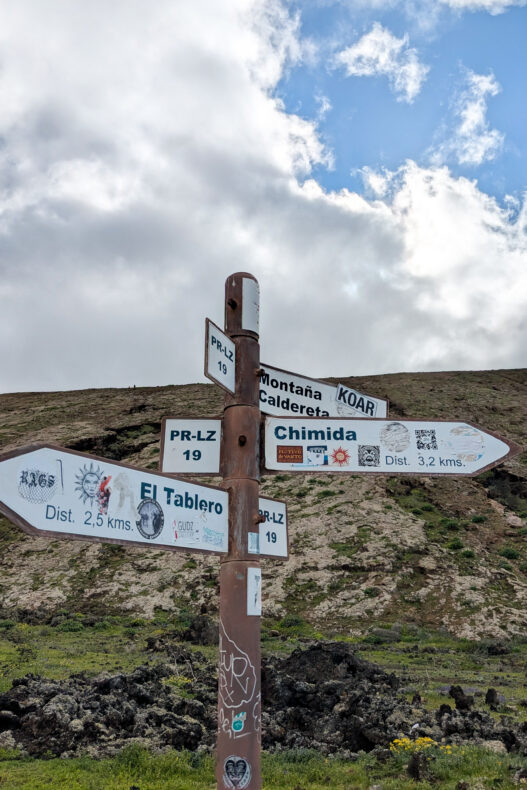
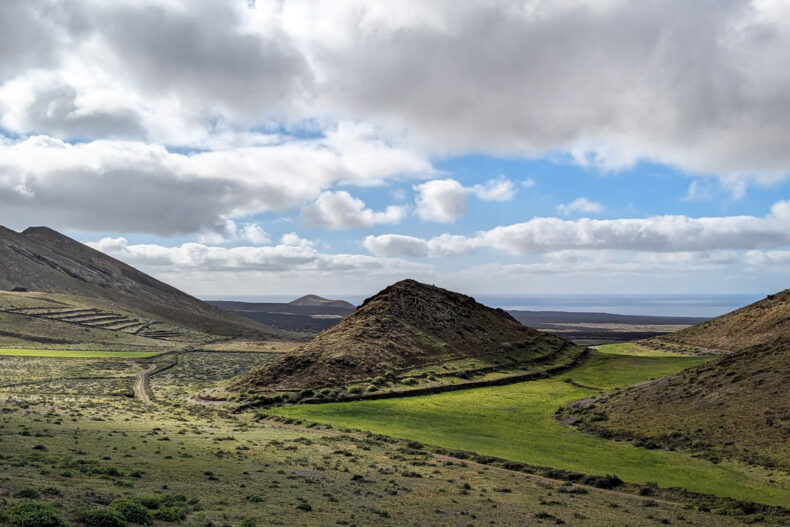
#4 Volcán El Cuervo: a loop around the volcano and straight into the crater
The great eruption of 1730 started at El Cuervo, and it’s a volcano the whole family can explore. From a small car park on the road between Masdache and Tinajo, a flat path leads through the lava field to the cone.
We walked the loop around the volcano first, about four kilometres on a good path. That went fine with the kids, although we carried the youngest for the last bit. Then we stepped through an opening in the side into the crater, with tall red walls all around us. For the kids, that was the highlight: actually standing inside a volcano.
There’s no shade along the way, so bring water and sun hats. Leave the lava stones where they are, as the area is protected.
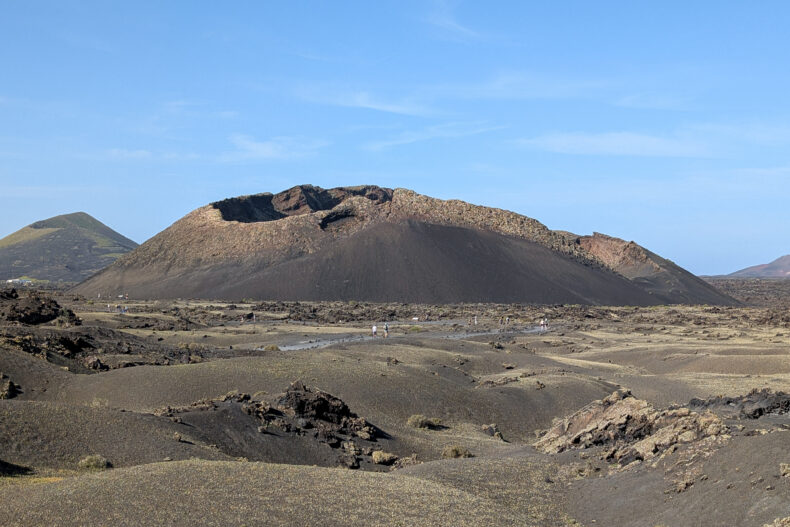
#5 El Golfo and Charco de los Clicos: a green lake by the sea
El Golfo is a small white fishing village on the west coast, with seafood restaurants right by the water. Just outside the village lies Lanzarote’s most famous photo spot: Charco de los Clicos, a bright green lagoon inside a half crater, framed by black sand and reddish rocks. The green comes from algae in the water. The viewpoint above gives you the best view, but you’re not allowed down to the lake itself.
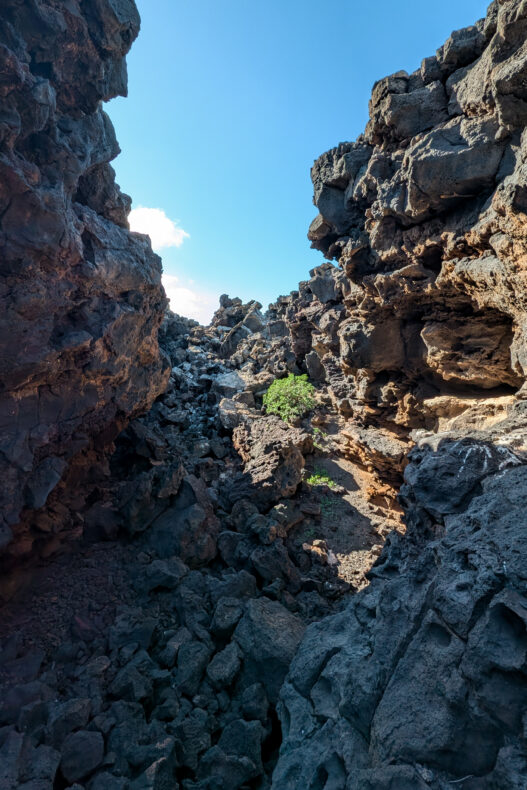
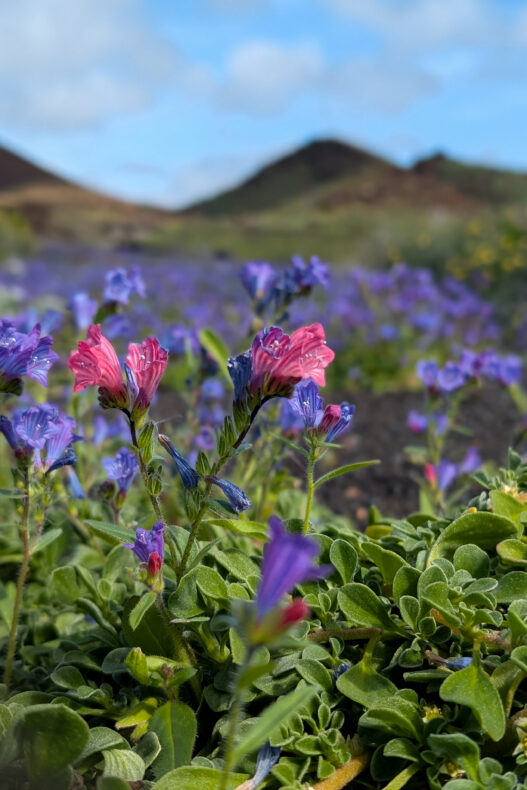
On the other side of the village, a trail through the lava fields sets off, and we actually liked it even more. You can make the walk as long as you like, or loop back. Along the way you pass lava caves and a little black beach, and there were flowers blooming between the rocks. The path is rough and rocky, so wear proper sturdy shoes.
Come to El Golfo in the late afternoon and you can have dinner at sunset in one of the restaurants on the coast.
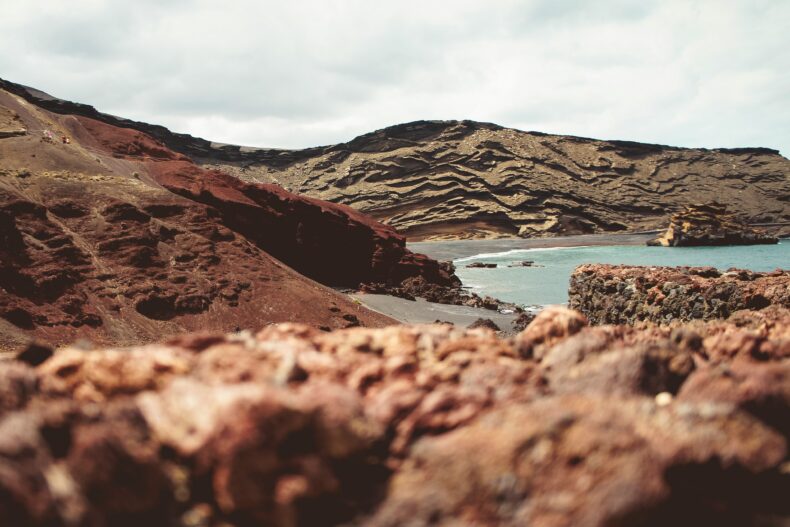
#6 Los Hervideros: where the ocean boils through the lava
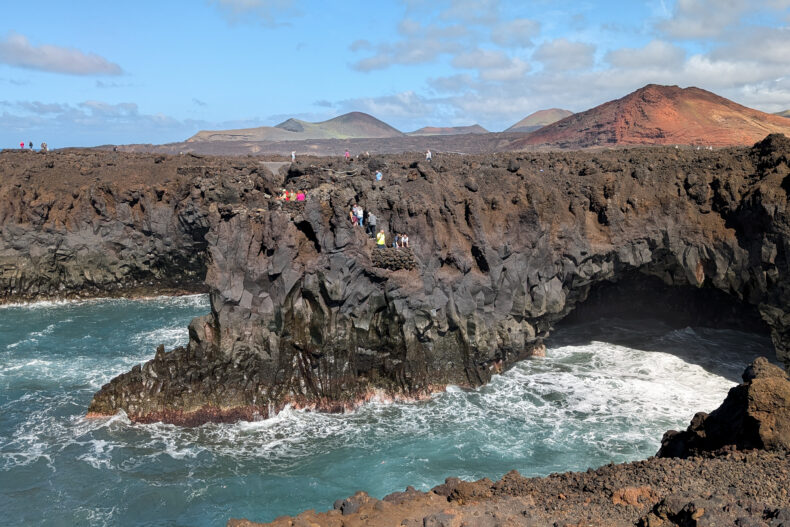
A few kilometres south of El Golfo, the Atlantic pounds a coastline of solidified lava. At Los Hervideros, “the boiling pots”, the sea has carved tunnels and caves into the rock over the centuries. When the waves are high, water shoots up through the holes and foams metres high against the cliffs.
It’s a touristy stop, with a big car park and coaches coming and going. We still found it impressive. Little paths and steps lead you between the cracks and right up close to the action. There aren’t railings everywhere, so keep a firm hand on the kids.
#7 Salinas de Janubio and Playa de Montaña Bermeja: salt pans and black sand
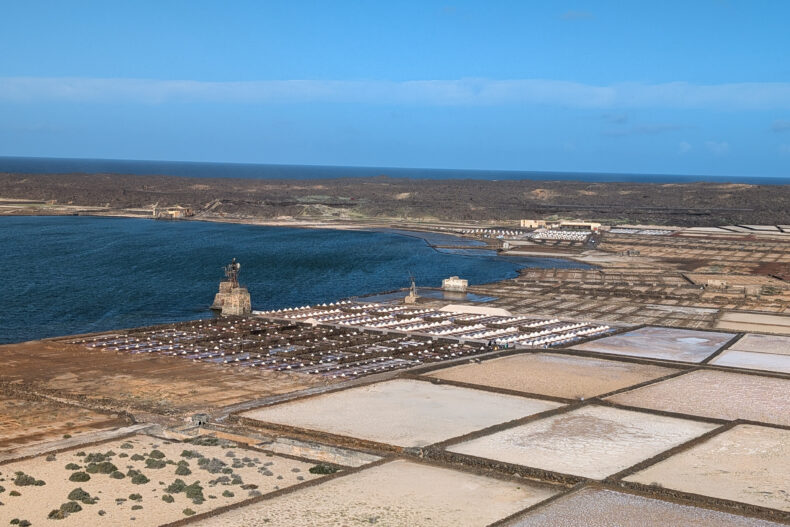
Carry on south from Los Hervideros and a patchwork of rectangles appears below you. The Salinas de Janubio are the largest salt pans in the Canary Islands, built in an old lagoon, and salt is still harvested here. The best view is from the road, especially when the pans turn pink and white in the late afternoon sun.
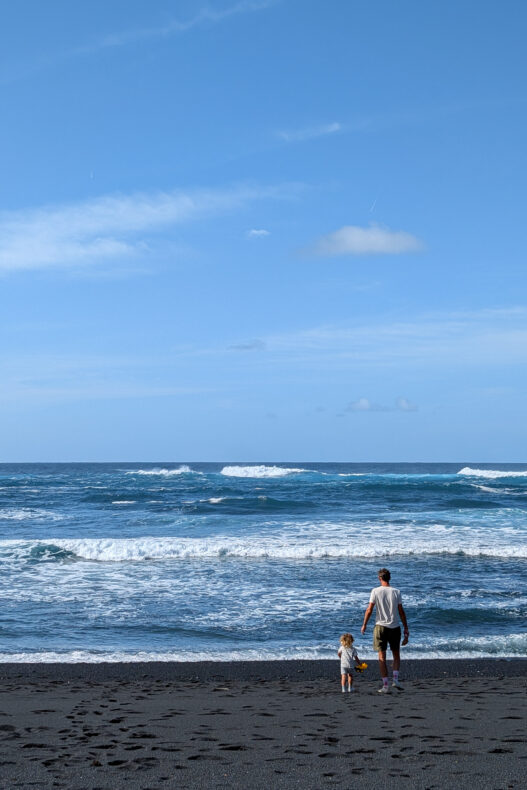
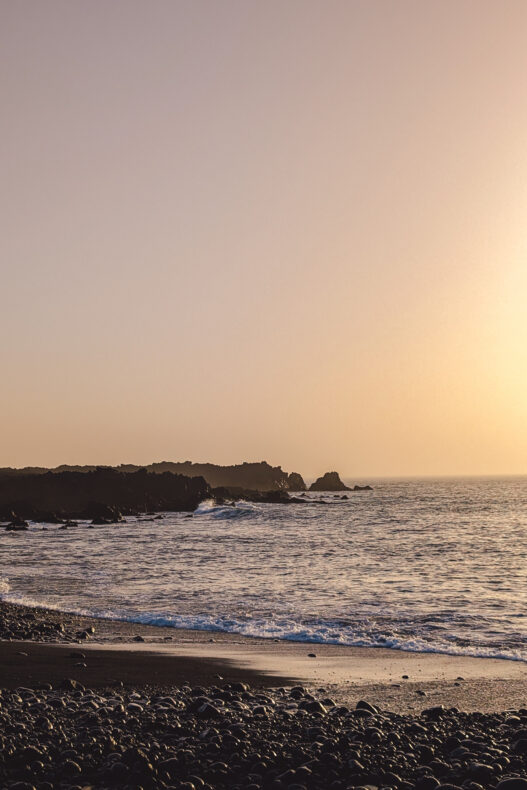
We drove past and went down to the beach next to them, Playa de Janubio: a wild black beach where you come to watch the waves rather than swim. A bit further north lies Playa de Montaña Bermeja, below a rust-red volcano. We sat there at sunset while the kids ran across the black sand collecting stones.
Swimming on this stretch of coast is a bad idea: the currents are strong and the waves are big.
#8 Yaiza: the white village on the edge of the lava
Yaiza sits where the lava fields of Timanfaya come to an end, and it’s one of the best-preserved villages on the island. White houses with green doors, an eighteenth-century church and gardens full of bougainvillea. The eruption of 1730 stopped just short of the village.
Grab a coffee on the little square, or have dinner at Jardines La Era, an old farmhouse that César Manrique turned into a restaurant. A nice stop on your way to or from Timanfaya.
#9 Playa Blanca, Marina Rubicón and Montaña Roja
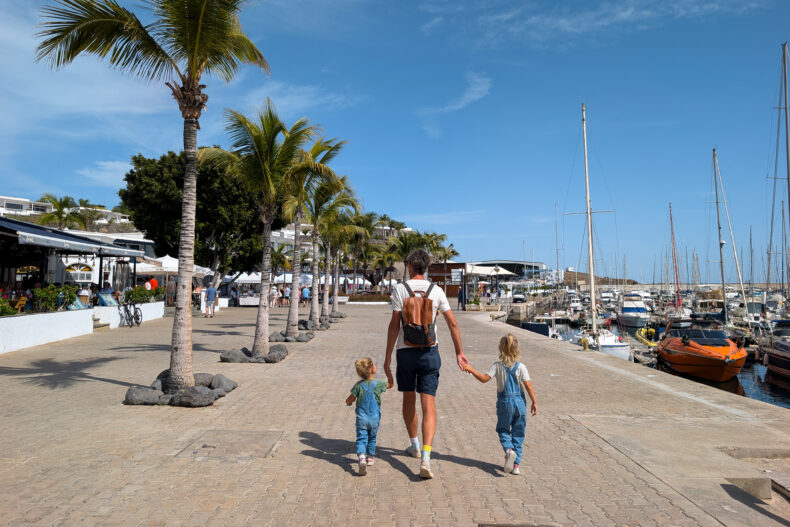
Playa Blanca is Lanzarote’s southernmost resort, with a long seafront promenade and the Marina Rubicón. Around the marina you’ll find restaurants and shops, and a market on Wednesdays and Saturdays. On a clear day you can see Fuerteventura from the promenade.
Above the resort rises Montaña Roja, a red volcanic cone you can climb in an hour and a half to two hours there and back. From the crater rim you look out over the southern tip, the salt pans and the ocean. Just outside the marina stands the Castillo de las Coloradas, an eighteenth-century watchtower built against pirates.
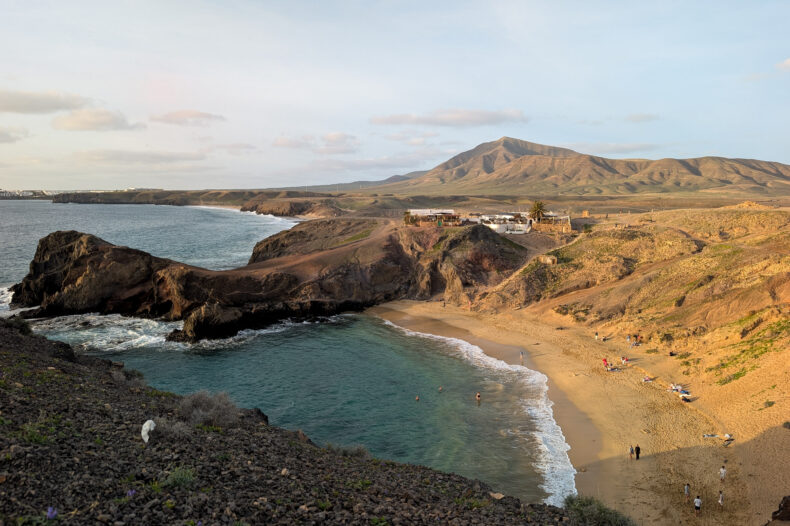
#10 Papagayo: the most beautiful beaches in Lanzarote
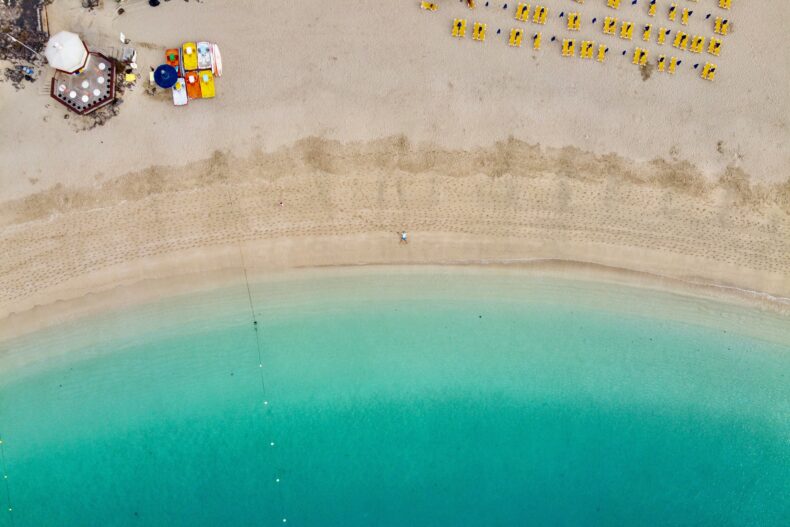
A long, dusty track takes you into the Los Ajaches nature area, and then, behind the last hill, there they are: a string of sandy coves between yellow rocks, with water shading from turquoise to deep blue. You pay a small fee per car at the barrier. Beyond that there isn’t much: one beach restaurant and a few car parks.
The best-known cove, Playa de Papagayo, looked stunning from above, but down on the sand it got pretty crowded during the day. We walked on to Caleta del Congrio, on the other side of the headland. It’s wider and quieter, with a rock arch at one end. You’ll also see naturists there, just so you know.
Bring water, food and shade, as you’ll be walking a little way from the car park. Want to see the coves from the sea? Catamaran trips sail there from Playa Blanca and Puerto del Carmen.
→ Sail to the Papagayo beaches on a catamaran
→ Discover the 12 best beaches in Lanzarote
Best places to visit in central Lanzarote
#11 La Geria: vines in black craters
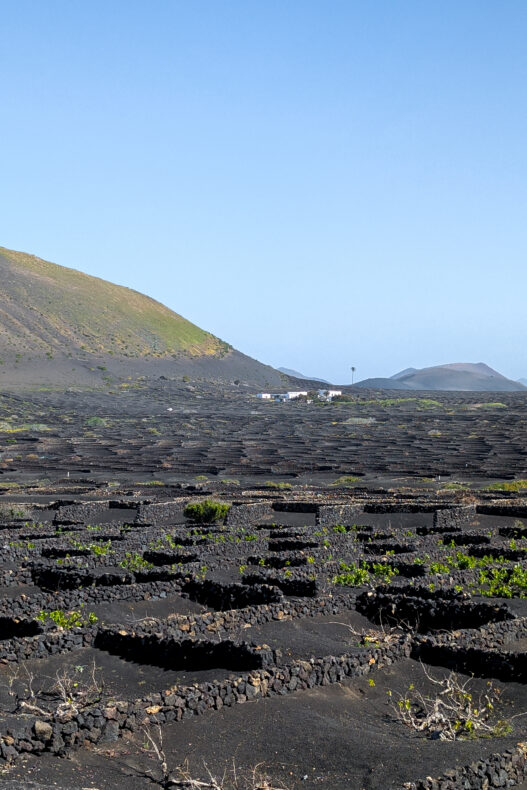
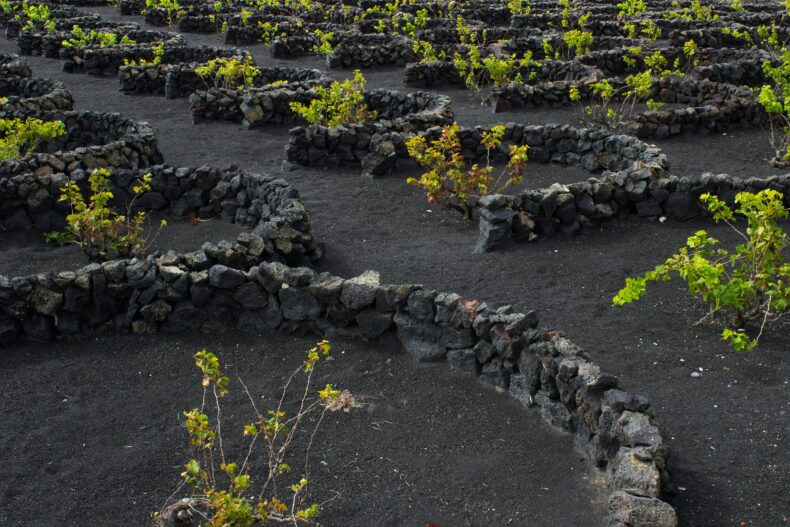
Between Yaiza and San Bartolomé you drive through the strangest wine region we’ve ever seen. In La Geria, every vine grows in its own pit in the black volcanic gravel, sheltered by a half-moon wall of lava stone. The ash holds on to what little moisture there is, and the wall keeps the wind off. Thousands of these pits side by side make the whole landscape look like a work of art.
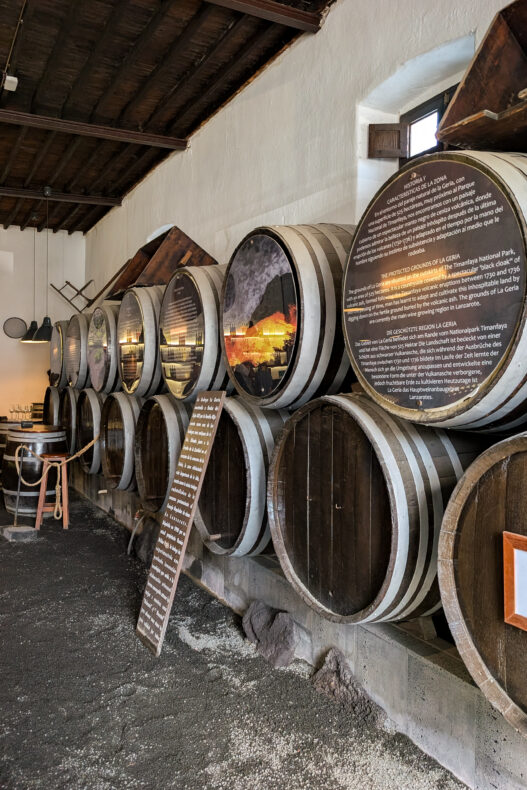
Along the road you’ll find bodegas where you can taste Malvasía, the island’s best-known grape. We didn’t do a tasting with the kids, but we did stop at Bodega Stratvs. They have a huge Canarian nativity scene on display all year round, a miniature village full of figures that the kids could have stared at for hours. To learn more about winemaking here, head to El Grifo, one of the oldest bodegas in the Canary Islands, with a small wine museum.
#12 Monumento al Campesino: a tribute to the island’s farmers
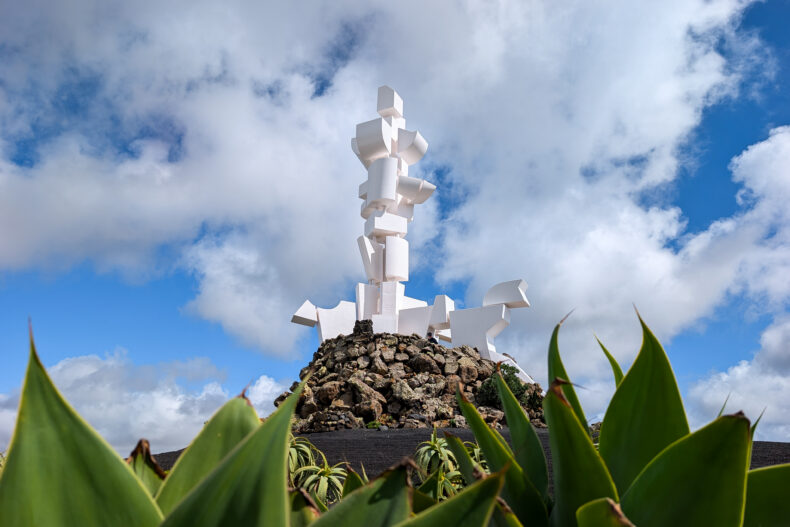
Right in the middle of the island stands a white sculpture made of stacked water tanks and parts of old boats. The Monumento al Campesino is César Manrique’s tribute to Lanzarote’s farmers, who somehow managed to grow crops in this parched landscape.
Next to the monument is the Casa Museo del Campesino, a cluster of white farmhouses around a courtyard. We wandered around for a while, past workshops and an old kitchen, and peeked into the restaurant set in a round crater underground. Entry is free, so it’s an easy stop if you’re in the area anyway.
#13 Las Grietas: walking through a crack in the lava
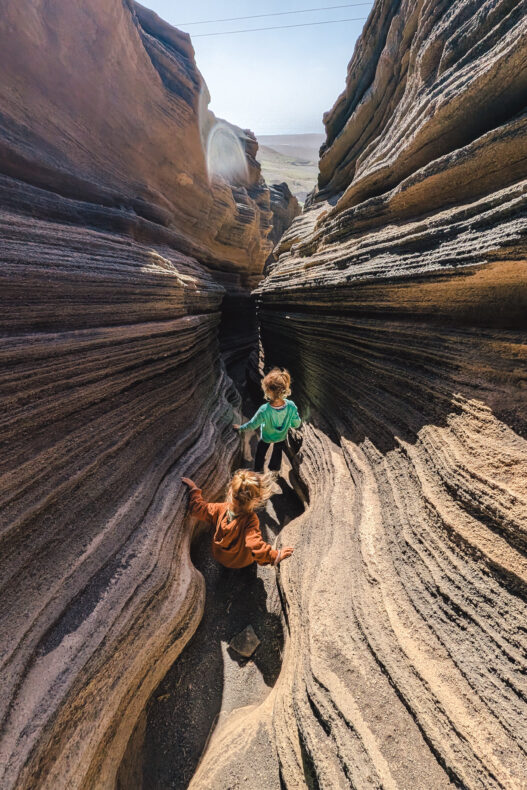
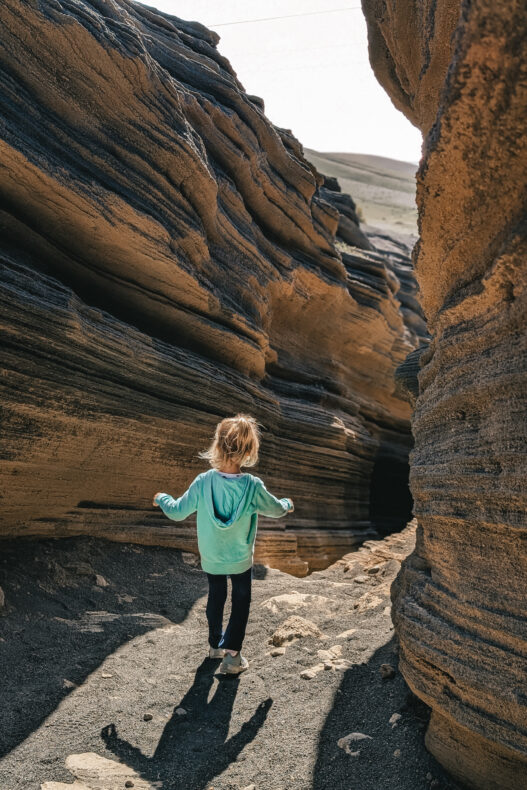
Above Puerto del Carmen, at the foot of Montaña Blanca, an old lava flow has split wide open. At Las Grietas you walk through a narrow gorge with layered walls in orange and grey, sometimes so tight you have to turn sideways. It’s short and easy to find, along the road to San Bartolomé.
It’s no secret, that’s for sure. We bumped into lots of other Dutch visitors, and even a photo shoot. When we were there, calima hung in the air and gave the rocks a warm glow. Come early or late for the best light and the fewest people.
#14 Fundación César Manrique: living inside lava bubbles
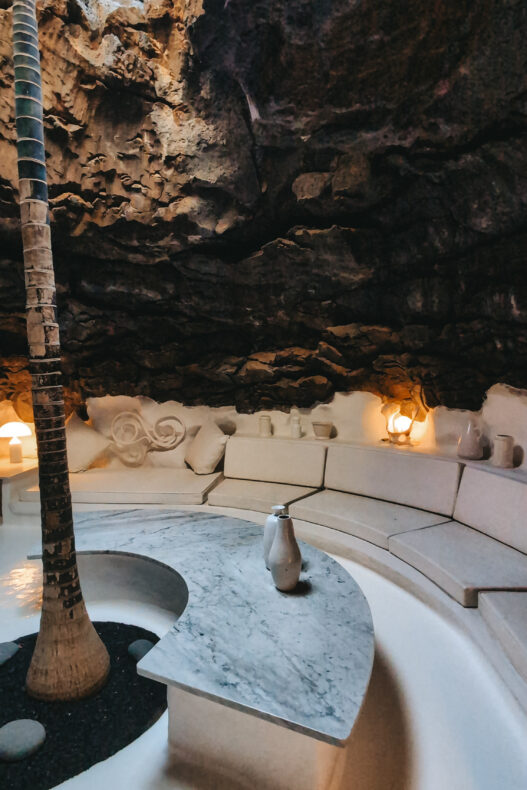
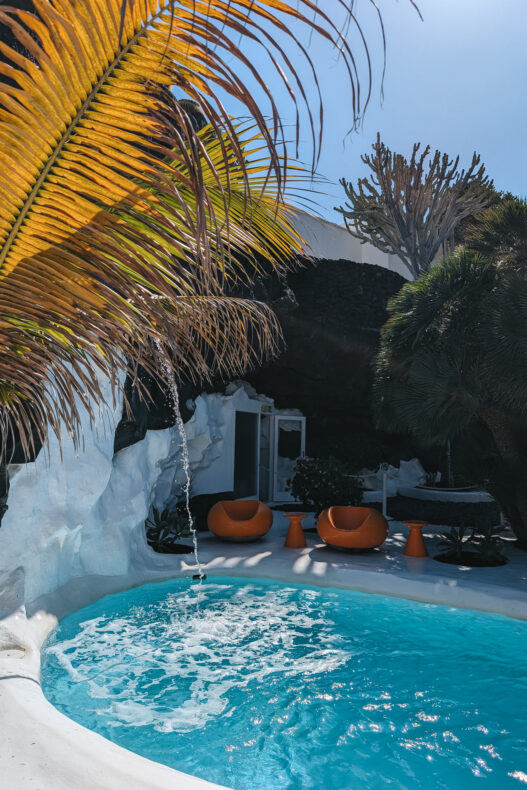
In Tahíche, on the edge of a lava flow, César Manrique built his own home in the late 1960s. From above, it looks like any other white house on the island. Underneath, he linked five natural lava bubbles with tunnels to create a living room, a bedroom and a pool set in the black rock.
The house is now the Fundación César Manrique, showing his paintings and work by artist friends. Walking from bubble to bubble is a unique experience. At the same time, it left us with mixed feelings: it’s also the home of a wealthy artist living a glamorous jet-set life, and that’s very much how it’s presented. Worth seeing, but for us not the island’s most important stop.
Want to see all the Manrique sights in one day without driving? There’s a day tour that combines the Fundación with the Monumento al Campesino, Mirador del Río, the cactus garden and Jameos del Agua.
→ Discover the work of César Manrique on a day tour
#15 Teguise: the old capital
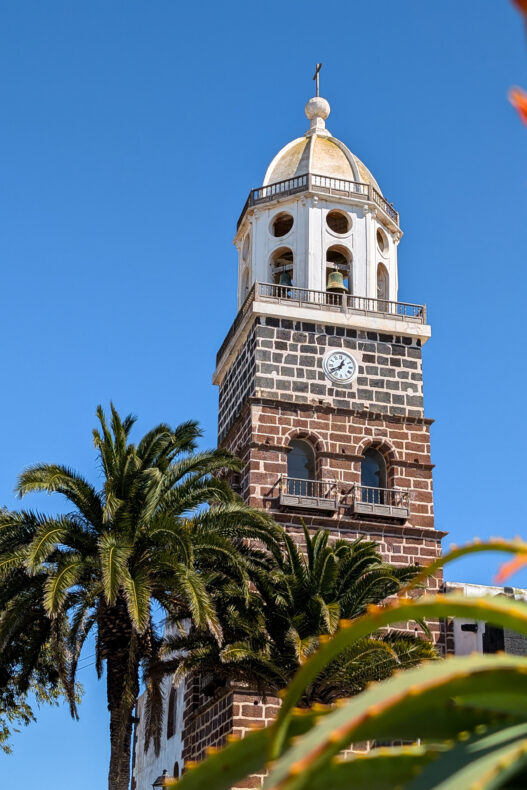
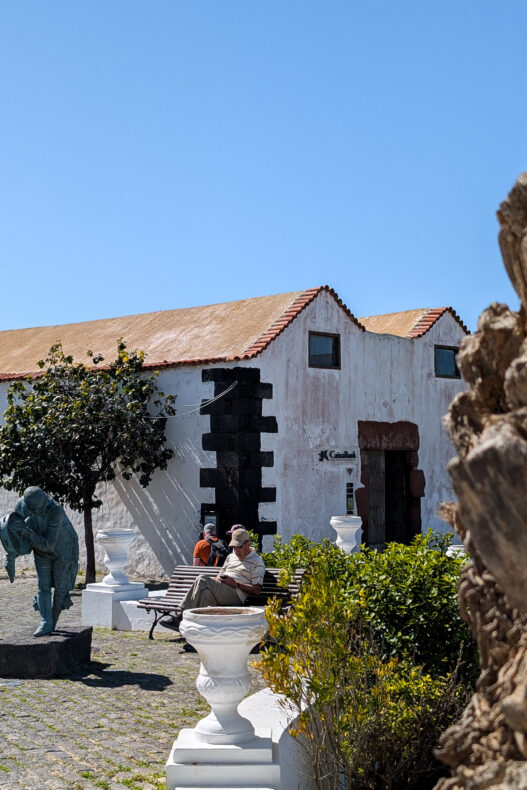
Until the middle of the nineteenth century, Teguise was the capital of Lanzarote, and you can still tell. Cobbled streets, mansions with wooden balconies, convents and the big church of Nuestra Señora de Guadalupe. We strolled through the old centre on a quiet weekday, when it feels like a sleepy village.
Sundays are a different story. That’s when the island’s most famous market fills the streets with hundreds of stalls and coachloads of visitors. Above the town, the Castillo de Santa Bárbara sits on the rim of a volcano and houses a small pirate museum. We only saw it from a distance, but the view over the island is said to be well worth it.
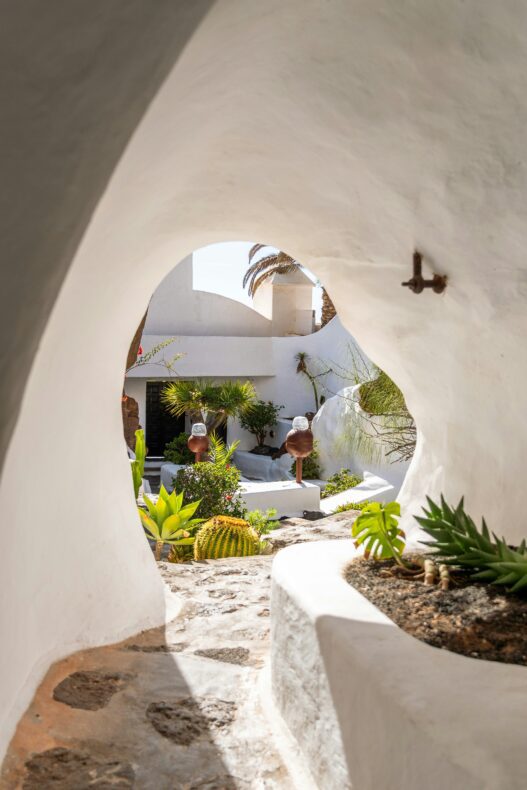
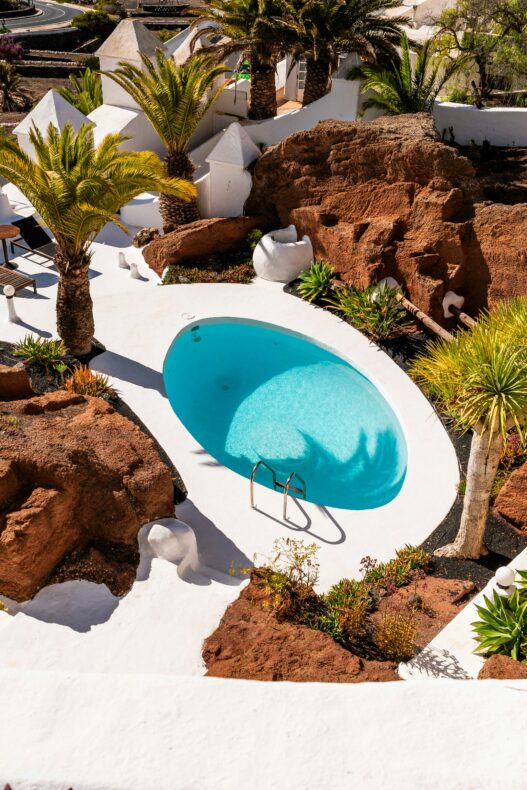
#16 LagOmar: a house built into a rock face
In the village of Nazaret, close to Teguise, you’ll find one of Lanzarote’s quirkiest houses. LagOmar is built into and against an old quarry, with stairs, tunnels, terraces and a pool that seems to be carved out of the rock. The idea came from César Manrique.
The story goes that actor Omar Sharif bought the house in the 1970s and lost it soon after in a game of bridge. Whether that’s true, nobody knows for sure. Today it’s a museum with a restaurant, and you can spend an hour wandering through its passageways.
#17 Ciudad Estratificada: a petrified city
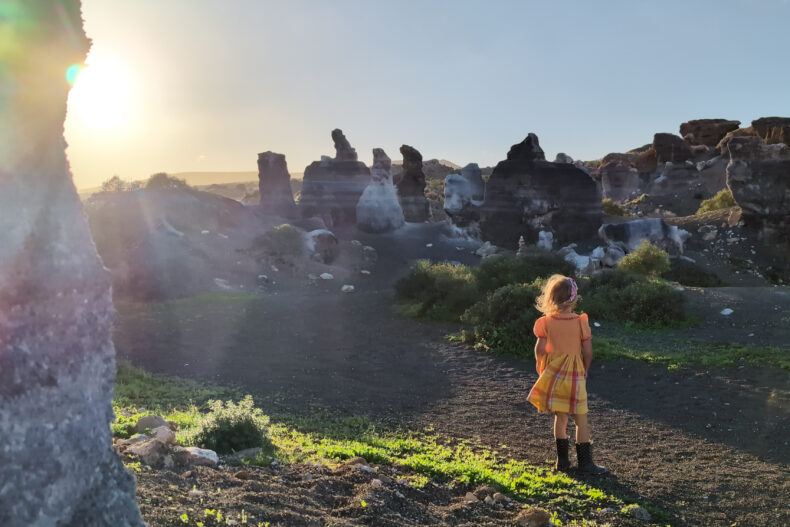
Along the road between Teguise and Guatiza lies a field of jagged rocks nicknamed the petrified city. At the Ciudad Estratificada, wind and rain have carved layers of volcanic ash into towers, arches and little passages that look like the ruins of an ancient town.
We came at sunset and watched the rocks slowly turn orange. There are no signs or trails: you park by the dirt road and find your own way between the formations. The rock is soft, so don’t climb on the thin edges.
Best places to visit in the north
#18 Tenesar: a hamlet on a wild coast
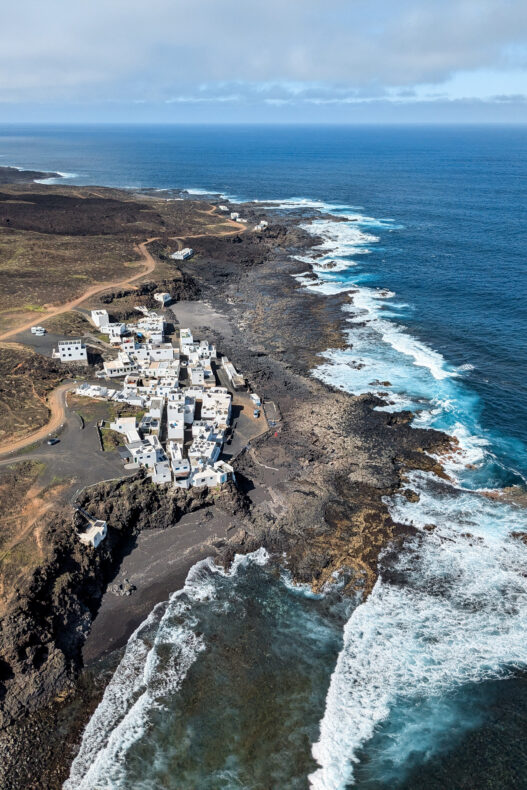
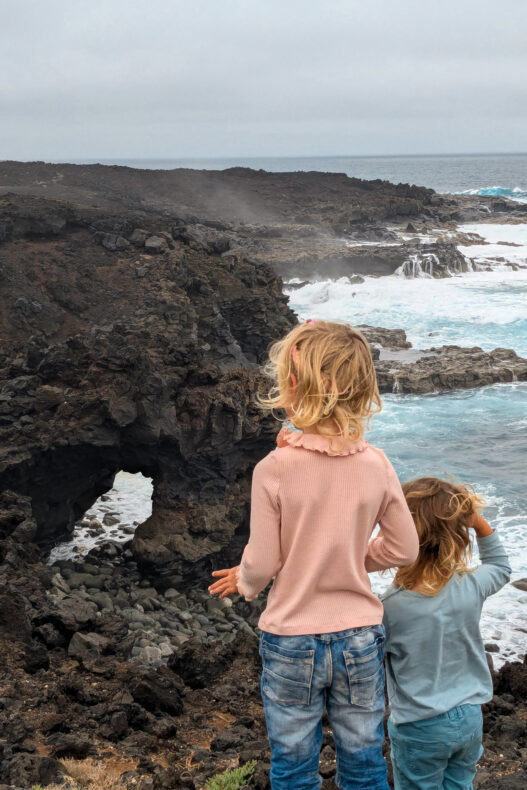
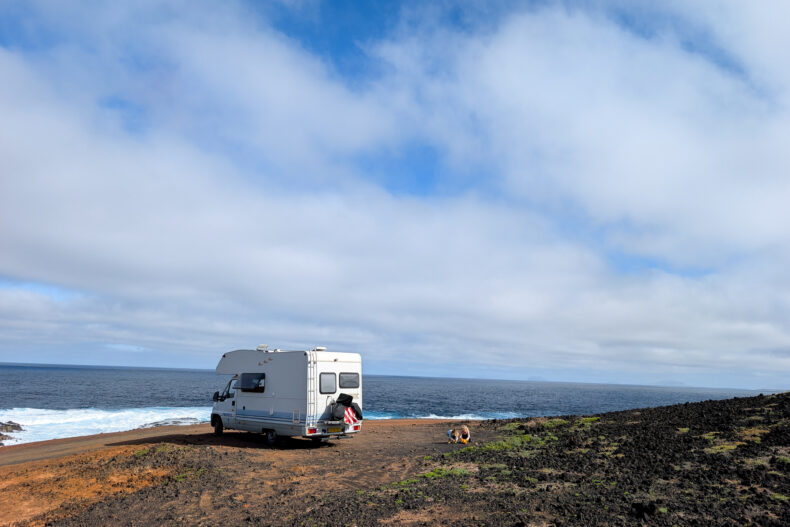
At the end of a narrow road north of Tinajo lies Tenesar, a handful of houses on a coastline of black lava. No beach, no café and usually nobody around. What you do get is the ocean crashing into the rocks, with the volcanoes of Los Volcanes Natural Park behind you.
We walked along the coast while the kids watched the waves. The next morning, Sebastiaan went paragliding from the hills above, and from the air he could see how the old lava flows ran into the sea here. Fancy flying yourself? On a tandem flight an experienced pilot does the steering while you glide over the coast and the volcanoes. No experience needed.
→ Book a tandem paragliding flight over Lanzarote’s volcanoes
#19 Famara: a surf village below towering cliffs
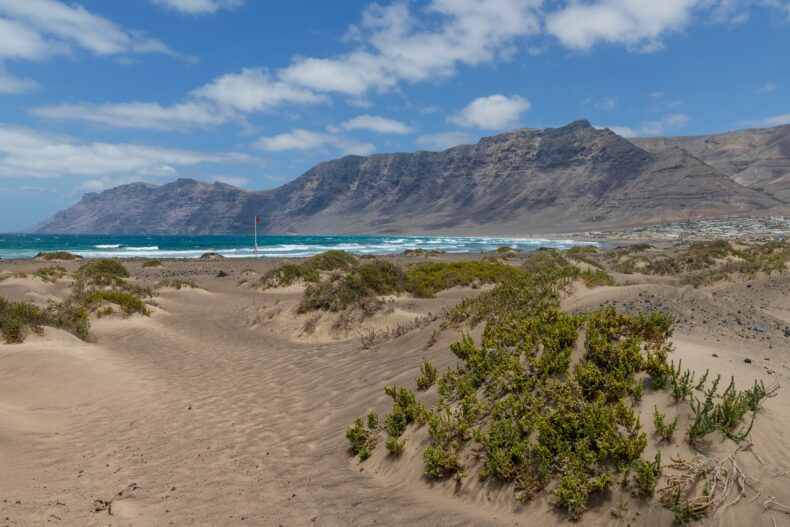
Caleta de Famara is a village of sandy streets, low white houses and surfboards propped against the walls. Behind it, the cliffs of the Risco de Famara rise hundreds of metres high, and in front of it lies a beach that goes on for kilometres. The wind blows here almost all the time, which is why it’s the island’s surf capital.
We took long walks along the beach and read in the sand while the surfers waited for waves. Then we flopped down at a hip little coffee place in the village. Swimming isn’t a good idea here: the waves are big and the currents strong.
#20 Haría: the valley of a thousand palms
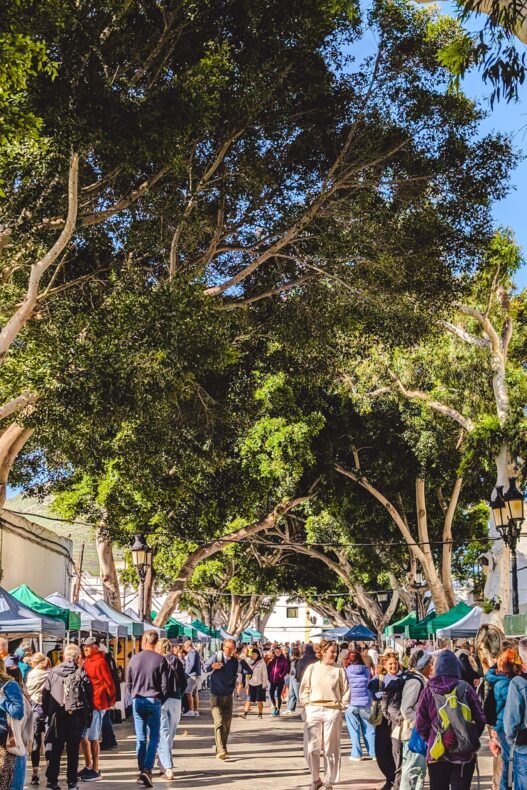
After the bare south, Haría feels like an oasis. The village sits in a valley full of palm trees, with white houses dotted around and a square shaded by big trees. That square hosts a weekly market with cheese, honey, pottery and art. We spent a morning browsing, and Sebastiaan hiked up from the village to the ridge, with views over the cliffs of Famara.
Haría is also home to the house where César Manrique spent his final years. His studio and living room are still set up as if he’s just popped out.
#21 Mirador del Río and the free view over La Graciosa
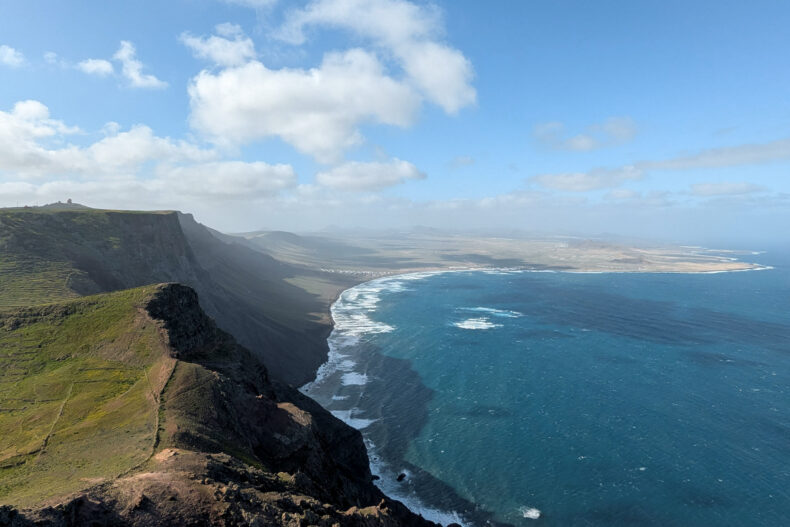
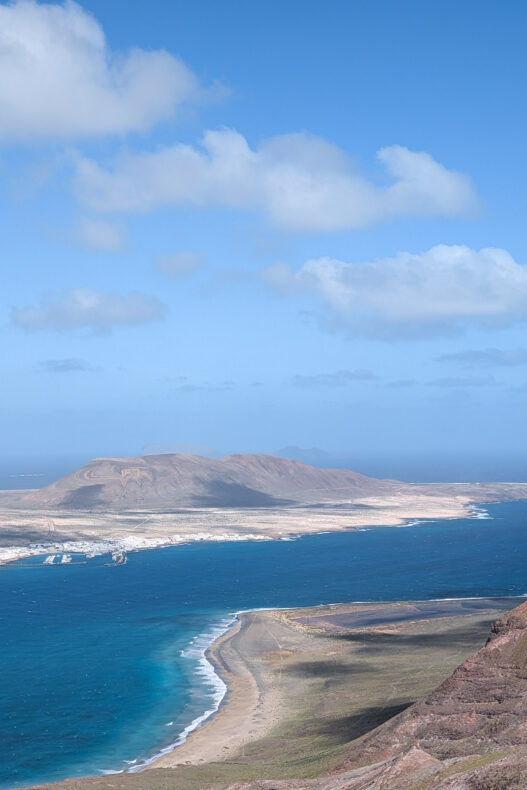
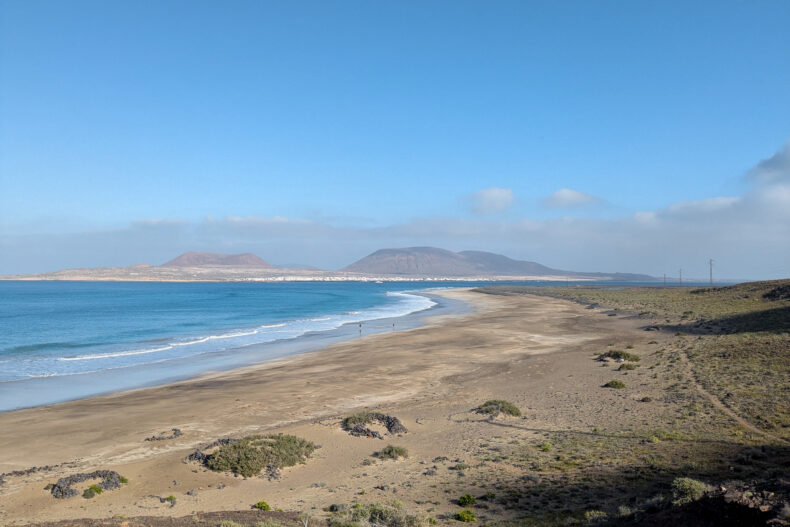
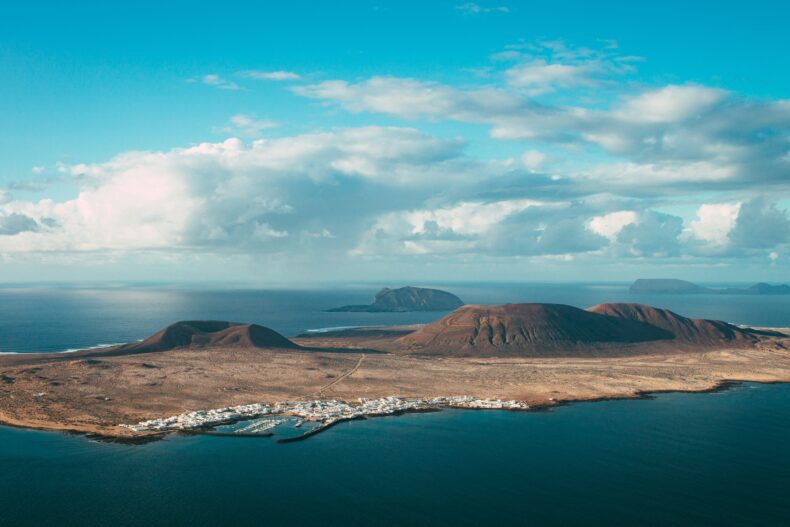
High on the northern tip of the Risco de Famara, César Manrique built the Mirador del Río, a viewpoint you can barely see from the outside. Through huge windows you look almost 500 metres down, across the strait to the island of La Graciosa and the islets beyond. It’s one of Lanzarote’s best-known sights, and there’s an entrance fee.
We gave the Mirador a miss and drove to the start of the trail down to Playa del Risco, not far away. From the edge by the car park you get the same view, for free and with the wind in your face. Sebastiaan walked the steep path all the way down to the empty beach far below, with La Graciosa just across the water. The climb back up took a lot longer than the way down. With kids, you’re better off enjoying it from the top.
#22 Órzola and Caletón Blanco: rock pools at low tide
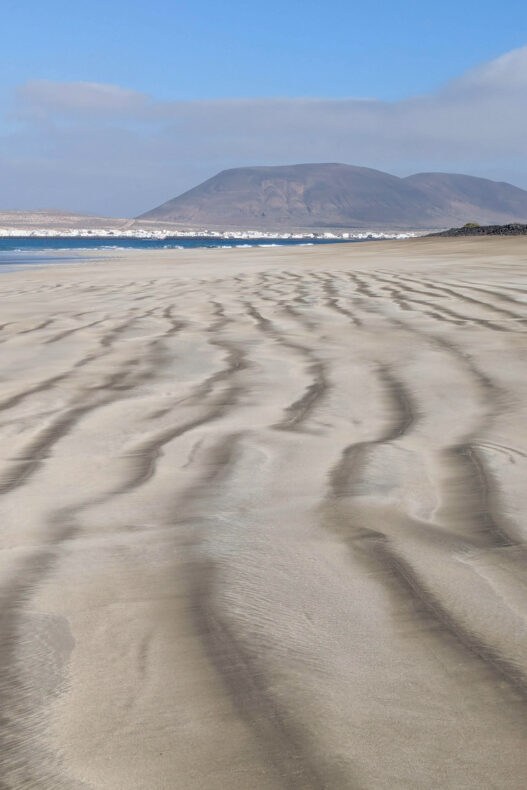
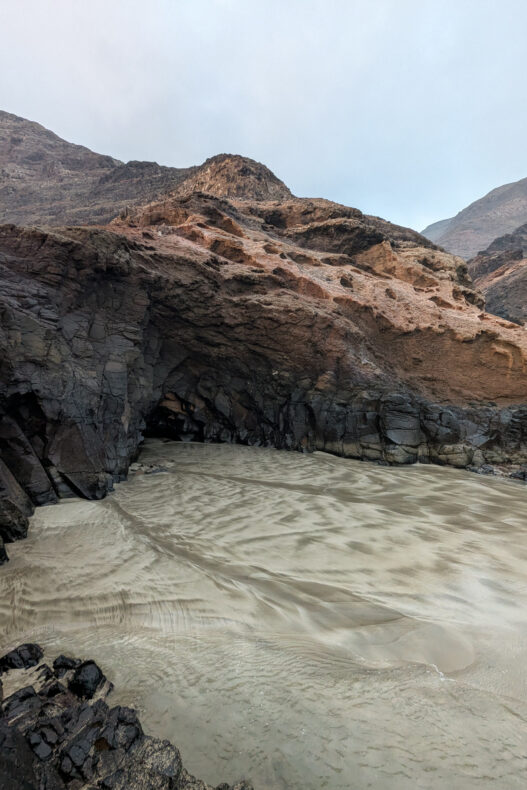
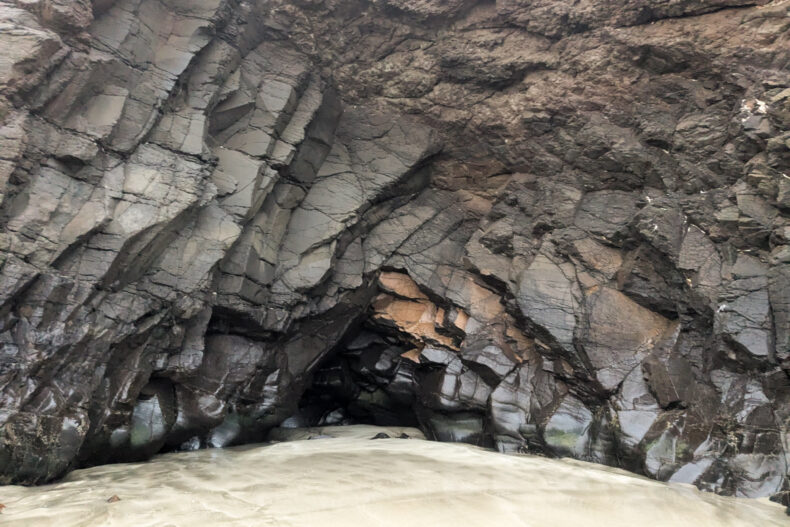
Órzola is the little harbour at the far northern tip, where the boat to La Graciosa leaves. Along the coast we found a sea cave you can only reach at low tide, with black lava walls and the sound of the surf echoing inside.
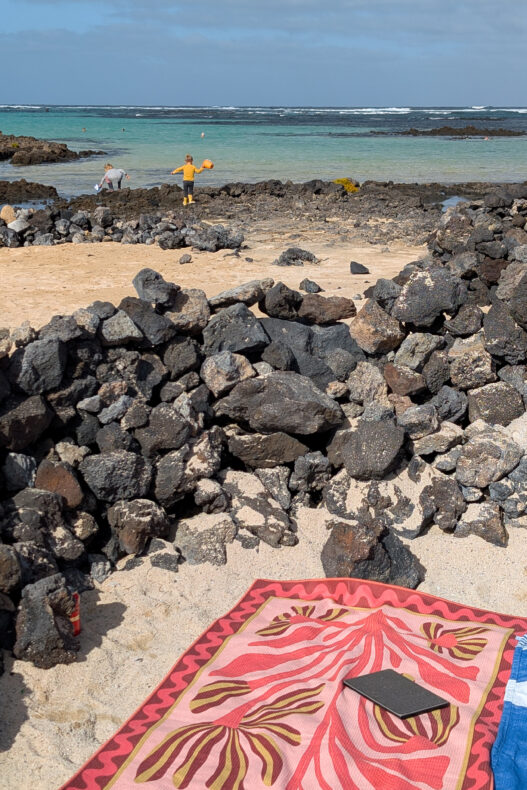
Just south of the village is Caletón Blanco, where white sand lies between black lava. At low tide, shallow pools of clear blue water are left behind, perfect for kids hunting for crabs and little fish. It was too chilly for us to swim, but on a warm day you could easily spend an afternoon here. Do check the tide times before you drive up north.
#23 Jameos del Agua: a cave with a concert hall
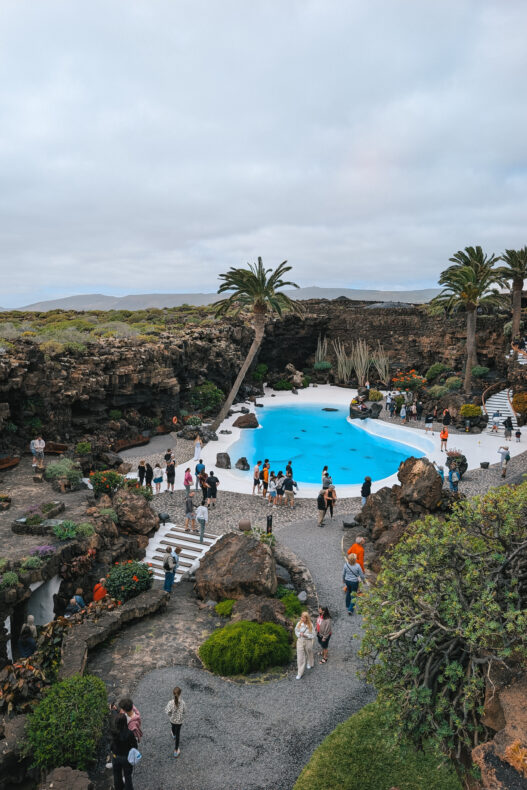
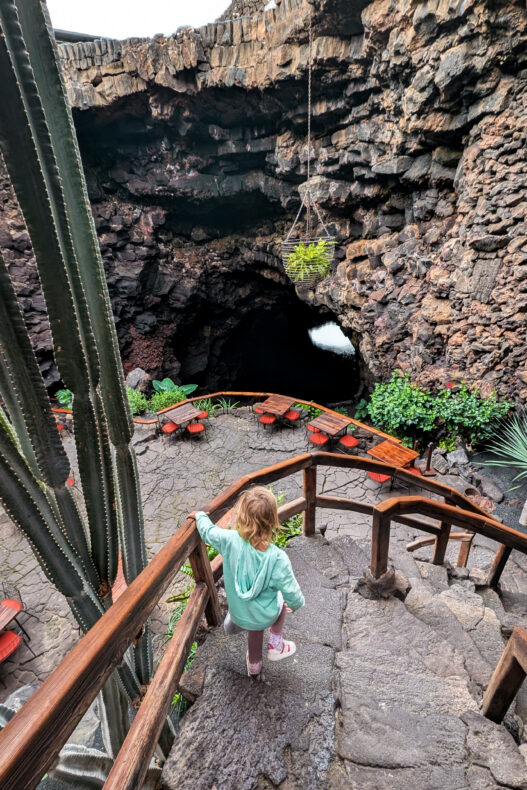
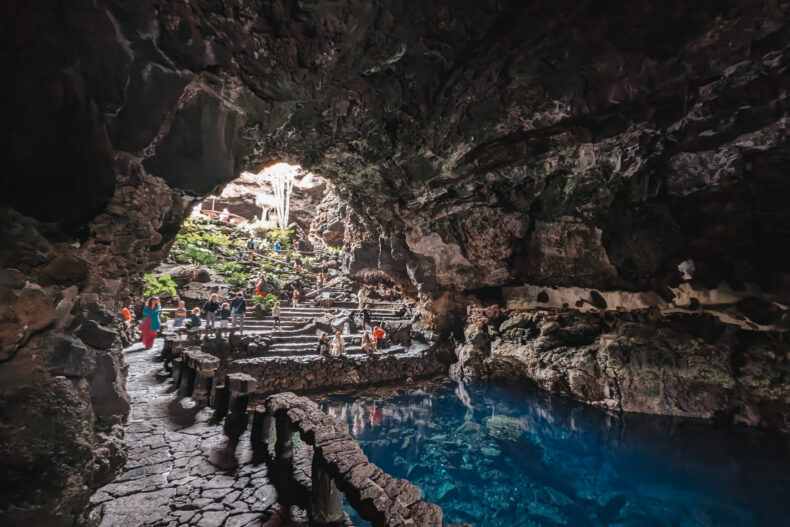
Jameos del Agua was César Manrique’s first project on the island to combine nature and tourism, created in a section of lava tube where the roof has collapsed. You walk down a staircase to an underground lake where tiny white crabs live. They’re blind and found nowhere else in the world. Further on there’s a white pool set among black rocks and a concert hall inside the cave.
I went with our daughter, right at opening time. It’s beautifully done, no doubt, but we didn’t think it quite lived up to the hype or the price. You’re through it fairly quickly, and it soon fills up with tour coaches. We skipped the second part with the museum. On the official Jameos del Agua website you’ll also find the evening concerts, when the cave is at its most magical.
→ Visit Jameos del Agua and Cueva de los Verdes on one tour
#24 Cueva de los Verdes: a kilometre through a lava tube
A few hundred metres inland lies another section of the same tunnel, formed thousands of years ago by an eruption of Monte Corona. At Cueva de los Verdes a guide leads you for about a kilometre through passages and chambers on different levels, lit in red and ochre. For centuries, islanders hid here from pirates.
At the end there’s an optical illusion we’re not going to spoil. Tickets are sold online only, for a fixed time, through the official Cueva de los Verdes website. Leave the pushchair in the car: there are steps and low ceilings.
#25 Jardín de Cactus: Manrique’s last garden
In Guatiza, among the cactus fields once used to farm insects for red dye, César Manrique turned an old quarry into his last major work. The Jardín de Cactus holds around 4,500 cacti of hundreds of species on terraces around an amphitheatre, with a white windmill watching over it all.
From tiny round ones to columns taller than a house, it’s a striking sight even if you’re not into plants. Allow about an hour, and keep little ones by the hand.
#26 Arrieta and Punta Mujeres: peace on the east coast
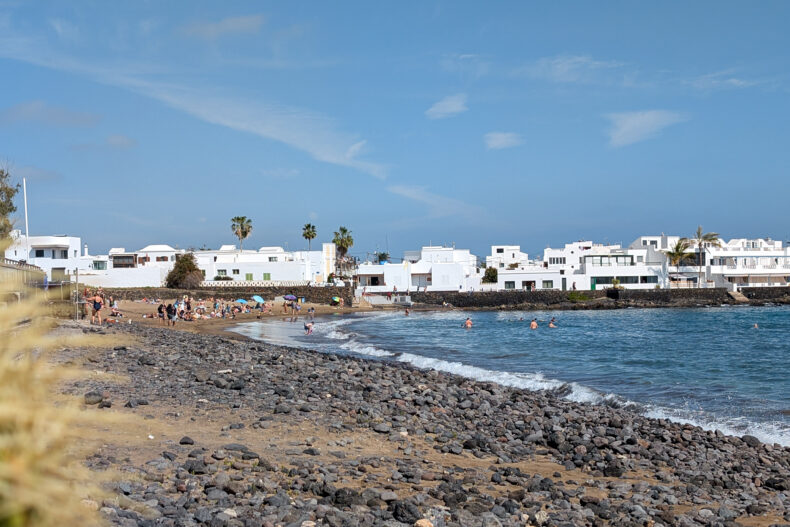
Arrieta is a small fishing village with white houses, a couple of seafood restaurants and the sandy beach of Playa de la Garita. We stayed a few days right by the beach, and it was one of the most relaxed spots of the whole trip. No promenade, no souvenir shops, just a village by the sea.
In neighbouring Punta Mujeres, natural pools have been created between the lava rocks, with steps down into the water. On a calm day you can swim there sheltered among the fish, but when the waves are high the sea washes right over them.
Best places to visit in the east
#27 Costa Teguise: Playa Jablillo and Las Cucharas
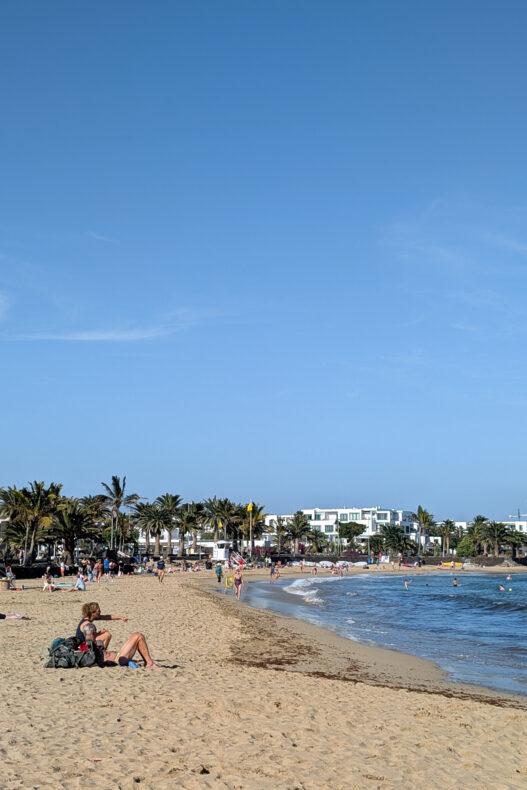
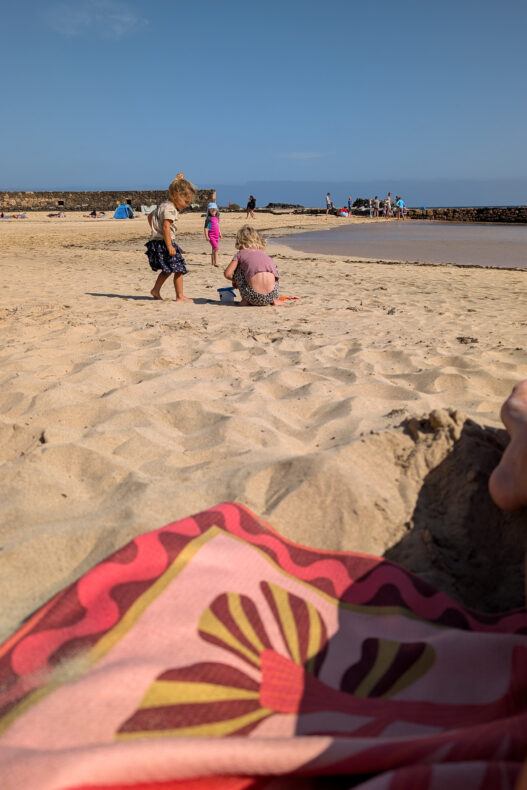
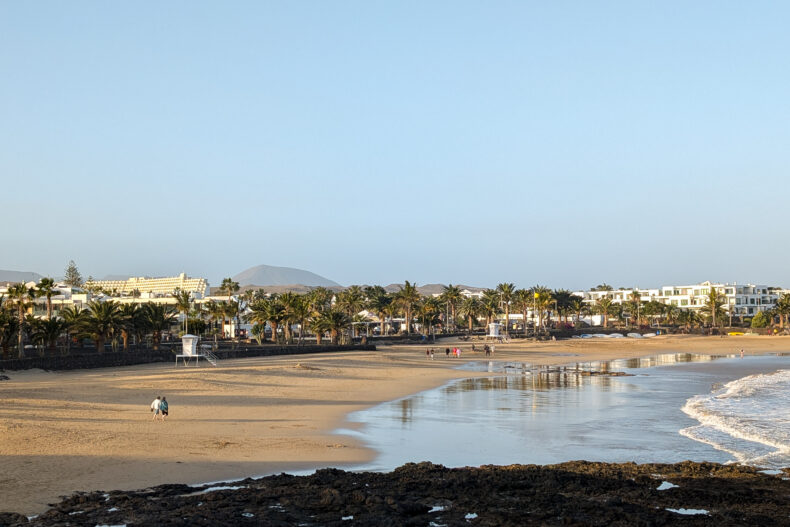
Costa Teguise is the quietest of the three big resorts and, for us, the nicest with kids. Playa Jablillo is a sheltered cove behind breakwaters. At low tide the water is so shallow it turns into a giant paddling pool, with tiny fish swimming round your ankles.
A bit further north is Playa de las Cucharas, the resort’s main beach, where windsurfers skim across the water. We walked along the promenade and came back later for the beach itself. Off to one side we found a little cove where we could sit in peace.
#28 Arrecife: a lagoon, castles and carnival
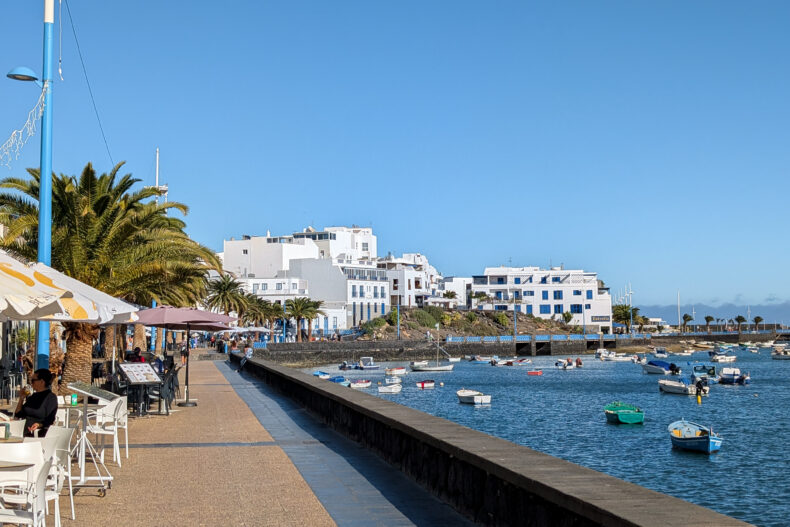
The capital doesn’t make many lists, but it’s worth a morning’s stroll. Around the Charco de San Ginés, a lagoon in the middle of town, fishing boats bob in front of white houses and café terraces. On a small island off the coast stands the Castillo de San Gabriel, reached by a stone bridge.
On the edge of town is the Castillo de San José, an eighteenth-century fort that Manrique turned into a museum of contemporary art, with a restaurant whose windows look out over the harbour. We were in Arrecife during carnival, when the whole city turns into one big party, with music, families in fancy dress and a huge evening parade.
#29 Puerto del Carmen and Puerto Calero: beaches and a marina
Puerto del Carmen is Lanzarote’s biggest resort, with a long promenade along Playa Grande. It’s busy and touristy, but around the old harbour and the small beach of Playa Chica it has a pleasant buzz. We spent our last beach days here before the ferry back to mainland Spain.
A few kilometres on is Puerto Calero, a smart marina with restaurants by the water. This is where the submarine leaves, the one that took us and the kids down past shipwrecks. Travelling with children? Our Lanzarote with kids guide tells you how that went, and what else we got up to with them.
→ Discover 22 fun things to do in Lanzarote with kids
Bonus tip: a day trip to La Graciosa
#30 La Graciosa: an island without tarmac
From the northern cliffs you can see La Graciosa just across the water, and from Órzola the boat takes about half an hour. Since 2018 it has officially been the eighth Canary Island. There are no paved roads, just sandy tracks, a harbour village of white houses and a few empty beaches such as Playa de las Conchas and Playa Francesa.
On the island you can hire a bike or take a 4×4 taxi to one of the beaches. Outside the village of Caleta de Sebo there are no facilities, so bring plenty of water and sunscreen. We didn’t make it there ourselves, but from the edge of the Risco de Famara it looked gorgeous.
→ Take a day trip to La Graciosa
Lanzarote road trip: our four-day route past the best sights
You never drive far on Lanzarote, so four days is enough to see most of the highlights without rushing. Here’s how we’d do it.
Day 1: the south and west. Start early at the Montañas del Fuego in Timanfaya with a morning time slot. Then drive via Yaiza to El Golfo for lunch, stop at Los Hervideros and the Janubio salt pans, and end with sunset at Playa de Montaña Bermeja.
Day 2: Papagayo and Playa Blanca. Spend a beach day in the coves of Papagayo, climb Montaña Roja in the late afternoon and have dinner at Marina Rubicón.
Day 3: the centre. Drive through La Geria with a stop at a bodega, wander around the Monumento al Campesino and visit the Fundación César Manrique. Finish in Teguise and at the Ciudad Estratificada, in time for sunset.
Day 4: the north. Be at Jameos del Agua or Cueva de los Verdes at opening time, take in the view over La Graciosa from the cliffs and have lunch in Haría. In the afternoon, catch the rock pools of Caletón Blanco at low tide, or go for a swim in Punta Mujeres. Drop by the Jardín de Cactus on the way back.
Got more time? Add an extra day for Caldera Blanca and El Cuervo, or for a day trip to La Graciosa.
More tips for your trip to Lanzarote
 Our pickStill looking? Browse all hotels in Lanzarote on Booking.com
 Want to stop wherever you like? Rent a car with Discover Cars and compare the big rental companies in one go.
 No flight yet? Compare flights to Lanzarote.
 See Lanzarote from above, like we did on our tandem flight? Book paragliding and other tours with GetYourGuide.
 Discover all our blogs about Lanzarote