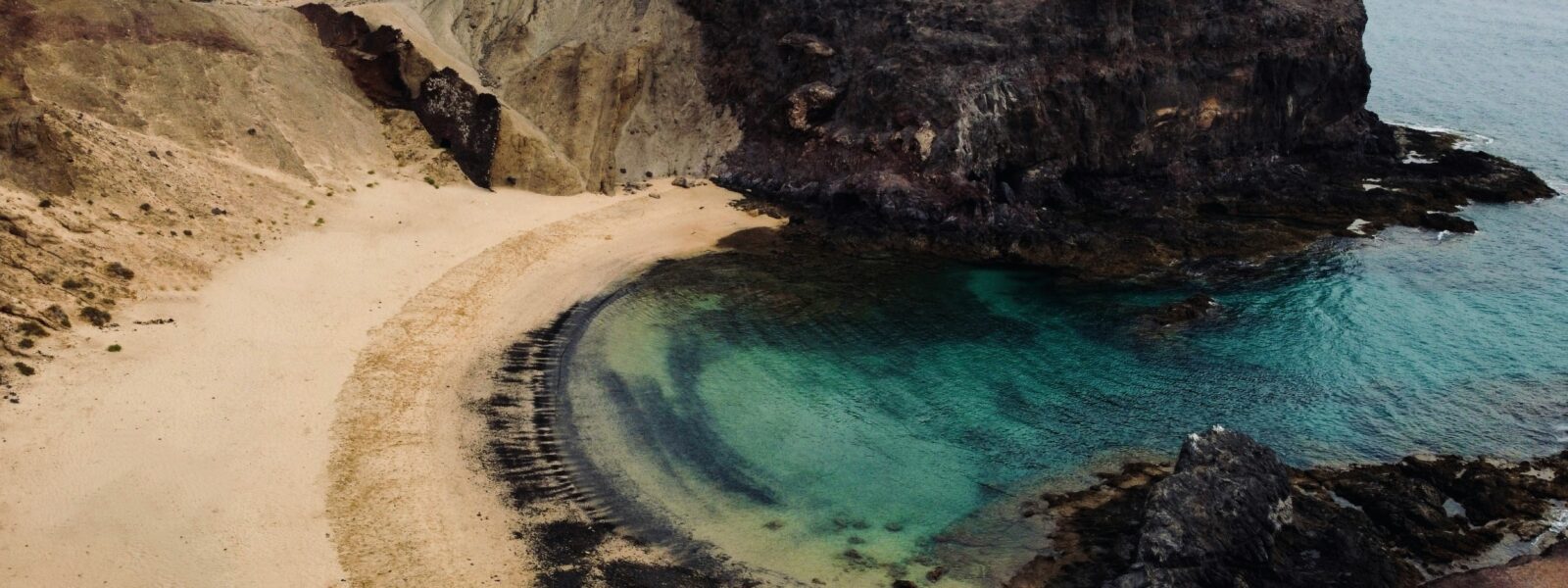
A submarine that takes you down to the seabed, a beach that turns into a paddling pool at low tide and a volcano you can simply stroll into. Lanzarote was the last island of our long trip around the Canary Islands, and we spent a few weeks exploring it with our toddler and preschooler. It turned out to be an island where every day with kids brings something new, without hours stuck in the car.
Don’t expect huge theme parks here. Lanzarote is all about volcanoes, lava tunnels and quiet sandy coves, with the odd pool full of slides thrown in for variety. For kids who love scrambling over rocks, spotting fish and collecting pebbles, that’s pretty much perfect.
In this guide, we’ll share what we did with the kids, what didn’t quite live up to the hype and which famous sights are worth your time. You’ll also find our tips on family-friendly hotels, car hire and the best time to go.
Is Lanzarote good for kids?
Absolutely, especially with little ones. The island is small: you can drive from Playa Blanca in the south to Órzola in the north in about an hour. That means day trips fit neatly between nap time and dinner, and there’s no need to move hotels halfway through your holiday.
What sets Lanzarote apart from Tenerife and Gran Canaria is how calm it feels. You’ll hardly see a high-rise, the resorts are easy to get around and nature starts right behind the last house. That’s largely thanks to artist César Manrique, who fought mass tourism and left his mark all over the island. Kids might not notice much of that, though they’ll probably love a cave with a concert hall inside and a house built into lava bubbles.
If you’re mainly after big water parks, animal shows and an endless promenade, Tenerife or Gran Canaria will suit you better. If you’d rather explore and play outdoors, Lanzarote is a great fit. We found it more polished than neighbouring Fuerteventura, but with kids, there’s more to do on Lanzarote.
→ Discover which Canary Island is best for you
→ Compare Lanzarote and Fuerteventura on 6 points
→ Discover the 16 best things to do in Lanzarote
→ Discover the 12 best beaches in Lanzarote
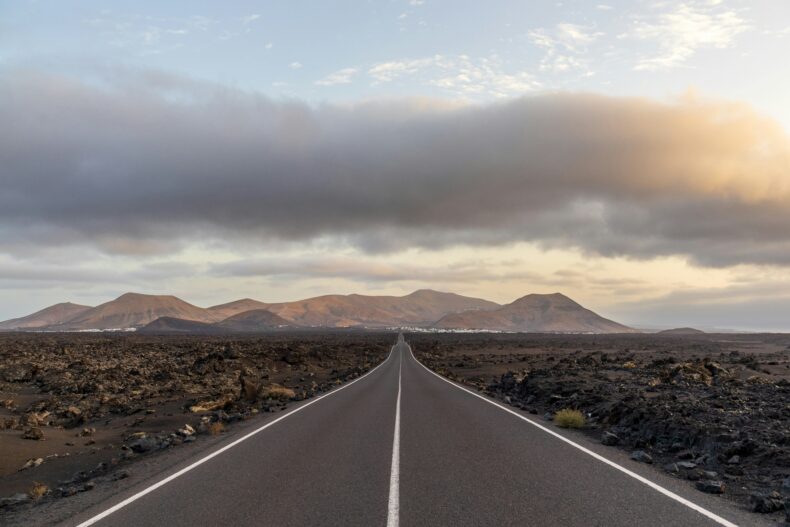
Where to stay in Lanzarote with kids?
With young kids, we’d pick Costa Teguise. It’s the most relaxed of the three big resorts, it’s nicely central and it has Playa Jablillo, the best toddler beach we came across in the whole Canary Islands. From here, it’s half an hour to the caves in the north and roughly 45 minutes to Papagayo.
Playa Blanca in the south is the other obvious choice. This is where you’ll find most of the big family resorts with kids’ clubs and water slides, the sheltered town beach Playa Flamingo is great for little ones, and the Papagayo coves are just around the corner. Puerto del Carmen is bigger and livelier, with a long sandy beach and everything within walking distance. Happy with a pool among the palms and craving peace and quiet? Then look at Arrieta in the north or the white village of Yaiza.
#1 Oasis Lanz Beach Mate is a few minutes’ walk from Playa Jablillo, so that sea-side paddling pool becomes your go-to beach without even trying. You can choose between rooms and apartments with a kitchenette, and there are separate kids’ pools alongside the main ones.
#2 With its little white houses, squares and five pools, Hotel LIVVO Volcán Lanzarote feels like a mini Canarian village next to the Playa Blanca marina. The spacious family suites give you room to breathe while the youngest has an afternoon nap.
#3 Princesa Yaiza Suite Hotel Resort sits right on Playa Dorada and has a huge kids’ area with its own pools, playgrounds and clubs for different ages. Perfect if you’d rather not leave the grounds much, though don’t expect a lot of local character.
#4 At Finca de Arrieta you sleep in a yurt or a stone cottage in a garden full of fruit trees, a short walk from Arrieta’s beach. For kids, it feels like camping with a pool thrown in, and the whole eco village runs on sun and wind.
#5 La Casona de Yaiza is a 19th-century manor house with a pool in the village of Yaiza, close to Timanfaya and El Golfo. There are family rooms, and it makes a lovely small-scale base if you’d rather have a village around you than a resort.
#6 Seaside Los Jameos is built in traditional Canarian style and sits right on Los Pocillos beach, on the quieter side of Puerto del Carmen. There are kids’ pools, a mini club and spacious family rooms, so it feels relaxed without turning into a full-on kids’ hotel.
#7 Relaxia Lanzasur Club is a complex of apartments and bungalows set in a garden in Playa Blanca, a few hundred metres from Playa Flamingo. The big bonus: the Aqualava water park is part of the complex, and guests get to slide for free.
→ Discover the 7 best areas to stay in Lanzarote

Do you need a rental car in Lanzarote?
If you want to see more than your hotel and the beach in front of it, a rental car is really essential. Many of the best spots for kids, like Papagayo, the El Cuervo crater and the rock pools in the north, are hard or impossible to reach by bus. With your own wheels, you can plan outings around naps and you’re never tied to a timetable.
We’d compare prices on Discover Cars, which lists local and international rental companies side by side. Add full coverage when you book, and reserve child seats straight away, so there are no surprises at the rental desk.
→ Compare rental cars in Lanzarote with Discover Cars
Planning mostly sun and pool time? Then you can manage without. Buses connect the three big resorts with each other and with Arrecife, and most hotels sell day trips to Timanfaya and the caves.
When is the best time to visit Lanzarote with kids?
Lanzarote is a year-round destination, which makes it handy for any school holiday. In winter, daytime temperatures usually hover around 20°C: great for exploring and playing on the beach. The sea is chilly then, so shallow lagoons and rock pools are the best places for little ones to splash about.
Summer is warmer, but the trade winds stop it from feeling sticky. Do expect wind, though, especially on the north and west coasts. A few times a year, the island also gets calima, a hot wind from the Sahara that carries fine sand. We had it too: a hazy, yellowish sky and dust on everything. After a few days, it was gone again.
Visiting in February or March? Check whether Arrecife’s carnival falls during your trip. More on that below.
Things to do in Lanzarote with kids: 22 tips
From a lagoon full of fish to a crater you can walk straight into, these are the best things to do in Lanzarote with kids, with our favourites first.
#1 Playa Jablillo: a paddling pool in the sea
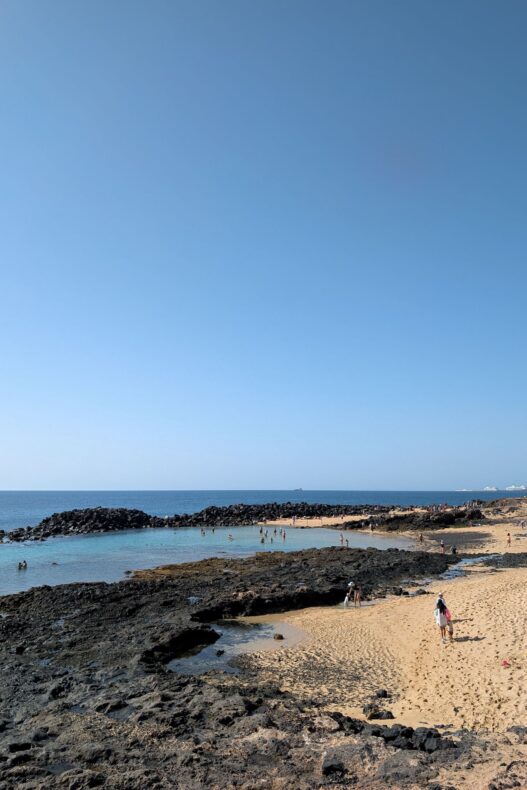
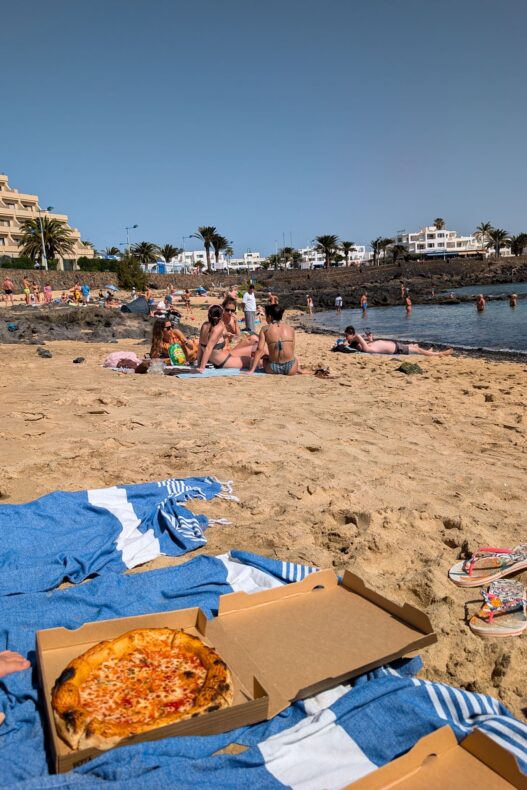
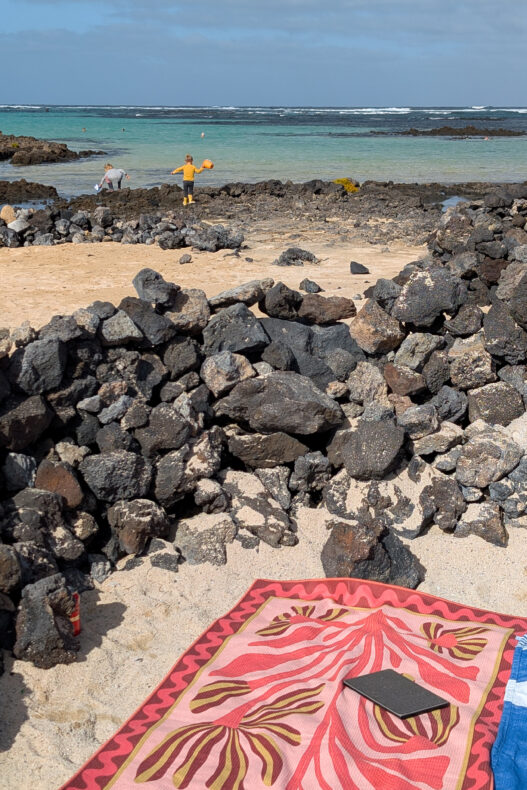
If I had to pick one beach in Lanzarote for small kids, it’d be Playa Jablillo in Costa Teguise. Breakwaters hold back the ocean here, creating a sheltered lagoon. At low tide, the water gets so shallow and calm that it becomes a paddling pool in the sea, with tiny fish darting around your ankles.
For our toddler and preschooler, that was ideal: they could wade in by themselves without us having to keep an eye on every wave. Bring a little net, some water toys or a simple snorkel mask and you’re sorted. Toilets, beach bars and shops are all within walking distance, so at lunchtime we grabbed pizza and ate it together on the beach.
Try to go around low tide, as part of the beach disappears when the water comes in. A tide app makes planning your beach day easy.
#2 Papagayo: sandy coves in a nature park
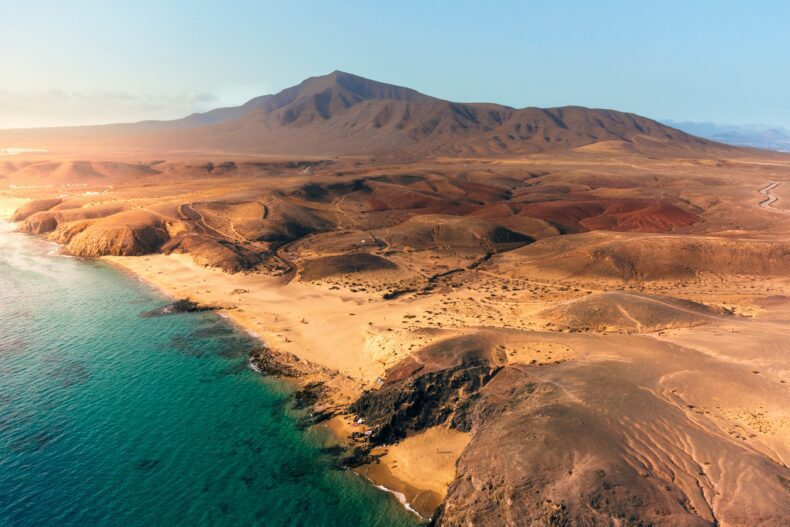
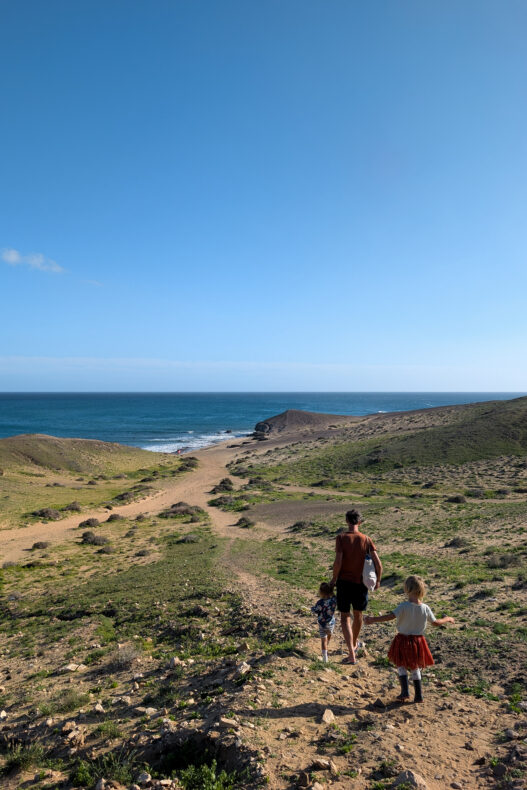
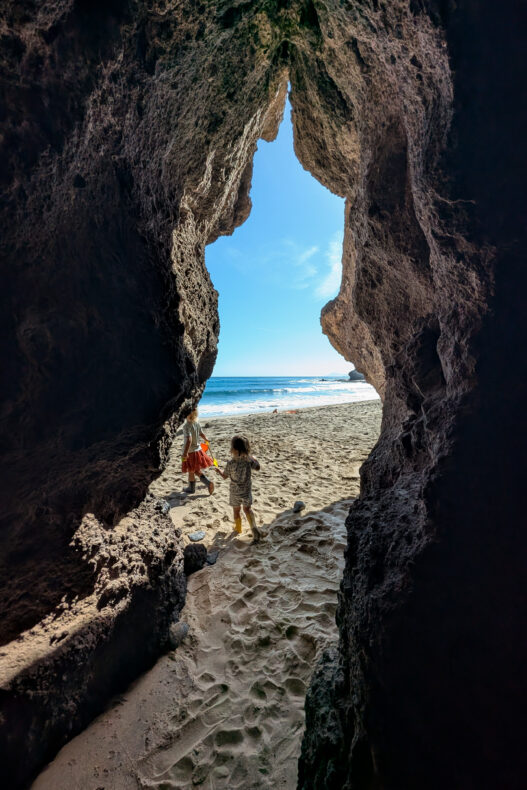
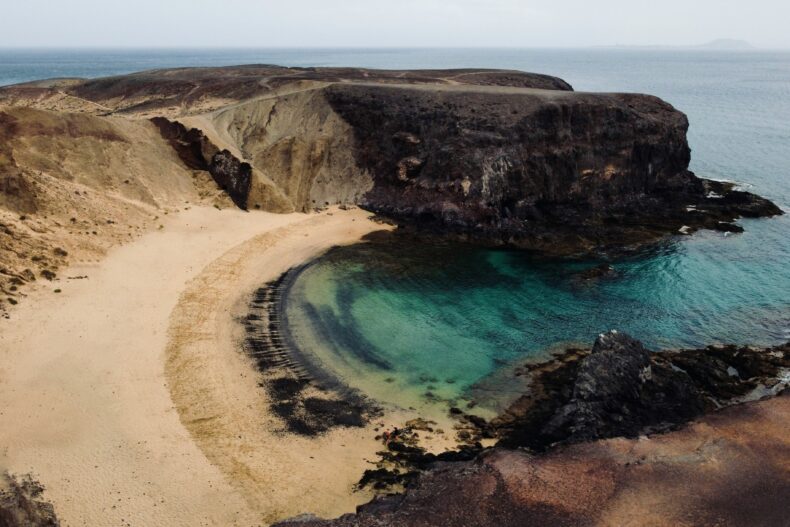
The Papagayo beaches lie on the southern tip of the island, inside the protected Los Ajaches nature area. You drive in along a long dirt road and pay a small fee per car at the barrier. Then it’s a matter of choosing between a handful of sandy coves framed by golden cliffs, with clear blue and usually calm water.
The best-known cove, Playa de Papagayo, got pretty crowded during the day. We preferred to spread our towels on the beach next door, Caleta del Congrio. It’s wider and quieter, with plenty of space to dig a castle complete with moat. The water slopes gently, although strong winds can bring bigger waves. You’ll also see plenty of naturists there, unlike at the famous Papagayo beach.
There are hardly any facilities, so bring water, food and a parasol. Fancy seeing the coves from the water instead? Hop on a catamaran from Playa Blanca or Puerto del Carmen.
→ Sail along the Papagayo beaches by catamaran
#3 Puerto Calero: dive to the seabed in a real submarine
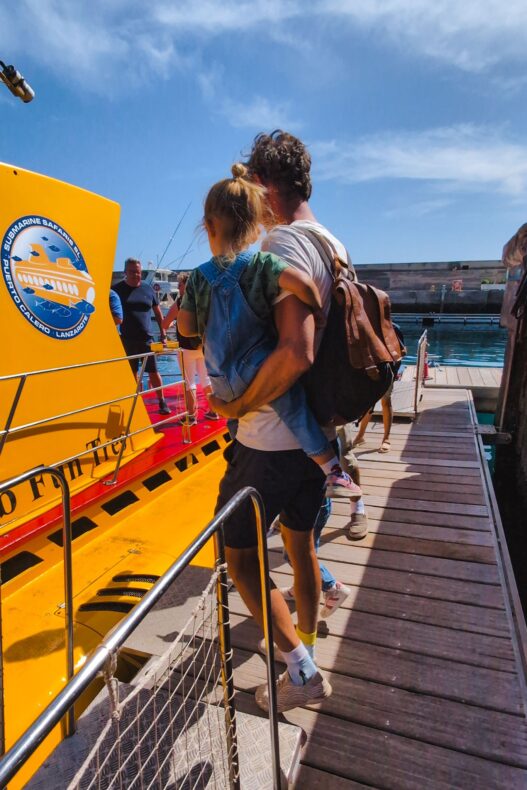
This was one of the most fun things we did with the kids in the whole Canary Islands. In the marina of Puerto Calero, you climb down a ladder into a yellow submarine that slowly descends to around 30 metres. Through the big portholes, you watch schools of fish swim past and glide by two shipwrecks.
The beauty of it: you don’t need any diving experience and you stay completely dry. Kids aged two and up can join, and everyone gets their own window, so there’s no elbowing for the best view. The dive takes about an hour, including boarding.
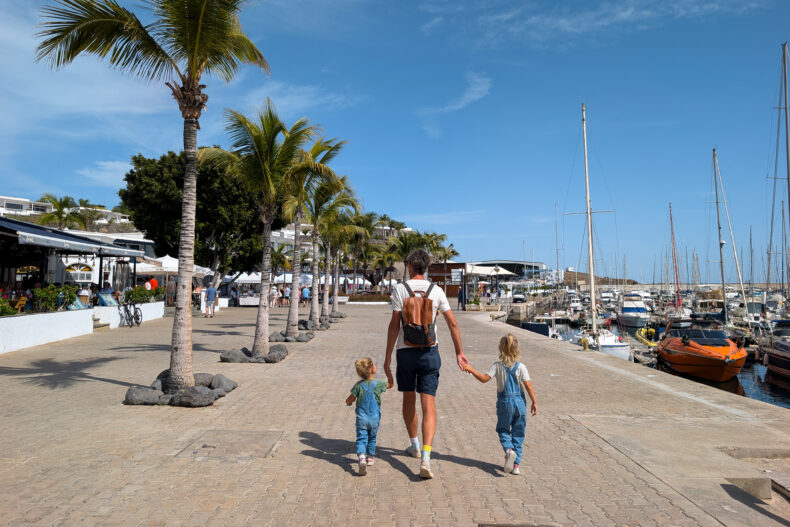
Puerto Calero itself is a small, upmarket marina that’s lovely for a wander among the boats or a bite to eat at one of its many restaurants. Pair the dive with an afternoon on the beach in Puerto del Carmen, a few kilometres away.
→ Book a submarine dive from Puerto Calero

#4 Jameos del Agua: blind crabs in a lava tube
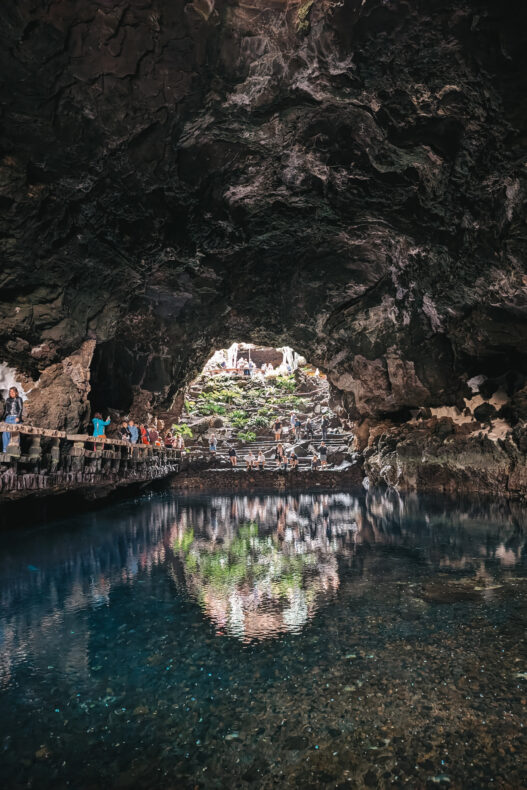
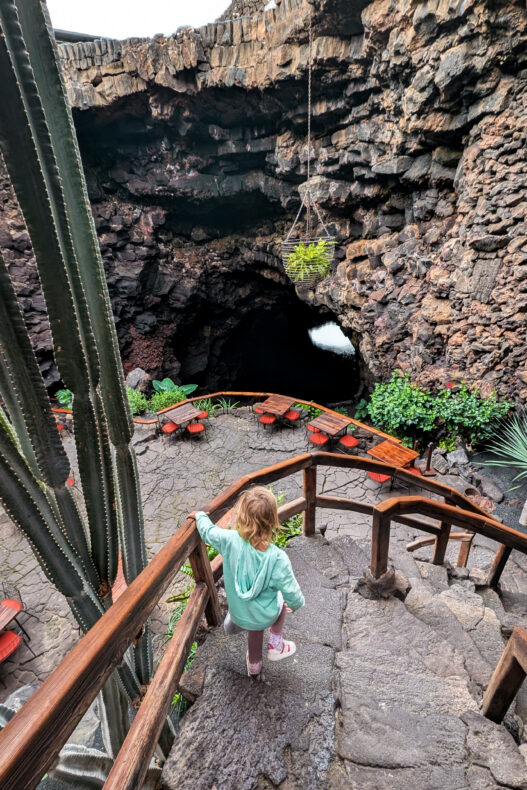
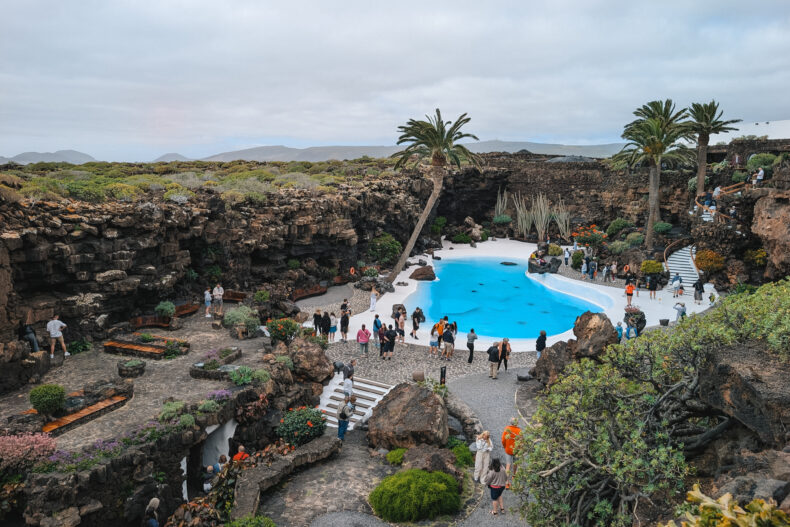
Jameos del Agua was César Manrique’s first big project in Lanzarote, built inside a collapsed lava tube in the north. He was known for blending nature and architecture, and you can really see that here. I went with our daughter, first thing in the morning. A staircase takes you down to an underground lake, where tiny white crabs sit on the bottom. They’re blind and live nowhere else in the world.
After the cave, you walk on to a bright blue pool among black rocks and a concert hall inside the cave. Beautifully done, but honestly, we didn’t think it lived up to the hype or the price. There isn’t actually that much to the visit, yet it gets really busy. Luckily, kids up to six get in free.
Go early, because later in the day the tour buses roll in and it gets even busier.
#5 Cueva de los Verdes: walk through a kilometre-long tunnel
A few hundred metres inland lies Cueva de los Verdes, another section of the same lava tube. A guide leads you through about a kilometre of passages and chambers on different levels, carved out by molten lava. Centuries ago, locals hid here from pirates and slave raiders.
At the end, there’s an optical trick we won’t spoil, because the whole tour builds up to it. You can only buy tickets on the official website, for a set time slot, so sort them out well ahead. Leave the stroller in the car: the passages are narrow, there are steps and you sometimes have to duck.
→ Visit Cueva de los Verdes and Jameos del Agua on one tour
#6 Timanfaya: ride through the Fire Mountains
Timanfaya National Park is Lanzarote’s most famous sight. Between 1730 and 1736, dozens of volcanoes poured lava over a quarter of the island, and that landscape of craters, black lava flows and rust-coloured slopes has barely changed since. You’re not allowed to drive or walk around the park on your own. Instead, a bus takes you from Islote de Hilario along the Ruta de los Volcanes.
For kids, the demonstrations at the visitor centre steal the show. A ranger pours water into a hole in the ground, and seconds later it shoots back up as a steam geyser. A bundle of dry brush bursts into flames as soon as it’s held into a pit. Next door is El Diablo restaurant, where meat and fish are grilled over the volcano’s heat.
Tickets for the Fire Mountains are sold online for a fixed date and time, and kids up to six go free. The official CACT website shows which slots are still available. Rather not drive to the park yourself? Book a half-day tour that combines Timanfaya with other highlights in the south.
→ Book a half-day tour of Timanfaya’s Fire Mountains

#7 Mancha Blanca: Timanfaya’s free visitor centre
Just outside the national park, on the road from Yaiza to Tinajo, you’ll find the Mancha Blanca visitor centre. Entry is free. Models, short films and displays explain how the eruptions shaped the island, and a walkway gives you a view over the lava field.
There’s also a room that recreates a volcanic eruption, complete with sound and effects. For our daughter, that was too scary, and we were back outside in no time. Older kids will probably love it, but with a preschooler, you can happily skip that bit and explore the rest of the centre.
#8 Volcán El Cuervo: walk into a crater
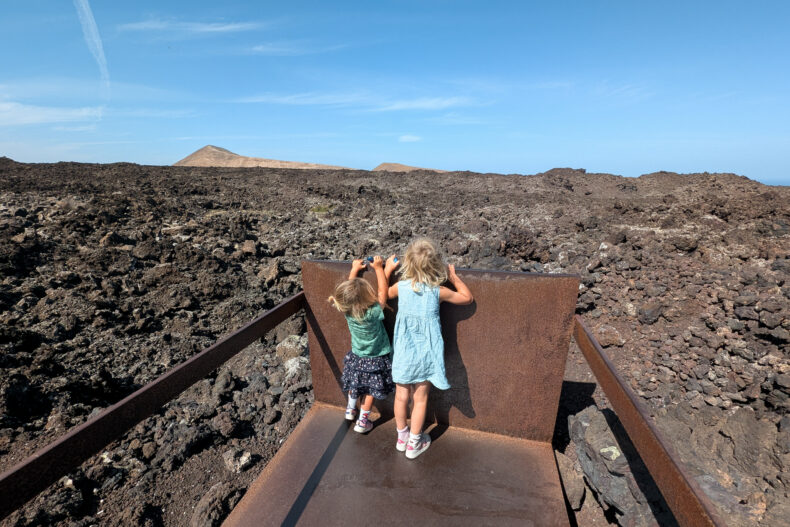
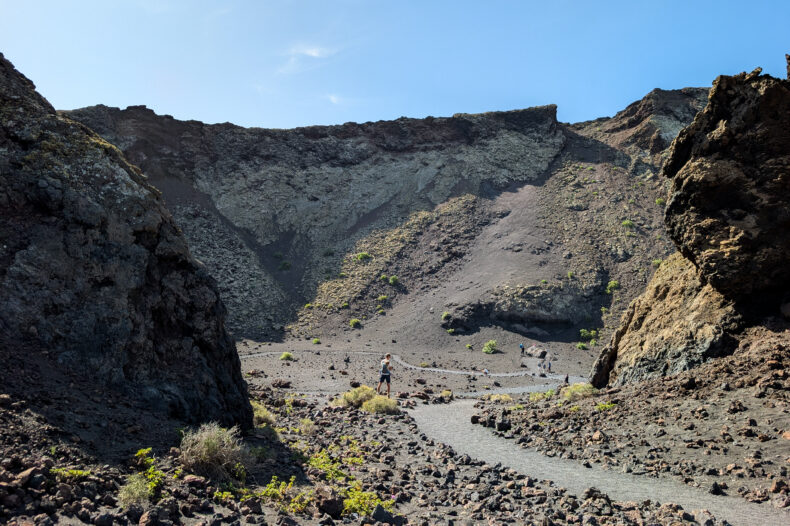
At El Cuervo, you don’t need to be a mountaineer to stand inside a volcano. From a car park on the road from Masdache to Tinajo, an almost flat path leads through the lava field to the cone, and through a gap in its side you simply walk into the crater. This is the volcano that kicked off the great eruption of 1730.
We did the short loop around the whole crater with the kids and it was very doable. The full loop is around four to five kilometres, but there’s no shade at all, so bring water and sun hats. The official Canary Islands tourism website recommends this walk for families too.
Leave the lava stones where they are, however tempting: this is a protected area.
#9 El Golfo and Los Hervideros: a green lagoon and a raging sea
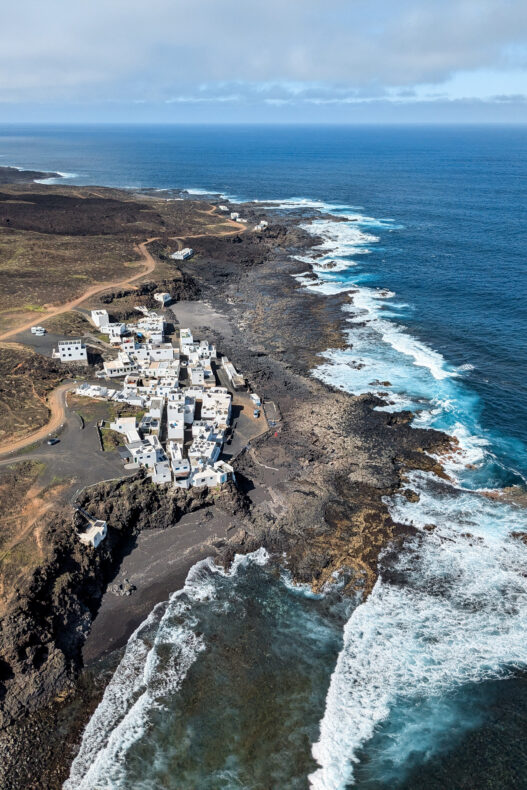
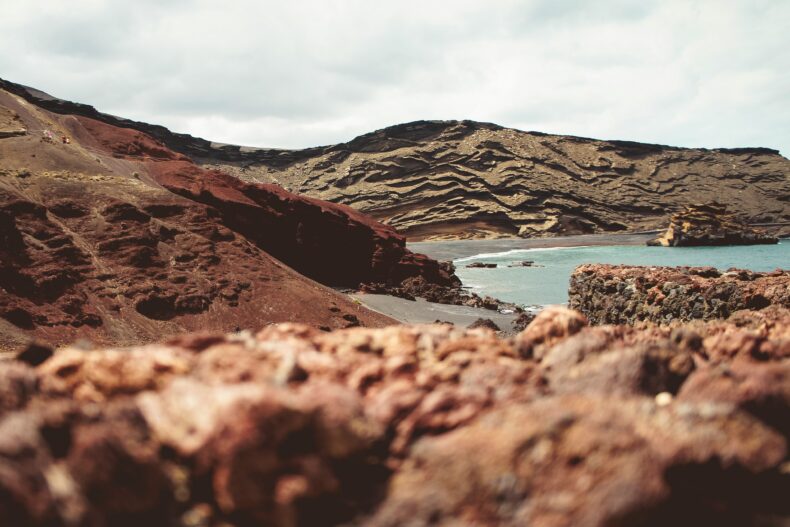
On the west coast, you’ll find the little white fishing village of El Golfo. From the viewpoint above the beach, you look down on Charco de los Clicos, a bright green lagoon inside half a crater, surrounded by black sand and red rocks. The colour comes from algae in the water.
On the other side of El Golfo, we walked a stunning stretch of the path through the lava fields and then drove on to Los Hervideros, a few kilometres south. Here, the ocean smashes into caves and holes in the black lava coast, sending spray metres into the air. Touristy, yes, but impressive, and paths and steps take you close to all that power. Do hold little hands, as there aren’t railings everywhere.
#10 Playa de Montaña Bermeja: a black beach below a red volcano
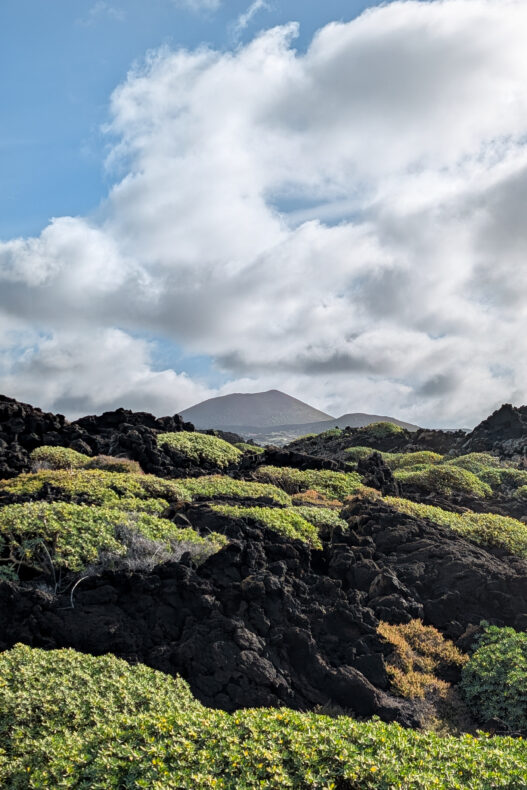
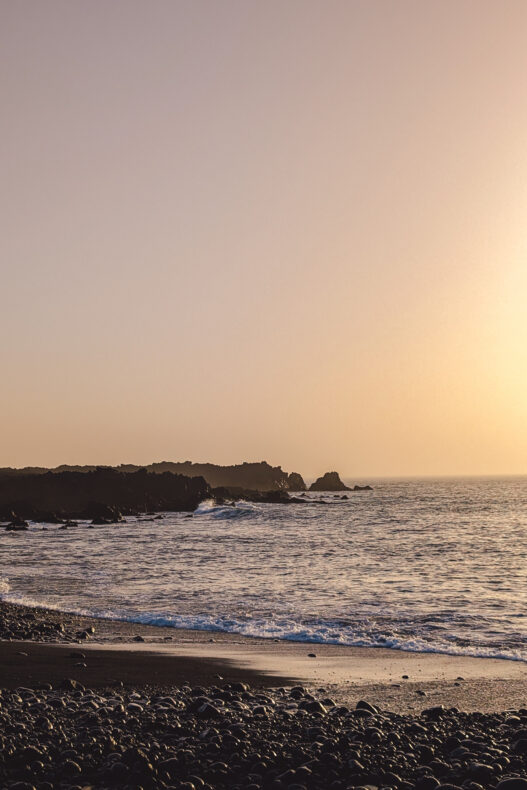
Between Los Hervideros and the Janubio salt flats lies Playa de Montaña Bermeja, a wild beach of black sand and pebbles below a reddish-brown volcanic cone. A short dirt track gets you there, and you’ll often have the beach almost to yourselves.
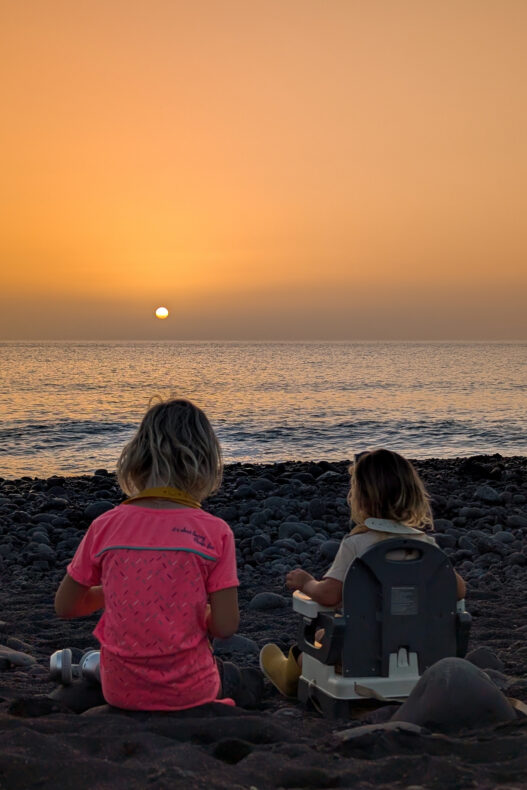
Swimming here with kids is a no-go, as the sea is rough. But hunting for pretty stones, watching the waves and running across the wide beach? Totally fine. Combine it with El Golfo and Los Hervideros for a great afternoon on the west coast.
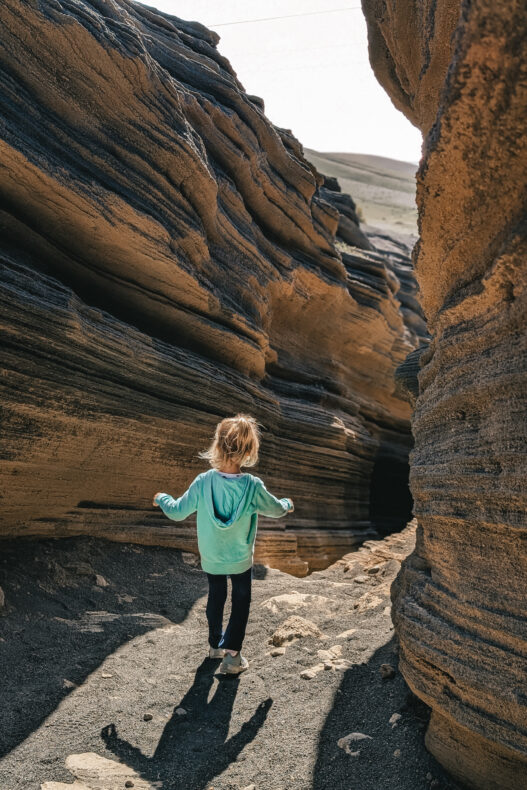
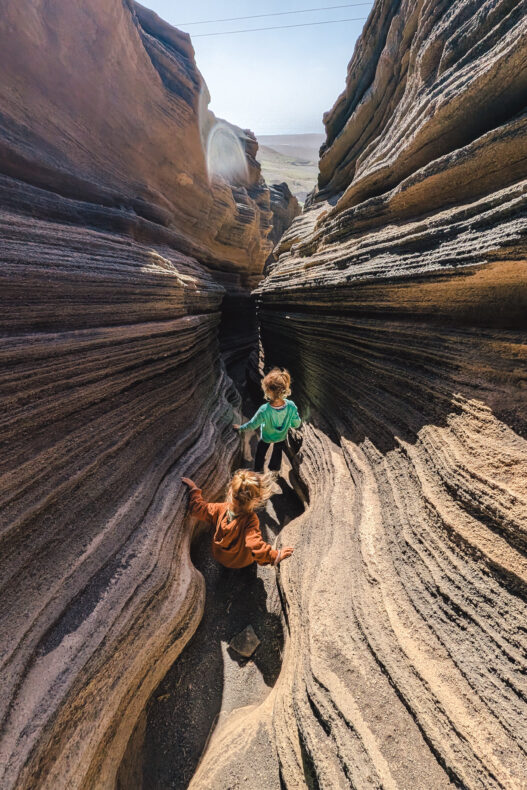
#11 Las Grietas: squeeze through narrow lava canyons
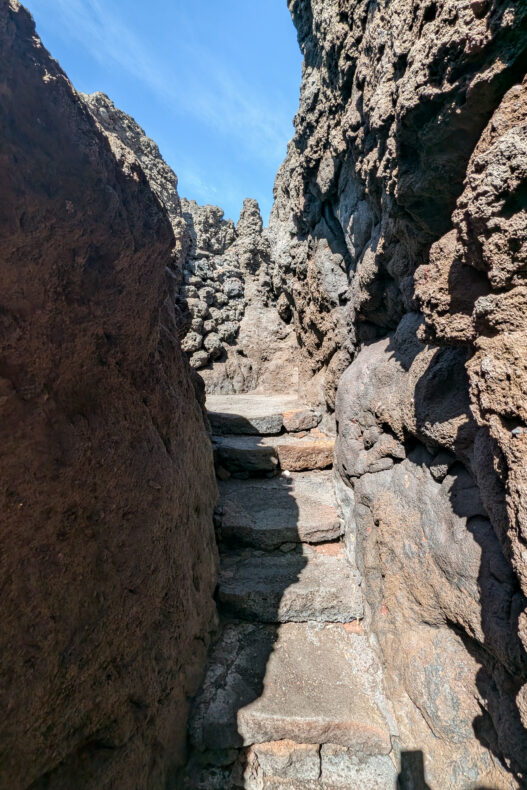
Above Puerto del Carmen, at the foot of Montaña Blanca, the lava has cracked open into a few narrow gorges with tall, striped walls. At Las Grietas, you walk between those walls as if you’re in a stone maze. For kids, it’s a proper adventure. The path gets narrow in places and there’s the odd bit of scrambling.
It’s no secret: it was busy, and we heard a surprising amount of Dutch. When we were there, calima had turned the sky yellow, yet it still looked great. Go early in the day or late in the afternoon for the best light and fewer people.
#12 Ciudad Estratificada: a stone city at sunset
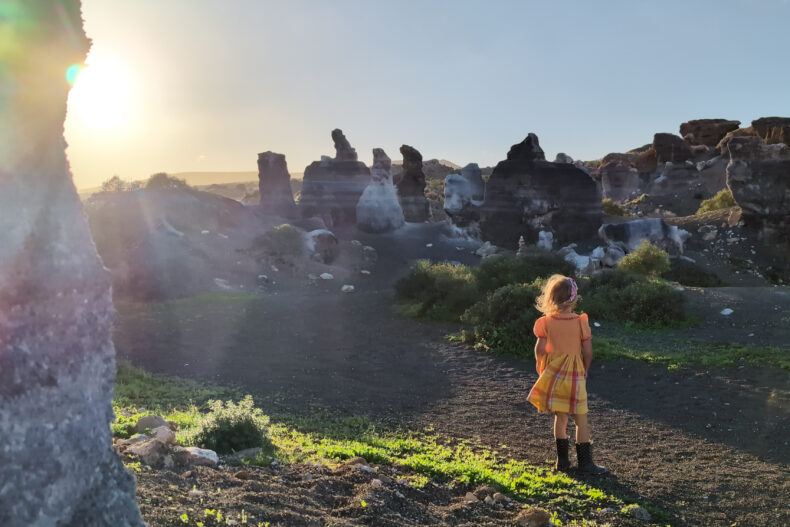
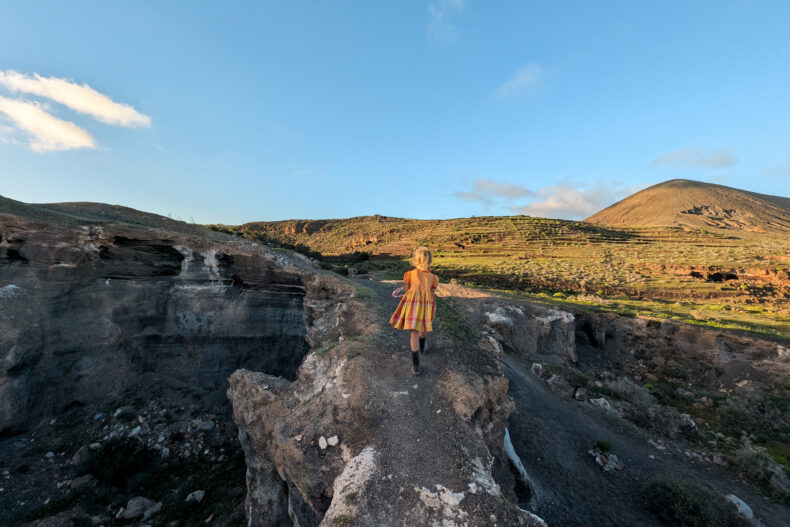
Inland, between Teguise and Guatiza, lies the Ciudad Estratificada, in other words, the Stratified City. Wind and rain have carved layers of volcanic ash into little towers, arches and passages that look like a tiny abandoned town. There are no paths or fences, so you find your own way between the rocks.
We came at sunset, when the rocks glowed orange, and that’s the best time if you ask us. The rock is soft and crumbly, though, so don’t climb on the thin edges and keep a close eye on little ones. It’s not very big, so allow half an hour to an hour to explore the rock formations.
#13 Famara: a wild surf beach with great coffee
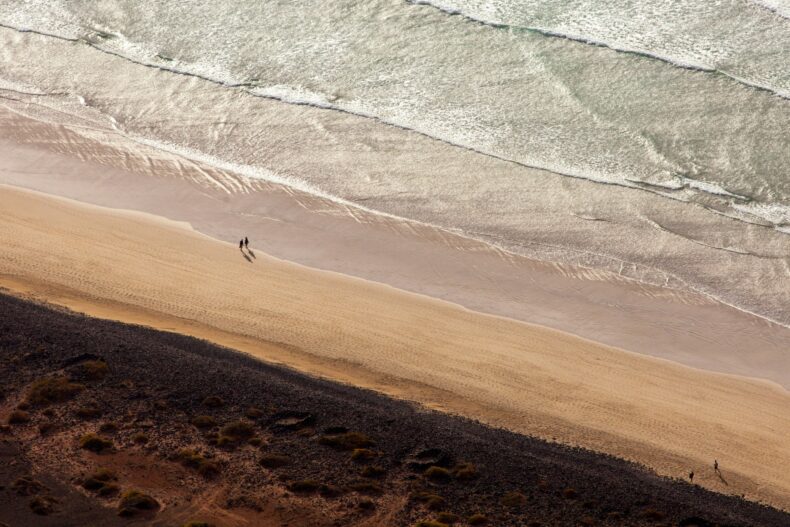
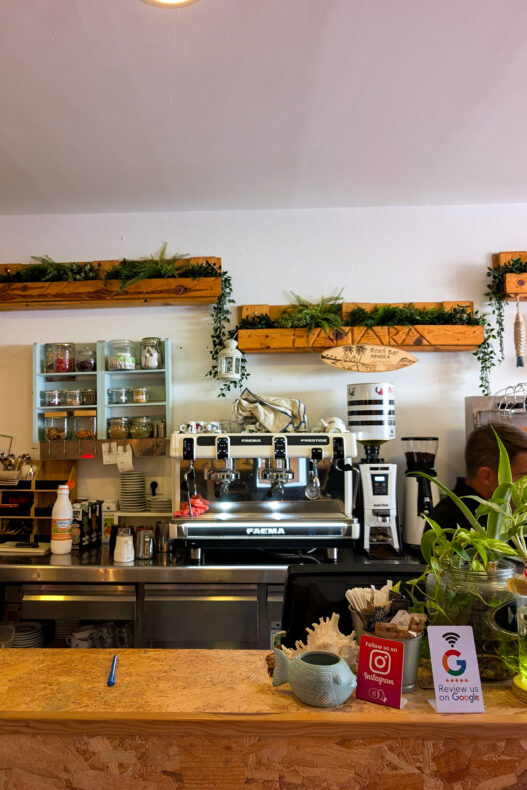
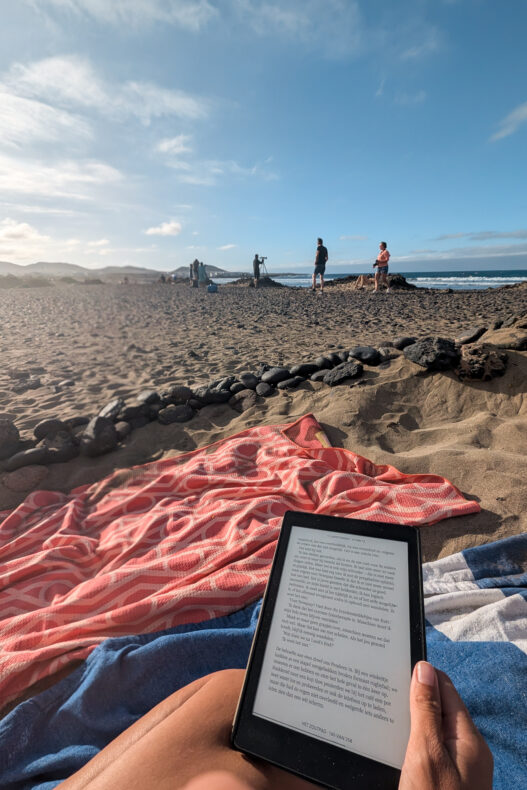
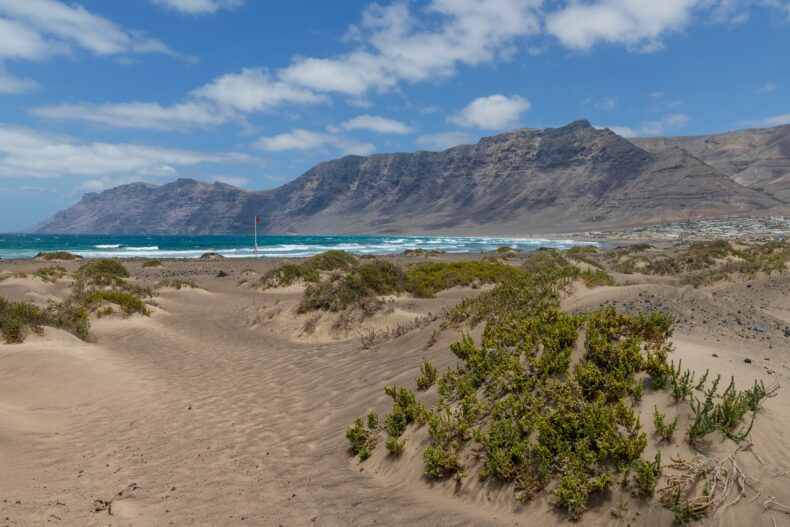
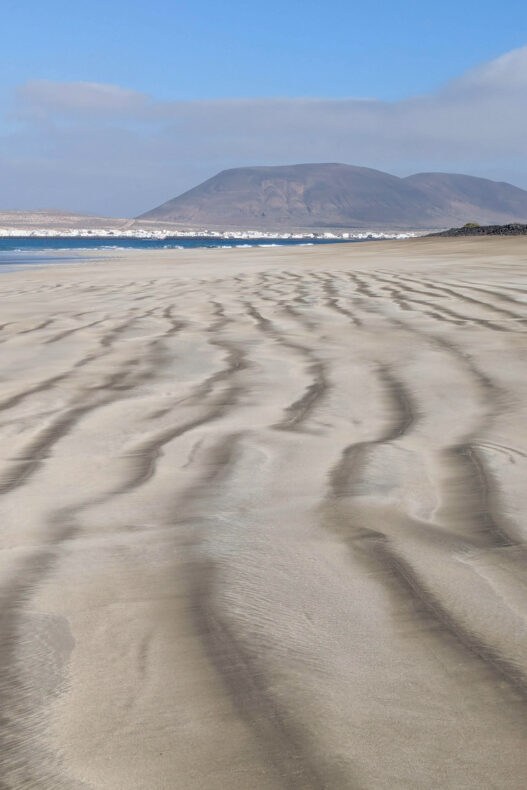
Famara is a surf village on the northwest coast, with sandy streets, low white houses and a beach that stretches for kilometres below the towering cliffs of the Risco de Famara. We loved long walks along the sand while the surfers waited for waves, often finishing with coffee at a hip little café in the village.
Swimming here with kids isn’t a good idea, with big waves and strong currents. Digging, flying a kite and collecting shells, on the other hand, work brilliantly. With slightly older kids, you can book a lesson at one of the surf schools.
#14 Views over La Graciosa: the free alternative to Mirador del Río
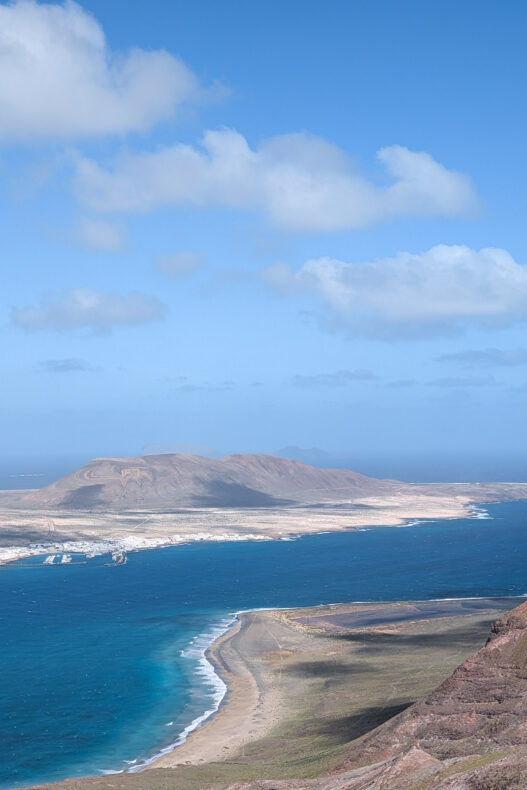
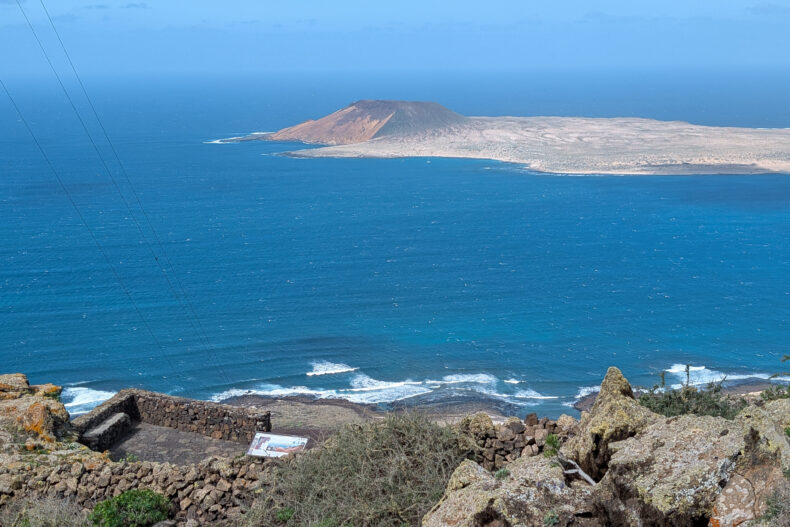
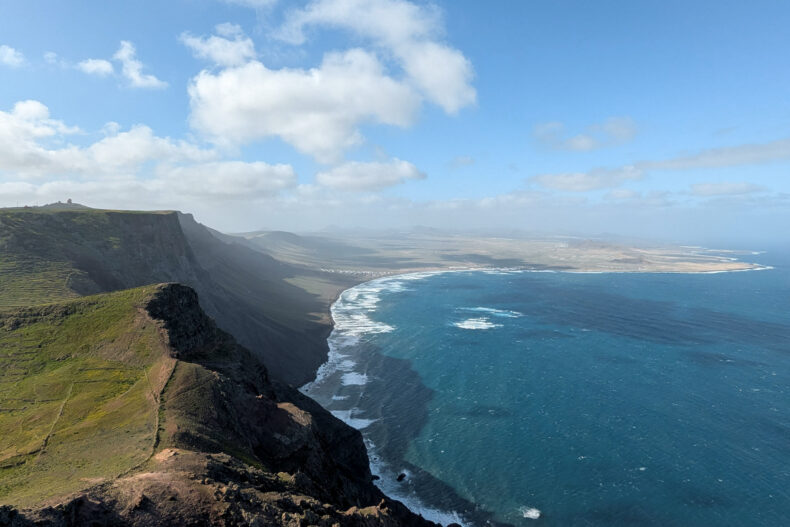
Mirador del Río is Lanzarote’s most famous viewpoint, a creation of landscape architect César Manrique, perched high on the cliffs in the north. We skipped it and drove to the start of the hiking trail down to Playa del Risco, not far from there. From the edge by the car park, you get a free view over the cliffs, the empty beach far below and the little island of La Graciosa.
As far as I’m concerned, that panorama is every bit as good as the one from the famous paid viewpoint. Sebastiaan hiked all the way down to the beach, but with kids, that steep descent, and especially the climb back up, isn’t a great plan. The view from the top is worth the drive on its own, though Sebastiaan did come back with a camera roll full of stunning shots.
#15 Haría: a market in the valley of a thousand palms
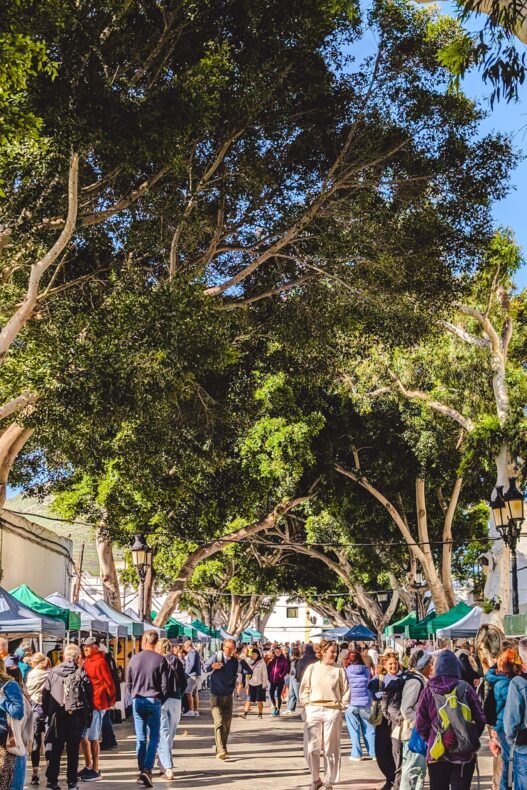
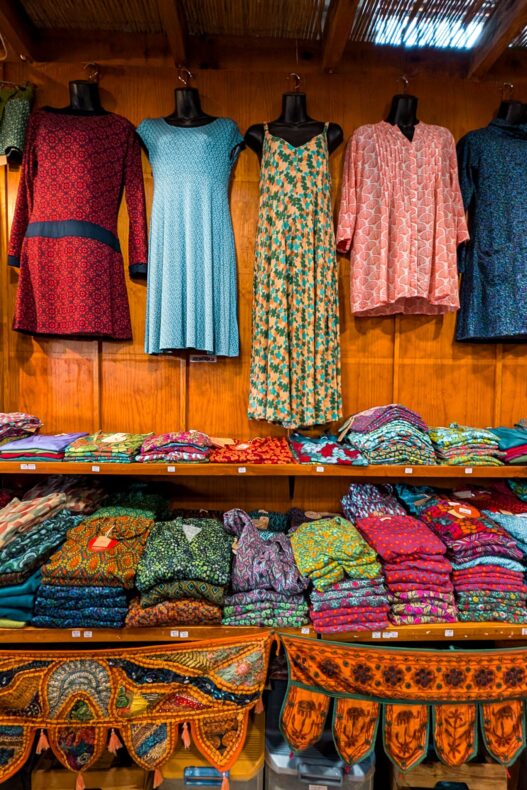
Haría sits in a green valley full of palm trees and feels worlds away from the bare lava fields in the south. Every week, the square under the trees hosts a lively market with local cheese, honey, jewellery and art. We wandered the market, and Sebastiaan took a trail from the village up to the ridge.
Haría is also home to the house where César Manrique spent his final years. Looking for a bigger market? The Sunday market in Teguise, with hundreds of stalls, draws people from all over the island.
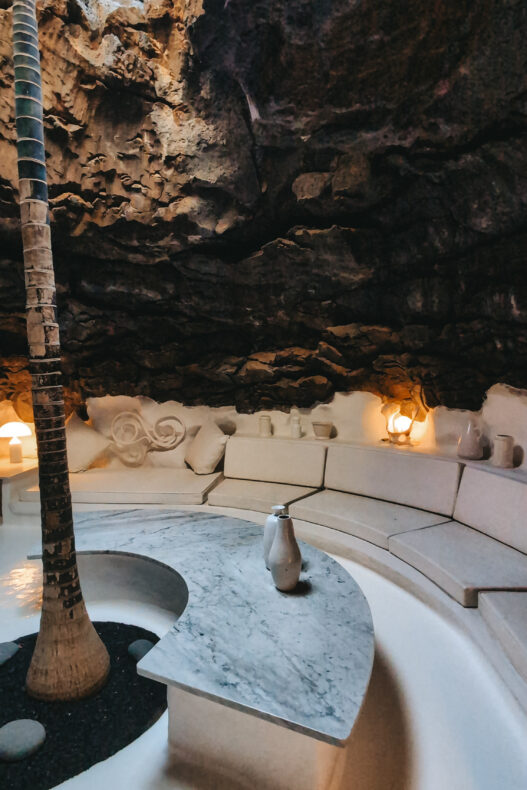
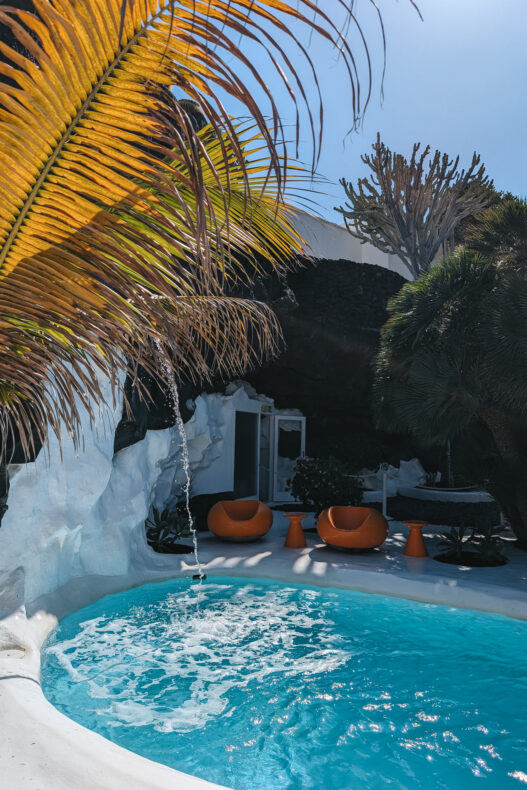
#16 Fundación César Manrique: a house built in lava bubbles
In Tahíche, near Arrecife, César Manrique built his home on top of a lava flow. Below the white house, he linked natural lava bubbles with tunnels to create rooms, complete with a pool and plants among the black rock. Today it’s the Fundación César Manrique, and you can visit it as a museum. Walking from bubble to bubble is quite an experience.
We found it a fascinating house to see. At the same time, it left us with mixed feelings: it’s also a tribute to a wealthy jet-set artist living a rather luxurious hippie life. Pop in if you’re nearby, but we wouldn’t go out of our way for it.
#17 Arrieta and Punta Mujeres: a laid-back village in the north
After the busy south, Arrieta felt like a deep breath out. It’s a small village on the east coast with white houses, a couple of seafood restaurants and the sandy beach Playa de la Garita. We parked our camper close to the beach for two days, and it was one of the most relaxed spots of our entire trip.
A few minutes further along are the natural pools of Punta Mujeres: sea pools sheltered by lava rocks, with steps leading into the water. On calm days, you can swim there in shelter; when the waves are high, the water crashes right over.
#18 Caletón Blanco and Órzola: rock pools and a low-tide cave
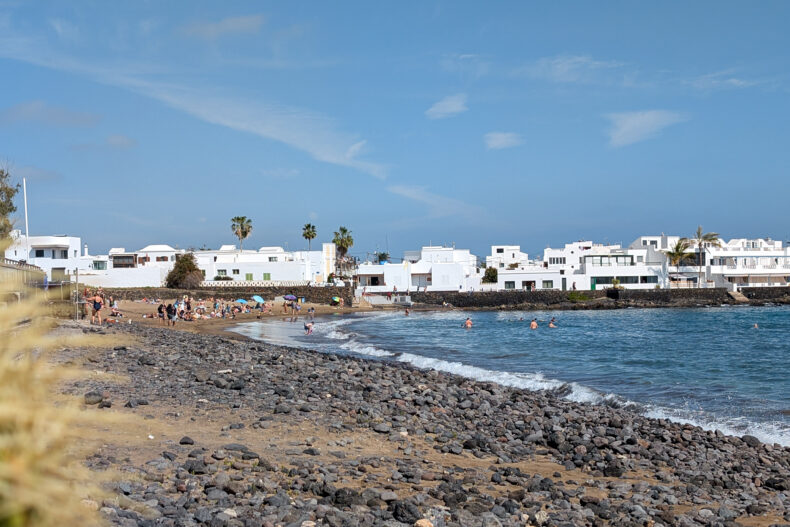
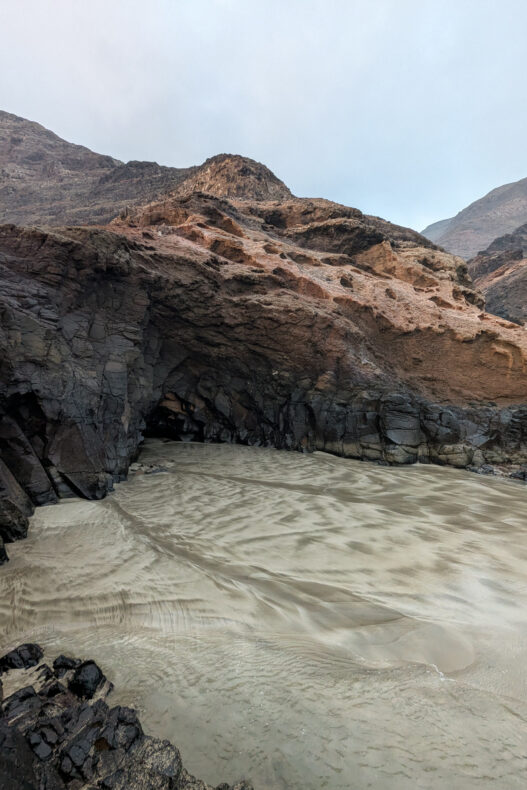
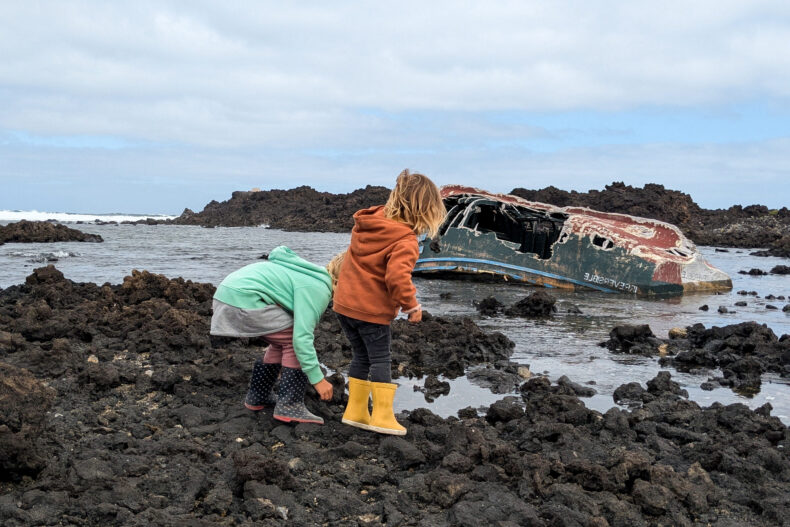
Right up north, just before Órzola, lies Caletón Blanco: white sand between black lava flows. At low tide, bright blue pools form between the rocks, shallow and sheltered, perfect for kids to hunt for crabs and fish. It was too chilly to swim when we were there, but on a warmer day, you could easily spend hours playing here.
In Órzola itself, the little harbour where the ferry to La Graciosa leaves, we found a sea cave along the coast that you can only reach at low tide. So check the tide before heading north, and you’ll get the most out of both spots.
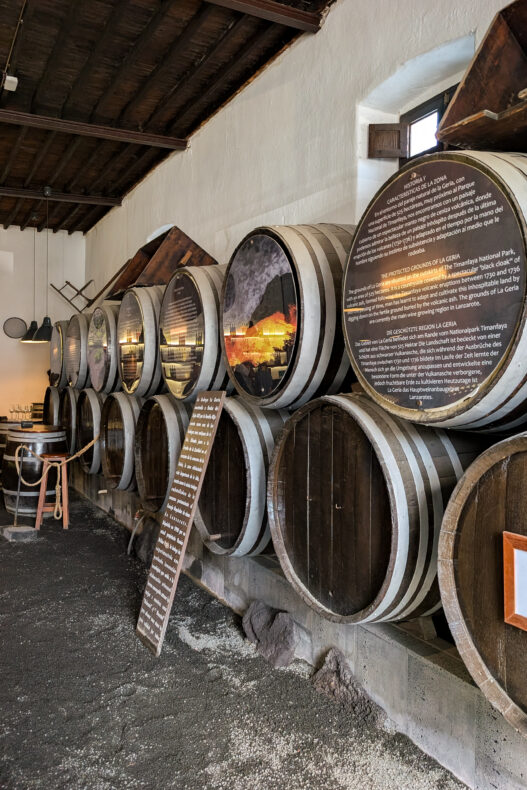
#19 La Geria: vineyards in black craters
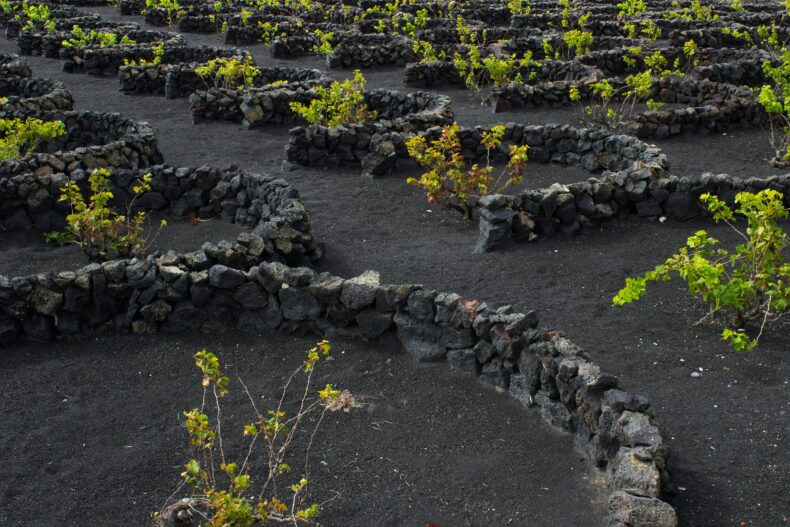
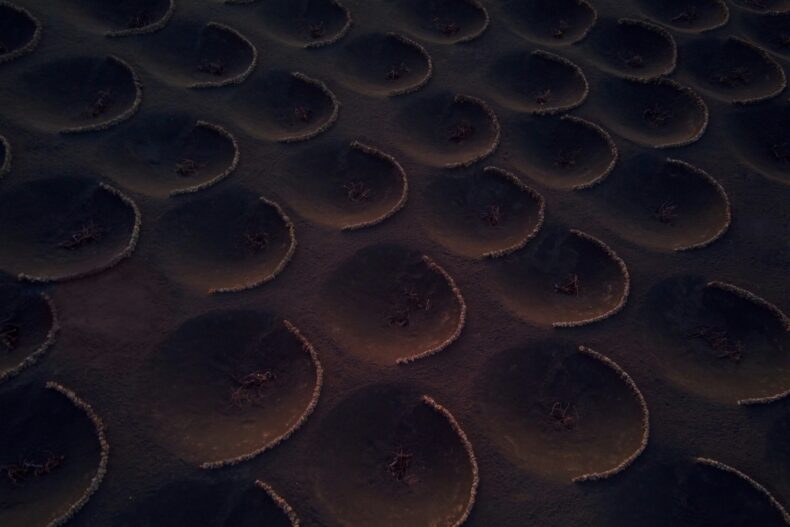
Between Timanfaya and Puerto del Carmen, you drive through La Geria, Lanzarote’s wine region. Every vine grows in its own pit in the black volcanic gravel, protected from the wind by a curved stone wall. Thousands of these pits side by side create a landscape you won’t see anywhere else.
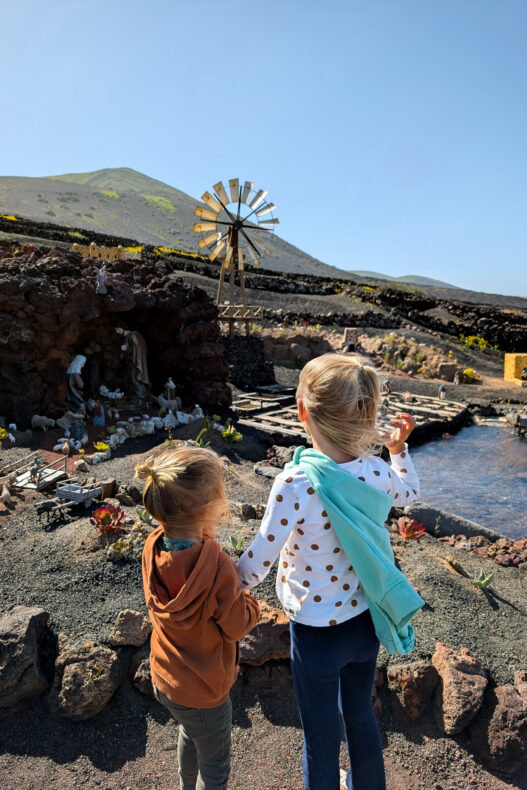
With two small kids in the back seat, we skipped the wine tastings, but we did stop at Bodega Stratvs. It has a Canarian nativity scene (Portal de Belén) that you can see all year round. Our kids loved spotting the animals and figures across the huge Canarian village.
Beyond that, the view of the black pitted fields from the car was enough for us. El Cuervo is just a few minutes’ drive away, so it’s easy to combine the two.
#20 Arrecife: carnival and a lagoon in the middle of town
The capital Arrecife doesn’t top many lists, but we were there during carnival, and it was one big party. Arrecife’s carnival usually takes place in February or early March, with parades, music and dressed-up families filling the streets. We found the main evening parade the most spectacular.
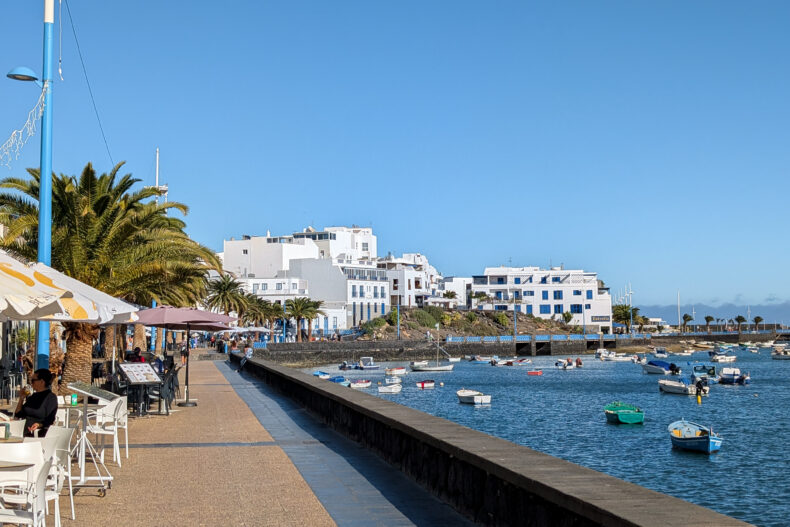
Outside carnival season, Arrecife is mainly handy for a rainy morning or a supply run. If you’re there, stroll past Charco de San Ginés, a lagoon right in the city with fishing boats, and the town beach El Reducto.
#21 Puerto del Carmen: Playa Chica and Playa Grande
Puerto del Carmen was our final stop on Lanzarote, with a few lazy beach days before the long crossing back to mainland Spain. Playa Grande is the wide main beach with soft golden sand, sunbeds and the promenade right behind it.
With little ones, Playa Chica near the old town makes a nice change. It’s a small cove with usually calm water, where you’ll spot fish with nothing more than a snorkel mask. You won’t have it to yourselves, though: it’s a favourite with dive schools too.
#22 Aqualava: water slides for a day off the beach
If the kids just want a day of sliding and splashing, Aqualava in Playa Blanca is the place. The water park is part of the Lanzasur Club complex and has slides, a lazy river, a wave pool and a separate area for little ones. It’s open all year round and the pools are heated with geothermal energy.
You’ll also see Rancho Texas in Puerto del Carmen and the Costa Teguise aquarium on almost every family list. Rancho Texas combines a water park with an animal park and shows featuring sea lions, among others. We’re not fans of animal shows and gave both a miss, but at least now you know they’re there.
→ Get your tickets for Aqualava Waterpark
Bonus tips for Lanzarote with kids
#23 La Graciosa: a day trip to an island without tarmac
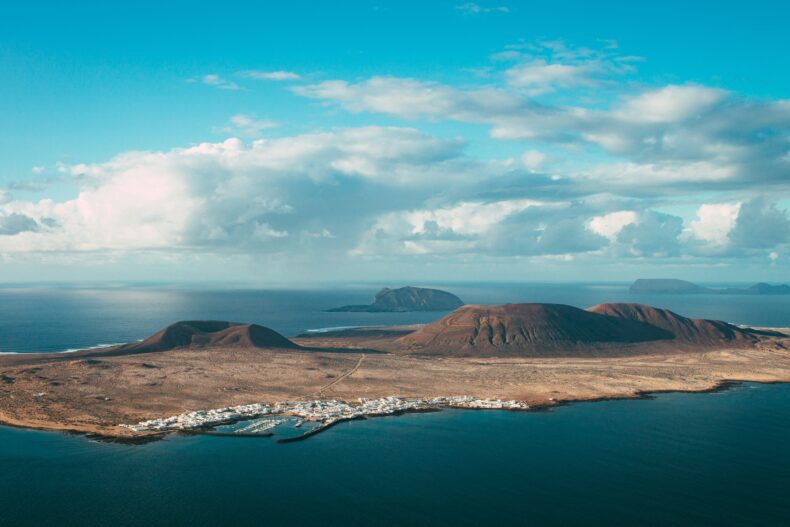
From Órzola, it’s about a half-hour boat ride to La Graciosa, the little island you see so beautifully from the northern cliffs. There are no paved roads, just sandy tracks, a harbour with white houses and empty beaches. Rent a bike or grab a 4×4 taxi to one of the beaches, such as Playa Francesa or Playa de las Conchas.
Pack plenty of water, snacks and sunscreen, because there’s hardly any shade and no facilities outside the village of Caleta de Sebo. We didn’t make it over ourselves, but for kids who love sand and space, it makes for an adventurous day out.
→ Sail around La Graciosa on a day trip
→ Rent an e-bike on La Graciosa
#24 Jardín de Cactus: a quarry full of cacti
In Guatiza, on the way to the caves in the north, César Manrique turned an old quarry into a cactus garden. Thousands of cacti in hundreds of species fill the terraces around a white windmill, from tiny round ones to giants taller than an adult. It’s a short, easy stop, and those spines are a great excuse to keep little hands firmly in yours.
More tips for your trip to Lanzarote
 Our pickHotels in Lanzarote: from a whitewashed fishing village to a beach hotel in Playa Blanca
 Want to stop wherever you like? Rent a car with Discover Cars and compare the big rental companies in one go.
 No flight yet? Compare flights to Lanzarote.
 See Lanzarote from above, like we did on our tandem flight? Book paragliding and other tours with GetYourGuide.
 Discover all our blogs about Lanzarote


