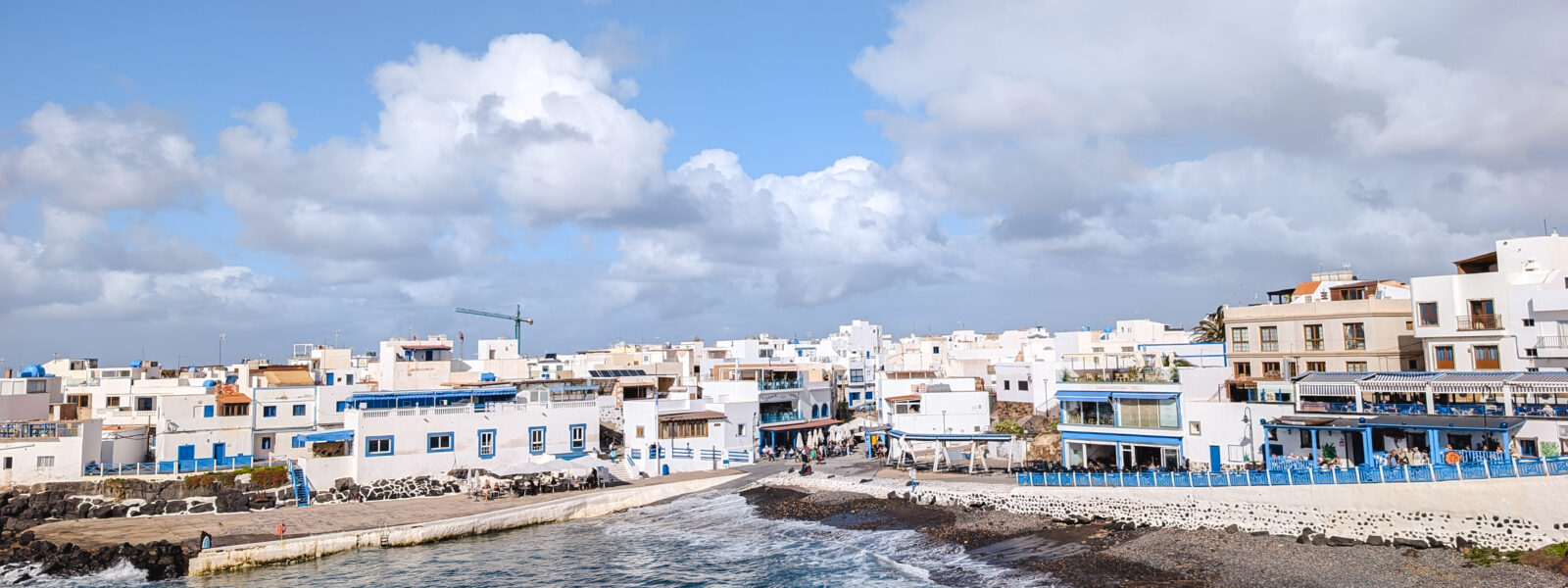
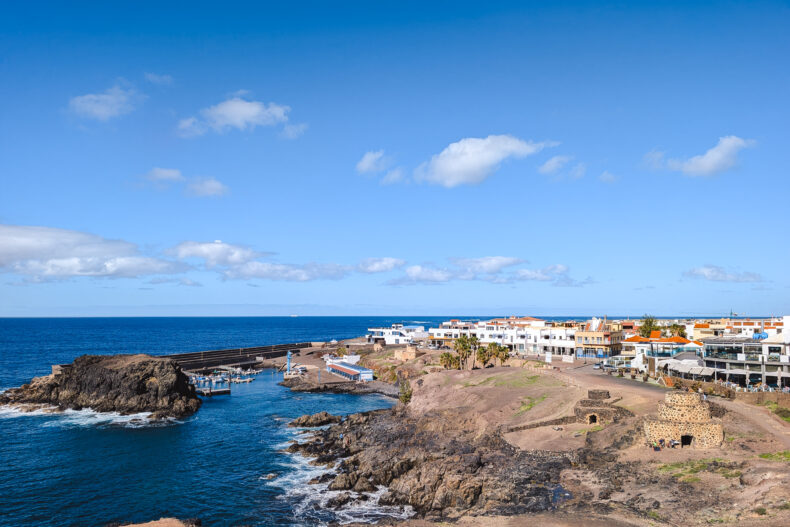
El Cotillo was our favourite spot on Fuerteventura. Better-known Corralejo is packed with hotels and our other favourite, Sotavento, is mostly beach and wind. El Cotillo, on the other hand, is a proper little village: low white houses, an old harbour full of fishing boats and a handful of terraces where surfers flop down at the end of the afternoon with salt still in their hair.
We came for the beaches and stayed for the vibe. On the north side of the village, the kids spent an entire day in the natural pools of Los Charcos. On the south side, we watched from the cliffs as surfers caught the last waves while the sun sank into the sea. In between, we hit the playground, grabbed a table on a terrace by the harbour and felt properly on holiday.
In this blog, you’ll find the best things to do in El Cotillo. The old fort and the whale skeleton are in here, of course, along with the prettiest lagoons, the lighthouse, a clifftop coastal path and the best volcanoes and gorges nearby.
What is El Cotillo known for?
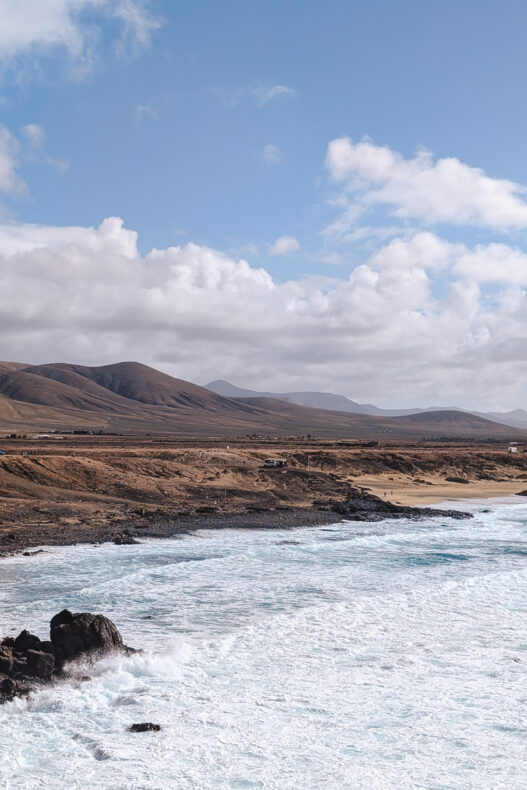
El Cotillo is best known for its beaches and sunsets. The village sits in the northwest of Fuerteventura, right where the coastline switches from sheltered lagoons to rugged cliffs and big waves.
North of the village lie the lagoons of Playa de la Concha and Los Lagos: white-sand bays shielded from the Atlantic by a ridge of lava rock. The water stays calm even when it’s stormy further along the coast, which is why you’ll see lots of families with little ones here.
South of El Cotillo, the ocean gets a lot wilder. The waves at Playa del Castillo draw surfers from all over the world, and from the cliffs above you can watch the sun drop into the sea every evening. Because this stretch of coast faces due west, the sunsets are some of the best on the island.
El Cotillo’s history revolves around the sea. Back in the 17th century, it was already a small fishing settlement with a little harbour. To protect it from pirates, the Spanish built the round defence tower in the 18th century that still keeps watch over the village today.
Where to stay in El Cotillo?
Don’t expect big resorts in El Cotillo. It’s mainly small hotels and apartments within walking distance of the beach and harbour, which is exactly why the village stays so laid-back. These are our picks:
#1 Esmeralda Cotillo Homes by LIVVO is the most practical choice with kids. You get your own kitchenette for breakfast and lunch, some apartments have a roof terrace, and the lagoons are just a few minutes’ walk away.
#2 El Hotelito del Cotillo feels like a small riad, with every room decorated differently and a jacuzzi on the roof. This hotel is adults only (18+).
#3 Cotillo House is close to the Los Lagos beaches, with a pool and a rooftop bar where you can watch the sunset. This one is adults only (18+) as well.

How to get to El Cotillo?
El Cotillo is about a 20-minute drive from Corralejo and roughly 40 minutes from the airport. There’s a bus from Corralejo, but for the lagoons, the lighthouse and the volcanoes nearby, a car makes life a lot easier. The easiest option is to pick up a hire car at the airport. On Discover Cars you can compare all the rental companies at the airport side by side and add full cover, so there are no surprises at the desk.
→ Compare car hire on Fuerteventura with Discover Cars
Things to do in El Cotillo: 12 tips
#1 The village and old harbour: terraces, fish and a playground
The best way to get to know El Cotillo is simply to wander. You’ll have seen the whole village in half an hour: narrow streets with white houses and blue shutters, a few trendy shops and the odd mural here and there.
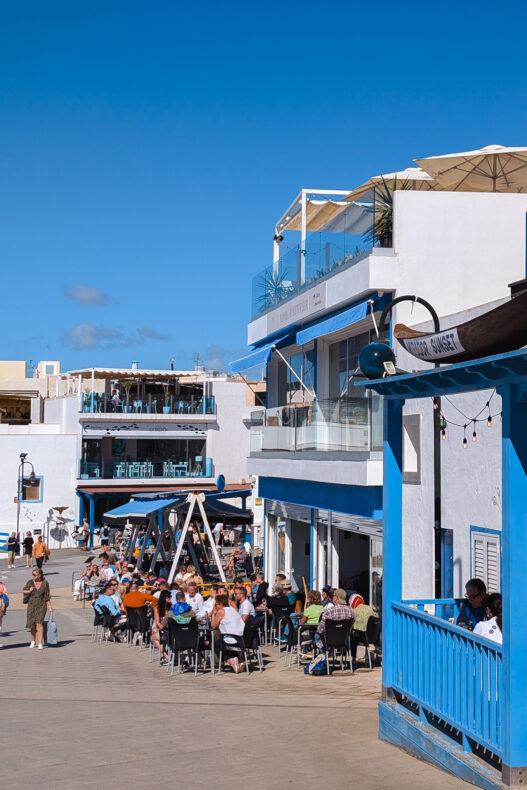
The heart of the village is the old harbour, Muelle Chico, a small cove tucked between the rocks where the fishing boats lie on the sand. Restaurants with waterfront terraces ring the harbour, and fresh fish is on almost every menu. Do grab a seat on one of the terraces, with a view of the boats and the waves crashing against the rocks.
There’s a playground in the village too, which became a regular stop for us. El Cotillo doesn’t feel like a place built for tourists. You’ll see surfers, campervans and families, but also fishermen and old men chatting on a bench.

#2 Torre del Tostón: the old fort above the beach
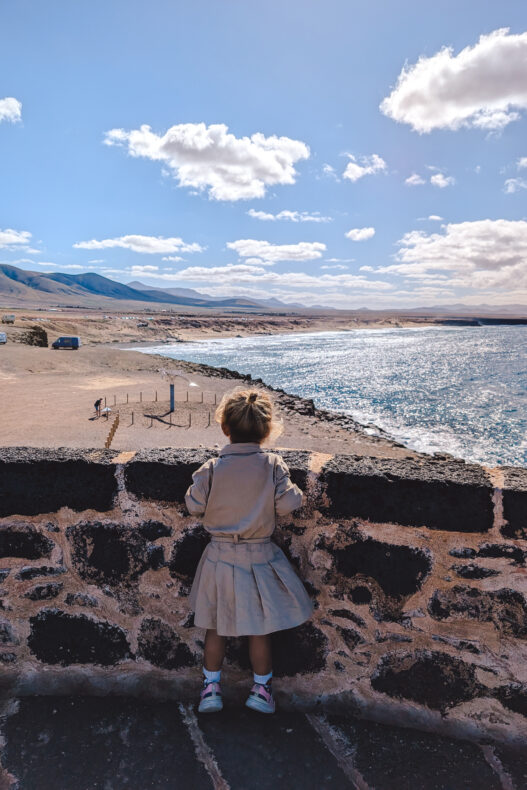
On the south side of the village stands the Torre del Tostón, a round defence tower built from dark lava stone. It went up between 1741 and 1743, after English pirates raided Fuerteventura’s north coast. With a drawbridge as its entrance and cannons on the roof, it was built to guard the harbour.
Today the tower is a protected monument with a small exhibition and a tourist information point inside. Climb to the top and you’ll look out over the village, the harbour and the long sweep of Playa del Castillo. I climbed it with my toddler son for a couple of euros, and together with the playground it made for a lovely little outing.

#3 The whale skeleton next to the tower
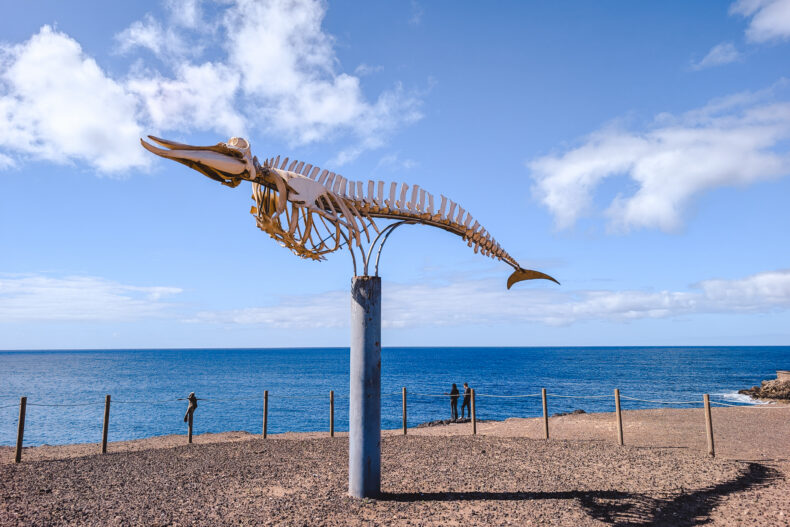
Right next to the tower is something kids make a beeline for: the skeleton of a whale almost six metres long. It’s a Cuvier’s beaked whale, a species that can dive three kilometres deep and stay underwater for more than two hours. Our kids were convinced it was a dinosaur, and there was no talking them out of it.
The skeleton is part of the Senda de los Cetáceos, a trail of skeletons along Fuerteventura’s coast from whales and dolphins that washed up on the island. Information boards tell you more about the species and about the whales and dolphins living around the Canary Islands. It’s free and you’ll have seen it in a few minutes, but the sheer size of it sticks with you.
#4 Playa del Castillo: watching surfers at sunset
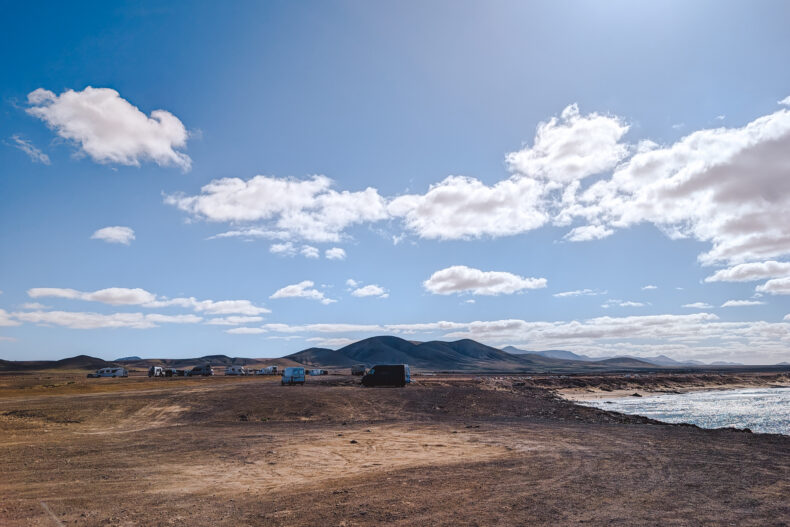
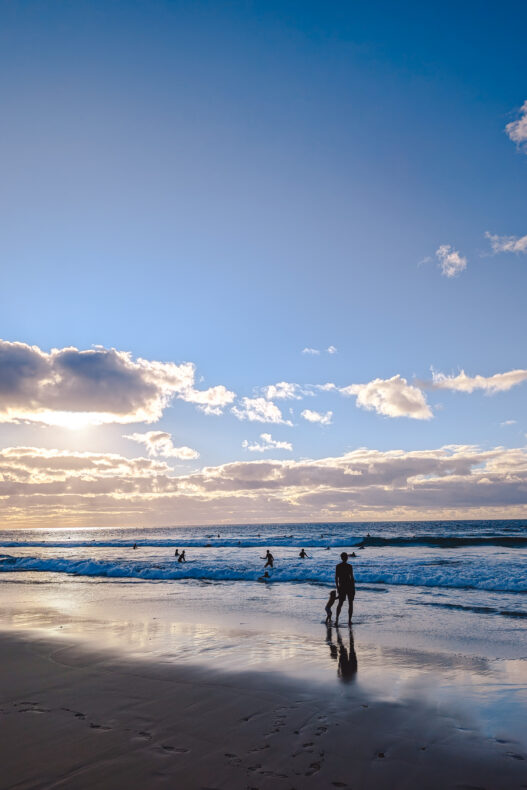
Below the tower begins Playa del Castillo, a wide sandy beach with serious waves. This is El Cotillo’s surf beach, and on a good day dozens of surfers bob about in the water. The currents mean swimming isn’t always safe, but a walk along the waterline is wonderful.
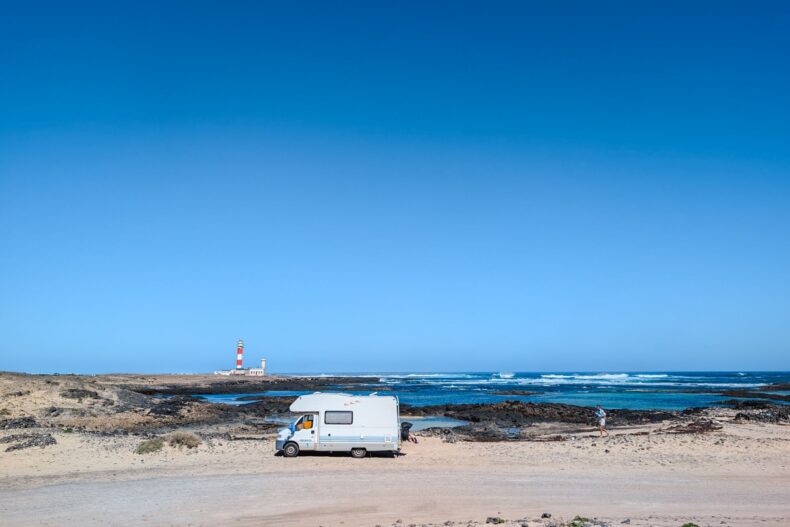
Our best moment in El Cotillo was up on the cliffs here. During the day the clifftop is already lined with campervans and surf vans, and towards evening the sunset crowd turns up. We parked our camper right on the edge too, and watched from our window as the surfers tried to catch one last wave before the sun disappeared into the sea behind them. Heads up: the track to the cliff edge is a bit bumpy.
→ Discover our experiences travelling the Canary Islands by campervan
#5 Surf lessons on El Cotillo’s waves
Watching all those surfers and itching to give it a go? El Cotillo has several surf schools, and the waves here are good for learning. A lesson starts on the beach with an explanation of technique and safety, then you head into the water with an instructor.
Board and wetsuit are included. In summer the waves tend to be smaller and better for beginners. In winter, the sea here packs a lot more punch.
→ Book a surf lesson in the north of Fuerteventura

#6 Playa de la Concha and Los Lagos: swimming in the lagoons
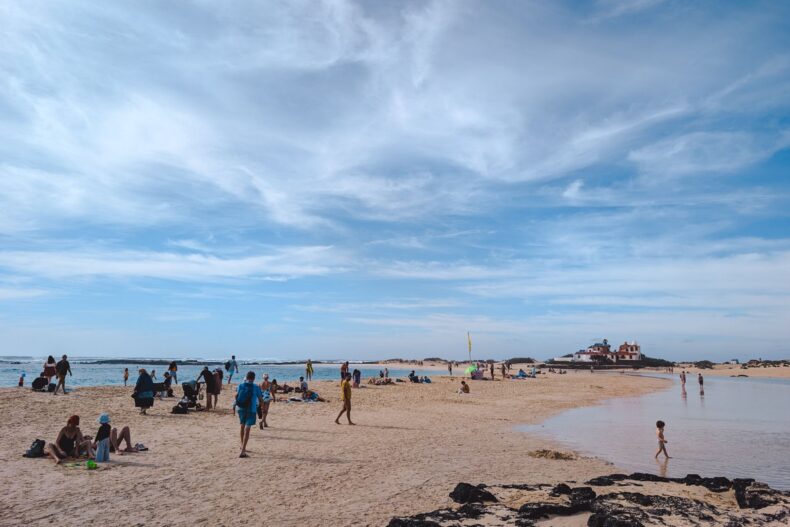
A few minutes’ drive or a decent walk north of the village, you’ll find the lagoons. Playa de la Concha is the best known: a half-moon of white sand with a reef in front of it, which keeps the water calm almost all the time. Even on a stormy day we found a sheltered bay here. A little further along are the coves of Los Lagos, smaller and often even quieter.
With little kids, this is the best place to swim in the north of Fuerteventura. The water gets deeper gradually and is so clear you can see small fish darting between the rocks, so bring a snorkel. There’s no shade and it can get really windy here too, so a parasol or windbreak is no luxury.
→ Discover the 12 best beaches in Fuerteventura
#7 Playa de los Charcos: a day in the natural pools
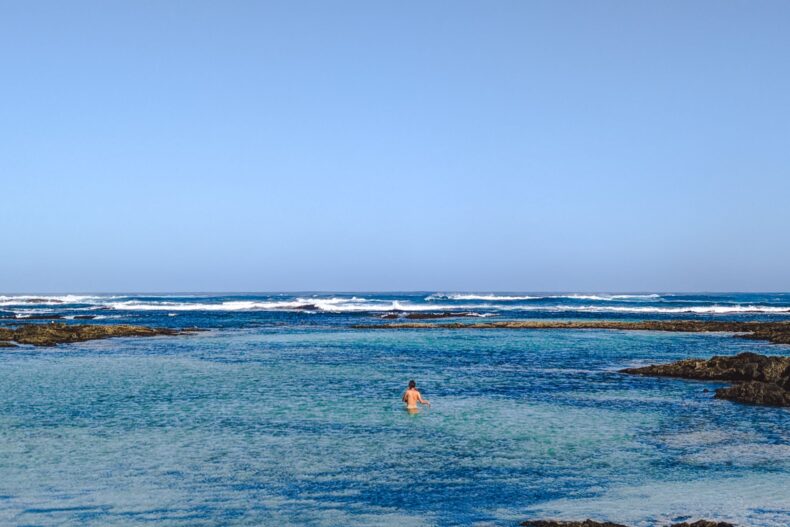
Further north, towards the lighthouse, lies Playa de los Charcos. At low tide, dozens of pools are left behind between the black lava rocks, filled with clear seawater that turns still and warm in the sun. We came for an hour and stayed all day.
The kids jumped from one pool to the next, hunted for crabs and built little dams while we swam in the shallows. The area is so big that you’ll always find a spot to yourself. Do check the tides, though: at high tide the pools vanish under the waves.
#8 Faro del Tostón: the lighthouse on the northwest tip
Right next to the Los Charcos pools stands the Faro del Tostón, the red-and-white striped lighthouse on Fuerteventura’s far northwestern tip. After our day in the pools, we strolled around it. It marks the strait between Fuerteventura and Lanzarote, and from the point you look out across the ocean to Lanzarote and the little island of Lobos.
With nothing blocking the view, it’s also a great spot for sunset. The road out here runs across an unpaved plain along the coast, so simply combine the lighthouse with an afternoon in the pools.

#9 Playa de la Escalera and the clifftop coastal path
South of El Cotillo, a path follows the clifftops past a string of beaches that get wilder the further you go. I walked part of this coastal path. On one side was a sheer drop with waves pounding the rocks, on the other the bare plain, and every so often a bay of golden sand appeared far below me. The further you walk, the fewer people you meet.
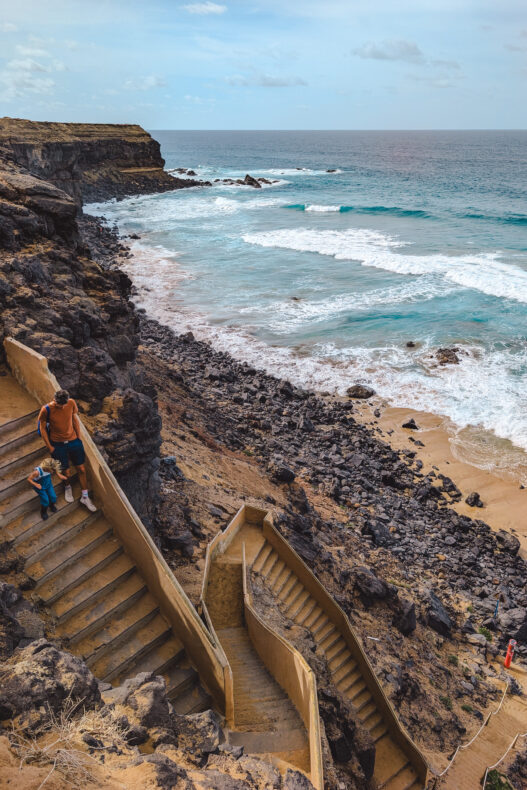
The most beautiful beach along the way is Playa de la Escalera, also marked on maps as Playa del Águila. A long wooden staircase takes you down from the cliff, and once you’re at the bottom you feel tiny beneath the rock walls. Come at low tide, because at high tide most of the beach disappears and you’re left with mainly big boulders.
Sebastiaan went for a swim here on another day, even though the sea was pretty wild. Meanwhile the kids sat on the rocks, busy with something else entirely: the bottom of the stairs was swarming with semi-tame squirrels. They’re so cheeky they simply snatched the peanuts out of our kids’ hands. Fun to watch, but it’s best not to actually feed them. They’re not native and feeding only makes them bolder. With kids, you’re wiser to stay out of the water here anyway, as the waves are powerful and the currents treacherous.
If you want to keep walking, Playa de Esquinzo comes after Playa de la Escalera. The walk from the tower in the village is about 14 kilometres. With kids, you can easily drive to the car park above Playa de la Escalera instead.

#10 Barranco Encantado: walking through the enchanted gorge
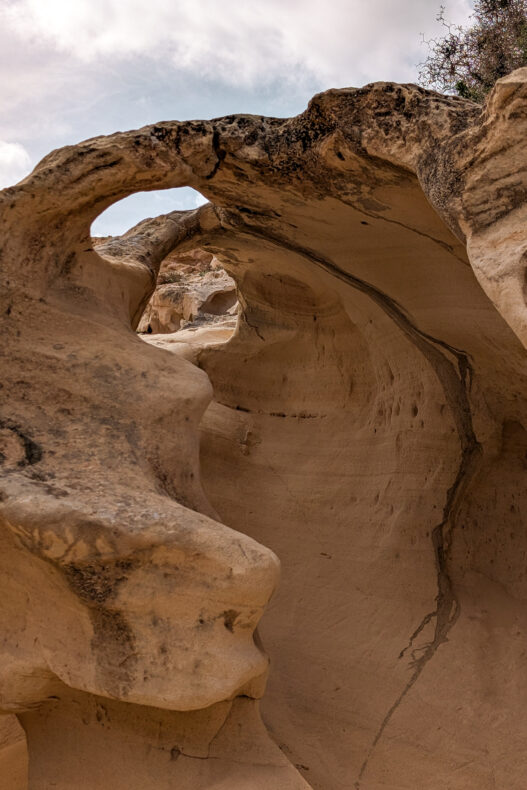
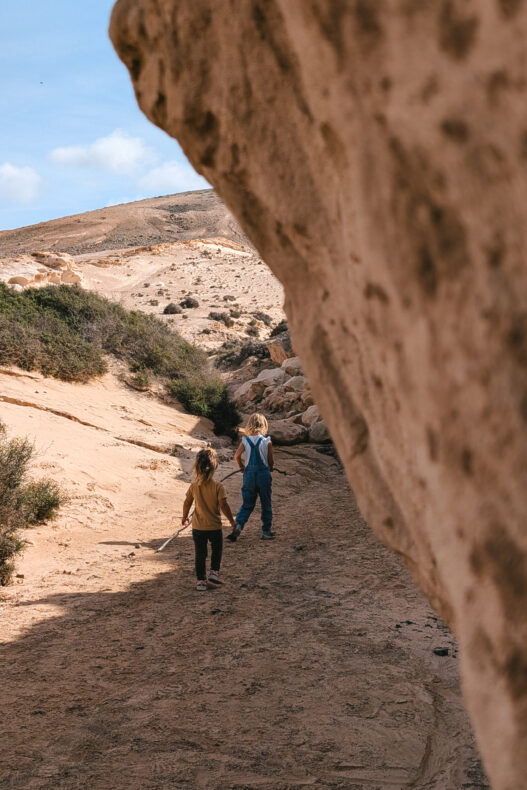
A bumpy dirt road south of El Cotillo leads to Barranco Encantado, a dry gorge where wind and water have carved the sandstone into rippling shapes. You walk between curving rock walls in soft ochre tones, through narrow passages and past ledges that look as if they were moulded by hand.
It was one of the best walks we did on Fuerteventura, and the kids thought scrambling through the narrow bits was a real adventure. It’s not a long hike: you’ll have seen most of it within an hour. Park at the spot marked on Google Maps as Parking Barranco Encantado and walk into the gorge from there.
→ Discover 8 hidden gems in Fuerteventura

#11 Calderón Hondo: peering into a crater
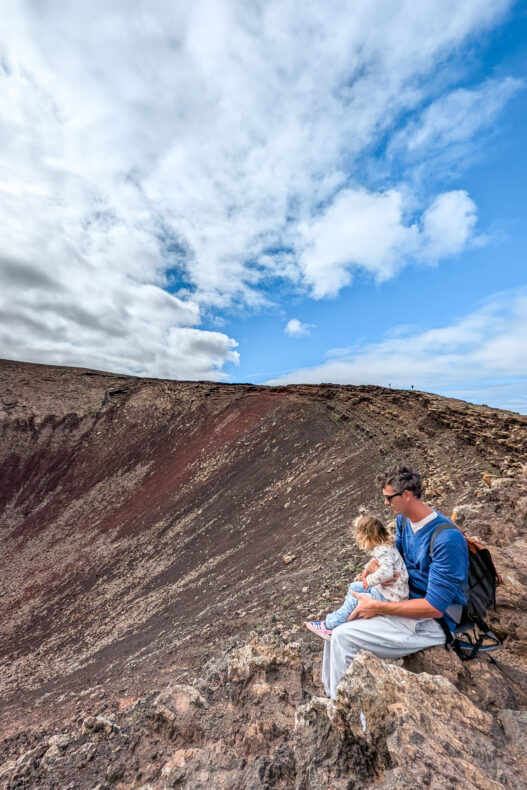
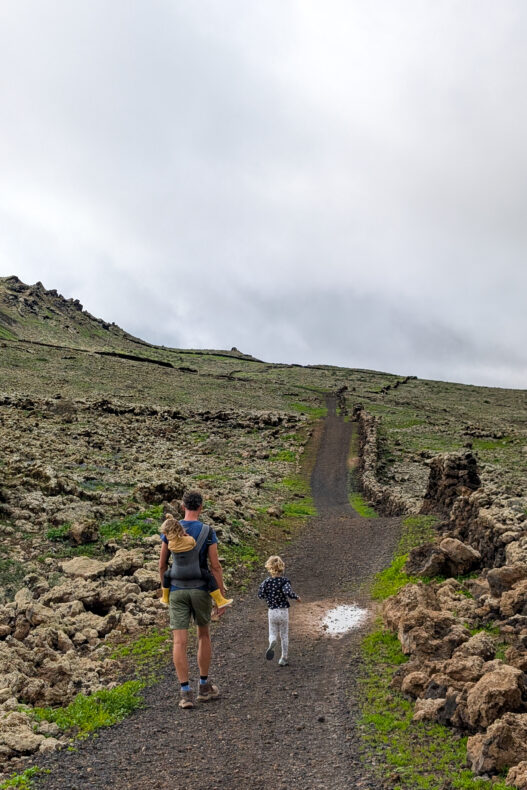
Between El Cotillo and Corralejo, close to the surf village of Lajares, lies the Calderón Hondo volcano. A path winds up across the lava field to the crater rim, where you look down into a perfectly round crater some 70 metres deep. From the top, the whole north of the island is spread out in front of you, all the way to Lobos and Lanzarote.
It’s one of the most popular sights on Fuerteventura, so you’ll rarely have it to yourself. Go early in the morning or late in the afternoon, when it’s quieter and the sun is less fierce. We did the short volcano walk with the kids, and the biggest hit was the semi-tame squirrels scurrying between the lava rocks. Wear proper shoes, as the path is loose and stony. Allow about an hour and a half there and back. Come in the evening and you’ll get a stunning starry sky too.
→ Book a stargazing tour at Calderón Hondo

#12 Volcán de la Arena: a loop around a red volcano
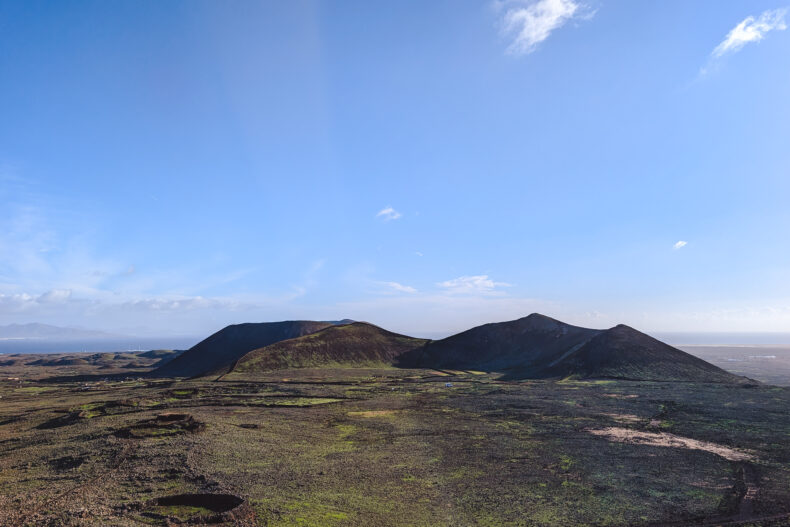
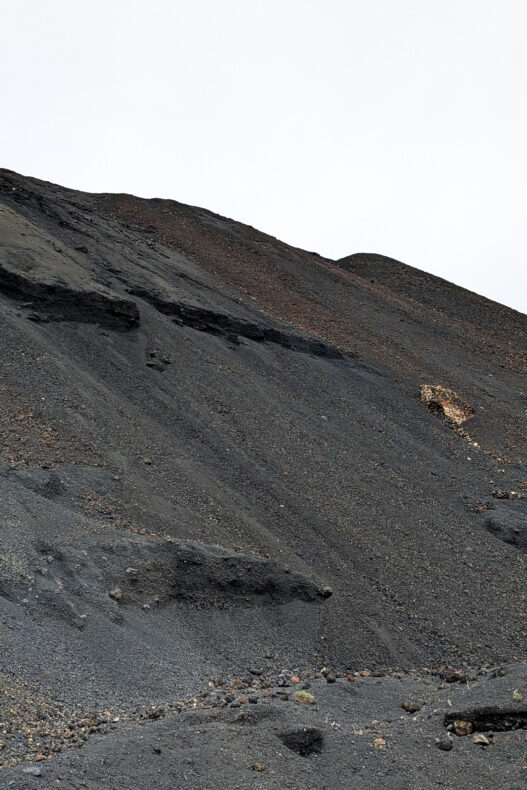
Southeast of El Cotillo, near Lajares on the way to La Oliva, the Volcán de la Arena rises from a sea of black lava rock known as the malpaís. A path of about four and a half kilometres loops around the volcano through a barren landscape where only a few lichens and shrubs survive.
Where Calderón Hondo can get busy, we didn’t meet a single soul here. For the kids, though, this was the walk they enjoyed least: long, little shade and no squirrels. Without bored children in tow, it’s a gorgeous, silent hike through one of the island’s most rugged corners. Bring plenty of water and go early in the morning or late in the afternoon.
→ Discover the 23 best places to visit on Fuerteventura

More tips for your trip to Fuerteventura
 Our pickStaying in El Cotillo? Browse all hotels in El Cotillo on Booking.com
 Long empty roads to remote beaches? Rent a car with Discover Cars and compare the big rental companies in one go.
 No flight yet? Compare flights to Fuerteventura.
 Stargazing from a volcano? Book a night tour to Calderón Hondo with GetYourGuide.
 Discover all our blogs about Fuerteventura