Fuerteventura is famous for its long beaches and wide stretches of sand dunes, but there is much more to the island than its best-known sights. Venture beyond the usual stops and you will discover a completely different side of Fuerteventura, filled with quiet landscapes, rugged volcanic scenery and places that still feel wonderfully untouched. Scattered across the north, the centre and the south of the island are hidden spots that rarely make it into standard travel guides. Instead of busy car parks and crowds of visitors, you will find peaceful ravines, dramatic lava fields and remote beaches where you may have almost the entire place to yourself.
These lesser-known places are exactly what show how varied Fuerteventura really is. One moment, you are walking across a wide-open volcanic landscape, and the next you are making your way through a narrow hidden gorge or hiking towards a secluded beach far from the main roads. Some of these places are surprisingly easy to reach and lie only a few minutes from the road, while others take a little more effort and reward you with a stronger sense of adventure.
What they all have in common is the feeling of space and calm. These are places where you can slow down, enjoy the landscape and experience a side of the island that feels far removed from the busier tourist areas. Even if you have already visited the famous beaches and viewpoints, exploring a few of these quieter corners can make your trip feel much more varied.
We especially loved how different these hidden places were from one another. Some are perfect for a short stop, while others are worth setting aside several hours for. You might find yourself climbing through a rocky ravine in the morning and standing on an almost empty beach by the afternoon. That variety is one of the things that makes exploring Fuerteventura so much fun.
In this list, we share eight hidden places on Fuerteventura that are absolutely worth adding to your itinerary if you want to see a quieter, wilder and more adventurous side of the island.
Discover the 23 most beautiful places on Fuerteventura →


How to get around Fuerteventura
Fuerteventura is a large island, and many of its most interesting places are spread out across different parts of the landscape. For that reason, the easiest and most enjoyable way to explore the island is with a rental car. The roads are generally quiet, well maintained and easy to navigate, which makes driving around Fuerteventura very straightforward. Having your own car also gives you the freedom to travel from the north to the south at your own pace and stop whenever you like at beaches, viewpoints, villages and natural areas that sit far outside the main towns.
For more remote places, such as Cofete or some of the quieter beaches in the south, you may need to drive along unpaved roads. In most cases, a standard rental car is enough, but it is important to check the rental conditions before setting off. Some companies do not automatically cover driving on gravel or unpaved roads, and you may need extra insurance or a specific type of cover. It is therefore worth reading the terms carefully so you know exactly what is allowed and what is included.
Public transport on Fuerteventura mainly consists of buses that connect the larger towns and resorts. For simple journeys between two places, they can work perfectly well. However, they are much less practical if you want to explore several sights in one day or stop in more remote areas. Travel times can be longer, and you are tied to fixed routes and timetables. Taxis are reliable and useful for shorter journeys, but they quickly become expensive once you start travelling longer distances across the island.
If you want real freedom and plan to combine several beaches, viewpoints and villages in a single day, renting a car is almost always the best choice. In fact, it is very much the standard way to travel around Fuerteventura. It makes exploring the island far easier and allows you to reach places that would otherwise take much more planning.
There is plenty of choice when it comes to renting a car on Fuerteventura. Sunny Cars is a good option if you prefer a simple and worry-free experience. Its all-inclusive formula covers the most important insurance, excess protection and local costs, which reduces the chance of unexpected charges when you pick up the car. Most things are arranged in advance, and if you run into damage or problems on the road, the process is usually much easier to deal with.
Discover Cars is another popular choice, especially for travellers who want to compare prices and find a cheaper deal. The platform lets you compare several rental companies at once, which can often result in a lower price. The main thing to keep in mind is that the conditions can vary between providers, so it is important to check carefully what is and is not included in the price. Pay particular attention to insurance, excess amounts and any restrictions on where you are allowed to drive.
If convenience, clear conditions and peace of mind are your main priorities, Sunny Cars is usually the easier option. If you are mainly looking for the lowest possible price and do not mind spending a little extra time comparing the details, Discover Cars can sometimes work out cheaper.
Whichever company you choose, having your own car makes a huge difference on Fuerteventura. It gives you the freedom to explore beyond the main tourist areas, discover quieter beaches and viewpoints, and build each day around the places you actually want to see instead of around bus timetables.


Where to stay on Fuerteventura
Where you stay on Fuerteventura has a big influence on how you experience the island. Fuerteventura is quite spread out, and each region has its own atmosphere. Some places feel lively and international, while others are much quieter and more relaxed. Choosing the right base therefore depends on whether you want easy access to beaches and restaurants, a more local feel or simply a peaceful place to slow down.
In the north, Corralejo is one of the most popular places to stay. It is a very convenient base for visiting the famous sand dunes, taking a boat trip to Isla de Lobos and exploring several beaches in the area. You will also find plenty of restaurants, shops and cafés, so there is always something going on.
At the same time, Corralejo feels busier and more international than many other parts of Fuerteventura. That can be a good thing if you like having lots of choice around you, but it does not necessarily match the calm and open character that we personally enjoy most about the island. If you are looking for a quieter base, there are other places that may suit you better.
On the west coast, you will find El Cotillo, which is our favourite place to stay on Fuerteventura. The village is small, easy to explore and has a wonderfully relaxed atmosphere. Life here revolves around the sea, quiet beaches and beautiful sunsets, and many places are within walking distance.
What we like most about El Cotillo is that it does not feel overdeveloped. There are no huge resorts or crowds of package tourists, and the village has kept a much more personal and laid-back feel. You still have enough cafés, restaurants and places to stay, but everything feels smaller and more relaxed.
That slower pace is exactly what makes El Cotillo so appealing. If you want to experience Fuerteventura in a quieter and more authentic way, this would be our first choice. It is the kind of place where you can spend the afternoon at the beach, walk into the village for dinner and end the day watching the sun disappear into the Atlantic.
Top places to stay in El Cotillo: for a smaller and more personal atmosphere, take a look at El Hotelito del Cotillo, Cotillo House and Esmeralda Cotillo Homes by LIVVO. These are good options if you prefer modern rooms, a smaller-scale setting and a location within easy walking distance of both the beach and the centre.
In the south, Morro Jable and Costa Calma are the best-known places to stay. Both are popular for their long sandy beaches, large choice of hotels and easy access to the sea. They work especially well if your main goal is a comfortable beach holiday and you like having plenty of facilities close by.
For us, though, these places feel more focused on tourism and a little less distinctive than other parts of Fuerteventura. The atmosphere can feel more anonymous, especially around the larger hotel areas. They are certainly practical and comfortable, but they do not have quite the same quiet charm and character that make places like El Cotillo stand out.
Top places to stay in Morro Jable: Hotel XQ El Palacete and Garden & Sea Boutique Lodging by LIVVO are good choices if you want something more stylish and relaxed. Both offer comfortable rooms with sea or garden views and have more of a boutique feel than the larger hotel complexes in the area.
Top places to stay in Costa Calma: INNSiDE by Meliá Fuerteventura and H10 Playa Esmeralda are especially popular for their modern style, direct location by the sea and comfortable rooms. They are great options if you are looking for a more luxurious stay where relaxation, comfort and easy beach access are the main priorities.
If we had to choose one place to stay on Fuerteventura, we would still pick El Cotillo. Corralejo is more lively and convenient, while Morro Jable and Costa Calma are great for a classic beach holiday. El Cotillo, however, offers the balance we like best: beautiful beaches, a relaxed atmosphere and enough places to eat and stay without losing its quieter, more local feel.


8 Lesser-Known Places on Fuerteventura
#1 Barranco Encantado
Barranco Encantado lies in a quiet area near Lajares and is one of those places where you can still escape the busier side of Fuerteventura. You are unlikely to see many other visitors here, which gives the ravine a peaceful and almost hidden feel from the moment you arrive.
The landscape is known for its unusual rock formations, shaped over many years by wind and water erosion. Rounded curves, smooth edges and soft lines run through the stone, making parts of the ravine look almost sculpted by hand. As you walk deeper into the gorge, the rock walls rise around you and new patterns, textures and shapes keep appearing. It is a simple walk, but visually there is always something new to look at.
The route itself is easy and does not require any real climbing, so you do not need special hiking experience to explore it. Even so, the quiet setting and narrow passages give the walk a real sense of adventure. There is very little vegetation here, which only makes the rock formations stand out more and gives the whole landscape a raw, almost otherworldly look.
As you make your way towards the main part of the ravine, you will also notice several smaller side paths created by erosion. These are definitely worth exploring. Some lead into much narrower passages where the rock walls seem to close in around you, creating an even more hidden and dramatic atmosphere.
If you have the time, I would absolutely recommend following at least one of these smaller paths. The main route is already beautiful, but the side passages make the experience feel much more personal and adventurous. They are the kind of places that make you stop for a moment, look around and wonder how such unusual shapes were formed naturally over time.
For us, Barranco Encantado is a perfect example of the quieter side of Fuerteventura. It is easy to reach, not especially demanding and still feels far removed from the island’s more famous attractions. If you enjoy unusual landscapes and hidden corners without the crowds, this is a place that is well worth adding to your route.

#2 Volcán de la Arena
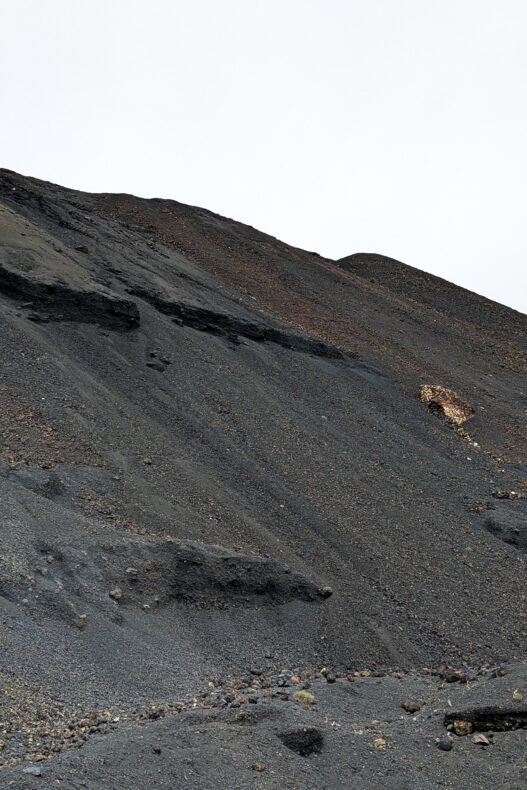
Volcán de la Arena lies close to the much more popular Calderón Hondo, but it sees far fewer visitors. The volcano sits in the middle of the wide lava fields of Malpaís de la Arena, which gives the whole area a much quieter and more open atmosphere. Instead of busy viewpoints and groups of hikers, you are surrounded by dark volcanic ground, wide skies and a landscape that feels wonderfully empty.
The path around the crater is easy to follow and takes you across black and deep red volcanic gravel. The route itself is not difficult, although the loose surface can make some sections feel a little uneven underfoot. If you feel like going a bit further, you can follow a smaller side path to climb higher up the volcano and enjoy an even wider view of the surrounding area. From the higher points, the landscape opens up beautifully. You can look out over Lajares, several nearby volcanic craters and the northern coastline of Fuerteventura. The scenery is simple and rugged, with very little vegetation and almost nothing to distract from the shapes and colours of the volcanic landscape.
That sense of space is what makes Volcán de la Arena so appealing. It does not have one famous landmark or dramatic viewpoint that everyone comes to photograph. Instead, the experience is about walking through a quiet, open landscape and getting a closer feel for the volcanic side of Fuerteventura. Compared with some of the island’s better-known attractions, this place feels much less like a must-see highlight and much more like a peaceful discovery. There is something special about standing on the crater with hardly anyone else around, looking out over the rough lava fields and distant coast.
If you enjoy volcanic landscapes, quiet walks and places that still feel a little off the beaten track, Volcán de la Arena is well worth adding to your route. It offers a calm and memorable introduction to the raw, rugged interior of northern Fuerteventura.

#3 Barranco de las Peñitas
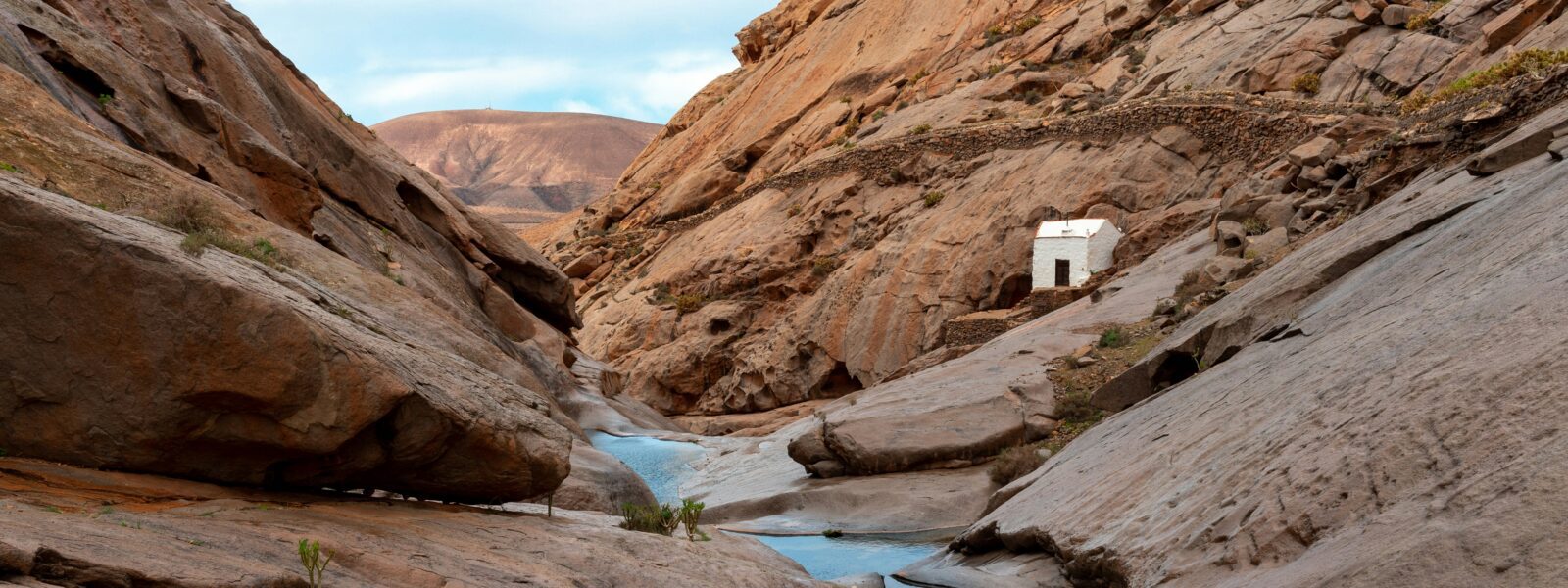
Barranco de las Peñitas is tucked away in the interior near Betancuria and feels completely different from the dry landscape around it. The ravine is surprisingly green, with small pools of water hidden between the rocks, making it feel almost like an oasis in Fuerteventura’s otherwise dry and desert-like interior.
The walking path leads you through the gorge between high rock walls, palm trees and old stone walls, giving the whole area a peaceful and almost timeless atmosphere. Compared with the wide volcanic landscapes elsewhere on the island, this part of Fuerteventura feels much more sheltered and intimate.
At the end of the route, you reach a small dam with a reservoir behind it, but for us, the gorge itself is the real highlight. The combination of greenery, water and steep rock walls makes the landscape feel unexpectedly lush, especially on an island that is usually known for its dry terrain. There is also a small white chapel built against the rock face, which adds even more character to the setting.
Not far from here, you can also visit Arco de las Peñitas, a natural rock arch shaped over time by wind and water. The walk to the arch is fairly short, but it does involve some scrambling over rocks, so it feels more adventurous than the distance might suggest. It is still possible to do this walk with young children, although you may need to help them on the rougher sections and take a little extra time. The terrain is uneven in places, but the route is manageable if you are comfortable with a bit of climbing and scrambling.
Because the rock arch is better known than the ravine itself, this part of the area can get noticeably busier. Even so, it is worth visiting if you have enough time, especially because the two places offer such different experiences. For us, Barranco de las Peñitas was the most memorable part of the visit. It feels quiet, hidden and almost unexpected, and the contrast with Fuerteventura’s dry surroundings makes it stand out even more. If you are exploring the area around Betancuria, this is definitely one of the places we would make time for.


#4 Poblado de La Atalayita & Pozo Negro
Poblado de La Atalayita lies near Pozo Negro on the eastern side of Fuerteventura and offers a fascinating glimpse into life on the island before the Spanish conquest. The archaeological site consists of dozens of low, rounded stone houses built from dark lava rock and restored on their original foundations. This was once home to the Mahos, the indigenous people of Fuerteventura, who lived here together with their livestock.
You can wander freely between the different structures, which makes it easier to imagine what daily life may once have looked like. Homes, storage areas and spaces for animals were all built close together, showing how closely connected everyday life, food storage and livestock keeping were. The site is simple and peaceful rather than heavily developed, and that quiet atmosphere makes the visit feel even more special.
Entry to the archaeological site is free. There is also a small museum next to the settlement, although it was unfortunately closed during our visit despite the opening hours suggesting that it should have been open. Even without the museum, though, the site itself is well worth exploring and gives you a much better sense of the island’s history. A lovely way to make the visit more complete is to combine it with the circular walk from the small fishing village of Pozo Negro. The route leads you through the valley, past the lava fields and the archaeological settlement, giving you a nice mix of history, volcanic scenery and quiet countryside in one walk.
Once you return to Pozo Negro, you can sit down on a simple terrace at one of the local fish restaurants and enjoy something to eat or drink. If the weather is warm, ending the walk with a swim in the sea is a perfect way to finish the outing. What we enjoyed most about this area was how peaceful it felt. There is a very good chance that you will hardly meet anyone else on the trail, which makes the whole experience feel wonderfully remote. If you are looking for a quieter part of Fuerteventura where you can combine history, walking and a small coastal village, Poblado de La Atalayita and Pozo Negro are well worth adding to your route.
#5 Cuevas de los Estancos
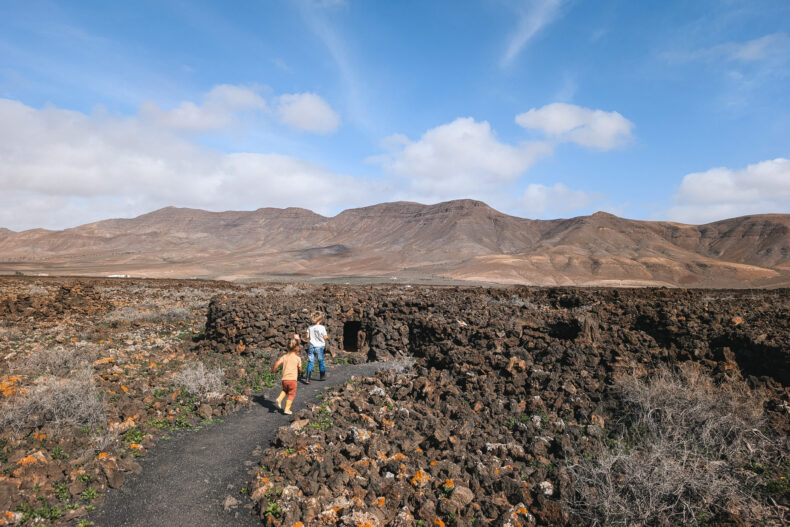
Cuevas de los Estancos is one of those little-known places in northern Fuerteventura that still feels like a real discovery. There are no marked hiking trails, signs or visitor facilities here. Instead, you simply walk into a natural gorge and explore the area at your own pace, which gives the place a wonderfully wild and adventurous feel.
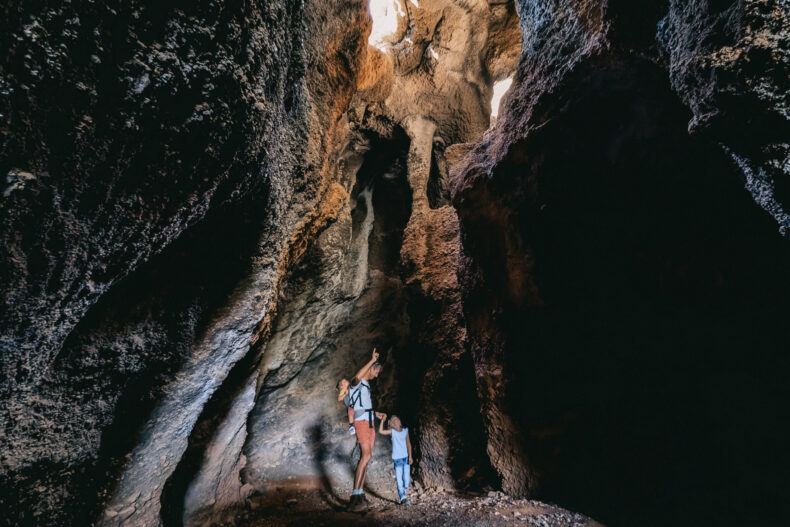
Despite the name, Cuevas de los Estancos is not one large cave. It is more like a short, open-air gorge filled with lava passages, rocky hollows and narrow gaps between the walls. You can walk through the different openings, squeeze between the rocks and, in a few places, scramble a little further to see what is hidden beyond the next corner.The largest opening is directly on the left as you enter. This is also where you will find an underground passage that becomes completely dark, adding an extra sense of adventure to the visit. A torch is very useful here, especially if you want to explore beyond the brighter sections.
What makes the place even more fun is the contrast between light and dark. Most of the gorge is open from above, so you spend much of the visit in natural daylight. Then, every now and then, you step into a darker hollow or tunnel where the atmosphere changes completely. That mix makes the area feel much more varied than you might expect from such a small site. Cuevas de los Estancos lies close to Estancos and is easy to find using Google Maps. You can park along the road, and from there it is only about a five-minute walk to the gorge. The short approach makes it a very easy stop to add to a day of exploring northern Fuerteventura.
With sturdy shoes and a torch, this is also a fun place to visit with children. The ground is uneven and there is a little scrambling involved, but the distances are short and most of the area remains open to daylight. If your children enjoy climbing over rocks and exploring hidden passages, they will probably have a great time here.
For us, Cuevas de los Estancos is exactly the kind of place that makes exploring Fuerteventura so enjoyable. It is small, easy to reach and still feels far removed from the island’s better-known attractions. If you like unusual landscapes and hidden places that feel a little adventurous, this one is definitely worth adding to your route.
#6 Piscina Natural de Caleta de Fuste
Piscina Natural de Caleta de Fuste lies along the east coast of Fuerteventura and is a natural swimming pool formed between dark volcanic rocks. The rocks create a sheltered basin where seawater flows in and out with the tide, giving the place a completely different feel from the wide sandy beaches that the island is famous for. At low tide, the water inside the pool becomes much calmer, creating a clear and relatively sheltered place for a swim. When the tide rises, however, the sea moves more freely into the basin and the water can become much rougher. It is therefore a good idea to check the tide times before you visit, especially if you are hoping to swim rather than simply stop to enjoy the view.
The surrounding coastline is rocky, open and quite rugged, which gives the natural pool a wilder atmosphere than the nearby resort beaches. There are no long stretches of soft sand or rows of sunbeds here. Instead, you are surrounded by volcanic rock and the open Atlantic, making it feel like a more natural and less polished place to stop. This is probably not somewhere you would spend an entire day lying in the sun. It works much better as a short stop for a refreshing swim, a quick dip or a break while exploring the coastline around Caleta de Fuste. If you are already walking along the coast, it is an easy place to include without having to make a major detour.
Another advantage is how easy it is to reach. The pool lies close to Caleta de Fuste, so there is no long hike or difficult approach involved. That makes it a convenient stop if you are spending the day exploring the eastern side of Fuerteventura and want to add something a little different to your route. If you prefer soft sand and a more traditional beach, you will also find a large, sheltered sandy beach in Caleta de Fuste itself. The water there is generally calmer, and there is much more space to settle down for a few hours.
For us, the natural pool is most enjoyable as a short and refreshing stop rather than a full beach day. The volcanic setting, clear water and rugged coastline give it its own character and make it a nice contrast to Fuerteventura’s long, sandy beaches.

#7 Playa Mal Nombre
Playa Mal Nombre lies in the south of Fuerteventura, just outside Morro Jable, but feels much quieter than many of the more famous beaches in this part of the island. The beach is wide and stretches out for quite a distance, with pale sand and very little development directly behind it. Steep slopes and low hills form the backdrop, giving the area an open, peaceful and almost untouched feel.
One of the things we like most about Playa Mal Nombre is how simple it feels. There are very few facilities, apart from a small beach bar, and that lack of development helps the beach keep its calm and relaxed atmosphere. You will not find large resorts, busy promenades or rows of restaurants here, which makes it a refreshing contrast to some of the busier places nearby. The sea conditions can change depending on the wind. On calmer days, the water can be inviting and pleasant for a swim, while on windier days it may feel noticeably rougher. Even if swimming is not ideal, the beach is still a lovely place for a walk, a quiet break or simply sitting down and enjoying the wide views along the coast.
Because the beach is so spacious, it rarely feels crowded, even when there are other people around. There is plenty of room to find your own spot, and the open setting makes it easy to relax without feeling surrounded by buildings or busy beach facilities. If you are staying in the south of Fuerteventura but would rather avoid the more crowded resort beaches, Playa Mal Nombre is a great alternative. It is not a place you visit for entertainment or lots of facilities, but rather for space, peace and a more natural stretch of coastline. For us, that simplicity is exactly what makes it worth stopping here.

#8 Camino Gran Valle to Playa de Cofete
The hike via Camino and Degollada Gran Valle towards Cofete is one of the most scenic walks in the south of Fuerteventura. The route begins in the rugged mountain landscape of the Jandía peninsula and climbs around 300 metres over a fairly short distance. The path is easy to follow, and as you make your way higher, the views become wider and more impressive with every step. The climb is steady rather than technically difficult, so you do not need any special hiking skills. Still, the elevation gain is enough to make the walk feel rewarding. As you leave the valley behind, the landscape slowly opens up, revealing more of the dry mountains and the wild western side of the peninsula.
The final part of the climb is where the hike really comes to life. Once you reach the higher point near Degollada Gran Valle, the scenery suddenly opens up and Playa de Cofete appears far below in all its vastness. From above, you get a clear sense of just how dramatic this part of Fuerteventura is. The beach stretches along the coast between steep mountains and the Atlantic Ocean, with very little around it to interrupt the view. From the trail, it looks almost completely empty, which only adds to the wild and remote atmosphere. It is one of those viewpoints where you naturally want to stop for a while and simply take everything in.
For us, that first view of Cofete is the real highlight of the route. Even if you have already seen the beach from below, approaching it on foot gives you a completely different sense of scale. The mountains feel larger, the coastline feels wilder, and the whole setting becomes even more impressive when you have worked your way up to it.
Sebastiaan completed the return hike in around three hours, although most route descriptions allow a little more time. How long you need will depend on your pace, the weather and how often you stop along the way. And with views like these, there is a good chance you will want to stop more than once.


