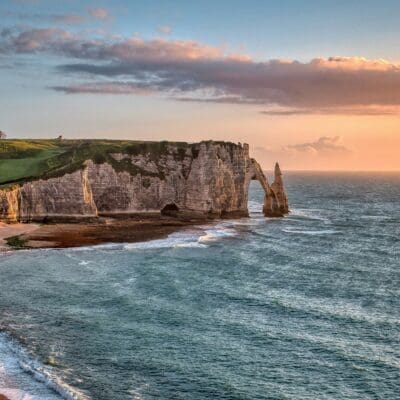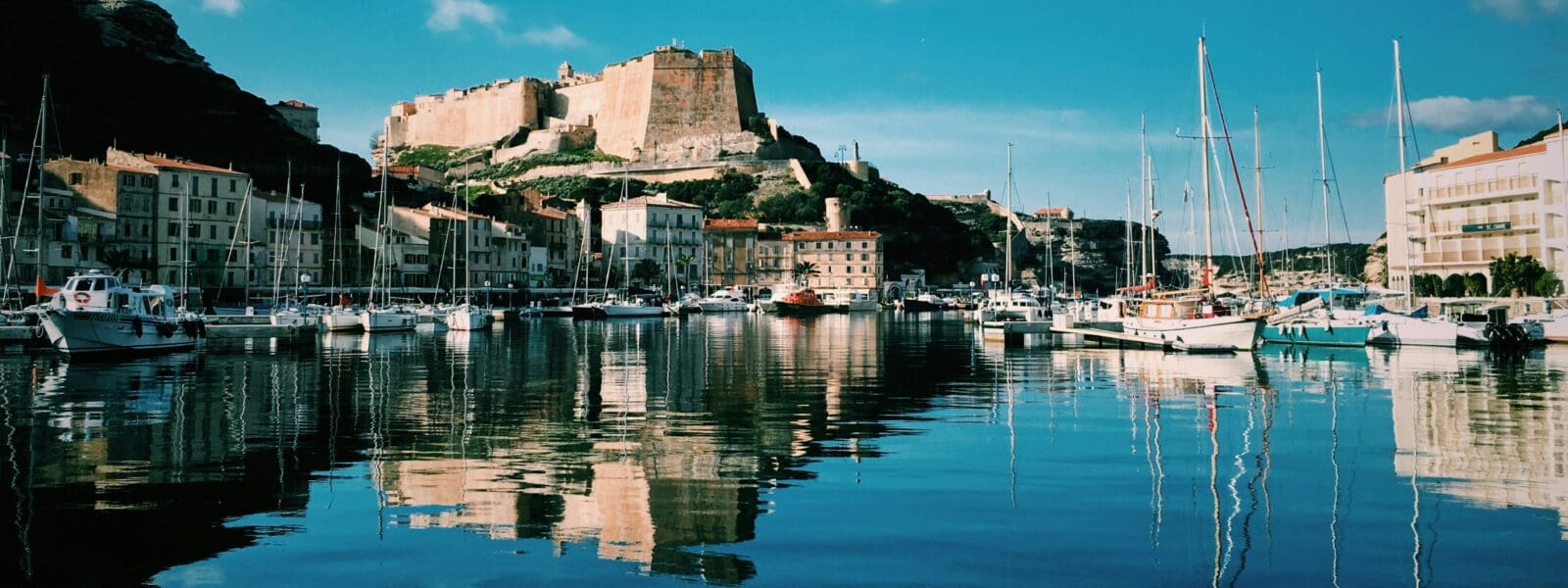
Bonifacio is truly one of the most breathtaking places on Corsica. The town sits atop towering white cliffs that rise sharply from the sea, offering views of Sardinia on one side and a maze of narrow streets, ancient walls, and secret squares on the other. Everything here feels almost magical, as if you are wandering through an open-air museum beside the water.
But Bonifacio is far more than just a beautiful sight. You can take boat trips along the cliffs to explore hidden caves, stroll through historic fortifications, descend staircases carved straight into the rock, or simply unwind on a cozy terrace overlooking the harbor. The nearby beaches are stunning, and the surrounding natural areas provide the perfect setting for a relaxing walk.
In this blog, you will discover all the experiences you should not miss in Bonifacio. From the most well-known attractions to surprising hidden treasures, they are all detailed for you below.
Where is Bonifacio on Corsica?
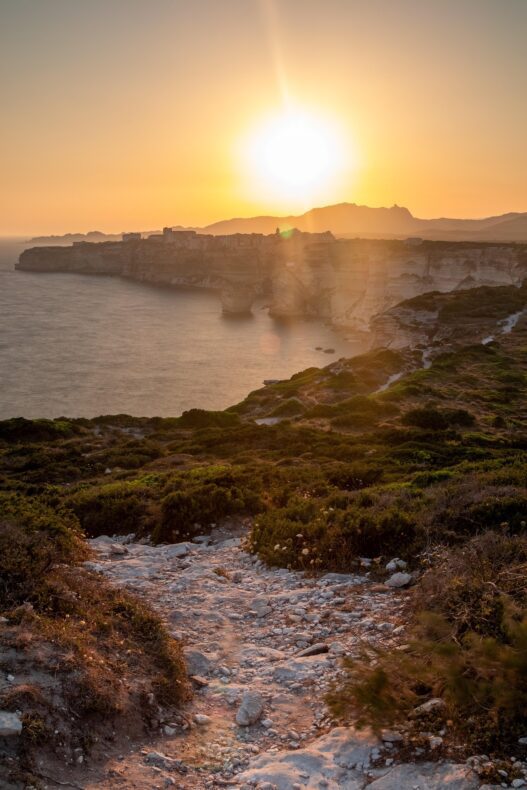
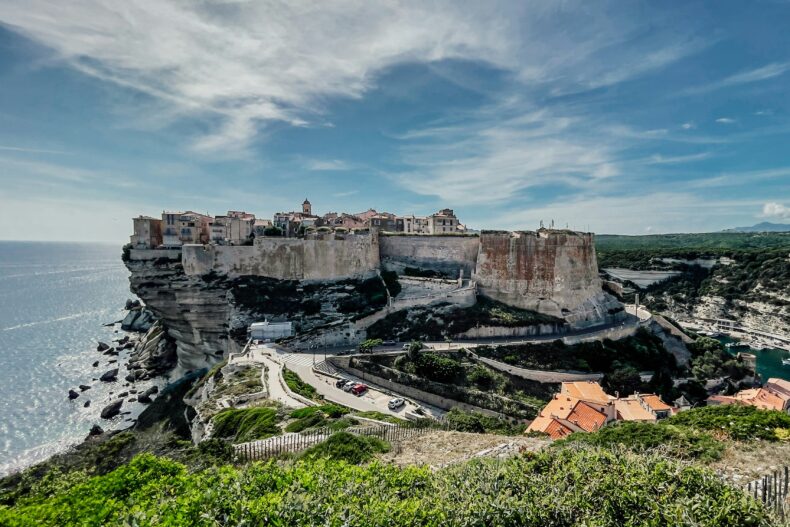
Bonifacio sits at the very southern tip of Corsica, perched high on a cliff with sweeping views over the Mediterranean Sea. The town is built on the edge of a narrow peninsula and marks the island’s southernmost point, making it easy to see why it is often called the most spectacular town in Corsica.
The town lies less than twelve kilometers from Sardinia. From the harbor, it takes about an hour by boat to reach Santa Teresa Gallura on the other side of the water. We arrived in Bonifacio ourselves from Sardinia, docking right in its charming and picturesque harbor.
Bonifacio’s location is not only striking, but also makes it an ideal base for exploring southern Corsica. Nearby, you will find beautiful places such as Roccapina Beach, the lively coastal town of Porto-Vecchio, and the quaint mountain village of Sartène. For those eager to explore the mountains, a short drive along the inland roads will take you to the Bavella Pass or the Alta Rocca nature reserve.
The town is perfectly positioned between sea and mountains. Here, you can easily enjoy a mix of experiences: take a morning walk along the cliffs, spend the afternoon relaxing on the beach, and in the evening lose yourself wandering through the winding streets of the old town.

What is Bonifacio known for?
Bonifacio is far more than just a beautiful town perched on a cliff. What makes this place truly remarkable is the way nature, history, culture, and location all come together. From breathtaking views to a personality all its own, Bonifacio feels like a world apart.
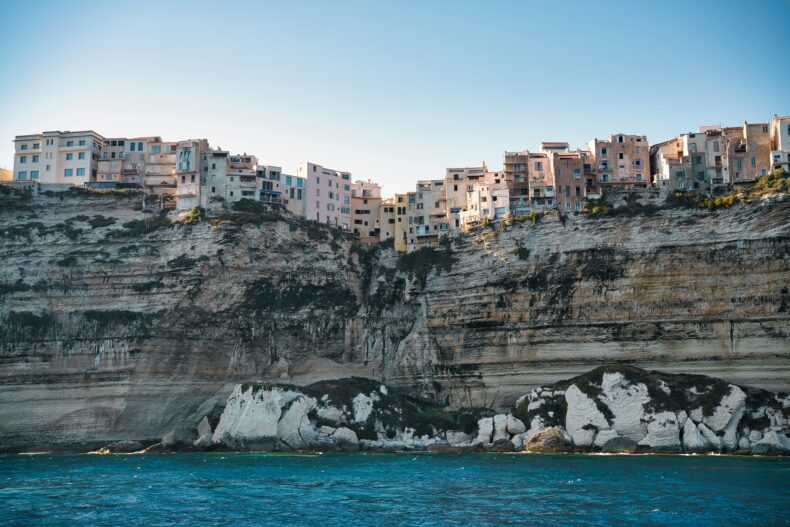
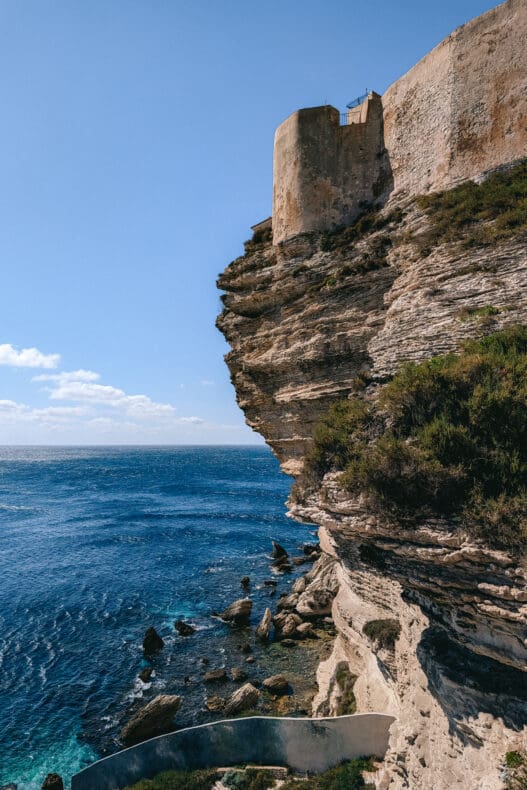
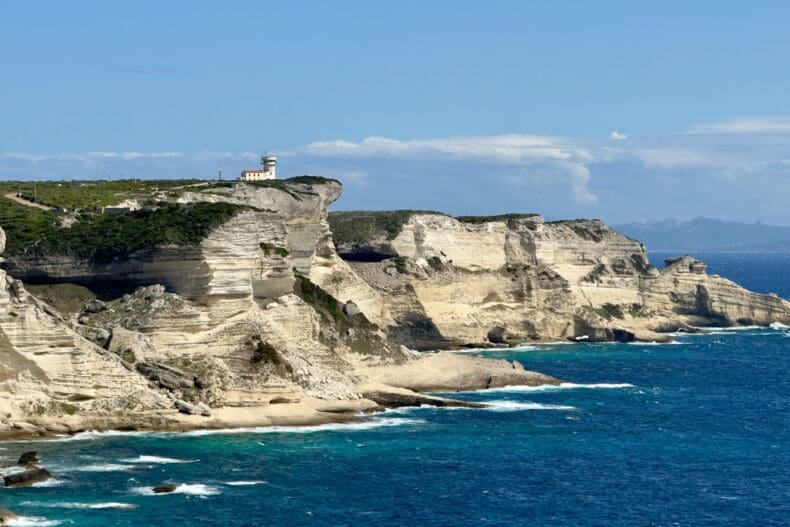
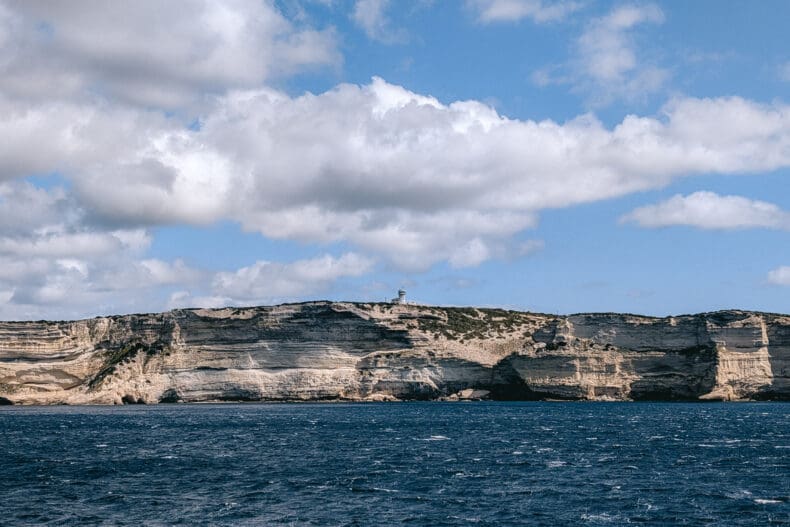
The first thing that takes your breath away is its location. The town sits on top white limestone cliffs that rise dramatically from the sea, with some houses seeming to balance right on the edge. Over centuries, wind and waves have sculpted the cliffs, forming a rugged coastline with deep inlets, hidden caves, and scattered rock formations in the water.
Adding to the sense of awe is the history that surrounds you at every turn. Bonifacio was founded in 828 as a defensive outpost and grew into a formidable fortress with a strategic position between Corsica and Sardinia. Trade, wars, pirates, this town has seen it all. That layered history is still visible today in the citadel, the city gates, and the narrow streets that cling to the cliffs.
What also makes Bonifacio unique is the way it feels different from most other Corsican towns. The town has its own dialect, with traces of Ligurian from the period under Genoese rule. Its architecture, traditions, and even the rhythm of daily life feel just a little different. Bonifacio is more southern, more Mediterranean, yet at the same time proudly Corsican.
Then there is the town’s timeless connection with the sea. Bonifacio sits directly across from Sardinia and has served for centuries as a gateway to the Mediterranean. Boats sail daily from the harbor to Italy, and coastal excursions leave regularly. The natural harbor is deep, narrow, and perfectly sheltered, a rare and safe haven along this rugged stretch of coastline.
14 Best Things to See and Do in Bonifacio
#1 Citadel of Bonifacio
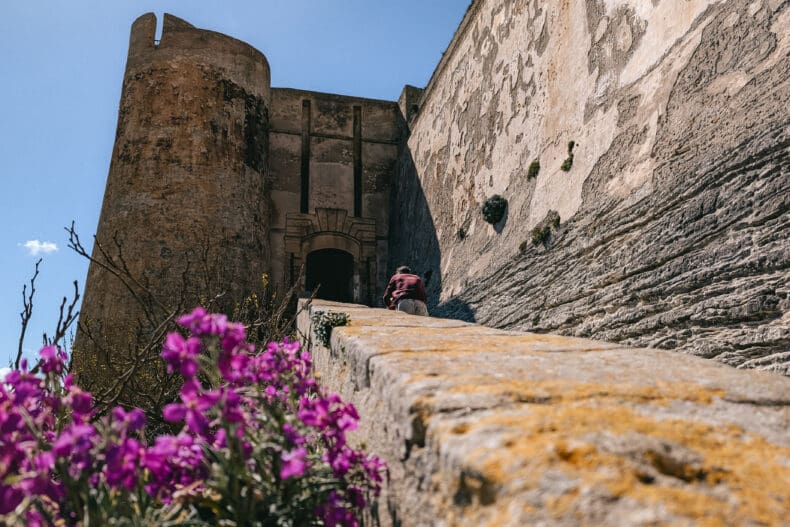
The Citadel of Bonifacio is the historic heart of the town, perched in a commanding position atop a white limestone cliff that rises dramatically from the sea. The first fortifications on this site date back to 828, when Count Bonifacio built a defensive post to guard against attacks from the water. Over the centuries, the citadel was strengthened and expanded, especially by the Genoese, who ruled Bonifacio from the twelfth to the eighteenth century. Today, visitors can explore a network of ancient city walls, watchtowers, and narrow streets that still follow the same layout used hundreds of years ago.
From the citadel’s edges, you are treated to stunning views of the Mediterranean Sea, the cliffs, and, on a clear day, even Sardinia. Inside the walls, you will find the Bastion de l’Étendard, one of the largest bastions in France. This area requires an entrance fee and features a small exhibition on Bonifacio’s military history. The rest of the citadel is free to explore and easily accessible for anyone willing to make the climb on foot from the harbor. It is one of Corsica’s most impressive historical sites and an absolute must-see for anyone visiting Bonifacio.
#2 Old Town (Vieille Ville)
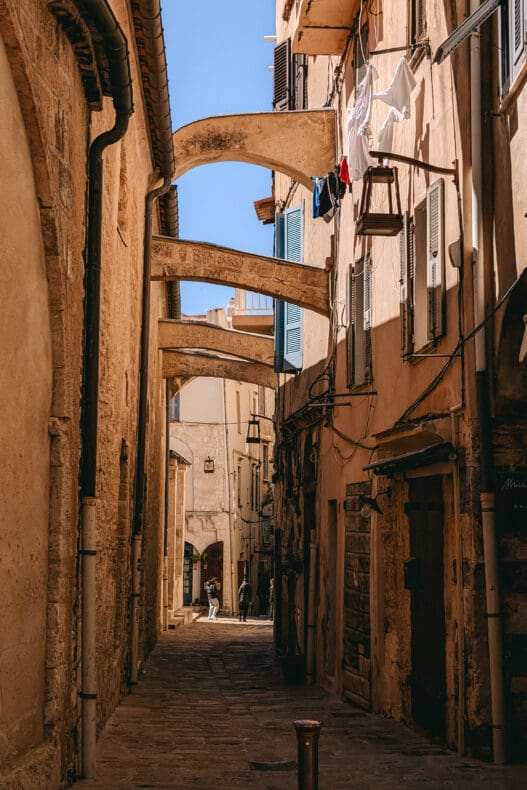
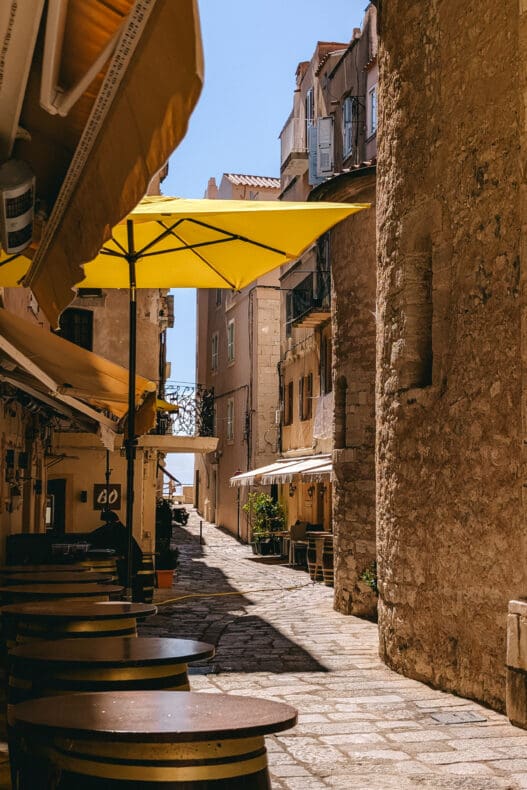
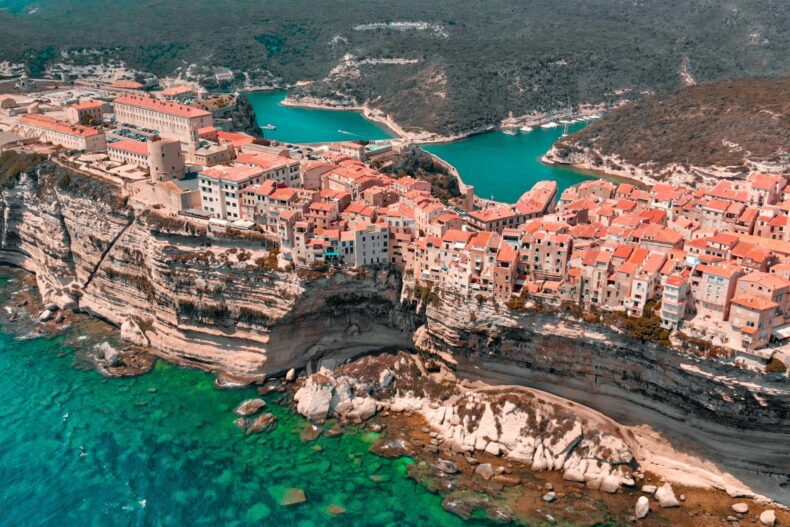
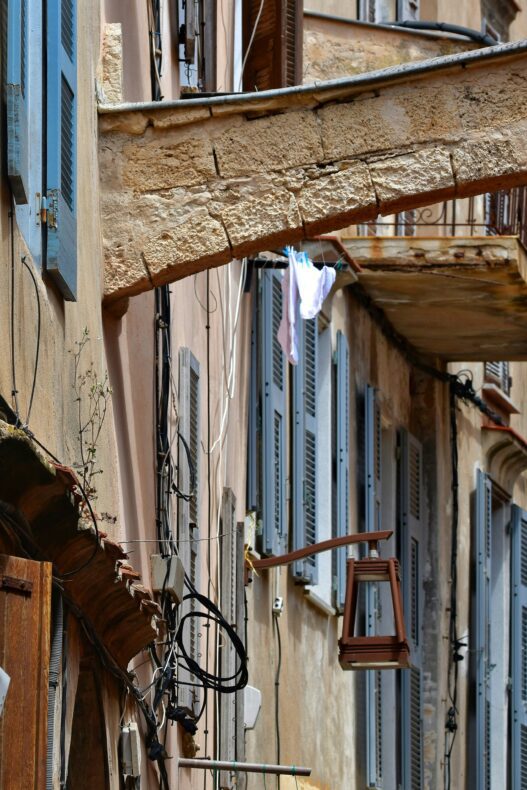
The old town of Bonifacio sits within the citadel and unfolds as a charming maze of narrow streets, small squares, and historic buildings. Every corner here is filled with history. Founded in the ninth century, the town has played a key role in the defense of Corsica for centuries. As you explore the old town, you will discover medieval houses, churches with centuries-old façades, and striking city gates.
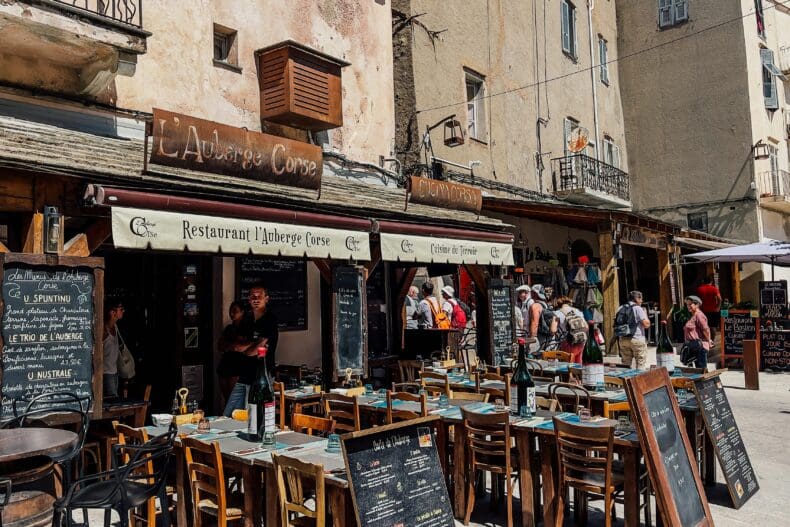
A perfect place to begin your visit is the Montee Rastello, a steep cobbled street that winds its way up from the harbor to the heart of the town. Along the way, you will pass historic façades, quaint shops, and viewpoints offering stunning views of the coastline. At the top, you will find the Place du Marché, a lively square where markets are still held regularly. Here, locals gather to chat or play a game of petanque. Surrounding the square are cozy cafés and inviting restaurants. The old town is car-free, making it easy to explore entirely on foot.

#3 The White Cliffs of Bonifacio
The white limestone cliffs of Bonifacio rank among the most breathtaking coastlines in all of Europe. They were shaped millions of years ago through the uplift of the seabed and the relentless erosion of wind and waves. Rising steeply up to sixty meters, the cliffs form a dramatic backdrop, especially when seen from the sea or from one of the many lookout points above. The houses of Bonifacio often seem to teeter right on the edge, adding to the town’s striking appearance.
One of the most famous formations is Le Grain de Sable, a massive rock standing completely detached from the shore. Another highlight is the Grotte de Sdragonato, a sea cave that can only be reached by boat. The entrance of the cave is shaped like the outline of Corsica, making it all the more remarkable. Walking trails also run along the cliffs, including the path to Phare de Pertusato, which offers stunning views of the jagged coastline and the open sea. The combination of unique geology, spectacular vistas, and natural beauty makes this a must-see during any visit to Bonifacio.
#4 Escalier du Roi d’Aragon (Stairway of the King of Aragon)
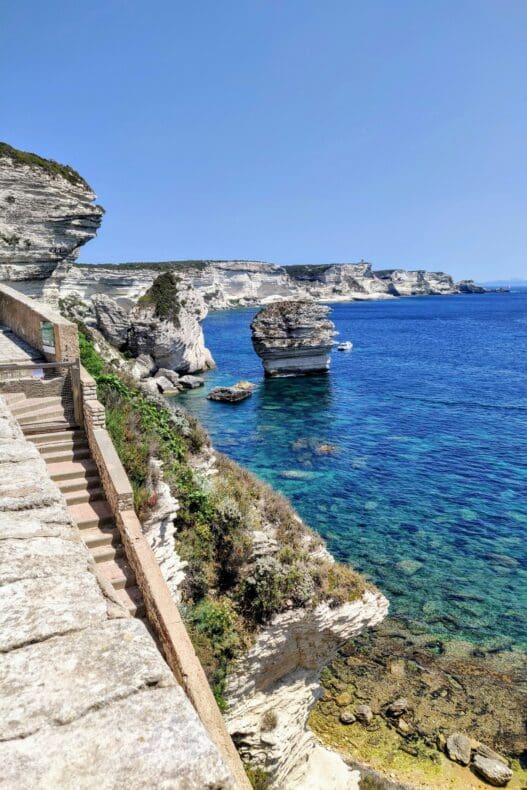
The Escalier du Roi d’Aragon is truly one of the most remarkable landmarks in Bonifacio. This steep staircase of 187 steps is carved directly into the limestone cliff and drops almost vertically down to the sea. According to local legend, the steps were cut in a single night by soldiers of the King of Aragon during the siege of 1420, but in reality, they were likely built in the sixteenth century by monks to provide access to a water source.
Whatever the story may be, the experience is unforgettable. From the top, you are treated to breathtaking views of the cliffs and the sparkling sea. As you make your way down, you can admire the rock formations up close, while the water below draws ever closer. The stairs can be slippery, particularly when wet, so sturdy footwear is recommended. Access requires a ticket, which is available at the entrance at the top near the citadel. Visitor numbers are limited, especially during the busy season.
#5 Harbor of Bonifacio
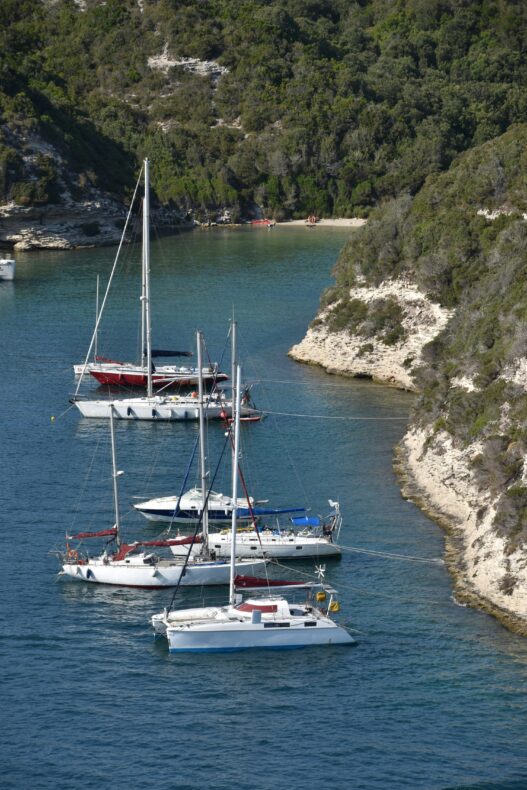
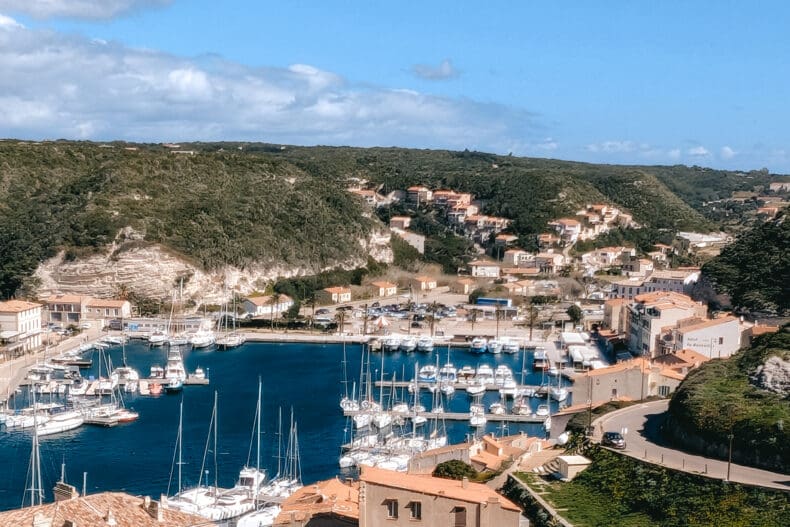
The harbor of Bonifacio lies tucked deep within a narrow, natural inlet that almost resembles a Norwegian fjord. Thanks to its sheltered location, it has been a safe anchorage since the Middle Ages. In 1541, Emperor Charles V docked here following a failed campaign in North Africa. Today, the harbor has grown into a modern marina where luxury yachts and small fishing boats sit side by side.
Along the quay, you will find a lively promenade lined with restaurants, cafés, and shops. In the summer months, the area is particularly bustling and full of energy. From the harbor, daily boat trips depart to the famous Grotte de Sdragonato, the white cliffs, and the Îles Lavezzi. You can also catch the ferry to Santa Teresa Gallura in Sardinia, which is how we ourselves arrived in Corsica. As you stroll along the water, the citadel towers above you on the cliff. This striking contrast between sea and fortress makes the harbor a natural and inviting starting point for exploring Bonifacio.
#6 Porte de Gênes (Genoa Gate)
The Porte de Gênes is the historic gateway to the citadel and for centuries served as the only official entrance to the fortified town. Built in the twelfth century when Bonifacio came under Genoese rule, the gate’s name still reflects that era. What makes this entrance especially remarkable is the drawbridge, which continues to function today thanks to a clever system of weights and pulleys.
Walking through the gate leads you to the Place d’Armes, the heart of the citadel. In earlier times, this is where the military guard stood watch, and today it serves as the starting point for many walking routes through the old town. The stone walls, the sturdy gatehouse, and the elevated position make it immediately clear that Bonifacio was designed with defense in mind. The gate is easily reached on foot via the Montee Rastello from the harbor and marks the beginning of the upper town.
#7 Le Cimetière Marin
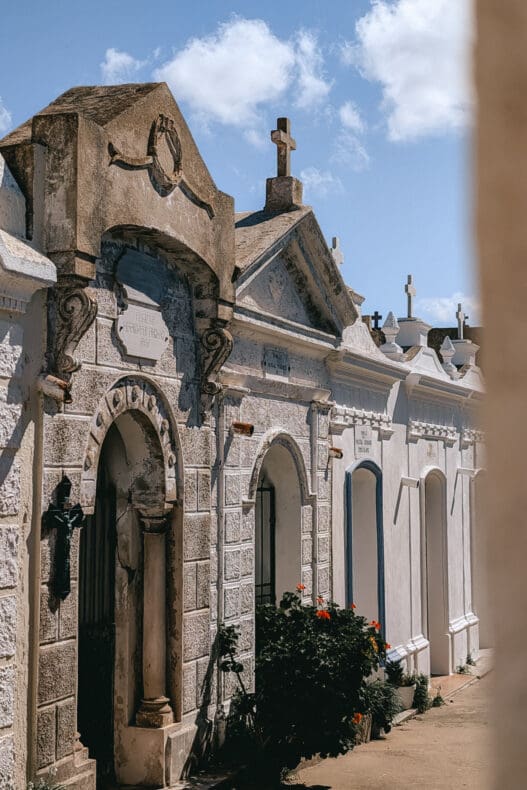
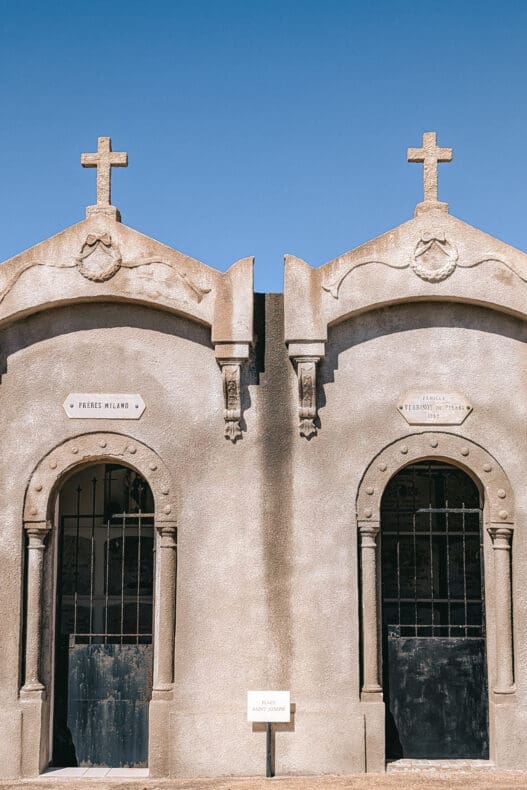
On the southern edge of the citadel, overlooking the sparkling sea, lies the Cimetière Marin. This maritime cemetery may not be the first destination you think of on a city trip, but it is undoubtedly one of the most beautiful and tranquil spots in Bonifacio. Established in 1823, it serves today as the resting place for many Bonifacian families.
What immediately draws your attention are the whitewashed mausoleums and chapels, often richly decorated and grouped together like a miniature village. The graves resemble tiny houses more than traditional tombstones. Perched on the cliffs with unobstructed views of the Mediterranean, the cemetery offers a truly unique setting. The cemetery is free to visit and is easily reached on foot from the heart of the citadel.
#8 Churches of Bonifacio
Bonifacio is home to several remarkable churches, each offering a glimpse into the city’s history and religious traditions. The most prominent is the Église Sainte-Marie-Majeure, constructed during the twelfth and thirteenth centuries. Situated in the heart of the old town, it is the oldest religious building in Bonifacio. Its simple façade, soaring ceilings, and striking pointed arches immediately catch the eye. Inside, you will discover a dome with an octagonal drum, a characteristic feature of the Pisan-Romanesque style that can be found in several places across Corsica.
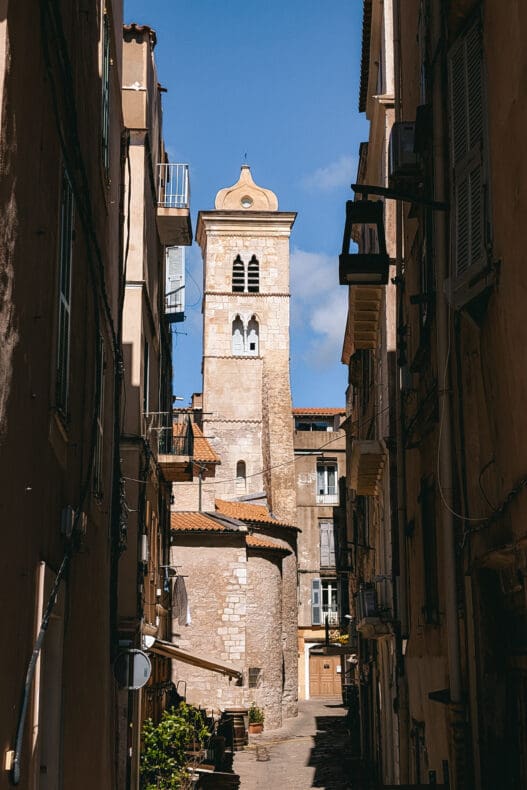
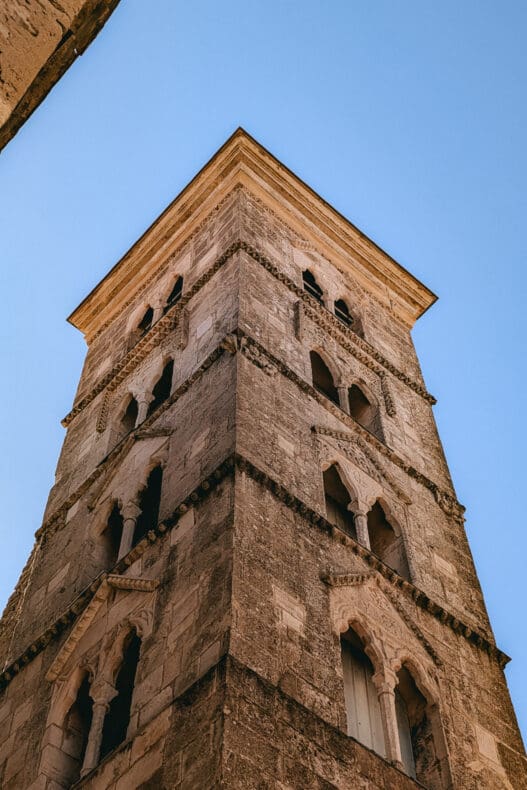
Just a few streets away is the Église Saint-Dominique, dating from the late thirteenth century. This church is often linked to the Dominicans, although it may have been built by the Templars. It is one of the few Gothic buildings on the island, notable for its plain square bell tower. Perched on a viewpoint at the edge of the citadel, it also offers a particularly beautiful perspective over the town and the sea.
Lastly, there is the Chapelle Saint-Roch, a small sixteenth-century chapel built after a plague outbreak. It is located near the entrance to the citadel, along the path to the Escalier du Roi d’Aragon.
All of these churches are free to enter, depending on opening hours, and they are within easy walking distance of each other. They can be seamlessly included in a leisurely walk through the old town, offering both history and charm at every turn.
#9 Bastion de l’Étendard
The Bastion de l’Étendard is part of the Genoese fortifications and stands as one of the largest bastions in France. The current structure dates back to the sixteenth century and once defended the northern side of the citadel, overlooking the harbor. It served both as a protective stronghold and a strategic lookout, allowing close monitoring of access to the town.
Today, visitors can explore the bastion for a small entrance fee. Inside, a compact exhibition showcases Bonifacio’s military and maritime history, featuring scale models, historical documents, and archaeological artifacts. A staircase leads to the top platform, where panoramic views stretch over the harbor, the town, and the striking white cliffs. This spot is especially breathtaking at sunset. Positioned close to the Porte de Gênes, the bastion can easily be included in a walk through the citadel and makes a memorable highlight of any visit.
#10 Îles Lavezzi (Lavezzi Islands)
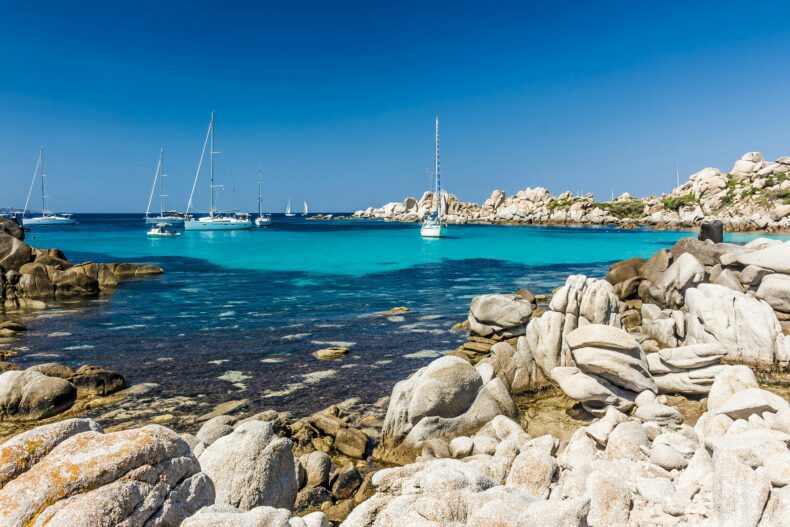
Southeast of Bonifacio, about ten kilometers off the coast, lie the Îles Lavezzi, a group of small, rugged granite islands set in a sparkling blue sea. This uninhabited archipelago is part of a protected nature reserve and is a paradise for nature lovers, snorkelers, and anyone seeking peace and quiet. There are no buildings, no roads, and no facilities. Visitors will find only rock formations, hidden beaches, crystal-clear waters, and complete tranquility.
The Îles Lavezzi are included in the Réserve Naturelle des Bouches de Bonifacio and are home to unique plant life and breeding seabirds. Beneath the surface, seagrass meadows provide a habitat for countless fish species, making it one of the most beautiful snorkeling spots around Corsica. On the main island, Lavezzu, there are two small cemeteries that serve as a quiet reminder of the 1855 shipwreck of the French naval vessel La Sémillante, in which all crew members perished.
The islands can be reached by boat from the harbor of Bonifacio, with several trips departing daily during the high season. Be sure to bring your own water, food, and sun protection, as there are no services on the islands.
#11 Phare de Pertusato
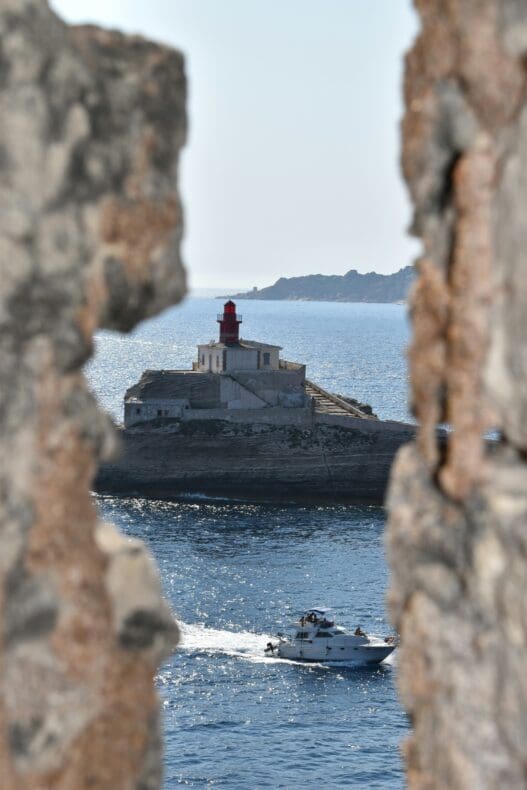
The Phare de Pertusato stands at the southernmost tip of Corsica on a rocky plateau just outside Bonifacio. Built in 1844, this lighthouse has kept watch over the passage between Corsica and Sardinia for nearly two centuries. The tower itself is just over sixteen meters tall, but because it sits almost one hundred meters above sea level, its light can be seen from nearly fifty kilometers away.
While the lighthouse is not open for interior visits, the walk to reach it is more than rewarding. From the edge of the town, a path winds along the limestone cliffs, offering dramatic views. On clear days, you can spot Sardinia on the horizon. Near the lighthouse, it is also possible to descend to Saint-Antoine Beach, a hidden cove tucked between towering rock walls.
The route is easy to follow and does not require much effort, but during the summer months it can become very hot, and shade is limited. Make sure to bring enough water and sun protection to enjoy the walk comfortably.
#12 Réserve Naturelle des Bouches de Bonifacio
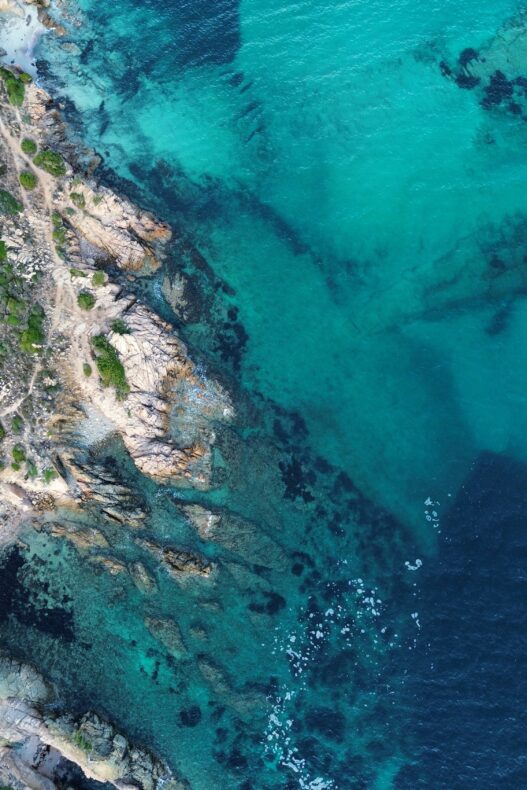
The Réserve Naturelle des Bouches de Bonifacio is the largest nature reserve in France, spanning both land and sea between Corsica and Sardinia. Covering an impressive eighty thousand hectares, the reserve safeguards not only the coastline but also dozens of small islands, cliffs, caves, and underwater landscapes. It is one of the Mediterranean’s most important hotspots for biodiversity.
More than a third of the region’s rare Mediterranean species can be found here, from seabirds and seagrass meadows to cuttlefish, dentex fish, and various types of coral. Life above the water and below it is both delicate and spectacular. From Bonifacio, daily excursions depart to explore different parts of the reserve, usually by boat. Some routes take visitors through caves and sea grottoes, while others stop at prime snorkeling spots or quiet, untouched beaches.
The reserve is governed by strict rules to protect its natural treasures. Mooring is only allowed in designated areas, and disturbing wildlife or picking plants is strictly prohibited.
#13 Beaches Near Bonifacio
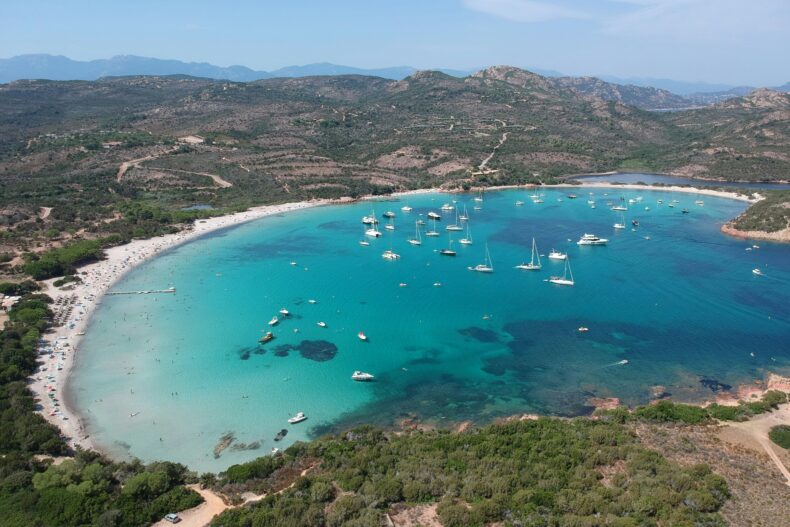
Around Bonifacio, you can discover some of the most stunning beaches in southern Corsica. Some are easy to reach by car, while others require a walk or a boat ride. What they all have in common is crystal-clear water, soft white sand or smooth granite rocks, and a peaceful, relaxing atmosphere.
One of the most well-known beaches is Plage de la Tonnara, located to the west of the town. It is popular with families and watersports enthusiasts, particularly windsurfers. A beach bar serves refreshments, and loungers are available for rent. For a quieter and more tranquil experience, Saint-Antoine Beach near the Phare de Pertusato is an excellent choice. Accessible by a scenic walking path, this beach still feels untouched and natural.
For those looking for something truly exceptional, the beaches of Petit and Grand Sperone are highly recommended. They lie just outside Bonifacio and can only be reached on foot, but the effort is well worth it for the soft white sand and breathtaking views over turquoise waters. Keep in mind that some of the more secluded beaches have no facilities, so it is wise to bring your own food, drinks, and sun protection to fully enjoy the experience.
#14 Moulin de Bonifacio
Just outside the bustling center, on the southern side of the citadel, stands the Moulin de Bonifacio. This historic windmill was built in the sixteenth century and was once used to grind grain for the residents of the fortress town. Thanks to the constant wind sweeping over the cliffs, its sails turned almost continuously. Today, the mill is no longer in operation but remains a serene spot to visit during a walk.
The windmill is small and simple in design, a round stone structure with a magnificent view over the sea. From here, you can gaze across the Mediterranean toward Sardinia and admire Bonifacio’s steep limestone cliffs. The mill can be reached on foot from the citadel or along the walking path leading to the Phare de Pertusato.