
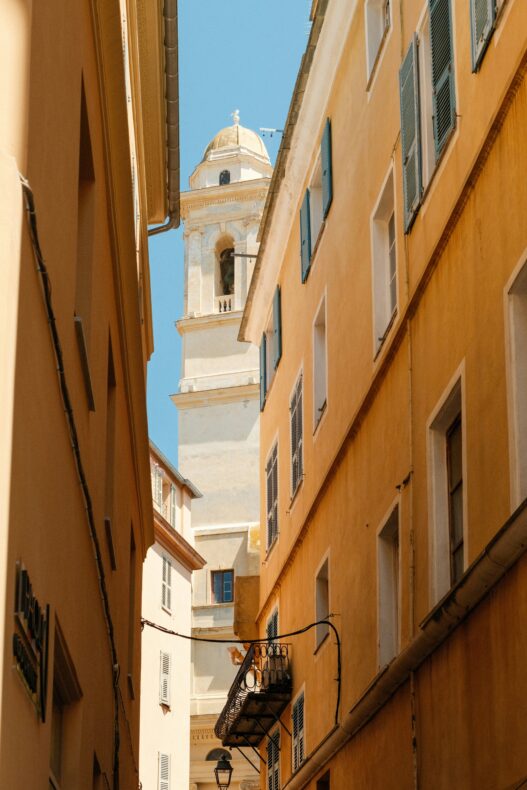
Bastia may not be the most famous city in Corsica, but in our experience, it is definitely one of the most delightful. This lively port town on the northeast coast is full of color, charm, and energy. You can wander along narrow, historic streets, stumble upon beautiful baroque churches hidden behind simple façades, and savor freshly caught seafood on a terrace by the water. Bastia is not a polished tourist destination; it is a real, living city where one of the simple pleasures is watching the world go by from the harbor or a café terrace.
In this blog, we have put together a guide to the most captivating places in Bastia. From breathtaking viewpoints to lively squares, from stunning historic churches to the city’s beaches.


Where is Bastia located in Corsica?
Bastia sits in the far northeast of Corsica, right on the sparkling Mediterranean coast. The city is the perfect starting point for exploring Cap Corse, the long, narrow peninsula that stretches north into the sea. Bastia is part of the Haute-Corse region, and it is also its lively capital. With the mountains rising behind the city and the sea just steps away, Bastia finds a perfect balance between nature and culture.
From Bastia, it is easy to reach a number of stunning nearby spots. In just twenty minutes, you can arrive in Erbalunga, a charming fishing village with brightly colored façades lining the waterfront. A little further along the road is Patrimonio, well known for its rolling vineyards and its popular annual guitar festival. Nonza is also within easy reach, a dramatic village perched on a cliff with breathtaking views over a black pebble beach.
For those who simply want to enjoy a relaxing day by the water, you do not even have to leave the city because Plage de l’Arinella and Plage de la Marana are just a short distance away and perfect for a sun-soaked escape.
The 10 Best Things to See in Bastia
#1 Le Vieux Port
The old port of Bastia is the lively heart of the city. This is where everything comes together: fishing boats, colorful façades, gently bobbing yachts, and cafés that stay bustling well into the evening. You can take a leisurely stroll along the quay, admire the sparkling sea, and hear the soft chimes of the Église Saint-Jean-Baptiste in the background. The atmosphere is calm, the view unmistakably Corsican.
The port took its current shape in the sixteenth century when the Republic of Genoa developed Bastia into an important strategic stronghold. The northern pier, built with old cannons used as mooring posts, still reflects this history. At its end stands a statue of Mary, keeping watch over the fishermen since 1671. The southern pier gives the best views of the harbor and leads to the Aldilonda, a scenic walkway running beneath the citadel.
Le Vieux Port is the perfect place to admire the boats, enjoy a glass of wine, or simply watch the world go by. We found it wonderfully peaceful and spent quite some time lingering on one of the terraces, soaking up the charm and energy of the port.

#2 Église Saint-Jean-Baptiste
You can see this church from far away, with its two tall towers rising proudly above Bastia. It is the largest church in Corsica, built between 1636 and 1666. The style is baroque, rich in intricate details and crowned with a grand, stately façade. The towers were added later, in the nineteenth century.
Inside, the church is lavishly decorated with marble altars, gilded ornaments, and beautiful religious paintings. There are separate chapels for fishermen and sailors, dedicated to saints such as Saint Peter and Saint Erasmus. One of the standout features is the statue of the Baptism of Christ, created in 1857 by the Italian sculptor Ferdinando Pelliccia.
The church continues to be an active place of worship. On June 23, the feast of Saint John is celebrated here with a large bonfire on the square by the harbor.

#3 Citadel of Bastia
The citadel, also called Terra Nova, sits atop a rocky promontory with sweeping views of the sea. It is the oldest part of Bastia, built in the fourteenth century by the Republic of Genoa. What started as a fortress gradually became a quiet neighborhood, full of winding streets, historic houses, and hidden squares.
At the heart of the citadel stands the Palais des Gouverneurs, once the city’s administrative center. Today, it is home to the Musée de Bastia, a museum that provides a glimpse into the city’s history. Its collections cover the Genoese era, local crafts, and Corsican culture, making it a must-visit for anyone wanting to understand the story of Bastia.
The citadel is reached via the Romieu Steps, a grand staircase rising from the harbor. Up here, it is much calmer than down below, and while the neighborhood itself is full of charm, the main reason to visit is the breathtaking view. The panorama over the city and harbor makes the citadel one of the most impressive and unforgettable spots in Bastia.
#4 Place Saint-Nicolas
Place Saint-Nicolas is the largest square in Bastia and one of the most lively and inviting spots in the city. The square stretches right along the sea and is lined with swaying palm trees, bustling cafés, and colorful ice cream shops, creating a constant buzz of life. Locals gather here to meet friends, children run and play, and visitors settle down for a coffee or a glass of wine. At over two hundred meters long, the square almost feels like a city park, with benches, shady spots, and plenty of space to wander and soak up the atmosphere.
At the heart of the square stands a statue of Napoleon, shown as a Roman emperor wearing a toga and a laurel wreath. The statue was made in 1813 and installed here in 1853. Nearby, a small carousel delights children, while regular market stalls sell antiques, clothing, and local products. During our visit, the square was bustling with energy, filled with many stalls offering brocante and curiosities, which made the whole place feel vibrant and welcoming.


#5 Jardin Romieu
Jardin Romieu is a small, green haven tucked just above the old port. The garden rests on the hillside that leads up to the citadel and offers the perfect escape from the city’s hustle and bustle. Created in the late nineteenth century by Paul-Augustin Viale, it has remained a serene spot where visitors can relax among palm trees and pine trees while taking in sweeping views of the sea.
The garden’s most striking feature is the Romieu Steps, a grand stone staircase that winds its way from the harbor up to the citadel. As you climb, you pass fountains, iron railings, and colorful flowerbeds. Together, the steps and the garden form a beautiful link between the lively lower town and the historic stronghold above.
Jardin Romieu is open to the public, even in the evening, and provides plenty of photogenic spots as well as shaded areas to unwind. Bring a drink, settle onto a bench, and enjoy the view over the boats and the bay while soaking up the peaceful atmosphere.
#6 Palais des Gouverneurs & Musée de Bastia
The Palais des Gouverneurs stands at the heart of the citadel and was once the center of power in Corsica. In the fourteenth century, the Genoese built their administrative headquarters here, with thick walls and a commanding view of the sea. Today, the building has been fully restored and now houses the Musée de Bastia.
At the museum, you can discover the rich history of Bastia and the island itself. Exhibits include archaeological finds, paintings, maps, and documents that trace the town’s growth from a small fishing village into the capital of Genoese Corsica. The museum features both permanent collections and temporary exhibitions, which often highlight Corsican music, traditional crafts, and other aspects of the island’s culture.
#7 The Churches of Bastia
In Bastia, you never have to walk far before encountering a church. One of the oldest is the Cathédrale Sainte-Marie, built at the end of the fifteenth century and nestled in the heart of the citadel. Its exterior may seem simple, but inside it is surprisingly opulent, with marble, paintings, and a solid silver processional statue of the Virgin Mary.
Just behind it lies the Église Sainte-Croix, a small baroque church adorned with gilded details, statues, and intricate decorations. It is also home to the statue of the ‘Christ des Miracles,’ which, according to local legend, was miraculously pulled from the sea by fishermen in 1428.
Further into the city stands the Église Saint-Charles-Borromée, originally built by Jesuits. This church is distinguished by its striking dome and an interior richly decorated with painted stucco work.


#8 Place du Marché
Place du Marché is a square where Bastia truly comes to life. On many mornings, stalls overflow with fresh fruit, vegetables, cheeses, and sausages from the surrounding region. Local producers offer everything from honey and olives to wine and freshly baked bread. The atmosphere is lively yet welcoming, and the sweet scent of canistrelli, traditional Corsican cookies, drifts through the air. We treated ourselves to a stall selling warm, freshly made crêpes, which were absolutely irresistible.
The square is just a short stroll from the Église Saint-Jean-Baptiste and is lined with cozy cafés. It is the perfect place to spend a leisurely morning. Wander among the market stalls, then take a seat at a terrace with an espresso and enjoy watching the world go by. Saturday mornings are the busiest and most bustling, but even on weekdays, there is plenty to see, taste, and experience.
#9 Plage de l’Arinella
Looking for some time by the beach and the sea? Plage de l’Arinella is less than a ten-minute drive from the center of Bastia. You do not even need to drive, as it is a delightful walk or bike ride from the old port along a scenic coastal path that leads directly to the beach. It is the largest beach in the city, with soft sand, clear water, and plenty of space for everyone. In the summer, locals flock here to cool off or enjoy picnics with friends and family. Food trucks and small beach bars are often open, adding to the lively and welcoming atmosphere.
The beach is well equipped with showers, toilets, and lifeguards. Our children especially loved the large playground right on the sand. The water slopes gently, making it safe and fun for kids to play. Along the coast, a walking and cycling path runs parallel to the beach, perfect for jogging or a leisurely stroll. Along the way, you will pass a variety of sports areas and facilities, making it an ideal place for both relaxation and activity.

#10 Cap Corse
Cap Corse is the wild northern tip of Corsica, just above Bastia. This narrow peninsula, stretching about forty kilometers, is known for its untouched landscapes, dramatic cliffs, and charming villages. As you drive or cycle along the coast, you are treated to views of sparkling azure bays and ancient Genoese watchtowers. Make sure to follow the D80, a stunning road that winds along the cliffs on the west side of the peninsula, revealing a new breathtaking view of the sea or mountains around every corner. We found it to be one of the most beautiful drives in all of Corsica.
Along the route, you pass through villages that rarely appear in travel guides, which only makes them more enchanting. In Erbalunga, you can wander among pastel-colored houses, while Centuri is famous for its lobsters, still caught today by small fishing boats. In Nonza, you will discover a church, a lookout tower, and a dramatic black volcanic pebble beach. For some of Corsica’s most stunning beaches, visit Plage d’Albo, which also offers a pleasant camper spot, Plage de Nonza, or Plage de Barcaggio.


