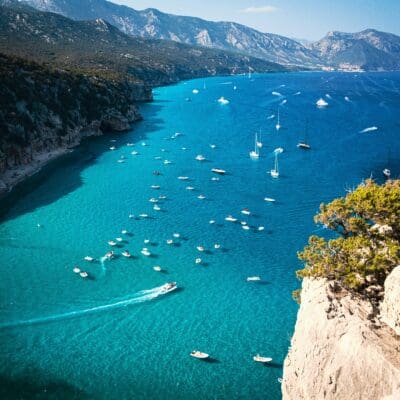
Southern Sardinia is the perfect destination for your next Italian getaway, offering everything you could dream of: pristine beaches with crystal-clear waters, dramatic natural landscapes, charming towns, and a rich history that stretches back thousands of years. Whether you’re craving relaxing days by the sea, thrilling hikes through deep ravines, or exploring fascinating archaeological sites, this part of the island is full of remarkable places to discover.
Start in Cagliari, the lively capital, where narrow streets and medieval towers provide panoramic views over the city. Then, journey to the stunning, untouched dunes of Spiaggia di Piscinas, where the landscape feels almost otherworldly, as if you’ve stepped into a desert by the sea. You can roam the high plateau of Giara di Gesturi, where wild horses wander freely, or explore ancient caves where nature and myth blend together in a timeless dance.
In this blog, we’ll take you on a journey to the most breathtaking spots and unforgettable experiences in Southern Sardinia. From secret coves to jaw-dropping viewpoints, and from the mysterious Nuraghe ruins to quaint villages: these are the places you absolutely cannot miss!


North or South Sardinia: Which Part is More Beautiful?
A question that every traveler to Sardinia will inevitably ask: which part of the island is more beautiful, the north or the south? The answer? It all depends on what you’re looking for. Both regions are absolutely stunning, but each offers its own distinct charm, landscapes, and must-see highlights.
Northern Sardinia is where luxury meets nature in perfect harmony. This is home to the world-famous Costa Smeralda, where gleaming mega yachts fill the marinas of Porto Cervo and the beaches look like something straight out of a glossy travel magazine. But the north is far more than just glitz and glamour. The La Maddalena archipelago is a paradise for island-hoppers, boasting hidden coves and waters so crystal-clear they almost look surreal. Alghero, with its unique Catalan influences, blends culture and coastline in a way that feels both historic and relaxed, while the medieval charm of Castelsardo makes you feel like you’ve stepped onto a cinematic set. For those who crave more rugged beauty, Costa Paradiso offers dramatic rock formations that tower over the shoreline. And let’s not forget Spiaggia La Pelosa, near Stintino, a beach that can genuinely lay claim to being one of the most beautiful in Europe.
Read more: 17 best places to visit in Northern Sardinia
Southern Sardinia, on the other hand, feels more authentic, less touristy, and a bit wilder. Here, you’ll find just as breathtaking beaches with waters that rival the Caribbean. Take Spiaggia di Piscinas, for example, where towering sand dunes cascade directly into the sea in a way that’s both awe-inspiring and tranquil. The capital, Cagliari, exudes a relaxed vibe, blending historic landmarks, vibrant markets, and beautiful beaches into one charming city. As you venture inland, you’ll find unique sites like Su Nuraxi di Barumini, an ancient Nuraghe complex, and the high plateau of Giara di Gesturi, where wild horses roam freely. Southern Sardinia tends to be quieter, more affordable, and perfect for anyone looking for a peaceful mix of culture, nature, and relaxation.
So, which side is more beautiful? If you love lively resorts, spectacular beaches, and a touch of luxury, then Northern Sardinia is where you’ll want to go. For many visitors, the northern region is where the heart of their Sardinian adventure lies. But if you prefer peace and quiet, wild landscapes, and pristine beaches, then the more tranquil south is perfect. Personally, I found the north to be the most captivating, while Sebastiaan preferred the south, and we both discovered that the middle of the island hides some real gems too.
And here’s the best part—you don’t have to choose! With a rental car and a little planning, you can easily explore both sides of the island and decide for yourself which part steals your heart.


Where to Stay in South Sardinia?
Where you stay in Southern Sardinia truly depends on the kind of experience you’re after. If you’re drawn to the vibrant energy of a city, crave easy access to fantastic restaurants, and enjoy a blend of culture and beach life, then Cagliari is the perfect spot. In the charming neighborhoods of Castello and Marina, you’ll find boutique hotels and cozy B&Bs, many with stunning views of the city or the harbor. Everything is just a short walk away—from lively squares to hidden trattorias serving the best fregola with seafood.
For those who are passionate about beaches, Villasimius, Costa Rei, and Chia are the places to consider. Villasimius and Costa Rei are famous for their long stretches of soft, white sand and crystal-clear waters, offering everything from luxurious resorts to more intimate holiday homes. Chia, a bit quieter and less crowded, boasts breathtaking sand dunes and tranquil waters, making it ideal for a relaxing getaway. Here, you’ll find charming hotels and eco-lodges where you can fully unwind and enjoy nature in peace.
If you’re craving a more authentic Sardinian experience, staying at an agriturismo in the countryside is a must. Near Pula and Barumini, you can sleep on a traditional Sardinian farm, often surrounded by lush vineyards and olive groves. It’s the perfect opportunity to savor homemade cheeses, fresh pasta, and local wines, all while being embraced by the warm, welcoming hospitality that Sardinia is known for.
For the more adventurous traveler, there are cozy mountain huts and nature campsites in the Supramonte and Gorropu regions. Here, you can wake up to awe-inspiring views of rugged cliffs and thick forests. It’s the ideal setting for those who love hiking, being in nature, and seeking a bit of off-the-grid adventure.


Tourist Map of South Sardinia
[googlemaps https://www.google.com/maps/d/u/1/embed?mid=1wIQInDJaqexHrf9uxYfdMsf5g-Ydhk8&ehbc=2E312F&w=790&h=480]The Best Places to Visit in South Sardinia
#1 Spiaggia di Piscinas
Picture an endless stretch of sand meeting the sea—this is Spiaggia di Piscinas. Tucked away on the southwest coast of Sardinia, this untouched beach is one of the island’s most remarkable spots. The towering sand dunes, some reaching up to sixty meters high, seem as though they’ve been blown in directly from the Sahara. They stretch on for miles, constantly reshaped by the wind, creating a dynamic landscape that appears different every day.
But Spiaggia di Piscinas is more than just a picturesque beach. The area holds a fascinating history. In the 19th and 20th centuries, it was a bustling mining hub. Scattered throughout the region, you’ll find remnants of old mining operations, rusted rail tracks, and abandoned buildings—silent witnesses to the past. The river that runs alongside the beach, the Rio Piscinas, often takes on a reddish hue in certain spots, a reminder of the metal remains left behind from the mines.
Despite its remote location, Spiaggia di Piscinas has become a popular destination, though it’s far from a quick and easy drive. The journey itself is an adventure. Winding roads that cut through rugged landscapes eventually lead to a narrow, unpaved path that winds its way down to the beach. We managed the drive in our old campervan with no trouble, but we’ve heard from others who hesitated to take on the route. For those who do take the plunge, the reward is one of the most breathtaking beaches Sardinia has to offer.
The water here is crystal clear and inviting, but be warned—the waves can be surprisingly strong and unpredictable. There are very few amenities—just a remote hotel and a couple of restaurants, which were closed during our off-season visit. This is not the place for a lively beach scene; instead, it offers the kind of quiet, open space where you can truly reconnect with nature in its purest form.


#2 Cagliari
Cagliari, the captivating capital of Sardinia, is not only the island’s largest city but also one of its most vibrant destinations. Here, the energy of lively squares, chic cafes, and bustling markets mixes seamlessly with centuries of rich history that can be seen at every turn. Perched atop seven hills, Cagliari is a city where diverse cultures, architectural styles, and historical influences come together to create a truly unique atmosphere.
So, what should you do in Cagliari? Start with the heart of the city—Castello. This ancient walled district rises majestically above the rest of the town. As you stroll through its narrow, winding streets, you’ll pass medieval city walls and stunning buildings like the Torre dell’Elefante and Torre di San Pancrazio. These 11th-century watchtowers, beautifully preserved, offer breathtaking views of both the city and the sparkling sea beyond.
Among the jewels of Castello is the Cathedral of Santa Maria. Originally built in the 13th century, the cathedral has undergone several renovations over the centuries. Inside, you’ll be greeted by exquisite marble decorations that speak to its storied past. For us, the highlight was the incredibly ornate crypt—a captivating glimpse into the cathedral’s rich history.
Heading down into the city, you’ll encounter the Bastione di Saint Remy, a striking 19th-century structure that’s impossible to miss. A wide staircase leads up to a spacious terrace, where you can enjoy panoramic views of the city below. If you’re a history buff, don’t miss the Roman Amphitheatre, built in the 2nd century AD. Carved partly into the rock, this ancient structure once held 10,000 spectators for gladiatorial games and other public spectacles.
Beyond the city’s historic charm, Cagliari is blessed with natural beauty. Just outside the city, you’ll find Poetto, a stunning eight-kilometer-long beach that’s a favorite spot for locals to unwind. At the far end of the beach stands the Sella del Diavolo, a dramatic rock formation with hiking paths and viewpoints that offer spectacular views over the coastline. Whether you’re soaking up the sun, exploring the rich history, or enjoying the tranquil surroundings, Cagliari is a city that truly has it all.


#3 Costa Rei
Nestled along the southeastern coast of Sardinia, Costa Rei is one of the island’s most breathtaking coastal gems. Famous for its vast stretches of powdery white sand and sparkling, crystal-clear waters, it’s the ideal spot for those craving sun, sea, and relaxation—without the hustle and bustle of more crowded tourist hubs.
Costa Rei extends for around ten kilometers and boasts a collection of stunning beaches. Among them, Cala Sinzias stands out as one of the most popular. This picturesque bay features soft, golden sand and calm, shallow turquoise waters. The coastline is dotted with towering eucalyptus and pine trees, adding to the natural charm of the area. Another hidden treasure is Cala Pira, a small, intimate bay that’s guarded by a 16th-century Spanish watchtower. Once used as a lookout to spot pirates, the tower adds a fascinating historical element to this peaceful cove. We also loved the quiet beaches around Spaggia Rei Sole and Piscina Rei, perfect for a tranquil camper van stay, especially during the off-season when the area is wonderfully serene.
For anyone who enjoys exploring beneath the surface, Costa Rei is an underwater paradise. Its rich marine life, vibrant fish, striking rock formations, and lush seagrass meadows make it a haven for snorkelers and divers. The area is home to several dive schools that offer excursions suitable for both beginners and seasoned divers.
If you feel like taking a break from the beach, there are plenty of ways to enjoy the surrounding nature. One highly recommended adventure is a hike up Monte Nai, a hill standing 200 meters tall. The summit rewards hikers with spectacular panoramic views of the entire coastline, from the rugged cliffs of Capo Ferrato to the serene islands of Serpentara and Cavoli.


#4 Porto Flavia
At first glance, Porto Flavia might seem like just another rugged cliff along the wild southwest coast of Sardinia. But don’t be fooled—there’s more to this spot than meets the eye. Nestled within these rocky cliffs is one of the island’s most fascinating industrial landmarks: a mine that extends directly into the sea.
Built in the 1920s, Porto Flavia was an engineering breakthrough designed to streamline the loading of lead and zinc ore. Instead of hauling the ore across land, it was transferred directly onto ships through a series of tunnels and lifts. This ingenious system not only saved precious time and money but also turned Porto Flavia into a technical marvel of its era.
Though the mine is no longer operational, it’s still open to visitors. A guided tour takes you through narrow, winding tunnels, and at the end of the path, you’ll find yourself standing on a balcony with panoramic views of the sparkling Mediterranean Sea.

#5 Sant’Antioco Island & Maladroxia
Sant’Antioco is an island nestled in the far southeast of Sardinia. While it’s the largest island off Sardinia’s coast, it still feels like a hidden gem. With no mass tourism and no bustling crowds, it’s a peaceful retreat where you can truly enjoy the beauty of nature. The island is easily accessible by a bridge, so there’s no need for a boat ride to reach it.
The town of Sant’Antioco is charming and full of character, with colorful buildings, narrow streets, and a lively harbor filled with fishing boats. It’s home to one of the oldest Phoenician settlements in the Mediterranean. At the local archaeological museum, you can dive deep into the island’s fascinating history, and the Phoenician necropolis offers a remarkable insight into ancient burial traditions.
But Sant’Antioco is far more than just a destination for history lovers. Only a ten-minute drive from the town, you’ll discover Maladroxia, one of the island’s most stunning beaches. With its soft white sand and crystal-clear, turquoise waters, it’s the perfect spot for unwinding. What makes it even more special is that it’s one of the rare places in Sardinia where thermal springs run right under the sand, so you can even feel warm water beneath your feet in certain spots.
Along the coastline, you’ll find cozy trattorias serving fresh fish and local Sardinian specialties. A must-try is the traditional Sardinian-style tuna, as Sant’Antioco has a rich history of tuna fishing. If you plan to stay a little longer on the island, be sure to take a boat tour along its rugged coastline and hidden coves. With a bit of luck, you may spot dolphins, which often swim close to the shore. Don’t miss the opportunity to explore the more remote coastal areas either; they turned out to be the most beautiful and untouched parts of the island for us.


#6 Molentargius-Saline Regional Park
Just a stone’s throw away from the vibrant city life of Cagliari lies an unexpected oasis of nature: the Molentargius-Saline Regional Park. This expansive natural reserve is a haven for birdwatchers and one of the rare spots in Europe where flamingos can be seen year-round.
The park’s name is derived from the salt pans (saline) and the donkeys (molentargius) that once hauled salt across the area. Historically, this region was known for its production of “white gold,” and the salt industry was a vital source of income for the local community for many years. While salt harvesting has long since ceased, the lagoons and marshes remain a critical habitat for a diverse array of bird species.
Meandering walking and cycling paths lead you through the park, skirting serene lagoons and saltwater lakes. The most enchanting times to visit? Early mornings or at sunset, when the flamingos gather in the shimmering water in the most breathtaking display, and the light is at its absolute finest.

#7 Su Nuraxi di Barumini
If you’re planning to visit just one archaeological site in southern Sardinia, make sure it’s Su Nuraxi di Barumini. This UNESCO World Heritage site is the best-preserved Nuraghe complex on the island and offers a fascinating window into the enigmatic Nuragic civilization.
Nuraghes are prehistoric towers found only in Sardinia, and their true purpose remains a mystery. Were they fortresses, temples, or residential complexes? While we may never know for sure, what we do know is that the Nuragic culture thrived between approximately 1800 and 500 BC. Su Nuraxi stands out as one of the most impressive examples, featuring a central tower—once an impressive 13 meters tall—surrounded by a maze of smaller towers and homes.
On a guided tour, you’ll navigate narrow corridors and climb to the top of the central tower, where you can imagine what life must have been like thousands of years ago. It’s truly awe-inspiring to stand in a place where ancient people lived, worked, and carried out their rituals.
Just next to the Nuraghe complex is Casa Zapata, a 17th-century mansion that now serves as an archaeological museum. Here, you can explore even more artifacts and gain a deeper understanding of the daily lives of the Nuragic people.
#8 Giara di Gesturi
Sardinia is renowned for its breathtaking beaches, but there’s another side to the island that’s equally captivating: a place where wild horses roam freely. Giara di Gesturi is a volcanic plateau that serves as the natural home to the famous “Cavallini della Giara” – a rare breed of wild horses that have been living here for centuries.
The Giara offers a truly unique landscape, with sweeping fields, cork oak forests, and seasonal ponds that lend the area an almost otherworldly charm. It’s a perfect spot for hiking, especially in the spring when the landscape bursts into color with wildflowers, and the fields become a carpet of wild orchids.
The wild horses of Giara may be small—nearly pony-sized—but they are strong and rugged, perfectly suited to life in the wild. They live in tight-knit herds, thriving independently and untouched by human influence. Watching these majestic creatures move gracefully through their natural habitat is a truly magical experience. Beyond the horses, the plateau is also home to a diverse range of wildlife, including golden eagles, wild boars, and European marsh tortoises.
The village of Gesturi, nestled at the foot of the plateau, makes for a great starting point to explore the area. Here, you’ll find a few local restaurants and all the essentials to make your visit as comfortable and enjoyable as possible.

#9 Capo Carbonara
Southern Sardinia is a treasure trove of dreamy beaches and jaw-dropping views, and Capo Carbonara is no exception. This rugged peninsula, located just a stone’s throw from the lively town of Villasimius, is a true haven for nature enthusiasts and sea lovers alike. With its sparkling clear waters, hidden coves, and dramatic rocky cliffs, it’s undeniably one of the island’s most picturesque spots.
What makes Capo Carbonara even more extraordinary is that it’s nestled within a protected marine reserve, ensuring that its underwater world remains untouched and teeming with life. Snorkeling and diving here are nothing short of magical. Beneath the surface, vibrant fish dart among coral reefs, and with a bit of luck, you might even encounter an octopus or a graceful sea turtle. Boat tours along the coastline take you to secluded bays, where you can swim in serene waters that would be otherwise unreachable.
A standout feature of the area is Isola dei Cavoli, a small island just off the coast, home to an old lighthouse. The surrounding waters are a diver’s paradise, famed for their crystal-clear visibility and rich marine biodiversity. Back on the mainland, there’s no shortage of adventure to be had: winding trails lead you to spectacular viewpoints, and along the way, you’ll pass historic Spanish watchtowers that once stood guard against pirate raids.
Capo Carbonara is the kind of place where you can easily lose track of time. Start your day with a scenic hike, dive into the refreshing waters, and wrap it all up with a relaxing aperitivo at one of the charming beach bars in Villasimius.


#10 Su Stampu de su Turrunu
Picture a hidden paradise, tucked away deep within the Sardinian wilderness. A place where a waterfall tumbles from a round rock opening, spilling into a vibrant green pool below. This is Su Stampu de su Turrunu, one of Sardinia’s most awe-inspiring natural wonders.
Nestled between the villages of Seulo and Sadali, this enchanting spot remains a well-kept secret. The journey to reach it is an adventure in itself, leading you through dense forests, across babbling streams, and over moss-covered rocks. We took the trail that starts near the Is Janas caves. It’s a steep descent (and a climb back up), but it’s the quickest way to reach the waterfall.
When you finally arrive, the sight of the waterfall feels like stepping into a fairytale. The water flows through a natural arch into a crystal-clear pool, surrounded by lush greenery. In the summer, it’s the perfect spot to cool off in the cool, dappled shade of the forest. In the autumn and winter, higher water levels create an even more dramatic spectacle.
Not far from the waterfall are the Is Janas caves, another popular attraction in southern Sardinia. The surrounding area also boasts a wealth of scenic hiking trails. With our little ones’ short legs already tested on this hike, we didn’t venture any further—but if we’d had more time, we certainly would have explored more of the stunning landscape.


#11 Grotta Is Janas
Tucked away in the heart of Sardinia, between the lush forests and rugged mountains of the Barbagia region, lies a cave that feels straight out of a legend: Grotta Is Janas. The name translates to “Cave of the Fairies,” a nod to an ancient tale of three mysterious women said to have once called this cave home. Whether or not the stories are true, the cave has earned its place as one of the region’s most captivating attractions.
Grotta Is Janas is made up of three expansive chambers, each one adorned with towering stalactites and stalagmites. Over the centuries, some of these stunning formations have merged into colossal columns, creating an almost cathedral-like atmosphere inside the cave. The play of light from dripping water and the mesmerizing reflections on the limestone surfaces add an enchanting touch to this already magical setting.
A guided tour through the cave is more than just a visual experience—it’s an exploration of Sardinia’s rich geology and history. Knowledgeable guides provide fascinating stories about the cave’s formation, and how it has been used by various civilizations throughout the ages.
Beyond the cave itself, the surrounding natural beauty is equally awe-inspiring. This area is one of the greenest regions in Sardinia, with ancient oak forests and meandering streams that seem to come straight out of a fairytale. After exploring the cave, take a peaceful walk through the landscape, perhaps stopping to visit the nearby Su Stampu de su Turrunu waterfall, another stunning natural wonder just a short distance away.
#12 Gorropu Gorge
For nature enthusiasts and thrill-seekers, the Gorropu Gorge is an absolute must-see in Sardinia. While technically located more towards the center of the island rather than the south, it’s such a renowned and awe-inspiring destination that it simply couldn’t be left off this list. This is no ordinary gorge – it’s one of the deepest in Europe, with sheer cliffs soaring up to 500 meters high in places. The landscape is so dramatic and breathtaking that it feels almost otherworldly.
Nestled in the heart of the Supramonte mountain range, Gorropu is only accessible by foot. There are several hiking routes to choose from, but the most popular begins at Hotel Su Gorropu. From there, you’ll embark on a steep descent through rugged, rocky terrain, winding your way past ancient cork oaks and aromatic Mediterranean shrubs. The hike to the gorge takes about two to three hours, depending on your pace, but be prepared for a tough climb back up the same steep path once you’re done exploring.
As you reach the entrance of the gorge, you’ll be greeted by towering limestone cliffs that seem to rise straight out of the earth. Inside Gorropu, you’ll be captivated by enormous boulders scattered across the floor and crystal-clear water flowing through deep ravines. It’s an incredibly striking sight and well worth the effort of the hike. If you’d prefer to experience this natural wonder without working up a sweat, there are jeep tours available that will bring you right up to the gorge’s edge, so you can enjoy the stunning views with minimal exertion.
#13 Sella del Diavolo
Every city has its own iconic landmark, and for Cagliari, that unmistakable symbol is the Sella del Diavolo. This striking limestone hill divides the city from the famous Poetto Beach, offering one of the most breathtaking views of southern Sardinia.
The name “Sella del Diavolo” (Devil’s Saddle) is steeped in local legend. The story goes that the devil, enchanted by the beauty of the Gulf of Cagliari, tried to claim it for himself. The archangel Michael and his angels fought valiantly against Lucifer and his followers. In the midst of the battle, Lucifer fell from the sky, and his saddle is said to have landed on this hill, giving it its distinct shape.
Whether or not you buy into the legend, the hike up to the top of the Sella del Diavolo is undoubtedly worth it. Starting from Calamosca, you’ll follow a winding path that meanders through Mediterranean shrubbery and past ancient ruins. Along the way, you’ll encounter traces of history, from a Punic water storage facility to Roman foundations, and even a 17th-century Spanish watchtower.
Once you reach the summit, you’ll be treated to a panoramic vista of the city, its harbor, and the endless expanse of the Mediterranean Sea. On a clear day, you might even catch a glimpse of Capo Carbonara in the distance.
The Sella del Diavolo is the perfect destination for an active morning or afternoon in Cagliari. After your hike, you can cool off with a swim in the crystal-clear waters of Cala Fighera or Calamosca. Or, if you’d rather unwind, settle into a terrace at Poetto Beach.
#14 Chia & Pula
The southern coast of Sardinia is a true paradise for beach lovers, and Chia and Pula are shining examples of its coastal beauty. Picture endless stretches of golden sand, sparkling turquoise waters, and secluded coves that seem like they’ve been plucked from a postcard.
Chia is particularly renowned for its breathtaking beaches, such as Su Giudeu and Cala Cipolla. Su Giudeu is a vast expanse of soft white sand and shallow, crystal-clear waters—perfect for families. In contrast, Cala Cipolla is smaller and more secluded, surrounded by jagged rock formations that create a peaceful, intimate setting. Both beaches attract surfers, thanks to the steady waves that roll in.
Yet, it’s not just the beaches that make Chia extraordinary. The area is also home to the ancient Phoenician ruins of Bithia, once a thriving trading hub. Today, you can still explore remnants of this ancient city, some even lying submerged beneath the water.
A short drive from Chia will bring you to Pula, a charming town filled with narrow streets, pastel-colored buildings, and quaint squares. The atmosphere here is relaxed and welcoming, with an emphasis on delicious local food. During the summer months, Pula truly comes alive, with lively festivals and vibrant evening markets.
But the crown jewel of Pula is Nora, one of Sardinia’s most significant archaeological sites. Once a bustling Phoenician and later Roman city, Nora invites you to wander through its ruins, admire ancient mosaic floors, explore public baths, and stand in awe of a remarkably well-preserved amphitheater overlooking the sea. It’s a place where history and breathtaking views come together in a truly unforgettable experience.

#15 Grotte di Su Mannau
Sardinia isn’t just home to stunning landscapes above ground—it holds wonders beneath the surface as well. The Grotte di Su Mannau, nestled near the village of Fluminimaggiore, is a remarkable cave system that dates back millions of years. Spanning roughly eight kilometers, this underground world is filled with winding rivers, shimmering stalactites, and towering stalagmites, making it feel like you’ve stepped into a secret realm hidden deep within the earth.
The first 500 meters of the cave are open to visitors, offering a fascinating glimpse into this underground wonderland. Accompanied by an expert guide, you’ll wander through grand limestone chambers, navigating through steep ravines and beside crystal-clear subterranean lakes. The real spectacle, however, is the stunning rock formations, shaped over millennia by the steady flow of water and mineral deposits. With the cave’s temperature hovering at a cool 16°C (61°F) year-round, it’s the perfect escape from the summer heat.
But Su Mannau is not just a geological wonder—it also holds significant historical value. Archaeologists have discovered artifacts from the Nuragic civilization, including ancient oil lamps. Some even believe that the cave was once used for sacred rituals linked to water and fertility, adding a layer of mystery to its already captivating story.
After exploring the cave, take the opportunity to visit the nearby Temple of Antas, a magnificent Roman temple nestled among the rolling hills. It’s the ideal way to continue your journey through Sardinia’s rich natural and historical tapestry.