
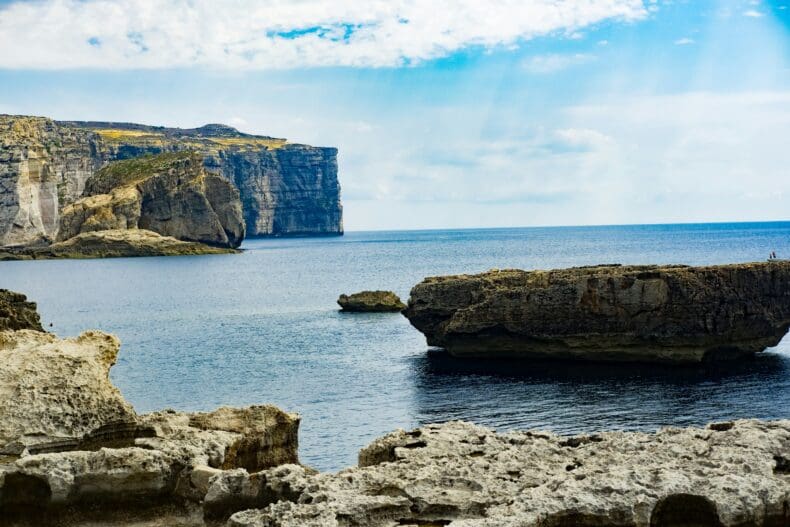
Dwejra Bay on Gozo is one of Malta’s most breathtaking destinations, where dramatic landscapes, fascinating history, and crystal-clear waters come together in perfect harmony. This stunning bay is a paradise for nature lovers, adventure seekers, and anyone who appreciates spectacular coastal scenery. Towering limestone cliffs frame the rugged shoreline, hiding fossils that have been preserved for millions of years. A boat ride through a narrow tunnel in the cliffs reveals hidden wonders, while divers can explore some of the Mediterranean’s most mesmerizing underwater worlds. And from every angle, the sweeping views of the endless sea are nothing short of spectacular.
Dwejra Bay is home to some of Gozo’s most famous landmarks, including the deep blue waters of the Blue Hole, the striking Fungus Rock, and the remains of the legendary Azure Window, once one of Malta’s most photographed natural wonders. Whether you’re a diver eager to explore the bay’s crystal-clear depths, a history enthusiast fascinated by the mysterious Cart Ruts, or simply someone looking to witness an unforgettable sunset from the cliffs, Dwejra Bay is a must-visit.
In this blog, you’ll find everything you need to plan your trip and make the most of this extraordinary destination.


Where is Dwejra Bay in Malta?
Dwejra Bay lies on the rugged and untamed west coast of Gozo, the smaller and quieter sister island of Malta. Just a short ferry ride from Malta’s northern port, Gozo feels like a world away, offering a slower pace, breathtaking landscapes, and an authentic island charm. From the capital, Victoria, it’s only a 10-kilometer drive to Dwejra Bay. Tucked near the picturesque village of San Lawrenz, this spectacular bay is framed by dramatic cliffs and untouched wilderness, making it one of Gozo’s most mesmerizing natural wonders.
The easiest way to get there is by rental car. The roads are well-maintained, and parking is available near the bay, so you won’t have to worry about finding a spot. Driving also gives you the flexibility to explore Gozo at your own pace, stopping at hidden gems along the way.
No car? No problem! Dwejra Bay is also easily accessible by public transport. Local buses conveniently stop at the bay’s parking area, making it an affordable and hassle-free option. For an even smoother experience, the hop-on-hop-off tourist bus is a great alternative. Not only does it take you directly to Dwejra Bay, but it also stops at other must-see sights around Gozo, allowing you to explore multiple highlights in one trip.
Travel tip: Visiting Gozo on a day trip from Malta? To make the most of your time, consider renting a car for ultimate flexibility or hopping on the tourist bus for an effortless way to see the island’s top attractions. Normally, we’re not huge fans of these buses, but on Gozo, they’re actually a fantastic way to hit all the key spots in just one day!

Why is Dwejra Bay the Most Beautiful Place in Gozo?
Dwejra Bay isn’t just another beautiful destination—it’s the crown jewel of Gozo. Imagine towering cliffs rising from the sea, crystal-clear waters shimmering under the sun, and dramatic rock formations like Fungus Rock and Crocodile Rock, straight out of a nature documentary. There’s a wild, untamed energy here, as if you’ve reached the edge of the world—a place where nature still reigns supreme, raw and breathtakingly untouched.
But Dwejra Bay is more than just a stunning view. Diving into the famous Blue Hole or exploring the remains of the once-iconic Azure Window feels like stepping into another realm, where hidden caves and thriving marine life create an underwater wonderland. Not a diver? No problem. Take a boat ride through the narrow tunnel of the Inland Sea, or wander along the rugged cliffs, soaking in the beauty from above. Whether you’re looking for adventure, serenity, or a deep connection with nature, Dwejra Bay delivers it all—both above and below the surface.
Then comes the grand finale: sunset. As the day draws to a close, both locals and visitors gather along the cliffs to witness the magic unfold. The rocky landscape glows in golden light, the sea reflects a peaceful, almost hypnotic stillness, and the sky turns into a masterpiece of fiery pinks and oranges. It feels as if Dwejra Bay has been saving its most breathtaking moment for the very end, leaving you utterly captivated. That’s what makes this place an absolute must-visit on Gozo—and arguably one of the most awe-inspiring spots in all of Malta.
Things to Do in Dwerja Bay
#1 Blue Hole
The Blue Hole is one of Gozo’s most breathtaking dive sites—a true natural masterpiece sculpted by centuries of wind and waves. This striking formation looks like a giant, crystal-clear pool carved into the rocky coastline, seamlessly merging with the open sea. Plunging to a depth of around sixteen meters, it connects to the Mediterranean through a spectacular underwater archway. Thanks to its incredible water clarity, divers and snorkelers can marvel at the dramatic rock formations and vibrant marine life in stunning detail. Keep an eye out for octopuses, moray eels, and schools of brilliantly colored fish weaving through the crevices.
But the Blue Hole is far more than just a picturesque swimming spot. Its rocky entrance and sometimes unpredictable waters make it a challenge for beginners, yet for experienced divers, it’s nothing short of extraordinary. The surreal underwater landscape, the play of light through the arch, and the thrilling transition from the sheltered pool to the vast open sea create an experience that feels almost otherworldly—an adventure you’ll never forget.

#2 Inland Sea
The Inland Sea is a hidden gem—a tranquil lagoon seamlessly connected to the Mediterranean by a narrow, natural tunnel carved through the cliffs. At first glance, it looks like a peaceful lake, but the moment you pass through the tunnel, the sheltered waters give way to the vastness of the open sea. It’s believed that this stunning natural wonder was formed by the collapse of an ancient sea cave, leaving behind a breathtaking passage between land and ocean.
Local fishermen offer boat tours that take you not only through the tunnel but also along the dramatic cliffs and sea caves of Dwejra, showcasing some of Gozo’s most spectacular coastal scenery.
The lagoon itself is an inviting spot, with shallow, calm waters perfect for swimming or snorkeling. We even saw someone daring enough to swim all the way through the tunnel and back! On sunny days, the water glows in mesmerizing shades of blue and green, making the experience even more magical. Along the shore, you’ll find rustic fisherman’s huts and a handful of local businesses offering boat trips. Just beyond the lagoon, a quiet pebble beach awaits. While there aren’t any facilities directly on the beach, a short stroll to the main parking area leads to restrooms and outdoor showers—ideal for rinsing off after a refreshing dip in this one-of-a-kind setting.

#3 Fungus Rock
Fungus Rock is a towering 60-meter-high limestone islet that rises strikingly from the sea at the entrance of Dwejra Bay. In Maltese, it is known as Il-Ġebla tal-Ġeneral—the General’s Rock. However, the name has nothing to do with its shape or appearance. Instead, it comes from a peculiar plant that once grew here: the Maltese Fungus.
In the 16th century, a general of the Knights of the Order of Malta discovered this rare plant and believed it possessed powerful medicinal properties. Despite its misleading name, it wasn’t actually a fungus but a type of parasitic herb. The Knights were convinced of its healing abilities and used it to treat wounds and infections. They considered it so valuable that they declared Fungus Rock strictly off-limits, enforcing harsh punishments on anyone caught harvesting the plant. To make collection easier, they even built a primitive cable system to transport it. Whenever royalty or esteemed guests visited, the Knights would present them with this rare herb as a prestigious gift.
Today, Fungus Rock is a protected nature reserve, preserving both its dramatic landscape and its fascinating history. While the rock itself is off-limits to visitors, the surrounding coastline offers stunning views. From the cliffs of Dwejra, you can take in the sheer size of this natural fortress while marveling at the rugged beauty of the Maltese coast. At sunset, the limestone takes on a golden glow, transforming the scene into a breathtaking spectacle.
And what about the legendary plant so fiercely protected by the Knights? Modern science later confirmed that it had no medicinal benefits at all.

#4 The Former Azure Window
The Azure Window was once Gozo’s most iconic landmark—a towering natural arch that rose majestically above the sea. For centuries, it braved relentless winds, crashing waves, and fierce storms. But in March 2017, one final storm proved too powerful, bringing the arch down in a dramatic collapse. What was once a picture-perfect wonder is now a mesmerizing underwater world.
Today, the remains of the Azure Window rest on the seabed, forming an extraordinary dive site. Divers can navigate through a surreal landscape of fallen rock formations, now teeming with marine life. Vibrant coral has taken root, and schools of fish weave through the ruins, turning the lost landmark into an underwater oasis.
Above the surface, the scenery is just as breathtaking. Towering cliffs, the rhythmic crash of waves, and an endless horizon create an awe-inspiring atmosphere. The massive rock pillar that once anchored the arch still stands, a striking reminder of what once was. It sits beside the famous Blue Hole, another natural wonder that continues to draw visitors. Even without its legendary arch, Dwejra Bay has lost none of its magic—its wild, untamed beauty remains as captivating as ever.
#5 Spotting Sanddollars
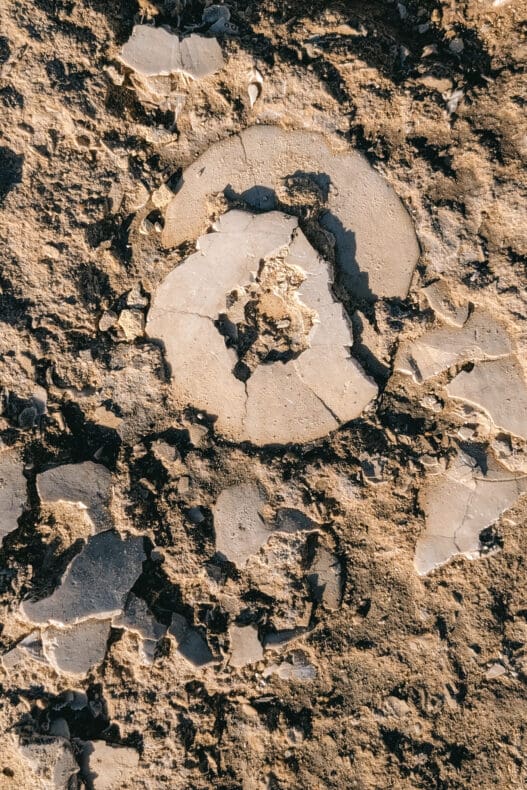
Dwejra Bay—like many coastal areas in Malta and Gozo—is a true fossil hunter’s paradise, thanks to its golden-yellow Globigerina limestone. This soft rock was formed over 25 million years ago, during the Oligocene and Miocene periods, when the islands were still submerged beneath the sea. Embedded within it are the remnants of sand dollars—flat sea urchins that once thrived in these waters but are now long extinct.
Sand dollars are round, flattened fossils marked by a distinctive star-shaped pattern. If you look closely, you’ll spot thousands of them scattered across the ground. Most, however, have been worn down by erosion, the fossilization process, or simply centuries of being walked over. The real challenge—and the thrill—lies in finding one that is still perfectly intact.
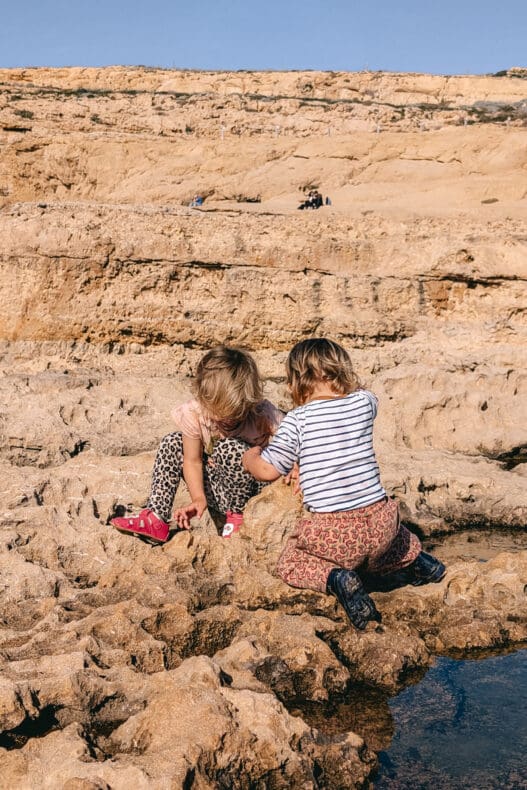
Beyond sand dollars, the limestone hides even more prehistoric treasures, including fossilized sea snails, bivalves, and even the occasional shark tooth. For amateur paleontologists, this is a goldmine. The experience feels like a real-life treasure hunt, especially for those exploring with children. And the excitement of uncovering a beautifully preserved fossil? That’s hard to beat. So, put on sturdy shoes, scan the ground carefully, and you might just take home a piece of history that dates back millions of years.

#6 St. Anne’s Chapel
Nestled in the rugged landscape of Dwejra Bay lies a hidden gem: St. Anne’s Chapel. Though modest in size, this charming little church is impossible to overlook, perched on the dramatic Dwejra cliffs near the parking area. The current structure dates back to 1963, but its history stretches back centuries. The original chapel served as a refuge for fishermen and sailors seeking shelter from the treacherous sea.
Both inside and out, St. Anne’s Chapel remains small and unadorned. There are no elaborate decorations or grand paintings—just a simple, understated design that harmonizes beautifully with the raw, natural surroundings of Dwejra. What truly sets this chapel apart, however, is the breathtaking view. From its vantage point, you can gaze out over the rugged coastline and the endless expanse of the sea, with a panoramic vista that becomes even more mesmerizing at sunset.


#7 Dwejra Cliffs
The Dwejra Cliffs are more than just a natural landmark—they are a breathtaking spectacle. These towering limestone walls rise dramatically from the Mediterranean, their rugged edges standing tall against the endless blue horizon. Shaped over millions of years by the relentless forces of nature, they are a striking reminder of the earth’s ever-changing beauty. Strolling along the edge of these mighty formations, you can’t help but feel a sense of awe at their sheer scale and power.
For bird enthusiasts, the cliffs are a haven. Countless seabirds nest within the rocky crevices, their calls echoing against the stone as they glide effortlessly through the sea breeze. Take a moment to watch them soar above the waves or disappear into the cliffs. And whatever you do, don’t forget your camera—the panoramic views from the Dwejra Cliffs are nothing short of spectacular, offering a perfect snapshot of nature at its most dramatic.

#8 Crocodile Rock
Crocodile Rock might just be Gozo’s most fascinating rock formation. Why? Because it looks like a giant crocodile rising from the sea! Sculpted by centuries of wind and waves, this natural masterpiece is one of the most striking and unexpected sights in Dwejra Bay. But Crocodile Rock isn’t just a spectacle above the water—it’s just as captivating beneath the surface.
For divers, Crocodile Rock is an underwater playground. A shallow plateau stretches from the shore toward the formation before suddenly dropping into a dramatic vertical wall that plunges over forty meters into the depths. This sheer drop-off makes for an exhilarating dive, and for technical divers, it’s a true paradise, with depths exceeding ninety meters.
The seabed surrounding the rock is strewn with massive boulders, forming a breathtaking underwater landscape. With crystal-clear waters and an abundance of marine life, divers can encounter everything from colorful fish darting through the rocks to delicate coral formations clinging to the reef. Whether you’re admiring it from the shore or exploring its hidden depths, Crocodile Rock is a natural wonder that never fails to impress.
#9 Dwejra Cart Ruts
The Dwejra Cart Ruts are an age-old enigma etched into stone. These parallel grooves in the limestone have baffled archaeologists for decades. Were they ancient transport routes? A primitive irrigation system? No one knows for certain, and that mystery only makes them more intriguing.
High on the cliffs overlooking Dwejra Bay, the Cart Ruts remain remarkably well-preserved, offering a rare window into a time when Gozo was a very different place. As you trace their path, it’s impossible not to wonder who made these marks—and why. Their exact location is pinpointed on Google Maps, so you can easily seek out and experience this fascinating relic of the past for yourself.

#10 Sunset at Dwejra Bay
If there’s a perfect time to experience Dwejra Bay, it’s at sunset. This is when nature puts on its most spectacular show. As the sun drifts toward the horizon, it bathes the landscape in a golden glow—the towering cliffs, Fungus Rock, and even the sea itself seem to shimmer with warmth and light.
When we visited, cars lined up along the water’s edge, their passengers waiting in quiet anticipation to watch the sun disappear into the sea. Others gathered on the cliffs or along the bay, captivated by the breathtaking view. It’s a moment of pure tranquility and wonder. Bring a blanket, a drink, and perhaps a light sweater—the air cools quickly once the sun has set.


