On the drive from Swakopmund to Sossusvlei you cut straight through Namib National Park, the northern part of the enormous Namib-Naukluft National Park. Most travellers only see it through the car window. A pity, because if you set aside a day or two here, you can camp in some of the most deserted spots in Namibia.
We drove through in January on our way to Sossusvlei. Despite the heat we climbed Blutkoppe in the afternoon, and at Ganab we watched zebras, ostriches and springboks cross the plain. In this blog you’ll read what there is to see, where to camp and what to arrange beforehand.



Prepare your visit to Namib National Park: get a permit
As we said, the park lies between Swakopmund and Sossusvlei. Most travellers have both on their Namibia itinerary anyway, so adding the park to your trip is no trouble at all.
A few through roads cross the park, such as the C14 and the C28. You can drive those without any paperwork. Want to leave the main roads for the campsites, Blutkoppe or the Tinkas plain? Then you need a park permit. There is no gate where you can buy one and hardly anyone checks inside the park, but we wouldn’t like to be found at a picnic or camping spot without one ourselves.
You buy your permit in advance at an office of the Ministry of Environment, Forestry and Tourism (MEFT), for example in Swakopmund or Windhoek, or in Sesriem near Sossusvlei. If you are planning to camp, ask straight away how camping in the park is arranged. Our permit came with a map of the park and an explanation of the Welwitschia Drive, which I’ll tell you more about further on. Very handy!
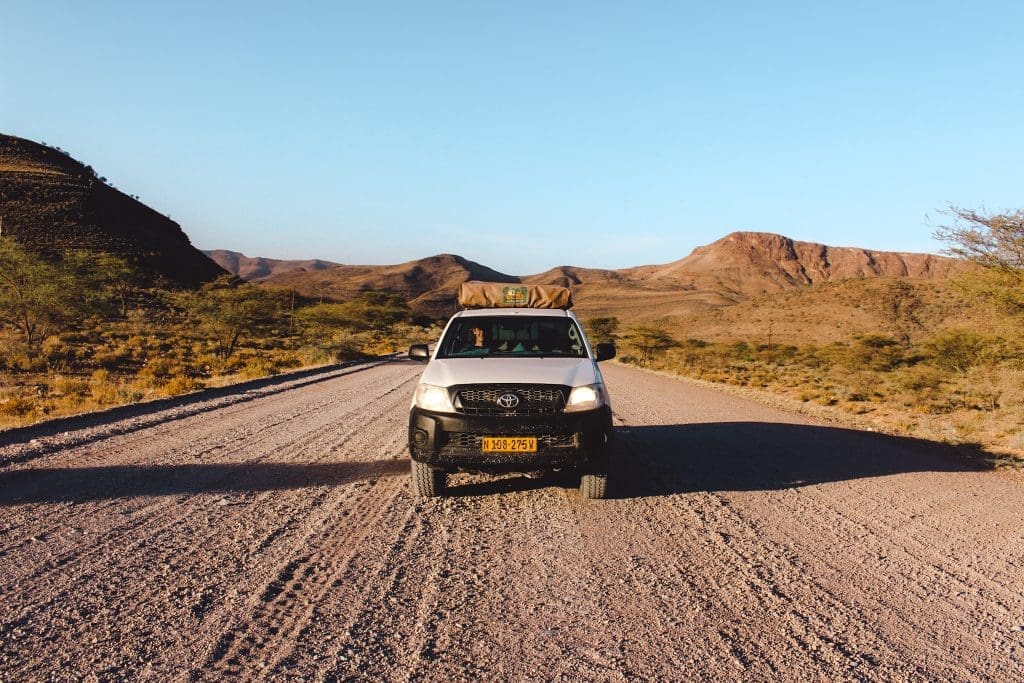
You don’t need a 4×4 for most roads. Certainly not for the main roads, and not for most side roads either. Only a few tracks around Groot Tinkas, where you can also camp, and Gemsbokwater are best driven in a 4WD. A decent 2WD will probably get you there too. You just don’t want to risk getting stuck, because there is next to no other traffic.
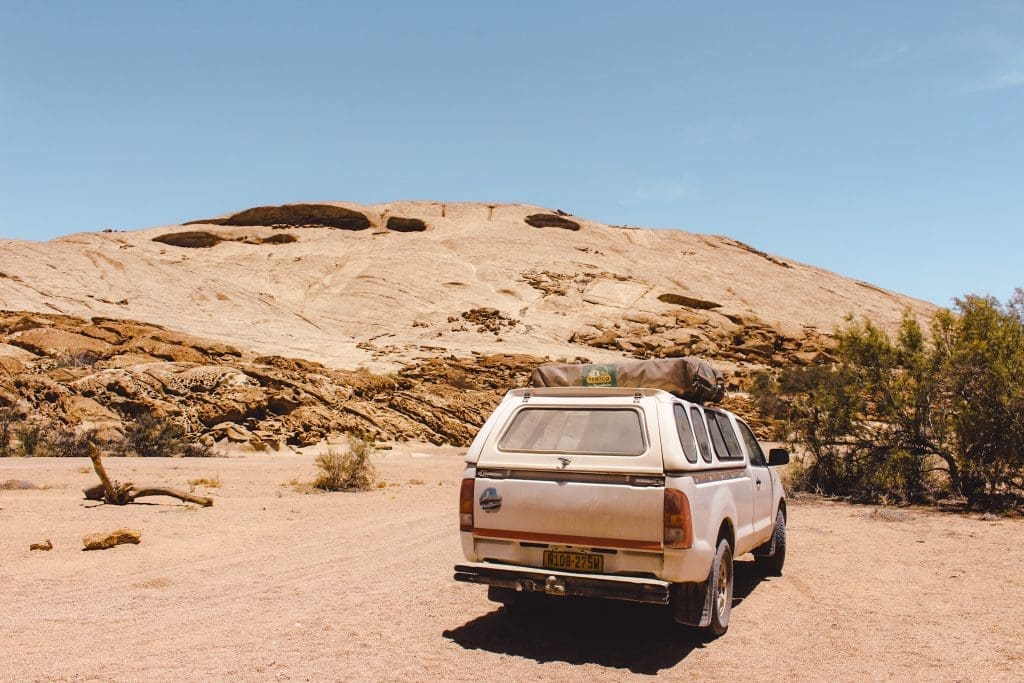
For the campsites in this park, a car with a rooftop tent is ideal: your camp is set up in minutes and you sleep above the sand. Our tip: compare 4x4s on Discover Cars, or book a complete road trip with Namibia Nomads: a 4×4 with rooftop tent, your route, the overnight spots and a roadbook.
→ Compare rental cars in Namibia on Discover Cars
→ Discover the 4×4 road trip with rooftop tent by Namibia Nomads
There are no facilities in the park. So make sure you have a full tank, enough food and above all plenty of water and other supplies.


Highlights of Namib National Park
This rugged desert landscape is home to Namibia’s most remarkable plants, to wildlife such as mountain zebras, oryx, ostriches and springboks, and to deep canyons. For us, the real highlight is camping at one of the simple campsites, but more on that further down.
Tip: open the map on your phone with the square at the top right, while signed in to Google. You can then find it again in the Google Maps app under You > Maps.
The Welwitschia Drive
This loop of about 4 hours is close to Swakopmund, which makes it a popular day trip from the coastal town. Along the drive you see an impressive ‘moonscape’ and get to know Namibia’s two most unusual plants: lichens and the Welwitschia mirabilis. In our Welwitschia Drive blog we tell you everything about the route, the rare plants and their surroundings, and where to find the best camping spots along the way. But there is more to see in the park, so don’t limit your visit to the Welwitschia Drive.


Blutkoppe (Bloedkopje)
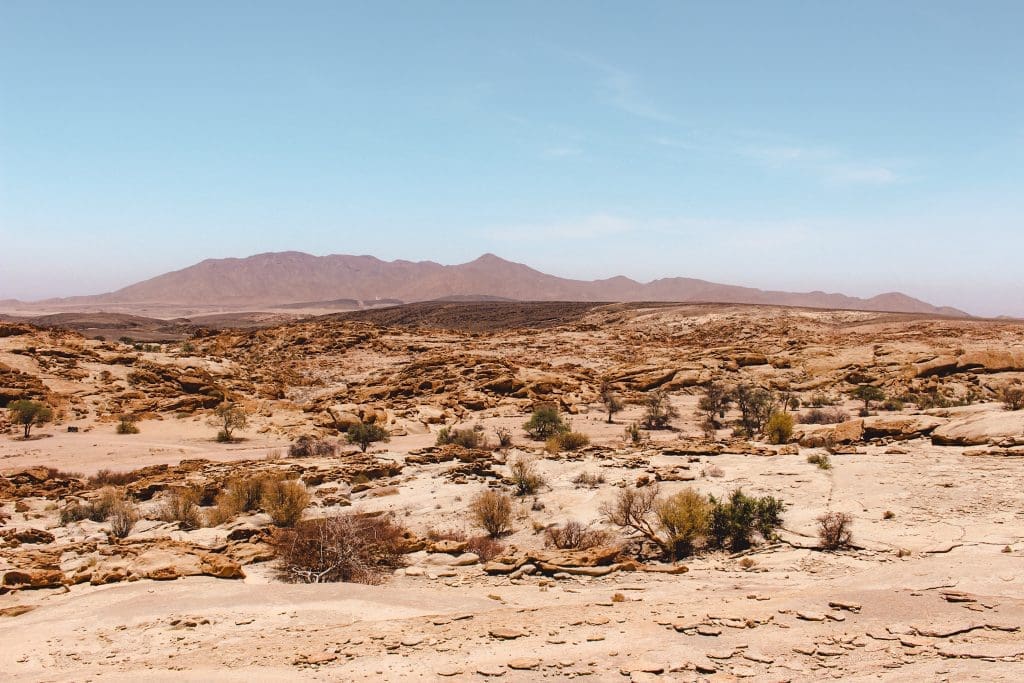
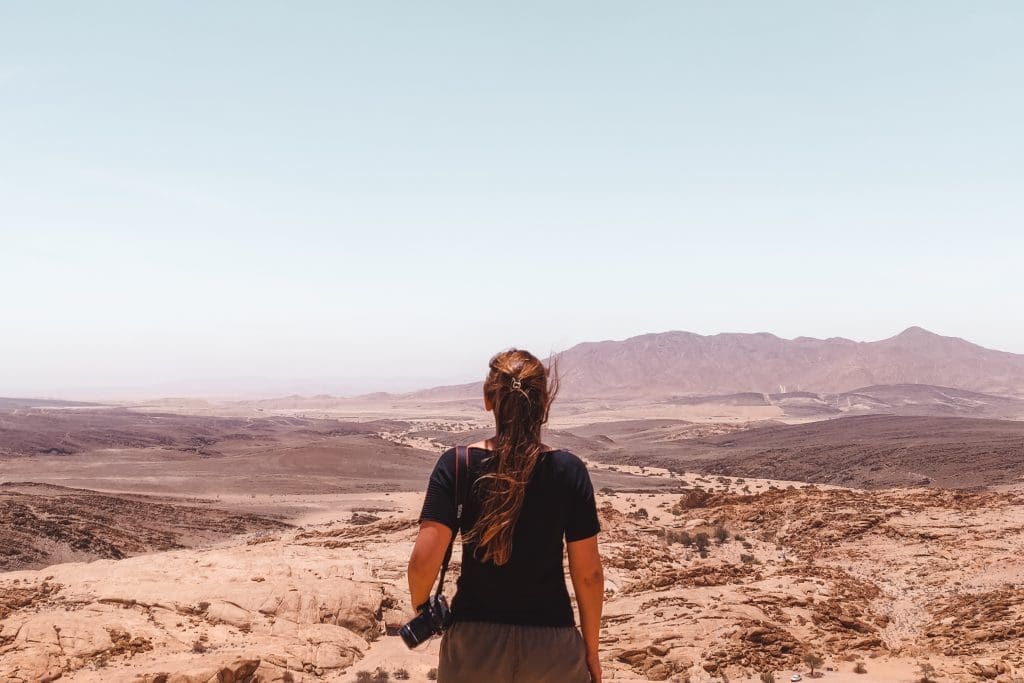
Blutkoppe (also Bloedkopje or Bloedkoppie) owes its name to the red glow the mountain takes on at sunset. The granite hill is a landmark you can’t miss on the vast desert plain in the north of the park. Despite the heat, the summit lured us up. It isn’t far to the top and the climb is easy, but the afternoon heat makes it pretty tough going. The view is absolutely worth it, though!
Hiking at Groot Tinkas
If you have a 4WD, or are willing to brave the tracks in your 2WD, you can reach the Tinkas plain. Signs point the way to the plain and to the Nature Walk. The trail follows the dry riverbed of the Tinkas River and passes the graves of two German soldiers and the ruins of their little house. Can you imagine what it must have been like to live out here? The Nature Walk takes about 4 to 5 hours and is marked with gemsbok signs on the rocks. Other hikes are possible too, either off-road through the rough landscape or along the clearly signposted tracks. It can get very hot here, so bring lots of water. The board at the start of the Nature Walk recommends at least 2 litres per person.

The Kuiseb Canyon
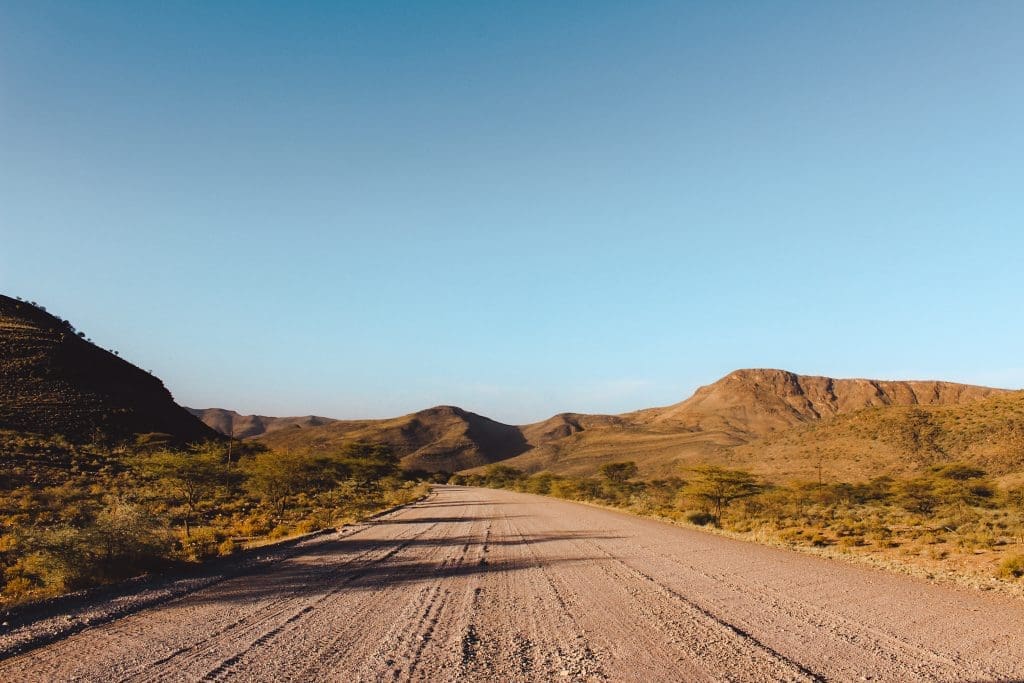
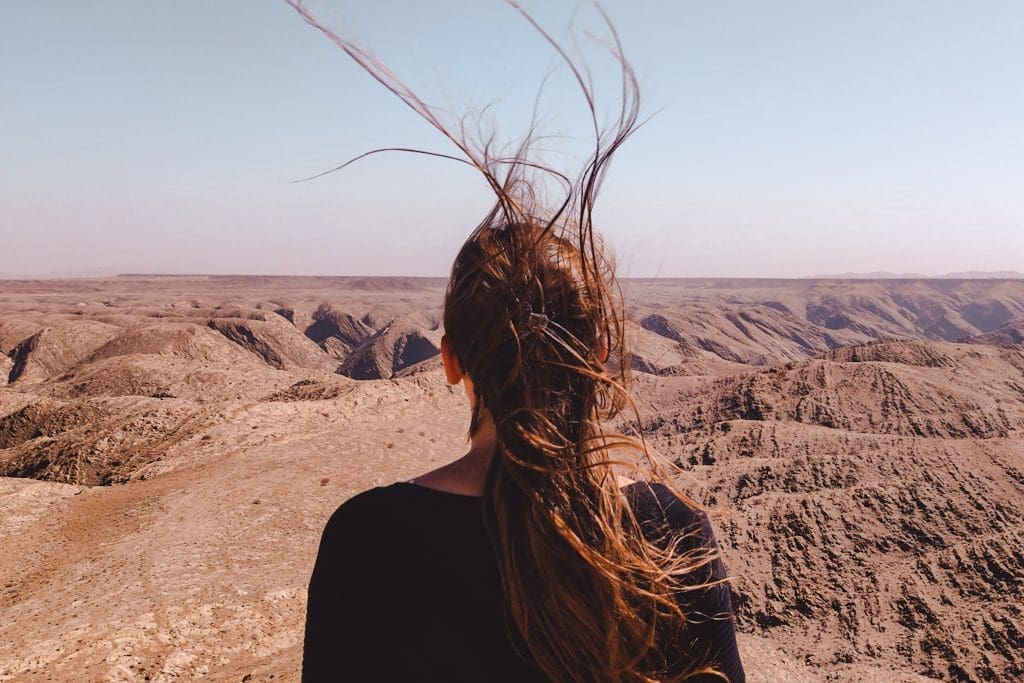
In the east of the park lies the Kuiseb Canyon, where the riverbed of the Kuiseb is dry for most of the year. Drive to the viewpoint we have marked on our map. You’ll find a picnic spot with a fantastic view there, and a lookout that gives you the best angle on the canyon. The C14 towards Sesriem and Sossusvlei winds through the impressive rocky landscape around the canyon. A spectacular road to drive.


Camping in Namib National Park
You can of course just drive through the park and tick off the sights, but you only really feel this wild desert landscape when you turn it into a camping trip. With a permit you may spend the night at the official campsites. Staying several nights? Make sure your permit covers all of those days.
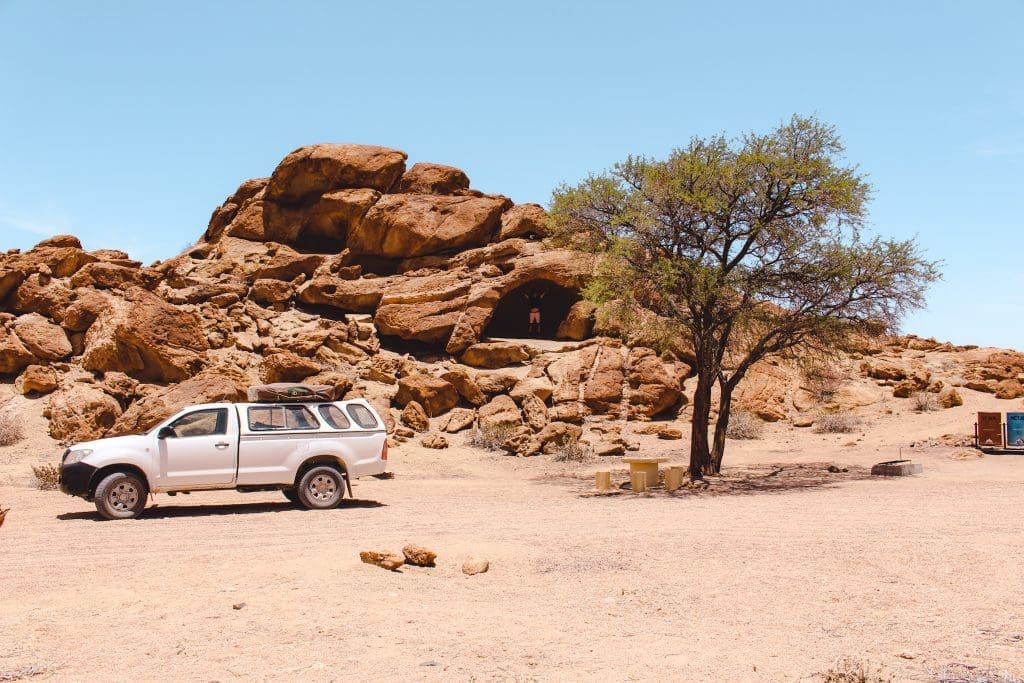
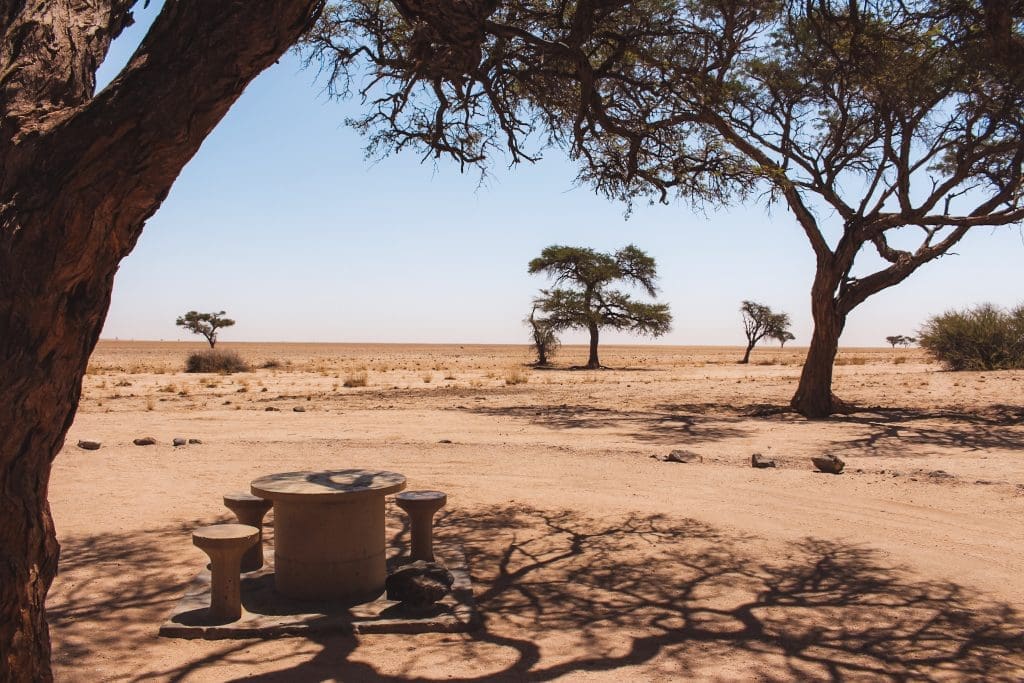
Camping in Namib National Park is very basic. There is no campground with facilities and no reception: you drive to one of the camping spots and set up camp. Bear in mind that you may only camp at the official sites. They are marked on our map above, and on the map you get with your park permit. Nearly all of them have rubbish bins, a stone seat and a braai spot. Some have basic ‘drop toilets’ and now and then a sheltered corner where you could wash by tipping a bucket over yourself. The sites are spread across the park, so each one has a totally different view.
The campsites are at Blutkoppe, Tinkas, Ganab, Vogelfederberg, Homeb, Mirabib, Kriess-se-Rus and, along the Welwitschia Drive, in the Swakop River Valley. Some maps also show a campsite at the Kuiseb Bridge, but when we were there in January it no longer existed. These are our favourite places to camp in the park:
#1 Blutkoppe
Blutkoppe has the most campsites, scattered around the mountain. The ones you pass first coming from the C28 are the easiest to reach. The track to the sites north and east of the mountain is a little trickier, because it is easy to get stuck in the sand. A 2WD can still manage it fine. Would you rather not take any risks in this empty landscape without other traffic? Then go for the first sites.
#2 Tinkas
A little further on are the campsites at Tinkas, again with several places to pitch your (rooftop) tent. This may well be one of the most popular areas, because it includes the rock arch campsite. It is also an ideal base for hikes in the area, such as the Nature Walk.
#3 Swakop River Valley
You come across the Swakop River Valley campsites on your way round the Welwitschia Drive. The river itself doesn’t amount to much outside the rainy season; most of the time it is a dry riverbed. Beside it you’ll find picnic areas and camping spots for anyone who fancies spending the night.
#4 Ganab
We also recommend the campsites at Ganab. There are only three, so this is where you truly feel the stillness of the desert. Each has a big tree for shade, with a seat and a braai spot underneath. They sit in the middle of a wide-open landscape where we spotted zebras, ostriches and springboks too. A lovely spot.
#5 Homeb
The Homeb campsite has a great location as well. Perhaps the best of all. Homeb lies in the riverbed of the Kuiseb. Because the river flows here in the rainy season, all sorts of trees grow along it like a green oasis, giving shelter from the sun. The river also marks the sharp boundary between the sand desert to the south and the rocky desert of the Namib. So from here you can already see the first sand dunes, the most impressive of which are waiting for you at Sossusvlei. It is a wonderful place to spend a night or more, with the dunes and some fantastic hikes right on your doorstep.
Ready for a real bed and a shower after a few nights under the stars? On the way to Sossusvlei you pass some very special lodges.
→ Discover the 12 most beautiful lodges near Sossusvlei and NamibRand
Tips for your visit to Namib National Park
#1 Prepare for the heat in summer. We visited the park in the hot month of January, when afternoons are hotter than hot. Almost too hot to get out of our air-conditioned car! So don’t plan a hike for the afternoon and bring enough water.
#2 Buy your park permit in advance. You need a permit to leave the main roads in the park, and you can’t buy one in the park itself. So sort this out beforehand.
#3 Fill up your tank. There is no petrol station in the park. You can fill up in Swakopmund, and after that not until Solitaire, the petrol station with a campsite and hotel attached.
#4 Bring everything with you. It’s not just petrol stations that are missing: there isn’t a shop or village anywhere in the park either. So bring all your water and supplies yourself.
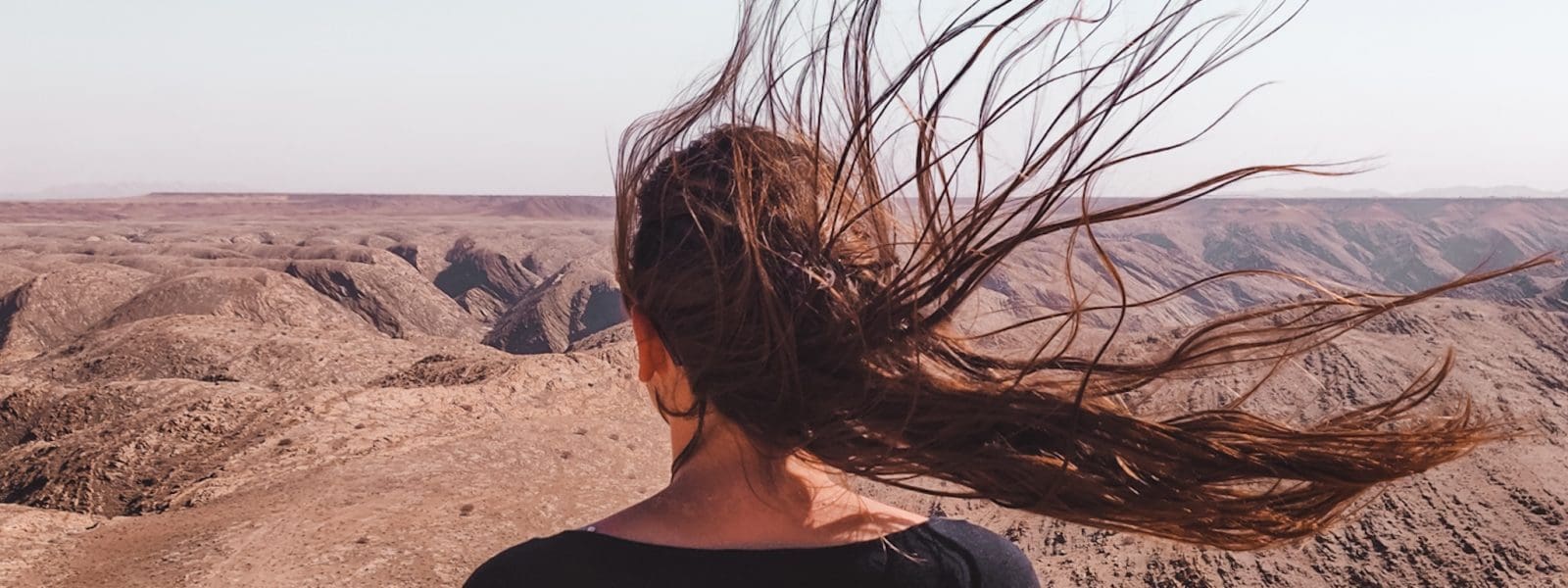
#5 Be prepared for wind. Late in the afternoon and at the higher viewpoints in particular, it can get seriously windy. Not the moment for a picnic at one of the high picnic spots.
#6 Read up beforehand. Are you going to see the famous Welwitschia in the west of the park? Then read up on it first, so you know why the plant is so special and why you need to be so careful around it.
#7 Don’t underestimate the distances. You would think distances within a single park are easy to manage, but don’t be fooled. It is about a 3-hour drive from the Welwitschia Drive near Swakopmund to the Homeb campsite in the south, for example. And Blutkoppe and the Kuiseb Pass look close together, but you should allow at least 1.5 hours for that stretch too.
#8 Want more hiking? Head for the Naukluft Mountains. If the Nature Walk at Tinkas has left you wanting more, the mountainous part of Namib-Naukluft National Park, further to the south-east, is your next stop. Two day hikes set off around Naukluft Camp, run by park operator NWR: the Olive Trail of roughly 10 kilometres and the longer Waterkloof Trail of roughly 17 kilometres. The multi-day Naukluft Hiking Trail, which takes four or eight days, has to be booked ahead with NWR. You can only walk it between March and October, in a group of three to twelve people, and every hiker needs a medical certificate.
Enjoy our travel tips? Add The Orange Backpack as a preferred source on Google and you'll see us more often in your search results.
More tips for your trip to Sossusvlei
Everything you need to book your trip, in one place. From desert lodges to a 4x4 with a rooftop tent.
 Our pickLodges near Sossusvlei: sleep in the desert, close to the dunes
 Namibia is made for a self-drive trip. Staying in lodges? Compare rental cars with Discover Cars. Rather camp? Book a road trip with a 4x4 and rooftop tent from Namibia Nomads, route and campsites sorted.
 Prefer everything arranged? Browse Namibia tours on TourRadar.
 No flight yet? Compare flights to Windhoek.
 Discover all our blogs about Namibia