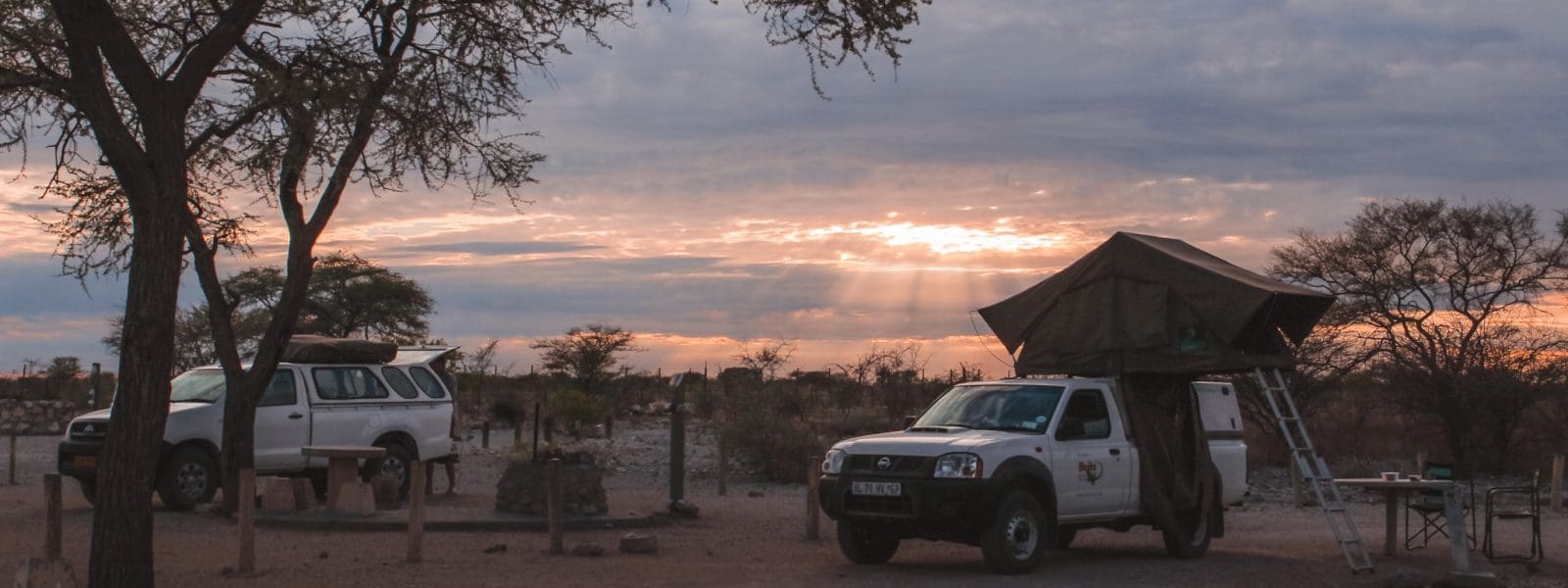
We spent three nights in our rooftop tent in the middle of Etosha National Park. Evenings meant a cold drink by the waterhole next to the campsite, and in the mornings we were the first car out of the gate, straight into the cool early hours. For us, camping in Etosha is the best way to experience the park, and a lot cheaper than a room.
We camped at Namutoni, Halali and Okaukuejo in January. In this blog we explain how camping in Etosha works: where to book, what to expect at the campsites and which camp to pick if you can’t stay at all of them.
→ Read our 25 practical tips for Etosha
Why camp inside Etosha National Park?
Inside Etosha you can only stay at the park’s own camps, which have campsites as well as rooms and chalets. The alternative is a lodge or campsite outside the gates, but then every day starts and ends with a drive to the entrance. You are only allowed into the park between sunrise and sunset.
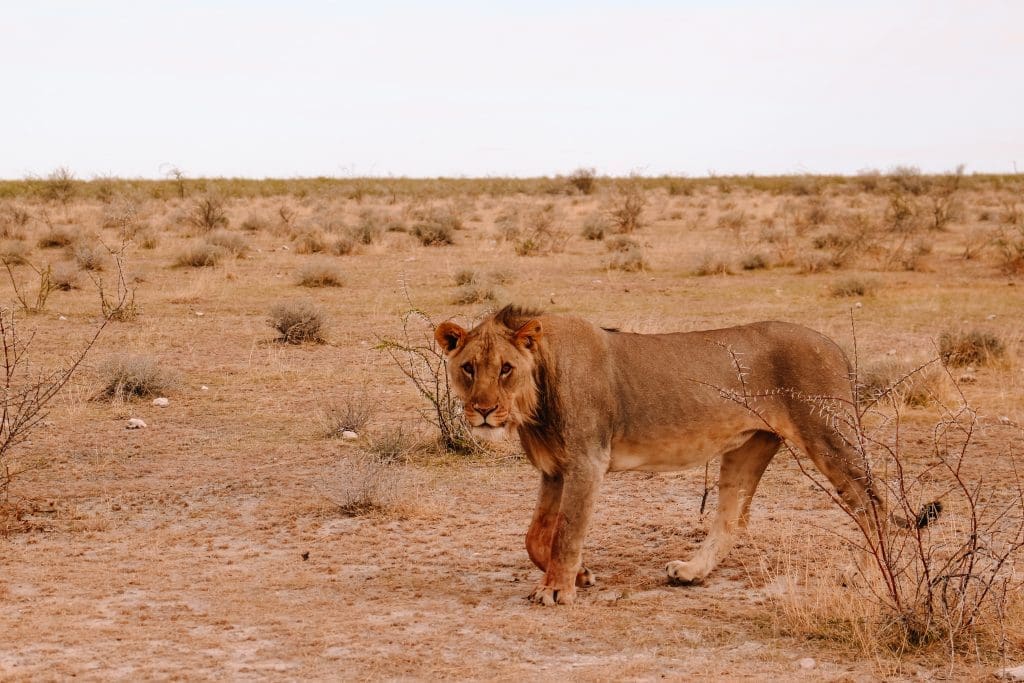
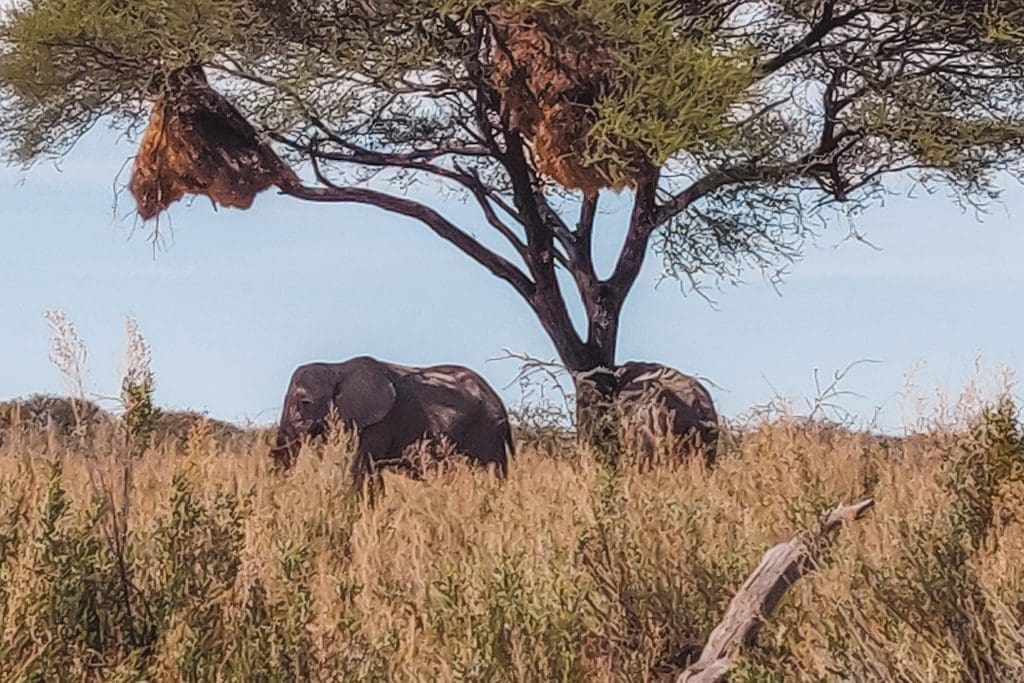
Sleep inside the park and you are already where you want to be. The camp gates open at sunrise and close again at sunset, so you can be out on the roads at the best times of day: early morning and late afternoon. And once the gate is shut, the safari simply carries on. Each of the main camps has a waterhole next to it, with benches where you can sit and wait for whatever comes to drink. For us that meant hyenas, rhinos and a whole herd of elephants.
Then there is the budget. A room at the park camps is pricey, while a camping pitch costs a lot less. And with a rooftop tent on your rental car, your bed travels with you.

How to book camping in Etosha
All camps inside the park are run by Namibia Wildlife Resorts (NWR), the state-owned organisation that manages the accommodation in Namibia’s national parks. So you book your pitch with NWR itself, through the NWR website or by email at reservations@nwr.com.na.
When should you book? In high season, the dry Namibian winter from roughly May to October, the campsites are popular and fill up. Lock in your pitches as soon as your route is fixed, ideally months ahead. Plan the rest of your trip around Etosha, not the other way round.
We travelled in low season, in the heat of January, and less than a third of the pitches were taken. Lucky for us, because when we checked in at Namutoni it turned out we had miscounted and booked all three campsites a day too late. Reception moved our booking forward without any fuss and phoned the other two camps. Don’t count on that in high season.
Campsites full on your dates, or fancy a real bed after a few nights in the tent? Have a look at the lodges just outside the gates.
→ Discover the 15 best lodges in Etosha
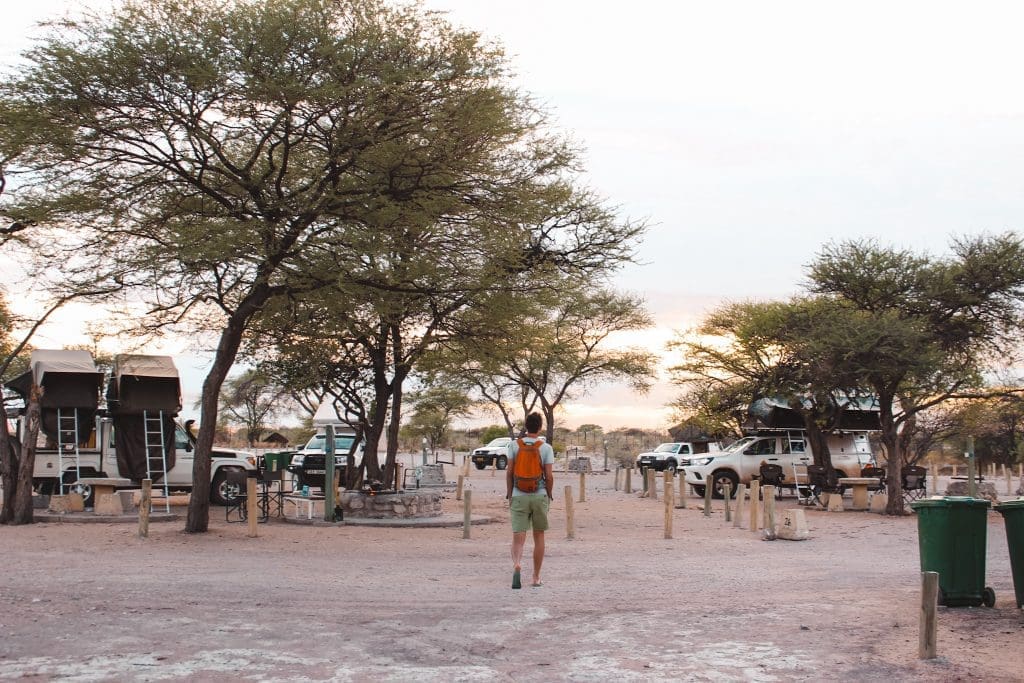
A rental car with a rooftop tent for Etosha
Camping in Etosha starts with your car. We drove through Namibia in a 4×4 with a rooftop tent, a cool box and a gas bottle, which gave us everything we needed inside the park. The tent folds out in a few minutes and you sleep well above the ground, a comforting thought in a park full of wildlife. We never actually used the four-wheel drive in Etosha itself, by the way.
With Namibia Nomads you book a complete road trip: a fully equipped 4×4 with rooftop tent, your route, the overnight spots and a roadbook. You do the driving, they arrange the rest. Bringing your own tent, or mixing camping with lodges? Then compare rental cars on Discover Cars.
→ Discover the 4×4 road trip with rooftop tent by Namibia Nomads
→ Compare rental cars in Namibia on Discover Cars

What to expect at the Etosha campsites
The three main camps are much alike. Each has a petrol station (prices were no higher than outside the park when we filled up), a restaurant, a small shop and a swimming pool to sit out the afternoon heat. The camping pitches are spacious and come with a braai spot, a power point with a lamp, a picnic table and a (drinking) water tap on or near your pitch. The toilet blocks were clean everywhere we stayed.
The shops mainly sell drinks and souvenirs. If you want to cook, stock up before you drive into Etosha, or eat at the restaurants. We did both: lunch at the restaurant, dinner on our gas bottle.
Do watch out with meat, eggs and other animal products. To keep animal diseases inside the park, you often can’t take them out again. We had to leave a box of eggs behind when we left the park. The rules change regularly, so check online or with your car rental company just before your trip.
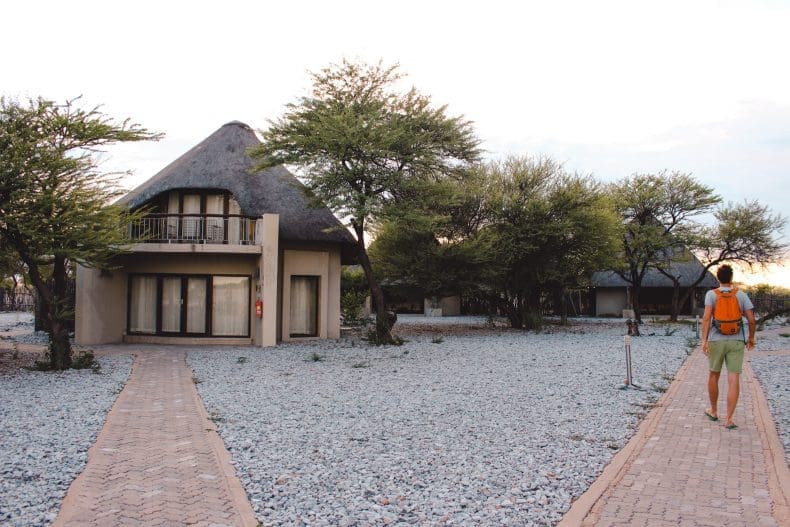
Which campsite to choose in Etosha?
You can camp in four places inside the park: Namutoni, Halali, Okaukuejo and the smaller Olifantsrus in the west. The first three sit in a row from east to west, each an easy day’s drive from the next. We spent one night at each and crossed the park in four days that way.
Short on time and need to choose? Go for Okaukuejo, because of its waterhole. With two nights we would pair Okaukuejo with Halali or Namutoni, so you see a different part of the park as well.
#1 Namutoni: grass under your rooftop tent next to the old fort
Namutoni is the easternmost camp, just inside the Von Lindequist Gate. This is where we entered the park, and we sorted out our park permit at reception straight away. The camp is built around a white German fort, but what stuck with us is that it was the only campsite with grass on the pitches. After all those dusty campsites across Namibia, that was very welcome.
The Namutoni waterhole stayed empty the evening we were there. We saw most of our wildlife on the road instead: on a loop north of the camp we found giraffes, zebras, ostriches and even flamingos.
#2 Halali: in the middle of the park, close to the salt pan
Halali lies roughly halfway between Namutoni and Okaukuejo, which makes it a logical second stop. Plenty of waterholes are a short drive away, and so is the spot where you are allowed out of your car to walk onto the Etosha salt pan. Go at the end of the afternoon, when the light is at its best.
At the camp’s waterhole we watched hyenas around sunset. Bring mosquito repellent though, because the place was swarming with mosquitoes that evening.

#3 Okaukuejo: the best waterhole in Etosha
Main camp Okaukuejo is a short drive from the southern Andersson Gate. It was one of our favourite nights in all of Namibia. Not because the campsite was nicer than Namutoni or Halali, but because of the waterhole next to the camp.
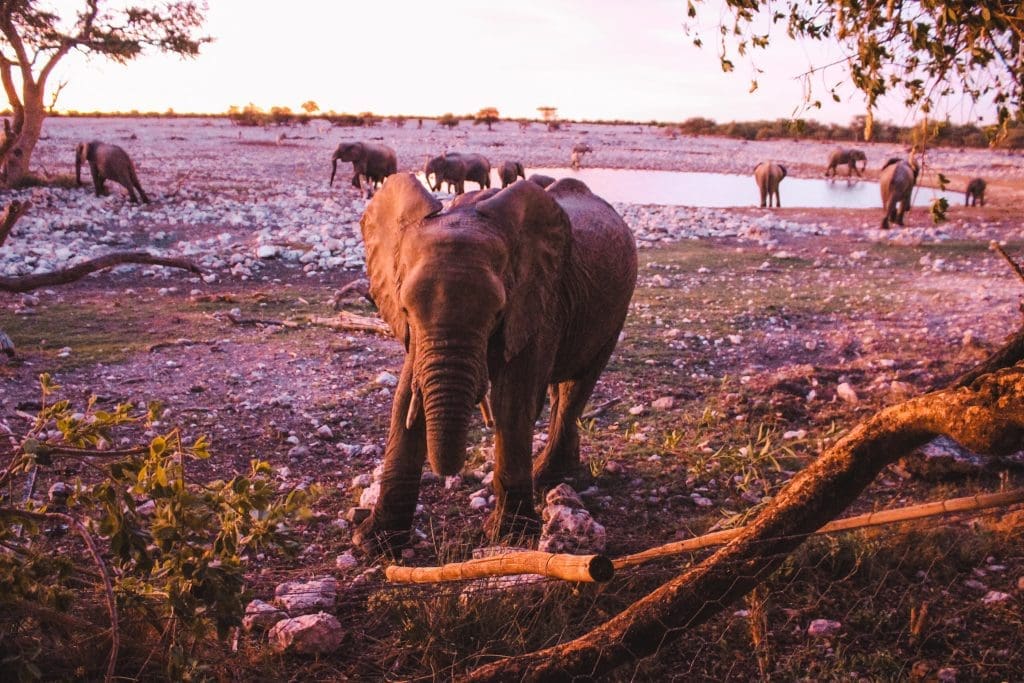
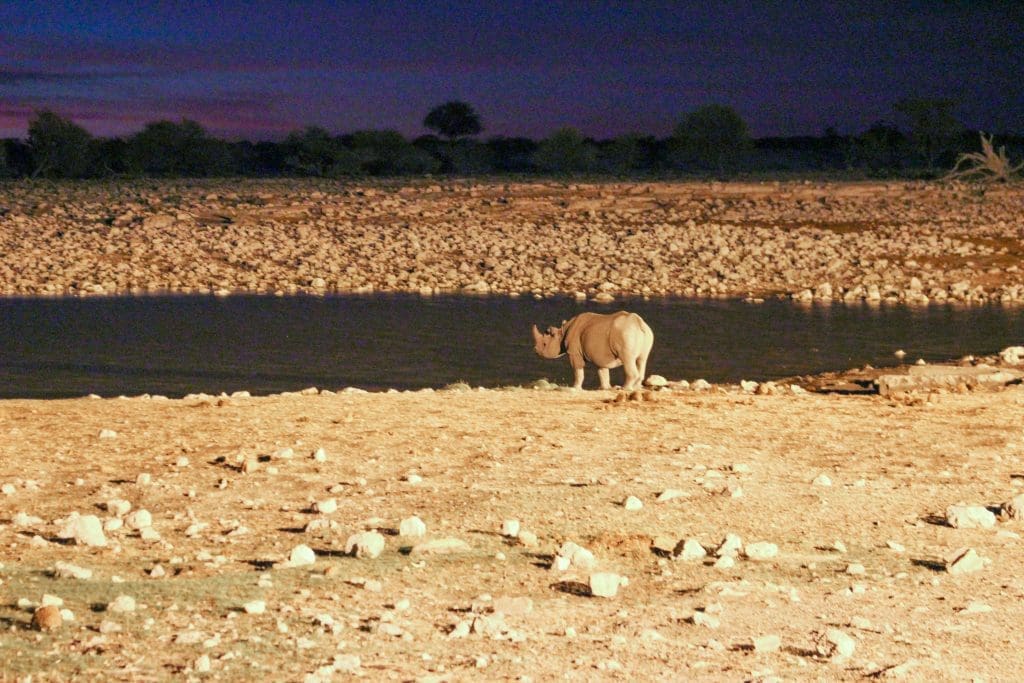
We had heard it was popular with wildlife, but two rhinos and a large herd of elephants with calves in a single evening was more than we had dared to hope for. The next morning giraffes stood drinking with their legs spread wide among the zebras. For spotting game, this was by far the best place of our whole safari.

#4 Olifantsrus: the quiet campsite in the west
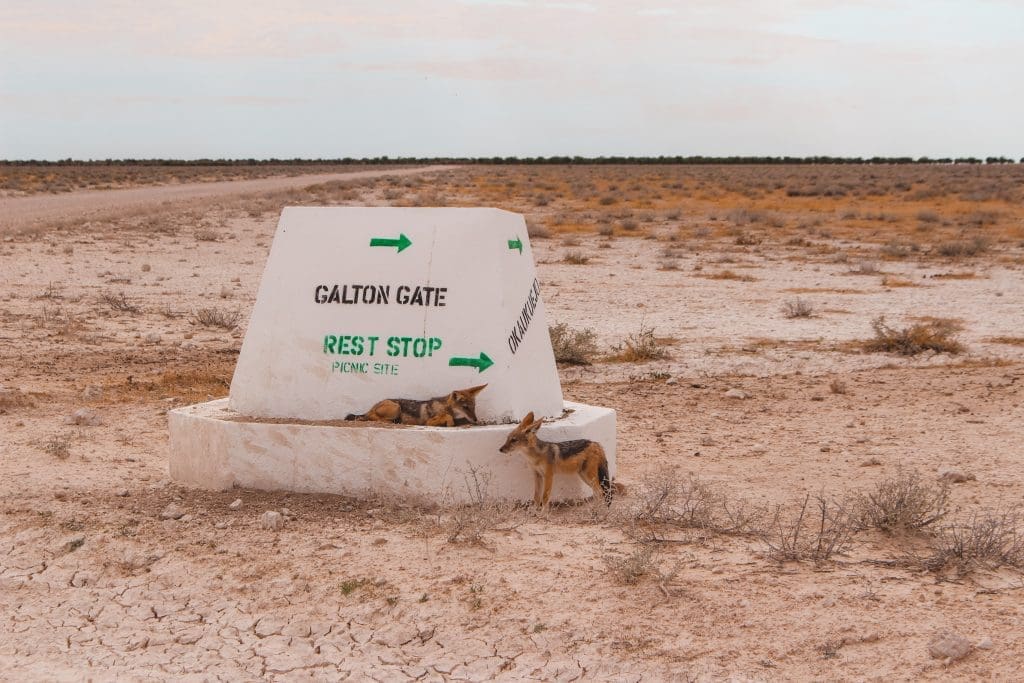
Olifantsrus sits in the quiet west of Etosha, between Okaukuejo and the western Galton Gate. It is the only camp that is camping only: there are no rooms or chalets. Its big draw is the raised hide at the waterhole, reached by a walkway from the campsite. We didn’t make it that far west ourselves, but if you are after peace and quiet and have a night to spare, this is the place.
The two other camps in the park, Dolomite in the west and Onkoshi on the edge of the salt pan, only have chalets and no camping pitches.
→ Read our 25 practical tips for Etosha
→ Discover the 15 best lodges in Etosha
Enjoy our travel tips? Add The Orange Backpack as a preferred source on Google and you'll see us more often in your search results.
More tips for your Etosha visit
Everything you need to book your trip, in one place. From desert lodges to a 4x4 with a rooftop tent.
 Our pickNamibia is made for a self-drive trip. Staying in lodges? Compare rental cars with Discover Cars. Rather camp? Book a road trip with a 4x4 and rooftop tent from Namibia Nomads, route and campsites sorted.
 Lodges near Etosha: from a safari camp on the park boundary to a lodge with its own waterhole
 Rather leave the spotting to a guide? Book a full or half-day game drive in Etosha with GetYourGuide.
 Prefer everything arranged? Browse Namibia tours on TourRadar.
 No flight yet? Compare flights to Windhoek.
 Discover all our blogs about Namibia


