Dwingeloo is Drenthe in a nutshell. A huge village green ringed by old farmhouses and café terraces, a church tower topped with what looks like a giant onion, and the moment you pass the last houses, you’re on the heath of the Dwingelderveld. Walk among the sheep in the morning, let the kids loose on an adventure trail after lunch and end the day with an ice cream on the green. Sounds like a pretty good holiday day to us.
We live in Diever, one village over, so we’re in Dwingeloo a lot. For a bike ride through the Dwingelderveld, a shopping sprea at De Oude Liefde or an ice cream at Fanelli. That last one is non-negotiable by now. We also finally got to peek behind the front door of Havezate Oldengaerde on a guided tour, after cycling past it more times than we can count.
In this guide, we share our favourite things to do in Dwingeloo, from vintage treasures and summer markets to a giant radio telescope in the middle of the heath. And because some of the best spots in south-west Drenthe are right on your doorstep here, we’ve added our favourite day trips nearby too.
Where to stay in Dwingeloo
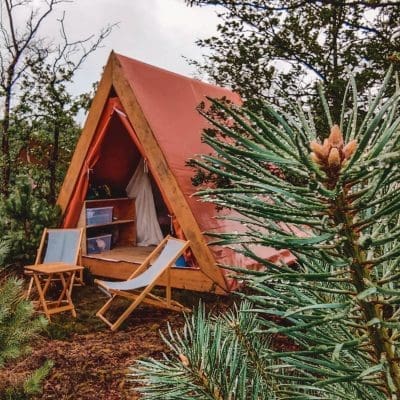
Want to stroll from your hotel straight onto a café terrace on the Brink, as the village green is called here? Or would you rather wake up surrounded by nature and be on your bike into the Dwingelderveld right after breakfast? Dwingeloo does both. For a small village, there’s a surprisingly good choice of places to stay, from a tiny boutique hotel to holiday parks tucked away among the trees.
#1 Hotel Wesseling stands right on the Brink, and it doesn’t get much more central than this. You look out over St Nicholas’ Church, with places to eat and drink right on the doorstep. Fun fact: there’s been an inn here since 1662, which makes Wesseling the oldest family-run hotel in the Netherlands.
#2 Boutique Hotel De Drentse Liefde is a few minutes’ walk from the Brink. There are only eleven rooms and no two look the same: each one is bold and full of colour. For a weekend in Dwingeloo as a couple, this would be top of our list.
#3 Fletcher Landhotel De Borken is the one if you’d rather sleep outside the village. It’s near Lhee, on the edge of the Dwingelderveld, and has an indoor pool and sauna for when the Dutch weather doesn’t play along.
#4 RCN de Noordster is the better match with kids. You stay in a holiday cottage or on the campsite, surrounded by greenery, while the children burn off energy in the playgrounds and indoor play area. Bonus: guests get free entry to Beleefpark Dwingeloo.
13 things to do in Dwingeloo
#1 The Brink: Dwingeloo’s green heart
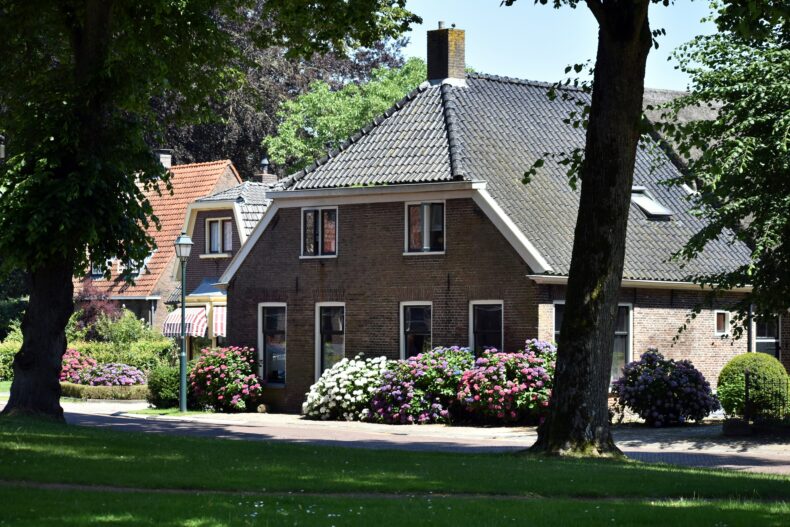
A huge lawn full of old trees, thatched farmhouses all around, that onion-topped tower and more café terraces than you can count: the Brink is easily the prettiest part of Dwingeloo. In summer it buzzes with cyclists, holidaymakers and anyone in need of a coffee, lunch or ice cream.
That big open space in the middle of the village isn’t there by accident. Dwingeloo is an old esdorp, a traditional Drenthe farming village surrounded by shared fields. For centuries, the Brink was where village life happened. The farmhouses stood around it, and livestock was gathered here before heading out to the communal grazing land.
While you’re walking around, keep an eye out for the historic buildings. Next to St Nicholas’ Church stands Havezate Westrup, one of Dwingeloo’s two remaining havezaten, the manor houses of the old local nobility. Sadly you can’t go inside, as someone still lives there.
You won’t need long for the Brink itself, but we’d never skip it. Besides, a few of our favourite spots in Dwingeloo are right on its edges.
#2 St Nicholas’ Church: the famous Siepeltoren
One look at Dwingeloo’s skyline and you’ll get the nickname Siepeltoren. The tower of St Nicholas’ Church is crowned with a striking onion-shaped dome. And siepel? That’s simply the local Drenthe word for onion.
The church itself is much older than its quirky crown. Large parts date from the fifteenth century, and inside you can still see old vault paintings. When the original spire was lost, the onion dome went up in its place in the seventeenth century. A bold choice, but it’s now the symbol of Dwingeloo.
Don’t just stroll past the cafés on the Brink: walk around the church too. Up close, you really see how big it is and how many old details have survived. If the door happens to be open, pop inside. It isn’t open every day, so you’ll need a bit of luck.
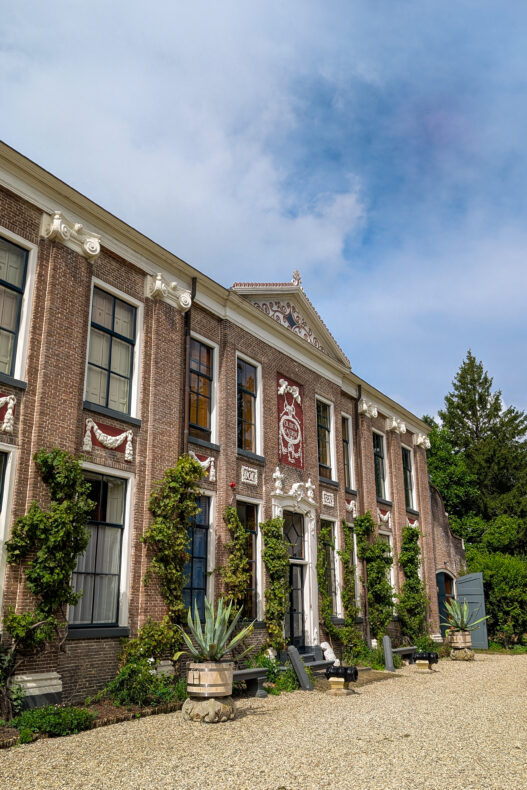
#3 Havezate Oldengaerde: behind the front door
A grand country house at the end of a long drive, with moats, old trees and a formal garden: Havezate Oldengaerde, just outside Dwingeloo, looks every bit the noble estate. Drenthe once had eighteen of these houses. Only seven are left, and Oldengaerde might just be one of the finest.
Its story goes back to the fifteenth century, and for hundreds of years leading Drenthe families lived here. You can still see plenty of that history inside, but normally the front door stays firmly shut. The estate now belongs to Het Drentse Landschap, a regional nature and heritage organisation, and part of the house is still used as a country retreat.
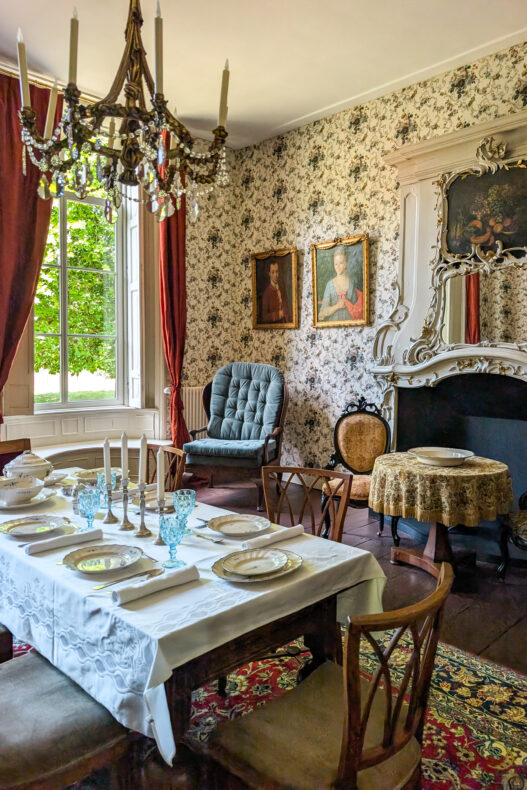
We got our look inside on a free guided tour by Het Drentse Landschap. The grand hall with its sweeping staircase alone is worth it, but you also wander through several historic rooms while hearing the stories of the families who lived here. Perfect if you’re as nosy as we are about what’s behind the front doors of old houses like this.
Tours run at different times of the year, and you can also visit on Open Monumentendag, the Dutch heritage open days. The rest of the year, you can still explore parts of the historic gardens and estate.
#4 Fanelli: artisan ice cream on the Brink
Dwingeloo without an ice cream from Fanelli? Not on our watch. The ice cream parlour sits right on the Brink, and we’ve stopped pretending we’ll ever cycle past it. On sunny days the terrace is packed, which is exactly what you want to see at an ice cream place.
Everything is made in-house, with the classics alongside flavours that change regularly. Our kids treat choosing as a very serious decision. Not that it matters: whatever ends up in the cone disappears just as fast.
The best part is the spot. Grab a seat on the terrace and watch village life drift by. Fair warning, though: once your kids know where Fanelli is, cycling past unnoticed is no longer an option. Ours spot it from a mile away.
#5 De Oude Liefde: a second-hand shop full of vintage finds
We wouldn’t usually give a second-hand shop its own spot in a list of things to do. De Oude Liefde is the exception. This shop near the Brink feels less like a charity shop and more like a giant antiques market, or even a small vintage museum.
Room after room is filled with crockery, furniture, homeware, toys and all kinds of other finds, all set out with real care. It’s the kind of place where you end up browsing far longer than planned. We pop in regularly and almost never manage a quick visit.
The stock changes all the time. One visit you leave empty-handed, the next you’re at the till with something you didn’t know you needed five minutes ago. Love second-hand shops and vintage? Then put De Oude Liefde on your list for a wander around Dwingeloo.
#6 Markets and fairs: summer on the Brink
Come summer, the Brink gets a lot livelier. Dwingeloo hosts markets, street fairs and other events, and on those days the village centre fills up with stalls. With busy terraces all around and the onion tower above, it makes a pretty great setting.
Expect the usual mix of clothes, accessories, local produce, food and other market stalls. In other words: not a market worth crossing the country for. But if you’re here on holiday anyway, it’s worth planning your visit around one. The village is at its liveliest, and the market is easy to combine with everything else in the centre.
Check the local events calendar for current dates. Especially in high season, there’s often something going on around the Brink.
#7 Beleefpark Dwingeloo: swimming and outdoor play
Swimming, sliding, building dens and climbing: Beleefpark Dwingeloo is a great place to spend a few hours with kids on a summer’s day. On the edge of the village, it combines an outdoor pool with a big green play area.
There are several pools, a long water slide and a diving board. On dry land the fun just carries on, with climbing, den building and natural play equipment to clamber over. Younger children have their own spots to play and splash safely too.
Handy if you get a hot day during your stay and fancy something other than walking or cycling. Keep in mind that Beleefpark Dwingeloo closes for winter, so check the current opening hours before you turn up at a locked gate with swimwear and very excited kids.
#8 Dwingelderveld National Park: heath, woodland and pools
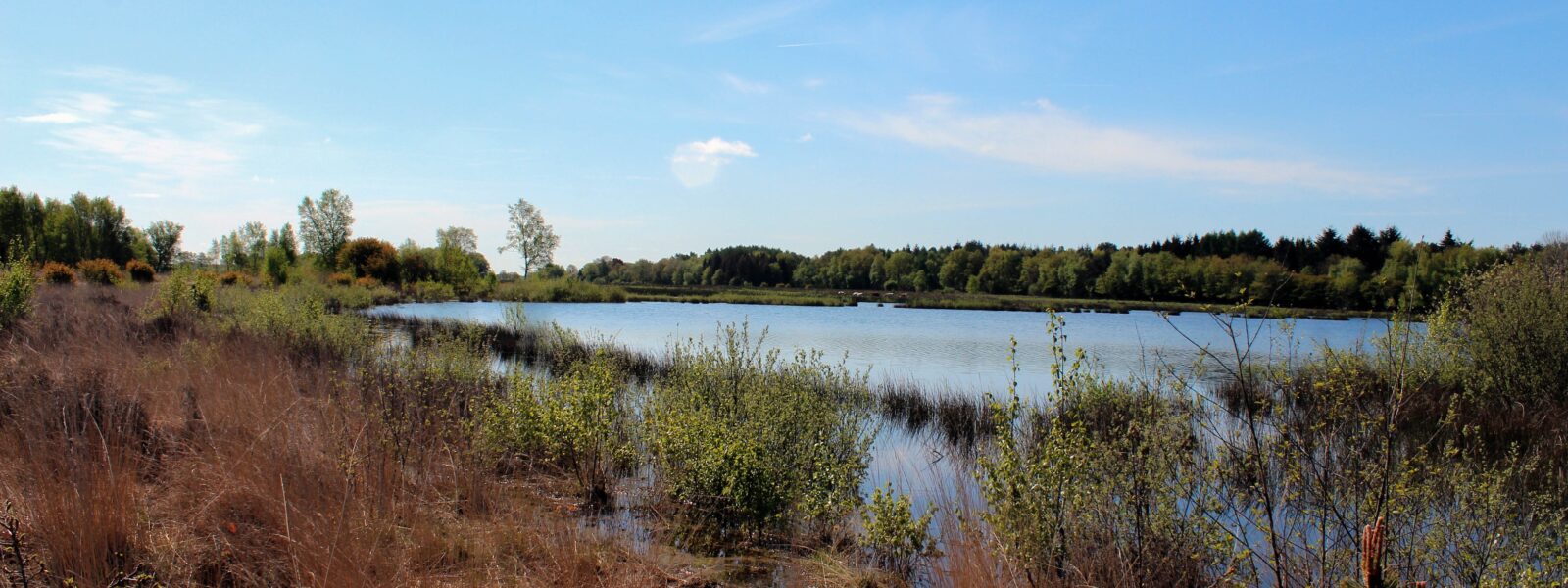
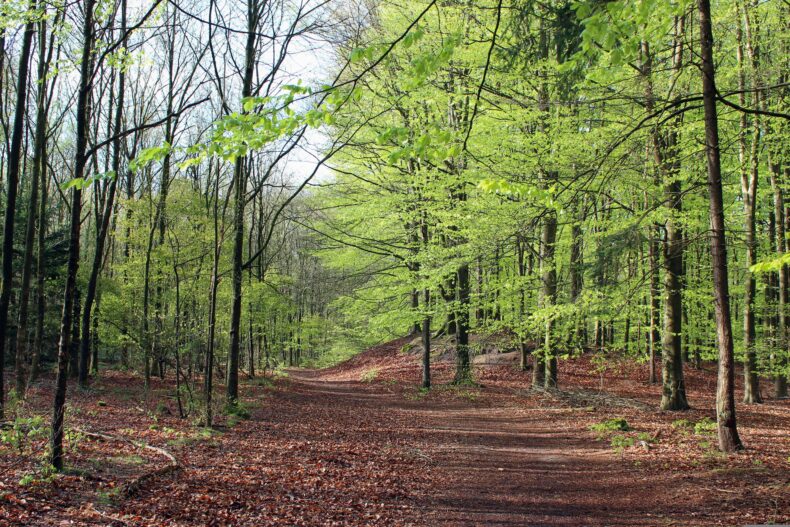
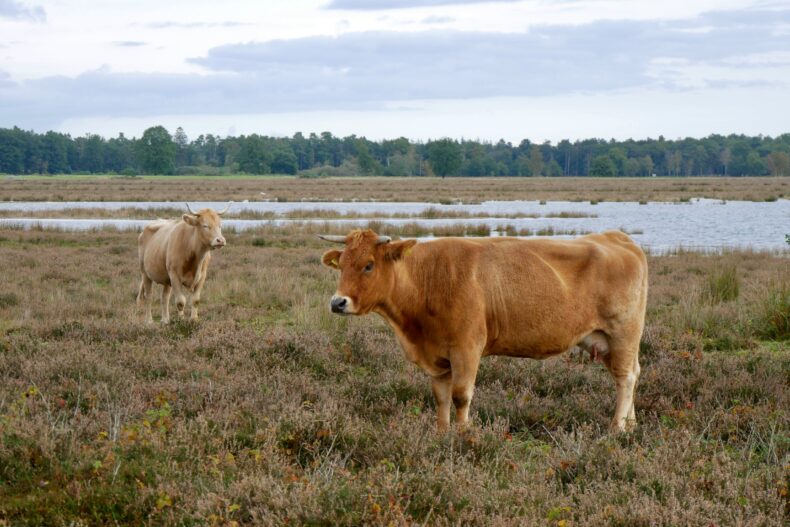
From the centre of Dwingeloo, you’re cycling into the Dwingelderveld in no time. Farmhouses and meadows quickly make way for woodland, pools and wide-open heath. And when the heather turns purple at the end of summer, this is one of the most beautiful nature reserves in Drenthe.
The Dwingelderveld is the largest continuous wet heathland in Western Europe. Dozens of pools and little bogs are dotted across the heath, with walking and cycling paths all through it. We come here a lot, and what we love most is the variety: one minute you’re in the woods, the next you’re looking out over a pool or a stretch of heath that goes on for kilometres.
By bike, you can easily cover a big part of the park. Walking works too, with routes starting from various car parks around the edges. Further down this list, we share a few spots we think are worth it, including the radio telescope, the family trail and the sheepfolds.
#9 Dwingeloo Radio Telescope: a giant dish on the heath
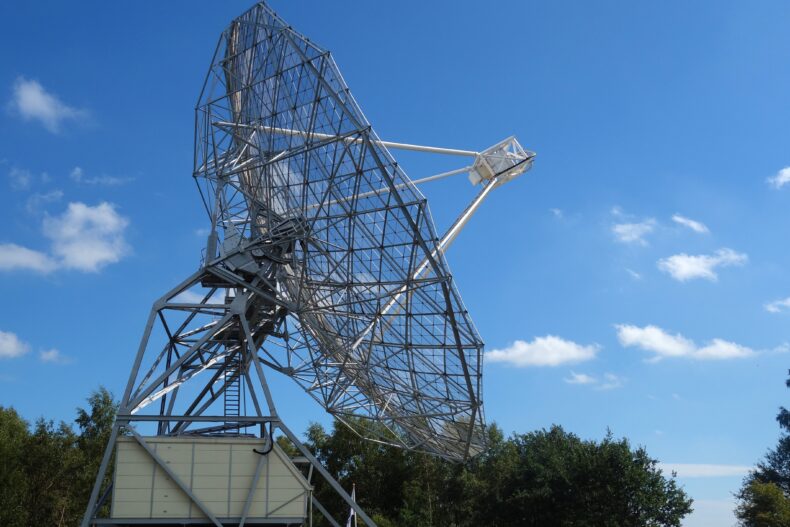
You’re cycling through woods and heath, and then suddenly there it is: a gigantic white dish. Dwingeloo Radio Telescope is 25 metres across, and when it opened in 1956 it was the largest fully steerable radio telescope in the world.
For years, Dutch astronomers used it to study the universe, discovering two galaxies along the way that are now called Dwingeloo 1 and Dwingeloo 2. The telescope is now a national monument, looked after by volunteers from the CAMRAS foundation, who have put it back to work for radio astronomy.
We visited the telescope ourselves during the Weekend van de Wetenschap, the Dutch national science weekend. What you can’t see from the heath is that there’s a whole research lab behind the dish, run by ASTRON, the Netherlands Institute for Radio Astronomy. During that weekend, you can take a look inside. It was seriously busy, but we loved seeing it all up close.
Even if space isn’t your thing, it’s worth a detour on a walk or bike ride. A dish this size is simply the last thing you expect in a Drenthe nature reserve. It’s also a short walk from the car park by the Dwingelderveld.
#10 Achter ’t Zaand sheepfold: Dwingeloo’s flock
No Drenthe heath is complete without a flock of sheep. On the Dwingeloo side of the Dwingelderveld, they live at Schaapskooi Achter ’t Zaand, a traditional sheepfold from which they head out to graze the heath.
During the day, that means you might find the sheepfold empty. The sheep are out at work on the heath. Want to see them? Come around the time they head out or come back. The whole flock trooping back to the fold is about as Drenthe as it gets.
The sheepfold is near Lhee and easy to tick off on a bike ride or walk through the Dwingelderveld. And in spring there’s an extra reason to stop by: lambs!
#11 The boardwalk and family trail: short walks near Spier
Fancy a shorter walk? Around Spier, the Dwingelderveld has two good options. The Familiepad Noordenveld, or Noordenveld Family Trail, is the easiest. The path is wide, suitable for pushchairs and wheelchairs, and takes you through heath and woodland and past pools.
A bit further on is a walk we like even more: the Dwingelderveld boardwalk. From the Oude Postweg, you head into the reserve until you reach a long wooden path running straight across the wet bog and heath. Walking those boards is what makes it so much more fun than your average woodland loop.
You’ll find both walks on Google Maps, but don’t mix them up: they start in different places. For the boardwalk, search for Start plankenpad on the Oude Postweg near Spier. For the family trail, use the walkers’ car park on the Spieregerweg.
#12 Ruinen sheepfold: waiting for the flock
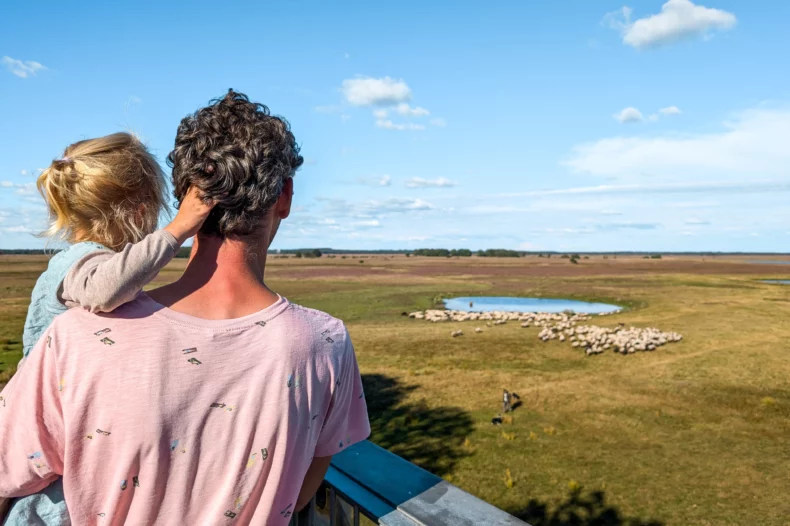
Every day, hundreds of Drenthe heath sheep leave the sheepfold at Ruinen to graze the Dwingelderveld, and watching them come home is quite a sight. It’s on the other side of the reserve, so it’s a bit more of a trip from Dwingeloo, but it’s worth it.
We once timed it perfectly. From the little viewing tower next to the sheepfold, we first saw a white blob appear on the heath in the distance. Slowly the whole flock came closer, until hundreds of sheep were streaming past us towards the fold. As you can imagine, the kids loved it.
Do check what time the flock is expected back that day. During the day the sheep are usually somewhere out on the Dwingelderveld, and there’s not much happening at the fold itself. Right next door you’ll also find the visitor centre of Natuurmonumenten, the Dutch nature conservation organisation, and the OERRR nature play area.
#13 OERRR nature play area: sand and water
Next to the visitor centre near Ruinen is a natural play area where our kids happily lose track of time. No rows of swings and slides here, but sand, water, tree trunks and other natural materials to get stuck into.
Pack a change of clothes, especially on a warm day. Kids plus water equals wet trousers and soggy shoes in no time. The play area is nice and spacious, surrounded by greenery, so it pairs well with a walk through the Dwingelderveld.
We’d combine it with the sheepfold next door. Play first, then up the viewing tower to see if the flock is on its way, or the other way round. With young kids, that’s a lovely afternoon sorted.
9 places to visit near Dwingeloo
#14 Diever: Shakespeare, a prehistoric tomb and our home village
We may be slightly biased, but Diever is well worth the short trip from Dwingeloo. It’s our home village, after all. Like Dwingeloo, it’s an old Drenthe village built around a green, but it has a feel all of its own. Old farmhouses and the medieval St Pancras’ Church surround the Brink, with several other sights within walking distance.
The big draw is the Shakespeare Theatre in the woods, where Shakespeare plays have been performed in the open air every year since 1946. Diever also has its own hunebed, the Dutch name for a prehistoric dolmen, the small OERmuseum about prehistory and, just outside the village, De Wigwam, an underground hiding place from the Second World War.
We live in Diever and have explored pretty much every corner by now. So yes, we’ve got far more tips than fit in one paragraph, and we’ve put them all in a separate guide.
→ Discover the best things to do in Diever

#15 Drents-Friese Wold National Park: woodland, heath and sand
On the other side of Diever, the next big nature reserve begins straight away: Drents-Friese Wold National Park. Where the Dwingelderveld is all about open, wet heath, here you’ll find a lot more forest. But that’s not all. On a single bike ride you’ll go from dense woods to heath and pools, and eventually across huge stretches of sand.
We live on the edge of the Drents-Friese Wold and cycle here all the time. Yet we still keep finding paths we’ve never been on. We often spot roe deer and rabbits along the way, and large grazers roam different parts of the park.
A few of our favourite spots are Doldersummerveld, Oude Willem and Aekingerzand. That last one gets its own entry next, because that huge expanse of sand deserves a bit of extra attention. From Dwingeloo, the Drents-Friese Wold is also easy to combine with a visit to Diever.


#16 Kale Duinen: roaming freely across Aekingerzand
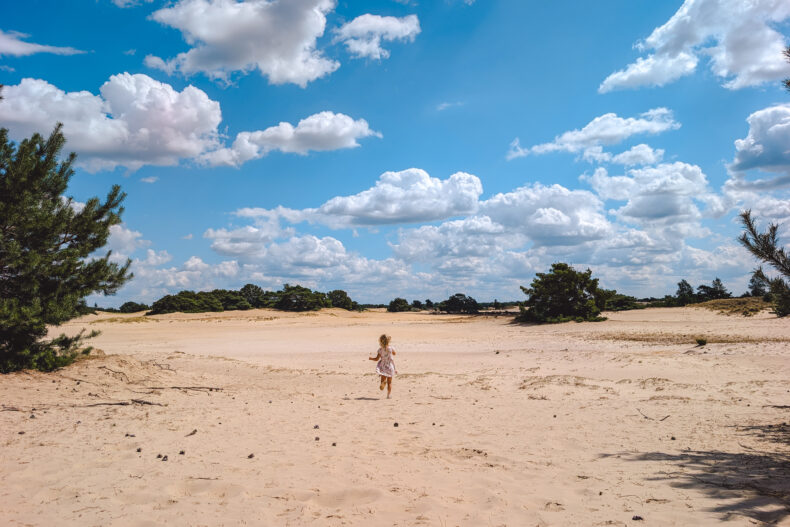
After all those trees, Aekingerzand feels like another planet. This part of the Drents-Friese Wold is also known as the Kale Duinen, or Bare Dunes: a huge open plain of drifting sand, heath and the odd lonely tree.
The best bit? You don’t have to stick to a path here. You’re free to roam the drifting sand, so just pick a direction and wander. It works brilliantly with kids: up the dunes, down the dunes and a whole lot of sand in their shoes.
The wind has free rein here and keeps the sand on the move, which is why this corner of Drenthe looks nothing like the forest right next to it. We like combining the Kale Duinen with a bike ride through the Drents-Friese Wold. And nearby Canadameer lake is there for a dip on hot days.
#17 Het Blauwe Meer: swimming near Hoogersmilde
A sandy beach and bright blue water in the middle of Drenthe’s woods? That’s Het Blauwe Meer, or the Blue Lake, near Hoogersmilde. It was created by sand extraction and gets its famous colour from minerals in the water and the pale sandy bottom.
We mainly wanted to know if the water is really as blue as it looks in photos. Short answer: not quite. From the air the colour really pops, but standing on the beach we found it a lot less spectacular. Still a beautiful spot, mind you.
In summer, Het Blauwe Meer is a popular swimming spot with a sandy beach, toilets and a kiosk. On hot days it can get very busy, and during the swimming season there’s an entrance fee. Outside those busy beach days, the walk around the lake is a nice one too.
Just want a swim without the crowds? Then our next tip is where we go these days instead.
#18 Terhorsterzand: a quiet swim in the woods
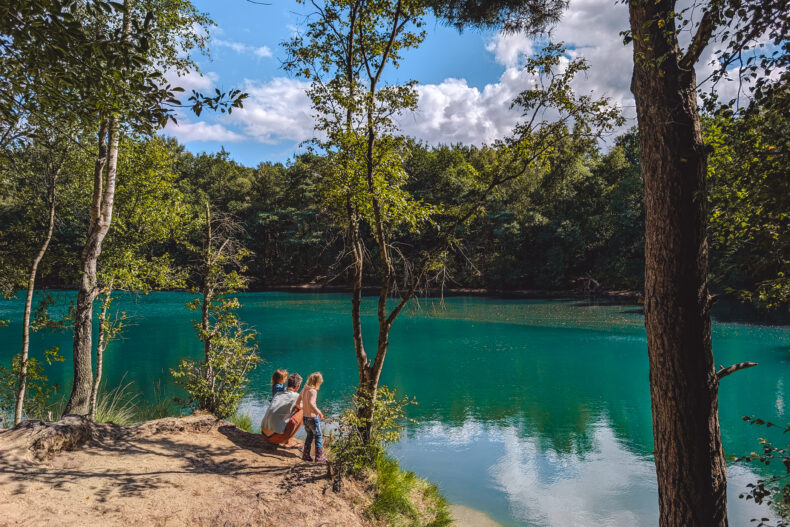
Pretty much everyone knows Het Blauwe Meer, but for an afternoon swim we’d rather drive a few minutes further to Terhorsterzand these days. From the car park, you walk through the woods to a small sandy beach on a quiet lake. No kiosk, no toilets, no facilities at all: just woods, sand and water.
We were sold the moment we found it. Our kids could wade into the shallow water really gradually from the beach, and there were only a handful of other families. A world away from Het Blauwe Meer on a hot summer’s day. There are trees right behind the beach too, so finding shade is easy.
Terhorsterzand is an official swimming spot, and the water quality is checked during the swimming season. Do check the latest situation before you go. If you’re after a quiet place to swim with kids, this has become one of our favourites in the area.

#19 Hoogersmilde adventure trail: playing pilot in a Spitfire
Selling young kids on a regular walk in the woods doesn’t always work. A walk in the woods with water pumps, climbing, a lookout tower and an actual aeroplane among the trees? Much easier. The Belevenispad, or adventure trail, near Hoogersmilde is 2.5 kilometres long, with ten play and discovery stops along the way.
Our kids were most impressed by the replica Spitfire. You can climb inside and play pilot, and they were happily busy for a good hour. We sat on one of the wings in the meantime, so it’s a pretty good stop for parents too.
Along the way you also clamber over giant boulders, pump up water yourself and peer through a spy hole looking for grass snakes. Just follow the red posts, and it’s completely free. It’s about a fifteen-minute drive from Dwingeloo, and especially with young kids, we think it’s one of the best short walks around.


#20 Holtingerveld: dolmens D53 and D54 near Havelte
Two dolmens, purple heath, woodland, giant boulders and Highland cattle: a walk through the Holtingerveld near Havelte gives you plenty to look at. The star of the show is dolmen D53. Almost 19 metres long, it’s the second largest in the Netherlands. D54 is just a short walk further on.
But don’t stop at the dolmens. The Holtingerveld has lovely walking paths across the heath and around the Havelterberg hill, with sheep and Highland cattle grazing the reserve. We love it most at the end of summer, when large parts of the heath turn purple.
The Second World War left its mark here too. The Germans started building an airfield near Havelte, and dolmen D53 even had to be taken apart and buried to make way for it. It was rebuilt after the war. So on a single walk, you get prehistory and much more recent history in one go.

#21 Museum Miramar: a world traveller’s seashells in Vledder
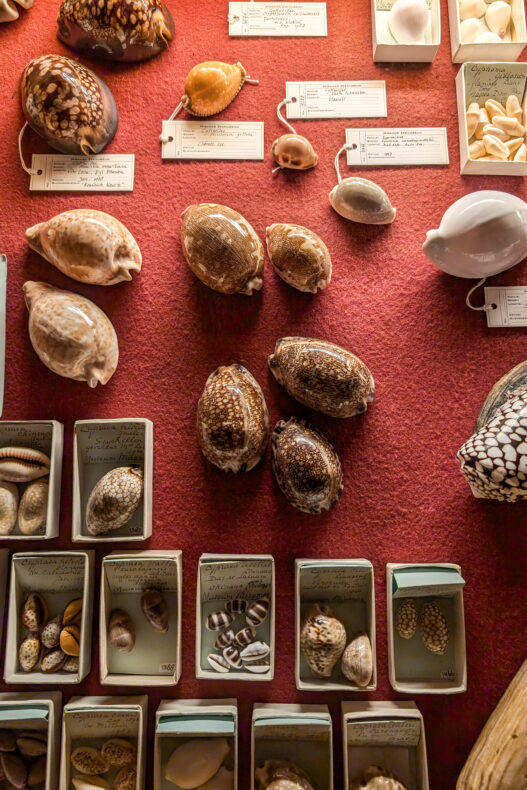
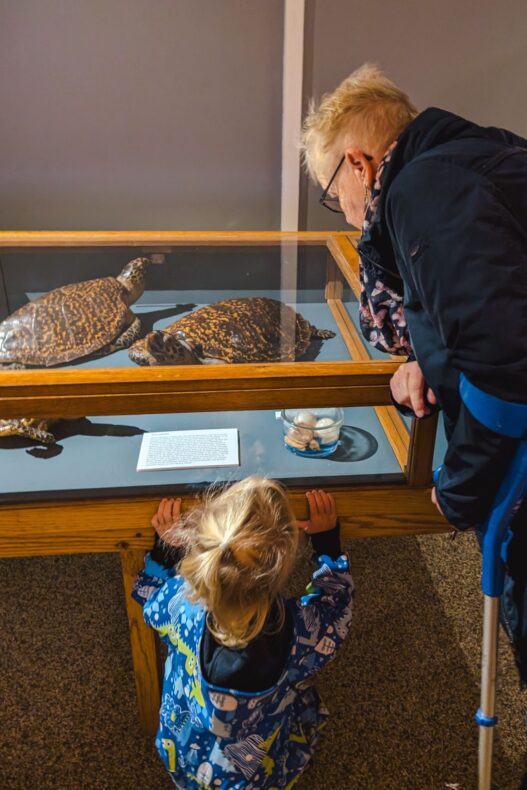
A sea museum in the middle of Drenthe already sounds a bit odd. The story behind Museum Miramar in Vledder makes it even better. The collection was put together by Jeanne Warners, a strong-willed Drenthe woman who travelled the world for years, collecting shells, corals and other sea creatures as she went.
In 1969 she opened her own museum, and much of her collection is still on display. There are cases packed with shells and other treasures from the sea, but for us the best part was Jeanne’s own story. Knowing she gathered it all on her travels, rather than a museum simply buying it, makes the whole collection feel much more personal.
Miramar isn’t a huge museum you need to set aside a whole day for. That makes it easy to fit into a day out from Dwingeloo, for example combined with Frederiksoord or Diever.
#22 De Proefkolonie: UNESCO heritage in Frederiksoord
In 1818, an ambitious experiment began in Frederiksoord. Poor families from the cities were given a small house, a plot of land and work, in the hope that they could build a new life in the Drenthe countryside. It was the start of the Colonies of Benevolence.
Museum De Proefkolonie, or the Trial Colony, tells that story through the first colonists. Afterwards, take a look around outside too. The straight avenues, old colony cottages and neatly divided landscape are still easy to recognise. Today, the Colonies of Benevolence are a UNESCO World Heritage Site.
Frederiksoord is about a twenty-minute drive from Dwingeloo. Got time left? Combine it with Veenhuizen and its Prison Museum. It’s a bit further away, but it picks up the story right where Frederiksoord leaves off.