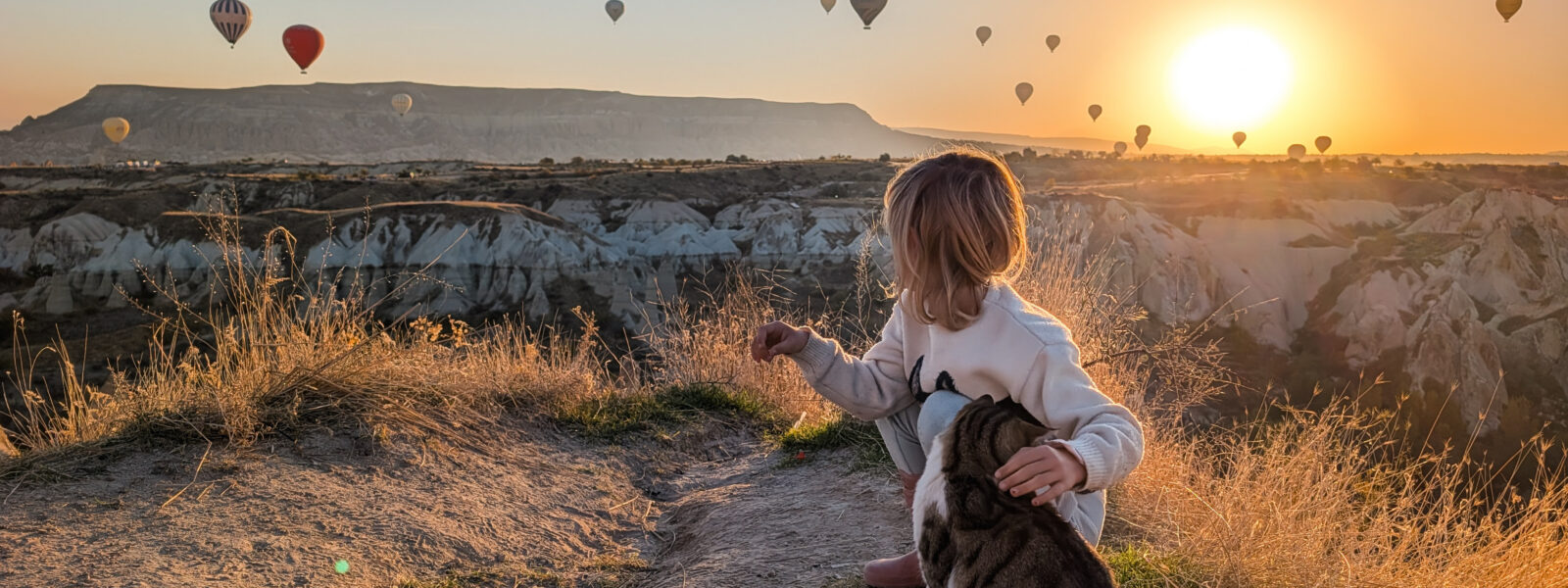
Five in the morning. It’s pitch black, it’s freezing, and you’re standing on the edge of a valley full of giant stone ‘asparagus’. Then the first hot air balloon rises. Then another. Then ten more. Welcome to Cappadocia!
We spent a week exploring this extraordinary corner of central Turkey in our campervan, with our kids aged 3 and 5. We crawled through rock tunnels, pulled ourselves up a rope to reach remote cave churches and explored an ancient rock-cut monastery by torchlight. We also got stuck in a jam-packed underground city and paid hefty entrance fees for places that let us down.
In this guide, we share the 17 best things to do in Cappadocia, plus a bonus tip. Based on our own experience, we tell you where to go, what you can skip and how to dodge the crowds. You’ll also find practical tips and our pick of places to stay.
Practical tips for Cappadocia
How many days do you need in Cappadocia?
Most guidebooks and travel blogs suggest two to three days, with two as the bare minimum. Planning a balloon ride? Book it for your first morning, so you still have a few mornings to spare if the wind cancels the flight. We stayed a full week and loved the slower pace, and we still didn’t tick off everything on our list. If you have the time, stay longer.
Do you need a car in Cappadocia?
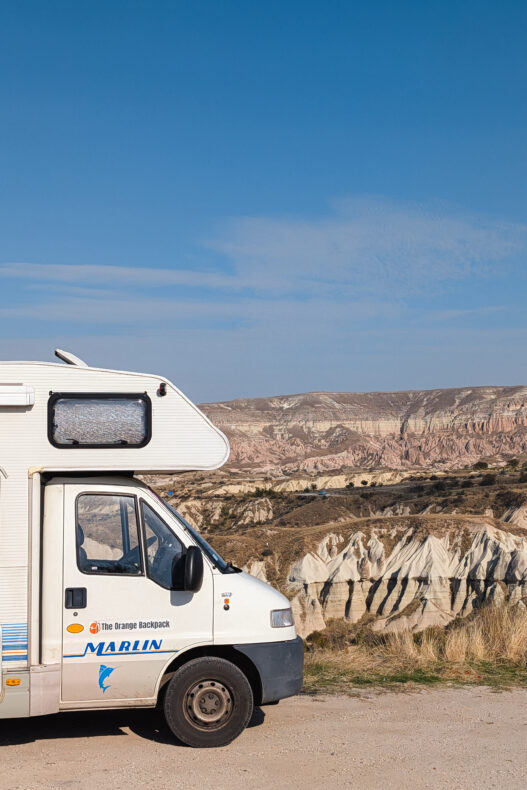
We travelled by campervan, and having your own wheels makes a big difference here. The sights are spread across the region, and with a car you go at your own pace. Rather not drive? Tours leave Göreme every day, including the well-known Red and Green Tours. For walks that start and finish in different places, like Pigeon Valley, a taxi does the trick.
When is the best time to visit Cappadocia?
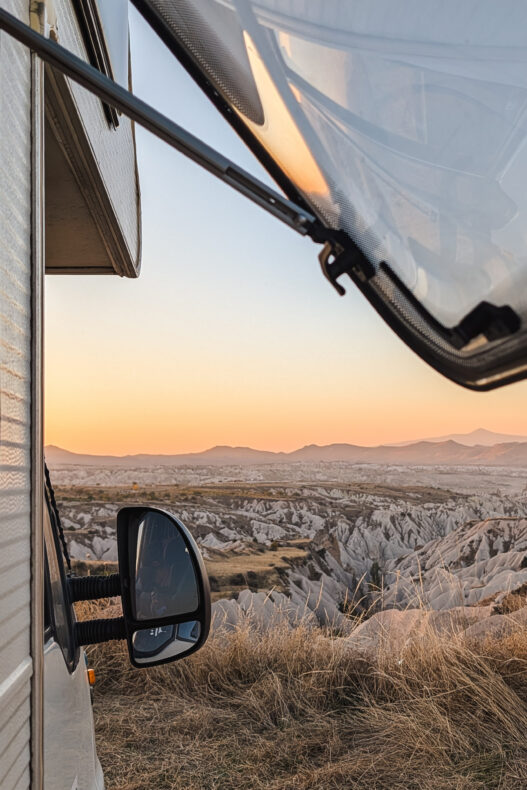
Spring and autumn are ideal: pleasant walking weather and none of the summer heat. We visited in October. Don’t count on balloons every morning, though. Cancellations are most common in winter and early spring, yet during our week they flew on just one morning. So plan your balloon watching early in your stay, and pack a warm jumper for those chilly dawns.
Is the Museum Pass Cappadocia worth it?
The Museum Pass Cappadocia gives you 72 hours of access to various museums and archaeological sites run by Turkey’s Ministry of Culture, including Göreme Open Air Museum, the Dark Church, Derinkuyu and Ihlara Valley. Whether it saves you money depends entirely on your plans. Want to see several of these big names within three days? Add up the individual tickets and compare. We skipped many of the paid sights and actually preferred the free valleys and smaller cave churches.
Mobile reception and offline maps
Mobile reception is patchy in the valleys, and trails aren’t always well signposted. Download an offline walking map before you head out. We’re big fans of Mapy.com, which shows the paths and plenty of cave churches too. Wear shoes with good grip and bring a torch, or use your phone’s, for the caves and tunnels.
Where to stay in Cappadocia: villages and hotels
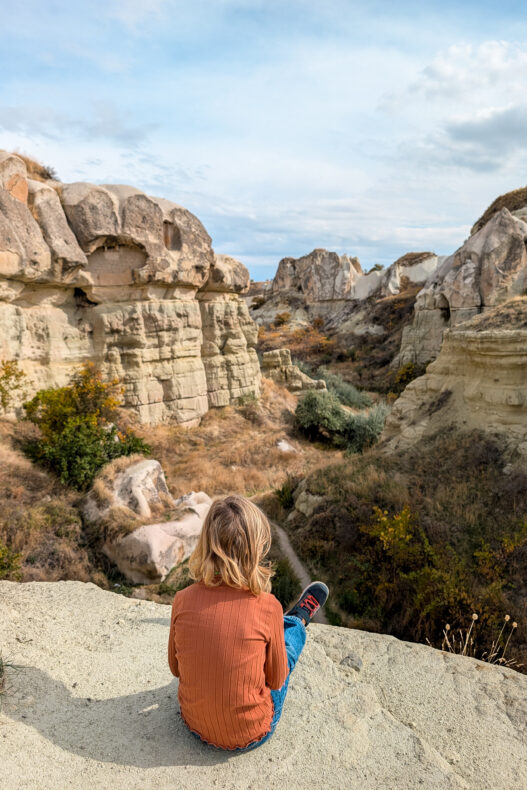
With a car, it doesn’t matter too much where you stay in Cappadocia: the best-known villages are all about 15 minutes’ drive apart. Each has its own feel, though. Below are the four most popular bases, with a few hotel picks for each. Almost everywhere, you can sleep in a cave room carved into the rock. An experience in itself!
Göreme: a convenient, lively base
Göreme is the easiest base for most visitors. The village sits right among the fairy chimneys, has the biggest choice of cave hotels and restaurants, and several gorgeous valleys start practically at your doorstep. It’s also the tourist hub of the region, so expect buzz rather than village calm.
#1 Kismet Cave House: one of Göreme’s oldest cave hotels. This small guesthouse sits next to a fairy chimney in a quiet part of the village. Its eight rooms each have their own look, with colourful kilim rugs, local furniture and Turkish antiques, and the roof terrace overlooks the village. Characterful, personal and affordable.
#2 Kelebek Special Cave Hotel & Spa: after a bit more luxury without losing the character? This cave hotel in Göreme’s old quarter has an outdoor pool, a hammam and terraces looking out over Uçhisar and Çavuşin. Just the place to unwind after a day on the trails.
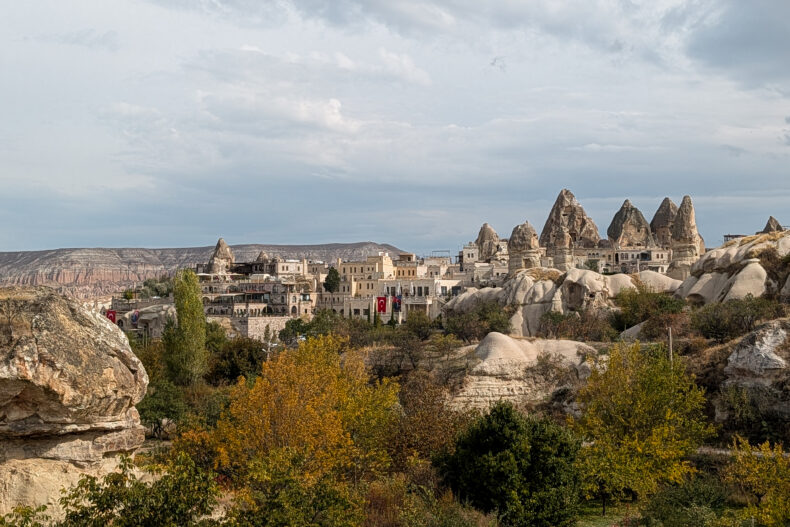
Uçhisar: quieter, with sweeping views
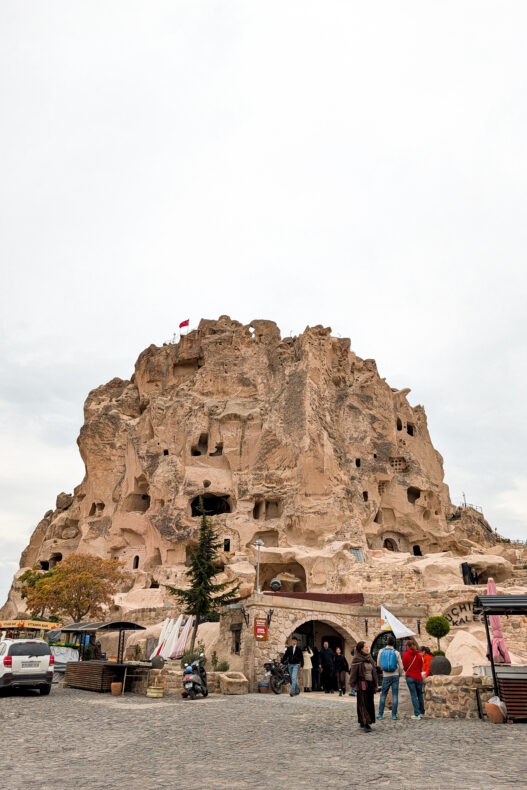
Uçhisar wraps around a huge rock castle and is the highest village in the region. It’s a little quieter than Göreme and has superb views over Pigeon Valley. Handy for walkers too: the Pigeon Valley trail to Göreme starts right here.
#3 Taskonaklar: a boutique cave hotel made up of restored houses on the hillside above Pigeon Valley. Every room is different, and the terraces look out over the valley and the rising balloons. There’s also a two-bedroom family suite.
#4 Argos in Cappadocia: in the mood to splurge? This luxury hotel occupies the site of an old monastery, with restored houses, caves and underground tunnels. Those tunnels now hold a seriously good wine cellar. A special setting for a romantic stay, with a price tag to match.
Ürgüp: a town with character and cave rooms
Ürgüp feels like a real town, with more local life, its own restaurants and wineries. Beautifully restored cave houses line the slopes above the centre. The best-known valleys are a little further away, but still only a short drive.
#5 Ürgüp Evi Cave Hotel: a cave hotel on the hillside in the quiet Esbelli neighbourhood, about 15 minutes’ walk from the centre. It spreads across two old houses, with terraces that seem to tumble down the slope and a different theme in every room. From the terraces, you look out over the surrounding valleys and villages.
#6 Yunak Evleri: a maze of cave rooms carved into a rock face. Centuries-old cave dwellings and a 19th-century Greek mansion are linked by stairs and passageways, and there’s a seasonal outdoor pool. Some rooms sit high up in the rock, so ask for one with fewer steps if stairs are a struggle.
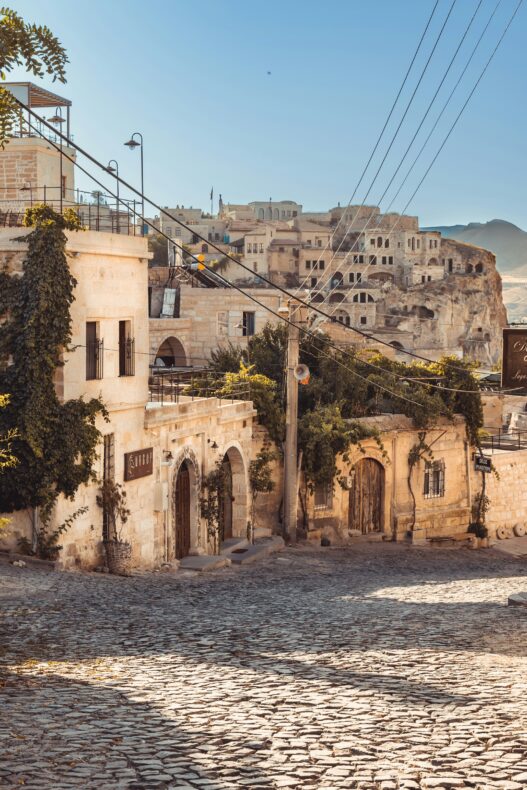
Ortahisar: traditional and less touristy
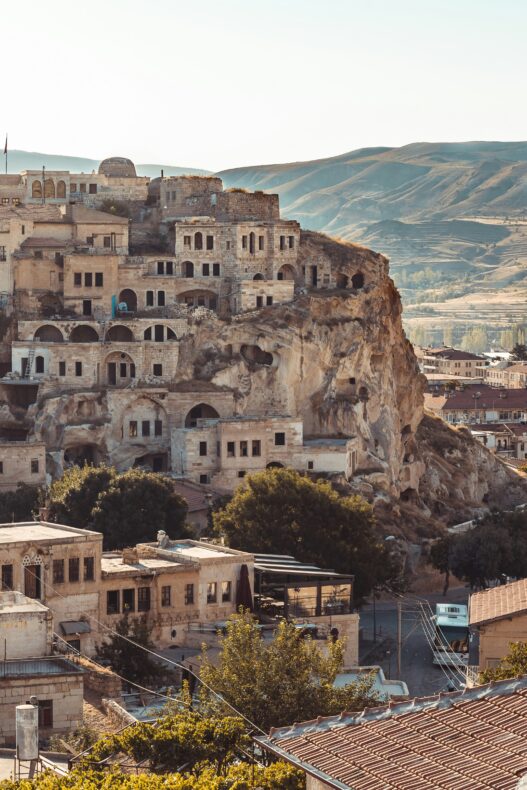
Ortahisar is a small village around its own rock castle, and it still feels refreshingly traditional. There are fewer restaurants and facilities, but Göreme and Ürgüp are only minutes away by car.
#7 Hezen Cave Hotel: a stylish cave hotel in a former Greek Orthodox house, looking out on Ortahisar Castle. Rough rock walls meet clean, modern design. Small and quiet, so ideal if you’d rather avoid the Göreme crowds.
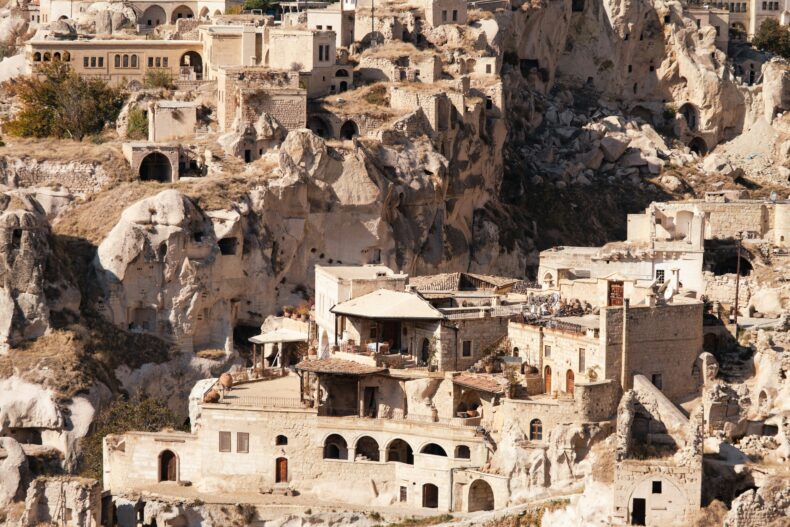
17 things to do in Cappadocia
From balloons at sunrise to crawling through ancient cave churches: these are our 17 best things to do in Cappadocia. We’ve split them into four groups: hot air balloons, valleys, cave dwellings and rock-cut churches, and towns and villages. For every spot, we tell you what we thought, including what let us down.
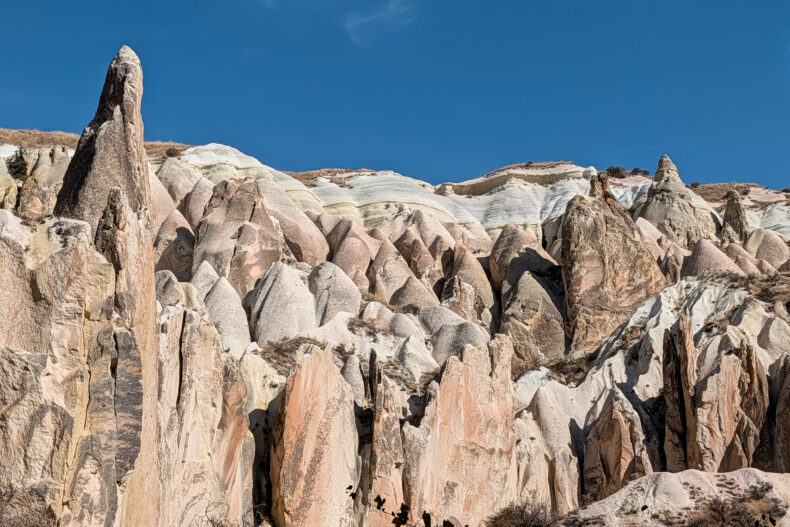
Hot air balloons in Cappadocia
Cappadocia and hot air balloons are inseparable. At sunrise, dozens of colourful balloons drift over the strange rock formations and valleys. It’s one of Turkey’s most iconic sights, and in real life it more than lives up to the photos. Whether you fly or watch from the ground, make time for it.
#1 Hot air balloons: watch them at sunrise
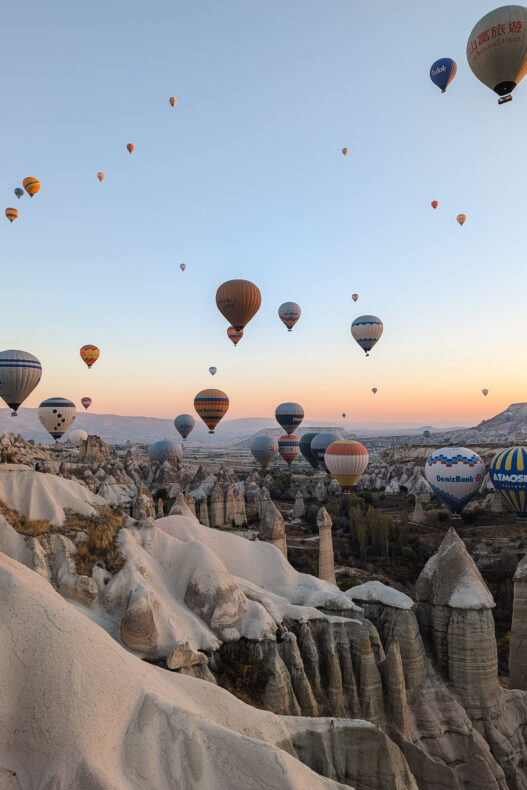
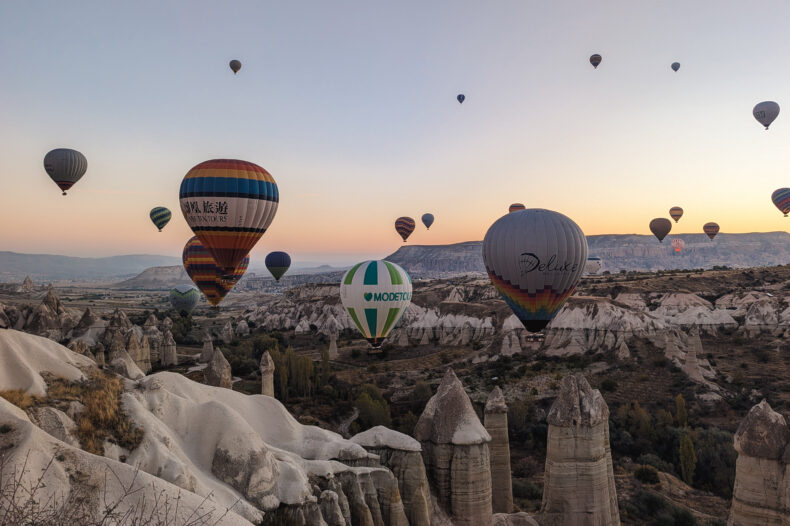
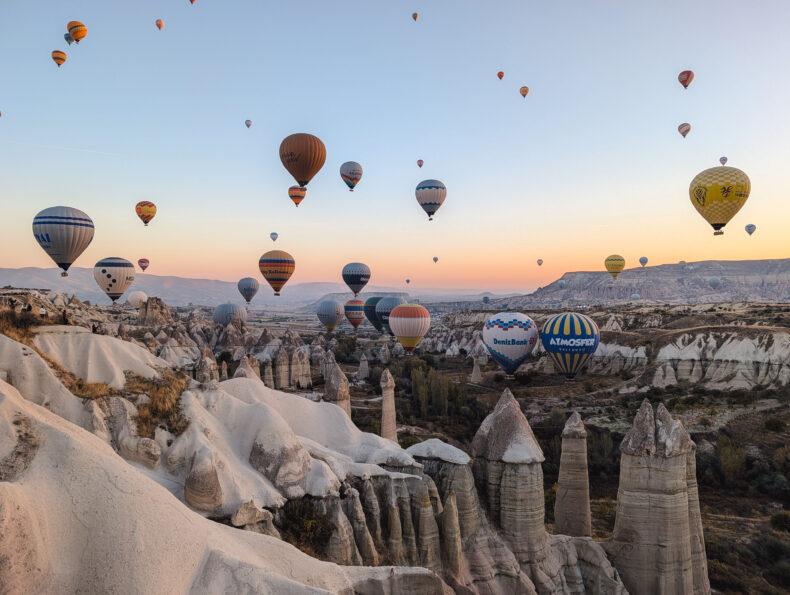
Setting your alarm while it’s still pitch dark? In Cappadocia, you’ll do it gladly. As the first balloons lift off, the sky above Göreme slowly fills with colour. Balloons pop up everywhere: some high above you, others skimming the rock formations. And you don’t need to step into a basket to enjoy it.
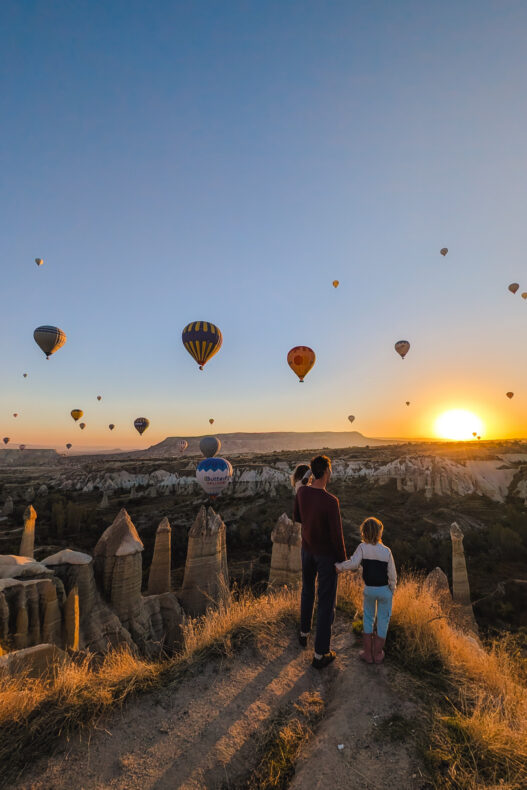
We found a spot on the edge of Love Valley, and it was fantastic. You look out over the valley’s famous, rather suggestive rocks while more and more balloons fill the sky, some floating low between the formations. There’s so much going on that you hardly know where to look. A moment we won’t forget.
Tip: we parked well past the end of the tarmac. Coaches and minibuses unload big groups along the paved stretch, so keep going a little further for more peace. Even there, we saw plenty of elaborate photo shoots and marriage proposals.
There are other good viewpoints around Göreme. Sunset Point, on the hill above the village, is another popular place to watch the balloons. We didn’t watch from there ourselves, but it overlooks Göreme and the valleys around it. Just don’t expect to be the only early bird.
Our main tip? Check first whether the balloons are allowed to fly. The official Cappadocia balloon flight status website shows the current status: green means flights can go ahead, red means they can’t. The status can change, so check again just before you leave. Getting up at five sounds romantic, but standing on a hill in the dark for nothing is a lot less so.
Plan your balloon watching at the start of your stay as well. Strong winds or bad weather can ground the balloons several days in a row. We were lucky to see them on our very first morning: they didn’t fly again for the rest of the week. Get to your viewpoint well before sunrise, as the first balloons go up long before the sun peeks over the horizon.
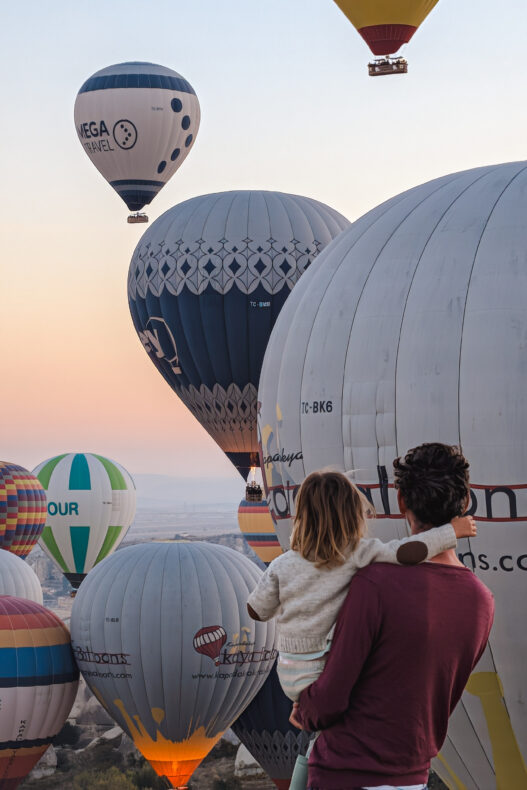
#2 A hot air balloon ride: see Cappadocia from above
Want something even more spectacular? Climb into one of those balloons yourself. As the sun comes up, you float over the fairy chimneys, look down into the valleys and see balloons all around you, sometimes drifting close to the rock faces. No wonder a balloon flight in Cappadocia is on so many bucket lists.
It doesn’t come cheap, though. Expect to pay several hundred euros per person, and a lot more in peak season. A standard flight usually lasts about an hour and takes off around sunrise. Most companies pick you up from your hotel early and drop you back afterwards.
We didn’t fly ourselves and watched from the ground instead. No regrets. From Love Valley, you see all those balloons over the landscape at once, while a flight gives you a completely different perspective.
If you do want to fly, book one of your first mornings in Cappadocia. If the weather cancels your flight, you can often move it to another day. Check the refund and rebooking conditions before you book.
Travelling with kids? Balloon companies usually have a minimum age, often around six. With little ones like ours, watching from a viewpoint is your best bet. We thought that was quite an experience in itself.
The best valleys in Cappadocia
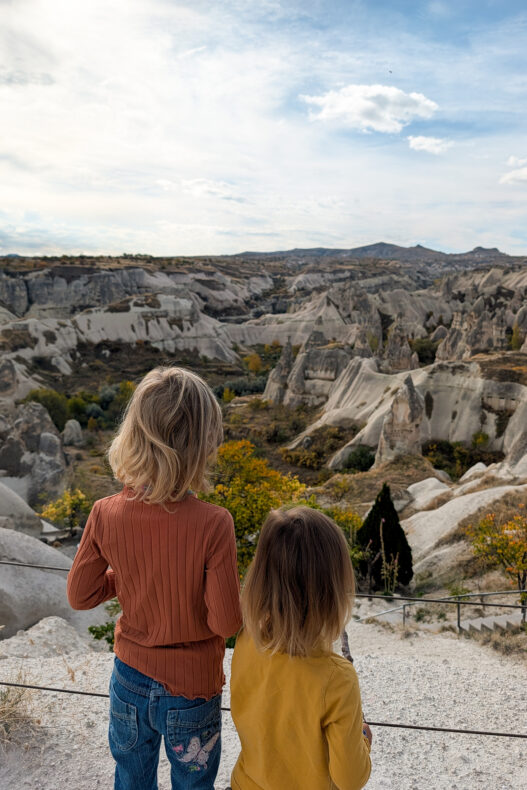
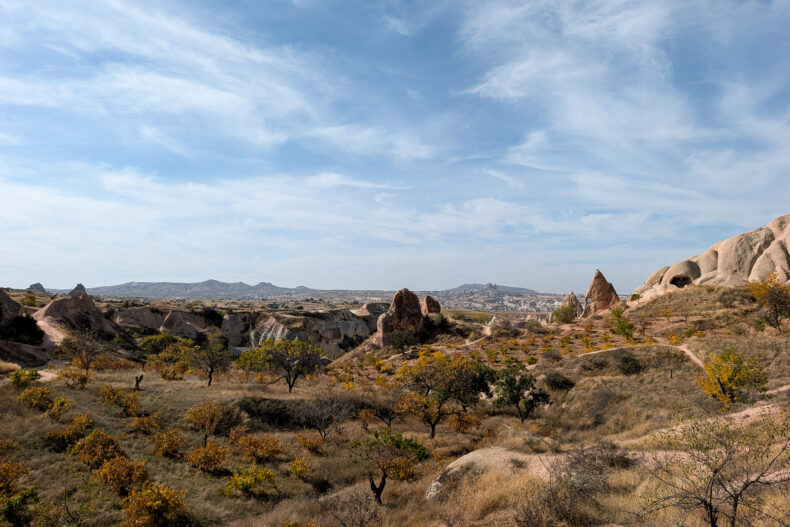
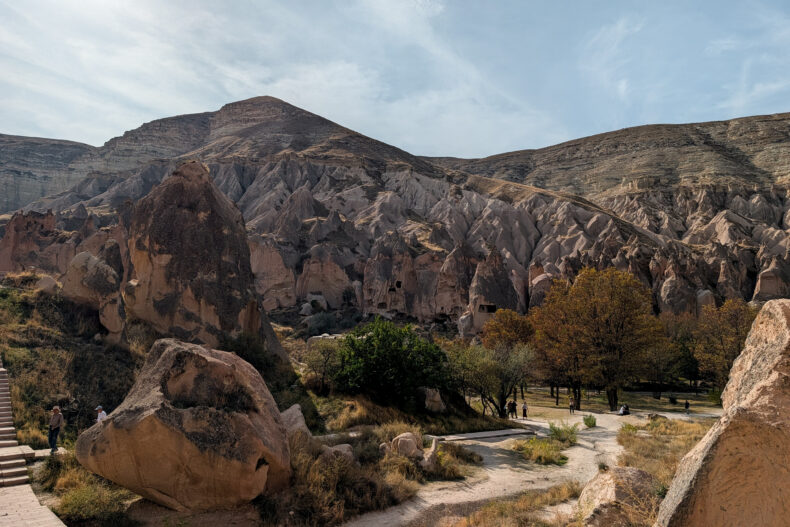
For us, the best of Cappadocia was out in the landscape, not in its museums. Trails wind between bizarre rock formations, past remote cave churches, narrow tunnels and wide views. We explored a different valley almost every day, and no two were alike. From Love Valley’s giant stone ‘asparagus’ to the adventurous rock tunnels of Meskendir, these are the valleys to put on your list.
#3 Love Valley: Cappadocia’s most famous rock formations
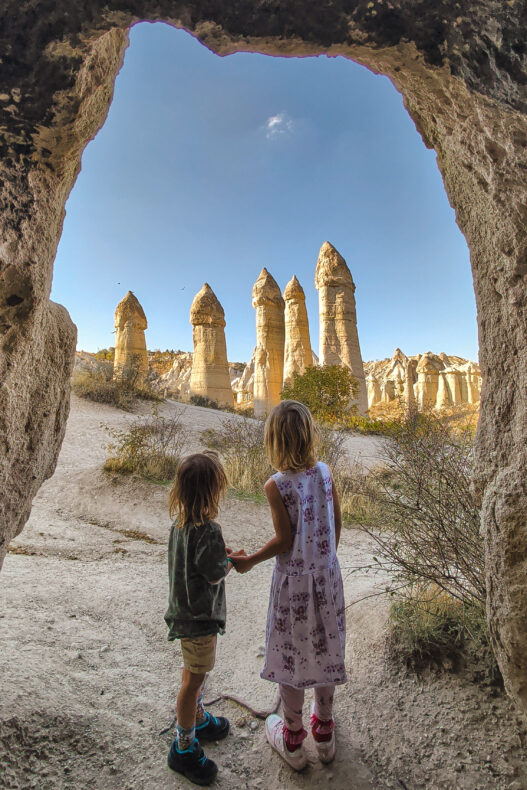
How do we put this politely? Love Valley is famous for its giant stone ‘asparagus’. Some tower dozens of metres above the landscape, and it doesn’t take much imagination to see where the valley got its name.
Most visitors come for the view from the rim, looking out over a forest of odd-shaped rock pillars. At sunrise, it’s also one of the best places to watch the balloons. We came early in the morning and it was one of our Cappadocia highlights.
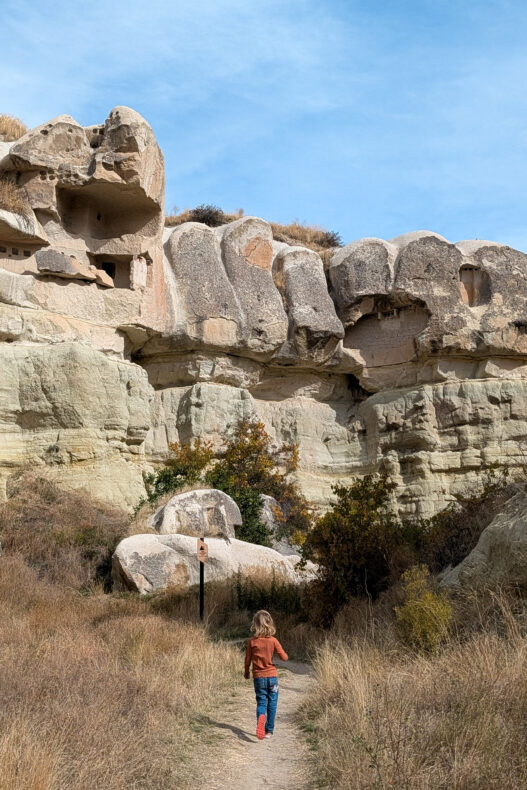
But don’t stay at the top. You can walk down into Love Valley and wander between the formations, and only from below do you realise how huge they are. It’s free and you can explore on your own. We enjoyed it far more than some of the paid sights with similar rocks.
#4 Rose Valley: exploring ancient cave churches
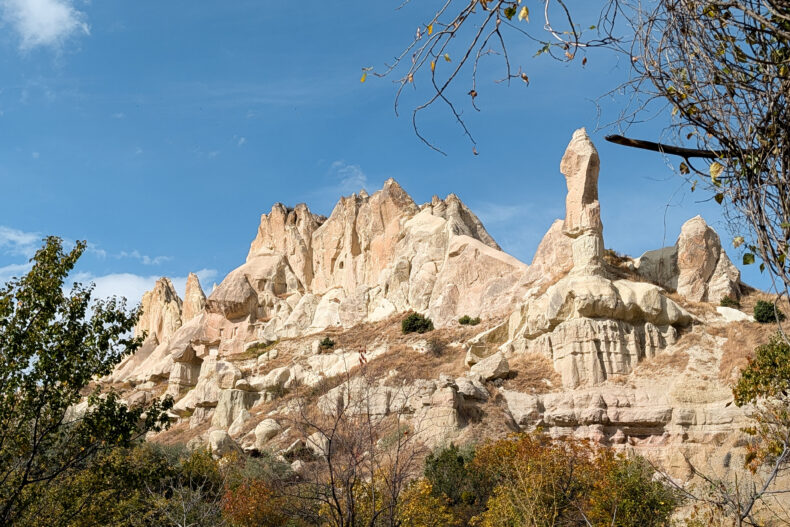
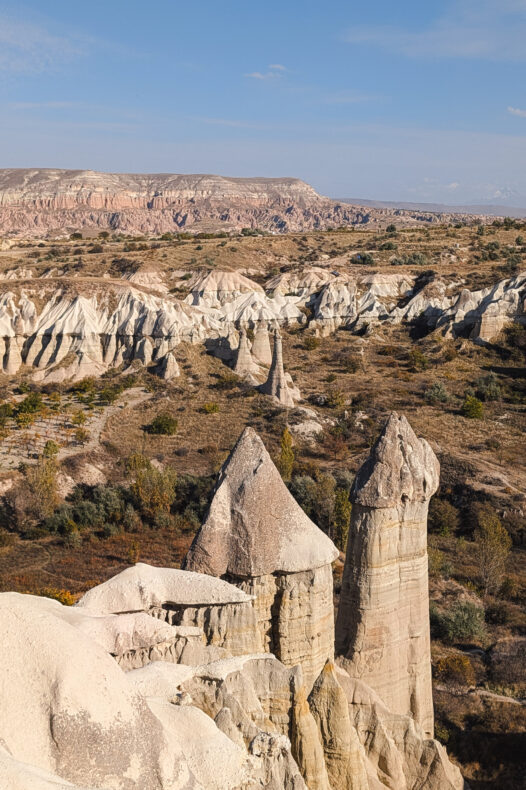
Rose Valley was one of our favourite walks in Cappadocia. The pink and soft red rock faces are gorgeous, but it was the remote cave churches along the way that made it special. The trail winds through a jumble of rock formations, dotted with ancient churches and cave dwellings.
We walked a loop past Three Crosses Church, Cross Church, Joachim & Anna Church and Column Church. Some are small and simple; others have several rooms, intriguing columns or centuries-old paintings. The best part was finding them ourselves, without the crowds and queues of Göreme Open Air Museum.
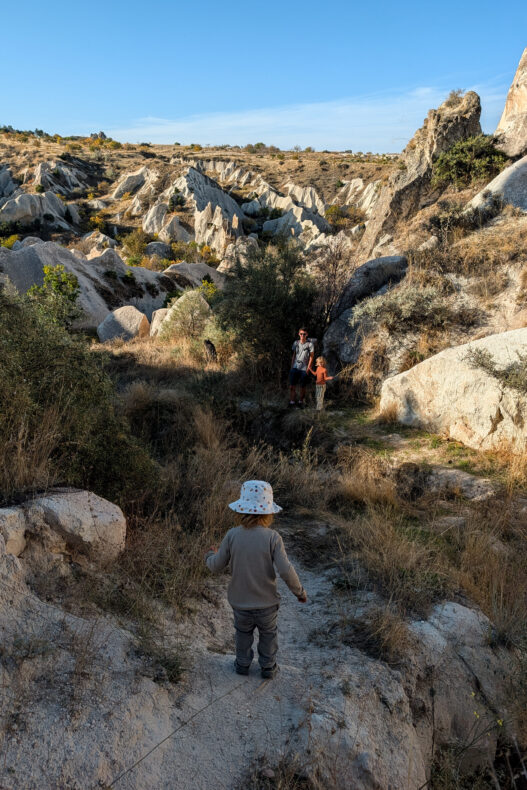
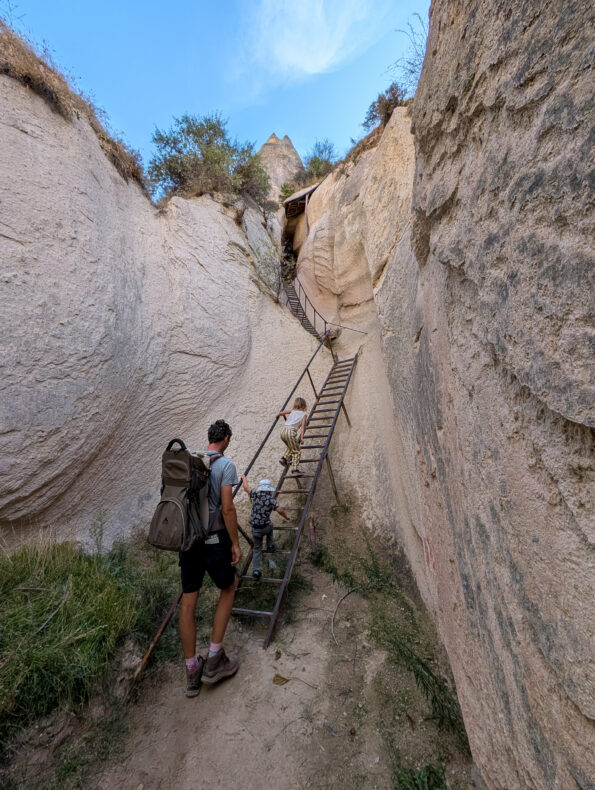
The walk itself is a treat too. The path twists between the rock walls, with a new view around every corner. There are a few steep climbs, including one where you haul yourself up on a rope. We did it with our 3- and 5-year-old, so if you’re steady on your feet and wear proper walking shoes, it’s not too tough. Along the way, you’ll pass little cafés serving mostly tea, coffee and fruit juice. Prices are higher than elsewhere, but the setting makes up for it.
#5 Red Valley and Meskendir Valley: tunnels, ladders and adventure
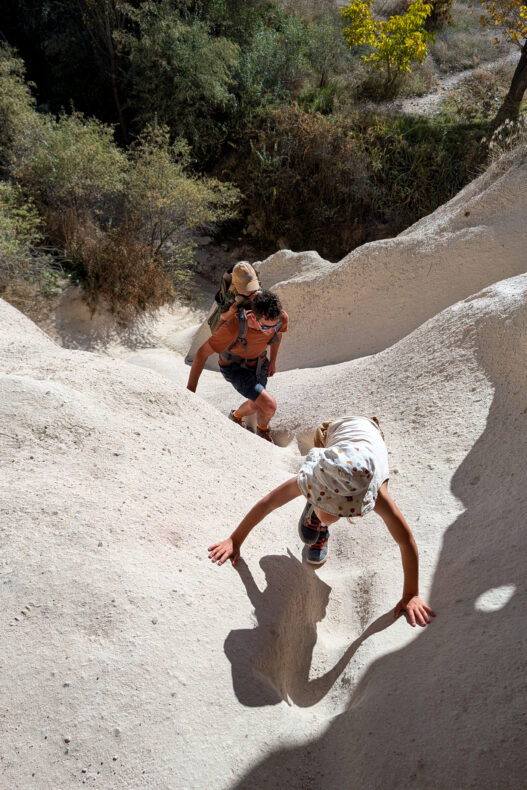
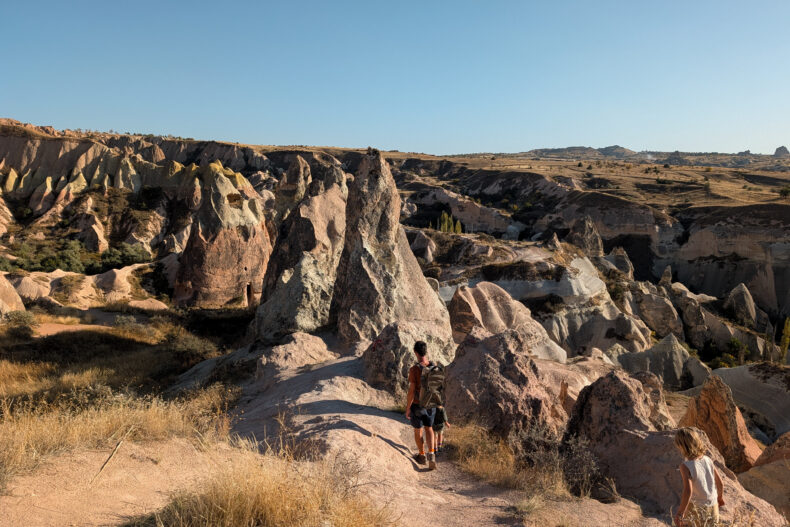
This was easily one of our most adventurous walks in Cappadocia. Many valleys are mostly about the views, but Meskendir and Red Valley feel like a proper expedition. We squeezed through narrow tunnels, clambered up ladders and found more cave churches along the way. Our kids loved every minute.
We started at the top of Meskendir Valley and headed down towards Meskendir Church. From there, we carried on to the point where Meskendir, Rose and Red Valley meet, and turned into Red Valley. Tunnels and ladders took us to the end of the valley. Towering rock walls, narrow passages and sweeping views: it was spectacular. Meskendir in particular felt quiet and off the radar. We didn’t see another soul.
Do watch your step on this walk. There are steep drops around Meskendir Church, and some ladders and tunnels involve a bit of scrambling. With young kids like ours, keep them close. The routes aren’t clearly marked everywhere, so we navigated with Mapy.com’s offline walking maps.
Tip: looking for another walk near Göreme? Swords Valley is another option, with narrow passages and striking rock formations.
#6 Pigeon Valley: walking among ancient dovecotes
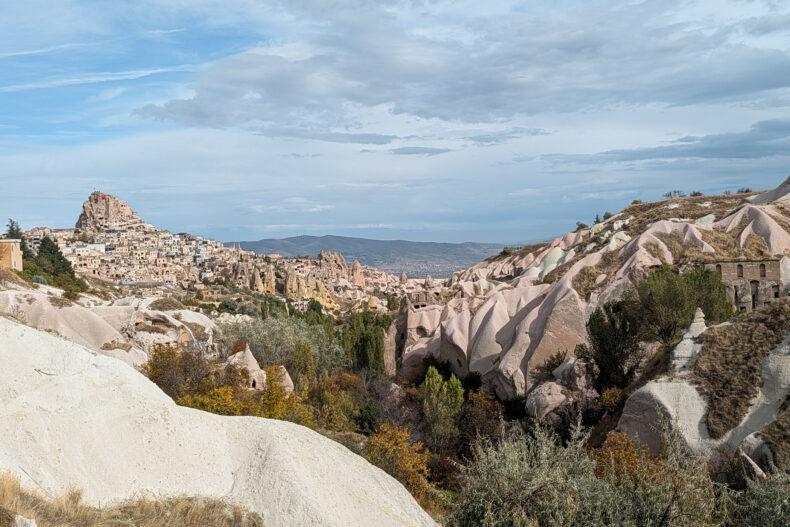
Thousands of tiny holes in the rock, a scenic trail between Uçhisar and Göreme and one striking formation after another. Pigeon Valley is a lot more than its name suggests.
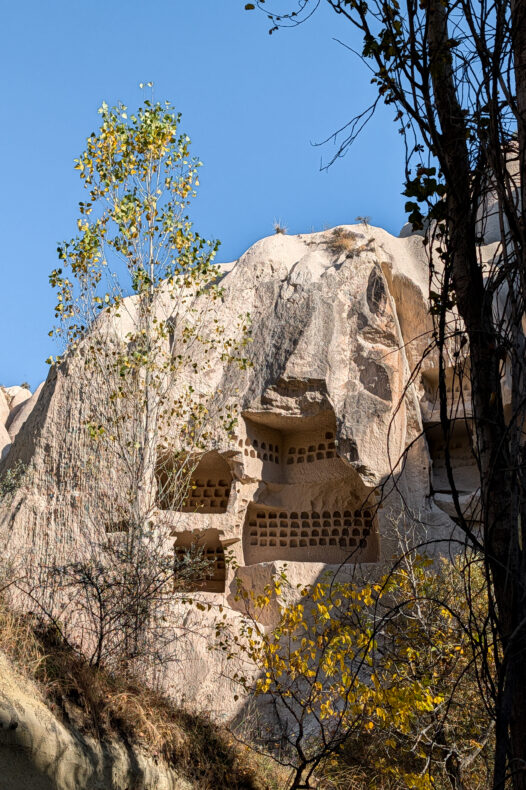
That name comes from the centuries-old dovecotes you’ll spot in the rock faces everywhere. Locals carved small nesting holes for pigeons and collected the droppings to fertilise their fields and vineyards. Once you know what to look for, you’ll see these dovecotes all over the region.
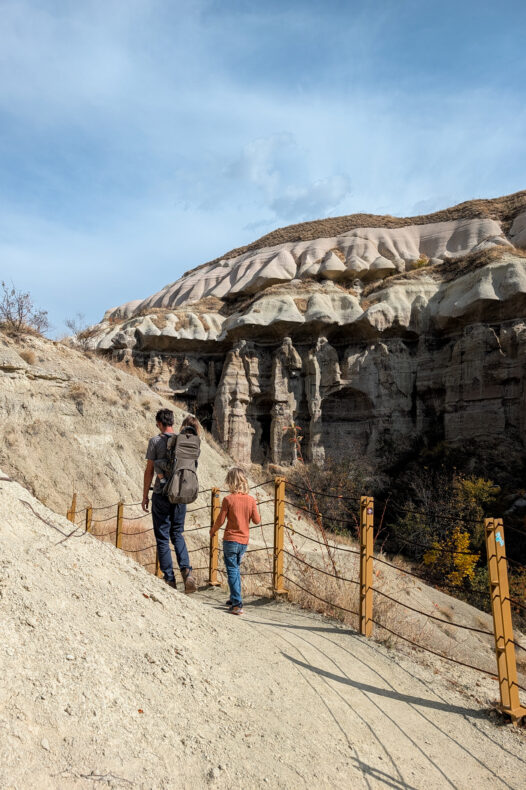
We walked the whole of Pigeon Valley from Uçhisar to Göreme. That’s the smart direction, as it’s mostly downhill. Only the middle section is a bit tougher, with some ups and downs. You can also join halfway, roughly level with Uçhisar Castle, which takes you straight to the most spectacular part. The walk was doable with our 3- and 5-year-old, although our youngest was also happy to ride in the child carrier. Back in Göreme, we had lunch and took a taxi back to our starting point near Uçhisar.
Tip: close to Göreme, a short dead-end path leads past rock formations similar to those in Love Valley. Some have cave dwellings, and a few still seem to be lived in. Well worth the small detour.
#7 Paşabağ: famous fairy chimneys in Monks Valley
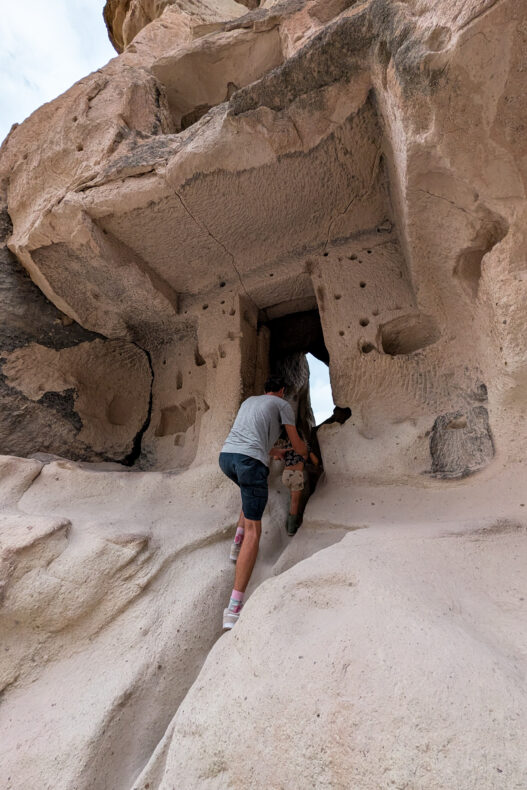
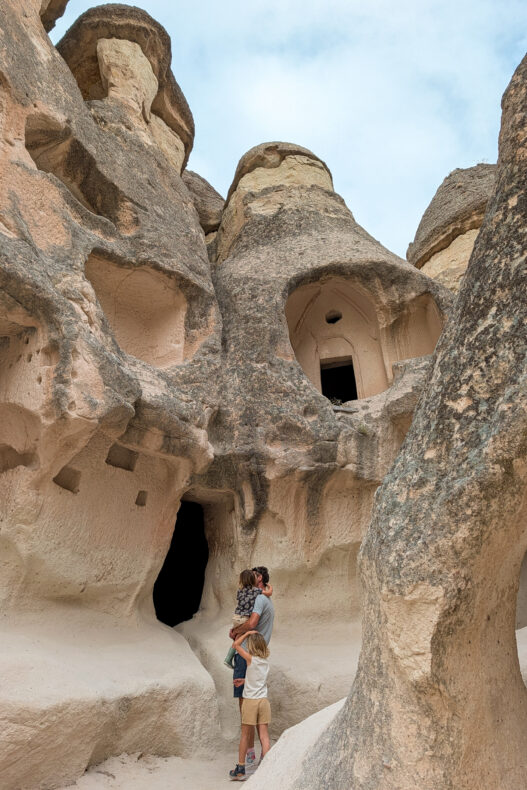
Giant stone mushrooms, some with as many as three rock caps stacked on top of each other: Paşabağ has perhaps the most famous fairy chimneys in Cappadocia. It’s also called Monks Valley, because monks once lived in the hollowed-out rocks. There’s even a tiny rock-cut chapel.
Sounds unmissable, right? We weren’t so sure. The formations are beautiful, but the entrance fee and all the posts and barriers took away much of the magic for us. It all felt a bit too managed, while we enjoyed Cappadocia most when we could roam freely among the rocks. Paşabağ is certainly special, but if you’re already visiting Love Valley, we wouldn’t call it essential.
Tip: the best bit is where you can climb inside some of the rock formations. It’s slightly tucked away, so don’t miss it.
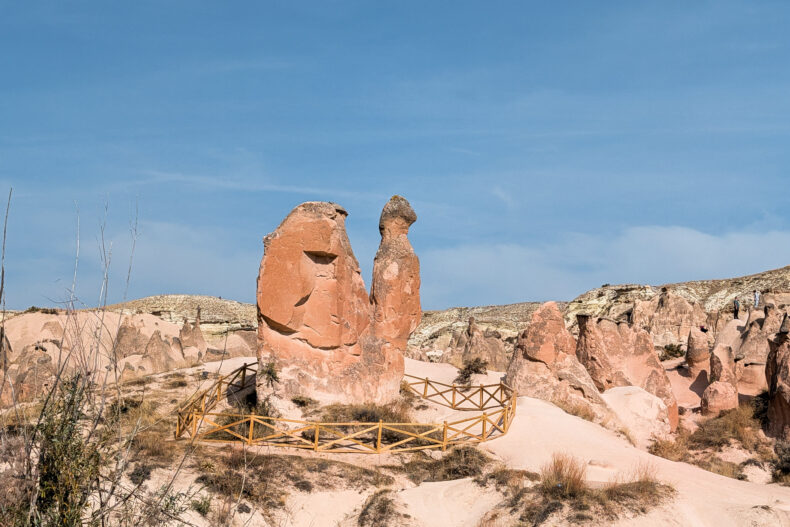
#8 Devrent Valley: can you spot the camel?
A camel, a seal, maybe a dolphin? Devrent Valley lets your imagination run wild. Centuries of erosion have sculpted the rocks into all sorts of shapes. The most famous one looks exactly like a camel, but look past it and you’ll find plenty of other figures. Hence its nickname: Imagination Valley.
We enjoyed a quick look around, but didn’t find it spectacular. The area around the famous camel rock was busy and touristy. The other formations are pretty enough, but after the valleys we’d already seen, Devrent didn’t leave much of a mark.
If you’re nearby, it’s fine for a short stop, or just look out of the window as you drive past. We wouldn’t go out of our way for it.
#9 Ihlara Valley: a green gorge filled with cave churches
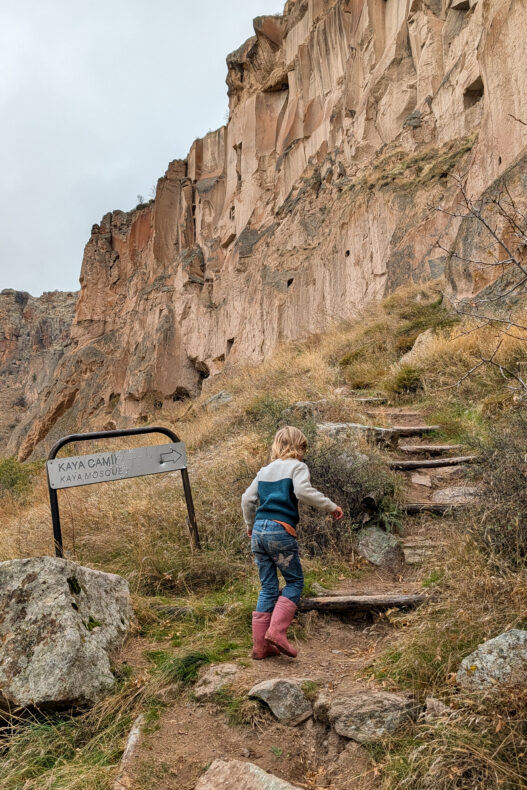
Fancy a complete change from the dry rock landscapes around Göreme? Head to Ihlara Valley. In this deep, green gorge, a river flows between high rock walls. You walk under trees, along the water and past dozens of ancient cave churches. Quite the contrast with the rest of Cappadocia.
We parked our campervan at the northern end of the valley and set off on foot from there. A lovely way to explore the gorge, but the best-known cave churches are further south, in the paid section. We skipped those, as we’d already seen so many cave churches elsewhere.
Ihlara Valley is about an hour and a half’s drive from Göreme, in a different part of Cappadocia from the main sights. Make a day trip of it, for example combined with Selime Monastery at the northern end of the valley.
Tip: after a lesser-known valley with historic cave churches? Soğanlı Valley is said to be beautiful too, and it also lies outside the main tourist area around Göreme.
Cave dwellings, cave churches and underground cities
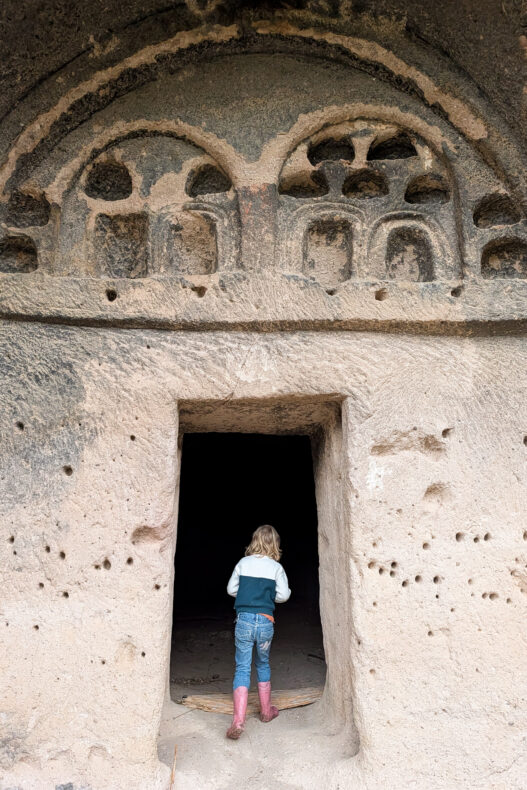
Perhaps even more remarkable than the rocks themselves is everything people have carved into them over the centuries: entire homes, monasteries, churches and even underground cities. Dark openings pepper the rock faces, sometimes hiding a network of passages or a church covered in ancient frescoes. We loved exploring them, although not every famous sight won us over.
#10 Göreme Open Air Museum: Cappadocia’s most famous cave churches
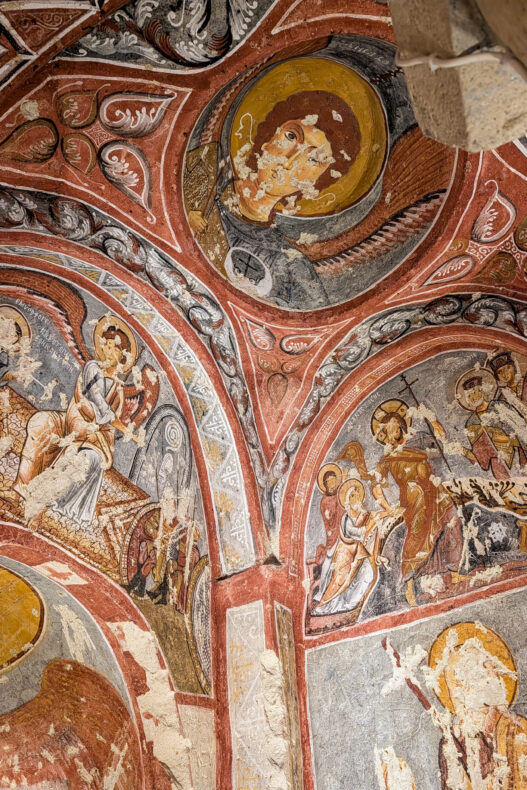
Göreme Open Air Museum is one of Cappadocia’s best-known sights. This former monastery complex is home to a cluster of churches carved into the soft volcanic tuff from the Middle Ages onwards. The real draw is the colourful frescoes. Some are over a thousand years old and show biblical scenes and saints. The complex and the surrounding rock landscape are a UNESCO World Heritage Site.
But would we recommend it? We were a little disappointed. Even early in the morning, it was packed, with queues outside several churches and a hefty entrance fee. The famous Dark Church, one of the highlights thanks to its well-preserved frescoes, costs extra.
Historically, these cave churches are special, and the frescoes do set them apart. But elsewhere in Cappadocia, we found beautiful cave churches we had almost to ourselves, often for free. We enjoyed those a lot more. If the famous frescoes are high on your list, Göreme Open Air Museum is still worth considering. Just don’t expect a quiet wander through empty caves.
#11 Zelve Open Air Museum: wandering through an abandoned cave village
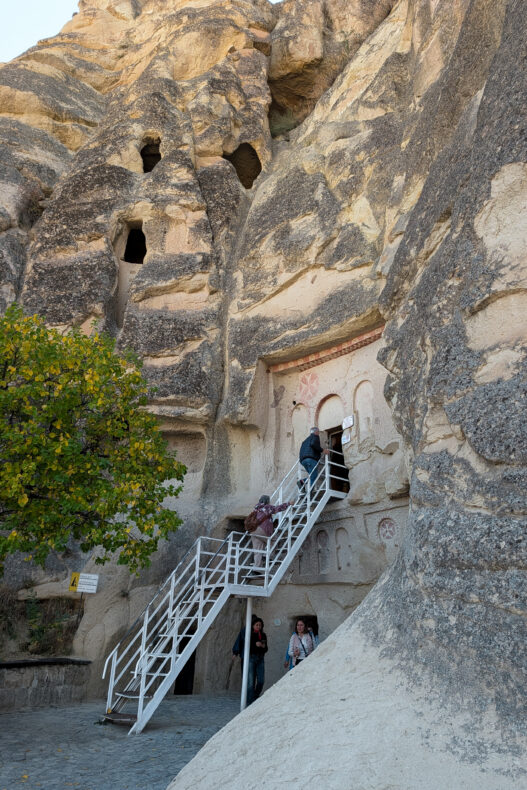
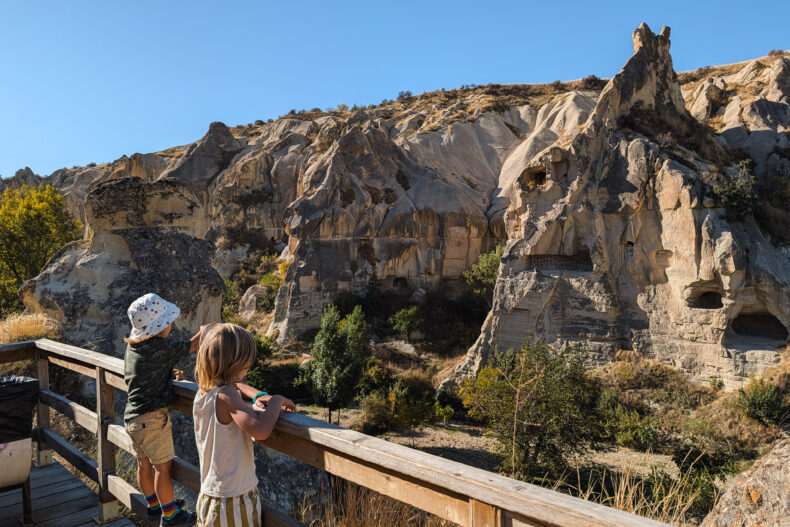
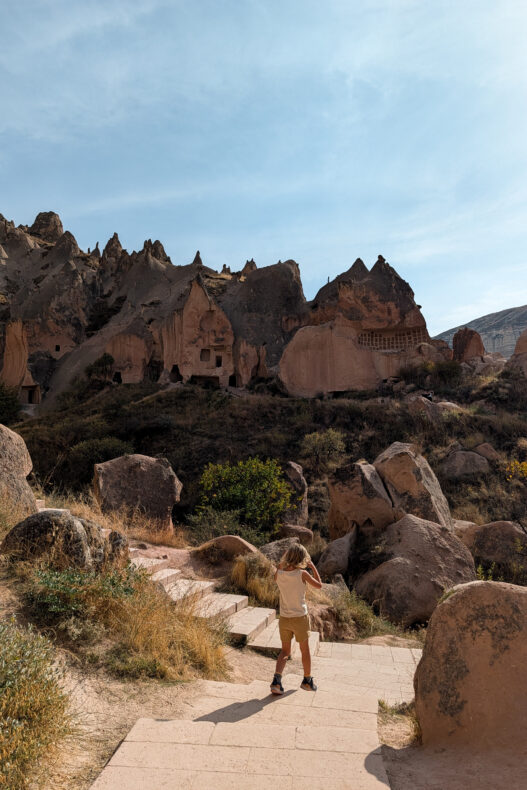
Imagine living in a house carved entirely out of rock. Instead of brick walls, you have rooms, stairs and corridors cut straight into the stone. Zelve Open Air Museum shows how people lived among Cappadocia’s rocks for centuries.
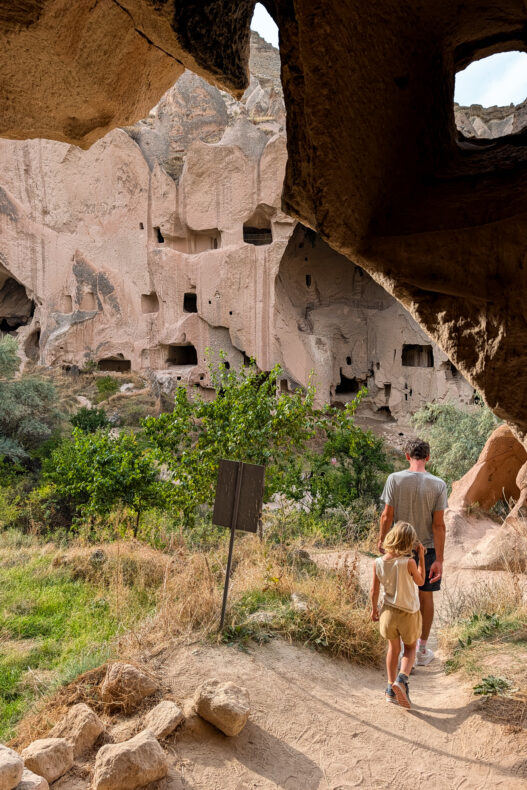
Zelve stretches across three valleys full of former cave dwellings, churches, a mosque and other hollowed-out spaces. People lived here until the mid-twentieth century, when the village was abandoned because of the risk of collapse. Today, footpaths lead you between the rock houses, giving you a feel for what daily life here must have been like.
We loved the idea of an entire abandoned cave village. The rock faces are riddled with openings, and you keep wondering what lay behind them. Keep in mind that not every room is open. During our visit, Üzümlü (Grape) Church and Balıklı (Fish) Church were closed, for example.
Tip: another option is the old cave village of Çavuşin, which also has abandoned rock houses and historic churches. We haven’t been there ourselves.
#12 Secluded cave churches: our favourite discoveries in Cappadocia
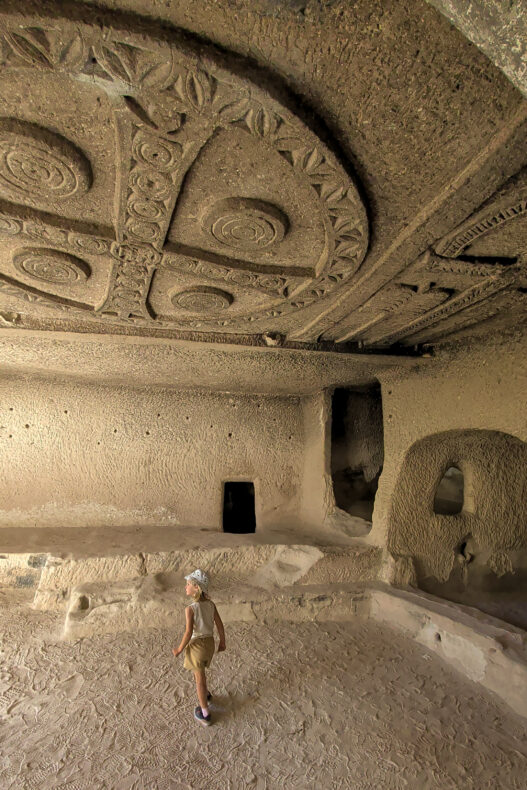
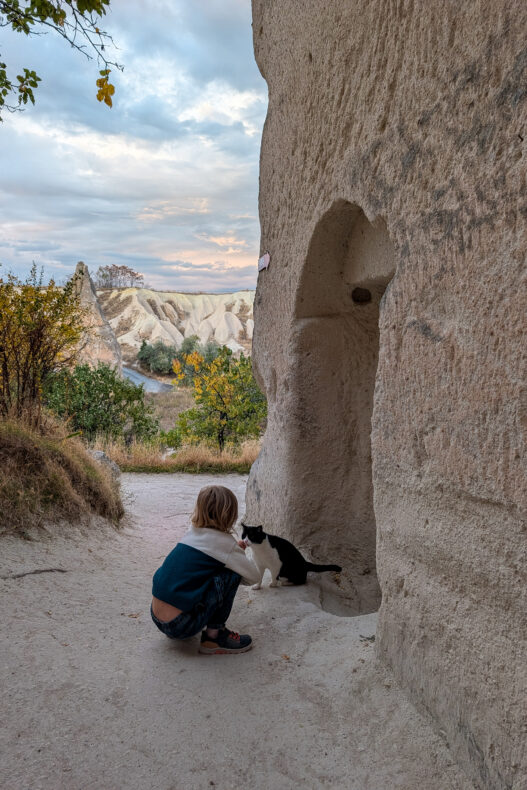
Why queue at Göreme Open Air Museum when you can track down ancient cave churches yourself? Dozens are hidden in the rocks across Cappadocia’s valleys. Some are little more than a small carved room; others have ornate columns, wall paintings or entire networks of passages. Best of all, you’ll often have them almost to yourself.
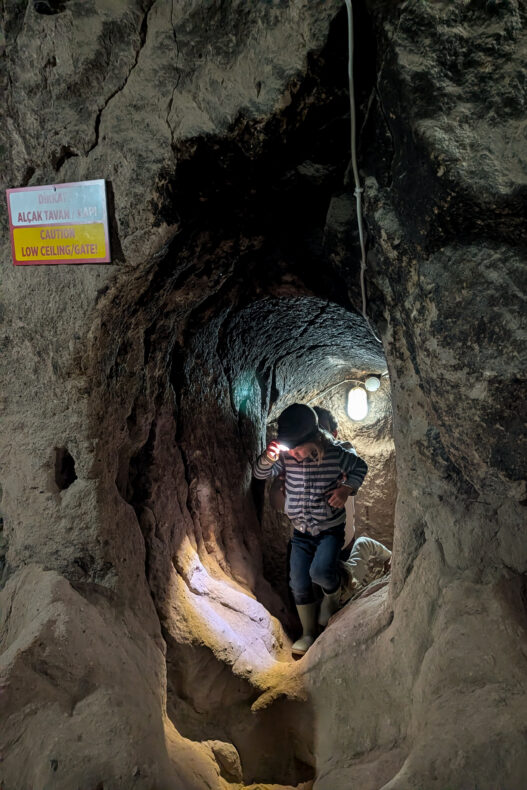
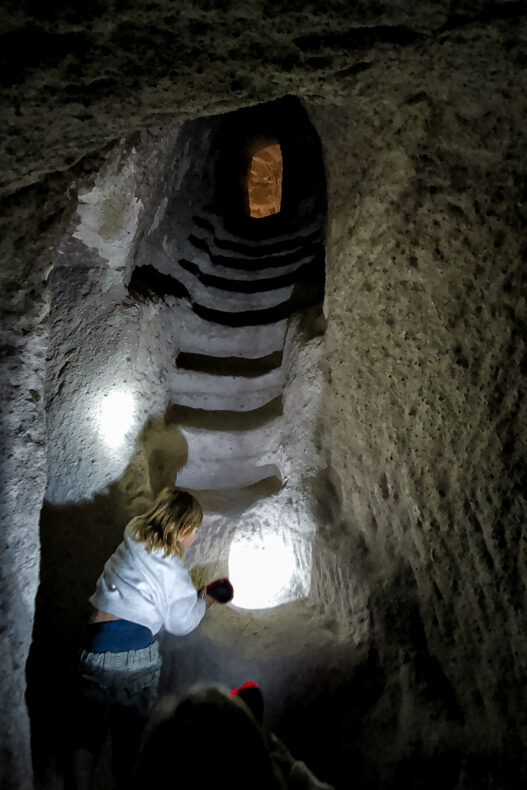
One of our absolute favourites was Aynalı Kilise (Mirror Church), not far from Göreme. From the outside, you’d never guess how much is hidden in the rock. We got a torch at the entrance and were free to explore. We found several rooms, old paintings, a dovecote and even two round stone doors. The highlight was a long, low tunnel snaking through the rock. What an adventure! We paid 100 TL per person and found it one of the most fun places in Cappadocia. You can drive right up to it.
On our walks through Rose Valley and Meskendir Valley, we stumbled on more cave churches worth seeking out. Three Crosses Church takes a steep climb to reach. Column Church is better known, so it can be busier. At Joachim & Anna Church, you climb in through the window to find a large dome, and Meskendir Church involves some scrambling and care around the steep drop. Sometimes you have to clamber a bit or hunt for the entrance, but that’s half the fun.
Our advice? Look beyond the big museums and seek out these smaller churches on your walks. Bring a torch, or use your phone’s, and wear shoes with good grip. There’s no reception everywhere, so use an offline walking map. Our favourite, Mapy.com, shows the cave churches too. Watch your step: some caves sit next to steep drops, and not every room is safe to enter.
#13 Derinkuyu and Kaymaklı: entire cities underground
An underground city on several levels, with bedrooms, storerooms, kitchens and even stables. It sounds almost too wild to be true, but dozens of underground cities have been found in Cappadocia. The best known are Derinkuyu and Kaymaklı.
Derinkuyu is the deeper of the two, reaching about 85 metres below ground. In times of attack, it sheltered thousands of people. Narrow passages and stairways link the levels, huge round stone doors could seal them off, and ventilation shafts brought in fresh air.
We visited Derinkuyu Underground City and it was a nightmare. And it wasn’t even that busy yet: the real crowds arrive later in the day. The problem is that the passages are so narrow and low that one big tour group in the wrong spot brings everything to a standstill. You end up queuing underground, barely able to stand up straight, with no room to look around or stop. Instead of taking in the history, all we could think about was getting back outside. We saw other visitors turn around before they’d even reached the deepest levels.
That doesn’t mean everyone will have a bad time in an underground city. The history is fascinating. Just don’t underestimate the tight passages or the crowds.
Kaymaklı is shallower than Derinkuyu, but also has narrow tunnels and low passages. We haven’t been, so we can’t say whether it’s more pleasant, but we’ve heard similar stories.
Tip: prefer a lesser-known underground city? Have a look at Özkonak or Mazı Underground City. Both are far less famous than Derinkuyu and Kaymaklı, so they may be quieter. Özkonak is known for its clever defence system, with small holes between the levels, while Mazı has an extensive network of tunnels and rooms. We haven’t visited either, but they look like good alternatives if you want to avoid the biggest crowds. Expect tight, low passages here too.
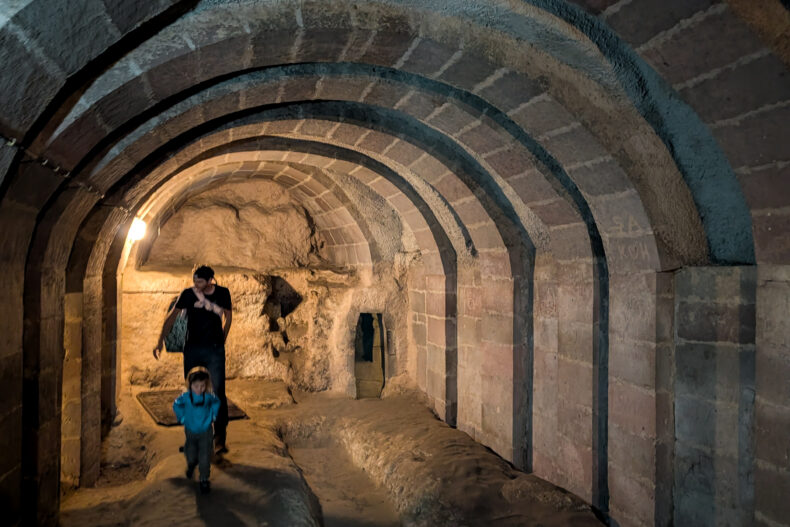
#14 Selime Monastery: an enormous rock-cut monastery
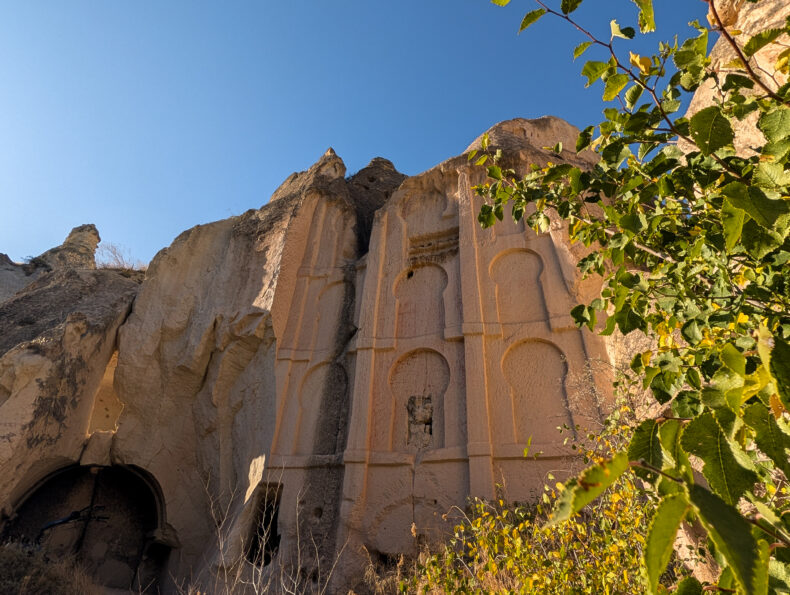
From a distance, Selime Monastery looks almost like a fairy-tale castle. Huge rocks rise above the village of Selime, and centuries ago an entire monastery complex was carved into them. Inside are former living quarters, a large rock-cut church, passages and connecting rooms.
The monastery sits at the northern end of Ihlara Valley, so it’s easy to combine with a walk through the gorge. The highlight is the vast cathedral church, with tall carved columns and a huge space hollowed out of the rock.
We drove past Selime in our campervan and admired the monastery and caves from the road, without going inside. Even from the outside, those massive rocks full of openings are quite a sight. Heading to Ihlara Valley anyway? Then Selime is a logical stop on your route.
#15 Uçhisar Castle: Cappadocia’s highest viewpoint
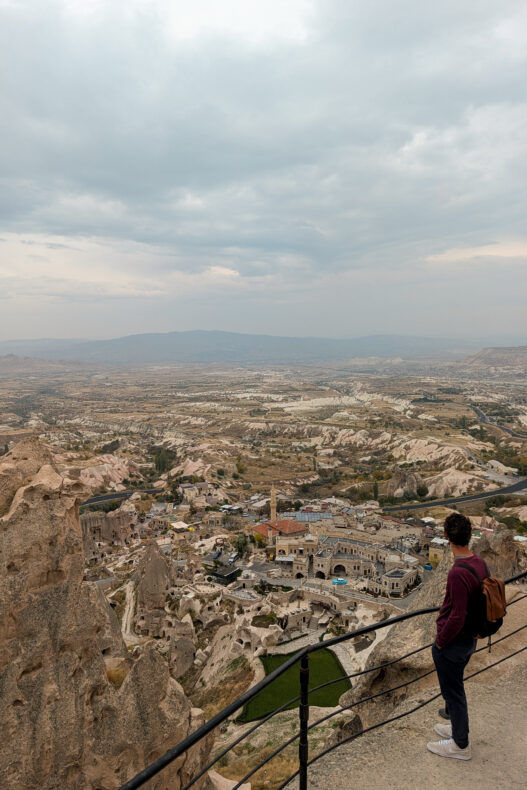
A giant rock towers over the houses in the centre of Uçhisar. This is Uçhisar Castle, an ancient rock fortress that looks a bit like a huge chunk of Swiss cheese. Small windows, passages and rooms have been carved all through it. It once served as a stronghold and a place to shelter.
Today, steps lead to the top, where you get panoramic views over Cappadocia. On a clear day, you can see the surrounding valleys and fairy chimneys, with Mount Erciyes in the distance. It’s one of the highest natural viewpoints in the region.
The entrance fee can feel steep for a viewpoint, especially as Cappadocia has so many other places with great views. We actually preferred exploring the cave rooms lower down. Uçhisar itself is worth a stroll too, with houses built against and between the rocks.
Tip: Ortahisar has its own rock castle. The village is less well known than Uçhisar, and its huge rock fortress rises right between the houses. We haven’t been ourselves, but it could be a good alternative if you’d like to explore more historic rock villages.
Towns and villages to visit in Cappadocia
Between the valleys and cave churches lie several towns and villages worth a visit. Don’t expect big cities packed with grand buildings: in Cappadocia, the setting among the rocks is what makes them special. Göreme is a particularly handy base, while Avanos is known for a very different tradition: pottery.
#16 Göreme: the lively heart of Cappadocia
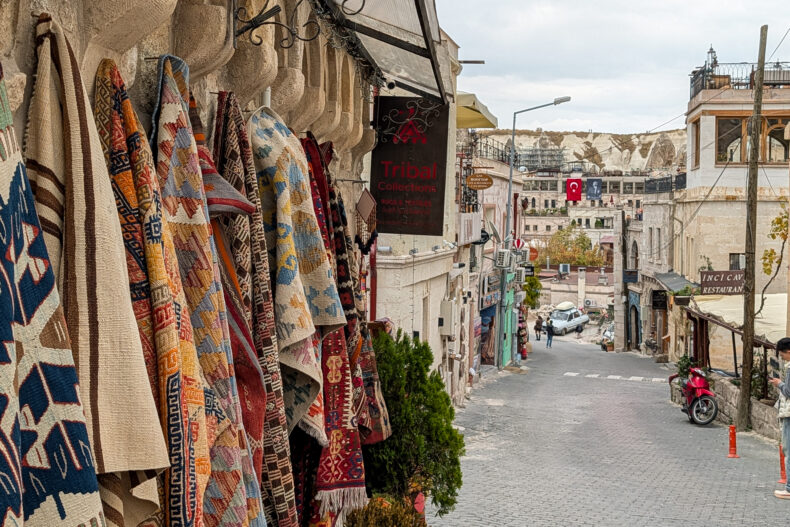
If there’s one place you won’t miss in Cappadocia, it’s Göreme. The village sits among the fairy chimneys, with houses, restaurants and hotels built against the rocks or carved right into them. Roof terraces look out over the landscape, and narrow lanes wind uphill between the formations.
Göreme is without doubt the tourist centre of Cappadocia. You’ll find plenty of souvenir shops, travel agencies, cafés and restaurants. Some restaurants, like Topdeck Cave Restaurant, Pumpkin Göreme and Cratus Premium Restaurant & Lounge, are so popular that it’s smart to book a table in advance.
Looking for something simple? We recommend Göreme Kadın Kooperatifi Kafe, right next to the bus station. They make fresh gözleme: thin Turkish flatbreads filled with things like cheese, spinach or potato. Casual, cheap and delicious.
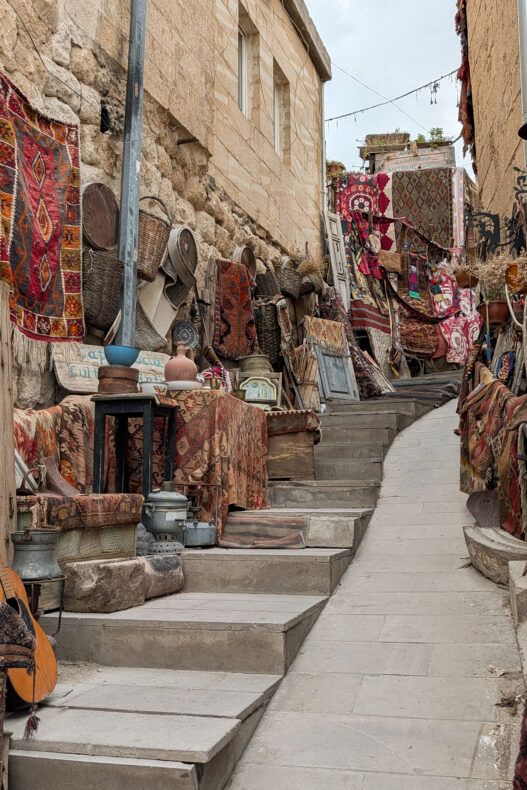
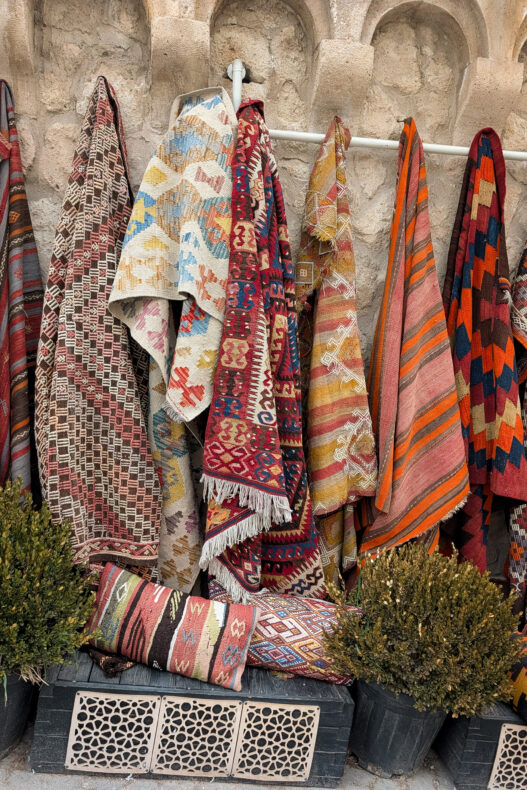
The many carpet shops are another Göreme quirk. Some are now best known as Instagram backdrops, where you pay a hefty fee to pose among hundreds of colourful Turkish carpets.
Touristy or not, Göreme’s setting among the rocks is fantastic. Especially early in the morning, when the balloons appear above the rooftops. The lively village also makes a perfect base for exploring Cappadocia. It has the widest choice of cave hotels, and many of the best valleys are close by. You can even walk straight out into the landscape, for example towards Pigeon Valley.
#17 Avanos: Cappadocia’s pottery town
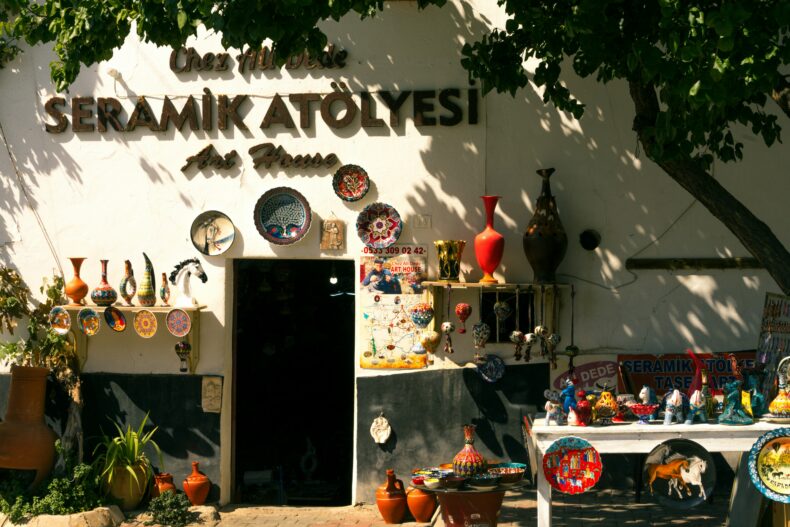
Ready for something different after all those rocks and cave churches? Take a trip to Avanos, a town on the Kızılırmak, Turkey’s longest river. Avanos has been famous for its pottery for centuries. Clay from the river is turned into pots, vases and other ceramics, a tradition that’s still very much alive.
In the old centre, several workshops let you watch the potters at work. You can also sit down at the wheel and try making a pot yourself. It’s harder than it looks! A workshop makes a nice change from walks and historic sights, especially with kids.
We skipped Avanos ourselves, but if you’re into traditional crafts or fancy trying a pottery workshop, it’s worth considering.
Bonus tip: Gümüşler Manastırı, an impressive rock-cut monastery near Niğde
How many rock-cut churches and monasteries can you see before they all start to look the same? We’d already seen quite a few, but Gümüşler Manastırı, or Gümüşler Monastery, still made a big impression. This ancient monastery near Niğde lies well away from Cappadocia’s tourist heartland. We came across it almost by chance and had no idea what to expect.
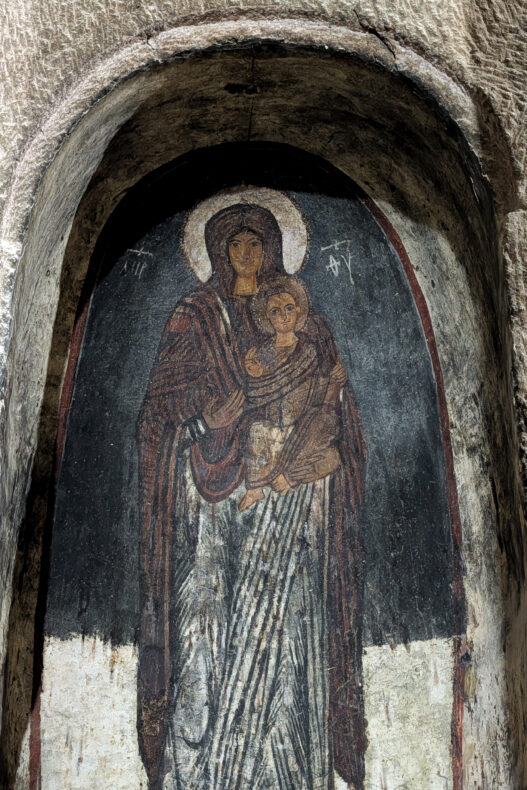
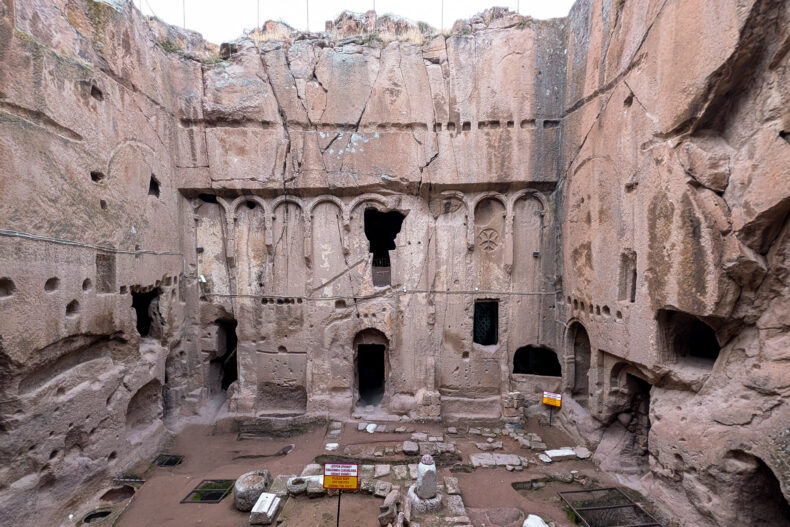
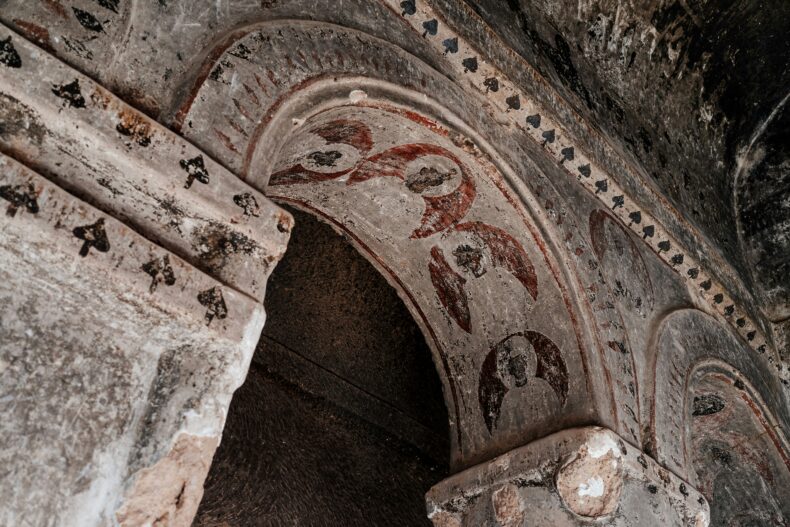
The courtyard alone is extraordinary. Picture a huge square enclosed by rock walls 11 to 14 metres high. That entire square was dug down into the solid rock from above, and rooms, passages and a church were then carved into its walls. The church is famous for its ancient frescoes, including a rare depiction of a smiling Virgin Mary. They were beautiful, although from everything we’d heard, we’d expected more painted rooms.
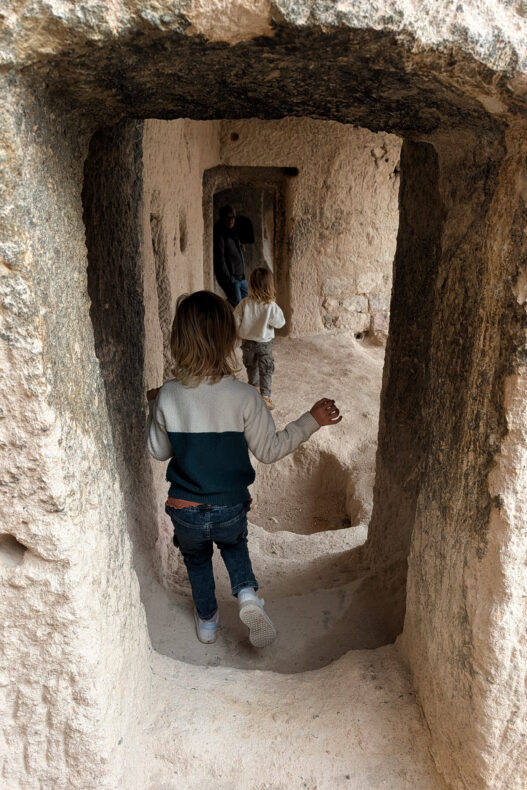
Luckily, there was plenty more to explore. We wandered through dark tunnels, found stairs to upper rooms and kept being surprised by how big the complex is. All around the monastery lies an old rock-cut settlement, full of carved-out homes.
Gümüşler Monastery is just over an hour’s drive from Göreme, so it’s not the most obvious stop on a short trip to Cappadocia. But if you’re staying longer or heading further south, as we were, we definitely wouldn’t skip it.