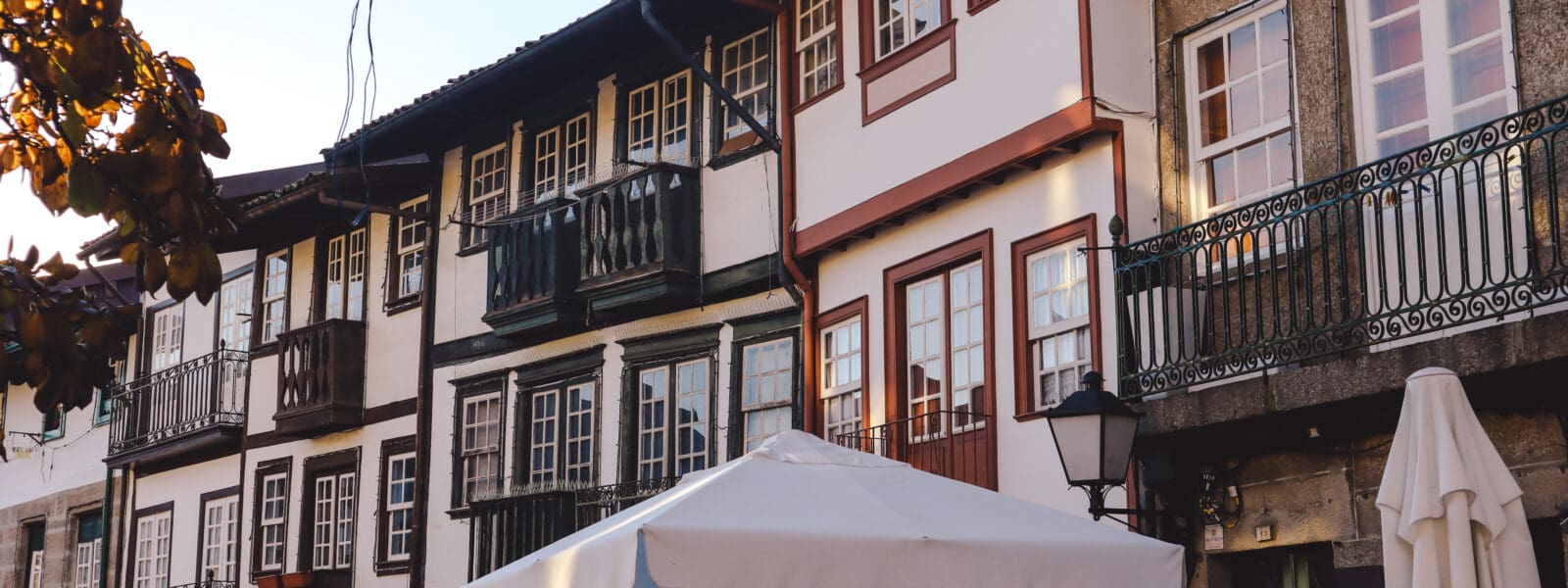
A castle and a palace, an authentic historic centre, a wooded hill crowned by a sanctuary and much more: Guimarães has plenty to see. It’s one of the historic gems of Northern Portugal and is best known for its medieval old town, which is rightly a UNESCO World Heritage Site. In this blog we share the best things to do in Guimarães, plus practical tips for your visit.
Where is Guimarães in Portugal?
Guimarães lies in the north of the country and is one of the best-known destinations in Northern Portugal. The nearest international airport is Porto, the obvious place to fly into if you want to explore the north.
This charming town is within easy reach of more iconic places. Northwest of Guimarães lies the stunning Peneda-Gerês National Park against the Spanish border, a paradise for hikers and nature lovers and, for us, a real must in Northern Portugal.
A short drive north takes you to Braga, known for its historic churches and lively city life. Head southwest and in less than 45 minutes you’re in Porto. Many people visit the Douro Valley from there, so that’s not far from Guimarães either. The valley is famous for its scenery of picturesque villages and vineyards along the Douro river.
What is Guimarães known for?
Guimarães is a big draw for its historic centre, but to the Portuguese it’s above all the cradle of the nation, the place where Portugal was born. That’s why the words Aqui Nasceu Portugal (Portugal was born here) are proudly written on a wall in the old town.
The town is the birthplace of Afonso Henriques, the first king of Portugal. In Guimarães he declared Portugal’s independence from the kingdom of León, and later he proclaimed himself king of Portugal, a title eventually recognised by other countries and even the Pope. And the first capital of that new Portugal? Guimarães, of course. Not for long though, as the king soon ruled from Coimbra.
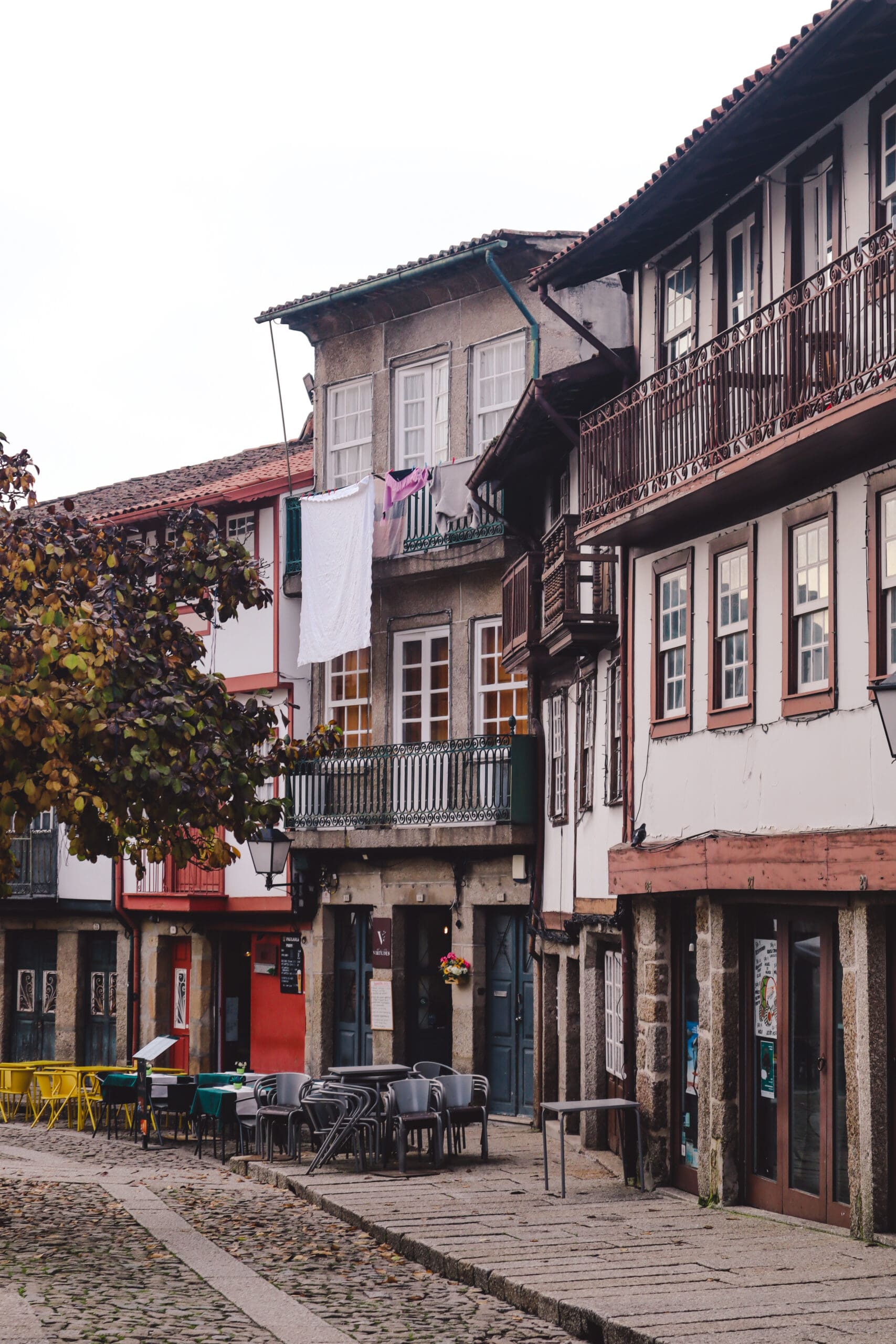
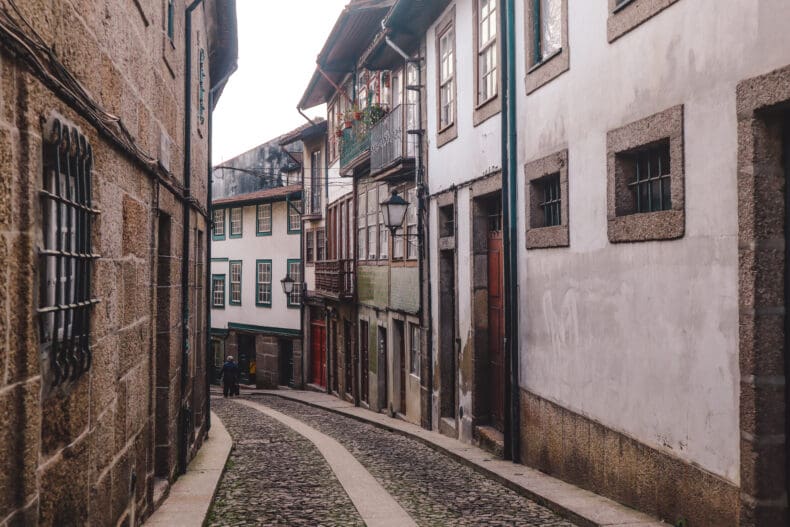
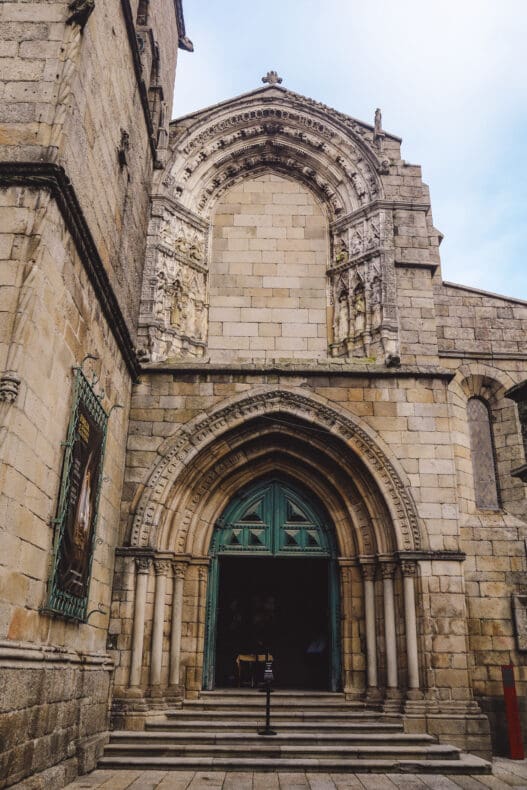
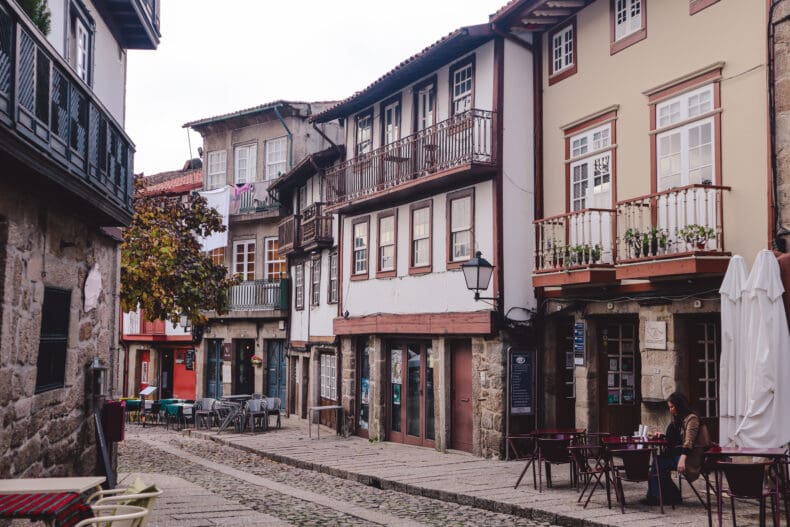
Beyond its historical importance, Guimarães is known for its beautifully preserved medieval centre, a UNESCO World Heritage Site since 2001. With its winding medieval lanes, its castle and its palace, the town is wonderfully photogenic and popular with travellers.
Which is better: Braga or Guimarães?
Compare Guimarães and Braga and you’ll find two places with a lot in common, but a very different character. Both are known for their rich history, characterful streets and a UNESCO listing: in Braga for its sanctuary, in Guimarães for its old town. Both also have a cable car or funicular up to a hilltop sanctuary, which in each case is one of the most fun things to do.
Despite those similarities, each has its own charm. Guimarães, often called the birthplace of Portugal and the country’s first capital, is older and feels more medieval. It’s known for its photogenic old streets, complete with an impressive castle and the beautiful Palace of the Dukes of Bragança. If you want a town where history shows in every street and alley, Guimarães is the one.
Then there’s Braga, known for its lavish baroque architecture and religious importance. Besides two impressive sanctuaries, including the famous Bom Jesus do Monte, it has a majestic cathedral, a basilica and a wealth of churches and chapels. With more than 30 churches, Braga has a spiritual feel all of its own. To us, Braga also felt less touristy.
In short, choosing between Guimarães and Braga depends on what you’re after. For a dive into medieval history and a fairytale atmosphere, pick Guimarães. For baroque beauty and religious splendour, Braga is your city. Our own preference goes to Guimarães.
That said, we think both are worth a visit and they combine easily. You’ll see day trips from Porto that cover both in one day, but we wouldn’t recommend that. There’s too much to see, and squeezing both into a day feels rushed. Give each city at least a day, and Guimarães maybe even two if you want to walk on Monte da Penha. We really recommend it!
Where to stay in Guimarães?
For where to stay in Guimarães, think lovely hotels, friendly hostels and beautiful luxury stays. In a town famous for its medieval centre you can of course expect historic hotels in authentic buildings. Those are the real gems, and that’s exactly what we picked out for you. A bit above your budget? We’ve also included two more affordable options.
Our favourite hotels and hostels in Guimarães:
#1 Hotel da Oliveira is one of the best-rated hotels in Guimarães, in an authentic building right on the famous Largo da Oliveira. Guests rave about the generous breakfast, the unbeatable location and the friendly staff.
#2 Pousada Mosteiro de Guimarães is one of the most luxurious places to stay, just outside town in a twelfth-century monastery. The individually decorated rooms open onto the old cloisters, and the gardens and outdoor pool are gorgeous.
#3 Casa do Juncal is inside the old town walls, in an eighteenth-century mansion with a garden you can look out on over breakfast. The rooms mix designer furniture and king-size beds with original details like beamed ceilings.
#4 Trovador City Guest House is an affordable option right next to the old centre. The rooms are modern and bright, some looking out over the lively square in front, and guests praise both the location and the value for money.
#5 Pousada de Juventude is a budget-friendly choice in a beautiful old building in the historic centre. There are dorms, double rooms and apartments, and every room has its own balcony.
The 12 best things to do in Guimarães
#1 The historic centre
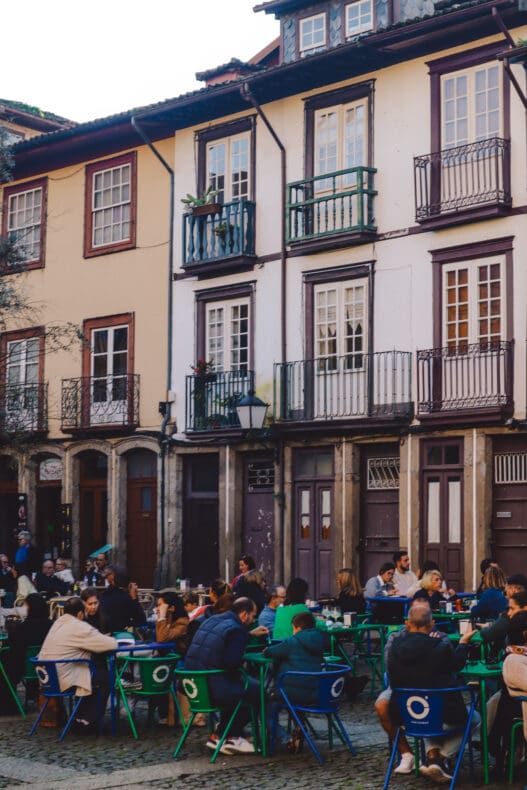
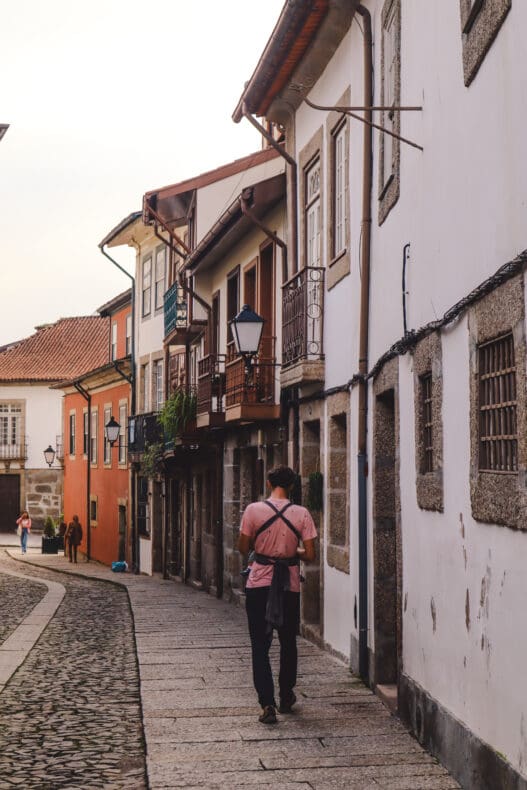
There’s a good reason the historic centre of Guimarães is a UNESCO World Heritage Site. It’s often called an open-air museum of medieval architecture, and we can see why. With a little imagination you can still divide the town into an upper and a lower part. The upper town, originally called Vila do Castelo, was once fully walled and is home to the imposing castle. The lower town stretches out to the lively centre, full of squares, lanes, houses and churches.
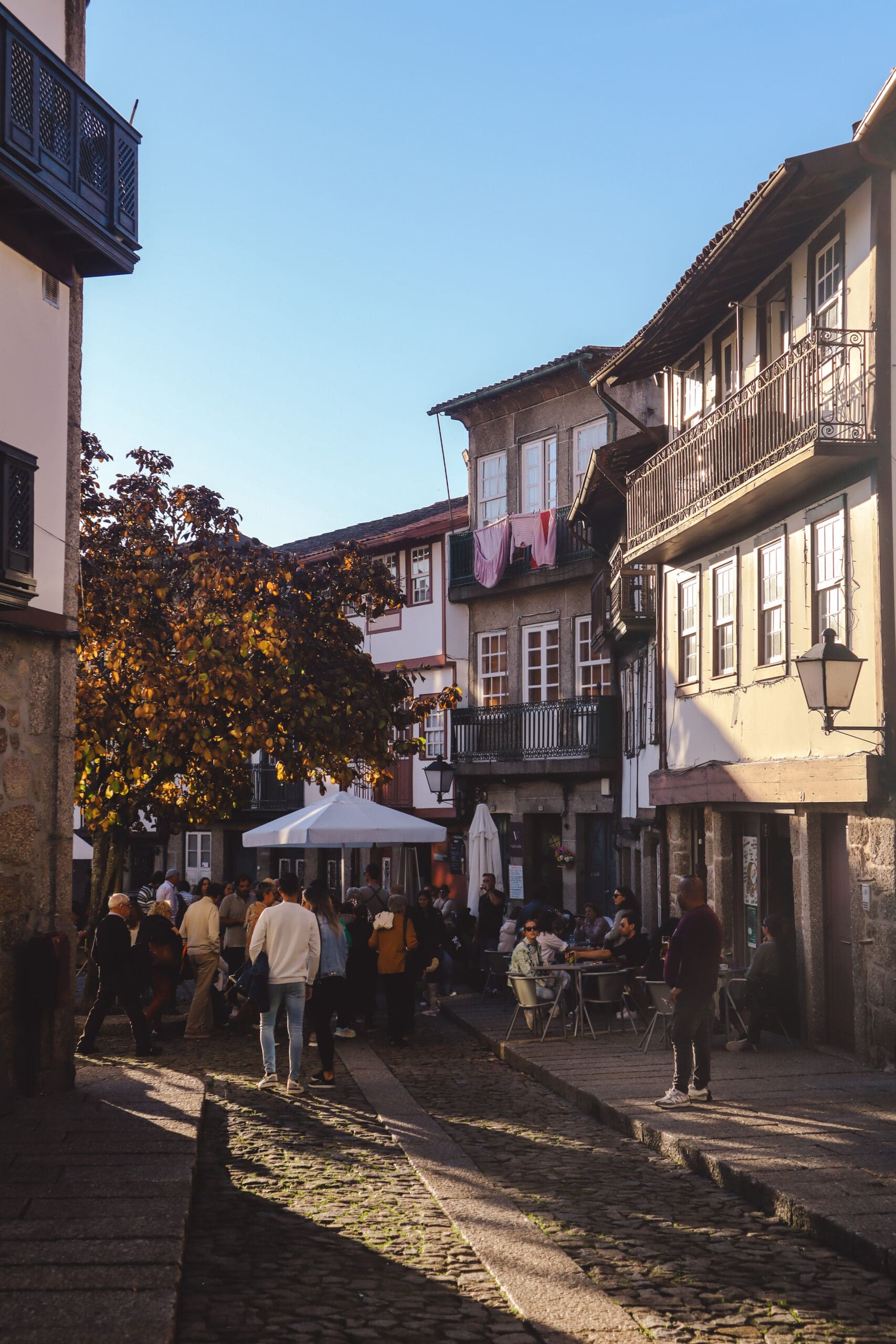
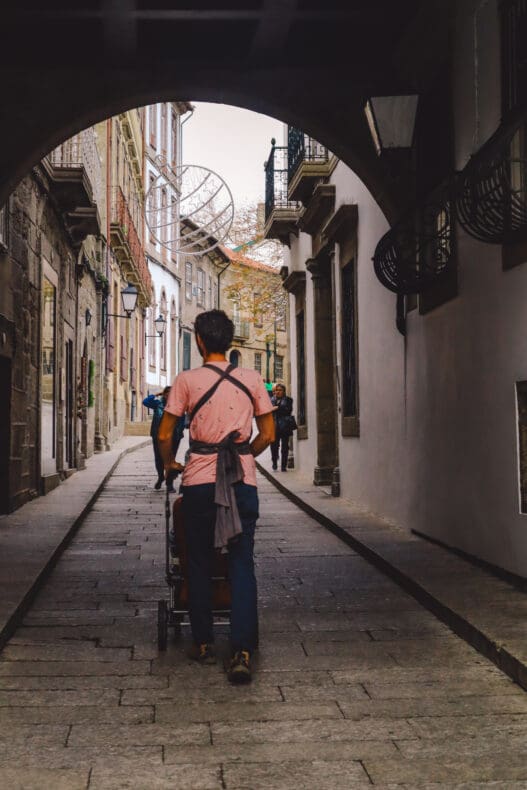
The narrow streets and old stone houses with their typical medieval timber upper floors take you back hundreds of years. Exploring these winding lanes and lively squares feels like a journey through history, and the well-preserved architecture, from traditional building materials to grand monuments, shows just how important Guimarães once was.
Information boards in English and Portuguese at many key buildings add background on their history and recent restorations.
#2 Castelo de Guimarães
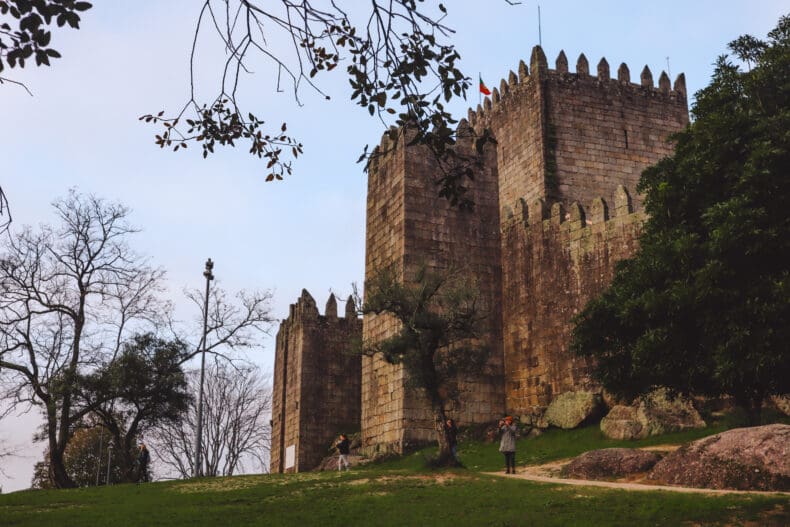
You can’t miss the Castelo de Guimarães, towering on a small hill next to the historic centre. It was first built in the tenth century and played a crucial role in defending the town. Over the centuries it was altered and rebuilt several times. The castle has been a National Monument since 1881 and is said to be one of the most complete and best-preserved medieval castles in Portugal.
With that reputation you might expect grand halls and majestic corridors to wander through, but sadly that’s not the case. The outside is still impressive, but there isn’t much to see inside. You can walk along the walls and climb a tower for a nice view over town. As far as we’re concerned, you might as well admire the castle from outside, because those majestic outer walls are what it’s really about.
An interesting spot on the castle grounds is the small medieval church of São Miguel do Castelo, where Portugal’s first king is said to have been baptised. It’s free to enter and rather plain inside. You walk a loop along the walls, as you can’t step into the middle where historic knights’ graves lie. Look closely and you’ll see inscriptions in the floor stones.
#3 Paço dos Duques de Bragança
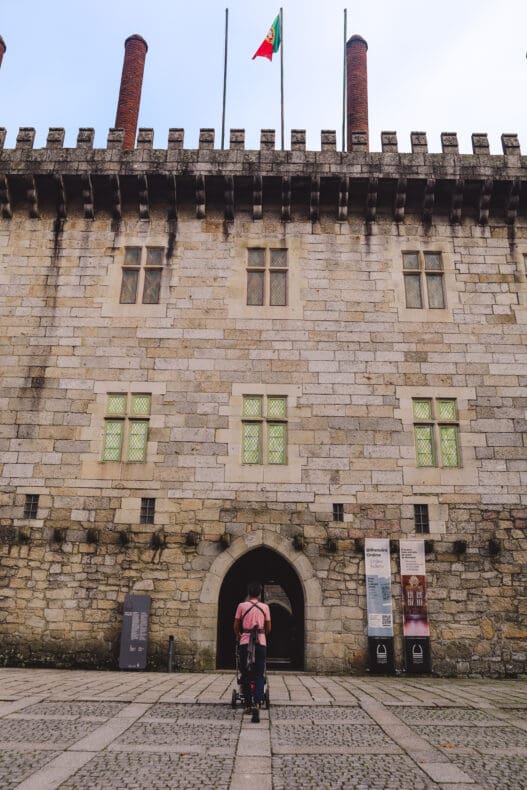
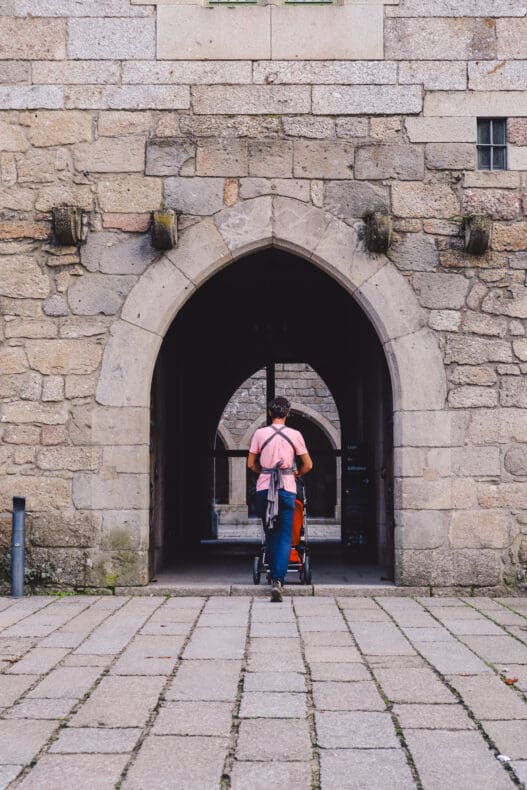
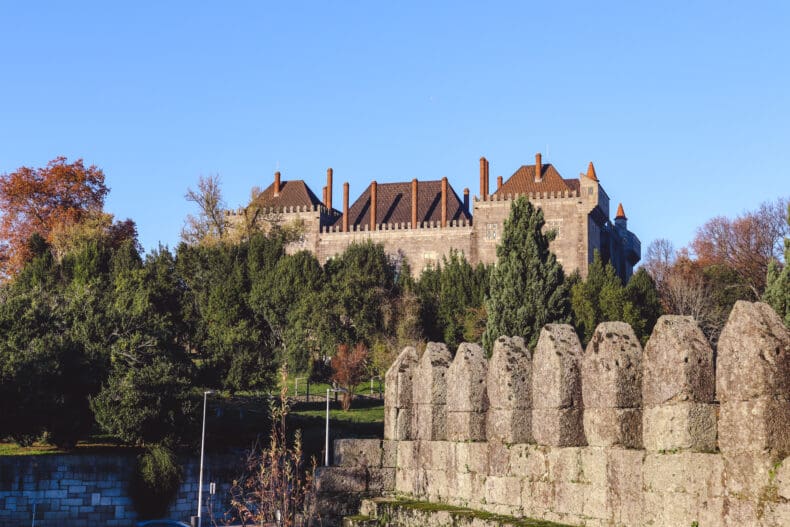
A stone’s throw from the castle stands the palace of Guimarães. Yes, this historic town has both a castle and a palace! It was built between 1420 and 1422 by the Duke of Bragança, after whom it’s still named, and it remained home to his descendants for a long time. When the Bragança family moved to Vila Viçosa in the Alentejo, the palace fell into decline, which only got worse in the nineteenth century when locals used it as a stone quarry.
Today the palace is a museum you can visit inside. From outside, the many chimneys on the roof are what stand out. The building is still the original palace, but after a thorough and somewhat controversial renovation in the 1950s, it may well look more lavish now than it ever did originally.
The museum holds a collection of medieval objects such as tapestries and paintings, and the rooms are filled with antique pieces to give you an idea of how people once lived here.
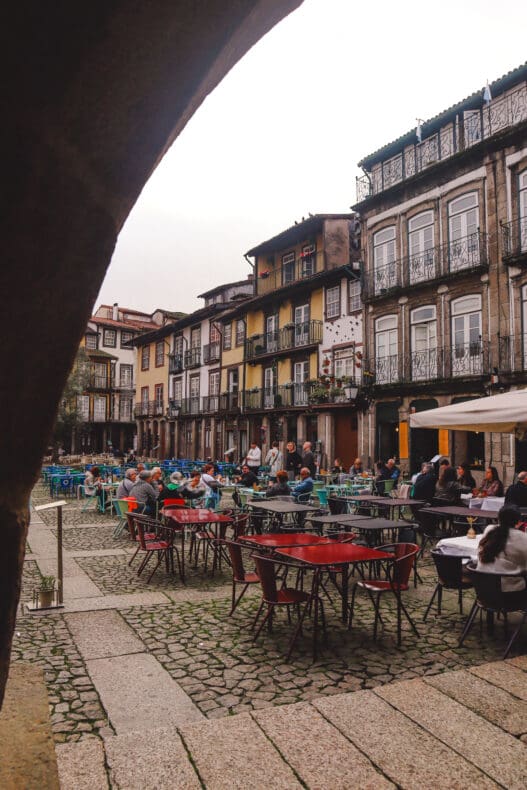
#4 The squares of Largo da Oliveira and Praça de São Tiago
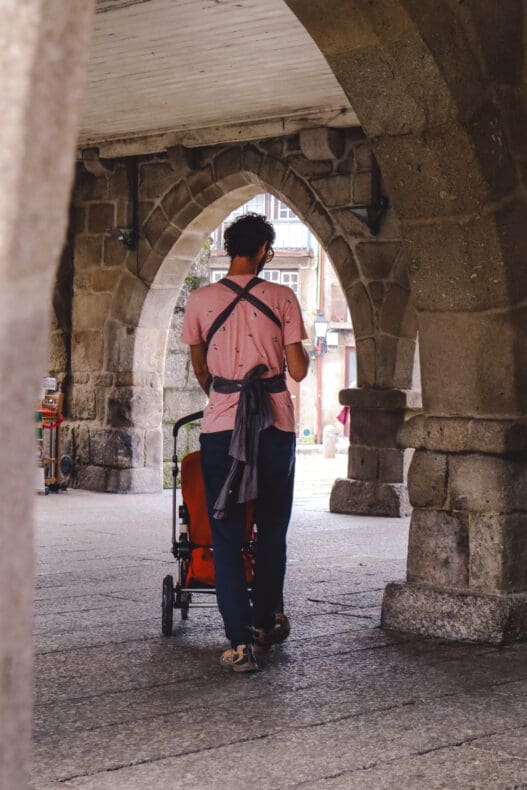
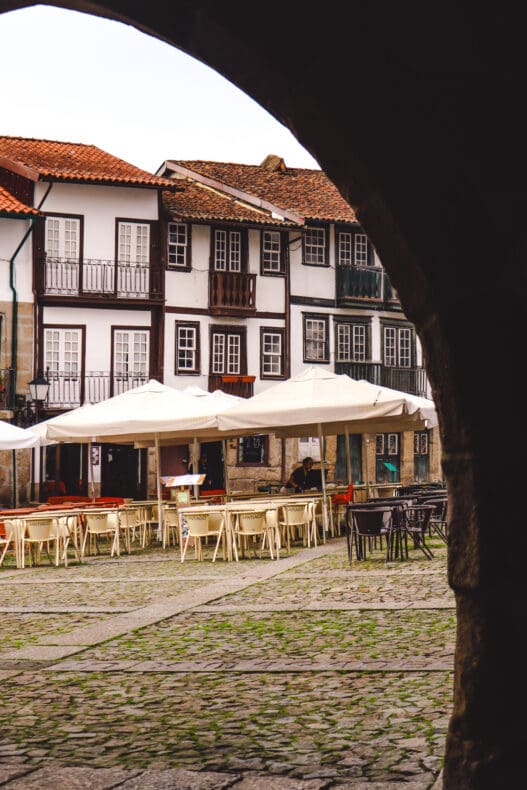
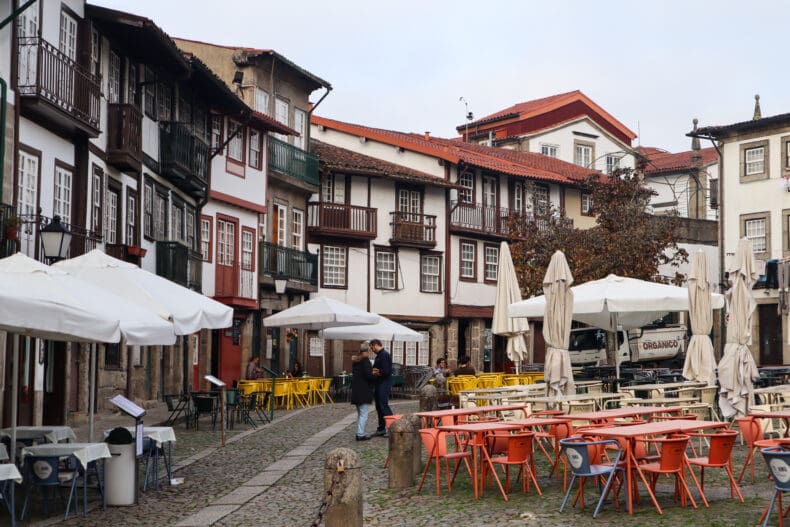
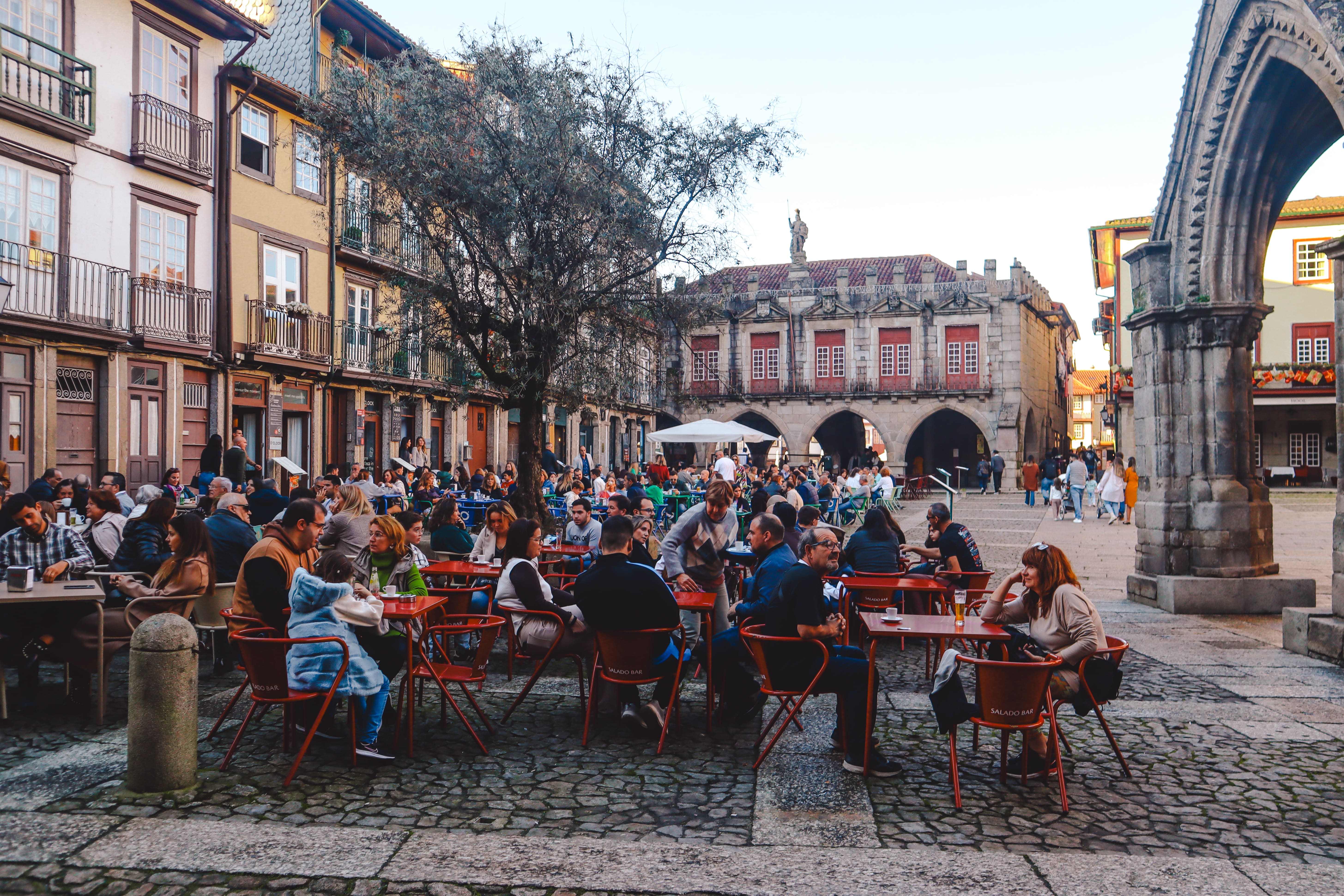
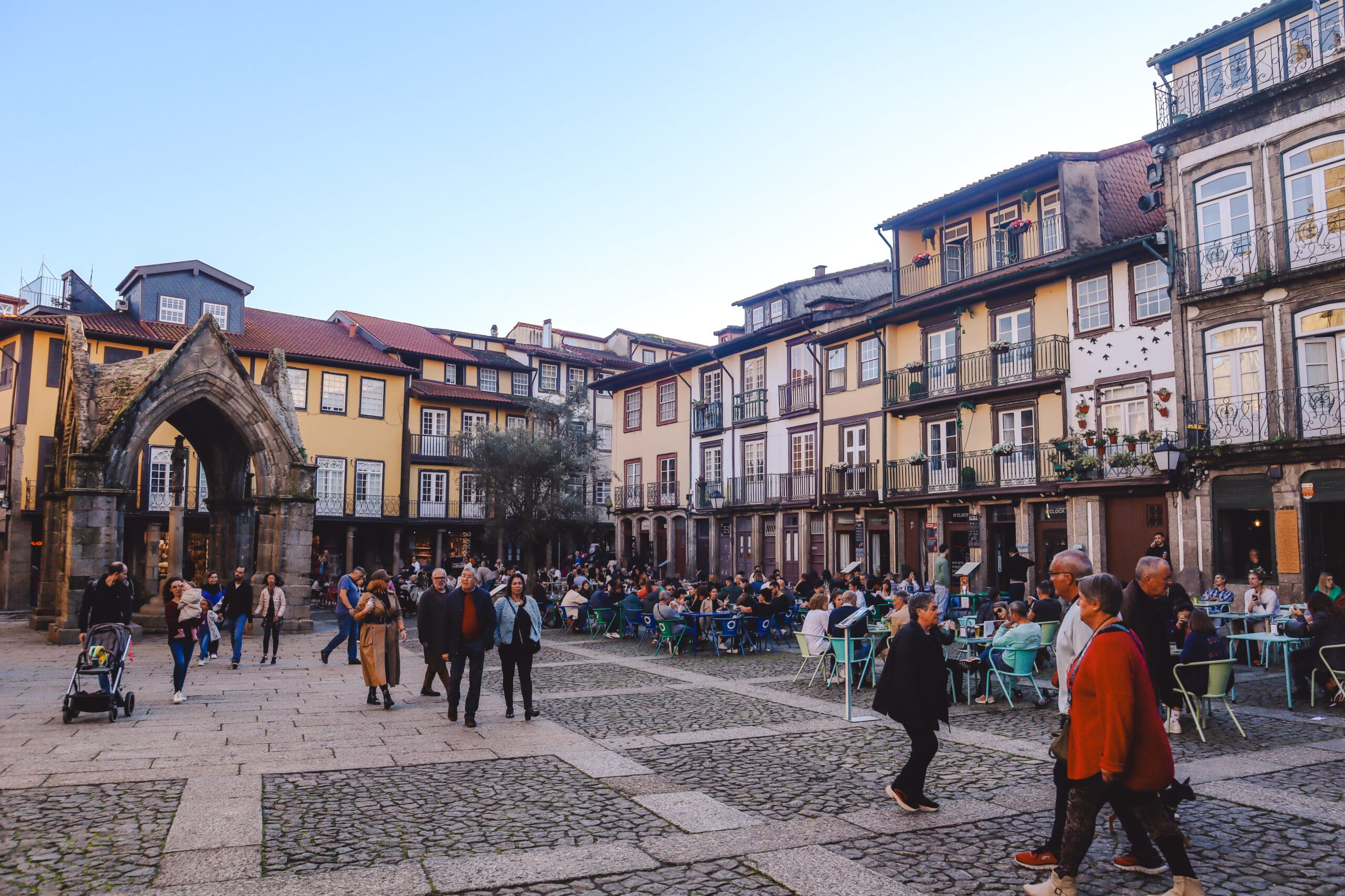
Largo da Oliveira and Praça de São Tiago are two of the most picturesque and lively squares in town. They’re linked by the Gothic arcades of the old town hall and are the perfect example of the medieval charm Guimarães is known for.
Largo da Oliveira, literally Olive Tree Square, is named after the legendary olive tree here. The story goes that the tree was moved here from a monastery centuries ago and died. Years later the tree, planted in front of the Nossa Senhora da Oliveira church, miraculously came back to life, and that miracle is said to have given both the church and the square their name.
The square is lined with colourful buildings and several terraces, perfect for a Portuguese coffee or a glass of vinho verde. It’s dominated by the Igreja de Nossa Senhora da Oliveira and the Alberto Sampaio Museum, known for its impressive silverware collection. Another eye-catcher is the Padrão do Salado, a Gothic monument commemorating the Battle of Salado, an important victory in 1340.
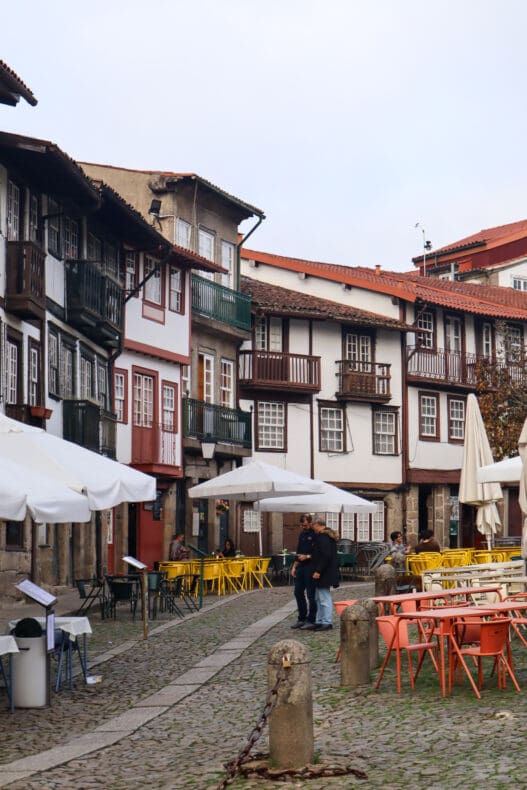
Praça de São Tiago, right next to Largo da Oliveira, stands out with its old stone and timber houses and its many restaurants and cafés. It has a real medieval feel and seems to have barely changed since. It’s the ideal place to admire the town’s unique architecture, and the cosiest spot to sit down on a terrace.

#5 The medieval city walls
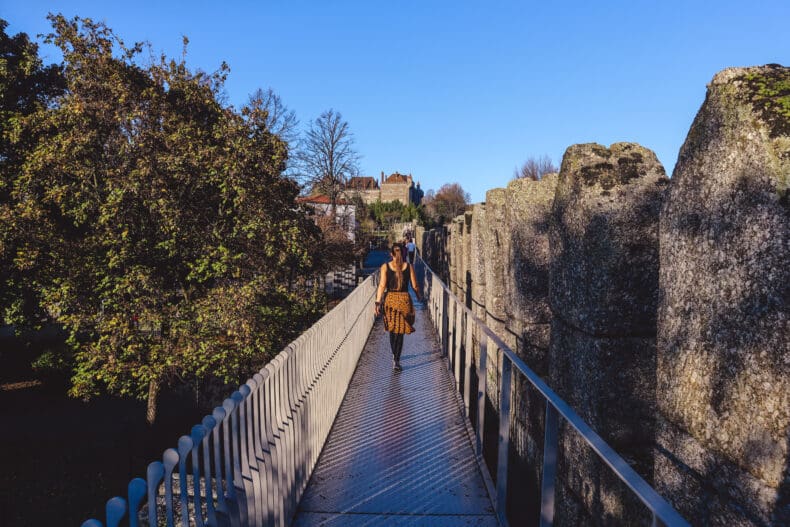
Don’t miss a short walk along the city walls when you visit. It’s one of the lesser-known things to do in Guimarães, but a fun one that’s closely tied to the town’s old character.
The original walls of Guimarães date from the ninth century, and part of them survives. They once enclosed about two kilometres and had defensive towers and eight gates. Today only fragments are left, including the Porta do Burgo.
You can walk along part of the walls, between the Porta do Burgo and the Capela Senhor dos Passos. From up there you get a nice view of the ducal palace and, out of the corner of your eye, the São Gualter church.
#6 Igreja de Nossa Senhora da Oliveira
The Igreja de Nossa Senhora da Oliveira, the Church of Our Lady of the Olive Tree, is the most important church in Guimarães. It stands on the medieval Largo da Oliveira, which like the church is named after the olive tree in front of it. There’s a small entrance fee.
The church dates back to the tenth century, when a noblewoman from the town founded it as a monastery. It was later given to the Catholic Church and then turned into a collegiate church. It closed in 1911 but reopened in 1967.
Inside, the spectacular golden altar grabs your attention straight away, as does the large pipe organ. Many of the church’s most important treasures have moved to the Alberto Sampaio Museum in the old monastery next door.
#7 Rua de Santa Maria
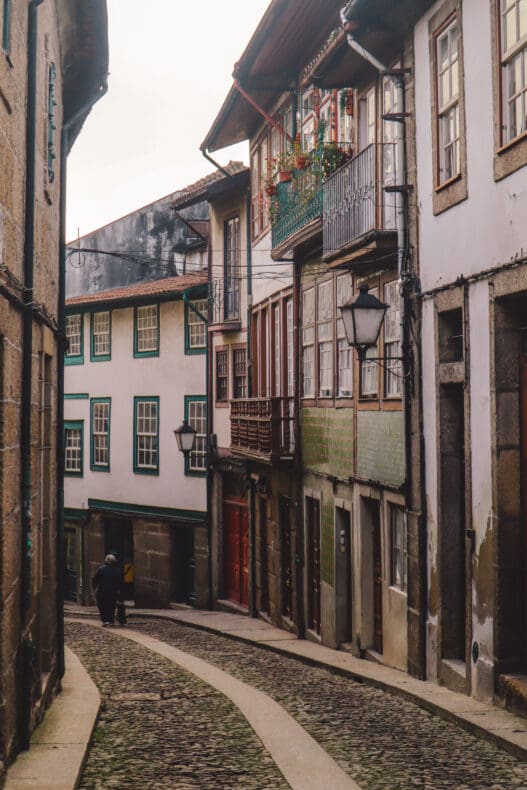
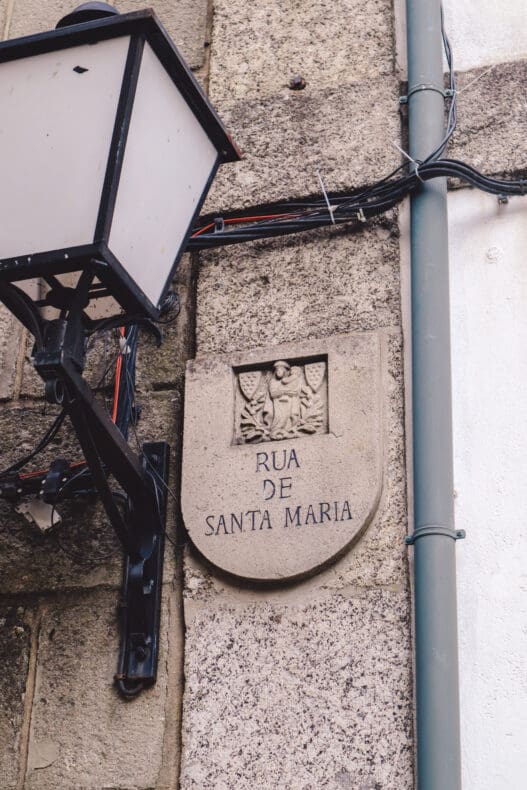
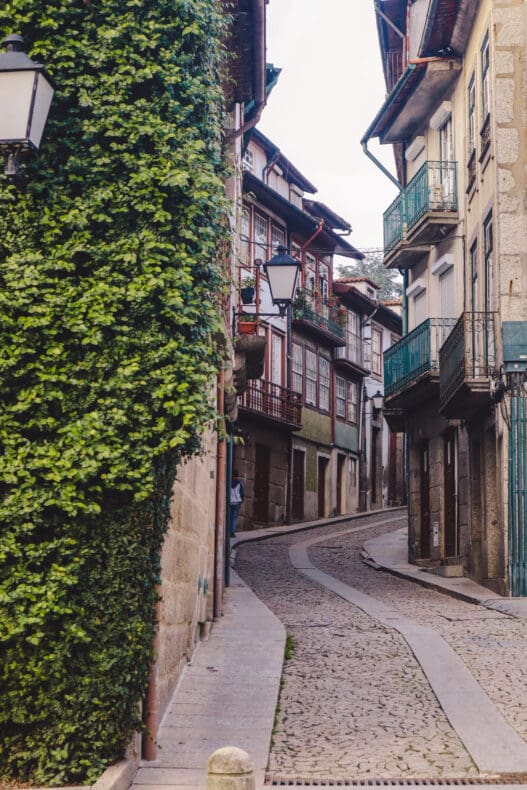
Rua de Santa Maria is one of the oldest streets in Guimarães and certainly the most photographed. It dates from the twelfth century and was once home to the town’s wealthy families and clergy. The street links the castle in the upper town with the central Largo da Oliveira in the lower town.
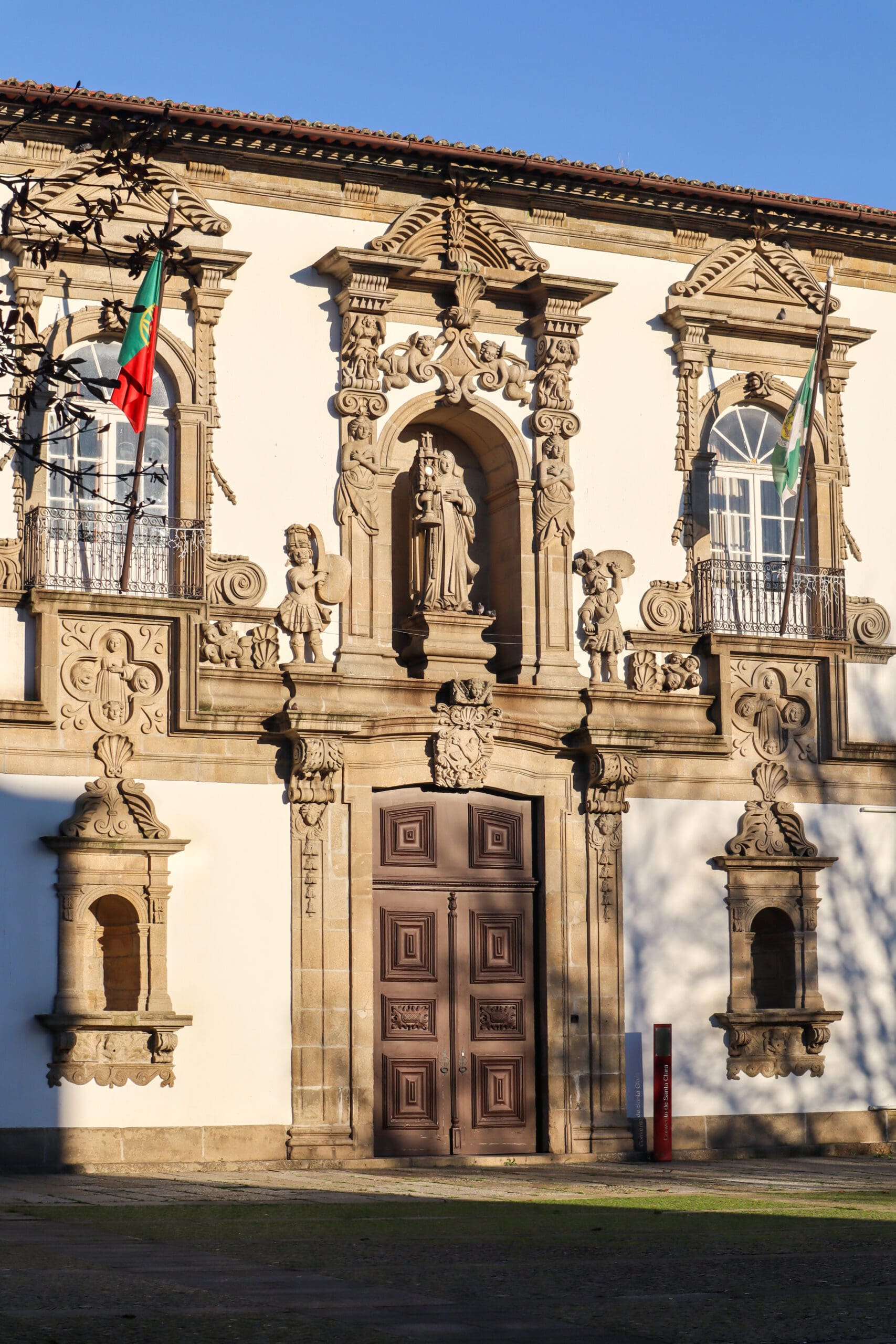
Walking down Rua de Santa Maria, you’ll feel the medieval atmosphere straight away, with buildings from the twelfth and thirteenth centuries. Casa do Arco (no. 28), Casa dos Peixotos (no. 39) and Casa de Valadares de Carvalho (no. 9) are fine examples of the architecture of the time. The Convento de Santa Clara, with its baroque façade full of detailed granite decoration, will also catch your eye. The former convent is now the town hall, but you’re free to visit the inner garden.
The street is now fully pedestrianised. Look out for the mansions with wrought-iron balconies and wooden galleries decorated with flowerpots. Small bakeries sell traditional sweets such as toucinho do céu and tortas de Guimarães, made to centuries-old local recipes, and the souvenir shops have all the typical Portuguese souvenirs.
#8 Igreja Nossa Senhora do Carmo
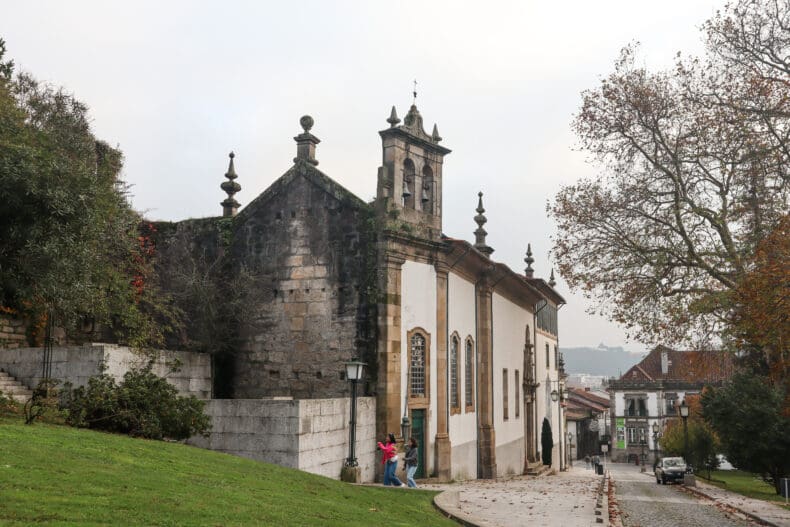
The Igreja Nossa Senhora do Carmo is a typical example of baroque architecture, with a large azulejo panel on its side wall. But what makes it special, in our opinion, isn’t the baroque style but the chapel next door. The main church is free to enter, while a small contribution is asked for the chapel.
The chapel dates from 1685 and is almost entirely covered in original frescoes, on both the walls and the ceiling. For a small fee you can climb the stairs from the church to see this Carmelite chapel, complete with its original seating from 1723.
After the religious orders in Portugal were officially dissolved in the 1830s, the church and convent passed to the state and the building served as a military hospital for a while. Today it’s looked after by the Third Order of Carmelites, a lay association.
#9 Igreja dos Santos Passos
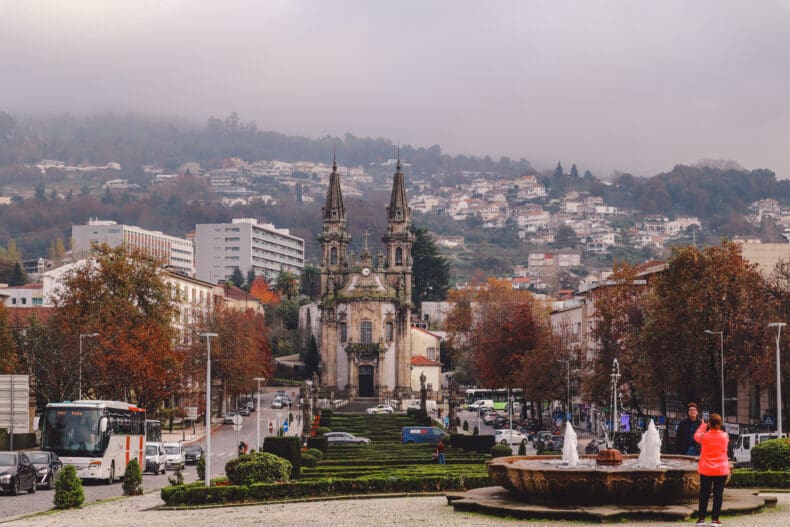
The Igreja e Oratórios de Nossa Senhora da Consolação e Santos Passos, also known as the Igreja de São Gualter, is one of the icons of Guimarães. The church stands just outside the old centre at the end of a long square, and that setting combined with its tall, slender shape makes it a real landmark.
It began as a small chapel dedicated to Nossa Senhora da Consolação, built in March 1576. The new church was finished in October 1785, a fine example of baroque in Guimarães, and its two towers were added to the façade in the following century. Look out for the blue and white azulejos on the front, the clock in the middle and the gently curved façade. The church is free to visit, but we found the inside less interesting than the outside.
#10 Teleférico de Guimarães
The Teleférico de Guimarães is a fun outing just outside the historic centre. Unsurprisingly, it was our toddler’s favourite thing in town, after excitedly pointing at the cable car gondolas several times during our three days in Guimarães.
The cable car covers about 1,700 metres and takes you up to an altitude of 617 metres in ten minutes. It opened in 1995 and was the first of its kind in Portugal. The gondolas drop you just below the Penha sanctuary.
It’s an easy walk from the old town. You may even have spotted it already if you parked in the big car park next to it, or stayed at the motorhome stopover nearby. You can also hike up Monte da Penha or simply drive to the top.
#11 Monte da Penha
Our favourite place in Guimarães? Monte da Penha! This hill, also called Monte de Santa Catarina, is a must when you’re in town.
On clear days the mountain dominates the view from the old town. When it’s cloudier, you can watch the cable car disappear into the clouds. We had both kinds of weather. I took the cable car with our excited toddler despite the fog, and at the top we were surprised by sunshine and a stunning view over a sea of clouds. When the fog lifted later that afternoon, a gorgeous panorama over Guimarães opened up.
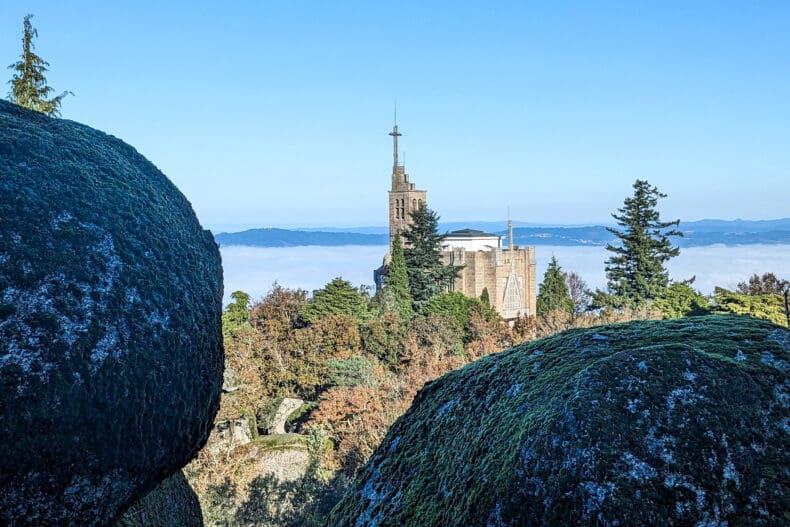
Penha is a mix of rounded, moss-covered boulders, narrow paths, woods and lovely nature. There’s also a campsite and other facilities, such as a little tourist train that does laps of the area. At the highest point, 586 metres above sea level, there’s a viewpoint with a statue of Pope Pius IX. It’s a popular spot for sunsets, although during our visit the clouds rolled back in at exactly that moment. We stood in the fog and saw absolutely nothing.
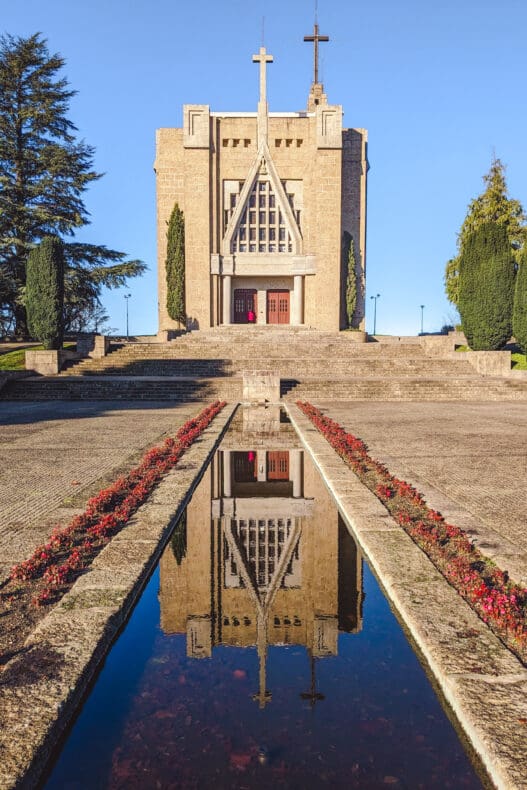
A striking sight is the modern sanctuary, the Santuário da Penha, or in full the Santuário de Nossa Senhora do Carmo da Penha. It was built in the 1940s to a design by the same architect as São Bento railway station in Porto. Where the station is classic and famous for its azulejos, the Santuário da Penha is sleek and in a bold art deco style. It’s built almost entirely of granite, which makes it look heavy and monumental. We’ve read that many people find it ugly, but we thought it was a nice change from all the historic and baroque churches in the region.
We spent the night in our camper on top of the hill. There’s a dedicated motorhome area, but during our visit on a sunny November weekend even the regular car parks were deserted. So you can reach the top by camper or (rental) car, as well as by cable car or on foot. There’s also a campsite on Monte da Penha, but it was closed in November.
#12 Citânia de Briteiros
For history lovers, Citânia de Briteiros is a must, about 20 minutes’ drive from Guimarães. This impressive fortified settlement dates from the Iron Age. Perched on the small Monte de São Romão, it offers a beautiful panorama over the Ave valley.
The ruins show remains from several periods, from prehistory to Roman times and the Middle Ages. Excavations have been going on since 1874, making it one of the best-studied examples of prehistoric culture in Portugal.
More tips for your trip to Guimarães
 Our pickHotels in Guimarães: our favourite hotels in the city
 Carrying on through Northern Portugal after Guimarães? Rent a car at Porto airport with Discover Cars and compare the big rental companies in one go.
 Prefer everything arranged? Browse Northern Portugal tours on TourRadar.
 No flight yet? Compare flights to Porto, under an hour's drive from Guimarães.
 No car? Join a Braga and Guimarães day trip from Porto, including Bom Jesus and the castle, on GetYourGuide.
 Discover all our blogs about Northern Portugal