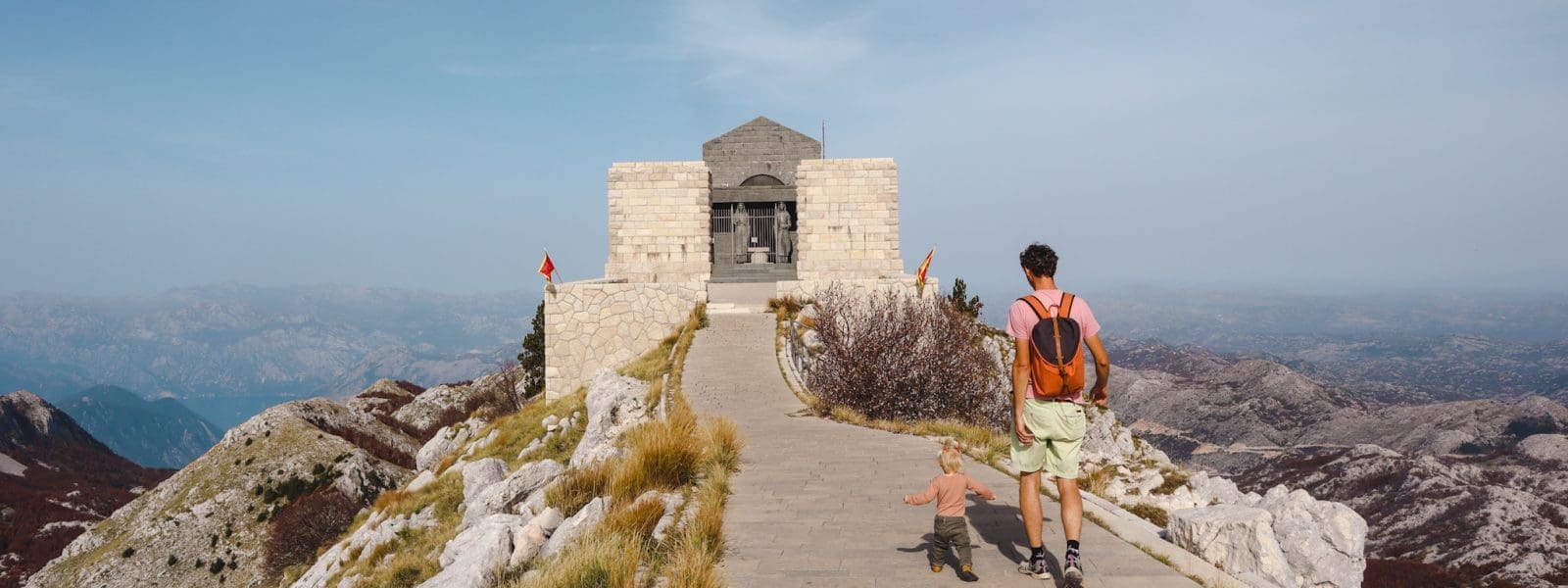
Twenty-five hairpin bends, a road barely wide enough for two cars, and then, right on top of a mountain, a granite mausoleum. On our road trip through Montenegro we drove our campervan up from Kotor into Lovćen National Park one October day. Up there sits the Njegoš Mausoleum, the resting place of Montenegro’s greatest hero and one of the best viewpoints in the whole country.
In this blog you’ll find out how to get to the mausoleum, what you’ll see on the way and at the top, and what it’s like to tackle more than 450 steps with a toddler. We’ll also show you how to combine your visit with the village of Njeguši and the old royal capital of Cetinje.
→ Discover the 10 best places to visit in Montenegro

Where is Lovćen National Park?
Lovćen National Park lies in south-western Montenegro, between the Bay of Kotor and the old royal town of Cetinje. Founded in 1952, it protects the Lovćen massif, the mountain that rises like a wall behind Kotor. You can see it from the coast already: bare limestone peaks with patches of beech and pine forest in between.
The two best-known peaks are Štirovnik, the highest at 1,749 metres, and Jezerski vrh at 1,657 metres. The mausoleum crowns the second one. With Kotor so close, Lovćen fits into almost any Montenegro itinerary. Allow half a day, including the drive up.
How do you get to the Njegoš Mausoleum?
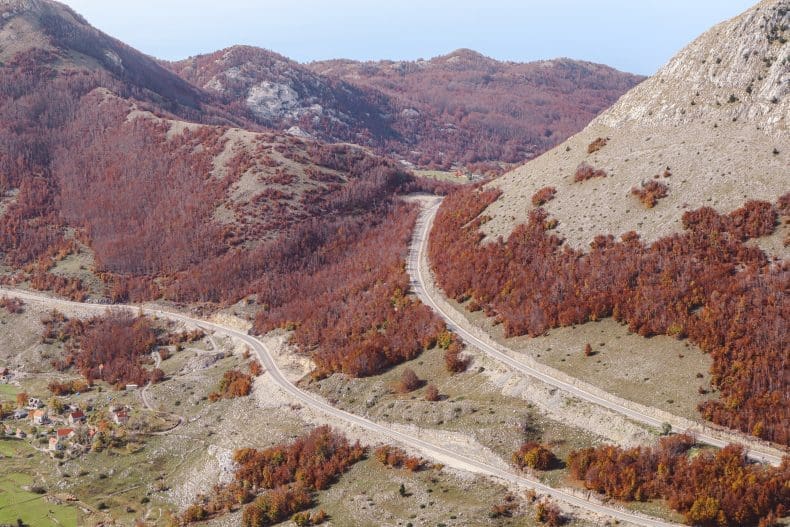
From Kotor you head up the infamous Kotor Serpentine. It’s a narrow but fully paved road with 25 hairpin bends, and the view over the bay gets better with every single one. We found it a pretty nerve-racking drive. On many stretches the road was so tight that we had to reverse our van to a paved verge to let oncoming traffic squeeze past. And yet we met coaches up there too. How they make those bends is still a mystery to us.
Our tip: book your rental car through Discover Cars. It compares all the big rental companies in one go, so you can easily find the best deal.
Not keen on the Serpentine? You can also drive up via Cetinje, which is wider and less steep. At the park entrance you pay a small entrance fee, and you buy a separate ticket for the mausoleum at the foot of the stairs. From the entrance it’s about 3 kilometres to the stairs, where you’ll find a small restaurant and an equally small car park. If it’s full, park further down and walk the last stretch.
No car? You can also visit on a day tour from Kotor or Budva, which usually stops in Njeguši, Cetinje and at Lake Skadar too.
→ See the day tour to 4 highlights of Montenegro

Who was Njegoš?
Petar II Petrović-Njegoš lived from 1813 to 1851 and ruled Montenegro as prince-bishop. Yet Montenegrins mostly remember him as a poet and philosopher. His epic poem The Mountain Wreath is still seen as the greatest work of Montenegrin literature, and you’ll spot his face all over the country.
Njegoš wanted to be buried on Lovćen himself. He designed a small chapel up there and had it built in 1845. After his death he was first laid to rest in the monastery in Cetinje, and a few years later moved to the mountaintop after all. During the First World War, Austria-Hungary occupied the country and the chapel had to make way for a monument of the occupiers. After the war, a new chapel went up.
Today’s mausoleum came much later. In 1951, a century after his death, the government decided to build a grand monument designed by Croatian sculptor Ivan Meštrović. It opened in 1974. Plenty of Montenegrins weren’t happy that the modest chapel had to go, and the debate still hasn’t fully died down.

Visiting the mausoleum
From the car park the climb begins: 461 steps, most of them through a cool tunnel cut into the mountain. Our daughter was still a toddler back then and absolutely loved those stairs. She walked a good part of the way herself, and we carried her for the rest. So yes, it’s very doable with kids, as long as you take your time. Do bring a jacket, though. At over 1,600 metres it’s a lot chillier than down by the bay.
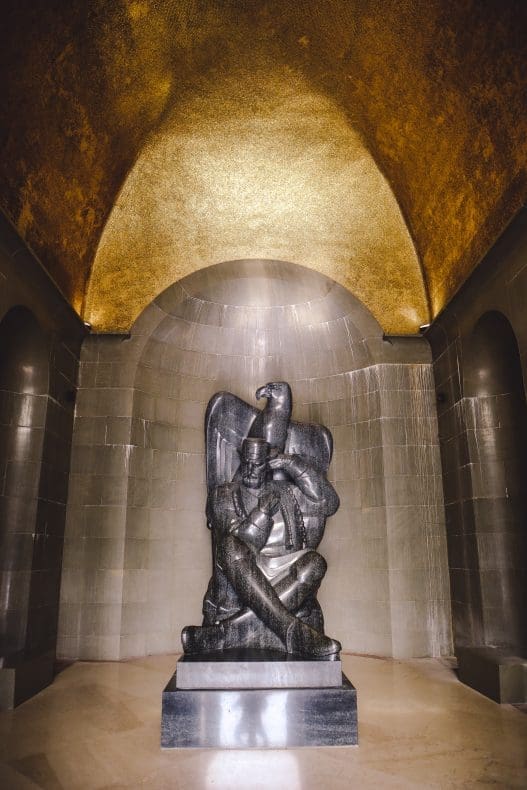
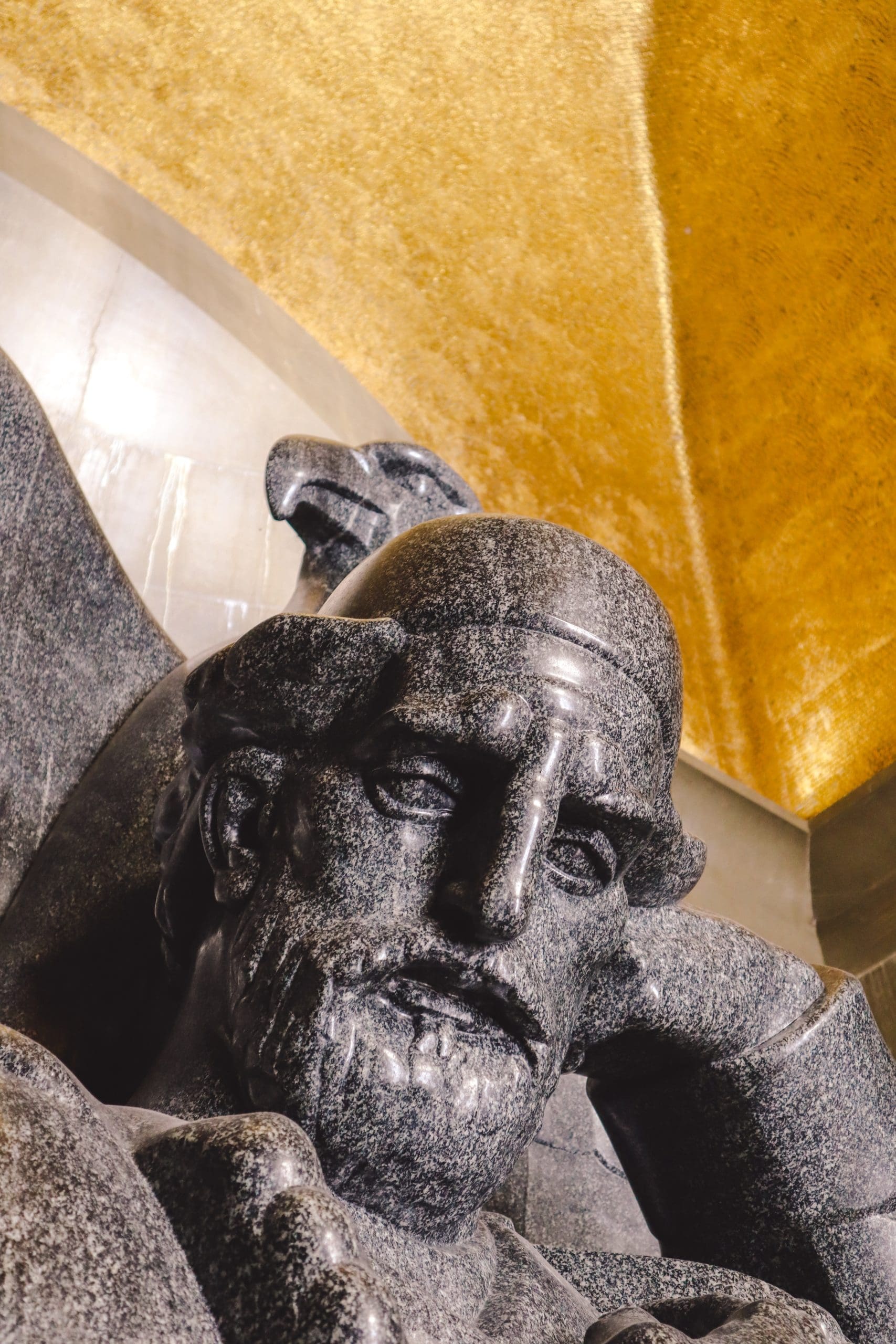
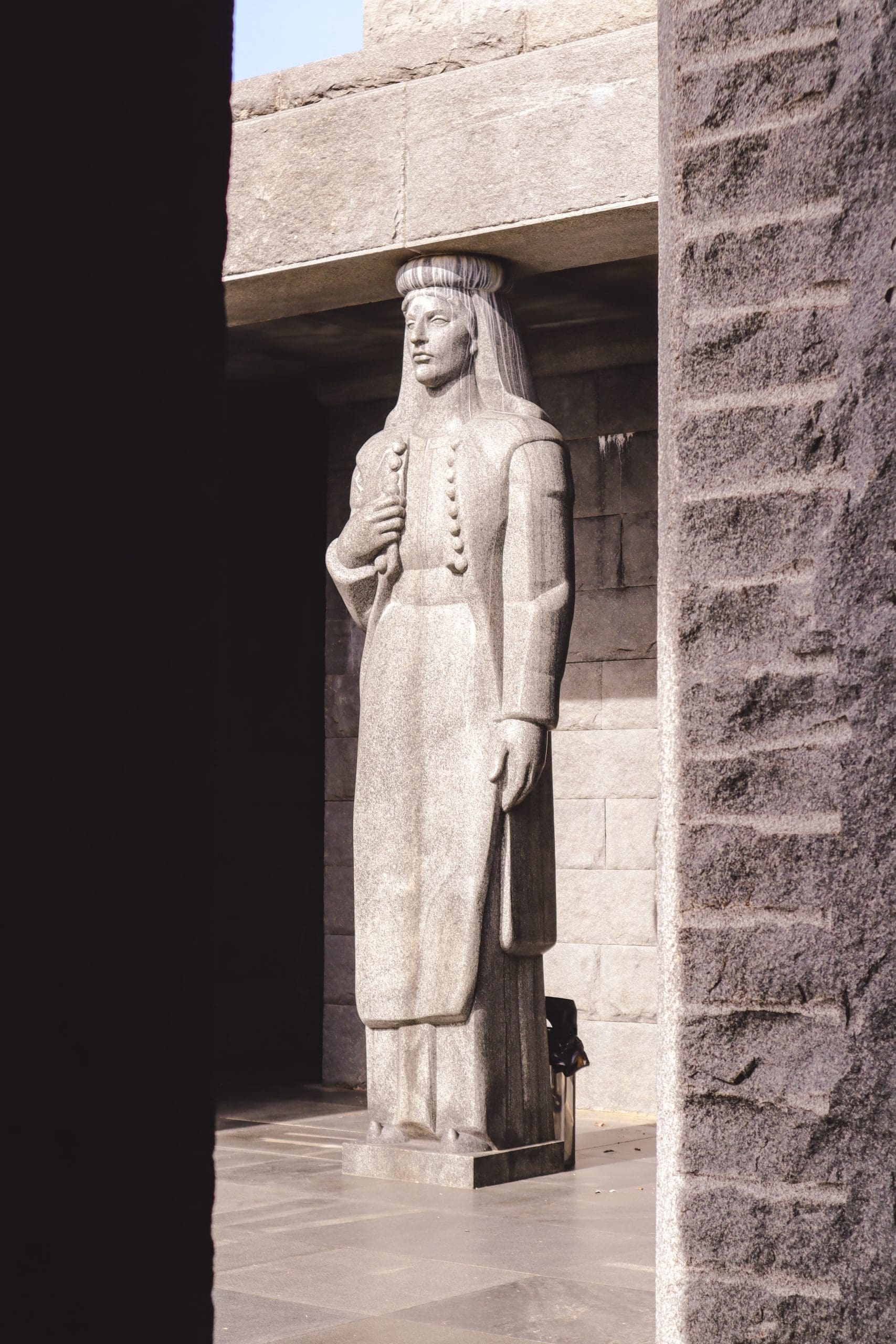
At the top you step into a courtyard where two granite women in traditional Montenegrin dress guard the entrance. Behind them is the chapel with the statue of Njegoš. He sits deep in thought, an eagle spreading its wings behind him, under a ceiling of golden mosaic. It’s modern and imposing at the same time. Njegoš himself isn’t buried in this room but in the crypt below, which you can visit too, although there isn’t much to see.
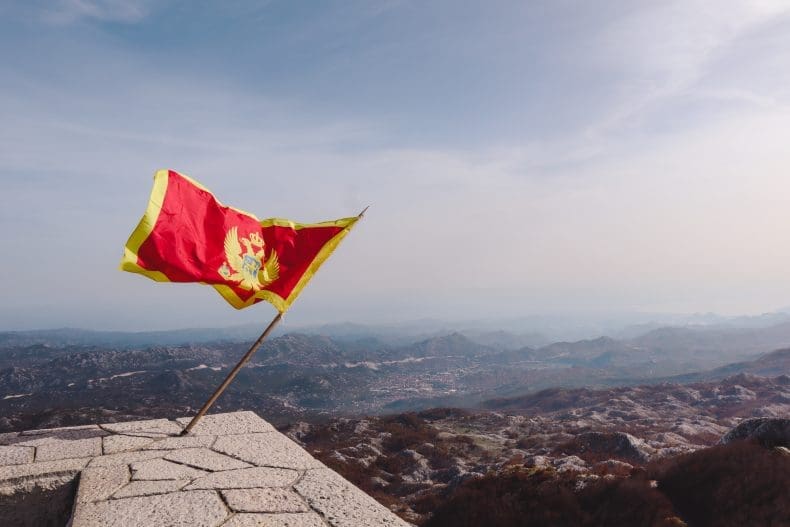
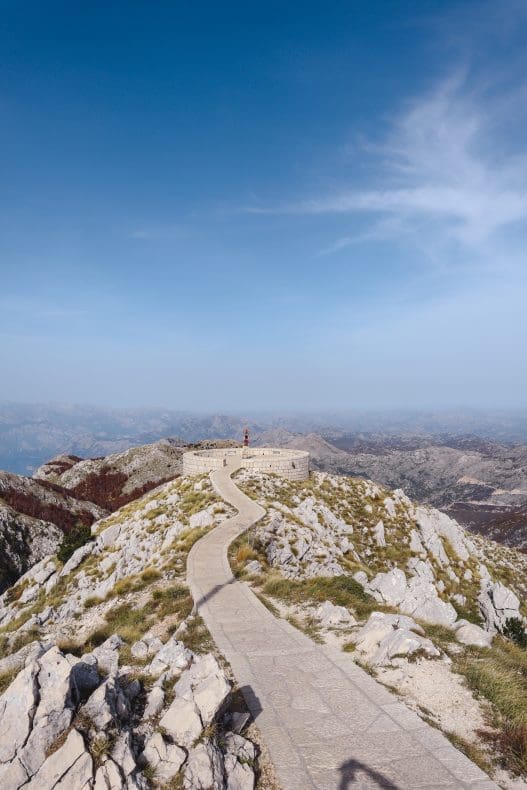
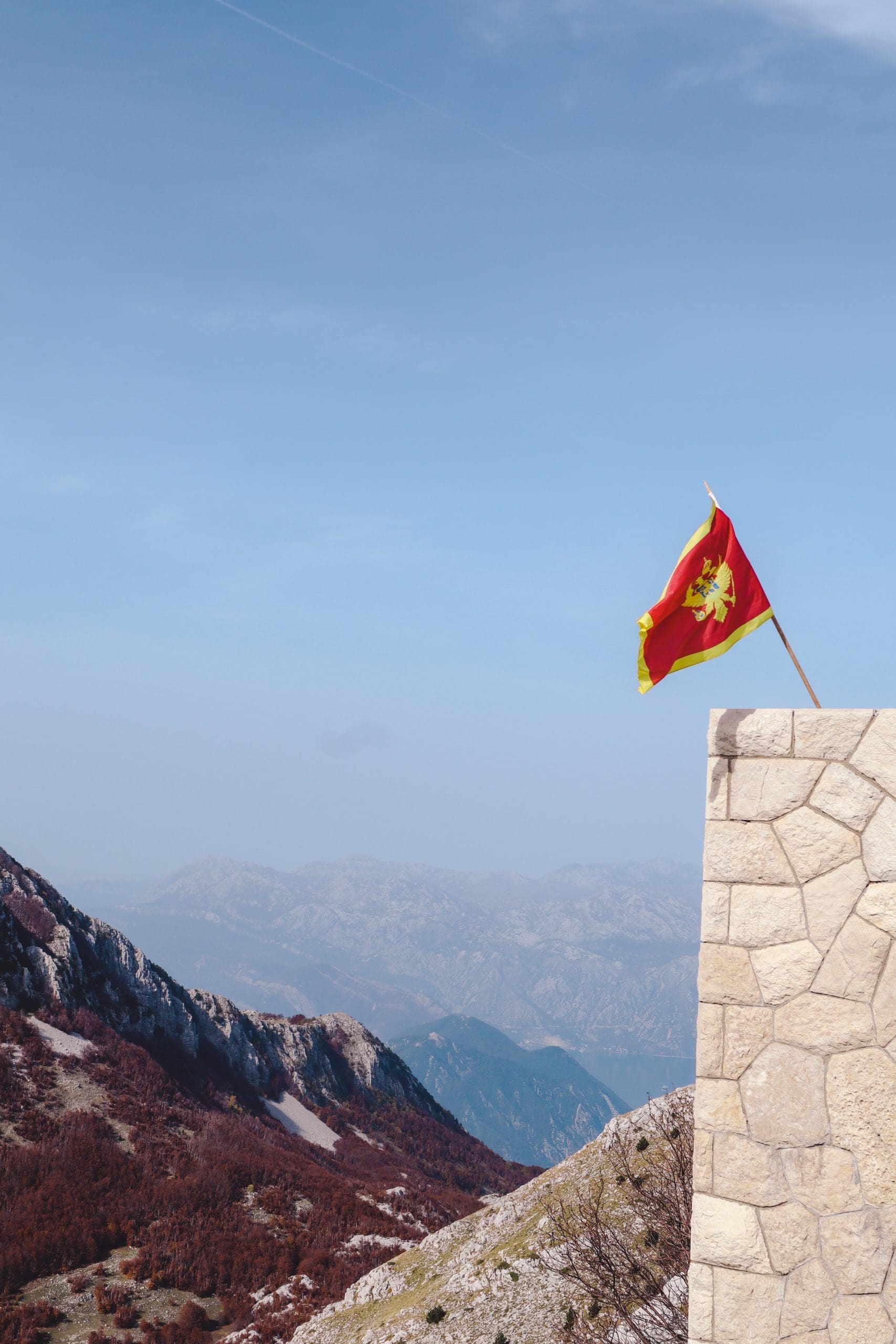
Then walk through the mausoleum to the round viewing platform behind the building. For many visitors this is the real reason to come up here. You look out over the rugged mountains of the national park, with the blue water of the Bay of Kotor glittering far below. On clear days you can even make out the Adriatic Sea on the horizon.
Good to know: the mausoleum is only open from mid-April to mid-November. In winter it’s closed, and snow or ice can temporarily shut the road up as well. The national park itself is open all year round. You’ll find more about the mausoleum on the website of the National Museum of Montenegro.

Combine your visit with Njeguši and Cetinje
Drive up the Serpentine and you’ll pass right through Njeguši. Njegoš was born in this mountain village, and his birth house is now a small museum. Njeguši is famous across Montenegro for its air-dried ham and cheese, which you can try at little roadside restaurants. A good spot for a break before heading into the park.
On the other side of the park lies Cetinje, Montenegro’s old royal capital. Here you’ll find the monastery where Njegoš was first buried, King Nikola’s palace and a row of former embassies from the days when Cetinje was still the capital. We skipped Cetinje this time because the museums didn’t really grab us, but if you love history, it’s a logical stop.
Put it all together and you’ve got a great day loop: up the Serpentine from Kotor, through Njeguši to the mausoleum, then back down to the coast at Budva via Cetinje. Kotor itself makes the handiest base.
→ Discover the 10 best things to do in Kotor
→ Discover where to stay in Kotor
Enjoy our travel tips? Add The Orange Backpack as a preferred source on Google and you'll see us more often in your search results.
More tips for your trip to Lovćen
 Our pickHotels in Kotor: your base for the hairpin road up to Lovćen
 Montenegro is best explored along its panoramic roads. Rent a car in Podgorica or Tivat with Discover Cars and compare the big rental companies in one go.
 Fancy doing it by camper, like we did? Rent a campervan in Dubrovnik or Split with Campervan Planet and drive on to the Bay of Kotor. Do check you're allowed across the border.
 Prefer everything arranged? Browse Montenegro tours on TourRadar.
 No flight yet? Compare flights to Podgorica or Tivat. Check Dubrovnik too, just across the border from the Bay of Kotor.
 Prefer a guide? See Lovćen, Cetinje and Lake Skadar in one day on the highlights tour with GetYourGuide.
 Discover all our blogs about Montenegro

