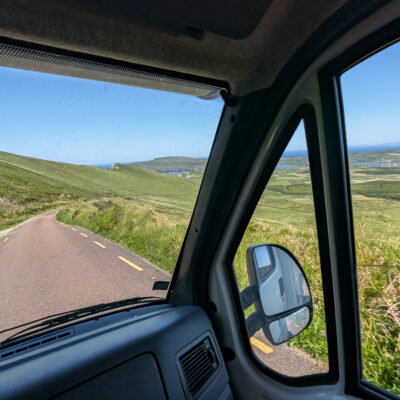
Green hills dotted with sheep, cliffs taking a beating from the Atlantic and castle ruins in the most unlikely spots. Ireland had been on our wish list for years, and when we finally spent almost four weeks driving around it with our daughter and son, we understood why within days.
We had rain, storms and a few days of over thirty degrees. We saw dolphins, puffins and a whole group of basking sharks. And we found white beaches we still talk about.
In this blog you’ll find the best places to visit in Ireland, from Dublin all the way to the Giant’s Causeway, along with the tips we wish we’d had before we went.
What is Ireland known for?
Ireland is known for its green countryside, the wild west coast, thousands of years of history and a cheerful pub culture. And, of course, for its changeable weather. But what stays with you most is the nature: that’s the main reason to come.
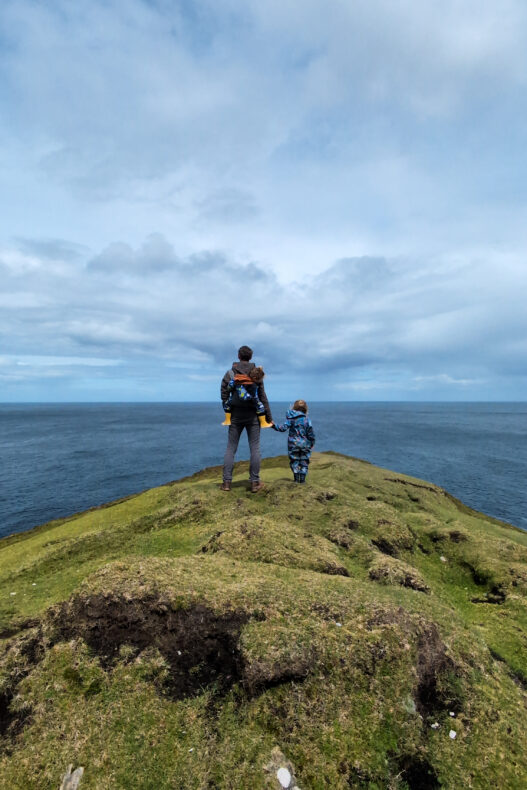
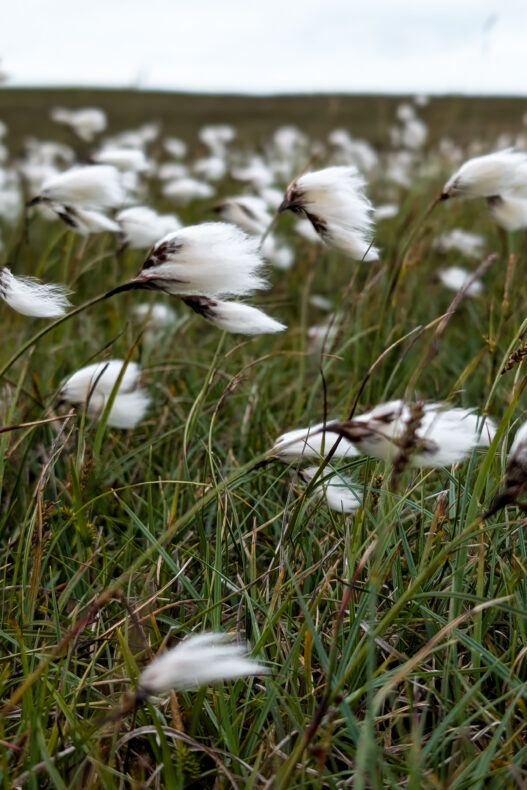
There’s a reason it’s called the Emerald Isle. The moment you leave Dublin, everything turns green: rolling fields edged with stone walls, hills full of sheep and their lambs, and verges that burst with wild flowers in spring. In Kerry the rhododendrons even turned entire hillsides pink.
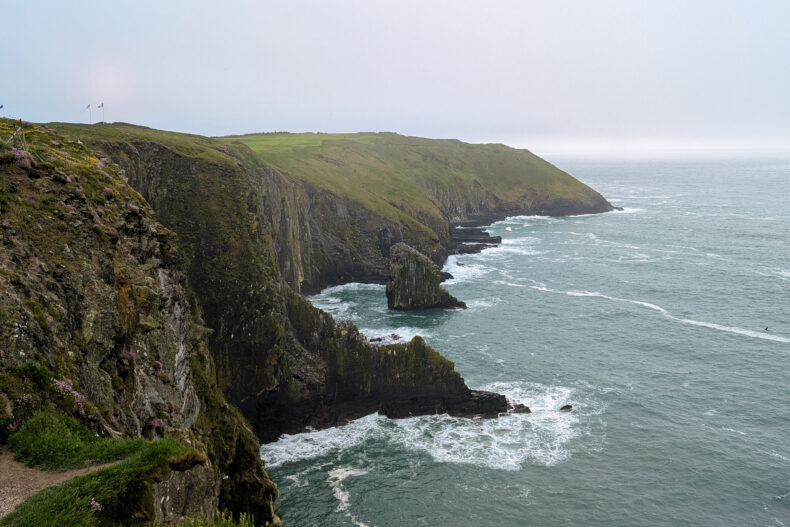
On the west coast the landscape gets rougher. The Atlantic crashes into cliffs hundreds of metres high, and you’ll find beaches with white sand and turquoise water that you’d sooner expect in Portugal.
You bump into history everywhere. Burial mounds older than the pyramids, early medieval monasteries with their round towers, and castle ruins in the most beautiful places, sometimes in the middle of a field or right next to a little beach.
Irish culture draws plenty of visitors too. Many pubs have live traditional music most evenings, and the Irish are known for being warm and welcoming. You even notice it on the road, where everyone politely waves you through at a passing place.
What Ireland isn’t: a country full of picture-perfect villages. Apart from exceptions like Kinsale and Clonakilty, many towns are mainly practical. You come here for the nature, and for that you happily forgive the weather. Because yes, all that green comes at a price.
Getting around Ireland
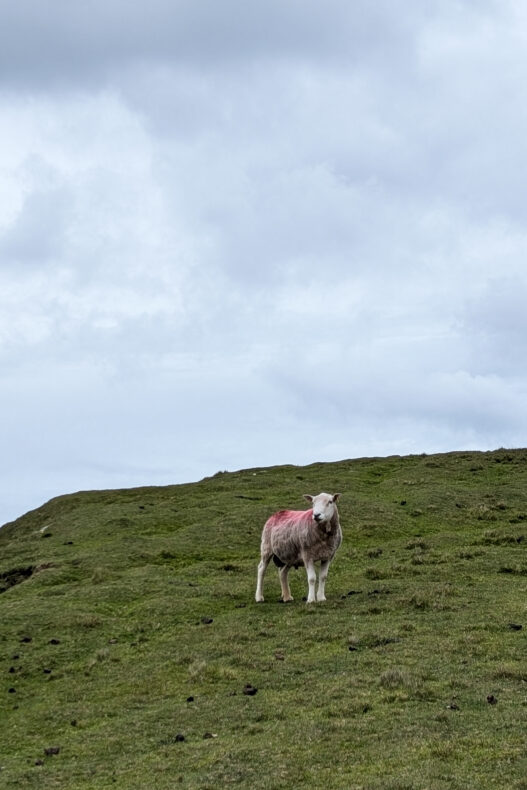
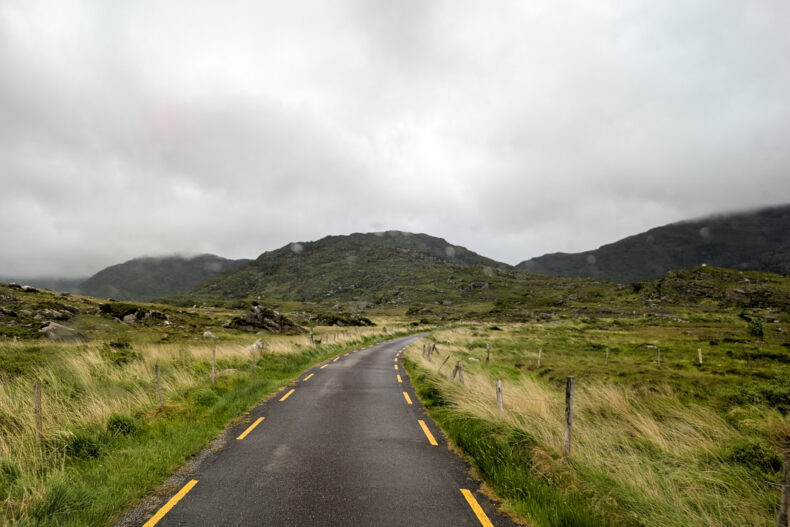
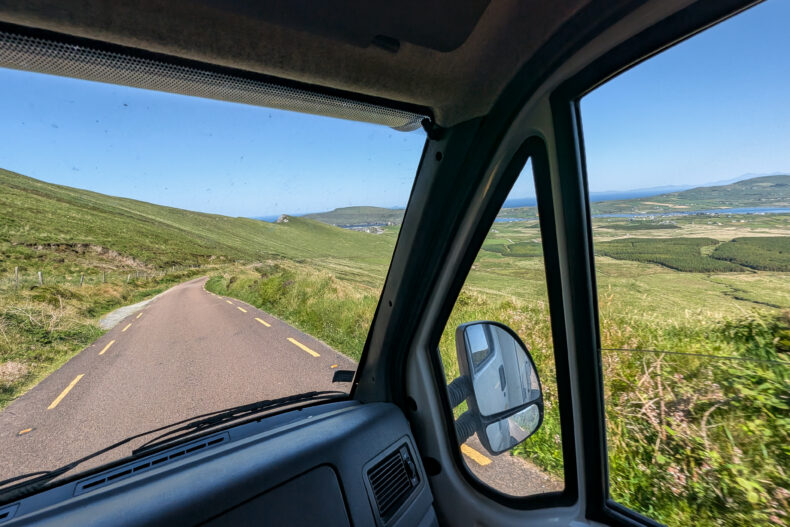
Plenty of people find driving in Ireland a bit nerve-racking, and we get it. You drive on the left, the roads are narrow, and out in the countryside there’s often just one lane for traffic in both directions. Sometimes with a stone wall on one side and a drop on the other.
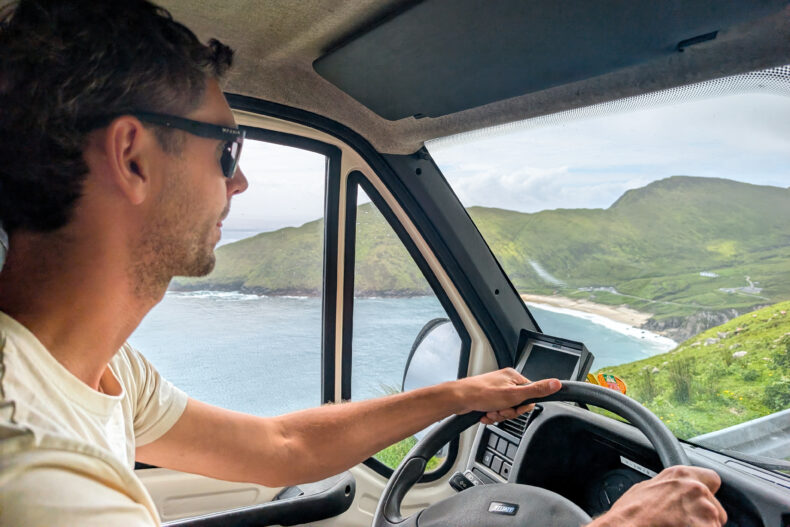
Still, you get used to it faster than you’d think. Sebastiaan is an experienced campervan driver and handled the Irish lanes without trouble. It helps that Irish drivers are incredibly polite. Narrow roads are lined with passing places, small pull-ins at the side of the road. Whoever is closest pulls in and waits, and the other driver lifts a hand or a finger off the wheel as a thank you. After a week we were doing exactly the same, and a ridiculously narrow road no longer stressed us out. Do take it slowly, though, because there could be a tractor or a flock of sheep round every bend.
Flying in? Then it’s easy to rent a car in Dublin, Cork or Shannon. Planning to cross into Northern Ireland as well? Check that your rental car is allowed over the border.
→ Compare the best car rental deals in Ireland
→ Read all our tips for renting a car and driving in Ireland
When is the best time to visit Ireland?
Summer, from June to August, is the warmest time of year with the longest days. Expect around 18 degrees during the day. July and August are also the busiest and most expensive months.
May and September are a good middle ground: quieter and often perfectly pleasant. According to Met Éireann, the Irish weather service, May is on average the sunniest month, with June in second place.
Just know this: Irish weather is unpredictable in every season. We had an awful lot of rain, but also a few days of over thirty degrees. The forecast was rarely right. So always pack a rain jacket, and your sunglasses too.
How many days do you need in Ireland?
Ireland looks small on the map, but don’t be fooled. Off the motorways you’ll be on narrow, winding roads, and you’ll stop every few kilometres for yet another view. So plan far fewer kilometres a day than you would at home.
With one week, it’s best to pick one or two regions, for example Dublin with Wicklow and Kerry, or Dublin with Galway and Connemara. With two weeks you can drive a lovely route along the south and west coasts, from Dublin via Cork and Kerry to the Cliffs of Moher and Galway. Want to go all the way round, including Donegal and Northern Ireland? Then you’ll need three to four weeks.
We had almost four weeks and travelled at a relaxed pace with the kids, clockwise around the island. We drove from Dublin along the south coast to Kerry, up through Clare and Galway to Mayo and Sligo, and from there back to Dublin. We left the north, with Donegal and the Giant’s Causeway, for another time, partly because the rain really got to us in the last week.
→ Discover our 3-week Ireland road trip itinerary in 10 stops
→ Discover the 18 best stops on the Wild Atlantic Way
Where to stay in Ireland
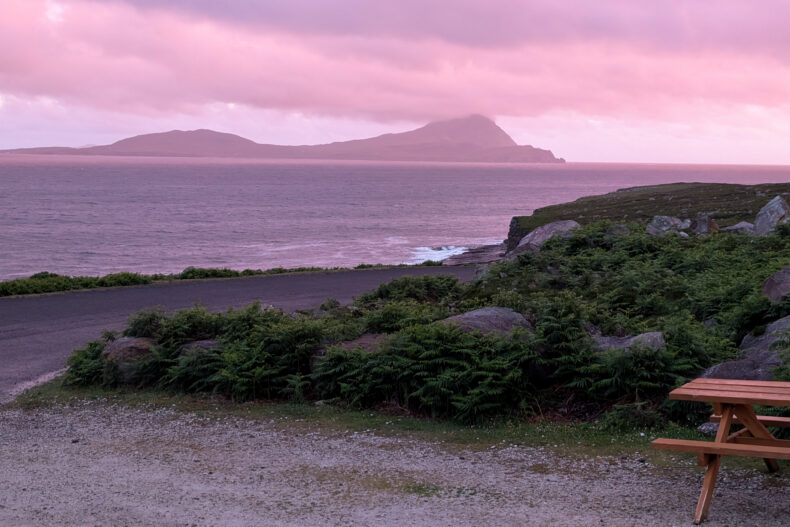
On a road trip you sleep somewhere different every few nights, so it pays to pick a good base in each region. These are our favourite places along the route, from Dublin along the south and west coasts to the northwest. All of them small-scale, full of character and highly rated by guests.
#1 Number 31 is a boutique hotel in two Georgian buildings close to St Stephen’s Green in Dublin. Breakfast is served at one big shared table, and Grafton Street is about a fifteen-minute walk away.
#2 Giles Norman Gallery & Townhouse sits right in the centre of Kinsale, above photographer Giles Norman’s gallery. His black-and-white shots of the Irish coast hang in the rooms too, and the harbour is just round the corner.
#3 Brook Lane Hotel in Kenmare is a perfect starting point for the Ring of Kerry. The rooms are spacious and modern, and the colourful main street is a few minutes’ walk away.
#4 Castlewood House stands by the water just outside Dingle town, looking out over the bay. Guests rave about the generous breakfast.
#5 The g Hotel in Galway was designed by milliner Philip Treacy, and you can tell from the bold, colourful lounges. It’s a little outside the centre, on the water of Lough Atalia.
#6 The Wyatt Hotel is on The Octagon, the square at the heart of Westport. A handy base for Achill Island and the North Mayo coast, with pubs and restaurants right outside.
#7 The Glasshouse stands out with its glass facade on the river in the centre of Sligo. From here you’re a short drive from Benbulben and the Gleniff Horseshoe.
The 20 best places to visit in Ireland
So what should you see in Ireland? Below are the best places by region, in the order of a loop around the island: from Dublin along the south and west coasts up to Northern Ireland.
Best places to visit in East Ireland
#1 Dublin
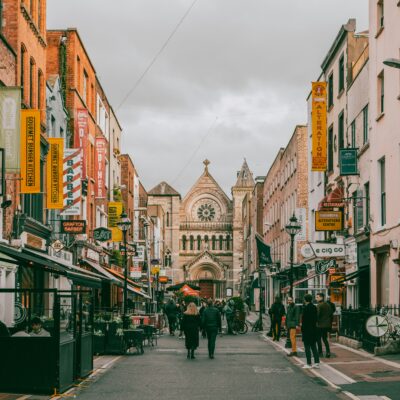
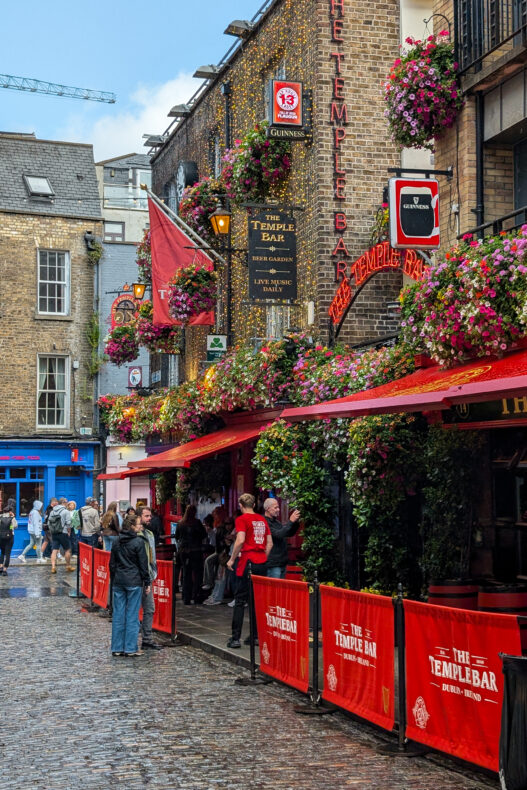
Most trips to Ireland start in Dublin, and that’s no hardship. People had warned us the city would be a bit dull, but we liked it far more than we expected. The capital is compact enough to explore on foot: stroll over the Ha’penny Bridge along the Liffey, up Grafton Street to St Stephen’s Green and through the courtyards of Trinity College.
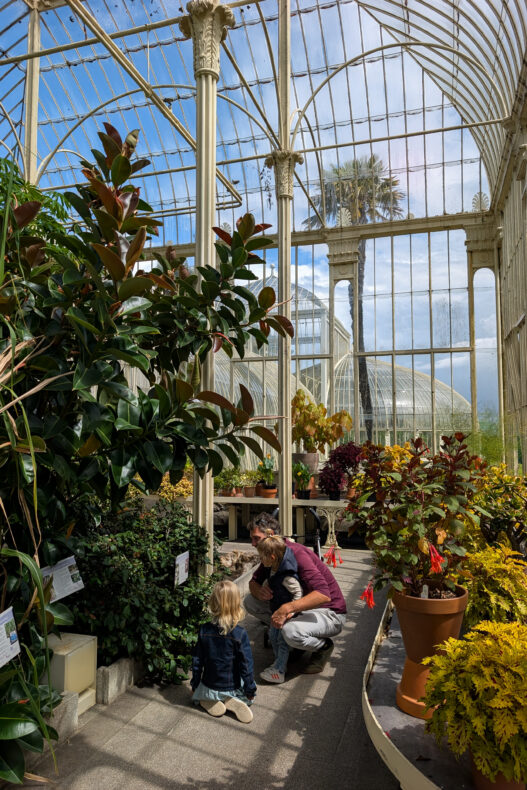
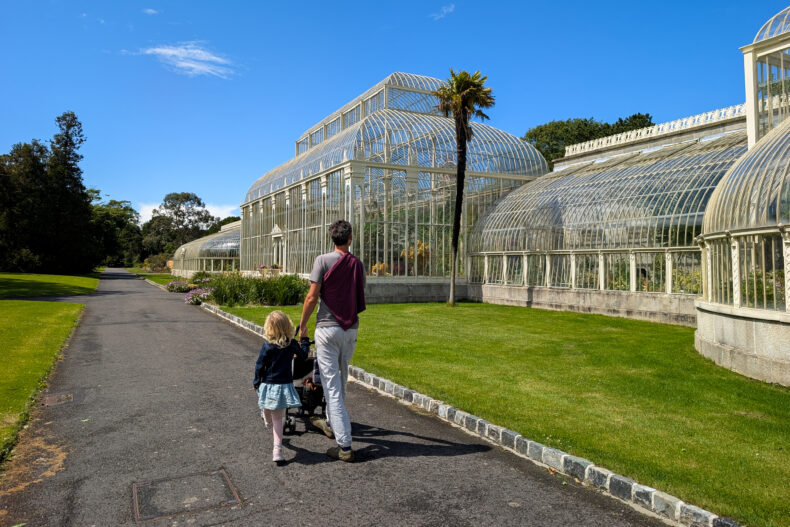
A lot of the best things in Dublin are free. At the National Museum of Ireland: Archaeology you come face to face with Celtic gold and centuries-old bog bodies. Our highlight was just outside the centre, at the National Botanic Gardens in Glasnevin. The Victorian glasshouses are huge, and the kids kept pointing out the weirdest plants to us. We had a picnic in the gardens until a thunderstorm broke and we all ran for the nearest glasshouse.
Our favourite souvenir is one we wear every day. At a workshop we took turns forging our own silver ring (as guests of GetYourGuide), and we now wear those rings as wedding rings.
→ Discover the 20 best things to do in Dublin
#2 Wicklow Mountains and Glendalough
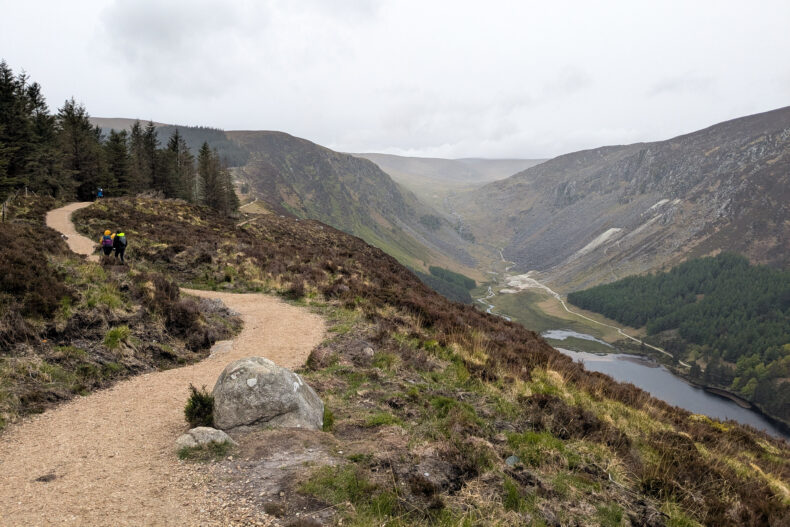
You don’t have to drive far to leave Dublin behind. Within an hour you’re in the Wicklow Mountains, a rugged range of heather, dark bogs and deep valleys with lakes. Wicklow is called the Garden of Ireland, and on a clear day you immediately see why.
We didn’t get that clear day straight away. On the first morning we drove through the mountains in pouring rain, with clouds so low that at the viewpoints we could barely see past the verge. Even so, it was busy with cyclists and walkers who didn’t seem to care one bit. After hours of waiting we gave up and drove to the coastal town of Wicklow, where the sky suddenly cleared. Our first lesson in Ireland: you really can’t trust the weather here, in either direction.
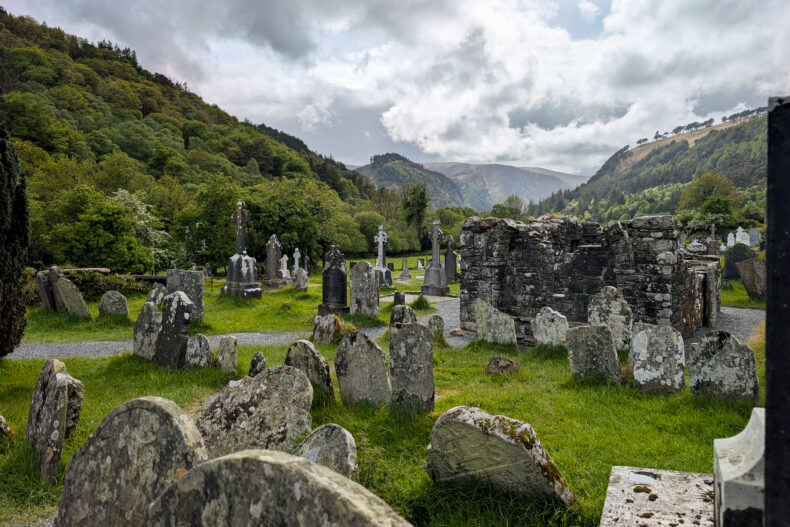
The next day it was time for Glendalough, the best-known spot in the Wicklow Mountains. In this valley between two lakes, Saint Kevin founded a monastery in the sixth century that grew into one of the most important in Ireland. The round tower, over thirty metres tall, still stands among little churches, a roofless cathedral and a graveyard full of weathered Celtic crosses.
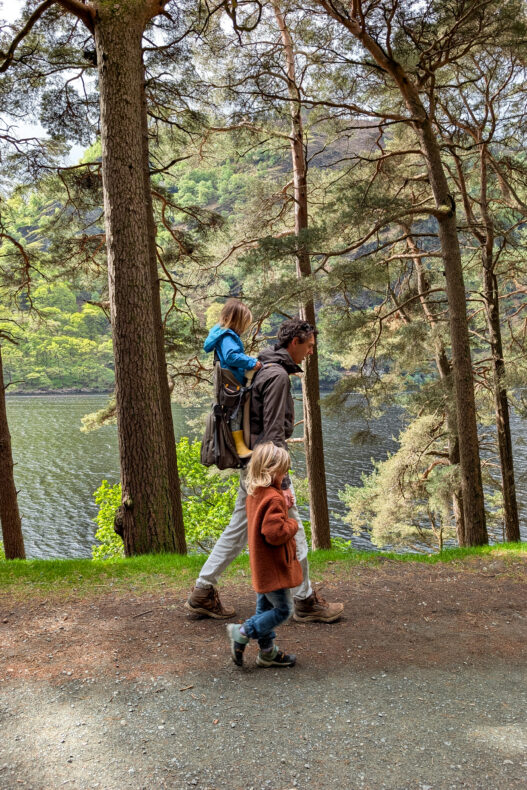
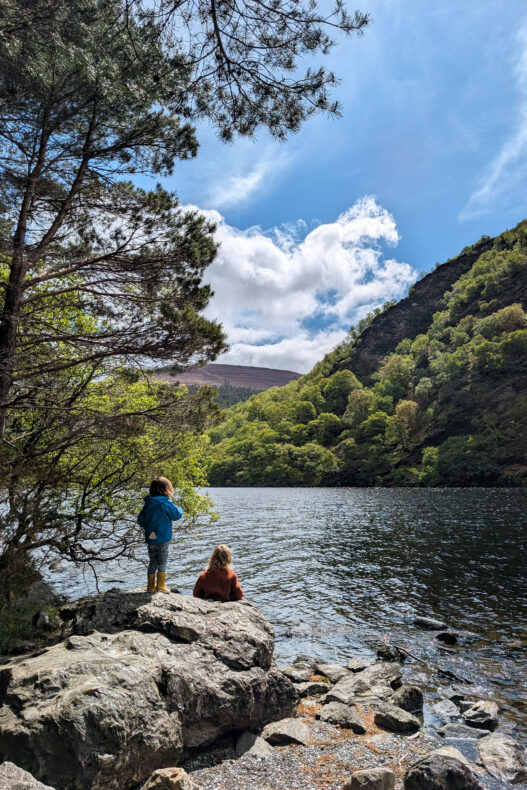
More rain was forecast, but we got lucky, with even some sunshine in between. First we all walked the path along the lakes to the old Miners’ Village at the end of the valley, and back again. The path is flat and easy, and with the wooded slopes all around it’s never boring.
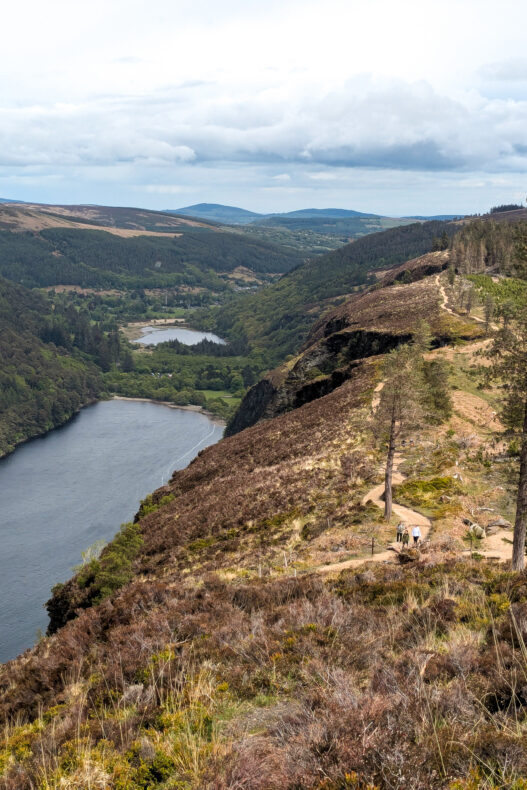
Then Sebastiaan, who’d always rather head into the mountains, set off alone up the Spinc Trail, the steep route along the rim of the valley. He came back with the best photos of the whole week: the Upper Lake far below, surrounded by forested slopes.
Late in the afternoon we walked together to the monastic ruins, again on a flat, easy path. A graveyard makes me think of something a bit creepy, but with the moss on the old headstones and the mountains all around, it turned out to be a great spot. The roofless cathedral made less of an impression, as it’s quite dilapidated. On the way back, sheep were grazing along the path, a sight we’d see many more times on this trip.
#3 Newgrange (Brú na Bóinne)
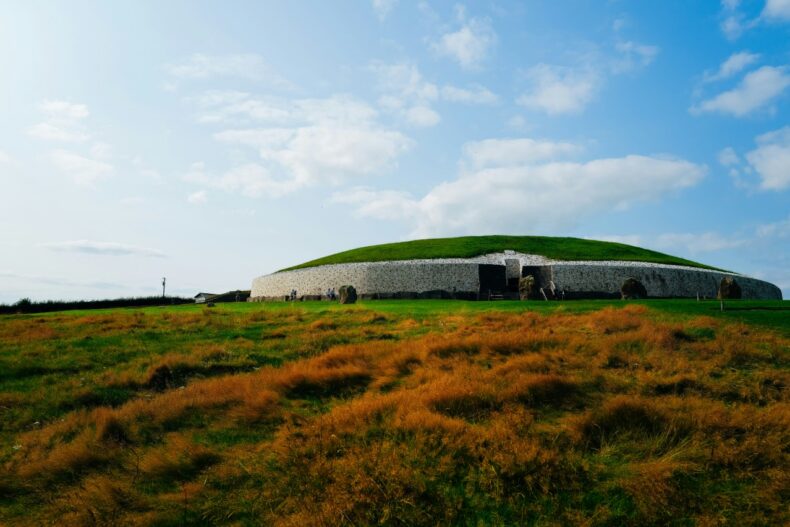
About an hour north of Dublin, in the green valley of the River Boyne, lies one of the oldest buildings in the world. Newgrange is a huge passage tomb built by Stone Age farmers more than 5,000 years ago. That makes it older than Stonehenge and even older than the pyramids of Giza.
The most special moment comes around the shortest day of the year. The rising sun then shines exactly through an opening above the entrance, sending a beam of light deep into the chamber. For a few minutes, every year, for five thousand years.
Together with the tombs of Knowth and Dowth, Newgrange makes up the Brú na Bóinne UNESCO World Heritage Site. You can only visit the tombs from the visitor centre, where a shuttle bus takes you to the mounds for a guided tour. Spots fill up fast in summer, so book ahead.
Best places to visit in South Ireland
#4 Kilkenny and the Rock of Cashel
If you love medieval history, the Irish interior is your playground. Kilkenny is one of the best-preserved medieval towns in Ireland. The Medieval Mile runs through the centre, a walking route from the imposing Kilkenny Castle to St Canice’s Cathedral, past old pubs, narrow lanes and little shops. At the cathedral you can climb a round tower for views over the rooftops.
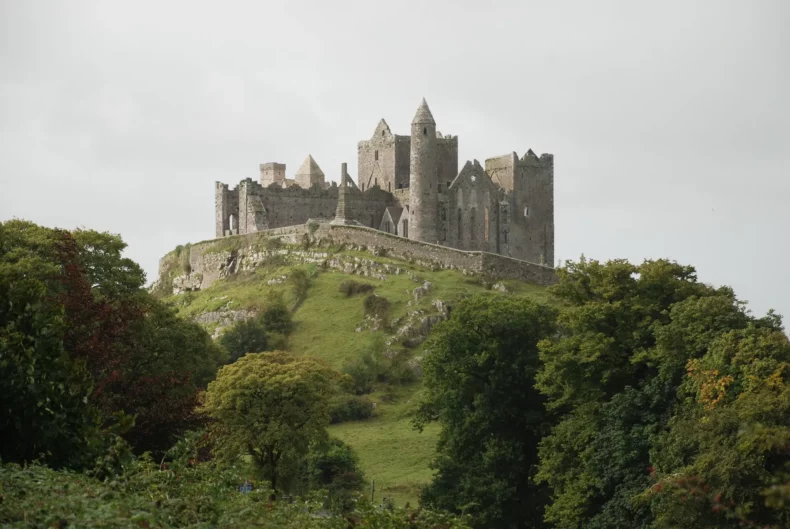
About an hour further west, the Rock of Cashel rises out of the flat Tipperary countryside. For centuries the kings of Munster ruled from this limestone rock, and later the church. You wander between a round tower, a roofless Gothic cathedral and the Romanesque Cormac’s Chapel. You can see its silhouette from miles away, and that view alone is worth the detour.
Both places are on the route from Dublin to the southwest, so they’re easy to combine in one day.
#5 Copper Coast and Mahon Falls
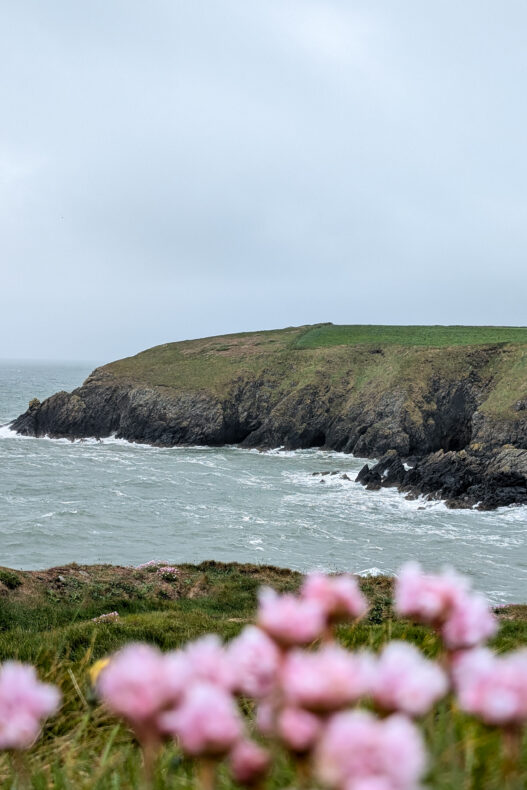
How hard can the wind blow? On the Copper Coast in County Waterford we found out: we were parked up by the sea that evening and the storm was so strong everything around us was shaking. Only when the rain eased off the next morning did we see how beautiful it is here. A quiet coast road past cliffs, coves and small beaches, named after the copper mines that once operated here. The area is a UNESCO Global Geopark.
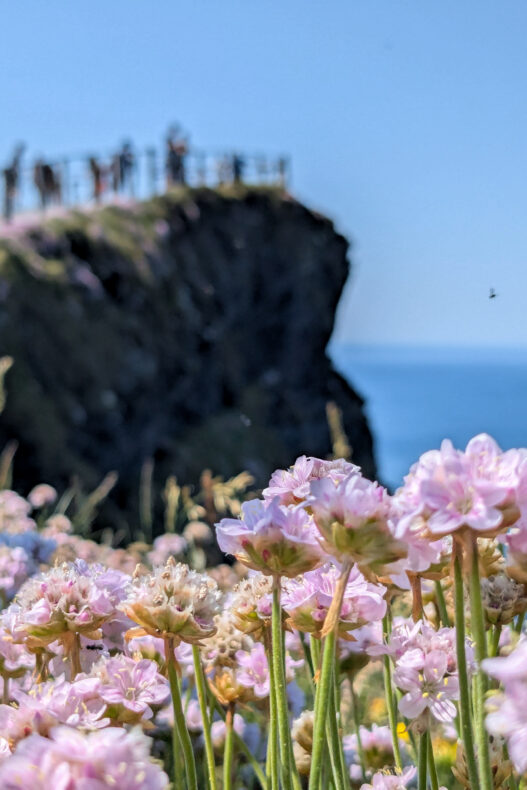
What we remember most are the verges. They were full of wild flowers in pink, yellow, purple and white, and they stayed that way for the rest of the trip. All those flowers became one of our favourite things about Ireland, and we hadn’t seen that coming.
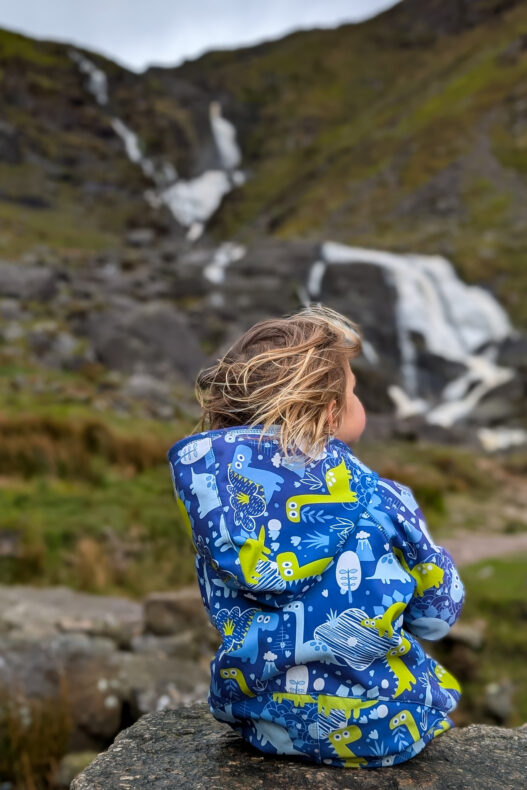
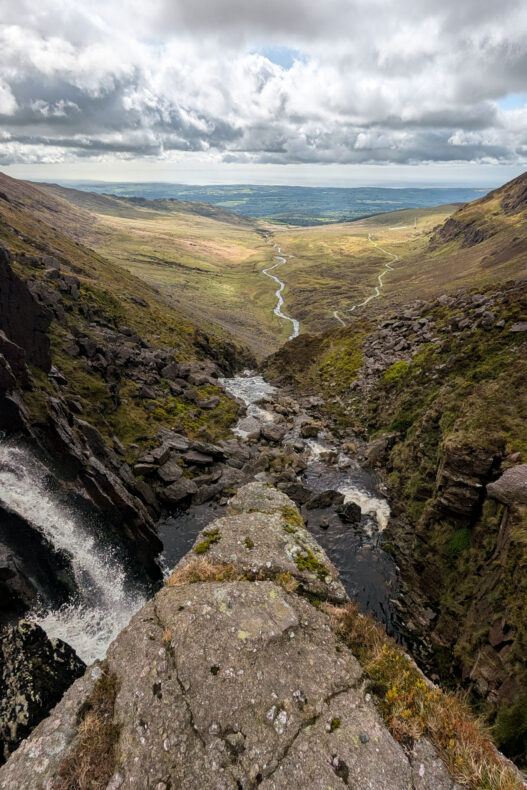
From the coast, it’s well worth driving twenty minutes inland to Mahon Falls in the Comeragh Mountains. The path to the waterfall runs through a green valley where sheep graze with their lambs. It brightened up for a bit, so we walked to the falls, but on the way back we got soaked anyway.
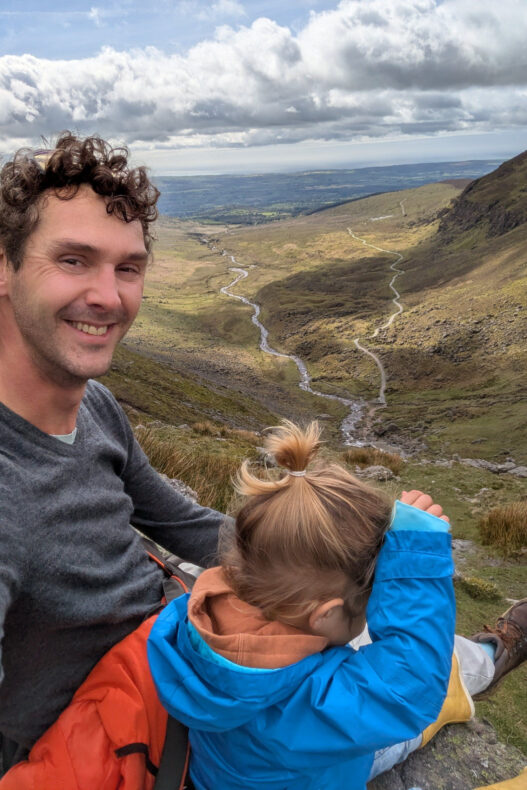
The next morning was finally dry, and Sebastiaan and our son had their own adventure. Together they climbed steeply all the way to the top of the falls. Sebastiaan had saved another nice spot further on in his map app, but with a toddler in the carrier that climb alone was tough enough. The view made up for everything: the whole valley lay at their feet.
#6 Cork
Cork is Ireland’s second city, but it feels more like a big, friendly town. We left the campervan outside the city and took the double-decker bus into the centre, much to the kids’ delight. Once we were in town the sun came out, and we spent the whole afternoon wandering the streets along the River Lee.
We had lunch in a pub and then climbed the walls of Elizabeth Fort, a seventeenth-century star-shaped fort with views over the rooftops and the spires of St Fin Barre’s Cathedral. The kids made a beeline for the cannons.
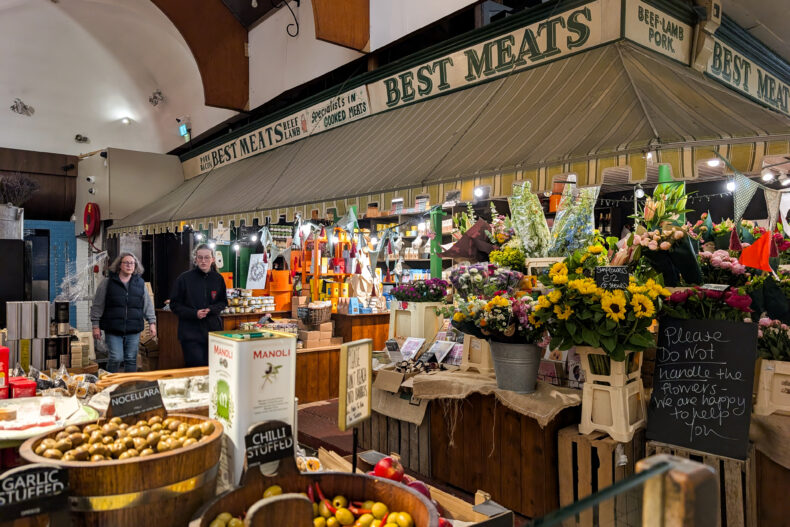
Don’t miss the English Market, a covered market hall that dates back to the eighteenth century. Between the stalls of cheese, fish, olives and fresh bread you can easily put together a lunch.
Just outside the city is Blarney Castle, famous for the Blarney Stone. Legend has it that kissing the stone gives you the gift of the gab, though you do have to lean backwards over the edge of the battlements to do it.
→ Discover the 11 best things to do in Cork
#7 Kinsale, Clonakilty and the West Cork coast
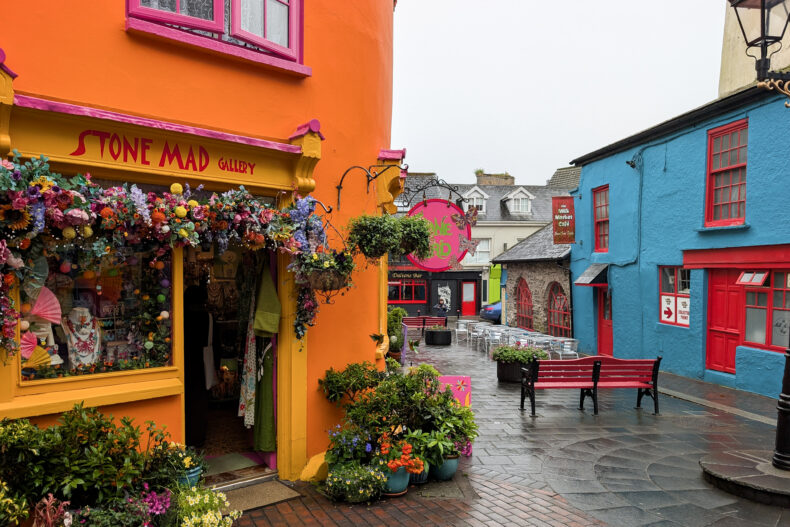
County Cork is known for its colourful towns, and Kinsale is the most famous of them. Around the marina you’ll find facades in pink, blue, yellow and green, with restaurants in between where it’s all about fish and seafood. Kinsale is considered one of Ireland’s food capitals. For us, a grey blanket of rain hung over the harbour, so the colours didn’t pop quite as much as on the postcards.
Then drive on to the Old Head of Kinsale, a narrow headland stretching far out into the ocean. On a clear day the sunrises and sunsets here are spectacular. We got rain, and even then it was stunning.
From Kinsale a coastal path also runs along the water to Charles Fort, a large star-shaped fort at the mouth of the harbour. We set off, but turned back halfway when the rain started pouring again. A shame, because the path looked gorgeous. On a dry day we’d definitely walk the whole thing.
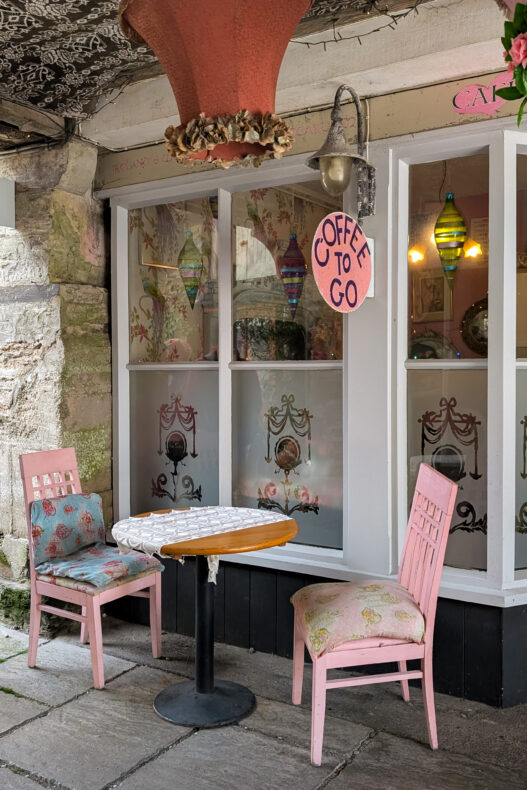
Our favourite town in Cork turned out to be Clonakilty. More cheerful colours, but with packed terraces, nice little boutiques and a bright pink tea room where the four of us shared a plate of scones with jam and cream. It helped that the sun finally came out that day. Naturally, we finished off with an hour in the playground.
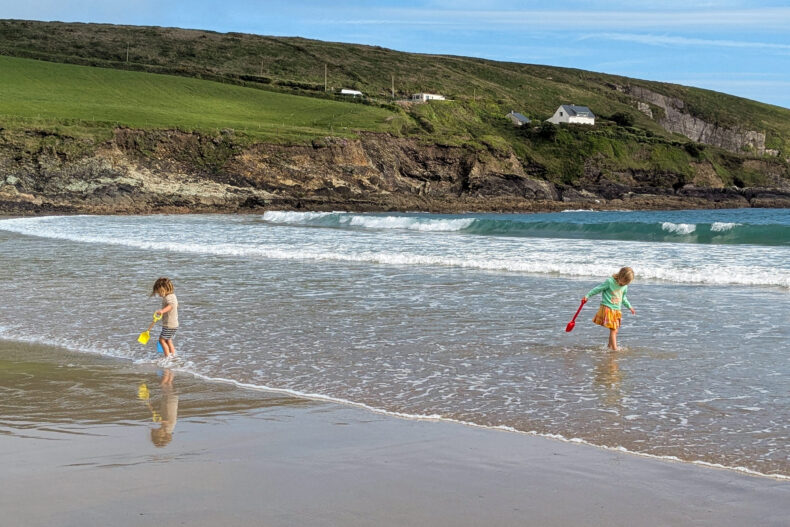
Between the towns you’ll find wonderful beaches along this coast, such as Inch Strand in East Cork, Red Strand, which becomes enormous at low tide, and wild Dunworly Beach, which almost completely disappears at high tide. On Red Strand the kids played in the surf for an entire morning.
#8 Mizen Head and Barley Cove
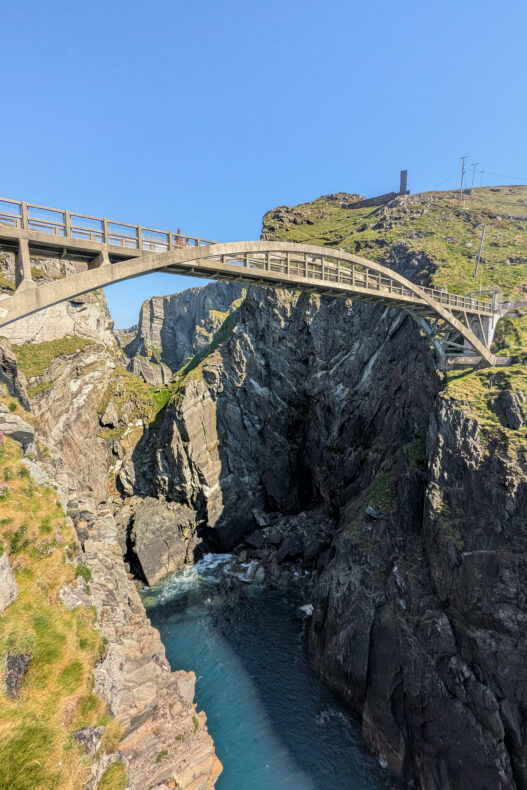
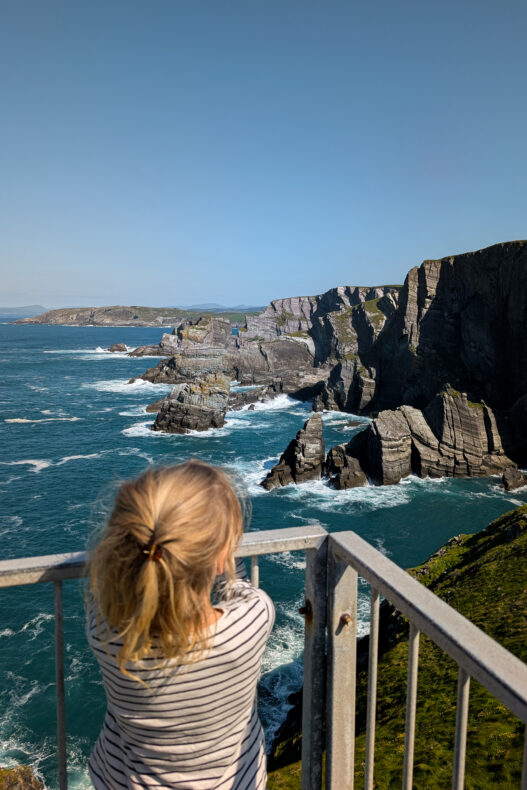
For us, the far southwest of Ireland was one of the highlights of the entire trip. This is where the land ends at Mizen Head, a rocky cape where the cliffs plunge straight into the ocean. From the car park you follow a path with steps and a spectacular bridge over a deep gorge to the old signal station at the very tip. The sea churns below you and seabirds circle all around. We were watching the waves when a dolphin suddenly swam past. You don’t forget moments like that!
We already knew the bridge from photos, but we liked the little museum in the signal station just as much. It tells you how the keepers lived here and warned ships on one of the most dangerous stretches of the Irish coast. The path, the bridge and the station are part of a visitor centre with an entrance fee, which, incidentally, we only found out when we got there.
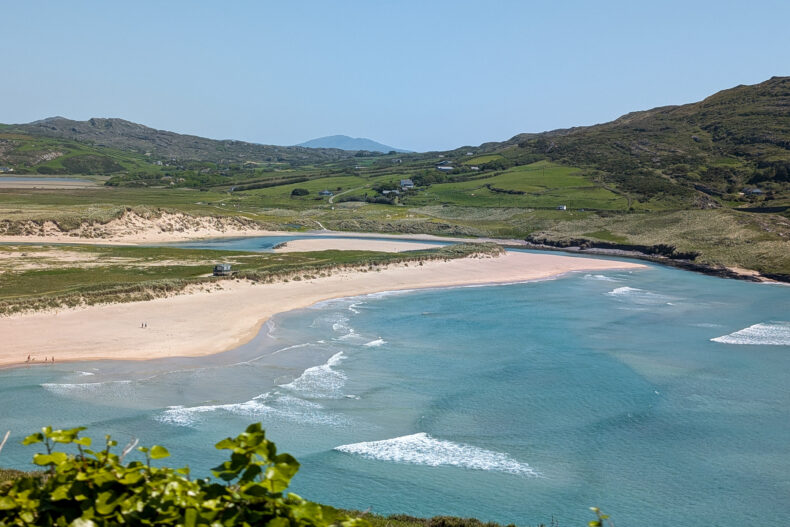
A few kilometres back is Barley Cove Beach, quite possibly the best beach of our whole trip. Driving along the coast road to Mizen Head, you look down on it from above: pearly white sand, deep blue water, rolling dunes and a little river snaking its way to the sea. It feels almost exotic, which is not what we expected in Ireland. A floating walkway crosses the lagoon to the beach, though at low tide you can also wade across.
We only stopped for lunch and a quick play on the sand, but we could easily have stayed all day. If there’s one place in West Cork you shouldn’t miss, this is it.
Best places to visit in Southwest Ireland
#9 Ring of Kerry
The Ring of Kerry is Ireland’s most famous driving route, a loop of over 170 kilometres around the Iveragh Peninsula. The road winds past mountains, lakes, small villages and, again and again, the ocean. All tour buses drive the ring anticlockwise, from Killarney via Killorglin, so they don’t meet each other on the narrow sections.
Without giving it much thought, we did exactly the opposite and drove clockwise from Kenmare. Plenty of travellers choose that on purpose: you meet the buses coming towards you instead of crawling behind them for hours. It didn’t bother us much, not even in our six-metre campervan.
We drove the ring during the hottest days of our trip. Only around five o’clock was it cool enough for Derrynane Beach, and what a reward that was. A sweeping beach with white sand, clear blue water and rocks to scramble over. It felt almost tropical. We swam, played in the sea and climbed the rocks.
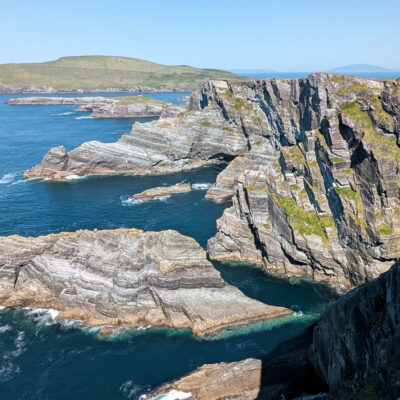
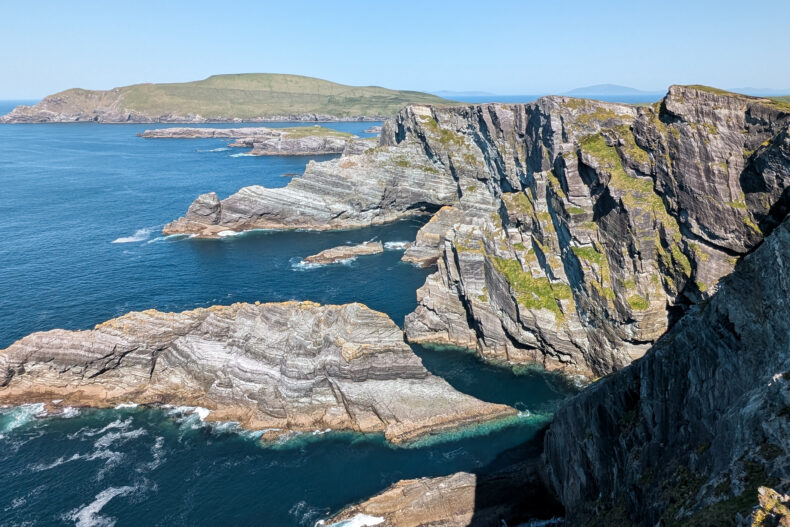
Whatever you do, don’t skip the Skellig Ring at Portmagee. This smaller loop is quieter, narrower and in our opinion even prettier than the main ring, and tour buses don’t go there. From the Kerry Cliffs you look out at the two Skelligs, Skellig Michael and Little Skellig, sticking out of the ocean like shark’s teeth. Closer to shore lies Puffin Island. We trudged to the edge in the heat and found the cliffs at least as spectacular as the more famous Cliffs of Moher. You won’t have them to yourself, but it’s nowhere near as busy.
On Skellig Michael, monks built a monastery of stone beehive huts more than a thousand years ago, at the top of a staircase of over six hundred steps. You can only land in the summer months, with a limited number of boats per day, and children under twelve aren’t allowed. A boat trip around the islands is possible, with a good chance of spotting puffins.
→ See the boat trip around Skellig Michael from Portmagee
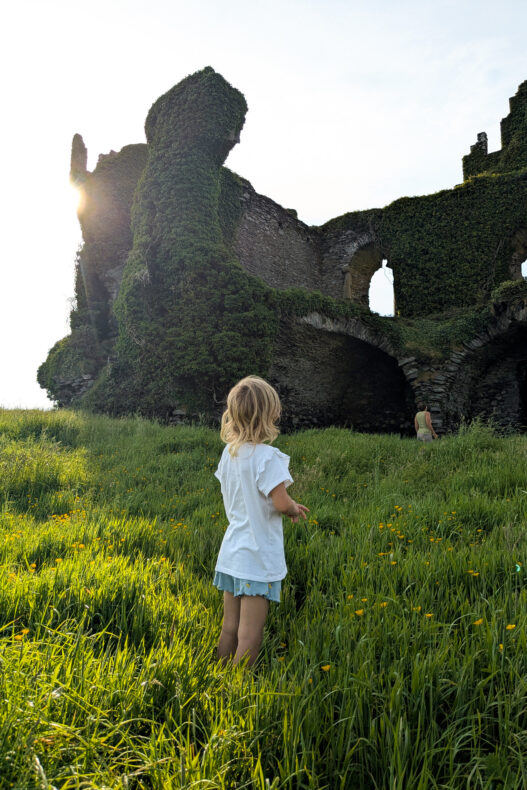
Our favourite moment on the ring was at Ballycarbery Castle, an ivy-covered castle ruin near Cahersiveen, surrounded by green. Next to the ruin is a tidal mudflat that almost dries out at low tide, and around sunset we saw tractors driving across it. The estuary is a shellfish farming area. Only in the golden evening light did we finally unwind, with a cup of coffee and a view of the ruin.
A little further on is Inny Beach, a long and usually deserted strand. When we arrived at sunset, a film crew turned out to be at work, horses and all, and the place was suddenly heaving. The next morning we had the beach to ourselves again, and the kids played there in the warmth without seeing another soul.
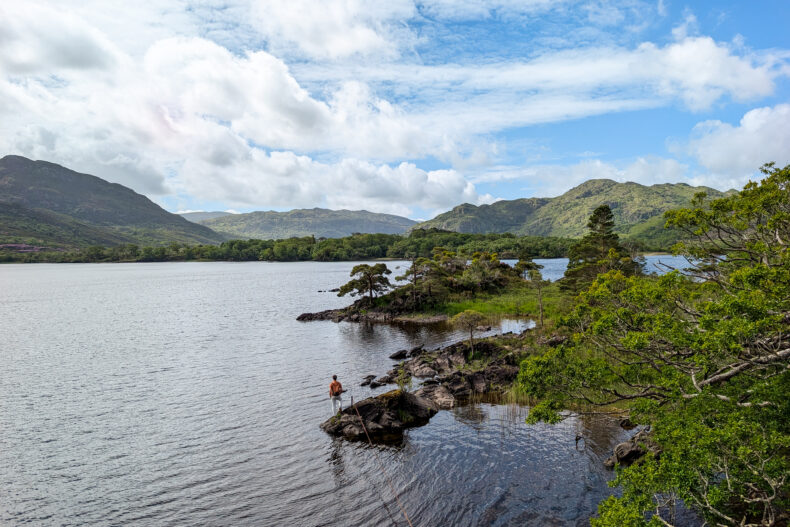
After the heatwave the weather turned within a few hours. It got fourteen degrees colder, cloudy and wet. We carried on along a beautiful route through the mountains of Kerry and took the kids on a short walk in Lickeen Forest. Tiny doors were hanging on the trees everywhere, and the kids searched the whole forest to find them all. This is also where we really saw how the rhododendrons bloom here in late spring: entire hillsides and even little islands turn pink. At Moll’s Gap, a well-known viewpoint on the road to Killarney, we only caught glimpses of the valley through the clouds. Even those glimpses were impressive.
→ Discover the 10 best stops on the Ring of Kerry
#10 Killarney National Park
Killarney National Park is Ireland’s oldest national park. It lies around three lakes, with ancient woodland, mountains and its own herd of wild red deer. After the rainy days in the mountains we got a glorious day here, perfect for exploring the park.
For families, this park is a gift. Sebastiaan picked out a stretch of the Muckross Lake Loop, a paved cycling and walking path along the south side of Muckross Lake. From the Dinis car park on the N71 we followed the path to the Old Weir Bridge, a centuries-old stone bridge where the lakes meet, and back again. The kids had brought their little bikes, so we got much further than if they’d had to walk.
Halfway along is Dinis Cottage, a two-hundred-year-old cottage that’s now a tea room. Serving, yes, scones again, which we ate outside at a picnic bench. If you cycle the whole loop around the lake, go anticlockwise, the recommended direction.
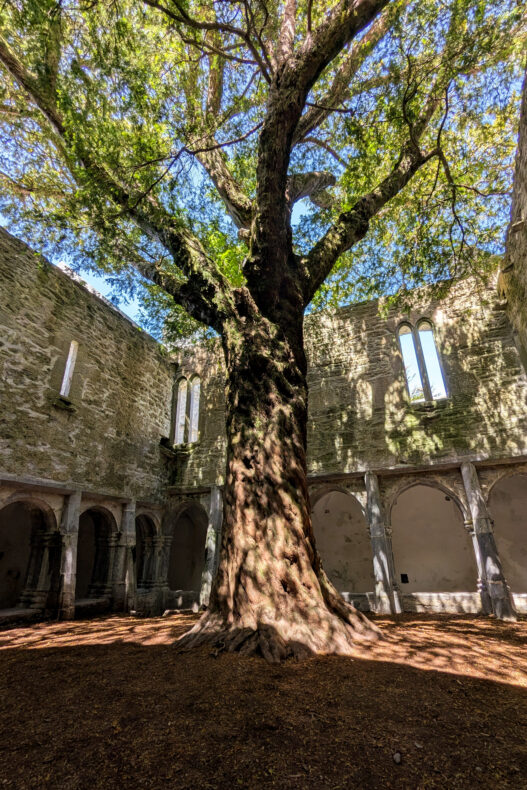
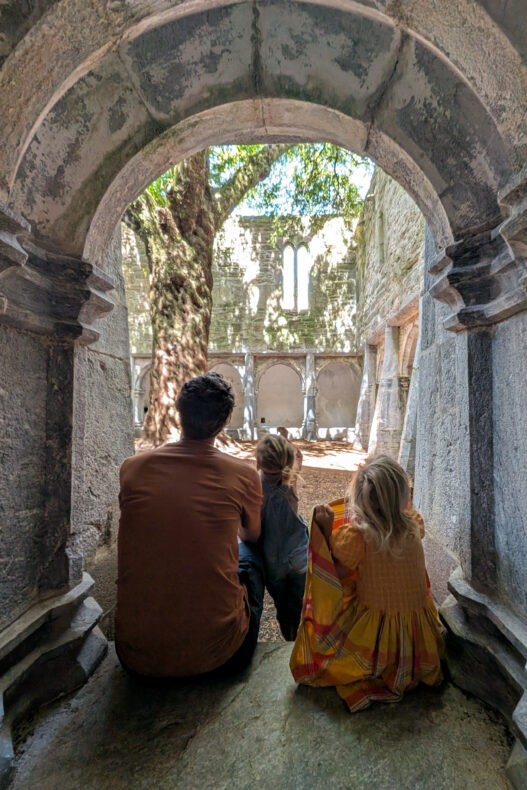
Afterwards we drove to Muckross Abbey, a fifteenth-century friary ruin you can explore for free, like a maze. The kids clambered through the passages, up little stairways and around the cloister. In the middle of the courtyard stands an ancient yew tree that fills the entire space. We didn’t see a more impressive courtyard anywhere.
West of Killarney is the Gap of Dunloe, a narrow mountain pass between steep slopes and small lakes. You can walk or cycle through it and combine it with a boat trip across the lakes back to Killarney. That makes a complete day out.
#11 Dingle Peninsula
North of the Ring of Kerry, the Dingle Peninsula juts out into the ocean. It’s smaller and wilder, and in the villages you still hear a lot of Irish. The cheerful harbour town of Dingle, with its brightly painted pubs and seafood restaurants, is the starting point for the Slea Head Drive.
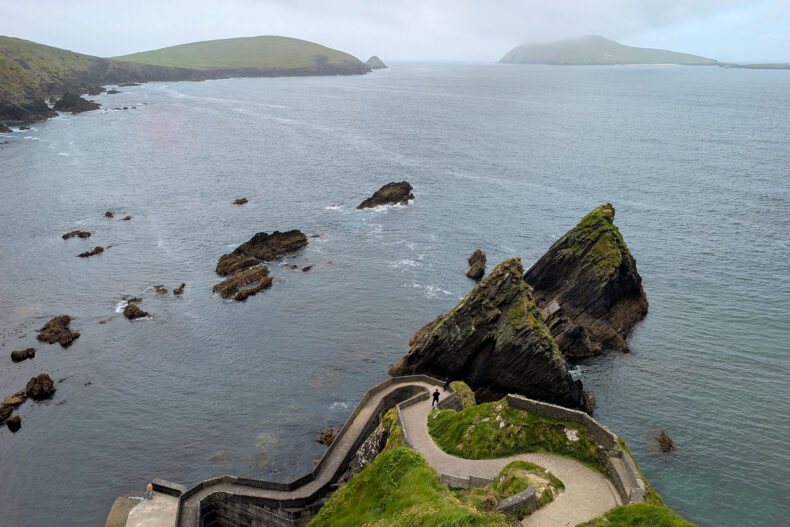
This loop of about fifty kilometres is one of the most beautiful drives in Ireland. You pass steep cliffs and stone beehive huts, with views of the Blasket Islands. In places the road is so narrow that only one car fits, with the cliff and the ocean right beside you. That’s why you should drive it clockwise, as the signs tell you.
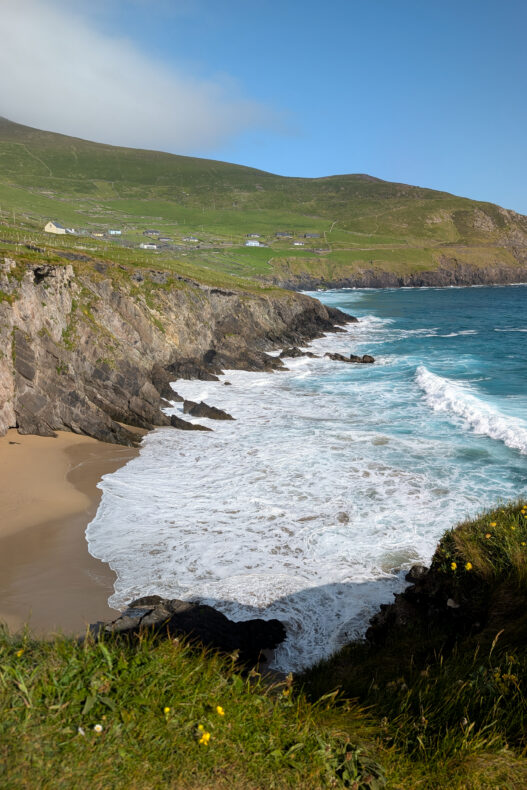
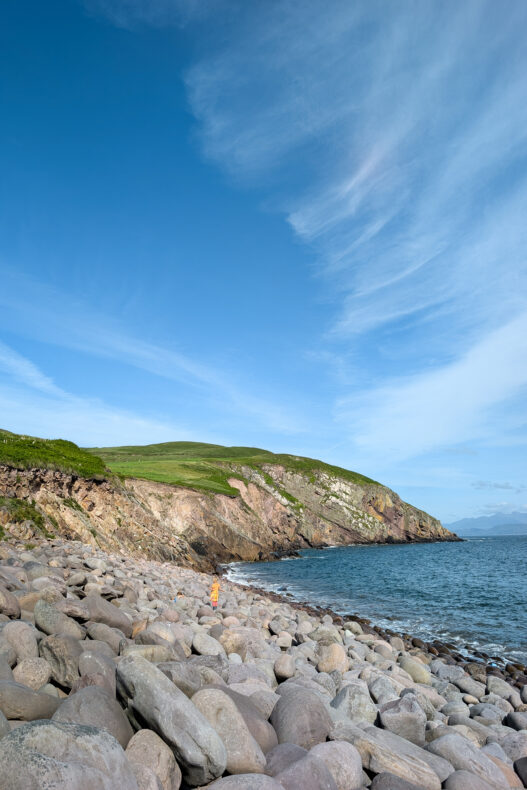
We stopped at Dunmore Head, the westernmost point of the Irish mainland, with a gorgeous bay at your feet. Along the way we also found a lovely beach with a castle ruin and a quiet sandy bay, where our kids played for hours.
#12 Carrigafoyle Castle
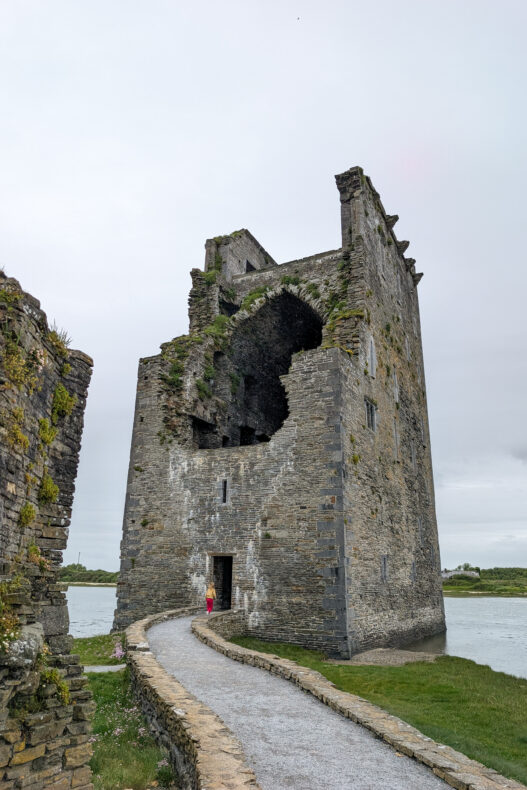
Heading north, just before the ferry across the Shannon, Carrigafoyle Castle stands right on the water of the estuary. This tall tower house was built in the late fifteenth century by the O’Connors, who kept an eye on the shipping on the river from here. In 1580 the castle was besieged and shot to pieces, and you can still see the hole in the wall.
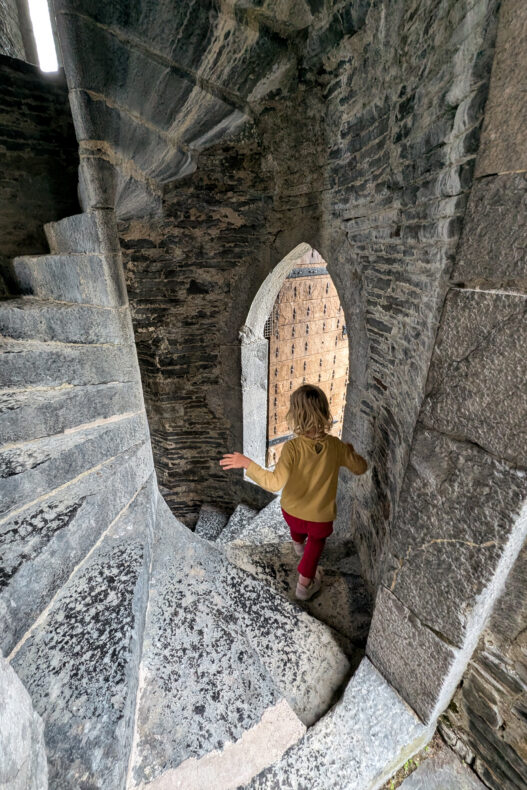
We liked it so much that we wandered around in the late afternoon and came back again the next morning. A narrow stone spiral staircase takes you all the way to the top, where you look out over the Shannon and the green countryside.
The castle is an official stop on the Wild Atlantic Way. Afterwards, take the ferry from Tarbert to Killimer, a handy crossing to County Clare that saves you a long detour.
→ Discover the 18 best stops on the Wild Atlantic Way
Best places to visit in West Ireland
#13 Cliffs of Moher and The Burren
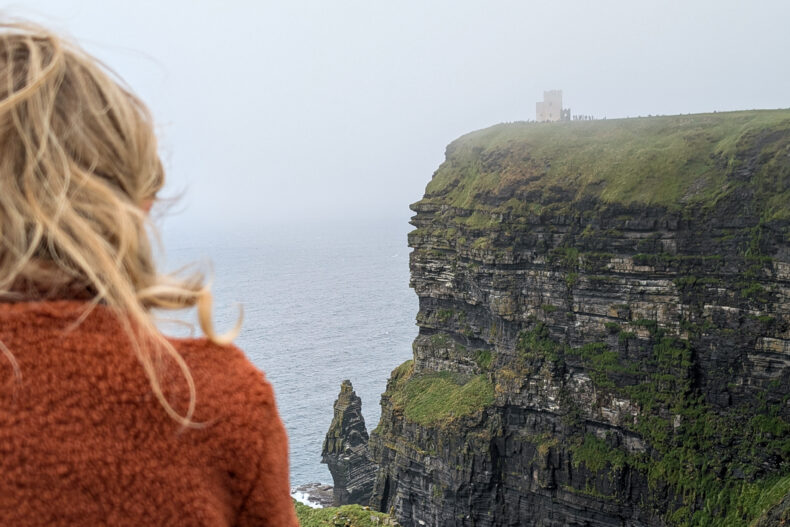
As a child I had a bookmark with exactly these cliffs on it, a gift from my grandparents, who had been there themselves. Ever since, the Cliffs of Moher were my picture of Ireland, and after all those years my expectations were sky-high. The cliffs stretch for about fourteen kilometres along the coast of County Clare and rise to more than two hundred metres above the ocean. They’re Ireland’s most famous cliffs, so you can’t really skip them.
And yet they were a letdown for us. It was packed, and the official car park is pricey: you pay per person in the car, and that ticket covers the paths and the visitor centre too. The cliffs themselves are public, so there are no other gates. No wonder you see people dropping their passengers off just before the barrier.
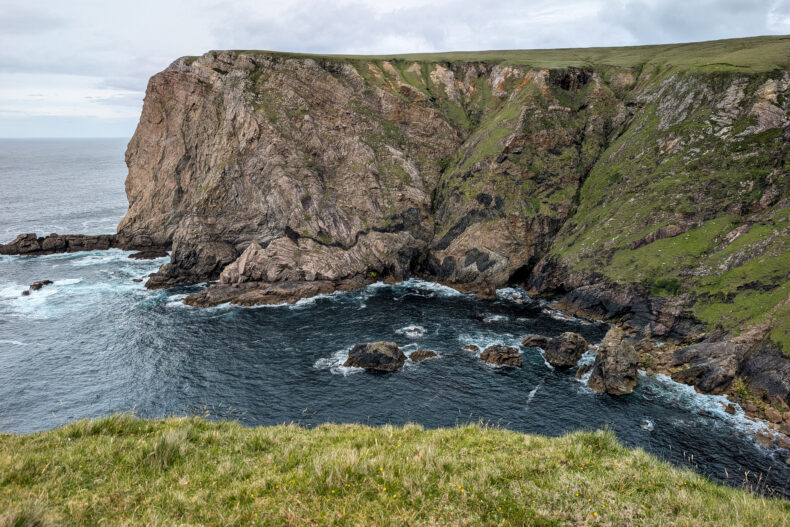
During our visit it was raining and we could barely see the cliffs. We did spot puffins on the rocks in the distance. The visitor centre is big and touristy, but fun: there’s a free film in which you fly over the cliffs like a bird. Do it! Personally, I found the Kerry Cliffs and the cliffs at Portacloy in North Mayo more impressive, and a lot quieter.
Still want to see the cliffs? Pick a dry day and come early in the morning or late in the afternoon. Even better, walk a section of the Cliff Walk from Doolin, away from the crowds around the visitor centre.
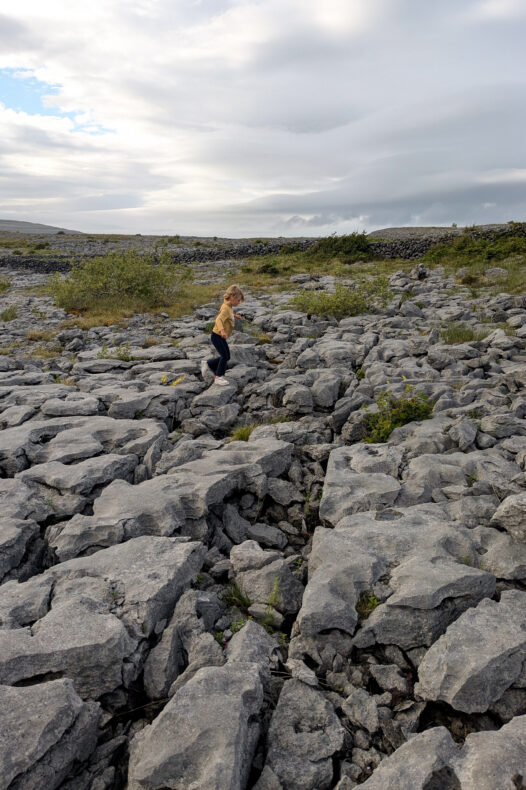
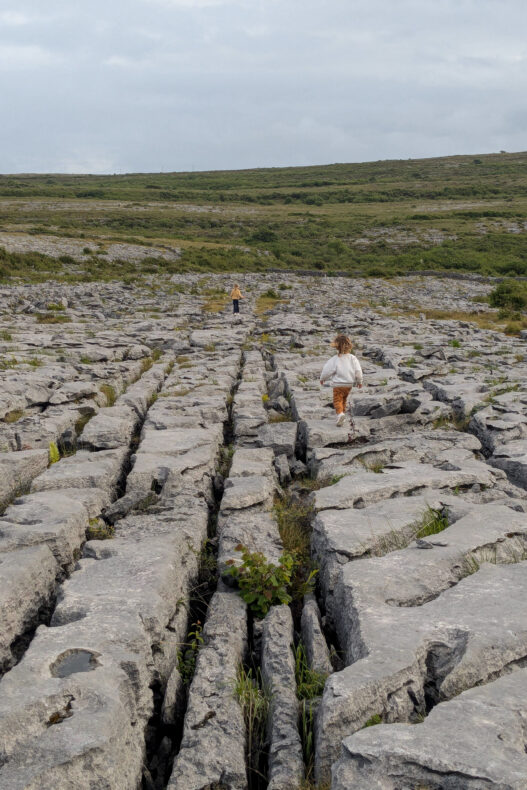
Drive north from the cliffs and the landscape changes completely. The Burren is a moonscape, just with sheep: huge grey limestone plateaus that run down to the sea, criss-crossed with deep cracks. A remarkable mix of plants grows in those cracks, from orchids to flowers you’d normally only find in the Alps or around the Mediterranean.
We stopped at a viewpoint above the limestone, and Sebastiaan went exploring among the rocks with the kids. They didn’t have a set route, and they didn’t need one: there’s always another crack or tiny flower to discover. Don’t miss the Poulnabrone dolmen either, a stone tomb about 5,000 years old that stands like a giant table in the bare landscape.
#14 Galway and the Aran Islands
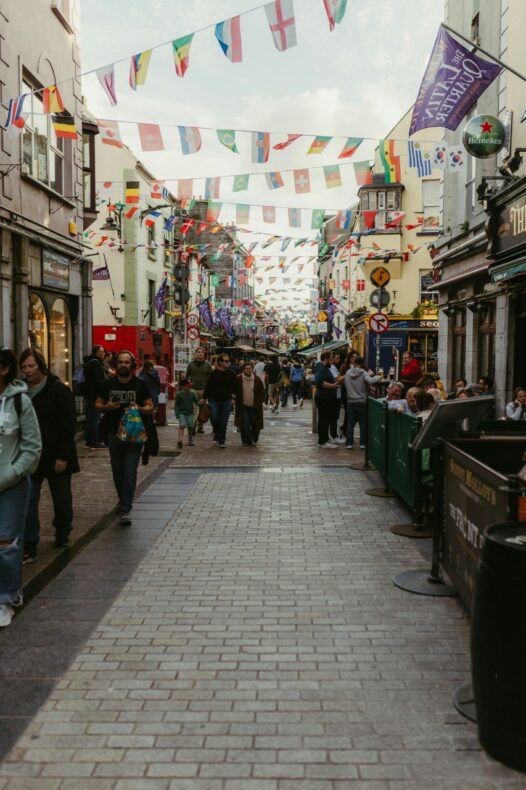
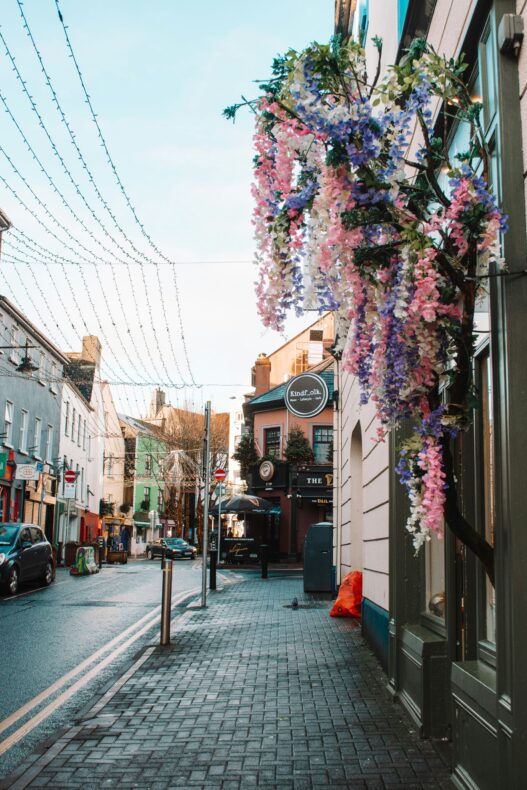
Galway is the cultural capital of the west, and you notice it as soon as you walk through the Latin Quarter. Narrow shopping streets with colourful facades, buskers on every corner and pubs with traditional Irish music every night. It’s a young, lively city, thanks partly to all the students, with a long promenade along the bay to Salthill.
Just outside the city, in Kilcolgan, we did a scone workshop with Kate (as guests of GetYourGuide). In her kitchen the whole family learned, step by step, how to bake real Irish scones and brown bread, with tea or coffee on the side, and afterwards we got to eat everything warm. A really nice thing to do on a rainy day, and we had plenty of those in Galway.
→ Book the scones and brown bread baking class with Kate
Galway is also the base for the Aran Islands, three bare limestone islands where time seems to stand still. Irish is still widely spoken, the fields are edged with endless stone walls and the famous Aran jumpers come from here. A ferry runs all year from Rossaveal, west of Galway.
On Inis Mór, the largest island, you rent a bike at the harbour and ride past the walls to Dún Aonghasa, a prehistoric stone fort on the edge of a cliff almost a hundred metres high. Inis Meáin and Inis Oírr are smaller and even quieter. Bring a rain jacket, because there’s hardly any shelter.
#15 Connemara and Kylemore Abbey
Northwest of Galway lies Connemara, for many people the most Irish landscape on the island. Bogs, dark lakes, bare mountains and a ragged coastline with white beaches take turns, and ponies and sheep stand by the road. Above it all rise the peaks of the Twelve Bens.
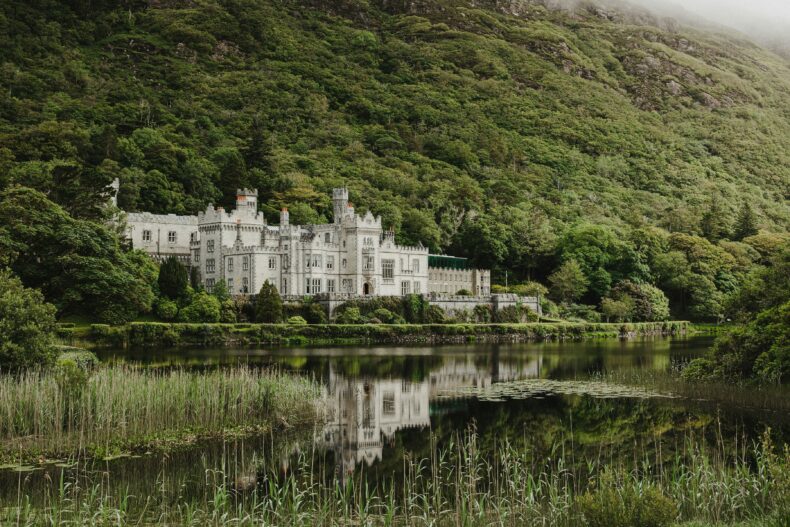
In Connemara National Park near Letterfrack you can climb Diamond Hill, a walk of a few hours with views over the coast and islands from the top. Close by is Kylemore Abbey, a neo-Gothic castle on the shore of a lake, with wooded mountains behind it. Benedictine nuns have lived here for over a hundred years. Don’t forget the walled Victorian garden, one of the finest gardens in Ireland.
Best places to visit in Northwest Ireland
In Galway we were on the verge of heading home. After lots of wet days in a small campervan, we wanted to drive straight to Dublin for the ferry. But it also felt like such a waste of Ireland. As a compromise we stayed a few more days, and we’re so glad we did. The northwest turned out to be one of the best parts of the whole trip.
#16 Achill Island
Achill Island is Ireland’s largest island, yet you simply drive there over a small bridge. Even so, it instantly feels like an island. The landscape gets barer and wilder, and sheep roam freely everywhere. We saw them calmly nibbling the locals’ front gardens without anyone batting an eyelid.
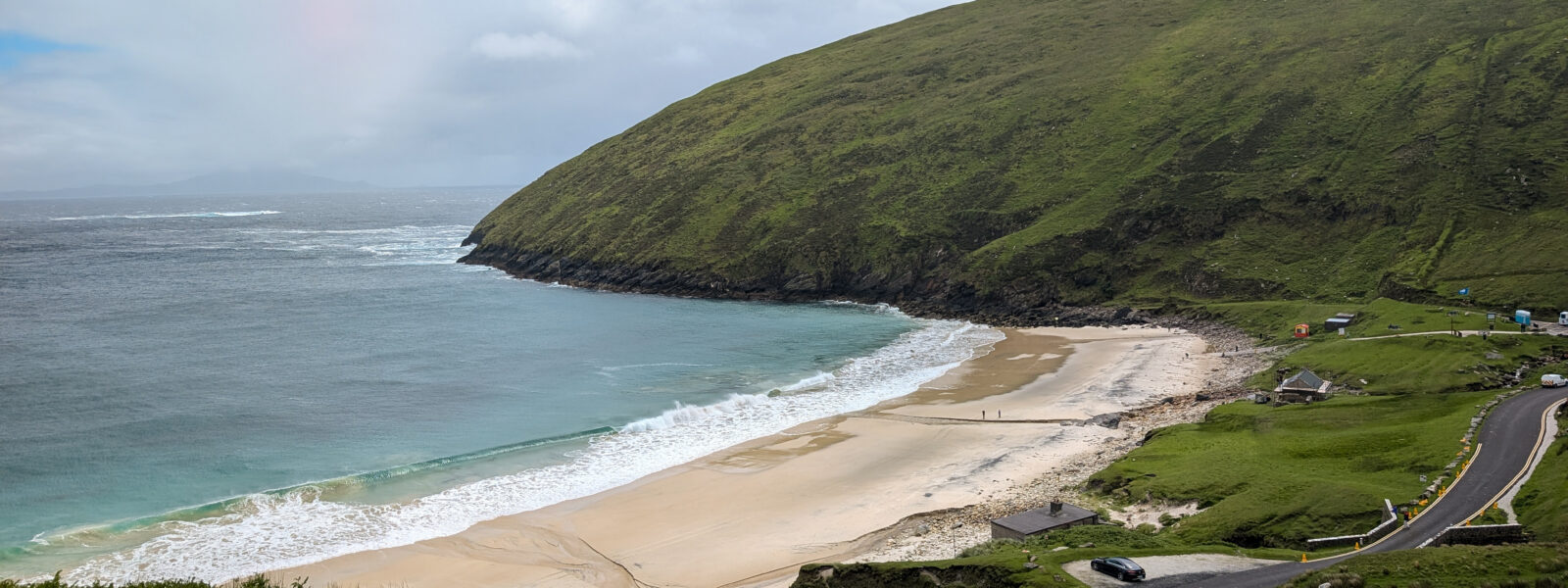
The prettiest spot is Keem Bay, right at the end of a narrow road that runs high along the cliffs, with turquoise water and green slopes all around. Along the way, near Keel, you’ll find a stone meditation circle, a waterfall and the Cathedral Rocks, huge rock formations battered by the surf.
Near Keel we got caught in an enormous downpour. Soaked to the skin, we crawled back inside, where our daughter suggested making hot chocolate. Best idea of the day. Afterwards Sebastiaan still braved a wet and pretty tough mountain hike from Lough Acorrymore, a small reservoir with a dam on the west of the island, up the slopes of Croaghaun. On a clear day you look down on some of the highest sea cliffs in Europe from up there. He mostly saw clouds, and preferred to keep away from the cliffs, afraid of getting too close to the edge in the fog.
One more funny detail: bins are scarce in Ireland, which makes getting rid of rubbish on the road quite a challenge. In a village on Achill we finally found one, and it turned out to talk. Throw something in and you hear ‘nom nom nom nom’. The kids were in stitches.
#17 North Mayo
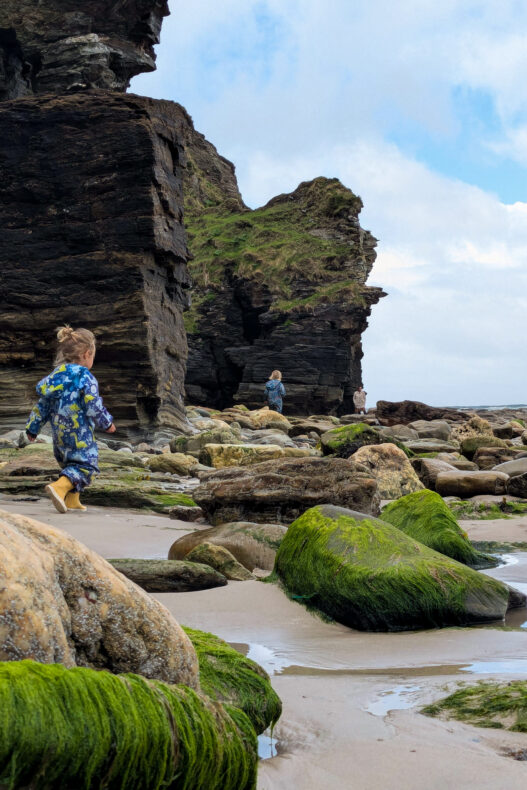
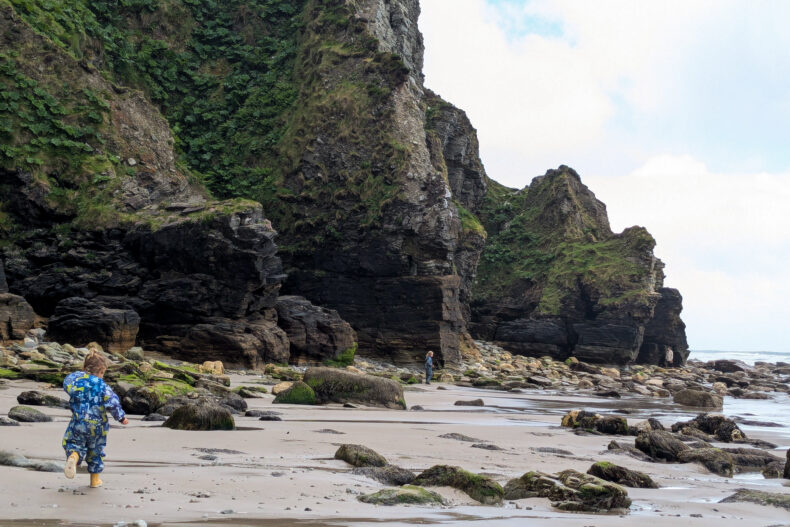
The north coast of County Mayo is empty, wild and sees few tourists. This is where we had one of the most special days of the whole trip.
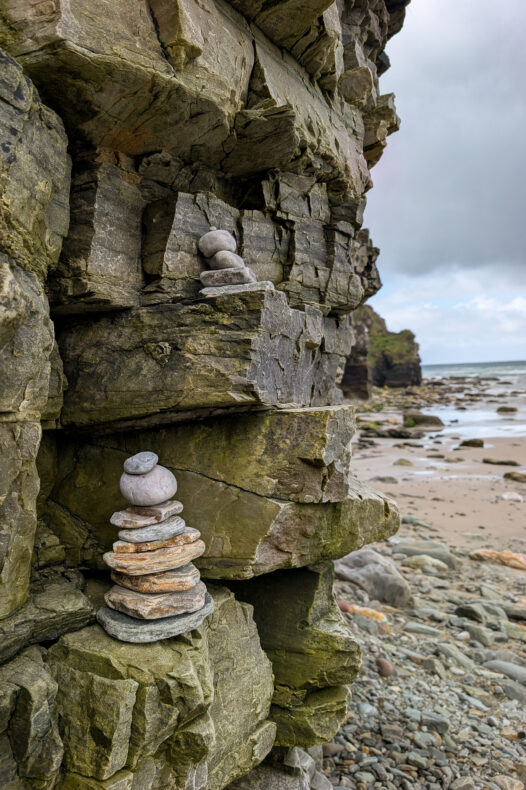
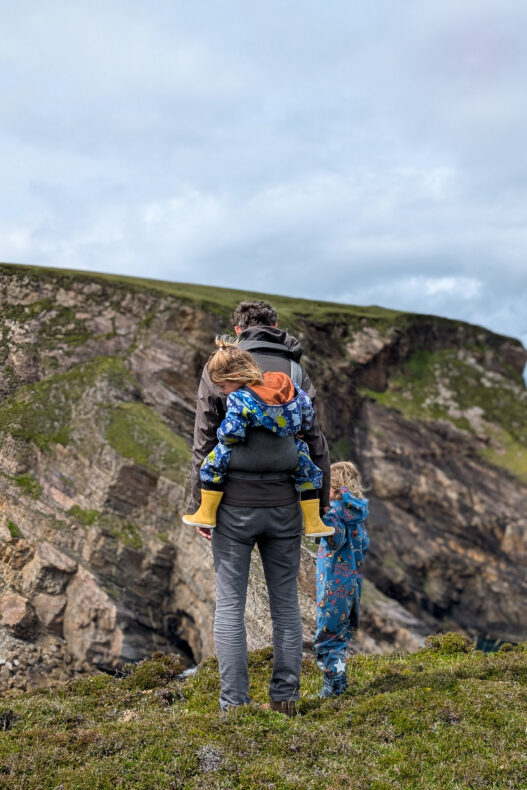
It started with the Portacloy Cliff Walk, a short but spectacular walk along steep cliffs and sea stacks. On the ground there’s a big sign made of white stones: the word ÉIRE with a number next to it. Signs like this were laid along the entire Irish coast during the Second World War, so that pilots knew they were flying over neutral Ireland. After lunch and an hour playing on the beach, Sebastiaan walked a second cliff route just round the corner while the weather got wilder.
Then a man came over with a golden tip. One bay along, at Rinroe Beach, basking sharks had been spotted. We jumped straight back in and were treated to about fifteen basking sharks. They swam around for hours just off the shore, their mouths wide open as they glided through the water. Twice one leapt completely out of the water, which is apparently very rare. For us, one of the highlights of the whole trip. And don’t worry: basking sharks are the second-largest fish in the world after the whale shark, but they only eat plankton. The beach itself is gorgeous too, with rocks and caves to explore and curious sheep coming over to take a look at you.
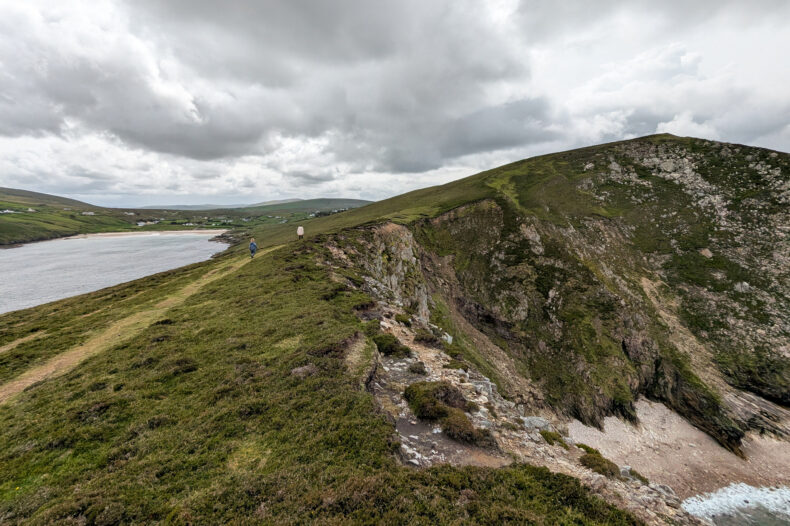
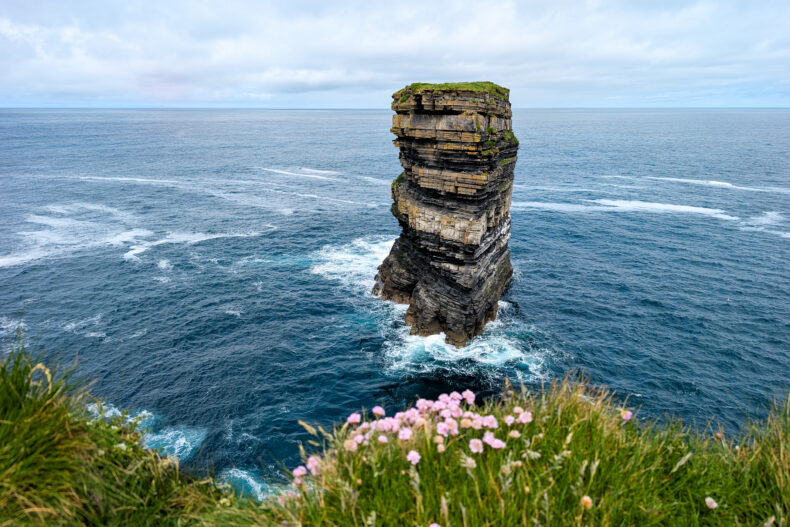
Then drive on to Downpatrick Head, one of the best-known stops on the Wild Atlantic Way. Just off the headland stands Dún Briste, a sea stack over forty metres tall, with its rock layers stacked like a layer cake. We actually had a dry moment there and enjoyed the view. Close to the headland is also Poll na Seantainne, a deep hole in the ground where the sea rushes in through a long tunnel. We found that almost as cool as the sea stack.
#18 Sligo
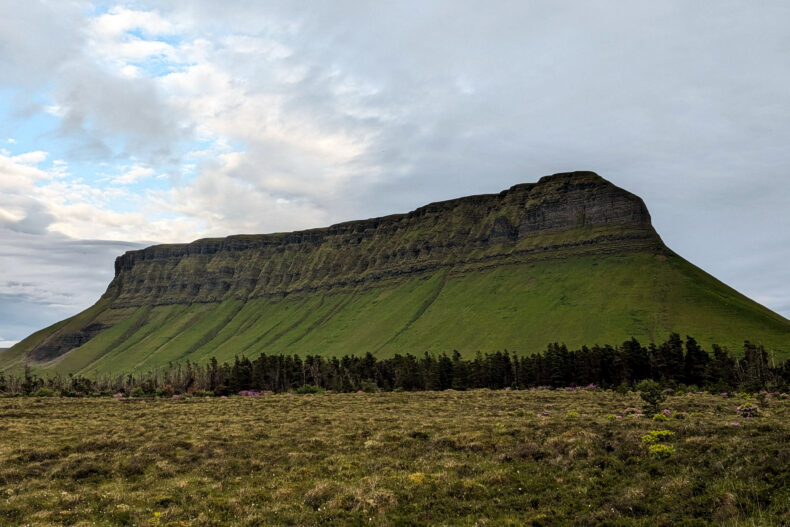
A mountain that looks as if someone sliced its top off with a knife: that’s Benbulben, Ireland’s best-known flat-topped mountain. It towers over the green countryside of County Sligo and you can see it coming from miles away. The poet W.B. Yeats, who is buried close to the mountain, wrote one of his best-known poems about it. We walked a loop at its foot one morning, got thoroughly rained on and watched the mountain vanish into the clouds.
We found the Gleniff Horseshoe even more impressive, a loop road of about ten kilometres through a horseshoe-shaped valley behind Benbulben. Steep rock faces rise on every side, and waterfalls stream down everywhere. It rained almost non-stop, which made them roar even harder. For us, one of the most impressive pieces of nature in all of Ireland.
Bring insect repellent to Sligo. We went for an after-dinner walk by a lake until the midges arrived: tiny biting insects that even crept in through the air vents with the door shut and got every one of us.
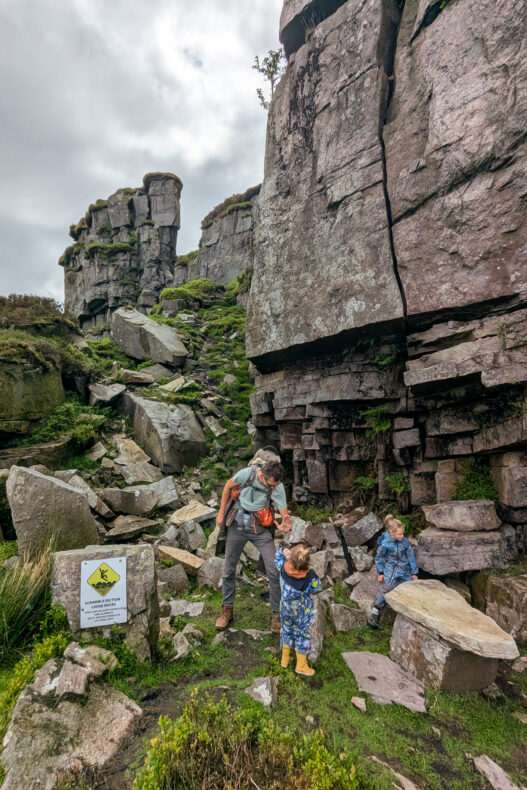
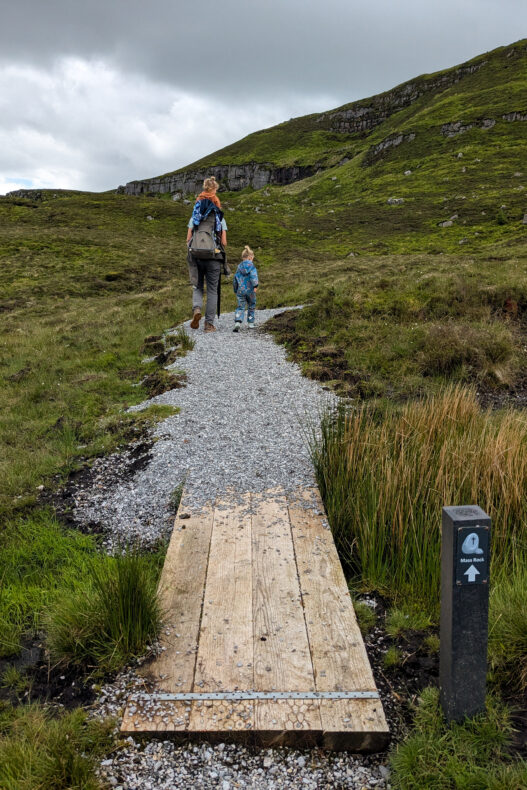
On the way back to Dublin, in the hills south of Sligo, we did one of the best walks of the trip, to a Mass Rock. At remote rocks like this, Catholics secretly held Mass in the seventeenth and eighteenth centuries, when it was forbidden in the open. The path runs over boardwalks and between huge boulders, with wide views over the green countryside. We got drenched on the way back, but that didn’t spoil the fun.
#19 Donegal: Slieve League, Malin Head and Fanad Head
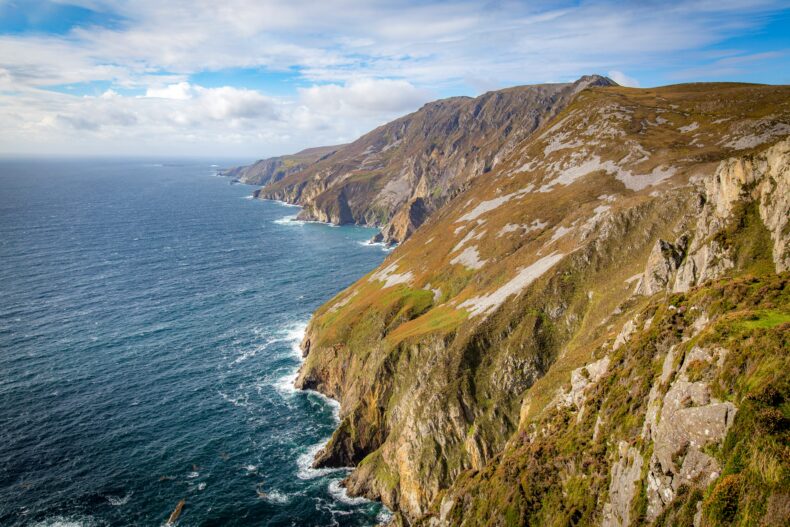
Think the Cliffs of Moher are high? The cliffs of Slieve League in County Donegal rise to almost 600 metres above the sea and are among the highest sea cliffs in Europe. They’re almost three times as high as the Cliffs of Moher, and a lot quieter.
From the Bunglass viewpoint you look straight out over the rock face, which glows red, ochre and green in the sun. Experienced hikers carry on along One Man’s Pass, a narrow ridge to the summit. Prefer to take it easy? Then walk a shorter stretch along the edge from the upper car park.
At the very top of Donegal lies Malin Head, the northernmost point of the Irish mainland. A wild, empty stretch of coast where parts of Star Wars were filmed and where, with a bit of luck, you can see the northern lights. A little further west, the Fanad Head lighthouse sits on a cliff above the sea, often named one of the most beautiful lighthouses in the world.
Best places to visit in Northern Ireland
#20 Giant’s Causeway
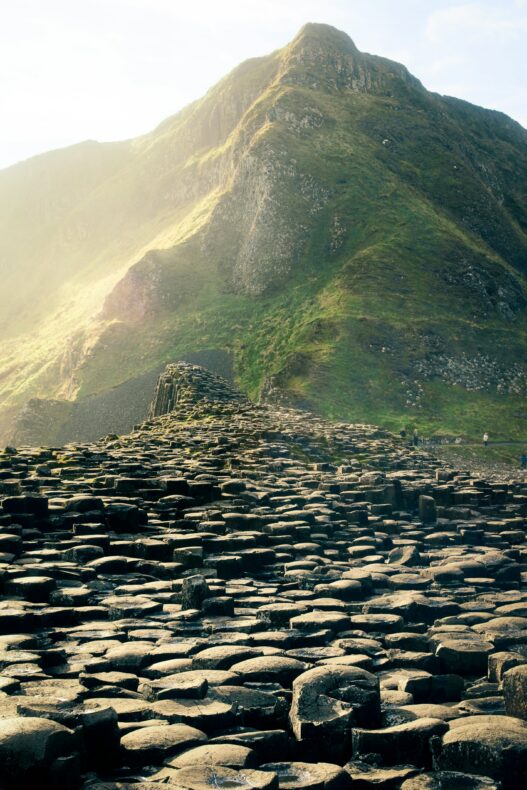
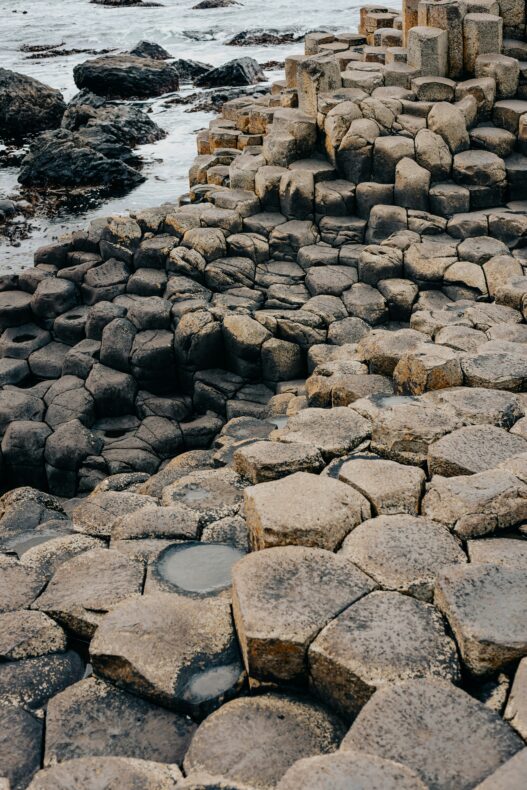
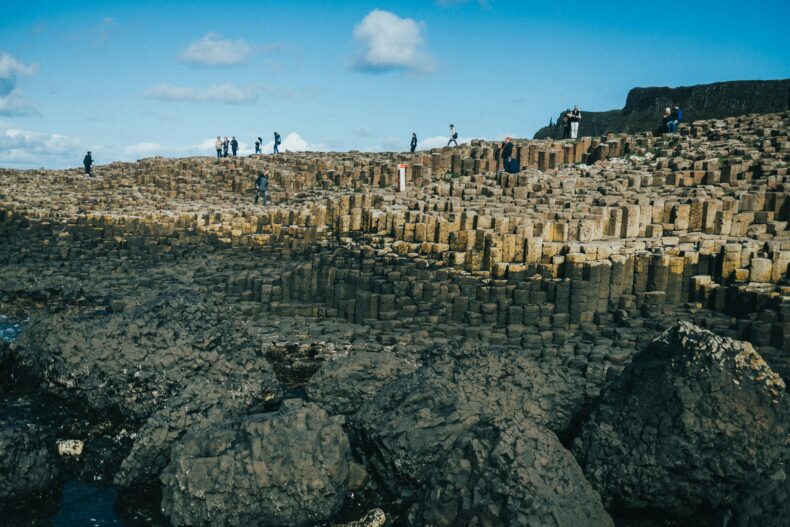
The Giant’s Causeway may well be the most famous sight on the whole island. Along the coast of County Antrim lie more than 40,000 basalt columns, most of them hexagonal, like giant stepping stones leading into the sea. They were formed by volcanic activity, though legend has it the giant Finn McCool built them so he could walk to Scotland.
Note that the Giant’s Causeway is in Northern Ireland, which is part of the United Kingdom, so you pay in pounds sterling rather than euros. The rocks are free to visit on foot. If you come by car, you’ll usually park at the National Trust visitor centre, with a ticket that includes parking.
Afterwards, drive a stretch of the Causeway Coastal Route. At Carrick-a-Rede you cross a rope bridge twenty metres long, about thirty metres above the waves, to a small island. Combine it with the castle ruin of Dunluce Castle and The Dark Hedges, an avenue of beech trees made world-famous by Game of Thrones. Got a day to spare? Then Belfast and its Titanic museum make a great finale.
Staying in Dublin without a car? A day tour will take you there easily.
→ See the day tour to the Giant’s Causeway from Dublin
More tips for your trip to Ireland
 Our pickHotels in Ireland: from cosy B&Bs to grand manor houses
 Ireland is made for road trips. Rent a car with Discover Cars and compare the big rental companies in one go.
 Fancy doing it by camper, like we did? Rent a campervan with Campervan Planet and wake up by the sea.
 No flight yet? Compare flights to Dublin, Shannon or Cork.
 Discover all our blogs about Ireland