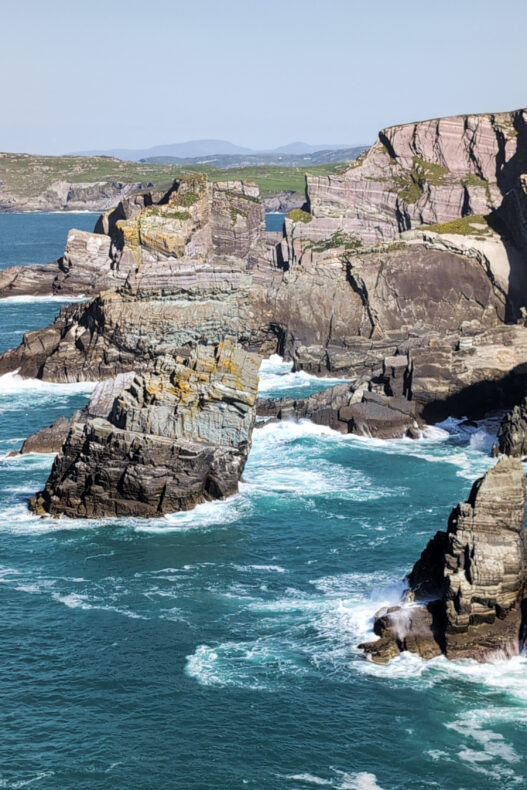
Ireland is a country you see best from behind the wheel. The places you’ll remember lie far from the cities: cliffs above a wild ocean, beaches at the end of a dead-end lane, castle ruins in the middle of a field. With your own car you stop wherever you like, and here you’ll stop a lot more often than you planned.
Nervous about driving on the left, narrow roads or the small print in your rental contract? I get it. We spent almost four weeks driving clockwise around the island, from Wicklow via Cork and Kerry up to Mayo and Sligo, and the Irish roads turned out to be far less scary than we’d been told. In this blog you’ll find everything you need to know about renting a car in Ireland: where to pick it up, what insurance you need, how quickly you get used to the left and what to expect on the road.
Want to compare prices straight away? Look for a package with the main insurance already included and no excess, ideally with cover for windows, tyres and the underside of the car. On those skinny Irish lanes, that makes for a much calmer drive.
→ Compare car hire deals in Ireland
#1 Why rent a car in Ireland?
Buses will get you from city to city, but the Ireland you’ve seen on postcards lies somewhere in between. Think of the coast road around the Ring of Kerry, the peninsulas of West Cork or the empty north coast of Mayo. Public transport barely reaches them, and when a bus does go, you’ll spend half the day waiting for it.
With a hire car you set the pace. Spot a sign for a beach or a viewpoint? Just turn off. Along the west coast you’ll even see signs for Discovery Points everywhere, spots that are worth pulling over for. Count on stopping more often than you think: a two-hour drive easily turns into half a day.
→ Discover the 20 best places to visit in Ireland
→ Discover our 3-week Ireland road trip itinerary in 10 stops
When don’t you need a hire car?
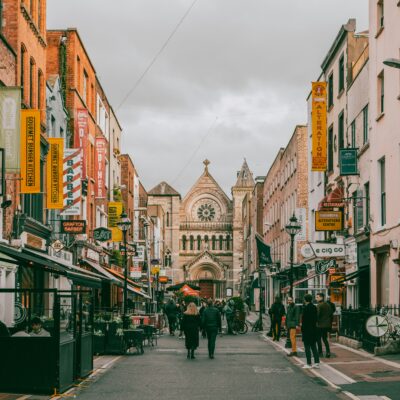
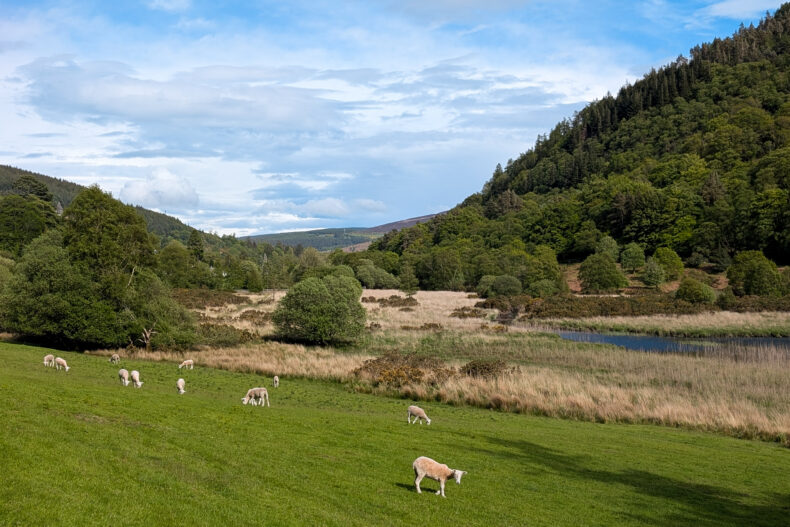
If you’re only visiting Dublin, a car is more trouble than it’s worth. The centre is compact, you can walk from museum to pub and hop on a bus for the rest. We saw Dublin from the top deck of a double-decker, while the campervan stayed put on the edge of town.
Starting with a few days in Dublin? Then collect your car on the day you leave the city. You’ll save on rental days and pricey car parks, and you won’t have to tackle the capital’s rush hour straight off the plane.
→ Discover the 20 best things to do in Dublin
#2 Where is the best place to rent a car in Ireland?
Most international flights land at Dublin Airport, which also has the biggest choice of rental companies. Still, the smartest pick-up point depends on your route. If you mainly want to see the southwest, flying into a different airport saves you a good chunk of driving.
Car hire at Dublin Airport
For a trip around the whole island, Dublin is the obvious place to start. Within an hour you’re in the Wicklow Mountains, and in a few hours you can be in Cork, Kerry or Galway. The airport sits on the north side of the city, so the motorway gets you clear of the traffic quickly.
Car hire at Cork Airport
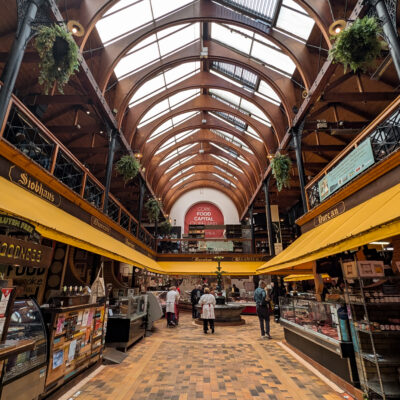
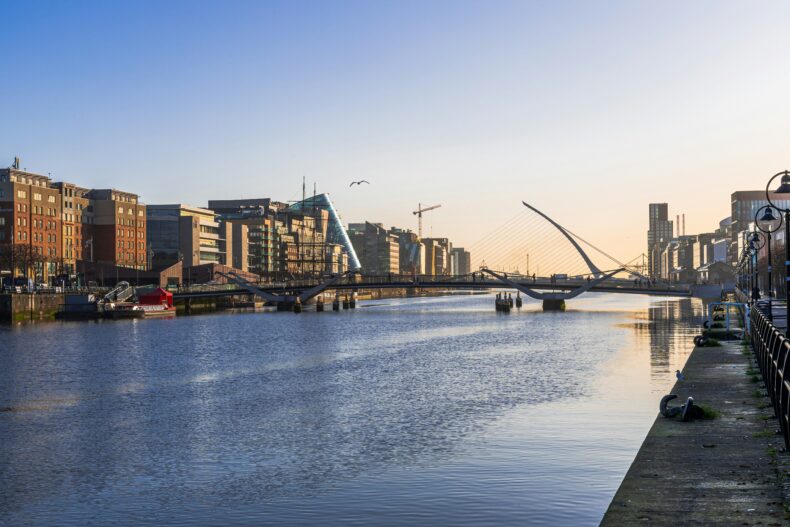
If the south coast and Kerry are your focus, Cork makes a great starting point. It has direct flights from several European cities, Amsterdam included, and Kinsale, Killarney and the Ring of Kerry are all within a few hours’ drive. Do add a day in Cork city itself, with its covered English Market and the streets along the river.

Car hire at Belfast Airport
Is Northern Ireland high on your list, with the Giant’s Causeway and the Causeway Coastal Route? Then you could start in Belfast instead. Just remember you’re landing in the United Kingdom: you’ll pay in pounds and the road signs are in miles. Further down you’ll find what to sort out before taking your hire car across the border.
→ Compare car hire at Dublin Airport and Cork Airport
#3 Which hire car should you choose for Ireland?
Rule number one: don’t go too big. Off the motorways the roads narrow fast, with walls or hedges right up to the tarmac, and you’ll be grateful for every centimetre to spare when a car comes the other way. A compact car is also much easier to squeeze into the little car parks at beaches and viewpoints.
Torn between a manual and an automatic? In Ireland you change gear with your left hand, on top of getting used to the other side of the road. An automatic takes that worry away for the first few days. Most hire cars are manual, so automatics get snapped up quickly in summer.
Check the boot size too. The smallest categories often fit less than you’d hope, especially with kids and everything that comes with them. In short: compact, automatic, and a boot your suitcases actually fit in.
Car seats for the kids
In Ireland, children have to use a car seat or booster until they’re 150 centimetres tall or weigh 36 kilos. You can add seats to your rental, but you pay per day and never quite know what you’ll get. We had it easy: our own seats simply came from home in the campervan. If you’re flying, bringing your own is well worth considering.
#4 How much does it cost to rent a car in Ireland?
What you pay depends mostly on when you travel and book. Demand peaks in the summer holidays and prices climb fast, while the rest of the year you’ll rent for a lot less. Once you know your dates, book. It rarely gets cheaper closer to departure.
Compare the total price, not the daily rate. An extra driver, a young driver surcharge, the fee for driving into Northern Ireland and above all the insurance can turn a bargain into something much pricier at the desk. With a package that already includes the insurance, you know where you stand before you go. Look for unlimited mileage too, because a road trip racks up more kilometres than you’d think.
#5 Do you need a credit card to rent a car in Ireland?
Yes. When you pick up the car, the rental company puts a deposit hold on a credit card in the main driver’s name. It isn’t charged, but the money is blocked until you return the car, and it can run to a few thousand euros. A debit card or your travel partner’s credit card won’t cut it with most companies. So check before you go that your limit is high enough, with room left for the rest of your trip.
#6 What insurance do you need for a hire car in Ireland?
Almost every rental price includes basic damage cover (CDW) and theft protection. The catch is the excess, which in Ireland is often well over a thousand euros. Scrape your mirror on a stone wall and you pay for that damage yourself, up to that amount.
That’s why you’ll almost always be offered extra cover at the desk, often called Super CDW, which lowers or removes the excess. Nothing wrong with that, but it adds up per day. Also read what isn’t covered: tyres, windows, the underside and the roof are often excluded from standard cover, and those are the very parts you’re most likely to damage on Irish back roads.
We’d rather book a package with everything sorted from the start. Some all-inclusive packages cover windows, tyres, the underside and the roof as standard, and refund any excess the local company charges once you’re home. You’ll still need the deposit on your credit card, though.
→ See car hire in Ireland with no excess
#7 Which driving licence and minimum age do you need?
If your licence was issued in the EU or the UK, you can drive in Ireland and Northern Ireland without an International Driving Permit. Bring the physical card, as the rental desk will want to see the original.
Age is often the bigger hurdle. Most companies set a minimum age of 25. If you’re between 21 and 24, some will still rent to you, with a surcharge and a smaller choice of cars. There’s no official upper age limit, but some companies add conditions for older drivers. The same goes for a second driver, so add them when you book.
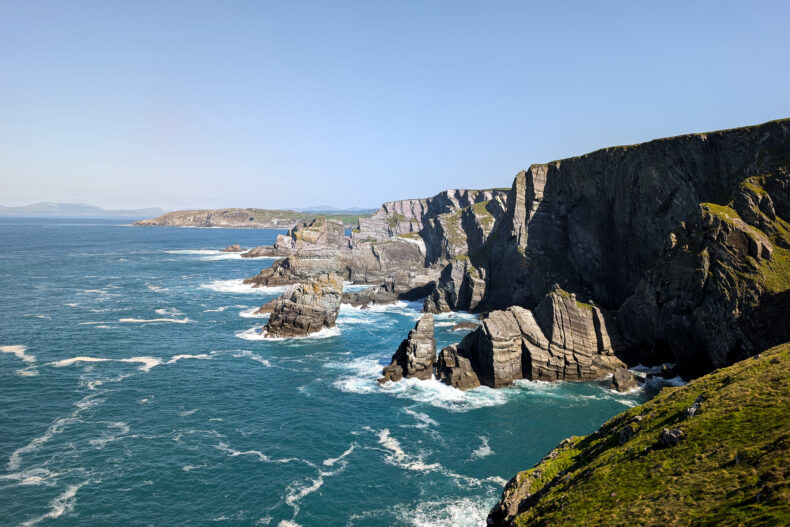
#8 What is driving on the left in Ireland like?
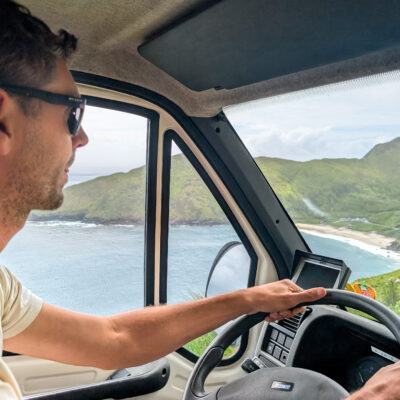
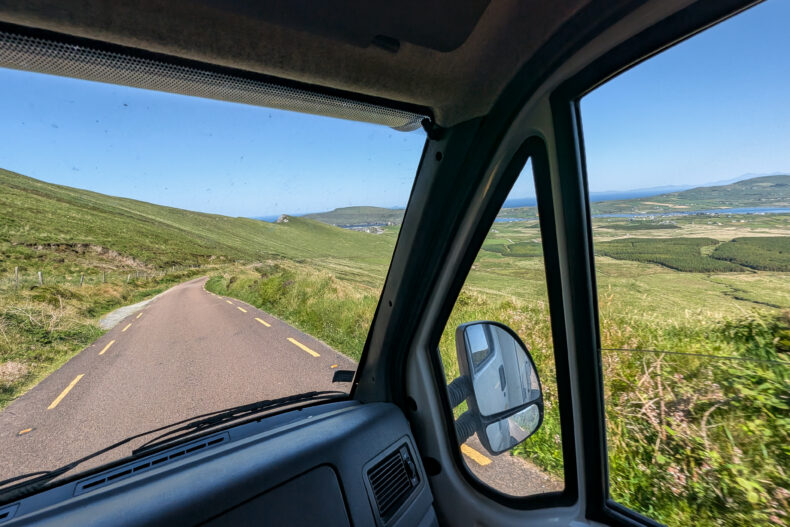
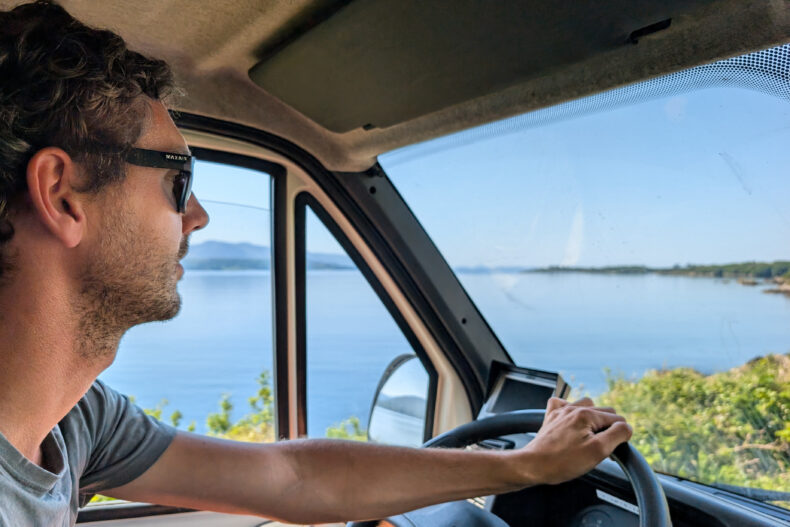
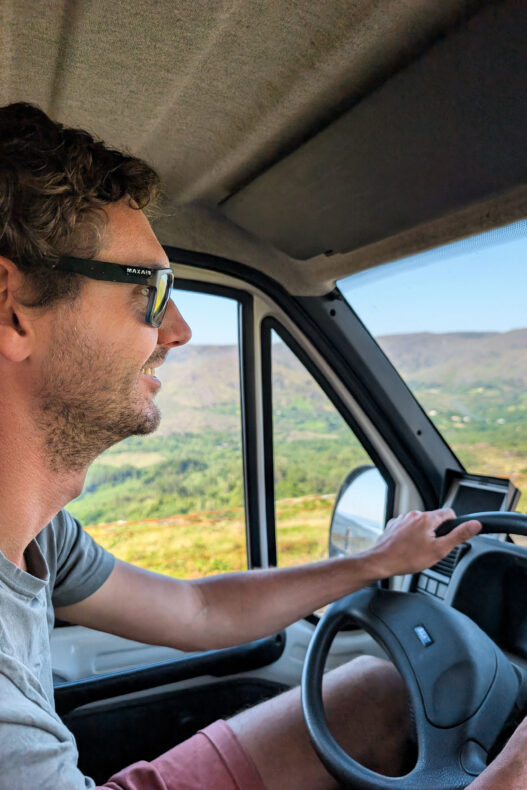
Driving on the left takes some getting used to, but it clicks sooner than you’d think. We had a head start: on the way to the ferry we’d already driven right across England, and our campervan had done left-hand driving before on Malta. Even so, for the first few days your brain wants to go the wrong way at every junction.
What helped us: in the beginning I kept an eye on the road too and he said it out loud. ‘Turning left, so a small turn.’ ‘Turning right, swing wide.’ Sounds a bit silly, but it got Sebastiaan into the rhythm in no time. Start on a quiet road rather than in a city, and take extra care when pulling out of a petrol station or car park, because that’s where you instinctively drift to the right.
On a roundabout you go clockwise and give way to traffic already on it, so from your right. On big roundabouts with several lanes you usually take the left lane for the first exits and the right lane for later ones, unless the arrows on the road say otherwise.
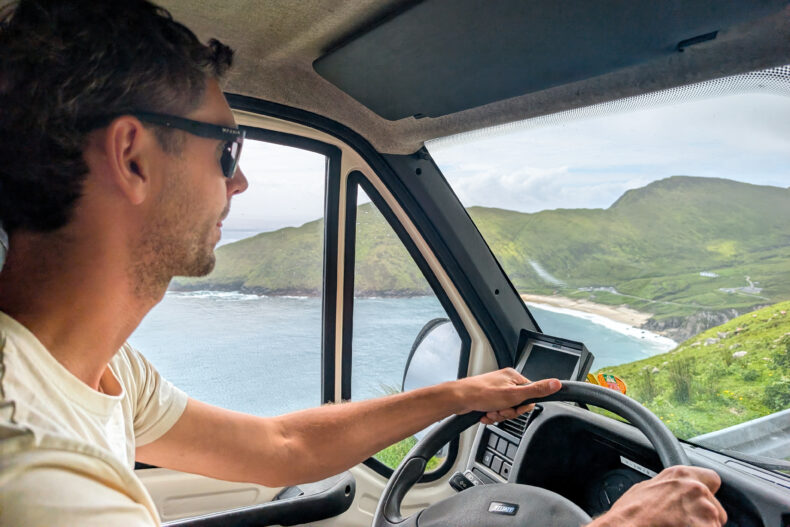
#9 What are the road rules and speed limits in Ireland?
In the Republic of Ireland, speeds are in kilometres per hour. The default limits are 50 km/h in built-up areas, 60 km/h on local roads (L), 80 km/h on regional roads (R), 100 km/h on national roads (N) and 120 km/h on motorways (M). More and more town and village centres are moving to 30 km/h, and the limit is coming down on some national roads too. Keep an eye on the signs.
In Northern Ireland speeds are in miles per hour, and that’s often the only clue you’ve crossed the border. The rest will feel familiar: phone calls hands-free only, and in the Republic the drink-drive limit is 50 mg of alcohol per 100 ml of blood. Treat the limit as a maximum, not a target. Not that anyone actually does 60 on a twisting lane between two walls.
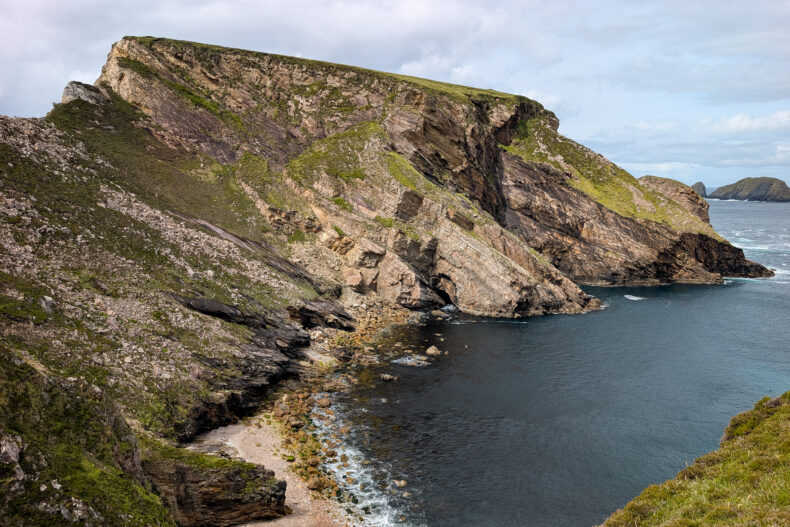
#10 What are the roads like in Ireland?
During our trip, Instagram kept serving me one funny ‘driving in Ireland’ video after another. Nearly all of them were about the tiny roads. The picture’s accurate, but in real life it was far less dramatic than we expected.
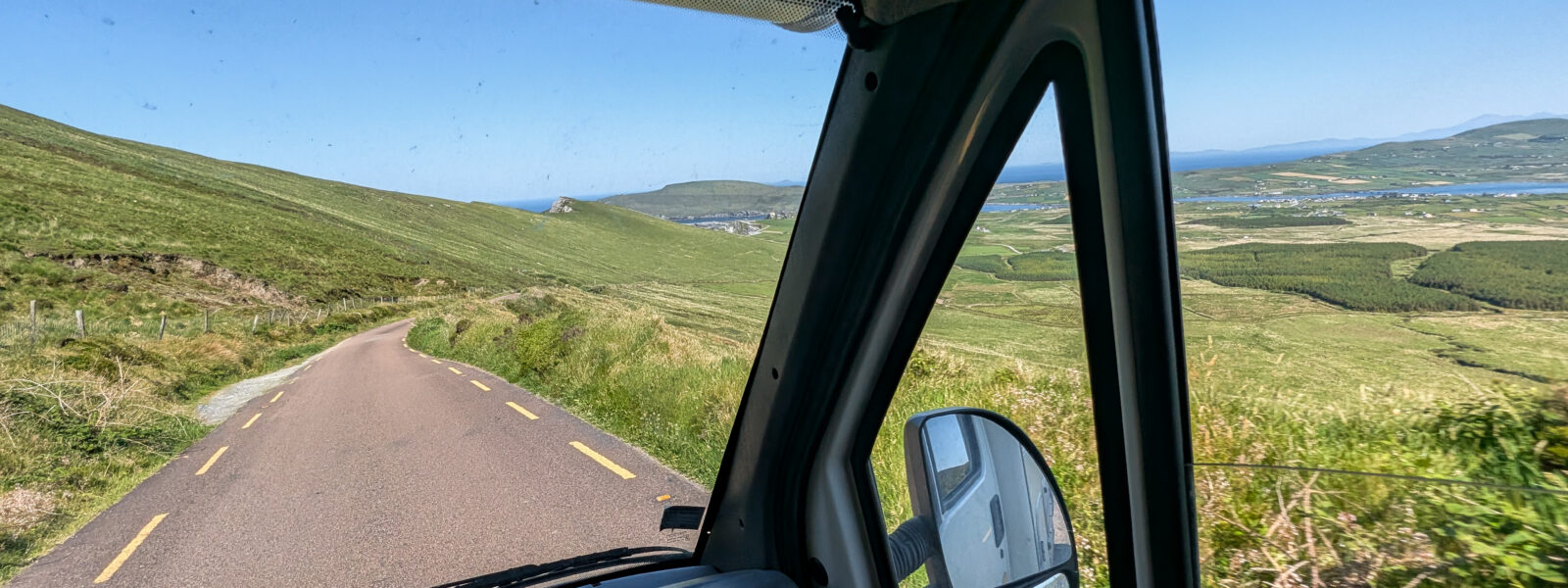
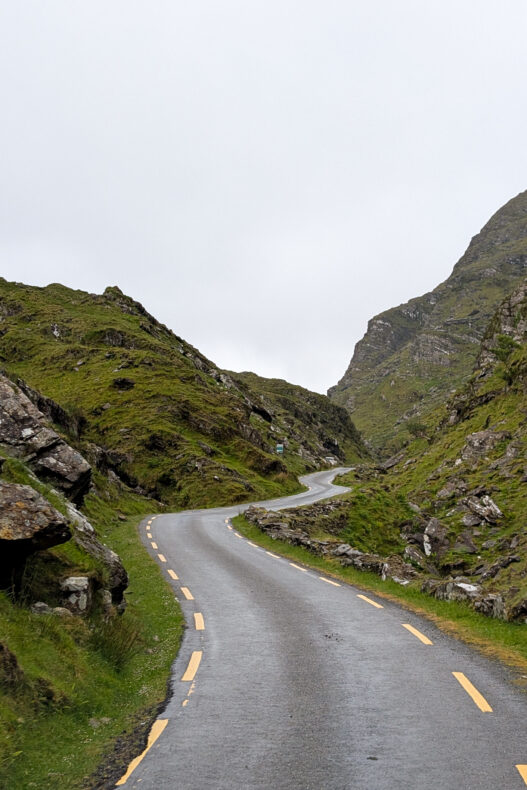
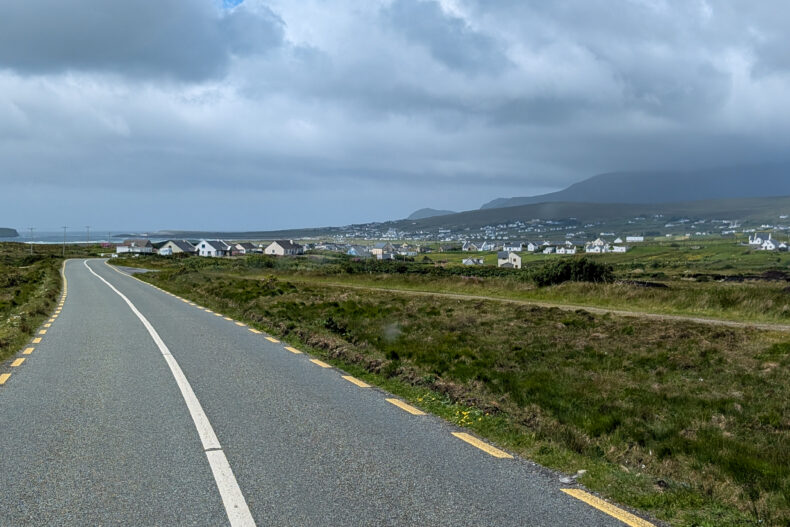
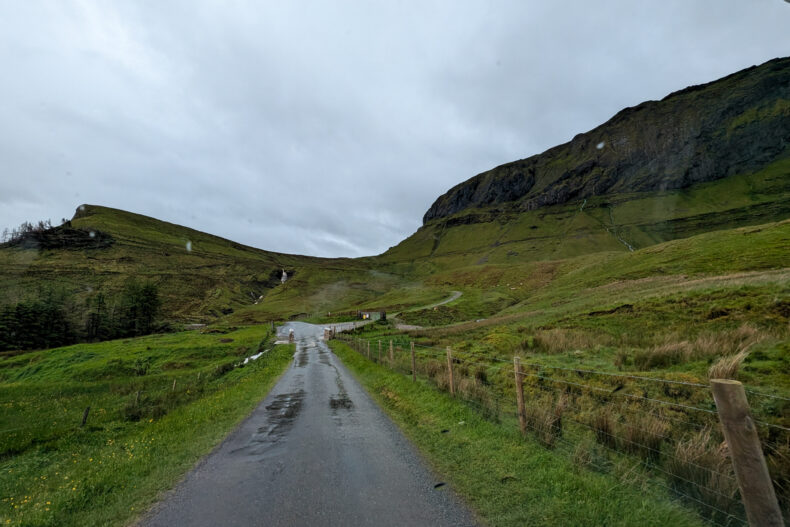
The motorways between the big cities are easy going. Leave them and the roads turn narrow and twisty, with stone walls or tall hedges on either side and the odd tractor or flock of sheep in front of you. Even tighter than in England, we reckoned. But because it’s so normal here, everyone allows for it. Meet someone head-on and whoever’s nearest a gap tucks into it, usually rewarded with a lifted finger from the other driver’s wheel.
Tight roads don’t faze us, but not everyone enjoys them. Expect to concentrate, crawl along at a low average speed and keep your daily drives short.
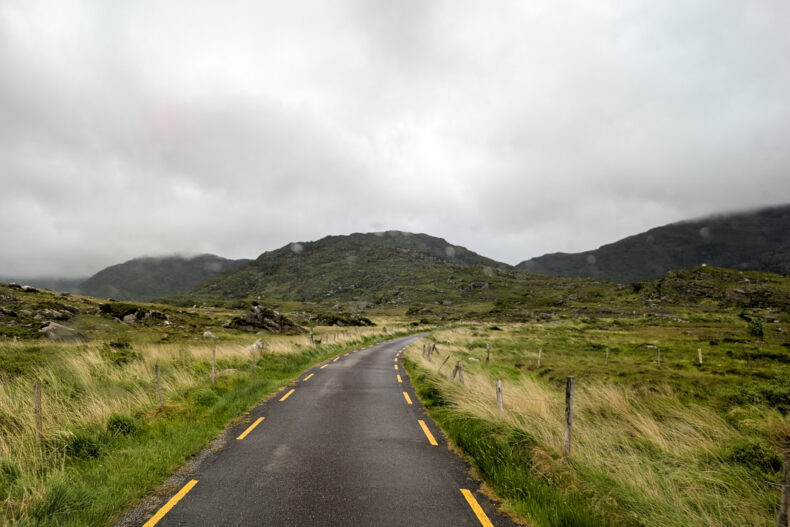
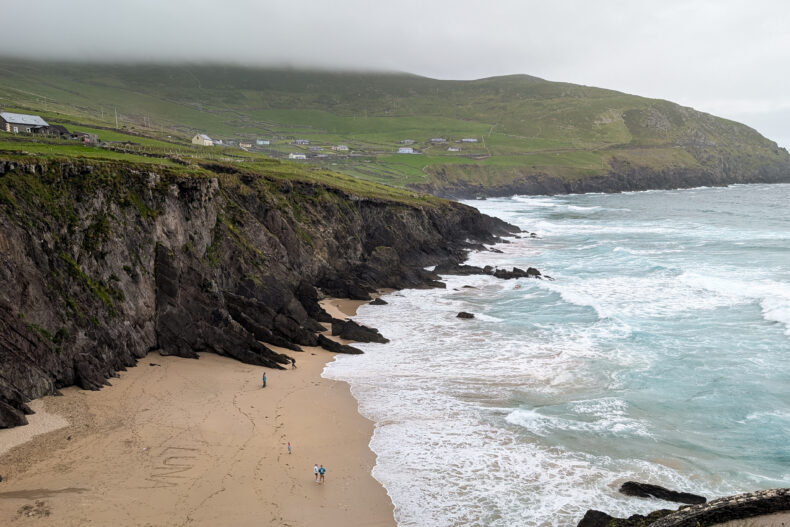
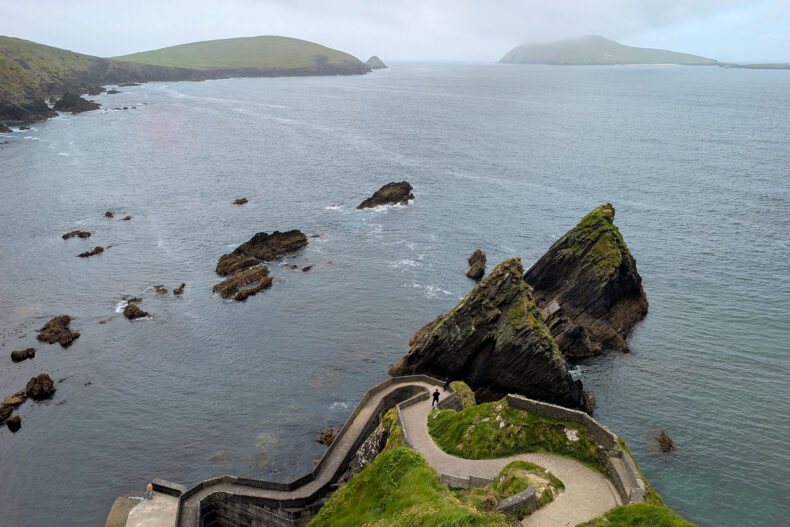
The best-known example is the Slea Head Drive on the Dingle Peninsula. At Dunmore Head the road is so narrow that only one car fits, with the rock face on one side and the ocean beyond a low wall on the other. The signs send you round clockwise, so you don’t meet the tour coaches head-on. We drove clockwise for the whole trip anyway, so that sorted itself out. On the Ring of Kerry it’s the other way round: the coaches go anticlockwise, so you do meet them. That’s the recommended direction, so you don’t end up stuck behind a coach for ages. In our six-metre campervan even that was no problem.
One exception is the Conor Pass, the mountain road that climbs from Dingle to the north coast. Vehicles over two tonnes aren’t allowed, so campervans and caravans take the long way round, like we did. In a regular hire car you’re fine, but expect a narrow road with tight bends. The Coomanaspig Pass on the Skellig Ring is steep too, though our campervan got over it without any trouble.
The weather comes along for the ride too. A downpour and bright sunshine can swap places within the hour, and in Kerry we even ended up hiding in the shade during an unexpected heatwave.
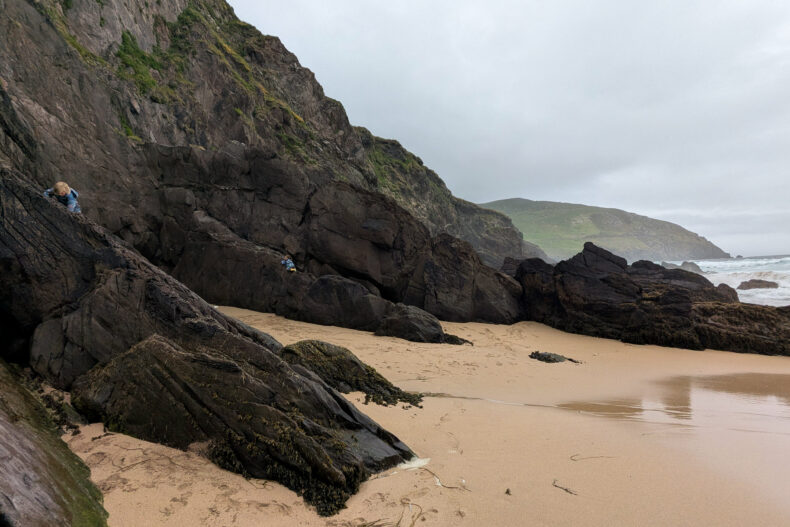
Take the Shannon Ferry as a shortcut
Heading north from Kerry towards Clare and the Cliffs of Moher? The Shannon Ferry between Tarbert and Killimer saves you a long detour via Limerick. You drive on board, hop out for some wind and a view over the river mouth, and a little under half an hour later you’re rolling on in Clare. We didn’t think it was a bargain. Booking online knocked a little off the price, so we did it on the phone while we waited in line.
→ Discover the 18 best stops on the Wild Atlantic Way
→ Discover the 10 best stops on the Ring of Kerry
#11 How do tolls work in Ireland?
You only pay tolls on a handful of motorways, bridges and tunnels in Ireland, usually at a toll plaza by card or cash. The exception is the M50 around Dublin. There are no barriers, just cameras that log your number plate, and the toll has to be paid by 8pm the following day.
In a hire car you often don’t have to deal with that yourself. Many companies have a toll tag in the car, or pay the M50 for you and charge it afterwards, sometimes with an admin fee on top. Ask at pick-up how your company handles it. If you do have to pay yourself, you can do it online with the number plate via eFlow.
Coming off the ferry at Dublin Port, as we did? The road practically steers you into the Dublin Port Tunnel, which is tolled as well. We rolled off the boat bang in rush hour, when the rate is highest, and chose to drive through the city instead. Just watch that you don’t slip into the tunnel by accident.
Can’t be bothered? Switch on ‘avoid tolls’ in your sat nav. Along the coast you’ll hardly miss a thing, because the best routes are toll-free anyway.
#12 What should you know about fuel and parking in Ireland?
You’ll find plenty of petrol stations along the motorways and in towns, but on the peninsulas and along the west coast they’re further apart. So you’d better fill up when you see one, and of course make sure you know whether your hire car takes petrol (unleaded) or diesel. Most companies use a full-to-full policy: you pick the car up with a full tank and bring it back full.
For navigation we just used Google Maps, and it did the job fine, even on the little back roads.
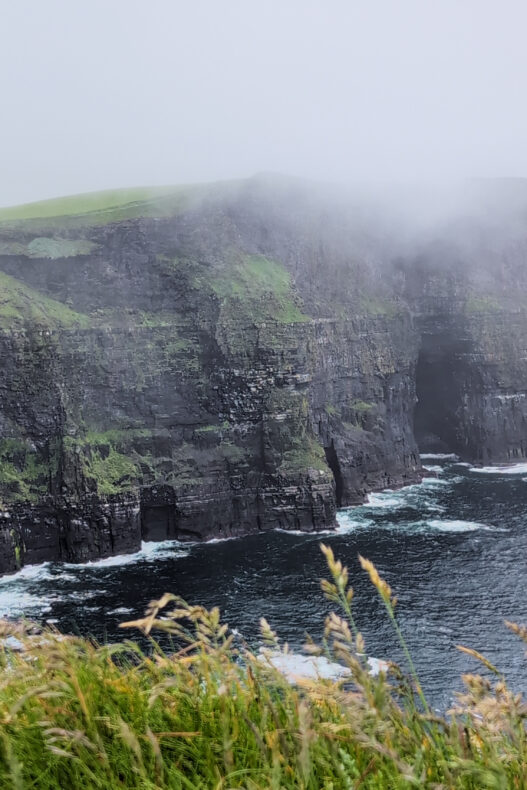
Parking was easier than we expected. At beaches and viewpoints there’s usually a small car park, and in towns you pay at a machine or by app and leave the ticket on your dashboard. At the biggest attraction of all, the Cliffs of Moher, you buy a ticket per person at the car park, and parking is included.
#13 Can you drive a hire car into Northern Ireland?
Yes, with almost every rental company. You’ll barely notice the border, as there are no checks. Do mention it when you book or pick up, because you need to be insured in Northern Ireland as well and you’ll want your breakdown cover to work across the border. Many companies charge a one-off cross-border fee, others don’t. Planning a trip to the Giant’s Causeway? Factor it in when you compare prices.
Think about your own paperwork too. Northern Ireland is part of the United Kingdom, and unless you’re British or Irish, you’ll most likely need an ETA to enter, even when you cross by land from Ireland. Nobody checks at the border, but it’s still required. Apply for everyone in your group, kids included.
#14 Should you take your own car or campervan to Ireland?
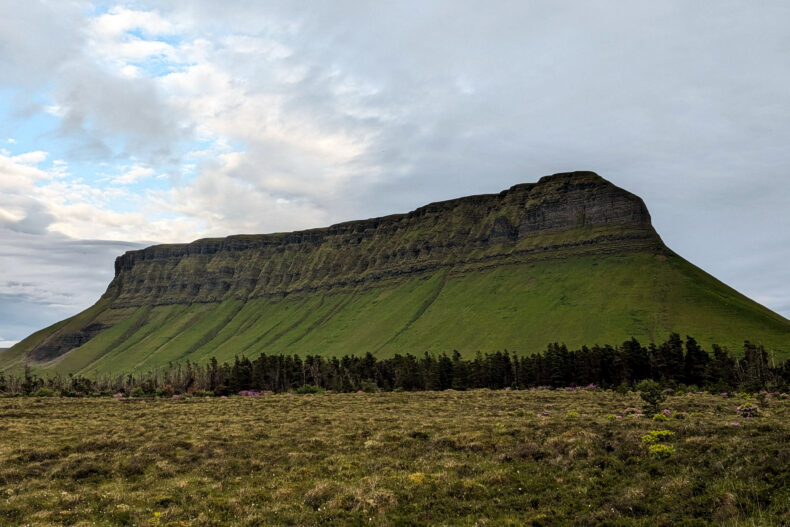
Renting isn’t the only option. We took our own campervan from the Netherlands, starting with the ferry from Dunkirk to England. Via Cambridge we drove right across England and Wales to Holyhead, where Irish Ferries took us to Dublin in about three and a half hours. On the way home we did the same in reverse. Coming from mainland Europe this way, you’ll need an ETA for England and Wales too. There are also direct ferries from France to Ireland, which skip the UK altogether.
The upside: all your stuff comes along, the kids sit in their own car seats and there’s no fuss over deposits or excess. The downside is that you’re driving on the left with the steering wheel on the left too. Overtaking is harder because you can’t see as well what’s coming, so let your passenger keep watch. Make sure your car insurance covers Ireland and the UK, and remember the M50 toll applies to foreign plates too.
→ Read all our tips for Ireland by campervan
More tips for your trip to Ireland
 Our pickHotels in Ireland: from cosy B&Bs to grand manor houses
 Fancy a campervan instead? Rent one with Campervan Planet and wake up by the sea.
 No flight yet? Compare flights to Dublin, Shannon or Cork.
 Discover all our blogs about Ireland