
Blue alleyways in Chefchaouen, red canyons in the Anti-Atlas, surf villages on the Atlantic and mud-brick kasbahs on the edge of the desert. In Morocco, the scenery changes every few hours of driving, which is exactly why a road trip is the best way to see this country.
We’ve driven around Morocco twice. The first time, we picked up a rental car in Marrakech for a four-day loop through the Atlas Mountains. Later we came back with our own motorhome, a baby and a toddler in the back, and spent six weeks on the road.
In this blog we share the perfect three-week Morocco road trip itinerary, with what to do and where to sleep at every stop. It works whether you bring your own car on the ferry from Spain or fly into Marrakech and rent a car there. At the bottom you’ll find our four-day loop from Marrakech, for when you’re short on time.
Want to drive yourself? The easiest place to pick up a rental car is Marrakech airport, which is also where our route starts. Our tip: compare cars on Discover Cars and add full coverage, so there are no surprises at the desk.
→ Compare rental cars in Morocco with Discover Cars


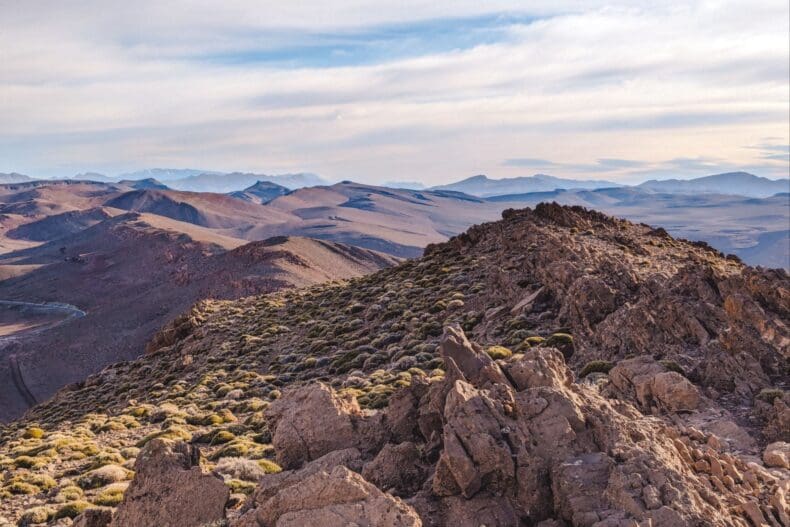
Our road trips through Morocco
On our first trip, it was just the two of us, travelling mostly by train and bus. We saw in the New Year in Marrakech, and in early January we picked up a rental car for a four-day loop: past the natural bridge of Imi n’Ifri to the Ouzoud waterfalls, through the Atlas Mountains to Aït Ben Haddou, and back via the Kasbah Glaoui in Telouet and the Ourika Valley. That taste of freedom left us wanting more.
The second time, we took the ferry from Algeciras to Tanger Med with our own motorhome. In January and February we followed the coast down to Marrakech and Essaouira, dropped south to the surf villages and the spectacular Anti-Atlas, then drove via Aït Ben Haddou, Skoura and the Dades Valley through the Middle Atlas to Fez. Chefchaouen was our last stop before the ferry home.
The route in this blog is based on both trips, trimmed down to three weeks. We skipped the Sahara at Merzouga in the motorhome, but we’d already been there on our first trip, so it’s included as a detour.
How long do you need for a Morocco road trip?
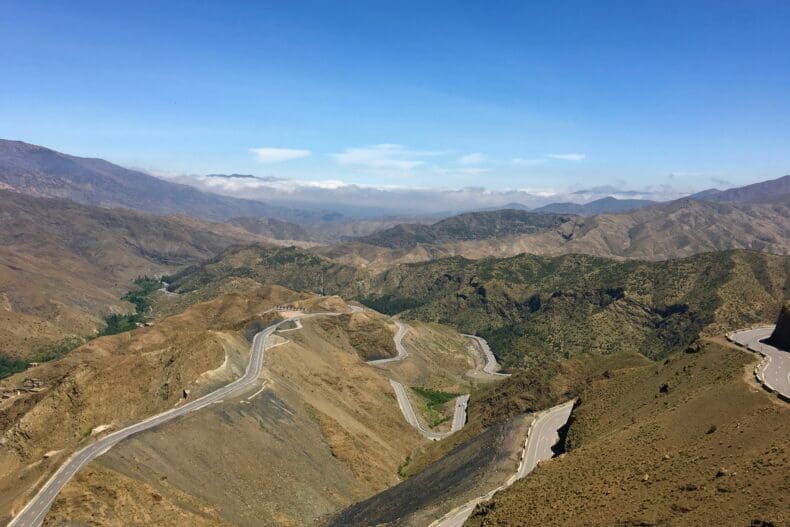
Morocco is bigger than you think, and the best places are far apart. With one week, you can get a long way from Marrakech: up into the Atlas, on to Aït Ben Haddou and Ouarzazate, and then a few days by the sea in Essaouira. Our four-day loop at the bottom of this blog is a great start.
Want to see the coast, the mountains, the desert and the old imperial cities in the north? Then plan at least two weeks, ideally three. That gives you time to stay two nights here and there, because after a few long driving days in a row, you’ll really want to stop. We felt that most with the kids: plan shorter stages than you think.
Rental car or your own car?
Flying into Morocco? Then pick up a rental car at the airport in Marrakech or Fez, for example. A regular car is fine for this whole route, mountain passes included. You’d only need a 4×4 for dirt tracks, and most rental companies won’t insure you for those anyway. For police checks, tolls and mountain roads, read our tips for driving in Morocco.
Our tip: book your rental car through Discover Cars. You can compare lots of companies in one go and add full coverage, so there are no surprises at the desk. We lost a wheel rim along the way, and that’s exactly when you’re glad your excess is already covered.
→ Compare rental cars in Morocco with Discover Cars
Bringing your own car or motorhome, like we did the second time? Then you’ll take the ferry from Algeciras to Tanger Med, and about an hour and a half later you’re in Africa. Bring your green card and vehicle registration papers, because customs will issue a temporary import document for your car when you arrive.
→ Discover how to prepare for the ferry to Morocco
→ Read about our experiences in Morocco by motorhome
What's the best time for a road trip in Morocco?
Spring and autumn are ideal: warm days, milder nights and green valleys. Summer is scorching inland, so if you go then, stick to the cooler Atlantic coast.
We travelled in winter both times, and it worked out well. Days were often around 20°C and nowhere was busy. The nights are another story, especially in the mountains and the desert. Lots of riads simply aren’t built for the cold: on our first trip we were handed piles of blankets at bedtime and ate breakfast outside on the patio at three degrees above zero. Pack a warm jumper.
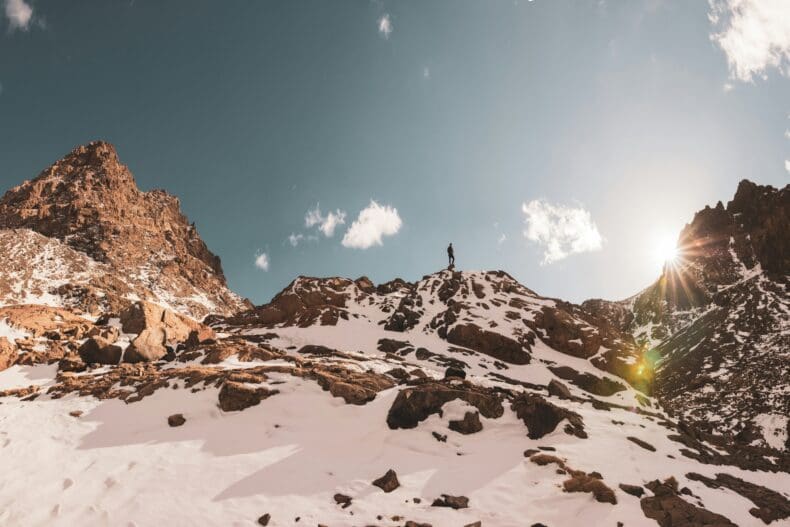
Our 3-week Morocco road trip itinerary
This route is a loop that starts and ends in Marrakech, where most flights land. You drive to the coast at Essaouira and follow it south, cross the country via the Anti-Atlas to the kasbahs and canyons on the edge of the desert, and head north through the Middle Atlas to Fez and Chefchaouen. Via Asilah and Rabat, you’re back in Marrakech.
Coming by ferry to Tanger Med with your own car or motorhome? Then start in Asilah (#12) and drive the same loop. Don’t fancy going back to Marrakech? Drop your rental car in Fez or Tangier and fly home from there, though that usually costs extra.
For each stop, we say how many nights we’d recommend, plus a place to stay. It adds up to three weeks, a little more with the Sahara detour.

#1 Marrakech: souks, palaces and gardens (3 nights)
Your road trip starts in Marrakech, Morocco’s most famous city. Only pick up your rental car when you leave town, as it’s no use to you in the medina. Three nights isn’t too many here: the medina is big, busy and a lot to take in, and you’ll want time for the quieter spots too.
Start on Jemaa el-Fna square, get lost in the souks and visit the Ben Youssef Madrasa, the Bahia Palace and the Saadian Tombs. For a breather, head to Jardin Majorelle or Le Jardin Secret.
We saw in the New Year at Riad Dar Nael, an affordable riad tucked away in a quiet alley close to the Ben Youssef Madrasa.
→ Discover the 20 best things to do in Marrakech
→ Discover the best riads in Marrakech by neighbourhood

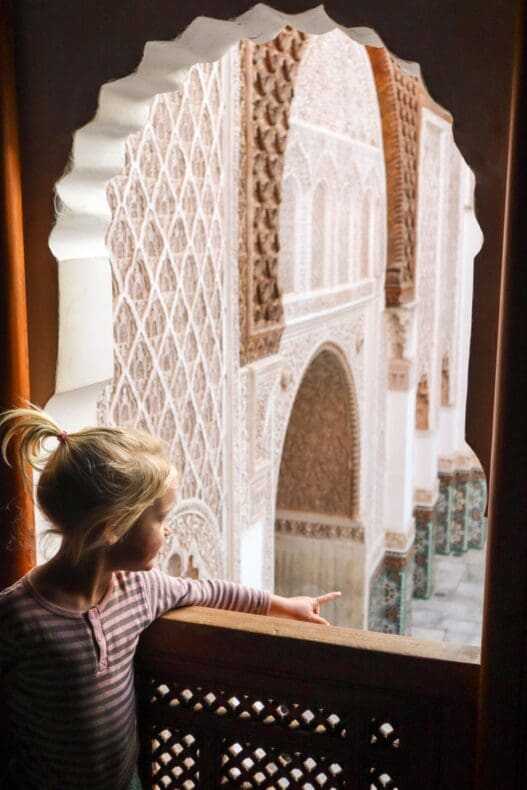
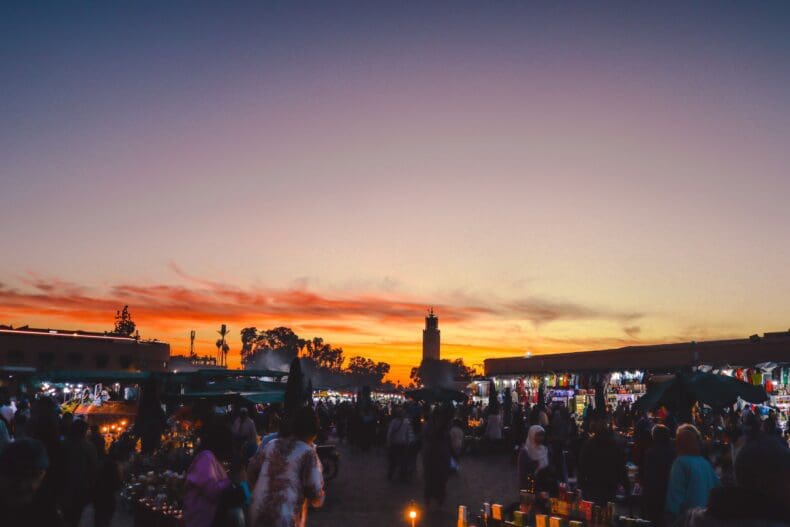
#2 Essaouira: blue boats and sea breeze (2 nights)
After the buzz of Marrakech, Essaouira is a breath of fresh air. Its white medina with blue shutters sits by the sea, the wind blows the heat away and everything moves at a slower pace.
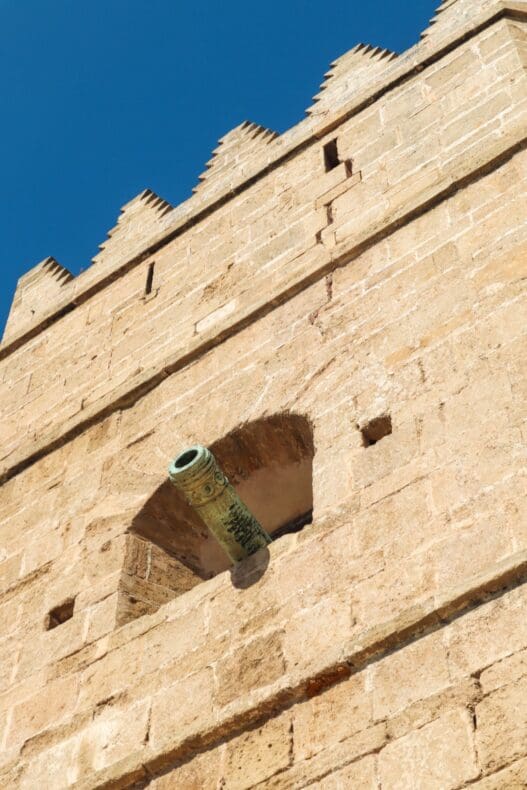
Stroll along the ramparts of the Skala de la Ville with their old cannons, watch the blue fishing boats in the harbour and take your time in the medina’s galleries and craft shops. Half an hour south lies the little surf village of Sidi Kaouki, with a wide beach to blow the cobwebs away.
A lovely riad in the medina is Riad Baladin. The rooms are simple and light, and breakfast is served up on the roof with the ocean in the distance.
→ Discover the 10 best things to do in Essaouira
→ Discover the 10 best riads in Essaouira
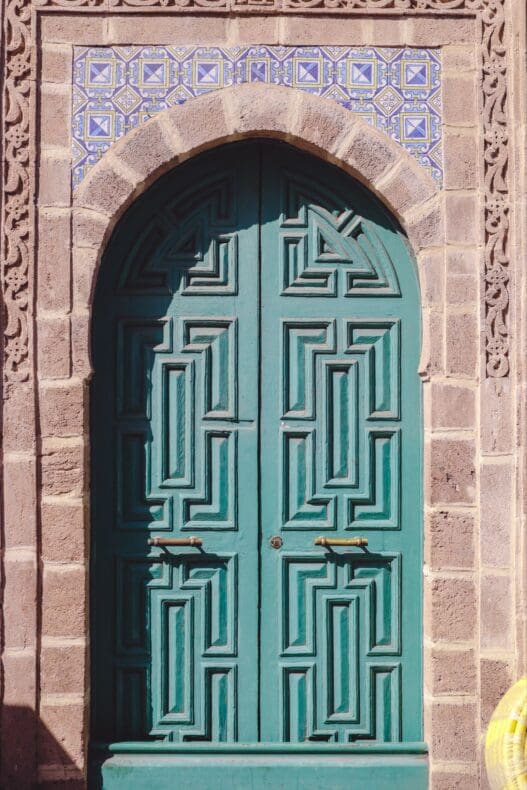
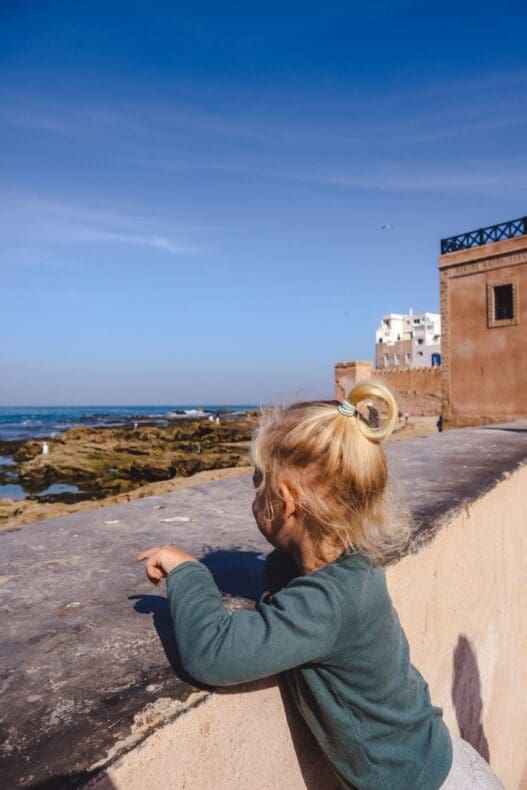

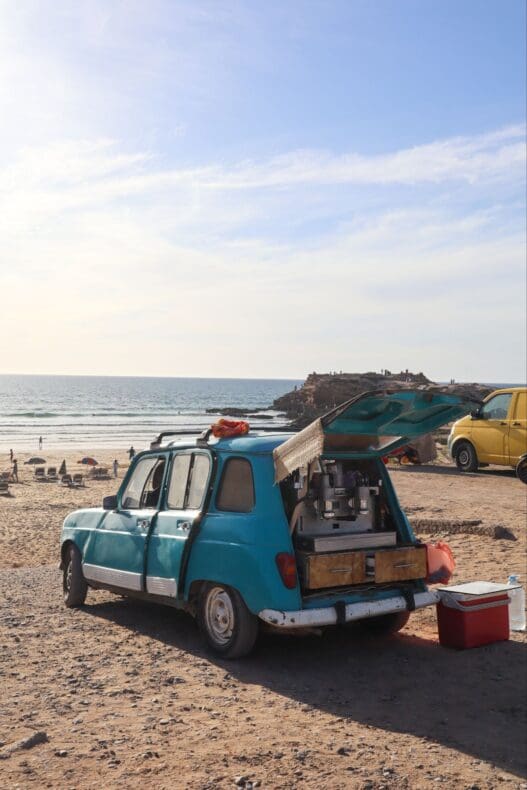
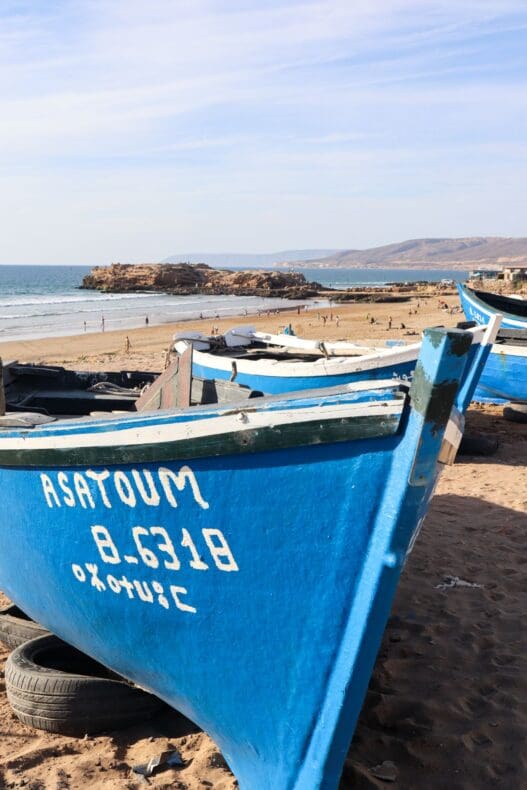
#3 Taghazout and Tamraght: surf on the Atlantic (2 nights)
Keep driving south along the coast to the surf villages north of Agadir. Taghazout is the best known and the busiest, while Tamraght next door is its quieter little sister.
We watched the surfers catching waves at spots like Banana Point. Fancy giving it a go yourself? Both villages have plenty of surf schools. A little inland lies Paradise Valley, a gorge full of palm trees and natural pools.
In Tamraght, stay at Riad Dar Haven, a riad with a pool in the courtyard, a small spa and a rooftop terrace to end the day.

#4 Tafraoute: canyons and granite boulders in the Anti-Atlas (2 nights)
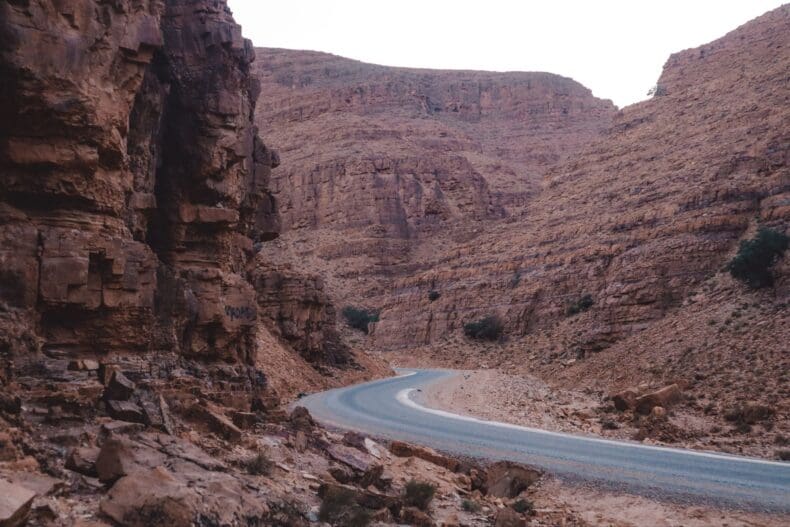
From the coast, you turn inland into the Anti-Atlas. For us, this was one of the most beautiful stretches of the whole trip. The road winds through canyons of red and ochre rock, and you’ll hardly see another soul.
Take your time on the way for the Aoukerda Gorge, sometimes called Morocco’s Grand Canyon, with deep ravines and barely any other tourists.
Tafraoute itself sits among giant granite boulders and palm trees, ringed by orange mountains. In winter it’s a favourite with snowbirds, and once you’re there you get why: it’s relaxed and the weather is gorgeous. Nearby are the Painted Rocks, boulders painted in bright colours.
A good base is Auberge Kasbah Chez Amaliya, a traditional kasbah in the Ammeln Valley with a pool and mountain views.


#5 Aït Ben Haddou and Ouarzazate: mud-brick villages and film sets (2 nights)
From Tafraoute, you head east to Ouarzazate. It’s a long driving day, but the scenery never gets boring.
Just outside Ouarzazate lies Aït Ben Haddou, a mud-brick village built against a hill and listed as a UNESCO World Heritage Site. You might recognise it from Gladiator or Game of Thrones. Cross the river, wander up through the alleys and climb to the top of the hill for the view over the plain. Come early in the morning or late in the afternoon for the best light and fewer day-trippers.
Got a spare day? Visit the Atlas Studios in Ouarzazate, where countless films were shot, or the Kasbah Glaoui in Tamdaght.
On our first trip we stayed at Kasbah du Peintre, and we still think about it. This traditional kasbah sits in the quiet village of Tamdaght, a few kilometres above Aït Ben Haddou, and there was live music in the evening.
→ Discover Aït Ben Haddou in Morocco
→ Discover the 8 best places to stay in Aït Ben Haddou


#6 Skoura: cycling through the palm oasis (1 night)
About an hour east of Ouarzazate lies Skoura, an oasis full of palm trees, tiny fields and irrigation channels. In between stand old kasbahs, the castle-like forts of wealthy families. Some have crumbled, others have been saved and now work as hotels.
We explored the oasis by bike, which our riad lent us for free, and we’d recommend it to anyone. You ride along narrow paths past farmers’ houses, and because few tourists come here, people greet you everywhere. Don’t miss Kasbah Amridil, one of the best-preserved kasbahs in Morocco.
Want to treat yourself? Stay at Les Jardins de Skoura, a kasbah among green gardens with an outdoor pool and even a little playground for the kids.
→ Discover the palm oasis of Skoura


#7 Valley of the Roses and Dades Valley: kasbahs along the river (1 night)
Past Skoura, the Valley of the Roses begins around Kelaat M’Gouna. In spring, the damask roses used for rosewater bloom here, and all year round you drive past green riverbanks with rust-red mountains behind them.
At Boumalne Dadès you turn into the Dades Valley. The road follows the river past villages and kasbahs, with the gorge and its famous hairpin bends further on. Drive a good way into the valley and come back the same way.
A lesson learnt the hard way: don’t blindly trust Google Maps here. We took a mountain road out of the valley that kept getting narrower and turned out to be still under construction. We ended up, quite by accident, at almost 3,000 metres high in the High Atlas. Stunning, but we’d rather have planned it.
Sleep in the valley at Riad Rihana Dades, a peaceful riad near Tamellalt with the mountains of the Dades Valley right outside.


#8 Todra Gorge: walking between towering rock walls (1 night)
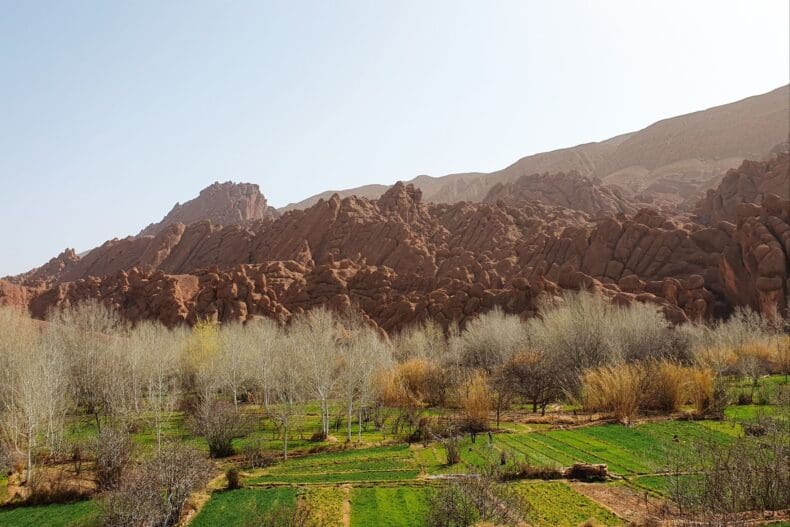
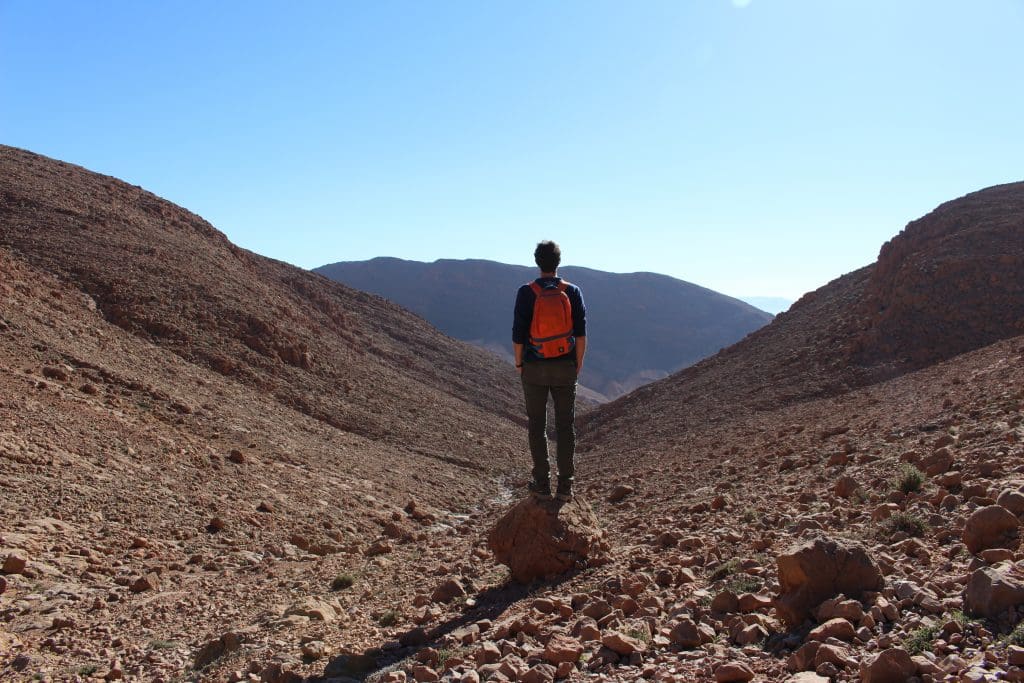
About an hour further east lies Tinghir, with a green palm oasis at the foot of the mountains. From here it’s a short drive into the Todra Gorge, where the rock walls creep closer and closer together until there’s barely room for the river and the road.
Park the car and walk through the narrowest part of the gorge, ideally early in the morning before the coaches arrive. We did a fantastic hike by taking the path up the cliff face at the end of the gorge. Offline hiking apps will show you the exact starting point and route.
A nice place to stay is Riad Dar Bab Todra, just outside Tinghir towards the gorge. From the rooftop you look out over the palm gardens, and after a hot day there’s a pool to jump in.
#9 Merzouga: sleeping among the dunes (2 nights, detour)
We skipped the Sahara on our motorhome trip because we’d already been on our first visit. Still, if you haven’t been before, we’d really recommend going. From Tinghir it’s a few hours’ drive to Merzouga, where the orange dunes of Erg Chebbi rise out of the flat land.
The best thing to do is spend a night in a desert camp among the dunes. Climb a dune for sunset, look up at the stars and get up early for sunrise. From there, you drive through the Middle Atlas to Fez.
A great camp is Sunrise Sahara Camp, with comfortable tents right in the dunes. Camps around Merzouga are popular, so book ahead.
→ Discover the Sahara at Merzouga


#10 Fez: getting lost in the oldest medina (2 nights)
From Merzouga or Tinghir, it’s a full day’s drive to Fez, crossing the Middle Atlas on the way. And Fez is the polar opposite of everything you’ve seen the days before.
The medina of Fès el Bali is a maze of thousands of alleys, where donkeys still carry the goods and craftsmen work the way they did centuries ago. The whole medina is a UNESCO World Heritage Site. Look down on the tanneries from a terrace above them, admire the carved wood in the Bou Inania Madrasa and seek out the Palais El Glaoui, a crumbling palace that turned out to be one of our favourite finds.
In Fez, pick a riad close to one of the medina gates, so you don’t have to drag your luggage far. Riad Fes Baraka is in the Batha area on the edge of the medina and has a pool and a hammam.
→ Discover the 16 best things to do in Fez
→ Read why we wouldn’t recommend Meknès
Got an extra day? Drive to the Roman ruins of Volubilis, where the mosaics are still in place, and combine it with Meknès if you like. We didn’t think Meknès was worth it ourselves, but Volubilis is well worth the trip.


#11 Chefchaouen: the blue city in the Rif Mountains (2 nights)
From Fez, you head up into the Rif Mountains. Chefchaouen is famous for its medina in every shade of blue, and wandering those lanes is a treat for anyone who loves taking photos.
Visit the old kasbah on the square, and late in the afternoon walk up the hill to the Spanish Mosque for sunset over the blue city. Then it’s back to the Atlantic coast for the last two stops on the way to Marrakech.
Our favourite place to stay in town is Dar Jasmine, with a richly decorated interior, a garden and views over the blue houses.
→ Discover the best things to do in Chefchaouen
→ Discover the 10 best places to stay in Chefchaouen


#12 Asilah: a white medina by the ocean (1 night)
From Chefchaouen you drive to Asilah on the ocean. Arriving by ferry? Then this is your first stop, about an hour from Tanger Med. The whitewashed medina with its blue doors sits inside old Portuguese walls right by the ocean, and it’s a lot calmer than the big cities.
Walk along the city walls, hunt down the murals painted during the town’s yearly art festival, and watch the sun drop into the Atlantic from the viewpoint above the sea.
Stay right in the medina at Dar Narjis, a small guesthouse that mixes Moroccan charm with modern comfort. Step outside and you’re straight into the white lanes.
→ Discover the 10 best things to do in Asilah


#13 Rabat: the laid-back capital (1 night)
Rabat is your last stop on the way back to Marrakech, and lots of people skip it, which is a shame. The capital feels far more relaxed than Marrakech or Fez, and the medina is small enough to wander without a map.
The highlight is the Kasbah des Oudaïas, a blue-and-white fortress on a rock above the river mouth, with the Andalusian Gardens at its foot. A little further on stands the Hassan Tower, the minaret of a mosque that was never finished, next to the Mausoleum of Mohammed V.
A great place to sleep is Dar Shâan, a riad in the heart of the medina. The high point is literally the rooftop terrace with a pool.
→ Discover the 12 best things to do in Rabat
→ Discover the 10 best riads in Rabat

Road trip from Marrakech: our four-day loop
Short on time, or want to head into the mountains during a city break in Marrakech? This is the loop we drove on our first trip in early January, in four days with a rental car.
Day 1: Imi n'Ifri and the Ouzoud waterfalls
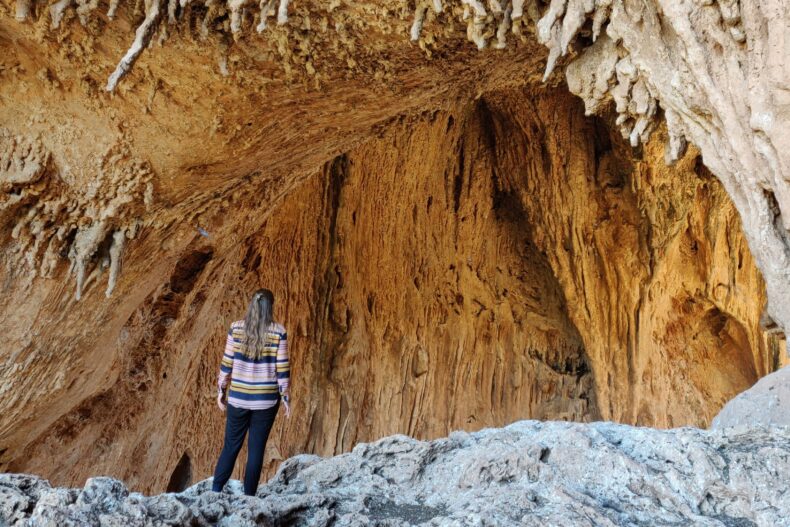
From Marrakech, we drove to Imi n’Ifri first, a natural bridge over a gorge near Demnate. Climb down to the bottom and scramble under the huge stone arch, past bats and stalagmites. For a tip, a local guide will show you the way through the little tunnels.
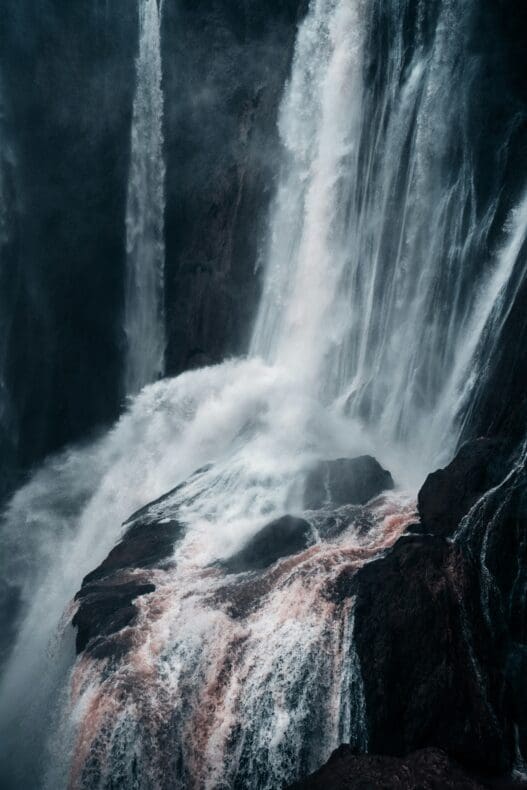
Then it was on to the Cascades d’Ouzoud, waterfalls over a hundred metres high. The best view is from the path down to the foot of the falls. Stay the night, like we did, and you can walk to the falls in the morning before the day-trippers from Marrakech arrive.
A nice place to sleep is La Kasbah d’Ouzoud, a kasbah with a garden and pool, just outside the busiest part of the village.

Day 2: through the Atlas Mountains to Aït Ben Haddou
On day two, we drove right across the Atlas Mountains to the south, a long but beautiful ride on mountain roads past Berber villages. At the end of the day we reached Kasbah du Peintre in Tamdaght, just above Aït Ben Haddou, where we spent the night.

Day 3: Aït Ben Haddou and the Kasbah Glaoui in Telouet
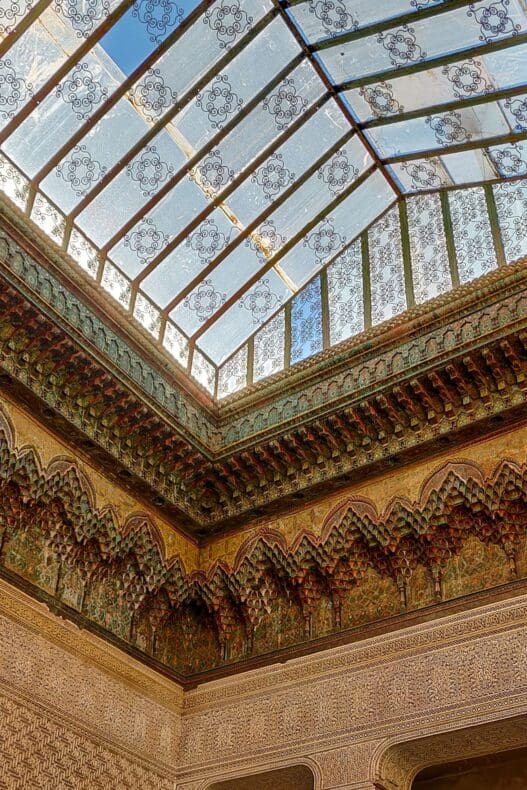
In the morning we walked through Aït Ben Haddou, then took a quiet mountain road to Telouet. That’s where you’ll find the Kasbah Glaoui, the palace of the powerful Glaoui family. From the outside it’s partly a ruin, but inside are rooms full of tilework, carved wood and decorated ceilings that can hold their own against the palaces of Marrakech. The real eye-catcher is the glass roof stretched over the courtyard.
→ Discover the Kasbah Glaoui in Telouet


Day 4: the seven waterfalls of the Ourika Valley
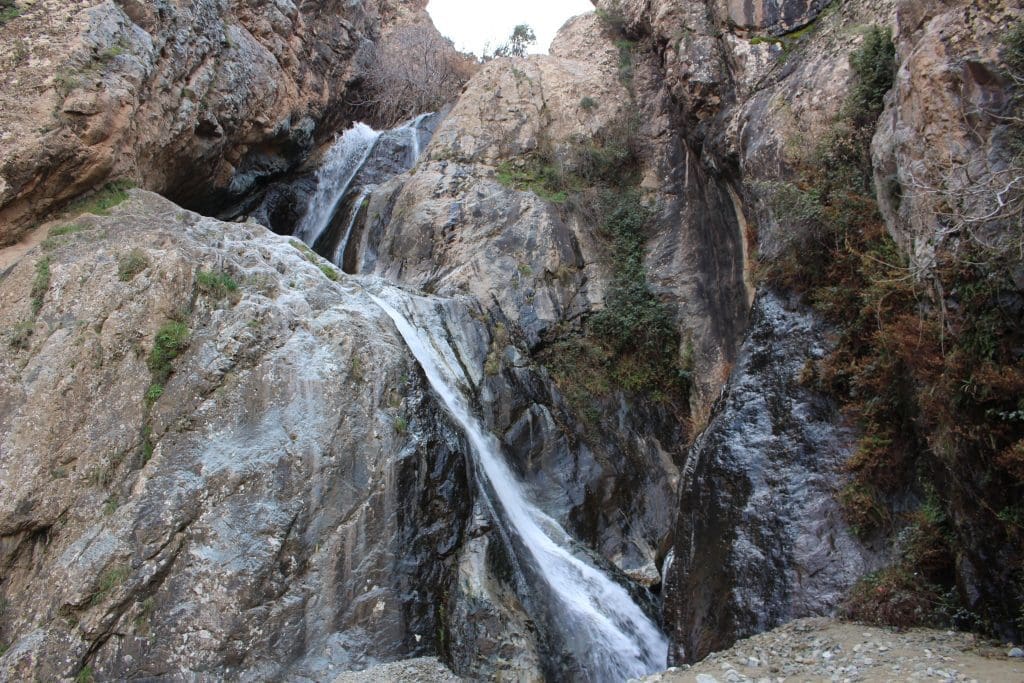
On the last day, we drove to the Ourika Valley, just south of Marrakech, with the snowy peaks of the Atlas in the background. A walk to seven waterfalls starts in the village of Setti Fatma. The village itself is packed with restaurants and day-trippers, so head uphill quickly. In the late afternoon you drop the car back in Marrakech.
→ Discover the 15 best day trips from Marrakech
→ Discover the 16 best places in the Atlas Mountains
Enjoy our travel tips? Add The Orange Backpack as a preferred source on Google and you'll see us more often in your search results.
More tips for your trip to Morocco
 Our pickThis route is made for driving at your own pace. Rent a car at Marrakech airport with Discover Cars and compare the big rental companies in one go.
 Hotels in Morocco: from a riad in the Fez medina to a kasbah on the edge of the desert. Pick your spot on Booking
 Prefer everything arranged? Browse Morocco tours on TourRadar.
 No flight yet? Compare flights to Marrakech, the starting point for a road trip through the south.
 Fancy some action in the dunes? Ride a quad across the Erg Chebbi dunes near Merzouga, sandboarding included, with GetYourGuide.
 Discover all our blogs about Morocco


