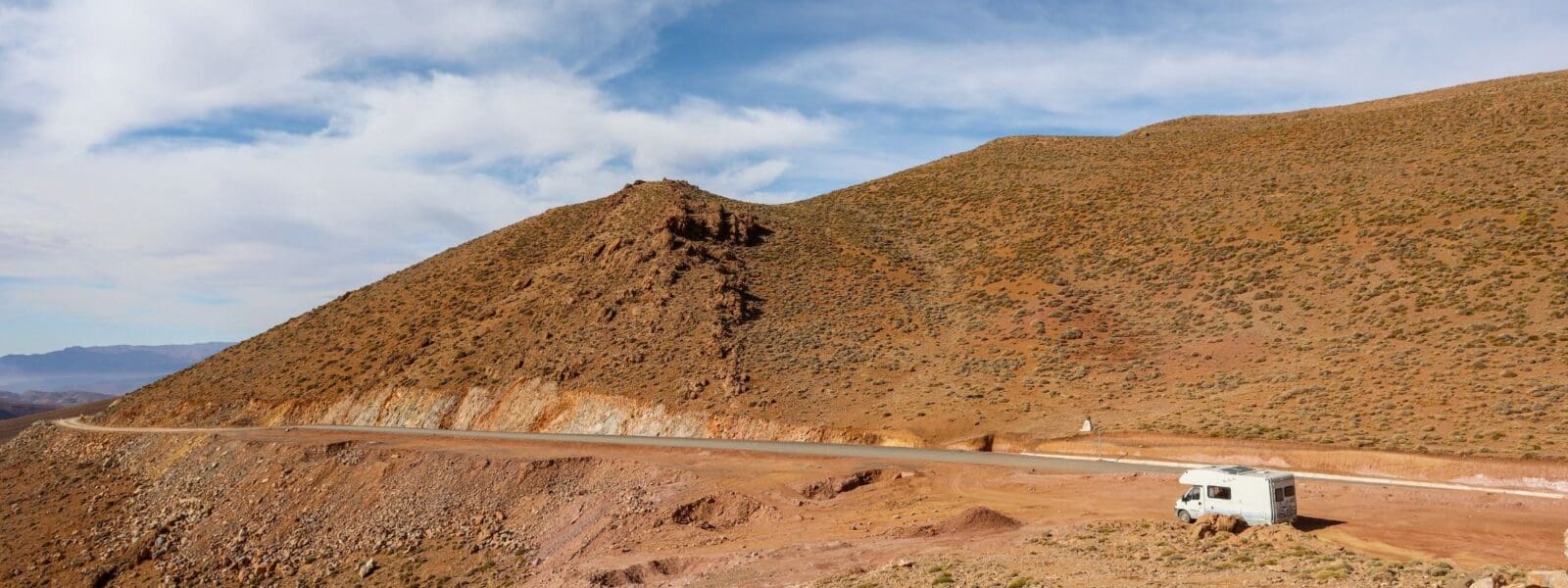
Waking up to icicles hanging off your motorhome, in Africa? It happened to us high up in the Atlas Mountains, in a spot we never meant to end up. It’s one of the stories we’ll be telling for years about our road trip through Morocco by motorhome. We spent six weeks in January and February driving around the country, with a baby and a toddler in the back and the kids’ bikes strapped on behind.
Before we left, it felt like a big step. A different continent, stories about police checks and bad roads, and the big question: where are you actually allowed to park up for the night? Looking back, most of it was far easier than we feared. And the things that did catch us out were exactly the things nobody had warned us about.
Whether you’re travelling in a motorhome or a campervan, in this guide we’ll take you along: from the ferry crossing and paperwork to wild camping, gas and police scams. Plus our favourite motorhome spots, from a beach full of surfers to the Grand Canyon of Morocco.
→ Read how to prepare for the ferry to Morocco

Our experience: six weeks in Morocco by motorhome
The first time we visited Morocco, it was just the two of us, travelling by train, bus and a short stretch in a hire car. This time we brought our own home on wheels, plus two little ones. So we drove all the way down through Spain to Algeciras and hopped on the ferry to Tanger Med.
Once across, we followed the coast first, past Asilah and Rabat, then headed inland to Marrakech and on to Essaouira. We drifted south past the surf villages around Taghazout and up into the Anti-Atlas, landing among the canyons and granite boulders of Tafraoute. From there we turned east to Ouarzazate and Aït Ben Haddou, carried on through Skoura and the Dades Valley to Tinghir, and climbed north through the Middle Atlas to Fez and Meknes. Chefchaouen was our last stop before the boat home.
→ Discover our 3-week Morocco road trip itinerary
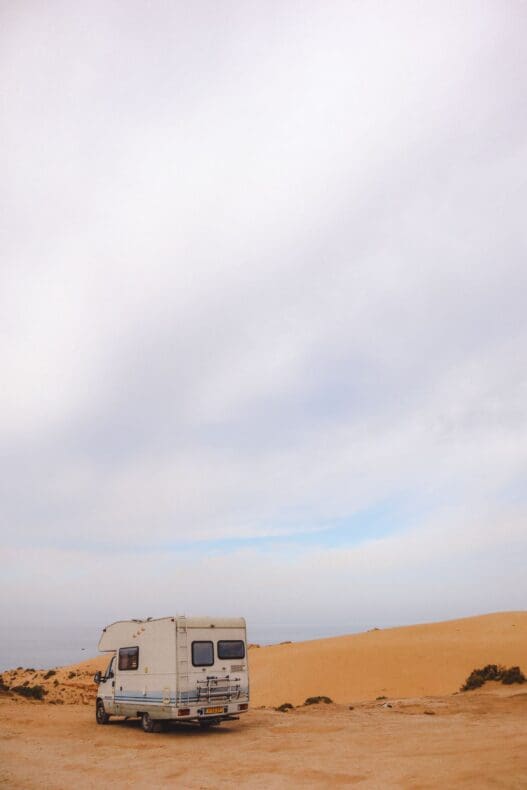
Our motorhome? A six-metre coachbuilt with an over-cab bed. Not an off-roader, and we noticed that now and then. Still, we got almost everywhere, and the few roads we’d have been better off skipping gave us the best stories.
We gave the Sahara at Merzouga a miss this time. We’d been there on our first trip, and after all those long drives we’d had enough for a while. We’d still tell you to go, though: the Erg Chebbi dunes are one of Morocco’s highlights, and from Tinghir it’s only a few hours’ drive.
→ Discover the Sahara Desert at Merzouga
How do you get to Morocco with a motorhome?
By ferry, and the easiest route is Algeciras to Tanger Med. In about an hour you’ve swapped Europe for Africa, and boats leave several times a day. You can also sail from Málaga, Almería, Barcelona or even Marseille, but you’ll pay more and sometimes spend a day or two at sea.
We didn’t book online. Instead we bought our ticket from Carlos at Viajes Normandie, just round the corner from the port in Algeciras. Among motorhome travellers he’s a legend, and his little office is often packed. He’ll sell you an open return for a good deal less than anything we found online. You decide when you sail there and back, and with a camper that freedom is worth a lot.
Pack some patience, though. Our boat left hours late and then bobbed around outside Tanger Med for quite a while. Bring food and drinks on board, because you can’t get to your motorhome during the crossing. And don’t forget a pen: you sort out your passport stamp on board, and everyone has to queue up in person at the police desk. Yes, the baby too.
→ Read everything about the ferry to Morocco and the border

What do you need for your motorhome in Morocco?
Start with your insurance. If you have a European green card, check the MA box: if it isn’t crossed out, your vehicle is covered in Morocco. If it is, give your insurer a call. And print it! At the countless checkpoints along the way, the police want to see paper, not a PDF on your phone. While you’re at it, check your travel insurance too.
At Tanger Med your motorhome first rolls through a huge scanner while you wait beside it. Then customs register the vehicle and hand you a temporary import document. Guard that piece of paper: you show it at checks and hand it back when you leave. A vehicle can stay in Morocco for up to six months per calendar year, so a trip of a few weeks or even a whole winter is no problem.
Two more tips before you go. Bring some cash, because the first toll road comes sooner than the first cash machine. And get your motorhome checked in Spain: tyres, oil, coolant and a spare wheel. If something does break, don’t panic. Around Tafraoute there are garages that are fully geared up for motorhomes, and repairs in Morocco cost a lot less.
→ Discover 15 things to know before going to Morocco

Driving a motorhome in Morocco
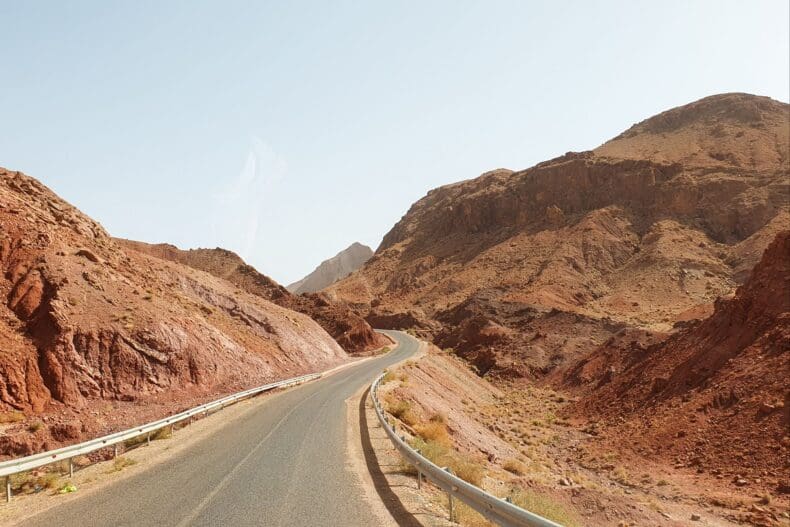
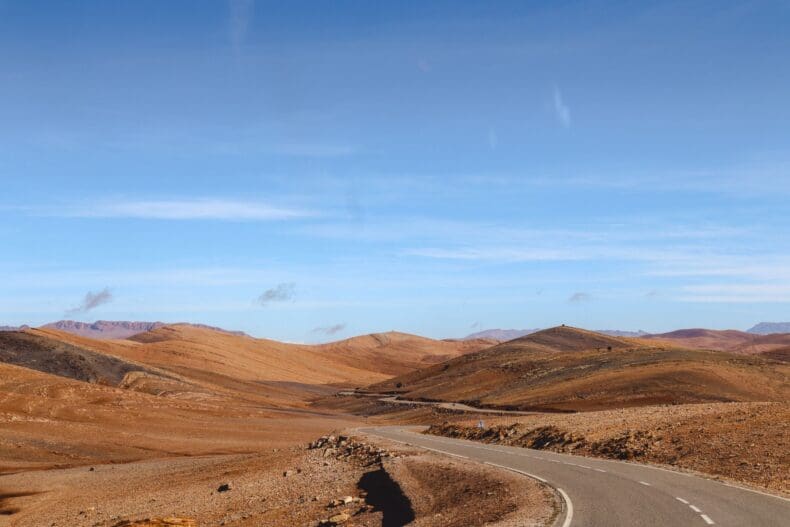
Are the roads bad? Not really, although in Morocco you never quite know what’s coming. The country is building new roads at a rapid pace, so a lot of the time you’re cruising on smooth, fresh tarmac. Then it can suddenly narrow, with the odd pothole thrown in. Around the big cities traffic is busy and chaotic, but once you’re out of town you often have the road almost to yourself.
Toll roads and fuel
Between the cities in the north-west you’ll find good toll roads, and they’re cheap. We always paid cash at the booth. Filling up is even easier: you don’t even need to get out, because there’s always an attendant who does it for you. Diesel costs roughly the same everywhere, motorway stations included, and again we mostly paid cash.
Police checks and fines
What we weren’t prepared for was the sheer number of police checks. There’s a post on the edge of almost every village, and you’ll regularly spot an officer with a speed gun by the roadside. Usually you’re just waved through. Always come to a complete stop at a police stop sign, though, and only drive on when they signal you to.
And that solid white line? Take it deadly seriously. On a dead-straight road, the car in front of us kept slowing down until we were crawling along with a queue of impatient drivers behind us. When Sebastiaan finally overtook across the line, that car turned out to be part of a police operation. A few kilometres on, the officers were waiting for us, photo and all. We haggled the 400 dirham fine down to 100. We nearly fell for it twice more, and once we were even pulled over after overtaking only where the line had ended. Haggling over a fine is allowed, and so is asking for a paper ticket.
→ Read what we didn’t like about Morocco
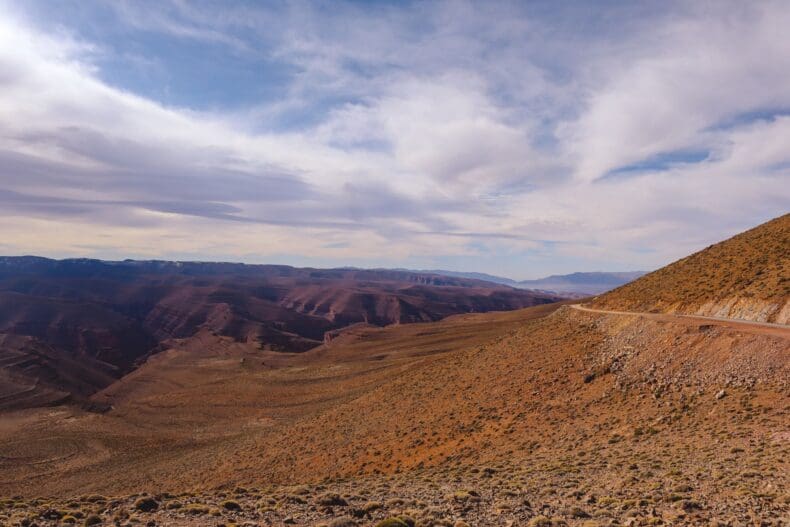
Driving in the Atlas Mountains
A major pass like the Tizi n’Tichka between Marrakech and Ouarzazate is perfectly doable in a camper. The smaller mountain roads are another story. They can turn to gravel without warning or get narrower than you’d like. So don’t blindly trust Google Maps, which will happily send you down the shortest route.
How do we know? Near the Dades Valley, everything that could go wrong did. A misunderstanding, a parking spot that turned out to be unsuitable for the night, a couple of bad calls, and suddenly we were high up in the High Atlas on a road that wasn’t really a road any more. Terrifying. Objectively it wasn’t dangerous, but we were so tense we barely took in the stunning scenery. That night we slept at almost 3,000 metres. The next morning there were icicles hanging off the camper. Freezing, and so beautiful.
We never drove after dark. Outside the towns there’s hardly any lighting, and donkeys, goats and people walk along the road.
→ Discover our tips for driving in Morocco
Is wild camping allowed in Morocco?
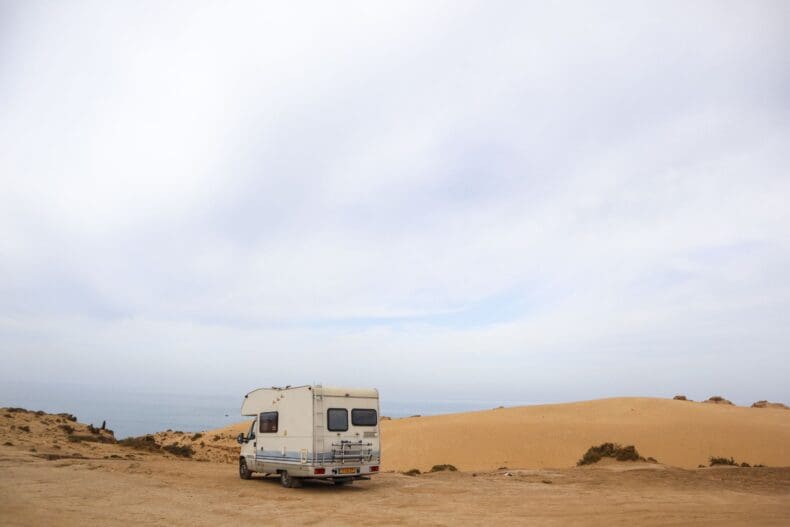
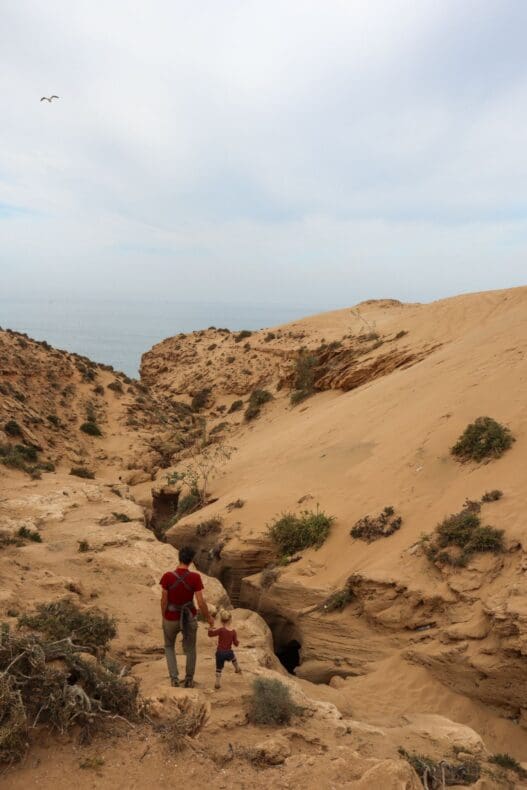
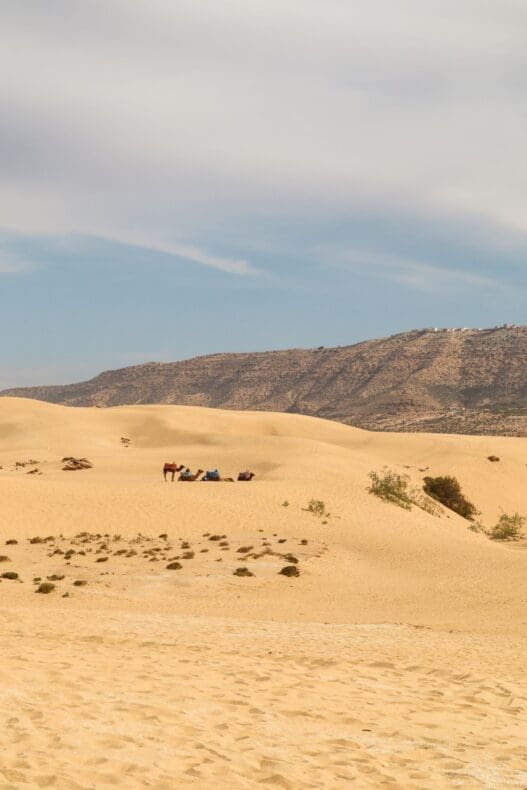
Officially, no. In practice almost everybody does it, and so did we. We spent more nights wild camping than on campsites. On cliffs above the ocean, among the dunes and between the boulders of the Anti-Atlas: you’ll see campers parked up everywhere, and mostly nobody bats an eyelid. Sometimes someone from the village drops by and asks for a small fee to keep an eye on your van.
We never felt our motorhome was at risk of a break-in, not even when we left it for a while. If you’re unsure about a spot, look for one where other campers are parked, and move on if someone asks you to leave. The Park4Night app shows where others have stayed recently, and the reviews tell you straight away if there’s been any trouble. Always read the latest reviews, because what was fine last year may not be now.
We’re a bit more careful with invitations. In Skoura a friendly man offered to let us park outside his house for the night. When he also wanted to give us a guided tour, alarm bells went off and we politely declined. Maybe we missed out on a lovely evening of hospitality. We’ll never know.
Campsites and motorhome stopovers in Morocco
Along the Atlantic coast and around the big cities there are plenty of campsites. Don’t expect European luxury: it’s often a walled plot with water, electricity and a shower block whose cleanliness varies by the day. But you pay very little, and at some campsites the baker or the vegetable man simply comes past your motorhome in the morning.
We dipped in and out of campsites, mostly to fill up with water and empty our tanks. Our favourite was Le Relais de Marrakech, just outside the city. One of the best campsites in the country, for a small price. You get to the medina by taxi, and the Cactus Thiemann cactus garden is within walking distance.
Want to sleep right in a city? Look for a guarded car park. Many cities have them, sometimes close to the medina, and you’ll find those on Park4Night too.
→ Discover the 6 most beautiful gardens in Marrakech
Water, waste and gas in Morocco
Water and waste
We filled up and emptied our tanks at campsites or anywhere it was clearly allowed. We never ran into water shortages, but in dry spells and in the south it can be harder, so fill your tank whenever you get the chance. Drinking from the tap isn’t a good idea in Morocco. We have a drinking water filter on the tap in our motorhome and drank that water for the whole trip without any problems, the kids included. It didn’t taste great. Then again, we didn’t like the bottled water either.
Gas
Most motorhome travellers buy a Moroccan gas bottle once they arrive. You can get them everywhere, from petrol stations to corner shops. We did it differently and simply brought our Dutch bottle. At the campsite near Marrakech they refilled it for us. It cost more than a Moroccan bottle would have, but it was the easy option for us. Just don’t count on that working everywhere, and set off with a full bottle.
Grocery shopping with a motorhome
Stock up properly just before the crossing. There are big supermarkets near the port in Algeciras, including a Lidl. In Morocco, supermarkets like Carrefour and Marjane are mostly found near the larger cities. Otherwise you buy your bread, vegetables and fruit at the market or in small shops, and it’s cheap and fresh. For internet, pick up a Moroccan SIM card when you arrive, because most European data plans don’t work here.
→ Discover the best SIM card for Morocco
Morocco by motorhome with kids
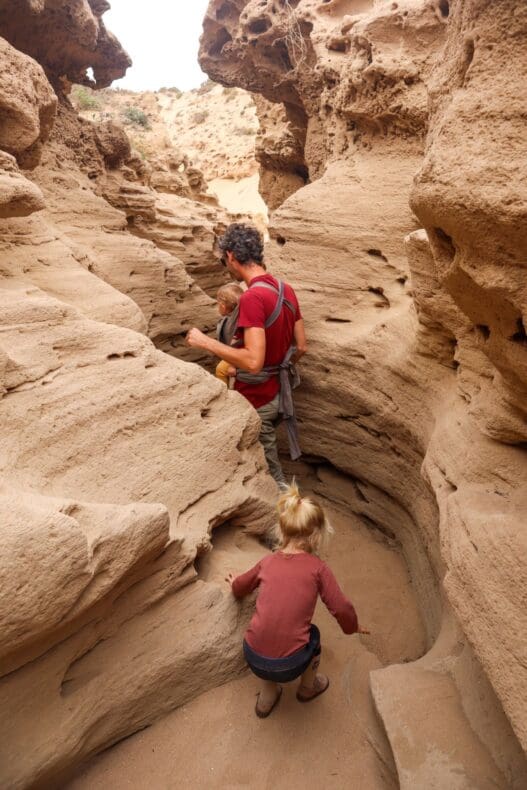
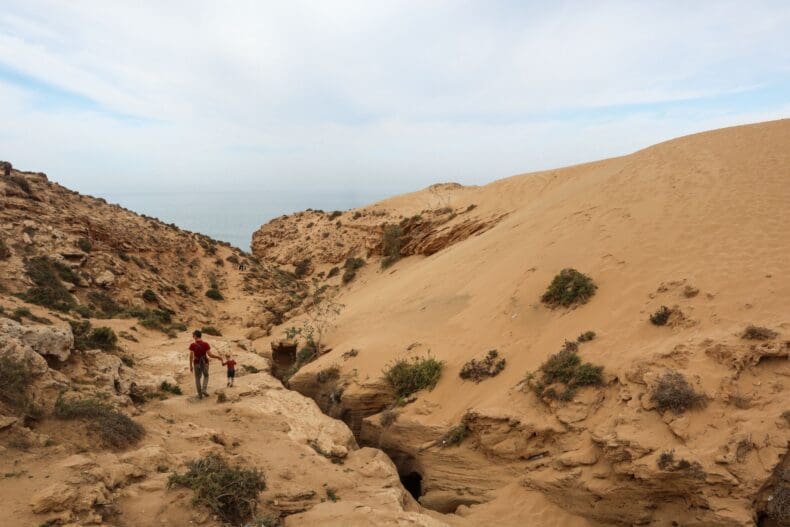
Morocco with a toddler and a baby, isn’t that a bit much? We wondered the same thing beforehand. In the end we worried for nothing. With a camper you bring your own little world along: your own beds, your own kitchen, your own toilet. Sleeping, eating and nappy changes work just like at home, and you’re in control of hygiene and food.
What takes some getting used to is all the attention. Moroccans adore small children. Our daughter got pats on the head and high fives everywhere, and people cooed over the baby. Most of the time it’s simply warm and friendly, though some sellers also use it as a way in to sell you souvenirs.
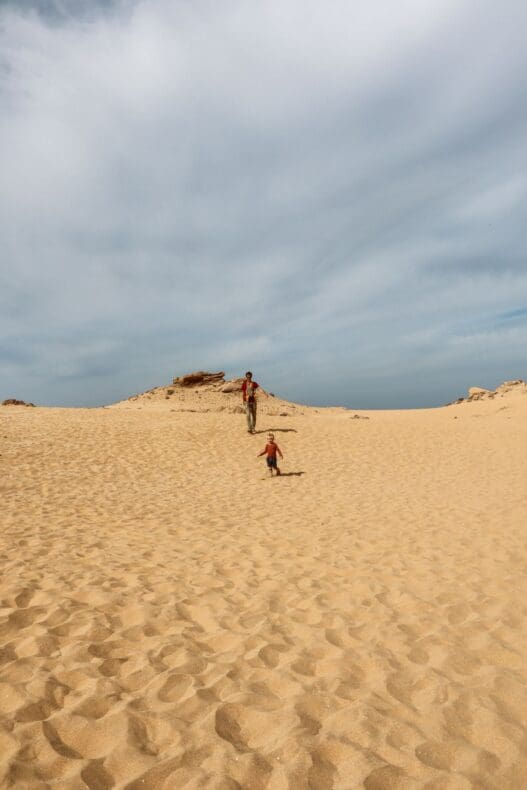
The toughest part was the long drives. Distances inland are big, and our baby refused to sleep on the road. That made some travel days pretty hard going. So plan shorter stages than you think and take plenty of breaks. Outside the cities there’s lots to play with, from sand dunes to rocks to climb.
Wintering in Morocco in a motorhome
Ever heard of Tafraoute? Among motorhome travellers it’s famous. In winter, hundreds of campers park up on the plains between the rocks, many of them French retirees escaping the cold back home. Along the coast around Agadir, Taghazout and Mirleft you’ll also see lots of snowbirds. Winter days there are pleasantly warm, and life is cheap.
We spent a few nights among the boulders near Tafraoute ourselves and immediately understood why so many people stay put. Planning a whole winter? Keep in mind the six months per year for your vehicle, and that most European visitors can stay 90 days visa-free.
When is the best time to visit Morocco by motorhome?
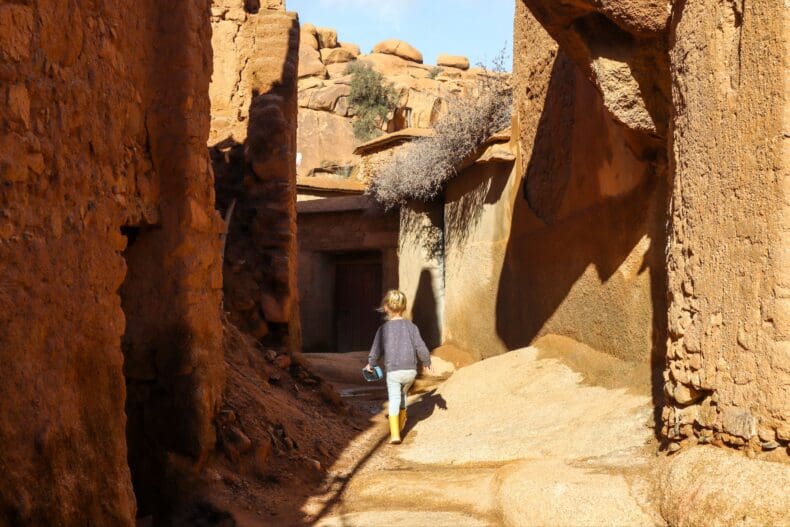
We went in January and February, and it worked out well. Days were often around 20 degrees, and outside the cities it was quiet everywhere. Nights are a different story, especially in the mountains and the desert. A heater in your motorhome is no luxury then. Just ask our icicles.
Spring and autumn are great for a motorhome trip in Morocco too, with warm days and milder nights. In summer we’d skip the interior, because it gets scorching hot. If summer is your only option, stick to the cooler Atlantic coast.
Our favourite motorhome spots in Morocco
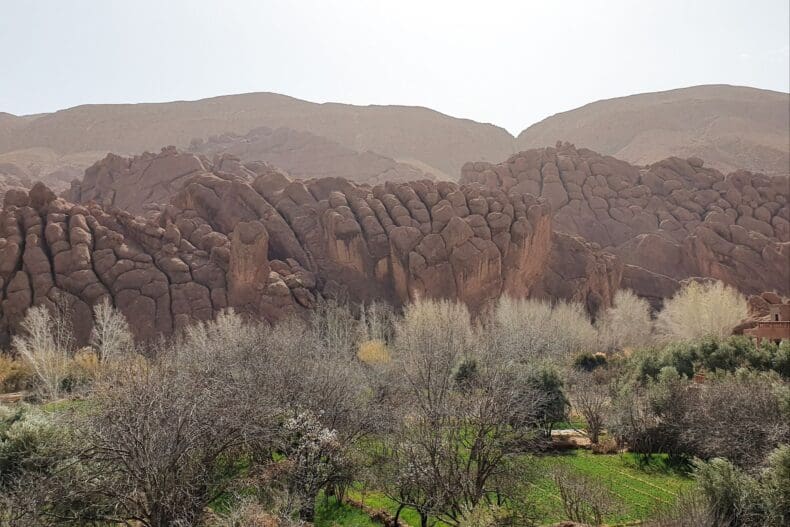
Some places stay with you forever. These are ours, in the order of our route. Where we could find the spot again on Park4Night, we’ve linked it. Always check the latest reviews there.
#1 Moulay Bousselham: overlooking the lagoon
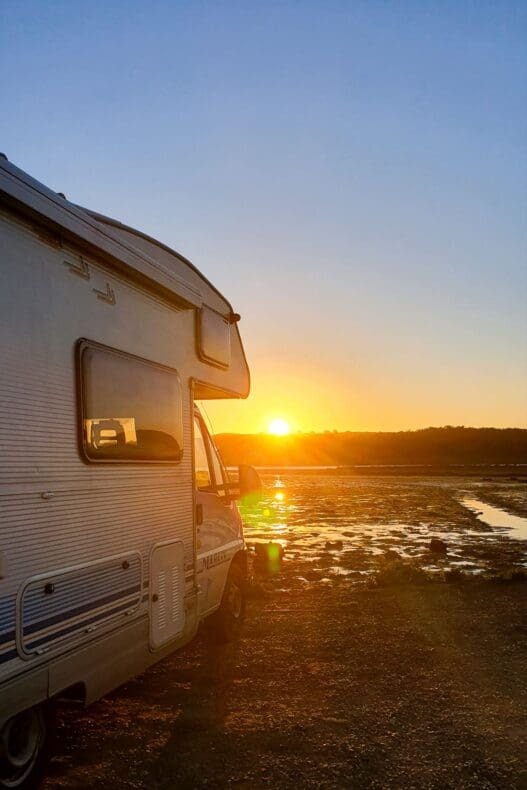
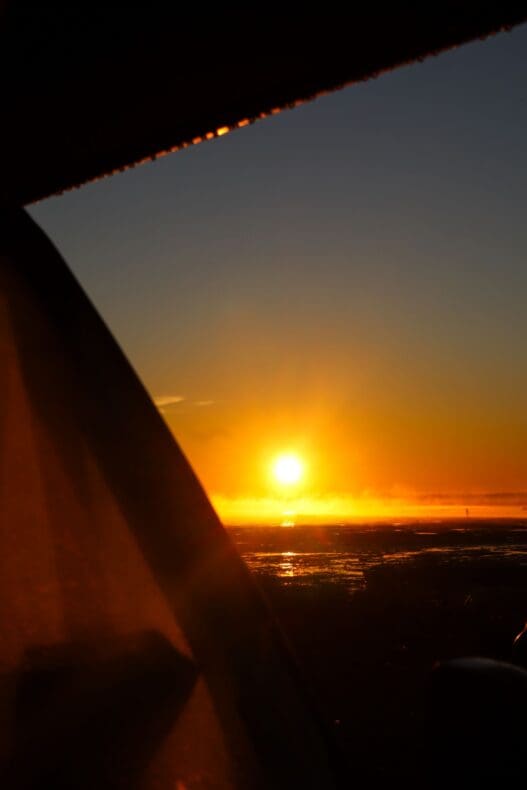
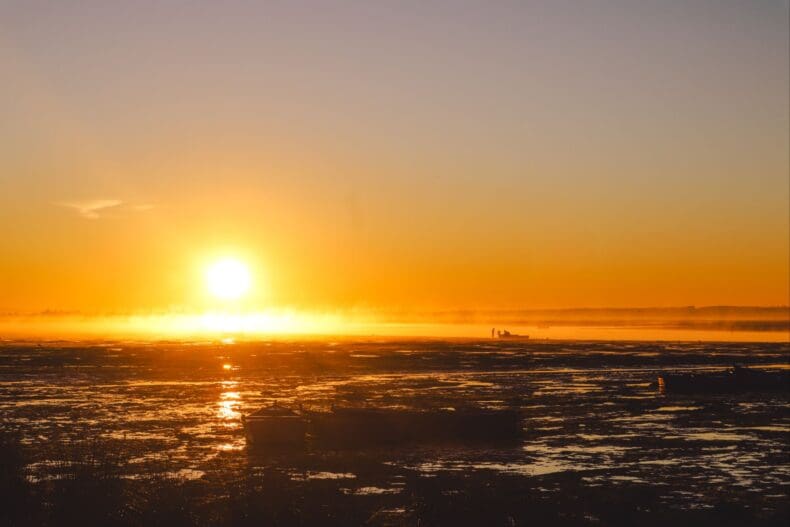
A great first stop when you’ve just come off the boat. Next to the little coastal town of Moulay Bousselham lies a large lagoon, and from the grounds of La Casa Latifa, a farm with a hostel, you look right out over it. That view is what makes this place. In the morning, mist hung over the water and the sun slowly broke through. Pure magic.
In the evening we had a vegetarian tagine in La Casa Latifa’s restaurant, and with showers, wifi and fresh bread it’s a lovely place to ease into Morocco.
#2 Le Relais de Marrakech: campsite just outside the city
A tidy campsite for a small price, and the place where our Dutch gas bottle got refilled. Ideal as a base for Marrakech if you’d rather not park your motorhome in town.
#3 Sidi Kaouki: right on the beach
Half an hour south of Essaouira lies the tiny surf village of Sidi Kaouki, with a wide beach and a handful of simple beach cafés. We wild camped here right on the sand, with the waves rolling in outside the door. Someone did come by to ask for a small fee to watch the camper.
#4 Tamraght: among the surfers
Tamraght is Taghazout’s laid-back little sister. We spent the night right next to the beach, watching the surfers head out to spots like Banana Point.
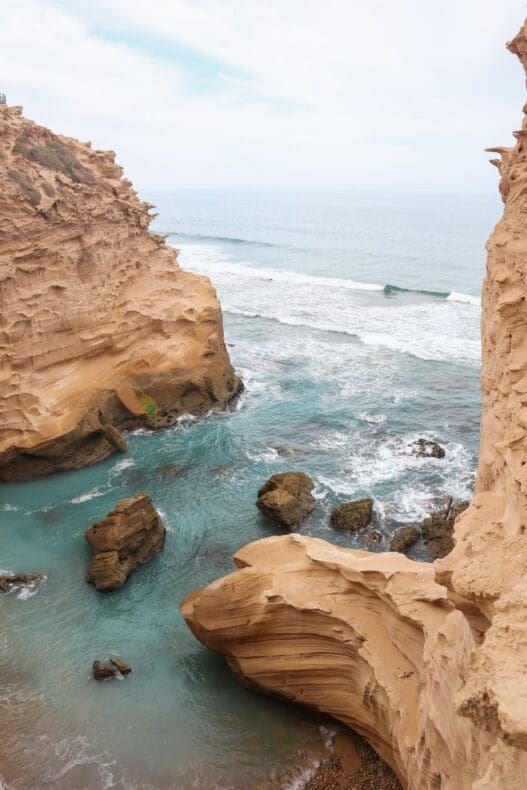
#5 The Grand Canyon of Morocco: camping on the edge of the gorge
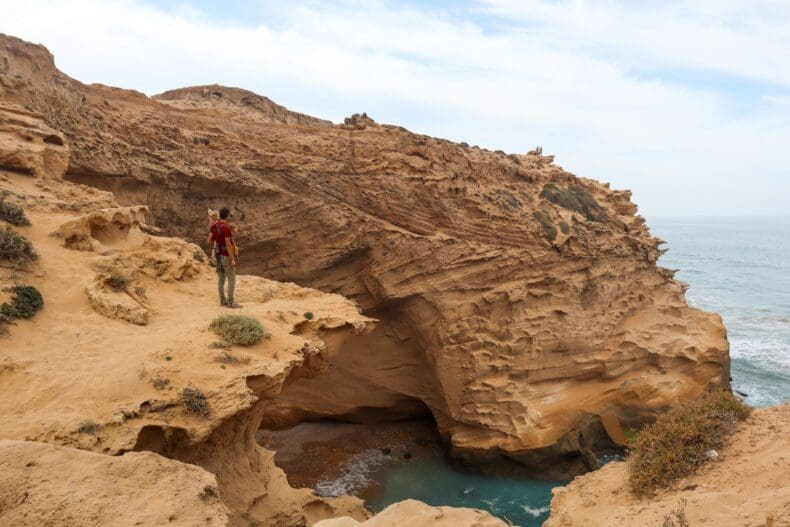
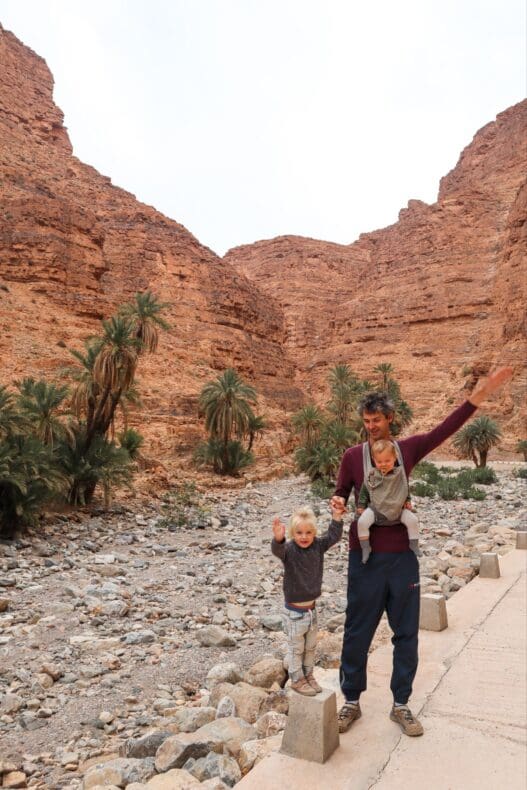
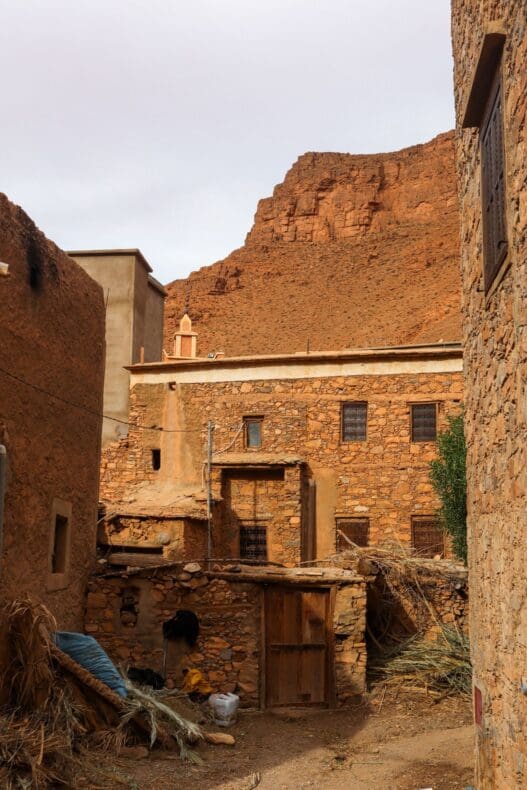
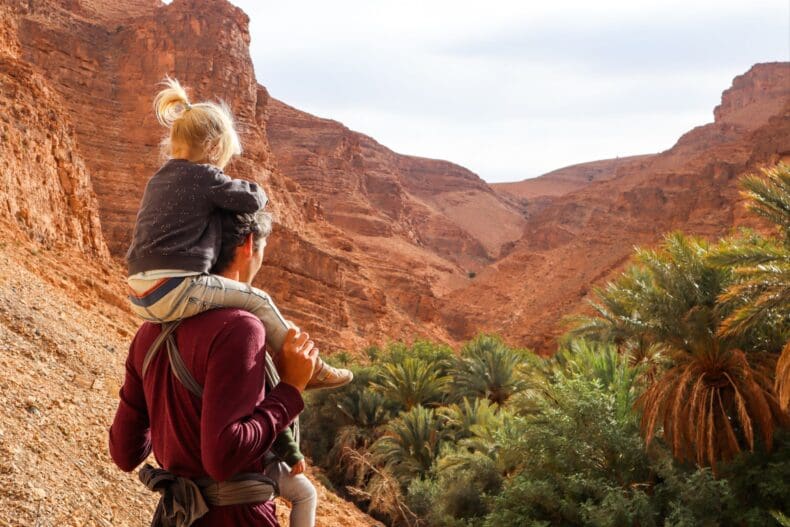
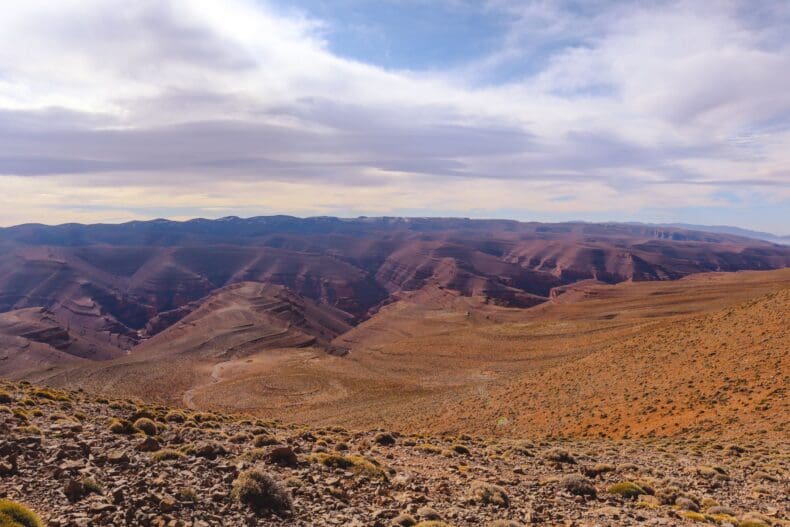
In the Anti-Atlas lies the Aoukerda gorge, also known as the Grand Canyon of Morocco. Red and ochre rock, deep ravines and hardly anyone else around. We parked our motorhome right on the rim of the gorge, and it became one of the most beautiful spots of our whole trip.
#6 Tafraoute: among the boulders of the Anti-Atlas
Morocco’s motorhome paradise. At the Tafraoute motorhome area, between palm trees and surrounded by the orange mountains of the Anti-Atlas, hundreds of campers spend the winter. There are no marked pitches, and the area is so big you’ll easily find a quiet corner. From here it’s a short drive to the Painted Rocks, a landscape of boulders painted in bright colours.
#7 Aït Ben Haddou: with a view of the mud-brick village
Across the road from the famous mud-brick village of Aït Ben Haddou there’s a viewpoint, and that’s where we spent a night. It was very windy, but who wouldn’t want to wake up with a UNESCO village on the hillside outside the window?
→ Discover Aït Ben Haddou in Morocco
#8 Valley of the Roses: by the river at Hdida
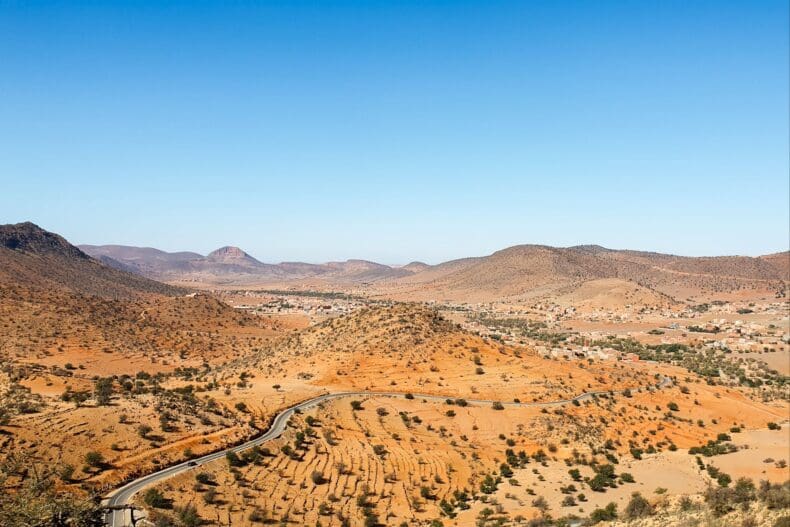
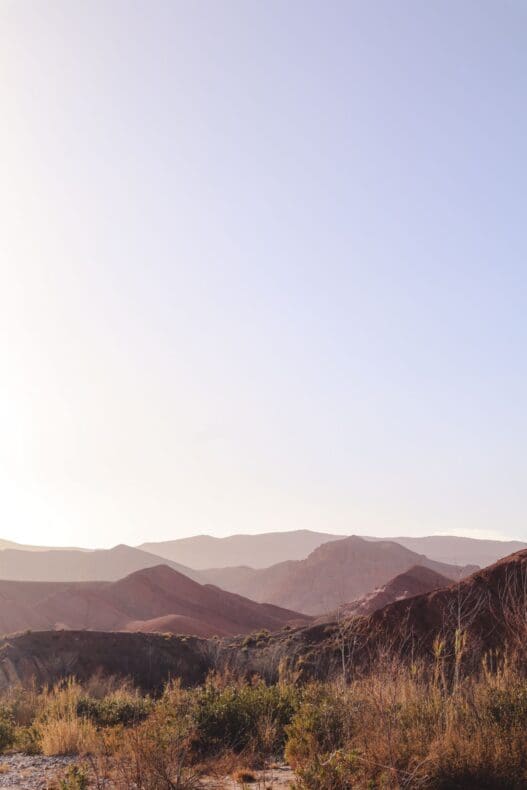
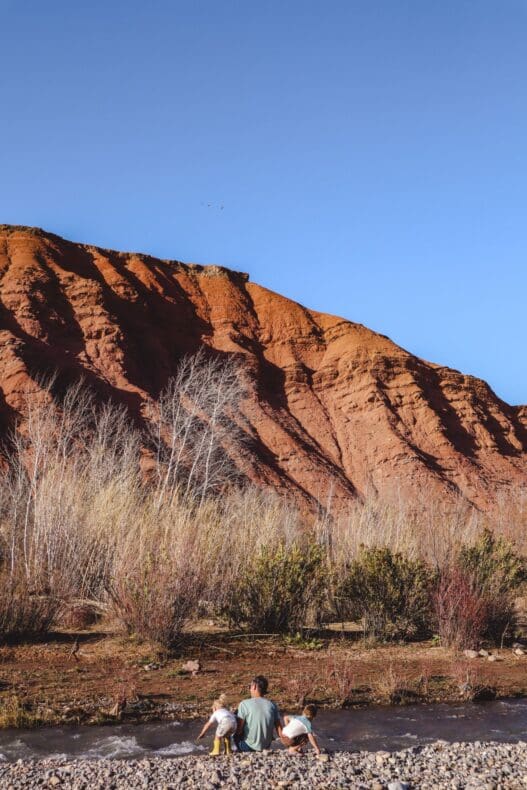
In the Valley of the Roses, between Skoura and the Dades Valley, we found a free riverside spot near Hdida. You park on the riverbank with red-brown mountains all around. A small road runs past, but it’s quiet. Now and then someone from the village wanders by, and otherwise you mostly have the place to yourself.
#9 High in the Atlas: waking up to icicles
Not the spot we’d planned, but one we’ll never forget. This spot near Aït Youssef Ou Ali sits right at the top of a ridge, at over 2,900 metres, looking out over the snowy peaks of the High Atlas. Freezing, beautiful, and icicles on the camper in the morning.
Fancy going? From the north-east the road is new and easy. From the south-west it’s bumpier. So check beforehand which way you’re coming from.
Can you rent a campervan or motorhome in Morocco?
No camper of your own, or no time for the long drive through Spain? You can also rent a campervan or motorhome in Morocco, although the choice is limited. There are a few local rental companies, mainly around Marrakech and Agadir, with small van conversions and sometimes a 4×4 with a rooftop tent. Most big European rental companies won’t let their campers cross to Morocco.
Rather not drive at all? On our first trip we got around Morocco by train and bus, and between the cities west of the Atlas that works really well.
→ Discover our Morocco by train itinerary
Enjoy our travel tips? Add The Orange Backpack as a preferred source on Google and you'll see us more often in your search results.
More tips for your trip to Morocco
 Our pickHotels in Morocco: from a riad in the Fez medina to a kasbah on the edge of the desert

 Discover all our blogs about Morocco


