
You step off the plane in Malta, and the first thing you feel is the warm Mediterranean sun on your skin. As you step outside, the scene around you is unmistakably Southern European—palm trees swaying in the breeze, sun-drenched buildings in shades of golden yellow, and the sparkling blue sea stretching toward the horizon. But then, something unexpected catches your eye: a bright red telephone booth. An English tea room. Cars driving on the left side of the road. You wander into a pub called The Queen’s Arms, order a pint, and soon find yourself digging into a plate of fish and chips. Welcome to Malta—an island where British heritage is still very much alive!
Although Malta gained independence from the United Kingdom in 1964, the echoes of its colonial past never truly faded. For nearly 200 years (1814–1964), it was a key British outpost, and remnants of that era are woven into daily life. From the language and legal system to the way people drive—and even how they take their tea—Malta is a unique blend of Mediterranean warmth and British tradition.
In this blog, we’ll take you on a journey through some of the most intriguing and unexpected traces of Britain in Malta. Why do the Maltese speak such fluent English? What’s it like driving on the left on an island that’s closer to Africa than to England? And why does a red telephone booth still stand proudly in the heart of Valletta? Let’s dive into Malta’s British side!
Tip: Looking for another little piece of Britain in Southern Europe? Head to Gibraltar, where you’ll find red telephone booths, English pubs, and left-hand traffic—only this time, with breathtaking views of Southern Spain and Morocco!

Language and Communication: English as Second Nature
If you strike up a conversation with a local, don’t be surprised if they switch to English with ease. That’s no coincidence—English is one of Malta’s two official languages, alongside Maltese. As a result, nearly everyone here is fully bilingual, a rarity in Southern Europe.
The legacy of British rule is still deeply woven into daily life, and the English language remains an essential part of Malta’s culture. Schools follow an education system largely based on the British model, official documents are often written in English, and the language is widely used in politics and business. In fact, Malta has become a sought-after destination for international students eager to perfect their English skills.
But keep in mind—English in Malta has a character all its own. The Maltese accent is a fascinating blend, often sounding like a mix of British English and Italian, with subtle hints of Arabic influence. If you listen closely, you’ll notice some unique linguistic quirks that make Maltese English truly one of a kind:
- In Malta, you’ll often hear British terms that aren’t as common elsewhere. For instance, people say queueing instead of waiting in line and rubbish instead of trash.
- Some Maltese, especially older generations who were educated during the colonial era, speak with an unexpectedly polished British accent—almost as if they’ve stepped straight out of a classic BBC broadcast.
- Maltese and English blend effortlessly in everyday conversations. A sentence might begin in Maltese and finish in English—or the other way around—without a second thought.
With English woven into everyday life, Malta is one of the most hassle-free travel destinations in Southern Europe for English speakers. No need to struggle with translation apps or resort to hand gestures—just speak English, and you’ll navigate the island with ease!


Traffic: Driving on the Left and Old British Buses
Be extra careful when crossing the street in Malta—traffic here keeps to the left! This is one of the most noticeable legacies of British rule. While most of Europe drives on the right, the Maltese have stuck with the British system. It can take a little getting used to, especially if you’re renting a car. Want to test yourself? Watch the roundabouts closely—they flow counterclockwise, just like in the UK.
Until 2011, Malta had another charming relic of its British past: its iconic red and yellow buses, some dating back to the 1950s. These vintage buses weren’t just a mode of transport—they were an attraction in themselves, with their classic design and famously chatty drivers. Unfortunately, they’ve been replaced by modern vehicles, but you can still spot a few of these historic gems in museums or operating as tourist shuttles.
Another unmistakable British touch? The zebra crossings, complete with Look Right and Look Left warnings painted on the pavement—a handy reminder for visitors who might instinctively check the wrong direction before stepping off the curb!


Red Telephone Booths and Mailboxes: A Familiar Street Scene
Wandering through Valletta or Sliema, you might feel as if you’ve stepped into a sun-drenched version of London. Dotted along the streets, you’ll find bright red telephone booths and post boxes—exact replicas of their British counterparts. Except, they’re not replicas at all. These are original fixtures from Malta’s colonial past, left standing long after the country gained independence. Some are still in use today, making them not just charming historical remnants but also favorite photo spots for visitors.
The red telephone booths are a nostalgic throwback to the days when landlines were essential. While mobile phones now dominate, these booths remain part of the streetscape, cherished for their vintage charm. Some have been creatively transformed into tiny libraries or quirky souvenir shops.
Equally iconic are the red post boxes, each still bearing the royal insignia of the British monarch who reigned when they were first installed. Drop a postcard inside, and it will be collected by the Maltese postal service—proof that even in the heart of the Mediterranean, a little bit of Britain lingers on!


British Pubs and Food: Fish and Chips on an Island in the Mediterranean Sea
Malta’s cuisine might seem unmistakably Mediterranean, with its abundance of fresh seafood, olive oil, and pasta. And while that’s certainly true, the island’s long history with Britain has left its own flavorful mark. Step into almost any pub or restaurant, and you’ll find a full English breakfast on the menu—complete with eggs, crispy bacon, sausages, baked beans, and toast.
Fish & chips is another beloved British classic that’s easy to find across the island. In coastal towns like St. Julian’s and Sliema, several British-style eateries serve it just the way it should be—golden, crispy battered fish with a side of mushy peas. Prefer something heartier? A traditional English pie is always a good choice. And of course, no proper pub meal would be complete without a pint of beer. Malta’s many British-style pubs are just as lively as those in the UK, making them a favorite hangout for both locals and visitors.
These pubs wear their British heritage with pride, starting with their names—Fat Harry’s Pub, The Salisbury Arms, and The Queen Elizabeth II, to name a few. Step inside, and you’ll find the unmistakable atmosphere of a classic British pub: dark wooden interiors, leather barstools, and football matches playing on big screens. Even the cherished Sunday roast—an indulgent meal of roasted meat, crispy potatoes, and vegetables—is still a weekend tradition in Malta, offering a comforting taste of home for many.
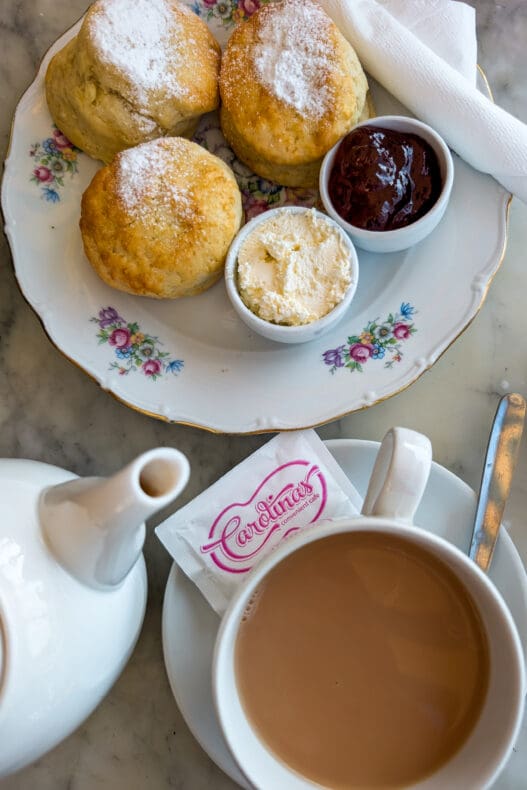
And then there’s tea. While coffee remains a Maltese favorite, British influence has made tea a daily ritual as well. A strong builder’s tea with milk is easy to come by, but for a true British-Maltese fusion, try pairing it with a pastizz—Malta’s signature flaky pastry filled with ricotta or pea puree. It’s an unexpectedly delicious match! Or, if you’re in the mood for something purely British, treat yourself to a classic cream tea with scones, clotted cream, and strawberry jam—an afternoon indulgence that brings a little piece of England to the Mediterranean.


British Holidays and Traditions: From Christmas Pantomime to Pop Culture
While Malta has its own vibrant holidays and traditions, some unmistakably British customs have stood the test of time. One of the most cherished is the Christmas pantomime—a lively, comedic stage production that has become a holiday staple. This classic British tradition transforms well-known fairy tales into hilarious, interactive performances, often featuring exaggerated characters and playful gender-swapped roles. Every year, Valletta’s historic Manoel Theatre hosts a pantomime that delights audiences of all ages, drawing both locals and expats for an evening of festive fun.
The British influence is just as evident on Malta’s screens and airwaves. Older generations grew up watching British television, and even today, long-running shows like Coronation Street, EastEnders, and beloved crime dramas such as Midsomer Murders continue to be island favorites. British music has also left a lasting mark, with legendary bands like The Beatles, Queen, and Oasis enjoying just as much admiration here as they do in the UK.
Sport is another area where British traditions are deeply rooted. Football is, without a doubt, Malta’s number one sport, and nearly everyone has a favorite English team. The Premier League is followed passionately, with bars across the island packed with fans cheering for Manchester United, Liverpool, or Arsenal. While cricket still lingers on the sidelines, it has long been overshadowed by football’s overwhelming popularity. From theater to television and the thrill of match day, British traditions have woven themselves into the fabric of Maltese culture, blending seamlessly with the island’s own rich heritage.


Architecture: British Buildings Between the Baroque and Bastions
Malta is best known for its ancient fortified cities and magnificent Baroque churches, but if you take a closer look, you’ll find hints of British architectural influence woven into the island’s historic fabric. One of the most striking examples is St. Paul’s Pro-Cathedral in Valletta—a stately neoclassical Anglican church with a soaring spire, commissioned by Queen Adelaide in the 19th century. This impressive landmark remains one of the most distinctive British-built structures in Malta.
In towns like Sliema and Floriana, British architectural styles are even more pronounced. Rows of elegant Victorian townhouses and colonial-era buildings give certain streets the feel of London or Edinburgh. The British also left their mark with a series of military forts and barracks, some of which are still in use today, while others have been repurposed into museums, cultural spaces, or even luxury hotels. A prime example is Fort Rinella, home to one of the largest British cannons of the 19th century—an imposing piece of military history that still fascinates visitors.
Even Valletta’s once-iconic Royal Opera House was a product of British design. Originally envisioned by a British architect, the grand structure was a proud symbol of British presence in Malta until it was tragically bombed during World War II. Though the original building was never reconstructed, its ruins have been transformed into a striking open-air theater, blending history with modern creativity.
While the British influence on Maltese architecture is subtle, it adds another layer to the island’s rich and varied cityscapes. Amid the grandeur of Baroque palaces and the strength of medieval bastions, neoclassical facades and Victorian flourishes peek through, contributing to the unique architectural charm of Malta.


In Short, Malta’s British Soul in a Mediterranean Setting
Malta may stand as an independent nation, but the echoes of its British past are still very much alive. From driving on the left and spotting those unmistakable red telephone boxes to tucking into fish and chips or passionately debating the latest Premier League match, traces of British influence can be found around every corner. Yet, what makes Malta truly special is the effortless way it merges British heritage with Mediterranean warmth and character.
Imagine starting your day with a full English breakfast, the scent of sizzling bacon in the air as you look out over a glittering, sunlit bay. You wander through narrow streets lined with Victorian balconies and centuries-old bastions, where history seems to linger in the very stones beneath your feet. Around you, conversations flow seamlessly between Maltese and perfect English, a testament to the island’s unique cultural blend. Malta isn’t just another Mediterranean escape—it’s a place where past and present, British tradition and Maltese identity, come together in a way that feels both nostalgic and refreshingly distinctive.
So, when you find yourself in a cozy pub called The Queen’s Arms, sipping a pint and soaking in the atmosphere, remember: Malta is neither wholly British nor entirely Mediterranean—it’s both. And that, more than anything, is what makes it truly one of a kind.


